The Ultimate Guide to Bakery-Style Homemade Cinnamon Rolls
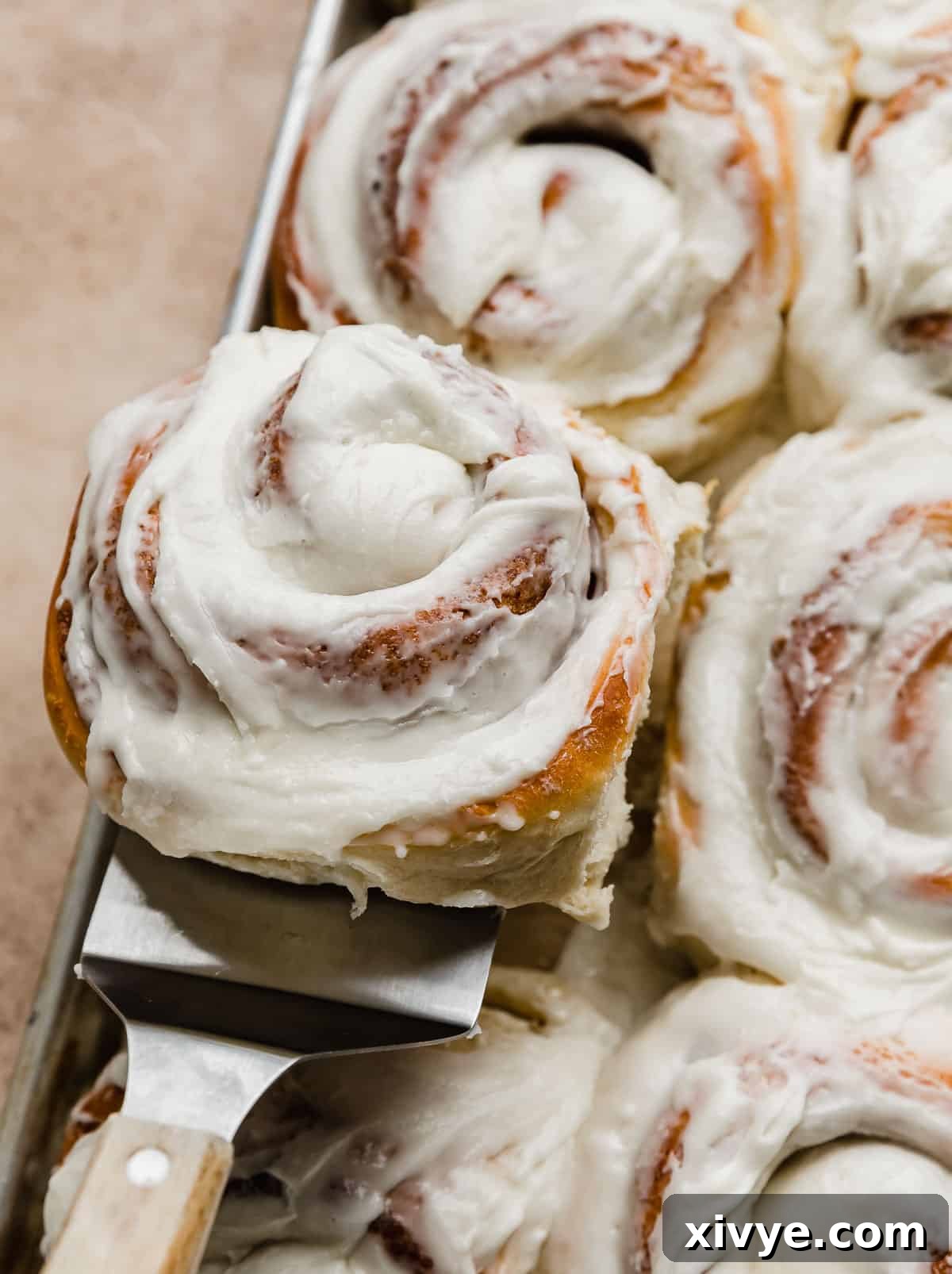
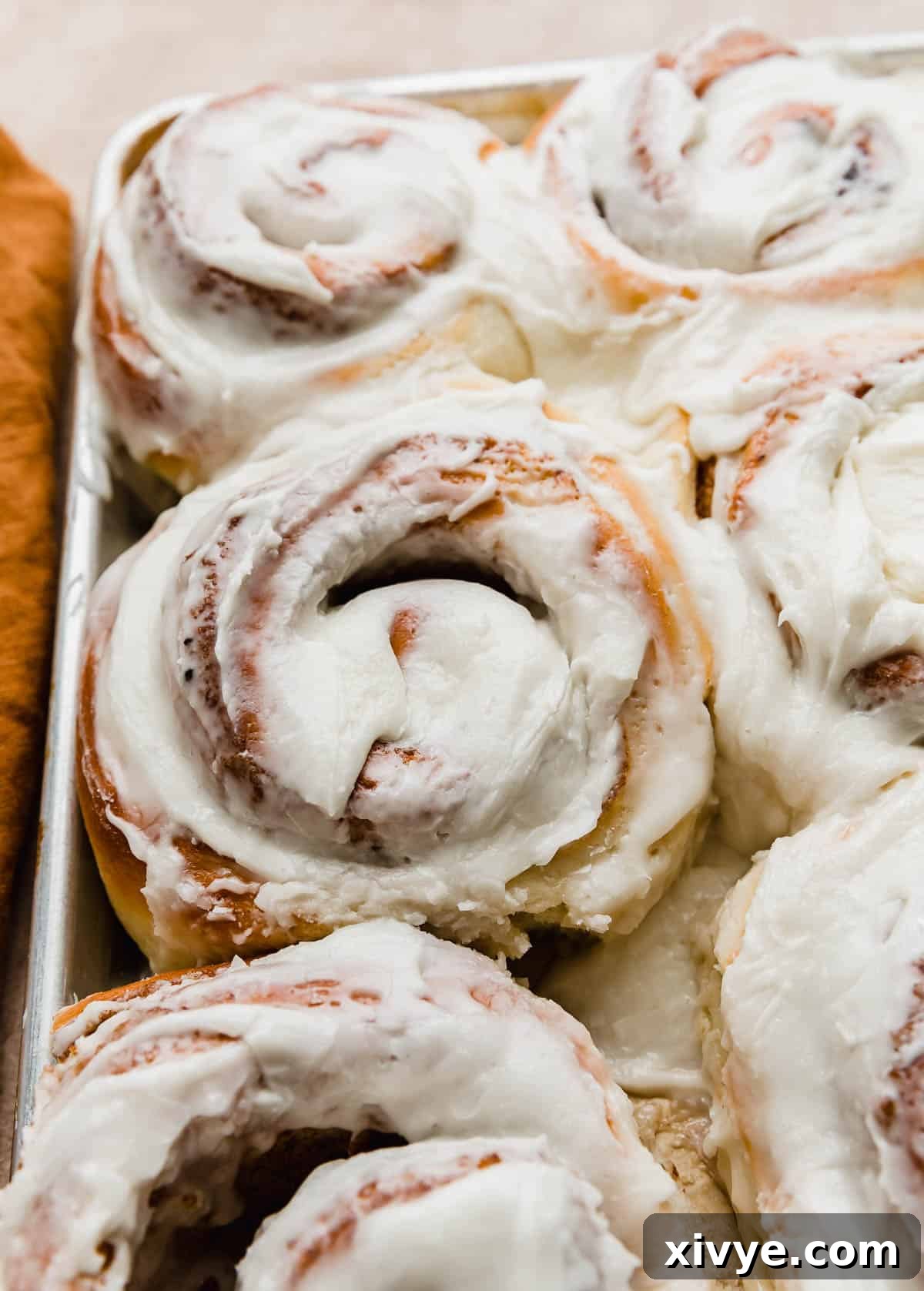
Prepare to be amazed by these colossal, incredibly soft, and utterly fluffy bakery-style homemade cinnamon rolls! This cherished recipe yields a sweet, perfectly risen dough every single time, baking up to golden perfection. What truly sets these apart is the rich, aromatic filling crafted from softened butter, brown sugar, cinnamon, and a secret blend of two distinct flavor extracts. To crown these masterpieces, a generous layer of thick, sweet, and unbelievably delicious frosting is added. Without a doubt, these are the best cinnamon rolls you will ever have the pleasure of baking and devouring!
If your love for cinnamon rolls runs deep, you absolutely must explore our other beloved cinnamon-infused creations. Dive into our Cinnamon Roll Cookies for a bite-sized treat, savor the unique flavors of our Horchata Cinnamon Cake, or indulge in a slice of our decadent Cinnamon Roll Cake. For a scaled-down version of these magnificent rolls, try our Mini Cinnamon Rolls Recipe. Embrace the flavors of autumn with our Pumpkin Cinnamon Rolls, or add a festive touch to your holiday table with the stunning Cinnamon Roll Snowflake!
Why These Homemade Cinnamon Rolls Are Unbeatable
This isn’t just another cinnamon roll recipe; it’s a meticulously perfected guide to achieving cinnamon roll nirvana in your own kitchen. Here’s why this particular recipe stands head and shoulders above the rest, earning its place as a true fan favorite:
Achieve Bakery Perfection at Home
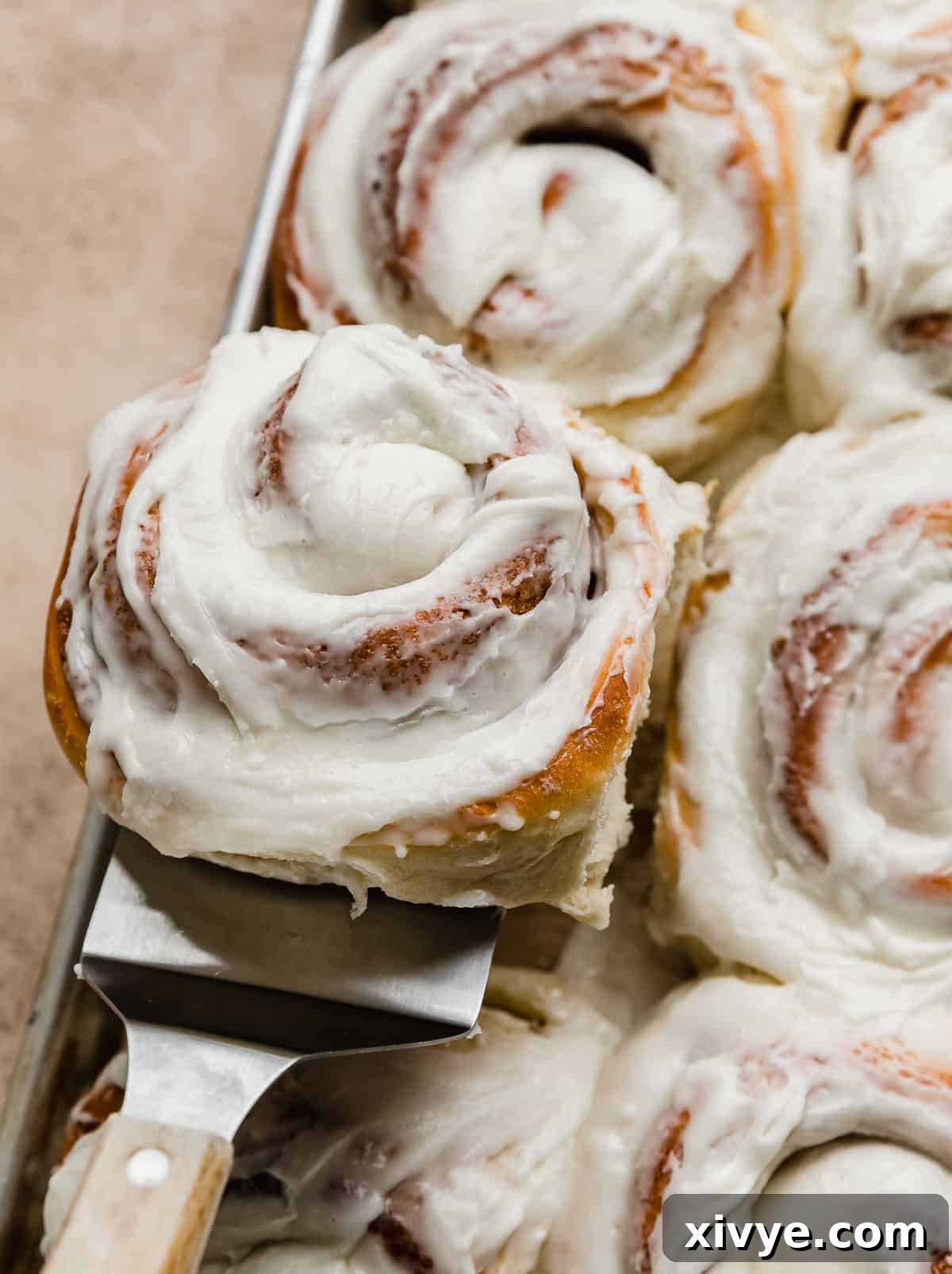
Forget store-bought! These cinnamon rolls are truly *large*, replicating the impressive, fluffy masterpieces you’d expect from a high-end bakery, but with the comforting quality of homemade. Imagine pulling apart a warm roll, its soft layers yielding effortlessly. One happy baker, Susan, perfectly encapsulated the experience, stating, “So fluffy and taste way better than my local bakery.” The secret lies in the precise balance of ingredients and proofing times that guarantee an incredibly soft texture and substantial size, making each roll a satisfying indulgence.
The Secret to an Irresistible Filling
While many recipes focus solely on the dough, we believe the filling is where true magic happens. Unlike standard cinnamon sugar mixtures, our filling makes a bold statement with a unique blend of vanilla extract and, crucially, almond extract. This subtle addition of almond doesn’t overpower; instead, it introduces a profound warmth and depth that truly elevates the overall flavor profile. It’s a game-changer that adds an unexpected layer of complexity, transforming a simple sweet treat into an unforgettable culinary experience. Linda, a dedicated reader, raved, “Love the addition of the extracts in the filling, it really takes up the flavour!” It’s a small detail with a huge impact, turning a good cinnamon roll into an extraordinary one.
Consistently Praised by Bakers
Don’t just take our word for it; the widespread adoration for this recipe speaks for itself. It has garnered countless glowing testimonials from home bakers, family, and friends who have made it a staple in their kitchens. My own cousin even texted me, “I like the dough recipe better than the one my mom gave me,” which, coming from family, is high praise indeed! Courtney enthusiastically declared, “This recipe is a keeper,” while Celeste crowned it “My new favorite cinnamon roll recipe.” Perhaps most tellingly, Jade shared, “We thought we already had a winning cinnamon roll recipe to use! We were so wrong. These are without a doubt the fluffiest and most delicious rolls ever.” These heartfelt endorsements highlight the consistent success and exceptional quality this recipe delivers.
Effortless & Time-Saving Preparation
While “homemade” often conjures images of endless hours in the kitchen, these easy cinnamon rolls defy expectations. Compared to many traditional cinnamon roll recipes that demand extensive proofing and preparation, ours is remarkably quick. From the initial mixing of ingredients to the joyous moment you take your first bite of a warm, frosted roll, the entire process takes just about 1 hour and 10 minutes. This efficiency makes it possible to enjoy freshly baked, restaurant-quality cinnamon rolls even on busy mornings or for spontaneous treats, without compromising on flavor or texture.
I’ve been perfecting and making these cinnamon rolls for years, and it warms my heart to know that so many of you have embraced them too! Your emails, texts, comments, and DMs about how incredible this recipe is truly mean the world to me. Thank you for inviting my recipes into your homes and making them a part of your family’s culinary traditions. Seeing you share and enjoy this food with your family, friends, and loved ones brings me immense joy.
For my family, homemade cinnamon rolls are a cherished annual tradition, gracing our tables every Easter, during General Conference, and especially on Christmas morning. There’s a special magic in gathering together during the cold early hours of Christmas Day, sipping warm beverages, and savoring a freshly baked, frosting-coated cinnamon roll. It’s a moment of pure comfort and connection. I am already eagerly anticipating making these delightful rolls again this upcoming holiday season!
Essential Ingredients for Flawless Cinnamon Rolls
Crafting the perfect cinnamon roll begins with understanding the role each ingredient plays. Here’s a detailed look at the key components that ensure these rolls are nothing short of spectacular:
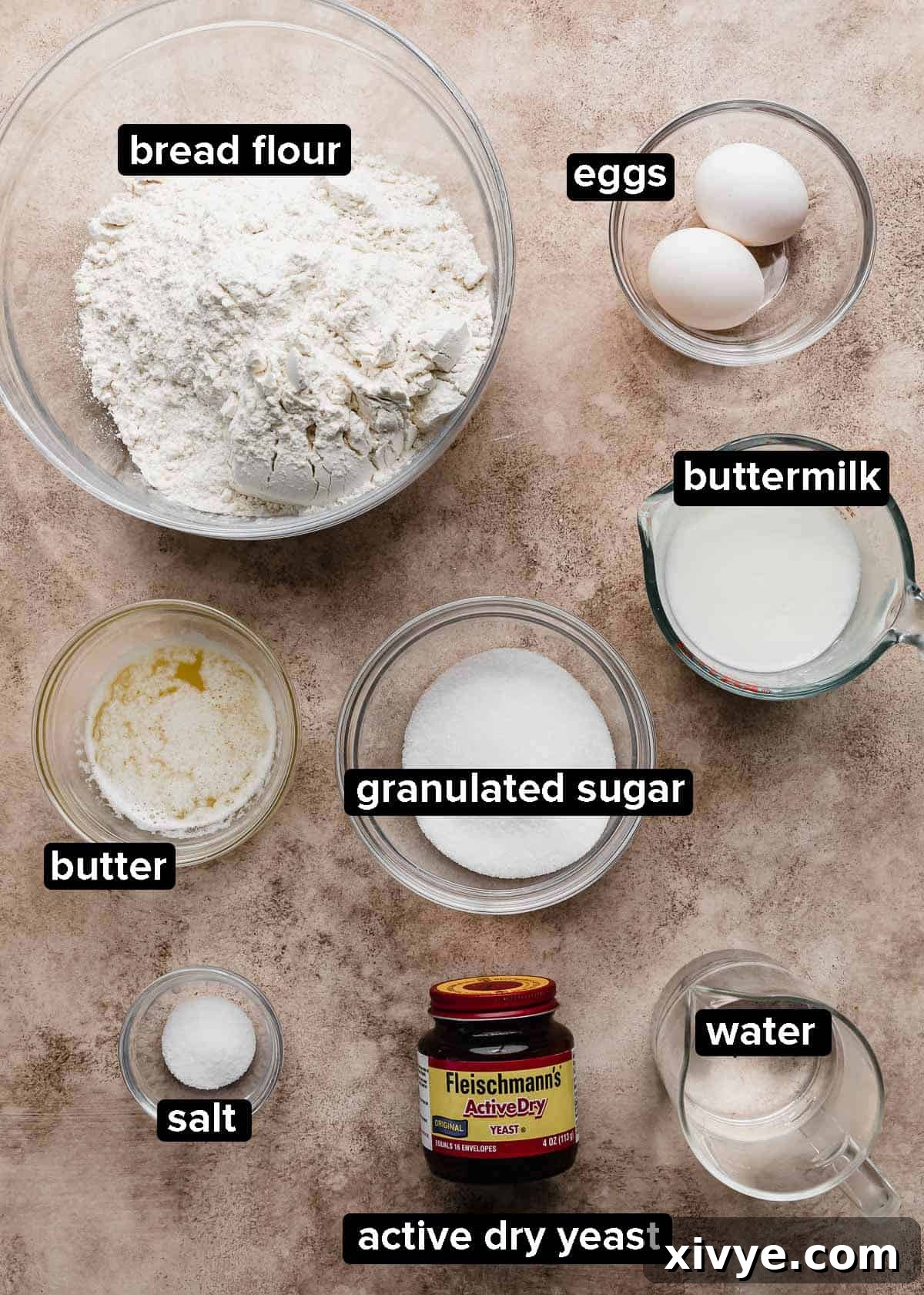
- Warm Water: The temperature of your water is crucial for activating the yeast. Aim for approximately 105ºF – just warm enough to awaken the yeast without killing it. This warmth provides the perfect environment for the yeast to thrive, ensuring your dough rises beautifully and quickly.
- Granulated Sugar: This sugar is incorporated directly into the dough, providing a subtle sweetness that complements the rich filling. It’s important to use granulated sugar here and reserve brown sugar specifically for the filling to achieve the desired texture and flavor in both components.
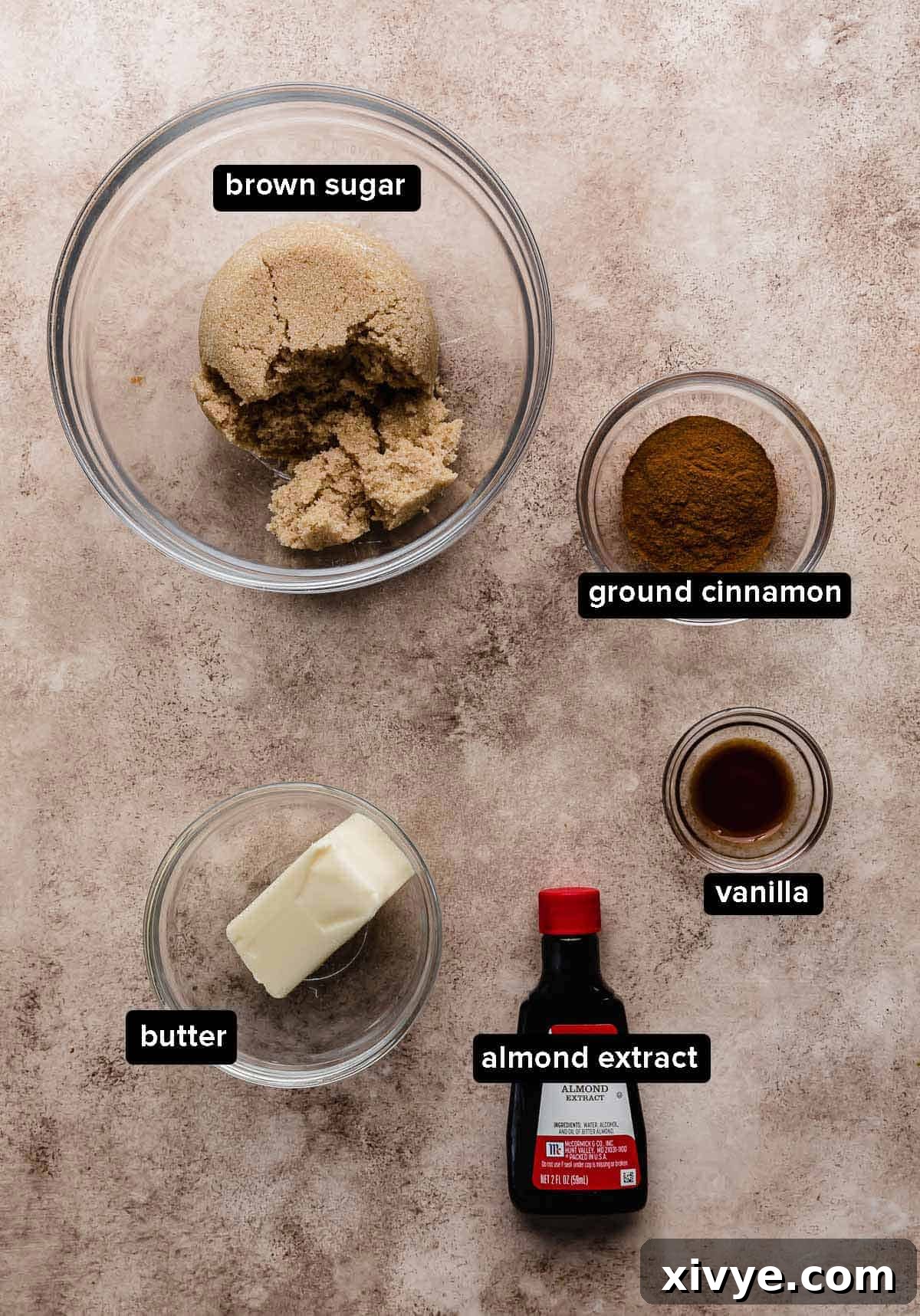
- Brown Sugar: The star of our filling! Brown sugar’s unique moisture content and molasses notes create that characteristic gooey, caramelized texture we all love in cinnamon rolls. Unlike granulated sugar, brown sugar clumps together, which helps it adhere better within the dough as it’s rolled and baked, preventing it from seeping out.
- Active Dry Yeast: This recipe utilizes a slightly more generous amount of active dry yeast than some traditional recipes. Don’t worry, it won’t result in an overly yeasty flavor! This increased quantity is key to our accelerated rising process, allowing you to enjoy these delicious rolls in a fraction of the time typically required.
- Bread Flour: This is a non-negotiable ingredient for truly bakery-style cinnamon rolls. Bread flour boasts a higher protein content than all-purpose flour, which translates to a stronger gluten structure. This strength is vital for the dough to achieve its impressive, high rise and incredibly fluffy texture. Just as I recommend it for my homemade 50/50 bread, it makes a significant difference here. Keep in mind that the exact amount of flour may need slight adjustments based on your local climate and elevation; this recipe was developed at sea level.
- Cinnamon: The indispensable heart of any cinnamon roll! We use a generous amount of ground cinnamon in the filling to ensure every bite is bursting with its warm, fragrant spice.
- Unsalted Butter: For the filling, using softened, room-temperature unsalted butter is paramount. Melted butter, when brushed on the dough, tends to seep into the dough or escape during baking, leaving you with a dry interior. Softened butter, however, creates a sticky base that holds the cinnamon sugar mixture perfectly, ensuring that coveted gooey, moist center.
- Vanilla Extract & Almond Extract: This dynamic duo is our secret ingredient for an unparalleled filling flavor! The vanilla provides a classic sweetness, while the almond extract adds a sophisticated, warm depth that truly elevates the rolls. If you’re hesitant about almond flavor, rest assured it’s a gentle touch – not an overwhelming blast – designed to enhance, not dominate. This combination makes all the difference, contributing to the irresistible complexity of these rolls.
Step-by-Step Guide to Baking Your Cinnamon Rolls
Follow these detailed instructions to create the most incredible homemade cinnamon rolls your kitchen has ever seen. Precision and a little patience are your best friends here!
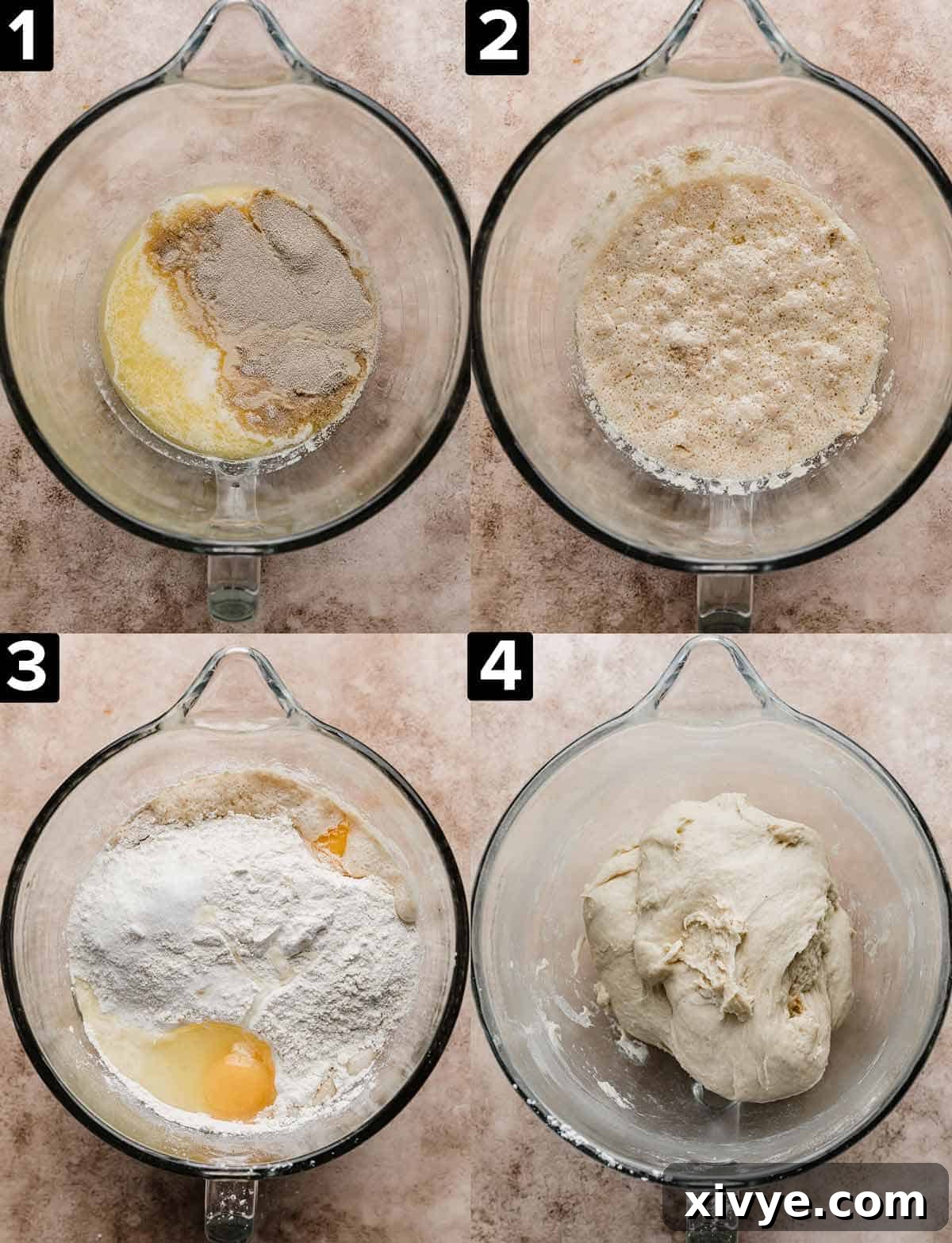
- Activate the Yeast: In the bowl of a stand mixer fitted with the dough hook, combine 1 cup warm water (around 105°F), ¾ cup room temperature buttermilk, ½ cup granulated sugar, ¼ cup melted butter, and 2 ½ tablespoons of active dry yeast. Mix these ingredients briefly, just enough to incorporate them. Allow the mixture to sit undisturbed for 10-15 minutes, or until you observe a bubbly, frothy layer forming on the surface. This bubbling indicates your yeast is active and ready to work its magic.
- Form the Dough: Once your yeast is visibly active and bubbly, add ½ tablespoon of salt, 2 large eggs, and begin incorporating the bread flour. Start with 5 cups of bread flour, then gradually add more, up to 6 cups, as needed. The goal is to achieve a dough that is tacky to the touch but not excessively sticky. Mix the dough on medium speed for 8-10 minutes. During this process, the dough should develop elasticity and begin to pull away cleanly from the sides of the bowl. After mixing, cover the bowl tightly with plastic wrap and let the dough rest in a warm spot for a short 10 minutes. This resting period allows the gluten to relax, making the dough easier to handle.
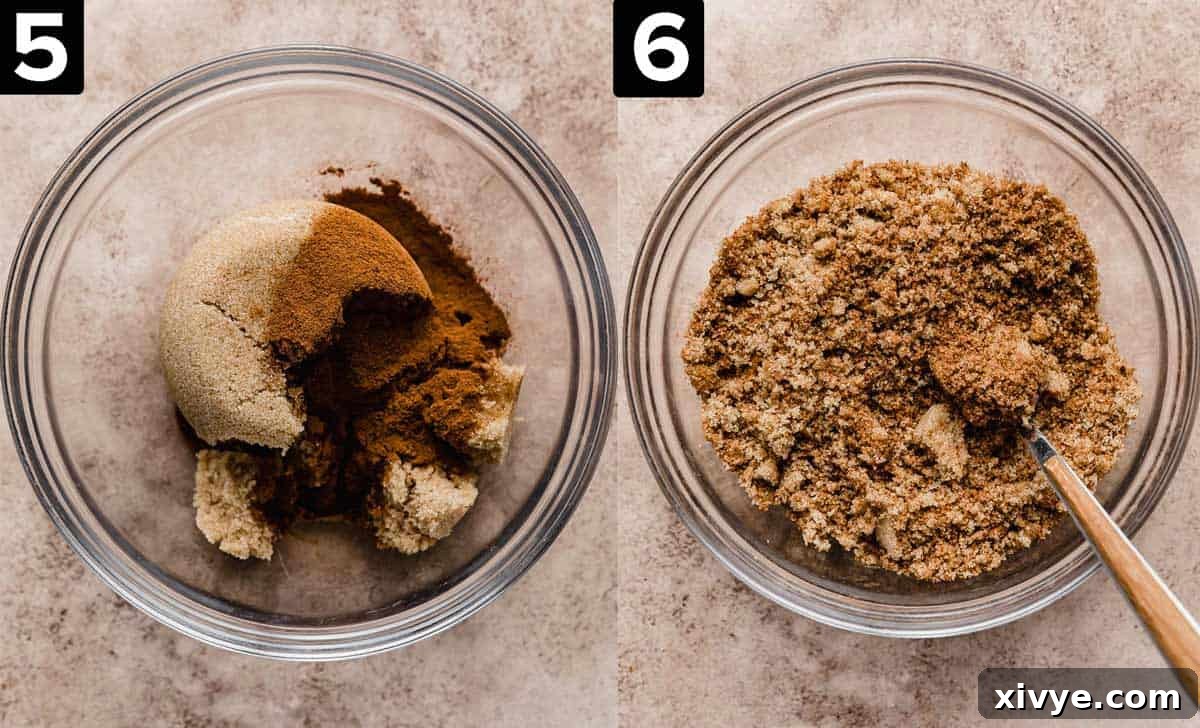
- Prepare the Irresistible Filling: While your dough is resting, prepare the luscious cinnamon sugar filling. In a separate medium-sized bowl, combine 1 cup of brown sugar, 1 ½ tablespoons of ground cinnamon, ½ teaspoon of vanilla extract, and ⅛ teaspoon of almond extract. Stir these ingredients thoroughly until they are well combined and the mixture is fragrant. Set this aside, ready for assembly.
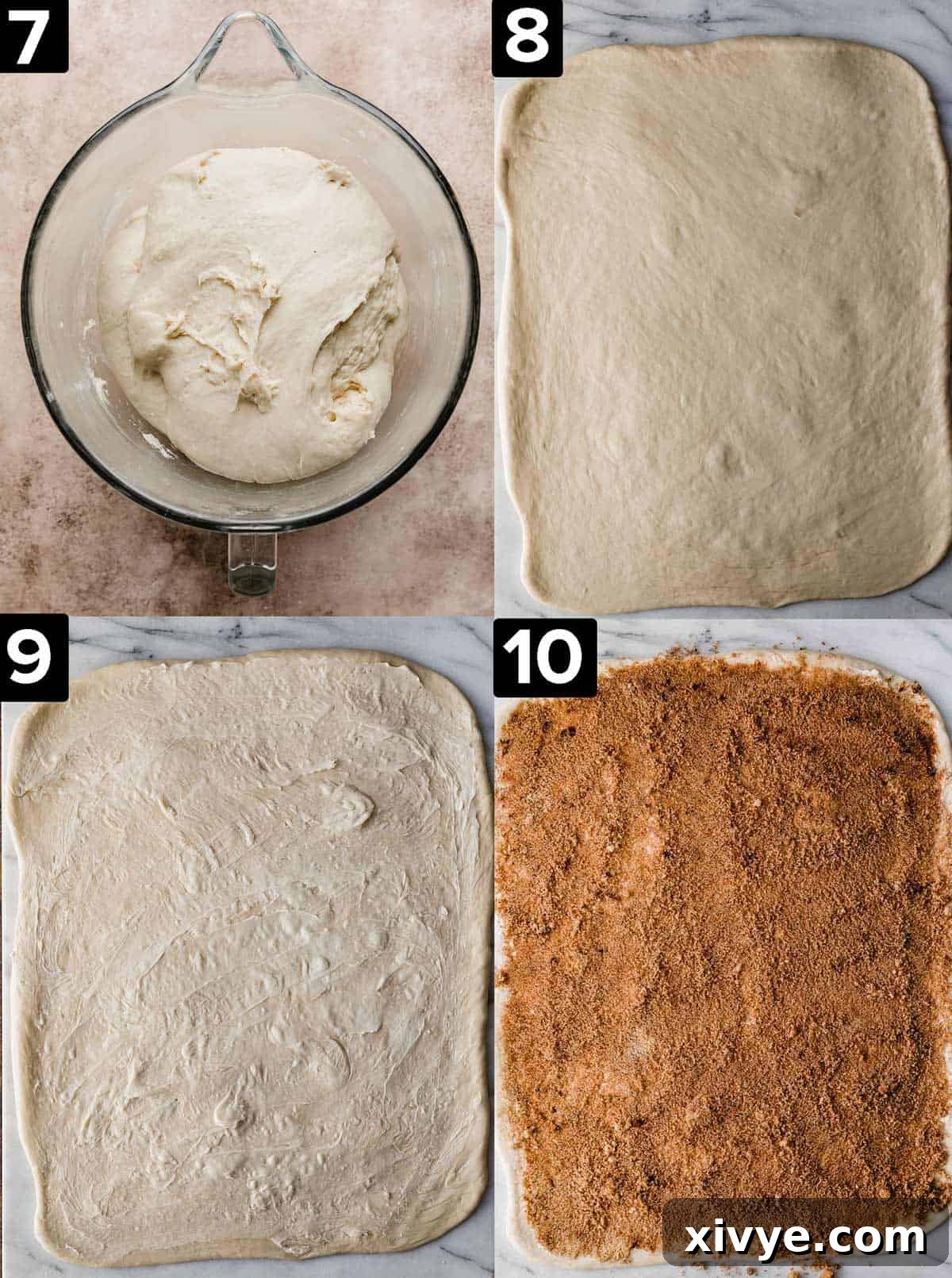
- Roll Out the Dough: Preheat your oven to 400°F (200°C) and line a large baking sheet with parchment paper or a silicone baking mat. Prepare your clean countertop by lightly spraying it with cooking spray (we highly recommend Baker’s Joy for its non-stick properties). Using a rolling pin, carefully roll the rested dough into a large rectangle measuring approximately 14×18 inches. Aim for an even thickness across the entire surface.
- Spread Butter and Filling: Using the back of a spoon or an offset spatula, evenly smear 4 tablespoons of softened (room temperature) unsalted butter over the entire surface of the rolled-out dough. Ensure it reaches all the way to the edges. Next, generously sprinkle the prepared cinnamon sugar filling over the butter layer, making sure it’s distributed uniformly.
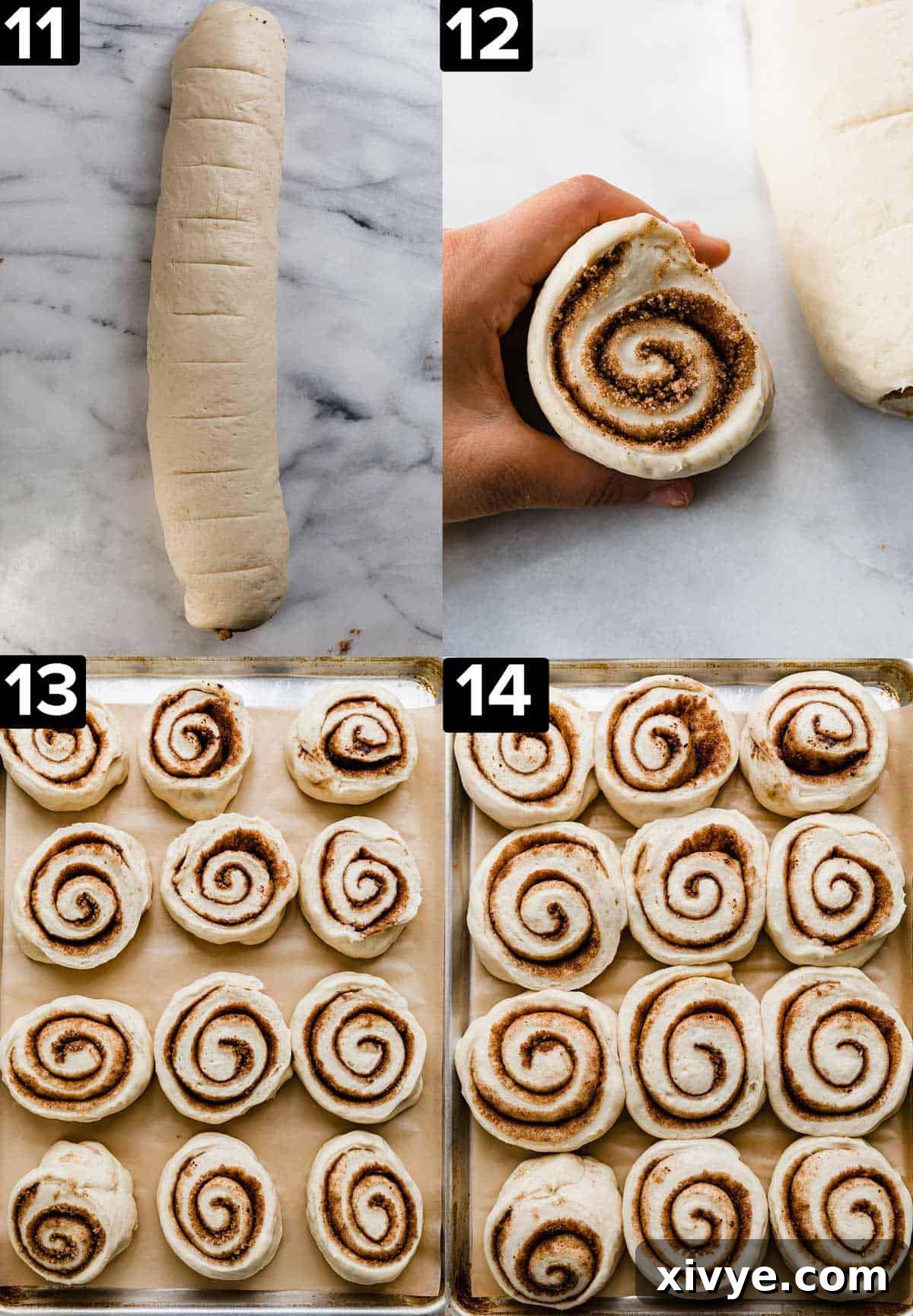
- Roll, Cut, and Rise: Starting from one of the longer 18-inch sides, carefully and tightly roll the dough into a log. You should end up with an 18-inch long cinnamon roll log. To cut the rolls, use a piece of unflavored dental floss or a thin, strong thread. Slide it underneath the log, cross the ends over the top, and pull firmly to slice through the dough. This method creates clean cuts without squishing the layers. Cut the log into 12 equally sized large rolls. Arrange the cut rolls onto your prepared baking sheet, leaving a small space between each. Cover the baking sheet loosely with plastic wrap and let the rolls rise in a warm place for 15-30 minutes, or until they appear noticeably puffed up and softer.
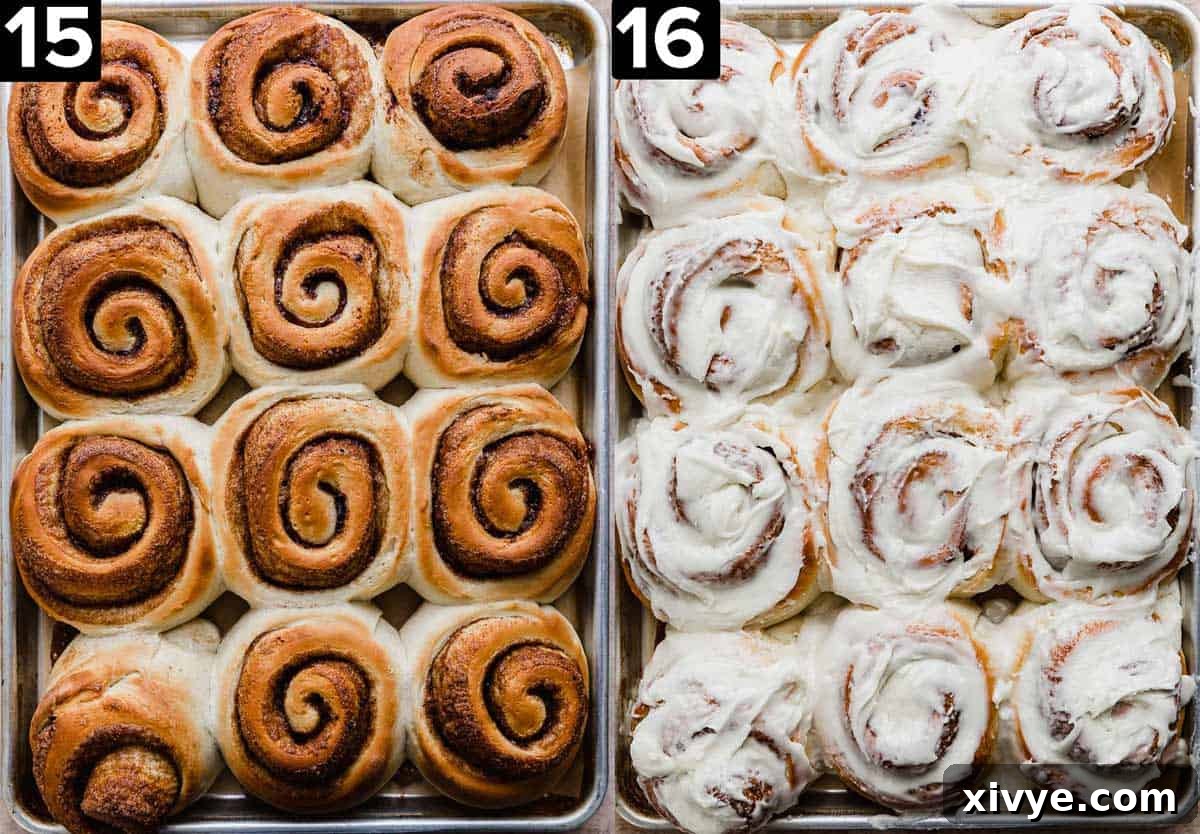
- Bake to Golden Perfection: Gently remove the plastic wrap from the risen cinnamon rolls. Place the baking sheet into your preheated 400°F (200°C) oven. Bake for 18-20 minutes, or until the tops are lightly golden brown and the rolls are cooked through to the center. Keep an eye on them towards the end of baking to prevent over-browning.
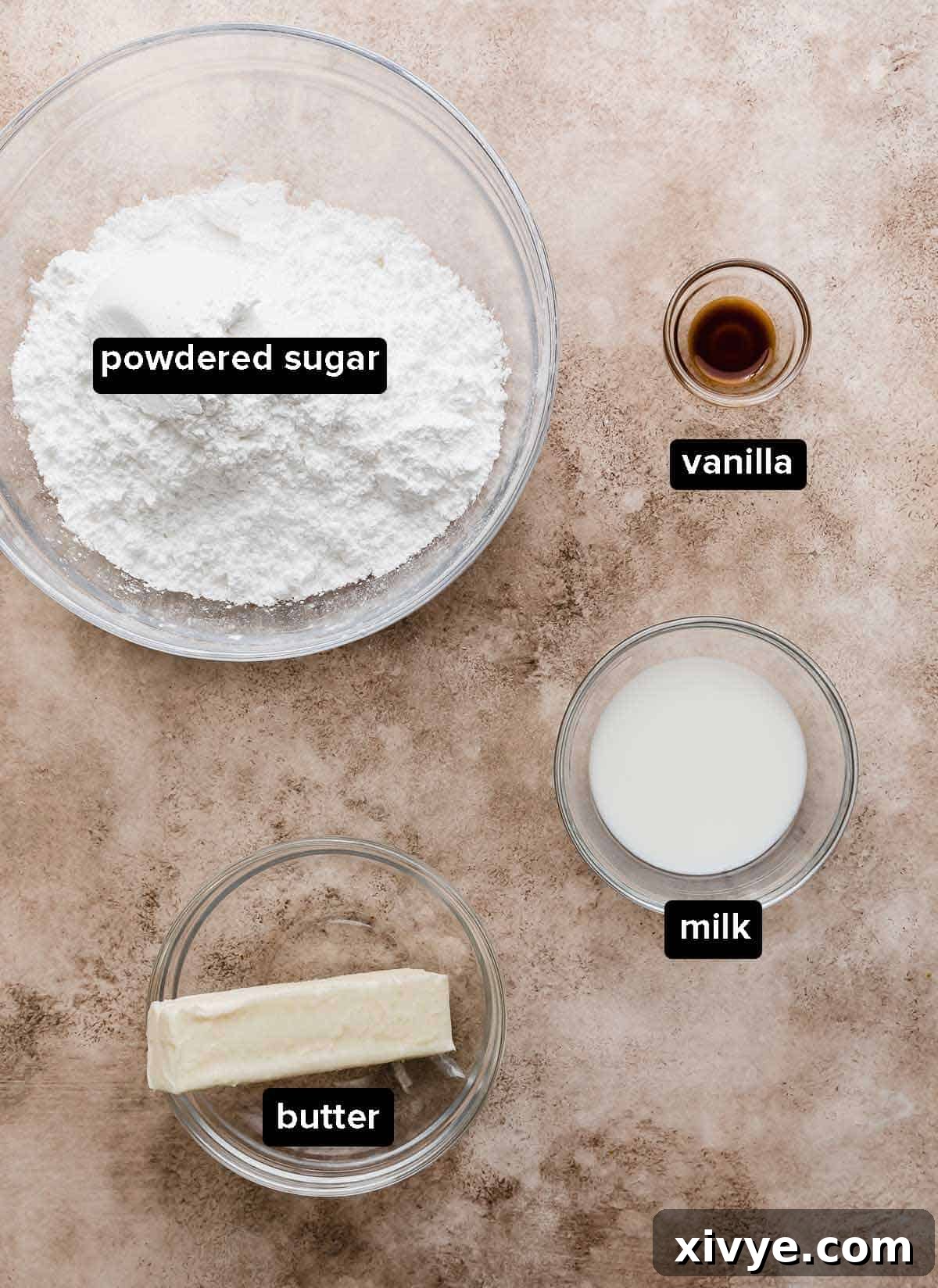
- Whip Up the Creamy Frosting: While the cinnamon rolls are baking, prepare the dreamy frosting. In the bowl of a stand mixer (or a medium mixing bowl if using an electric hand mixer), add 8 tablespoons of softened, room-temperature butter. Beat the butter until it is smooth and creamy. Gradually add 4 cups of powdered sugar, followed by 4-5 tablespoons of milk (adjusting the quantity as needed to achieve your desired consistency – aim for thick, yet spreadable). Finally, add 1 teaspoon of vanilla extract. Beat all ingredients together until the frosting is smooth, light, and perfectly combined.
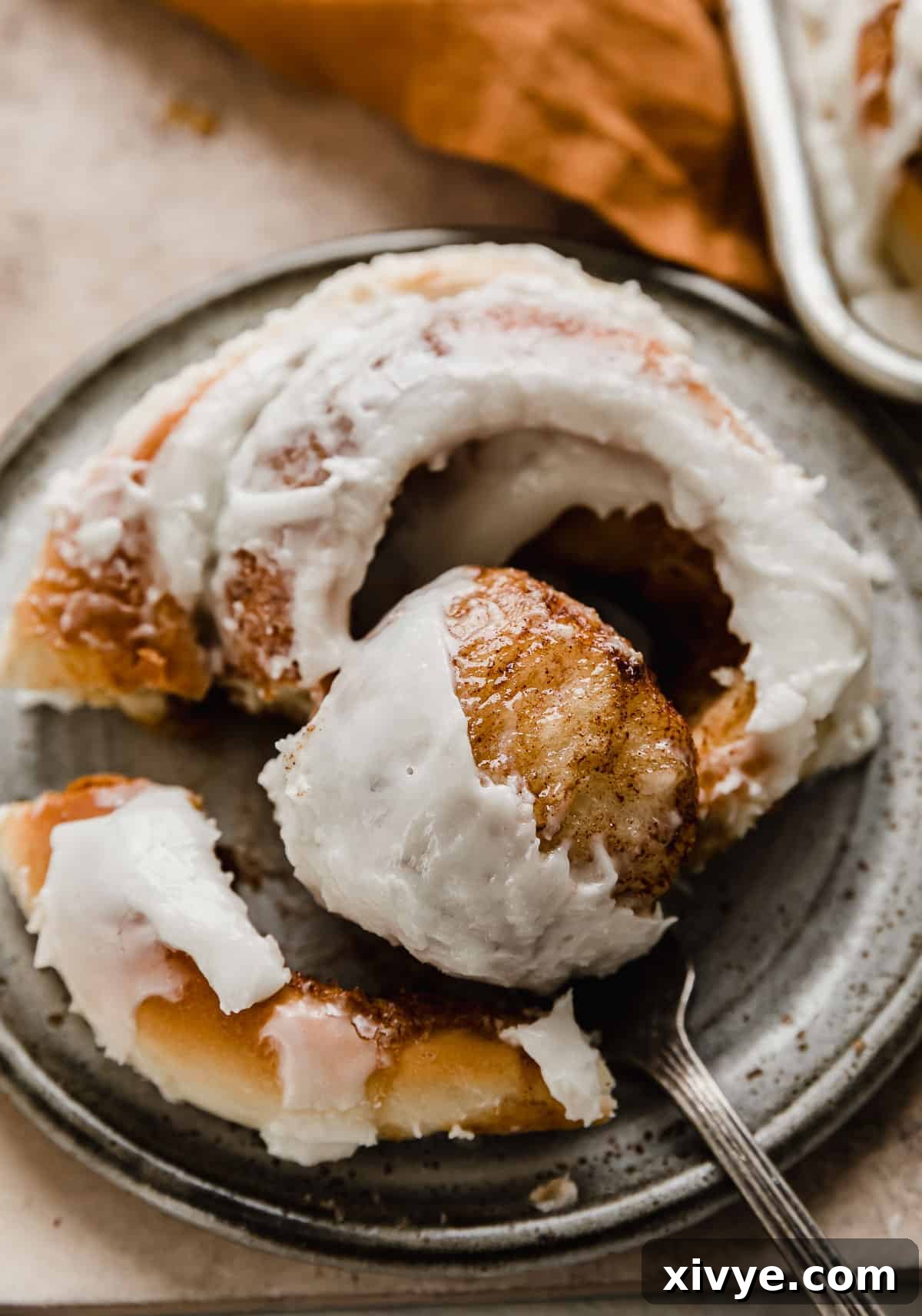
- Frost and Enjoy: Once the cinnamon rolls are out of the oven, let them cool on the baking sheet for about 5 minutes. This brief cooling period is important: if frosted when piping hot, the frosting will melt completely and run off. However, frosting them while they are still warm (but not hot) allows the luscious icing to gently melt and seep into every crack and crevice, creating an incredibly moist and flavorful experience. Spread a generous amount of frosting over each warm roll. Serve immediately and savor every glorious bite!
Expert Tips for Cinnamon Roll Success
Achieving truly exceptional homemade cinnamon rolls is easier with a few insider tips and tricks. These pointers will help you navigate common baking challenges and ensure your rolls turn out perfectly every time.
Mastering the Dough Consistency
The amount of flour required for your dough can vary. Factors like humidity in your climate and your altitude significantly affect how much flour the dough will absorb. The key is to aim for a dough that is consistently tacky but not overly sticky. When mixing, the dough should ultimately pull away from the sides of your stand mixer bowl, indicating proper gluten development without being dry. Don’t be afraid to adjust flour quantities incrementally until you reach this ideal consistency.
The Magic of Softened Butter
This is a crucial tip for a gooey, flavorful filling! Always use softened, room-temperature butter when spreading it over the rolled-out dough for the filling. If you use melted butter, it will likely seep out during baking, leaving you with a drier, less satisfying center. Softened butter, on the other hand, creates a rich, creamy base that adheres beautifully to the dough and firmly holds the cinnamon-sugar mixture in place, ensuring that signature gooey interior we all crave.
Smart Rolling and Cutting Techniques
For rolling out the dough, a pro tip is to lightly oil your countertop with cooking spray (like Baker’s Joy) instead of dusting it with flour. Flour tends to dry out the dough, and it’s often less effective at preventing sticking. An oiled surface, however, provides a perfect non-stick base, allowing you to roll out your dough smoothly without any frustrating sticking issues. When it comes to cutting the cinnamon rolls, dental floss or a thin, unflavored thread is your secret weapon. This technique creates incredibly clean cuts without pinching the edges of the rolls, ensuring they maintain their beautiful spiral shape perfectly.
Achieving the Perfect Frosting Drizzle
While this recipe calls for a classic vanilla frosting, feel free to experiment with a Brown Butter Cream Cheese Frosting for an extra layer of decadence! Regardless of your choice, the timing of frosting is essential. Wait until the cinnamon rolls have cooled for about 5 minutes after baking – they should be warm, but not piping hot. If frosted too early, the heat will cause the frosting to melt completely and run off. However, applying it to warm rolls allows the frosting to gently melt just enough to permeate every crack and crevice, creating an incredibly moist and flavorful experience without disappearing entirely.
The Importance of Oven Temperature
An accurate oven temperature is fundamental for consistent baking results. If you don’t already own one, investing in an oven thermometer is highly recommended. Many ovens can be off by as much as 10°F or more from what their digital display indicates. Knowing your oven’s true temperature ensures your cinnamon rolls bake evenly and perfectly golden brown, preventing under or over-baking. Additionally, always line your baking sheet with parchment paper or a silicone baking mat to prevent sticking and ensure easy cleanup.
Customize Your Extracts and Flavors
Our filling includes a subtle hint of almond extract for added warmth and depth. If you’re a true almond enthusiast, you can certainly increase the amount beyond what’s specified in the recipe. This allows you to tailor the flavor profile to your personal preference. For those looking for an exciting citrus twist, be sure to explore my Orange Rolls – they offer a bright and refreshing alternative to the classic cinnamon flavor!
Make Ahead, Storage, and Freezing Solutions
These homemade cinnamon rolls are incredibly versatile, allowing for convenient make-ahead options, efficient storage, and even freezing for future enjoyment. Here’s how to ensure you always have a delightful treat ready to go:
Overnight Cinnamon Rolls for Easy Mornings
To prepare these rolls in advance, simply follow the recipe instructions up to the second rise. Instead of letting them rise at room temperature, arrange the cut rolls on your baking sheet, cover them tightly with plastic wrap, and refrigerate overnight. The cold environment will significantly slow down the yeast activity, allowing the rolls to slowly proof. The next morning, simply remove them from the fridge about 1-2 hours before baking to allow them to come to room temperature and complete their final rise, then bake as directed. This method is perfect for stress-free holiday breakfasts or special weekend brunches!
Storing Leftovers for Freshness
While these cinnamon rolls are undeniably best when enjoyed warm and fresh from the oven, any leftovers can be stored to maintain their delightful softness. Place them in an airtight container at room temperature for up to 2 days. For extended freshness, you can refrigerate them in an airtight container for up to 5 days. To revive their incredible warmth and softness, a quick reheat in the microwave for 15-30 seconds (depending on size) works wonders.
Freezing for Future Enjoyment
You have a couple of excellent options for freezing these cinnamon rolls. For unbaked rolls, after cutting and placing them on the baking sheet, cover them tightly and freeze. When you’re ready to bake, transfer them from the freezer to the refrigerator the night before to thaw. The next morning, let them complete their final rise at room temperature for 2-3 hours before baking. Alternatively, you can bake the rolls completely, let them cool, then cover and freeze them. When serving, thaw them at room temperature or gently reheat, and then apply the frosting fresh on the day of enjoyment.
Frequently Asked Questions About Cinnamon Rolls
Here are answers to some of the most common questions about baking and enjoying these delightful homemade cinnamon rolls, ensuring your success every step of the way.
How long do cinnamon rolls last? While almost any baked good is at its peak when enjoyed fresh, these cinnamon rolls maintain their deliciousness. They are best eaten the same day they are made for optimal flavor and texture. However, you can store them in an airtight container, or covered with aluminum foil or plastic wrap, at room temperature for up to 2 days. For a slightly longer shelf life, they can be refrigerated in an airtight container for up to 5 days.
This recipe uses a lot of yeast, is this normal? You’re observant! This dough does indeed have a more generous amount of yeast than many traditional recipes. But rest assured, the final product won’t taste excessively yeasty at all! We intentionally use more yeast to significantly speed up the rising process. This strategic choice is precisely how we’re able to create these incredibly fluffy cinnamon rolls in as little as 1 hour – a true baking triumph!
What’s the difference between active dry yeast and instant yeast? The primary difference lies in their activation. Active dry yeast, which this recipe uses, needs to be activated first by dissolving it in warm liquid (like water and buttermilk) and allowing it to become foamy and bubbly before combining with other ingredients. Instant yeast, on the other hand, is designed to be added directly to the dry ingredients without prior activation, as it’s processed to be ready instantly.
Can I use salted butter for cinnamon rolls? Yes, you can certainly use salted butter if that’s what you have on hand. However, to maintain the intended flavor balance, we recommend making a slight adjustment to the recipe. Reduce the amount of added salt in the dough by ¼ teaspoon for every ½ cup of salted butter you use in the recipe. This will prevent your rolls from becoming overly salty.
Can I use all-purpose flour instead of bread flour? We strongly advise against substituting all-purpose flour for bread flour in this recipe. They are distinctly different types of flour. Bread flour has a significantly higher protein content, which is crucial for developing strong gluten networks. This strength provides the necessary structure for the dough to achieve its signature large, beautiful rise and incredibly fluffy texture. Using all-purpose flour will result in a less impressive rise and a different, potentially denser, texture.
Why didn’t my cinnamon rolls rise? Several factors could contribute to a lack of rise. First, always check the freshness and expiration date of your yeast; old yeast is inactive yeast. Second, ensure your buttermilk is at room temperature, as cold ingredients can inhibit yeast activity. Third, using bread flour as specified is vital for proper structure and rise. Fourth, provide a warm environment for the dough to proof; cold surroundings significantly slow down or halt the rising process. Finally, an accurate oven temperature is key. Consider using an oven thermometer, as many ovens can fluctuate from their set temperature, impacting proper proofing and baking.
Will cinnamon rolls rise in the fridge? Yes, the refrigerator is an excellent tool for controlling the rising process. If you need to spread out the preparation time, you can certainly allow one of your rises (typically the second rise after shaping) to occur in the fridge overnight. The cold temperature slows down the yeast’s activity considerably, allowing for a slow, extended proof. This means you can prepare the rolls the evening before and bake them fresh the following morning without having to wake up at dawn!
Are these cinnamon rolls dairy free? As written, this recipe is not dairy-free, as it calls for buttermilk, butter, and milk for the frosting. However, one resourceful reader reported successful results using vegan butter and coconut milk as dairy substitutes. If you are looking for a dairy-free option, you might consider experimenting with similar plant-based alternatives.
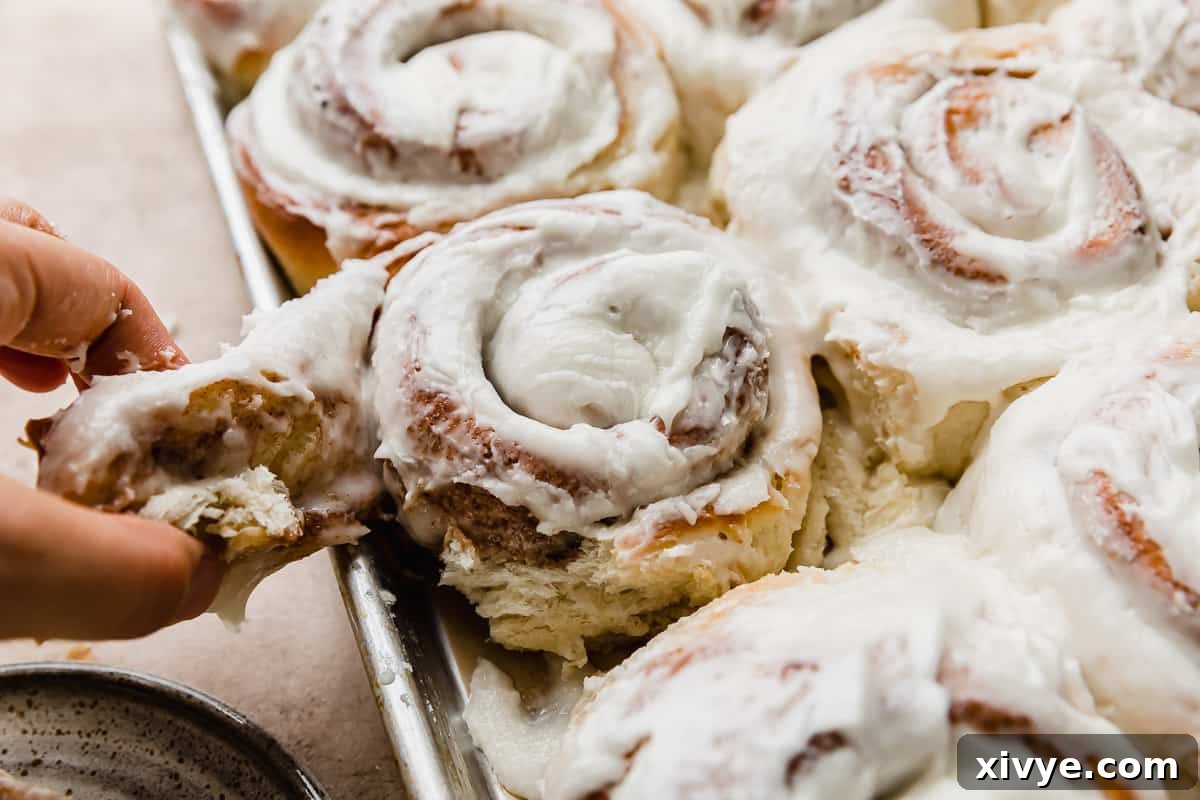
When is the best time to frost cinnamon rolls? For the best results, you’ll want to use a thick frosting, not a thin glaze, as frosting adheres much better and creates that delightful creamy layer. The ideal time to frost your cinnamon rolls is after they have cooled slightly from the oven, when they are still warm but not piping hot. If you apply frosting to rolls that are too hot, it will simply melt off. However, frosting them while they are still warm allows the beautiful, creamy frosting to gently melt into every crack and crevice, permeating the rolls with incredible flavor and moisture without completely disappearing.
Explore More Cinnamon-Inspired Recipes
If you’ve fallen in love with the warm, comforting spice of cinnamon, you’ll adore these other recipes that celebrate this versatile ingredient:
- Cinnamon Sugar Caramelitas
- Cinnamon Chocolate Chip Coffee Cake
- Cinnamon Banana Bread Recipe
- Apple Cinnamon Scones
Did you try this amazing recipe? We would absolutely love to hear about your experience! Please leave a star rating and review right here on the blog, or scroll down below the recipe card to share your feedback. Your insights and culinary triumphs inspire us!
Stay connected and up-to-date with all our latest recipes and baking adventures by following us on Instagram, TikTok, YouTube, Facebook, and Pinterest.
Homemade Cinnamon Rolls Recipe Card
The only Cinnamon Roll recipe you’ll ever need! These cinnamon rolls are soft, fluffy, and loaded with the perfect cinnamon sugar mixture.
Author: Whitney Wright
- Prep Time: 50 minutes
- Cook Time: 20 minutes
- Total Time: 1 hour 10 minutes
- Yields: 12 large cinnamon rolls
(Recipe rating placeholder – please add your own review!)
Ingredients
Dough
- 1 cup warm water
- ¾ cup buttermilk (room temperature)
- ½ cup granulated sugar
- ¼ cup melted butter
- 2 ½ tablespoons active dry yeast
- ½ tablespoons salt
- 2 large eggs
- 5-6 cups bread flour (will vary depending on your climate and altitude)
Filling
- 1 cup brown sugar
- 1 ½ tablespoons cinnamon
- 4 tablespoons unsalted butter (room temperature)
- ½ teaspoon vanilla extract
- ⅛ teaspoon almond extract
Frosting
- 4-5 tablespoons milk (more or less, as needed for consistency)
- 1 teaspoon vanilla extract
- 4 cups powdered sugar
- 8 tablespoons unsalted butter (softened to room temperature)
Equipment
- Kitchen Aid stand mixer
- Baking sheet
- Silicone baking mat
- Rolling pin
Instructions
- Prepare the Dough: In the bowl of a stand mixer fitted with the dough hook, combine the warm water, room temperature buttermilk, granulated sugar, melted butter, and active dry yeast. Mix briefly to incorporate. Let this mixture sit for 10-15 minutes until the yeast becomes bubbly and foamy. Once bubbly, add the salt, large eggs, and 5-6 cups of bread flour (start with 5 and add more gradually as needed until the dough is tacky but not overly sticky and pulls away from the sides of the bowl). Mix on medium speed for 8-10 minutes. After mixing, cover the bowl with plastic wrap and allow the dough to rest in a warm place for 10 minutes.
- Make the Filling: While the dough rests, prepare the filling. In a small bowl, combine the brown sugar, cinnamon, ½ teaspoon vanilla extract, and ⅛ teaspoon almond extract. Stir until all ingredients are well combined. Set aside.
- Roll and Fill: Preheat your oven to 400°F (200°C). Prepare a baking sheet by lining it with a silicone baking mat or parchment paper. Lightly spray your clean countertop with cooking spray (such as Baker’s Joy). Using a rolling pin, roll the rested dough into a large 14×18-inch rectangle. Using the back of a spoon or an offset spatula, smear the 4 tablespoons of softened butter evenly over the entire surface of the dough, leaving a small border if desired. Sprinkle the prepared cinnamon brown sugar filling evenly over the softened butter.
- Shape and Rise: Starting on one of the longer 18-inch sides, carefully and tightly roll the dough into a log. You should have an 18-inch long cinnamon roll log. Using unflavored dental floss or a strong thread, cut the log into 12 equally sized large rolls. Arrange the cut rolls onto the prepared baking sheet, typically 3 rolls across and 4 rolls down, leaving a little space between each. Cover the cinnamon rolls loosely with plastic wrap and let them rise in a warm place for 15-30 minutes, or until they appear slightly puffed up and soft.
- Bake the Rolls: Gently remove the plastic wrap from the risen rolls. Bake in the preheated oven for 18-20 minutes, or until the tops are lightly golden brown and the rolls are cooked through.
Frosting Instructions
- Prepare the Frosting: While the rolls are baking, make the frosting. In the bowl of a stand mixer (or using an electric hand mixer), beat the 8 tablespoons of softened butter until smooth and creamy. Gradually add the 4 cups of powdered sugar, 4-5 tablespoons of milk (adjusting as needed for your desired consistency – aim for thick but spreadable), and 1 teaspoon of vanilla extract. Beat until all ingredients are well incorporated and the frosting is smooth.
- Frost and Serve: Once the cinnamon rolls are finished baking, remove them from the oven and let them cool on the baking sheet for about 3-5 minutes. This allows them to cool slightly without becoming cold. Frost the rolls generously while they are still warm (but not hot). Frosting warm rolls ensures that the icing gently melts into every delicious crevice. Best served warm and enjoyed on the same day. However, leftovers can be stored in an airtight container for up to 3 days at room temperature.
Video
Recipe Notes
- Remember that flour requirements can vary based on your climate and altitude. The dough should always be tacky but not excessively sticky, pulling away from the sides of the bowl during mixing.
- For clean, un-pinched cuts, always use unflavored dental floss or a thin thread when slicing your cinnamon roll log.
- The consistency of your frosting is key. Depending on the humidity and your preference, you may only need 4 tablespoons of milk. Aim for a thick, luxurious frosting, not a thin glaze.
- This recipe was developed and tested at sea level, so minor adjustments may be needed for higher altitudes.
- Recipe Source: Dough recipe adapted from Your Home Based Mom.
Nutrition Facts
- Calories: 557 kcal (28% Daily Value)
- Carbohydrates: 101g (34% Daily Value)
- Protein: 8g (16% Daily Value)
- Fat: 13g (20% Daily Value)
- Saturated Fat: 8g (40% Daily Value)
- Cholesterol: 59mg (20% Daily Value)
- Sodium: 428mg (18% Daily Value)
- Potassium: 127mg (4% Daily Value)
- Fiber: 2g (8% Daily Value)
- Sugar: 61g (68% Daily Value)
- Vitamin A: 425IU (9% Daily Value)
- Calcium: 63mg (6% Daily Value)
- Iron: 0.8mg (4% Daily Value)
- Course: Breakfast
- Cuisine: American
Did you make this recipe?
Please leave a star rating and review on the blog post letting me know how you liked this recipe! Take a picture and tag @saltandbaker on Tik Tok, Instagram, and Facebook so I can see what you’re making!