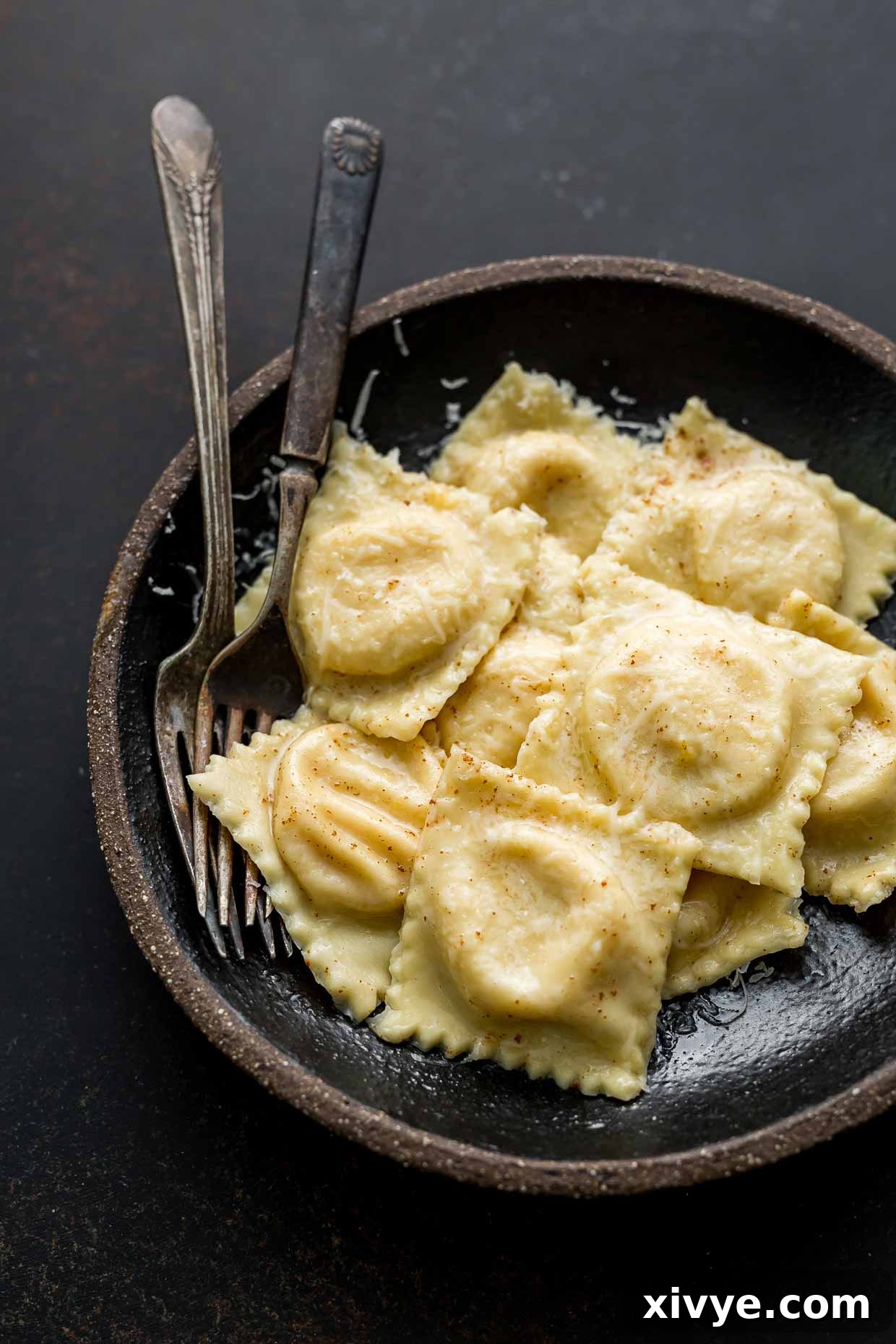
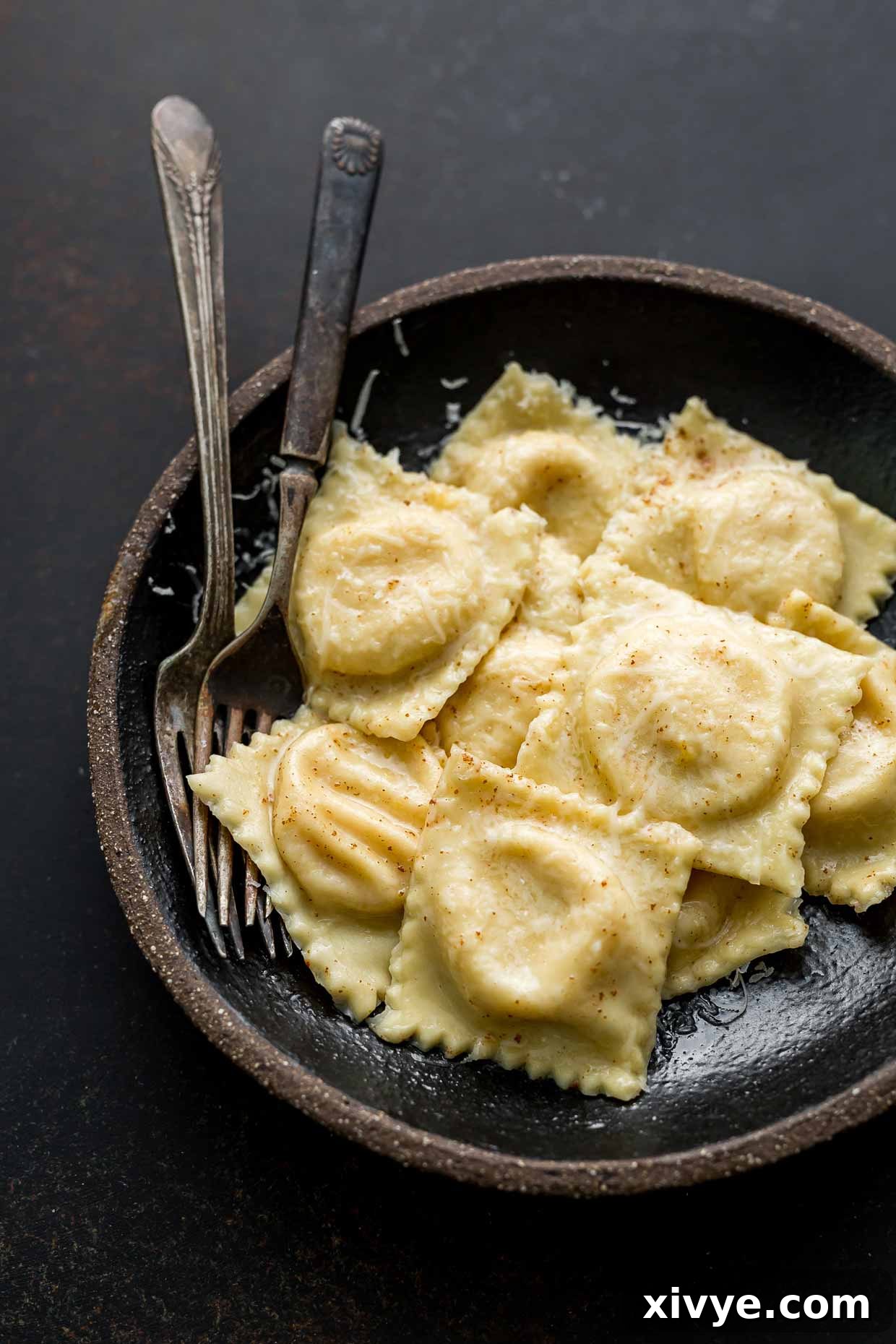
There’s nothing quite as comforting and satisfying as a plate of homemade pasta, and this Butternut Squash Ravioli with Brown Butter Sauce truly elevates the experience. Imagine tender, pillowy ravioli, each parcel bursting with a creamy, sweet, and subtly spiced butternut squash and ricotta filling, then lightly coated in a rich, nutty brown butter sauce and crowned with a sprinkle of fresh Parmesan. This recipe isn’t just a meal; it’s an invitation to savor the joys of autumn and the rewarding craft of making pasta from scratch. While homemade ravioli might sound daunting, you’ll discover it’s far more accessible and infinitely more delicious than you might think. Get ready to impress your taste buds and your dinner guests with this extraordinary dish!
Butternut squash is a culinary gem, incredibly versatile, nutritious, and a staple of fall cooking. Its natural sweetness and smooth texture make it perfect for a myriad of dishes. If you happen to have extra butternut squash on hand after making this delightful ravioli, don’t let it go to waste! It can be transformed into a variety of other delicious meals. Consider whipping up a creamy Butternut Squash Pasta, a hearty Butternut Squash Orzo, or a vibrant Butternut Squash and Kale side. For something simpler, Cinnamon Roasted Butternut Squash makes a fantastic accompaniment, or for a more substantial meal, try Butternut Squash Sausage Pasta. The culinary possibilities with this seasonal squash are truly endless!
Why This Recipe Is a Must-Try
This Butternut Squash Ravioli recipe stands out for several key reasons, promising a dining experience that’s both comforting and gourmet.
- Unrivaled Freshness with Homemade Dough: The foundation of exceptional ravioli lies in its pasta dough. Making your own dough from scratch ensures an incomparable freshness, a tender texture, and a superior flavor that store-bought varieties simply can’t match. It might seem like a grand endeavor, but the process is surprisingly straightforward and incredibly rewarding. Our comprehensive How to Make Ravioli Recipe guides you through every step, making it accessible for even novice pasta makers. The effort truly pays off in every delightful bite, offering a fresh, springy texture that perfectly cradles the rich filling.
- Exquisite Butternut Squash Filling: The heart of this dish is its perfectly balanced filling. We combine a velvety smooth butternut squash puree with creamy ricotta cheese and a hint of warm, aromatic ground nutmeg. This blend creates a filling that is sweet, savory, and incredibly rich, yet light enough not to overpower the delicate pasta. The ricotta adds a luxurious creaminess, while the nutmeg provides a subtle warmth that complements the natural sweetness of the squash beautifully, making each ravioli a burst of autumnal flavor.
- Elegance of Brown Butter Sauce: To complement the rich filling without overshadowing it, a simple yet sophisticated brown butter sauce is the ideal choice. As butter gently cooks and browns, it develops a deep, nutty aroma and flavor that is utterly irresistible. This sauce lightly coats each ravioli, adding a layer of complex taste and a beautiful sheen. Finished with a dusting of freshly grated Parmesan, it allows the delicious butternut squash filling to truly shine, creating a harmonious and utterly delightful dish that’s both elegant and deeply satisfying.
Key Ingredients for Perfect Ravioli
Understanding your ingredients is the first step towards culinary success. Here’s a closer look at what you’ll need to create these fantastic butternut squash ravioli:
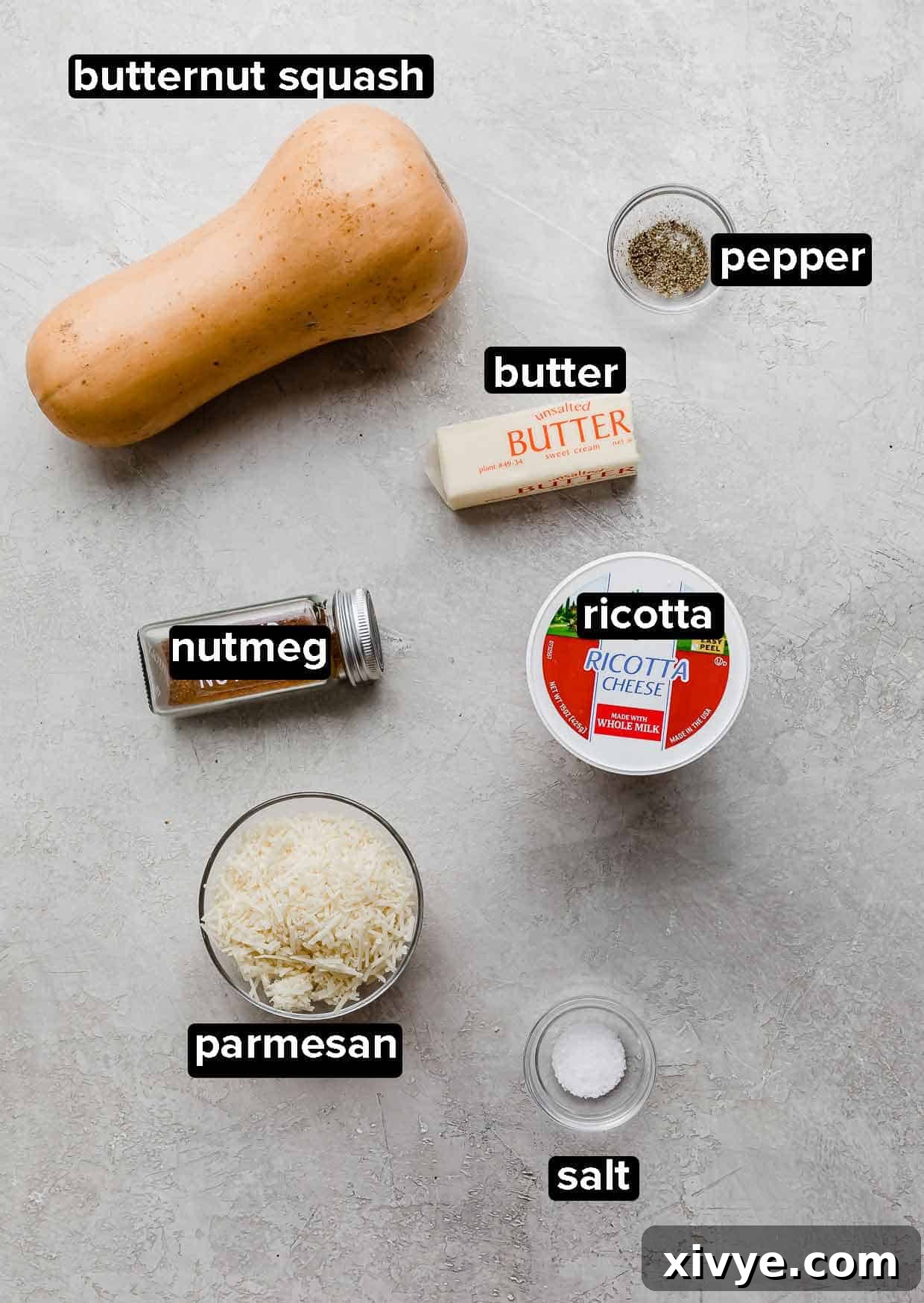
- Homemade Ravioli Dough: For this recipe, you’ll need approximately half a batch of our homemade ravioli dough. This amount is perfect for a family meal or a smaller gathering. If you’re planning to serve a larger group or wish to have extras to freeze for future quick meals, feel free to prepare a full batch. A full batch typically yields about 50 ravioli, offering plenty of deliciousness to go around or save for later.
- Butternut Squash: The star of our filling, butternut squash brings natural sweetness and a creamy texture. You’ll likely use an entire medium-sized squash for this recipe. If you find yourself with extra butternut squash puree, it’s a wonderful problem to have! You can easily repurpose it for another delightful dish, such as our Butternut Squash Pasta Recipe, ensuring no deliciousness goes to waste. When selecting a butternut squash, look for one that is firm, heavy for its size, and free of soft spots or blemishes.
- Ricotta Cheese: This soft, creamy Italian cheese is essential for adding a luscious texture and a subtle, milky sweetness to the filling. Ricotta is known for being relatively low in sodium, making it a wholesome choice. It’s even a great option for babies starting solids, which speaks to its gentle flavor and creamy consistency. Opt for whole milk ricotta for the richest, most decadent filling.
- Ground Nutmeg: A small amount of ground nutmeg works wonders in this recipe, imparting a warm, earthy, and slightly sweet spice that beautifully complements the butternut squash. For the best flavor, we highly recommend using freshly grated nutmeg if possible. The aromatic oils are much more potent when freshly grated, delivering a deeper, more vibrant taste compared to pre-ground versions.
- Freshly Grated Parmesan Cheese: Always choose a block of high-quality Parmesan cheese and grate it yourself just before adding it to the filling or serving. Pre-grated cheeses, while convenient, often contain anti-caking agents that can alter their texture and make them less flavorful and harder to melt smoothly. Freshly grated Parmesan offers a sharper, nuttier flavor and melts beautifully, creating a superior texture and taste in your dish.
- Unsalted Butter: Unsalted butter is crucial for crafting the rich, nutty brown butter sauce. Using unsalted butter allows you to control the overall sodium content of the dish precisely. The process of browning butter transforms it into a complex, aromatic sauce that perfectly complements the sweet and savory ravioli.
Crafting Your Butternut Squash Ravioli: A Step-by-Step Guide
Embark on the journey of creating these exquisite homemade butternut squash ravioli with these detailed instructions. Each step is designed to guide you to culinary success.
- Prepare and Roast the Butternut Squash: Begin by preheating your oven to 350°F (175°C). Carefully wash the exterior of your butternut squash. Using a sharp knife, pierce several holes around the squash to allow steam to escape during baking. Place the squash on a baking sheet and roast for 60 to 75 minutes, or until it is fork-tender and easily pierced. The skin should be soft, indicating the flesh inside is perfectly cooked. Once roasted, remove it from the oven and let it cool for about 10-15 minutes, making it easier and safer to handle. Carefully cut the squash in half lengthwise. Scoop out and discard the seeds and fibrous pulp. Then, with a spoon, scoop the soft, cooked butternut squash flesh into the bowl of a food processor.
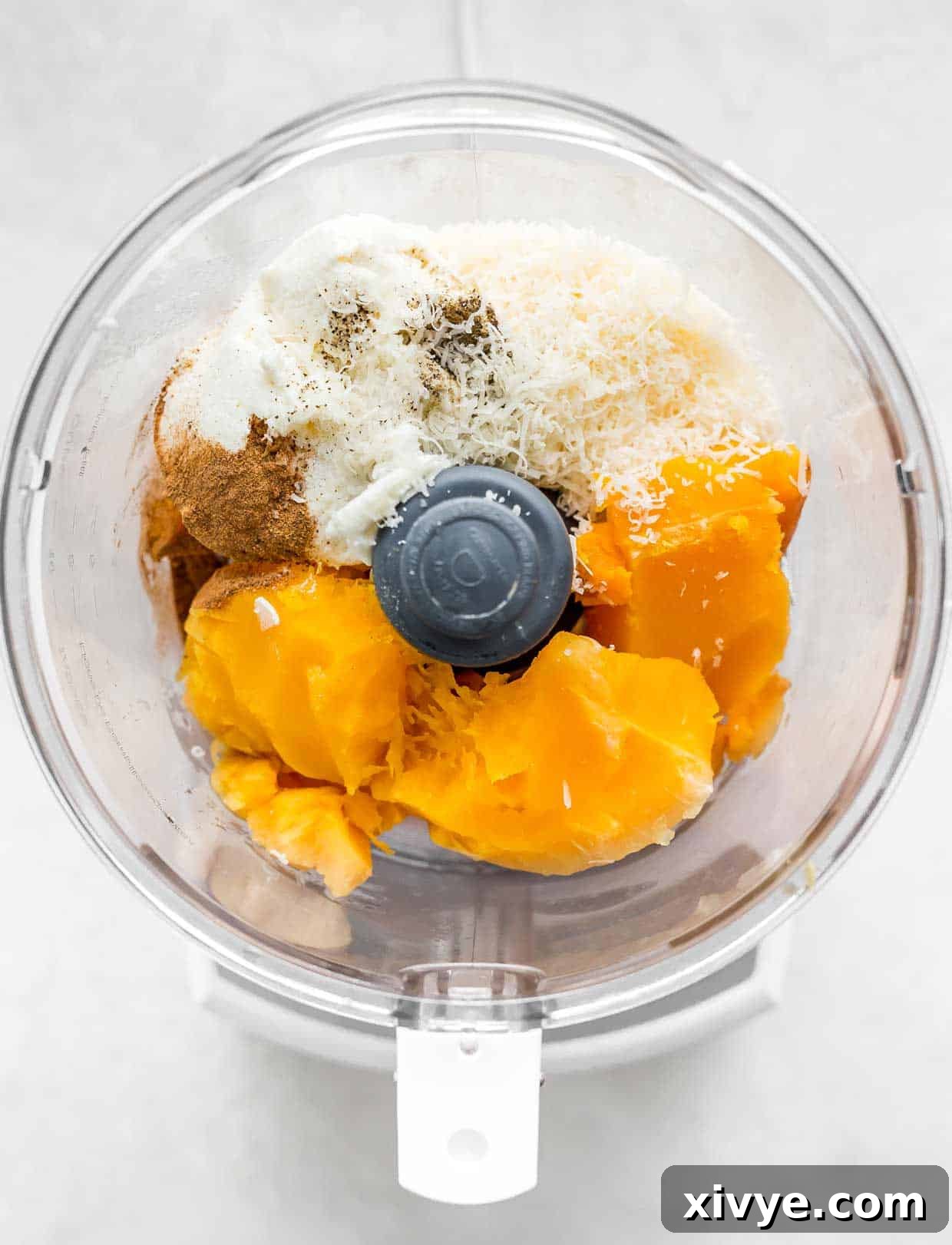
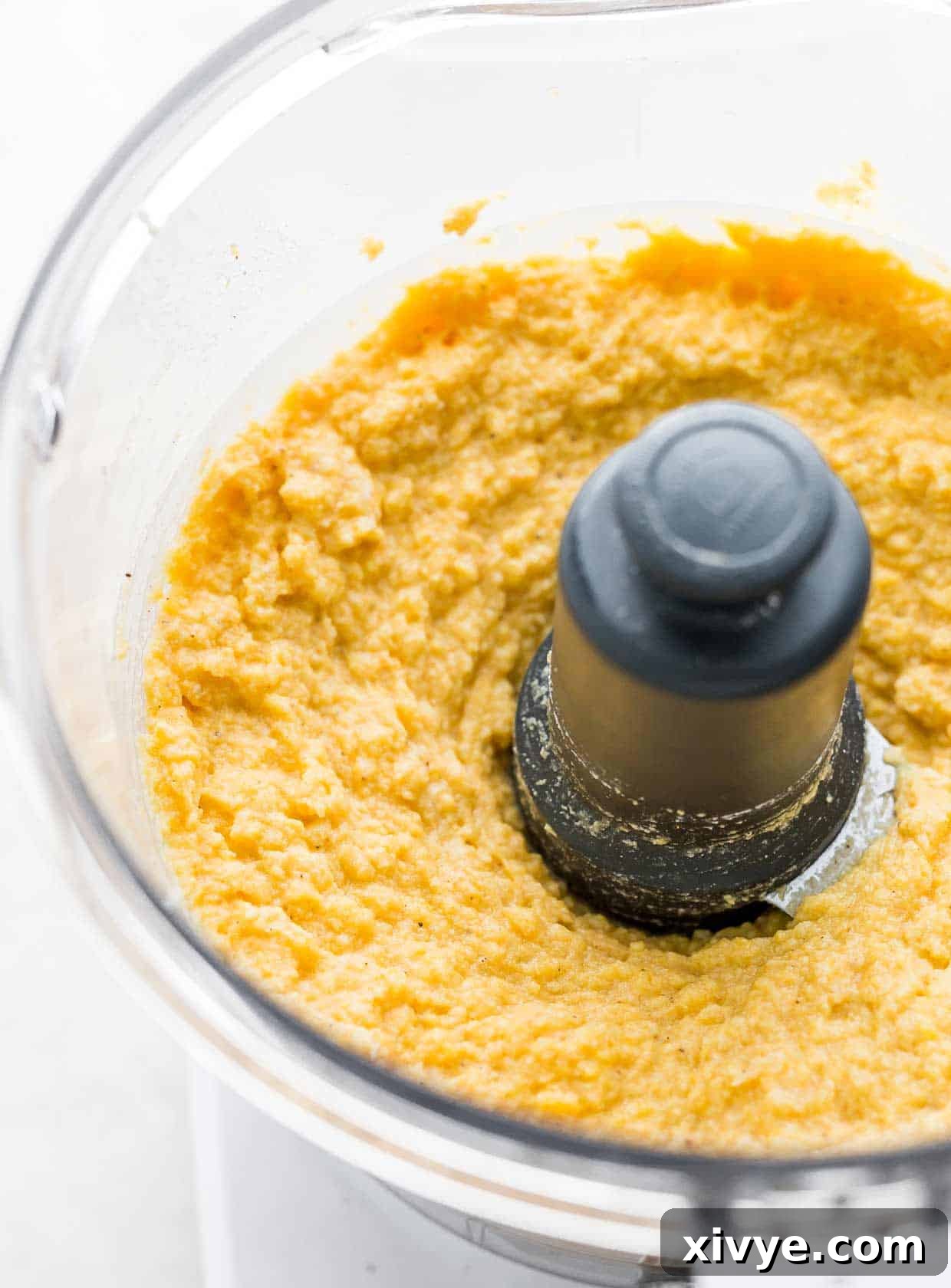
- Create the Luscious Butternut Squash Ricotta Filling: To the roasted butternut squash in the food processor, add the ricotta cheese, ground nutmeg, freshly grated Parmesan, kosher salt, and freshly ground black pepper. Secure the lid and process the mixture until it is completely smooth and creamy. Scrape down the sides of the bowl as needed to ensure all ingredients are well incorporated. The goal is a velvety-smooth consistency, perfect for filling the delicate ravioli. Taste and adjust seasoning if necessary, adding more salt, pepper, or nutmeg to suit your preference.
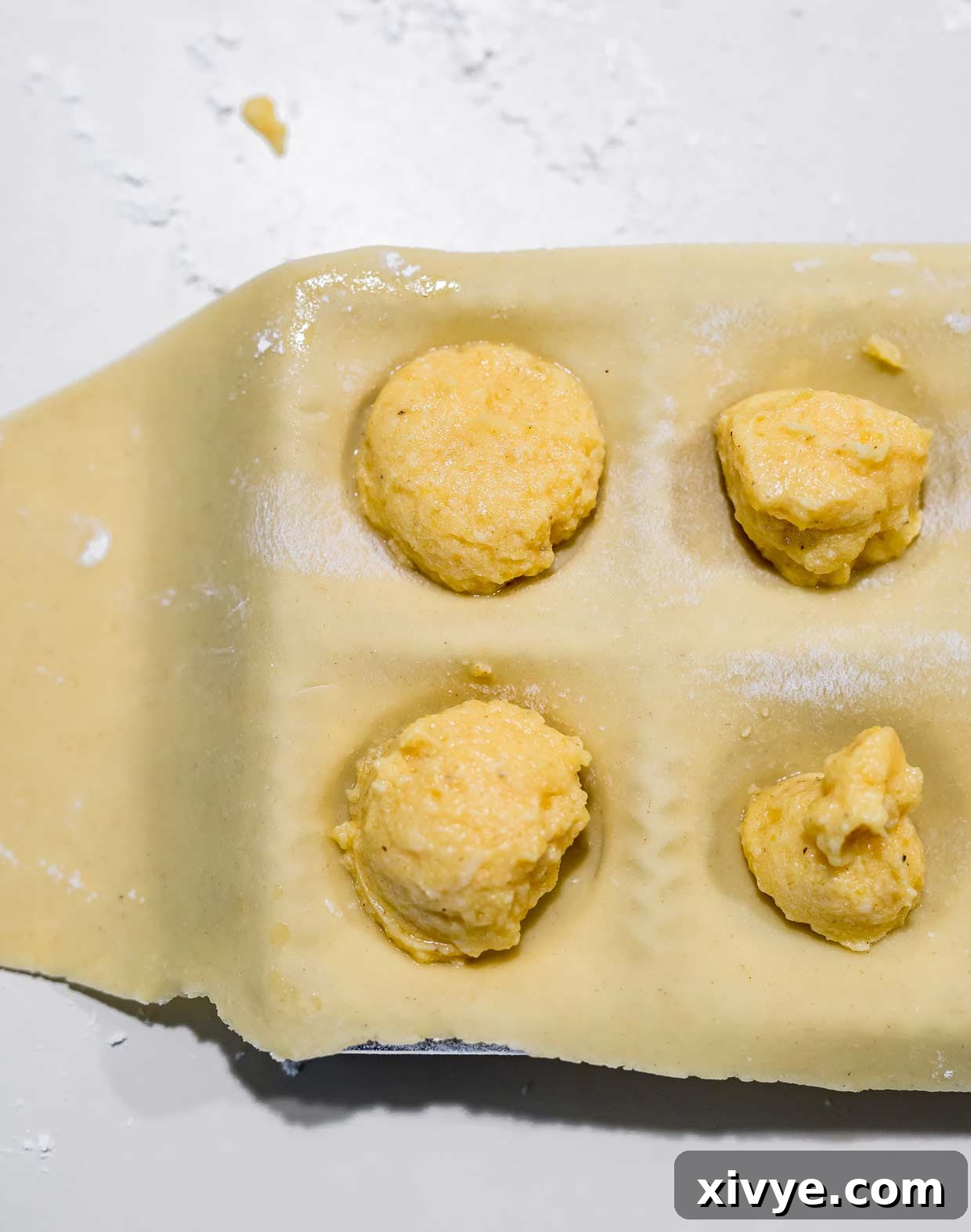
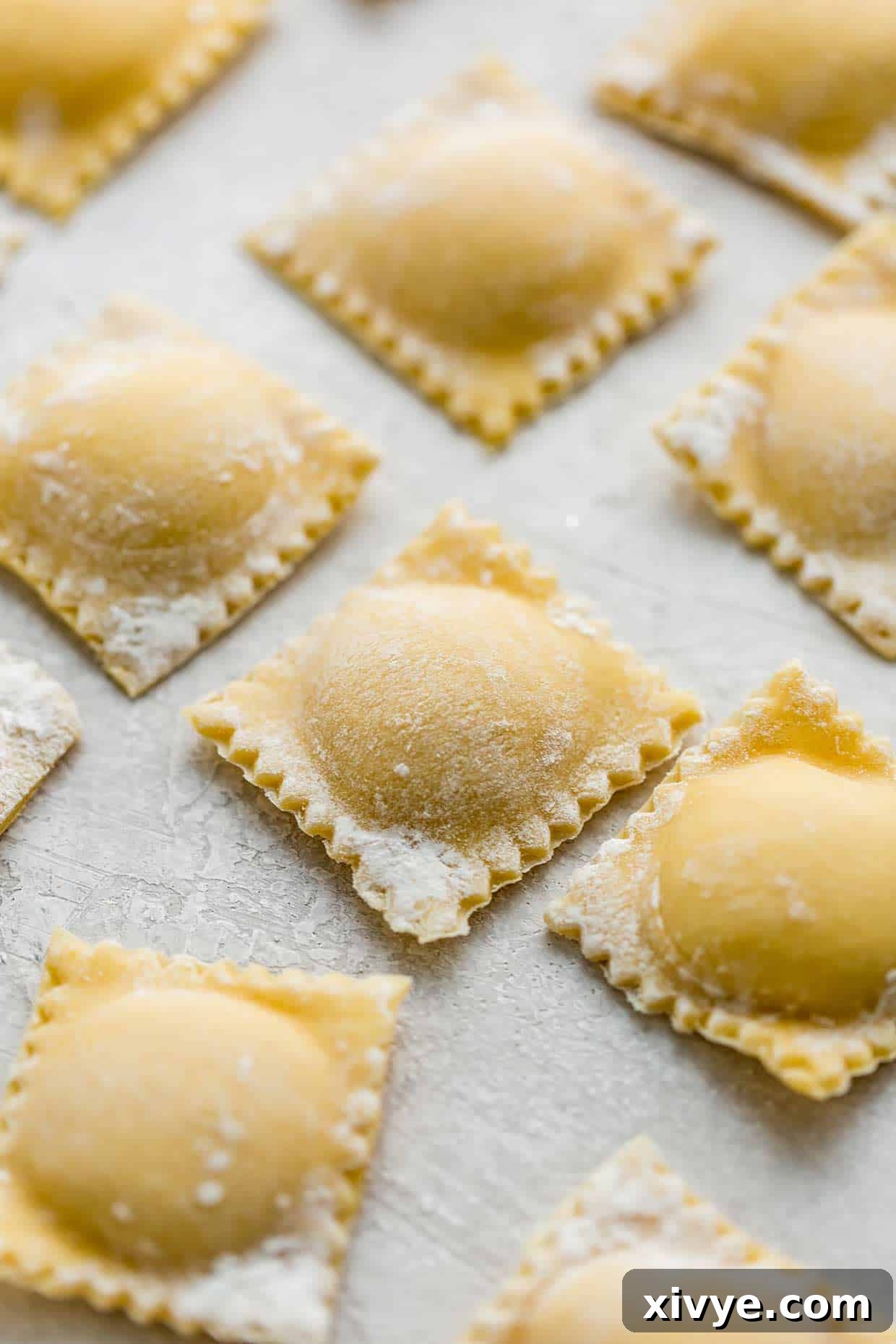
- Skillfully Fill the Ravioli: Now for the exciting part – filling your homemade ravioli! If you’re using our Ravioli Dough, roll it out into thin sheets as instructed in our dedicated guide. For each ravioli, place about 1 tablespoon of the butternut squash ricotta filling onto one sheet of pasta, spacing them appropriately. Lay another sheet of pasta over the filling, gently pressing down around each mound to remove any air pockets. Then, carefully cut and seal the ravioli according to the detailed steps provided in our How to Make Ravioli post. Ensure the edges are well-sealed to prevent the filling from escaping during cooking.
- Master the Art of Browning Butter: While you’re preparing the ravioli, begin making your delightful brown butter sauce. Refer to our detailed How to Brown Butter recipe for precise guidance. In a large skillet, melt the unsalted butter over medium-low heat. Stir constantly as the butter melts, foams, and eventually transitions from yellow to a light golden brown, releasing a nutty aroma. Tiny brown specks will appear at the bottom of the pan – these are the milk solids caramelizing and delivering all that wonderful flavor. Be vigilant and stir frequently to ensure even browning and prevent burning. Once it reaches a rich amber color and smells nutty, remove it from the heat immediately to stop the cooking process.
- Perfectly Cook the Ravioli: Bring a large pot of generously salted water to a rolling boil. While the water is heating, ensure your brown butter is ready in the skillet. Once the water is boiling, carefully add about 8-10 ravioli to the pot. It’s crucial not to overcrowd the pan; this helps maintain water temperature and prevents the ravioli from sticking together. Cook the ravioli for 3-4 minutes, or until they float gracefully to the surface of the water, indicating they are perfectly al dente.
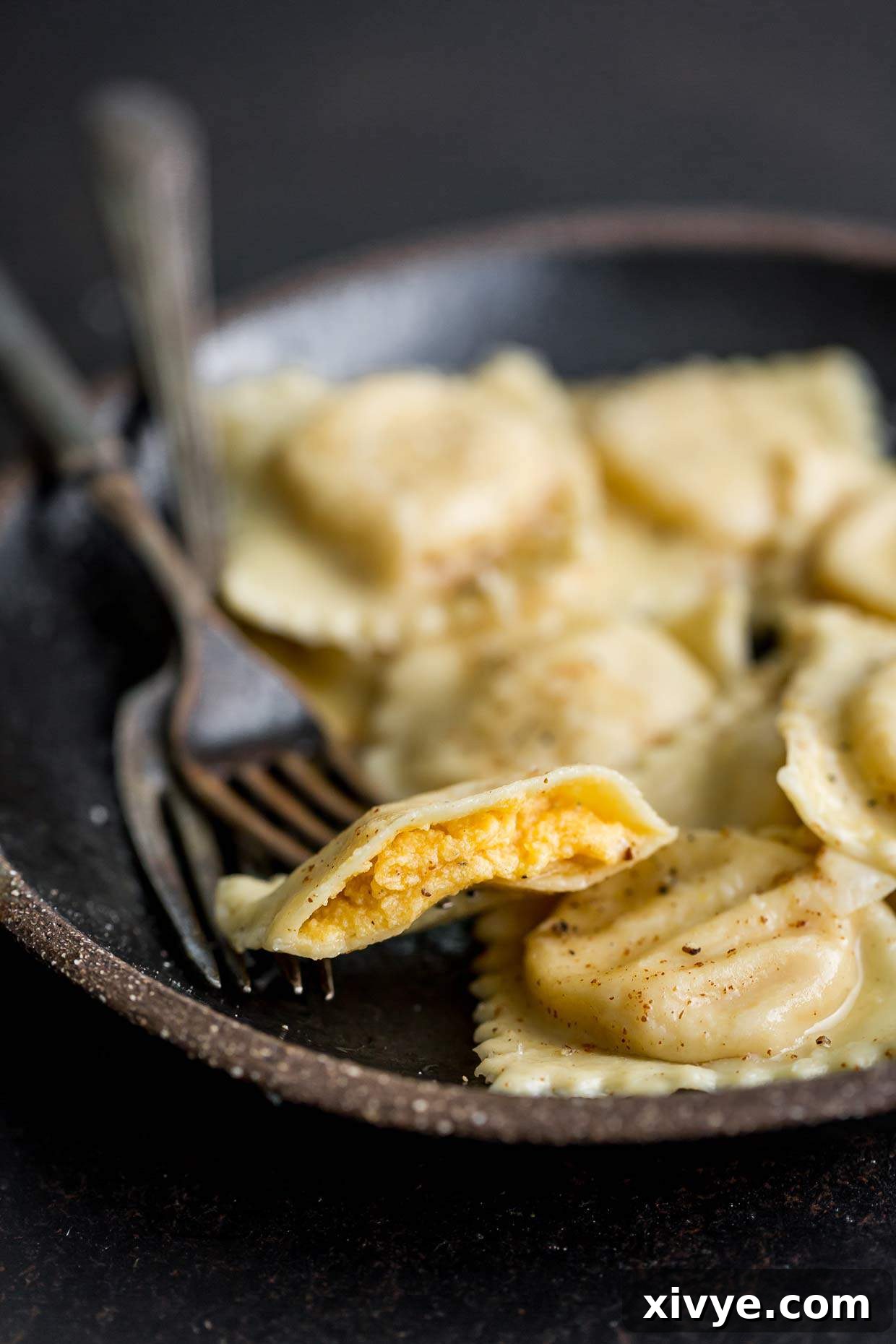
- Coat and Serve with Elegance: As soon as the ravioli are cooked, use a slotted spoon to gently lift them from the boiling water and transfer them directly into the skillet containing the warm brown butter. Carefully toss the ravioli to ensure each piece is beautifully coated in the fragrant, nutty sauce. Serve immediately, garnished generously with additional freshly grated Parmesan cheese and, if you desire an extra layer of warmth, a tiny dusting of ground nutmeg or some fresh sage leaves. This dish is best enjoyed fresh, savoring the delicate pasta and rich filling.
Expert Tips for Butternut Squash Ravioli Success
Achieving perfect homemade butternut squash ravioli is easier with a few insider tips:
- Mastering Homemade Pasta Dough: If you have any uncertainties about making the pasta dough, consider our dedicated post on How to Make Ravioli your ultimate resource. It delves into everything from flour types to kneading techniques, ensuring your pasta sheets are perfect for stuffing. The key to tender ravioli is a well-hydrated, pliable dough that is rolled thinly but not so thin that it tears easily.
- Tools for Efficiency: While not strictly necessary, certain tools can significantly simplify the ravioli-making process. Instead of a traditional hand-crank pasta machine, consider using a pasta roller attachment for your KitchenAid stand mixer. It makes rolling out uniform pasta sheets effortless. Additionally, a ravioli maker or a ravioli stamp can streamline the filling and sealing process, creating perfectly shaped dumplings with ease. If you don’t have these, a rolling pin and a simple fork can still get the job done beautifully.
- Precise Filling: To ensure each ravioli is uniformly filled and cooks evenly, a small cookie scoop (about 1 tablespoon in size) is incredibly helpful. This ensures consistent portions of the butternut squash filling, preventing overfilling which can lead to bursting, or underfilling which can result in a less satisfying bite.
- Browning Butter Safely: Browning butter requires a watchful eye. The transition from perfectly nutty brown to burnt black can happen in a matter of seconds. Keep the heat at medium-low and stir constantly. Look for a rich, amber color and a distinct nutty aroma. If the specks at the bottom of the pan turn dark black, the butter is likely burnt and will have a bitter taste, in which case it’s best to discard it and start fresh.
- Elevate with Sage: For an extra layer of traditional Italian flavor, transform your brown butter sauce into a delightful brown butter sage sauce. Simply add a few fresh sage leaves to the skillet during the last minute of browning the butter. The sage will crisp up slightly and infuse the sauce with its earthy, aromatic notes, which pair exceptionally well with butternut squash.
- Creative Filling Combinations: While this butternut squash filling is divine in ravioli, its versatility extends beyond. Consider using this delicious mixture to stuff our Homemade Pierogi Dough if you’re looking for a unique twist or wish to explore different culinary traditions. The sweet and savory profile of the squash will be equally complementary in a pierogi.
Make Ahead, Storing, and Freezing
Butternut squash ravioli is an excellent candidate for making ahead, storing, and freezing, offering convenience for busy schedules.
- Make Ahead (Dough): You can prepare the Homemade Ravioli Dough in advance. Once made, wrap it tightly in plastic wrap and store it in an airtight container in the refrigerator for 2-3 days. This allows you to break up the preparation process and tackle the rolling and filling when you’re ready.
- Storing Cooked Ravioli: If you have any leftover cooked butternut squash ravioli, store it in an airtight container in the fridge for 3-4 days. To reheat, simply warm gently in the microwave or briefly sauté in a pan with a little butter or olive oil until heated through. Be careful not to overcook, as this can make the pasta mushy.
- Freezing Uncooked Ravioli: Freezing uncooked ravioli is a fantastic way to enjoy homemade pasta on demand. Once your fresh ravioli are completely filled and sealed, arrange them in a single layer on a baking sheet lined with parchment paper or wax paper. Ensure they are not touching each other to prevent them from sticking together. Flash freeze them until they are solid (this usually takes about 30-60 minutes). Once frozen solid, transfer the ravioli to an airtight freezer-safe container or a resealable freezer bag. They can be stored in the freezer for 2-3 months.
- Cooking Frozen Ravioli: When you’re ready to enjoy your frozen ravioli, there’s no need to thaw them! Simply add the frozen ravioli directly to a pot of vigorously boiling, salted water. Since they are frozen, they will require an additional 2 minutes or so of cooking time compared to fresh ravioli. Cook until they float to the top and are tender.
- Storing the Filling: The butternut squash puree with ricotta can also be made in advance. Store it in an airtight container in the fridge for 2-3 days. This filling is also versatile enough to be used as a creamy sauce for other pasta dishes or as a spread.
Butternut Squash Ravioli: Your Questions Answered
Here are some common questions about making and serving this delicious butternut squash ravioli:
For this particular butternut squash ricotta ravioli, I highly recommend opting for a light sauce that allows the delicate flavors of the filling to shine through. The brown butter sauce is truly exceptional with this dish, providing a rich, nutty complement without overwhelming it. You could also consider a light cream sauce or a combination of cream and cheese sauce if you prefer a richer profile. However, I generally advise against a heavy tomato-based sauce, as its acidity and strong flavor tend to compete with, rather than enhance, the sweet and earthy notes of the butternut squash.
Absolutely, freezing butternut squash ravioli is a fantastic way to enjoy this dish anytime! The key is to freeze them before cooking. Once your ravioli are completely assembled and sealed – but not boiled – lay them in a single layer on a baking sheet lined with parchment paper. Flash freeze them until they are completely solid, which usually takes about 30-60 minutes. This prevents them from sticking together. Then, transfer the frozen ravioli to an airtight container or a freezer-safe ziplock bag. They can be stored in the freezer for 2-3 months. When you’re ready to cook, simply drop them directly into boiling water from frozen; they will just require an extra couple of minutes of cooking time.
Cooking ravioli perfectly is simple. Bring a large pot of generously salted water to a rolling boil. Once boiling, gently add the ravioli to the pot. It’s crucial not to overcrowd the pot; cook them in batches if necessary, as overcrowding can cause the water temperature to drop too much and the ravioli to stick together. Stir gently to prevent sticking initially. The ravioli are typically done when they float to the top of the pot, usually within 3-4 minutes for fresh ravioli. They should be tender yet still have a slight bite (al dente). Using a slotted spoon, remove them from the water and transfer them directly into your prepared sauce.
While convenient, using freshly roasted butternut squash is highly recommended for the best flavor and texture in your ravioli filling. Store-bought purees can sometimes be too watery or lack the rich, sweet depth of flavor that roasting brings out. If you must use canned puree, ensure it is 100% butternut squash and drain any excess liquid thoroughly to prevent a soggy filling. You may also want to gently heat it on the stovetop to reduce moisture and intensify flavor.
For a dish as rich and flavorful as butternut squash ravioli with brown butter, you’ll want a wine that complements its sweetness and creaminess without overpowering it. A light-bodied, unoaked Chardonnay or a crisp Pinot Grigio are excellent choices, offering a refreshing counterpoint. Alternatively, a dry Riesling or even a light-bodied Pinot Noir (for red wine lovers) can also be wonderful pairings, enhancing the autumnal notes of the squash and nutmeg.
Explore More Delicious Pasta Recipes
If you love this butternut squash ravioli, be sure to check out these other fantastic pasta creations:
- Pesto Tortellini Pasta: A vibrant and fresh dish perfect for any season.
- Creamy Lemon Chicken Pasta: Zesty and rich, a comforting meal.
- Red Pesto Pasta: A bold and flavorful alternative to traditional pesto.
- Boursin Pasta: Simple yet incredibly creamy and luxurious.
- Ricotta Pesto Pasta: A harmonious blend of creamy ricotta and fragrant pesto.
Did you make this recipe? We’d love to hear about your experience! Leave a star rating and review below or scroll to the recipe card and share your feedback there. Your reviews help us improve and inspire other home cooks!
Stay connected and up-to-date with our latest recipes and culinary adventures by following us on Instagram, TikTok, YouTube, Facebook, and Pinterest.

Save Recipe
Review Recipe
Butternut Squash Ravioli

Whitney Wright
This homemade butternut squash ravioli is so good! It’s served in a brown butter sauce, creating a perfect balance of sweet and savory flavors.
10 mins
1 hr
1 hr 10 mins
50 ravioli or so
Ingredients
For the Ravioli Dough (½ batch)
- ½ butternut squash – about 1.5 lbs, for the filling
- 1 cup ricotta cheese
- ½ teaspoon ground nutmeg
- 1 teaspoon kosher salt
- ¼ teaspoon freshly ground pepper
- ¾ cup freshly grated Parmesan cheese
- ⅓ cup unsalted butter – for the sauce
Equipment
-
food processor
-
Vitamix/blender – optional, for smoother puree
Instructions
-
Preheat oven to 350°F (175°C). Place the butternut squash on a baking sheet. I baked the entire squash (a total of 3 pounds) and used about half for this recipe. Poke a few holes in the squash with a knife. Bake for 60-75 minutes or until the squash is very soft when pierced. Remove from the oven and let cool for 10-15 minutes. Carefully cut the squash in half lengthwise. Scoop out and discard the seeds and stringy pulp. Scrape the soft butternut squash flesh into the bowl of a food processor (or a blender for an even smoother puree).
-
Add the ricotta cheese, ground nutmeg, freshly grated Parmesan, kosher salt, and freshly ground pepper to the food processor with the butternut squash. Blend until the mixture is completely smooth and creamy. Scrape down the sides of the bowl as needed to ensure an even consistency. Taste and adjust seasoning as desired.
-
Using your prepared ravioli dough (refer to our detailed ravioli-making guide for rolling instructions), fill each ravioli cavity or designated area with approximately 1 tablespoon of the butternut squash filling. Carefully cover and seal the ravioli according to the method outlined in our How to Make Ravioli post, ensuring all edges are securely sealed.
Brown Butter Sauce
-
In a large skillet, melt the unsalted butter over low to medium-low heat. Stir frequently. The butter will melt, then foam, and eventually begin to turn a light golden brown with small brown specks forming at the bottom. This indicates the milk solids are toasting, creating a wonderful nutty aroma. Be vigilant and watch closely to prevent burning the butter! If the specks turn black, the butter is likely burnt and will have a bitter taste. Once it reaches a rich amber color and smells nutty, remove it from the heat immediately.
Cook and Serve the Ravioli
-
Meanwhile, bring a large pot of water to a rolling boil. Add a tablespoon of salt to the boiling water. Gently add some of the fresh ravioli to the pot, being careful not to overcrowd it. Cooking in batches prevents the ravioli from sticking together and ensures even cooking. Cook for 3-4 minutes, or until the ravioli float to the top of the pot and are tender. Using a slotted spoon, carefully transfer the cooked ravioli directly into the skillet with the browned butter. Gently stir to ensure all of the ravioli are lightly coated in the delicious butter sauce.
-
Serve warm, garnished generously with additional freshly grated Parmesan cheese and, if desired, a light sprinkle of fresh nutmeg or finely chopped sage.
Notes
The total time indicated does not include the preparation time for making the homemade ravioli pasta dough itself.
Nutrition facts provided below only pertain to the butternut squash filling and the brown butter sauce, not the ravioli dough.
Store any leftover cooked ravioli in an airtight container in the fridge for 2-3 days.
To freeze uncooked ravioli: Place the sealed, raw ravioli on a baking sheet lined with parchment paper, ensuring they do not touch. Flash freeze until frozen solid. Then, transfer to an airtight container or ziplock bag and freeze for up to 3 months. When cooking from frozen, add them directly to boiling water; they will take approximately 2 minutes longer to cook than fresh ravioli.
Nutrition
Calories: 29kcal (1%)
Carbohydrates: 1g
Protein: 1g (2%)
Fat: 2g (3%)
Saturated Fat: 1g (5%)
Cholesterol: 7mg (2%)
Sodium: 75mg (3%)
Potassium: 33mg (1%)
Fiber: 1g (4%)
Sugar: 1g (1%)
Vitamin A: 869IU (17%)
Vitamin C: 2mg (2%)
Calcium: 32mg (3%)
Iron: 1mg (6%)
Main Course
Italian
Did you make this recipe?
Please leave a star rating and review on the blog post letting me know how you liked this recipe! Take a picture and tag @saltandbaker on Tik Tok, Instagram, and Facebook so I can see what you’re making!