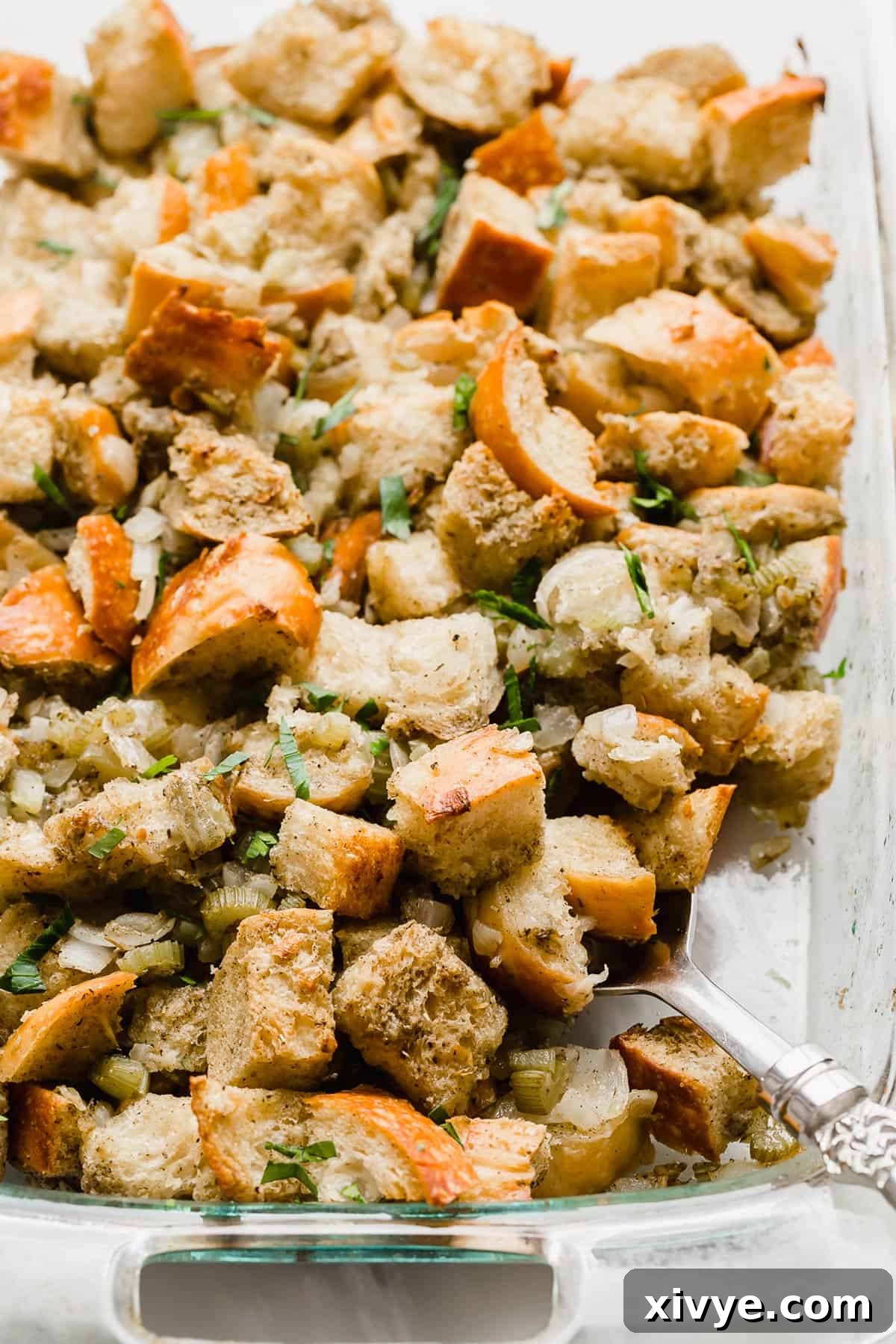
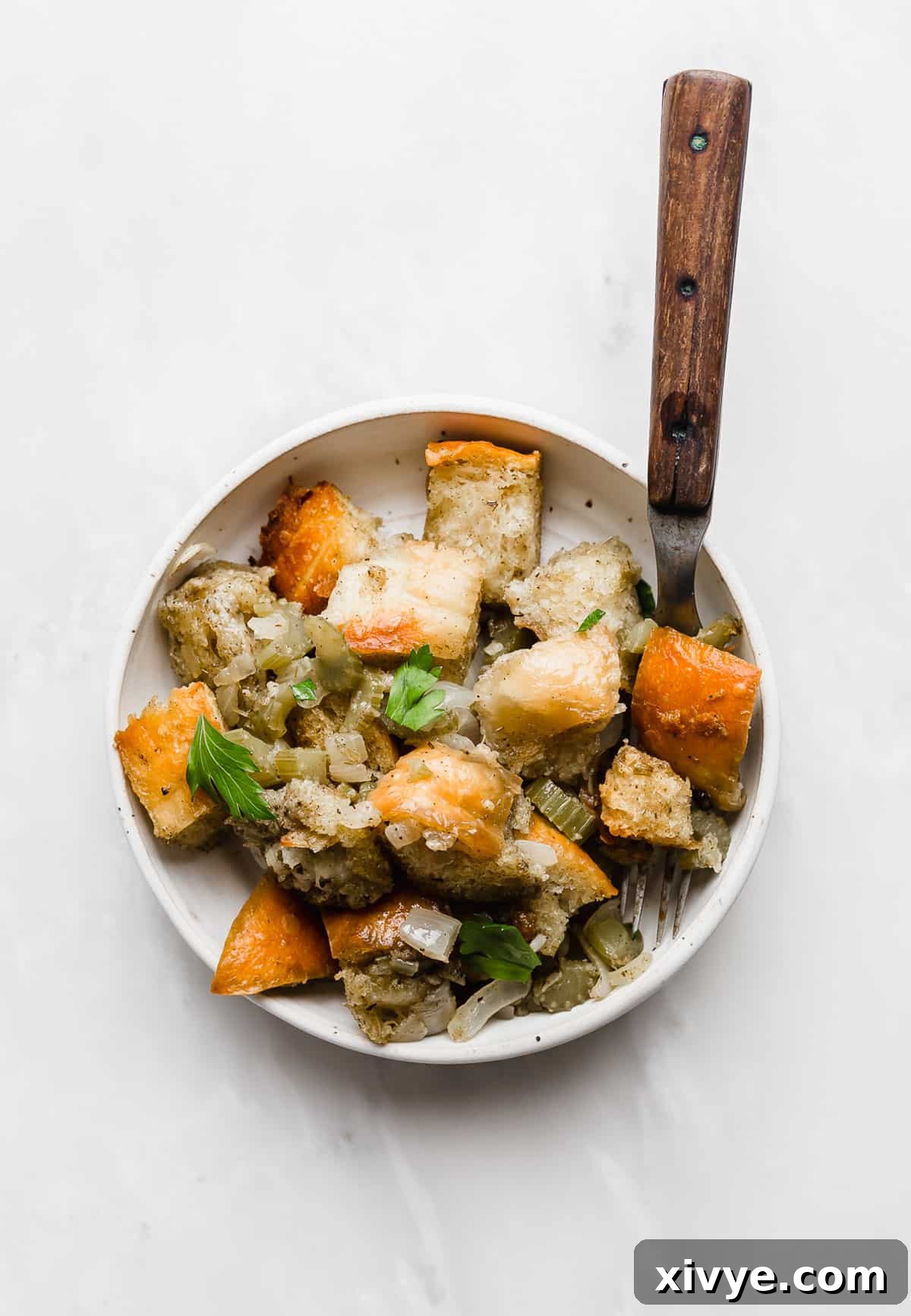
Welcome to your new favorite Thanksgiving tradition! This classic homemade stuffing recipe is more than just a side dish; it’s a celebration of comfort, flavor, and festive gatherings. With its rich, buttery essence and perfectly moist texture, it stands out as an indispensable component of any fall holiday menu, promising to be a highlight that guests will rave about for years to come.
Thanksgiving dinner holds a special place in our hearts as arguably the most significant meal of the year. To ensure a stress-free and deliciously memorable feast, relying on tried-and-true recipes that consistently delight everyone is key. Beyond this incredible stuffing, I love complementing my holiday table with these beloved dishes: an Easy Sweet Potato Casserole, the Best Homemade Dinner Rolls, Creamy Mashed Potatoes, a savory Bacon Green Bean Casserole, and for the grand finale, a delectable Praline Pumpkin Pie. These recipes, much like our stuffing, are designed to make your Thanksgiving spread truly unforgettable.
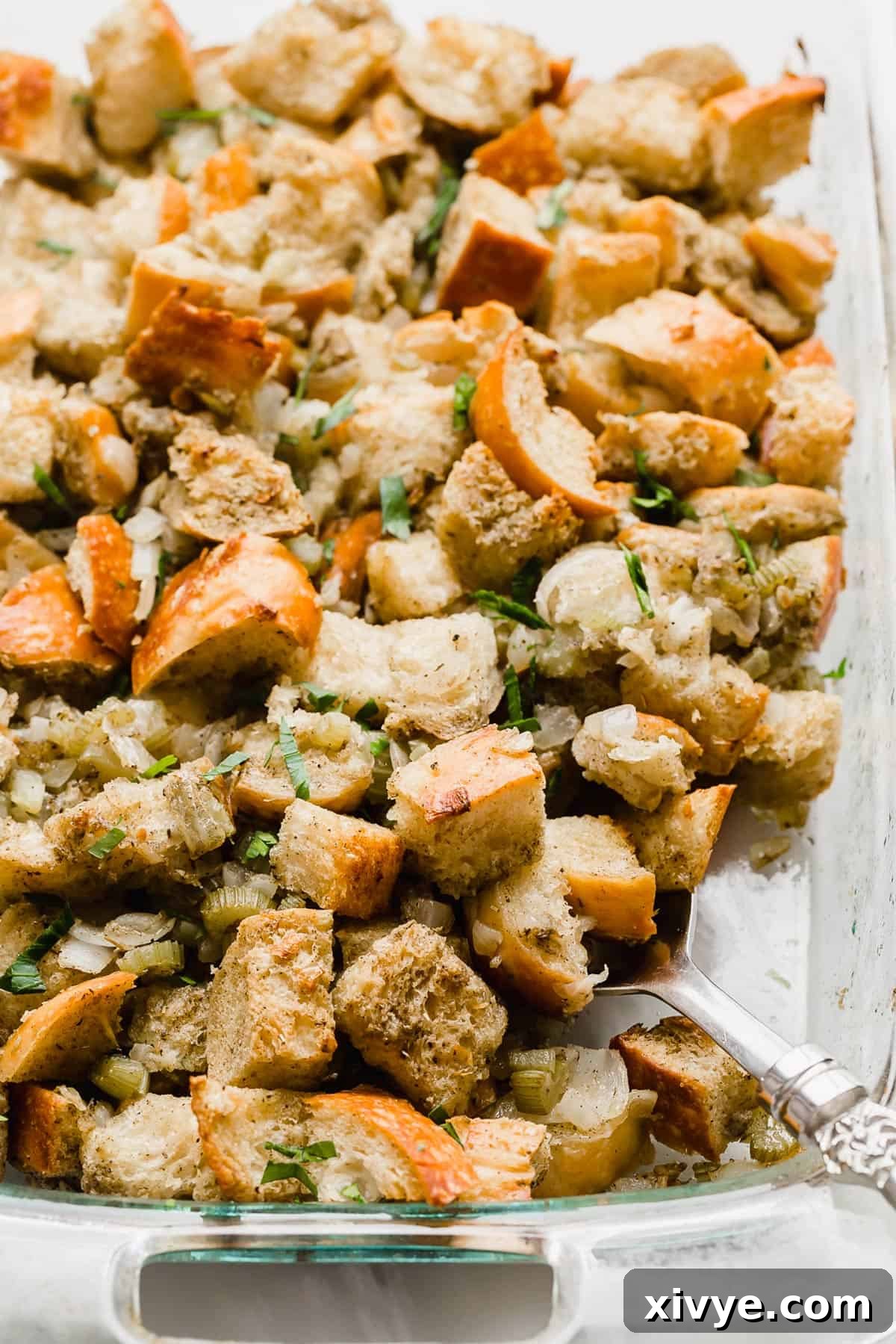
Why This Thanksgiving Stuffing Recipe is a Must-Make
Creating the perfect Thanksgiving stuffing can feel like a culinary quest, but with this recipe, you’ll discover why it’s hailed as the ultimate classic. We’ve honed this recipe over countless holidays to ensure it delivers on every front: unparalleled texture, deeply satisfying flavor, and a harmonious balance of ingredients that will make it your go-to year after year. Let’s dive into what makes this stuffing truly exceptional.
- Unbeatable Texture and Flavor Harmony: As a strong believer that both texture and flavor are paramount in any dish, I can confidently say this Thanksgiving stuffing excels in both. The secret lies primarily in the choice of bread and a carefully selected blend of seasonings. Using high-quality French bread is a game-changer for texture, ensuring each bite offers a delightful balance of crispness and tender chew, rather than a soggy, shapeless mass. Furthermore, the robust and aromatic seasonings are expertly layered to create a flavor profile that is truly next level, elevating simple ingredients into something extraordinary.
- Bid Farewell to Bland Stuffing Forever: Have you ever encountered a stuffing that leaves you wanting more, perhaps feeling a bit… lackluster? That’s a problem of the past with this recipe! The cornerstone of its rich, profound flavor comes from three crucial elements: generous amounts of butter, a thoughtful selection of poultry seasonings, and the depth that only quality chicken stock can provide. I promise that once you try this recipe, you’ll never settle for bland stuffing again. For many, stuffing is the absolute favorite dish on the Thanksgiving table, and this recipe is designed to make it your favorite too. It’s a dish that demands attention and rewards with every savory forkful.
- The Ideal Balance of Bread and Savory Vegetables: This traditional stuffing recipe perfectly marries the satisfying heartiness of bread with the aromatic freshness of celery and onion. In my opinion, this classic combination achieves an impeccable balance that is comforting and familiar yet incredibly delicious. While I adore this traditional approach, I also recognize that sometimes “more is more!” If you’re looking to explore a stuffing with an even richer vegetable profile or the added depth of sausage, I encourage you to check out my Autumn Vegetable Stuffing Recipe for another fantastic option. Regardless of your preference, this classic recipe provides a versatile and delicious foundation.
Essential Ingredients for Your Perfect Stuffing
Crafting the best Thanksgiving stuffing begins with selecting the right ingredients. Each component in this recipe plays a vital role in achieving that perfect balance of flavor and texture that makes our stuffing legendary. Here’s a closer look at what you’ll need and why each ingredient is so important:
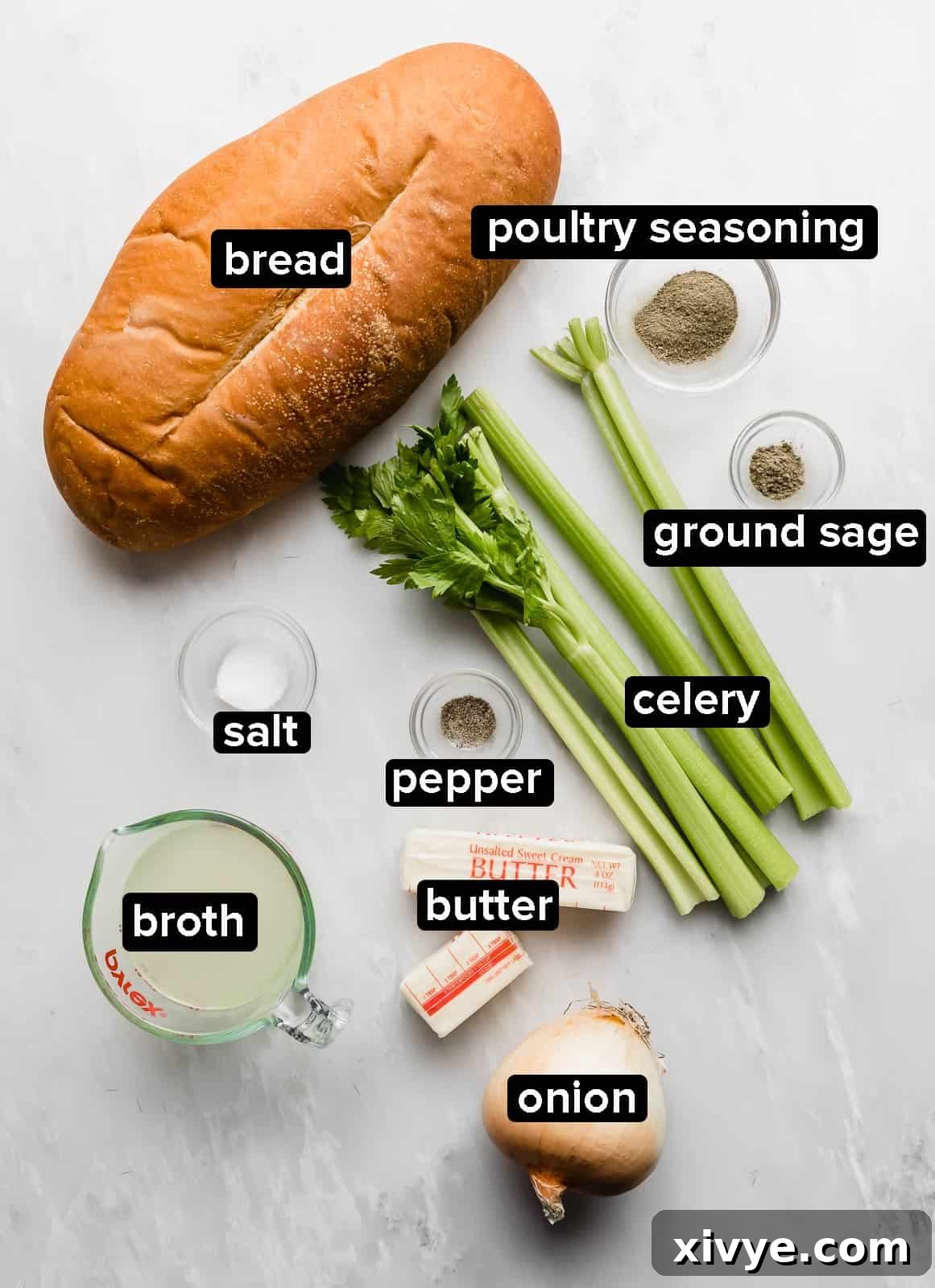
- French Bread Loaf: This is arguably the most critical ingredient for achieving the desired texture. Unlike softer sandwich breads that can quickly turn mushy, French bread maintains much of its structure even after absorbing liquid. Its slightly chewy interior and crisp crust contribute to a stuffing that is wonderfully toothsome, preventing it from becoming overly soggy and ensuring a delightful mouthfeel in every bite. Aim for a 1-pound loaf for the best results.
- Veggies (Chopped Celery and Onion): These humble vegetables are the aromatic foundation of our stuffing. When sautéed in butter, they release incredible flavors and develop a tender yet still slightly firm texture. The onion provides a sweet, pungent base, while celery adds a subtle peppery note and essential crunch, contributing significantly to both the dish’s flavor depth and its overall texture.
- Poultry Seasoning: This essential spice blend is a cornerstone of classic stuffing flavor. It typically combines savory herbs like marjoram, thyme, rosemary, and sage. These herbs are carefully balanced to impart that distinct, warm, and earthy aroma that is synonymous with holiday cooking, making your stuffing taste authentically traditional and deeply satisfying.
- Chicken Broth: The choice between chicken broth and water is crucial. Using chicken broth, rather than plain water, is absolutely essential. The broth infuses the stuffing with an incredible depth of savory flavor that water simply cannot replicate. It moistens the bread and helps distribute the seasonings evenly, ensuring every spoonful is bursting with rich, comforting taste. Feel free to use low-sodium chicken broth if you’re watching your salt intake.
- Butter: Oh, butter! This is where much of the magic happens. A generous amount of butter is incorporated into the stuffing, adding an unparalleled richness and an additional layer of flavor depth. Beyond taste, butter plays a critical role in achieving that divine, moist texture. It helps coat the bread cubes, preventing them from drying out during baking and contributing to a tender, luxurious stuffing that melts in your mouth.
Step-by-Step Instructions for the Best Thanksgiving Stuffing
Crafting this classic Thanksgiving stuffing is simpler than you might think! Follow these detailed steps to ensure a flavorful, perfectly textured dish that will impress everyone at your holiday table. Remember, patience and attention to detail will yield the most delicious results.
- Prepare and Dry the Bread: Begin by cutting your French bread loaf into uniform 1-inch cubes. This consistent size ensures even drying and absorption of liquids. Arrange the bread cubes in a single layer on a large baking sheet. For the best results, allow them to air dry overnight at room temperature. This step is critical; properly dried bread prevents the stuffing from becoming mushy. If you’re short on time, an alternative method is to bake the cubed bread in a 300°F (150°C) oven for about 15-20 minutes, stirring halfway, until lightly golden and firm.
- Sauté the Aromatic Vegetables: In a large Dutch oven or a heavy-bottomed pot, melt the butter over medium heat. Once the butter is fully melted and shimmering, add the chopped yellow onion and celery. Cook these aromatics, stirring occasionally, until they become soft and translucent, which usually takes about 6-8 minutes. As they cook, their flavors will deepen, forming the savory base of your stuffing. Season the vegetables generously with poultry seasoning, ground sage, salt, and black pepper, stirring well to combine the spices.
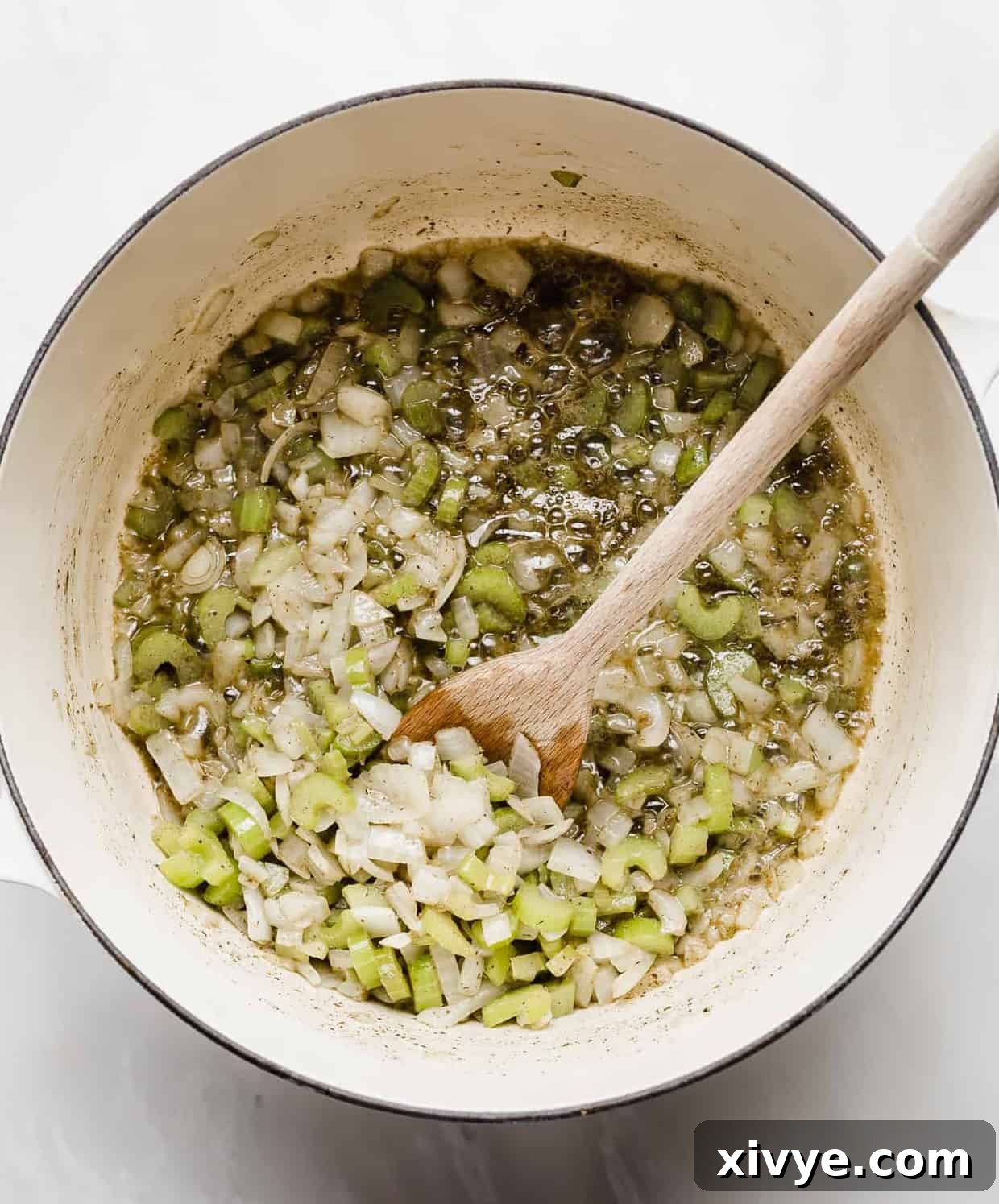
- Combine with Dried Bread: Once the vegetables are tender and fragrant, add the dried-out bread cubes to the Dutch oven. Gently stir the bread into the vegetable and butter mixture until all the bread cubes are evenly coated. This ensures that every piece of bread absorbs the delicious flavors from the sautéed vegetables and seasonings.
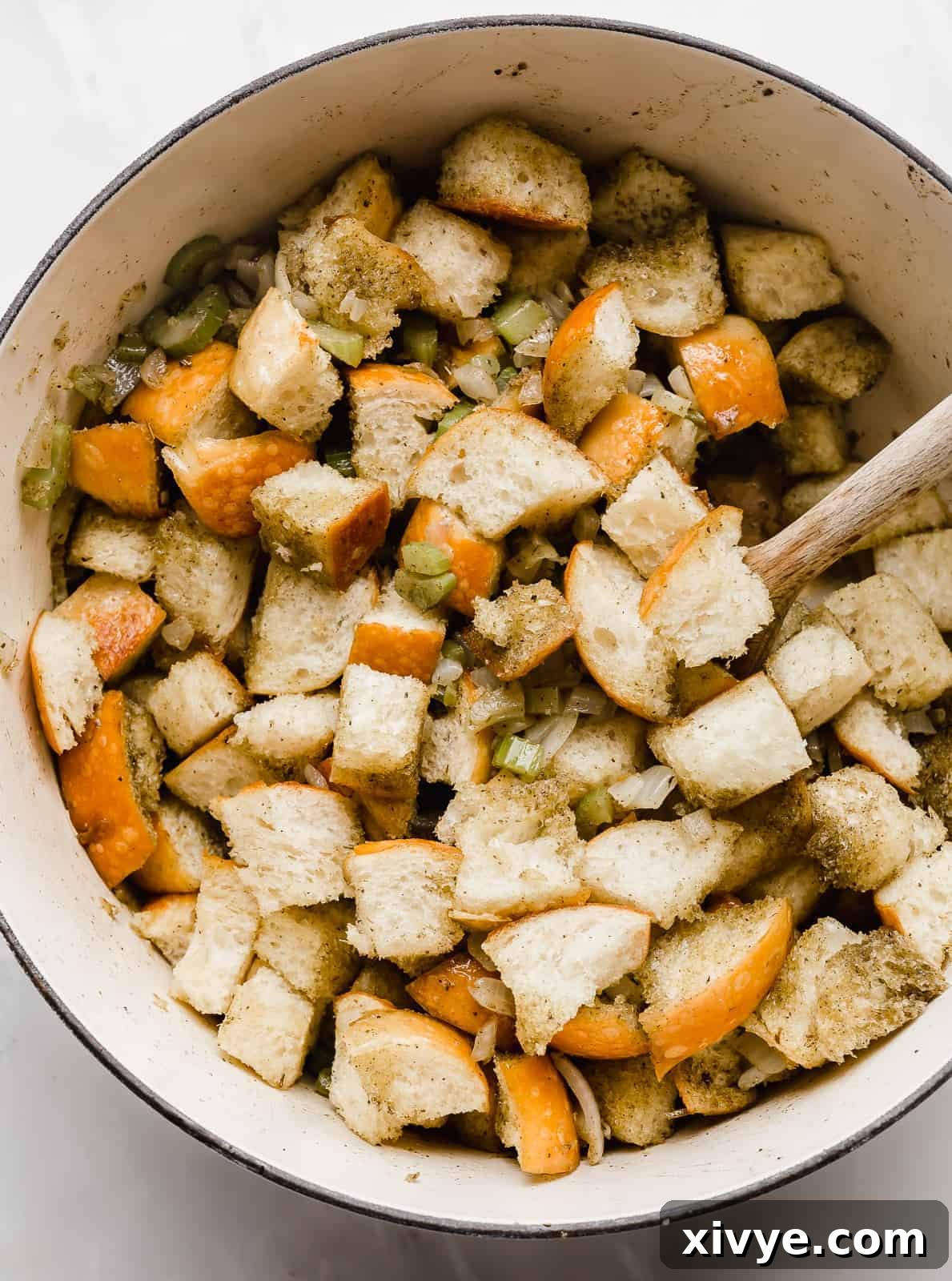
- Carefully Incorporate the Broth: This step is crucial for achieving the perfect moist texture without making the stuffing soggy. Gradually pour in the chicken broth, a little at a time, while gently mixing the stuffing. The key here is to add the broth SLOWLY. Continue mixing until the bread has absorbed the liquid and the stuffing reaches your desired level of moistness. You may not need the entire cup of broth, or you might need a touch more, depending on how dry your bread was. Mix well but avoid overmixing, which can break down the bread.
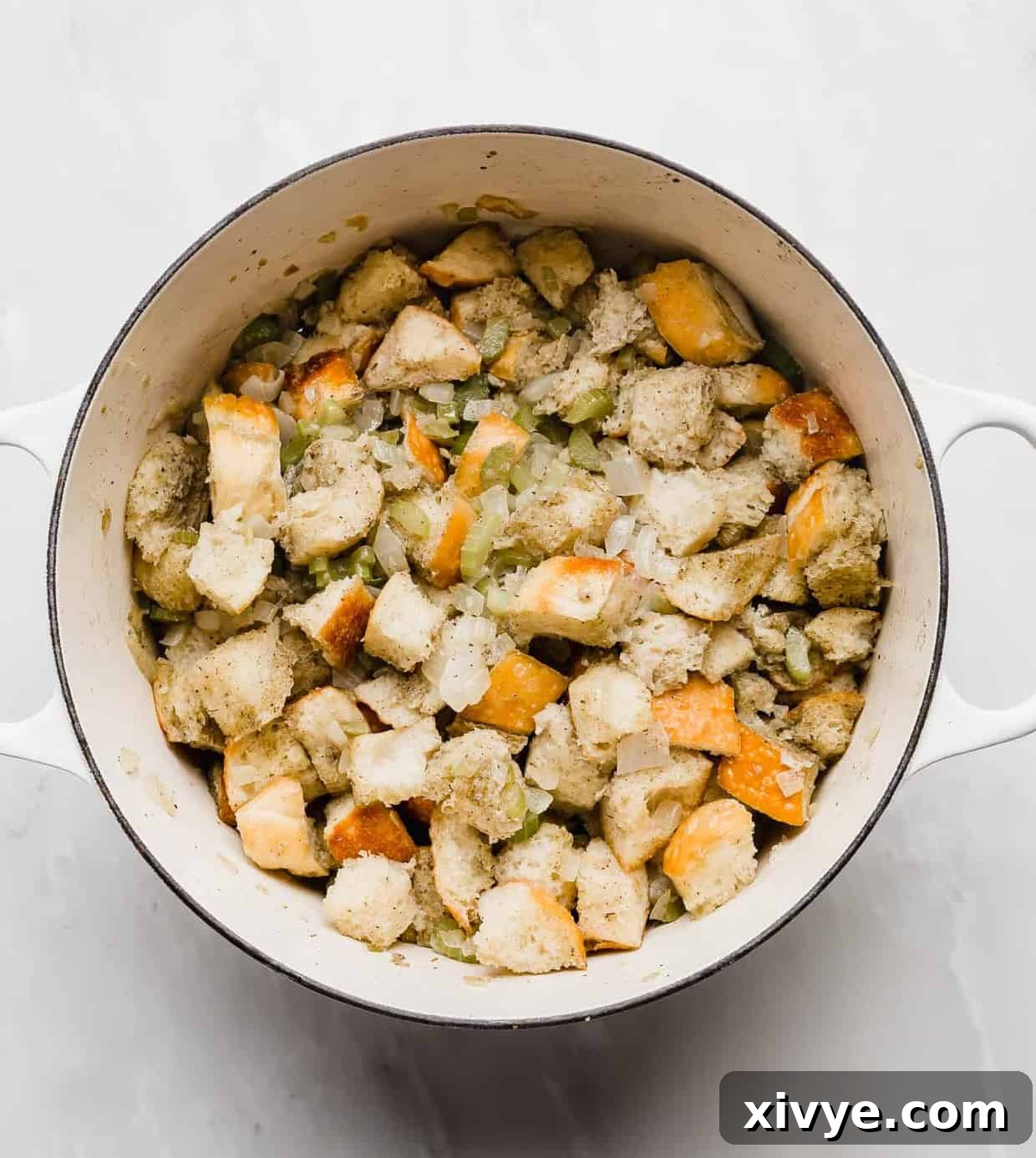
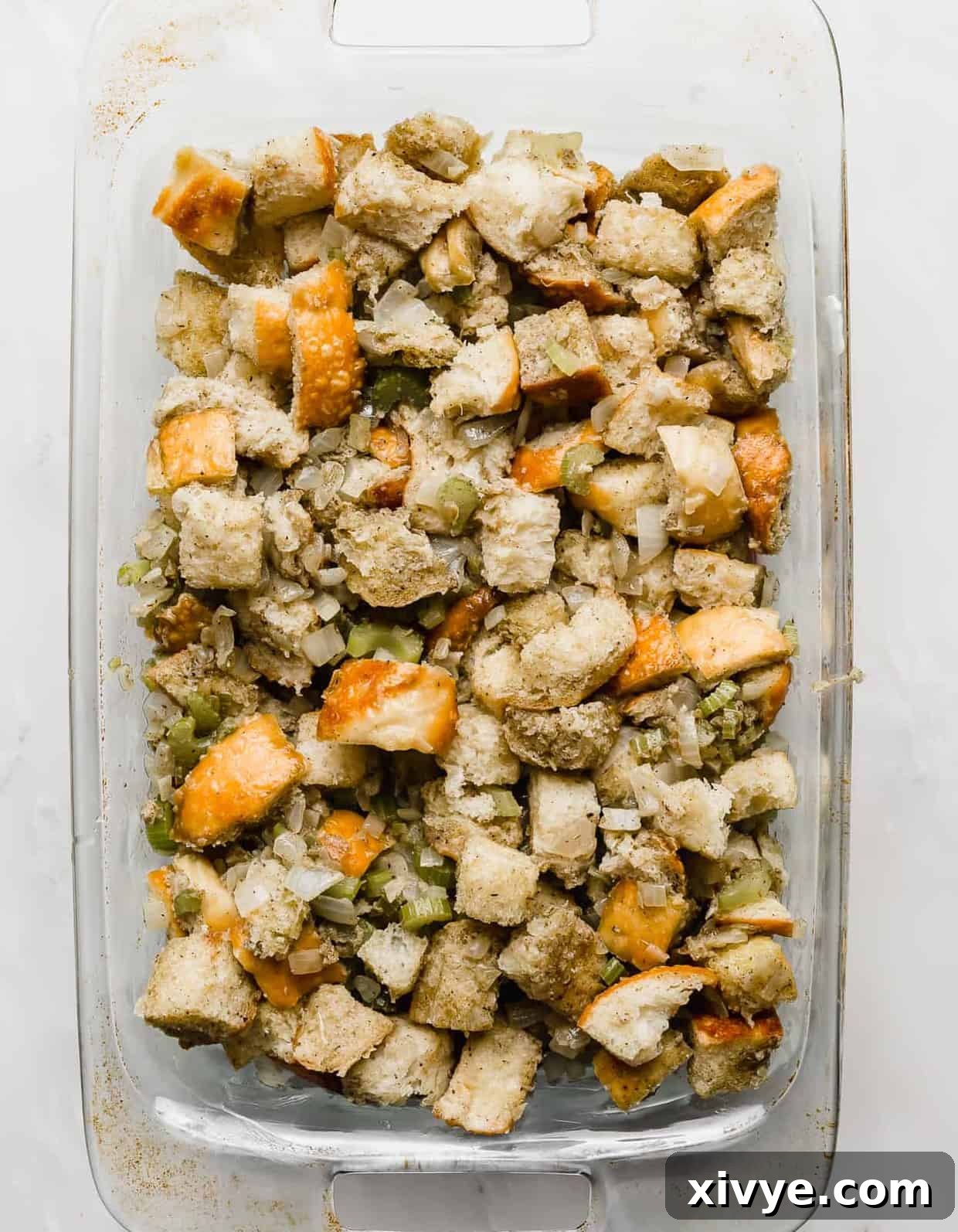
- Prepare for Baking (Make-Ahead Friendly!): Transfer the prepared stuffing mixture into a buttered 9×13-inch casserole dish. Lightly buttering the dish helps prevent sticking and adds another layer of flavor. If you’re making this ahead of time, cover the dish tightly with plastic wrap and chill it in the refrigerator until you’re ready to bake. This stuffing holds up beautifully; I’ve chilled mine for various durations, from a few hours to up to 24 hours, and it always bakes up wonderfully moist and flavorful.
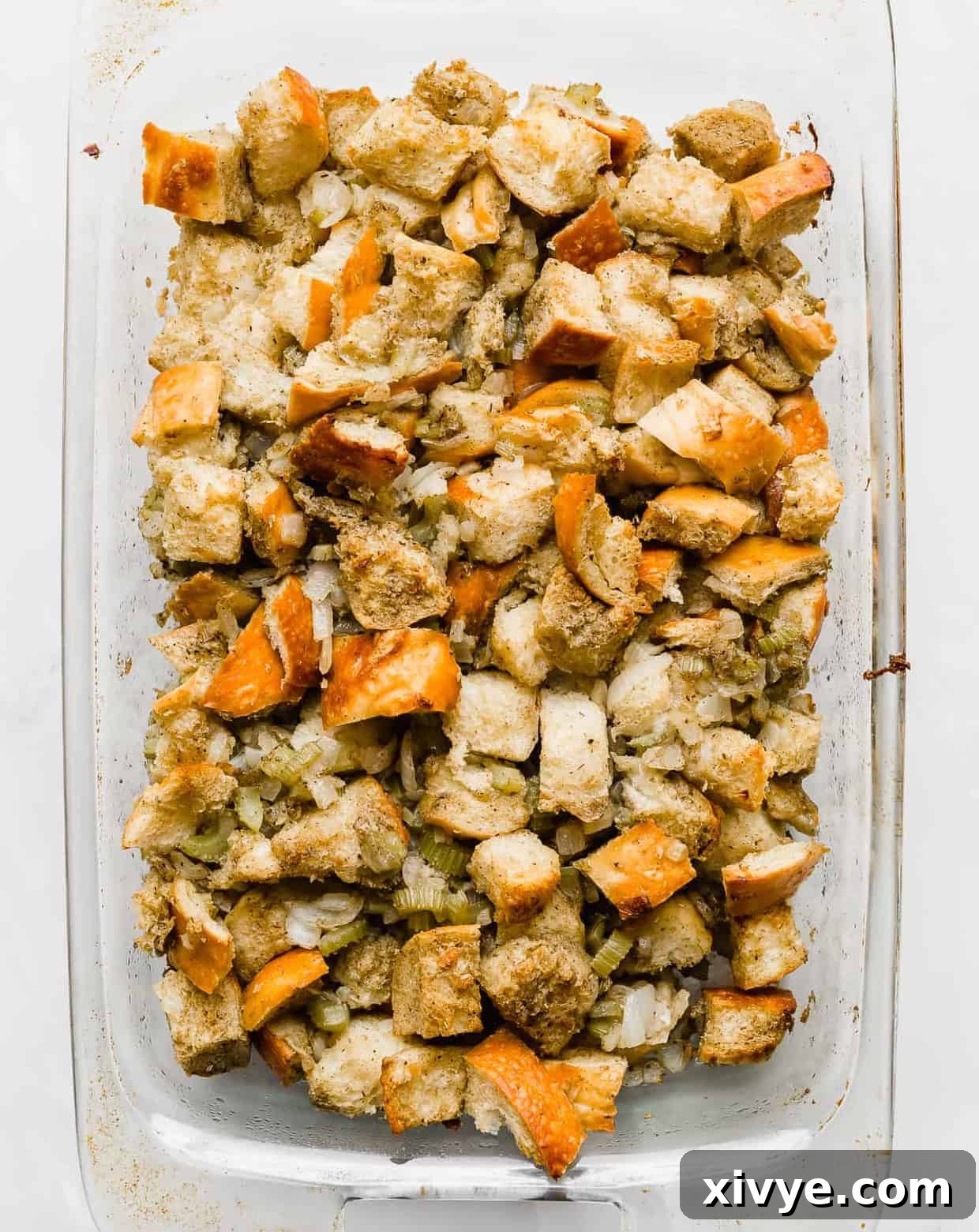
- Bake to Golden Perfection: Preheat your oven to 350°F (175°C). Place the uncovered casserole dish into the preheated oven and bake for 30-40 minutes. The stuffing is ready when the top is beautifully golden brown and lightly crisp, and the interior is heated through and moist. Remove the dish from the oven and let it rest for a few minutes before serving warm. Enjoy this quintessential Thanksgiving side dish!
Expert Tips for Your Best Stuffing
Achieving stuffing perfection is within reach with these helpful tips and tricks. Whether you prefer a super moist consistency, want to add a savory twist, or need to plan ahead, these suggestions will ensure your Thanksgiving stuffing is nothing short of spectacular.
- For Extra Moist Stuffing: If you love your stuffing extra moist and tender, simply cover the casserole dish with aluminum foil for the first 15-20 minutes of baking. This traps the steam and moisture. After this initial period, remove the foil and continue baking uncovered for the remaining 20-25 minutes to allow the top to crisp up and achieve that beautiful golden-brown finish. This two-stage baking method ensures a perfectly moist interior with a delightful golden crust.
- Adding a Savory Meat Twist: For those who enjoy a heartier stuffing, incorporating cooked sausage is a fantastic addition. You can use 8 ounces for a subtle meatiness or up to 16 ounces (1 pound) for a more substantial flavor. Brown the sausage in a skillet before adding it to the stuffing mixture. Plain pork sausage works wonderfully, but for an extra layer of traditional holiday flavor, consider using sage sausage. If you haven’t tried sage sausage in your stuffing, you’re in for a treat! Remember to drain any excess grease from the cooked sausage before mixing it in.
- The Crucial Step: Drying Out the Bread: I cannot overstate the importance of using really dry bread. This is the golden rule for stuffing that isn’t mushy. Drying the bread overnight allows it to become slightly stale and firm, enabling it to absorb the broth and butter without disintegrating. If you skip this step, your stuffing will likely turn out overly dense and wet. If you forget to dry it overnight, you can cube the bread and bake it in a 300°F (150°C) oven for 15-20 minutes until lightly toasted.
- Make-Ahead Magic: This stuffing is a fantastic make-ahead dish, perfect for reducing stress on Thanksgiving day. You can prepare the entire mixture and assemble it in the baking dish up to 24 hours in advance. Cover it tightly with plastic wrap and refrigerate. When ready to bake, remove it from the fridge about 30 minutes prior to baking to allow it to come closer to room temperature, then follow the baking instructions. You might need to add an extra 5-10 minutes to the baking time if it’s still quite cold.
- Leftover Delights: Don’t let a single crumb go to waste! Leftover stuffing is incredibly versatile. It pairs wonderfully with leftover turkey salad sandwiches for a savory post-holiday meal. And of course, no Thanksgiving leftovers are complete without indulging in delicious Thanksgiving pies for dessert! Reheat stuffing in the oven to maintain its texture.
- Customize Your Stuffing: While this recipe is a classic, don’t hesitate to make it your own! Consider adding chopped apples for a touch of sweetness, toasted pecans for crunch, or even dried cranberries for a tart counterpoint to the savory flavors. Fresh herbs like parsley or chives stirred in at the end can brighten the dish.
Frequently Asked Questions About Thanksgiving Stuffing
Here are some common questions about making stuffing, designed to help you master this classic holiday side dish and confidently answer any culinary queries from your guests.
Absolutely, yes. Any meat you plan to add to your stuffing, such as sausage or ground beef, must be thoroughly cooked and browned before you stir it into the other ingredients. Cooking it beforehand ensures it’s safe to eat and allows you to drain off any excess fat, preventing a greasy stuffing. It also means the meat is fully flavored and ready to be incorporated into the mixture without affecting the cooking time of the stuffing itself.
While the terms “stuffing” and “dressing” are often used interchangeably, there’s a traditional distinction, primarily based on how they’re cooked. “Stuffing” typically refers to the mixture cooked inside the cavity of the turkey, absorbing flavors from the bird. “Dressing” refers to a similar mixture that is baked in a casserole dish outside of the turkey. Functionally, they are very similar dishes in terms of ingredients, but their cooking methods affect their texture and moisture levels. Many people simply use the term “stuffing” regardless of whether it’s cooked inside or outside the bird.
I strongly advise against using this particular recipe to stuff your turkey without significant alterations and careful attention to food safety. The main concern with stuffing a turkey is ensuring the stuffing reaches a safe internal temperature of 165°F (74°C). To achieve this, the turkey itself often needs to be cooked for a much longer period, which can result in an overcooked, dry bird. For safety and quality, it is generally recommended to bake stuffing separately in a casserole dish. This way, you can ensure both the turkey and the stuffing are cooked perfectly and safely.
Some stuffing recipes call for eggs to act as a binder, helping the ingredients hold together. However, in my opinion, eggs are not necessary for this classic stuffing recipe and can sometimes negatively impact the desired texture, making it denser or rubbery. I prefer to omit them to maintain a lighter, more crumbly, yet still moist, consistency. The natural starches in the bread, combined with the butter and broth, provide enough binding without the need for eggs, allowing the other flavors and textures to shine.
For the absolute best stuffing, I highly recommend using a French bread loaf. Its robust crust and slightly denser interior are perfect. It’s crucial to dry it out overnight (or quickly toast it in the oven) so that it becomes quite dry. This prevents the stuffing from becoming mushy and ensures that each bread cube retains some of its integrity. The tougher crust of French bread also contributes an amazing chewiness and textural contrast to the finished stuffing that softer breads simply can’t replicate.
Yes, you can absolutely freeze stuffing! To do so, allow the baked stuffing to cool completely after baking. Then, transfer it to an airtight container or a freezer-safe plastic bag. It can be stored in the freezer for 1-2 months. When you’re ready to enjoy it, remove the stuffing directly from the freezer and place it into a preheated oven at 350°F (175°C) until it is thoroughly warmed through. Do not thaw it first, as thawing before reheating can result in a mushy texture. Reheating from frozen helps maintain its structure and prevents it from becoming overly wet.
Yes, with a few simple substitutions, this classic stuffing can be easily adapted for vegetarian diets. Replace the chicken broth with vegetable broth to make it vegetarian. For a vegan version, in addition to using vegetable broth, swap out the butter for a high-quality plant-based butter alternative. Ensure any bread used is also vegan (check ingredients as some French breads may contain dairy). These simple swaps will allow everyone to enjoy this delicious holiday side!
More Essential Thanksgiving Recipes to Complete Your Feast
Once you’ve mastered this classic Thanksgiving stuffing, you might be looking for more delectable dishes to round out your holiday spread. Here are some additional recipes that are perfect for your autumn and Thanksgiving celebrations, offering a mix of sweet and savory flavors to delight every palate.
- Candied Yams: A delightful sweet side dish, these candied yams are tender and glazed with a sweet, spiced syrup, making them an irresistible addition to any holiday table.
- Pomegranate Jell-O: A vibrant and refreshing option, this Pomegranate Jell-O adds a festive splash of color and a tart-sweet flavor that provides a light contrast to heavier holiday fare.
- Mini No-Bake Pumpkin Cheesecakes: For a charming and easy dessert, these mini cheesecakes offer all the beloved flavors of pumpkin spice in a convenient, individual serving. Perfect for a no-fuss holiday treat.
Did you try this recipe? We’d love to hear your thoughts! Click here to leave a rating and review directly, or simply scroll down below the recipe card to share your feedback. Your insights help us grow and improve!
Stay connected and up-to-date with our latest recipes and culinary adventures by following us on Instagram, Facebook, and Pinterest.
Print
SaveSaved!
Review
Thanksgiving Stuffing Recipe
 Whitney Wright
Ingredients
- 1 large French bread loaf – 1 pound worth.
- ¾ cup unsalted butter
- 1 large yellow onion – chopped
- 5 stalks celery – chopped
- 3 teaspoon poultry seasoning
- ½ teaspoon ground sage
- 1 teaspoon salt
- ½ teaspoon pepper
- 1 cup chicken broth – see notes
Equipment
-
Le Creuset (dutch oven)
-
cutting board
-
13″x9″ glass baking pan
Instructions
-
Cut French bread loaf into 1” cubes, then set on a baking sheet to dry out overnight. Alternatively, if you don’t want to do this, you can cube the bread, place on baking sheet, and bake in a 350°F oven for about 10 minutes (may need more time) or until they are lightly golden.
-
In a dutch oven, melt the butter over medium heat. Once melted, add the onion and celery and cook until soft, about 6-8 minutes. Season with poultry seasoning, sage, salt, and pepper.
-
Stir in the dried-out cubed bread until evenly coated.
-
SLOWLY stir in the broth while mixing the stuffing so that the bread doesn’t become too wet or soggy. Mix well.
-
Place in a buttered casserole dish 13×9”. Cover with plastic wrap and chill until ready to bake. Mine usually chills for 4-6 hours (because I like to make it in the morning).
-
Bake uncovered at 350°F for 30-40 minutes. The top of the stuffing should be golden brown. Remove from the oven and serve warm.
Notes
If you like moist stuffing, bake covered for 15 minutes, and then remove foil and bake uncovered for the last 20-25 minutes.
Nutrition
Calories: 203kcal (10%)
Carbohydrates: 10g (3%)
Protein: 2g (4%)
Fat: 18g (28%)
Saturated Fat: 11g (55%)
Cholesterol: 46mg (15%)
Sodium: 483mg (20%)
Potassium: 141mg (4%)
Fiber: 1g (4%)
Sugar: 2g (2%)
Vitamin A: 664IU (13%)
Vitamin C: 4mg (5%)
Calcium: 34mg (3%)
Iron: 1mg (6%)
This beloved recipe was first published on November 6, 2020. It was thoughtfully updated and republished on November 1, 2021, to provide enhanced information, detailed insights, and new captivating photos, ensuring you have the best possible experience in preparing this holiday classic.