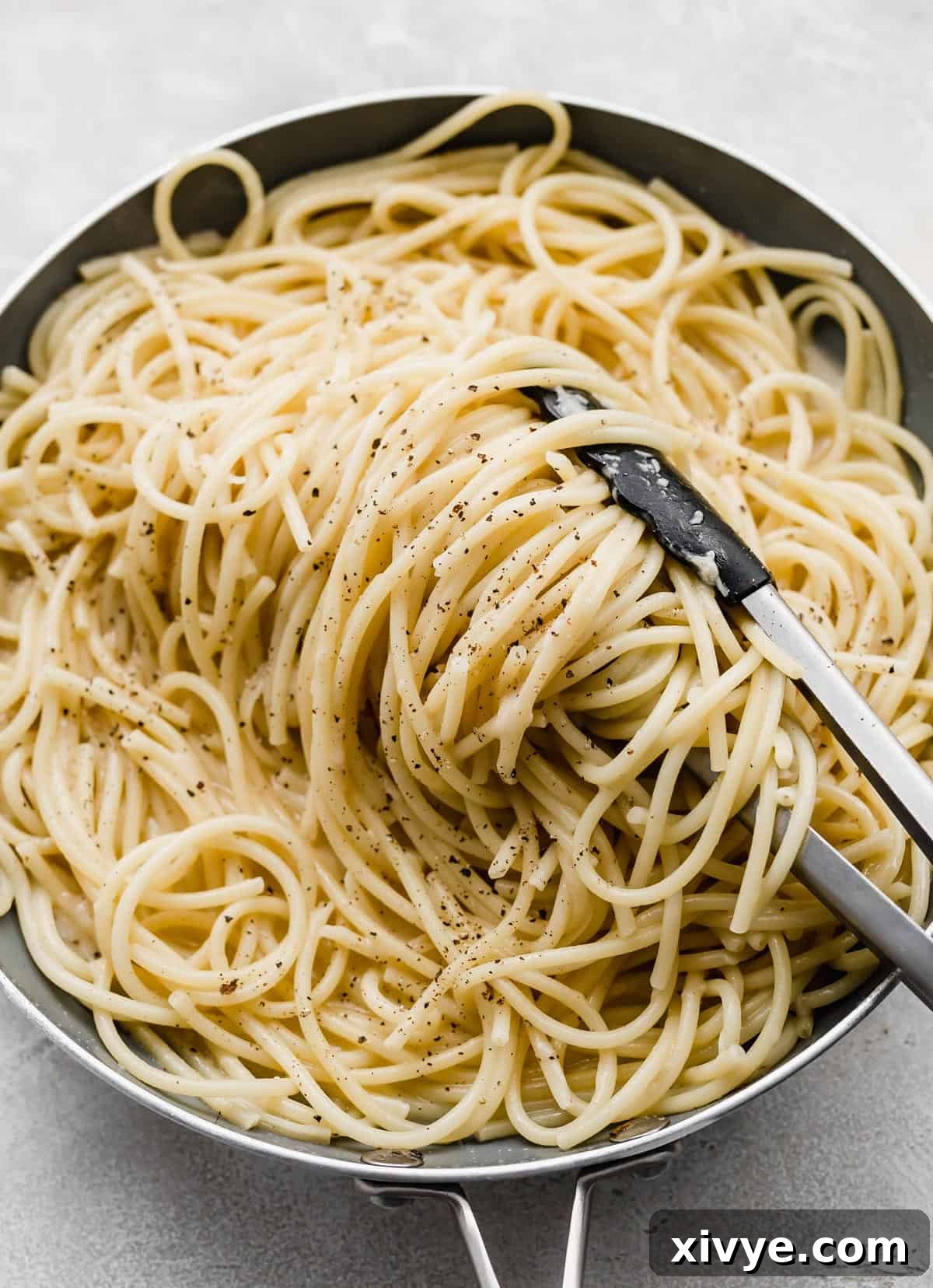
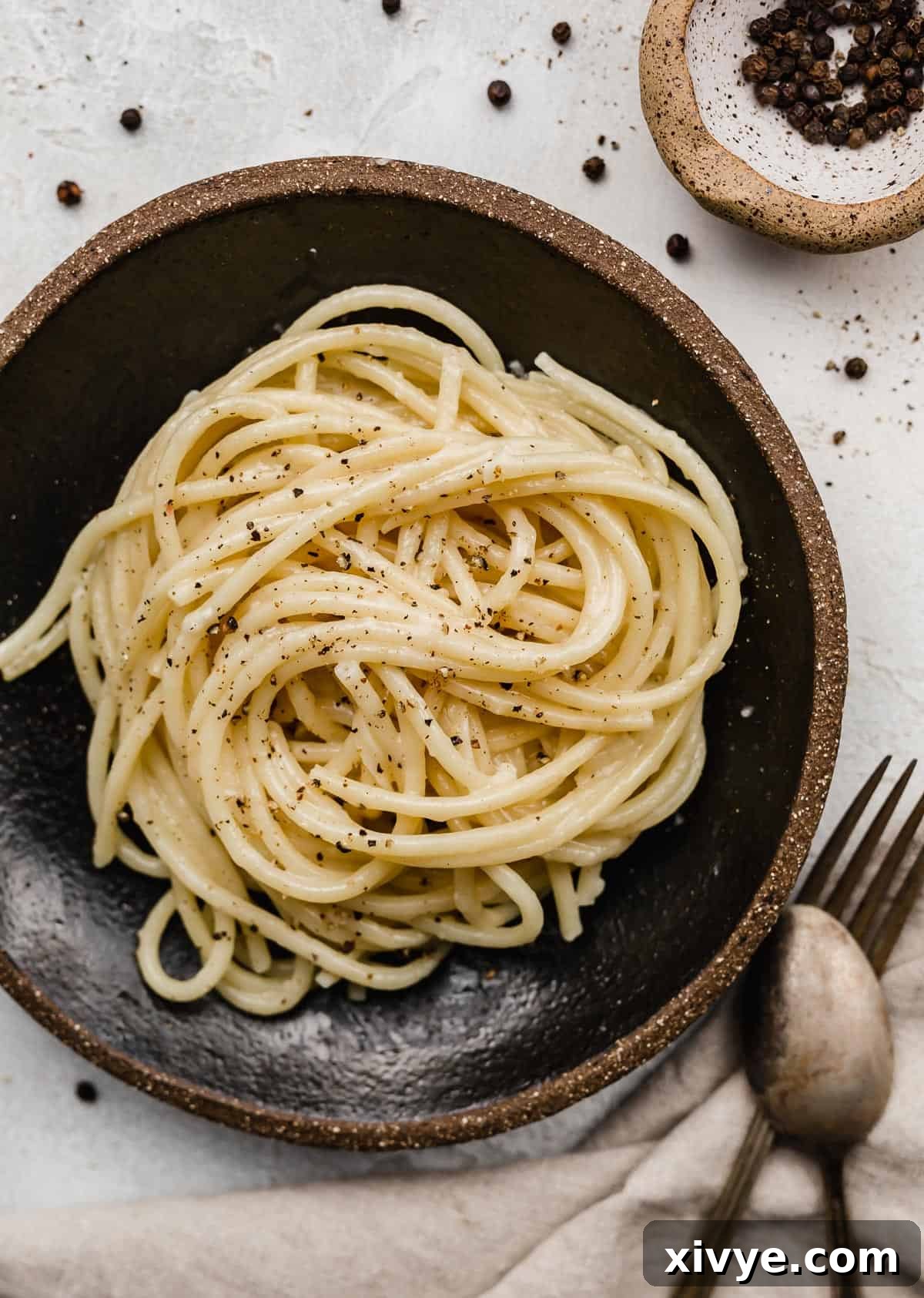
Welcome to the world of simple yet sophisticated Italian cooking! This Bucatini Cacio e Pepe recipe is truly a testament to how incredible dishes can be crafted from just a handful of high-quality ingredients. Often hailed as one of Italy’s most ancient and revered pasta preparations, Cacio e Pepe, meaning “cheese and pepper,” epitomizes Roman culinary tradition. Our version, featuring the delightful bucatini pasta and a luxurious brown butter Parmigiano Reggiano sauce, elevates this classic to new heights. You’ll be amazed at how quickly this elegant meal comes together – in just about 20 minutes – making it perfect for busy weeknights or when you crave authentic Italian flavors without the fuss. Prepare to impress your family and friends with a creamy, deeply flavorful pasta dish that’s deceptively easy to master.
You don’t need an arsenal of gourmet ingredients to create a truly memorable and delicious pasta experience. This recipe stands as perfect proof of that philosophy. Its beauty lies in the careful selection of a few core components and a precise technique that transforms them into something extraordinary. If you’re a fan of simple yet profoundly flavorful pasta dishes, I highly recommend exploring other favorites like my Butternut Squash Pasta, the uniquely savory Tuna Carbonara, the fresh and vibrant Penne Pomodoro, and the bright, zesty Lemon Pasta recipes!
Why This Recipe Is an Absolute Must-Try
When it comes to whipping up a satisfying meal, efficiency and flavor are often at the top of our priority list. This Bucatini Cacio e Pepe recipe shines brightly in both these aspects, offering a culinary experience that’s both accessible and exceptionally rewarding. Here’s why this particular iteration of the classic Roman pasta dish stands out:
- Browned Butter for Unparalleled Depth: While traditional Cacio e Pepe typically uses butter or olive oil, introducing browned butter (beurre noisette) to this recipe is a game-changer. The simple act of toasting the milk solids in the butter creates a rich, nutty aroma and flavor profile that adds an incredible layer of complexity and sophistication. This subtle enhancement transforms a humble sauce into something truly extraordinary, offering a deep, almost caramel-like undertone that perfectly complements the sharp cheese and pungent pepper. It’s a technique that takes just a few extra minutes but delivers an immense payoff in taste.
- Crafted with Only 5 Essential Ingredients: In a culinary landscape often dominated by long ingredient lists, the elegance of this Cacio e Pepe lies in its minimalism. Requiring only bucatini pasta, high-quality butter, freshly cracked black pepper, authentic Parmigiano Reggiano (or Pecorino Romano), and a bit of the magical pasta water, this recipe proves that fewer ingredients can lead to more profound flavors. This makes it an ideal choice for cooking on a budget, for those spontaneous dinner ideas when your pantry is looking sparse, or for anyone who appreciates the beauty of simplicity in gastronomy. Each ingredient plays a crucial, distinct role, allowing its individual character to shine through in the final dish.
- Effortlessly Easy & Remarkably Quick: Life moves fast, and so should your dinner! This Cacio e Pepe pasta recipe is designed for maximum flavor with minimal fuss, coming together in approximately 20 minutes from start to finish. The straightforward cooking process, combined with quick-browning butter and a simple emulsification technique, makes this an incredibly accessible dish for cooks of all skill levels. Whether you’re a beginner eager to explore Italian cuisine or an experienced chef looking for a rapid yet refined meal, this recipe fits perfectly into a busy schedule, proving that gourmet flavors don’t have to demand hours in the kitchen.
- A Versatile Foundation for Culinary Creativity: While this bucatini Cacio e Pepe is absolutely divine on its own, offering a pure and unadulterated taste of Roman tradition, its inherent simplicity also makes it an exceptional base for personalization. Think of it as a blank canvas awaiting your creative touch. Enhance it with a sprinkle of fresh herbs like parsley or basil, or transform it into a heartier meal by incorporating sautéed seasonal vegetables such as mushrooms, asparagus, or zucchini. For a protein boost, shredded rotisserie chicken or crispy pancetta can be folded in at the end. The robust yet adaptable nature of this pasta allows you to experiment and tailor it to your preferences, ensuring it never gets boring.
The Art of Cacio e Pepe: A Roman Classic Reimagined
Cacio e Pepe, which literally translates to “cheese and pepper,” is more than just a pasta dish; it’s a cornerstone of Roman culinary heritage and a lesson in gastronomic purity. Its origins trace back to ancient Rome, where shepherds, needing simple, non-perishable ingredients for their long treks, would carry dried pasta, hard pecorino cheese, and black peppercorns. The hot pasta water would then transform these humble provisions into a rich, warming, and energy-sustaining meal. This dish is famous for its deceptively simple ingredient list, which belies the crucial technique required to achieve its signature creamy, emulsified sauce.
The magic of Cacio e Pepe lies in the emulsification – creating a smooth, cohesive sauce without cream or egg. It’s a delicate dance between the starch-rich pasta water, the grated cheese, and the fat from the butter. The key is to gradually introduce the finely grated cheese and pasta water, stirring continuously to create a velvety sauce that clings beautifully to every strand of pasta. Our recipe introduces a delightful twist by browning the butter, which adds an extra layer of nutty depth, a subtle enhancement that respects the spirit of the original while introducing a modern gourmet touch. This thoughtful addition elevates the traditional Cacio e Pepe, offering a more complex flavor profile without compromising its characteristic simplicity and charm.
Demystifying Your Ingredients
Every great recipe begins with understanding its core components. For our Bucatini Cacio e Pepe, the quality and type of each ingredient are paramount to achieving that authentic, rich flavor and creamy texture. Here’s a closer look at what you’ll need and why:
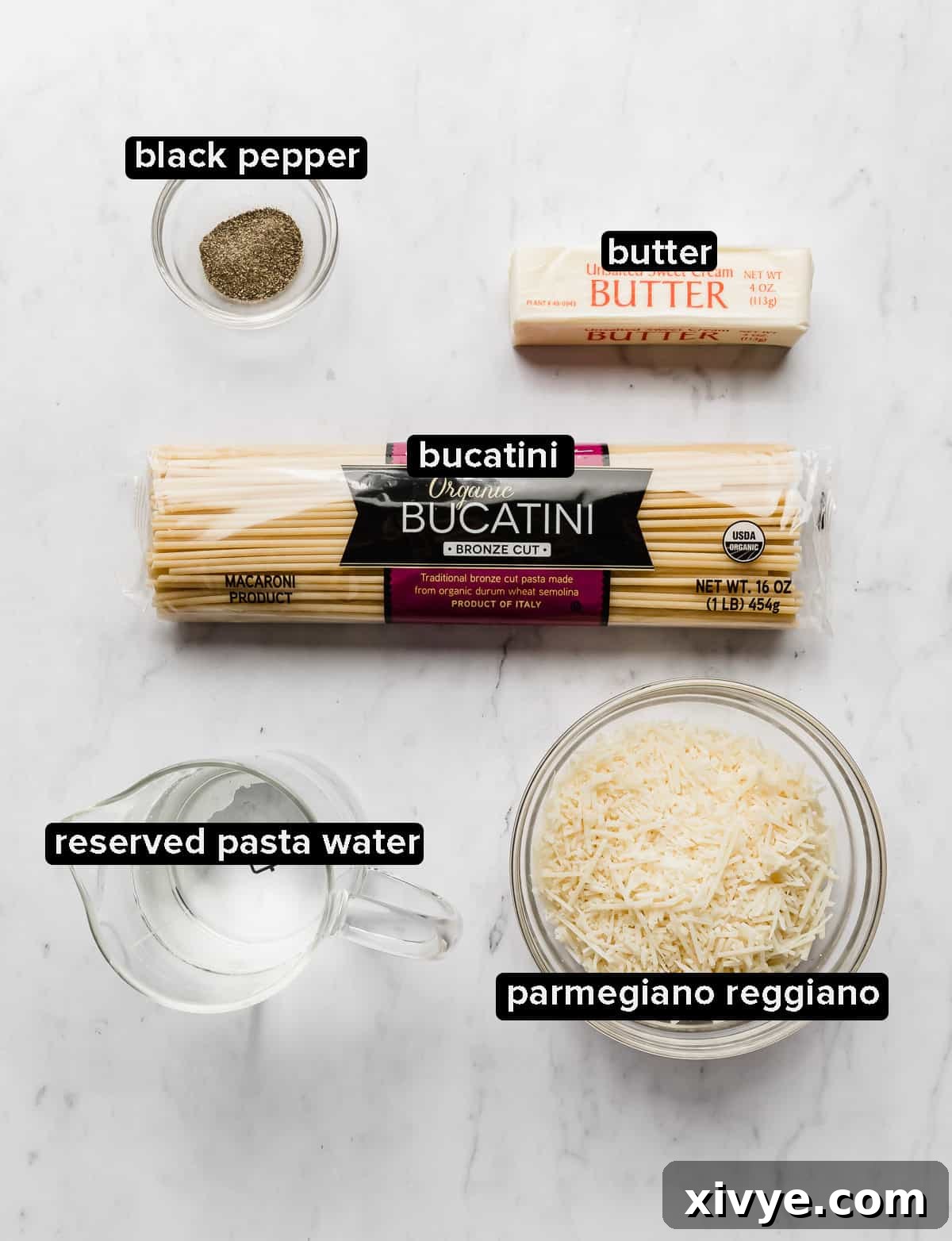
- Bucatini Pasta: This recipe specifically calls for bucatini, a long, hollow pasta that perfectly captures the rich sauce within its central hole and on its surface. This unique shape provides a delightful textural experience with every bite. If bucatini is unavailable, you can confidently substitute it with other long, slender pasta varieties such as spaghetti, angel hair, fettuccine, or linguini. While the texture will differ slightly, the overall flavor profile of the dish will remain exquisite. Opt for a high-quality bronze-die pasta if possible, as its rougher surface will hold the sauce even better.
- Parmigiano Reggiano: The “cacio” in Cacio e Pepe traditionally refers to Pecorino Romano, a sharp, salty sheep’s milk cheese. However, using Parmigiano Reggiano, the king of Italian cheeses, offers a slightly milder, nuttier, and more complex flavor profile with granular notes that many prefer. For the best results, always buy a wedge of authentic Parmigiano Reggiano and grate it yourself finely just before use. Pre-grated cheeses often contain anti-caking agents that can hinder proper emulsification and result in a grainy sauce. You can also achieve a beautiful balance by using a blend of half Parmigiano Reggiano and half Pecorino Romano for a bolder flavor.
- Unsalted Butter: Butter is more than just a fat in this recipe; it’s a foundational flavor enhancer, especially when browned. We recommend unsalted butter so you can control the seasoning of the dish precisely. Browning the butter adds a nutty, toasted depth that complements the cheese and pepper beautifully. It’s a simple technique that transforms the butter’s flavor, moving it beyond a mere lubricant to a key component of the sauce’s richness.
- Freshly Cracked Black Pepper: The “pepe” is non-negotiable! The quality and freshness of your black pepper significantly impact the final taste. Avoid pre-ground pepper, which often lacks the pungent aroma and sharp bite of freshly cracked peppercorns. Use whole black peppercorns and crack them just before adding to the butter, either with a mortar and pestle or a pepper mill set to a coarse grind. This releases their aromatic oils, infusing the sauce with a vibrant, spicy warmth that is central to Cacio e Pepe’s character. You can adjust the amount to your personal preference for heat and flavor.
- Reserved Pasta Water: This often-overlooked ingredient is the true secret weapon of Cacio e Pepe. The starchy water leftover from cooking the pasta is crucial for creating the creamy, emulsified sauce. The starch released from the pasta helps to bind the melted butter and grated cheese, preventing the sauce from clumping or becoming oily. Make sure to generously salt your pasta water, as this also seasons the pasta from within and contributes flavor to your sauce.
Mastering the Technique: Step-by-Step Instructions
Crafting the perfect Bucatini Cacio e Pepe is all about technique and timing. Follow these detailed steps to achieve a silky, flavorful sauce that clings beautifully to every strand of pasta.
- Prepare the Pasta: Begin by bringing a large pot of water to a rolling boil. It’s essential to heavily salt the water; think of it as seasoning the ocean. This not only flavors the pasta from the inside out but also ensures your reserved pasta water is rich in salt and starch, crucial for emulsifying the sauce. Add your bucatini pasta to the vigorously boiling water and cook, stirring occasionally to prevent sticking. You want the pasta to be cooked to about 1 minute shy of al dente – meaning it’s still quite firm, as it will continue to cook in the sauce. Before draining, reserve approximately 3 cups of this starchy, salty pasta water.
- Create the Brown Butter and Pepper Base: In a large, wide skillet (preferably non-stick or cast iron), melt the unsalted butter over medium to medium-low heat. Once the butter is fully melted, add the freshly cracked black pepper. Stir the butter and pepper constantly as it cooks. Keep a close eye on it: the butter will foam, then the milk solids will begin to separate and turn a light amber or golden-brown color, releasing a wonderful nutty aroma. This process usually takes 1-3 minutes after melting. Immediately remove the skillet from the heat to stop the cooking and prevent burning.
- Form the Creamy Cheese Sauce: Carefully add 1 cup of the reserved pasta water to the browned butter and pepper mixture in the skillet. Be cautious, as it will bubble vigorously. Bring this mixture to a gentle simmer over low heat. Once simmering, slowly begin to stir in 1 cup of the finely grated Parmigiano Reggiano (or cheese blend), stirring continuously with tongs or a whisk. The key here is gradual addition and constant agitation to ensure the cheese melts smoothly into the liquid without clumping, creating a beautifully emulsified, smooth, and creamy sauce.
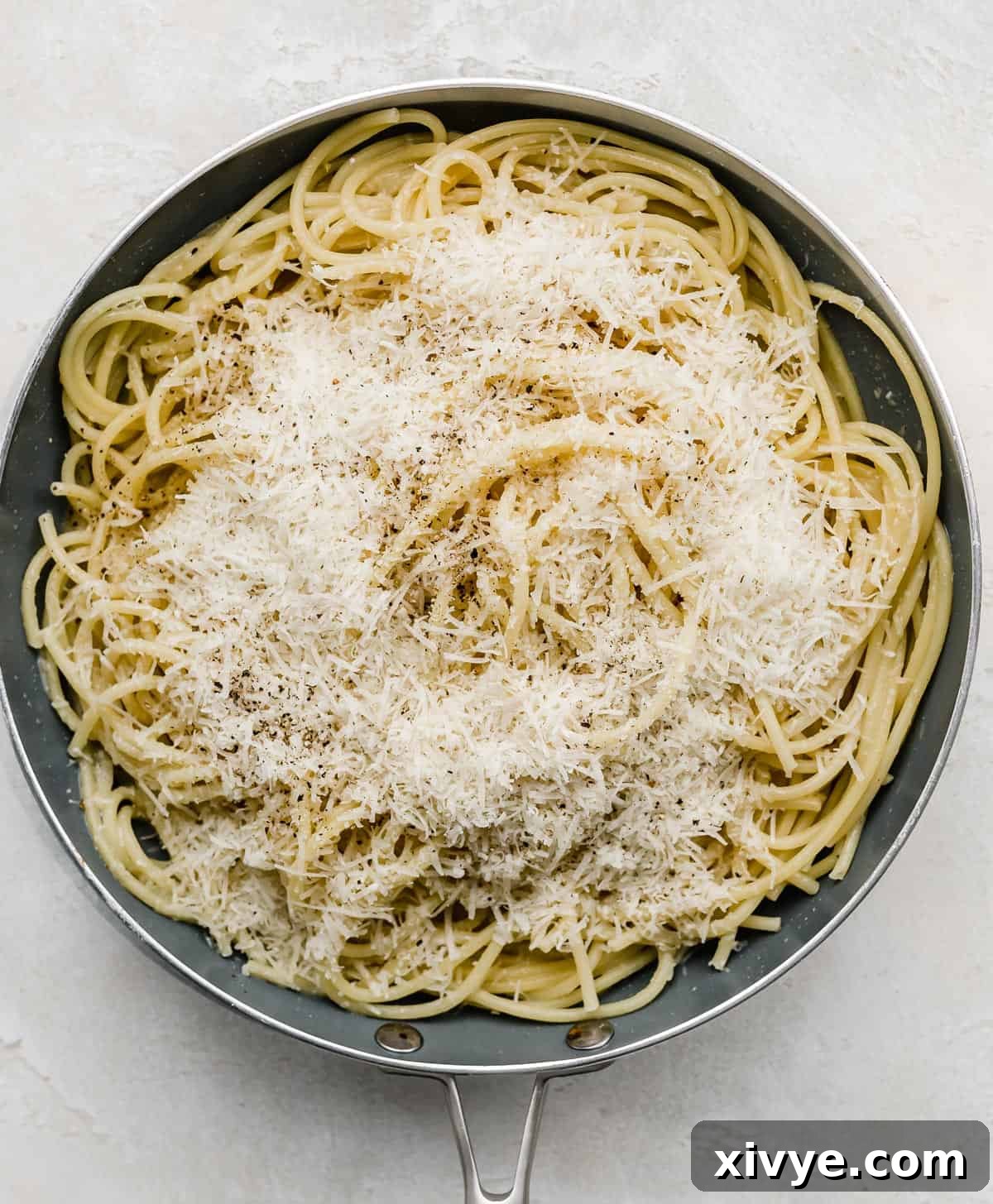
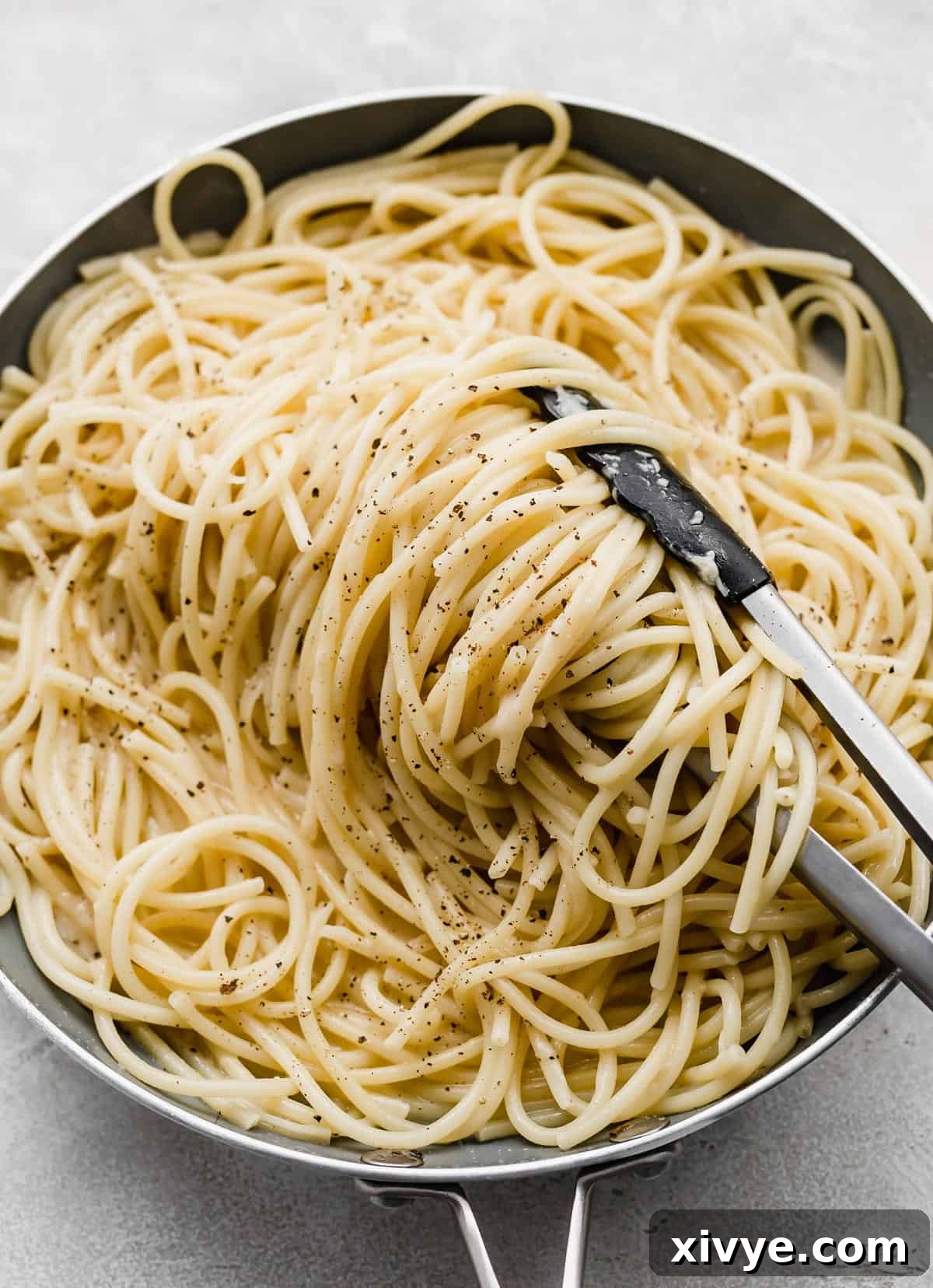
- Combine Pasta and Sauce: Using kitchen tongs, transfer the slightly undercooked bucatini directly into the skillet with your creamy sauce. Toss vigorously to coat every strand of pasta evenly. Now, add the remaining Parmigiano Reggiano and a bit more of the reserved pasta water, about ½ to 1 ½ cups more, adding it gradually, a splash at a time, while continuously tossing. The goal is to achieve a luscious, smooth, and saucy consistency that isn’t too thick or too thin. The exact amount of water will vary depending on the starchiness of your pasta water and the type of cheese.
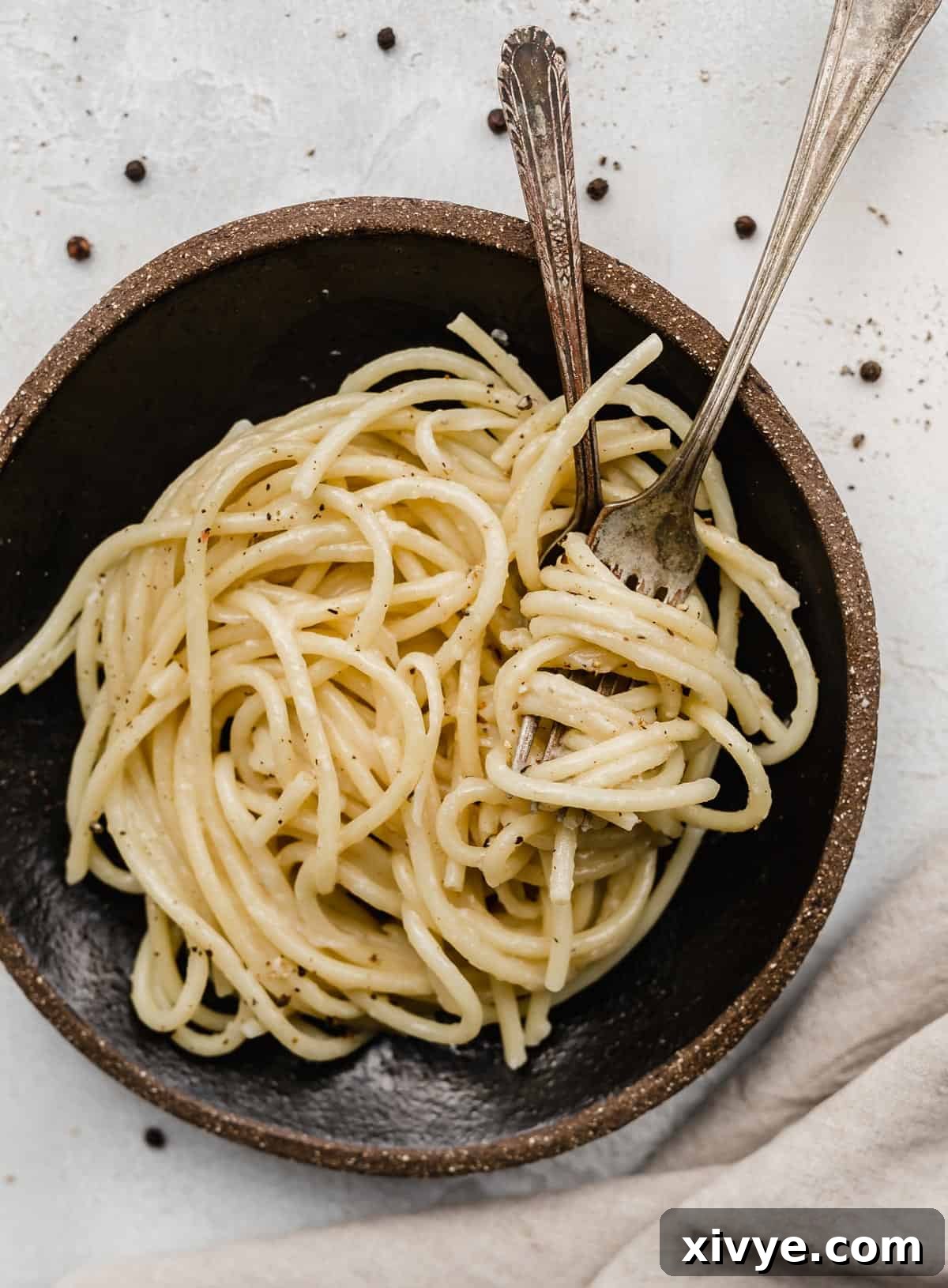
- Serve Immediately: The beauty of Cacio e Pepe is its freshness. Serve the browned butter Bucatini Cacio e Pepe immediately, garnished with additional freshly cracked black pepper and a final sprinkle of Parmigiano Reggiano to taste. Enjoy this exquisite, simple dish while it’s hot and the sauce is at its peak creaminess!
Expert Tips for the Perfect Cacio e Pepe
While Cacio e Pepe is lauded for its simplicity, mastering it requires attention to a few critical details. These tips will help you achieve that coveted restaurant-quality creaminess and flavor every time:
Perfecting Pasta Doneness: The timing of your pasta is crucial. You want to drain the bucatini approximately 1 minute before it reaches al dente. This slight undercooking is intentional because the pasta will continue to cook and absorb the starchy pasta water in the skillet as you create the sauce. If you overcook the noodles initially, they will become mushy and lose their desirable bite when combined with the sauce.
The Magic of Pasta Water: Never underestimate the power of reserved pasta water! It’s the essential ingredient for creating a smooth, emulsified sauce without relying on cream. The starch released from the pasta acts as a natural emulsifier, binding the cheese and butter into a cohesive, velvety sauce. Keep a generous amount of this starchy liquid on hand; you’ll need it not only during the initial sauce creation but potentially later to revive leftovers. Remember to heavily salt your pasta water, as this flavors both the pasta and the sauce.
The Art of Emulsification: When adding the finely grated cheese, do so gradually and stir continuously. This constant agitation, combined with the hot, starchy pasta water, helps the cheese melt smoothly and integrate into the sauce without clumping. If the sauce looks too thick, add a splash more pasta water. If it looks too thin, a bit more finely grated cheese (and brisk stirring) can help thicken it. Temperature control is key here: keep the heat low to prevent the cheese from seizing.
Choosing and Grating Your Cheese: For the best results, always use a block of Parmigiano Reggiano (or Pecorino Romano) and grate it finely yourself. A microplane is ideal for this, creating a light, fluffy texture that melts easily and smoothly. Pre-grated cheeses often contain cellulose or other anti-caking agents that can interfere with emulsification, leading to a gritty or clumpy sauce.
Seasoning and Variations: Taste your dish before serving and adjust seasoning as needed. Cacio e Pepe is meant to be peppery, so don’t be shy with freshly cracked black pepper. A little extra salt might also be welcome. For variations, consider introducing a different cheese, like a blend of Pecorino Romano for a sharper bite and Parmigiano for nutty complexity. Sautéed vegetables such as garlic, mushrooms, zucchini, or bell peppers can be added for extra texture and nutrients. For a protein boost, cooked pancetta or crispy prosciutto would be a delicious addition.
Serving Suggestions: This versatile bucatini pasta pairs wonderfully with a variety of side dishes. Consider serving it alongside a fresh Cherry Tomato Caprese Salad for a burst of freshness, some earthy Roasted Frozen Cauliflower, or simple Buttered Vegetables. A light, crisp white wine or a medium-bodied red like a Sangiovese would complement the richness of the pasta beautifully.
Make Ahead, Storing, and Freezing
While Bucatini Cacio e Pepe is best enjoyed fresh off the stove, you can certainly store any leftovers to savor later. Transfer any remaining pasta to an airtight container and refrigerate for up to 4-5 days. To reheat, the trick is to gently revive the sauce. Add a splash of the remaining reserved pasta water (if you still have some, otherwise a little hot water) to the pasta in a microwave-safe bowl or a skillet over low heat. Warm it through, stirring gently until the sauce becomes creamy and coats the noodles again. A final sprinkle of fresh Parmigiano Reggiano will help achieve that silky texture.
Freezing this bucatini cacio e pepe recipe is generally not recommended. Pasta noodles, especially delicate ones like bucatini, tend to become mushy and lose their desirable al dente texture once frozen and then thawed. The delicate emulsion of the cheese sauce can also break down, resulting in an undesirable grainy texture upon reheating. For the best culinary experience, enjoy this dish fresh or reheated from the fridge within a few days.
Frequently Asked Questions About Cacio e Pepe
Cacio e Pepe is a classic Roman pasta dish whose name literally means “cheese and pepper.” While formaggio is the more common Italian word for cheese, “cacio” is an older, more traditional term used in some Italian dialects, particularly in Central Italy, to refer to cheese, often specifically referring to Pecorino Romano cheese. It’s a minimalist dish that highlights the bold flavors of sheep’s milk cheese (pecorino), the spicy kick of black pepper, and the simple elegance of pasta, all brought together by the magic of starchy pasta water to create a creamy sauce.
Traditionally, Cacio e Pepe is made with Pecorino Romano cheese due to its sharp, salty, and pungent flavor. However, many modern variations, including this recipe, incorporate Parmigiano Reggiano for a slightly milder, nutty, and more complex taste. If you prefer a truly authentic and sharp flavor, opt for Pecorino Romano. If you desire a more balanced and universally appealing profile, choose high-quality Parmigiano Reggiano. For the best of both worlds, you can use an equal blend of finely grated Pecorino Romano and Parmigiano Reggiano to achieve a harmonious balance of sharpness and nuttiness in your Bucatini Cacio e Pepe.
Both Pecorino Romano and Parmigiano Reggiano are hard, aged Italian cheeses, but they have distinct differences. Pecorino Romano is made from sheep’s milk (pecora means sheep in Italian), giving it a whiter color, a saltier taste, and a much sharper, more piquant flavor profile. Parmigiano Reggiano, on the other hand, is made from cow’s milk and typically boasts a slightly darker, more golden hue. It has a fruitier, nuttier, and more savory flavor with a finer, granular texture, and is generally less salty than Pecorino Romano. The choice between them can significantly alter the character of your Cacio e Pepe.
While Cacio e Pepe is often associated with various long pasta shapes, bucatini is widely considered the traditional choice and is excellent for this dish. Its hollow center allows it to capture and carry the rich, creamy sauce beautifully, offering a unique textural experience. However, if bucatini is not readily available at your local grocery store, other long, thin pasta varieties such as spaghetti or linguini make excellent substitutes. The key is to use a pasta that can be coated generously by the emulsified cheese and pepper sauce.
A clumpy or broken Cacio e Pepe sauce is a common issue that often arises from either too much heat or adding cheese too quickly. The key to a smooth sauce is gentle heat and gradual incorporation of finely grated cheese with starchy pasta water. If your sauce clumps, try removing it from the direct heat, adding a splash more warm pasta water, and whisking vigorously. The extra starch and moisture can often help re-emulsify the sauce. Ensure your cheese is finely grated and at room temperature to help it melt more evenly.
Explore More Easy and Delicious Pasta Recipes
If you’ve enjoyed the simplicity and rich flavors of our Bucatini Cacio e Pepe, you’re in for a treat with these other incredibly easy and satisfying pasta recipes from my kitchen. Perfect for any occasion, these dishes prove that delicious meals don’t have to be complicated:
- Classic Fettuccine Alfredo: A timeless creamy indulgence that’s always a crowd-pleaser.
- Johnny Carino’s Bowtie Festival (Copycat): A vibrant, flavorful pasta dish packed with chicken, bacon, and tomatoes.
- Quick Sesame Cilantro Noodle Bowl: A refreshing and exotic take on noodles, perfect for a light and flavorful meal.
- Creamy Butternut Squash Ravioli: A comforting and rich dish, ideal for cozy evenings.
Did you make this recipe? I’d absolutely love to hear about your experience! Click here to share your rating and review, or simply scroll down to the comment section below the recipe card. Your feedback is invaluable!
For more delicious recipes and culinary inspiration, stay connected by following us on Instagram, Facebook, and Pinterest.
Print
SaveSaved!
Review
Bucatini Cacio e Pepe
 Whitney Wright
Ingredients
- 16 oz Bucatini pasta – can use spaghetti or linguini if you can’t find Bucatini
- ½ cup unsalted butter
- 1 ½ teaspoons freshly cracked black pepper – can add more when you taste it at the end
- 2 ¼ cups Parmegiano Reggiano – or Romano pecorino, see note 1.
- reserved pasta water – will need about 3 cups worth
Instructions
-
Bring a large pot of water to a rolling boil. Once boiling, add a generous amount of salt (the water should taste like the ocean).
-
Add the bucatini pasta to the heavily salted boiling water and cook, stirring occasionally, until it is about 1 minute shy of al dente.
-
Carefully drain the pasta, ensuring to reserve roughly 3 cups of the starchy pasta water.
-
In a large skillet, melt the butter over medium to medium-low heat. Once melted, add the freshly cracked black pepper. Continue stirring the butter and pepper, cooking until the butter begins to foam, and then the milk solids at the bottom turn a light amber or golden-brown color (this indicates it’s browned).
-
Carefully stir in 1 cup of the reserved pasta water into the skillet, bringing it to a gentle simmer. Slowly incorporate 1 cup of the finely grated cheese, stirring continuously with tongs or a whisk until the sauce is smooth and emulsified.
-
Using kitchen tongs, transfer the cooked bucatini pasta directly into the skillet. Toss vigorously to thoroughly coat the pasta in the sauce. Add the remaining cheese and additional pasta water (approximately 1 ½ more cups, adding gradually) until a smooth, luscious, and saucy consistency is achieved. See note 2 for consistency tips.
Notes
Store any leftover bucatini cacio e pepe in an airtight container in the refrigerator for up to 4-5 days. To reheat, gently warm the pasta in a microwave or a skillet over low heat, adding a splash of reserved pasta water (or hot water) and a bit of fresh Parmigiano Reggiano to restore its creamy texture.
Freezing this bucatini cacio e pepe recipe is not recommended, as pasta noodles can become mushy and the delicate cheese sauce may separate upon thawing and reheating.
Nutrition
This recipe was originally published on Feb. 24, 2020. It was republished on Jan. 20, 2022, with enhanced information, updated photography, and additional tips to ensure the most delightful cooking experience.