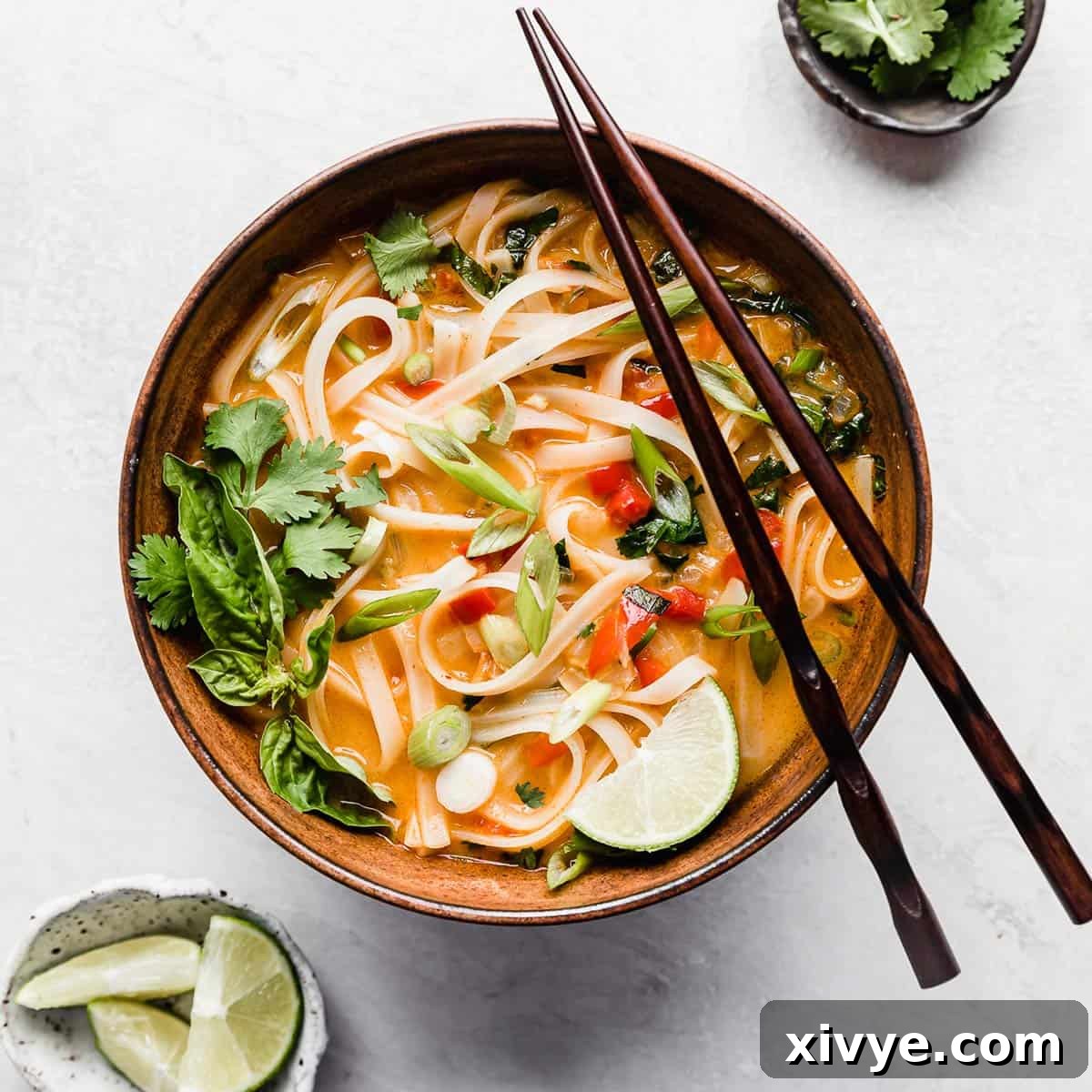
Indulge in the vibrant and exotic flavors of Thailand with this incredibly delicious and heartwarming Thai Red Curry Noodle Soup. Bursting with aromatic ginger, fresh herbs, creamy coconut milk, and the distinctive kick of red curry paste, this recipe promises an authentic taste experience right in your kitchen. Paired with slurpable rice noodles and bright green onions, it’s a bowl of pure comfort that transports you to the bustling streets of Bangkok with every spoonful.
There’s an undeniable joy in exploring global cuisines, and the thought of recreating restaurant-quality dishes at home used to feel daunting. However, I’ve discovered the immense satisfaction of preparing beloved international favorites with ease. Forget expensive takeout; you can master complex flavors with simple steps. If you love discovering new tastes, you might also enjoy my Indian Butter Chicken recipe, my rich Massaman Curry recipe, or my comforting Chicken Curry and Rice recipe. Each offers a journey for your taste buds, proving that culinary adventures are best had at home.
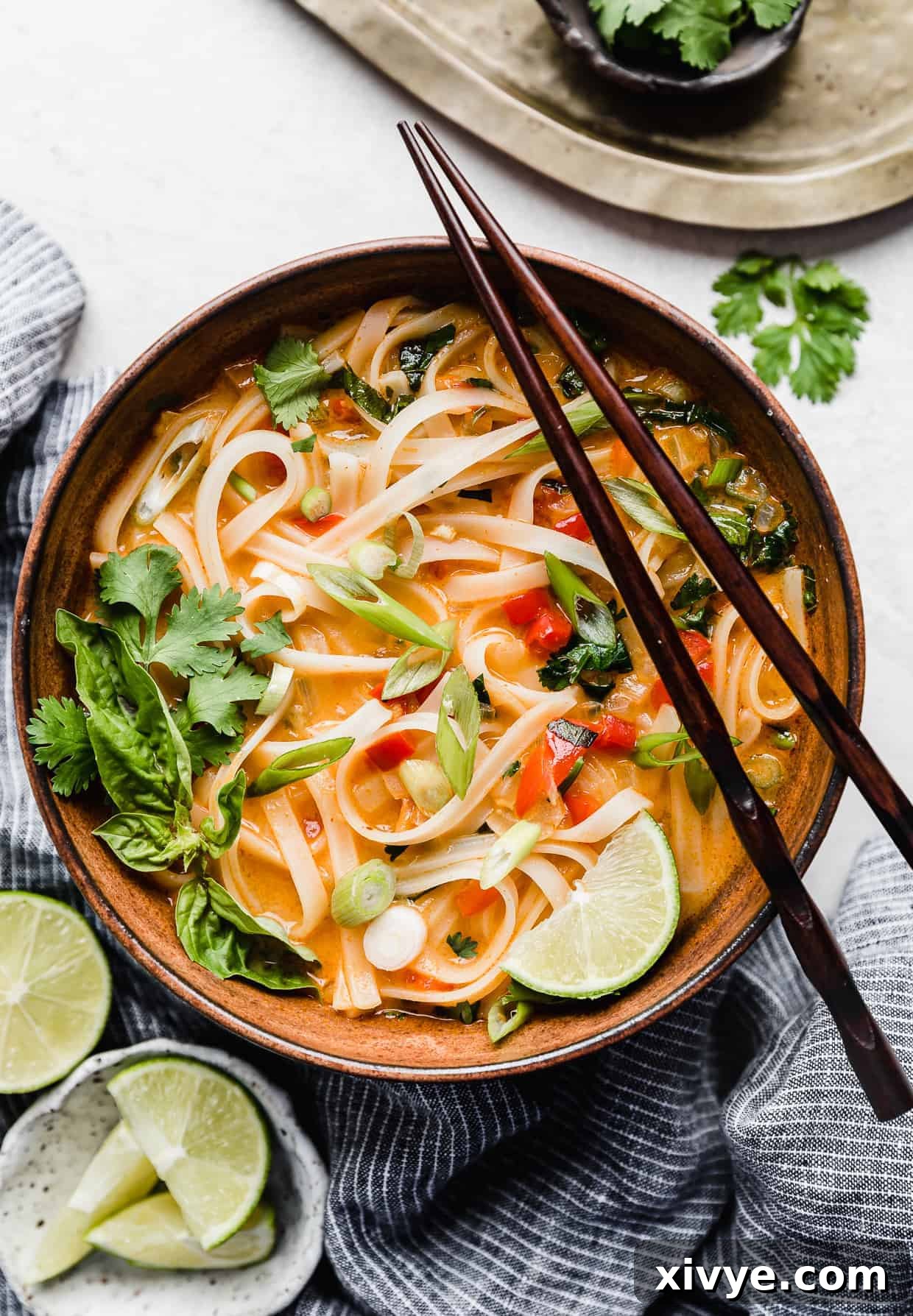
Why You’ll Love This Thai Red Curry Noodle Soup Recipe
This Thai Red Curry Noodle Soup isn’t just another meal; it’s a culinary triumph waiting to happen in your kitchen. It’s designed to be approachable, flavorful, and incredibly versatile, making it a perfect addition to your weekly rotation. Here’s why this recipe stands out:
- Effortless Weeknight Dinner in Under 30 Minutes: Don’t let the vibrant list of ingredients intimidate you. This recipe is surprisingly simple and swift to prepare. In just 25 minutes from start to finish, you can have a gourmet-level Thai meal on the table. It’s the ideal solution for busy weeknights when you crave something special but are short on time. The quick cooking time ensures that fresh ingredients retain their texture and nutritional value, delivering maximum flavor in minimal time.
- A Wholesome and Refreshing Meal: Packed with an array of fresh vegetables and aromatic herbs, this soup offers a delightful combination of health and flavor. Unlike heavier meals, it feels incredibly fresh and light, leaving you satisfied without being overly full. The inclusion of refreshing lime juice and creamy coconut milk not only enhances the taste but also contributes to its nourishing profile. It’s a perfect way to incorporate more wholesome ingredients into your diet while enjoying an exotic dish.
- Infinitely Customizable for Every Palate: One of the greatest advantages of this Thai Red Curry Noodle Soup is its adaptability. Whether you’re catering to dietary restrictions or simply prefer different ingredients, this recipe can be easily adjusted to suit your preferences.
- For Vegetarians: Simply swap out chicken broth for a rich vegetable broth, and you have a completely plant-based meal that doesn’t compromise on flavor. You can also add tofu or extra vegetables like mushrooms or bok choy.
- For Meat Lovers: Enhance the protein content by adding cooked chicken (shredded rotisserie chicken or grilled chicken works beautifully), tender shrimp, or even thinly sliced beef. These additions integrate seamlessly, soaking up the exquisite flavors of the broth.
- Adjusting the Heat: Thai food is known for its balance of sweet, sour, salty, and spicy. This recipe, as written, offers a mild warmth rather than intense heat. If you adore a fiery kick, feel free to double the red curry paste or sprinkle in some crushed red pepper flakes. For those sensitive to spice, reducing the red curry paste by half will ensure a milder, yet still incredibly flavorful, experience.
Key Ingredients for Authentic Flavor
Crafting the perfect Thai Red Curry Noodle Soup starts with selecting fresh, high-quality ingredients. Each component plays a crucial role in building the layered and balanced flavors characteristic of Thai cuisine. Here’s a detailed look at what you’ll need:
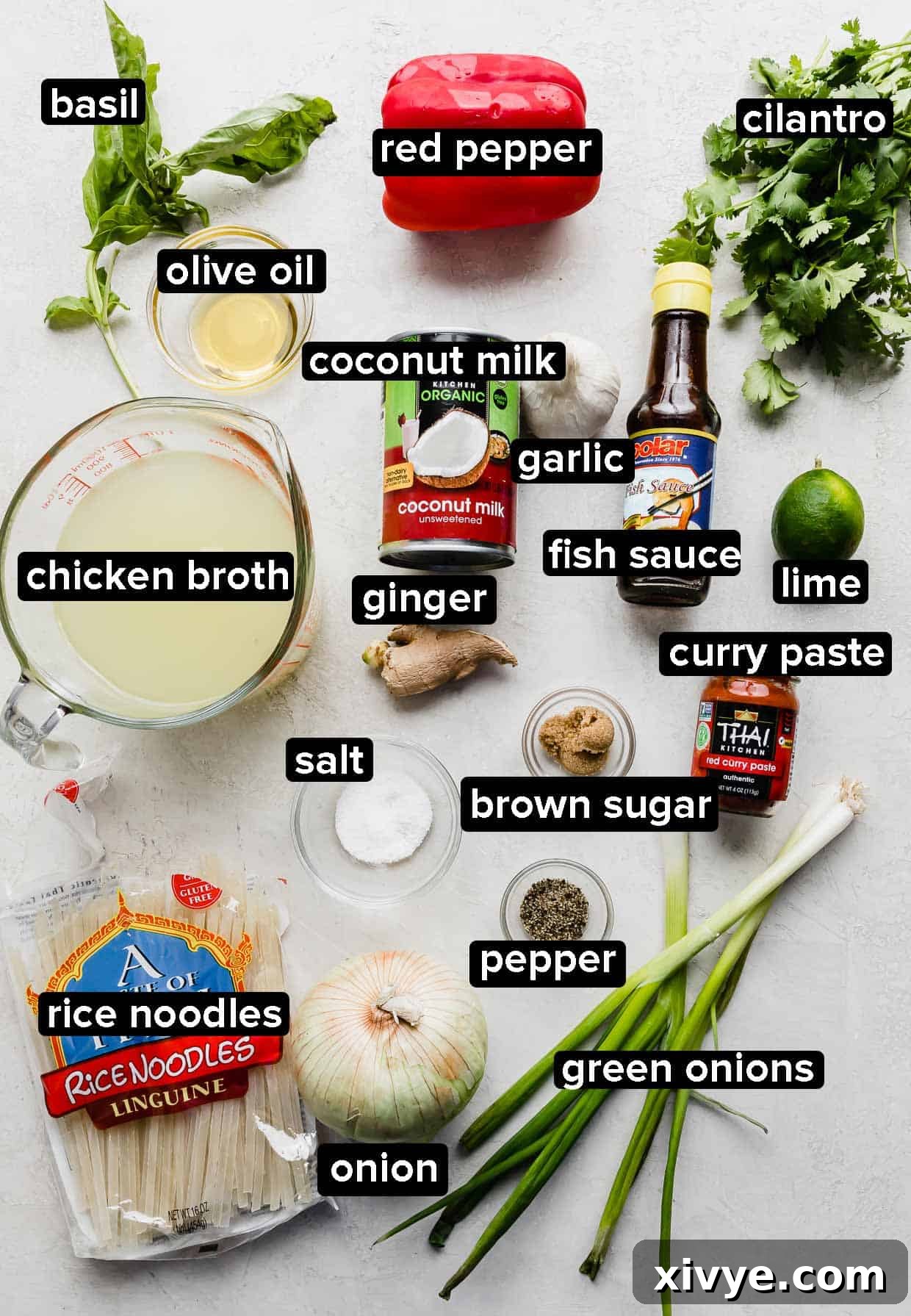
- Linguine Rice Noodles: These are the heart of our noodle soup, offering a delightful chewiness and a different textural experience compared to traditional wheat pasta. I personally prefer the thicker, more substantial linguine-style rice noodles for a heartier soup, but you can choose any variety you enjoy, such as wider flat noodles or delicate vermicelli. You’ll typically find rice noodles in the Asian or international food aisle of your local grocery store.
- Red Curry Paste: This concentrated paste is the cornerstone of the soup’s flavor. It’s a complex blend of dried red chilies, lemongrass, galangal, kaffir lime peel, coriander seeds, cumin, and shrimp paste (for non-vegetarian versions). Brands like Maesri and Thai Kitchen are widely available and reliable choices. While it provides a warm, aromatic flavor, it’s not inherently super spicy, allowing you to control the heat level. This ingredient is also fantastic in other dishes, like a Coconut Curry Noodles recipe.
- Fish Sauce: Essential for authentic Thai flavor, fish sauce contributes a deep umami, earthy, and intensely savory note that cannot be fully replicated by other ingredients. It adds a salty, briny, and almost caramel-like sweetness, balancing the other strong flavors in the soup. Don’t be deterred by its pungent aroma when raw; it transforms beautifully during cooking.
- Coconut Milk: This provides the creamy base for our soup, lending a rich texture and a subtle sweetness that perfectly complements the spice of the curry paste. I opt for full-fat coconut milk for maximum creaminess and flavor, but a lite version can be used without significantly altering the overall consistency or texture, making it a good choice for those monitoring fat intake.
- Thai Basil: Distinct from common sweet basil, Thai basil offers a unique anise-like flavor with hints of licorice and a slightly spicier edge. It’s incredibly aromatic and perfectly suited for authentic Thai dishes, adding a fresh, herbaceous finish. If fresh Thai basil is unavailable, regular sweet basil can be used as a substitute, though the flavor profile will be slightly different.
- Lime: Fresh lime juice is a non-negotiable ingredient in Thai cuisine, providing a crucial burst of bright acidity and a fragrant, citrusy aroma. It balances the richness of the coconut milk and the warmth of the curry, lifting all the flavors in the soup to create a harmonious blend. Always use fresh lime juice for the best results.
- Chicken Broth: This forms the liquid base of the soup, adding depth and savory notes. For a robust flavor, I recommend low-sodium chicken broth. However, for a vegetarian or vegan version, vegetable broth works equally well, offering a delicious alternative without compromising the soup’s essence.
- Other Essentials: Olive oil for sautéing, fresh ginger for warmth and spice, garlic for aromatic depth, diced red bell pepper and yellow onion for sweetness and texture, kosher salt and black pepper for seasoning, and a touch of brown sugar to enhance the dish’s sweet and savory balance. Fresh cilantro and green onions (scallions) are crucial for garnish and a final burst of freshness.
Thoughtful Ingredient Substitutions and Variations
While the core ingredients are crucial, this recipe is flexible enough to accommodate various preferences and availability:
- Noodle Choices: If you prefer a lighter, thinner noodle, rice vermicelli noodles are a common and excellent alternative to linguine-style rice noodles. They cook quickly and absorb the broth beautifully.
- Fish Sauce Alternative: Fish sauce adds an irreplaceable umami depth. However, if you don’t have it or prefer not to use it, a light soy sauce can be a decent substitute. In Thai cooking, light soy sauce is often preferred over regular soy sauce because it has a saltier and less intensely dark flavor, better mimicking the delicate notes of fish sauce. While I haven’t personally tested this soup with soy sauce, it’s a common swap in many Asian recipes. Be mindful of the salt content and adjust to taste.
- Basil Varieties: If fresh Thai basil isn’t accessible, common sweet basil is a perfectly acceptable substitute. It will still provide a lovely herbaceous quality, though the distinct anise notes of Thai basil will be missed.
- Vegetarian Conversion: To make this soup entirely vegetarian or vegan, use vegetable broth instead of chicken broth. Ensure your red curry paste does not contain shrimp paste (many brands offer vegetarian versions), and omit the fish sauce, replacing it with light soy sauce as suggested above.
- Adding Protein: This soup is fantastic on its own, but it also welcomes added protein.
- Chicken: Cooked and shredded chicken (rotisserie chicken is a great shortcut!) or grilled chicken pieces can be stirred in during the final steps.
- Shrimp: Quickly cooked shrimp adds a wonderful seafood element. Add raw shrimp to the boiling broth during the last few minutes of cooking until pink and opaque.
- Tofu: For a plant-based protein boost, pan-fry or bake firm tofu cubes until golden and add them along with the noodles.
Easy Step-by-Step Instructions to Make Thai Red Curry Noodle Soup
Creating this flavorful Thai Red Curry Noodle Soup is a straightforward process, even for beginner cooks. Follow these simple steps to bring a taste of Thailand to your table:
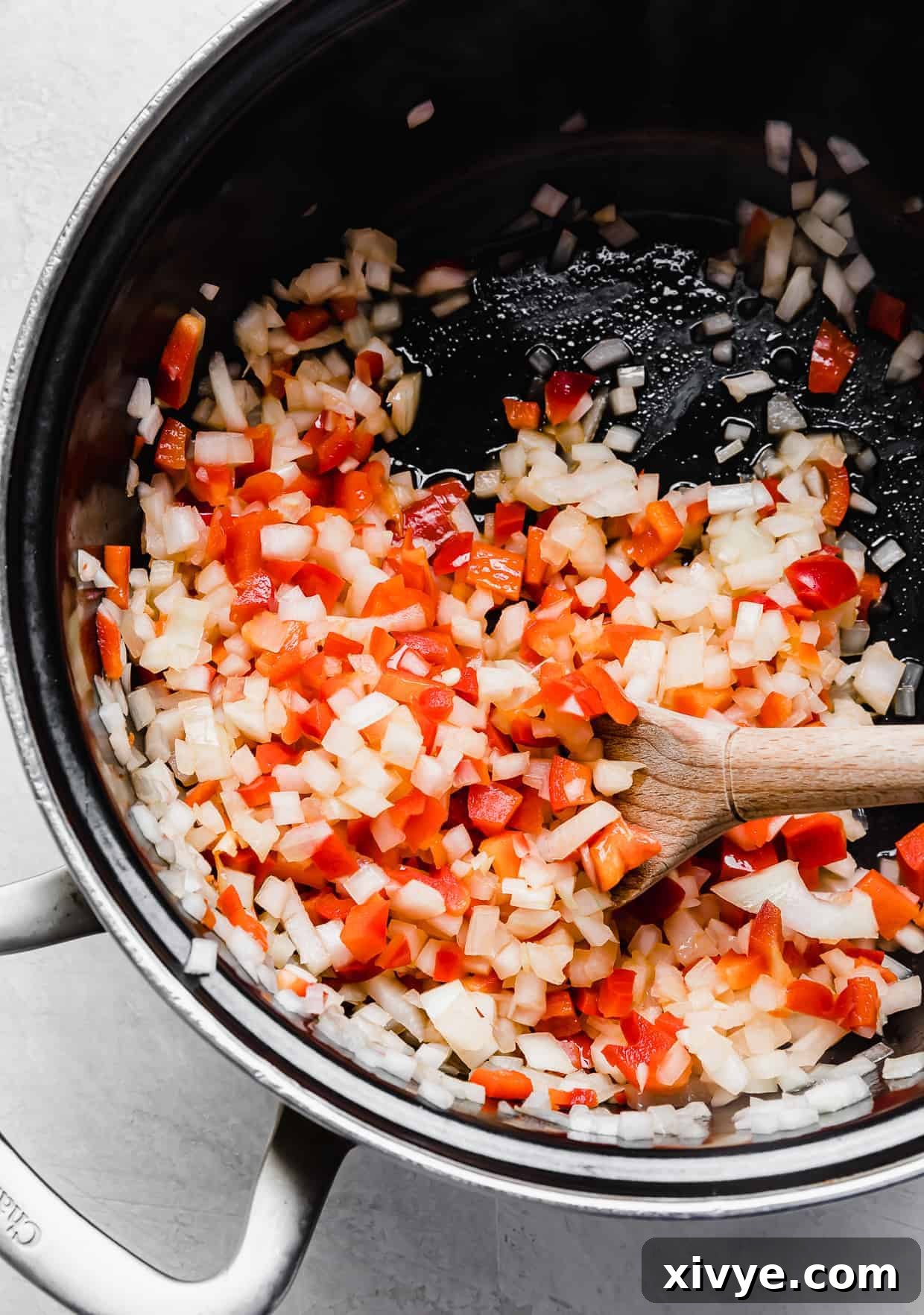
- Sauté Aromatics: In a large pot or Dutch oven, heat the olive oil over medium heat. Add the diced red bell pepper and yellow onion. Sauté, stirring occasionally, until the vegetables are tender and translucent, which typically takes about 4 minutes. Then, stir in the minced garlic and cook for just 1 more minute until fragrant. Be careful not to burn the garlic.
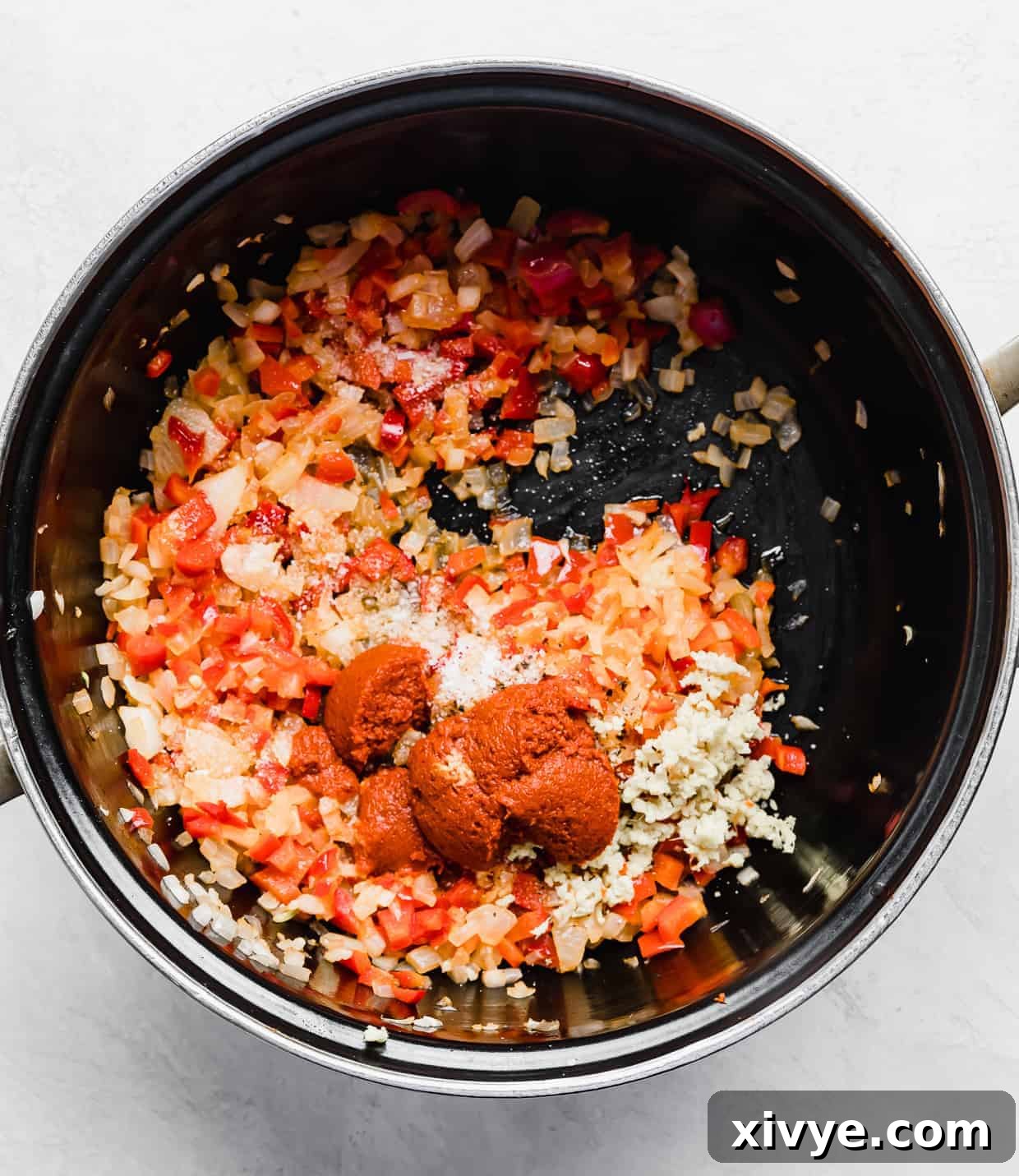
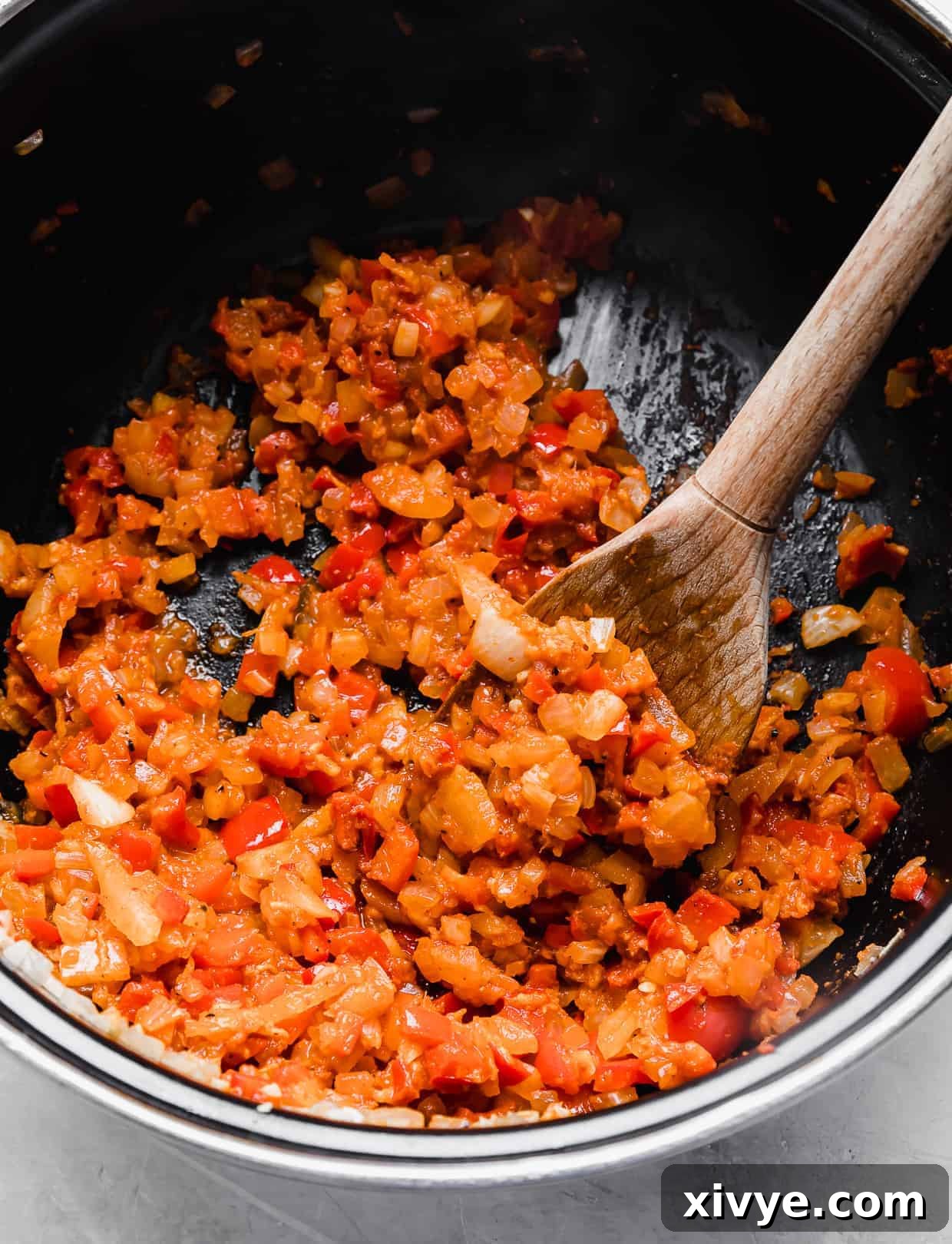
- Bloom the Curry Paste: Add the red curry paste, grated ginger, kosher salt, and black pepper to the pot. Stir well to combine with the sautéed vegetables. Cook for about 1 minute, allowing the paste to “bloom” in the hot oil. This step is crucial as it deepens the flavors and releases the full aroma of the curry paste.
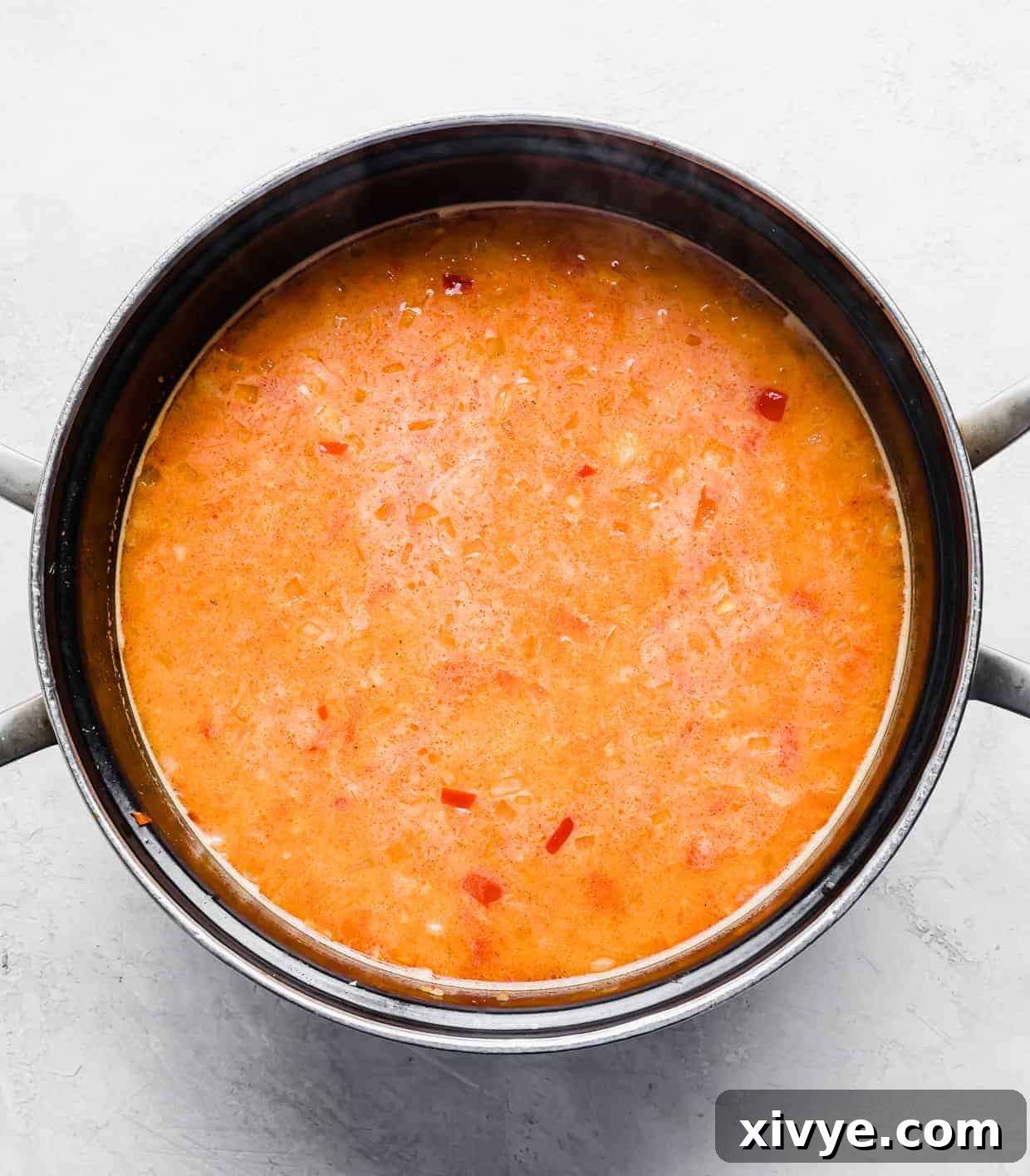
- Simmer the Broth: Pour in the chicken broth (or vegetable broth) and the full can of coconut milk. Stir everything together until well combined. Increase the heat to bring the mixture to a rolling boil.
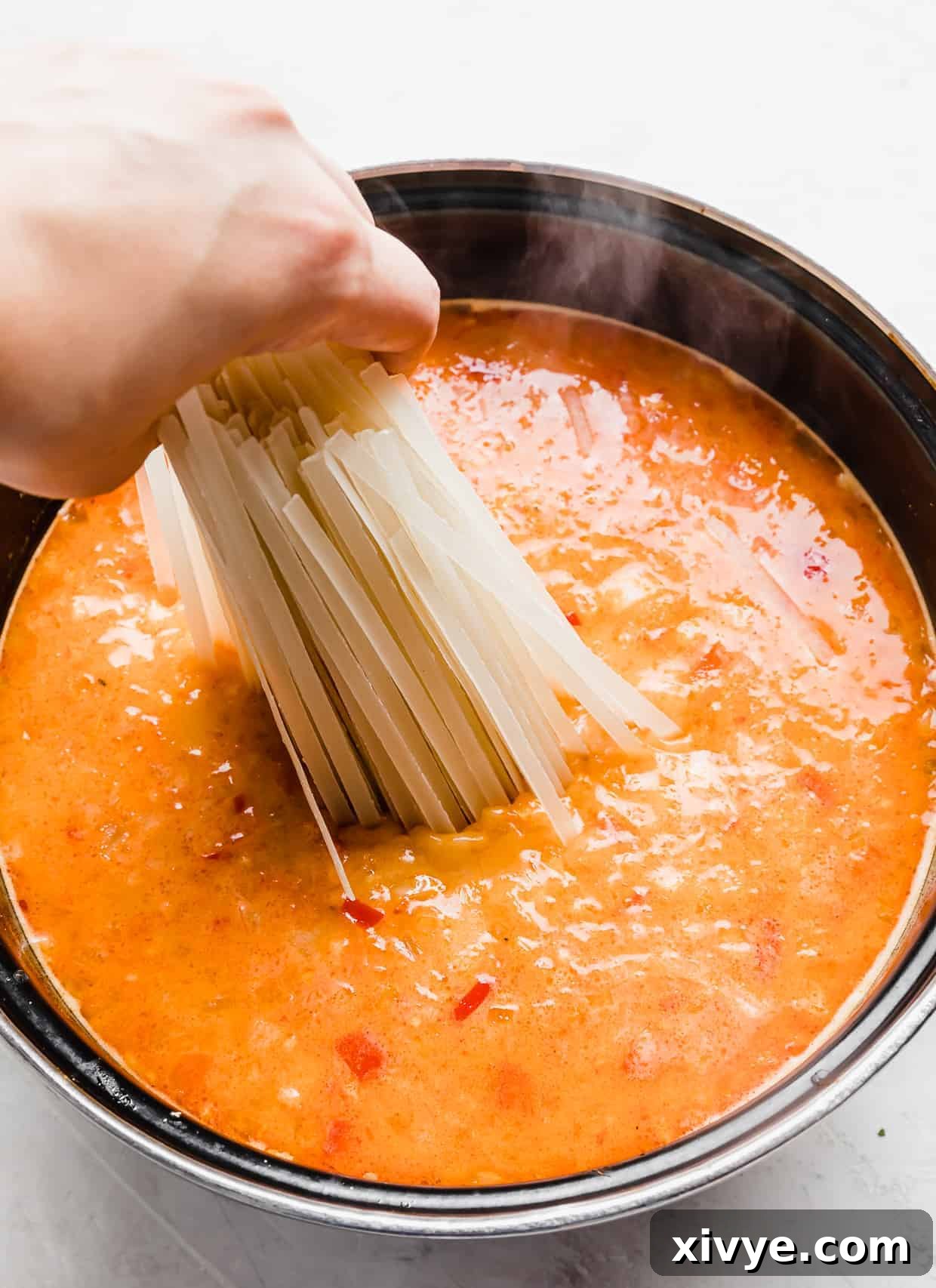
- Cook the Noodles: Once the broth mixture is boiling, carefully add the rice noodles, fish sauce, and packed brown sugar. Stir to ensure the noodles are submerged. Cook the noodles until they are tender, which typically takes about 4 minutes. The exact cooking time may vary slightly depending on the thickness and type of rice noodles you are using, so refer to your package instructions if unsure.
- Finish with Fresh Herbs and Lime: Remove the pot from the heat. Stir in the sliced green onions, fresh chopped cilantro, fresh chopped Thai basil (or regular basil), and the vibrant lime juice. The residual heat of the soup will gently wilt the herbs, infusing their fresh aromas into the dish.
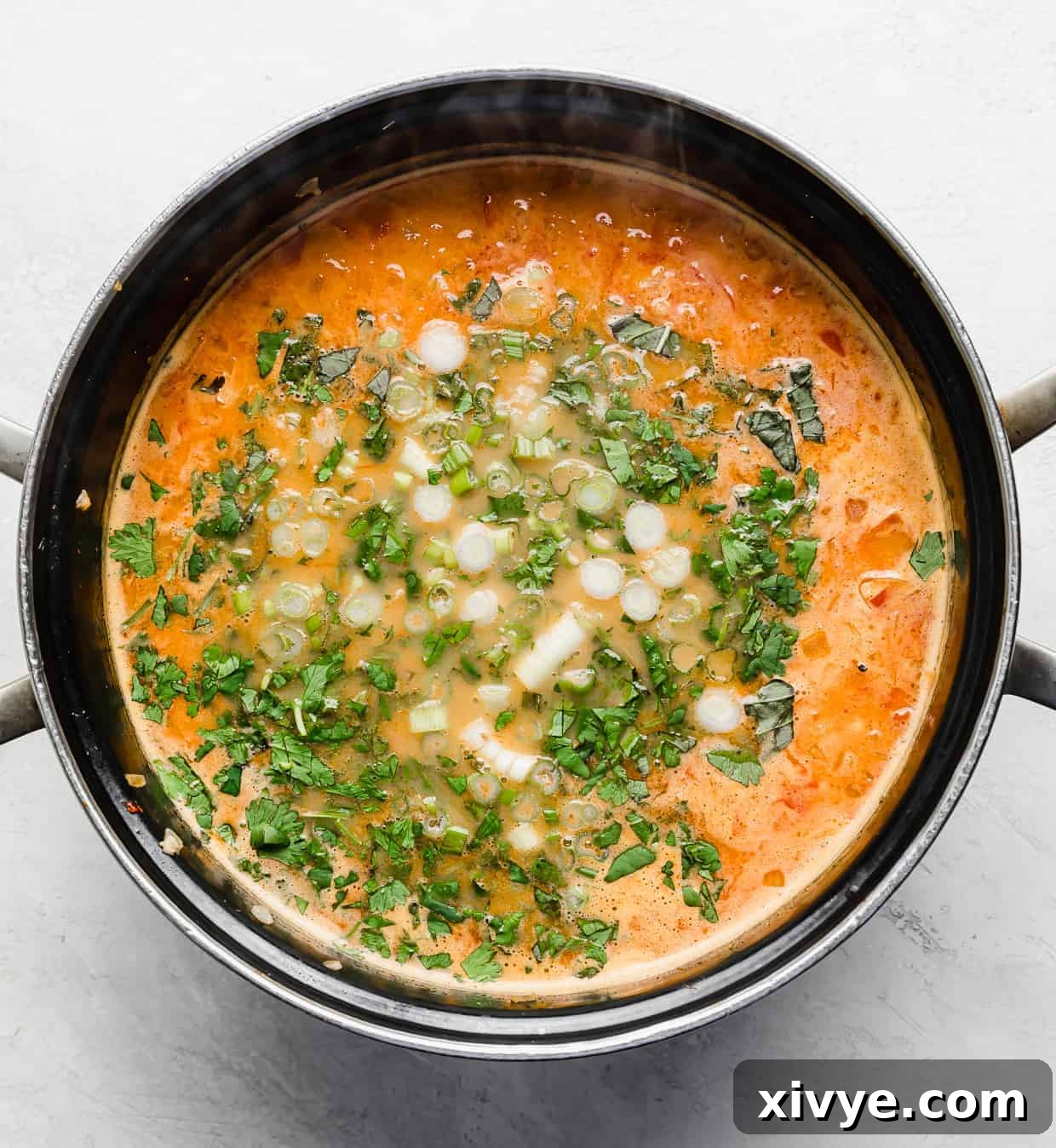
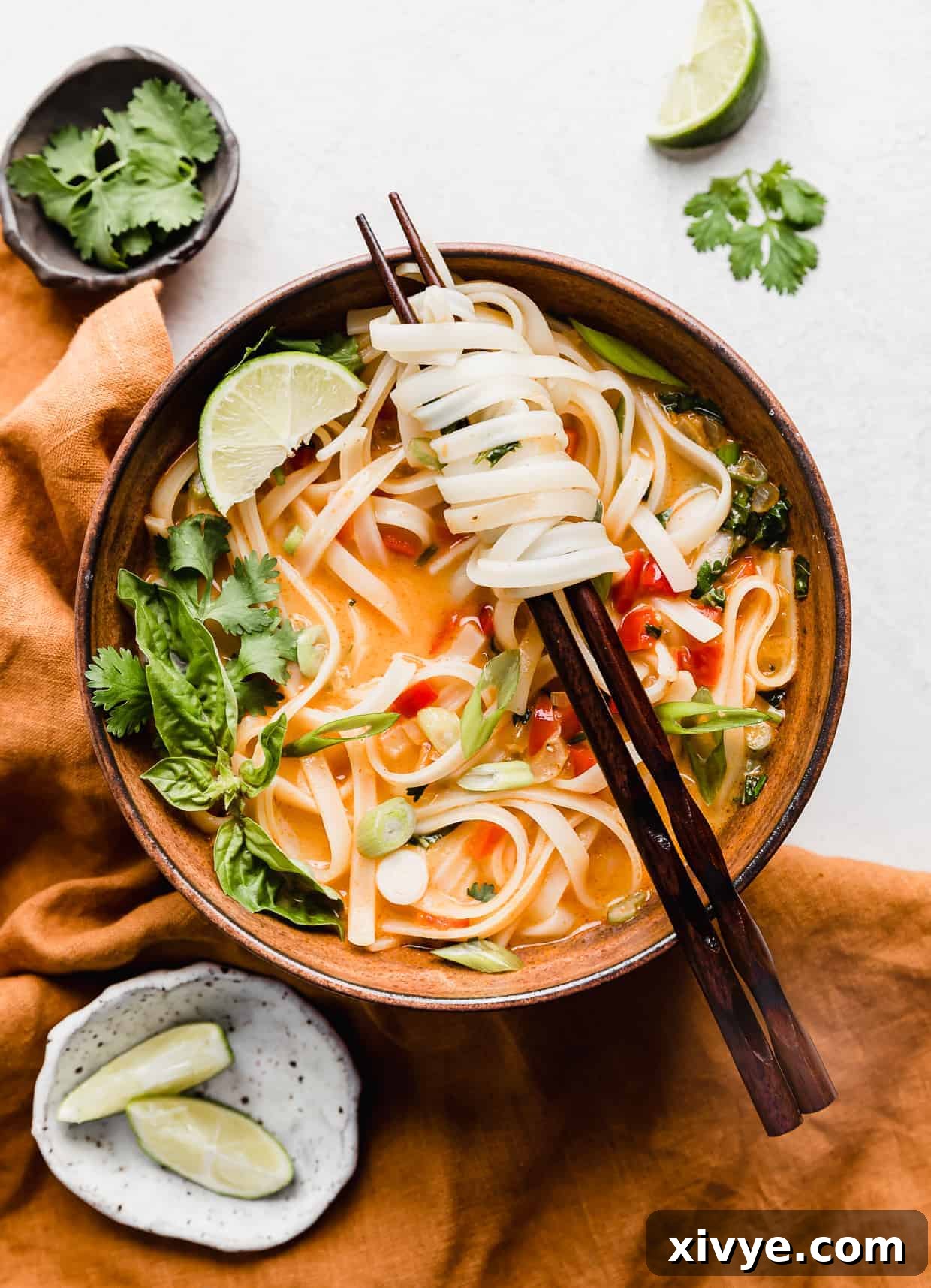
- Serve Immediately: Ladle generous portions of the hot Thai Red Curry Noodle Soup into serving bowls. For an extra touch of freshness and presentation, garnish with additional lime wedges, fresh cilantro leaves, and basil leaves. Serve this comforting and aromatic soup immediately to enjoy its peak flavor and warmth!
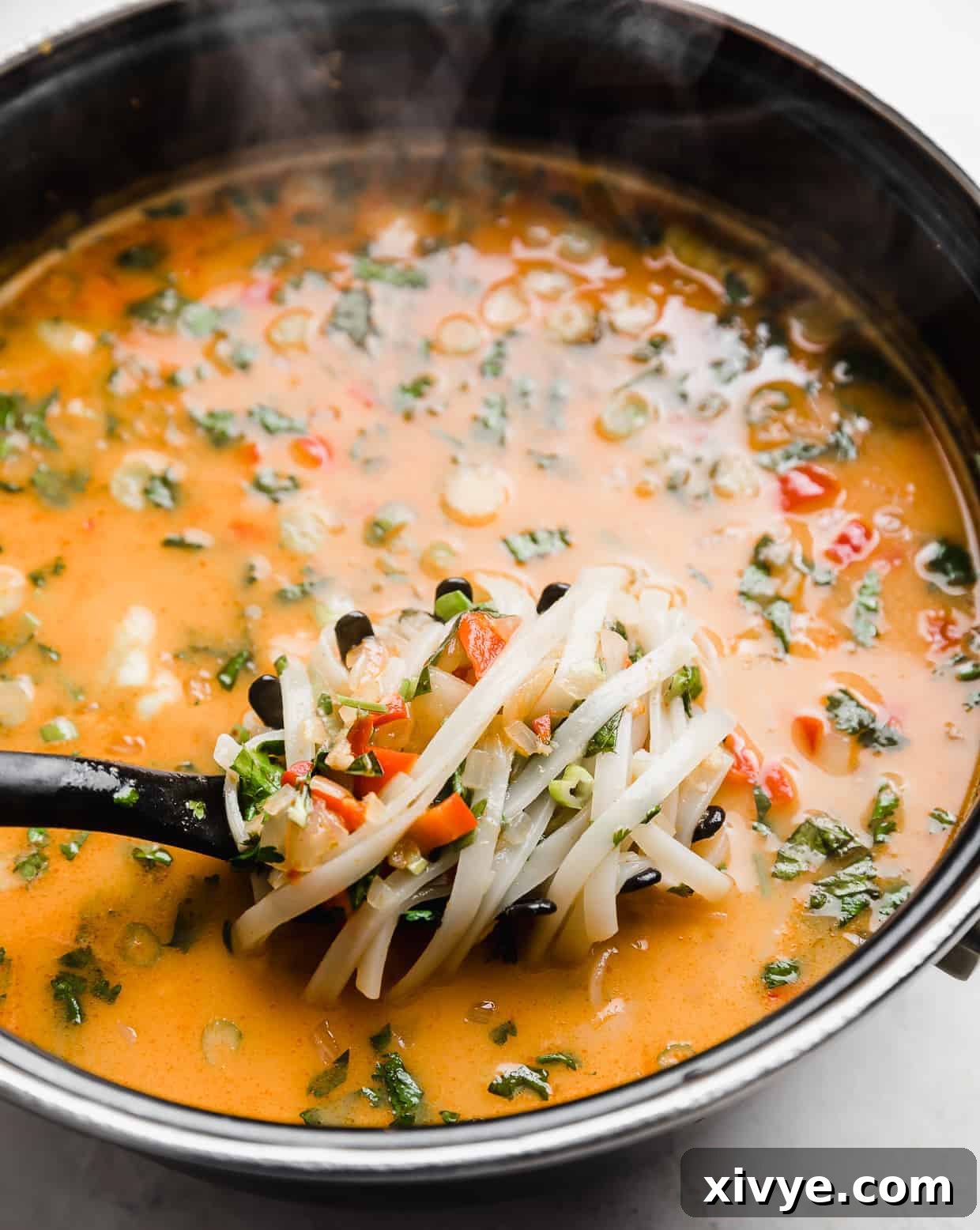
Expert Tips for the Best Thai Red Curry Noodle Soup
To elevate your Thai Red Curry Noodle Soup from good to absolutely extraordinary, consider these expert tips and tricks:
- Adjusting Consistency for Noodle vs. Soup: If you prefer a dish with less broth and more noodles, resembling a saucier stir-fry or a noodle bowl, simply halve the amount of chicken broth and coconut milk. This will create a thicker, richer sauce that clings beautifully to the noodles. Conversely, for a lighter, more traditional soup, you can add a splash more broth.
- Mastering the Heat Level with Red Curry Paste: The beauty of red curry paste lies in its versatility.
- For Extra Spice: If you are a fan of heat, don’t hesitate to double the amount of red curry paste. You can also add a pinch of crushed red pepper flakes along with the paste for an intense fiery kick.
- For a Milder Experience: The recommended 3 tablespoons of red curry paste typically results in a mild, flavorful soup, not overtly spicy. However, if you are particularly sensitive to spice, reduce the paste by half to 1.5 tablespoons. You can always add a little more at the end if you dare!
- Choosing the Right Coconut Milk: While full-fat coconut milk provides the richest, creamiest texture and deepest flavor, lite coconut milk can be used if you’re looking to reduce calories and fat. The difference in overall consistency and texture will be minimal, making it a viable alternative without sacrificing too much of the soup’s luxurious feel.
- Don’t Skip the Fresh Herbs and Lime: The fresh cilantro, Thai basil, and lime juice added at the very end are not mere garnishes; they are crucial flavor enhancers. Their bright, aromatic qualities provide a necessary counterpoint to the rich, savory broth, bringing freshness and balance to the entire dish. Adding them off the heat preserves their vibrant flavor and aroma.
- Serving Suggestions: This soup is a meal in itself, but it pairs wonderfully with a side of homemade naan bread or crusty baguette to soak up every last drop of the delicious broth. For a more substantial meal, a simple green salad with a light vinaigrette would also be a great accompaniment.
- Storing Leftovers: Leftover Thai Red Curry Noodle Soup can be stored in an airtight container in the refrigerator for 3-4 days. Note that the noodles may absorb more of the broth over time, becoming softer. To reheat, gently warm on the stovetop over low heat, adding a splash of broth or water if the soup has become too thick.
Frequently Asked Questions About Thai Red Curry Noodle Soup
Here are some common questions and helpful answers to guide you in making and enjoying this delightful Thai Red Curry Noodle Soup:
Is Thai Red Curry Noodle Soup spicy?
As prepared in this recipe, Thai Red Curry Noodle Soup is not overtly spicy. The red curry paste primarily contributes a rich, complex flavor with a warm, aromatic undertone, rather than intense heat. True spiciness typically comes from ingredients like fresh chili peppers (jalapeños, bird’s eye chilies), cayenne pepper, or crushed red pepper flakes, which are optional additions if you prefer more heat.
Is red curry paste hot or mild?
Red curry paste generally has a warm, aromatic flavor profile but is typically considered mild to medium in terms of heat, depending on the brand. It’s rich in flavor from ingredients like lemongrass, galangal, and kaffir lime, with a pleasant underlying warmth from the chilies. You can easily adjust the heat by increasing the amount of paste for more spice or decreasing it for a milder taste.
What is red curry paste made of?
The basic ingredients in red curry paste typically include dried red chili peppers, shallots, garlic, galangal (a type of ginger), lemongrass, kaffir lime peel, cilantro root, and often shrimp paste (for non-vegetarian versions), cumin, and coriander. These ingredients are pounded together to form a fragrant and potent paste that forms the base of many Thai dishes.
Is there curry powder in curry paste?
No, curry paste and curry powder are distinct. Curry paste is a wet, pounded blend of fresh and dried herbs, spices, and chilies. Curry powder, on the other hand, is a dry blend of ground spices. While both are used to flavor dishes, curry paste often contains whole chili peppers (or dried chilies rehydrated), giving it a more immediate and often spicier kick than most curry powders, which are generally milder and focus more on spice blends like turmeric, cumin, and coriander.
What can I use instead of red curry paste?
If you don’t have red curry paste, the easiest substitution would be curry powder, though it will yield a different flavor profile. A general guideline is to use 1 teaspoon of curry powder for every 1 teaspoon of curry paste. Alternatively, you can try to make a homemade version of red curry paste using ingredients like red chilies, garlic, ginger, turmeric, cumin, and coriander, blended into a paste. Keep in mind that homemade pastes require specific ingredients and can be time-consuming, but offer the most authentic alternative.
Can I make this soup ahead of time?
Yes, you can prepare the broth base (steps 1-3) ahead of time and store it in the refrigerator for up to 3 days. When ready to serve, reheat the broth, then add the noodles, fish sauce, and brown sugar, cooking until the noodles are tender. Finish with fresh herbs and lime juice just before serving. This approach helps maintain the best texture for the noodles and the freshest flavor of the herbs.
How can I make this soup richer?
For an even richer and more indulgent soup, use full-fat coconut milk exclusively. You can also add a tablespoon of unsalted butter or a swirl of coconut cream at the end of cooking. For an umami boost, consider adding dried shiitake mushrooms (rehydrated and sliced) to the broth as it simmers.
Explore More Comforting Soup Recipes
If you’re a fan of warming, hearty soups, be sure to check out some of our other popular recipes:
- Hearty Ham and Corn Chowder
- Creamy White Chicken Chili
- Flavorful Buffalo Chicken Soup
- Irresistible Sweet and Spicy Chili
- Comforting Sausage Tortellini Soup
Did you make this recipe? We’d love to hear about your experience! Click here to leave a star rating and a review of your culinary creation.
Stay connected and up-to-date with our latest recipes and kitchen adventures by following us on Instagram, Facebook, and Pinterest.
Print Recipe
Thai Red Curry Noodle Soup

Whitney Wright
If you want a soul (and body) comforting soup, this Thai Red Curry Noodle Soup will do the trick! It’s filled with curry spices, fresh ginger, coconut milk, and green herbs.
10 mins
15 mins
25 mins
6 servings
Ingredients
- 1 tablespoon olive oil
- 1 red bell pepper – diced
- 1 small yellow onion – diced
- 3 garlic cloves – minced
- 3 tablespoons red curry paste
- 1 tablespoon grated ginger
- 1 ½ teaspoon kosher salt
- ½ teaspoon black pepper
- 6 cups low sodium chicken broth – or vegetable broth for a vegetarian meal
- 13.5 oz can coconut milk – I used full fat
- 8 oz linguine rice noodles – or any rice noodle variety
- 1 tablespoon fish sauce
- 2 teaspoons brown sugar – packed
- 3 green onions – thinly sliced (also referred to as “scallions”)
- ½ cup fresh cilantro – chopped
- ¼ cup Thai basil leaves – chopped (can use regular basil if you can’t find Thai basil)
- 2 tablespoons lime juice
Equipment
-
large pot (4 qt)
-
garlic mincer
-
Zester
Instructions
-
To a large pot or Dutch oven set over medium heat, add the olive oil, bell pepper, and onion. Cook until the peppers and onion are tender and translucent, about 4 minutes. Add the garlic and cook for 1 more minute.
-
Stir in the red curry paste, ginger, salt, and pepper and cook until fragrant, 1 minute.
-
Stir in the broth and coconut milk. Bring to a boil. Once boiling stir in the rice noodles, fish sauce, and brown sugar. Cook until noodles are tender, about 4 minutes (time will vary depending on the noodle variety you use).
-
Remove from heat and stir in the green onions, cilantro, basil, and lime juice.
-
Portion into serving bowls and top with additional lime wedges and cilantro/basil leaves. Serve immediately!
Notes
Red Curry Paste: You can find this in the Asian/Indian food aisle of your grocery store.
Broth: You can use vegetable broth or low-sodium chicken broth, both taste great! If you’re a vegetarian, you would want to use the vegetable broth.
Coconut milk: I used full-fat coconut milk, but you won’t notice a difference in consistency and texture if you choose to use a lite coconut milk.
Rice noodles: I prefer a thicker/more substantial noodle so I went with linguini, however you can use any rice noodle variety you’d like. I also find this in the Asian/Indian cuisine food aisle of my grocery store.
Fish sauce: A common fish sauce substitute is soy sauce. However, in Thai cooking light soy sauce is preferred because it has a lighter and more delicate flavor than regular soy sauce.
Thai Basil: This basil has more of an anise type flavor to it with a bit more spice. If you don’t have it or can’t find it, regular basil works well too.
Protein: You can add protein to this dish by adding chopped, cooked chicken (rotisserie chicken or grilled chicken would work great here) to the soup. Shrimp would also be delicious!
Storing: Store in the fridge for 3-4 days.
Nutrition
Calories: 238kcal (12%)
Carbohydrates: 12g (4%)
Protein: 7g (14%)
Fat: 20g (31%)
Saturated Fat: 14g (70%)
Polyunsaturated Fat: 1g
Monounsaturated Fat: 3g
Sodium: 901mg (38%)
Potassium: 483mg (14%)
Fiber: 3g (12%)
Sugar: 6g (7%)
Vitamin A: 1956IU (39%)
Vitamin C: 32mg (39%)
Calcium: 47mg (5%)
Iron: 2mg (11%)
Soup
Thai
Did you make this recipe?
Please leave a star rating and review on the blog post letting me know how you liked this recipe! Take a picture and tag @saltandbaker on Tik Tok, Instagram, and Facebook so I can see what you’re making!