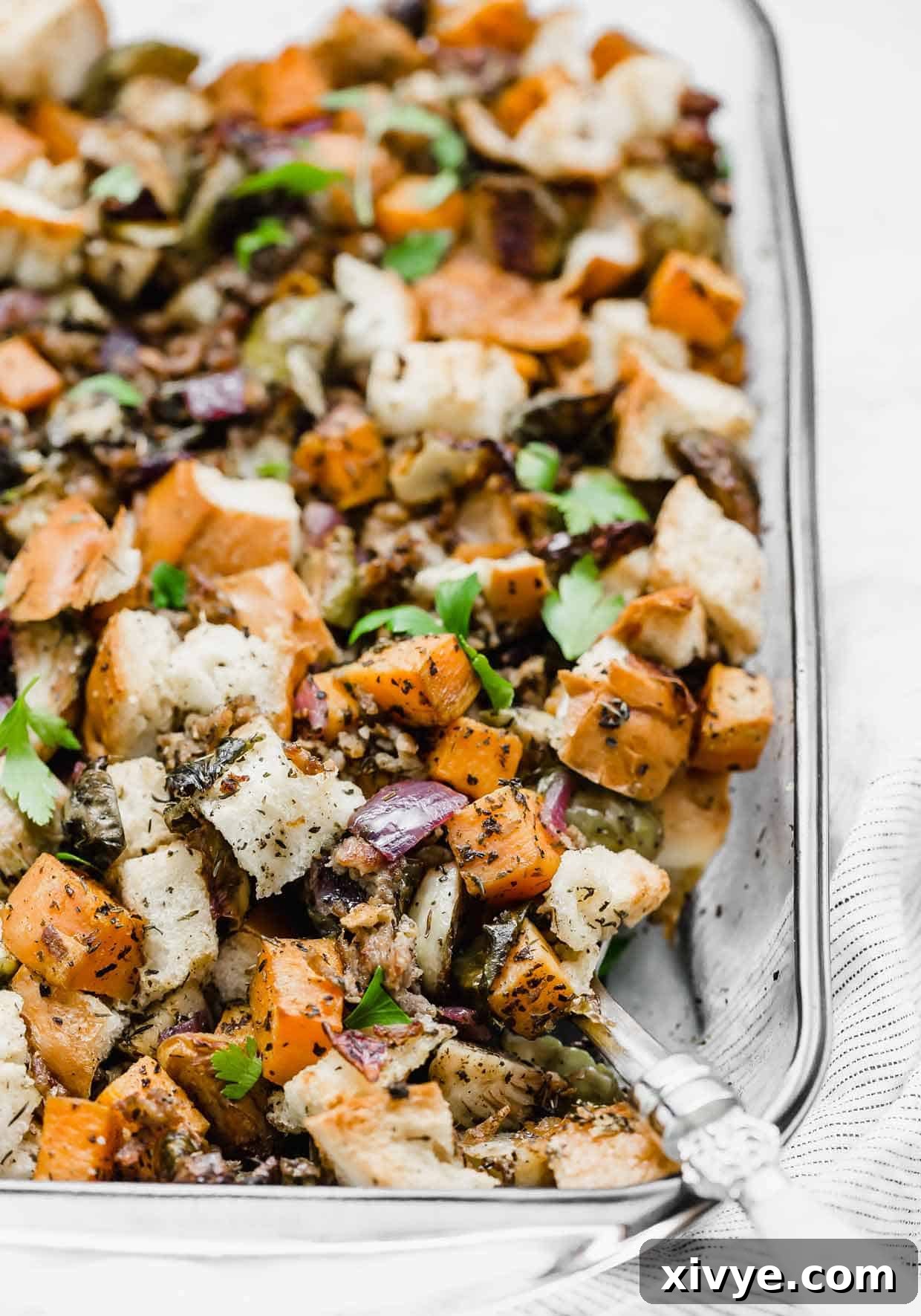
Welcome to the ultimate guide for crafting the most flavorful and comforting Italian Sausage Stuffing. Forget everything you thought you knew about traditional Thanksgiving stuffing, because this recipe introduces a delightful twist that will elevate any meal, not just your holiday spread. Combining the rich, savory depth of sweet Italian sausage with the earthy sweetness of roasted sweet potatoes and Brussels sprouts, all bound together by hearty French bread and aromatic spices, this dish is a true celebration of autumn flavors. It’s designed to be effortlessly delicious, simple to prepare, and incredibly customizable, making it a perfect addition to your culinary repertoire throughout the fall season and beyond.
While often associated with the grand Thanksgiving feast, this versatile Italian sausage stuffing is too good to be reserved for just one day a year. Imagine serving it alongside a succulent roast chicken on a crisp fall evening, or as a hearty side dish at your next family gathering. It brings warmth, texture, and an unforgettable taste that complements a wide array of main courses. If you’re a fan of autumn side dishes, you’ll also love exploring other seasonal favorites like Candied Apple Yams, Easy Sweet Potato Casserole, and Cinnamon Roasted Butternut Squash. But for now, let’s dive into what makes this particular stuffing recipe so special and absolutely essential for your kitchen.
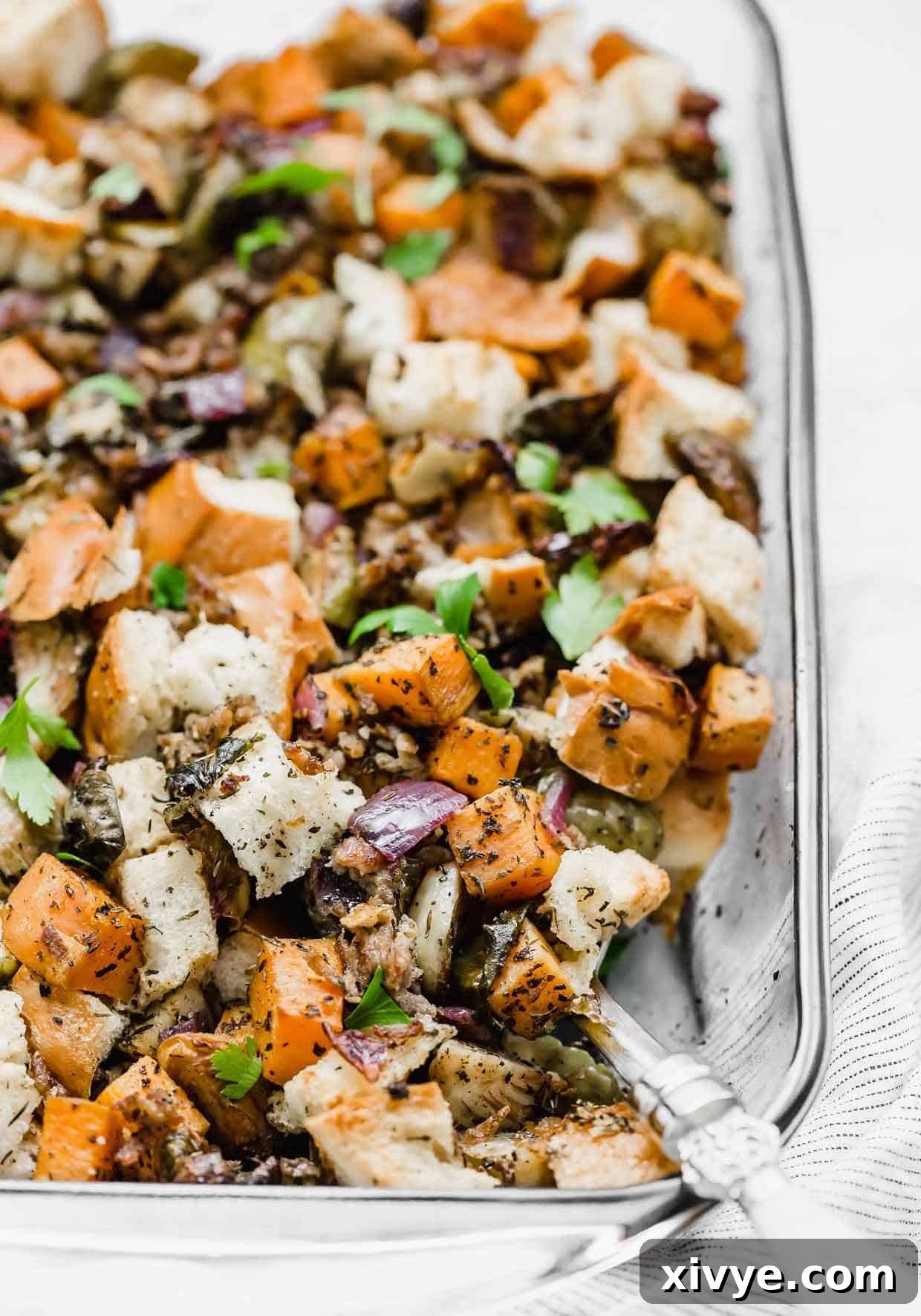
Why This Italian Sausage Stuffing Recipe is a Must-Try
Our Italian Sausage Stuffing stands out from the crowd for several compelling reasons, making it a favorite for both seasoned cooks and culinary beginners. It’s more than just a side; it’s a flavorful experience designed to impress with minimal fuss. Here’s why this particular recipe will become your go-to:
- Unparalleled Flavor and Texture Profile: This isn’t just “stuffing”; it’s a symphony of tastes and textures. The sweet Italian sausage introduces a rich, savory, and slightly peppery note that beautifully contrasts with the natural sweetness of roasted sweet potatoes. The Brussels sprouts add a delightful nutty flavor and a tender-crisp bite, while the French bread provides the perfect chewy base with a slightly crisp exterior. Infused with a harmonious blend of dried herbs like basil, sage, and thyme, every mouthful is packed with aromatic goodness and comforting warmth. This thoughtful combination creates a depth of flavor that truly sets it apart from more conventional stuffing recipes.
- Remarkably Easy to Assemble: Despite its gourmet taste, this Italian sausage and herb stuffing is surprisingly straightforward to prepare. We’ve streamlined the process into simple, manageable steps that even novice cooks can follow with confidence. From toasting the bread to browning the sausage and roasting the vegetables, each component comes together efficiently. The recipe focuses on maximizing flavor without complicating the execution, ensuring you can create a show-stopping dish without spending hours in the kitchen. It’s the perfect recipe for holiday entertaining or busy weeknights when you crave something special.
- Endlessly Customizable to Your Liking: One of the greatest advantages of this autumn vegetable stuffing is its adaptability. We understand that not everyone loves every vegetable, or perhaps you’re looking to use up what’s fresh in your pantry. If Brussels sprouts aren’t your preference, feel free to swap them out for other root vegetables such as parsnips, carrots, butternut squash, or even red potatoes. You can also adjust the type of Italian sausage – opt for spicy if you crave a kick, or turkey sausage for a lighter version. This flexibility allows you to truly make the recipe your own, catering to dietary needs, personal tastes, or simply whatever ingredients you have on hand, ensuring a delicious outcome every time.
Key Ingredients for Perfect Italian Sausage Stuffing
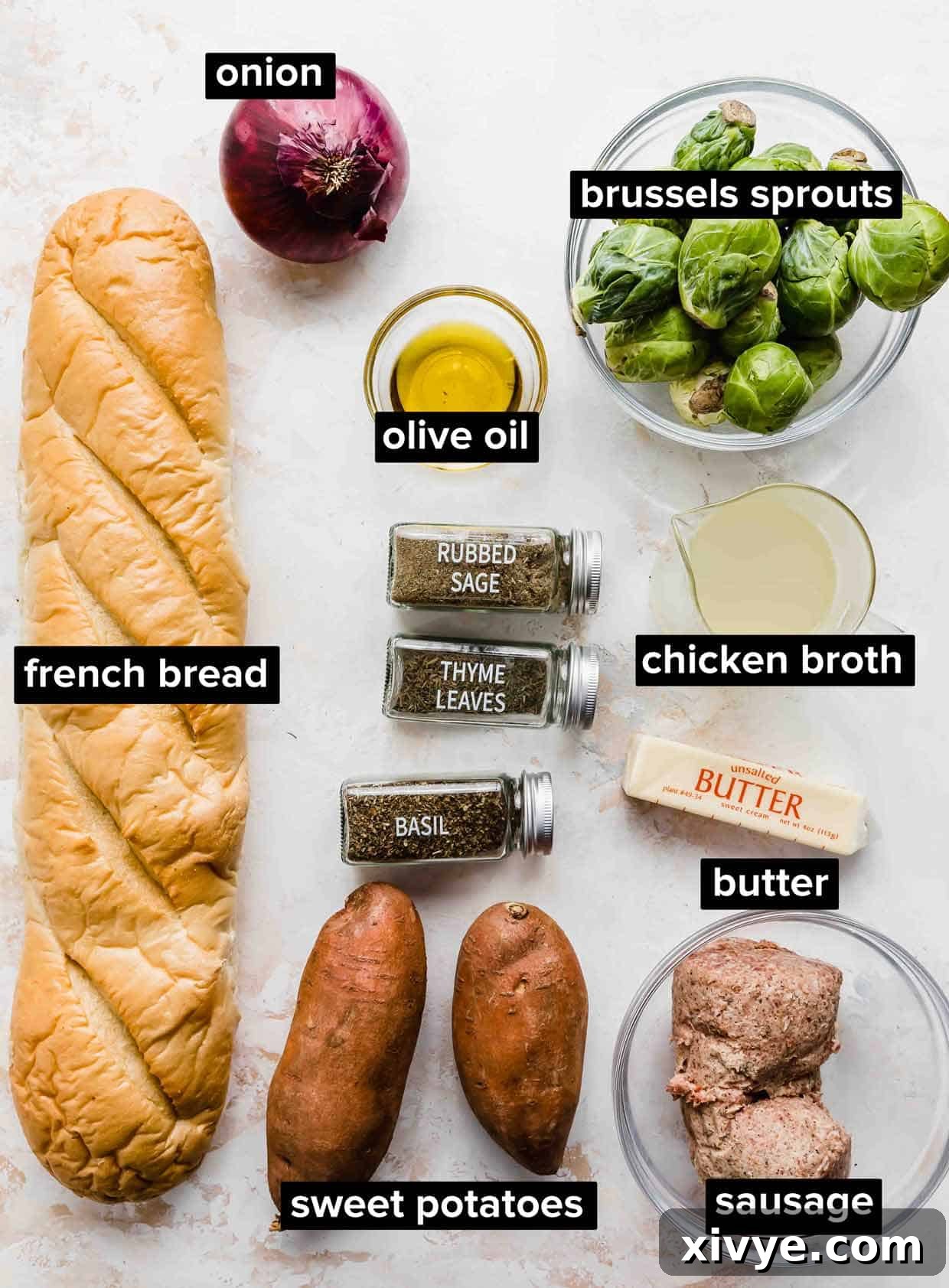
Crafting exceptional Italian Sausage Stuffing begins with understanding the role each ingredient plays. Here’s a closer look at the essential components and how to get the best results:
- French Bread: The foundation of any great stuffing is its bread, and French bread truly shines here. You’ll need about 10 cups of cubed bread, cut into 1-inch pieces. The beauty of using French bread lies in its robust structure and fantastic chewy crust, which holds up beautifully during baking, offering a delightful contrast to the softer interior. Don’t worry about starting with stale bread; we’re going to lightly toast it in the oven to achieve the perfect texture – firm enough to absorb the rich flavors without becoming soggy. This brief toasting step is crucial for that ideal stuffing consistency.
- Sweet Italian Sausage: This ingredient is the star, bringing a hearty, savory, and aromatic dimension to the dish. Sweet Italian pork sausage is our recommendation, offering a balanced flavor that most families enjoy. However, if you prefer a bit of heat, feel free to substitute with hot Italian sausage for an extra kick. For those looking for a lighter alternative, turkey sausage works wonderfully and can be an excellent choice without sacrificing flavor. Ensure the sausage is crumbled and cooked thoroughly, draining any excess grease to prevent the stuffing from becoming oily.
- Sweet Potato: Adding natural sweetness and a vibrant color, sweet potatoes are a fantastic complement to the savory sausage. You’ll need about 2 cups of peeled and cubed sweet potato. Don’t hesitate to be generous with this ingredient, or even mix in other root vegetables. Parsnips, carrots, or even small chunks of butternut squash can be excellent additions, enhancing the dish’s earthy goodness and nutritional value. The sweet potato will roast alongside the Brussels sprouts, becoming tender and caramelized.
- Red Onion: Red onion contributes a mild, slightly pungent sweetness that balances the richness of the sausage and butter. While red onion is preferred for its beautiful color and distinct flavor, you can easily substitute it with a sweet onion or yellow onion if that’s what you have on hand. The key is to cube it to a similar size as the sweet potatoes and Brussels sprouts for even cooking and distribution throughout the stuffing.
- Herbs (Dried Basil, Rubbed Sage, Thyme, Fresh Parsley): Herbs are the soul of this stuffing, infusing it with classic autumn flavors. We use dried basil, rubbed sage, and thyme, divided for different cooking stages to build layers of aroma. Rubbed sage, in particular, is essential for that traditional, comforting stuffing taste. While dried herbs are convenient and potent, elevating your dish with fresh herbs is always a fantastic option if available. For garnishing, fresh parsley adds a pop of color and a bright, fresh finish just before serving.
- Butter: Butter is crucial for both flavor and texture. Cubes of butter are mixed into the stuffing before baking, melting as it cooks to create delicious pockets of buttery richness throughout the dish. This ensures a moist, incredibly flavorful stuffing with that irresistible mouthfeel. Don’t skimp on the butter; it’s a key component to achieving that comforting, indulgent quality.
- Chicken Broth: Chicken broth is the liquid component that brings everything together, moisturizing the bread and infusing the stuffing with savory flavor. You’ll add it slowly, stirring until the mixture is just moist but not waterlogged. The goal is to provide enough liquid for that classic stuffing texture without making the bread soggy. The exact amount needed can vary slightly depending on the dryness of your bread and the moisture content of your vegetables, so add gradually and trust your judgment.
Easy Step-by-Step Guide to Making Italian Sausage Stuffing
Creating this delicious Italian Sausage Stuffing is a straightforward process, broken down into three main phases: preparing the bread, cooking the sausage, and roasting the vegetables, followed by combining and baking. Follow these steps for a perfectly flavored and textured stuffing every time.
- Oven Toast the French Bread: Begin by preheating your oven to 400°F (200°C). Arrange the cubed French bread in a single layer on a large baking sheet. Bake for 10-14 minutes, or until the bread cubes are lightly golden brown and slightly firm, but not hard or overly crunchy. This step is vital for preventing soggy stuffing, as it helps the bread absorb the liquids without disintegrating. Once toasted, remove the bread from the oven and transfer it to a very large mixing bowl to cool slightly while you prepare the other ingredients.
- Cook the Sweet Italian Sausage: In a large skillet, add the mild or hot Italian sausage and place it over medium heat. Using a spoon or spatula, break the sausage into small, crumbly pieces as it cooks. Continue cooking for 8-10 minutes, stirring occasionally, until the sausage is fully browned and cooked through. Once done, carefully drain any excess grease from the skillet to keep the stuffing from being too rich. Transfer the cooked sausage to the large bowl with the toasted French bread cubes.
- Roast the Flavorful Root Vegetables: In a medium-sized bowl, combine the quartered Brussels sprouts, cubed sweet potato, and chopped red onion. Drizzle with olive oil, then add 1 teaspoon of dried basil, 1 teaspoon of rubbed sage, and 1 teaspoon of thyme. Toss gently to ensure all the vegetables are evenly coated with the oil and spices. Spread the seasoned vegetables in a single layer on a separate large baking sheet. Roast in the same 400°F (200°C) oven for 18-20 minutes, or until the vegetables are slightly fork-tender and caramelized, but still hold their shape and have a slight bite. Avoid over-roasting, as they will continue to cook in the stuffing.
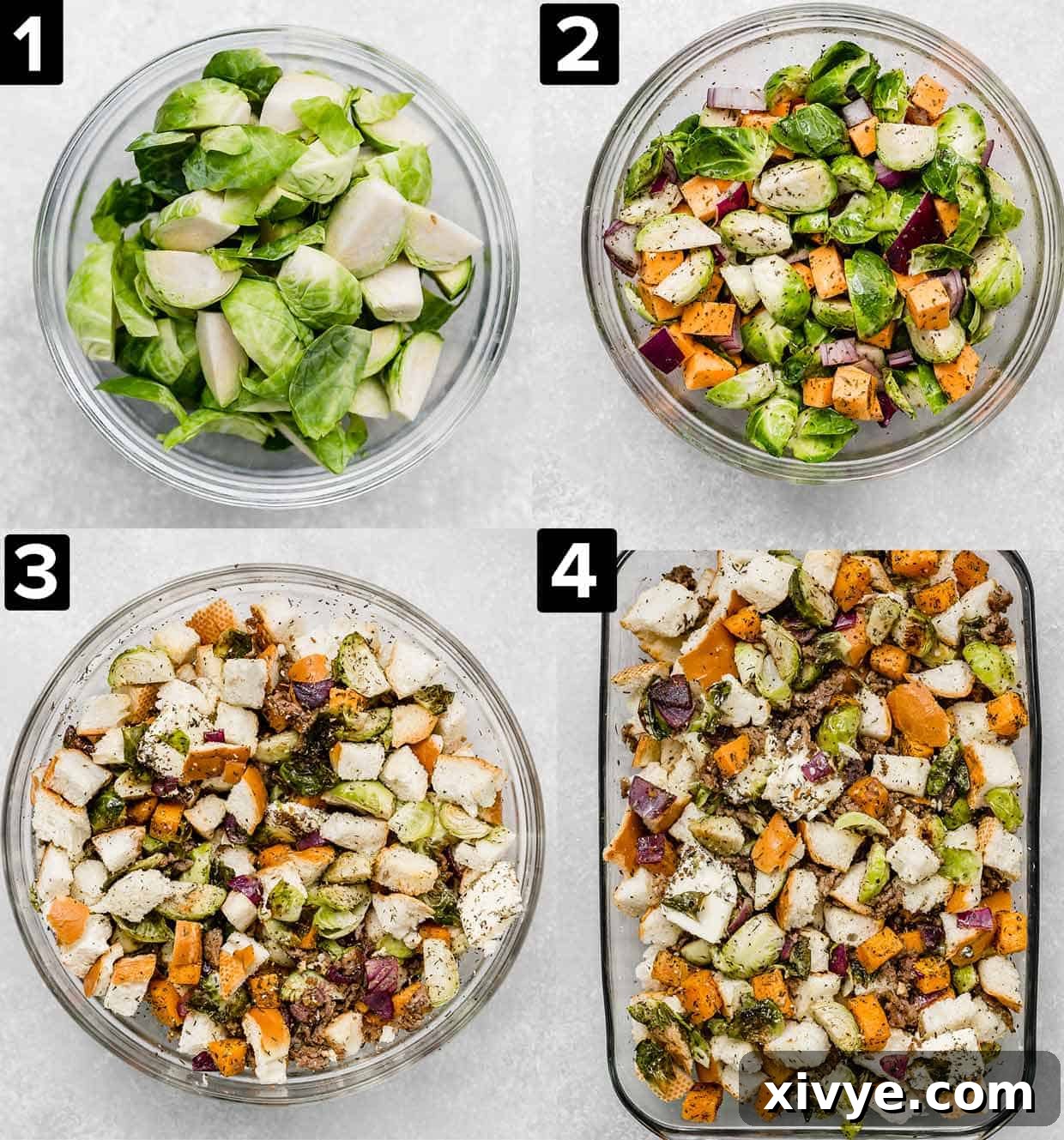
- Combine All Ingredients: Add the roasted vegetables to the large bowl containing the toasted bread and cooked sausage. Sprinkle in the remaining dried basil, sage, and thyme, along with the cubed butter. Gently toss all the ingredients together to combine them thoroughly, ensuring the herbs and butter are well distributed. Slowly pour the chicken broth over the mixture while continuously stirring. It’s important to add the broth gradually; you may not need all of it. The goal is to moisten the bread cubes evenly without saturating them to the point of sogginess. The mixture should be moist but still have distinct bread pieces.
- Bake to Golden Perfection: Transfer the combined vegetable and sausage stuffing mixture into a greased 9×13-inch casserole dish. Cover the dish tightly with aluminum foil. Bake in a preheated oven at 375°F (190°C) for 25 minutes. After 25 minutes, remove the foil and continue baking for another 20-25 minutes, or until the top is beautifully golden brown, and any excess liquid has been absorbed. The stuffing should appear slightly crisp on top and fully cooked through. Remove from the oven, garnish with fresh parsley or other fresh herbs if desired, and serve warm for an incredibly satisfying side dish.
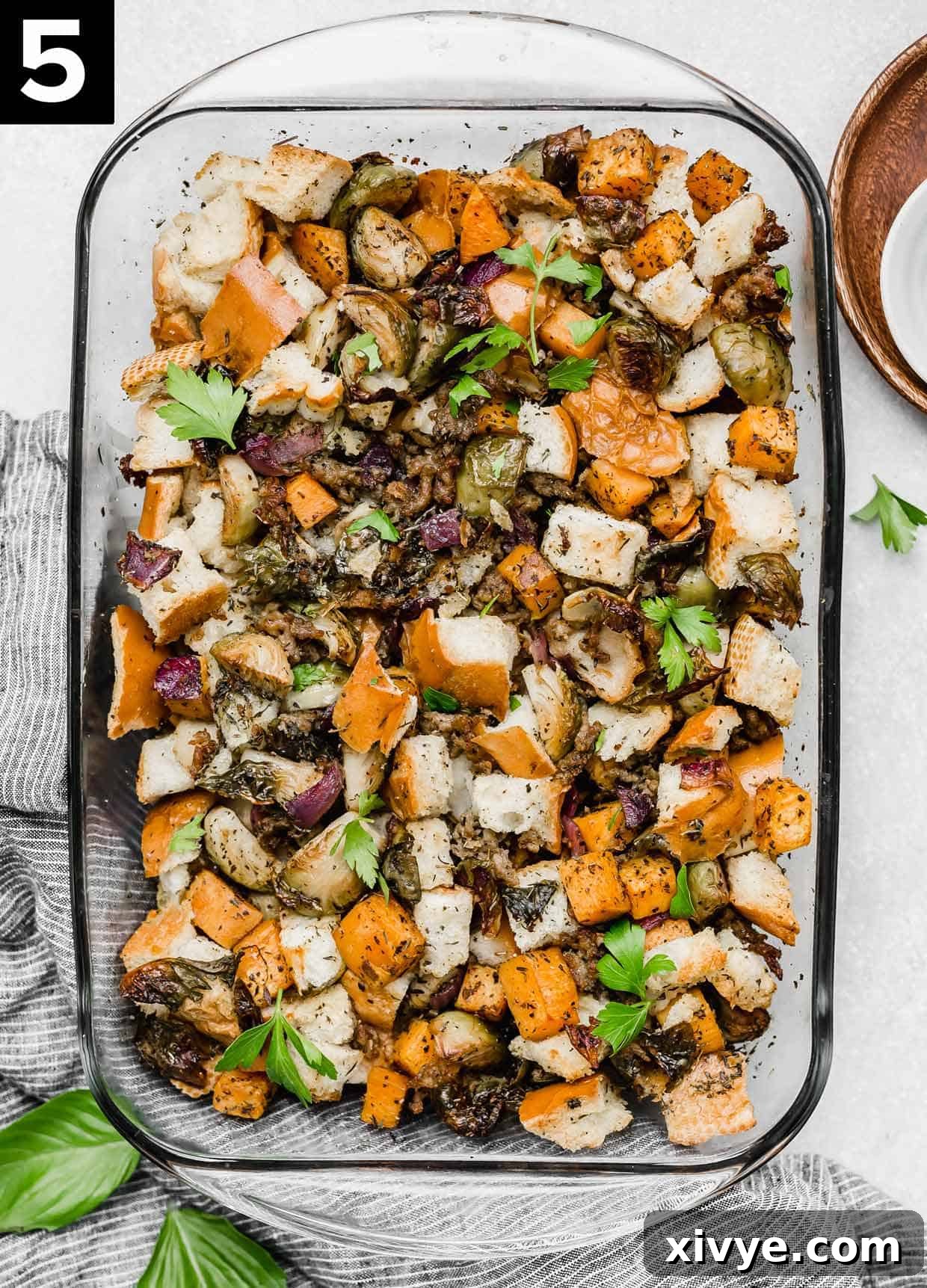
Expert Tips for the Best Italian Sausage Stuffing
Achieving perfectly flavorful and textured Italian sausage stuffing is easy with a few expert tips. These suggestions will help you troubleshoot common issues and even customize the dish further to suit your preferences:
- Choosing Your Bread: While French bread is ideal for its crusty exterior and firm texture, you can experiment with other sturdy breads like sourdough, ciabatta, or even a good quality sandwich loaf. The key is to cut the bread into 1-inch cubes. If you’re short on time, store-bought stuffing cubes can be used; simply skip the initial bread-toasting step. Just be aware that the texture might be slightly different.
- The Art of Toasting Bread: When toasting your bread cubes, aim for a light golden brown. The goal is to dry out the bread slightly, giving it structure to absorb the broth without becoming mushy. Avoid over-toasting, which would result in hard, crunchy bread that won’t soften enough during baking and will make your stuffing dry.
- Sausage Selection: If you’re using Italian sausage links, remember to remove the casings before cooking and crumbling the meat. To save time and effort, opt for bulk Italian sausage, which is pre-ground and casing-free, making preparation much quicker. Whether you choose sweet, mild, or hot sausage, ensure it’s cooked thoroughly and excess grease is drained.
- Vegetable Versatility: This recipe is incredibly adaptable! Feel free to add more vegetables or swap out the Brussels sprouts for other favorites. Consider adding diced parsnips, carrots, butternut squash, or even red potatoes for extra flavor and nutrients. For those not keen on Brussels sprouts, simply omit them or replace them with an equal amount of another preferred vegetable. This is your chance to truly personalize your sausage vegetable stuffing.
- Healthier Modifications: For a lighter version of this savory stuffing, consider using multi-grain French bread for added fiber and substituting pork sausage with lean turkey sausage. These small changes can reduce fat content without compromising significantly on flavor.
- Preventing Soggy Stuffing: The most common culprit for soggy stuffing is too much liquid. Add chicken broth gradually, stirring until the bread cubes are moistened but not saturated. The mixture should feel damp but not wet. Different breads absorb liquid at varying rates, so trust your judgment over a strict measurement.
- Addressing Dry Stuffing: If your stuffing turns out dry, it likely needed more chicken broth. It’s a delicate balance; you want the broth to fully coat the mixture. Another reason could be over-baking the bread prior to assembling the stuffing, making it too hard to absorb moisture. Ensure the bread is lightly toasted, not rock hard.
- Serving Suggestions: While a classic Thanksgiving side, this Italian sausage stuffing pairs wonderfully with roast chicken, pork loin, or even a simple holiday ham. Garnish with fresh herbs like parsley or basil for an added touch of color and freshness just before serving.
Make-Ahead, Storing, and Freezing Italian Sausage Stuffing
Planning ahead for a holiday meal or simply managing leftovers efficiently is key. Here’s how to handle your Italian Sausage Stuffing for optimal freshness and convenience:
- Make-Ahead Instructions: To get a head start, you can cook the sausage, roast the vegetables, and toast the bread up to a day in advance. Store the cooked sausage and roasted vegetables in separate airtight containers in the refrigerator. Crucially, leave the toasted bread cubes out on the counter, uncovered, or in a loosely covered paper bag. Storing the bread in an airtight container will cause it to soften again, undoing the toasting process. For best results, it’s ideal to toast the bread fresh on the day of baking.
- Assembling in Advance: You can assemble the full stuffing mixture (bread, sausage, vegetables, herbs, butter) and store it in the fridge overnight. However, do NOT add the chicken broth until just before baking. If broth is added too early, the bread will become overly soggy, leading to a less desirable texture. Even without the broth, the bread may soften slightly when stored alongside the moist sausage and vegetables, which is why fresh-toasted bread is always recommended for peak texture.
- Storing Leftovers: Any leftover Italian sausage stuffing should be stored in an airtight container in the refrigerator for 3-4 days. For reheating, the oven is your best bet to restore some of its original texture. Cover it with foil and heat at 325°F (160°C) until warmed through, removing the foil for the last few minutes if you desire a crisper topping.
- Freezing Recommendations: Unfortunately, we do not recommend freezing this Italian sausage and vegetable stuffing bake. The combination of broth-soaked bread and certain vegetables doesn’t hold up well to the freezing and thawing process. It tends to become mushy and lose its appealing texture when reheated. For the freshest and best results, it’s always best to enjoy this stuffing freshly made or within a few days of refrigeration.
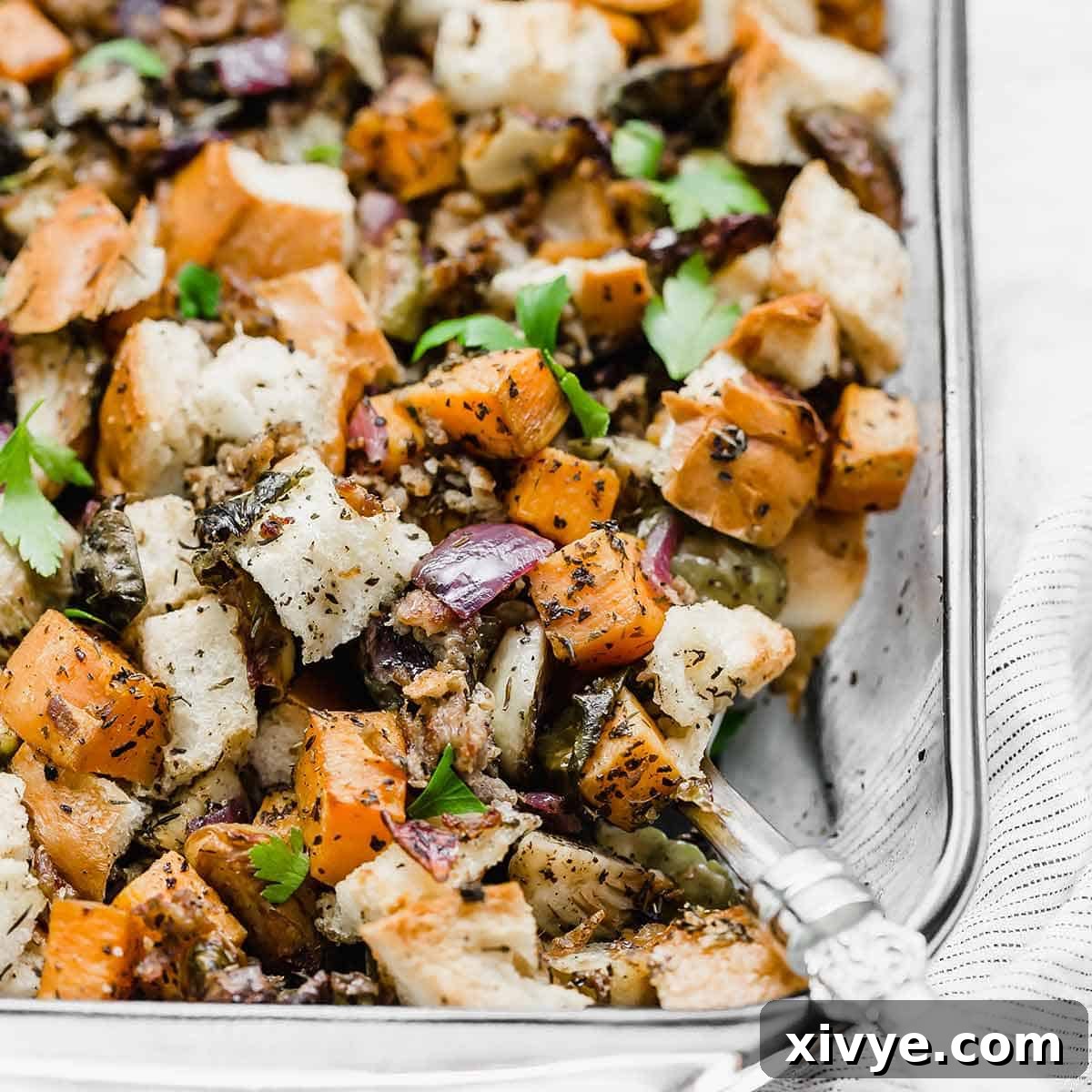
Common Questions About Italian Sausage Stuffing
While some dishes freeze well, we generally advise against freezing this particular Italian sausage stuffing. The combination of the bread, vegetables, and chicken broth results in a texture that can become quite mushy and unappealing after freezing and thawing. For the best flavor and consistency, it’s always recommended to enjoy this stuffing fresh or refrigerated for a few days.
Absolutely! Using Italian sausage in stuffing is not only possible but highly recommended. It introduces an incredible depth of savory, herbaceous flavor that elevates the entire dish. The richness of the sausage complements the bread and vegetables beautifully, creating a far more complex and satisfying stuffing than traditional versions. In fact, if you love the idea, you can even add some Italian sausage to a Classic Thanksgiving Stuffing Recipe for an extra boost of flavor.
Soggy stuffing is typically caused by adding too much chicken broth. The aim is to moisten the bread cubes thoroughly, but not to drench them. The exact amount of broth needed can vary depending on the type and dryness of your bread, as well as the moisture content of your vegetables. Always add the broth slowly, stirring as you go, until the mixture is just moist. You want the bread to absorb flavor, not become a liquid-soaked mush.
Dry stuffing usually indicates that you needed more chicken broth. It’s a delicate balance to achieve the perfect moisture level. You want the broth to fully coat the stuffing mixture without making it excessively wet or leaving the bread super dry. Another common reason for dry stuffing can be over-baking the bread during the initial toasting step. The bread should be lightly golden brown and slightly crisp, not hard and crunchy, which would prevent it from properly absorbing the broth during baking.
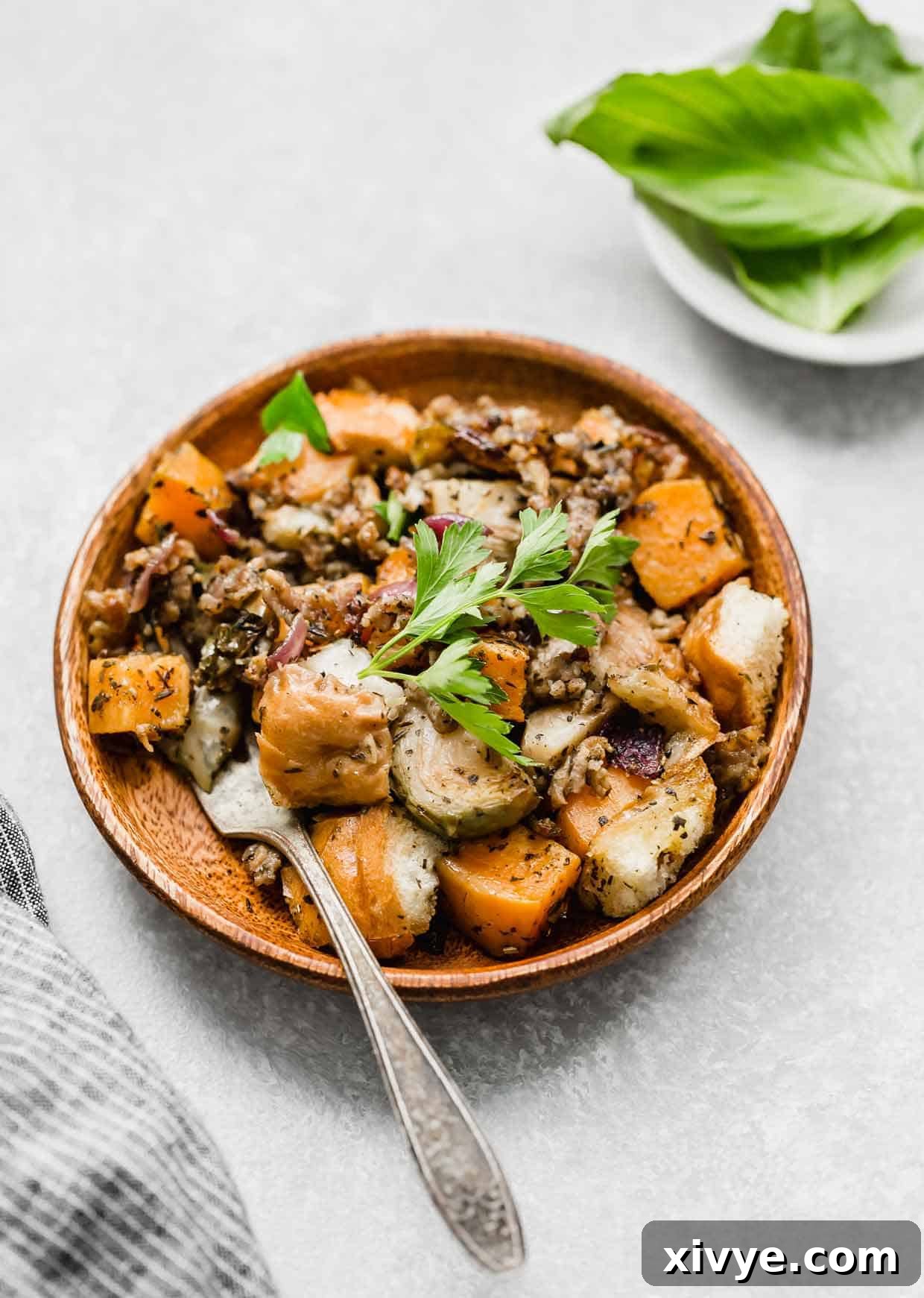
Discover More Thanksgiving Recipes
As you plan your holiday menu, don’t miss out on other incredible recipes that will make your Thanksgiving feast truly unforgettable. From classic desserts to comforting side dishes, we have everything you need to create a memorable spread. Explore these delicious options:
- Essential Thanksgiving Pies: A collection of sweet finishes for your holiday table.
- Delicious Thanksgiving Recipes Roundup: A comprehensive guide to all things Thanksgiving.
- Decadent Praline Pumpkin Pie: A nutty, sweet twist on a traditional favorite.
- Sweet & Sticky Candied Yams: A beloved classic for any holiday meal.
- Creamy Mashed Potatoes with Half and Half: The ultimate comforting side dish.
Did you try this amazing Italian Sausage Stuffing recipe? We would love to hear your thoughts! Leave a star rating and review below or scroll to the recipe card to share your feedback. Your experience helps others discover delicious meals!
Stay connected and up-to-date with our latest recipes and culinary adventures by following us on Instagram, TikTok, YouTube, Facebook, and Pinterest.

Print Recipe
Review Recipe
Italian Sausage Stuffing

Whitney Wright
This Italian Sausage Stuffing is loaded with root vegetables and made with French bread. It’s a delicious take on the classic stuffing recipe, perfect for any fall gathering!
Ingredients
- 1 loaf French bread – cut into 1 inch pieces (about 10 cups)
- 8 oz sweet Italian sausage
- 16 oz Brussels sprouts – cut into fourths
- 2 cups sweet potato – peeled and cubed
- ½ red onion – cubed
- 2 tablespoons olive oil
- 1 tablespoon dried basil – divided
- 3 teaspoons rubbed sage – divided
- 3 teaspoons thyme leaves – divided
- 6 tablespoons butter – cut into 6 pieces
- 1 ¾ cups chicken broth – See note #1
- fresh herbs for garnish (basil, parsley, thyme)
Equipment
-
13″x9″ glass baking pan
Instructions
-
Preheat oven to 400°F (200°C) and place the cubed bread on a baking sheet. Bake for 10-14 minutes or until lightly golden brown. Remove from the oven and transfer to a large bowl.
-
In a pan over medium heat, cook the sausage, breaking up the meat into small crumbly pieces. Cook for 8-10 minutes or until fully cooked. Drain excess grease and transfer the sausage to the large bowl with the bread.
Roast the Veggies
-
In a medium sized bowl, add the Brussels sprouts, sweet potato, onion, olive oil, 1 tsp basil, 1 tsp sage, and 1 tsp thyme. Toss to coat. Place the veggies on a large baking sheet, spread into an even layer. Bake for 18-20 minutes at 400°F (200°C), or until sweet potatoes are slightly fork tender but not overly soft.
-
Transfer the veggies to the large bowl of sausage and bread. Add the remaining herbs and the butter. Toss to coat. Slowly pour the chicken broth over the mixture, stirring until everything is incorporated. Adjust broth amount as needed; avoid soaking the bread cubes.
Bake the Fall Stuffing
-
Change the oven temperature to 375°F (190°C).
-
Transfer the mixture to a butter-greased 13″x9” casserole dish. Cover with aluminum foil and bake for 25 minutes. Remove the foil and bake for an additional 20-25 minutes or until no liquid remains and the stuffing is golden brown.
-
Remove from the oven, garnish with fresh herbs and serve warm!
Notes
Feel free to add additional or different vegetables such as parsnips, carrots, butternut squash, etc.
Store leftovers in an airtight container in the fridge for 3-4 days. Reheat in the oven for best results.
Recipe inspired by Recipe Critic.
Nutrition
Carbohydrates: 41g
Protein: 13g
Fat: 22g
Saturated Fat: 9g
Cholesterol: 44mg
Sodium: 686mg
Potassium: 537mg
Fiber: 5g
Sugar: 4g
Vitamin A: 5443IU
Vitamin C: 55mg
Calcium: 82mg
Iron: 4mg
Did you make this recipe?
Please leave a star rating and review on the blog post letting me know how you liked this recipe! Take a picture and tag @saltandbaker on Tik Tok, Instagram, and Facebook so I can see what you’re making!