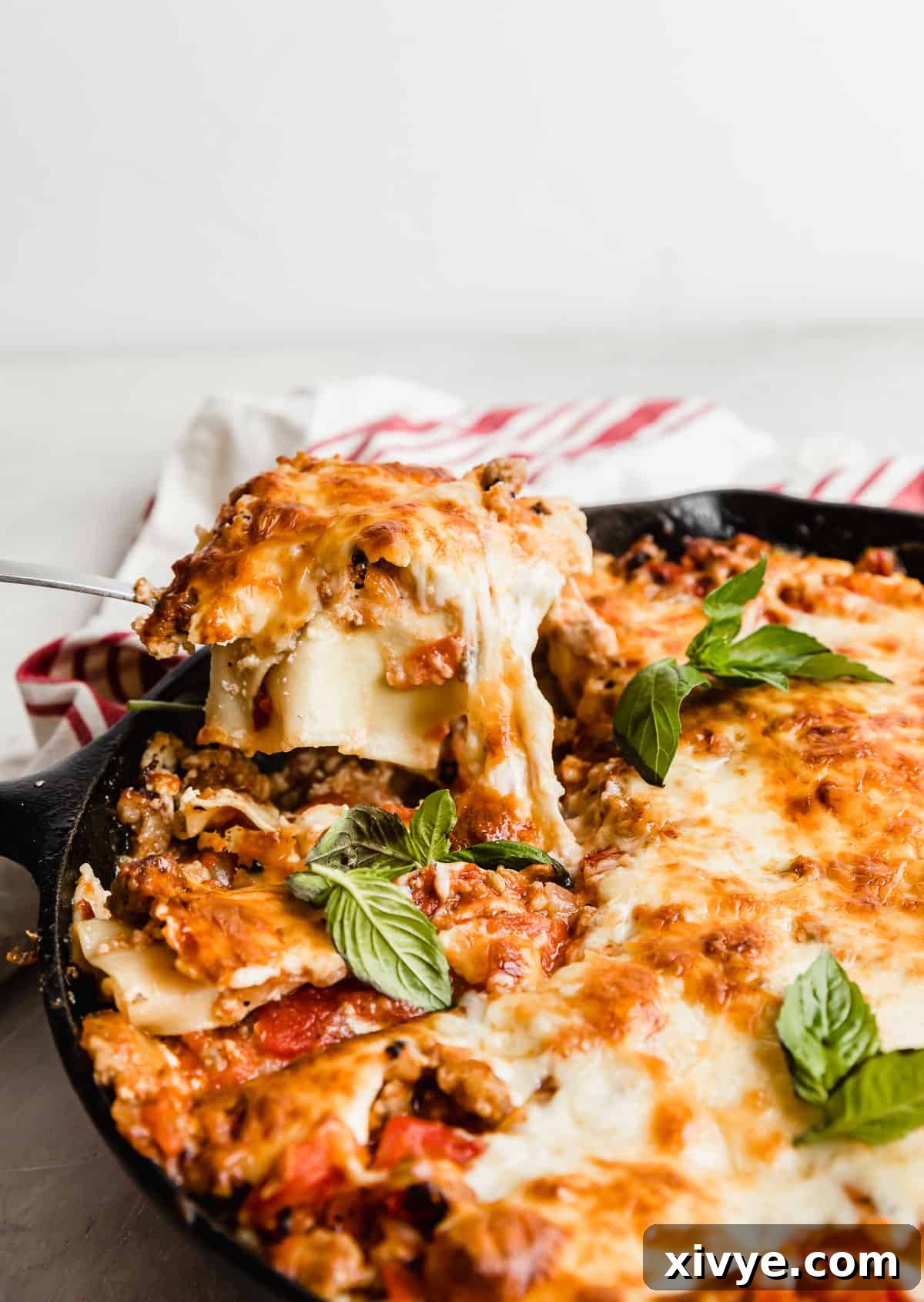
Welcome to the ultimate guide for crafting the most delectable Cast Iron Lasagna! This recipe isn’t just a meal; it’s an experience, boasting layers of rich, savory sausage and tomato ragu, an exquisitely creamy herbed ricotta filling, and the sheer convenience of no-boil lasagna noodles. Forget the fuss, embrace the flavor, and prepare for a truly hassle-free culinary adventure right in your trusty cast iron skillet.
Lasagna holds a special place in the heart of comfort food enthusiasts, and for good reason! Its hearty, cheesy layers make it a perennial favorite. If you’re someone who appreciates the versatility of this classic dish, you might also enjoy exploring other delightful variations. For a twist on tradition, consider my slow cooker lasagna, a comforting lasagna soup, or an adventurous Mexican lasagna.
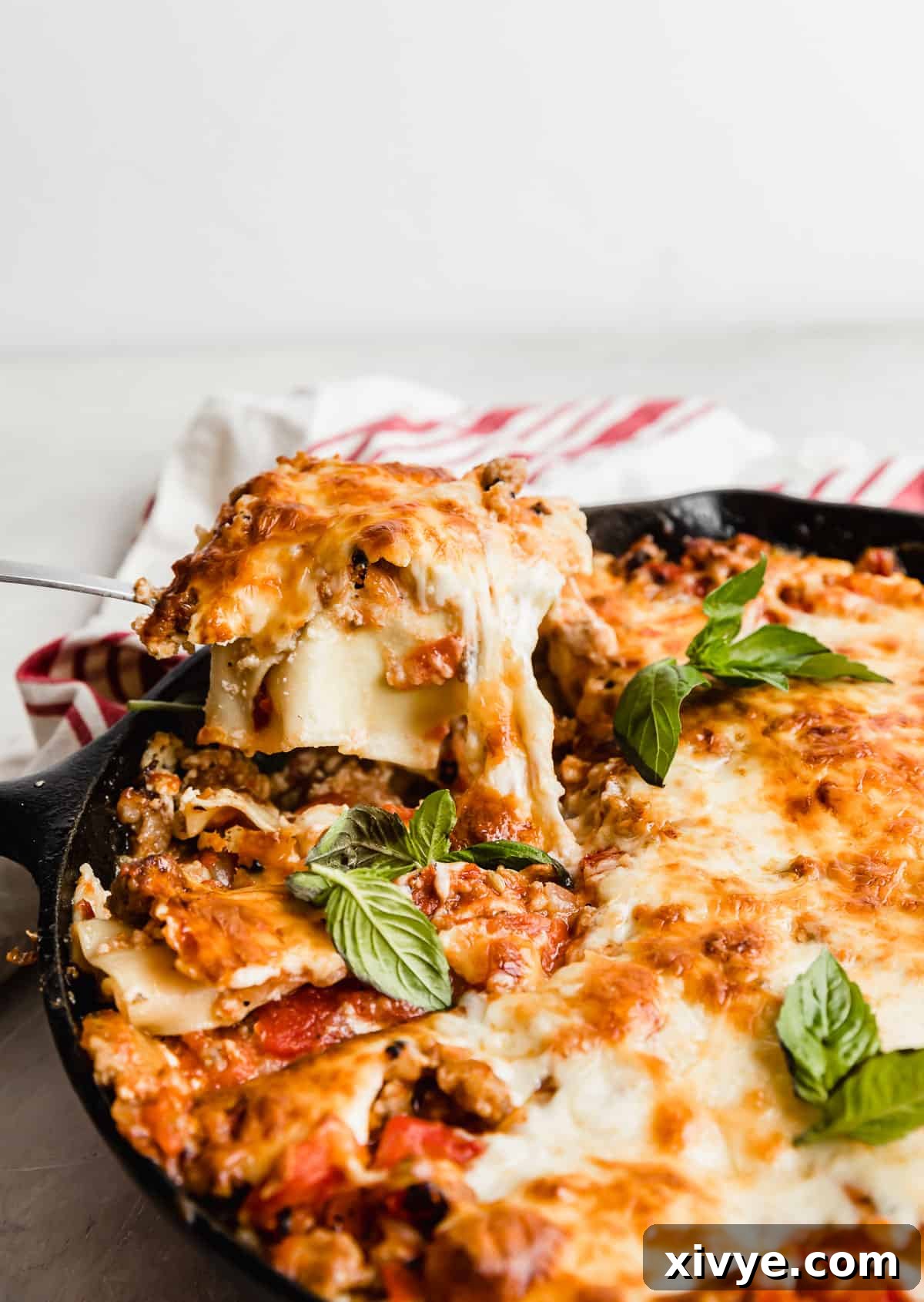
Why This Cast Iron Lasagna Recipe is a Must-Try
This isn’t just another lasagna recipe; it’s specifically designed to simplify your cooking while maximizing flavor, making it perfect for both seasoned cooks and kitchen newcomers. Here’s why this easy cast iron lasagna recipe stands out:
- No-Boil Noodles for Ultimate Convenience: One of the biggest time-savers in this recipe is the use of no-boil lasagna noodles. This innovative pasta eliminates the need for a separate boiling step, meaning you can layer them directly into your skillet. They absorb the delicious sauces as they bake, becoming perfectly tender and infusing every bite with flavor. It’s a game-changer for weeknight meals, significantly cutting down on prep time and cleanup, allowing you to enjoy homemade lasagna with less effort.
- A Symphony of Flavors: Having experimented with countless homemade lasagna recipes over the years, I can confidently say this one is a true winner in the flavor department. Every component contributes to a rich, harmonious taste profile. The meat ragu, crafted with savory Italian sausage, offers a depth of flavor far superior to plain ground beef, complemented by a hint of spice. The fire-roasted diced tomatoes are a secret weapon, lending a subtle smoky sweetness that elevates the entire sauce. And then there’s the herbed ricotta mixture – a creamy, aromatic blend so delightful, you might find yourself wanting to eat it by the spoonful! Together, these elements create a lasagna that is truly flavor heaven.
- Effortless Skillet Preparation: My absolute favorite aspect of this recipe is that it’s entirely made in a single cast iron skillet. Cast iron offers unparalleled heat retention and distribution, ensuring your lasagna cooks evenly and develops that desirable crispy, golden crust around the edges. Beyond its superb cooking properties, a good cast iron skillet is an incredibly durable and versatile piece of kitchen equipment. The one I use is not only highly effective but also remarkably affordable, proving that you don’t need expensive gadgets for gourmet results.
Key Ingredients for Your Perfect Skillet Lasagna
Understanding your ingredients is crucial for any recipe. Here’s a closer look at what makes this homemade cast iron lasagna so special:
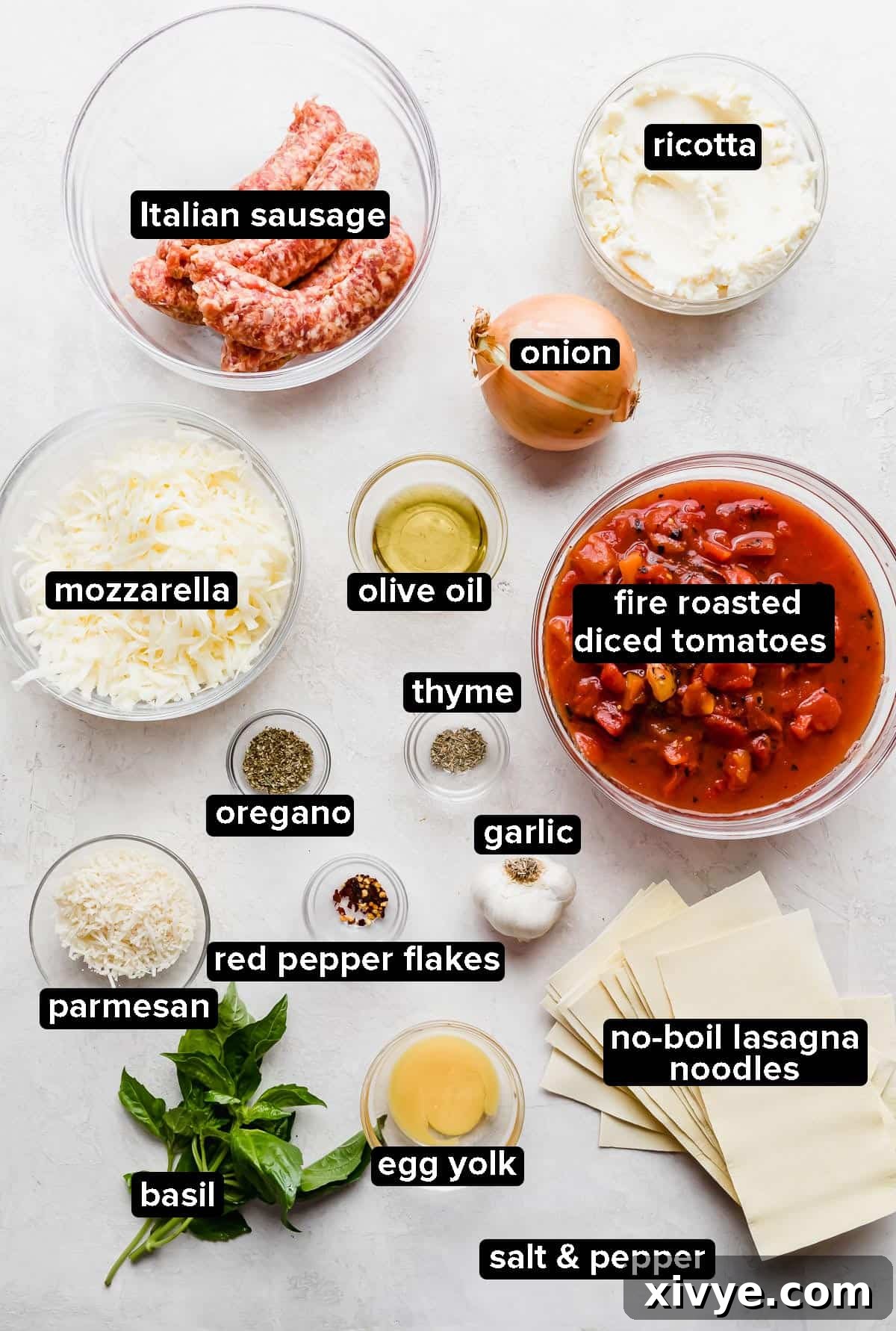
- No-Boil Lasagna Noodles: These specially processed noodles are par-cooked and then dehydrated. This means they’re designed to soften and cook quickly by absorbing moisture directly from the sauce during baking. They are a significant convenience, eliminating the need for pre-boiling and making the layering process much faster and cleaner. They integrate seamlessly with the rich ragu and creamy ricotta, ensuring every bite is tender and flavorful.
- Fire-Roasted Diced Tomatoes: Don’t let the name mislead you – these tomatoes aren’t necessarily spicy. Instead, they are roasted over an open flame, which imparts a wonderful smoky depth and a subtly sweeter, more complex flavor profile compared to regular diced tomatoes. This smoky nuance adds a sophisticated layer to our lasagna ragu, making it irresistibly delicious without adding heat.
- Ricotta Cheese: The word “ricotta” literally translates to “recooked” in Italian, accurately describing its origin as a byproduct of whey left over from the production of other cheeses (such as mozzarella or provolone) from cow, goat, sheep, or buffalo milk. In this recipe, ricotta contributes an essential creamy texture and a mild, slightly sweet flavor that perfectly balances the savory ragu. It’s vital for that classic lasagna mouthfeel and adds a delightful richness to the herbed filling.
- Italian Sausage: For this recipe, I typically opt for classic sweet Italian sausage, which brings a fantastic savory flavor with a hint of fennel and garlic that complements the tomato sauce beautifully. However, if you prefer a bit of a kick, hot Italian sausage is an excellent alternative that will infuse your lasagna with a pleasant warmth. Be sure to remove the casings and break the sausage into small, even pieces as it cooks to ensure it blends well into the ragu.
Crafting Your Cast Iron Lasagna: Step-by-Step Guide
Follow these easy steps to assemble your incredible skillet lasagna:
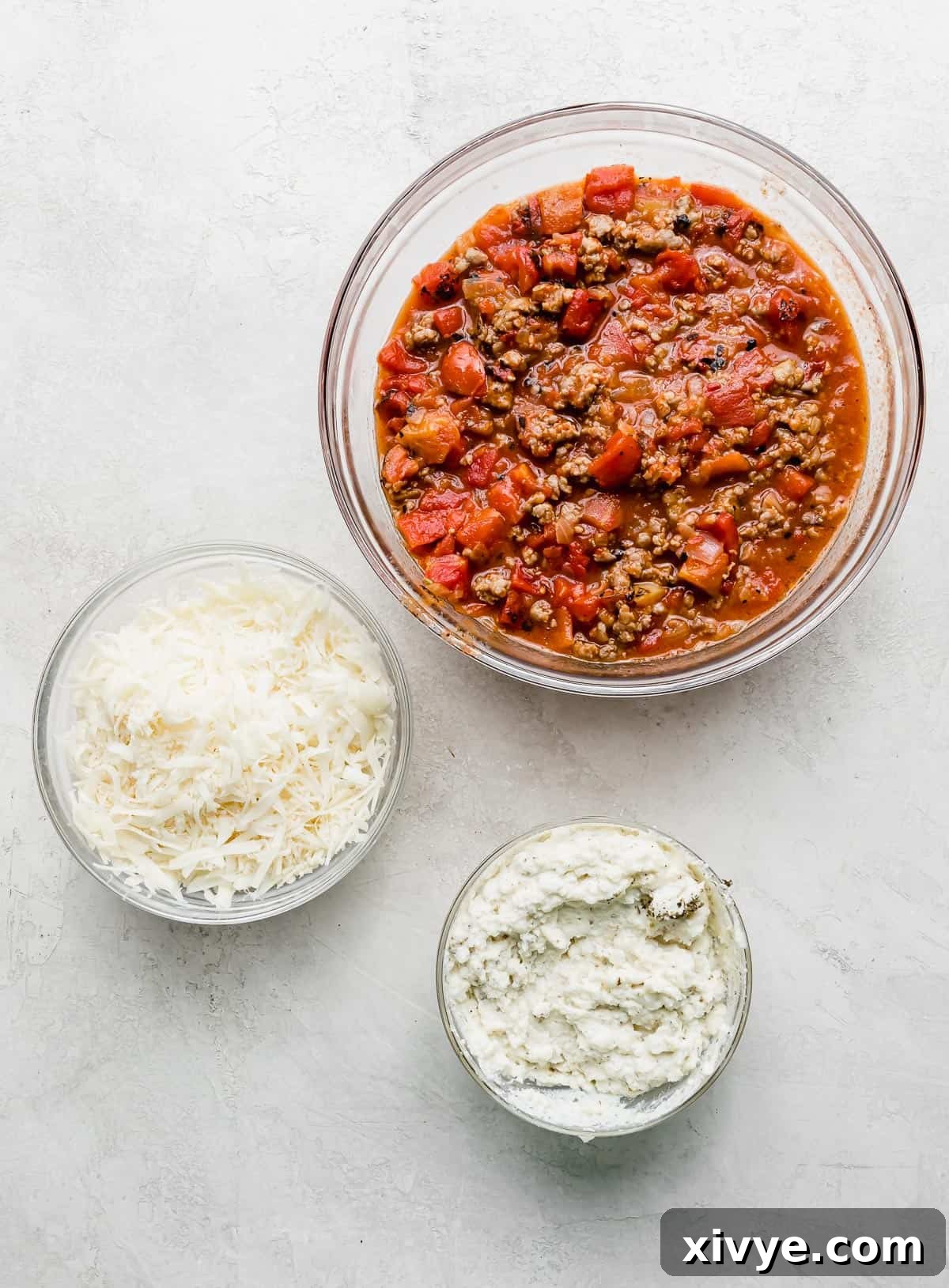
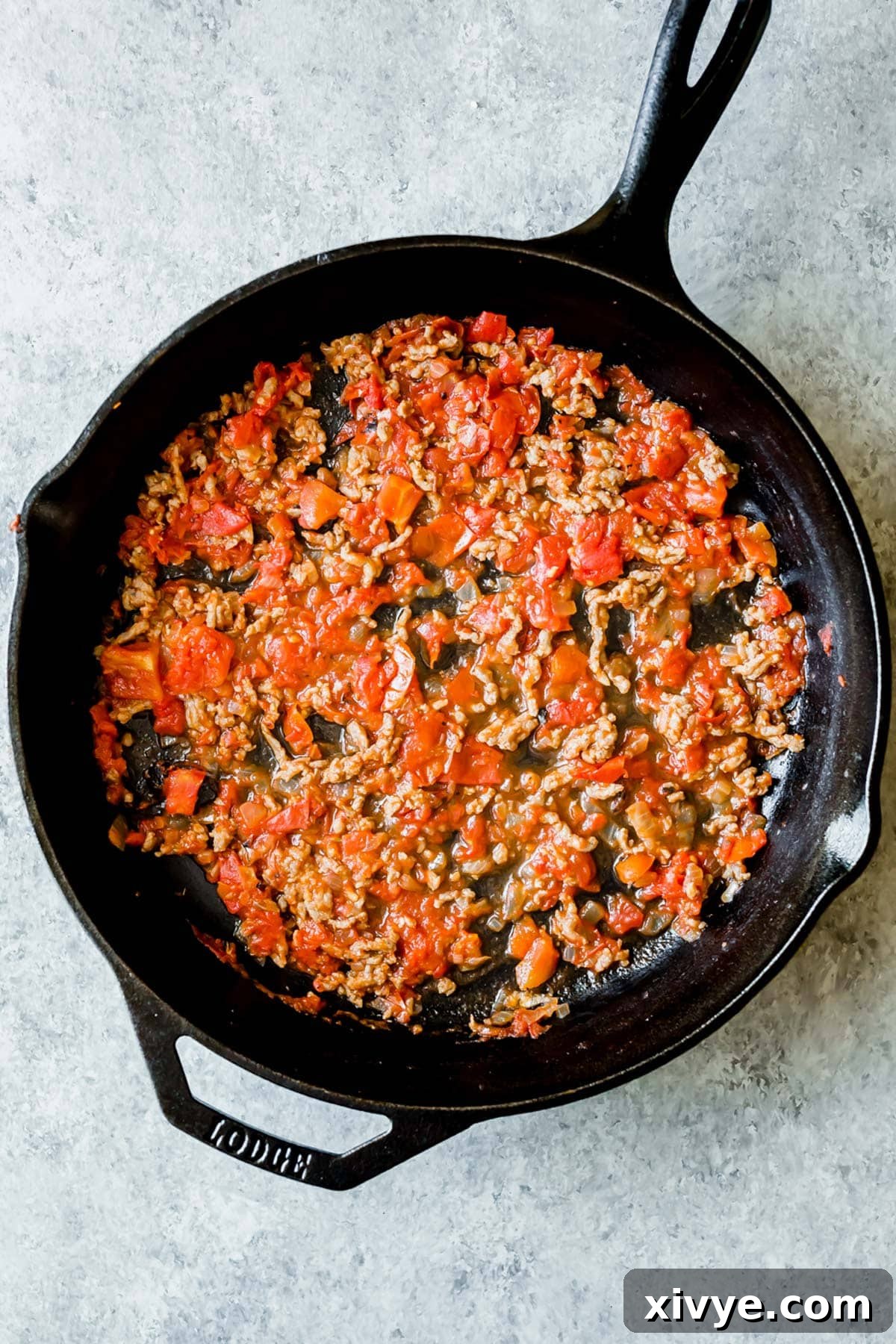
- Prepare the Flavorful Lasagna Ragu: Begin by heating olive oil in your cast iron skillet over medium heat. Add the finely chopped yellow onion and sauté until it softens and becomes translucent, about 6-7 minutes. Stir in the minced garlic and red pepper flakes for an aromatic base. Next, add the sweet Italian sausage (casings removed). Break the sausage into small, even chunks with a wooden spoon as it cooks, browning it thoroughly until no pink remains, which usually takes about 6 minutes. Finally, incorporate the fire-roasted diced tomatoes and a splash of water, simmering the mixture for approximately 8 minutes over medium-low heat to allow the flavors to meld. Once done, transfer this rich ragu to a separate bowl.
- Whip Up the Creamy Herbed Ricotta Filling: In a medium-sized mixing bowl, combine the ricotta cheese, a single egg yolk (which helps bind the mixture and adds richness), dried oregano, dried thyme, and season generously with salt and pepper to taste. Stir everything together until the mixture is smooth, creamy, and well-combined. This herbed ricotta is a key component, providing a refreshing contrast to the hearty meat sauce.
- Prepare the Cheese Blend: In a third bowl, simply mix together the shredded mozzarella cheese and freshly grated Parmesan cheese. This blend will provide the classic gooey, stretchy, and salty cheese layers that are essential to any great lasagna.
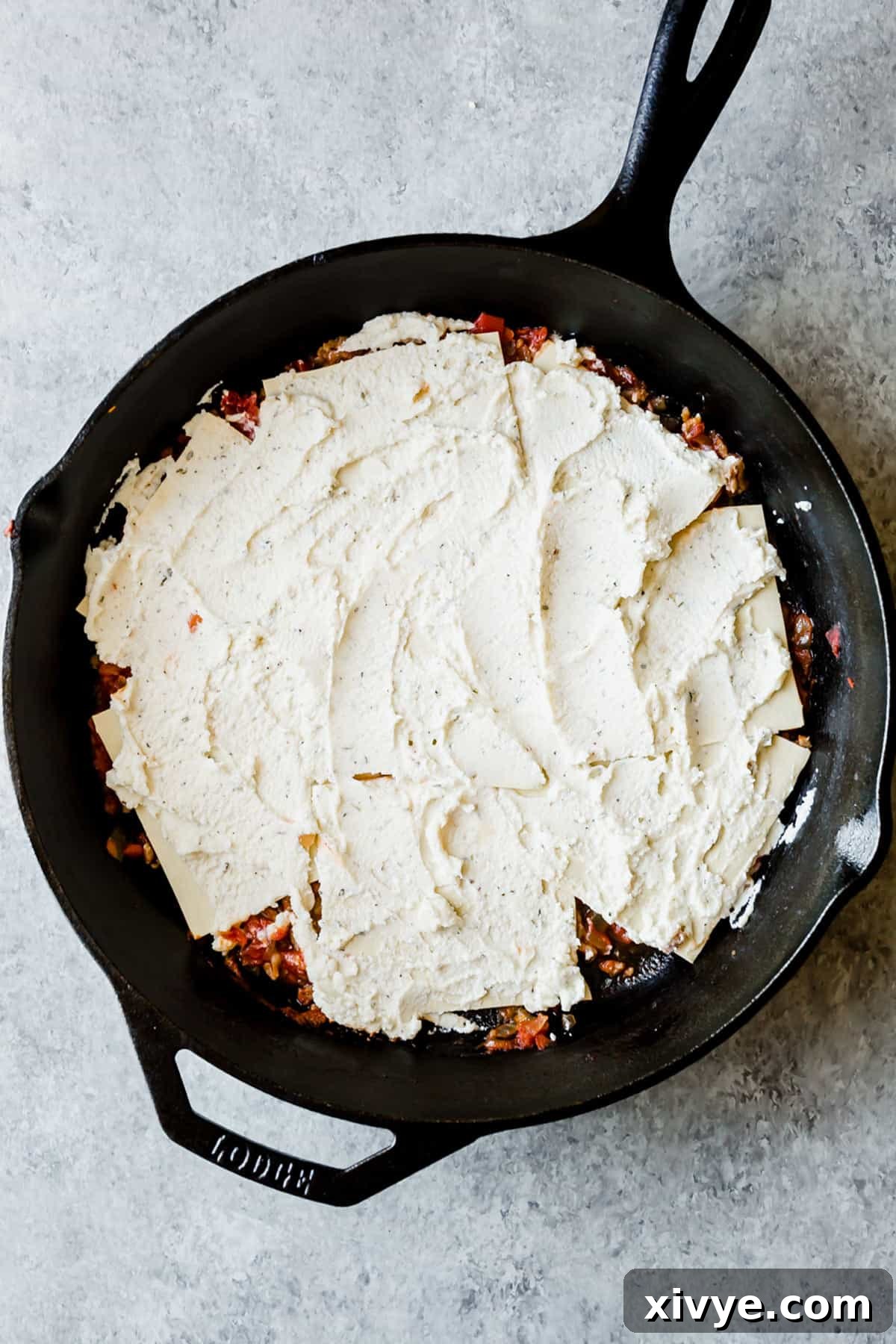
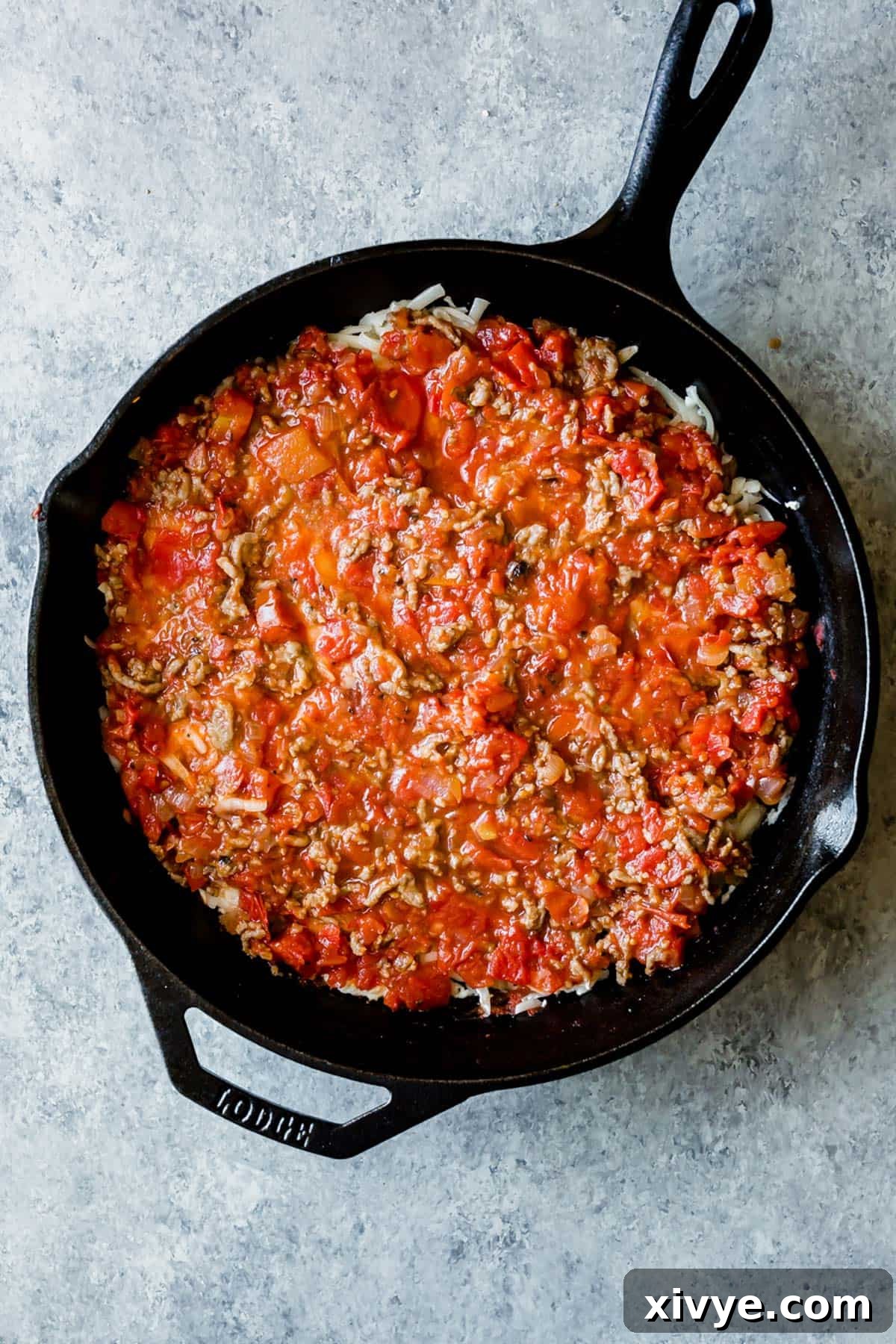
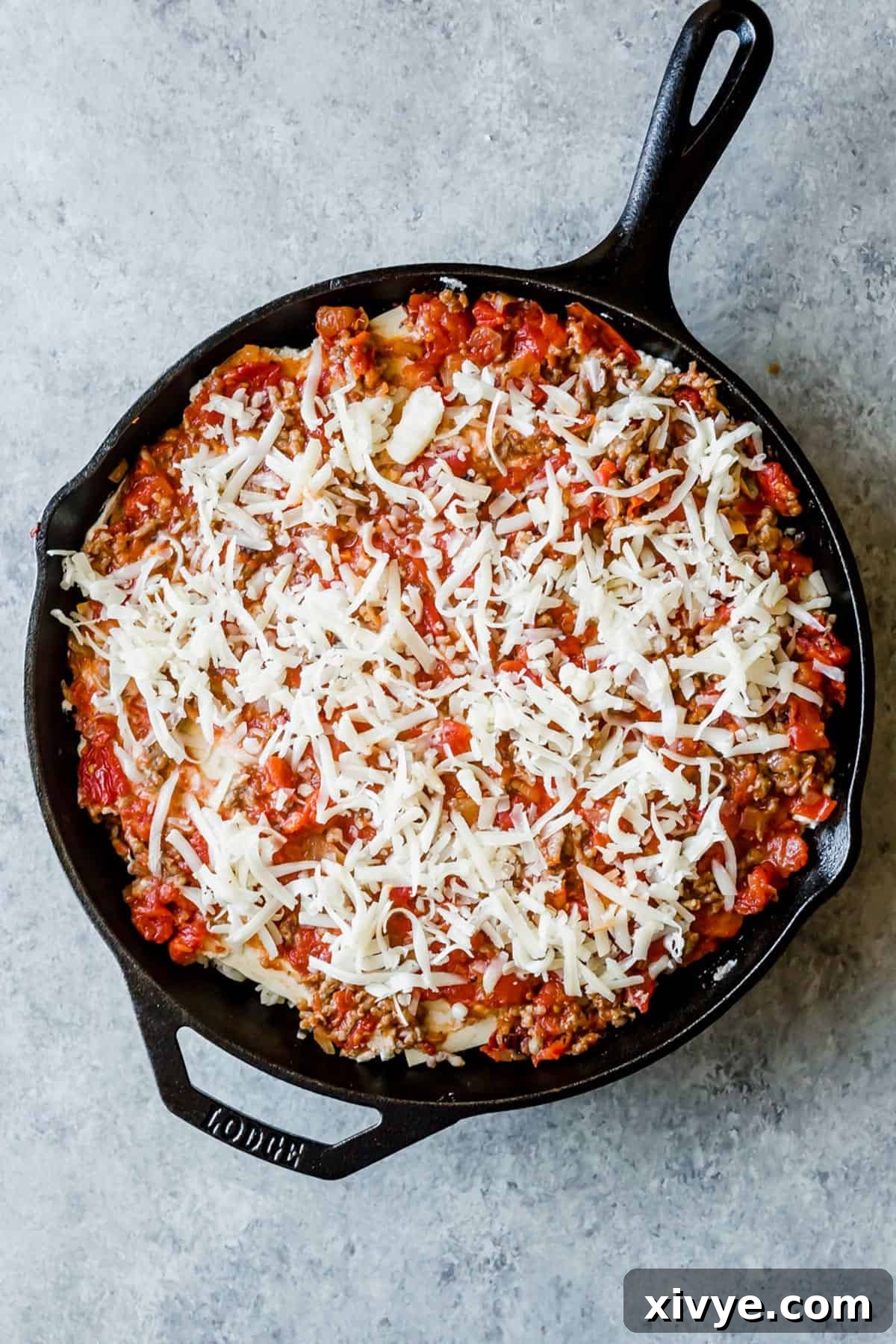
- Begin Assembling Your Cast Iron Skillet Lasagna: Spread about 1 cup of your delicious meat ragu evenly across the bottom of your empty cast iron skillet. This forms the foundation and prevents the noodles from sticking. For the no-boil lasagna noodles, break them in half to fit the skillet. Arrange 7 of these noodle halves along the perimeter of the skillet and place one in the very center, forming a complete layer. Carefully spread one-third of your creamy herbed ricotta mixture evenly over the noodles. Then, sprinkle a quarter of your combined mozzarella and Parmesan cheese blend over the ricotta. Finish this layer by spooning one-third of the remaining ragu over the cheese.
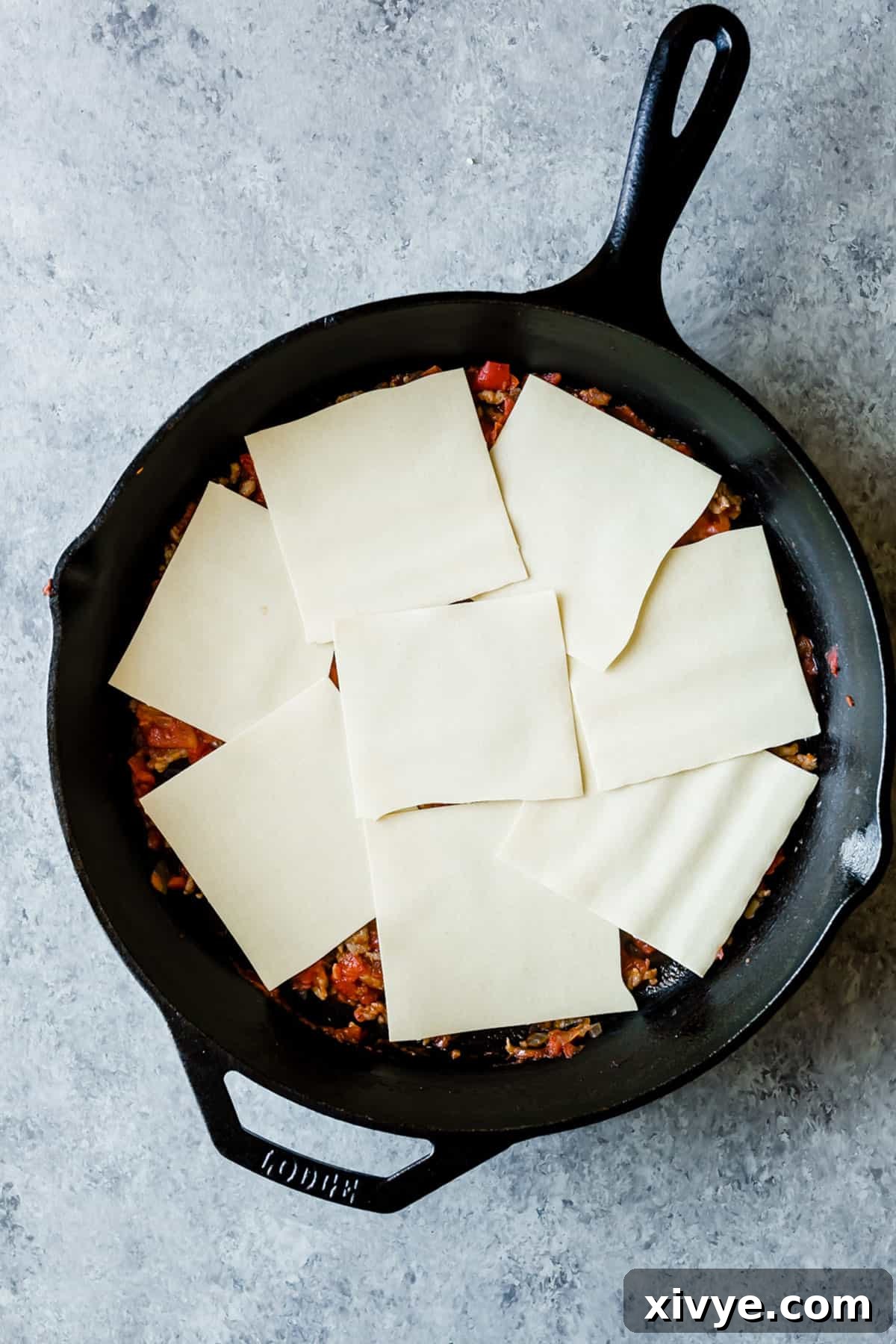
- Continue Layering to Perfection: Repeat the layering process described in step 4 two more times. Each subsequent layer should start with the broken no-boil noodles, followed by the creamy ricotta mixture, then the mozzarella and Parmesan cheese blend, and finally, a portion of the remaining ragu. Ensure each layer is evenly distributed for a balanced lasagna. Once all layers are complete, sprinkle the remaining mozzarella and Parmesan cheese generously over the very top of the lasagna. This final cheese layer will become beautifully golden and bubbly during baking.
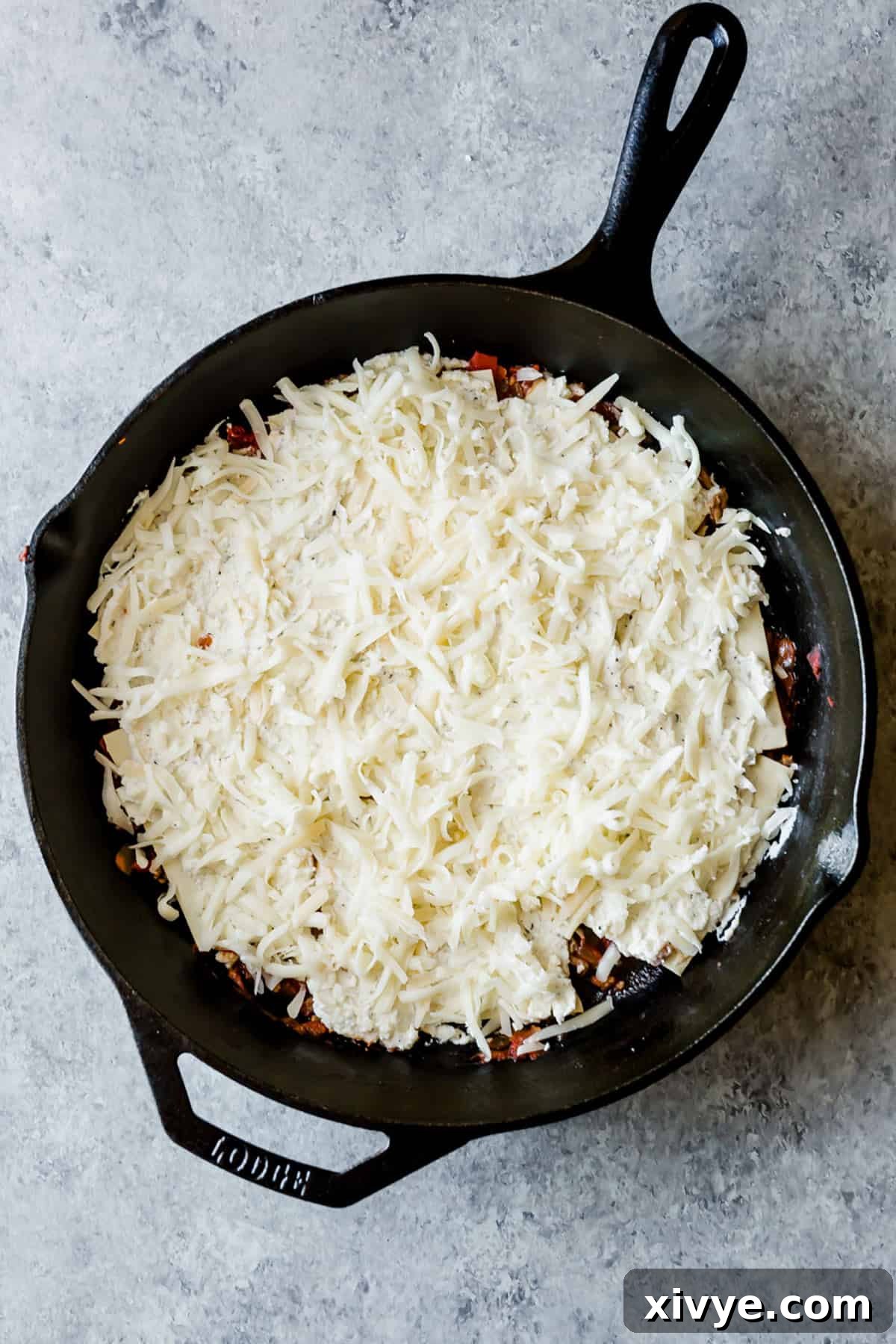
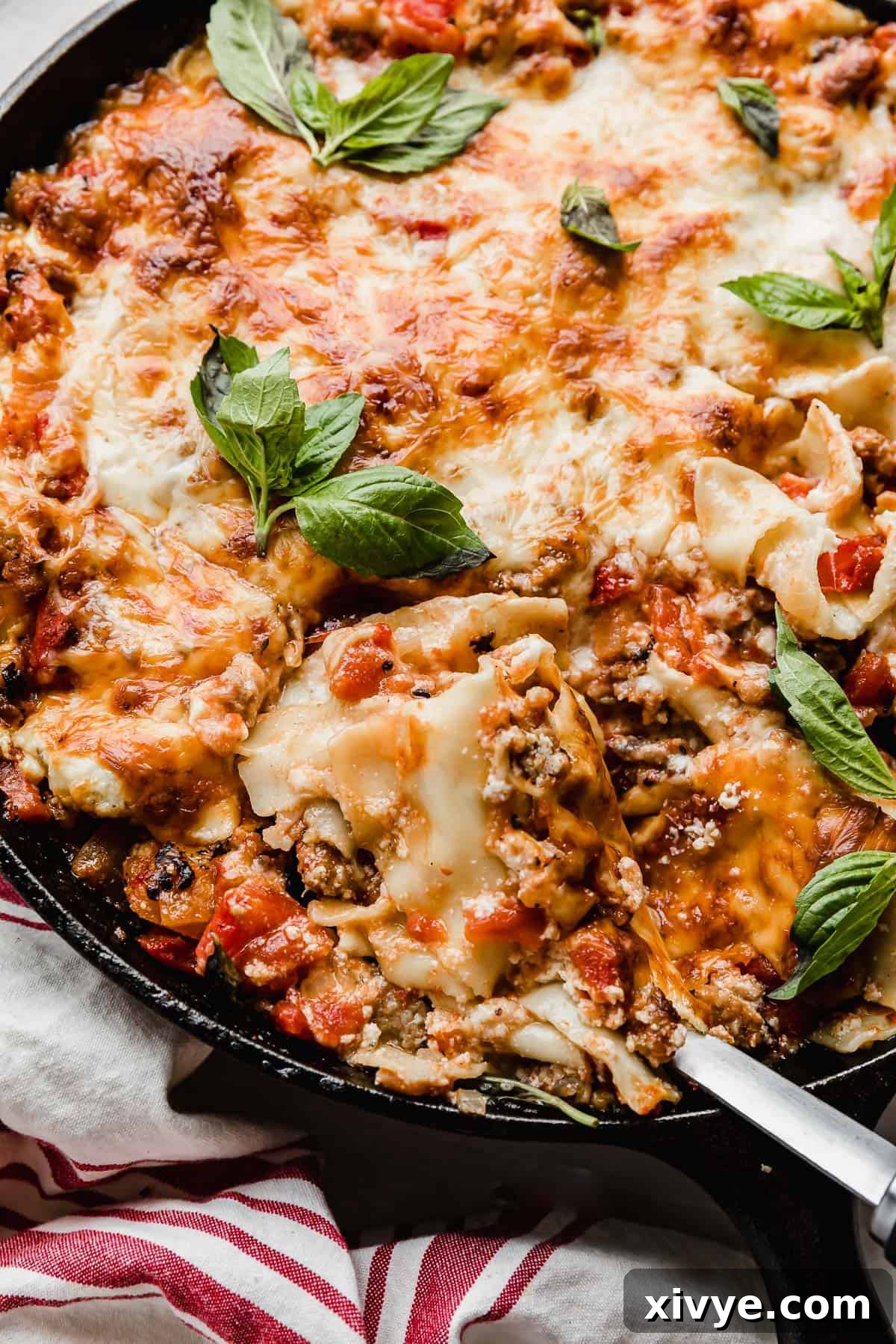
- Bake and Garnish: Place your assembled skillet lasagna into a preheated oven at 400°F (200°C) and bake for 30-35 minutes. You’ll know it’s ready when the edges are bubbling vigorously, and the top cheese layer has melted into a glorious golden-brown perfection. Carefully remove the skillet from the oven (remembering the handle will be hot!). Let it rest for a few minutes, then generously top with fresh, chopped basil before serving. The basil adds a wonderful burst of fresh, aromatic flavor that brightens the entire dish.
Expert Tips for Your Best Cast Iron Lasagna
To ensure your skillet lasagna turns out perfectly every time, keep these useful tips in mind:
- Customizing the Heat: If you’re a fan of significant spice, feel free to increase the amount of red pepper flakes beyond what the recipe suggests. Alternatively, using hot Italian sausage instead of sweet Italian sausage will naturally add more heat to the ragu. Adjust according to your preference!
- Browning the Sausage Properly: As you cook the Italian sausage, make sure to break it up thoroughly with a wooden spoon. Aim for small, bite-sized chunks rather than large clumps. This ensures that the sausage is evenly distributed throughout the ragu and contributes its savory flavor to every forkful of lasagna.
- Don’t Overcrowd the Skillet: While it might be tempting to pile on the layers, sticking to the recommended number of layers and proportions ensures proper cooking and a balanced flavor profile. An overcrowded skillet can lead to uneven baking and a less desirable texture.
- Let it Rest: After removing the lasagna from the oven, allow it to rest for 5-10 minutes before slicing and serving. This resting period allows the layers to set, making it easier to cut neat portions and preventing the cheese and sauce from oozing out excessively.
Make Ahead, Storing, and Freezing Your Cast Iron Lasagna
This easy lasagna recipe is fantastic for meal prep! Here’s how to handle it:
- Make Ahead: If you plan to prepare this cast iron lasagna recipe in advance, assemble it completely in the skillet but do not bake it. Cover the skillet tightly with aluminum foil or a lid and store it in the refrigerator for a few hours or up to 1 day before baking. When ready to bake, follow the recipe instructions, but be aware that the no-boil lasagna noodles may have absorbed more liquid from the sauce during refrigeration, potentially making them softer than if baked immediately.
- Important Cast Iron Care Note: When working with cast iron, always be mindful of temperature changes. Do not transfer a cold cast iron skillet directly from the freezer or refrigerator into a hot oven, or vice versa. Extreme temperature shifts can potentially crack the enamel or even the cast iron itself. Always allow the skillet to come closer to room temperature before placing it into a preheated hot oven. Alternatively, you can place the cold skillet into a cold oven and let them both preheat together. This gentle transition helps prevent thermal shock.
- Freezing Instructions: If you wish to freeze the lasagna, I recommend doing so before baking. For convenience and easier storage, it’s often best to remove the unbaked lasagna from the cast iron skillet and transfer it to a freezer-safe container or a heavy-duty plastic freezer bag. This also frees up your skillet for other uses. Ensure it’s stored in an airtight container to prevent freezer burn. To reheat, thaw the lasagna in the refrigerator overnight, then bake in the oven until thoroughly warmed through and bubbly.
- Storing Leftovers: Any leftover baked skillet lasagna can be stored covered in the refrigerator for 3-5 days. To reheat, simply place individual portions or the entire skillet (following the cast iron temperature guidelines above) in the oven until heated through. This ensures a delicious, comforting meal even days later.
Frequently Asked Questions About Cast Iron Lasagna
The primary difference between no-boil and regular lasagna noodles is that no-boil noodles are par-cooked and dehydrated, making them quicker to soften by absorbing moisture from the sauce. If you opt for regular lasagna noodles, you’ll need to either boil them beforehand as per package instructions or significantly increase the amount of sauce in the recipe to provide enough liquid for the noodles to fully cook and soften during baking. Without sufficient liquid, regular dry noodles will remain hard. Using no-boil noodles is highly recommended for the simplicity and intended moisture balance of this skillet recipe.
No, this particular cast iron lasagna is not inherently spicy, especially if you use sweet Italian sausage as recommended. The amount of red pepper flakes is quite minimal, adding more of an underlying warmth than a noticeable heat. However, if you’re looking to introduce some spice, you can easily customize it! I suggest using hot Italian sausage for the ragu and/or doubling the amount of red pepper flakes to achieve your desired level of heat.
A common and acceptable substitute for ricotta cheese in lasagna recipes is cottage cheese. However, I have a strong preference for ricotta in this particular recipe because the herbed ricotta mixture is exceptionally flavorful and creates a uniquely creamy texture that’s simply irresistible. While cottage cheese will work, be aware that its texture is coarser, and its flavor is typically tangier than ricotta. This will result in a slightly different overall profile for your lasagna. If you’re not a fan of ricotta or are looking for a more budget-friendly option, cottage cheese is your next best bet, but expect a noticeable difference.
Using a cast iron skillet offers several distinct advantages for this lasagna recipe, making it a truly indispensable piece of cookware. Firstly, cast iron boasts incredible heat retention and even heat distribution. This means your lasagna will cook more uniformly, and the heat will be maintained consistently throughout the baking process, leading to perfectly cooked noodles and a beautifully browned top. Secondly, cast iron is exceptionally durable; with proper care, a good quality cast iron skillet can literally last a lifetime, becoming a cherished family heirloom. Over time, it develops a natural nonstick coating, making cleanup easier and allowing food to release effortlessly. This natural nonstick property, combined with its ability to go from stovetop to oven, makes cast iron incredibly versatile and, frankly, a must-have in any kitchen for hearty, comforting dishes like this lasagna.
Discover More Delicious Skillet Recipes
If you love the convenience and flavor that cooking in a cast iron skillet brings, you’ll definitely want to explore these other fantastic skillet recipes:
- Curry Chicken and Rice
- Lemon Honey Glazed Salmon
- Creamy Tuscan Chicken
- Cast Iron Chicken Pot Pie
Did you try this incredible Cast Iron Lasagna recipe? I would absolutely love to hear about your experience! Click here to share your thoughts, leave a star rating, and write a review. Your feedback helps others discover and enjoy this delicious dish!
Stay connected and up-to-date with our latest recipes and culinary adventures by following us on Instagram, Facebook, and Pinterest.
Print Recipe
Review Recipe
Cast Iron Lasagna

Whitney Wright
This skillet lasagna is PACKED with delicious flavor! Layers of cheesy mozzarella and seasoned ricotta take this lasagna to a whole new level! There are multiple components I love about this recipe, but the use of no-boil noodles makes this recipe come together so quickly!
40 mins
30 mins
1 hr 10 mins
8 servings
Average Rating: 5 stars from 4 votes
Ingredients
- 3 14.5 oz cans fire roasted diced tomatoes
- 2 tablespoons olive oil
- 2 cups yellow onion – finely chopped (about 1 large yellow onion)
- 3 garlic cloves – minced
- ¼ teaspoon red pepper flakes
- 1 pound sweet Italian sausage – casings removed
- 15 oz ricotta – (425 grams)
- 1 egg yolk
- ¼ teaspoon dried thyme
- ½ teaspoon dried oregano
- Salt – to taste
- Pepper – to taste
- 2 ½ cups mozzarella – shredded (a little more than 8 oz)
- ⅓ cup freshly grated parmesan cheese
- 12 no boil lasagna noodles – broken in half
- 2 tablespoons fresh basil – chopped
Instructions
- Place oven rack to the middle position. Preheat oven to 400°F (200°C).
- Place a 12-inch cast iron skillet over medium heat. Add the olive oil. Once shimmering, add the onion and cook until lightly browned, about 6-7 minutes. Add the garlic and red pepper flakes. Add the sausage to the onions, breaking it up into bite-sized pieces with a wooden spoon. Cook until no longer pink, about 6 minutes.
- Add the fire roasted tomatoes to the sausage and onion. Cook over medium-low heat for 5 minutes. Transfer to a bowl.
- In a separate medium size bowl, add the ricotta, egg yolk, thyme, oregano, and salt and pepper to taste. Stir to combine.
- In a 3rd bowl combine the shredded mozzarella and parmesan.
- In the bottom of the empty skillet spread 1 cup of sauce. Add 7 noodle halves around the edge of the skillet and 1 noodle half in the middle. Add ⅓ of the ricotta mixture over the noodles (spread evenly), then top with ¼ of the mozzarella cheese mixture over the ricotta. Add ⅓ of the remaining sauce over the mozzarella. Repeat this layering process two more times, starting with the noodles and ending with the sauce. Sprinkle the remaining mozzarella cheese mixture over top. (Refer to the blog post pictures to illustrate the process).
- Transfer the skillet to the oven and bake for 30-35 minutes, or until the edges are bubbling and the cheese is slightly golden brown.
- Remove from the oven, top with chopped fresh basil and serve.
Notes
- Store the skillet lasagna covered in the fridge for 3-5 days. Reheat in the oven until warmed through.
- If freezing, freeze prior to baking. Make sure the skillet is completely covered, or remove lasagna to a freezer-safe container. Do not transfer a hot cast iron skillet directly into the fridge or freezer due to dramatic temperature changes that can cause cracking. Allow the cast iron skillet to come to room temperature before placing in a hot oven, or let it heat up with the oven.
- Use hot Italian sausage for more heat.
Nutrition
Carbohydrates: 38g (13%)
Protein: 29g (58%)
Fat: 38g (58%)
Saturated Fat: 16g (80%)
Cholesterol: 125mg (42%)
Sodium: 752mg (31%)
Potassium: 382mg (11%)
Fiber: 2g (8%)
Sugar: 3g (3%)
Vitamin A: 585IU (12%)
Vitamin C: 4.5mg (5%)
Calcium: 371mg (37%)
Iron: 1.8mg (10%)
Did you make this recipe? Please leave a star rating and review on the blog post letting me know how you liked this recipe! Take a picture and tag @saltandbaker on Tik Tok, Instagram, and Facebook so I can see what you’re making!
This recipe was originally published on Nov. 2, 2018. It was republished on Jan. 10, 2022, to include additional information and photos.