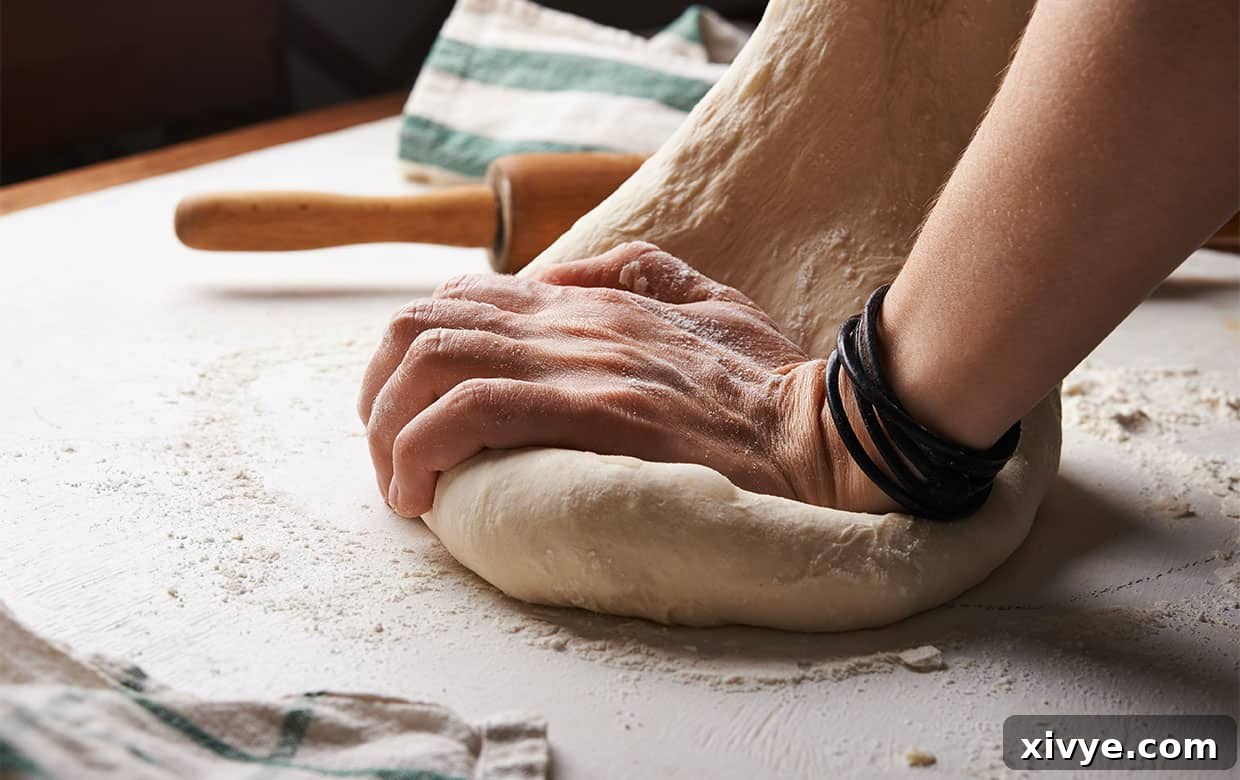
Unlock the secrets to crafting the perfect homemade pizza with this comprehensive guide to the **Best Pizza Dough Recipe** you’ll ever make. Say goodbye to store-bought crusts and hello to a culinary adventure that promises to elevate your pizza nights to an unforgettable experience. This foolproof recipe yields a soft, chewy, yet delightfully crispy crust that serves as the ideal foundation for any pizza creation imaginable. Whether you’re a seasoned baker or just starting your journey in the kitchen, our step-by-step instructions ensure a consistently perfect result every time.
There’s an undeniable magic in creating something from scratch, especially when it results in a warm, aromatic pizza emerging from your oven. This versatile dough is not only perfect for classic pizzas but also shines in more adventurous recipes. Imagine a vibrant Pesto Arugula Pizza, a savory Pepperoni Pizza Dip, or even a unique Blackberry Pizza. The possibilities are endless when you master this fundamental dough. Get ready to impress your family and friends with pizzas that boast superior flavor and texture, all thanks to your homemade effort.
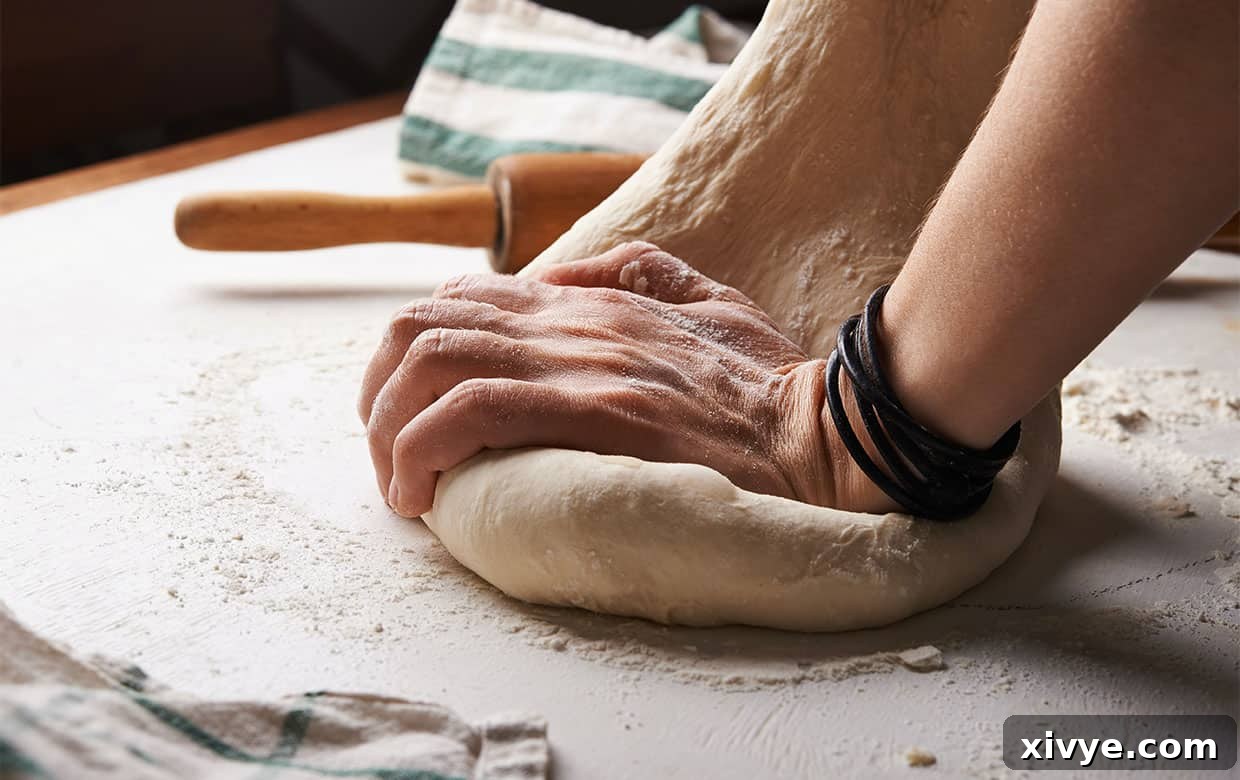
Why This Is Your Go-To Pizza Dough Recipe
This isn’t just another pizza dough recipe; it’s the one you’ll return to again and again. We’ve honed it to perfection, ensuring it delivers on flavor, texture, and ease of preparation. Here’s why this recipe stands out:
- Generous Yield for Family Feasts: This recipe is designed to make enough dough for two medium-sized pizzas, making it perfect for family dinners, entertaining guests, or even meal prepping. Depending on how thinly you roll out your crust, you might even manage to get three pizzas from a single batch! This means less time in the kitchen and more time enjoying delicious, homemade pizza with your loved ones. No need to double the recipe, simplifying your cooking process.
- Unbeatable Flavor and Texture: What truly sets this recipe apart is the incredible taste and mouthfeel of the baked crust. It strikes the perfect balance between soft and chewy on the inside, with a satisfyingly crisp exterior. The subtle sweetness from the honey, combined with the savory notes of salt, creates a rich depth of flavor that complements any topping. This isn’t just a vehicle for your ingredients; it’s an integral part of the pizza’s deliciousness.
- Effortlessly Easy for All Skill Levels: Don’t be intimidated by homemade dough! This recipe is incredibly straightforward, designed with simplicity in mind. With clear, easy-to-follow instructions, even beginners can achieve bakery-quality pizza dough without any fuss. We guarantee a perfect rise and a beautiful crust every single time. It’s truly a no-fail recipe that will build your confidence in the kitchen.
- Economical and Wholesome: Making your own pizza dough is significantly more cost-effective than buying pre-made crusts or ordering takeout. Furthermore, you have complete control over the ingredients, ensuring a wholesome and fresh product free from preservatives and artificial additives. It’s a healthier choice that doesn’t compromise on taste.
- Customizable to Your Liking: While this recipe provides a fantastic base, it’s also highly adaptable. Want a thicker, chewier crust? Roll it out less. Prefer a super thin and crispy Roman-style pizza? Stretch it out as much as you dare. The beauty of homemade dough lies in its flexibility, allowing you to tailor your pizza exactly to your preferences.
Essential Ingredients for Your Perfect Pizza Dough
The secret to great pizza dough lies in a few simple, high-quality ingredients. Understanding the role each one plays will help you create a consistently fantastic crust.
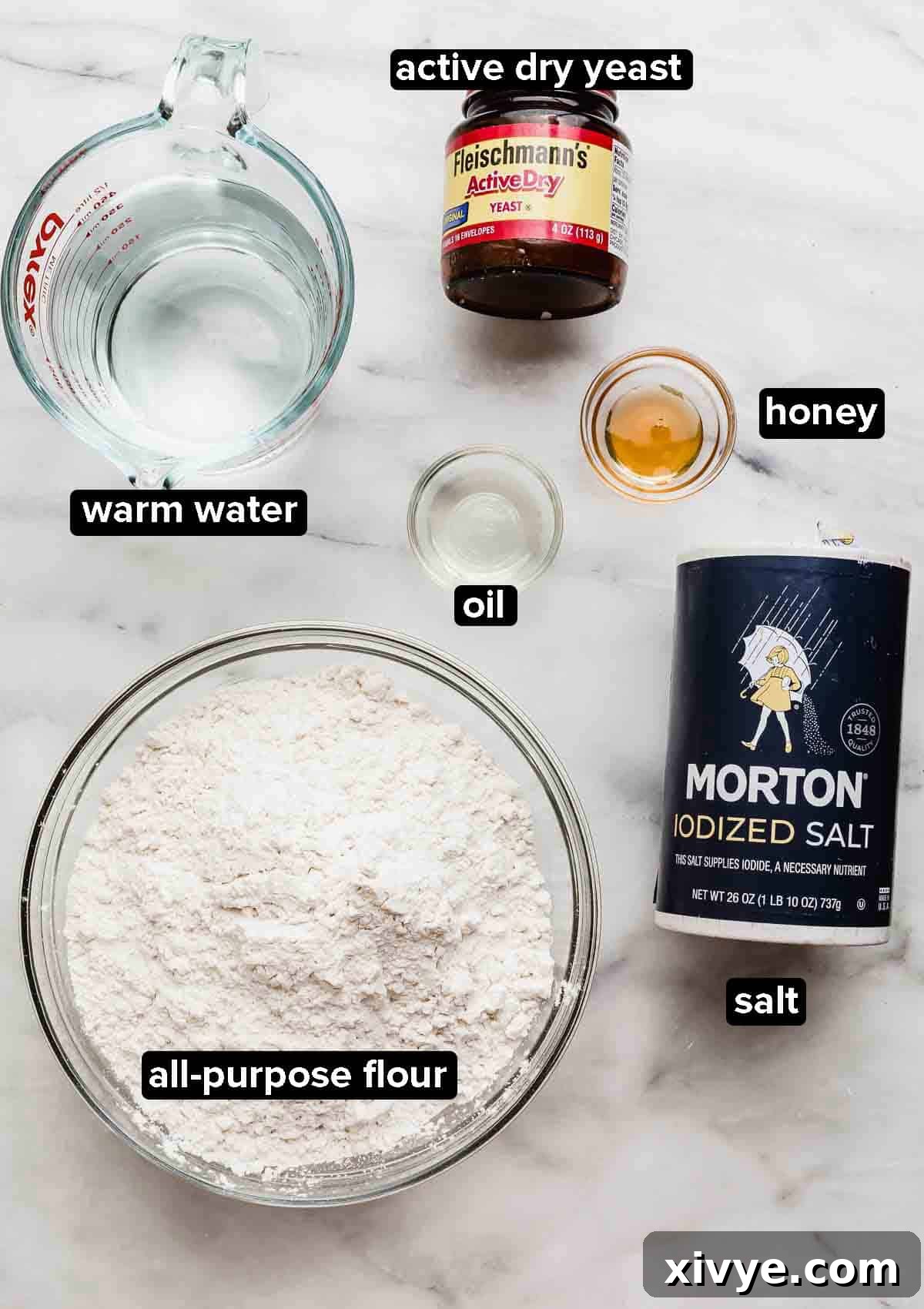
- Flour: The backbone of your dough.
- All-Purpose Flour: This recipe uses all-purpose flour, which is readily available and provides a good balance of protein (gluten) for structure and tenderness. It’s a reliable choice for a consistently good pizza crust.
- Bread Flour: For an even chewier, more robust crust, bread flour is an excellent alternative. It has a higher protein content, leading to more gluten development and a stronger, more elastic dough.
- Wheat Flour: If you’re looking for a healthier, nuttier flavor, you can substitute some of the all-purpose flour with whole wheat flour. Keep in mind that whole wheat flour absorbs more liquid and can result in a denser crust, so you might need slight adjustments to the water content.
- Yeast: The magical leavening agent.
- Active Dry Yeast: This recipe calls for active dry yeast, which needs to be activated (proofed) in warm water with a touch of sugar before being mixed with other ingredients. This ensures the yeast is alive and ready to make your dough rise beautifully.
- Instant Yeast: If using instant yeast, you can typically add it directly to your dry ingredients without proofing. Use the same quantity as active dry yeast. It’s a convenient option for speeding up the process slightly. Yeast is what gives your pizza crust its airy texture and characteristic “lift.”
- Honey: Fuel for the yeast and a touch of flavor.
- While not strictly essential for the dough’s structure, a small amount of honey acts as food for the active dry yeast, helping it activate more quickly and efficiently.
- It also contributes to a more golden-brown crust and adds a subtle, pleasant sweetness that enhances the overall flavor profile.
- Granulated Sugar: Granulated sugar can be used as a direct substitute for honey, performing the same function for the yeast.
- Salt: For flavor and structure.
- Salt is crucial for enhancing the flavor of your pizza dough, preventing it from tasting bland.
- Beyond taste, salt plays a vital role in strengthening the gluten structure of the dough, contributing to its elasticity and chewiness. It also helps regulate yeast activity, preventing the dough from over-proofing too quickly.
- Oil: Prevents sticking and adds tenderness.
- Olive Oil: A drizzle of olive oil in the dough (and for greasing the bowl) adds a wonderful Mediterranean flavor to your crust. It also helps to tenderize the dough and keeps it from drying out during rising.
- Vegetable Oil or Canola Oil: These neutral-flavored oils are also excellent choices for greasing the bowl and providing a barrier against dryness without imparting a distinct flavor.
- Warm Water: The catalyst for yeast.
- The temperature of your water is critical for activating active dry yeast. It should be warm, between 105-115°F (40-46°C). Water that’s too cold won’t activate the yeast, and water that’s too hot can kill it. Use a thermometer for precision.
Easy Step-by-Step Guide to Perfect Pizza Dough
Follow these simple instructions to create flawless pizza dough from scratch. Precision and patience are key for the best results.
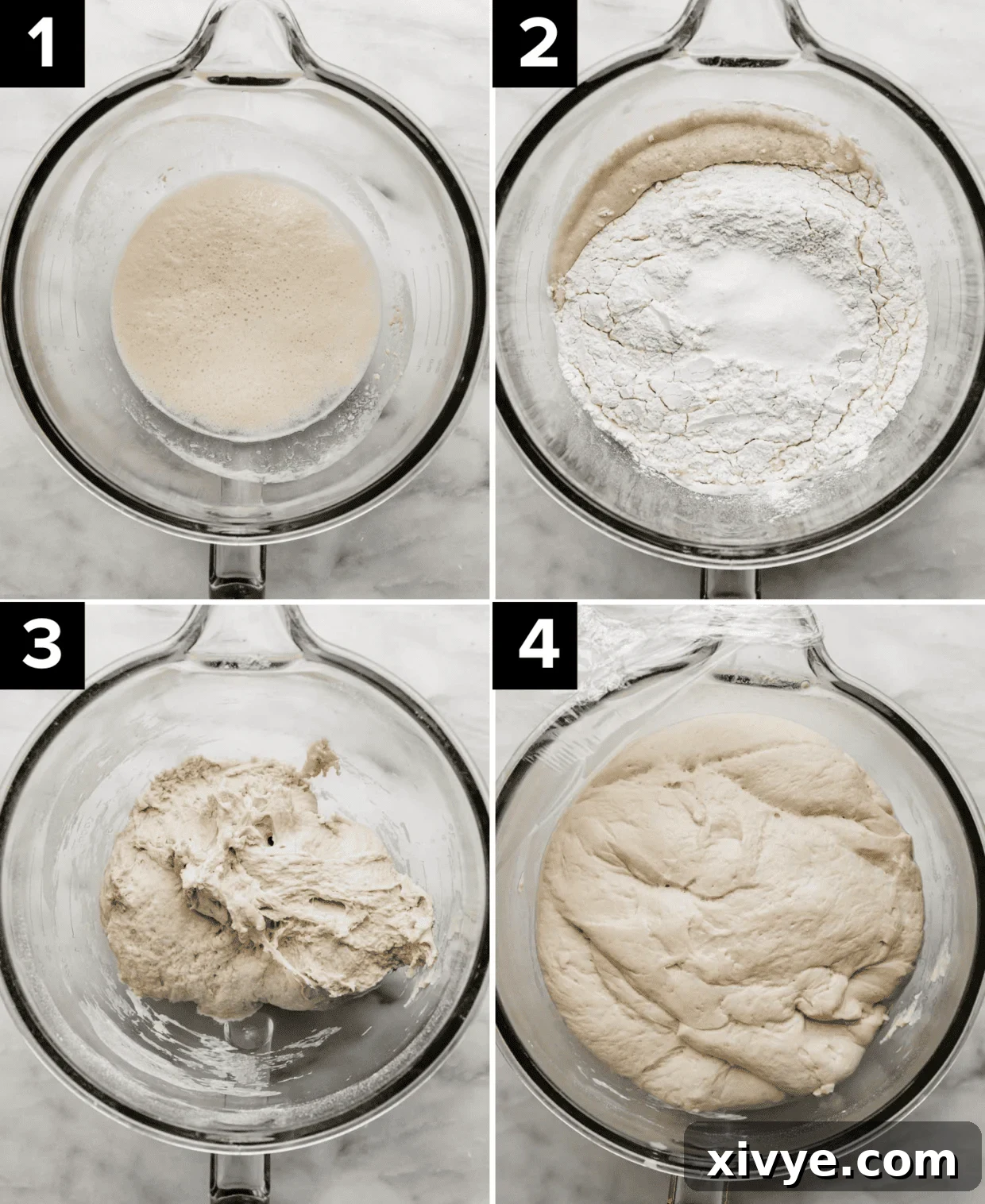
- Activate the Yeast: In the bowl of a stand mixer (or a large mixing bowl if kneading by hand), combine 2 cups of warm water (ensure it’s between 105-115°F or 40-46°C). Add ½ teaspoon of honey and 1 tablespoon of active dry yeast. Stir gently to combine. Let this mixture sit undisturbed for 10 minutes. During this time, the yeast should become foamy and bubbly, indicating it’s active and ready to work its magic. If it doesn’t foam, your yeast might be old or the water temperature was incorrect, and you should start over.
- Combine Dry Ingredients and Knead: Once your yeast is active and bubbly, add 3 cups of all-purpose flour and 1 tablespoon of salt to the bowl. Attach the dough hook to your stand mixer and mix on low speed until the flour is just incorporated, about 1-2 minutes. Then, gradually add the remaining 1 ½ cups of flour, a little at a time, continuing to mix until the dough begins to pull away from the sides of the bowl. It will still stick slightly to the very bottom. The dough should be tacky but not overly sticky. If it’s too sticky, add an additional tablespoon of flour at a time until the desired consistency is achieved. Knead for 5-7 minutes in the stand mixer, or 10-12 minutes by hand on a lightly floured surface, until the dough is smooth and elastic.
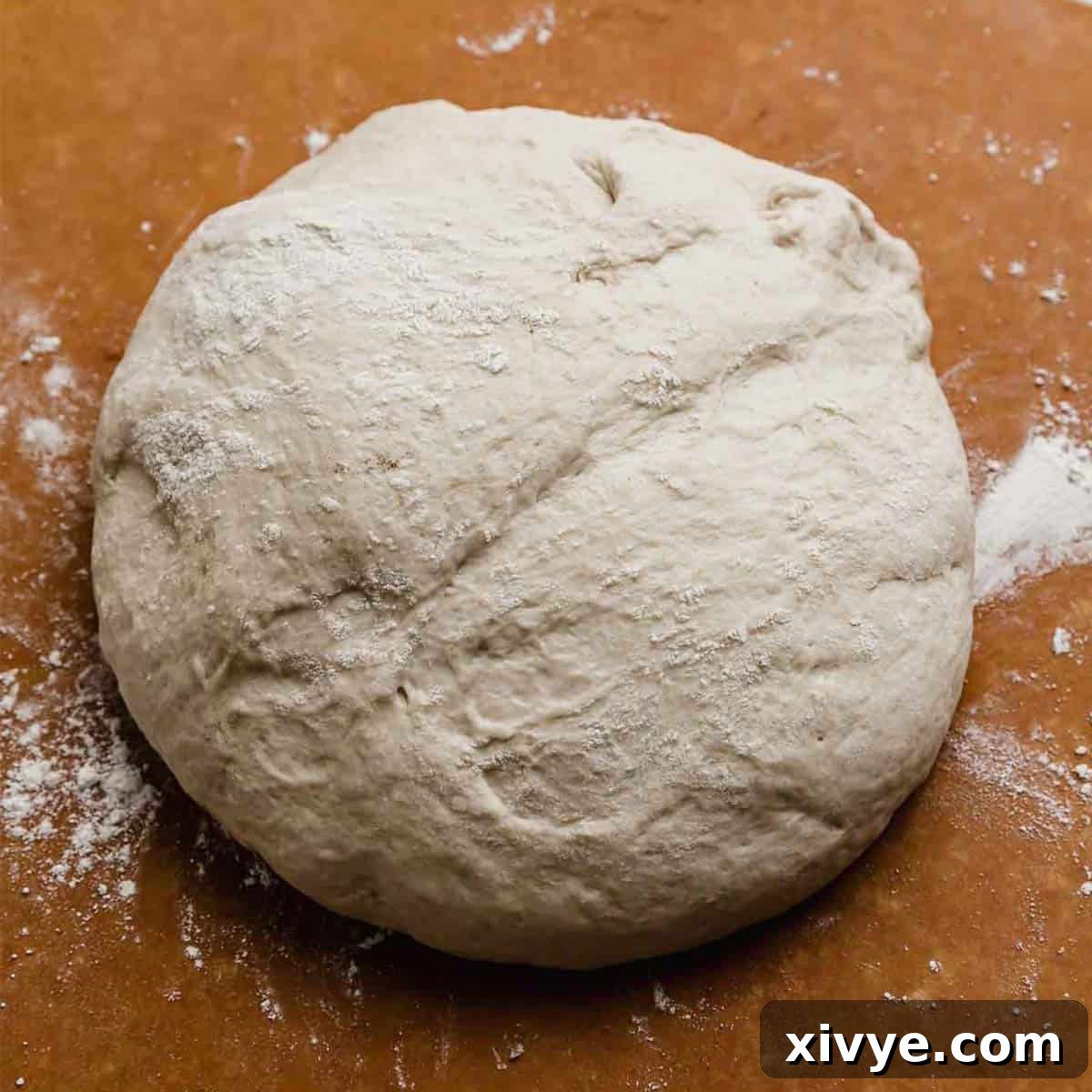
- First Rise: Lightly grease a large clean bowl with about 1 teaspoon of olive oil (or canola/vegetable oil), ensuring the entire interior surface is coated. Form your kneaded dough into a ball and place it in the oiled bowl. Turn the dough ball over once to lightly coat both sides with oil, which prevents it from drying out as it rises. Cover the bowl tightly with plastic wrap or a clean kitchen towel. Place the covered bowl in a warm, draft-free spot (such as a slightly warmed oven that’s turned off, or near a sunny window) for 45-60 minutes, or until the dough has visibly doubled in size.
- Divide and Shape: Once the dough has risen, gently punch it down to release the air. Transfer the dough to a lightly floured surface. Divide the dough into two equal halves (for two medium pizzas). Using a rolling pin or your hands, roll or stretch each half to your desired thickness and shape. For a thin crust, roll it out quite thin; for a thicker, chewier crust, leave it a bit thicker.
- Prepare for Baking and Cook: Carefully transfer your rolled-out pizza dough onto a piece of parchment paper, which will prevent sticking and make transfer easier. Now is the time to add your favorite pizza sauce and an array of delicious toppings. Preheat your oven to a blazing 500°F (260°C). If you’re using a pizza stone, place it in the oven during preheating to ensure it’s piping hot. Using a pizza peel, slide the parchment paper with your topped pizza onto a baking sheet or directly onto the preheated pizza stone. Bake for 12-14 minutes, or until the crust is golden brown and cooked through, and the cheese is melted and bubbly with slightly browned edges. Enjoy your freshly baked, homemade pizza!
Expert Tips for the Best Pizza Dough
Achieving bakery-quality pizza at home is within reach with these essential tips and tricks:
- Proof Your Yeast Properly: Always allow your active dry yeast to sit in warm water with honey for the full 10 minutes. This crucial step, known as “proofing,” confirms that your yeast is alive and active. Bubbles forming on the surface are a positive sign that your dough will rise beautifully, resulting in a light and airy crust. If no bubbles appear, your yeast may be expired or the water temperature was off, and you should use a fresh batch of yeast.
- Mind the Dough Consistency: The ideal pizza dough should be tacky to the touch but not excessively sticky. It should pull away from the sides of the mixing bowl cleanly, leaving only a slight residue at the very bottom. If your dough is too sticky, add flour one tablespoon at a time until the desired consistency is reached. Overly sticky dough is hard to work with, while overly dry dough will be stiff and produce a tough crust.
- Adjust Flour for Environment: The exact amount of flour needed can vary significantly due to environmental factors such as climate, humidity levels, and even altitude. Start with the recommended amount and add additional flour sparingly, in small increments, until your dough reaches the correct tacky but not sticky consistency. This prevents over-drying the dough, which can lead to a dense, stiff crust.
- The Power of Oil: Using oil to grease your mixing bowl and lightly coat the dough ball is vital. It prevents the dough from sticking to the bowl during its rise and, more importantly, keeps the surface of the dough from drying out and forming a crust, allowing for an even and smooth rise. Olive oil also adds a lovely subtle flavor to the finished product.
- Find a Warm, Draft-Free Spot for Rising: Yeast thrives in warmth and is sensitive to cold drafts. Locate a consistent warm, draft-free environment for your dough to rise. A turned-off oven with the light on, a sunny spot on your counter, or even on top of a warm appliance are all good options. The dough should double in size within the specified time frame, indicating a successful rise.
- Preheat Oven and Stone Thoroughly: For that coveted crispy crust, preheat your oven to its highest setting (typically 500-550°F or 260-290°C) for at least 30-60 minutes, especially if using a pizza stone or steel. A super-hot surface creates an immediate burst of steam, leading to a much crisper bottom crust, mimicking the intense heat of a professional pizza oven.
- Don’t Overload Your Pizza: While it’s tempting to pile on all your favorite toppings, resist the urge to overload your pizza. Too many toppings can weigh down the dough, make it difficult to cook evenly, and result in a soggy crust. Distribute toppings evenly and sparingly for the best results.
- Consider a Homemade Sauce: Elevate your homemade pizza even further with a delicious homemade sauce! Try my Pizza Sauce with Tomato Paste for a fresh and flavorful addition.
Make Ahead, Storing, and Freezing Pizza Dough
One of the best advantages of making your own pizza dough is the ability to prepare it in advance, making weeknight pizza nights even easier.
- Make Ahead (Refrigeration): To prepare the dough ahead of time for use within a few days, after the first rise, gently punch down the dough to deflate it. Lightly coat the dough ball with a little olive oil, then place it in an airtight container or a bowl covered tightly with plastic wrap. Store it in the refrigerator for up to 3 days. The cold temperature slows down the yeast activity, allowing the dough to develop more flavor. When you’re ready to bake, remove the dough from the fridge and let it sit at room temperature for 30-60 minutes to warm up slightly before rolling it out.
- Freezing for Long-Term Storage: Pizza dough freezes exceptionally well, providing a convenient option for future meals. After the first rise, divide the dough into individual balls (one ball per pizza). Lightly coat each dough ball with olive oil to prevent freezer burn and sticking. Place each ball in an individual freezer-safe bag, pressing out as much air as possible before sealing. Label and date the bags, then store them in the freezer for up to 3 months.
- Thawing Frozen Dough: When you’re ready to use frozen dough, planning ahead is key. The easiest method, as recommended by Taste of Home, is to transfer the frozen dough ball from the freezer to the refrigerator the night before you plan to bake. This allows it to thaw slowly and safely. In the morning, move the thawed dough from the refrigerator to the counter and let it sit at room temperature for 30 minutes to an hour. This final warm-up will relax the gluten, making the dough easier to roll out and ensuring a proper second rise before baking.
Common Questions About Pizza Dough
Here are answers to some frequently asked questions to help you perfect your homemade pizza dough:
For the best pizza crust, you want a flour with a good gluten content. All-purpose flour (10-12% protein) is a fantastic and accessible choice. Bread flour (12-14% protein) is even better if you prefer a chewier, more authentic Neapolitan-style crust. Avoid pastry or cake flours, as their low gluten content will result in a weak dough that won’t hold its shape.
Salt plays two crucial roles: first, it significantly boosts the flavor of your dough, preventing it from tasting bland. As Weekend Bakery notes, “Breads will taste flat” without it. Second, salt strengthens the gluten structure in the dough, making it more elastic and easier to work with, contributing to a better texture and rise.
While not strictly necessary for the dough to rise, omitting salt will noticeably impact both the flavor and the texture of your pizza dough. Without salt, the crust will taste bland, and the gluten structure will be weaker, potentially resulting in a less chewy and harder-to-handle dough. We strongly recommend including it for the best results.
Absolutely! Instant yeast is a great alternative. It’s designed to be added directly to your dry ingredients without the initial proofing step. Simply use the same amount as the active dry yeast specified in the recipe.
Yes, you absolutely can! If you don’t have a stand mixer, simply use a sturdy wooden spoon or your hands to mix the ingredients in a large bowl. Once combined, transfer the dough to a lightly floured countertop and knead by hand for about 10-12 minutes until it’s smooth and elastic. It’s a great arm workout!
The most reliable indicator is when the dough has visibly doubled in size. You can also perform the “poke test”: gently press two fingers into the dough about half an inch deep. If the indentations slowly spring back but don’t disappear completely, your dough is perfectly risen and ready. Rising time can vary based on room temperature and humidity.
Thin crust pizzas generally bake faster due to their reduced thickness. At an oven temperature of 500°F (260°C), a thin crust pizza will typically take about 8-12 minutes to bake. Always monitor your pizza closely, as actual bake times can vary depending on your oven and chosen toppings.
Yes, freezing pizza dough is a fantastic way to prepare ahead and have fresh dough on hand whenever a pizza craving strikes! After the first rise, divide and lightly oil the dough balls, then place them in airtight freezer bags, removing as much air as possible before freezing. They can be stored for up to 3 months. For thawing instructions, refer to the “Make Ahead, Storing, and Freezing” section above.

Explore More Pizza Creations
Now that you’ve mastered the ultimate pizza dough, unleash your creativity with these delicious pizza recipes:
- CPK California Club Pizza
- Homemade Pizza Rolls
- Authentic Margherita Pizza
- Kale Pizza
- Pumpkin Pizza
Did you try this amazing pizza dough recipe? We’d absolutely love to hear about your experience! Leave a star rating and review below to let us know how your pizzas turned out. Your feedback helps our community of home bakers!
Stay connected and get inspired by following us on Instagram, TikTok, YouTube, Facebook, and Pinterest for more delicious recipes and kitchen tips.
The Best Homemade Pizza Dough Recipe

Whitney Wright
This simple yet high-quality pizza dough recipe serves as the perfect foundation for all your pizza creations. It’s easy to make, versatile, and guarantees a delicious, soft, and chewy crust every time.
Average Rating: 5 out of 5 stars (6 votes)
Ingredients
- 2 cups warm water
- ½ teaspoon honey
- 1 T active dry yeast
- 4 ½ cups all-purpose flour – (may need more or less depending on your location, climate, altitude etc.)
- 1 T. salt
- Oil – (for greasing the bowl, olive oil or vegetable oil recommended)
Instructions
- In the bowl of a stand mixer, add the warm water, honey, and yeast. Stir gently and let sit for 10 minutes, or until the yeast is bubbly and activated.
- Add 3 cups of flour and the salt to the yeast mixture. Using a dough hook, mix until the flour is combined. Add the remaining 1 ½ cups of flour gradually. Mix until the dough pulls away from the sides of the bowl, sticking only slightly to the very bottom. If too sticky, add flour one tablespoon at a time until tacky but not overly sticky.
- Lightly coat a large clean bowl with about 1 teaspoon of oil. Place the dough ball in the bowl and turn it over to lightly coat both sides with oil.
- Cover the bowl with plastic wrap and let the dough rise in a warm, draft-free area for 45-60 minutes, or until doubled in size.
- Transfer the risen dough to a lightly floured countertop and divide it in half. Roll or stretch each half to your desired pizza size and thickness.
- Place the rolled dough on parchment paper, add your desired sauce and toppings. Bake at 500°F (260°C) for 12-14 minutes, or until the crust is golden brown and cooked through, and the cheese is melted and bubbly.
Notes
This recipe yields approximately 2 lbs 8 oz of pizza dough, enough for two medium pizzas.
Nutrition (per serving, 1 of 2 pizzas)
Calories: 518 kcal
Carbohydrates: 108.5 g
Protein: 15 g
Fat: 1.5 g
Saturated Fat: 0.25 g
Polyunsaturated Fat: 0.5 g
Monounsaturated Fat: 0.15 g
Sodium: 1150 mg
Potassium: 200 mg
Fiber: 4 g
Sugar: 1 g
Vitamin C: 0.005 mg
Calcium: 60 mg
Iron: 8.3 mg
Did you make this recipe?
Please leave a star rating and review on the blog post letting me know how you liked this recipe! Take a picture and tag @saltandbaker on TikTok, Instagram, and Facebook so I can see what you’re making!