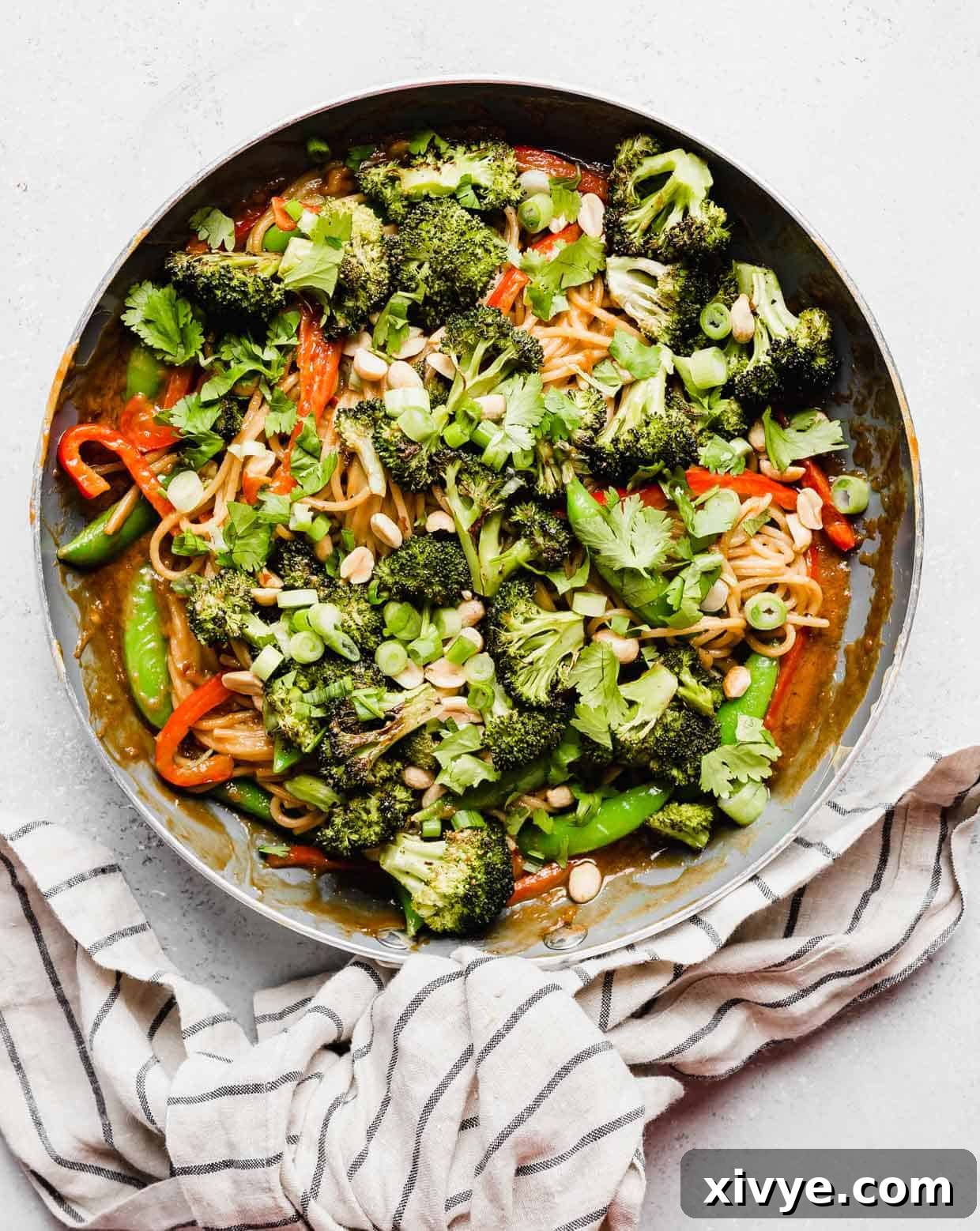
Irresistible Thai Peanut Noodles with Roasted Vegetables: A Flavor-Packed Weeknight Delight
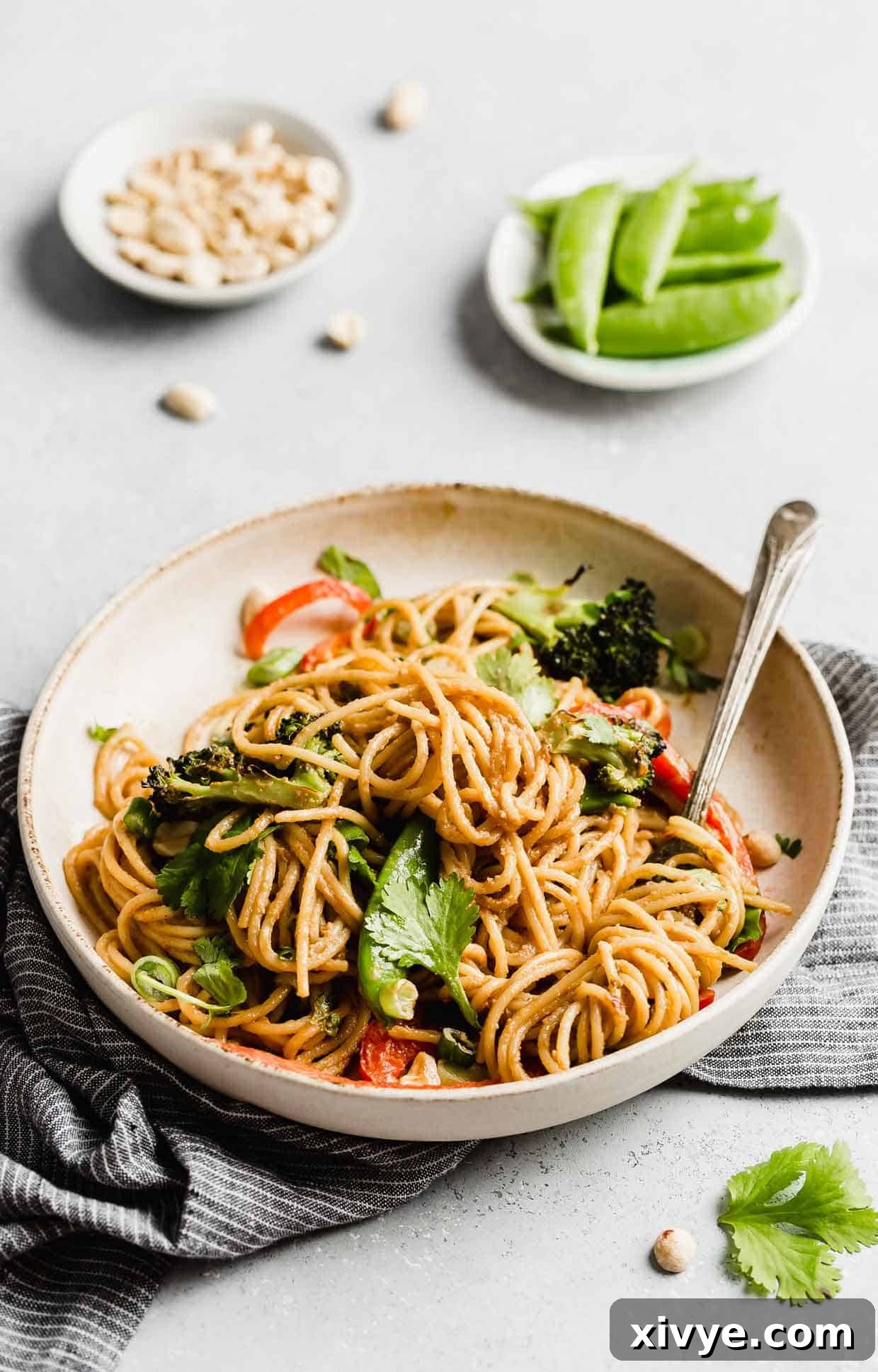
Embark on a culinary journey to the vibrant streets of Thailand with this incredibly delicious and easy-to-make Thai Peanut Noodles recipe. This dish is a symphony of bold flavors, featuring a rich, creamy peanut sauce that coats perfectly cooked noodles and an abundance of fresh, roasted vegetables. Forget complicated takeout; this homemade version brings authentic Thai-inspired tastes right to your kitchen table in under an hour.
Our signature peanut sauce is the heart of this recipe, crafted from a harmonious blend of toasted sesame oil, aromatic freshly grated ginger, smooth peanut butter, savory soy sauce, and a touch of chili garlic sauce for that irresistible kick. These captivating flavors, combined with tender roasted broccoli, crisp sugar snap peas, and vibrant bell peppers, create a meal that truly celebrates its Asian-inspired roots.
If you’re a connoisseur of Asian cuisine and crave more exciting flavors like these, you’ll be thrilled to explore other incredible recipes. Dive into the rich and aromatic Thai Massaman Curry or warm your soul with a comforting bowl of Thai Red Curry Noodle Soup. And for those who adore the creamy, nutty goodness of peanut butter in their savory dishes, you simply must try our unique Peanut Butter Gochujang Ramen! Each dish promises a delightful adventure for your taste buds.
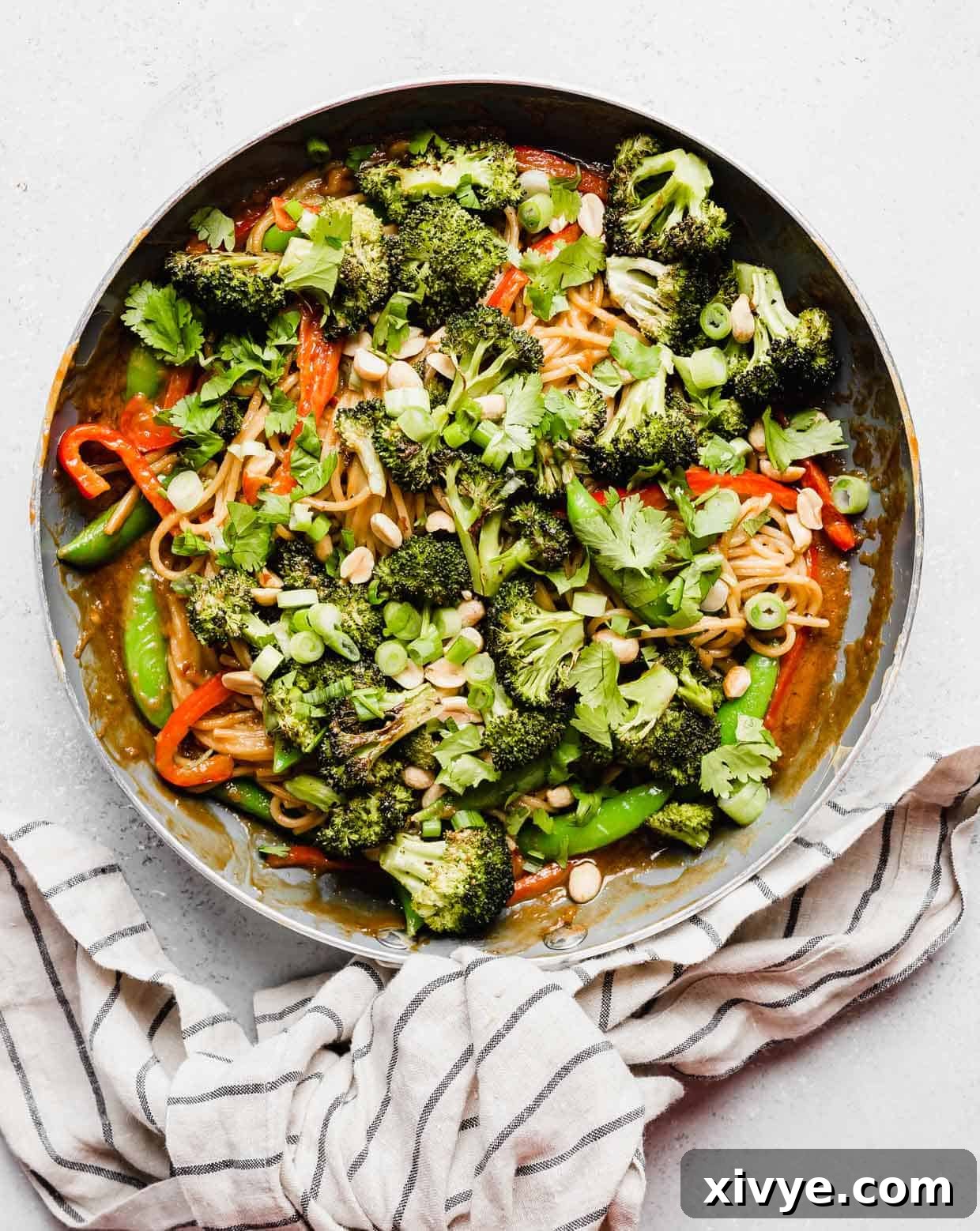
Why This Thai Peanut Noodles Recipe Will Become Your New Favorite
There are countless reasons to fall in love with these Thai Peanut Noodles. Beyond their sensational flavor, this recipe stands out for its simplicity, versatility, and the sheer joy it brings to your dining experience. Here’s why this dish truly works and will earn a permanent spot in your recipe rotation:
- Effortlessly Easy & Quick: This Thai peanut noodles recipe is incredibly straightforward, making it the ideal choice for busy weeknights or a quick, satisfying lunch. From prep to plate, you can have a gourmet-quality meal ready in under 40 minutes. It’s so easy and delicious, you might find yourself making it multiple times a week – a confession I can personally make!
- Unforgettable Peanut Sauce: The star of the show is undoubtedly our homemade peanut sauce. This perfectly balanced sauce combines the richness of peanut butter with the umami of soy sauce, the nutty warmth of sesame oil, and the subtle sweetness of honey, all elevated by fresh garlic and ginger. It’s a sauce so good, you’ll want to put it on everything!
- Packed with Nutritious Vegetables: We believe a delicious meal should also be a wholesome one. This recipe is brimming with colorful and nutrient-dense vegetables like tender roasted broccoli, crunchy red bell peppers, and sweet sugar snap peas. These fresh ingredients add vibrant color, essential vitamins, and fantastic texture to every bite, transforming simple noodles into a complete and satisfying meal.
- Highly Customizable: One of the best aspects of this dish is its flexibility. Easily adapt it to your preferences or what you have on hand. Want more spice? Add extra chili garlic sauce. Prefer different vegetables? Swap them in! It’s a recipe that encourages creativity in the kitchen.
- Crowd-Pleaser & Family-Friendly: With its universally appealing flavors and satisfying texture, these peanut noodles are a hit with both adults and children. The spice level can be adjusted to suit all palates, making it a perfect family dinner that everyone will enjoy.
- Vegetarian & Vegan Adaptable: Naturally vegetarian, this recipe can be easily made vegan by substituting honey with maple syrup or agave nectar. It’s a fantastic plant-based meal that doesn’t compromise on flavor.
Essential Ingredient Notes for Perfect Thai Peanut Noodles
Crafting the perfect bowl of Thai Peanut Noodles starts with understanding the role of each ingredient. Here’s a closer look at the components that make this dish truly special, along with helpful tips for selection and substitutions:
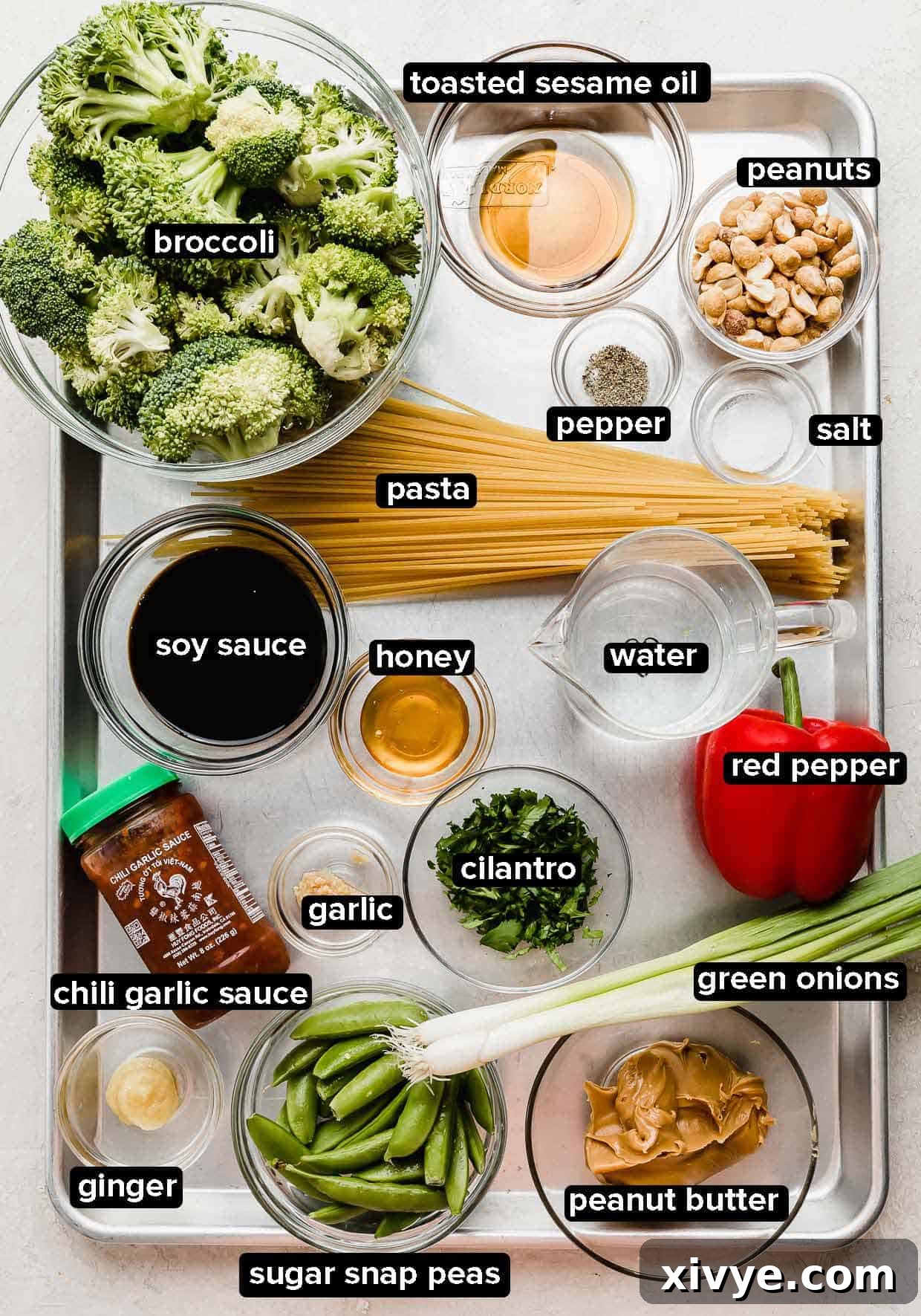
- Broccoli: We recommend using about two heads of fresh broccoli, cut into bite-sized florets. Roasting the broccoli brings out its natural sweetness and gives it a slightly charred, tender-crisp texture that pairs wonderfully with the creamy sauce. It’s often cited as a favorite element in this peanut noodles with vegetables dish.
- Red Bell Pepper: Sliced thinly, red bell pepper adds a beautiful pop of color and a sweet, crisp crunch. Feel free to experiment with other bell pepper varieties like yellow or orange for different visual appeal and subtle flavor variations. They all contribute a delightful freshness to this Asian peanut noodles dish.
- Sugar Snap Peas: These delightful peas are a hybrid between garden peas and snow peas, offering a sweet and crunchy texture. You can enjoy the entire pod, adding a lovely freshness and a subtle sweetness that complements the rich peanut sauce.
- Toasted Sesame Oil: Essential for its distinctive nutty aroma and flavor, toasted sesame oil is a cornerstone of Asian cuisine. When paired with creamy peanut butter, it creates an incredibly aromatic and flavorful Thai peanut sauce that elevates the entire dish.
- Noodles: While spaghetti noodles are a convenient and popular choice for their familiar texture and ability to hold the sauce, this recipe is highly adaptable. Feel free to use your favorite noodle type! Excellent alternatives include soba noodles, gluten-free noodles, rice noodles (for a gluten-free option), or even linguine or angel hair for a different mouthfeel.
- Creamy Peanut Butter: Opt for a good quality creamy peanut butter for the smoothest sauce. If you prefer a bit of texture, crunchy peanut butter can be used, just be mindful if you also plan to top the dish with dry roasted peanuts for an extra crunch. Natural peanut butter (the kind that separates) also works perfectly fine and won’t significantly alter the consistency, just give it a good stir before measuring.
- Soy Sauce: For a healthier option and better control over sodium levels, we consistently recommend using low sodium soy sauce in this peanut noodles with vegetables recipe. It provides the essential umami depth without overpowering saltiness.
- Chili Garlic Sauce: This ingredient is key for introducing a balanced level of heat and a vibrant garlic flavor. The suggested 1 ½ teaspoons creates a family-friendly spice level. If you and your fellow diners prefer a bolder, spicier dish, don’t hesitate to increase the amount to your taste.
- Fresh Garlic & Ginger: Minced garlic and freshly grated ginger are crucial for building the aromatic base of the peanut sauce. Their pungent and spicy notes add depth and a fresh, zesty brightness that is indispensable in Asian cooking.
- Honey: A touch of honey balances the savory and spicy elements of the sauce, adding a subtle sweetness that rounds out the flavor profile beautifully. Maple syrup or agave can be used as vegan alternatives.
Step-by-Step Instructions for Your Best Thai Peanut Noodles
Creating these sensational Thai Peanut Noodles is a straightforward process, broken down into a few simple steps. Follow these instructions carefully to ensure a perfect, flavor-packed meal every time:
- Prepare and Roast the Broccoli: Begin by preheating your oven to 425°F (220°C). Arrange the broccoli florets evenly on a baking sheet. Drizzle them with 1 ½ tablespoons of toasted sesame oil, then season generously with a pinch of salt and pepper. Toss everything to ensure the broccoli is well coated. Roast in the preheated oven for approximately 15 minutes, or until the broccoli is slightly tender with beautifully caramelized edges.
- Cook Your Chosen Noodles: While the broccoli roasts, bring a large pot of salted water to a rolling boil. Add your spaghetti noodles (or preferred noodle type) and cook according to package directions until they reach an al dente texture. This means they should be tender but still have a slight firmness to the bite. Once cooked, drain the noodles and set aside, reserving a little of the starchy pasta water if you wish to adjust sauce consistency later.
- Craft the Irresistible Peanut Sauce: Heat 5 tablespoons of toasted sesame oil in a large skillet or wok over medium heat. Add the minced garlic and freshly grated ginger, stirring constantly for about 2 minutes until fragrant. Be careful not to burn the garlic. Next, stir in the creamy peanut butter, soy sauce, ¾ cup of water, chili garlic sauce, and honey. Whisk continuously until the sauce is completely smooth, creamy, and heated through.
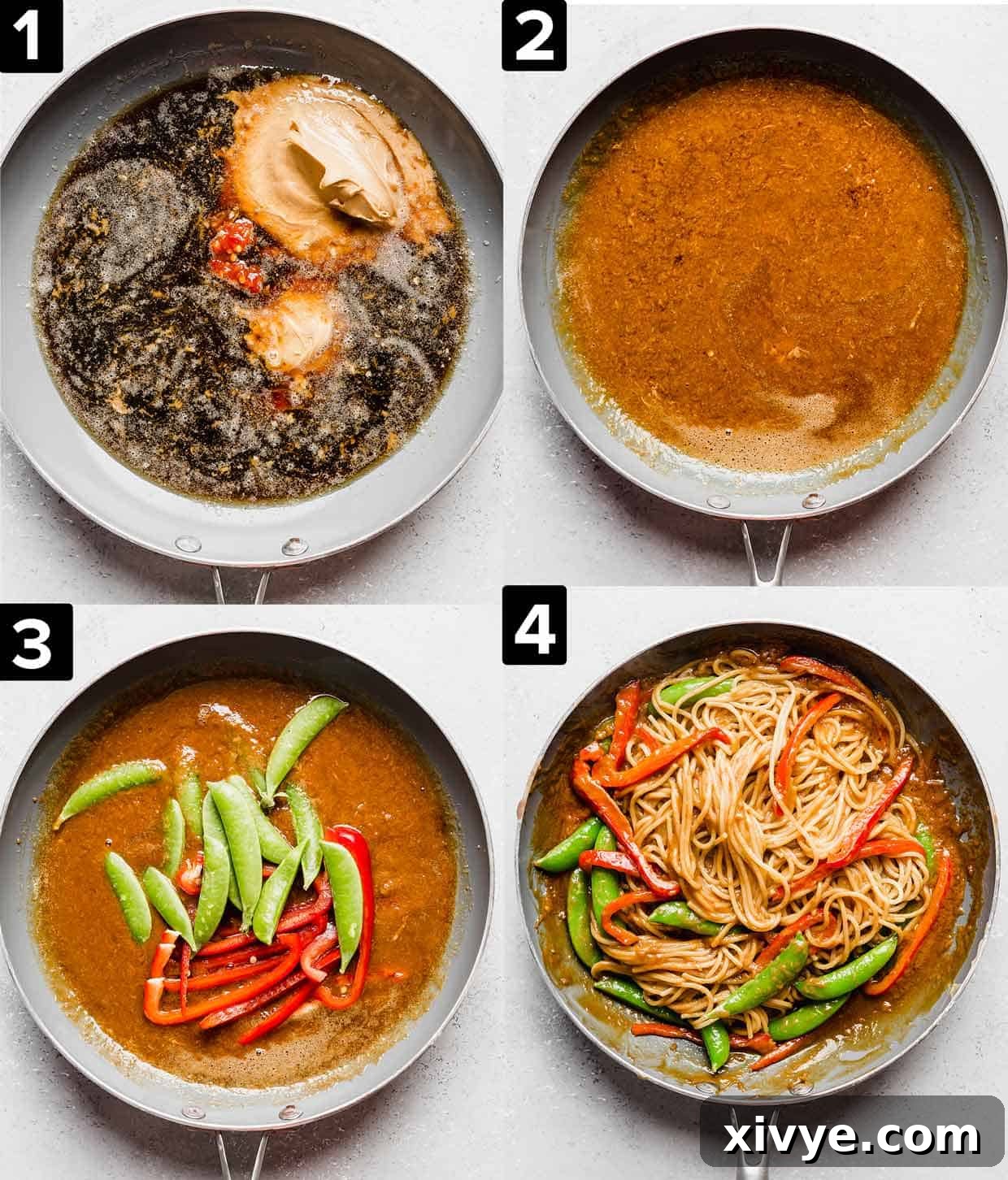
- Combine Noodles and Vegetables with the Sauce: Into the skillet with the warm peanut sauce, add the thinly sliced red peppers and sugar snap peas. Give them a quick stir to coat. Then, add the drained noodles to the skillet. Using tongs or two large spoons, toss everything together vigorously until the noodles are thoroughly coated in the luscious, saucy goodness.
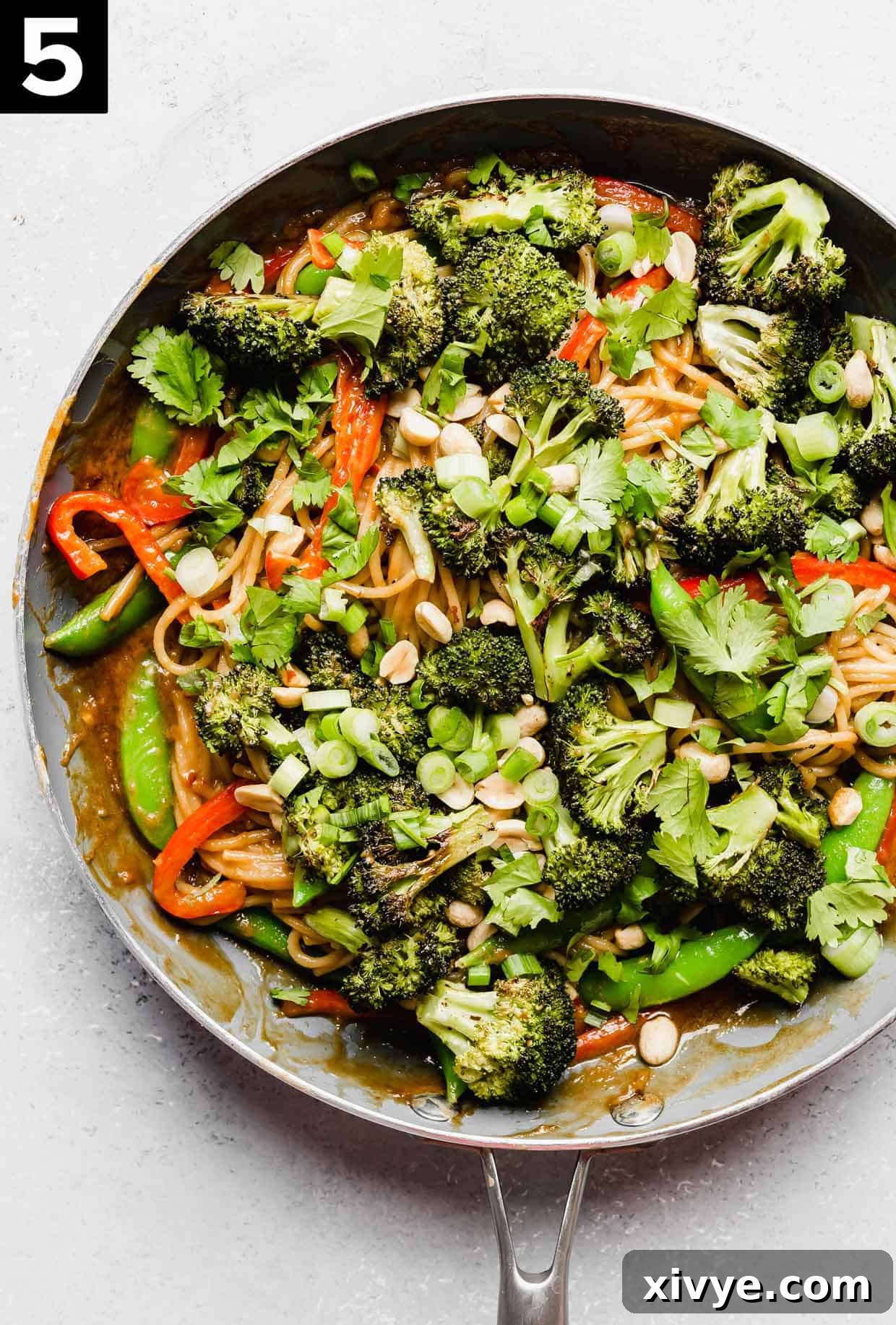
- Add Roasted Broccoli and Serve: Once the roasted broccoli is ready, carefully transfer it from the baking sheet into the skillet with the noodles and sauce. Gently toss to incorporate. To serve, portion your Thai peanut butter noodles into individual bowls. Garnish generously with freshly sliced green onions, crunchy dry roasted peanuts, and vibrant chopped fresh cilantro. Serve immediately and prepare for a burst of flavor!
Expert Recipe Tips for Customizing Your Peanut Noodles
This Thai Peanut Noodles recipe is wonderfully versatile, offering endless possibilities for customization and enhancement. Here are some expert tips to help you make this dish truly your own:
- Boost Your Veggie Power: Don’t limit yourself to the suggested vegetables! Feel free to add more of your favorites. Thinly sliced carrots are a fantastic addition; simply add them to the sauce along with the red peppers and sugar snap peas. Edamame, sautéed mushrooms, shredded cabbage, or even spiralized zucchini (zoodles) for a lighter option would also be delicious. Adjust the quantity of broccoli as well – two heads are a guide, not a strict rule!
- Protein Perfection: While this dish is incredibly satisfying on its own, it’s also an excellent canvas for adding your preferred protein. Cooked shrimp, thinly sliced chicken breast or thighs, or even marinated and pan-seared tofu are wonderful choices. Add your cooked protein to the skillet when you combine the noodles and vegetables with the sauce.
- Noodle Alternatives: Beyond the options mentioned in the ingredient notes, consider using ramen noodles (without the seasoning packet) for a heartier texture, or even wide rice noodles for a different mouthfeel. For a gluten-free twist, alongside rice noodles, you can also use cooked quinoa or even chickpea pasta.
- Enhance the Garnish: Garnish isn’t just for looks – it adds crucial texture and flavor. Beyond green onions, peanuts, and cilantro, consider a sprinkle of toasted sesame seeds for an extra nutty note, a drizzle of sriracha for more heat, or a squeeze of fresh lime juice to brighten the flavors.
- Spice Level Adjustment: The chili garlic sauce provides a moderate, family-friendly heat. If you’re a spice enthusiast, feel free to add more, a dash at a time, until it reaches your desired kick. Conversely, for a milder version, reduce the amount or omit it entirely and add a tiny pinch of red pepper flakes if desired.
- Make it a Meal Prep Star: This recipe is excellent for meal prepping. Cook a larger batch of noodles and sauce, then assemble individual portions with fresh vegetables throughout the week. Keep the sauce separate from the noodles and vegetables until you’re ready to eat for best texture.
- Creaminess Factor: If you find the sauce too thick, you can thin it out with a tablespoon or two of hot water, vegetable broth, or even some of the reserved pasta cooking water until it reaches your desired consistency.
Make Ahead, Storing, and Freezing
Efficiency in the kitchen is key, and this recipe offers great flexibility for meal prep and storage:
- Make Ahead: The delicious peanut sauce is perfect for making in advance. Prepare a batch and store it in an airtight container or jar in the refrigerator for up to 2 weeks. This significantly cuts down on prep time when you’re ready to make the noodles.
- Storing Leftovers: Any leftover Thai Peanut Noodles should be stored in an airtight container in the fridge for up to 5 days. Reheat gently on the stovetop or in the microwave, adding a splash of water or broth if the sauce has thickened too much.
- Freezing: We generally do not recommend freezing pasta dishes. When frozen and then thawed, pasta can become mushy and lose its desirable texture. It’s best enjoyed fresh or from refrigeration.
Common Questions About Thai Peanut Noodles (FAQs)
These peanut noodles with vegetables are quite satisfying on their own, but they also make a fantastic side dish. Consider serving them with a light protein like grilled chicken or tofu. For a more complete meal, try them alongside some Garlic Parmesan Roasted Carrots, a comforting Easy Recipe for Naan Bread, or a refreshing glass of Non-Alcoholic Sangria for a delightful experience.
The beauty of Thai peanut sauce is its versatility with various noodle types! We recommend longer noodles that can really capture and hold onto the creamy sauce. Great options include spaghetti, angel hair, linguine noodles, soba noodles, ramen noodles, or even flatter rice noodles for a traditional Thai feel. Choose your favorite based on desired texture and dietary needs.
The amount of chili garlic sauce specified in this recipe (1 ½ teaspoons) is designed to be family-friendly, offering a pleasant warmth rather than an intense heat. If you or your guests prefer a spicier dish, you have full control! Feel free to gradually add more chili garlic sauce, or even a dash of sriracha or red pepper flakes, until it reaches your preferred level of spiciness.
If you don’t have chili garlic sauce on hand, you have a few good alternatives. Sriracha sauce, a classic chili paste (like sambal oelek), or another type of chili garlic paste can all work. Just be aware that each substitute might bring a slightly different flavor profile and heat level compared to the specific nuances of standard chili garlic sauce. Taste and adjust as you go!
Absolutely! If stir-fried vegetables are what you have or prefer, they are an excellent choice for this dish. The key is to use whatever vegetables you enjoy and think will complement the Thai flavors. While roasted broccoli, red peppers, and sugar snap peas offer a delightful combination that harmonizes beautifully with Thai cuisine, feel free to adapt and use your preferred method and selection of fresh produce.
Discover More Delicious Dinner Recipes
If you loved these Thai Peanut Noodles, you’ll surely enjoy exploring more of our diverse and flavorful dinner recipes designed to inspire your culinary adventures:
- Sesame Noodles
- Roman Chicken Recipe
- Curry Chicken Rice and Peas
- Cajun Sausage Pasta
- Spicy Chicken Wontons
Did you try this incredible recipe? We’d absolutely love to hear about your experience! Leave a star rating and a review below in the comments section to share your thoughts. Your feedback helps us grow and inspires other home cooks!
Stay connected and never miss a new recipe by following us on Instagram, TikTok, YouTube, Facebook, and Pinterest.
Print Recipe
Save Recipe
Review Recipe
Thai Peanut Noodles
 Whitney Wright
This peanut noodles with vegetables is one of my favorite meals ever! Spaghetti noodles are tossed in a flavorful (and slightly spicy) peanut sauce then topped with red peppers, roasted broccoli, peas, green onions, and cilantro. Make it and watch it be devoured.
Ingredients
- 2 heads broccoli – cut into florets
- 1 ½ tablespoons toasted sesame oil
- pinch salt
- pinch pepper
- 8 oz spaghetti noodles
- 5 tablespoons toasted sesame oil
- ½ teaspoon garlic – minced (about 2 cloves)
- 1 teaspoon ginger – freshly grated
- ½ cup creamy peanut butter
- ⅓ cup soy sauce – I always use low-sodium
- ¾ cup water
- 1 ½ teaspoons chili garlic sauce – add more for spicier dish (the 1 ½ tsp is more family friendly)
- 1 teaspoon honey
- ½ red pepper – thinly sliced
- 3 oz sugar snap peas – or a small handful
- 2 green onions – sliced
- ⅓ cup peanuts
- ¼ cup cilantro – chopped
Instructions
- Preheat oven to 425°F.
- Place broccoli on baking sheet. Drizzle the sesame oil overtop. Toss to coat. Sprinkle salt and pepper overtop. Toss to coat. Roast in the oven for 15 minutes or until slightly tender.
- Bring a large pot of water to boil. Add the noodles and cook until al dente.
- Meanwhile, in a large skillet over medium heat add the sesame oil, garlic and ginger. Cook, stirring often for about 2 minutes. Stir in the peanut butter, soy sauce, water, chili garlic sauce, and honey. Stir until smooth. Stir in the sliced red peppers and snow peas.
- Drain the pasta and add the noodles into the skillet full of the sauce. Toss to coat so that the noodles are covered in the saucy goodness.
- When broccoli is finished roasting, remove from oven and transfer the vegetables to the skillet. Sprinkle the peanuts, green onions, and cilantro on top. Toss to coat.
- Portion into individual servings. Enjoy!
Notes
- Store in an airtight container in the fridge for up to 5 days.
- The sauce can be made in advance and stored in the fridge.
- Noodle options: spaghetti, angel hair, linguine noodles, soba noodles, ramen noodles, rice noodles, etc.
Nutrition
- Calories: 810kcal
- Carbohydrates: 77g
- Protein: 30g
- Fat: 47g
- Saturated Fat: 8g
- Sodium: 1432mg
- Potassium: 1518mg
- Fiber: 14g
- Sugar: 13g
- Vitamin A: 2718IU
- Vitamin C: 304mg
- Calcium: 199mg
- Iron: 5mg