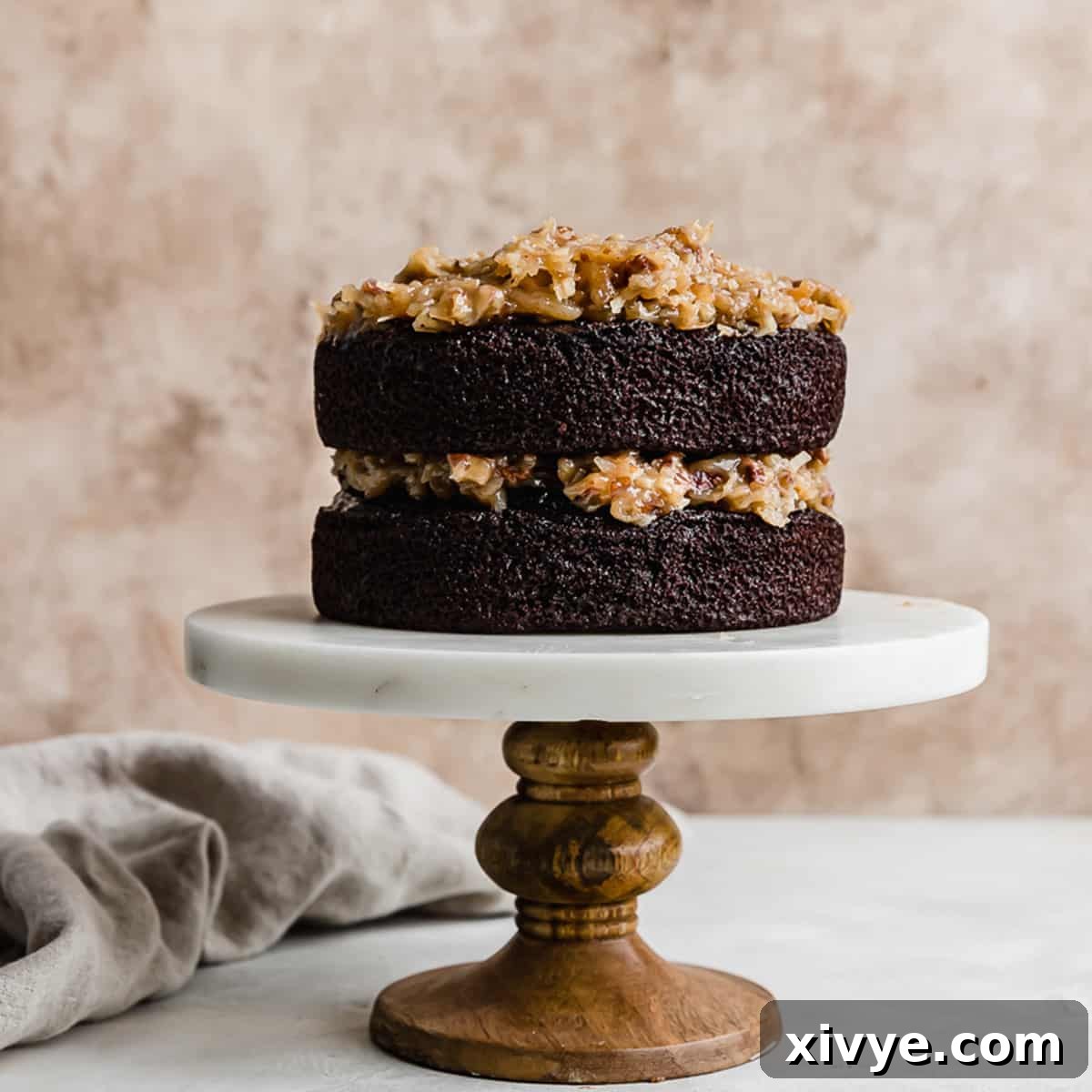
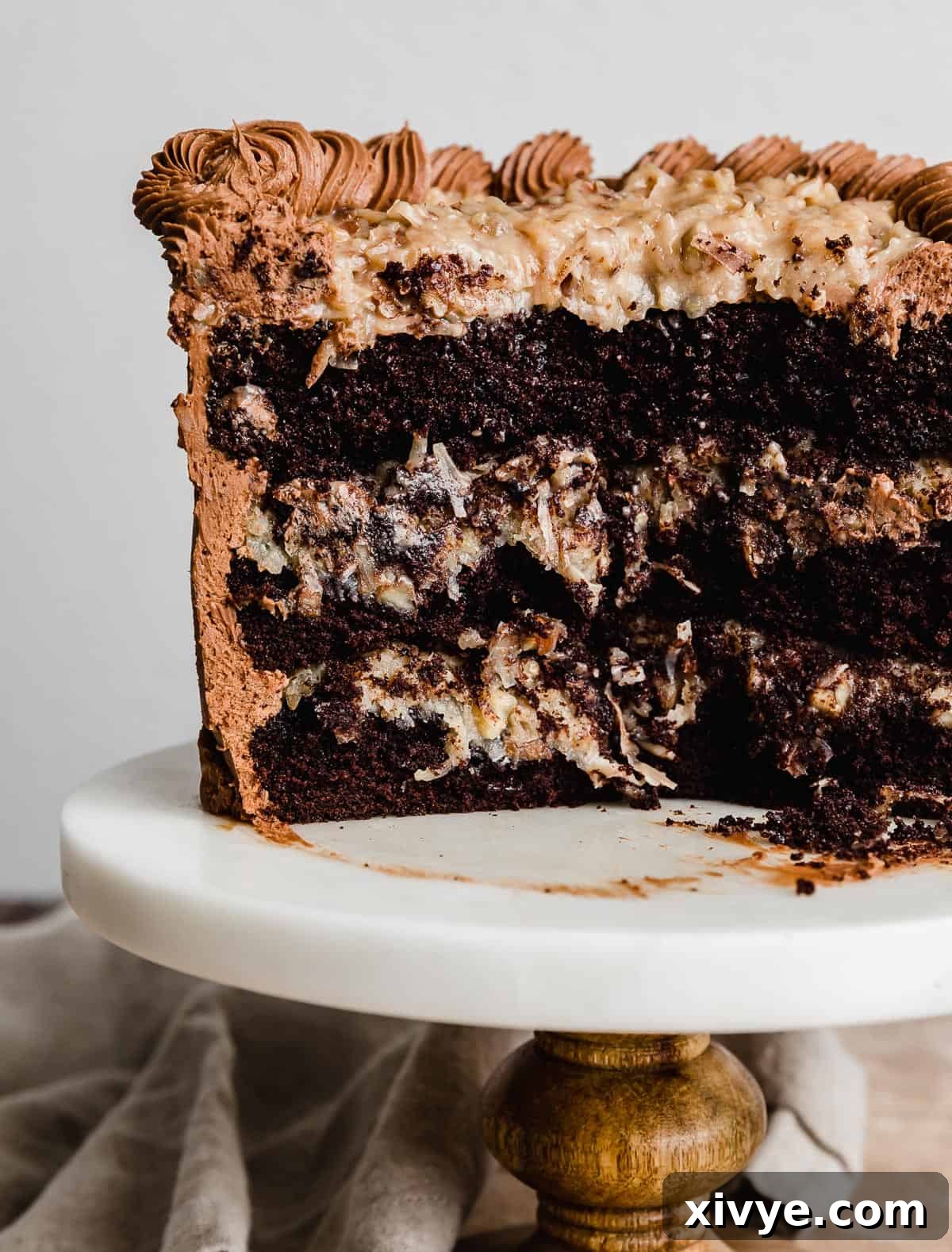
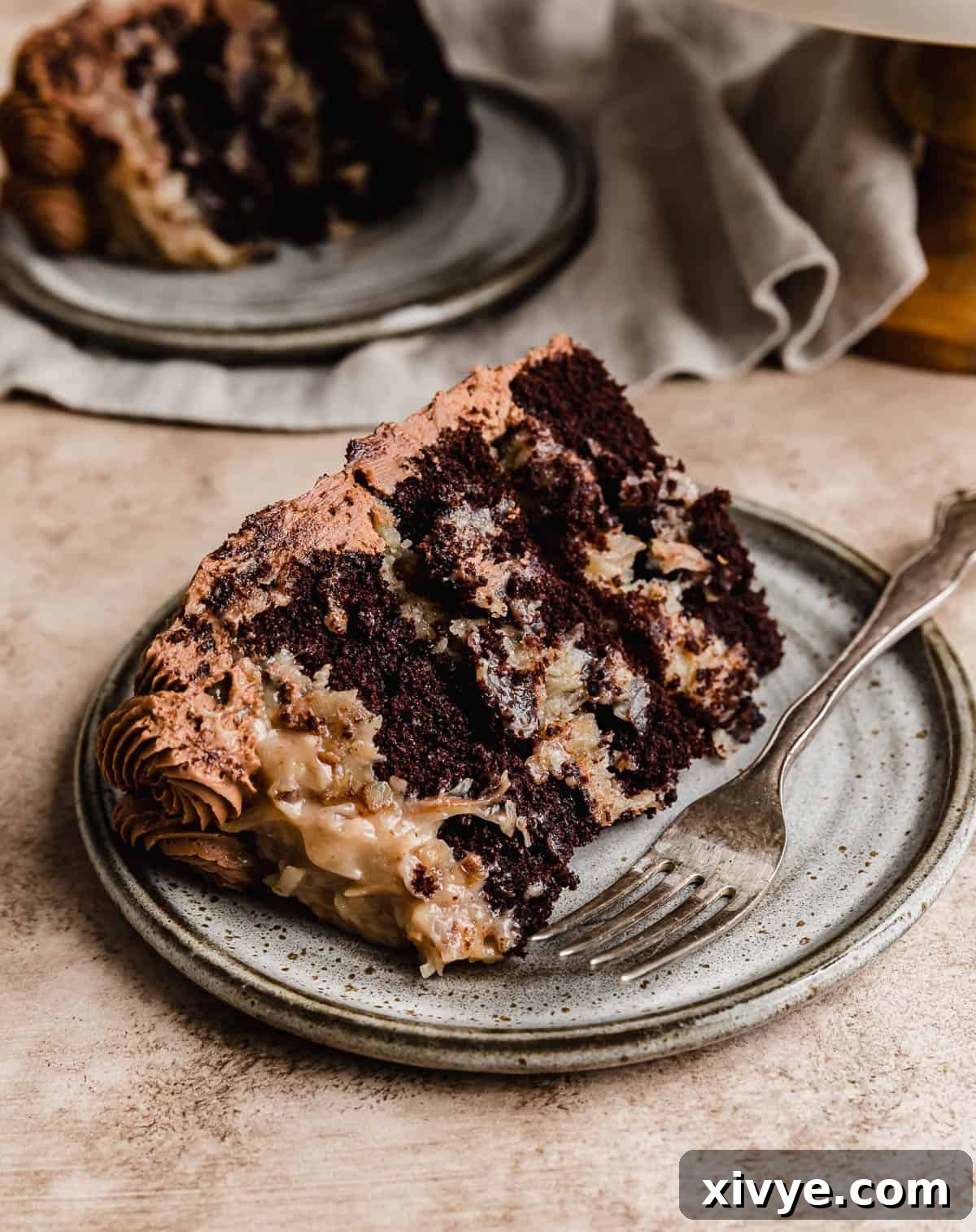
Get ready to bake a truly unforgettable dessert with our recipe for the **Perfect Small German Chocolate Cake**. This delightful creation transforms the classic German chocolate cake into a more manageable, yet equally decadent, three-layer, 6-inch masterpiece. Each moist, rich chocolate layer is generously filled with a luscious, homemade Coconut Pecan Frosting, boasting beautifully toasted pecans and sweet toasted coconut. To complete this irresistible treat, the entire cake is enveloped in a velvety smooth Chocolate Buttercream Frosting, making it a showstopper for any occasion.
Here at Salt & Baker, our passion for German chocolate cake runs deep! We’ve explored many delicious variations, from our German Chocolate Cupcakes and indulgent German Chocolate Brownies to our beloved classic 8-inch German Chocolate Cake Recipe. This specific 6-inch version, however, offers a unique charm and is crafted with slightly different ratios and techniques to ensure perfection in a smaller scale. If you share our enthusiasm for this iconic flavor profile, be sure to explore our other German chocolate-inspired desserts!
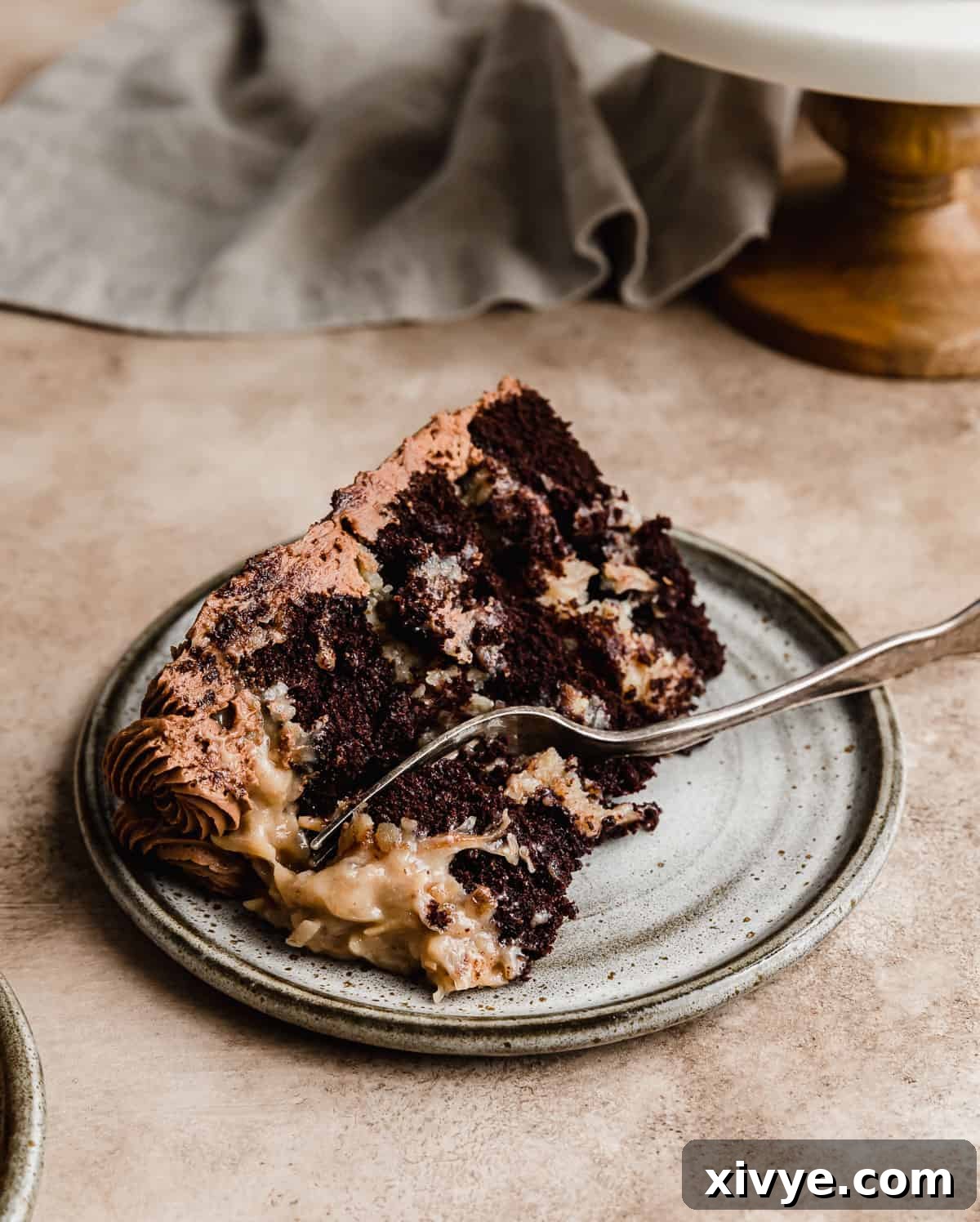
Why This Small German Chocolate Cake Recipe Is a Must-Try
This mini German chocolate cake isn’t just a smaller version of a classic; it’s thoughtfully designed to deliver maximum flavor and enjoyment with a practical approach. Here’s why this recipe will become your new favorite:
- Perfectly Portioned for Gatherings: While it may be a “mini” cake, this three-layer, 6-inch German chocolate cake is incredibly efficient. It generously serves 8 people, making it ideal for smaller dinner parties, intimate celebrations, or when you simply want to enjoy a decadent dessert without having excessive leftovers. It offers the impressive presentation of a multi-layer cake without the daunting size of a larger one.
- Unrivaled Moistness in Every Bite: Prepare for cake layers that are exceptionally tender and moist. The secret lies in a carefully balanced combination of **buttermilk** and **vegetable oil** within the batter. Buttermilk contributes to a finer crumb and a subtle tang that complements the chocolate, while vegetable oil, being liquid at room temperature, ensures a consistently moist texture throughout the cake, preventing it from drying out even after a few days.
- Deep, Rich, and Irresistible Chocolate Flavor: The chocolate intensity in this German chocolate cake is truly outstanding. We achieve this profound flavor through two key techniques:
- Dutch Process Cocoa Powder: Unlike natural cocoa powder, Dutch process cocoa is treated with an alkali to reduce its acidity, resulting in a darker color and a smoother, less bitter, more mellow chocolate flavor. This process enhances the richness, making the chocolate notes more prominent and luxurious.
- Blooming the Chocolate: This technique involves pouring **hot liquid** (in this case, boiling water) over the cocoa powder. The heat helps to “bloom” the cocoa, releasing and intensifying its volatile flavor compounds. This activation significantly deepens the chocolate profile, ensuring every crumb is infused with an exquisite, robust chocolate taste.
- My Personal Go-To Celebration Cake: With an extensive collection of delicious cake recipes on our website, it might be surprising to hear that this particular German chocolate cake holds a special place. While I love baking and enjoying all my creations throughout the year, this 6-inch German chocolate cake is the one I consistently choose to bake for my own birthday. There’s something uniquely comforting and incredibly satisfying about creating your own perfect birthday dessert, and this recipe never disappoints!
Essential Ingredients for Your Small German Chocolate Cake
Crafting the perfect German chocolate cake begins with understanding each ingredient’s role. Here’s a detailed look at what you’ll need and why it matters:
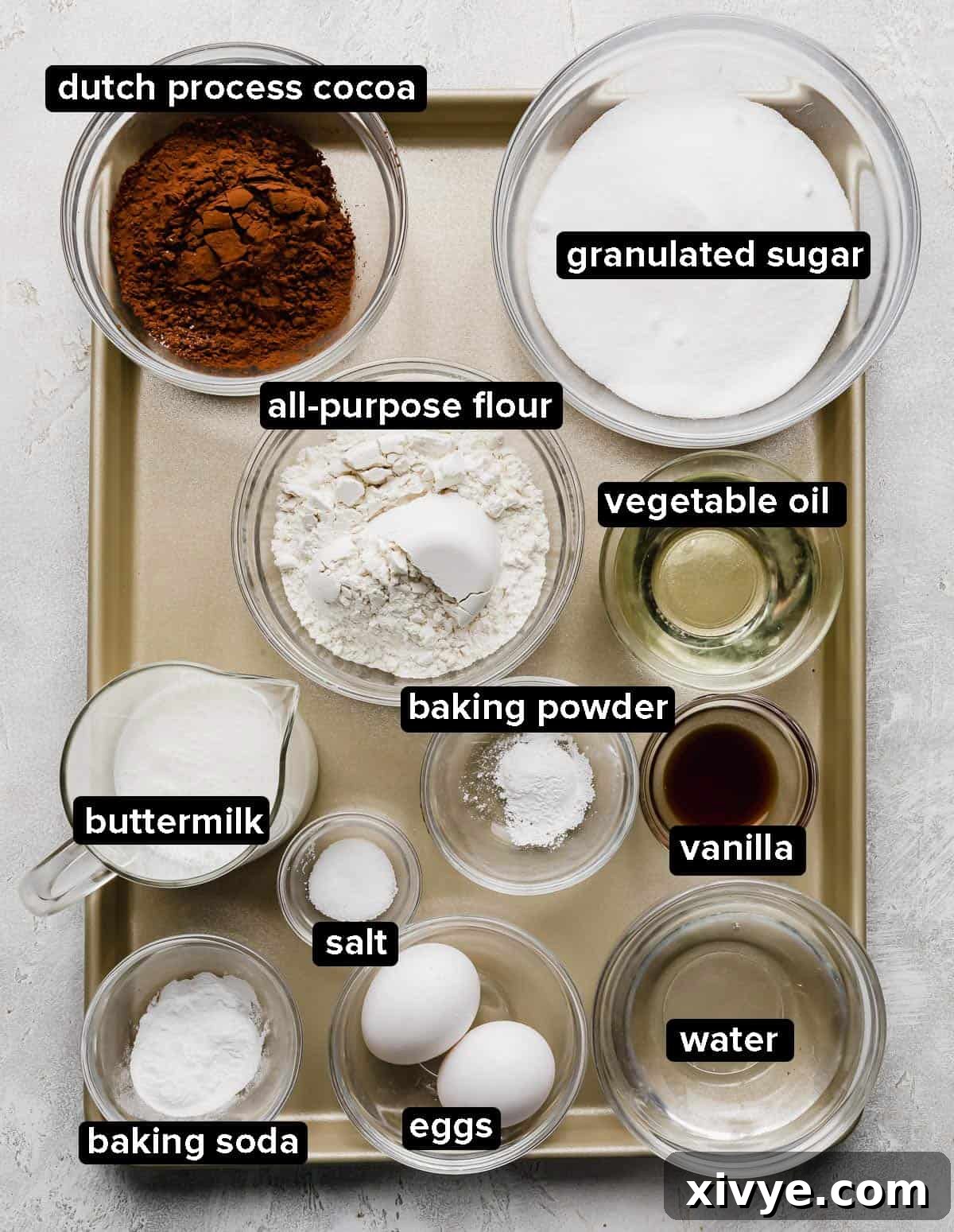
- All-Purpose Flour: This recipe is specifically developed for all-purpose flour, which provides a good balance of protein for structure without making the cake tough. If you opt for cake flour, known for its lower protein content and finer milling, you’ll need to adjust the quantity. As a general rule, use 1 cup plus 2 tablespoons of cake flour for every 1 cup of all-purpose flour to maintain the desired cake consistency and moisture.
- Dutch Process Cocoa Powder: As mentioned, this is a crucial ingredient for achieving the deep, rich chocolate flavor and dark color characteristic of this cake. It’s fundamentally different from natural unsweetened cocoa powder in its acidity and flavor profile. For a comprehensive understanding of the nuances between various cocoa powders and when to use them, refer to our in-depth Cocoa Powder Guide. Using the correct type here makes a significant difference.
- Eggs: For optimal incorporation and to achieve a lighter, more even cake structure, ensure your eggs are at room temperature. Cold eggs can stiffen the batter and prevent proper emulsification. You’ll also need additional egg yolks specifically for the rich and gooey coconut pecan filling, contributing to its creamy texture and binding properties.
- Buttermilk: Just like eggs, room temperature buttermilk integrates more smoothly into the batter. Its acidity reacts with the baking soda, aiding in the cake’s rise and contributing to its incredibly moist and tender crumb. If you don’t have buttermilk, you can make a substitute by adding 1 tablespoon of lemon juice or white vinegar to a measuring cup, then filling the rest with regular milk to ¾ cup, letting it sit for 5-10 minutes until slightly curdled.
- Boiling Water: This hot liquid is essential for “blooming” the Dutch process cocoa powder, a step that unlocks and intensifies its chocolate flavor. It must be genuinely boiling to achieve the full effect, ensuring the chocolate notes are as profound and aromatic as possible.
- Vegetable Oil: The inclusion of vegetable oil is key to the cake’s exceptional moistness. Unlike solid fats like butter, oil remains liquid at room temperature, which translates to a more tender and moist crumb in the finished cake, maintaining its delicious texture for longer.
- Heavy Cream: This versatile ingredient serves a dual purpose in this recipe. It’s crucial for achieving the luscious consistency of the coconut pecan filling (though evaporated milk can be substituted here if preferred, for a slightly different richness). Furthermore, heavy cream is indispensable for whipping up the light and fluffy chocolate buttercream frosting, providing its signature creamy texture.
- Unsalted Butter: Butter plays a vital role in both the coconut pecan filling and the chocolate buttercream frosting. For the coconut pecan frosting, you can use salted butter if it’s what you have on hand, simply omit the ½ teaspoon of added salt in the frosting recipe. However, for the delicate balance of the chocolate buttercream, it’s best to stick with unsalted butter to control the overall sodium content and flavor profile precisely. Ensure it’s slightly soft but still cool for the buttercream.
- Powdered Sugar: To guarantee a smooth, lump-free consistency in your chocolate buttercream frosting, always use sifted powdered sugar. This prevents grainy textures and ensures a silky finish, elevating the overall mouthfeel of the frosting.
- Semi-Sweet Chocolate: Using melted semi-sweet chocolate in the chocolate frosting recipe, rather than just cocoa powder, significantly enhances the depth and richness of its chocolate flavor. The real chocolate provides a more complex and decadent taste, giving the buttercream an authentic, luxurious quality that powdered cocoa alone cannot fully achieve.
Step-by-Step Guide to Baking Your Small German Chocolate Cake
Follow these detailed instructions to create a flawless three-layer German chocolate cake from scratch. Precision and patience are your best friends here!
- Prepare Your Cake Pans Meticulously: Begin by preheating your oven to 350°F (175°C). Take three 6-inch round cake pans and spray them thoroughly with a nonstick baking spray that contains flour (this provides an extra layer of nonstick insurance). For even easier release and to prevent sticking, cut out three circles of parchment paper to fit the bottoms of the pans, place them in, and spray again. This ensures your beautiful cake layers come out perfectly every time.
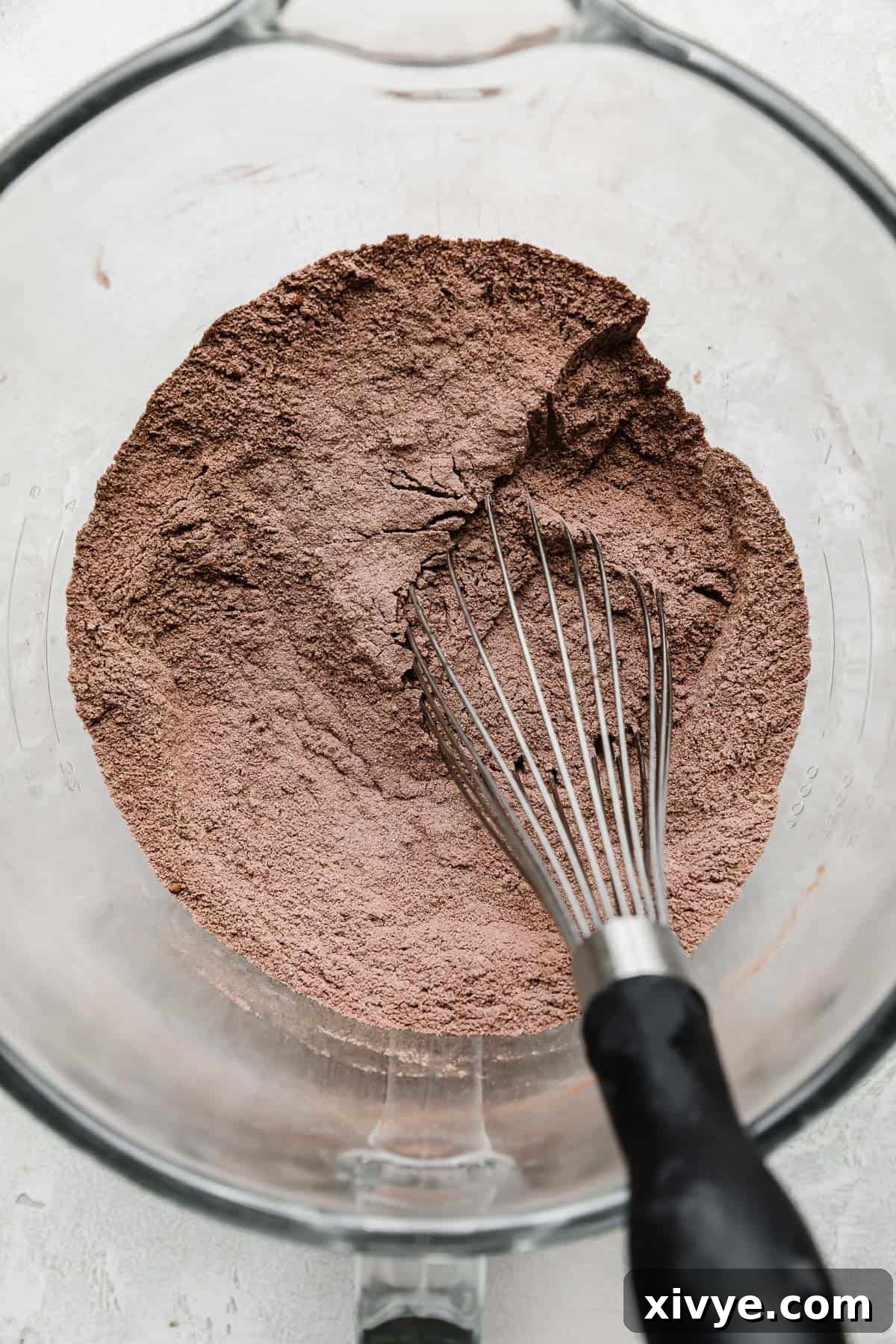
- Whisk the Dry Ingredients Together: In the large bowl of your stand mixer, fitted with the whisk attachment, combine the all-purpose flour, granulated sugar, Dutch process cocoa powder, baking soda, baking powder, and salt. Whisk these ingredients together on low speed for about 30 seconds, or until they are well combined and lump-free. This aeration helps to distribute the leavening agents evenly.
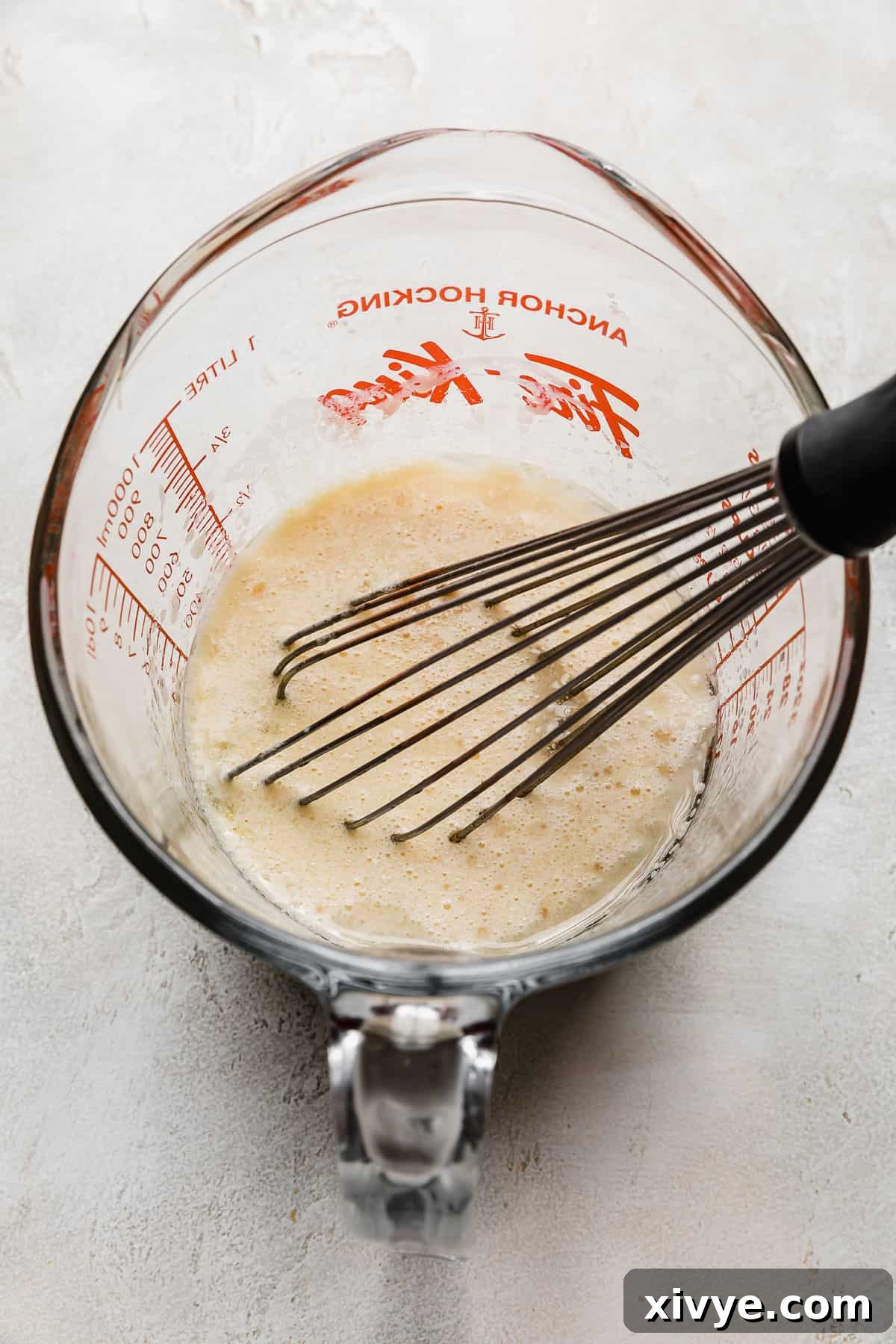
- Combine the Wet Ingredients: In a separate medium-sized bowl or a large liquid measuring cup, whisk together the room temperature egg, room temperature buttermilk, boiling water, vegetable oil, and vanilla extract. Ensure the water is truly boiling to properly bloom the cocoa powder later. Mix until just combined.
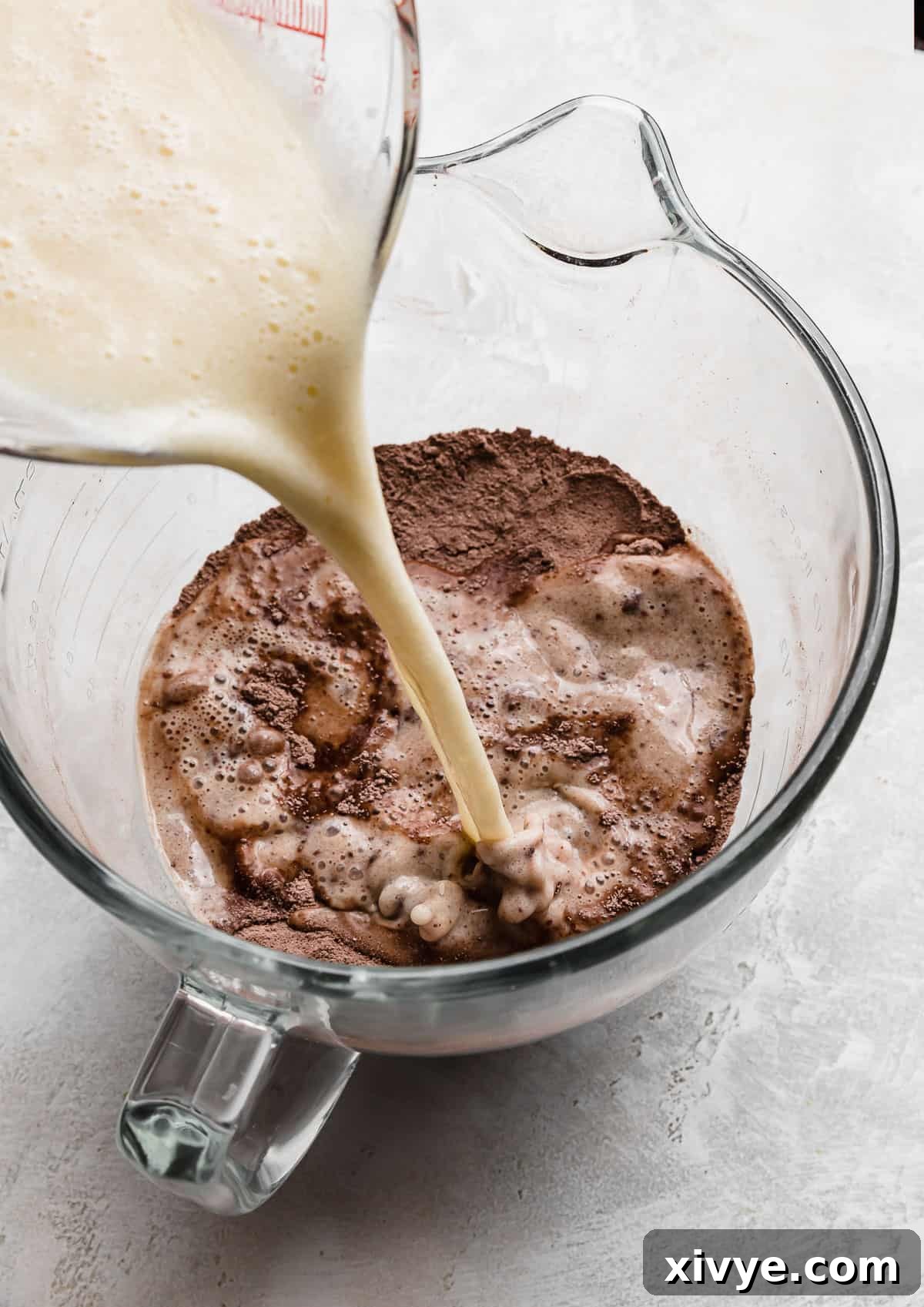
- Combine Wet and Dry & Bloom the Chocolate: Pour the wet ingredients mixture directly into the bowl with the dry ingredients. Switch to the paddle attachment on your stand mixer and mix on medium speed for exactly 2 minutes. This is where the magic of “blooming” the chocolate happens as the hot water interacts with the cocoa. After 2 minutes, stop the mixer, use a rubber spatula to scrape down the sides and bottom of the bowl thoroughly, and then mix for an additional 30 seconds to ensure everything is perfectly incorporated without overmixing.
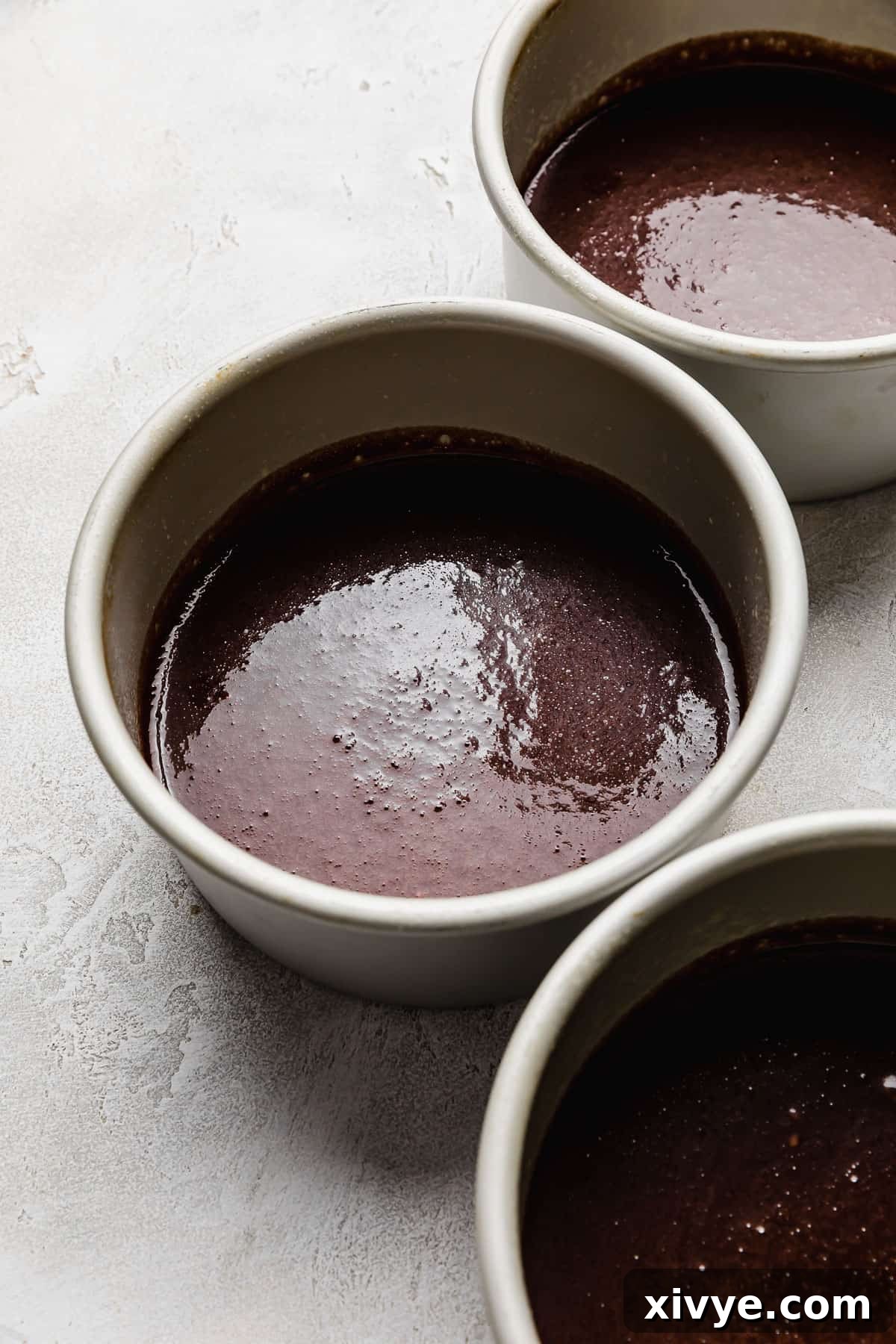
- Divide and Pour the Batter: Carefully divide the thin chocolate cake batter evenly among your three prepared 6-inch cake pans. Use a kitchen scale for precision if you have one, ensuring each pan receives an equal amount for perfectly uniform layers.
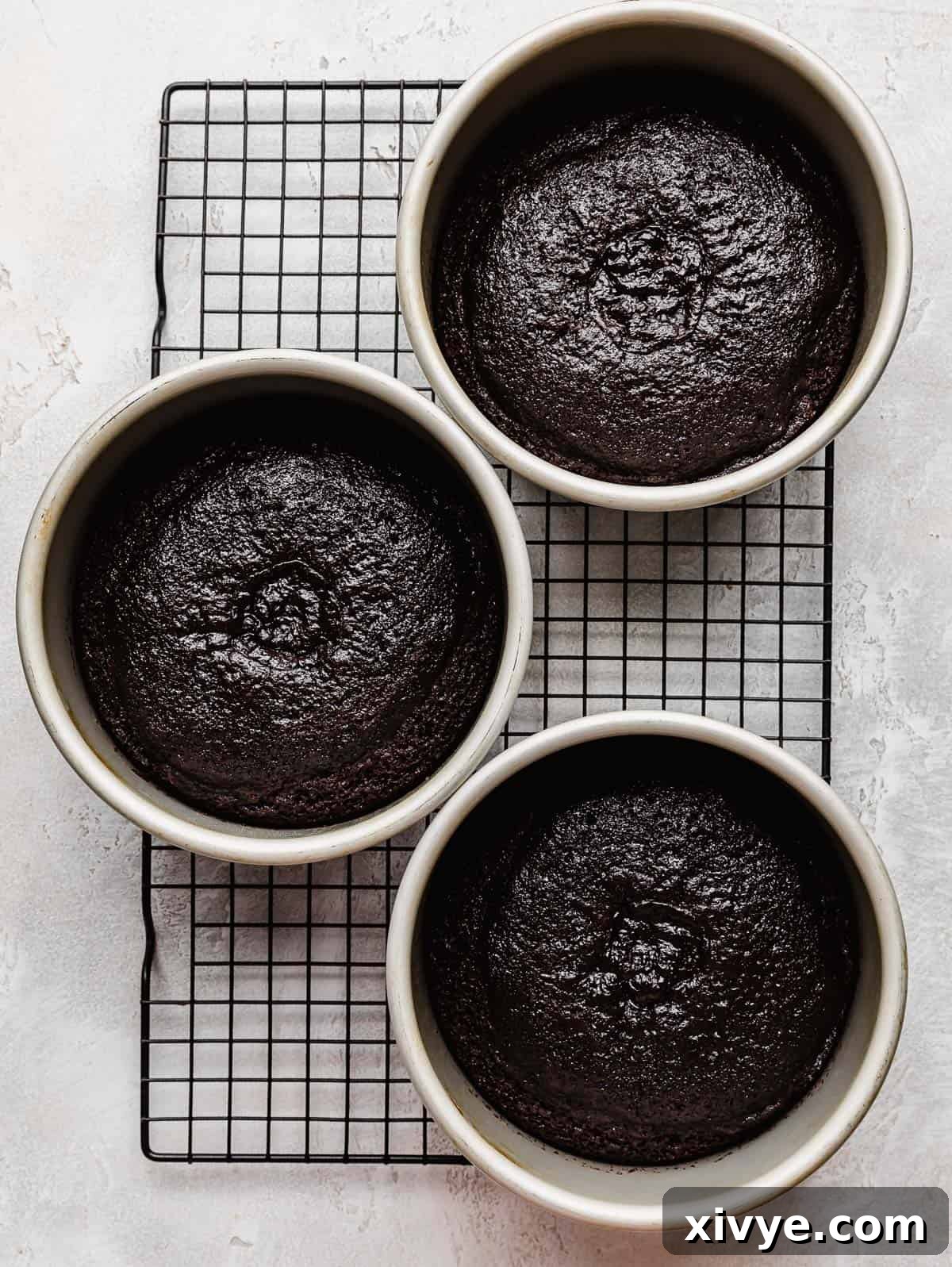
- Bake the Cake Layers to Perfection: Transfer the filled cake pans to your preheated 350°F (175°C) oven. Bake for approximately 20-22 minutes. The cake layers are done when a toothpick inserted into the center of a cake comes out with just a few moist crumbs attached, indicating it’s fully baked but still incredibly moist. Avoid overbaking, as this can lead to dry cake. Once baked, remove the pans from the oven and let the cakes cool in their pans on a wire rack for 15 minutes. This allows them to set slightly before handling. After 15 minutes, carefully invert the cakes onto the wire rack, peel off the parchment paper, and let them cool completely to room temperature. For easier frosting and assembly, wrap each cooled cake layer tightly in plastic wrap and chill them in the fridge while you prepare the frostings.
- Craft the Luscious Coconut Pecan Frosting: In a medium saucepan, whisk together the heavy cream (or evaporated milk), granulated sugar, egg yolks, and salt. Place the saucepan over medium heat, stirring occasionally to prevent scorching. Bring the mixture to a gentle, low simmer, then continue to cook for 4-5 minutes, or until the frosting base visibly thickens to a pudding-like consistency. Remove the saucepan from the heat and stir in the unsalted butter, vanilla extract, and the toasted coconut and pecans. Give it a good stir until the butter has melted and all ingredients are well combined. Don’t be alarmed if the frosting appears a bit runny at this stage; it will thicken significantly as it cools to room temperature.
- Whip Up the Smooth Chocolate Buttercream Frosting: In the bowl of a stand mixer fitted with the whisk attachment, beat the slightly soft, but still cool, unsalted butter on medium speed for 2 minutes until it’s light and creamy. Gradually add the sifted powdered sugar, one cup at a time, mixing on low speed until fully incorporated. This prevents a sugar cloud! Once all the sugar is added, mix in the vanilla extract and the melted semi-sweet chocolate. Increase the mixer speed to medium-high and whip for 1 minute until well combined. Finally, add the heavy cream and whip for another 1-2 minutes on medium-high speed until the frosting is light, fluffy, and spreadable. Scrape down the sides and bottom of the bowl with a spatula and give it a final 30-second whip to ensure complete smoothness.
- Assemble Your Masterpiece – The Cake!
- Place one chilled cake layer onto your chosen cake board or cake stand.
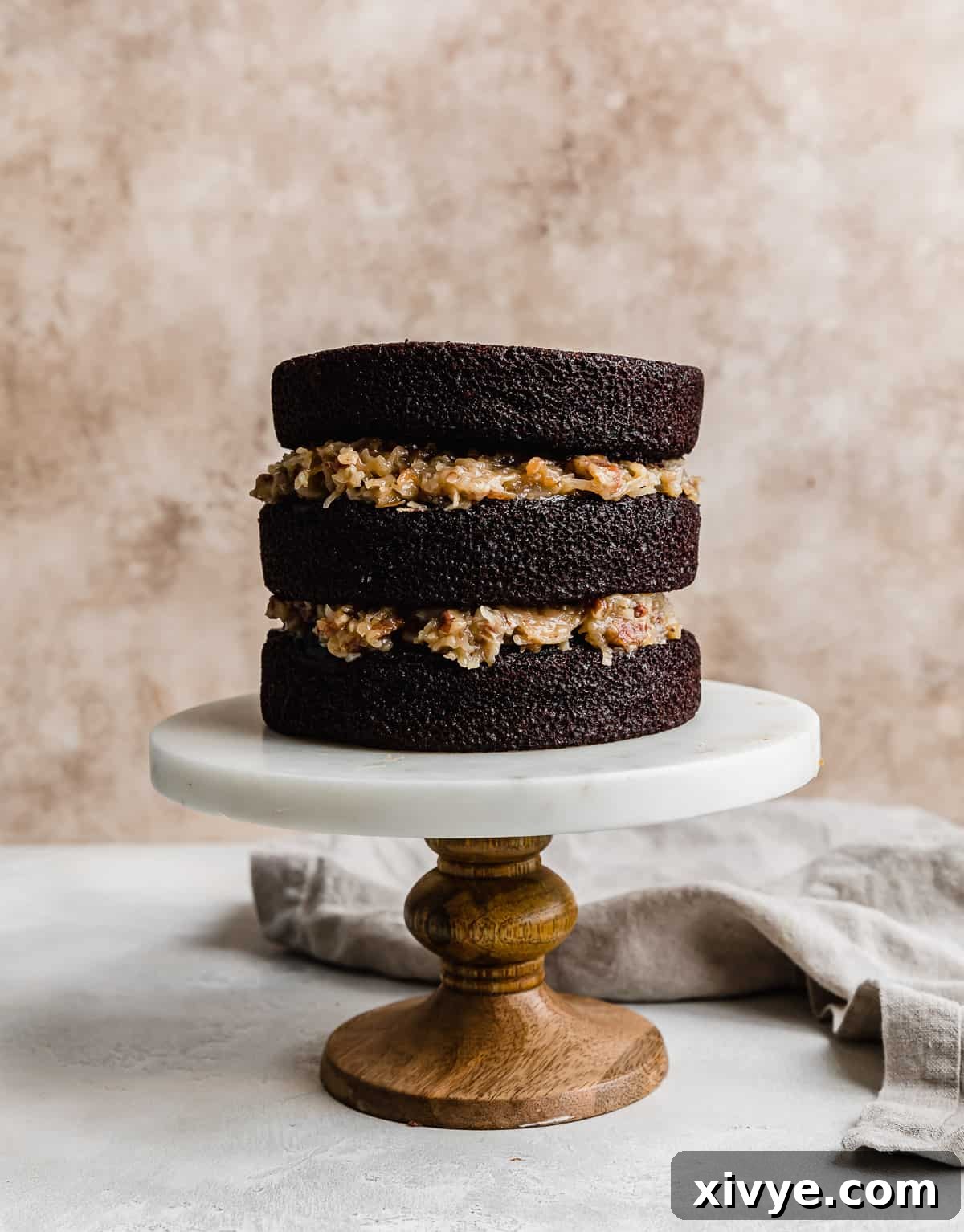
- Generously spread one-third of the cooled coconut pecan filling evenly over the top of this first layer, extending nearly to the edges.
- Carefully place the second cake layer on top of the filling. Apply another one-third of the coconut pecan filling evenly.
- Crown the cake with the final layer, placing it bottom-side up for a perfectly flat top surface.
- Now, apply a thin, even “crumb coat” of the chocolate buttercream frosting to the entire cake – top and sides. This thin layer traps any loose crumbs, creating a smooth canvas for your final frosting. Chill the cake in the fridge or freezer until this crumb coat is set (about 15 minutes in the freezer or 30 minutes in the fridge). This step is crucial for a professional-looking finish.
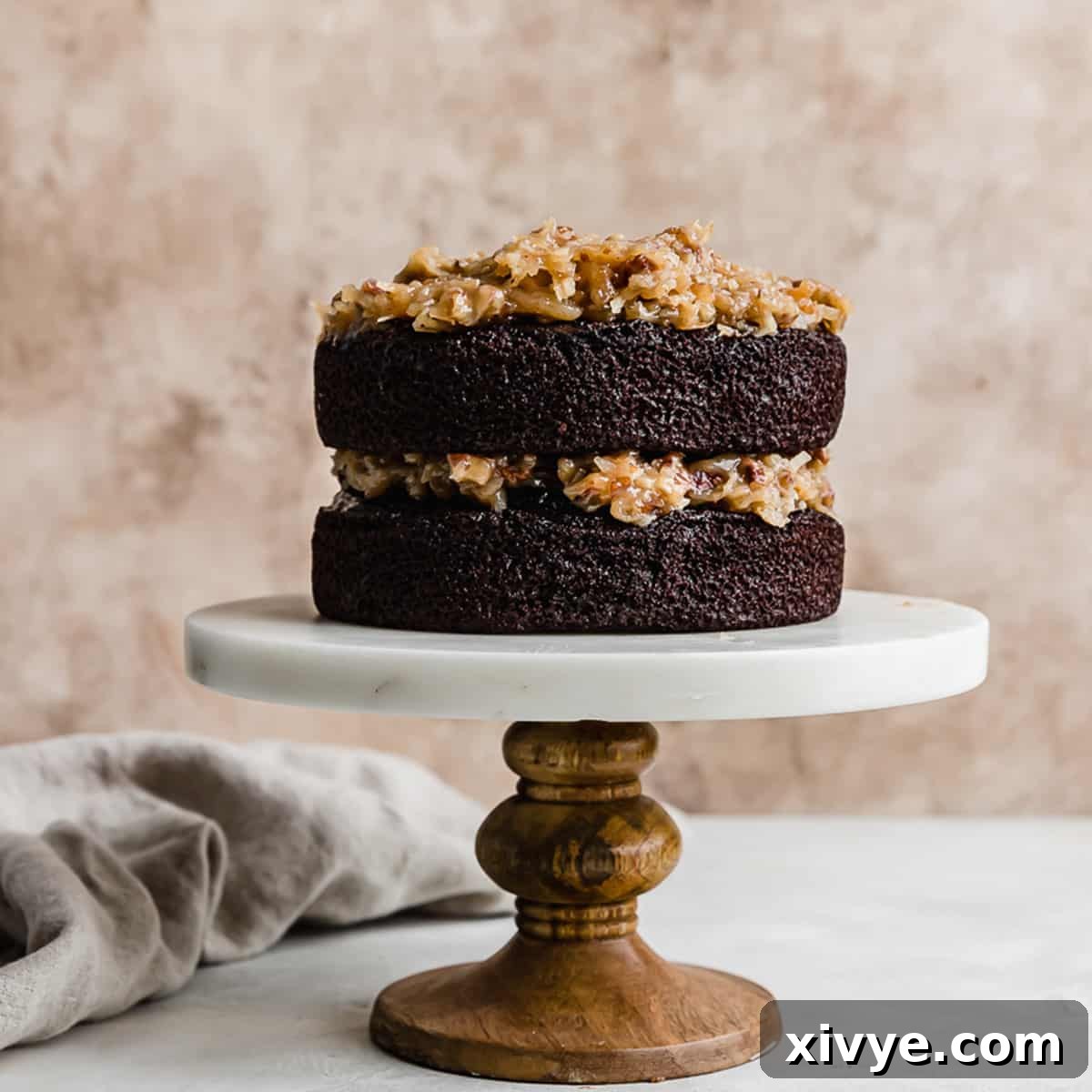
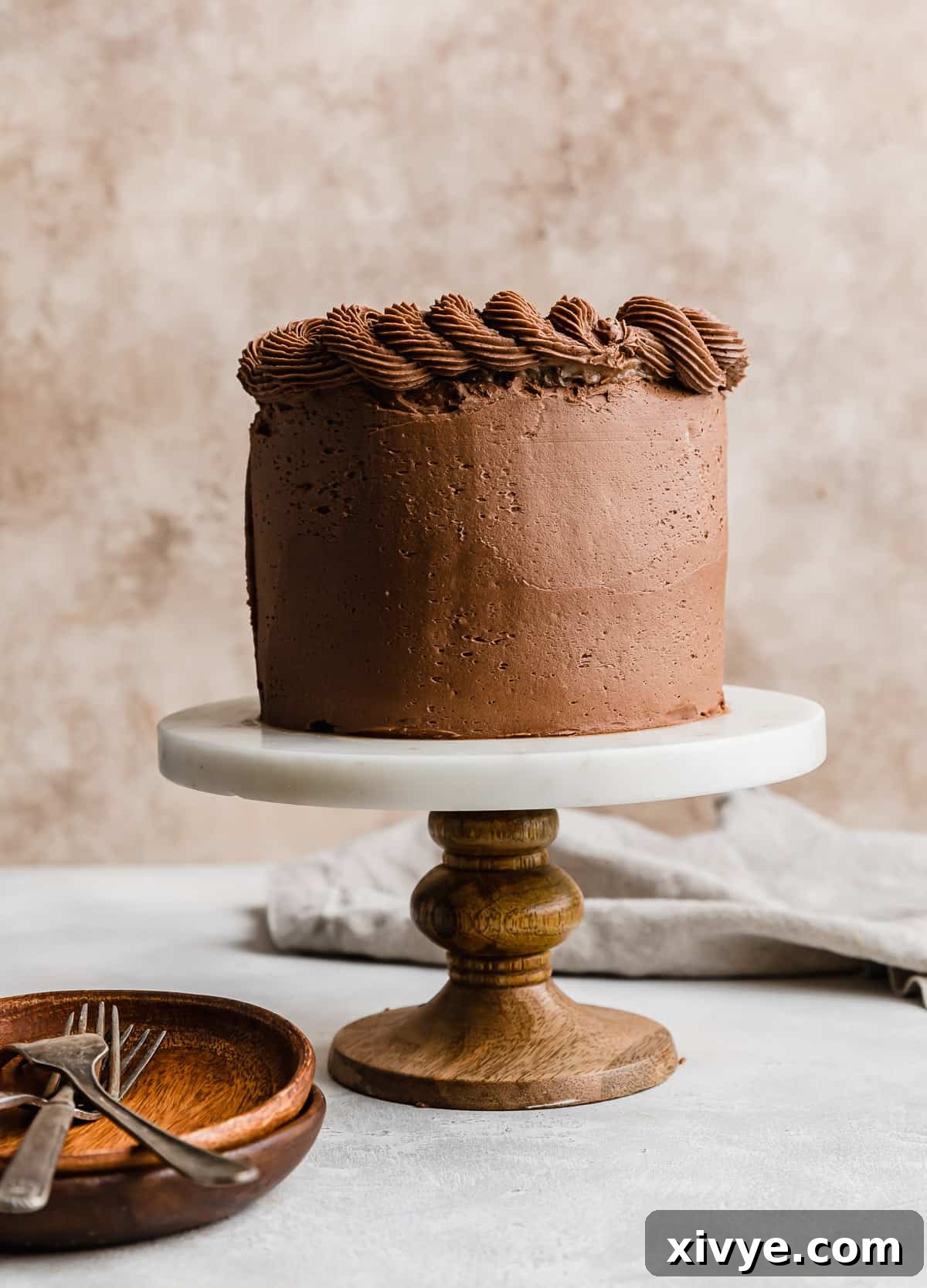
- The Grand Finale: Frost and Decorate: Once your crumb coat is firm, remove the cake from the fridge or freezer. Apply the remaining chocolate buttercream generously to fully frost the exterior of the cake, using an offset spatula or bench scraper to achieve a smooth finish. Then, gently spoon and spread the last one-third of the coconut pecan frosting over the very top of the cake. For an extra touch of elegance, you can pipe decorative borders or swirls with any remaining chocolate buttercream frosting around the top perimeter or base of the cake. Slice, serve, and savor!
Expert Tips for a Flawless German Chocolate Cake
Achieving bakery-quality results at home is easier with these valuable tips:
- Embrace Dutch Process Cocoa: This is arguably the most crucial tip for flavor. Always opt for Dutch processed cocoa powder over natural unsweetened cocoa. The difference in chemical composition (alkalized) results in a significantly deeper, richer, and less acidic chocolate flavor, which is key to the authentic taste of German chocolate cake. Using natural cocoa could also affect the cake’s rise due to different reactions with leavening agents. For a deeper dive into cocoa types, consult our comprehensive Cocoa Powder Guide.
- Avoid Overmixing the Batter: Once you’ve combined the wet and dry ingredients, mix the batter only until it’s just combined and smooth. Overmixing develops the gluten in the flour excessively, leading to a tough, dense cake texture rather than the desired light and tender crumb.
- Room Temperature Ingredients Are Essential: For optimal emulsification and a superior cake structure, ensure all your wet ingredients – especially eggs and buttermilk – are at room temperature. This allows them to blend more uniformly, creating a smoother batter that traps air effectively, leading to a better rise and a more delicate, uniform crumb.
- Sifted Powdered Sugar for Smooth Frosting: To guarantee a silky-smooth chocolate buttercream without any unpleasant lumps, always sift your powdered sugar before adding it to the butter. This simple step makes a world of difference in the final texture of your frosting.
- Butter Temperature for Buttercream: For the best buttercream, your unsalted butter should be slightly soft to the touch but still cool. If it’s too warm and melted, the frosting might become greasy or fail to whip up properly. If it’s too cold, it won’t cream smoothly with the sugar.
- Don’t Rush Cooling: Allowing your cake layers to cool completely on a wire rack, and then chilling them in plastic wrap, is vital. Warm cakes are fragile and prone to tearing when handled, and they will melt your frosting. Chilling makes them much easier to level, stack, and frost cleanly.
- Toast Your Nuts and Coconut: For the most intense flavor in your coconut pecan frosting, don’t skip toasting the pecans and shredded coconut. A quick toast in a dry pan or oven brings out their natural oils, deepening their flavor and adding an incredible aromatic dimension to the filling.
Make Ahead, Storing, and Freezing Your German Chocolate Cake
Planning ahead makes baking less stressful, and proper storage ensures your delicious cake stays fresh. Here’s how to manage your German chocolate cake:
- Cake Layers (Make Ahead & Storage): Once your cake layers are completely cooled, wrap each layer tightly in plastic wrap. They can be stored in the fridge for 1-2 days, allowing you to break up the baking process.
- Cake Layers (Freezing): For longer storage, wrap the plastic-wrapped cake layers again in aluminum foil to prevent freezer burn. They can be frozen for up to 1 month. Thaw them overnight in the refrigerator before unwrapping, frosting, and serving.
- Frostings (Make Ahead & Storage): Both the coconut pecan filling and the chocolate buttercream frosting can be made in advance. Store each in an airtight container in the fridge for up to 1 week. Before frosting the cake, let them sit at room temperature for about 1 hour to soften slightly and become spreadable again (the buttercream may need a quick whip to regain its fluffiness).
- Assembled Cake (Storage): An assembled and frosted German chocolate cake should be stored in an airtight cake carrier or under a cake dome in the refrigerator for up to 3-4 days. Allow slices to come to room temperature for about 30 minutes before serving for the best flavor and texture.
- Assembled Cake (Freezing): If you need to freeze the entire frosted cake, ensure it’s well-chilled first. Then, tightly wrap the entire cake in several layers of plastic wrap, followed by a layer of aluminum foil. Freeze for up to 1 month. Thaw in the refrigerator overnight.
For even more comprehensive guidance on preserving your baked goods, be sure to check out our detailed How to Store and Freeze Cakes guide!
Frequently Asked Questions About This German Chocolate Cake
While you technically *can* use natural unsweetened cocoa powder, I **highly recommend** sticking with Dutch processed cocoa for this German chocolate cake recipe. The difference is more significant than you might think. Dutch process cocoa provides a richer, darker chocolate flavor and a deeper color, which is characteristic of traditional German chocolate cake. It also reacts differently with leavening agents. Using natural cocoa will result in a lighter color and a more acidic, less profound chocolate taste. For a detailed explanation of these differences and how they impact your baking, please refer to our dedicated Guide on Cocoa Powders.
Yes, it is! The temperature of the water is critical for the “blooming” process. Pouring **boiling hot water** over the Dutch process cocoa powder helps to activate and intensely deepen its chocolate flavor. Lukewarm or merely hot water won’t achieve the same potent flavor release. So, ensure your water is truly at a rolling boil before adding it to the cocoa to unlock the full potential of your chocolate cake.
Absolutely, don’t worry! It’s very common for the coconut pecan frosting to appear quite runny immediately after it’s cooked and removed from the heat. This is completely normal. The mixture is designed to thicken significantly as it cools down to room temperature. As the butter firms up and the liquid evaporates, it will achieve that desirable gooey, thick consistency perfect for filling your cake layers. Just give it time to cool properly.
The defining characteristic that sets German chocolate cake apart from a regular chocolate cake is its distinctive **coconut pecan frosting/filling**. While both cakes feature chocolate layers, a true German chocolate cake is characterized by its signature gooey, custard-like filling made with evaporated milk (or heavy cream), egg yolks, coconut, and pecans, which is spread between the layers. Regular chocolate cakes typically feature different types of frostings, such as standard chocolate buttercream, ganache, or cream cheese frosting, and do not include the unique coconut pecan element.
Using 6-inch cake pans creates a taller, more elegant, and perfectly portioned cake, ideal for smaller gatherings of 6-8 people. An 8-inch cake can often yield too many servings for intimate occasions, leading to leftovers. The smaller diameter also makes it easier to handle, decorate, and store, while still delivering the impressive visual appeal of a multi-layered dessert. It’s the ideal size when you want all the deliciousness of a German chocolate cake without the commitment of a large one.
While this recipe is written for all-purpose flour, you can experiment with a high-quality 1:1 gluten-free baking flour blend that contains xanthan gum. Be aware that the texture might vary slightly, and you might need to adjust baking times. Always follow the manufacturer’s recommendations for gluten-free flour substitutions. For best results, ensure your chosen GF blend is suitable for cakes.
Explore More Delicious 6-Inch Cake Recipes
If you love the convenience and charm of baking smaller cakes, we have a wonderful collection for you to discover. These 6-inch recipes are perfect for any celebration or simply when you crave a homemade treat without a large commitment:
- Cozy & Aromatic Spice Cake
- Delightful Smash Cake Recipe (Perfect for First Birthdays!)
- Irresistible Coconut Cookies and Cream Cake
- Indulgent 7 Layer Bar Cake
We’d absolutely love to hear about your experience with this recipe! Did you make this Small German Chocolate Cake? Please consider leaving a rating and review right here on the blog post, or scroll down to the recipe card below to share your thoughts. Your feedback is invaluable!
Stay connected with us for more delicious recipes, baking tips, and behind-the-scenes fun! Follow us on Instagram, TikTok, YouTube, Facebook, and Pinterest.
Print
Save
Saved!
Review
Small German Chocolate Cake Recipe

Whitney Wright
30 minutes
20 minutes
30 minutes
1 hour
20 minutes
8
servings
Ingredients
Cake
- 1 ¼ cups + ½ Tablespoon all-purpose flour
- 1 ½ cups granulated sugar
- ½ cup Dutch process cocoa powder
- ½ tablespoon baking soda
- ¾ teaspoon baking powder
- ¾ teaspoon salt
- 2 large eggs – at room temperature
- ¾ cup buttermilk – at room temperature
- ¾ cup boiling water
- ⅓ cup + 1 tablespoon vegetable oil
- 2 teaspoons vanilla extract
Coconut Pecan Frosting
- 1 cup heavy cream – or evaporated milk
- 1 cup granulated sugar
- 3 egg yolks
- ½ teaspoon salt
- ½ cup unsalted butter – can use salted, just eliminate the ½ tsp salt in the frosting
- 1 teaspoon vanilla extract
- 1 cup pecans – toasted and finely chopped
- 2 cups sweetened shredded coconut – toasted
Chocolate Frosting
- ¾ cup unsalted butter – room temperature but still slightly chilled
- 2 cups powdered sugar
- 3 oz semi sweet chocolate – finely chopped and melted
- ½ teaspoon vanilla extract
- ½ tablespoon heavy cream – if needed
Equipment
-
3 6 inch round cake pans
-
Kitchen Aid stand mixer
-
Measuring cups
Instructions
Cake
-
Preheat oven to 350°F (175°C). Spray 3 — 6-inch round cake pans with nonstick spray that contains flour. For added security, line the bottoms with parchment paper and spray again.
-
In the bowl of an electric mixer (with the whisk attachment), combine and whisk the flour, sugar, Dutch process cocoa powder, baking soda, baking powder, and salt until well blended.
-
In a separate large liquid measuring cup, whisk together the room temperature egg, buttermilk, boiling water, vegetable oil, and vanilla extract until smooth.
-
Pour the wet ingredients into the dry ingredients. Using the paddle attachment, mix on medium speed for 2 minutes. Scrape down the sides of the bowl with a spatula, then mix for another 30 seconds to ensure everything is fully combined without overmixing.
-
Evenly divide the thin batter into the 3 prepared 6-inch cake pans.
-
Bake for 20-22 minutes, or until a toothpick inserted into the center of a cake comes out with a few moist crumbs.
-
Remove from the oven and let the cakes cool in their pans on a wire rack for 15 minutes. After 15 minutes, carefully invert them onto the wire rack to cool completely to room temperature. Once cool, wrap each cake layer tightly in plastic wrap and chill in the fridge for at least 30 minutes (or until ready to frost).
Coconut Pecan Frosting
-
In a medium saucepan, whisk together the heavy cream, sugar, egg yolks, and salt. Cook over medium heat, stirring occasionally, until the mixture comes to a low simmer and thickens to a pudding-like consistency (about 4-5 minutes). Remove from heat and stir in the butter, vanilla, toasted coconut, and toasted pecans until well combined. Set aside to cool completely to room temperature; it will thicken significantly as it cools.
Chocolate Frosting
-
In the bowl of a stand mixer (with the whisk attachment), beat the slightly cool unsalted butter on medium speed for 2 minutes until light and creamy. Reduce speed to low and gradually add the sifted powdered sugar, one cup at a time, mixing until fully incorporated. Mix in the vanilla extract and melted semi-sweet chocolate. Increase speed to medium-high and whip for 1 minute. Add the heavy cream and whip for another 1-2 minutes on medium-high speed until the frosting is light, fluffy, and spreadable. Scrape down the sides of the bowl and whip for a final 30 seconds.
Assembly
-
Place one chilled cake layer on your chosen cake plate or stand. Spread ⅓ of the cooled coconut pecan frosting evenly over the top, extending to the edges. Place the second cake layer on top.
-
Spread another ⅓ of the coconut pecan frosting evenly over the second layer. Carefully place the final cake layer on top, bottom-side up, for a flat surface.
-
Apply a thin crumb coat of the chocolate buttercream frosting to the entire cake (top and sides) to trap any loose crumbs. Chill in the fridge or freezer for 15-30 minutes until firm.
-
Remove the cake once the crumb coat is set. Fully frost the exterior of the cake with the remaining chocolate buttercream until smooth. Finally, spoon the last ⅓ of the coconut pecan frosting onto the top of the cake, spreading it gently. Decorate with any leftover chocolate buttercream piping if desired. Slice and enjoy your homemade German Chocolate Cake!
Notes
Alternatively, wrapped cake layers can be kept at room temperature for 1 day.
To freeze cake layers, wrap them first in plastic wrap, then in aluminum foil, and freeze for up to 1 month. Thaw in the fridge overnight before frosting and serving.
Both the coconut pecan frosting and chocolate buttercream can be made ahead. Store in airtight containers in the fridge for up to 1 week. Allow frosting to sit at room temperature for 1 hour (and re-whip buttercream if needed) before frosting the cake.
Nutrition
Carbohydrates: 116g (39%)
Protein: 8g (16%)
Fat: 77g (118%)
Saturated Fat: 39g (195%)
Polyunsaturated Fat: 12g
Monounsaturated Fat: 22g
Trans Fat: 1g
Cholesterol: 241mg (80%)
Sodium: 693mg (29%)
Potassium: 398mg (11%)
Fiber: 5g (20%)
Sugar: 107g (119%)
Vitamin A: 1552IU (31%)
Vitamin C: 1mg (1%)
Calcium: 114mg (11%)
Iron: 3mg (17%)
Dessert
American, German