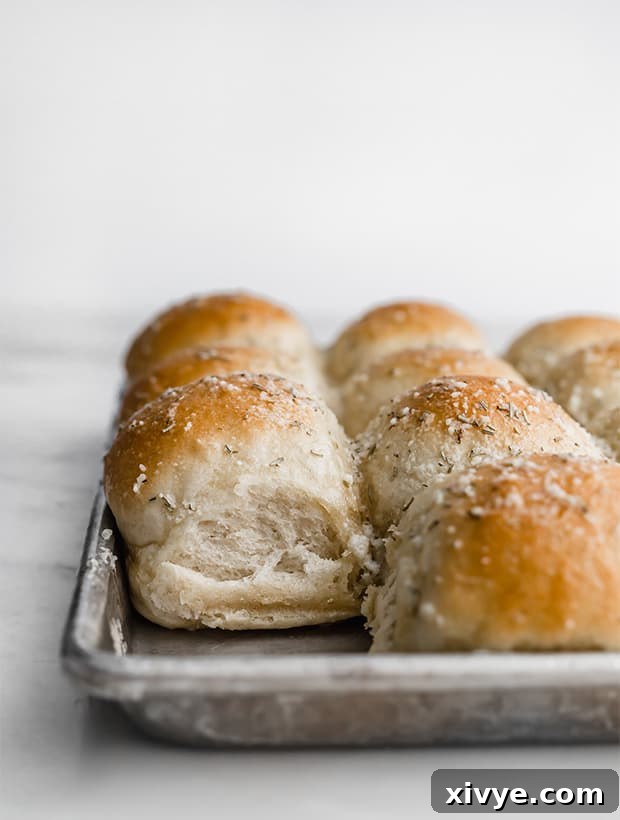
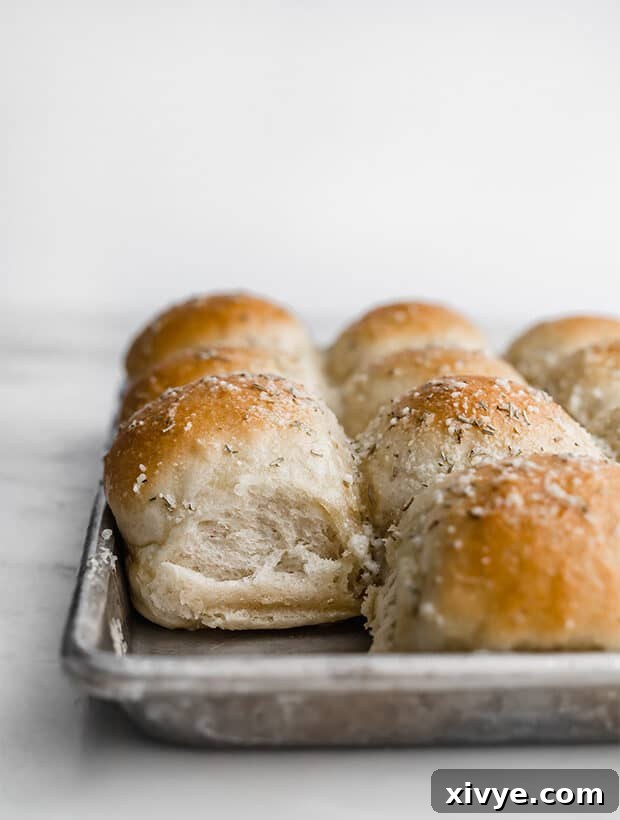
Experience a burst of unparalleled flavor with every bite of these incredible Rosemary Garlic and Parmesan Dinner Rolls. Perfectly soft and wonderfully fluffy, each roll is generously crowned with a rich, aromatic butter sauce infused with fresh rosemary, pungent garlic, and savory Parmesan cheese. This isn’t just a side dish; it’s a star that promises to elevate any meal from ordinary to extraordinary. You might find yourself wanting to bake a double batch – they disappear that fast!
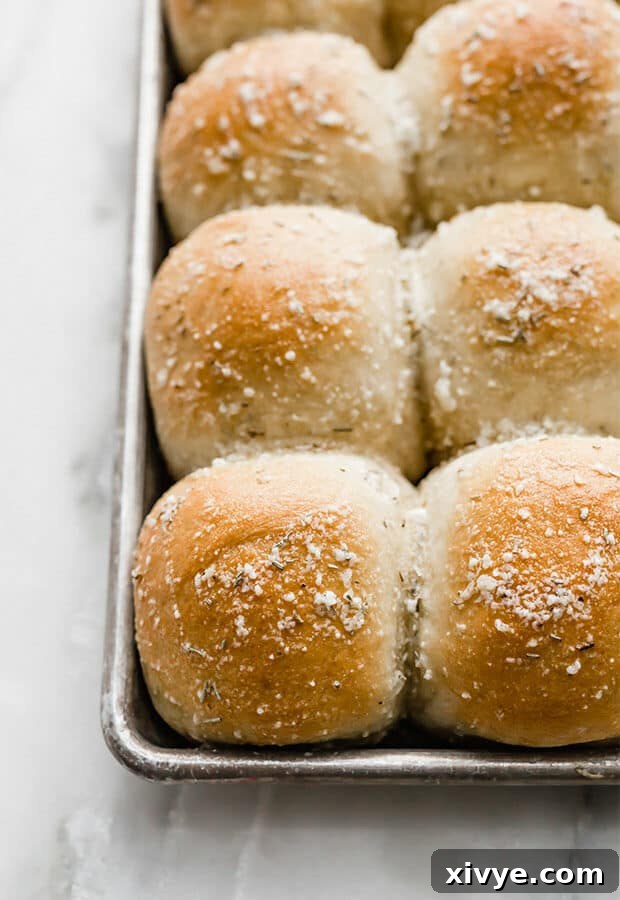
There’s something truly special about homemade bread, and these Rosemary Garlic and Parmesan Dinner Rolls are no exception. Imagine the warm, comforting aroma filling your kitchen as these golden beauties bake to perfection. They possess an irresistible charm that makes them a perfect addition to any dinner spread, particularly for festive occasions like Thanksgiving. Their robust rosemary notes beautifully complement traditional holiday fare such as roasted turkey, savory stuffing, and creamy mashed potatoes.
This recipe isn’t just about making rolls; it’s about crafting an experience. While I do offer a classic homemade dinner roll recipe for those seeking a foundational guide, these rosemary-infused delights encourage you to explore new dimensions of flavor. They invite you to experiment with unique ingredient combinations that tantalize your taste buds and leave a lasting impression.
Before we dive into the creation of that incredible rosemary garlic Parmesan butter sauce – which truly defines these rolls – let’s focus on the essential first step: mastering the perfectly soft and airy dinner roll base. The foundation is key to absorbing all that magnificent flavor!
Crafting the Perfect Fluffy Dinner Rolls
Starting your journey to perfect dinner rolls begins with activating the yeast. In a spacious bowl, ideally the bowl of your stand mixer, combine warm water, granulated sugar, and active dry yeast. This initial mixture is crucial for giving your rolls their signature light and airy texture. Allow this combination to rest undisturbed for about 10 minutes. During this time, the yeast should become visibly bubbly and foamy, a clear sign that it is active and ready to work its magic. This “bloom” test is a simple yet vital step to ensure your dough will rise successfully.
Once your yeast is bubbling with life, it’s time to introduce the remaining core ingredients: oil, all-purpose flour, and a touch of salt. Add these to the bowl and begin mixing. If you’re using a stand mixer, attach the dough hook and let it knead the mixture for 5-8 minutes. For those who prefer the tactile experience of baking, these rolls can absolutely be made by hand; just be prepared for a good arm workout and some dedicated kneading time. The goal is to achieve a dough that consistently pulls away from the sides of the bowl, indicating proper development of gluten.
Pay close attention to the dough’s consistency. It should be soft, pliable, and slightly tacky to the touch, but not overly sticky. If your dough appears too wet or stubbornly clings to the bowl, add flour one tablespoon at a time. Mix thoroughly after each addition until you reach that ideal soft-yet-tacky texture. This careful balance ensures the rolls will be tender on the inside with a beautiful structure.
The Essential Rising Process
After your dough is perfectly kneaded, it’s time for its first rise, a critical step for developing both flavor and texture. Lightly grease a large, clean bowl with a teaspoon of vegetable oil. Use your hands to thoroughly coat the entire interior surface of the bowl. Place your dough ball into this oiled bowl, then gently turn it over once to ensure the top of the dough is also lightly covered in oil. This light coating prevents the dough from drying out and sticking to the bowl as it expands.
Cover the bowl snugly with plastic wrap or a clean kitchen towel. Find a warm, draft-free spot in your kitchen – perhaps near a sunny window, on top of a warm oven, or even in a turned-off oven with the light on. Allow the dough to rise in this cozy environment until it has visibly doubled in size, which typically takes about 1 hour. This unhurried rise allows the yeast to ferment, creating air pockets that contribute to the rolls’ signature fluffiness and developing deeper, more complex flavors within the dough.
Shaping and Second Rise for Unmatched Softness
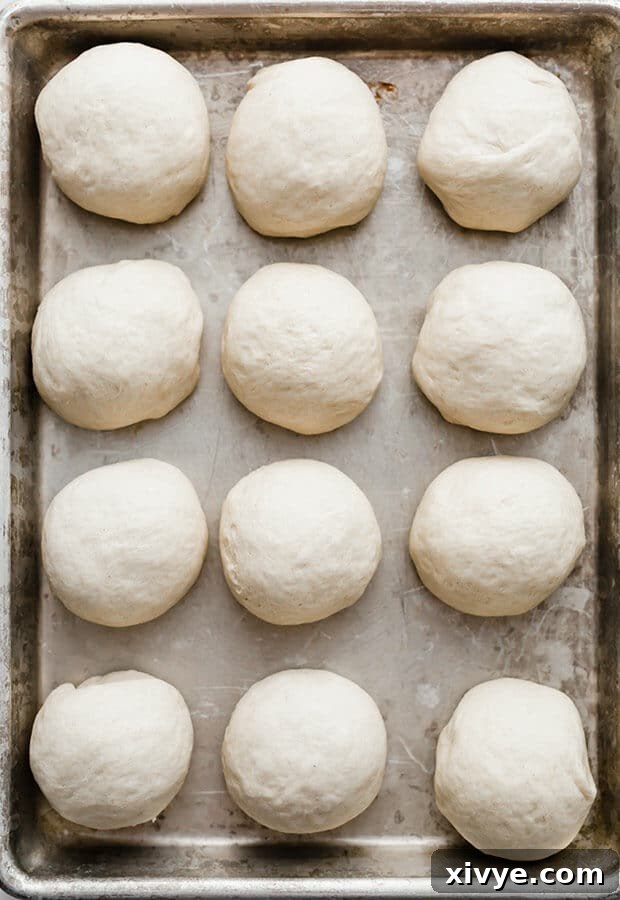
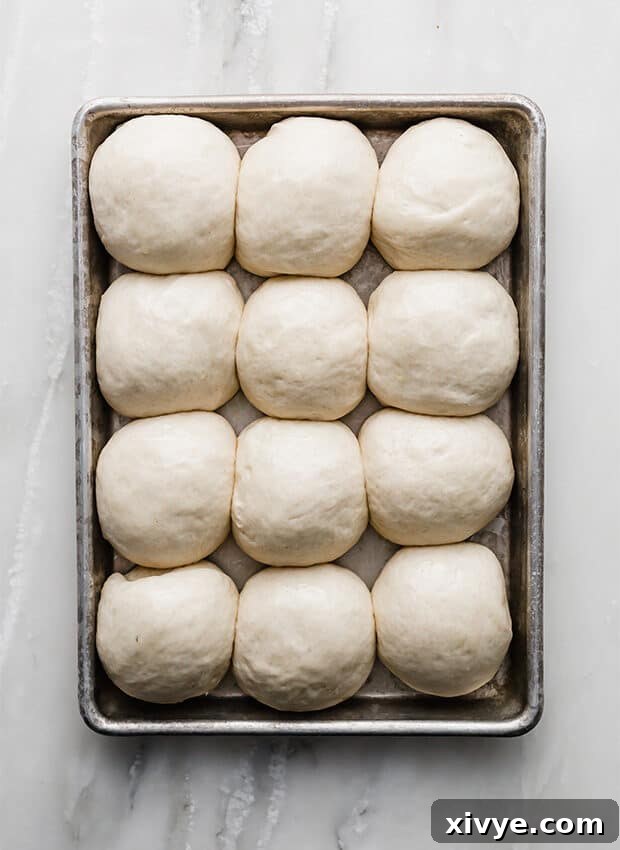
Once your dough has majestically doubled in size, it’s time to gently deflate it by “punching it down.” This action releases the air, redistributes the yeast, and prepares the dough for shaping. Carefully turn the dough out onto a lightly floured surface. Divide the dough into 12 equal portions. For the most aesthetically pleasing and evenly baked rolls, try to make each portion as uniform in size and weight as possible. Shape each piece into a smooth, round ball. This can be done by tucking the edges under to create tension on the top surface, or by rolling the dough between your palm and the work surface in a circular motion.
Arrange the shaped rolls on a lightly greased 13″ x 9″ baking sheet. A few quick spritzes of cooking spray work perfectly to prevent sticking. Ensure there’s a small space, about ½ to 1 inch, between each roll. This allows them room to expand during their second rise and baking, resulting in soft, pillowy sides that gently touch. Cover the rolls again and let them rise for another 30 minutes in a warm, draft-free spot. This second rise, often called “proofing,” is essential for achieving the incredibly tender texture that homemade dinner rolls are known for.
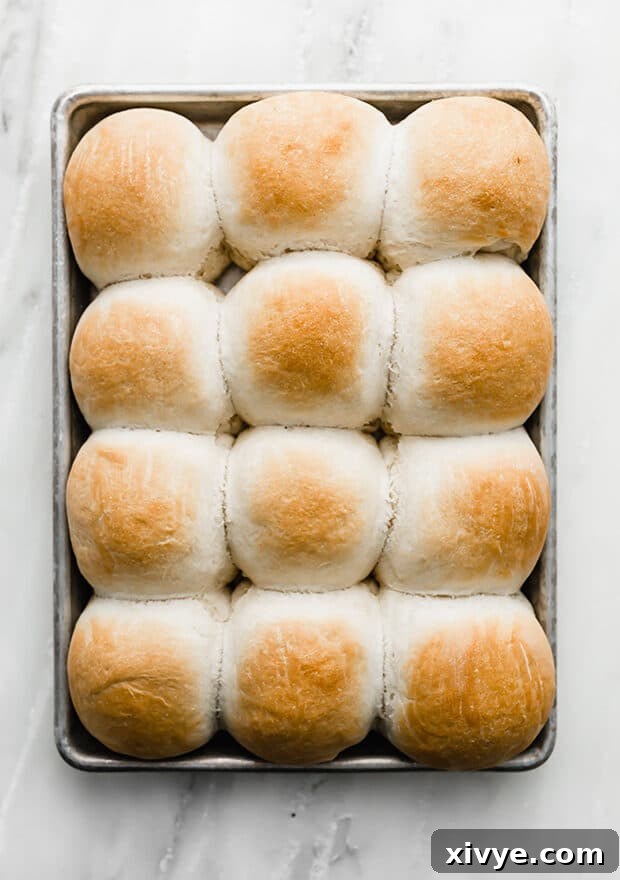
As the rolls complete their second rise, preheat your oven to 375°F (190°C). Just before baking, gently brush the tops of the rolls with a small amount of plain melted butter. This not only aids in achieving a beautiful golden-brown crust but also adds a subtle richness. Bake the rolls for 20-25 minutes, or until they are beautifully golden brown on top and thoroughly baked through. You can lightly tap on a roll to hear a hollow sound, indicating it’s done. The aroma filling your kitchen will be absolutely divine!
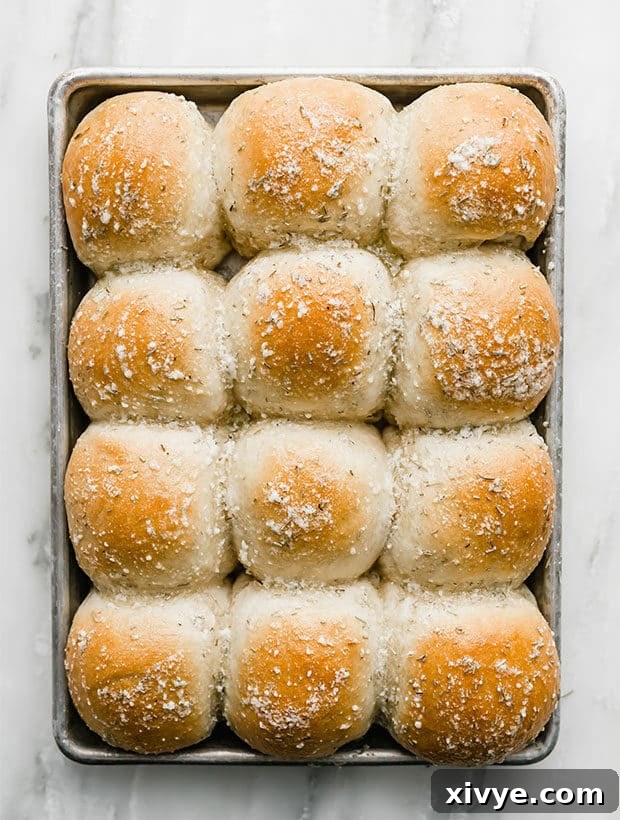
The moment these golden gems emerge from the oven, still warm and fragrant, is when the magic truly happens. Generously brush each roll with the sensational rosemary, garlic, and Parmesan butter. The warm rolls will eagerly soak up every drop of this flavorful infusion, making them utterly irresistible. And just like that, you’ve transformed simple ingredients into a show-stopping side dish!
The Star Attraction: Rosemary Garlic Parmesan Butter
The secret to these rolls’ incredible flavor lies in the simple yet powerfully aromatic butter topping. Preparing this infused butter is remarkably easy and takes mere moments. Remember that melted butter you *lightly* brushed over the rolls before they went into the oven? This is where that comes into play! Use the remaining melted butter as the base for our flavor-packed mixture.
To the melted butter, simply add a pinch of garlic salt, a teaspoon of fragrant dried rosemary, and a tablespoon and a half of grated Parmesan cheese (the kind from the can works wonderfully here for its salty, umami kick). Stir everything together until well combined. The warmth of the butter will help the flavors meld beautifully, creating a rich, herb-infused concoction that is the perfect complement to your freshly baked rolls. The combination of savory garlic, earthy rosemary, and sharp Parmesan creates a harmonious blend that is utterly addictive.
Troubleshooting Common Dinner Roll Challenges
Baking can sometimes present small challenges, especially when working with yeast. Don’t be discouraged if things don’t go perfectly on your first try! Here are some common issues and their solutions:
- Yeast Not Activating: If your yeast hasn’t become bubbly and foamy after 10 minutes in the warm water and sugar mixture, it likely hasn’t activated. This could be due to a few reasons:
- Water Temperature: Water that is too hot can “kill” the yeast, while water that’s too cold won’t activate it. Aim for a temperature between 105°F and 110°F (40°C-43°C). This is warm to the touch, but not uncomfortably hot.
- Expired Yeast: Yeast has a shelf life. Old or expired yeast won’t be active. Always check the expiration date, and store yeast in the refrigerator or freezer to prolong its freshness. If in doubt, use a new packet.
- Instant Yeast vs. Active Dry: Yes, you can generally use instant yeast interchangeably with active dry yeast. Instant yeast doesn’t require blooming and can be added directly with the dry ingredients, but following the blooming step for any yeast type is a good practice to ensure it’s alive.
- Dough Too Sticky or Too Dry: The ideal dough consistency is soft and tacky.
- If too sticky: Add flour one tablespoon at a time, mixing well after each addition, until it reaches the desired texture.
- If too dry: Add warm water, one teaspoon at a time, until the dough becomes more pliable and less stiff.
- Rolls Didn’t Rise Enough: This can happen if the kitchen is too cold or if the yeast wasn’t fully active. Ensure your rising environment is warm and draft-free. Give the dough a bit more time if necessary, as rising times can vary based on ambient temperature.
- Dense Rolls: Over-kneading can sometimes lead to tough rolls, but more often, dense rolls are a result of insufficient rising time or inactive yeast. Ensure you’ve allowed ample time for both rises.
With these tips, you’ll be well-equipped to tackle any baking hiccup and achieve consistently delicious results!
Serving Suggestions & Variations
These Rosemary Garlic and Parmesan Dinner Rolls are incredibly versatile. While they’re a natural fit for holiday spreads, their savory profile makes them a fantastic accompaniment to almost any meal. Serve them alongside hearty stews, rich pasta dishes, or a simple weeknight roast chicken. They’re also perfect for sopping up gravy, dipping into olive oil and balsamic vinegar, or simply enjoying on their own as a satisfying snack. The garlicky, herby butter permeates the warm bread, creating a truly comforting and decadent treat.
Feeling adventurous? Don’t hesitate to customize this recipe. Consider adding other fresh herbs like thyme or oregano to the butter mixture for a different aromatic twist. A sprinkle of red pepper flakes could introduce a subtle heat, or a different type of cheese, such as grated Asiago or a sharp cheddar, could offer a new dimension of flavor. You could even incorporate finely chopped caramelized onions into the dough for an extra layer of sweetness and savoriness. The possibilities are endless, allowing you to tailor these rolls to your personal taste preferences and complement various culinary themes.
I genuinely hope these rolls become a cherished part of your culinary repertoire, just as they’ve become a beloved staple at our Sunday dinners. Their comforting warmth and incredible flavor make every meal feel a little more special.
Subscribe for More Delicious Recipes
If you’re as passionate about delightful recipes as I am, be sure to subscribe to Salt & Baker! You’ll receive a fresh batch of new recipes delivered straight to your inbox, ensuring you never miss out on your next culinary adventure.
And remember, when you whip up a recipe from my blog, I’d absolutely love to see your creations! Share them on your favorite social media platforms. Tag @saltandbaker and use the hashtag #saltandbaker so I can admire your delicious masterpieces!

Rosemary Garlic and Parmesan Dinner Rolls
Author: Whitney Wright
Fluffy dinner rolls covered in a rosemary garlic and parmesan butter sauce.
Prep Time: 10 mins Cook Time: 20 mins Rise Time: 2 hrs Total Time: 2 hrs 30 mins
Servings: 12 rolls
Ingredients
For the Rolls:
- 1 ½ cups warm water
- 1 tablespoon active dry yeast
- 1 tablespoon vegetable oil (or canola oil)
- 2 tablespoons granulated sugar
- ½ teaspoon salt
- 3 ½ cups all-purpose flour
For the Rosemary Garlic Parmesan Butter:
- 5 tablespoons unsalted butter, melted
- pinch garlic salt
- 1 teaspoon dried rosemary
- 1 ½ tablespoons Parmesan cheese (from the can)
Instructions
- In a large bowl or the bowl of your stand mixer fitted with the dough hook, combine the warm water, yeast, and sugar. Gently mix until combined.
- Allow the mixture to sit for 10 minutes; the yeast should become foamy, indicating it is activated.
- Add the oil, flour, and salt to the bowl. Mix for 5-8 minutes. The dough should pull away from the sides of the bowl. If it feels too wet, add flour one tablespoon at a time until the dough reaches a soft but tacky consistency.
- Lightly oil a large bowl. Place the dough in the bowl and flip it once to coat the top of the dough ball with oil. Cover the bowl with plastic wrap and place it in a warm, draft-free area to rise for 1 hour, or until doubled in size.
- Uncover the dough. Gently punch it down to release the air, then turn it out onto a lightly floured surface. Shape the dough into 12 uniform balls.
- Place the dough balls on a lightly greased (with cooking spray) 13×9 inch baking sheet, ensuring they are distanced about ½ to 1 inch from each other.
- Cover the rolls and let them rise for another 30 minutes.
- Preheat your oven to 375°F (190°C). Uncover the rolls and lightly brush their tops with plain melted butter. Bake for 20-25 minutes, or until golden brown on top and cooked throughout.
- Remove the rolls from the oven. Using a pastry brush, generously coat the warm rolls with the prepared Rosemary Garlic Parmesan Butter.
To Make the Rosemary Garlic Parmesan Butter:
- Add the garlic salt, dried rosemary, and Parmesan cheese to the remaining melted butter. Mix until all ingredients are well combined.
Nutrition
Calories: 196kcal (10%) Carbohydrates: 30g (10%) Protein: 4g (8%) Fat: 6g (9%)
Saturated Fat: 4g (20%) Cholesterol: 13mg (4%) Sodium: 110mg (5%) Potassium: 42mg (1%)
Fiber: 1g (4%) Sugar: 2g (2%) Vitamin A: 151IU (3%) Calcium: 15mg (2%) Iron: 2mg (11%)
Course: Side Dish
Cuisine: American
Did you make this recipe?
Please leave a star rating and review on the blog post letting me know how you liked this recipe! Take a picture and tag @saltandbaker on Tik Tok, Instagram, and Facebook so I can see what you’re making!