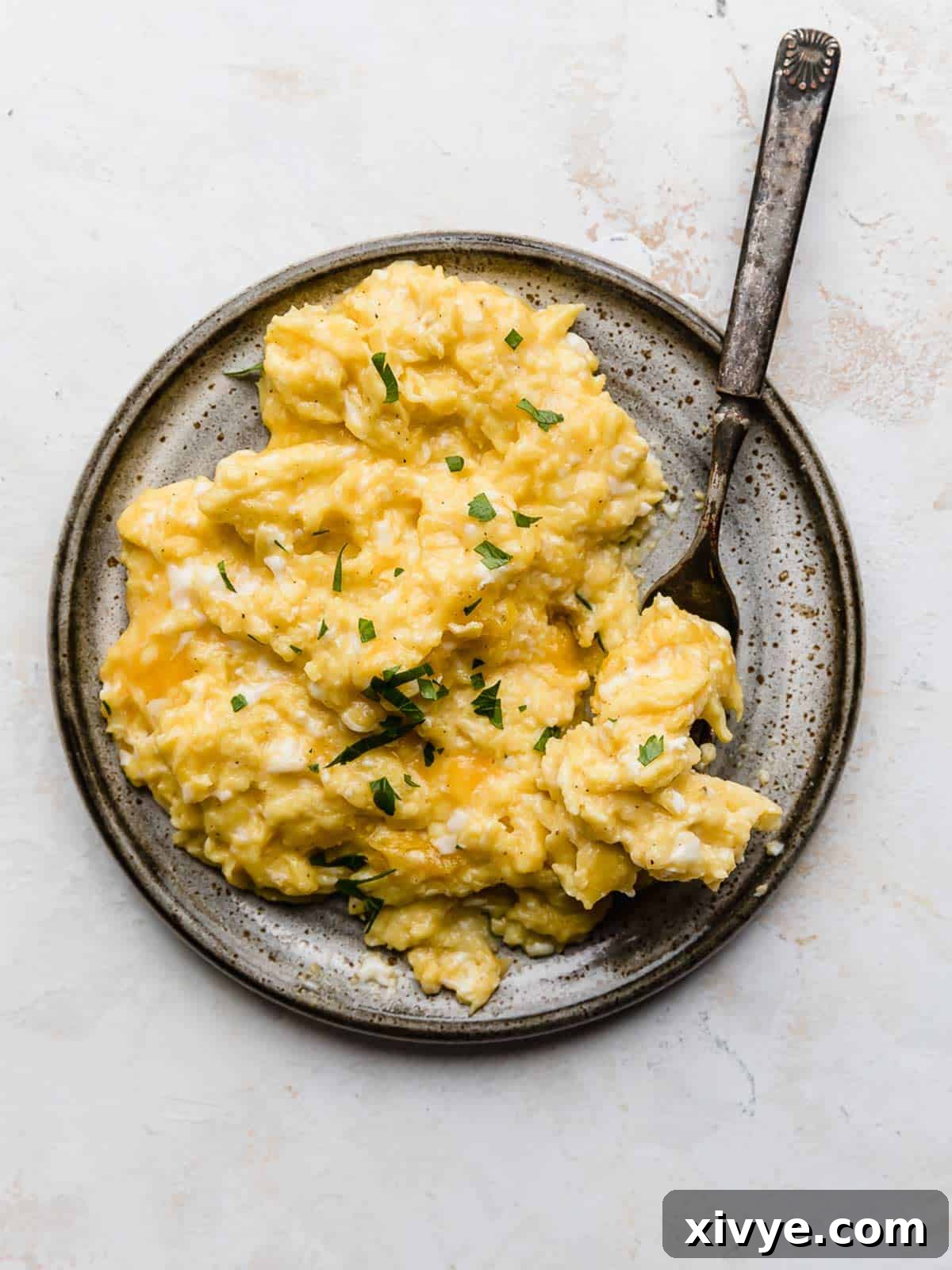
The Ultimate Cheesy Scrambled Eggs: Your New Favorite Fluffy Breakfast!
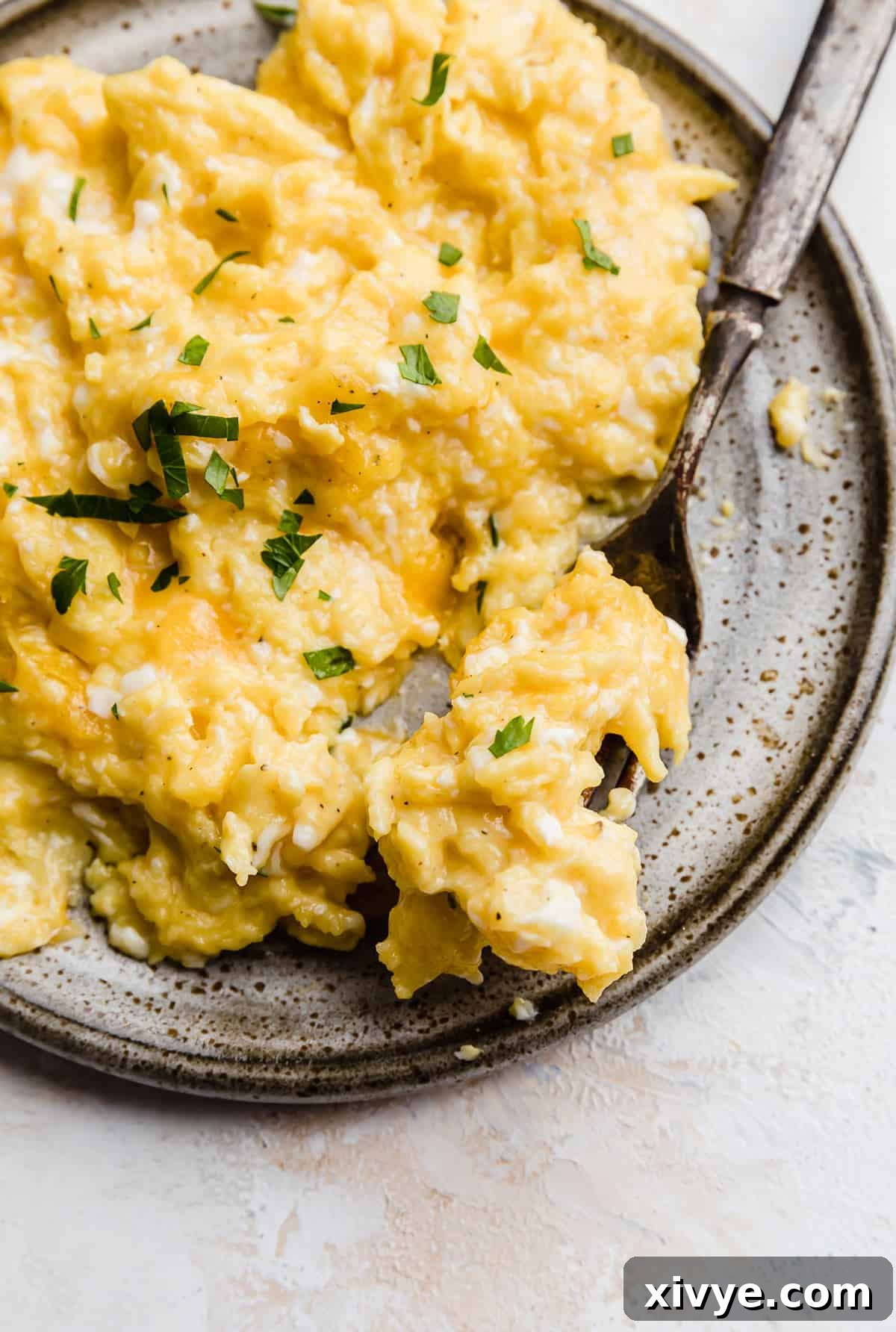
Imagine starting your day with a plate of incredibly soft, moist, and wonderfully cheesy scrambled eggs. Not the dry, rubbery kind, but delicate folds of egg cooked to perfection in rich butter, with gooey cheese melted throughout. This isn’t just a breakfast recipe; it’s a breakfast experience that promises pure satisfaction and sets a delicious tone for your entire day. If you’ve been searching for the secret to truly outstanding scrambled eggs, your quest ends here!
While we absolutely adore these cheesy scrambled eggs, the world of breakfast offers endless delights. For those who love avocado, our avocado egg toast recipe is a creamy, dreamy alternative. If you’re feeding a crowd or prefer a make-ahead option, our easy breakfast casserole is a guaranteed hit. We believe a hot, homemade breakfast is one of life’s simple pleasures, whether it’s classic pancakes, hearty oatmeal, or perfectly crispy oven-baked bacon. But for an everyday indulgence that’s both quick and incredibly satisfying, these cheesy scrambled eggs stand unparalleled.
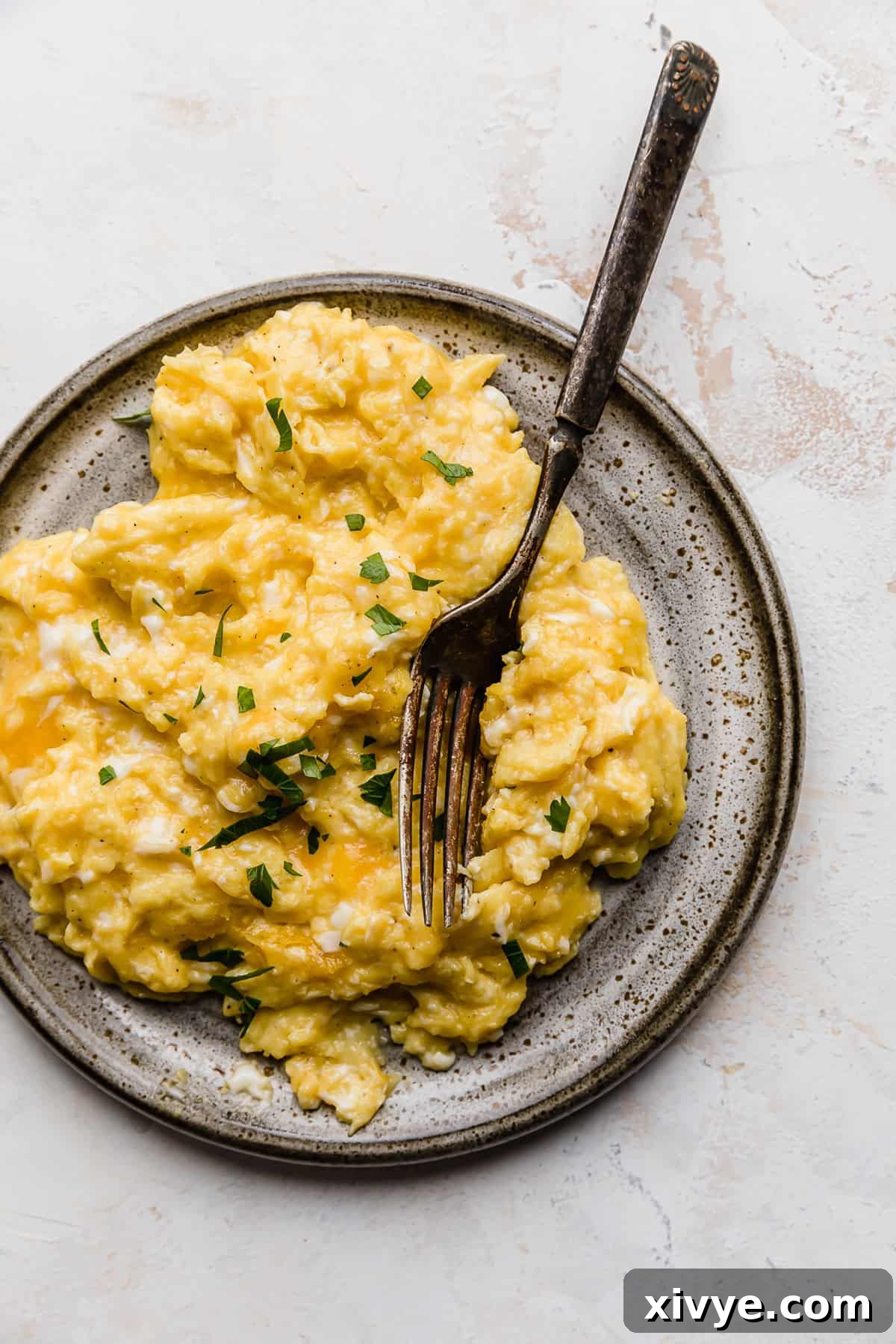
Why This Cheesy Scrambled Egg Recipe Will Be Your New Go-To
There are countless ways to make scrambled eggs, but this recipe consistently delivers results that are a cut above the rest. Here’s what makes our cheesy scrambled eggs truly special and why you’ll want to make them again and again:
- Achieve Moist, Perfectly Soft Scrambled Eggs: Forget dry, rubbery, or watery eggs! This recipe focuses on technique to produce scrambled eggs that are incredibly tender, moist, and beautifully soft. We guide you through the precise cooking method to create those desirable, delicate egg folds without overcooking, ensuring every bite melts in your mouth. You’ll never settle for hard, dry eggs again once you master this simple approach.
- Unforgettable Delicious Cheesy Flavor: The star of this dish, besides the eggs, is the generous and perfectly melted cheese. Our method ensures the cheese is fully incorporated, lending a rich, savory, and incredibly comforting flavor that complements the eggs beautifully. It’s not just a hint of cheese; it’s a full-bodied, satisfying cheesiness that makes this breakfast utterly irresistible. We believe eggs scrambled with cheese is one of the ultimate breakfast pairings, and this recipe highlights that combination perfectly.
- Effortlessly Easy, Incredibly Quick, and Rich in Protein: In a mere 5 minutes, you can transform simple ingredients into a gourmet-level breakfast. This recipe is designed for efficiency, making it perfect for busy weekdays when you need something fast, or leisurely weekends when you crave something special without the fuss. Beyond its speed, these cheesy scrambled eggs are packed with protein, offering a substantial meal that keeps you feeling full, energized, and satisfied for longer. Say goodbye to carb-heavy cereals that leave you hungry an hour later; embrace a breakfast that truly fuels your day.
- Simple Ingredients, Maximum Impact: You don’t need fancy tools or exotic ingredients for extraordinary results. This recipe utilizes everyday kitchen staples to create a breakfast that feels luxurious. The simplicity of the ingredients allows the quality of the eggs, butter, and cheese to truly shine, proving that sometimes, less is indeed more when it comes to flavor.
- Versatile and Customizable: While perfect on their own, these cheesy scrambled eggs are also a fantastic base for customization. Add your favorite vegetables, herbs, or even a dash of hot sauce to make them uniquely yours. This adaptability ensures that this recipe can fit any craving or dietary preference, making it a truly flexible meal.
Key Ingredients for Superior Cheesy Scrambled Eggs
Great scrambled eggs start with great ingredients. While the list is short, paying attention to the quality and type of each component makes a significant difference in the final outcome. Here’s a closer look at what you’ll need and why:
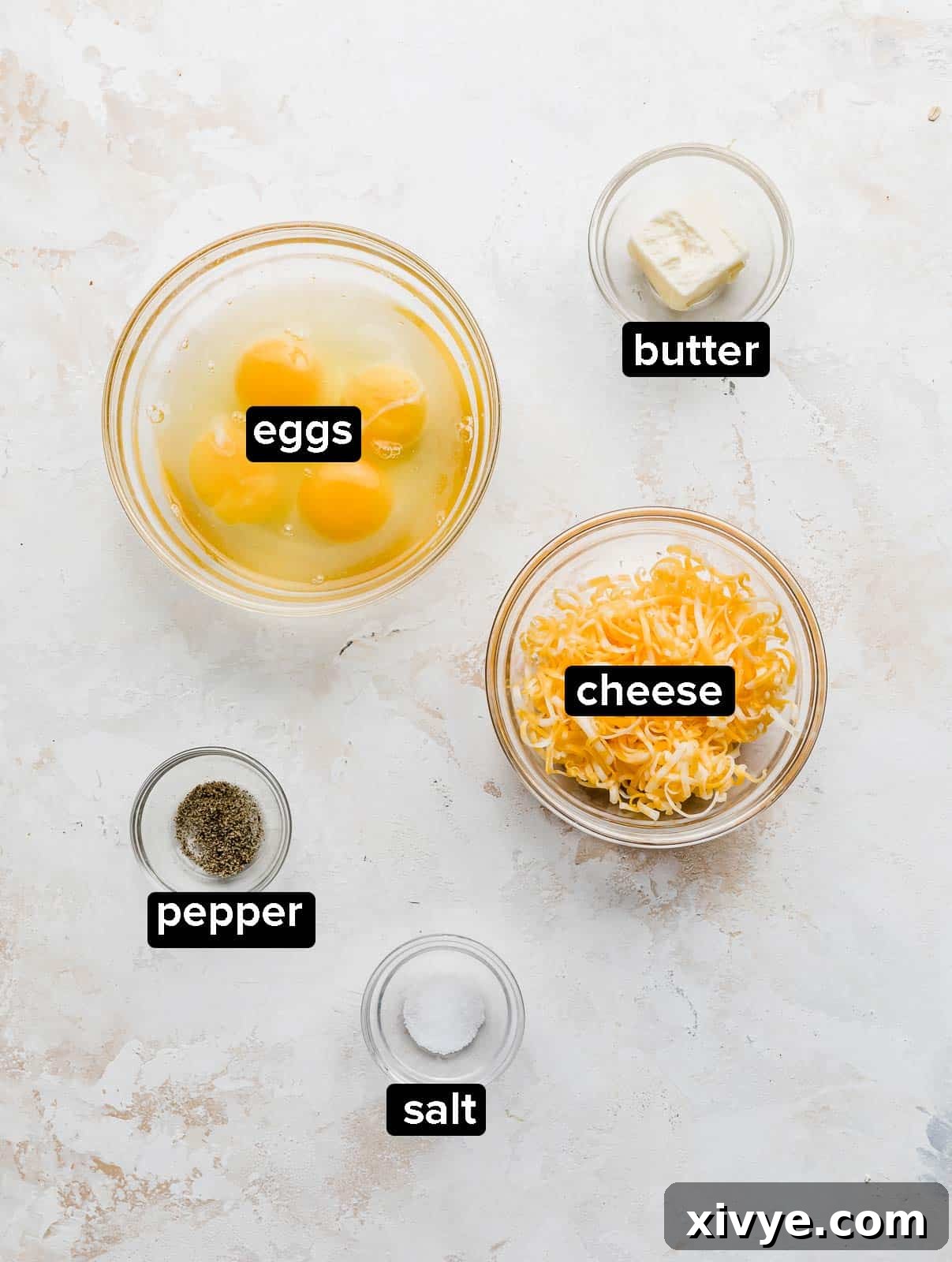
- Fresh Eggs: The foundation of our dish! We recommend using large eggs for their ideal size and protein content. While any fresh egg will work, pasture-raised or organic eggs often boast richer yolks and superior flavor, which translates directly to a more delicious final product. Ensure your eggs are at room temperature if possible, as this can help them cook more evenly and produce a fluffier texture.
- High-Quality Butter: This is non-negotiable for truly flavorful scrambled eggs. Cooking your eggs in butter, whether salted or unsalted, imparts an incredible depth of flavor and richness that simply cannot be achieved with cooking spray or oil alone. The butter also contributes to the silky-smooth texture of the eggs, preventing sticking and adding a luxurious mouthfeel. Opt for a good quality butter for the best taste.
- Your Favorite Cheese (Freshly Grated is Best!): This is where you can truly personalize your cheesy scrambled eggs! While we love classic cheddar for its sharp, creamy melt, don’t hesitate to experiment. Monterey Jack offers a mild, buttery flavor and excellent meltability. Colby Jack provides a beautiful marbled appearance and a balanced taste. For a bit of a kick, pepper jack is fantastic, or try a sophisticated blend of Gruyère or a sprinkle of Parmesan. The most crucial tip here is to grate your own cheese from a block. Pre-shredded cheeses often contain anti-caking agents (like cellulose) that prevent them from melting smoothly, resulting in a slightly grainy or clumpy texture. Freshly grated cheese melts into a beautifully gooey, uniform dream.
- Salt and Freshly Ground Black Pepper: Simple seasonings that make all the difference. Salt enhances the natural flavor of the eggs and cheese, while freshly ground black pepper adds a subtle aromatic warmth. We recommend adding these to the eggs before cooking, allowing the flavors to meld perfectly. Adjust to your personal preference; a little goes a long way, but don’t be shy about seasoning adequately.
How to Make the Best Cheesy Scrambled Eggs: A Simple Guide
Making perfect cheesy scrambled eggs is a simple art. Follow these detailed steps to achieve a breakfast that’s consistently delicious and perfectly textured:
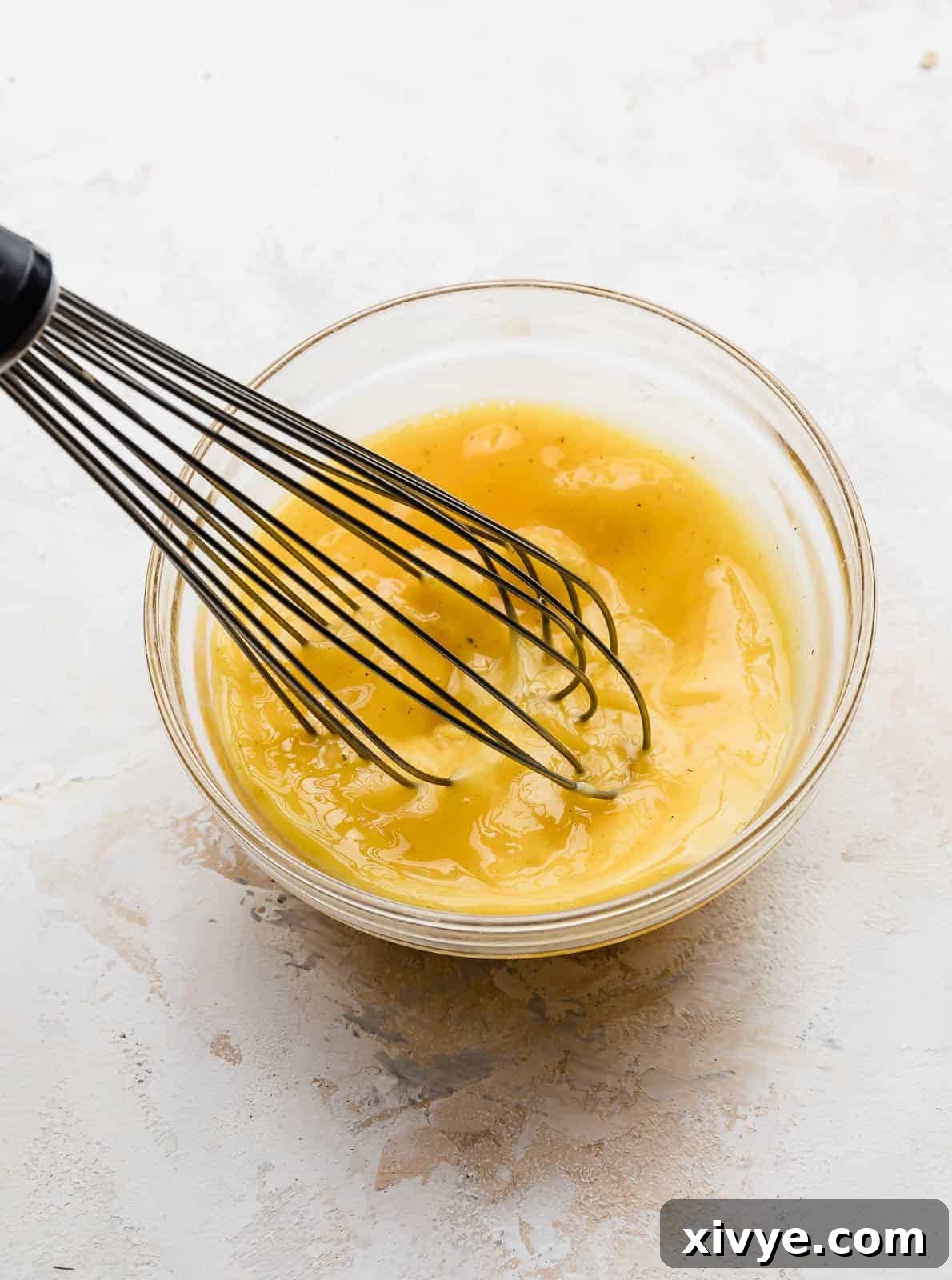
- Prepare Your Egg Mixture: In a medium-sized bowl, crack your eggs. Add the salt and freshly ground black pepper. Now, here’s a crucial step for achieving maximum fluffiness: whisk vigorously for at least 30-60 seconds until the mixture is light yellow, slightly foamy, and thoroughly combined. This incorporates air, which is key to light, airy, and fluffy scrambled eggs, preventing them from becoming dense.
- Heat the Skillet and Melt Butter: Place a nonstick skillet over medium-low heat. It’s essential to use a nonstick pan to prevent sticking and ensure easy stirring. Once the skillet is warm (you can test by dripping a tiny bit of water; it should sizzle), add your tablespoon of butter. Allow the butter to fully melt and swirl it around the pan to coat the entire cooking surface. This creates a rich, non-stick base for your eggs.
-

Vigorously whisking eggs for ultimate fluffiness. -
Pouring the prepared egg mixture into a buttered skillet.
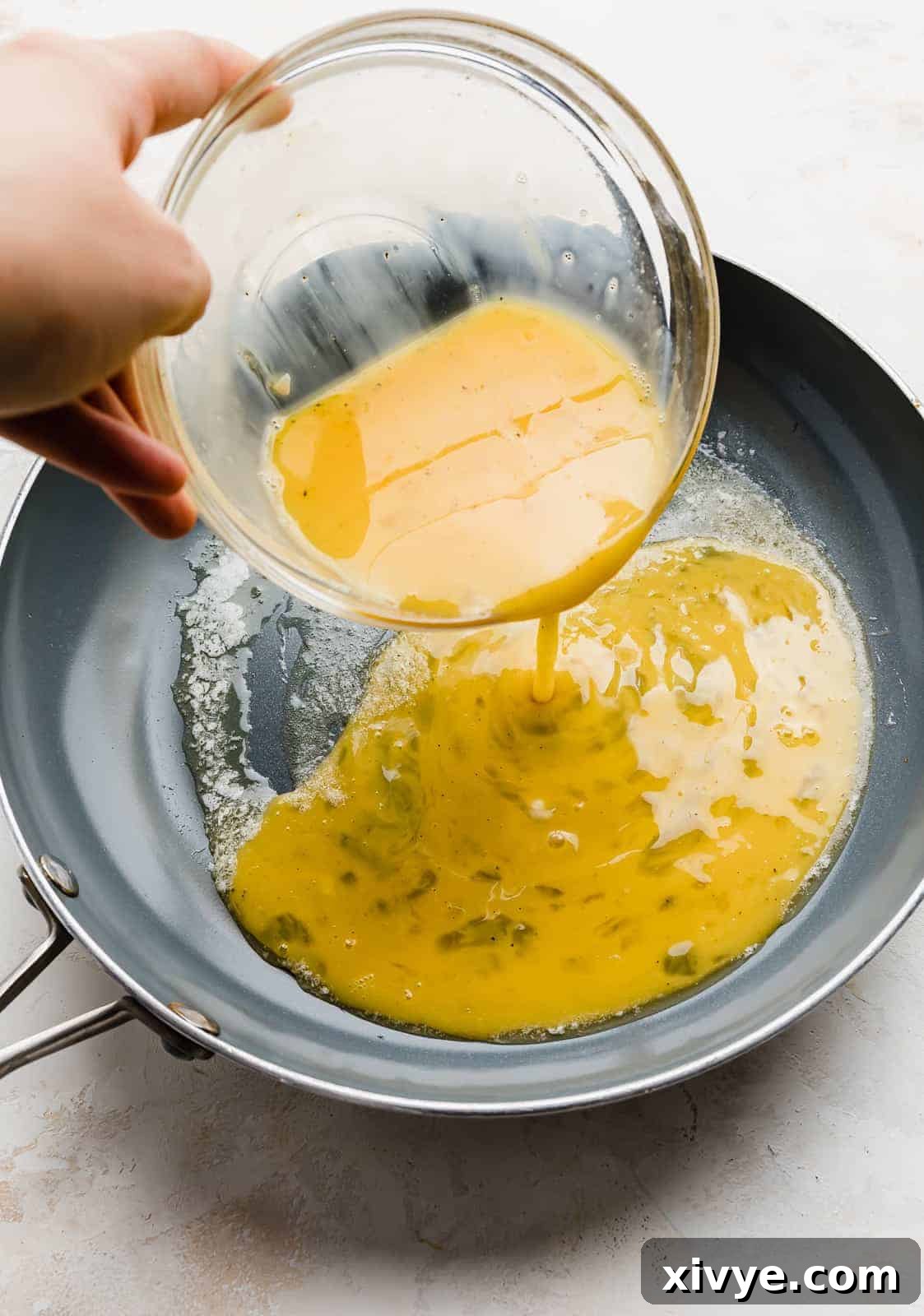
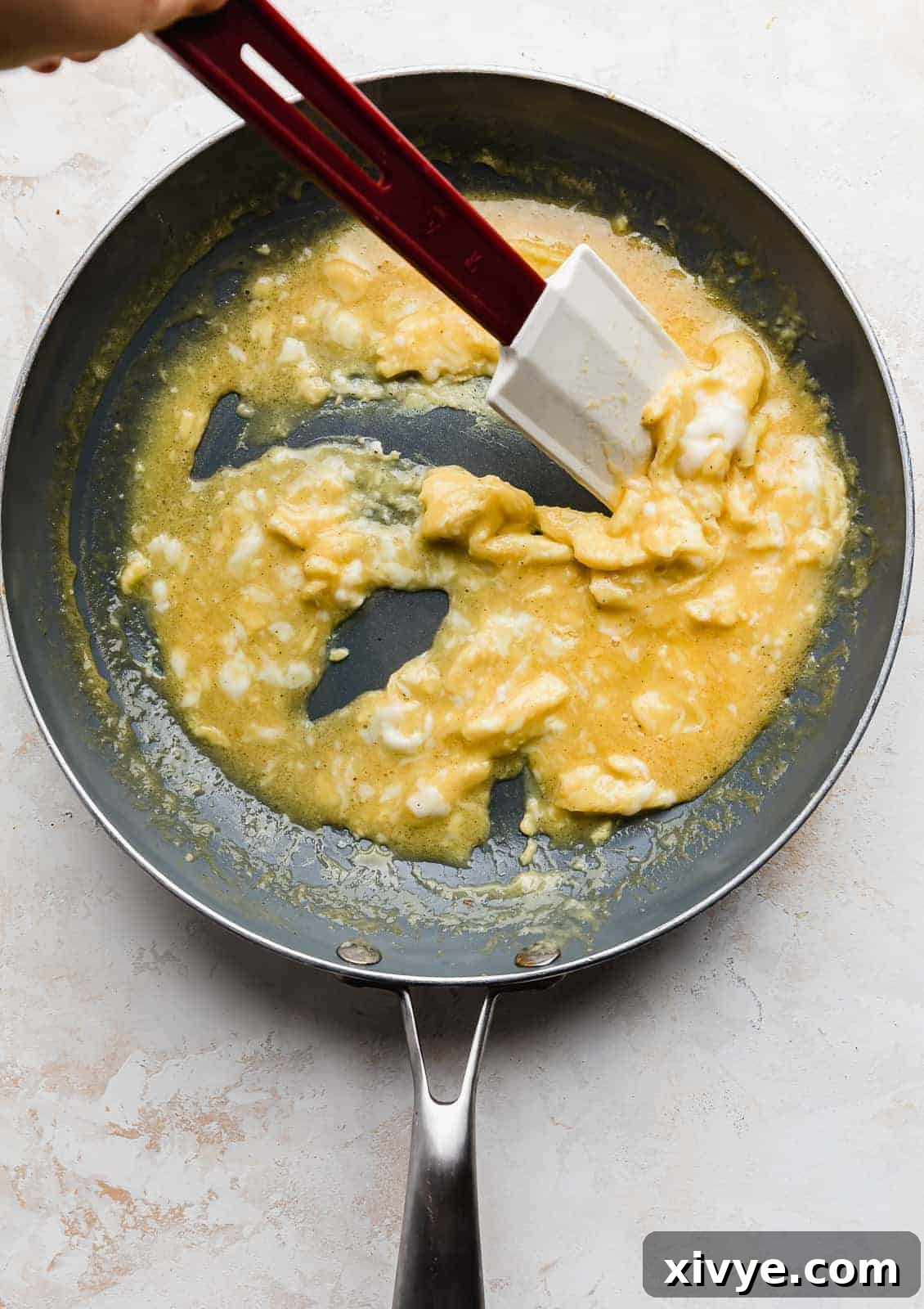
- Begin Scrambling the Eggs: Pour the whisked egg mixture into the melted butter in the hot skillet. Immediately, using a heat-resistant silicone spatula (which is gentle on nonstick surfaces), start stirring the eggs. The key to soft, moist scrambled eggs is continuous, slow stirring and folding. Don’t let the eggs set completely at the bottom; keep moving them from the edges towards the center, creating soft curds. Cook like this for approximately 2 minutes. The eggs should still look a bit wet and shiny at this stage.
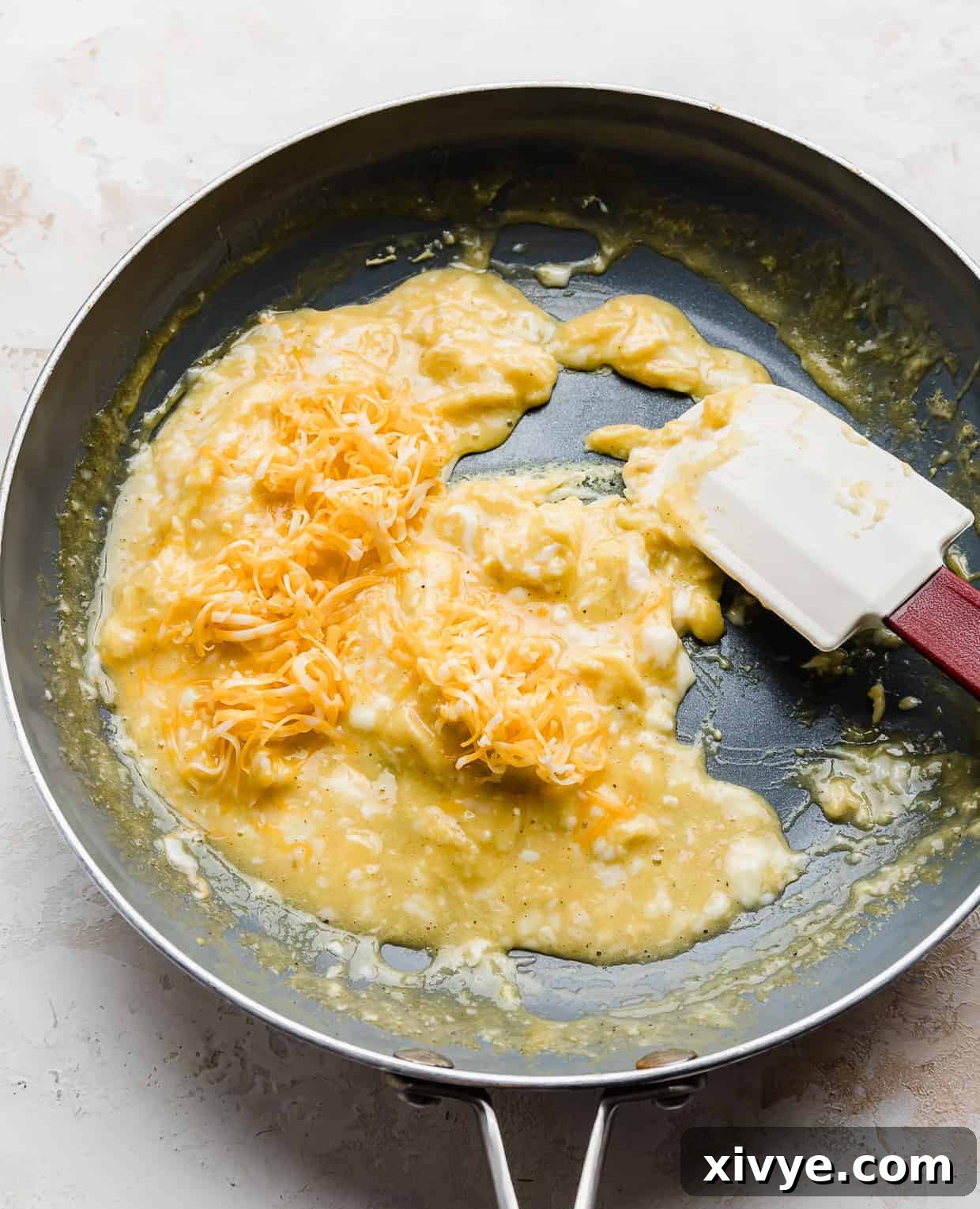
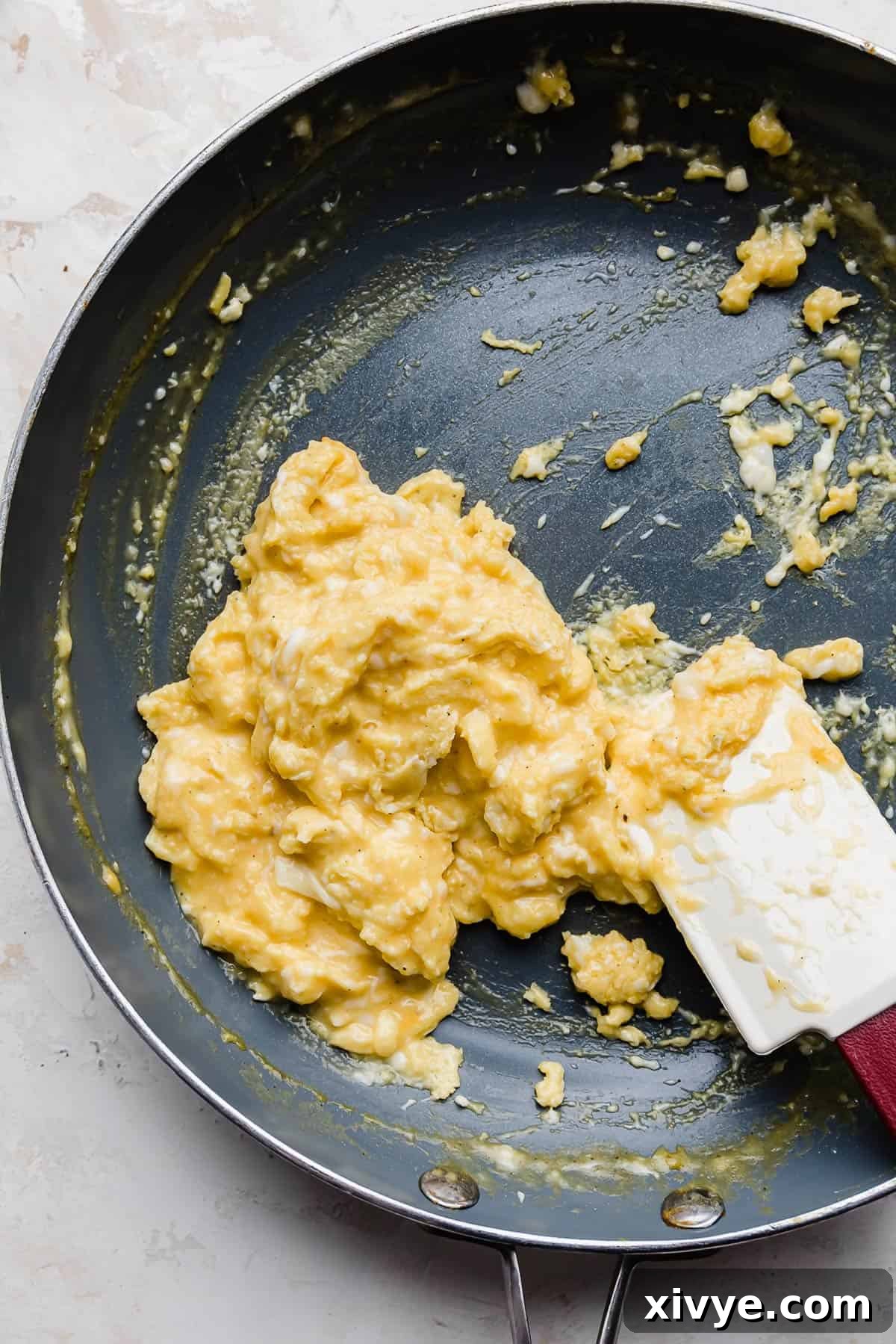
- Add the Cheese and Finish Cooking: Once the eggs are mostly set but still slightly moist, add your freshly grated cheese directly into the skillet. Continue to stir and fold the eggs gently for another 1 minute, allowing the cheese to melt beautifully and become gooey. As soon as the cheese is fully melted and the eggs are cooked to your desired softness (they should still be slightly wet, not completely dry), remove the skillet immediately from the heat. Remember, the residual heat in the pan will continue to cook the eggs even after they’re off the burner, so pulling them slightly underdone is ideal for preventing overcooked, dry results.
-
Gently stirring and folding the eggs to create soft curds. -
Adding cheese to the eggs and continuing to stir until melted.
- Serve Immediately: Transfer your beautiful cheesy scrambled eggs to a plate and serve warm. If desired, you can garnish with a pinch of fresh parsley or chives, and add a little extra salt and pepper to taste. Enjoy the creamy, cheesy goodness!
Expert Tips for the Best Cheesy Scrambled Eggs Every Time
Achieving consistently perfect, fluffy, and cheesy scrambled eggs is all about understanding a few key principles. Master these tips, and you’ll elevate your breakfast game significantly:
- Always Grate Your Own Cheese: This cannot be stressed enough! Pre-shredded cheese is often coated with cellulose or other anti-caking agents to prevent clumping in the bag. These additives hinder proper melting, leading to a less creamy, sometimes grainy texture. Freshly grated cheese, on the other hand, melts beautifully and integrates seamlessly into the eggs, creating that irresistible gooey factor. Invest a minute or two in grating; it makes a world of difference.
- Proper Pan Preparation and Heat Control are Key:
- Nonstick Skillet: A high-quality nonstick pan is your best friend here. It ensures the eggs don’t stick and allows for easy stirring and folding, resulting in cleaner, more defined curds.
- Medium-Low Heat: This is the golden rule for scrambled eggs. High heat cooks eggs too quickly, making them tough, dry, and prone to browning. Medium-low heat allows for gentle, even cooking, resulting in those soft, custardy folds we’re aiming for. Be patient!
- Melted Butter: Ensure the butter is completely melted and swirled to coat the entire cooking surface before adding the eggs. This not only adds flavor but also creates a crucial barrier that prevents sticking. A slightly warm pan before adding butter can also help in this regard.
- Skip the Milk or Water for Optimal Texture: You’ll notice our recipe purposefully omits milk, cream, or water. This is a deliberate choice for a reason! Adding these liquids increases the water content of the egg mixture. While some believe it makes eggs fluffier, it actually makes your finished eggs more watery and can dilute the rich egg flavor. Furthermore, it might trick you into thinking you need to cook the eggs longer to evaporate the excess liquid, inevitably leading to overcooked, hard, and rubbery eggs. For genuinely soft, fluffy, and moist scrambled eggs, rely on proper whisking and gentle cooking, not added liquids.
- Whisk Vigorously for Air Pockets: The secret to fluffy eggs without additives lies in proper whisking. Before they hit the pan, whisk your eggs, salt, and pepper together for at least 30-60 seconds. You want to incorporate as much air as possible. This aeration creates tiny air pockets that expand during cooking, resulting in light, airy, and truly fluffy scrambled eggs.
- Gentle, Continuous Stirring: Once the eggs are in the pan, resist the urge to let them sit undisturbed. Use a silicone spatula to gently and constantly stir and fold the eggs from the edges to the center. This technique creates small, soft curds and prevents the eggs from setting into a solid, flat omelet. The goal is to move the eggs around just enough to cook evenly without breaking them up too finely.
- Remove from Heat While Still Slightly Wet: Remember that eggs continue to cook from residual heat after being removed from the stove. To avoid dry eggs, take them off the heat when they are still slightly moist and shiny – a touch undercooked from your desired final doneness. They will finish cooking perfectly on the plate, achieving that ideal, custardy texture.
Delightful Serving Suggestions for Your Cheesy Scrambled Eggs
These cheesy scrambled eggs are fantastic on their own, but they also serve as a versatile base for a complete breakfast or brunch. Here are some ideas to inspire your next meal:
- Serve them simply on a slice of toasted artisan bread, perhaps with a smear of avocado or a sprinkle of chili flakes.
- Pair them with a side of vibrant, sautéed vegetables like spinach, bell peppers, onions, or mushrooms for added nutrition and color.
- Make it a hearty meal with classic breakfast potatoes, whether they’re crispy hash browns or diced home fries.
- Wrap them inside warm tortillas with black beans, salsa, and more cheese for delicious breakfast burritos.
- Accompany them with a side of perfectly cooked, crispy oven-cooked bacon or savory sausage links.
- For a lighter option, serve alongside fresh fruit salad and a dollop of Greek yogurt.
- Top with fresh herbs like chopped chives or cilantro for a burst of fresh flavor.
Creative Variations and Add-Ins for Your Cheesy Scrambled Eggs
One of the best things about scrambled eggs is their incredible adaptability. Feel free to get creative and customize your cheesy scrambled eggs with these delicious additions:
- Herbs: Fresh herbs like chopped chives, parsley, dill, or even basil can add a wonderful freshness. Stir them in at the very end, just before serving.
- Vegetables: Boost the nutrition and flavor by adding finely diced vegetables. Sauté onions, bell peppers, mushrooms, or spinach in the pan before adding the eggs. Cooked asparagus tips or cherry tomato halves also make great additions.
- Meats: For a heartier meal, incorporate cooked and crumbled bacon, diced ham, cooked sausage, or even smoked salmon. Add these after the eggs have started to set but before adding the cheese.
- Spices & Heat: A pinch of paprika, a dash of garlic powder, or a hint of onion powder can deepen the savory notes. For those who love heat, a sprinkle of cayenne pepper or a few drops of your favorite hot sauce stirred in with the eggs adds a delightful kick.
- Different Cheeses: Don’t limit yourself to just one! A blend of cheeses can create complex flavors. Try a mix of sharp cheddar and creamy Monterey Jack, or add a crumbled goat cheese or feta for a tangy contrast.
- Pesto or Salsa: A spoonful of pesto swirled in at the end, or a dollop of fresh salsa on top, can transform the flavor profile entirely.
Storing and Reheating Scrambled Eggs
While scrambled eggs are always best enjoyed fresh off the pan, sometimes you might have leftovers or want to prepare them slightly ahead. Here’s how to handle storage and reheating:
- Storage: Allow any leftover cheesy scrambled eggs to cool completely. Transfer them to an airtight container and refrigerate promptly. They will keep well for up to 2-3 days in the refrigerator.
- Reheating (Best Method): For the best results, reheat scrambled eggs gently in a nonstick skillet over medium-low heat. Add a tiny pat of butter to the pan. Stir the eggs frequently until just warmed through. Be careful not to overcook them during reheating, as this will dry them out.
- Reheating (Quick Method): You can also reheat them in the microwave in short bursts (30-60 seconds at a time), stirring between each interval, until warmed. Again, avoid overheating. Note that microwave reheating might alter the texture slightly compared to stovetop reheating.
Frequently Asked Questions About Cheesy Scrambled Eggs
We’ve gathered some of the most common questions about making the perfect cheesy scrambled eggs to ensure you have all the information you need.
Honestly, you really can’t go wrong with almost any cheese when it comes to scrambled eggs! The “best” cheese often comes down to personal preference. Classic choices like sharp or mild cheddar, Monterey Jack, and Colby Jack are popular for their excellent meltability and savory flavor. For a slight kick, pepper jack is fantastic. If you’re feeling adventurous, consider a touch of Gruyère for a nutty flavor, crumbled goat cheese or feta for tang, or even a blend of mozzarella and provolone for a pizza-like twist. The most important tip, regardless of the variety you choose, is to use freshly grated cheese for the smoothest, creamiest melt, avoiding the anti-caking agents found in pre-shredded varieties.
While many recipes traditionally call for adding milk or cream to scrambled eggs, our recipe does not, and for good reason! Adding milk or water can increase the water content of the egg mixture, which can lead to watery eggs and dilute their rich flavor. Instead of relying on liquids for fluffiness, we achieve light and airy scrambled eggs by vigorously whisking the eggs before they hit the pan. This technique incorporates air pockets into the mixture, which expand during cooking, resulting in a naturally fluffy and moist texture without the risk of a soggy outcome. If you want creamy eggs, ensure you use plenty of butter and cook them gently over medium-low heat, stirring constantly.
The choice between milk, cream, or water depends entirely on your desired outcome, though we advocate for none of them in our recipe! If you prefer eggs that are rich and creamy, a splash of milk or cream might be your preference. For those seeking incredibly fluffy eggs, a tiny bit of water is sometimes suggested, as it creates steam that helps the eggs puff up. However, it’s crucial to understand the trade-off: any additional liquid increases the overall moisture content, potentially making your eggs more watery than desired. This often leads cooks to overcook the eggs in an attempt to “cook out” the excess liquid, resulting in dense, dry, and rubbery scrambled eggs. Our method prioritizes vigorous whisking and gentle, slow cooking in butter to achieve maximum fluffiness and moistness without the risk of dilution or overcooking.
Preventing dry scrambled eggs comes down to a few key techniques: First, cook your eggs over medium-low heat. High heat cooks them too quickly and toughens the protein. Second, use enough fat, like butter, in your pan for flavor and to prevent sticking. Third, stir the eggs constantly and gently as they cook, folding them over to create soft curds. Most importantly, remove the eggs from the heat when they are still slightly moist and shiny – a tiny bit undercooked for your preference. They will continue to cook from residual heat on the plate, reaching perfect doneness. Avoid adding milk or water, as this can paradoxically lead to overcooking in an attempt to dry them out.
While scrambled eggs are always best served immediately, you can certainly prepare them slightly ahead if needed. Cook them according to the recipe, perhaps leaning slightly on the softer side to prevent overcooking when reheating. Allow them to cool completely before storing them in an airtight container in the refrigerator for up to 2-3 days. Reheat gently in a nonstick skillet with a small pat of butter over low heat, stirring frequently until just warmed through. Avoid high heat during reheating to maintain their tender texture.
More Delicious Breakfast Recipes to Explore
If you’re a breakfast enthusiast like us, there’s always something new and exciting to try. Expand your morning menu with these other fantastic recipes from our collection:
- Hearty Steel Cut Oats
- Healthy German Pancakes
- Fluffy Banana Oatmeal Pancakes
- Dairy-Free Almond Milk Pancakes
- Classic Homemade Sausage Gravy
- Savory Sweet Potato Hash
- Quick Breakfast Burrito Bowl
Did you make this recipe and love it as much as we do? We’d absolutely love to hear about your experience! Click here to leave a rating and review directly, or scroll down to the recipe card below and share your thoughts there. Your feedback helps us and other home cooks!
Stay connected and get daily doses of deliciousness by following us on Instagram, joining our community on Facebook, and finding endless inspiration on Pinterest.
Print
SaveSaved!
Review
Cheesy Scrambled Eggs

Whitney Wright
Ingredients
- 1 tablespoon butter – salted or unsalted
- 4 eggs – (I use large eggs)
- ¼ teaspoon salt – more or less to your liking
- pinch fresh ground pepper – more or less to your liking
- ¼ cup cheese – freshly grated. Cheddar, Colby Jack, pepper jack, goat cheese, feta (really any kind of cheese will work here)
Instructions
-
In a medium bowl, vigorously whisk the eggs, salt, and pepper until well combined and slightly frothy, incorporating air for fluffiness.
-
In a nonstick skillet set over medium-low heat, add the butter. Once melted, swirl it around to coat the pan. Pour in the egg mixture and immediately begin stirring and folding the eggs slowly but constantly with a silicone spatula. Cook for approximately 2 minutes, ensuring the eggs form soft, moist curds.
-
Add the freshly grated cheese to the skillet and continue stirring gently for 1 minute more, until the cheese is fully melted and gooey. Remove from heat immediately. The residual heat will continue to cook the eggs, ensuring they remain moist and tender. Serve warm, topped with additional salt and pepper or fresh herbs if desired.
Notes
We intentionally do not add water, milk, or cream to this recipe. These liquids can increase the water content of the egg mixture, making your finished eggs watery and potentially leading to overcooked, dry scrambled eggs as you try to cook out the excess liquid.
Vigorously whisking your egg mixture before cooking is crucial. This incorporates air pockets, which are the key to naturally fluffy and light scrambled eggs without any added liquids.
Cook on medium-low heat and remove eggs from the heat when they are still slightly moist. They will continue to cook from residual heat, ensuring they don’t dry out.
Nutrition
Carbohydrates: 2g (1%)
Protein: 29g (58%)
Fat: 37g (57%)
Saturated Fat: 19g (95%)
Polyunsaturated Fat: 4g
Monounsaturated Fat: 12g
Trans Fat: 1g
Cholesterol: 714mg (238%)
Sodium: 1107mg (46%)
Potassium: 274mg (8%)
Sugar: 1g (1%)
Vitamin A: 1583IU (32%)
Calcium: 306mg (31%)
Iron: 3mg (17%)
Did you make this recipe?Please leave a star rating and review on the blog post letting me know how you liked this recipe! Take a picture and tag @saltandbaker on Tik Tok, Instagram, and Facebook so I can see what you’re making!