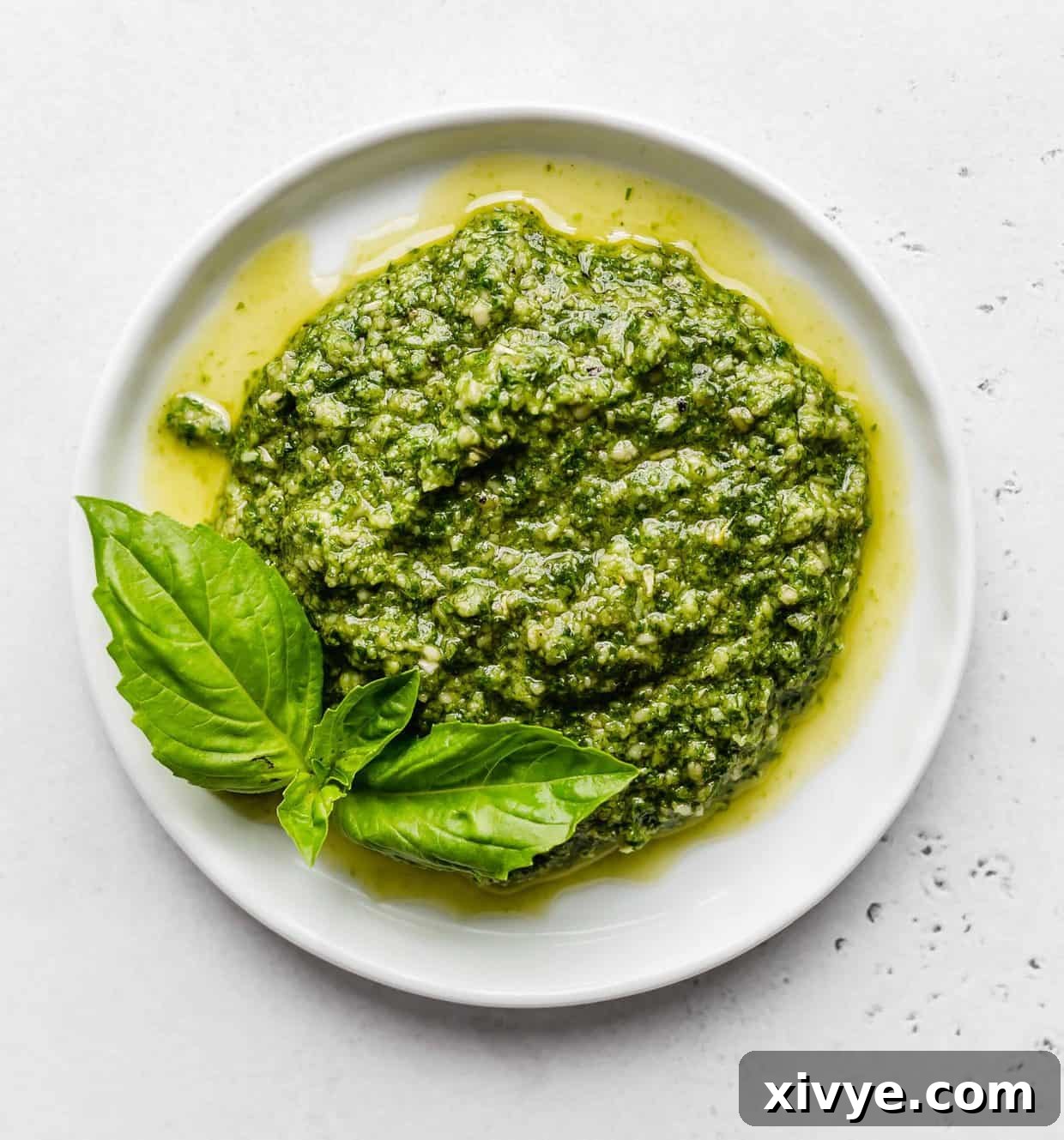
Unlock the secret to an incredibly flavorful and vibrant condiment with our definitive guide to making the **best homemade basil pesto**. This easy blender pesto recipe transforms fresh basil leaves, rich olive oil, pungent garlic, nutty pine nuts, and savory Parmesan cheese into a culinary masterpiece. Perfect for elevating your favorite pasta dishes, spreading on gourmet pizzas, or enhancing sandwiches, this versatile sauce is a kitchen essential you’ll wonder how you ever lived without.
There’s nothing quite like the bright, aromatic essence of freshly made pesto. It’s a staple that instantly upgrades simple meals to extraordinary culinary experiences. Forget the store-bought versions; once you taste the difference that fresh ingredients and a few minutes in a blender make, you’ll be a homemade pesto convert for life. This recipe is designed for both novices and seasoned cooks, promising a perfect batch every time.
Beyond its incredible flavor, basil pesto is a wonderfully adaptable ingredient. It shines brilliantly in dishes like my Zupas Tomato Basil Soup, brings a fresh dimension to Pesto Pasta with Tomatoes, and is the star of this delightful Pesto Tortellini Pasta Salad. And if you’re feeling adventurous, don’t miss my Red Pesto Pasta post, featuring a homemade red pesto crafted with sun-dried tomatoes for a delicious twist.
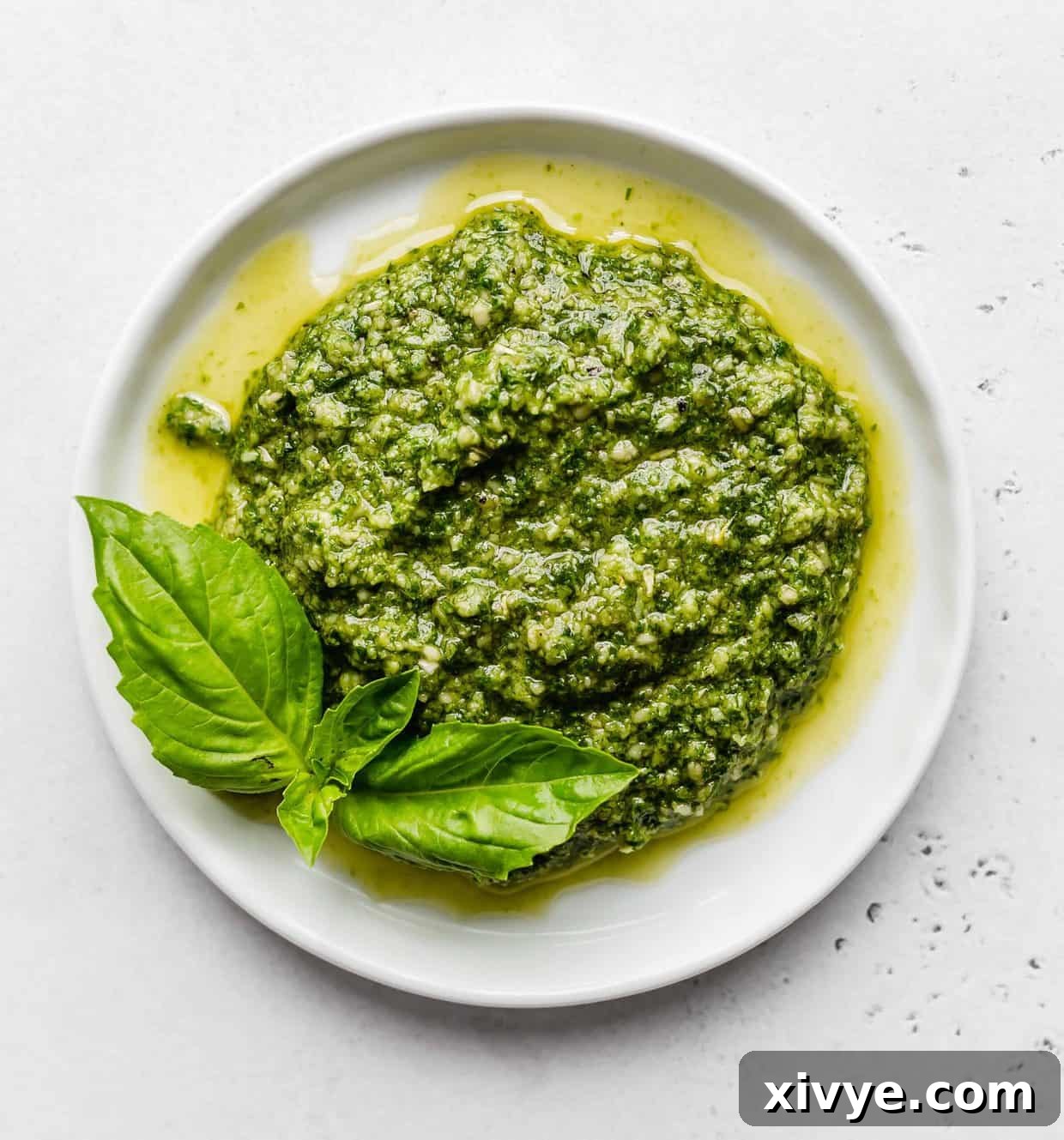
Why This Easy Homemade Pesto Recipe Will Become Your Favorite
Crafting homemade pesto is not just about combining ingredients; it’s about creating a symphony of flavors and textures. Our **easy basil pesto recipe** stands out for several compelling reasons:
- Unmatched Freshness: The cornerstone of truly exceptional pesto is the quality of its ingredients. By using only **fresh basil leaves**, vibrant olive oil, crisp garlic, and premium pine nuts, this recipe guarantees a pesto that bursts with natural flavor and boasts a beautiful, verdant green color. The difference between a good pesto and the *best* pesto lies precisely in this commitment to freshness, offering a sensory experience far superior to any store-bought alternative.
- Effortless Preparation with a Blender (or Food Processor): Say goodbye to tedious mortar and pestle work (unless you enjoy the tradition!). This recipe simplifies the process dramatically, allowing you to achieve a perfectly smooth and cohesive sauce with minimal effort. Whether you opt for a high-speed blender or a trusty food processor, the ease of preparation makes this an ideal **quick pesto recipe** for any day of the week. It means less time in the kitchen and more time enjoying your delicious creation.
- Incredibly Versatile and Customizable: One of the greatest joys of **homemade pesto** is its adaptability. This basil pesto recipe serves as a fantastic foundation, inviting you to tailor it precisely to your palate. Craving a richer, more intense cheese flavor? Simply increase the amount of freshly grated Parmesan or swap it for a sharper Pecorino Romano. Prefer a nuttier profile? Add extra pine nuts, or experiment with different varieties like walnuts or pistachios. This sauce is designed to be your culinary canvas, allowing for endless variations and personal touches to suit your preferences and what you have on hand.
Essential Ingredients for Perfect Basil Pesto
The magic of authentic basil pesto lies in a harmonious blend of simple, high-quality ingredients. Each component plays a vital role in achieving that classic, irresistible flavor and texture. Here’s a closer look at what you’ll need and why:
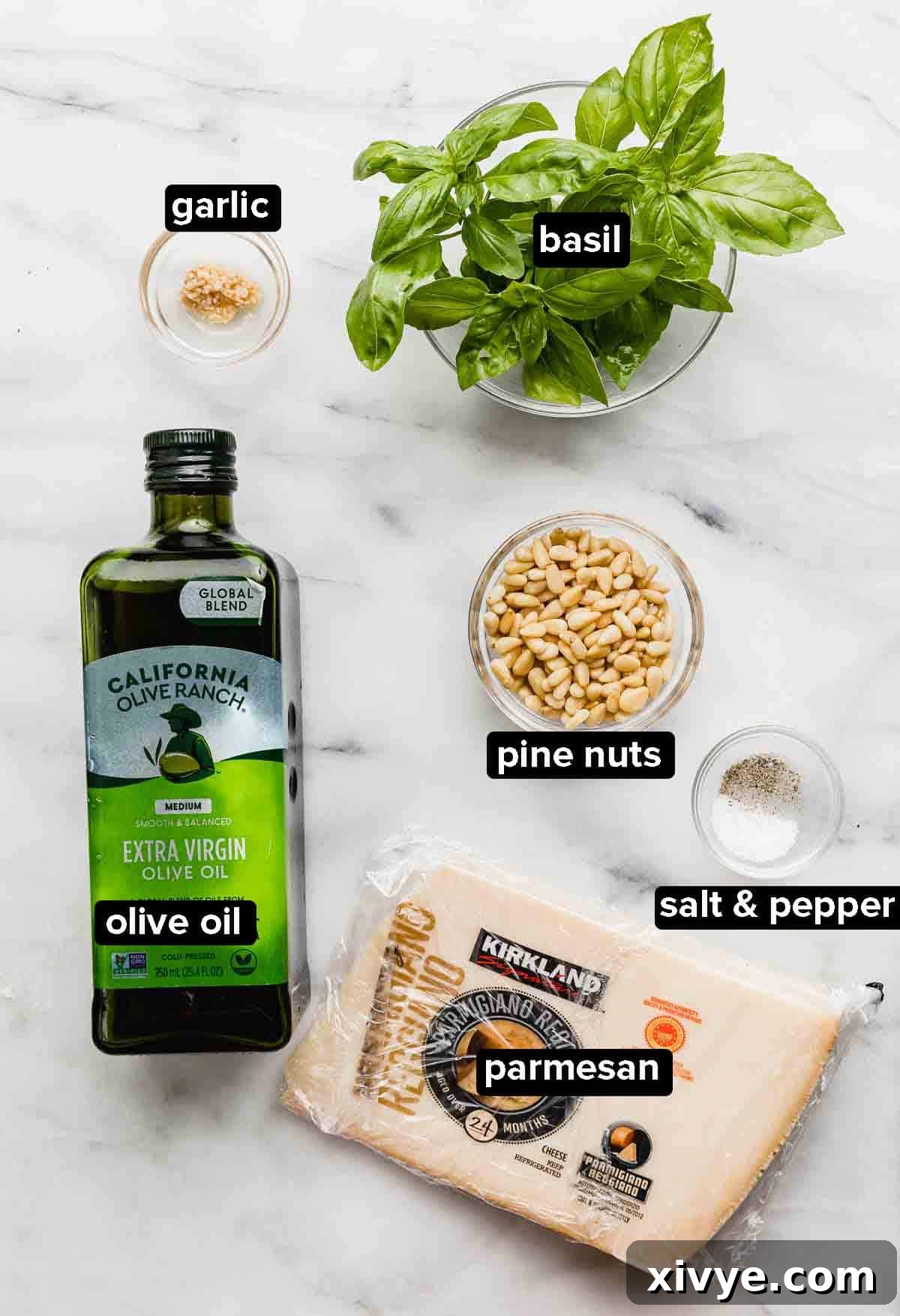
- Fresh Basil Leaves: This vibrant green herb is the undisputed star of our pesto. Using an abundance of fresh basil not only creates the signature bright flavor profile but also provides that stunning, deep green color that makes pesto so appealing. If you’re fortunate enough to have your own basil plant, you’ll find this recipe to be incredibly cost-effective. For store-bought basil, look for bright, unblemished leaves without any wilting or dark spots.
- Pine Nuts: These small, creamy nuts are a traditional and highly valued ingredient in classic pesto. When toasted, pine nuts release their aromatic oils, adding a wonderful depth of nutty flavor and a delightful texture that helps bind the sauce. Don’t fret if you purchase them untoasted; we’ll guide you through a quick toasting process that significantly enhances their taste and aroma, making all the difference in your finished pesto.
- Garlic Cloves: Garlic provides the essential pungent, aromatic kick that defines traditional pesto. For this recipe, two medium-sized garlic cloves are usually sufficient to impart a robust flavor without overpowering the delicate basil. Adjust according to your preference for a milder or more intense garlicky note. Fresh garlic is key here – avoid pre-minced or powdered garlic for the best results.
- Salt and Black Pepper: These fundamental seasonings are crucial for balancing and enhancing all the other flavors in the pesto. Start with the recommended amounts, but always taste and adjust to your personal standards. A good quality sea salt can make a noticeable difference, and freshly ground black pepper adds a superior aroma.
- Grated Parmesan Cheese: Authentic pesto wouldn’t be complete without the savory, salty, and umami-rich notes of Parmesan cheese. We recommend using freshly grated Parmesan (Parmigiano-Reggiano, if possible) for its superior flavor and texture compared to pre-grated varieties. The cheese contributes significantly to the richness and complexity of the sauce. If you’re aiming for a vegan or dairy-free alternative, there are excellent substitutes available, but for a classic basil pesto, the cheese is irreplaceable.
- Extra Virgin Olive Oil: Olive oil acts as the emulsifier, bringing all the ingredients together into a cohesive, luscious sauce. A high-quality extra virgin olive oil is preferred for its fruity, sometimes peppery notes that complement the other ingredients perfectly. It helps to meld the flavors, creating that smooth, luxurious texture characteristic of the best pesto. Choose a good quality oil, as its flavor will be quite prominent in the finished product.
Easy Steps to Your Best Homemade Basil Pesto
Creating your own fresh basil pesto is surprisingly simple and quick, especially with the help of a blender or food processor. Follow these straightforward steps to achieve a perfect, vibrant sauce every time:
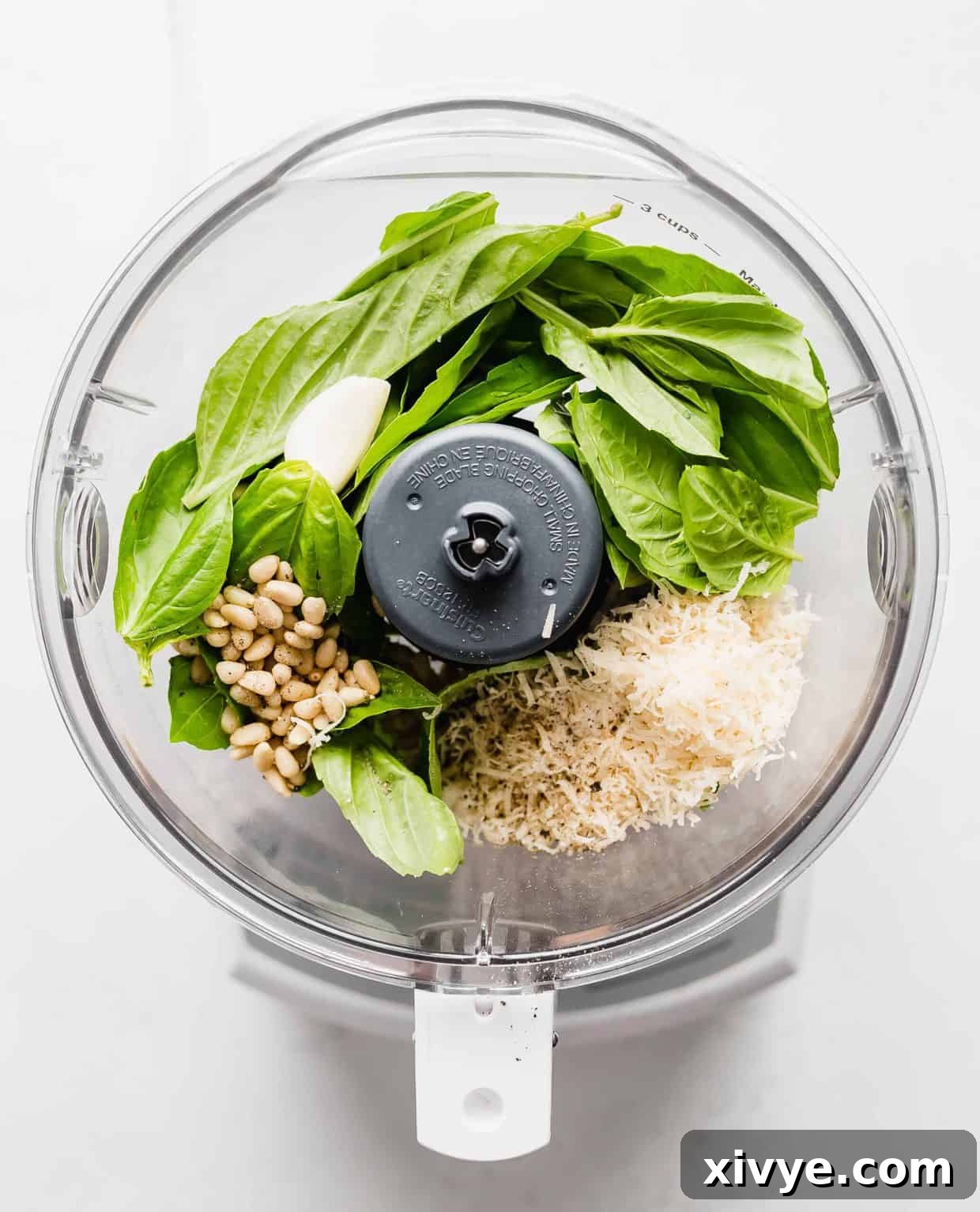
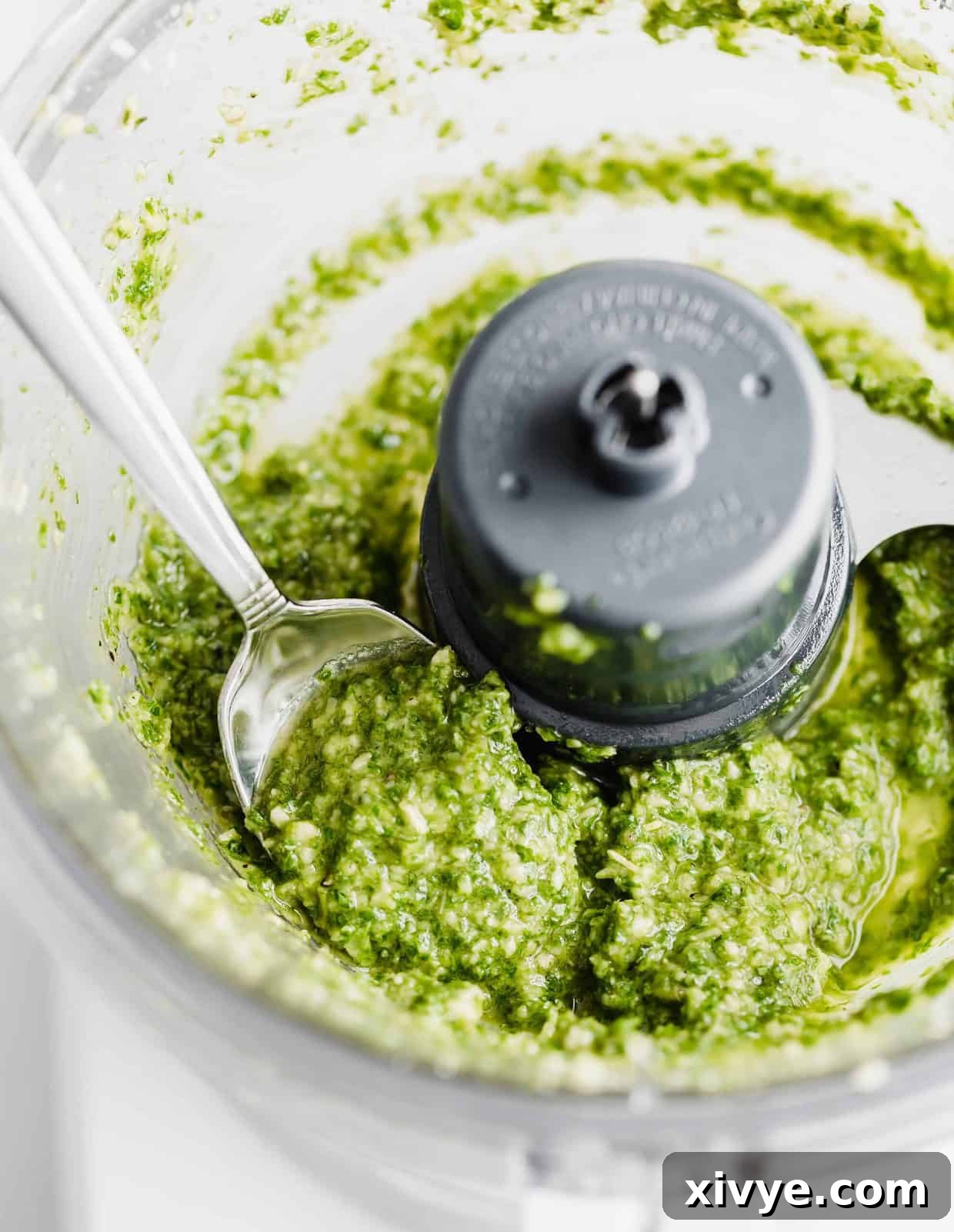
- Prepare Ingredients and Load Your Processor: Begin by ensuring your pine nuts are lightly toasted (see “Recipe Tips” for how to do this). Add 2 ½ cups of fresh, packed basil leaves, ¼ cup of the toasted pine nuts, 2 peeled garlic cloves, ½ teaspoon of salt, and a generous pinch of black pepper to the bowl of your food processor or blender. If using a blender, make sure it’s powerful enough to handle the thick consistency. Pulse the mixture several times until the ingredients are finely chopped and well-incorporated, forming a coarse paste. Scrape down the sides of the bowl as needed to ensure even blending.
- Gradually Add Olive Oil and Adjust Seasoning: With the food processor or blender running on a low setting, slowly stream in ½ cup of extra virgin olive oil through the feed tube. The key is to add the oil gradually, allowing it to emulsify with the other ingredients. Continue to blend until your pesto reaches your desired consistency – smooth and creamy or slightly chunky. Once thoroughly blended, taste the pesto. This is your chance to personalize the flavor! Add more salt or pepper if desired. Your homemade basil pesto is now ready to be enjoyed as a vibrant sandwich spread, a delicious dipping sauce for crusty bread, or mixed into your favorite pasta dishes. Enjoy the fresh, rich flavors!
Expert Tips for the Best Basil Pesto
Making delicious homemade pesto is simple, but a few expert tips can elevate your results from good to truly exceptional. Here’s how to master your pesto craft:
- Elevate Flavor with Pecorino Romano: For those who appreciate a bolder, sharper cheese flavor, consider substituting half or all of the Parmesan cheese with Pecorino Romano. This sheep’s milk cheese offers a more pungent, salty, and tangy profile that can add an exciting depth to your pesto, particularly if you’re serving it with robust pasta dishes or grilled meats.
- Mellow the Basil Flavor: While fresh basil is glorious, its strong, aromatic profile can sometimes be overwhelming for certain palates. To achieve a milder, yet still distinctly basil-flavored pesto, try using a blend of half fresh basil leaves and half baby spinach leaves. The spinach adds a subtle earthiness and maintains the vibrant green color without diluting the basil’s essence entirely. You can also experiment with other mild greens like arugula or parsley.
- Experiment with Nut Varieties: Traditional pesto calls for pine nuts, but don’t feel limited! Many other nuts make fantastic substitutes, offering their own unique flavors and textures. Walnuts are a popular choice, providing an earthy bitterness that pairs beautifully with basil. Almonds, cashews, and even pistachios (which I adore in my kale pesto for a truly divine experience) can introduce delightful nuances. If you have a nut allergy, you can omit nuts entirely and still achieve a flavorful pesto, often by increasing the cheese or adding breadcrumbs for texture.
- Toast Your Pine Nuts for Maximum Flavor: This simple step is a game-changer. Lightly toasting pine nuts in a dry skillet over medium heat for 2-3 minutes (or until fragrant and lightly golden) before adding them to your pesto mixture enhances their natural sweetness and nuttiness. Be sure to watch them closely, as they can burn quickly.
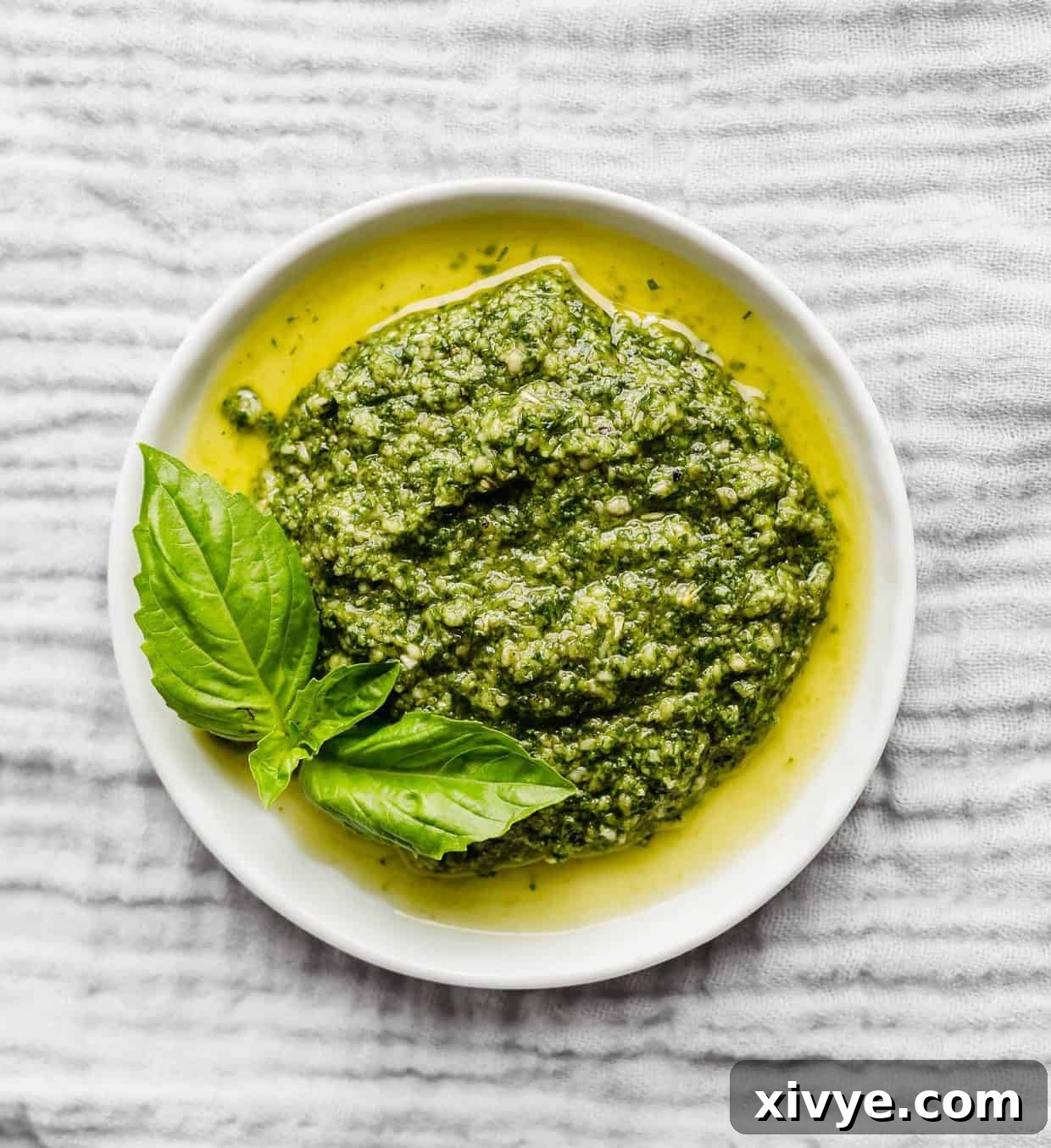
- Control Consistency by Gradually Adding Olive Oil: When blending your ingredients, it’s crucial to stream in the extra virgin olive oil slowly and continuously. This technique, performed with the food processor or blender running, allows the oil to emulsify properly with the other ingredients. This gradual addition enables you to precisely control the consistency of your pesto: use slightly less oil for a thicker, more paste-like pesto, or add a little more for a smoother, creamier sauce ideal for drizzling.
- Utilize an Immersion Blender for Convenience: Don’t have a full-sized food processor or blender? An immersion blender (also known as a stick blender) can work wonders for making pesto, especially if you’re making a smaller batch. Simply combine all ingredients in a tall jar or container and blend until your desired texture is achieved. It’s perfect for achieving either a perfectly smooth sauce or a slightly chunkier, more rustic pesto.
- Beyond Pasta: Versatile Pesto Uses: Pesto is a true culinary MVP, transforming ordinary meals into extraordinary ones. While it’s a quintessential partner for pasta (try it in basil pesto pasta), its uses extend far beyond. Smother it over cooked chicken or fish, toss it with homemade ravioli, or use it as a vibrant base sauce for homemade pizza. It’s also fantastic dolloped into soups, mixed into scrambled eggs, or stirred into mashed potatoes. Pesto is a spring and summer staple, but its bright flavors are welcome all year long.
Make Ahead, Storing, and Freezing Homemade Pesto
Making a batch of pesto ahead of time is a fantastic way to ensure you always have this flavorful sauce on hand. Proper storage is key to maintaining its vibrant color and fresh taste. Here’s how to store and freeze your **classic basil pesto recipe**:
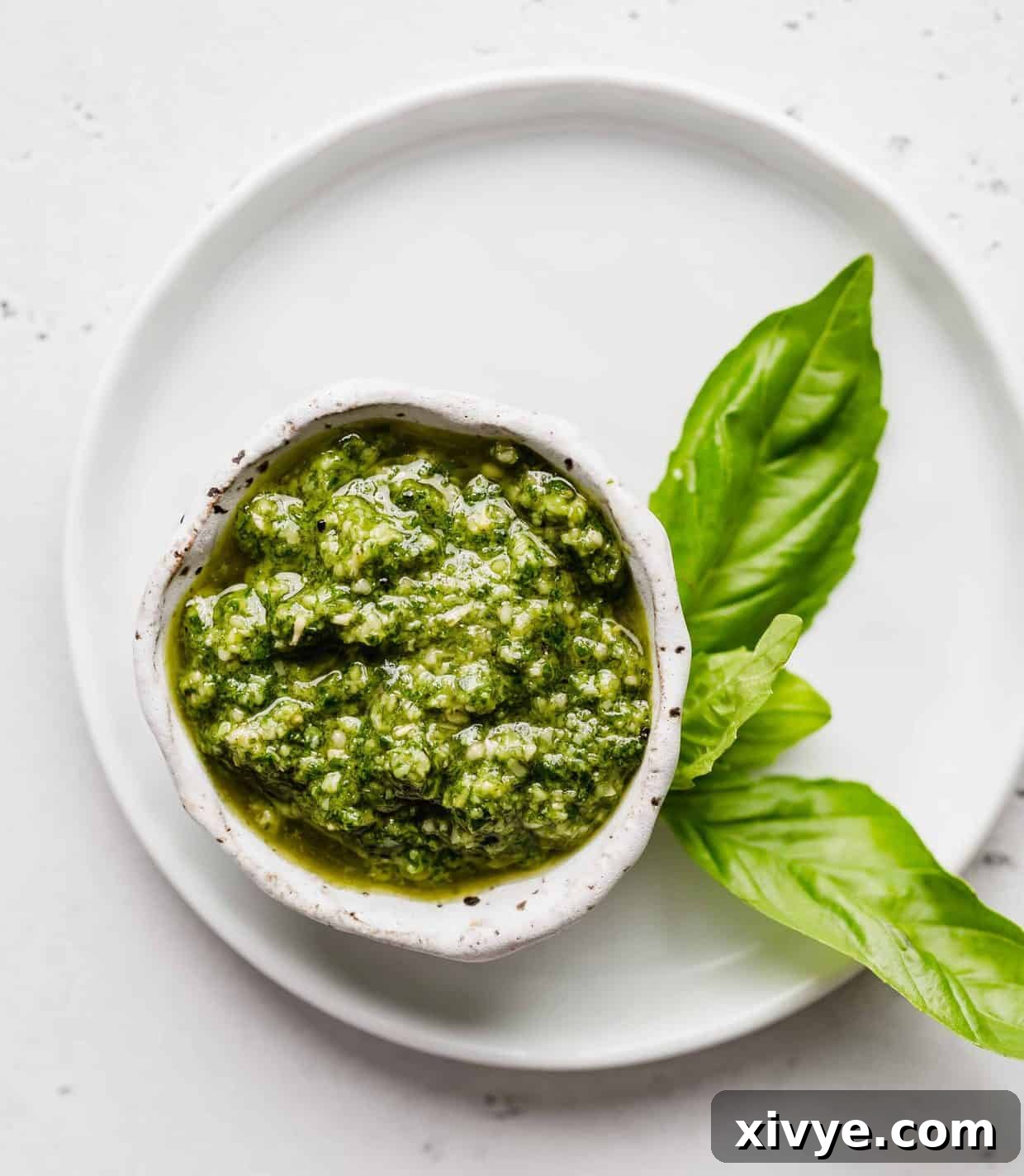
- Refrigeration: Store leftover pesto in an airtight container or a jar in the refrigerator for up to one week. To significantly extend its freshness and prevent oxidation (which can cause the pesto to darken), pour a thin layer of extra virgin olive oil over the surface of the pesto before sealing the container. This creates a protective barrier against air exposure. Do not stir the oil layer in until you are ready to use the pesto.
- Freezing for Longer Shelf Life: Pesto freezes beautifully, making it an excellent candidate for batch cooking. However, there’s a crucial tip for freezing: it’s generally best to freeze the pesto *without* the Parmesan cheese. Dairy products like Parmesan can sometimes develop a grainy or crumbly texture when thawed after freezing. Instead, freeze the basil, nuts, garlic, salt, and olive oil mixture. When you’re ready to use it, simply thaw the pesto base and stir in the freshly grated Parmesan cheese before serving. This ensures optimal texture and flavor.
- Portioning for Convenience: To avoid thawing an entire large batch every time you need a small amount, freeze your pesto in small portions. Ice cube trays are ideal for this purpose, yielding perfectly sized individual servings. Simply spoon the pesto mixture (without cheese, if freezing) into the compartments of an ice cube tray.
- Post-Freeze Storage: Once the pesto cubes are frozen solid (this usually takes a few hours), remove them from the trays. Transfer the frozen pesto cubes to a freezer-safe ziplock bag or an airtight container. Label with the date and store in the freezer for up to 6-9 months. When you need pesto, simply grab a cube or two, thaw, add cheese (if applicable), and enjoy!
Common Questions About Homemade Basil Pesto
Here are answers to some frequently asked questions about making and enjoying homemade basil pesto:
If you find your homemade pesto has a bitter taste, it could be due to a few factors. One common culprit is the quality of your extra virgin olive oil. Some robust or low-quality olive oils can contain bitter compounds that become more pronounced when blended. If this is the case, try using a lighter, milder-flavored olive oil. Another reason could be over-blending the basil and nuts, which can release bitter chlorophyll from the basil and oils from the nuts. Ensure you blend just until smooth, avoiding excessive processing.
Making a delicious vegan basil pesto is incredibly easy! The primary substitute needed is for the Parmesan cheese. Instead of Parmesan, add 1-2 tablespoons of nutritional yeast to the mixture. Nutritional yeast offers a distinct savory, cheesy flavor without any dairy. Additionally, ensure your chosen olive oil is purely plant-based, which most are. Some vegan recipes also incorporate toasted cashews or sunflower seeds for added creaminess and richness in place of or in addition to pine nuts.
Absolutely! While pine nuts are the traditional choice for pesto, you have the freedom to experiment with a wide variety of nuts to create different flavor profiles. Almonds, walnuts, pistachios, cashews, and pecans all make excellent alternatives. Each will impart a unique nuance to your pesto; walnuts, for instance, offer a slightly more bitter, earthy note, while cashews provide a creamier texture. Always toast your chosen nuts lightly beforehand to maximize their flavor. If you have a nut allergy, you can confidently omit the nuts entirely and still produce a delicious pesto by increasing the amount of cheese or adding a tablespoon of sunflower or pumpkin seeds for texture.
Achieving the perfect pesto consistency is all about controlling the olive oil. If your pesto is too thick, simply stream in a little more olive oil, a tablespoon at a time, until it reaches your desired smoothness. If it’s too thin, you can add a bit more Parmesan cheese, a few extra basil leaves, or even a small amount of toasted nuts to help thicken it up. Remember that pesto thickens slightly as it chills, so keep that in mind when assessing consistency.
Yes, absolutely! The traditional method of making pesto involves a mortar and pestle, which yields a coarser, more rustic texture and an arguably deeper flavor as the ingredients are crushed rather than cut. While more labor-intensive, it’s a rewarding process. If you don’t have either, finely chop your basil and garlic by hand, then mince your toasted nuts. Combine them in a bowl with the Parmesan, salt, and pepper, then slowly whisk in the olive oil until emulsified. It takes more time, but the result is equally delicious.
Explore More Delicious Pesto Recipes
Once you fall in love with homemade basil pesto, you’ll want to explore all the wonderful ways it can be incorporated into your cooking. Here are some of my favorite pesto-centric recipes to inspire your culinary adventures:
- Hearty Kale Pesto
- Refreshing Pesto Tortellini Pasta Salad
- Delicious Pesto Pasta with Zucchini and Ricotta
- Simple & Easy Pesto Pasta
- Flavorful Tomato, Mozzarella, and Pesto Panini
- Unique Kale Pizza
Did you make this recipe? I’d love to hear about it! Leave a star rating and review or scroll below the recipe card and do so there.
Stay up-to-date by following us on Instagram, TikTok, YouTube, Facebook, and Pinterest.
Print
SaveSaved!
Review
Classic Homemade Basil Pesto
 Whitney Wright
Ingredients
- 2 ½ cups fresh basil (packed)
- ¼ cup pine nuts – toasted
- 2 garlic cloves – peeled
- ½ tsp salt – or to taste
- pinch black pepper – freshly ground
- ½ cup freshly grated Parmesan cheese
- ½ cup extra virgin olive oil
Instructions
-
Add the fresh basil leaves, toasted pine nuts, peeled garlic cloves, salt, black pepper, and freshly grated Parmesan cheese to the bowl of your food processor (or a powerful blender). Pulse several times until the ingredients are finely chopped and well incorporated into a coarse paste. Scrape down the sides of the bowl as needed to ensure even blending.
-
With the food processor (or blender) running on a low setting, slowly stream in the ½ cup of extra virgin olive oil. Continue blending until the pesto reaches your desired consistency – either smooth and creamy or with a slightly chunkier texture. Taste the pesto and adjust the salt and pepper to your liking. Enjoy immediately or store for later!
Notes
To freeze pesto, spoon it into ice cube trays for convenient individual portions. Once completely frozen, transfer the pesto cubes to a freezer-safe bag or container and store in the freezer for up to 6-9 months. For best results, consider omitting the Parmesan cheese until after thawing, as its texture can change during freezing.