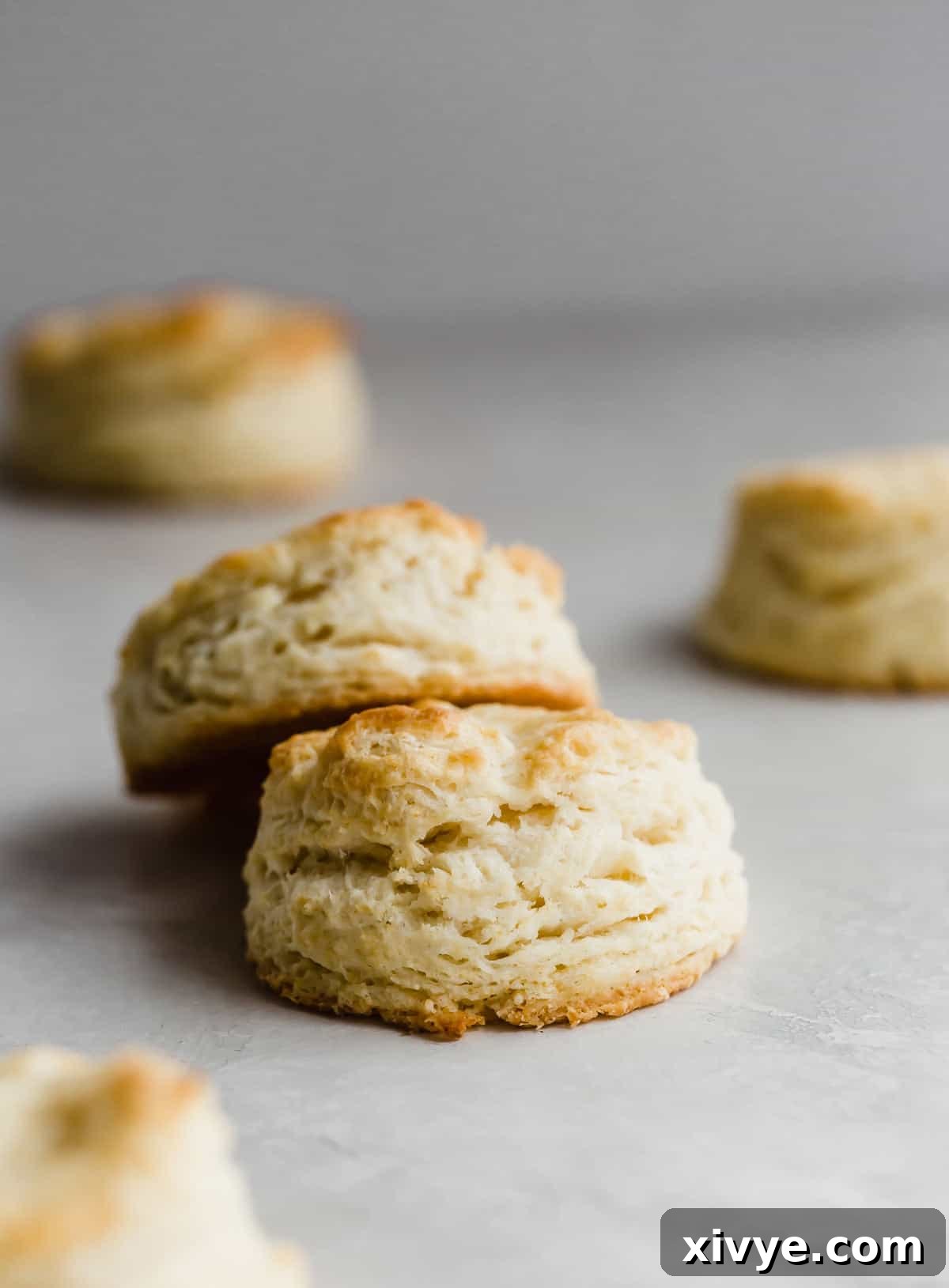
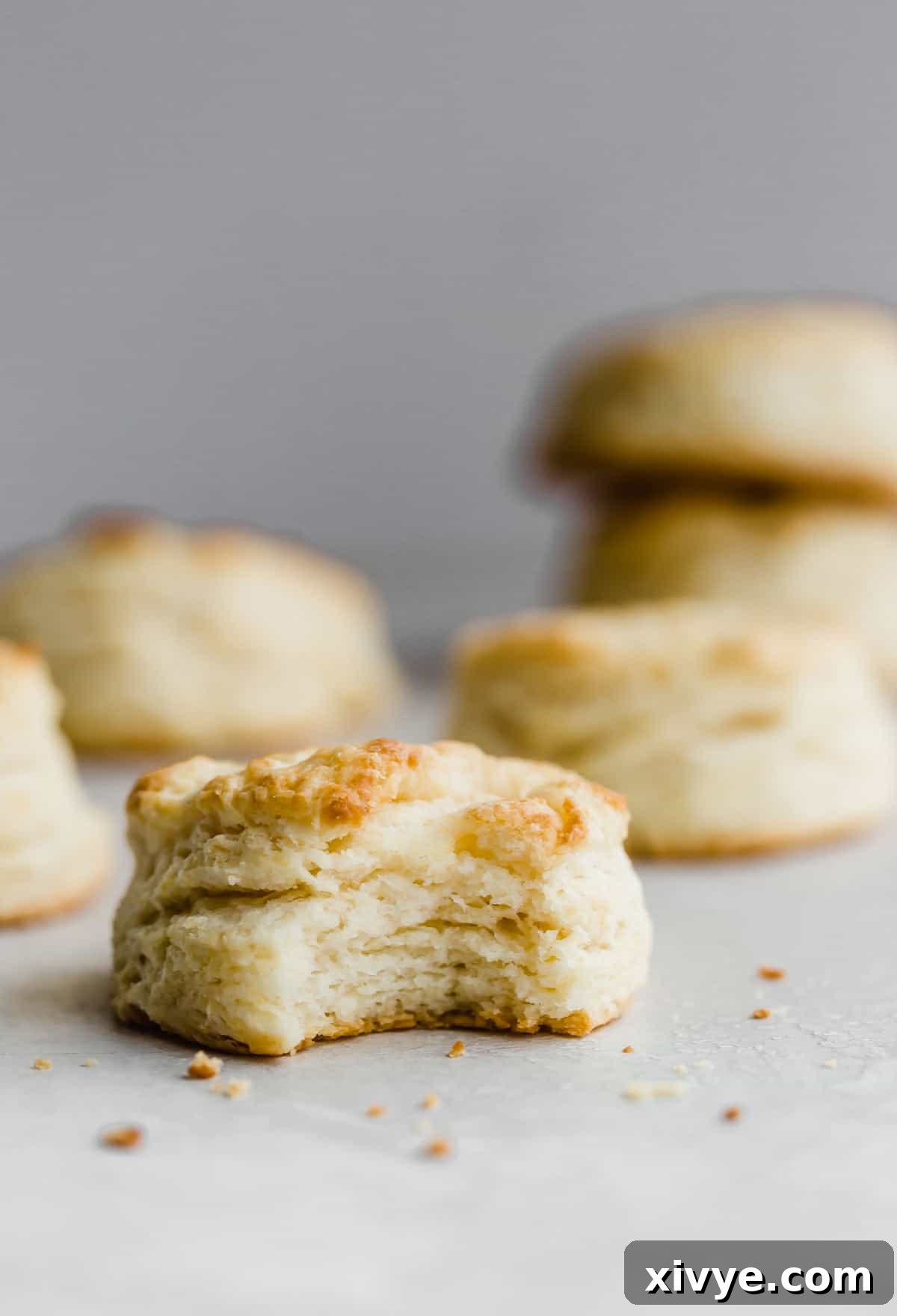
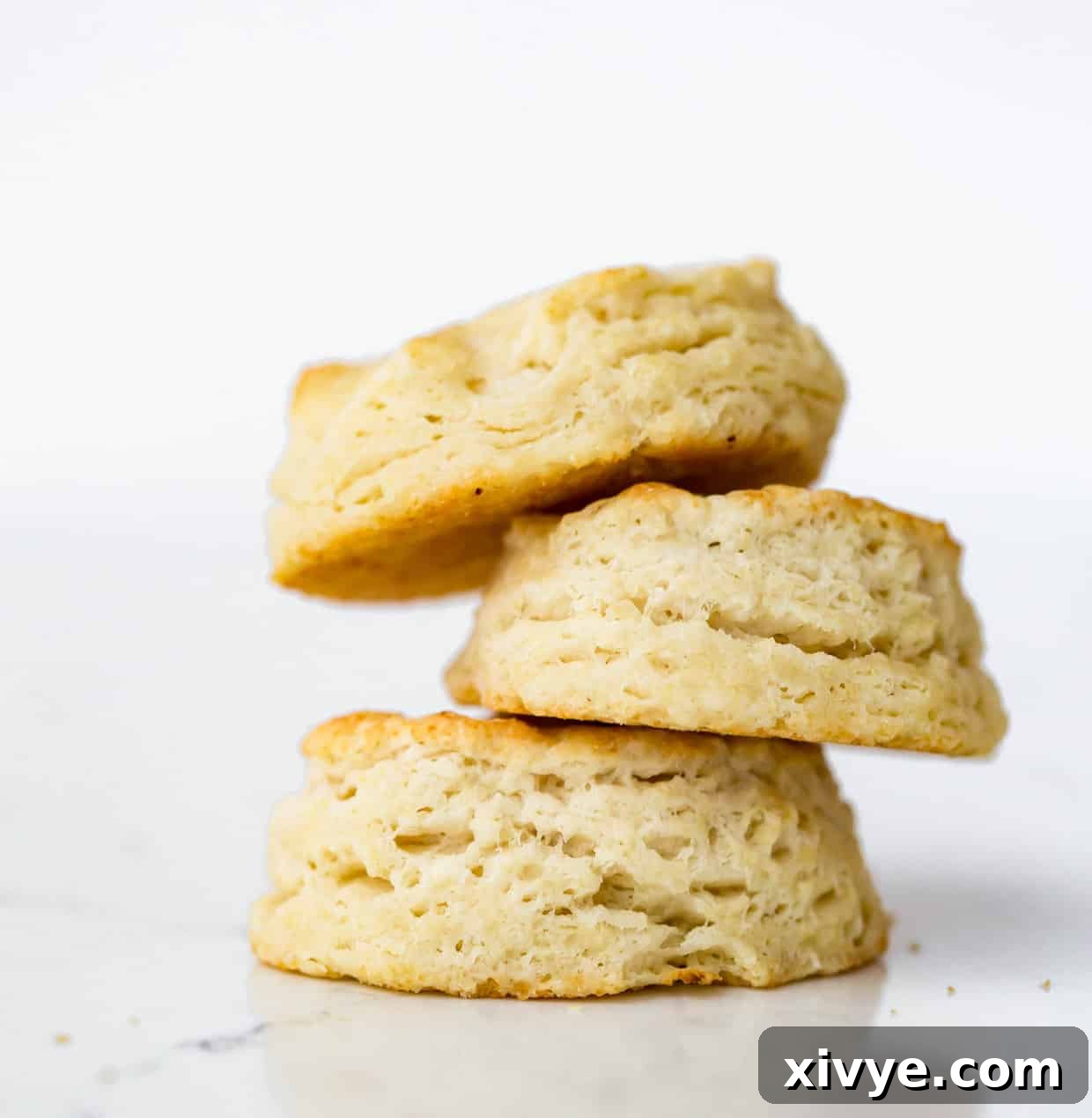
There’s nothing quite like the comforting aroma and taste of freshly baked biscuits straight from the oven. This Small Batch Buttermilk Biscuits recipe delivers a truly exceptional experience, yielding 8 incredibly light, supremely fluffy, beautifully flaky, and rich buttery biscuits. Forget the shortening – our recipe proudly uses only real butter and tangy buttermilk, ensuring the most amazing flavor and irresistible texture in every bite. Whether you’re a seasoned baker or new to the kitchen, these homemade buttermilk biscuits are designed to be simple, satisfying, and utterly delicious.
Imagine sinking your teeth into one of these soft, golden-brown marvels, with layers that practically melt in your mouth. These versatile biscuits are a perfect canvas for both sweet and savory accompaniments. For a delightful sweet treat, serve them warm with a dollop of homemade Strawberry Butter or your favorite fruit jam. Craving something more substantial? Pair them with a hearty Homemade Sausage Gravy for a classic Southern breakfast that will truly stick to your ribs. They also make an excellent companion to comforting soups, such as our vibrant Sweet and Spicy Chili or the creamy Zupas Tomato Basil Soup. With this recipe, you’re not just making biscuits; you’re creating moments of pure culinary joy.
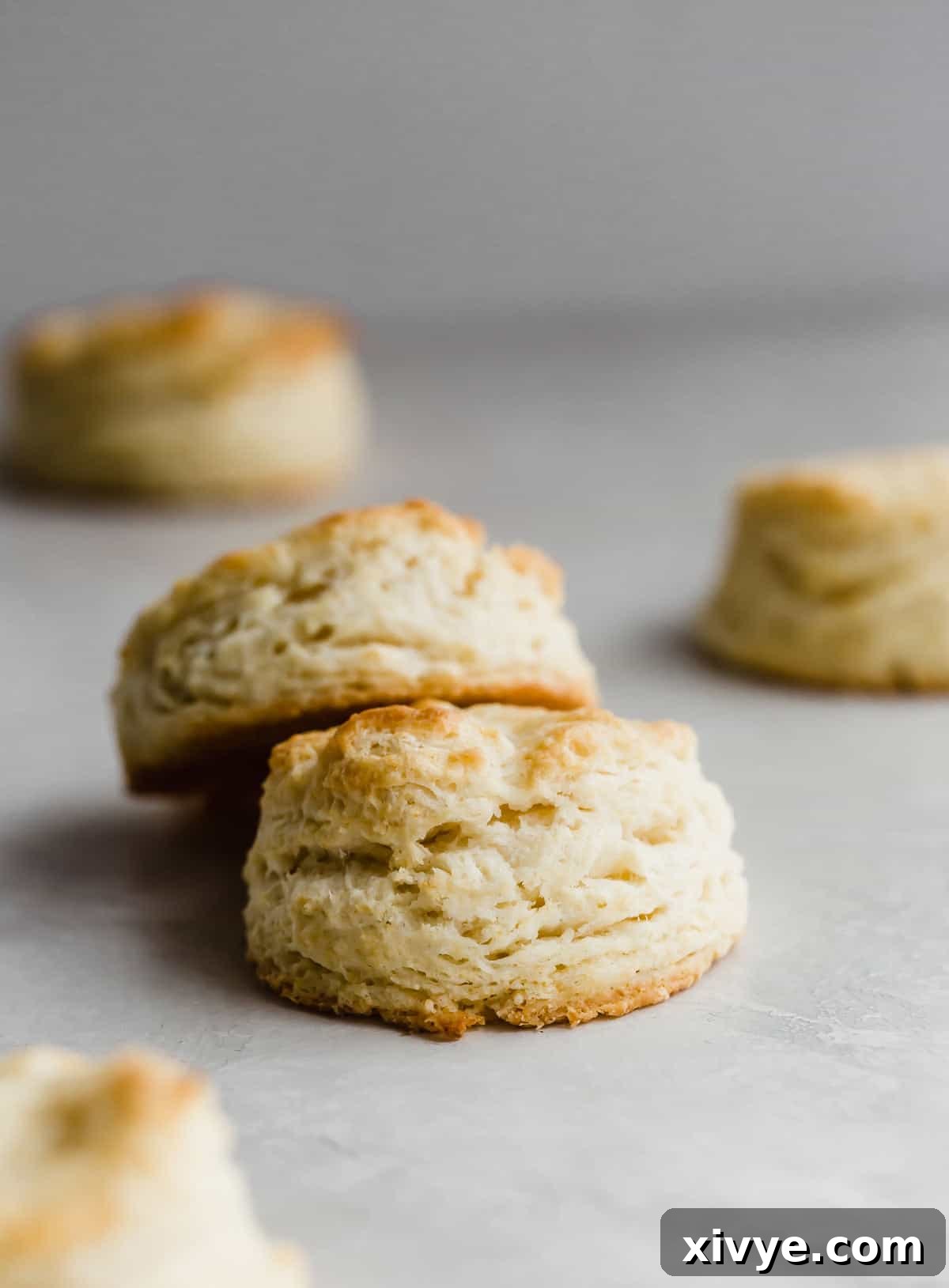
Why You’ll Love This Fluffy Buttermilk Biscuits Recipe
This recipe isn’t just about making biscuits; it’s about making the *best* biscuits with minimal fuss and maximum flavor. We’ve honed this recipe to ensure every batch turns out perfectly, consistently delivering those coveted light, fluffy, and flaky results. Here’s why this will become your go-to recipe for homemade buttermilk biscuits:
- Authentic Butter-Only Biscuits: Say goodbye to bland, shortening-based biscuits. We exclusively use cold, unsalted butter for superior flavor and an incredibly flaky texture. This commitment to real butter means each biscuit is rich, golden, and truly melt-in-your-mouth delicious, setting our recipe apart from others.
- Remarkably Simple Process: Don’t be intimidated by homemade biscuits! This recipe is crafted to be ridiculously easy, even for beginners. We provide clear, step-by-step instructions, including a foolproof dough folding technique that builds those essential layers without the need for complex maneuvers. You’ll be amazed at how quickly you can create bakery-quality biscuits from scratch.
- Achieve Sky-High Fluffiness: Our method ensures your biscuits rise beautifully, creating an impressive height and an airy, tender interior. The secret lies in carefully selected leavening agents and the precise handling of cold butter, which work together to produce biscuits that are fluffy, light, and wonderfully substantial – the kind you dream of for a special breakfast or brunch.
- Perfect Small Batch Yield: This recipe is specifically designed to make 8 delicious biscuits, an ideal quantity for a smaller family or to prevent an excess of leftovers. It’s perfect for when you crave fresh, warm biscuits without committing to a massive batch. Enjoy them hot out of the oven, knowing you’ll have just enough to satisfy everyone.
- Versatile and Customizable: While perfect on their own, these biscuits are incredibly versatile. They serve as a fantastic base for savory dishes like classic biscuits and gravy, or they can be sweetened with jams, honey, or fruit butter for a delightful treat. This adaptability makes them a staple for any meal or occasion, from a quick weekday breakfast to an elaborate holiday spread.
Key Ingredients for Perfect Flaky Biscuits
Crafting the best buttermilk biscuits starts with understanding the role of each ingredient. Quality and temperature are crucial for achieving that desired fluffy and flaky texture. Here’s a detailed look at what you’ll need and why:
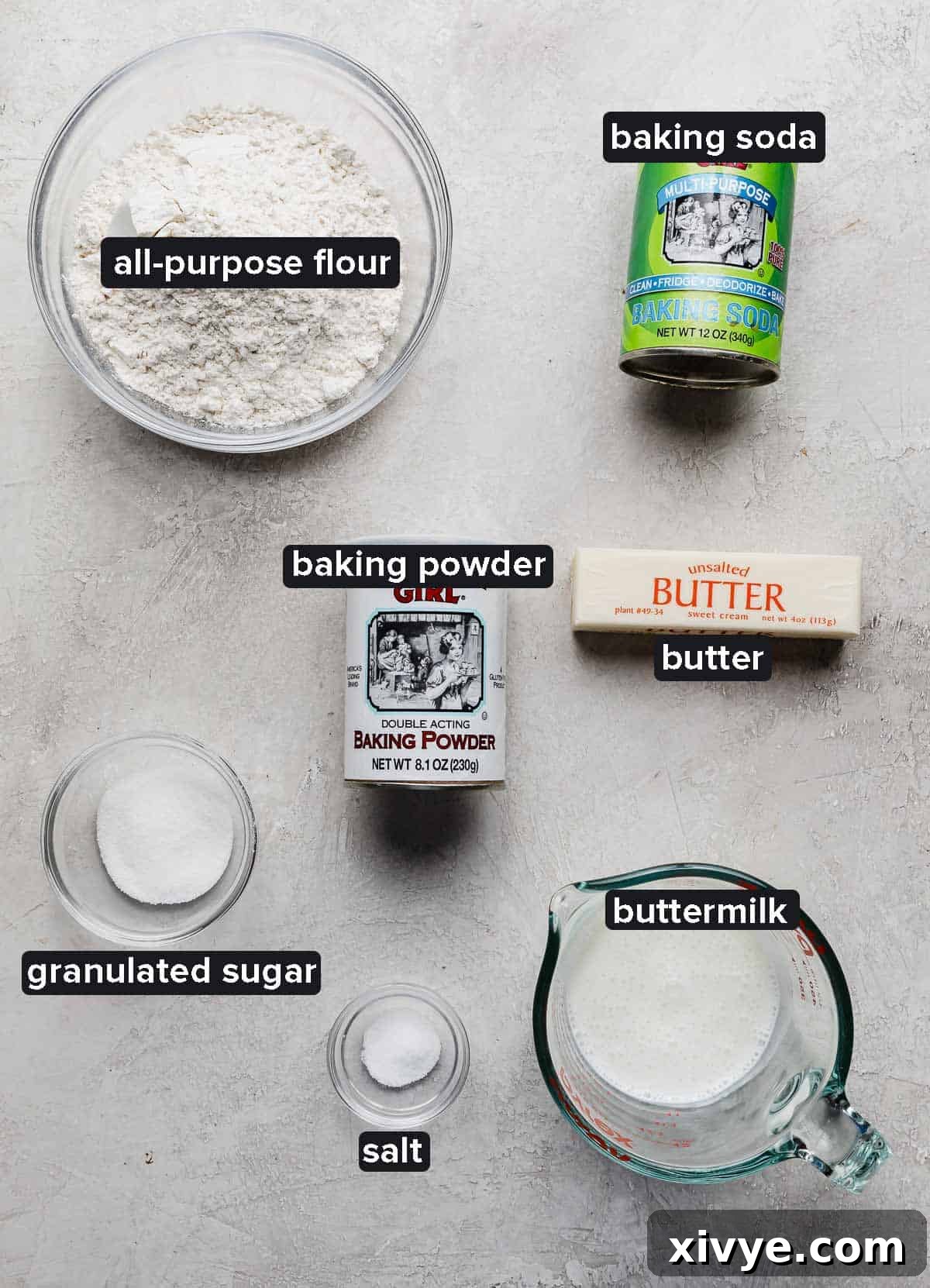
- All-Purpose Flour: This forms the foundational structure of your biscuits. Standard all-purpose flour works wonderfully, providing the right balance of gluten for a tender crumb. While self-rising flour might seem like a shortcut, using all-purpose allows for precise control over the leavening agents, which is key for a truly amazing rise.
- Unsalted Butter (COLD, COLD, COLD!): This is the star ingredient! Using unsalted butter allows you to control the overall sodium content, ensuring your biscuits are perfectly seasoned. The critical instruction here is to use butter that is *extremely* cold, ideally chilled in the freezer after cubing. Cold butter creates pockets of steam during baking, which is essential for those irresistible flaky layers and a superior rise. Never use softened or melted butter for biscuits!
- Granulated Sugar: A small amount of sugar doesn’t make these biscuits sweet in the traditional sense, but rather enhances their overall flavor profile. It subtly balances the tang of the buttermilk and the richness of the butter, contributing to a more complex and satisfying taste without making them dessert-like. It also aids in achieving that beautiful golden-brown crust.
- Baking Powder & Baking Soda (FRESH!): These are your primary leavening agents, responsible for the magnificent rise and airy texture of your biscuits. Ensure both are fresh by checking their expiration dates. Old leavening agents will result in flat, dense biscuits. Baking soda reacts with the acidic buttermilk, while baking powder provides additional lift, working in tandem for maximum fluffiness.
- Salt: A crucial flavor enhancer. Just 1 teaspoon of salt is perfectly calibrated for this small batch buttermilk biscuit recipe. It amplifies the natural flavors of the flour and butter, preventing the biscuits from tasting bland and bringing out a delicious, savory depth.
- Buttermilk (COLD!): The namesake ingredient and absolutely vital for classic buttermilk biscuits! The acidity in cold buttermilk reacts with the baking soda to create carbon dioxide, contributing to the biscuits’ light and airy texture. Beyond its leavening power, buttermilk also imparts a distinct, subtle tang that complements the richness of the butter beautifully, leading to a tender and moist crumb. Always use cold buttermilk for the best results.
Easy Step-by-Step Instructions for Fluffy Biscuits
Follow these detailed steps to create flawless, sky-high buttermilk biscuits every time. Precision and temperature control are your best friends here!
- Prepare the Butter: Begin by cutting ½ cup of unsalted butter into small, ½-inch cubes. Immediately place these cubes in the freezer. Keeping the butter as cold as possible is paramount for flaky biscuits, so let it chill while you gather and prepare your dry ingredients.
- Combine Dry Ingredients: Preheat your oven to a hot 450ºF (232ºC). In the bowl of a food processor, combine 2 cups of all-purpose flour, 1 tablespoon of granulated sugar, 1 teaspoon of salt, 1 tablespoon of baking powder, and ¼ teaspoon of baking soda. Pulse these dry ingredients for just 5 seconds to ensure they are thoroughly mixed and aerated. If you don’t have a food processor, a large bowl and a whisk work just as well.
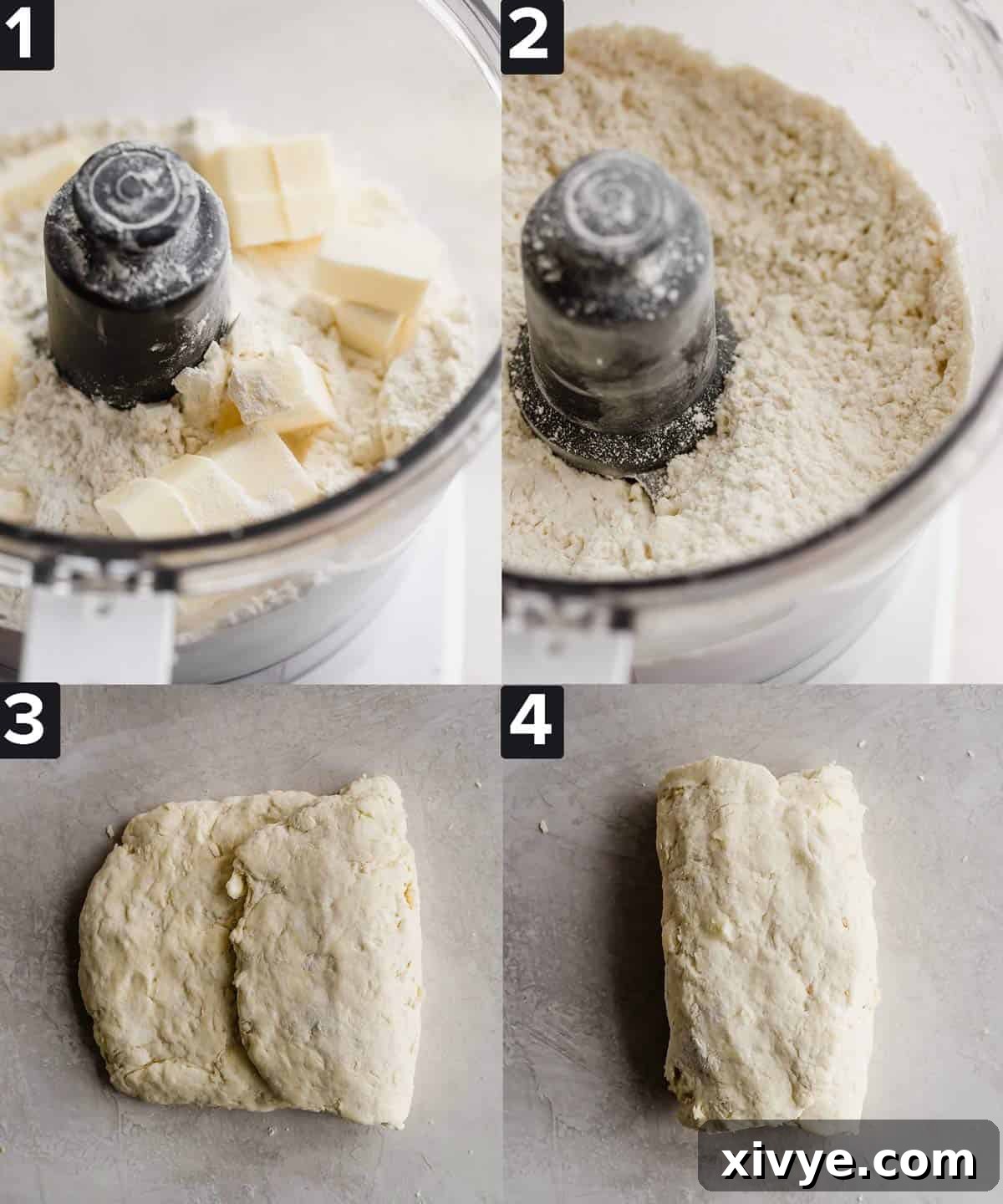
- Incorporate the Cold Butter: Remove the cubed butter from the freezer. Add the cold butter to the flour mixture in the food processor. Pulse in short bursts (about 1-2 seconds each) until the butter pieces resemble coarse crumbs, similar to the size of small peas. This method ensures the butter remains cold and distinct, which is key for creating flaky layers. If using a pastry cutter, cut the butter into the flour mixture until the same coarse crumb texture is achieved. Transfer this mixture to a large mixing bowl.
- Add Cold Buttermilk: Pour ¾ cup of *cold* buttermilk into the flour and butter mixture. Use a spoon or spatula to mix gently until the ingredients are *just* combined. Be very careful not to overmix the dough. Overworking the dough develops too much gluten, which will result in tough, dense biscuits instead of light and fluffy ones. The dough will look shaggy and slightly sticky, and that’s perfectly normal.
- Gentle Pat and Fold (The Secret to Layers!): Lightly flour a clean work surface. Turn the biscuit dough out onto this surface. Instead of using a rolling pin, which can overwork the dough, gently pat the dough with your hands into a rough 6×9-inch rectangle, aiming for a thickness of about ½-inch. Now, perform the essential folding technique: visually divide the dough into three sections. Fold one-third of the dough from one end into the center, then fold the remaining third over that, much like folding a business letter. Turn the dough horizontally (a quarter turn) and repeat this folding pattern two more times. This lamination process creates multiple layers, which translates to those highly sought-after flaky biscuits.
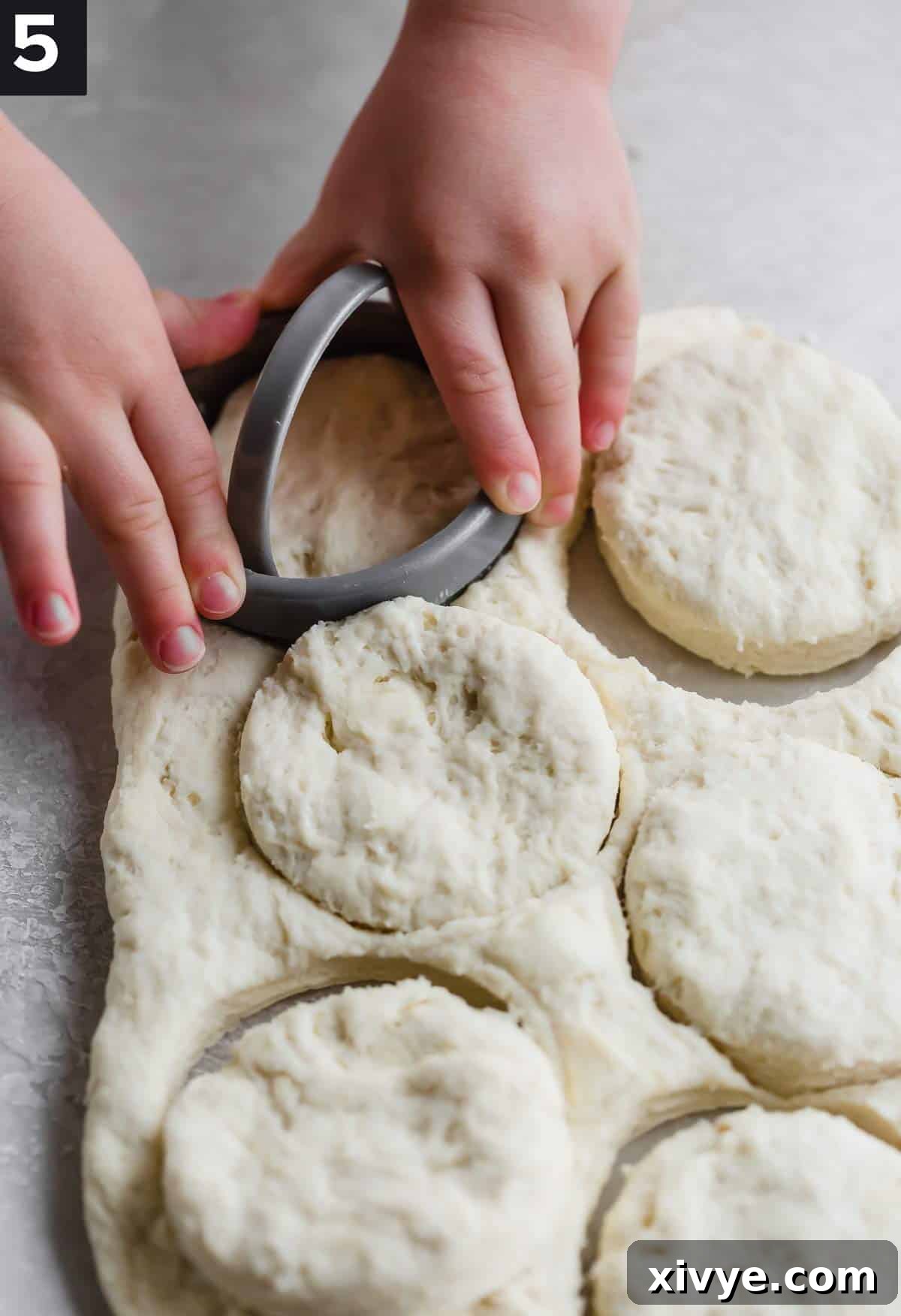
- Cut Out the Biscuits: Gently pat the folded dough back into a rectangle about ½ to ¾-inch thick. Using a sharp round biscuit cutter (preferably 3 inches in diameter), press the cutter straight down into the dough. It’s crucial not to twist the cutter, as twisting can seal the edges of the biscuit, preventing it from rising properly. Lift the cutter straight up. Arrange the cut biscuits on a baking sheet lined with parchment paper, allowing their edges to gently touch each other. This closeness encourages them to rise taller and maintain soft sides. Reroll scraps gently once, if desired, to cut additional biscuits, but avoid overworking.
- Bake to Golden Perfection: Place the baking sheet with the biscuits into your preheated 450ºF (232ºC) oven. Bake for 12-16 minutes, or until the tops of the biscuits are beautifully golden brown and they have risen significantly.
- Finish and Serve: Once baked, carefully remove the biscuits from the oven. For an extra touch of richness and shine, immediately brush the tops with a little melted butter using a pastry brush. Serve them warm with your choice of savory toppings like Sausage Gravy, or sweet additions like Homemade Raspberry Jam. Enjoy these delightful homemade buttermilk biscuits fresh!
Expert Tips for the Best Buttermilk Biscuits
Achieving truly magnificent, flaky, and fluffy biscuits is all about mastering a few key techniques. These expert tips will elevate your biscuit baking and ensure perfect results every time:
- The Power of Cold Butter: This is arguably the most crucial tip. Always use butter that is as cold as possible – ideally, cube it and then chill it in the freezer for 10-15 minutes before mixing. Butter contains both fat and water. When very cold butter pieces melt in the oven, the water turns into steam, creating pockets that separate the dough layers. This process is called lamination and is what gives biscuits (and pie crusts and scones) their characteristic flaky texture and incredible rise. Warm butter will simply blend into the flour, resulting in dense, cake-like biscuits.
- Avoid Overmixing the Dough: Resist the urge to aggressively knead or mix the biscuit dough once the buttermilk has been added. Overworking the dough develops the gluten, making your biscuits tough, dense, and flat. Mix only until the ingredients are *just* combined and no dry streaks of flour remain. The dough should still look a bit shaggy and feel slightly sticky.
- Gentle Handling is Key: When shaping the dough, avoid using a rolling pin if possible. The pressure from a rolling pin can compact the dough and overdevelop the gluten. Instead, gently pat the dough into your desired thickness and shape with your hands. This keeps the dough tender and the butter pieces intact.
- Master the Folding Technique: The “business letter” folding method is indispensable for creating those beautiful, flaky layers. By folding the dough several times, you’re layering the butter and flour, which will expand into distinct flakes during baking. Don’t skip or rush this step; it’s a game-changer for biscuit texture.
- Press, Don’t Twist, Your Biscuit Cutter: When cutting your biscuits, press the biscuit cutter straight down firmly through the dough and lift straight up. Do not twist the cutter. Twisting seals the edges of the biscuit dough, preventing the individual layers from rising independently, which will result in a shorter, less flaky biscuit.
- Keep Dough Cold: If your kitchen is warm, or if you’ve spent a bit more time handling the dough, it might start to warm up. If the dough feels noticeably warm before baking, place the cut biscuits on the baking sheet into the freezer for 5-10 minutes. Chilling them again will firm up the butter, ensuring a better rise and flakiness in the oven.
- Snuggle Your Biscuits: For the tallest, softest-sided biscuits, arrange them closely together on the baking sheet, with their edges gently touching. This proximity helps them support each other as they rise, pushing upwards rather than spreading outwards. This method is crucial for achieving truly “sky-high” biscuits.
- Check Leavening Agents for Freshness: Baking powder and baking soda are vital for the biscuit’s rise. If they are old, they lose their potency. To check if baking soda is fresh, mix a teaspoon with a tablespoon of vinegar; it should bubble vigorously. For baking powder, mix a teaspoon with a tablespoon of hot water; it should also bubble. If there’s no reaction, it’s time for new leavening agents.
- No Food Processor? No Problem!: While a food processor makes quick work of cutting in butter, it’s not essential. If you don’t have one, simply whisk your dry ingredients together in a large bowl, then use a pastry blender (also known as a pastry cutter) or even two knives to cut the cold butter into the flour mixture until it resembles coarse crumbs. The results will be just as fantastic.
Make Ahead, Storing, and Freezing Your Biscuits
These homemade buttermilk biscuits are truly best enjoyed the day they are baked, when they are at their peak of warmth, fluffiness, and flakiness. However, with a few smart techniques, you can easily prepare them ahead of time or store leftovers to savor later.
Storing Baked Biscuits:
If you happen to have any leftover baked biscuits (a rare occurrence!), allow them to cool completely to room temperature. Store them in an airtight container or a resealable plastic bag at room temperature for 2-3 days. To reheat, a quick warm-up in the microwave (15-30 seconds) or a few minutes in a moderate oven (300°F/150°C) will bring back some of their freshness.
Freezing Unbaked Biscuit Dough:
Preparing biscuits ahead of time is incredibly convenient! Cut out the biscuit dough as instructed, then place the raw biscuits on a baking sheet lined with parchment paper, ensuring they don’t touch. Flash freeze them until they are solid (this usually takes about 30-60 minutes). Once frozen, transfer the solid biscuit disks to a freezer-safe bag or airtight container. They can be frozen for up to 3 months. When you’re ready to bake, simply place the frozen biscuits on a parchment-lined baking sheet (they can still be placed close together) and bake from frozen. You may need to add an extra minute or two to the baking time. If they start browning too quickly before cooking through, loosely tent them with aluminum foil.
Freezing Baked Biscuits:
You can also freeze already baked biscuits. Allow them to cool completely after baking. Then, arrange them in a single layer in a freezer-safe container or place them in a freezer bag, removing as much air as possible. They will keep well in the freezer for up to 3 months. To enjoy, remove them from the freezer and let them thaw in the refrigerator overnight, or gently warm them from frozen in the microwave or oven until heated through. They may not be quite as flaky as fresh, but they’ll still be wonderfully comforting.
Buttermilk Biscuits FAQs
Got questions about making these amazing biscuits? We’ve got answers to help you troubleshoot and perfect your baking skills.
While technically possible, omitting salt from your biscuit recipe is not recommended. Salt is a fundamental flavor enhancer in both cooking and baking. Without it, your biscuits will likely taste flat and bland, lacking the depth and balance that salt provides to complement the richness of the butter and the tang of the buttermilk. For the best flavor, follow the recipe’s recommended salt measurement.
For these particular fluffy and flaky buttermilk biscuits, we strongly advise against replacing butter with margarine. Butter is crucial for both flavor and texture. Its unique fat content and composition are essential for creating those distinct flaky layers and a rich, buttery taste. Margarine has a different water content and melting point, which can negatively impact the texture, often leading to less flaky and less flavorful results. For superior biscuits, always stick to real unsalted butter.
No, traditional buttermilk biscuits are not inherently sweet. The small amount of sugar in this recipe is primarily to balance the flavors and aid in browning, not to make them taste like a dessert. They have a savory-tangy profile that pairs beautifully with many dishes. However, if you prefer a touch of sweetness, you can easily lean into it by brushing them with honey butter after baking, or serving them with fruit jams, maple syrup, or a sprinkle of cinnamon sugar.
Buttermilk is a critical ingredient for several reasons. First, its acidity reacts with the baking soda (an alkaline ingredient), creating carbon dioxide gas. This gas is trapped in the dough, contributing significantly to the biscuits’ impressive rise and light, airy texture. Second, buttermilk imparts a distinctive, slightly tangy flavor that is characteristic of classic Southern biscuits. Finally, despite its rich taste, buttermilk is relatively low in fat, which helps to tenderize the dough and balance the high fat content of the butter, resulting in a more delicate and tender crumb.
While the sugar content is minimal, it plays an important role in balancing the overall flavor of the biscuits and promoting a golden-brown crust. It’s recommended to include it. If you prefer not to use granulated sugar, you can substitute it with 2 teaspoons of honey. Simply drizzle the honey over the buttermilk before adding it to the dry ingredients, ensuring it’s evenly distributed for the best results.
If you don’t have buttermilk on hand, you can easily make a substitute. For ¾ cup of buttermilk, you have a couple of options:
- Method 1 (Milk + Acid): Pour ½ tablespoon of lemon juice or white vinegar into a liquid measuring cup. Then, fill the rest of the cup with regular milk (dairy or non-dairy) until it reaches the ¾ cup mark. Stir gently and let it sit for 5-10 minutes until it slightly thickens and curdles.
- Method 2 (Milk + Creamy Dairy): Pour 3 tablespoons of milk into a ¾ cup measuring cup, then add plain sour cream or plain yogurt to fill the remaining space to the ¾ cup mark. Whisk well until smooth. This method creates a thicker substitute that also works well for texture.
While these substitutes work, authentic buttermilk still offers the best flavor and acidity balance.
More Irresistible Bread Recipes
If you loved making these small batch buttermilk biscuits, you might enjoy exploring other homemade bread recipes from our collection. From light and airy rolls to hearty loaves, there’s a bread for every occasion:
- Lion House Rolls: Famous for their incredible softness and buttery flavor, these rolls are a crowd-pleaser for any dinner table.
- Homemade Soft Pretzels: Enjoy the satisfying chew of freshly baked pretzels, perfect for dipping in cheese sauce or mustard.
- Focaccia Bread: A rustic Italian flatbread with a delightfully chewy texture and savory toppings, ideal for appetizers or sandwiches.
- Flaky Brioche Recipe: Indulge in the rich, buttery, and incredibly tender layers of this classic French bread.
Did you make this recipe? We’d love to hear about your experience! Leave a star rating and review below, or scroll down to the recipe card to share your feedback. Your insights help other bakers!
Stay up-to-date with our latest recipes and baking tips by following us on Instagram, TikTok, YouTube, Facebook, and Pinterest.
Print
Save
Review
Easy Buttermilk Biscuits

Whitney Wright
15 minutes
15 minutes
30 minutes
8
biscuits
Ingredients
-
2
cups
all-purpose flour -
½
cup
unsalted butter, cubed, very cold -
1
tablespoon
granulated sugar -
1
tablespoon
baking powder (fresh) -
1
tsp
salt -
¼
tsp
baking soda (fresh) -
¾
cup
buttermilk, cold
Instructions
-
Cut ½ cup unsalted butter into cubes. Place these butter cubes in the freezer to keep them very cold while you prepare the other ingredients.
-
Preheat your oven to 450°F (232°C). In a food processor, add the 2 cups of flour, 1 tablespoon of sugar, 1 teaspoon of salt, 1 tablespoon of baking powder, and ¼ teaspoon of baking soda. Pulse for 5 seconds to combine thoroughly. Ensure your baking powder and soda are fresh for optimal rise.
-
Add the very cold, cubed butter to the dry mixture in the food processor. Pulse in short bursts until the butter is incorporated and resembles coarse crumbs, similar to the size of small peas. If you don’t have a food processor, use a pastry blender or two knives to cut the butter into the flour until this texture is achieved. Transfer the mixture to a large bowl.
-
Pour ¾ cup of cold buttermilk into the butter and flour mixture. Mix gently with a spoon or spatula until the ingredients are just combined. Do not overmix; the dough should still be slightly shaggy.
-
Lightly flour a clean work surface. Gently pat the dough (do not roll with a pin) into a rough 6″x9″ inch rectangle, about ½” to ¾” thick. Perform the “business letter” fold: fold one-third of the dough over towards the center, then fold the other third over that. Turn the folded dough horizontally and repeat this folding process two more times. This step is crucial for achieving those highly desired flaky layers.
-
Gently pat the dough to your desired thickness (at least ½” or thicker). Using a 3-inch round biscuit cutter, press firmly straight down into the dough and pull straight up. Do not twist the cutter, as this can seal the edges and prevent the biscuits from rising properly.
-
Place the cut biscuits on a parchment-lined baking sheet, arranging them so their edges are gently touching each other. This helps them rise taller and maintain soft sides.
-
Bake in the preheated 450°F (232°C) oven for 12-16 minutes, or until the tops are golden brown and the biscuits are sky-high.
-
Remove the biscuits from the oven and, if desired, brush their tops with a little melted butter for extra richness and shine. Serve immediately and enjoy!
Notes
Nutrition
Calories:
189
kcal
(9%)
Carbohydrates:
21
g
(7%)
Protein:
3
g
(6%)
Fat:
10
g
(15%)
Saturated Fat:
6
g
(30%)
Cholesterol:
26
mg
(9%)
Sodium:
285
mg
(12%)
Potassium:
172
mg
(5%)
Sugar:
2
g
(2%)
Vitamin A:
315
IU
(6%)
Calcium:
79
mg
(8%)
Iron:
1.3
mg
(7%)
bread, Side Dish, Breakfast
American, Southern
Did you make this recipe?
Please leave a star rating and review on the blog post letting me know how you liked this recipe! Take a picture and tag @saltandbaker on TikTok, Instagram, and Facebook so I can see what you’re making!