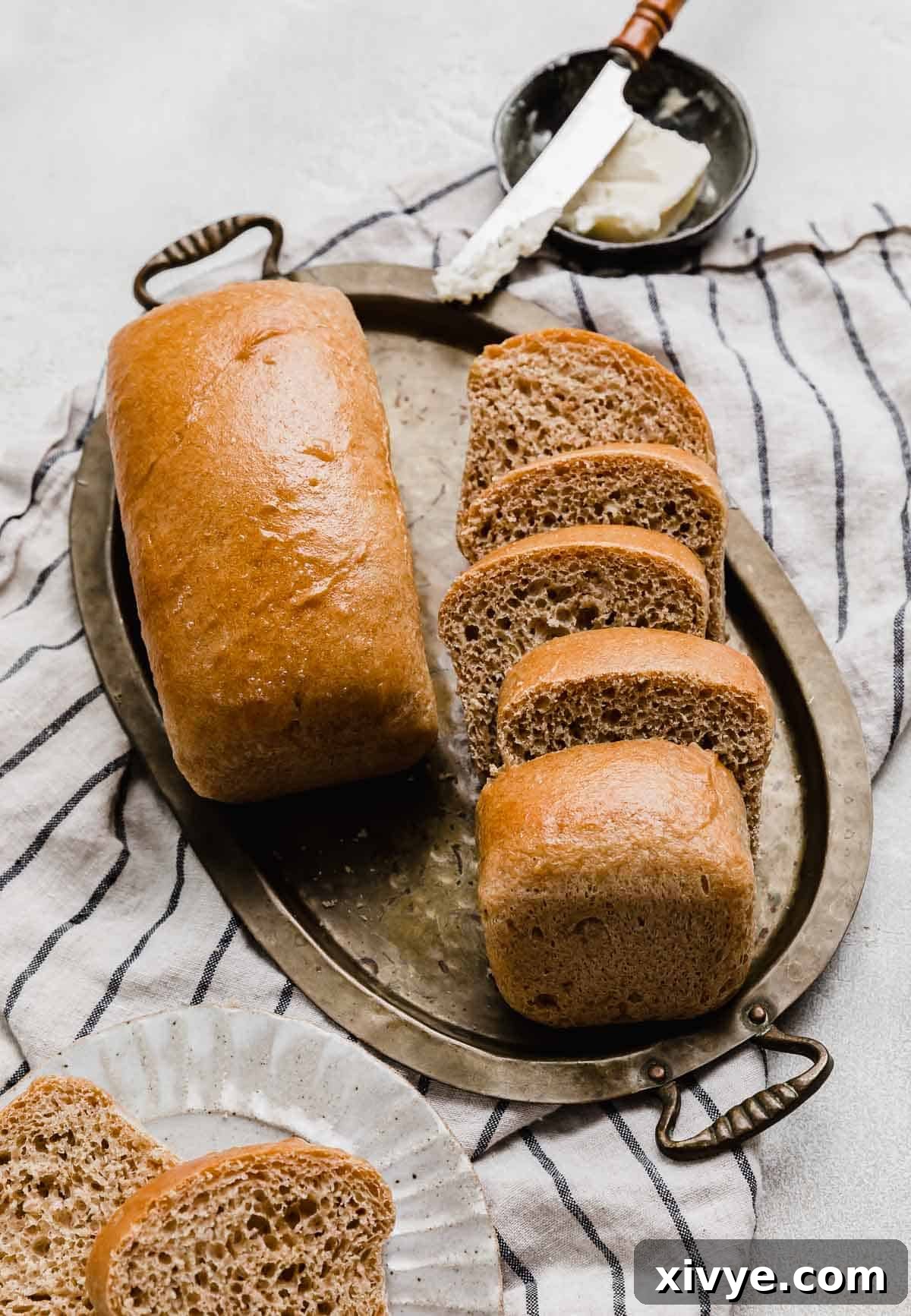
Homemade 50/50 Bread: The Perfect White and Whole Wheat Loaf
Welcome to the world of truly exceptional homemade bread! This is it—the 50/50 bread you’ve been dreaming of. After countless test batches, meticulously tweaking ingredients and techniques, I’ve perfected a recipe that delivers the best of both worlds: the irresistible softness of classic white bread combined with the wholesome, nutty depth of whole wheat. The result is a loaf so delectable and versatile, it quickly became a staple in my home, often disappearing within a day!
Whether you’re looking for the ideal bread for everyday sandwiches, a delightful snack, or a comforting side, this 50/50 loaf is engineered to impress. Its balanced flavor profile and perfect texture make it an instant family favorite. I often bake this recipe into adorable mini loaves, which are perfect for snacking or gifting, but it scales beautifully to full-sized loaves, making it the ultimate foundation for your favorite homemade sandwich creations.
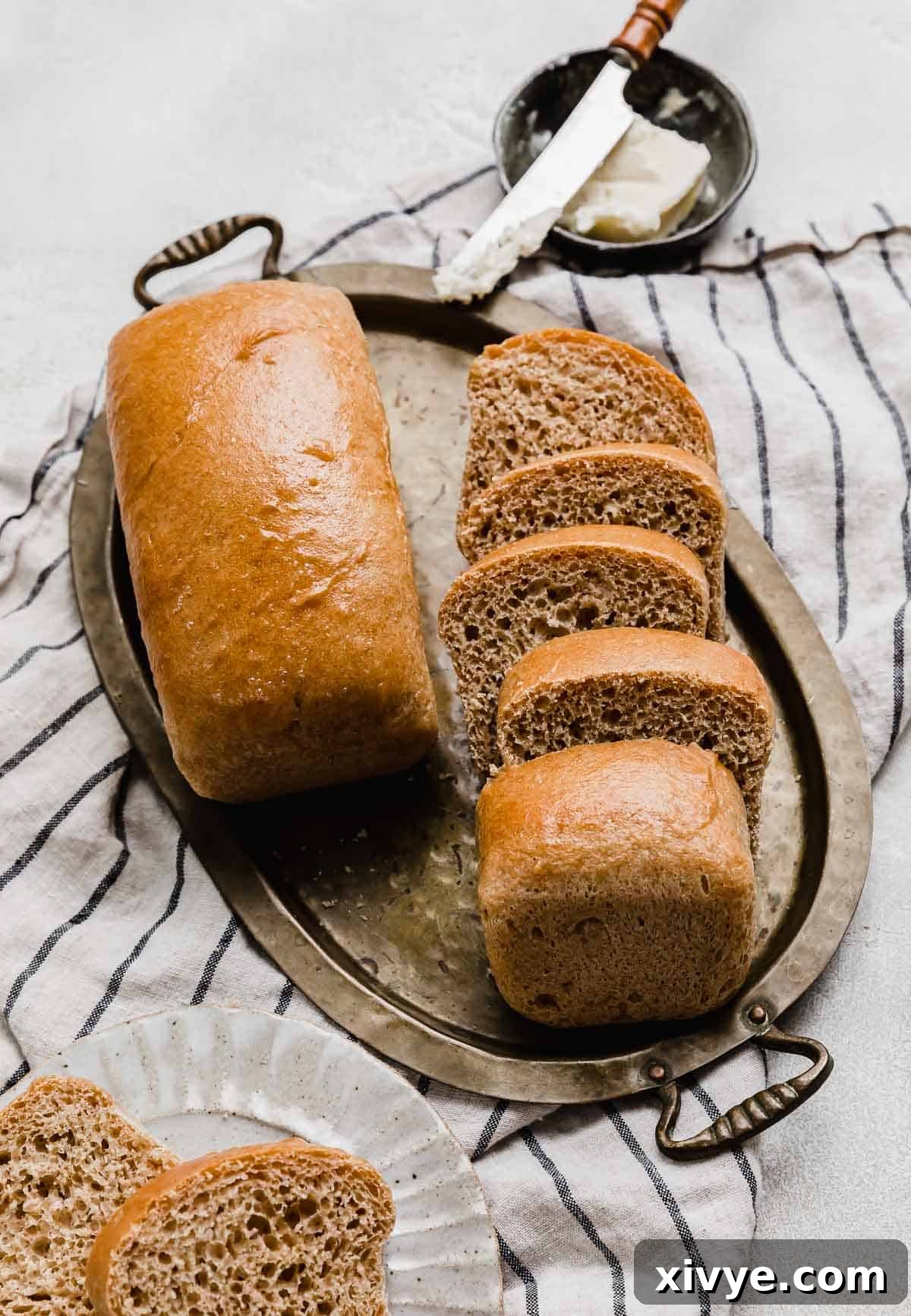
Imagine a slice of this incredible bread, spread with a vibrant Freezer Raspberry Jam or a creamy Strawberry Butter. Beyond breakfast and snacks, it’s the perfect canvas for savory meals. Elevate your lunch with gourmet Chicken Salad Sandwiches or indulge in the comforting flavors of an Apple Grilled Cheese. Once you try this 50/50 bread, you’ll want to use it for everything imaginable!
50/50 Bread: A Quick Look
- Ready in: Approximately 2 hours, 45 minutes (including proofing time)
- Makes: 4 delightful mini loaves, or 1 regular full-sized loaf and 1 mini loaf
- Main ingredients: Nourishing honey, active dry or instant yeast, hearty whole wheat flour, high-protein white bread flour, vital wheat gluten for structure, dough enhancer for superior texture, and vegetable oil for tenderness.
- ⭐Why You’ll Love This Recipe: It’s uniquely soft and airy, mirroring the best white breads, yet infused with the robust, slightly nutty taste and added nutritional benefits of whole wheat. This combination creates an incredibly delicious loaf that slices effortlessly, making it perfect for any culinary application, from elegant sandwiches to simple, satisfying snacks!
The Science Behind This Perfect Loaf: Why This Recipe Works
- Unbelievably Soft Texture. Many homemade bread recipes promise softness, but this one truly delivers a cloud-like crumb. The secret lies in a carefully calibrated blend of white bread flour, which contributes to a delicate texture, combined with a touch of vegetable oil for moisture retention and a subtle dough conditioner that works wonders. This trifecta ensures a bread that is incredibly tender without being gummy or overly dense. It’s the quintessential soft bread experience you crave.
- Stays Fresh for Days. Say goodbye to stale homemade bread! Unlike many rustic loaves that begin to dry out after just a day, our 50/50 bread is formulated to retain its freshness and moisture for up to three days—or even longer, if it manages to last that long in your kitchen! The inclusion of oil and dough enhancer actively helps the bread resist staling, keeping it delightfully soft and palatable, perfect for enjoying over several days.
- Rich and Satisfying Flavor. This bread boasts an amazing flavor profile, featuring a hint of natural sweetness that elevates its overall yumminess. During extensive testing, I experimented with both brown sugar and honey, and the consensus was clear: honey provided a superior depth of flavor and a nuanced sweetness that perfectly complemented both the white and whole wheat elements. This choice of sweetener contributes to the bread’s golden crust and a truly memorable taste experience.
Key Ingredients for Your 50/50 Bread Masterpiece
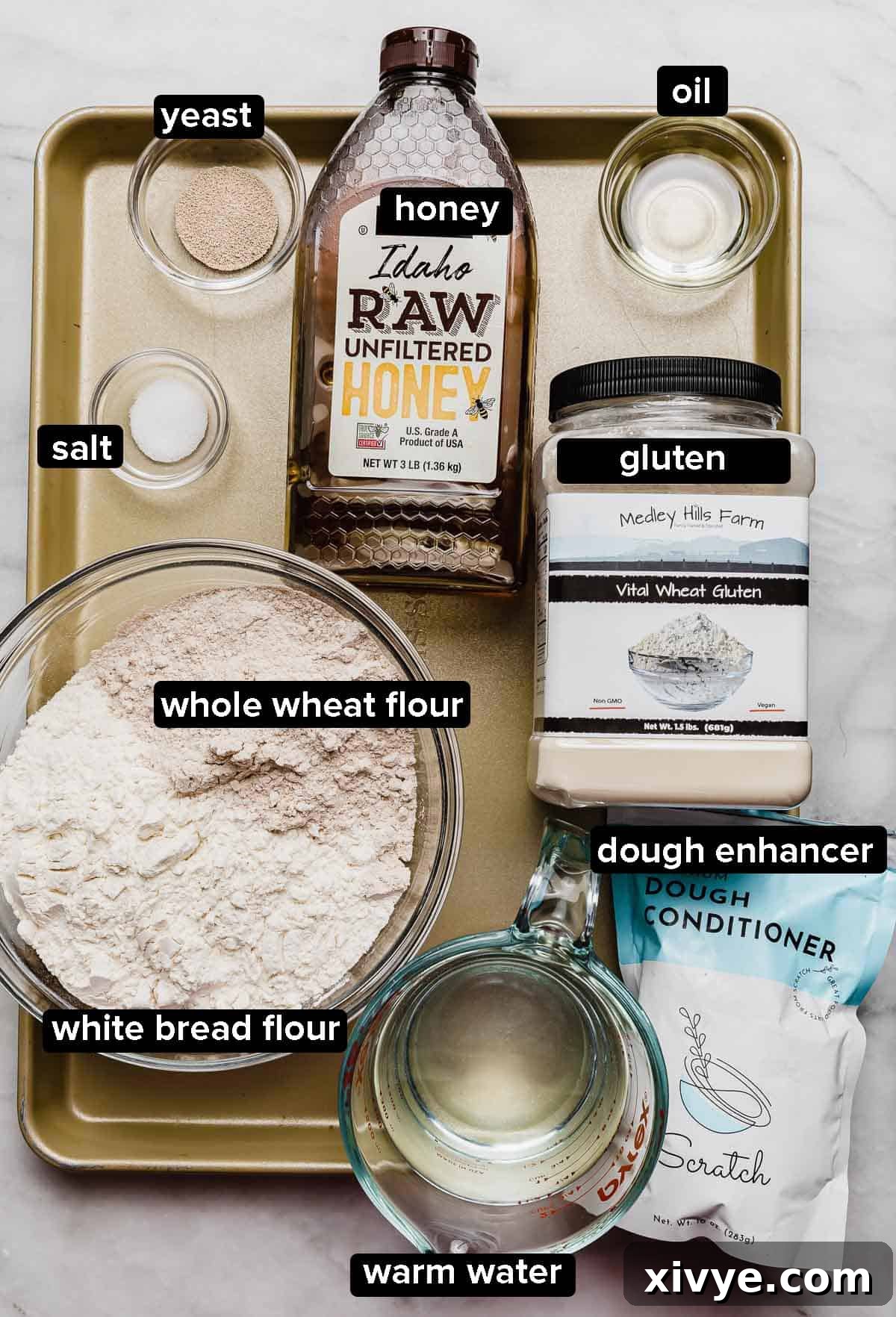
- Yeast: The magical leavening agent that gives our bread its airy structure. I primarily use active dry yeast for its reliability, which requires a brief “blooming” period in warm water to activate. However, instant yeast can also be used; it’s often more potent and doesn’t necessarily need to be bloomed, allowing you to incorporate it directly with the dry ingredients. Always ensure your yeast is fresh for optimal rise!
- Honey: More than just a sweetener, honey plays a crucial dual role. Initially, a small amount is used to “feed” the yeast, encouraging vigorous fermentation and a strong rise. Later, additional honey is incorporated into the dough, not just for its distinctive, subtle sweetness, but also for its hygroscopic properties, which help the bread retain moisture and stay soft longer.
- Whole Wheat Flour: This is half the star of our 50/50 bread, contributing 50% of the flour blend. Whole wheat flour, made from the entire wheat kernel (bran, germ, and endosperm), imparts a wonderfully nutty flavor, a denser crumb structure, and a wealth of fiber and nutrients, making our bread heartier and more wholesome than pure white bread.
- White Bread Flour: The other half of our dynamic flour duo. Bread flour is specifically chosen for its higher protein content compared to all-purpose flour. This higher protein level is essential for developing a robust gluten network, which is key to achieving a bread with an excellent rise, an open crumb, and that desirable chewy texture. This is also why bread flour is ideal for recipes like my Chewy Homemade Focaccia! While all-purpose flour can be substituted in a pinch, be aware that your loaf may have a slightly different rise and a less chewy texture due to its lower protein.
- Vital Wheat Gluten: You might wonder why we add extra gluten when we’re already using bread flour. The answer is simple and effective: the bran particles in whole wheat flour, while nutritious, can actually interfere with and inhibit gluten development, leading to a denser loaf. Adding vital wheat gluten counteracts this effect, ensuring that our 50/50 bread achieves an impressive rise and maintains its signature soft, airy texture despite the inclusion of whole wheat.
- Oil: Just like how it contributes to the incredible moistness of my Super Moist Chocolate Cake, oil is crucial in our bread dough. It acts as a tenderizer, coating the flour proteins to inhibit excessive gluten formation, which results in a softer crumb. Moreover, oil helps the dough retain moisture during baking and cooling, significantly extending the bread’s fresh, soft quality. I recommend a neutral-flavored vegetable oil, though olive oil can also be used for a slightly different flavor profile.
- Dough Enhancer: Often referred to as dough conditioner, this is truly my secret weapon for achieving consistent, professional-quality bread at home. Dough enhancer is a blend of ingredients (like ascorbic acid, enzymes, or emulsifiers) that actively improve yeast fermentation, strengthen the dough’s structure, and make it easier to handle. The result is a dough that rises more reliably, yields a more uniform crumb, and produces a baked loaf with enhanced softness and an extended shelf life.
How to Make the Perfect 50/50 Bread: A Step-by-Step Guide
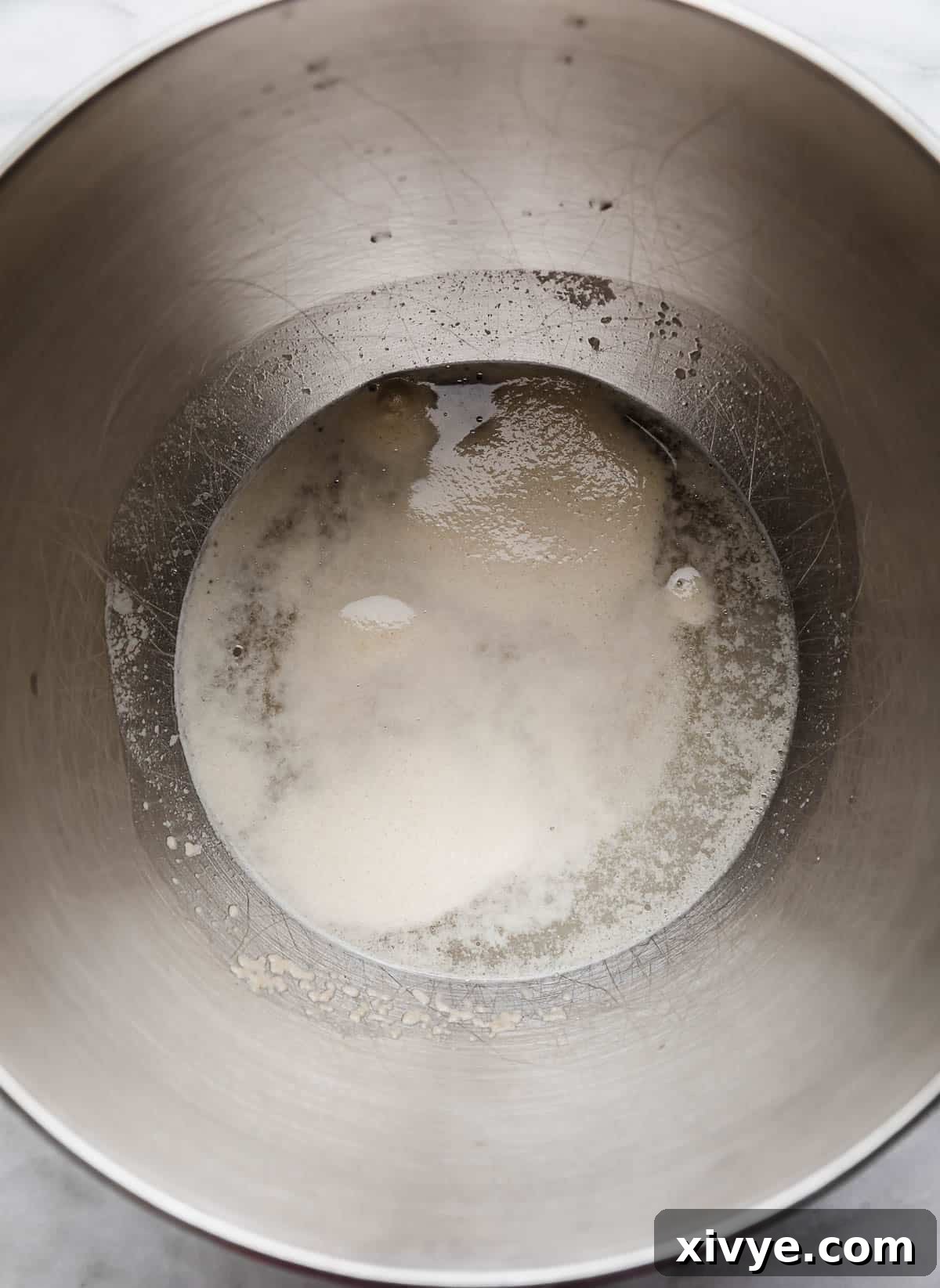
Step 1: Bloom the Yeast. In the spacious bowl of a stand mixer, or any large mixing bowl if kneading by hand, carefully combine 1⅔ cups of warm water (ensuring it’s precisely 110°F for optimal yeast activation), 1 tablespoon of honey, and 2¼ teaspoons of active dry yeast. Gently stir, then allow this mixture to rest undisturbed for 10 minutes. Watch for the magical transformation: the yeast should become vigorously activated and visibly bubbly on the surface, indicating it’s alive and ready to work its magic. If you’re opting for instant yeast, you can bypass this waiting period and proceed directly to the next step, as instant yeast does not require blooming.
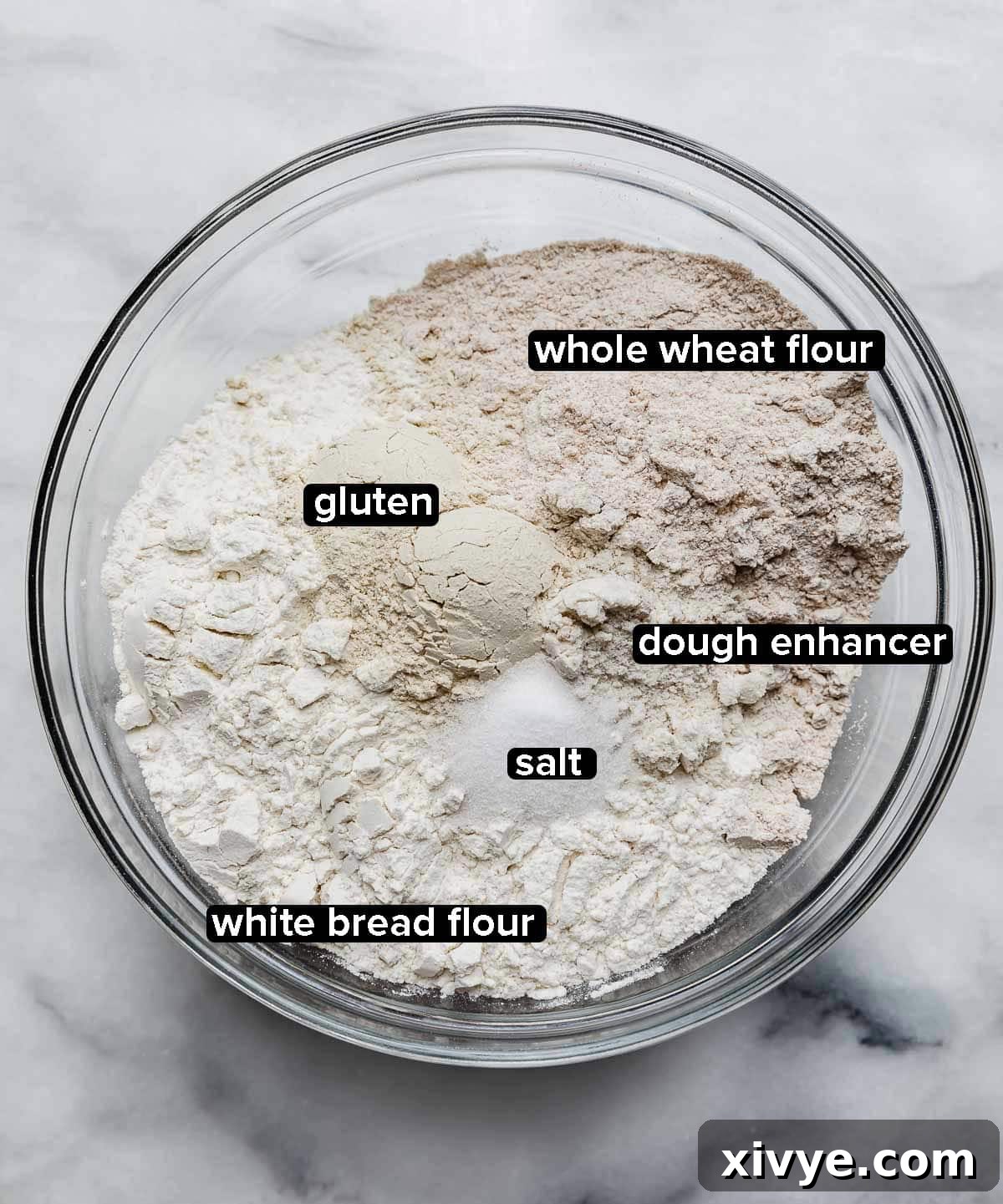
Step 2: Prepare Dry Ingredients. While your yeast is blooming, in a separate, medium-sized bowl, accurately measure out your dry components: 2 cups of wholesome whole wheat flour, 1½ cups of high-protein white bread flour, 2 tablespoons of vital wheat gluten (our secret for a strong crumb), 1 tablespoon of dough enhancer (for superior texture), and 1 teaspoon of fine salt. Whisk these ingredients together thoroughly to ensure even distribution, preventing pockets of unmixed components in your final dough.
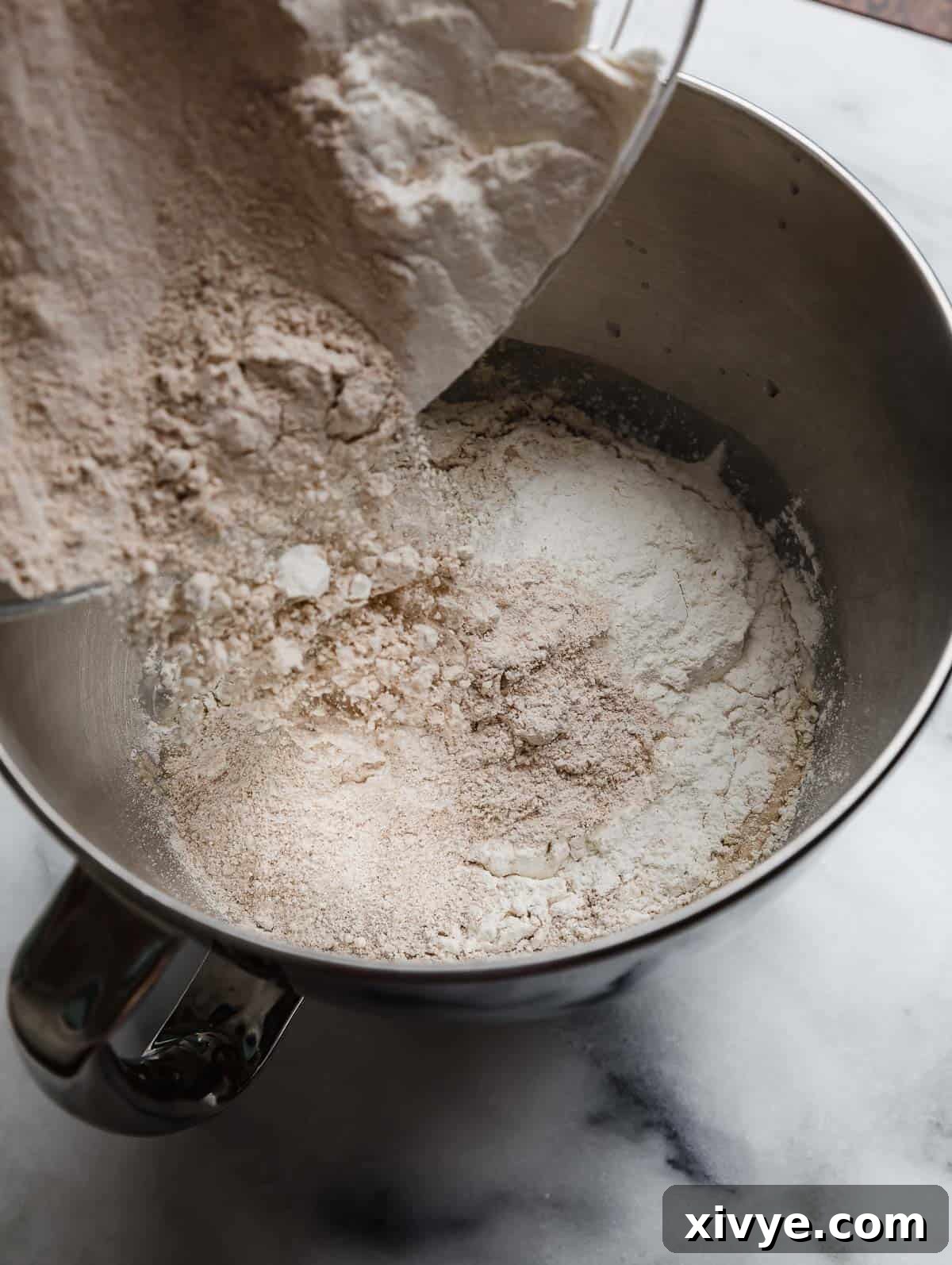
Step 3: Combine Remaining Ingredients. Once your yeast mixture is gloriously bubbly, signifying its readiness, carefully add your pre-measured dry ingredients from Step 2 into the stand mixer bowl. Also, incorporate 2 tablespoons of neutral vegetable oil and the remaining ¼ cup of honey. These additions will further enrich the dough, contributing to its tenderness and unique flavor profile.
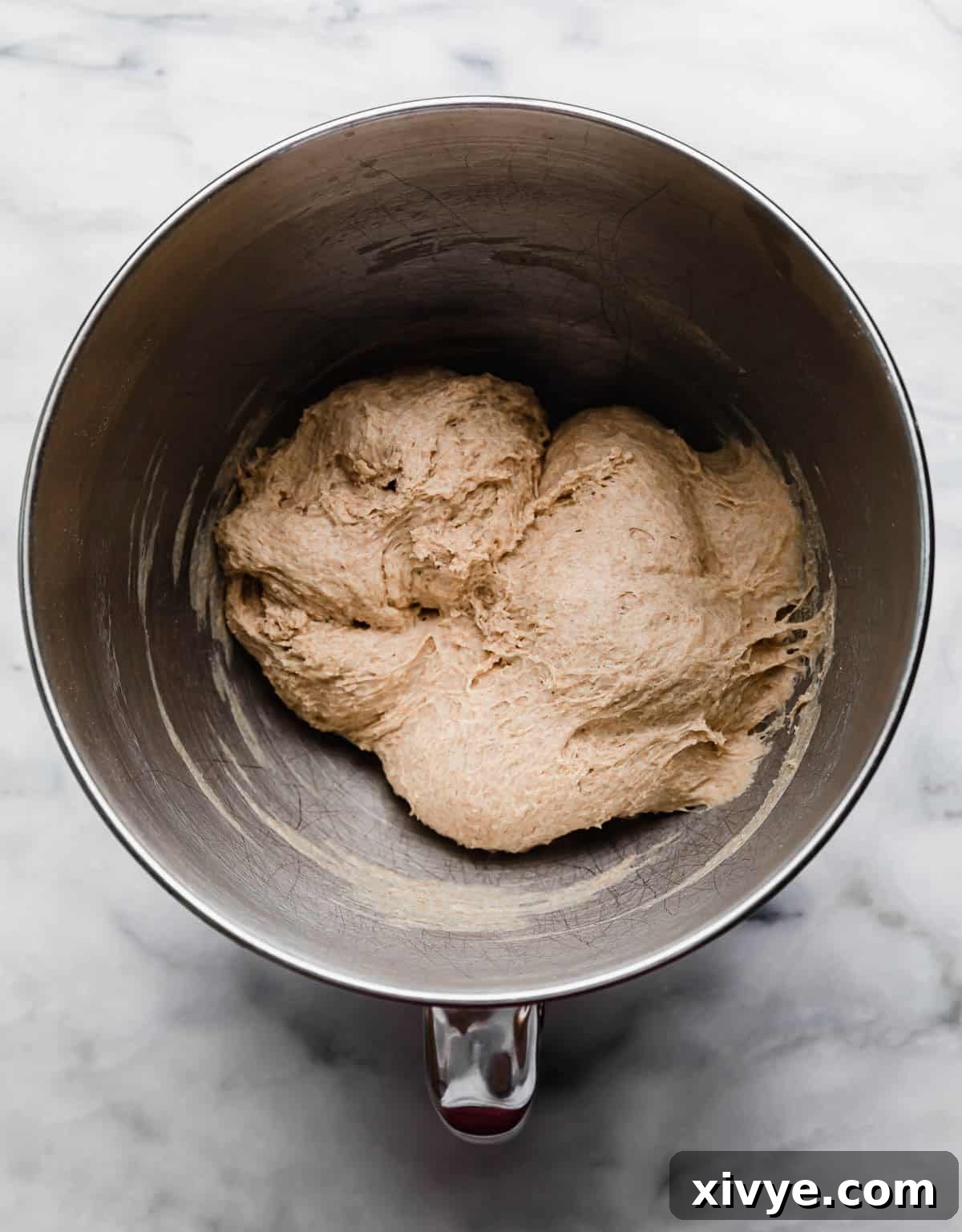
Step 4: Mix and Knead the Dough. Attach the dough hook to your stand mixer and begin mixing on a low speed, gradually increasing to medium. Knead the dough for a sustained 8-10 minutes. During this process, the dough should evolve into a smooth, elastic mass that pulls cleanly away from the sides of the bowl. The ideal consistency will be tacky to the touch but not overly sticky, meaning it won’t cling excessively to your fingers. If your dough remains too sticky after 10 minutes, add additional white bread flour, 1 tablespoon at a time, allowing it to incorporate fully before adding more, until the desired tacky consistency is achieved. For those kneading by hand, transfer the dough to a lightly floured surface and prepare for a longer, more rigorous kneading session, typically 15-20 minutes, until it passes the windowpane test (a small piece can be stretched thin enough to see light through without tearing).
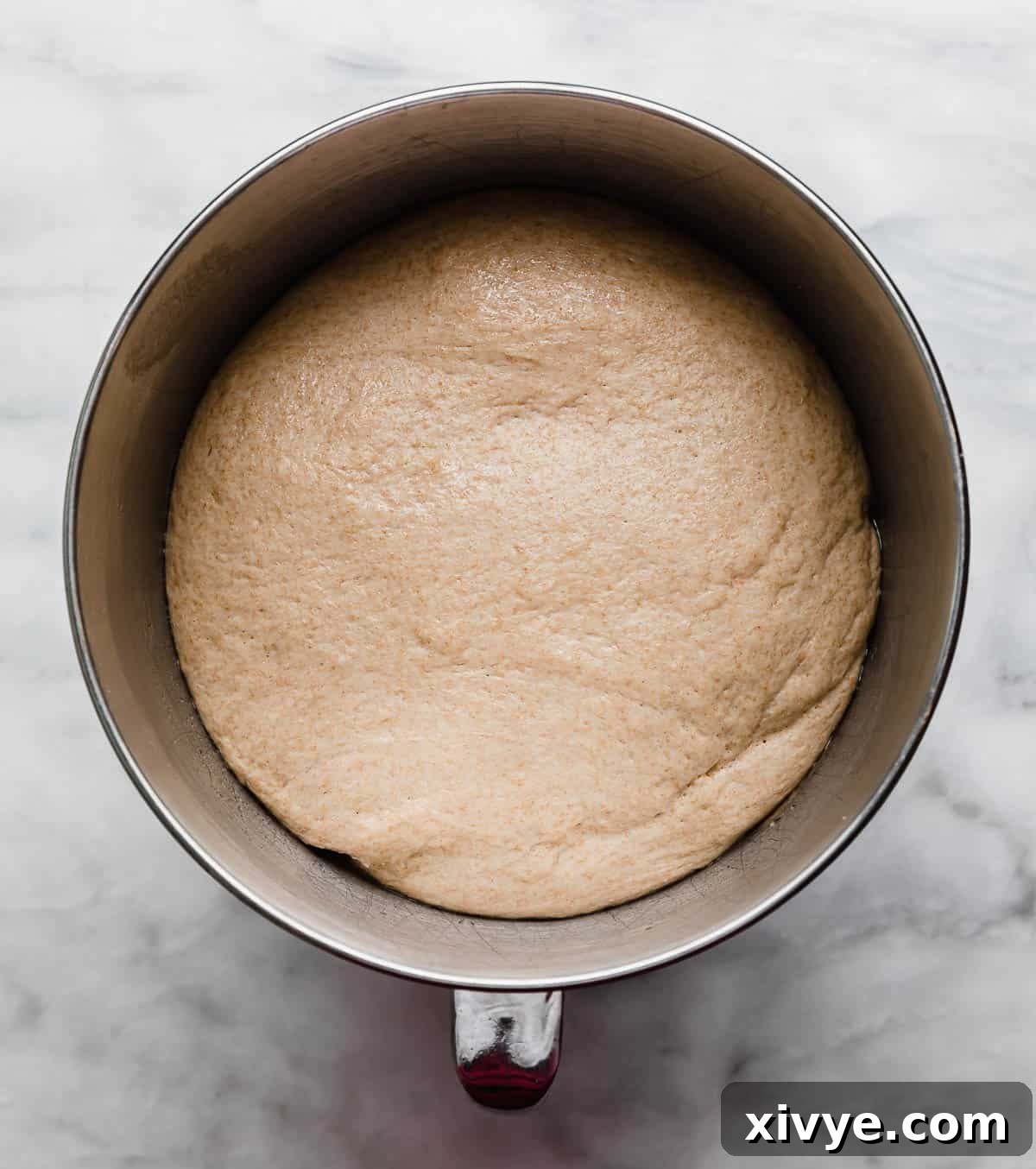
Step 5: First Rise (Bulk Fermentation). Lightly grease a large, clean bowl with a small amount of oil, ensuring the bottom and sides are well coated. Transfer your beautifully kneaded dough to this oiled bowl, turning it over once to thoroughly coat its surface with oil. This prevents the dough from drying out and sticking. Cover the bowl snugly with plastic wrap or a clean kitchen towel and allow it to rest in a warm, draft-free spot for 45 minutes to 1 hour, or until it has gloriously doubled in size. The warmth of your kitchen will greatly influence this timing.
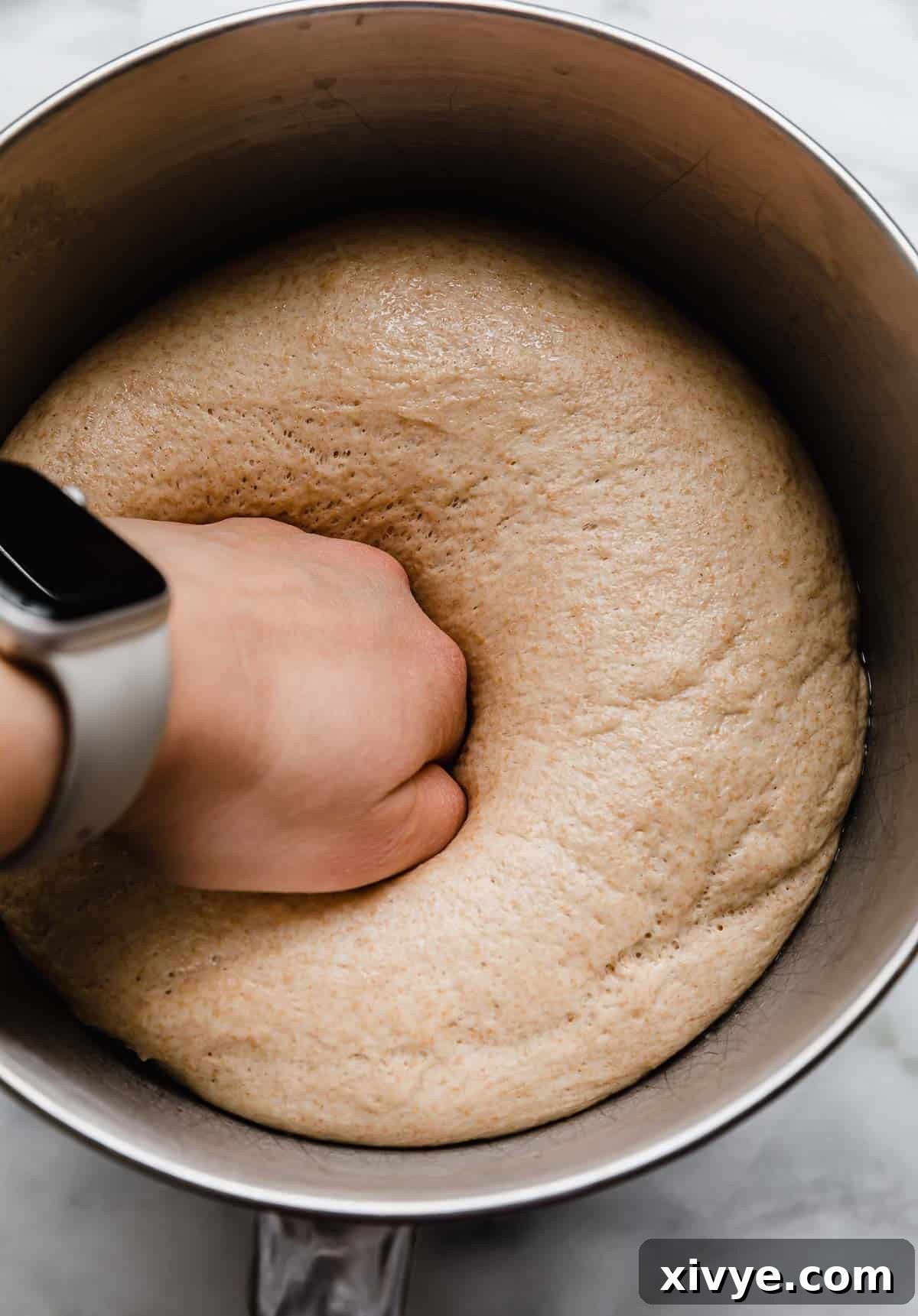
Step 6: Degas the Dough. Once your dough has happily doubled in size, it’s time to gently “degas” it. Simply punch your fist firmly but gently into the center of the risen dough. This action releases the accumulated gases (carbon dioxide) produced by the yeast, redistributes the yeast cells, and helps create a finer, more even crumb in the final baked bread. After degassing, turn the dough out onto a lightly floured surface, ready for shaping.
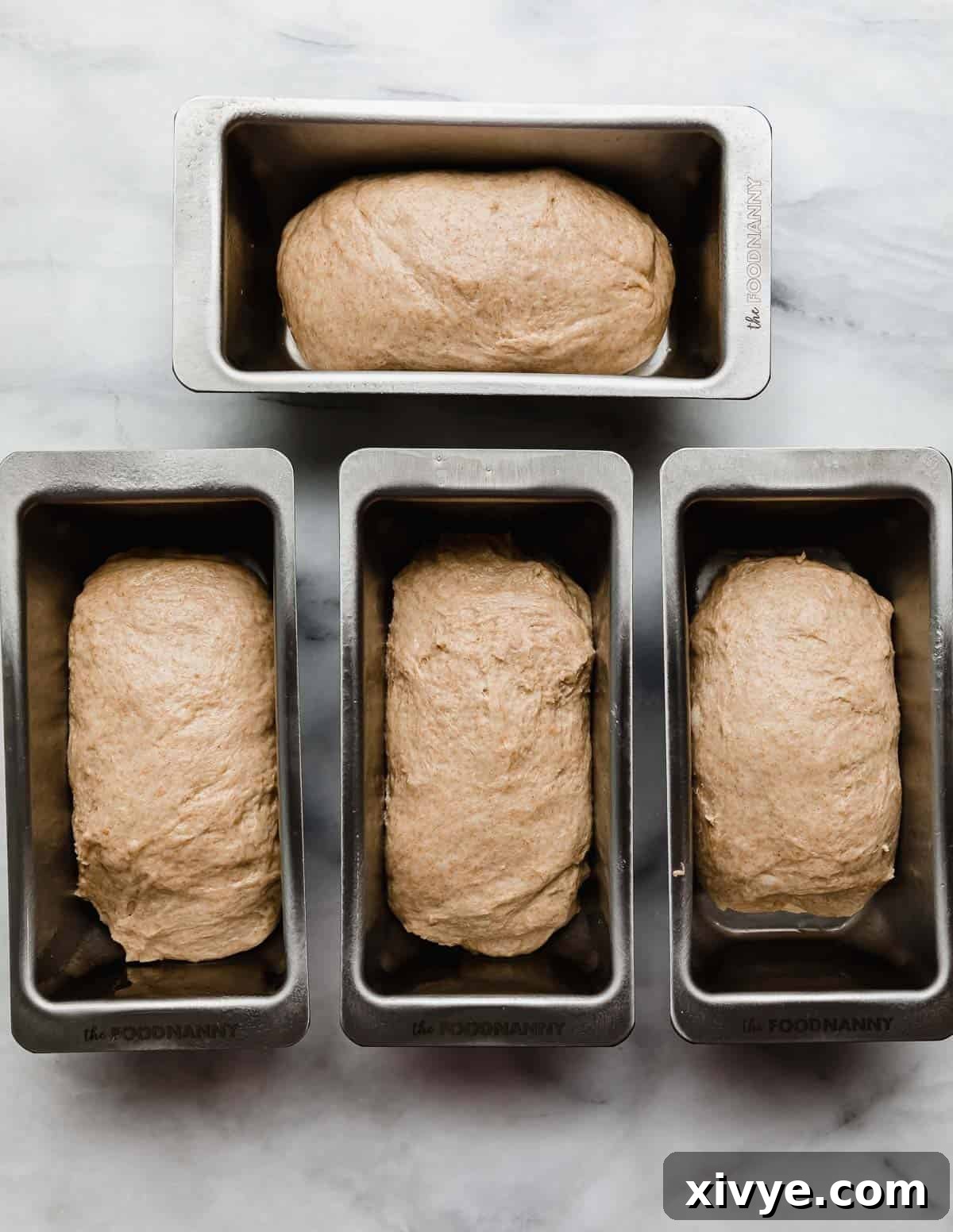
Step 7: Portion and Shape Loaves. Generously spray your chosen loaf tins with a nonstick cooking spray to prevent sticking. If you’re making mini loaves, divide your dough into four equal portions. Gently shape each portion into a smooth, tight log that fits neatly into your mini loaf tins. For a combination of a full-sized loaf and a mini loaf, first portion out the smaller mini loaf dough, then shape the remaining larger portion to fit your standard 8×4 or 9×5 inch loaf pan. Proper shaping is key to achieving a beautifully risen, symmetrical loaf.
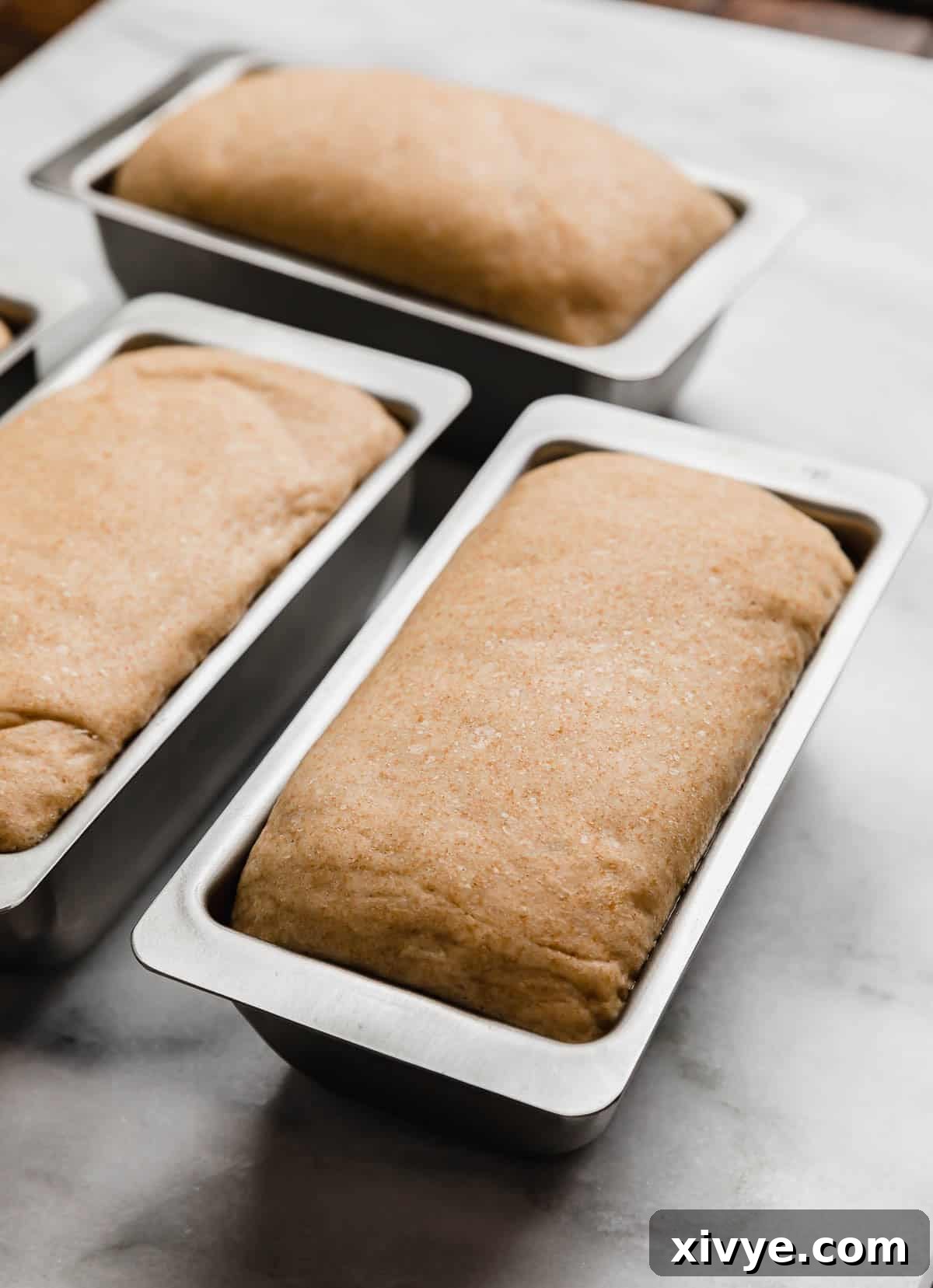
Step 8: Second Rise (Proofing). Place the shaped dough in their prepared tins and cover them loosely with a clean kitchen towel. Allow them to rise for a second time until the dough gracefully domes approximately ½ to 1 inch above the rim in the center of your tins. This crucial second proof typically takes about 1 hour, but be mindful that the exact time can fluctuate significantly based on the ambient temperature of your kitchen. Around the halfway point of your second proof, preheat your oven to 350°F (175°C) to ensure it’s ready for baking. You’ll know your bread is perfectly proofed when you gently poke the dough with a floured fingertip and the indentation slowly springs back, but not completely. If it springs back too quickly, it needs more time; if it doesn’t spring back at all, it’s over-proofed.
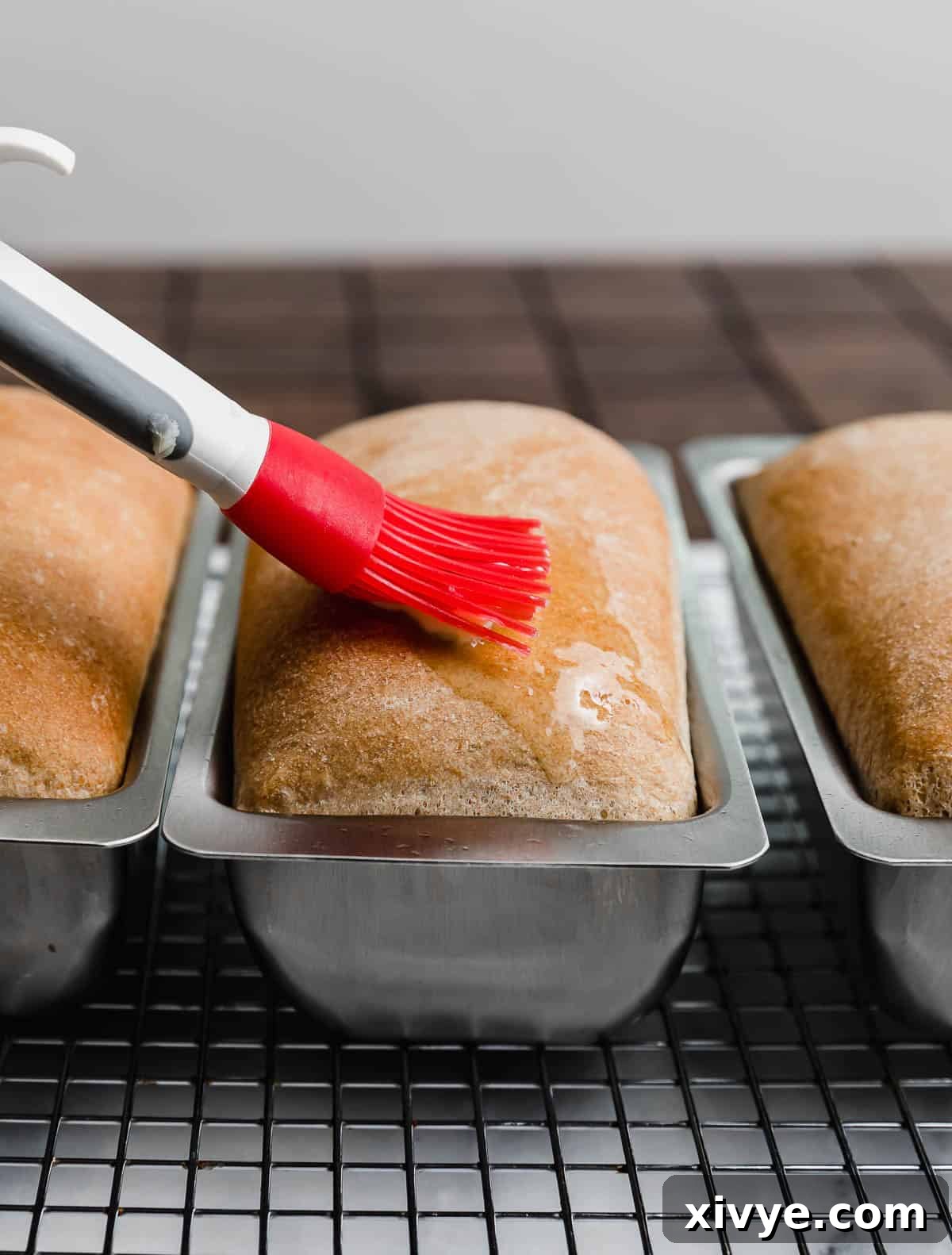
Step 9: Bake to Golden Perfection. Carefully place your perfectly proofed loaves into the preheated 350°F (175°C) oven. The baking time will vary depending on the size of your loaves and the material/color of your pans. For mini loaves, bake for 22-25 minutes. Standard 8×4 inch loaves will require 25-30 minutes, while larger 9×5 inch loaves need 30-40 minutes. Keep a close eye on your bread, as darker pans tend to absorb more heat and bake faster. The bread is done when the tops achieve a beautiful golden brown color, and an instant-read thermometer inserted into the center registers an internal temperature of 190°F-200°F (88°C-93°C). Immediately after removing your bread from the oven, for an irresistibly soft and lustrous crust, you can brush the warm loaves generously with melted butter.
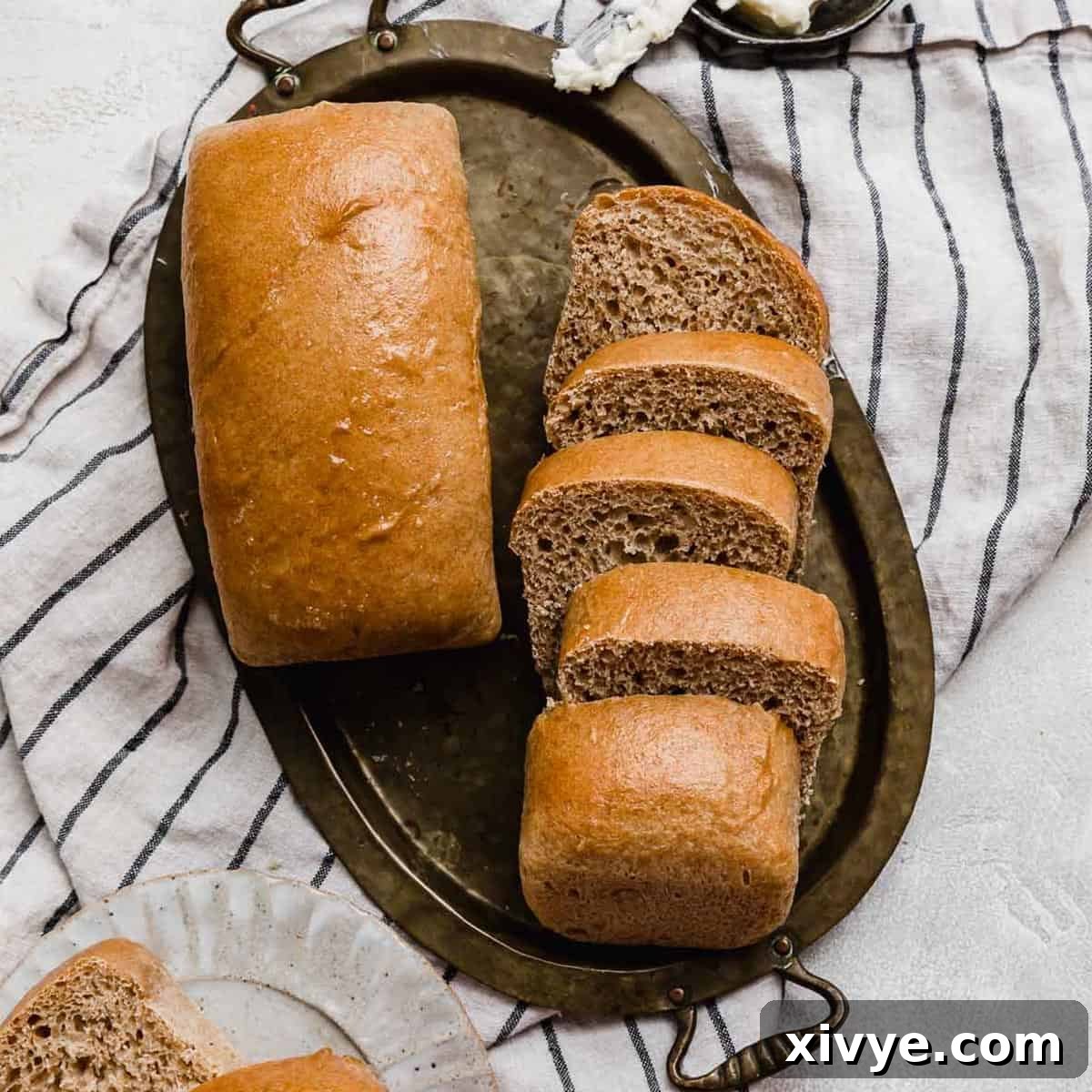
Step 10: Cool Completely Before Slicing. This step is crucial for achieving perfectly clean slices and ensuring the bread’s internal structure sets properly. After removing your loaves from the oven, immediately turn them out onto a wire cooling rack. Resist the urge to slice into them right away! Allowing the bread to cool completely—ideally for at least 1-2 hours—permits the internal cooking process to finalize and the starches to set, resulting in a firm yet tender crumb that slices beautifully without tearing or gumminess. Once fully cooled, slice and savor your magnificent homemade 50/50 bread.
Expert Tips for Your Best 50/50 Bread
Creating the perfect loaf of bread is both an art and a science. Here are some expert tips to ensure your 50/50 bread turns out flawlessly every time, along with insights into why these details matter.
Understanding Flour: Bread Flour vs. All-Purpose Flour
The choice of flour profoundly impacts your bread’s texture and rise. Bread flour is a baker’s secret weapon, boasting a higher protein content (typically 12-14%) than all-purpose flour (around 10-12%). This higher protein translates directly to greater gluten development when kneaded. Gluten, the elastic protein network in dough, is responsible for trapping the carbon dioxide gases produced by yeast, allowing the bread to rise significantly and develop an airy, chewy texture rather than a dense one. This is why I love using bread flour in my Homemade Cinnamon Rolls and Pecan Sticky Buns, ensuring that delightful chew!
If you only have all-purpose flour on hand, you can certainly use it, but be prepared for a slightly different outcome. Your bread may not achieve the same impressive rise, and the final texture will likely be a bit denser and less chewy. For a truly delicious bread made specifically with all-purpose flour, you might enjoy my Flaky Brioche, which is designed for that flour type.
The Power Duo: Vital Wheat Gluten and Dough Conditioner
Adding vital wheat gluten and dough conditioner might seem like extra steps, but they are absolutely critical for the success of this 50/50 bread recipe, especially because of the whole wheat flour. Whole wheat flour, by its very nature, includes the bran, germ, and endosperm of the wheat kernel. While incredibly nutritious, the sharp edges of the bran can act like tiny scissors, cutting through the delicate gluten strands as they form. This “gluten inhibition” can lead to a less elastic dough and a denser, shorter loaf. By adding vital wheat gluten, which is essentially concentrated wheat protein, we boost the dough’s ability to form a strong, resilient gluten network that can withstand the bran, allowing for a fantastic rise and a beautifully soft, non-dense final bread. Here’s a link to the dough conditioner I use and the wheat gluten.
Similarly, dough conditioner (or dough enhancer) is an invaluable aid. These blends often contain enzymes (like amylase, which converts starches to sugars for yeast), ascorbic acid (vitamin C, a natural dough strengthener), and emulsifiers. Together, they work synergistically to accelerate yeast fermentation, strengthen the dough’s structure, improve its elasticity, make it easier to handle, and ultimately contribute to a more uniform crumb and extended softness in the baked product. Even a small tablespoon of this pre-made mix ensures our 50/50 bread reaches its full potential, transforming it into the best and most delicious loaf possible.
Choosing the Right Baking Pans
The type and color of your baking pan significantly influence bake time and crust development. Generally, darker metal pans absorb more heat and will bake your bread faster, often leading to a darker, crispier crust. My recommended bake times are calibrated for lighter-colored metal bread pans. If you are using darker pans, it’s wise to start checking for doneness at the lower end of the suggested baking window, or even a few minutes earlier, to prevent over-browning or drying out your loaf. Conversely, clear glass loaf pans are poor conductors of heat compared to metal, meaning your bread will take considerably longer to bake and may require a lower oven temperature to prevent burning the top before the interior is fully cooked. For consistent results with this recipe, I highly recommend sticking to sturdy metal loaf pans.
Mastering the Rise (Proofing)
Proper dough rising, or proofing, is critical for light and airy bread. There are a few common reasons why your dough might be reluctant to rise. Firstly, temperature is paramount: yeast thrives in a warm environment. The ideal dough rising temperature is typically between 75°F-80°F (24°C-27°C). If your kitchen is on the cooler side, you can create a makeshift proofing box by placing your covered dough in a slightly warmed oven (with just the light on) or in a microwave with a cup of very hot water placed alongside it (do not turn on the microwave). Secondly, ensure your yeast is fresh. This is precisely why the initial “blooming” step is so important for active dry yeast: if it doesn’t foam and become bubbly, your yeast is likely old or inactive, and it’s best to discard it and start with fresh yeast.
Avoiding Proofing Pitfalls: Over-proofing and Under-proofing
Proofing your dough correctly requires a keen eye and a gentle touch. Knowing the signs of perfectly proofed dough versus under or over-proofed dough is essential for a successful bake. If you eagerly pull your beautiful loaf from the oven, only for it to have dramatically ballooned over the sides of the pan or, worse, collapsed inwards while cooling, these are classic indicators of **over-proofing**. This means the yeast consumed all its sugars and ran out of steam before baking, leading to a weak structure. To correct this, you’ll need to reduce your rising time in future bakes. Over-proofing is also more common with instant yeast, which is very active; sometimes, reducing the amount of instant yeast by about 2 teaspoons can help.
On the other hand, if your baked bread turns out dense, heavy, with a tight crumb, or if its sides have split dramatically, this typically signals **under-proofing**. The dough didn’t have enough time for the yeast to produce sufficient gases to lighten the structure. The ultimate test for perfect proofing is the “finger poke test”: gently press a floured fingertip into the dough about ½ inch deep. If the indentation slowly springs back, leaving a slight dimple, your bread is perfectly proofed and ready for the oven. If it springs back immediately, it needs more time. If it doesn’t spring back at all, it’s over-proofed.
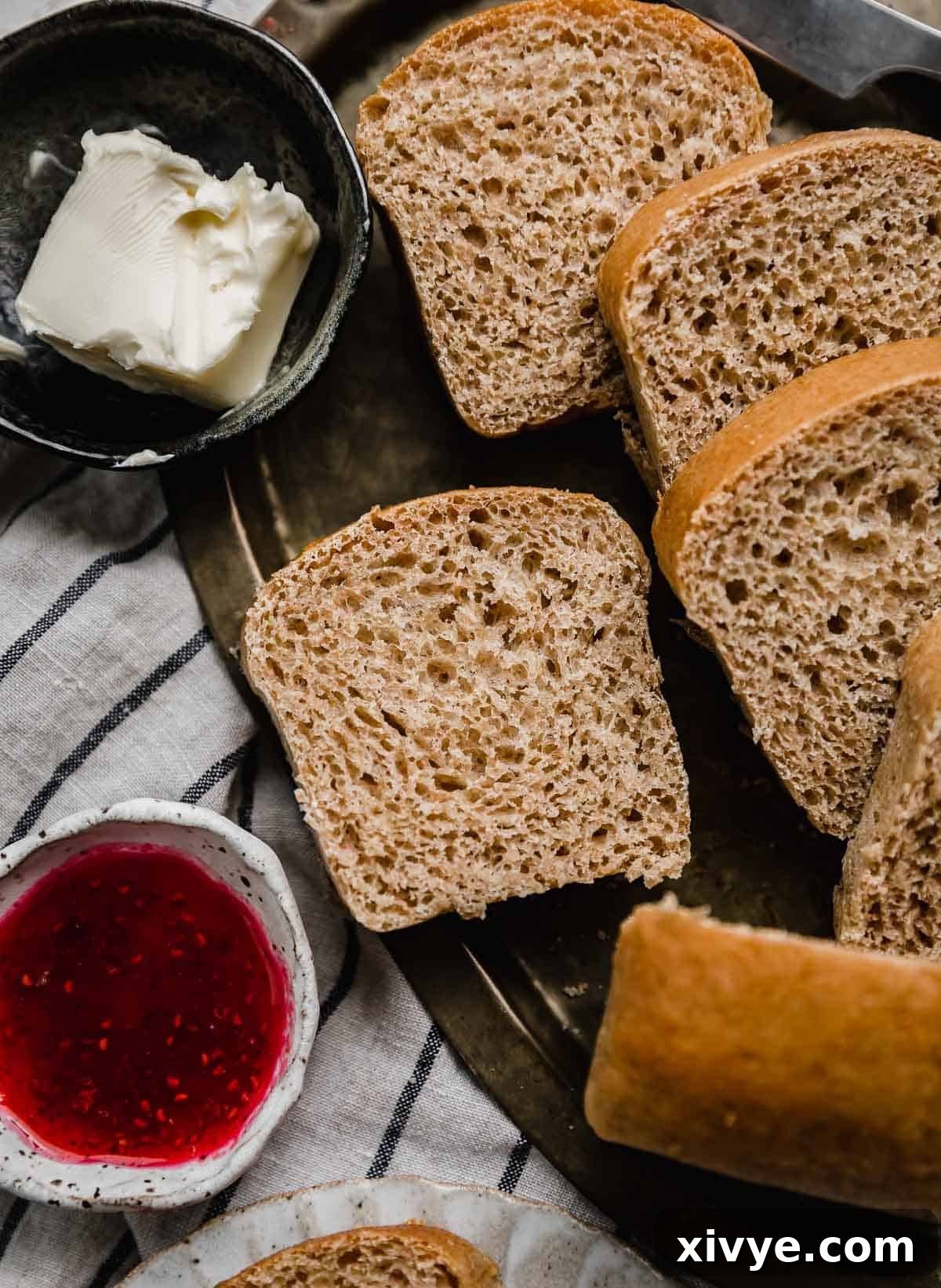
Make Ahead, Storing, and Freezing Homemade 50/50 Bread
One of the many joys of baking your own bread is having a fresh, wholesome loaf ready whenever you desire. This 50/50 bread is not only delicious freshly baked but also holds up exceptionally well for make-ahead convenience, efficient storage, and long-term freezing.
Make Ahead: This bread is a fantastic option for meal prep. It stays wonderfully fresh for up to 3 days at room temperature. Honestly, it might even last longer, but in my house, it rarely gets the chance! Its excellent moisture retention means you can bake it on a Sunday and enjoy soft, delicious slices throughout the week.
Storing: To maximize the freshness and texture of your 50/50 bread, store it at room temperature. For optimum results, a traditional bread box provides the ideal environment, allowing for just enough air circulation to keep the crust pleasant while preventing excessive moisture loss. Alternatively, a tightly sealed plastic bag or a large ziplock bag works beautifully. Plastic wrap is effective at sealing in moisture, which is perfectly fine for this soft sandwich loaf, as we want to maintain its tender crumb. For other types of bread with a crisp crust (like baguettes), you’d typically opt for a more breathable storage solution like a paper bag to preserve that crunch.
Freezing: Homemade bread freezes exceptionally well, making it perfect for extending its shelf life or for having ready-to-go slices whenever a craving strikes. You have two main options for freezing: either freeze whole loaves or slice them first. Freezing pre-sliced bread is incredibly convenient, allowing you to pull out just a couple of slices at a time as needed.
- Preparation for Freezing: Regardless of whether you freeze it whole or sliced, ensure the bread is completely cooled to room temperature. Warm bread placed in the freezer will create condensation, leading to ice crystals and potential sogginess.
- Wrapping Whole Loaves: For a whole loaf, first wrap it tightly in plastic wrap, ensuring no air pockets. For extra protection against freezer burn and to preserve maximum freshness, consider double-wrapping it, perhaps with a second layer of foil.
- Wrapping Sliced Bread: Stack your slices, then wrap them tightly in plastic wrap, or place them in a freezer-safe ziplock bag, pressing out as much air as possible.
- Defrosting: To defrost a whole loaf, simply remove it from the freezer and let it thaw at room temperature for several hours or overnight. For sliced bread, the beauty is that you can often pop frozen slices directly into a toaster or toaster oven, warming them through perfectly in minutes.
- Freezer Lifespan: Properly wrapped, sliced or unsliced bread will maintain its quality in the freezer for up to 3 months.
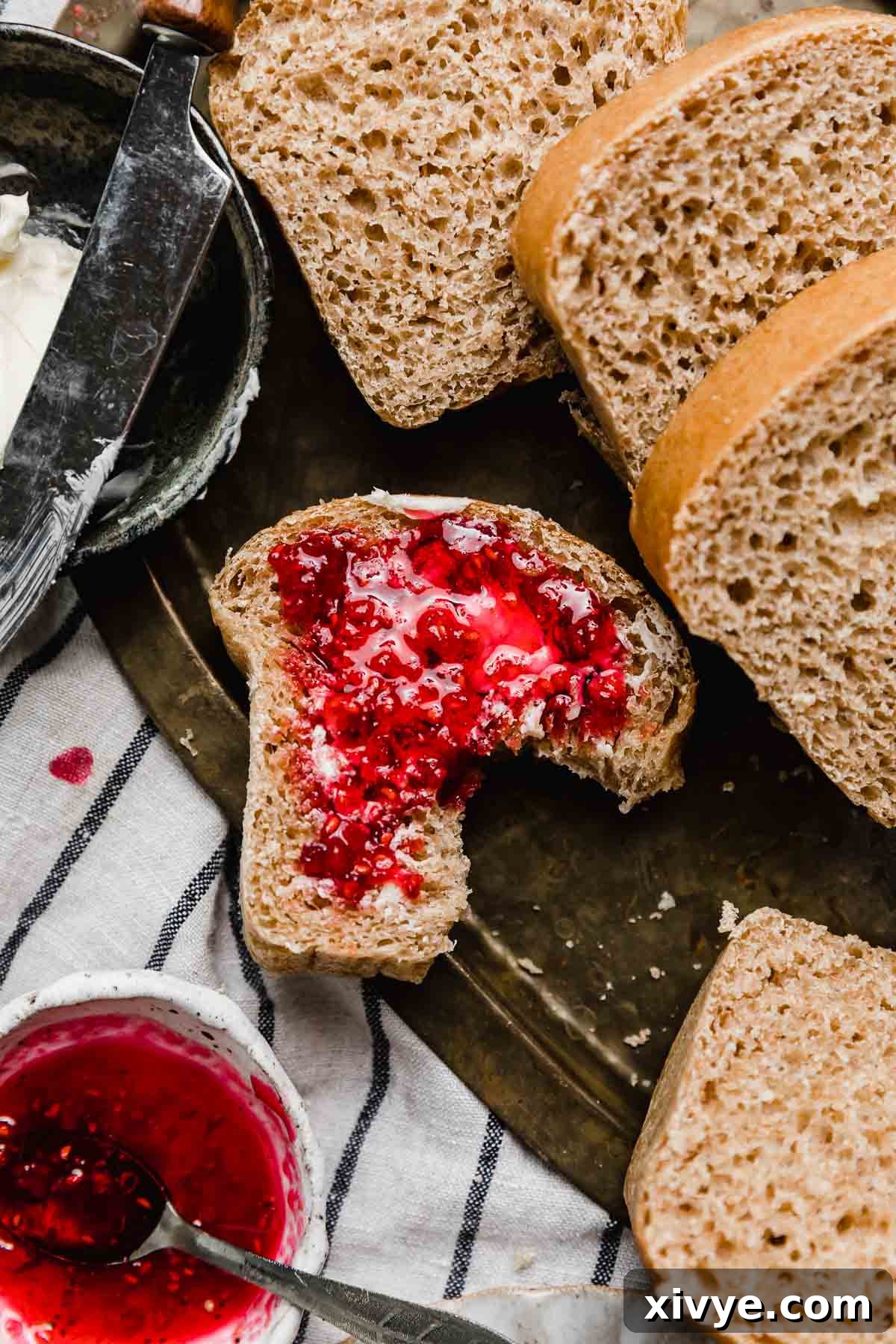
My absolute favorite way to enjoy this bread—a thick slice generously slathered with homemade Freezer Raspberry Jam! 😋
50/50 Bread FAQs: Your Questions Answered
50/50 bread is a popular type of homemade or store-bought bread that strikes a delicious balance by using an equal ratio of whole wheat flour and white flour (typically bread flour). This blend offers the appealing texture and versatility of white bread while incorporating the nutritional benefits, heartiness, and slightly nutty flavor of whole wheat.
Yes, 50/50 bread is generally considered a healthier alternative to plain white bread. Because it incorporates whole wheat flour, it provides significantly more dietary fiber, vitamins, and minerals (such as B vitamins, iron, and magnesium) compared to bread made solely with refined white flour. It’s a great way to boost your whole grain intake without sacrificing the soft texture often preferred in sandwich bread.
Both of these issues—a collapsed loaf or one that dramatically balloons over the pan—are classic signs of over-proofing. This occurs when the yeast ferments for too long, consuming all the available sugars and producing too much gas, which weakens the gluten structure. The dough rises to its maximum, then its structure becomes too fragile to hold, leading to collapse in the oven or during cooling. To fix this, you need to reduce your rising time in subsequent bakes. This is also more common when using instant yeast, which is very potent; trying about 2 teaspoons less instant yeast might also help mitigate over-proofing.
Gummy bread is almost always a tell-tale sign of underbaking. Even if the crust appears perfectly golden brown, the interior may not have reached its full cooking temperature. The best way to prevent this is to use an instant-read thermometer to check the internal temperature of your bread. It should consistently register between 190°F-200°F (88°C-93°C) when fully baked. Insert the thermometer into the side of the loaf to avoid leaving a large hole on the top crust. Furthermore, ensure you let the bread cool entirely on a wire rack before slicing. The internal cooking process continues slightly as the bread cools, and slicing it too early can disrupt this final setting, contributing to a gummy texture.
Yes, you can substitute all-purpose flour for bread flour if that’s all you have. However, be aware that the results will likely differ. All-purpose flour has a lower protein content than bread flour, which means your dough will develop less gluten. This will typically result in a loaf that doesn’t rise as high and has a slightly denser, less chewy texture compared to using bread flour. While still delicious, the characteristic spring and chew of this 50/50 bread may be less pronounced.
Absolutely! While a stand mixer simplifies the kneading process, this bread can certainly be made by hand. Be prepared for a longer and more vigorous kneading session – typically 15-20 minutes by hand, compared to 8-10 minutes with a mixer. You’ll know it’s adequately kneaded when the dough becomes smooth, elastic, and passes the windowpane test (you can stretch a small piece thin enough to see light through it without tearing).
Explore More Delicious Bread Recipes
- The Best Pizza Dough Recipe
- Greek Yogurt Naan Bread
- Dinner Rolls Recipe
- Monkey Bread
Did you try this recipe? I’d absolutely love to hear about your experience! Please leave a star rating and review right below the recipe card to let me know how much you enjoyed this bread. Your feedback is incredibly valuable!
Stay connected and up-to-date with all my latest recipes and baking tips by following us on Instagram, TikTok, YouTube, Facebook, and Pinterest.
Print Recipe
50/50 Bread Recipe (White/Wheat Bread)
 Whitney Wright
Ingredients
- 1 ⅔ cups warm water (heated to 110°F)
- 1 tablespoon honey
- 2 ¼ teaspoons yeast (active dry or instant yeast)
- 2 cups whole wheat flour
- 1 ½ cups white bread flour (may need to add more, 1 tablespoon at a time until dough is no longer sticky)
- ¼ cup honey
- 2 tablespoons vital wheat gluten
- 2 tablespoons vegetable oil
- 1 tablespoon dough enhancer (also called dough conditioner)
- 1 teaspoon salt
Equipment
-
Kitchen Aid stand mixer (or large mixing bowl and your hands for kneading)
-
Loaf pans (mini 3”x6” or standard 8×4/9×5 inch)
-
Instant-read thermometer (optional, but highly recommended for accuracy)
Instructions
-
In the bowl of a stand mixer (or in a large bowl), combine the warm water, 1 tablespoon honey, and yeast. If using active dry yeast, let the mixture bloom for 10 minutes or until the yeast is activated and bubbly. If using instant yeast, you can immediately move to the next step.
-
Add the whole wheat flour, white bread flour, the remaining ¼ cup honey, vital wheat gluten, vegetable oil, dough enhancer, and salt. Mix (in a stand mixer fitted with a dough hook) on low speed, then gradually increase to medium, kneading for 8-10 minutes. The dough should become smooth, elastic, and tacky but not overly sticky. If the dough is too sticky, add white bread flour 1 tablespoon at a time until a tacky consistency is reached. (If kneading by hand, this process will take 15-20 minutes).
-
Lightly oil a large bowl, brushing it along the bottom and up the sides. Transfer the dough to the oiled bowl, turning it over to coat. Cover the bowl with plastic wrap or a clean towel and let it rise in a warm, draft-free place for 45 minutes to 1 hour, or until it has doubled in size.
-
Once doubled, gently punch your fist into the dough to degas it. Turn the dough out onto a lightly floured surface. Portion and shape the dough: For 4 mini loaves, divide the dough into four equal pieces and shape each into a log to fit your 3”x6” mini loaf pans. For one standard loaf and one mini loaf, divide accordingly. Spray your loaf pans generously with nonstick cooking spray before placing the shaped dough inside.
-
Cover the dough in the tins with a towel and let it rise for a second time until the dough domes about ½-1 inch above the rim in the center of your tins. This typically takes about 60 minutes, but timing will vary based on your kitchen’s temperature. It’s done proofing when a gentle fingertip poke springs back slowly but not all the way (refer to “finger poke test” in notes). Halfway through this second proof, preheat your oven to 350°F (175°C).
-
Place the loaves in the preheated oven and bake: mini loaves for 22-25 minutes; 8×4 inch loaves for 25-30 minutes; and 9×5 inch loaves for 30-40 minutes. Baking time is affected by pan color, so watch carefully. The bread is done when the tops are golden brown and the internal temperature reaches 190°-200°F (88°C-93°C) when checked with an instant-read thermometer.
-
Remove from oven and immediately turn the loaves out onto a wire rack to cool. For an extra soft, golden crust, you can brush the warm loaf with melted butter right after baking. Allow the bread to cool completely on the wire rack before slicing and serving. This ensures a clean, non-gummy slice.
Notes
Storage: This bread stays incredibly fresh for at least 3 days at room temperature (it never lasts longer in my house!). For a soft crust and maximum moisture retention, store it in a plastic bag or an airtight container. If you prefer a slightly crisper crust, a bread box or a loosely closed paper bag allows for more air circulation.
Freezing Instructions: You can freeze either the whole loaf or individual slices. For either method, it is crucial to allow the bread to cool completely to room temperature first. Then, wrap the bread tightly in plastic wrap (double-wrap whole loaves for extra protection), or place slices in a freezer-safe ziplock bag, pressing out as much air as possible. Store for up to 3 months in the freezer. To defrost, allow a whole loaf to thaw at room temperature. Frozen slices can be popped directly into the toaster for a quick warm-up.