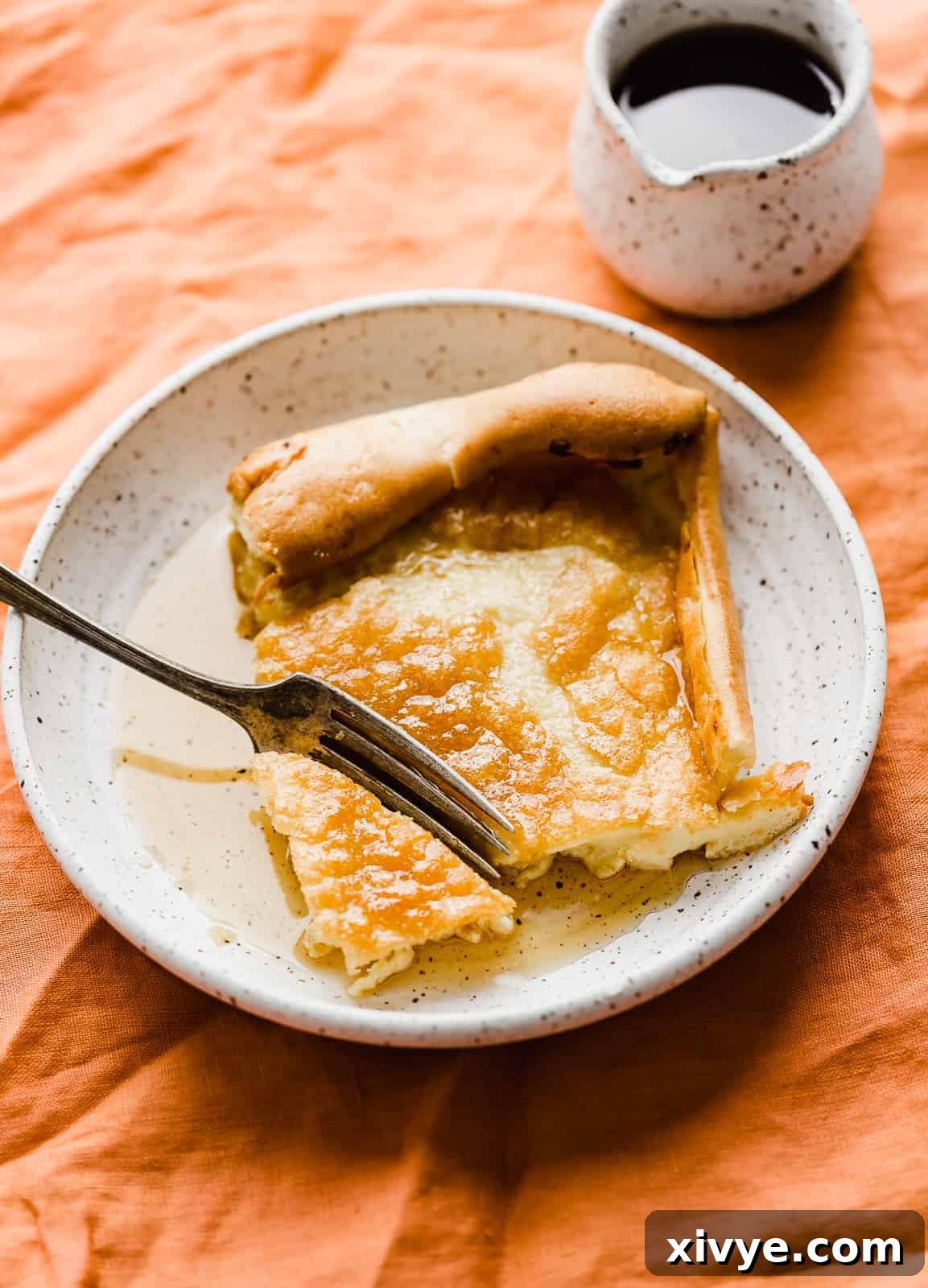
Craving a delightful breakfast that’s both impressive and incredibly easy to make? Look no further than this fantastic German pancakes recipe! Also known as Dutch Baby pancakes, these fluffy, oven-baked delights are a true family favorite, delivering a unique soufflé-like texture with minimal effort. Requiring just 5 basic kitchen ingredients and a mere 5 minutes of prep time, this recipe offers a wonderful spin on traditional pancakes, providing a fresh and exciting breakfast option to add to your culinary repertoire. Whether you’re planning a special weekend brunch or a quick weeknight “breakfast for dinner,” these pancakes are sure to become a cherished staple in your home. For those seeking a lighter alternative, be sure to explore my Healthy German Pancakes recipe.
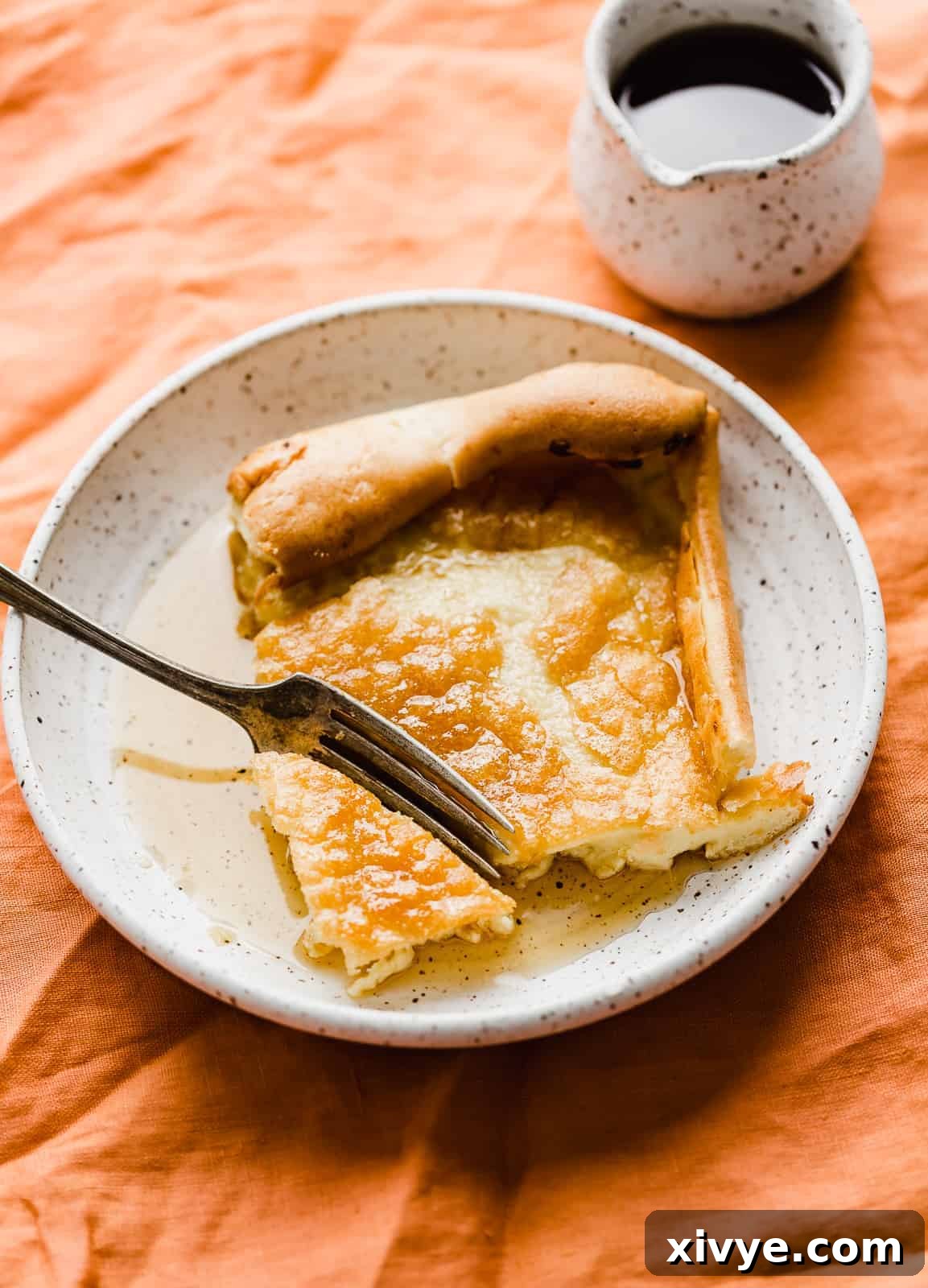
Why This Easy German Pancake Recipe is a Game Changer
Growing up, German pancakes were a celebrated tradition in my household, and it’s a joy I now share with my own children. There’s something truly special about a homemade breakfast that brings everyone together, and this recipe delivers every time. What makes it truly stand out is its incredible simplicity and the minimal cleanup required. Instead of standing over a hot griddle, flipping individual pancakes, these beauties are baked in a single dish, freeing you to enjoy your morning (or evening!) without constant attention. The ingenious method of combining all the ingredients in a blender means your batter is ready in seconds, ensuring a quick preparation and an effortless cleanup. This hands-off baking approach is a lifesaver on busy mornings, or even when you’re looking for a fuss-free dinner. Yes, these fluffy German pancakes are a frequent “breakfast for dinner” item at my house!
The magic of German pancakes lies in their unique texture. Unlike flat, traditional pancakes, these puff up dramatically in the oven, creating a beautiful golden-brown crust and a soft, eggy interior. The melted butter in the pan not only prevents sticking but also infuses the edges with a rich, buttery flavor, giving each bite an irresistible crispness. This oven-baked method ensures even cooking and a consistent rise, making it an almost foolproof recipe for beginners and seasoned cooks alike. It’s truly an elevated breakfast experience that feels gourmet but requires surprisingly little effort.
Essential Ingredients for Perfect Puffy Pancakes
The beauty of this easy German pancake recipe lies in its simplicity. You’ll only need five common kitchen staples to create this delightful dish. The quality of your ingredients can subtly impact the final flavor, so opt for fresh eggs and good quality dairy when possible.
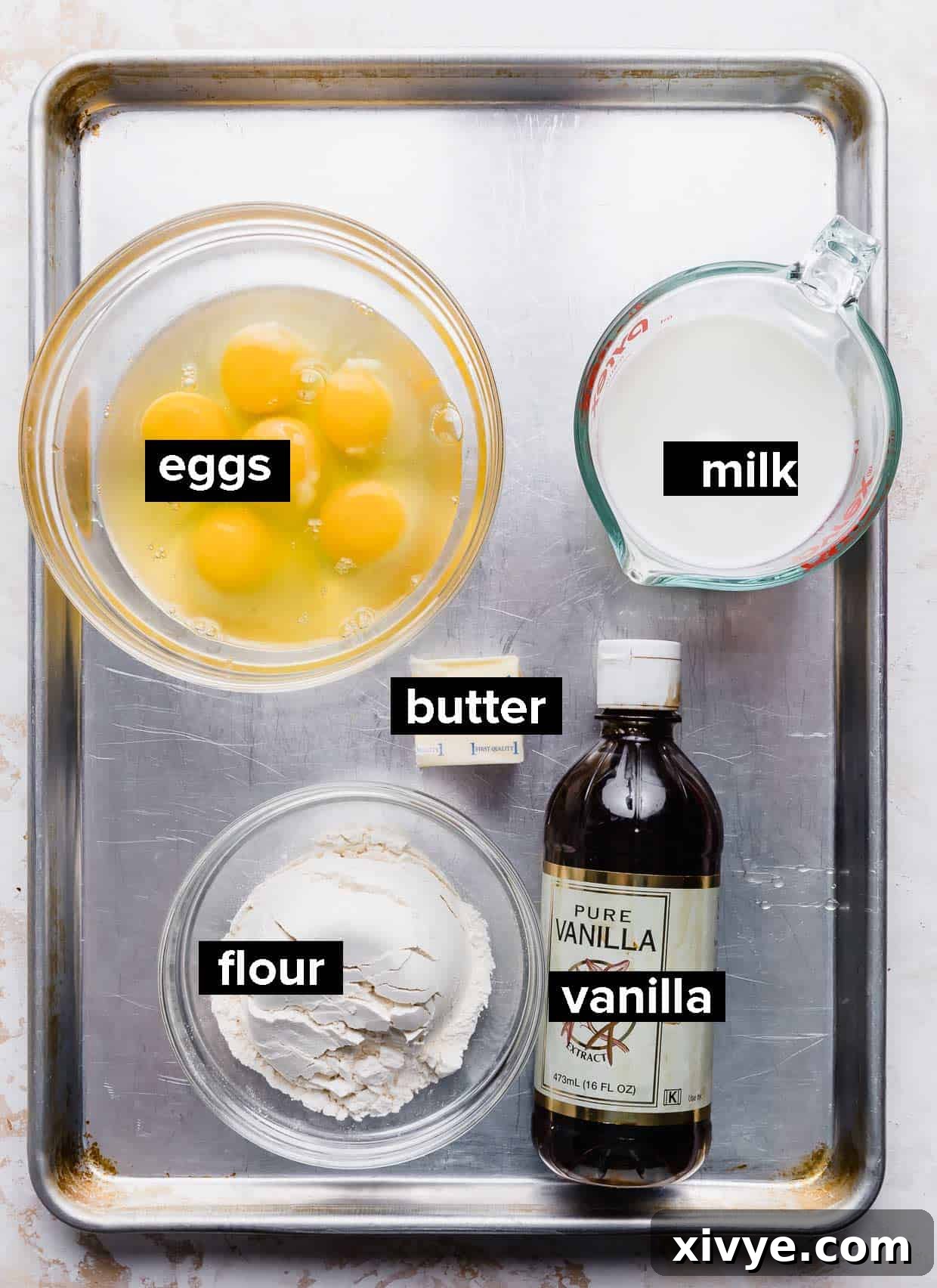
- Butter: You’ll need about 4 tablespoons of butter, whether unsalted or salted. The butter melts directly in your baking pan while the oven preheats. This crucial step not only creates a non-stick surface but also ensures a wonderfully rich, buttery flavor and a delicate, crispy coating on the pancakes that elevates the taste sensation.
- Eggs: This recipe calls for half a dozen (6) large eggs. Eggs are the structural backbone of German pancakes, providing the necessary lift and soufflé-like texture as they bake. They contribute to the richness and the characteristic eggy flavor that sets these pancakes apart from their griddle-cooked cousins.
- All-Purpose Flour: One cup of all-purpose flour provides the necessary structure to hold the pancake together as it puffs. While not a leavening agent itself in this context, the gluten in the flour, when properly aerated and developed, contributes to the overall stability and rise.
- Milk: One cup of milk adds moisture and helps create a smooth batter. Any percentage of milk works well, so feel free to use what you have on hand – 2% or whole milk are common choices. For dairy-free options, see our tips below.
- Vanilla Extract: A teaspoon of vanilla extract is the secret ingredient that adds a warm, sweet aroma and depth of flavor, complementing the rich butter and eggs beautifully. Don’t skip this for an extra layer of deliciousness!
Effortless Step-by-Step German Pancake Instructions
Making these easy German pancakes is surprisingly straightforward. Follow these simple steps for a perfect, puffy result every time.
- Preheat and Melt Butter: Begin by preheating your oven to 425°F (220°C). As the oven heats up, place 4 tablespoons of butter in a 9×13-inch baking dish. Put the dish directly into the oven to melt the butter. This ingenious method ensures the butter is perfectly melted and the pan is adequately heated by the time your batter is ready. Keep a close eye on the butter; you want it melted, not browned. Once melted, carefully remove the pan from the oven.
- Prepare the Batter in a Blender: While the butter is melting, gather your remaining ingredients. Add the 6 eggs, 1 cup of flour, 1 cup of milk, and 1 teaspoon of vanilla extract into a blender. Blend on medium-high speed for 30-45 seconds, or until the mixture is completely smooth and well combined. This crucial blending step incorporates air into the batter, which is key for achieving that signature puffy texture.
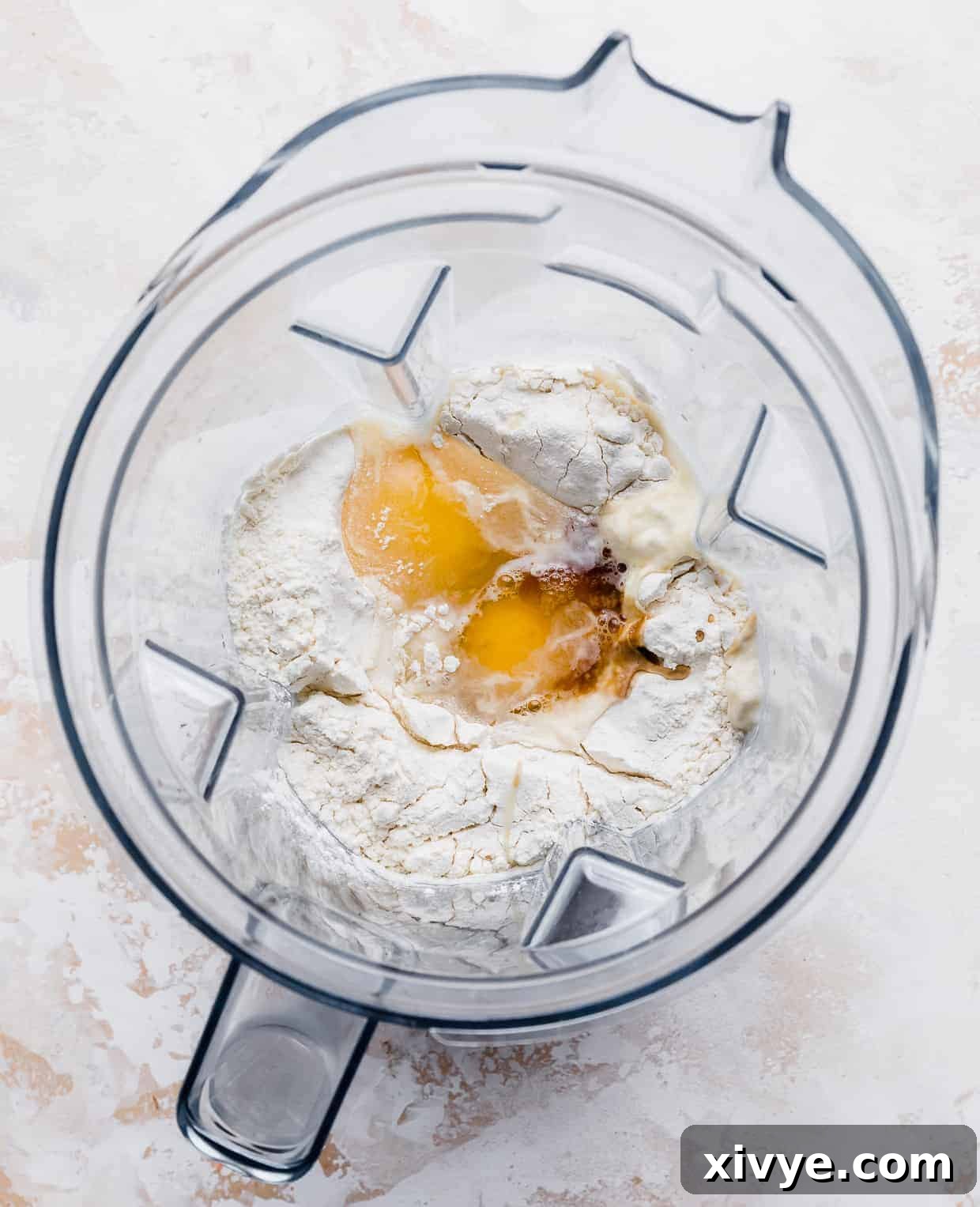
- Pour Batter into Pan: Carefully pour the smooth pancake batter into the butter-coated 9×13-inch baking pan. The melted butter should evenly coat the bottom and sides of the dish.
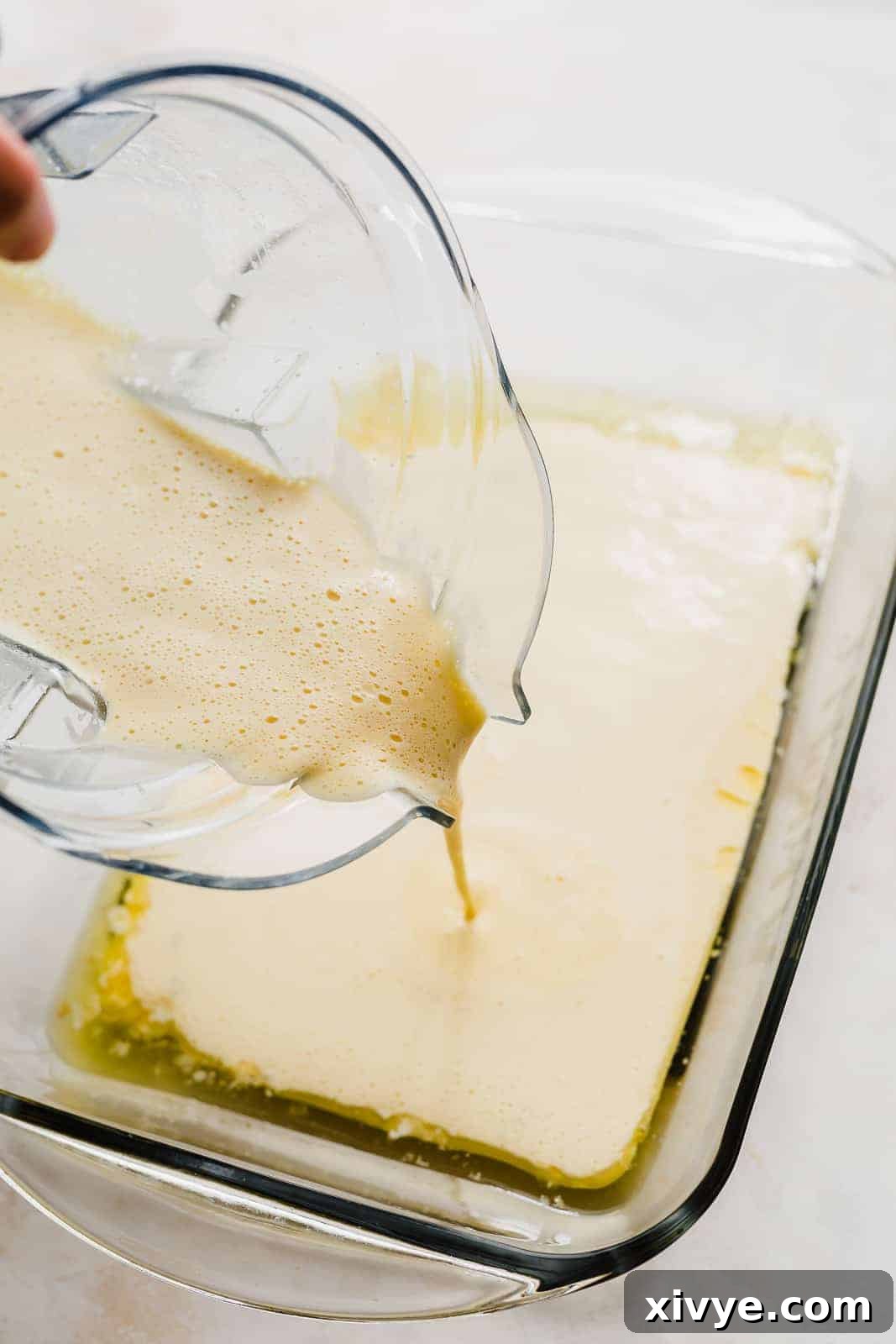
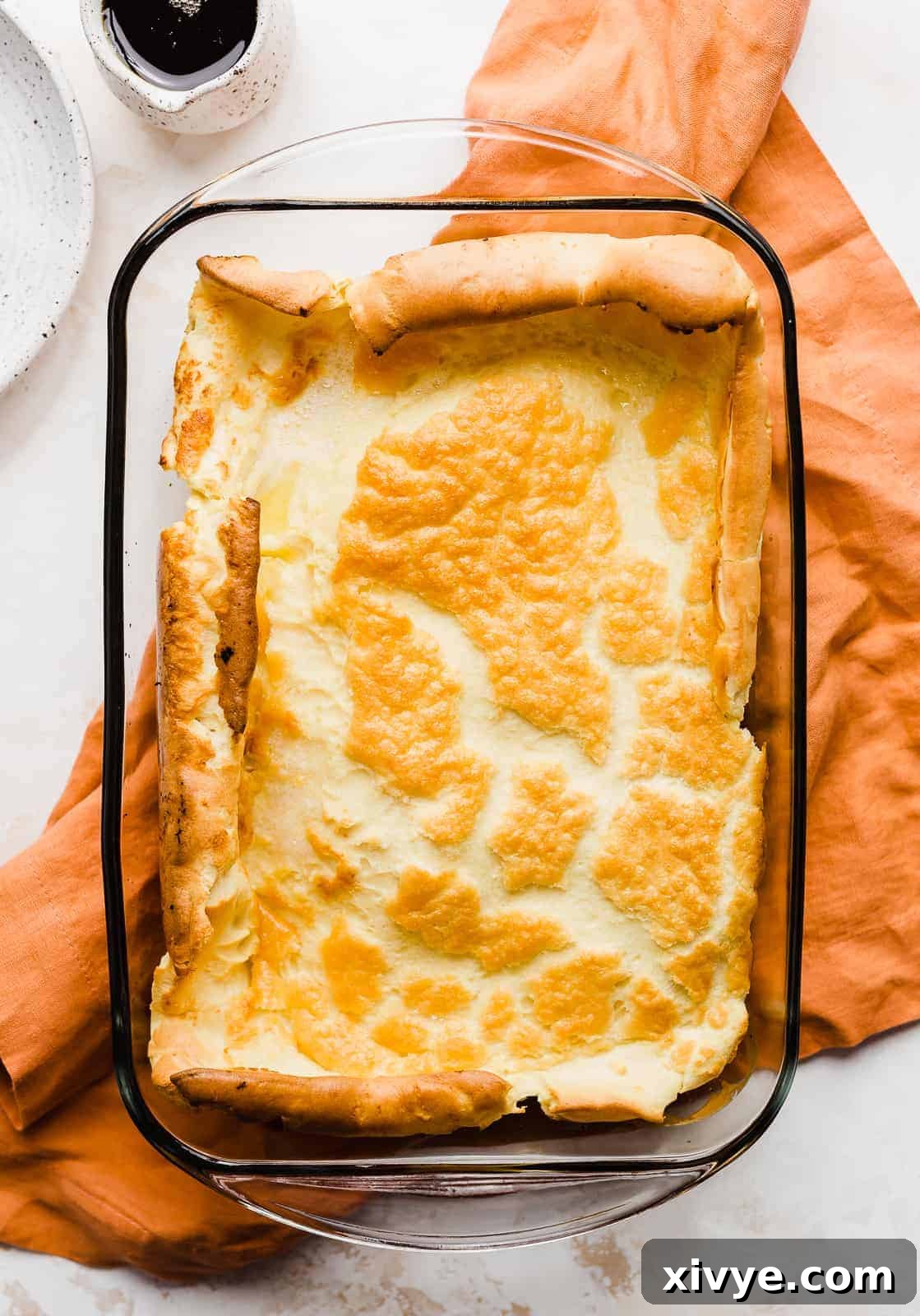
- Bake to Golden Perfection: Place the baking dish back into the preheated oven and bake for 20-22 minutes. The German pancake is ready when it’s beautifully golden brown, significantly puffed up around the edges, and set in the center. Baking times may vary slightly depending on your oven, so keep an eye on it after 18 minutes.
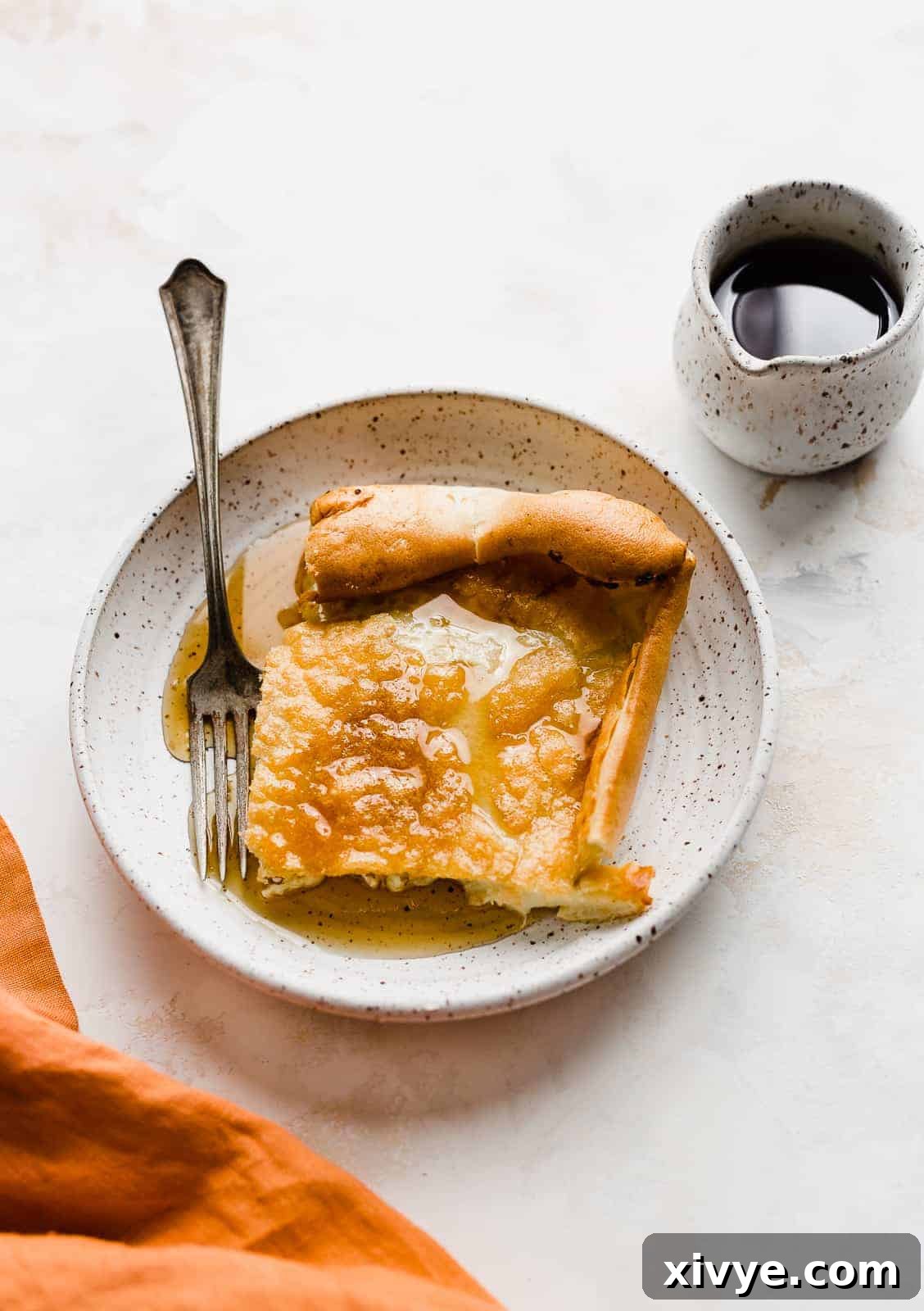
- Serve Immediately: Once baked, carefully remove the pan from the oven. The pancake will be dramatically puffed and impressive! Serve immediately. It will deflate slightly as it cools, which is completely normal. Slice into squares or wedges and serve with your favorite toppings such as warm maple syrup, fresh berries, a dusting of powdered sugar, or even a dollop of whipped cream.
Expert Tips for the Best German Pancakes
- Blender vs. Mixer: While a blender makes this recipe incredibly quick and easy, you can certainly achieve great results without one. If you don’t have a blender, a hand mixer or a stand mixer fitted with a whisk attachment works perfectly. Ensure you beat the batter for at least 1-2 minutes to incorporate enough air, which is crucial for the pancake’s rise.
- The Power of Aeration: Don’t underestimate the blending time! Be sure to blend the batter for the full 30-45 seconds. This vigorously beats air into the eggs and milk, creating tiny pockets of steam during baking that cause the pancakes to puff up beautifully. Insufficient blending is a common reason for a flatter pancake.
- Dairy-Free Delight: For those seeking a dairy-free breakfast option, this recipe is easily adaptable. Simply swap out the regular milk for your preferred dairy-free alternative such as soy milk, almond milk, oat milk, cashew milk, or rice milk. Keep in mind that each type of milk has a distinct flavor profile, which will subtly alter the taste of your German pancakes. Choose a milk you enjoy on its own to ensure a delicious outcome.
- Hot Pan, Puffy Pancake: The preheated oven and the hot, buttered pan are essential for a dramatic rise. The immediate contact of the cold batter with the hot fat and pan creates a burst of steam, causing the edges to climb high. Avoid opening the oven door too frequently during baking, as this can cause the pancake to deflate prematurely.
- Don’t Forget the Salt: While not listed as a primary ingredient in the short list, a small pinch of salt (about ¼ teaspoon) can enhance the flavors of the batter, balancing the sweetness and richness. Add it to the blender with the other ingredients.
- Serving Suggestions: Beyond the classic syrup and berries, get creative with your toppings! Consider a dusting of cinnamon sugar, a squeeze of fresh lemon juice, sliced bananas with a drizzle of chocolate sauce, a dollop of whipped cream, or even a savory spin with some crispy bacon and a fried egg for a unique breakfast experience.
- Storing and Reheating: Leftover German pancakes can be stored in an airtight container in the refrigerator for up to 2-3 days. To reheat, place slices on a baking sheet and warm in a 350°F (175°C) oven until heated through and slightly crispy again, about 5-10 minutes. Microwaving is an option, but it won’t retain the crisp texture.
Frequently Asked Questions About German Pancakes
Absolutely! While I find a blender to be the easiest and quickest method for a smooth, aerated batter, a hand mixer or a stand mixer with a whisk attachment works perfectly well. The key is to ensure you beat the batter for at least 1-2 minutes to incorporate enough air for that beautiful puff.
Yes, you certainly can! If you’re looking for a dairy-free breakfast, feel free to swap out the regular milk with plant-based alternatives such as soy milk, almond milk, oat milk, cashew milk, or rice milk. Remember that each dairy-free milk has its own unique flavor profile, which will slightly alter the taste of your German pancakes. Choose an option you enjoy to ensure the best results.
This recipe typically yields a generously sized German pancake that can feed a small family, usually around 4 servings. If you’re feeding big eaters, or if this is the main course, it will comfortably serve 2 individuals with hearty appetites. For larger gatherings, consider doubling the recipe and using two 9×13-inch pans.
Interestingly, “German pancakes” and “Dutch Babies” are essentially the same dish! According to Cook’s Illustrated, the term “Dutch Baby” is thought to have originated from an American restaurant owner who misheard “Deutsch,” the German word for German, and mistakenly thought it was “Dutch.” So, regardless of what you call it, you’re enjoying the same delicious, puffy, oven-baked pancake!
Achieving a good rise in German pancakes can be tricky because they don’t typically use leavening agents like baking powder or yeast. There are two key factors to consider for that impressive puff. First, ensure your batter is well-aerated by blending it for the recommended time (30-45 seconds). This incorporates air into the eggs, which expands in the hot oven. According to thekitchn.com, allowing your batter to rest for a few minutes before its final blend can also help the gluten and proteins in the flour develop, contributing to a better structure. Second, make sure both your oven and your baking pan are thoroughly preheated to the correct temperature (425°F/220°C). A hot environment creates the immediate steam needed for the dramatic rise. Opening the oven door too early can also cause deflation.
While German pancakes are best enjoyed fresh out of the oven, the batter can be made ahead. Prepare the batter, blend it well, and store it covered in the refrigerator for up to 24 hours. Give it a quick re-blend right before baking to re-incorporate air. For the actual baked pancake, leftovers can be reheated, but they won’t have the same dramatic puff as fresh ones.
Explore More Delicious Breakfast Recipes
If you loved these German pancakes, you’re sure to enjoy these other delightful breakfast ideas:
- Homemade Buttermilk Pancakes: The classic fluffy favorite, perfect for any morning.
- English Pancakes: Thinner, crêpe-like pancakes ideal for sweet or savory fillings.
- Belgian Liege Waffles: Rich, chewy waffles with pearl sugar, a real treat!
- Buttermilk Waffles: Crispy on the outside, fluffy on the inside, a breakfast staple.
Did you make this incredible German pancake recipe? I’d absolutely love to hear about your experience! Click here to leave a rating and review. Your feedback helps others discover and enjoy this fantastic dish!
German Pancakes

Whitney Wright
2
20
22
4
slices
Ingredients
-
4
tablespoons
butter
— unsalted or salted is fine -
6
eggs -
1
cup
all-purpose flour -
1
cup
milk
— any percentage is good (I usually use 2% or whole milk) -
1
teaspoon
vanilla extract
Equipment
-
13″x9″ glass baking pan
-
Blender (Vitamix or similar)
Instructions
-
Preheat oven to 425°F (220°C). Place the butter in a 9”x13” baking dish. Place the pan in the oven as it’s preheating to melt the butter while you prepare the pancake batter. Note: keep an eye on the butter; remove once fully melted.
-
Meanwhile, add the eggs, flour, milk, and vanilla to a blender. Blend on medium-high for 30 seconds or until thoroughly combined and smooth.
-
Pour the batter into the 9”x13” butter-coated pan.
-
Bake in the preheated oven for 18-22 minutes or until golden brown and significantly puffy. (My oven typically takes 20 minutes to bake).
-
Remove from oven and serve immediately with syrup and/or fresh berries and powdered sugar.
Notes
Nutritional information is based on 1 individual serving. This recipe comfortably feeds my small family. If you’re catering to larger appetites, expect it to serve about 2 adults generously.
Key to Puffiness: Ensure you blend the batter for the full 30 seconds (or more!). Beating plenty of air into the batter is absolutely essential for helping these pancakes puff up beautifully in the oven.
Mixing Options: If a blender isn’t available, you can still make these fantastic pancakes! Mix the batter with a hand mixer or a stand mixer fitted with the whisk attachment. Just make sure to beat until very smooth and aerated.
Dairy-Free Option: For a dairy-free breakfast, feel free to substitute the milk in this recipe with plant-based alternatives like soy milk, almond milk, oat milk, cashew milk, or rice milk. Keep in mind that each dairy-free milk will contribute its own distinct flavor to the German pancakes, so choose one you enjoy!
Nutrition
Calories:
349
kcal
(17%)
Carbohydrates:
27
g
(9%)
Protein:
14
g
(28%)
Fat:
20
g
(31%)
Saturated Fat:
10
g
(50%)
Cholesterol:
282
mg
(94%)
Sodium:
221
mg
(9%)
Potassium:
205
mg
(6%)
Fiber:
1
g
(4%)
Sugar:
4
g
(4%)
Vitamin A:
805
IU
(16%)
Calcium:
114
mg
(11%)
Iron:
3
mg
(17%)
Breakfast
German
Did you make this recipe?
Please leave a star rating and review on the blog post letting me know how you liked this recipe! Take a picture and tag @saltandbaker on Tik Tok, Instagram, and Facebook so I can see what you’re making!