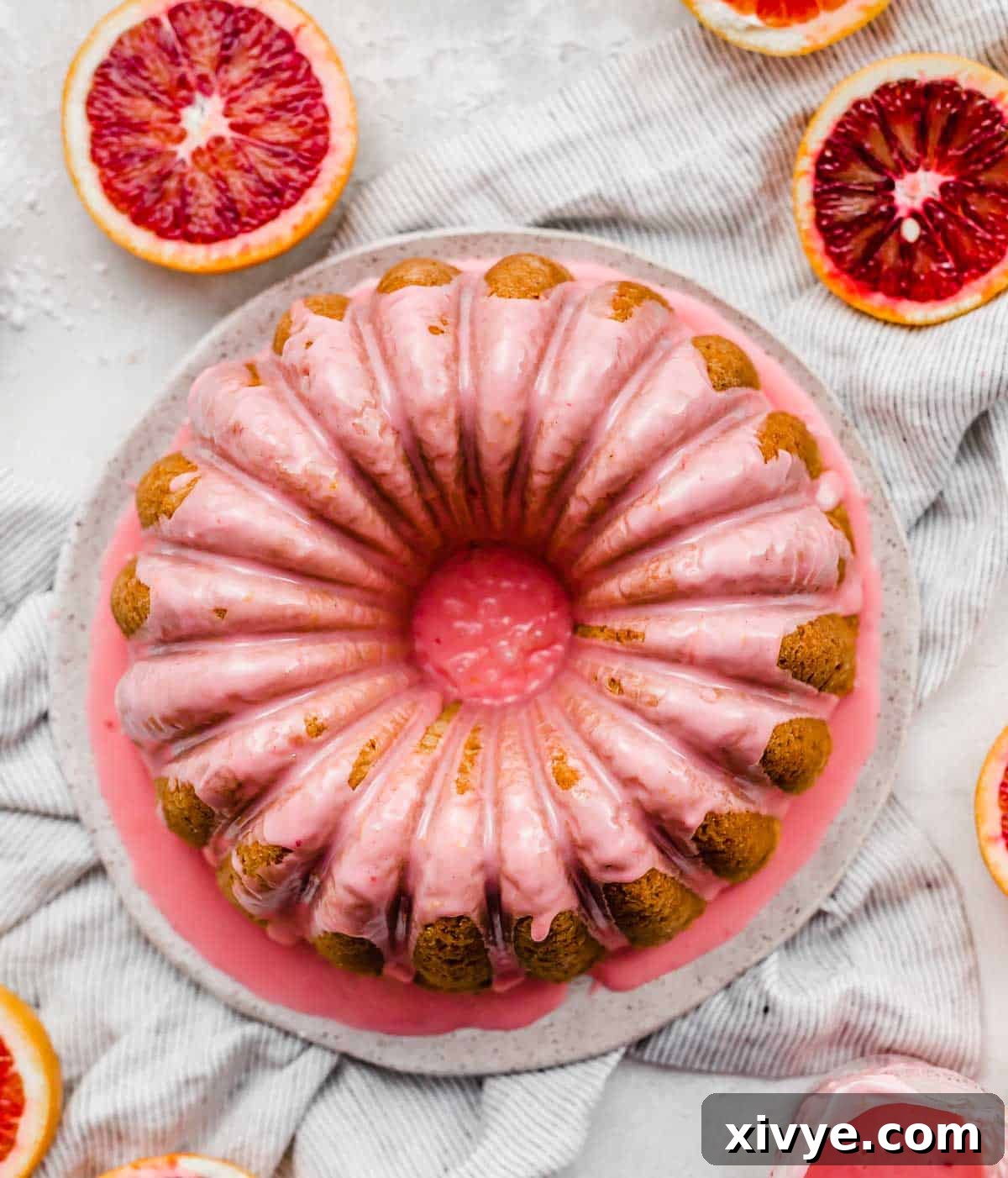
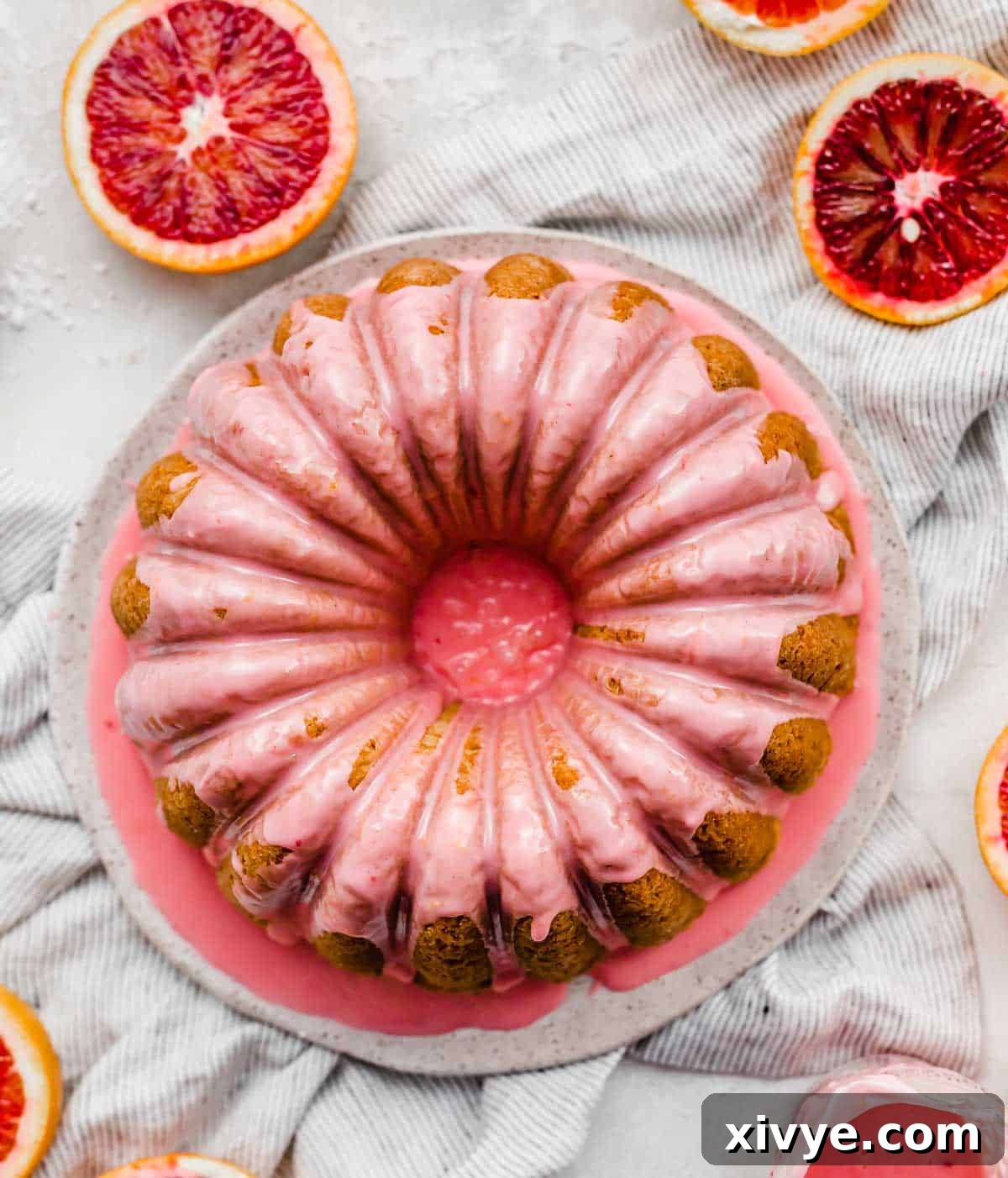
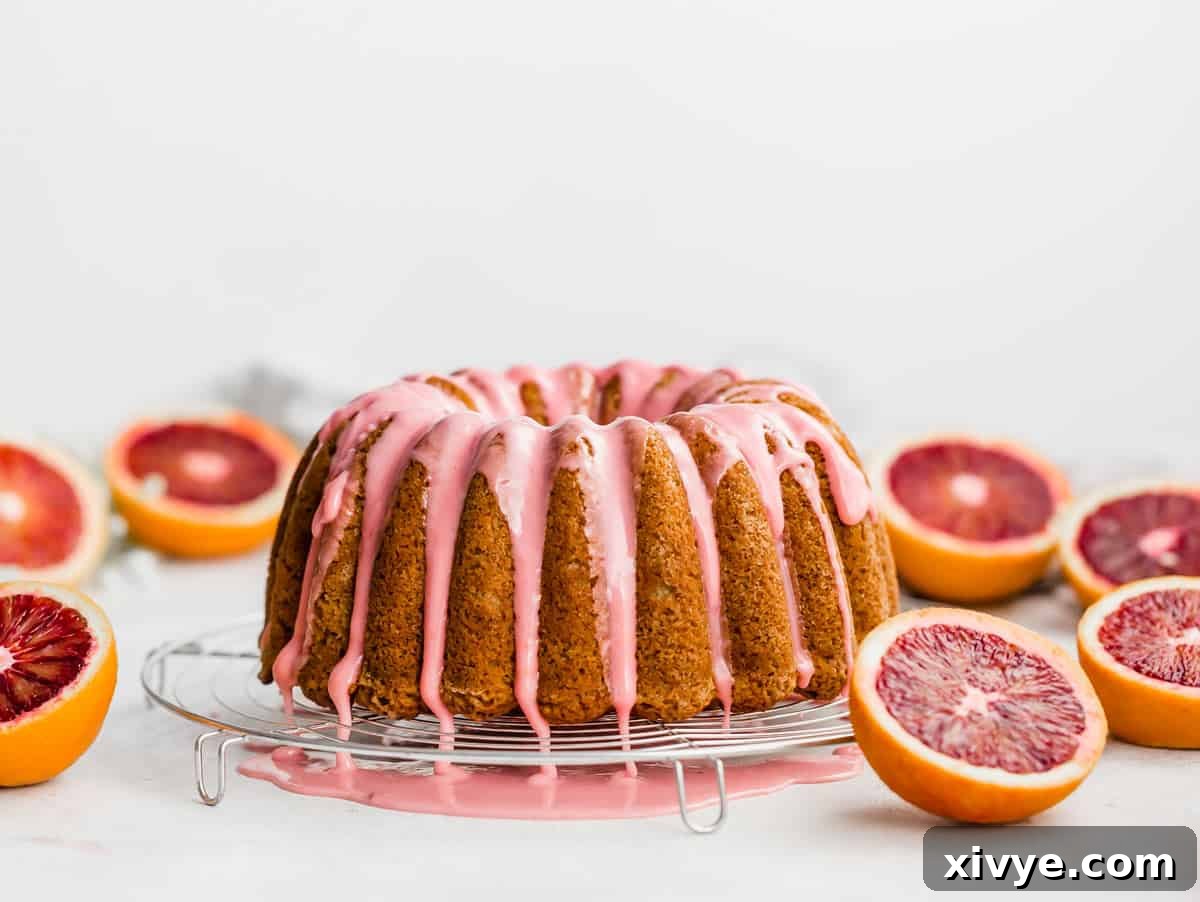
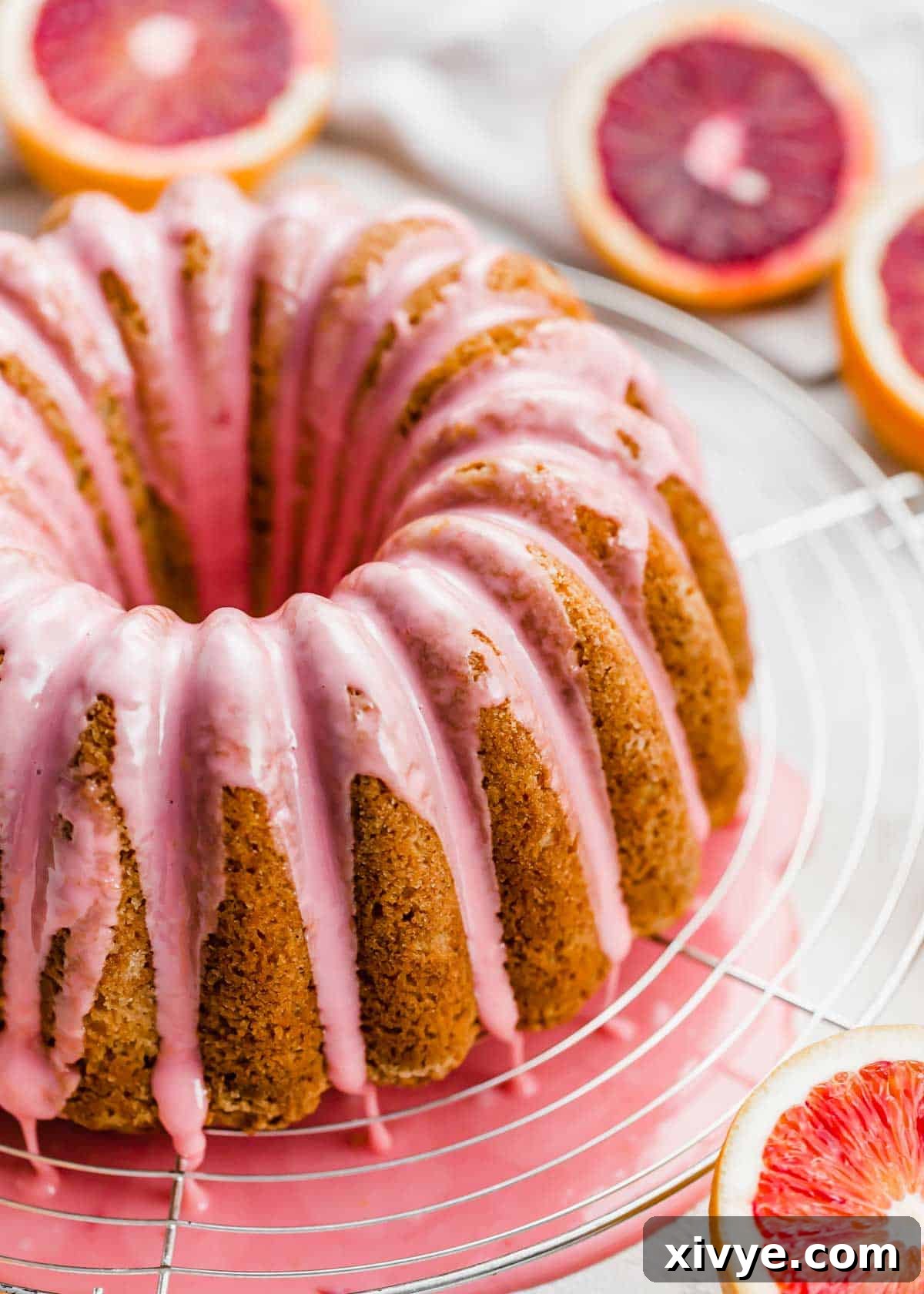
Welcome to the ultimate guide for creating an exquisite Blood Orange Bundt Cake, a dessert that promises to elevate any occasion from a casual brunch to a sophisticated dinner party. This recipe delivers a cake that is remarkably moist, incredibly light, and bursting with the vibrant, unique flavor of blood oranges, perfectly complemented by delicate notes of cardamom in every bite. Crowned with a thick, smooth, and tangy blood orange glaze, this cake is not just a treat for your taste buds but also a feast for the eyes, guaranteed to impress with its stunning appearance and sensational taste.
Beyond this magnificent bundt cake, don’t let any leftover blood oranges go to waste! They are wonderfully versatile. Consider using them to prepare a refreshing Blood Orange Chia Pudding for a healthy breakfast, or incorporate their bright zest and juice into a batch of my delightful Easy Homemade Orange Sweet Rolls. The possibilities are endless when you have these beautiful citrus gems on hand!
Why This Blood Orange Bundt Cake Recipe Is a Must-Try
This isn’t just another cake; it’s a culinary experience designed to impress and delight. Here’s why our Blood Orange Bundt Cake stands out:
- Visually Stunning & Impressive Presentation: With its elegant bundt shape, delicate golden crumb, and the show-stopping, naturally pink blood orange glaze, this cake is a true showpiece. It’s the perfect dessert to serve at special gatherings, holiday brunches (like Easter!), Sunday dinners, or any event where you want to add a touch of sophistication and vibrant color. Its beautiful hues will instantly bring to mind the freshness of spring.
- Exquisite and Balanced Flavor Profile: Each slice of this cardamom-infused blood orange cake offers a harmonious blend of flavors. The bright, tangy, and subtly bitter notes of blood orange are perfectly balanced by the warm, aromatic, and slightly floral essence of cardamom. A hint of cinnamon adds depth and a comforting balance, creating a flavor combination that is both unique and utterly addictive. It’s a sophisticated twist on traditional orange cakes that will tantalize your taste buds.
- Unforgettably Moist and Tender Texture: Achieving the perfect cake texture is paramount, and this recipe delivers. Thanks to a careful balance of ingredients, including rich butter, a blend of sugars, and the crucial addition of full-fat sour cream, this bundt cake boasts an incredibly moist, tender, and fluffy crumb. It melts in your mouth with every bite, ensuring a delightful eating experience that will leave everyone craving more.
- Easy to Master, Yet Looks Professionally Made: Don’t let the elegant appearance fool you; this blood orange bundt cake is surprisingly straightforward to make. With clear, step-by-step instructions and practical tips, even novice bakers can achieve a perfect result. The beauty of a bundt cake lies in its inherent decorative shape, requiring minimal additional fuss for a truly stunning presentation.
Essential Ingredients for Your Perfect Blood Orange Bundt Cake
Crafting this delightful cake starts with understanding the role of each ingredient. Here’s a detailed look at what you’ll need and why:
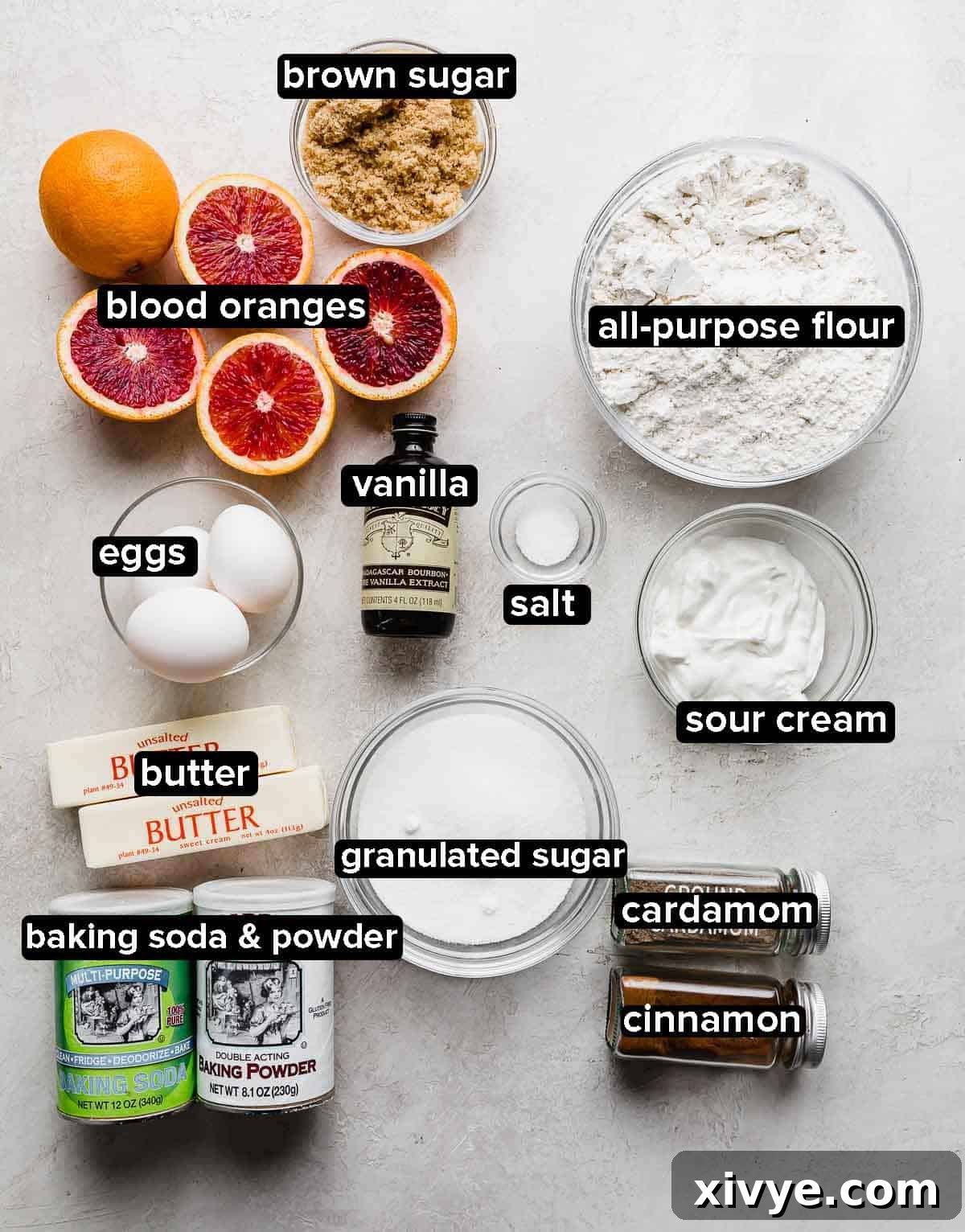
- All-Purpose Flour: This forms the structural backbone of our cake. While standard all-purpose flour works perfectly, sifting it before combining with other dry ingredients can help ensure a lighter, airier crumb.
- Baking Powder & Baking Soda: These are our leavening agents, responsible for the cake’s rise and fluffy texture. This recipe was developed for sea-level baking. If you live at a high altitude, you may need to adjust the quantities. For comprehensive guidance on high-altitude baking, King Arthur Baking offers an excellent resource with suggested substitutions and changes.
- Cardamom: This aromatic spice is the secret ingredient that truly elevates the cake’s flavor profile. We recommend ½ teaspoon to provide a subtle yet noticeable warmth that lingers beautifully after each bite. For those who desire a more pronounced spice, feel free to increase it to ¾ teaspoon. For the freshest and most intense flavor, consider using freshly ground green cardamom pods.
- Cinnamon: A touch of cinnamon wonderfully complements the cardamom, adding a familiar warmth and depth that balances the bright citrus notes of the blood orange. It creates a more complex and inviting flavor.
- Unsalted Butter: Butter provides richness and contributes significantly to the cake’s tender crumb and delicious flavor. Using unsalted butter allows you to control the overall salt content of the recipe. If you only have salted butter, you can use it, but consider slightly reducing the added salt. Ensure your butter is at room temperature for optimal creaming with the sugars.
- Granulated Sugar & Brown Sugar: The combination of these two sugars is intentional. Granulated sugar provides sweetness and helps achieve a tender texture. Brown sugar, with its molasses content, adds a subtle caramel note and, more importantly, helps retain moisture, contributing to the cake’s irresistibly moist crumb. Make sure to pack the brown sugar when measuring.
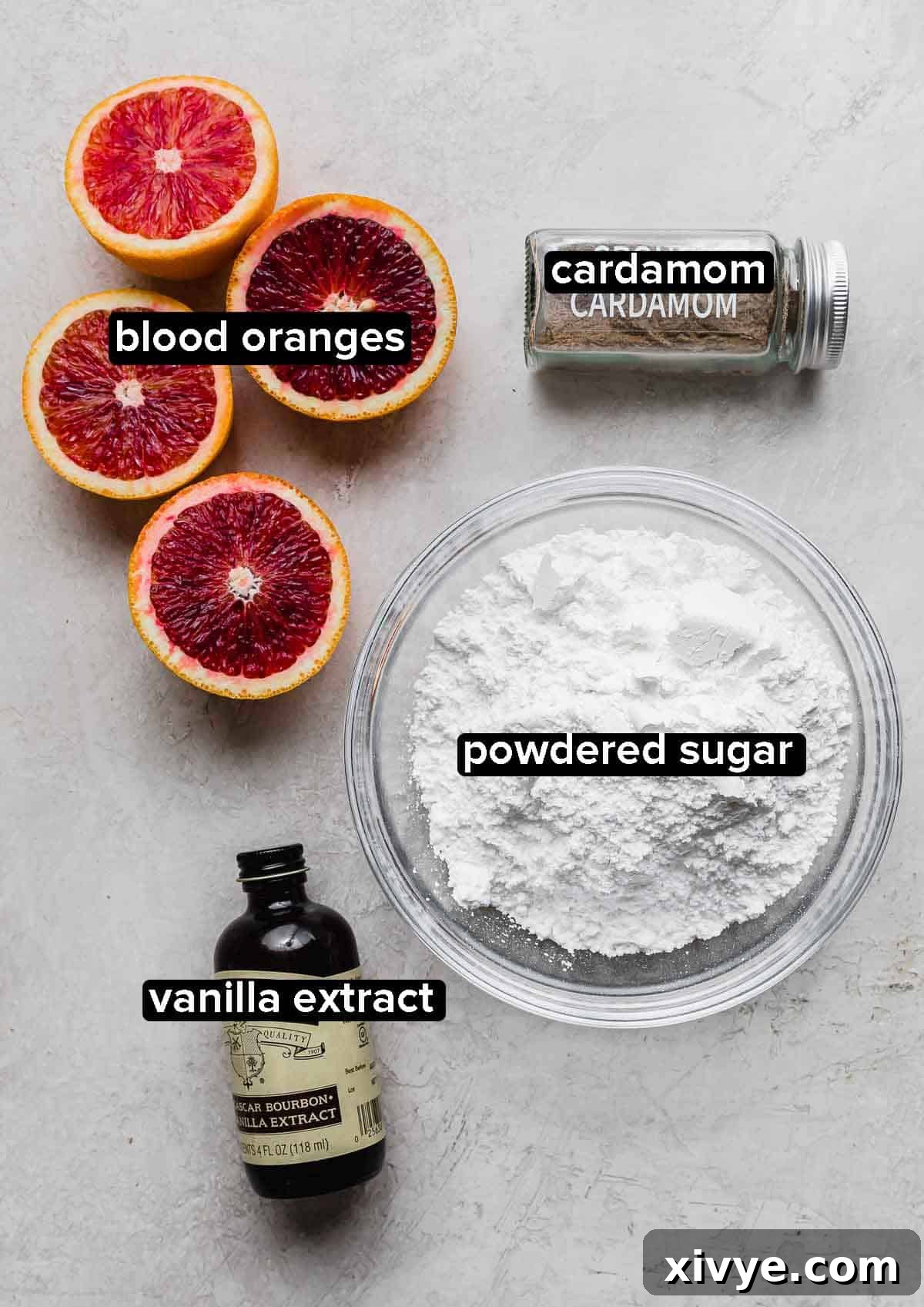
- Blood Orange Zest & Juice: These are the stars of the show! The zest, derived from the outer peel of the blood orange, is packed with aromatic oils that infuse the cake with intense, bright citrus flavor. The juice adds a beautiful tang and contributes to the cake’s moisture. For the most vibrant flavor and color, always use fresh blood oranges. Adding 3 tablespoons of zest provides a lovely orange essence, but you can increase it to 4 tablespoons if you crave an even bolder citrus punch.
- Sour Cream: Full-fat sour cream is a powerhouse ingredient in this recipe. It adds significant moisture and richness, contributing to a wonderfully creamy and tender texture. Its acidity also reacts with the baking soda, aiding in leavening and resulting in a lighter, fluffier cake. If sour cream isn’t available, full-fat Greek yogurt can be a good substitute, though it might yield a slightly denser cake.
- Large Eggs: Eggs bind the ingredients together, provide structure, and add moisture and richness. For best results, ensure your eggs are at room temperature, as they emulsify more effectively with the butter and sugar, leading to a smoother batter and better cake texture.
- Vanilla Extract: A classic in baking, vanilla extract enhances and rounds out all the other flavors, adding a comforting aroma and taste without overpowering the delicate citrus and spice notes.
- Powdered Sugar: The foundation of our beautiful glaze! Powdered sugar dissolves easily to create a smooth, pourable consistency for the final touch on your bundt cake.
Effortless Step-by-Step Guide to Baking Your Blood Orange Bundt Cake
Follow these detailed steps to create a show-stopping Blood Orange Bundt Cake that will impress everyone:
- Prepare Your Pan and Oven: Begin by preheating your oven to 350°F (175°C) and positioning the oven rack in the center. This ensures even baking. A crucial step for bundt cakes is preparing the pan correctly. Thoroughly grease a 10-cup bundt pan with butter or shortening, ensuring every crevice is coated. Then, lightly flour the pan, tapping out any excess. This dual method helps prevent sticking and ensures a clean release. Set the prepared pan aside.
- Combine Dry Ingredients: In a medium-sized bowl, whisk together 3 cups of all-purpose flour, 3 teaspoons of baking powder, ¾ teaspoon of baking soda, ½ teaspoon of cardamom, ¼ teaspoon of cinnamon, and ½ teaspoon of salt until thoroughly combined. Whisking ensures that the leavening agents and spices are evenly distributed throughout the flour, preventing pockets of unmixed ingredients in your final cake.
- Cream Wet Ingredients: In the bowl of a stand mixer fitted with the paddle attachment, combine 1 cup of softened unsalted butter, 1 cup of granulated sugar, and ½ cup of packed brown sugar. Beat on medium speed for 2-3 minutes until the mixture is light in color and fluffy in texture. This creaming process incorporates air, which is vital for a light cake. Next, add the 3 large eggs, one at a time, beating well after each addition and scraping down the sides of the bowl as needed to ensure everything is fully incorporated. Finally, mix in 3 tablespoons of blood orange zest, ¼ cup of blood orange juice, and 1 teaspoon of vanilla extract until just combined. Avoid overmixing at this stage.
- Alternate Flour Mixture and Sour Cream: With the mixer on low speed, begin incorporating the dry flour mixture and the 1 cup of full-fat sour cream into the wet ingredients. You will alternate additions, starting and finishing with the flour mixture. The sequence should be: flour, sour cream, flour, sour cream, flour. Mix until the ingredients are *just* barely combined after each addition. The key here is to not overmix the batter; overmixing can develop the gluten in the flour, resulting in a dense or tough cake. Stop mixing as soon as no dry streaks of flour are visible.
- Pour into Prepared Pan and Bake: Carefully pour the cake batter into your well-greased and floured 10-cup bundt pan, spreading it evenly. Bake for 45-50 minutes, or until a wooden toothpick inserted into the center of the cake comes out with only a few moist crumbs attached. (In our test kitchen, it typically bakes perfectly at 47 minutes).
- Cool the Cake: Once baked, remove the bundt cake from the oven and let it cool in the pan on a wire rack for precisely 10 minutes. This allows the cake to firm up slightly and pull away from the sides of the pan. After 10 minutes, invert the bundt pan onto the wire rack and carefully lift the pan away from the cake. Allow the cake to cool completely on the wire rack before applying the glaze. Cooling it to just warm to the touch before covering with plastic wrap can help retain moisture.
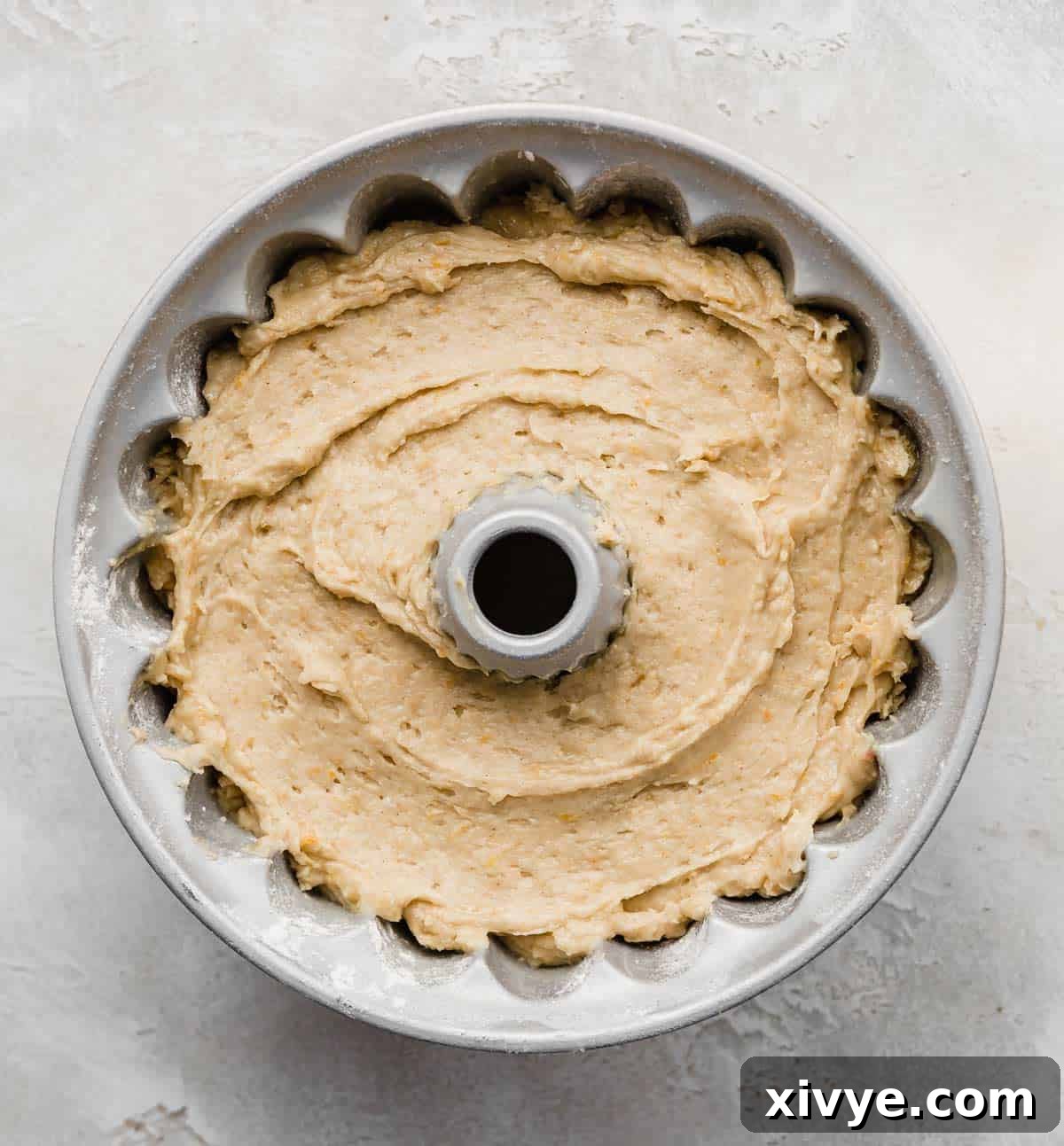
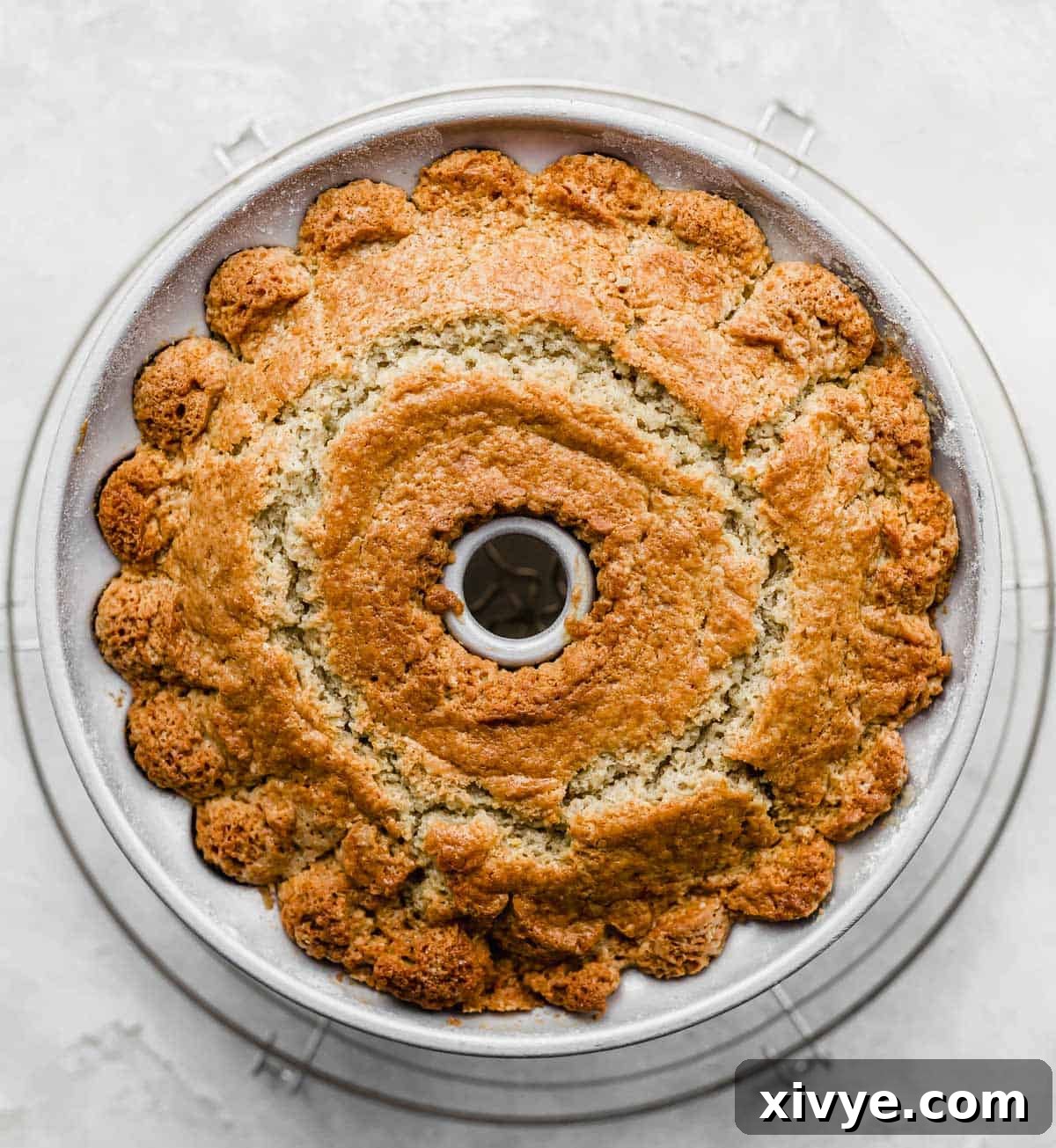
- Prepare the Blood Orange Glaze: While your cake is cooling, prepare the vibrant glaze. In a liquid measuring cup or a small bowl, combine ⅓ cup of fresh blood orange juice, ½ teaspoon of vanilla extract, a tiny pinch of cardamom, and 2 ½ cups of powdered sugar. Whisk vigorously until the mixture is completely smooth and free of lumps. The desired consistency should be pourable yet thick enough to coat the back of a spoon and slowly drizzle down the cake. If it’s too thick, add a tiny bit more blood orange juice; if too thin, add a tablespoon of powdered sugar at a time.
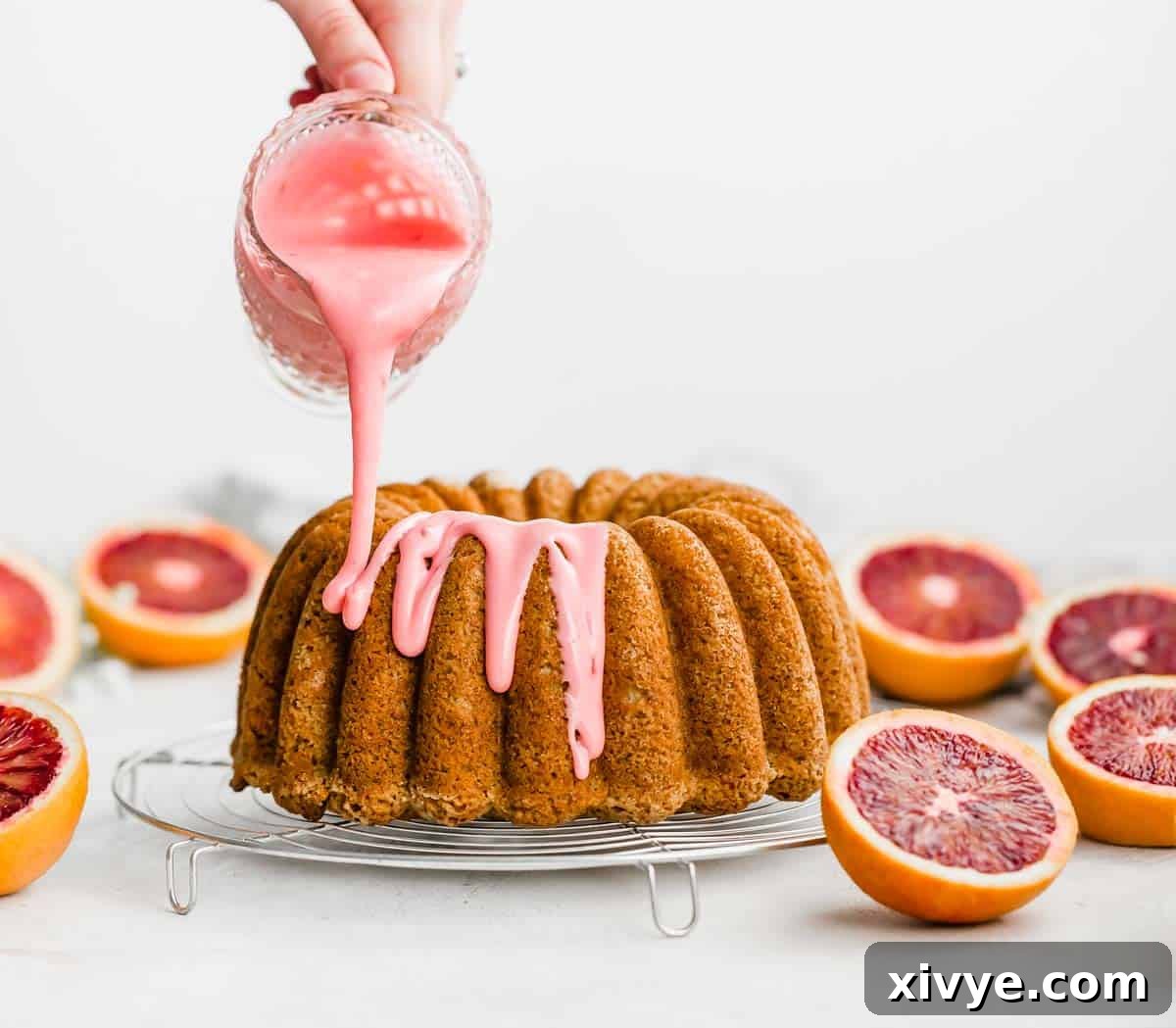
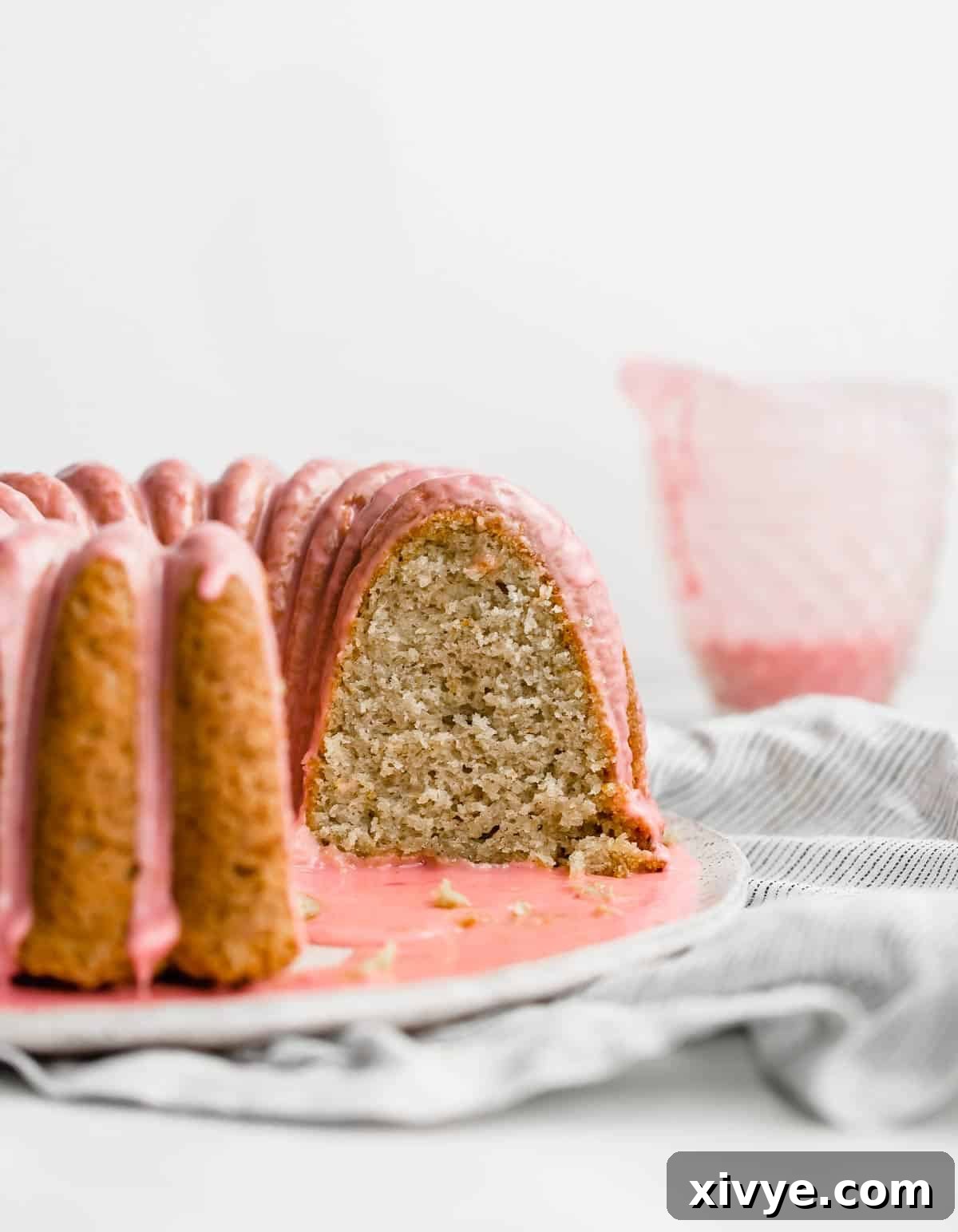
- Glaze and Serve: Once the cake has cooled completely (this is important, as glazing a warm cake will cause the glaze to melt and run off), pour the beautiful, bright pink blood orange glaze evenly over the top of the cake. Allow the glaze to set for a few minutes before slicing and serving this magnificent Blood Orange Bundt Cake. Enjoy the delightful burst of citrus and spice in every tender bite!
Expert Tips for the Best Blood Orange Bundt Cake
To ensure your Blood Orange Bundt Cake turns out perfectly every time, keep these valuable tips in mind:
- Don’t Overmix the Batter: This is perhaps the most crucial tip for any cake. Once you start adding the dry ingredients, mix only until they are *just* combined. Overmixing develops the gluten in the flour, which can lead to a tough, dry cake instead of a tender, moist one.
- Ensure Ingredients are Room Temperature: For best results, make sure your butter, eggs, and sour cream are at room temperature. This allows them to emulsify properly, creating a smooth, uniform batter that bakes evenly and results in a superior cake texture.
- Grease and Flour Your Bundt Pan Thoroughly: A well-greased and floured bundt pan is key to preventing your cake from sticking. Don’t be shy! Use butter or shortening to generously coat every nook and cranny, then dust with flour, tapping out the excess. For extra insurance, some bakers swear by using a baking spray that contains flour.
- Cool the Cake Completely Before Glazing: Patience is a virtue when it comes to glazing. If you pour the glaze over a warm cake, it will simply melt and run off, leaving you with a sticky mess and less vibrant finish. Allow the cake to cool entirely on a wire rack before applying the glaze.
- Achieve the Perfect Glaze Consistency: The ideal blood orange glaze should be pourable but thick enough to cling to the cake, creating a beautiful, somewhat opaque coating. If your glaze is too thick, add a tiny splash more blood orange juice. If it’s too thin, whisk in additional powdered sugar, one tablespoon at a time, until you reach your desired consistency.
- Choose a Simpler Bundt Pan Design: For beginners, starting with a bundt pan that has a simpler, less intricate design can make unmolding the cake significantly easier. More complex designs, while beautiful, can be tricky and may require extra diligence with greasing and flouring to prevent breakage.
- Keep it Moist Post-Bake: Once the cake is out of the pan and just warm to the touch (but not hot), cover it loosely with plastic wrap. This simple trick helps trap moisture and prevents the cake from drying out as it cools completely.
- Use Freshly Squeezed Blood Orange Juice and Zest: The flavor of this cake truly shines with fresh ingredients. Bottled juice won’t offer the same vibrant taste or natural color. Similarly, the zest contains essential oils that provide intense aroma and flavor.
Make Ahead, Storing, and Freezing Your Blood Orange Bundt Cake
This Blood Orange Bundt Cake is perfect for making ahead, making it an excellent choice for entertaining. Here’s how to store and preserve its deliciousness:
- Storing at Room Temperature: To keep your cake fresh and moist, cover it tightly with plastic wrap or place it under a cake dome. It will stay wonderfully fresh at room temperature for up to 3 days. While delicious throughout, the cake is truly at its best when served within the first 2 days.
- Freezing the Glazed Cake: If you plan to freeze the entire glazed cake, first “flash freeze” it uncovered on a baking sheet until the glaze is completely set and firm. This prevents the glaze from sticking to the wrapping. Once firm, double wrap the cake tightly in plastic wrap, then add a layer of aluminum foil, especially if freezing for longer than one week. This double layer helps prevent freezer burn. The cake can be frozen for up to 3 months. To serve, remove from the freezer and thaw overnight in the refrigerator, then bring to room temperature before serving.
- Freezing the Cake Without Glaze (Recommended): For the absolute best results when freezing, we highly recommend freezing the cake without the glaze. Once the cake has cooled completely, double wrap it in plastic wrap, then in aluminum foil. Freeze for up to 3 months. The day you plan to serve it, remove it from the freezer and let it thaw overnight in the refrigerator. Prepare the fresh blood orange glaze just before serving for the brightest flavor and best appearance.
- Freezing Individual Slices: To enjoy single servings later, cut the cake into individual slices. Wrap each slice tightly in plastic wrap, then store them in an airtight freezer-safe container or freezer bag. This makes it easy to grab a slice whenever a craving strikes! Thaw individual slices in the refrigerator overnight or at room temperature for a couple of hours.
Blood Orange Bundt Cake: Your Questions Answered
Blood oranges possess a unique flavor profile that can indeed have a slight bitterness, often compared to grapefruit, but it’s typically balanced by a lovely sweetness and berry-like notes. Some describe it as having a hint of cranberry taste. This subtle bitterness adds complexity and a refreshing edge to the cake, rather than being overtly unpleasant.
Blood oranges are a seasonal delight, typically available during the cooler months. Their peak season is usually between February and March, though they can sometimes be found from January through May, depending on the growing region and specific variety. This makes our Blood Orange Bundt Cake a perfect dessert for late winter and early spring celebrations!
Yes, you absolutely can use regular oranges! Navel oranges would be the best choice due to their sweetness and low seed count. However, be aware that while the cake will still be delicious, you will miss out on the distinctive ruby-red color and unique flavor nuances that blood oranges provide. If you’re looking for other citrus variations, grapefruit or lemon would also make excellent and refreshing substitutions, offering a different but equally delightful flavor profile.
If you don’t have cardamom on hand, the closest substitute in terms of warm, aromatic flavor would be nutmeg. While it won’t replicate the exact unique essence of cardamom, nutmeg will provide a complementary spice note that works well with citrus. Another option could be a very small amount of allspice or even ginger for a different kind of warmth. Keep in mind that any substitution will alter the overall flavor profile, so adjust to your preference.
This recipe is designed for a standard 10-cup bundt pan. While there are many beautiful and intricate bundt pan designs available, if you’re new to baking bundt cakes, a simpler design is often easier to grease and flour effectively, ensuring a clean release without sticking. Regardless of the design, always ensure your pan is well-greased and floured.
The best way to test for doneness is to insert a long wooden skewer or toothpick into the thickest part of the cake. If it comes out with a few moist crumbs attached, your cake is ready. If it comes out wet with raw batter, it needs more time. Be careful not to overbake, as this can lead to a dry cake.
Explore More Delicious Bundt Cake Recipes
If you love the simplicity and elegance of bundt cakes, you’re in for a treat! Here are some more fantastic bundt cake recipes to inspire your baking adventures:
- Lemon Poppy Seed Bundt Cake: A classic, bright, and delightful cake perfect for any time of year.
- Chocolate Buttermilk Bundt Cake: Rich, decadent, and incredibly moist – a chocolate lover’s dream.
- Apple Cider Bundt Cake: Embrace the flavors of autumn with this spiced and comforting cake.
- Gingerbread Bundt Cake: A warm and spicy delight, perfect for holiday gatherings.
- Red Velvet Bundt Cake: A vibrant, creamy, and undeniably festive cake for special occasions.
- White Chocolate Raspberry Bundt Cake: An elegant combination of sweet white chocolate and tart raspberries.
Did you try this irresistible Blood Orange Bundt Cake recipe? We would absolutely love to hear about your experience! Leave a star rating and a review below, or scroll further down past the recipe card to share your feedback. Your insights help us grow and inspire other bakers!
Stay connected and up-to-date with our latest delicious creations by following us on Instagram, TikTok, YouTube, Facebook, and Pinterest.
Blood Orange Bundt Cake Recipe
This is my newest (most favorite) bundt cake recipe! You are going to LOVE it! The cake is so fluffy, soft, and moist. You can taste the hint of orange zest and the soft tones of cardamom in every bite. This would be the perfect cake for brunch, Sundays, Easter, or just whenever you’re wanting a citrus-infused cake! Plus, the blood orange glaze makes this bundt cake seem extra fancy.
Cook Time: 50 mins
Total Time: 1 hr 10 mins
Ingredients
For the Cake
- 3 cups all-purpose flour
- 3 teaspoons baking powder
- ¾ teaspoon baking soda
- ½ teaspoon cardamom
- ¼ teaspoon cinnamon
- ½ teaspoon salt
- 1 cup unsalted butter, softened
- 1 cup granulated sugar
- ½ cup brown sugar, packed
- 3 tablespoons blood orange zest
- ¼ cup blood orange juice
- 3 large eggs, at room temperature
- 1 teaspoon vanilla extract
- 1 cup sour cream (full fat recommended)
For the Blood Orange Glaze
- ⅓ cup blood orange juice (might need more depending on desired consistency)
- ½ teaspoon vanilla extract
- Pinch of cardamom
- 2 ½ cups powdered sugar (might need more depending on desired consistency)
Equipment
- Kitchen Aid stand mixer
- 10-cup bundt pan
- Medium mixing bowls
- Whisk
- Wire rack
Instructions
For the Cake
- Preheat oven to 350°F (175°C). Place the oven rack in the center position. Grease and flour a 10-cup bundt pan thoroughly (see Note 1 below for extra tips). Set aside.
- In a medium-sized bowl, whisk together the flour, baking powder, baking soda, cardamom, cinnamon, and salt. Set aside.
- In the bowl of a stand mixer fitted with the paddle attachment, cream the softened butter, granulated sugar, and brown sugar until light and fluffy (about 2-3 minutes). Add the eggs, one at a time, beating well after each addition and scraping down the sides of the bowl. Mix in the blood orange zest, blood orange juice, and vanilla extract until thoroughly combined.
- With the mixer on low speed, alternate adding the flour mixture and sour cream to the wet ingredients, starting and ending with the flour mixture (Flour, sour cream, flour, sour cream, flour). Mix until just combined; do not overmix.
- Pour the batter evenly into the prepared bundt pan. Bake for 45-50 minutes, or until a toothpick inserted into the center of the cake comes out with a few moist crumbs on it. (My cake baked for 47 minutes).
- Remove the cake from the oven and let it cool on a wire rack in the bundt pan for 10 minutes. Then, carefully invert the cake onto the wire rack to cool completely. (See Note 2 for moisture retention tip).
- Glaze the cake with the prepared blood orange glaze once it has cooled completely.
For the Blood Orange Glaze
- While the cake cools, whisk all glaze ingredients (⅓ cup blood orange juice, ½ teaspoon vanilla extract, a pinch of cardamom, and 2 ½ cups powdered sugar) together in a small bowl until smooth. The consistency should be pourable but thick. Adjust with more powdered sugar or blood orange juice as needed to reach your desired consistency.
Notes
- I always grease and flour my bundt pan very well, THEN I spray it with Baker’s cooking spray (a particular spray that contains flour, available at most grocery stores) for extra non-stick insurance.
- Once the cake is cool but still slightly warm to the touch, I like to cover it with plastic wrap. This little trick helps to keep the cake from drying out and maintains its delicious moisture.
Nutrition
Carbohydrates: 93g (31%)
Protein: 7g (14%)
Fat: 25g (38%)
Saturated Fat: 15g (75%)
Cholesterol: 124mg (41%)
Sodium: 249mg (10%)
Potassium: 276mg (8%)
Fiber: 2g (8%)
Sugar: 62g (69%)
Vitamin A: 850IU (17%)
Vitamin C: 13mg (16%)
Calcium: 114mg (11%)
Iron: 2mg (11%)
Cuisine: American
Please leave a star rating and review on the blog post letting me know how you liked this recipe! Take a picture and tag @saltandbaker on Tik Tok, Instagram, and Facebook so I can see what you’re making!