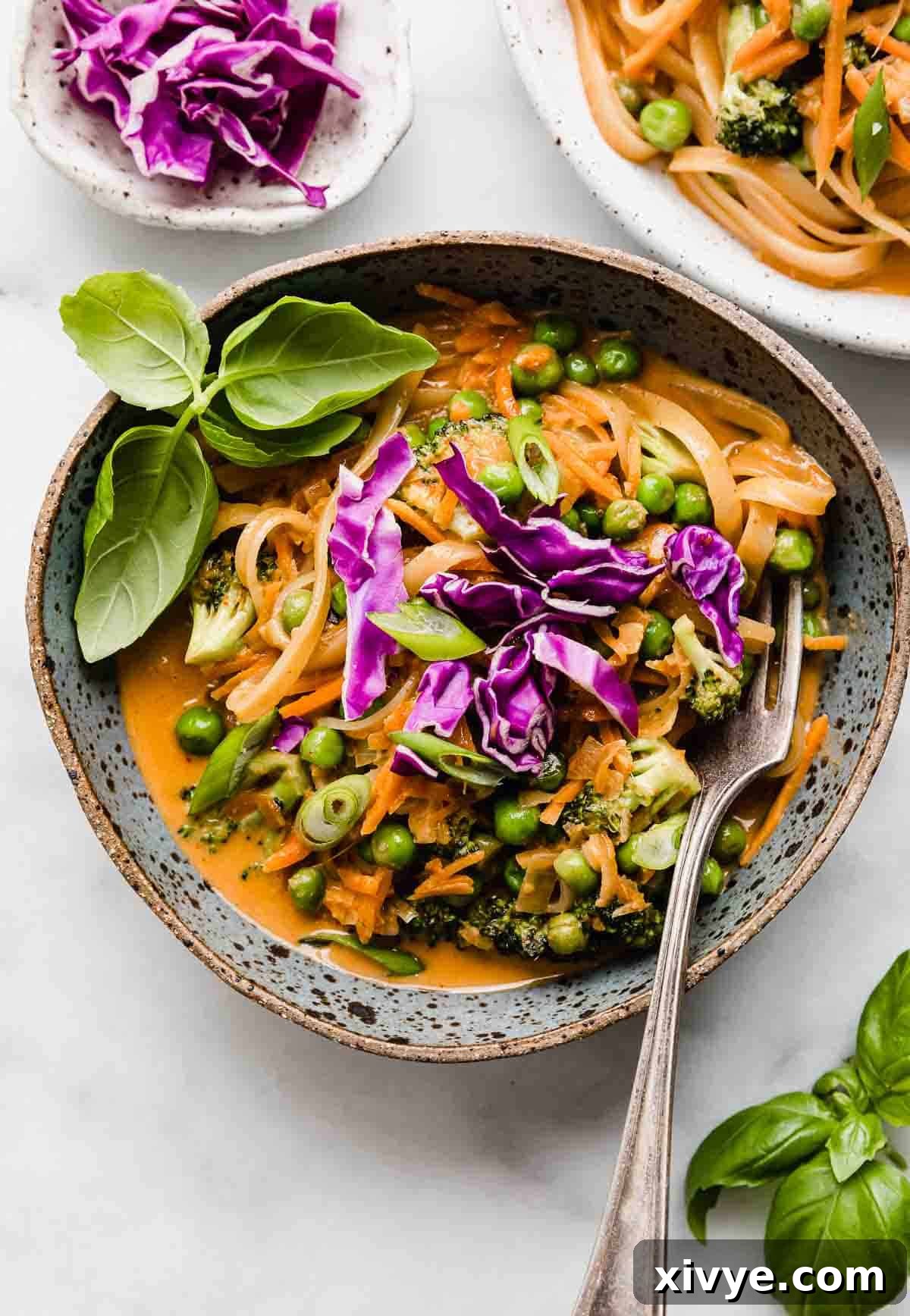
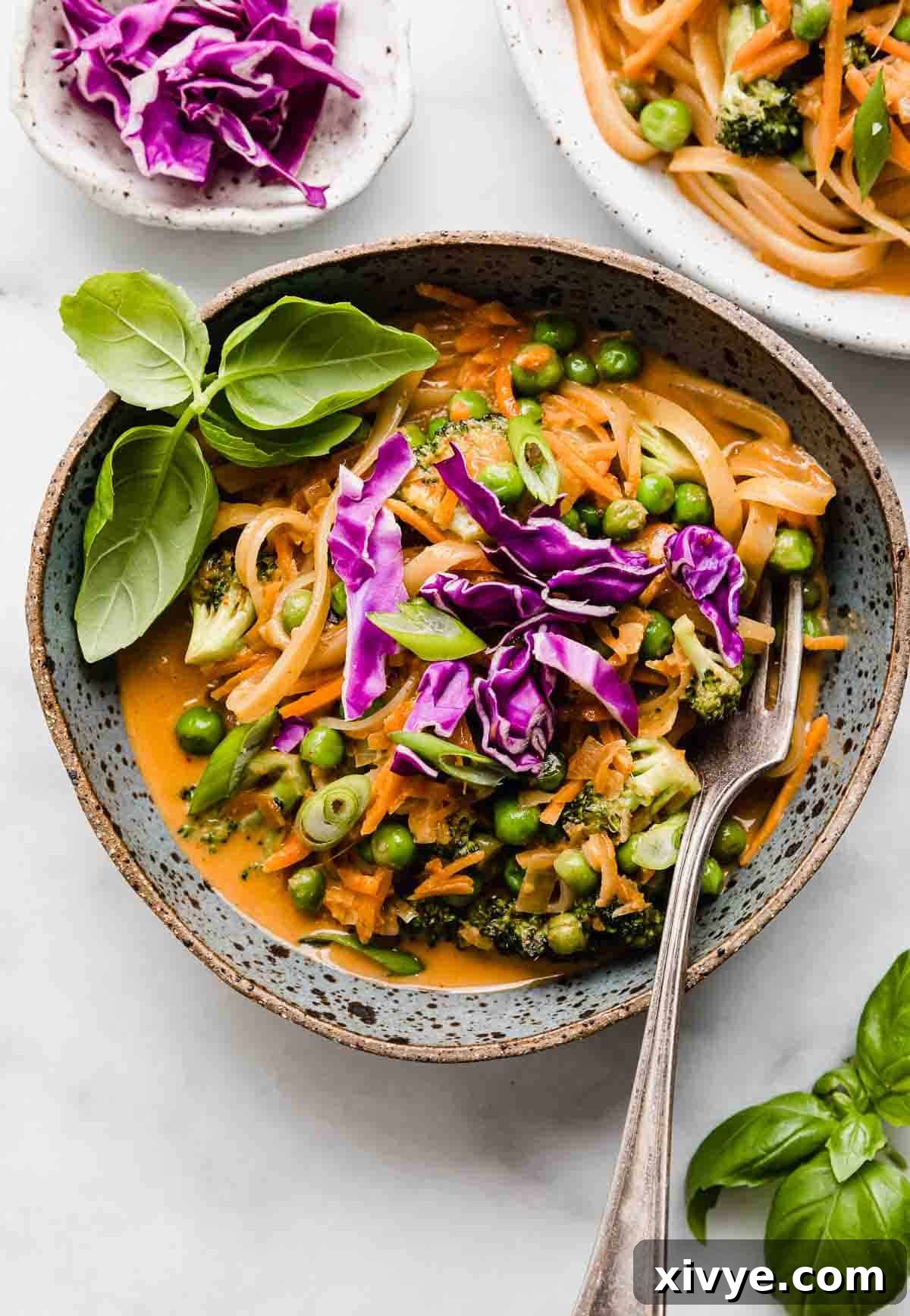
Prepare to be amazed by these incredibly flavorful Coconut Curry Noodles with Fresh Vegetables, a culinary delight that comes together in just 30 minutes! This vibrant dish features tender rice noodles generously coated in a rich, homemade curry sauce. Crafted from creamy coconut milk, pungent red curry paste, and fragrant ginger, the sauce is then brimming with an array of fresh, colorful vegetables, offering not just visual appeal but also a delightful mix of textures and an abundance of savory flavor.
Many believe that truly delicious curry is only achievable in an authentic restaurant setting. However, this recipe proves that you can whip up an exquisite, restaurant-quality curry right in your own kitchen with minimal effort and time. If you’re a fan of the exotic flavors of Thai cuisine and keen to explore more, I have a treasure trove of other easy and delectable curry recipes waiting for you. Be sure to try my Thai Massaman Curry for a milder, sweeter profile, the warming Thai Red Curry Noodle Soup, or the comforting Curry Chicken Rice and Peas for a hearty meal.
Why You’ll Love This Speedy Coconut Curry Noodles Recipe
This Coconut Curry Noodles recipe isn’t just another meal; it’s a game-changer for anyone seeking a vibrant, flavorful, and quick dinner solution. Here’s why this dish is destined to become a staple in your culinary repertoire:
- Achieve Deliciousness in Just 30 Minutes: Imagine savoring a rich, homemade curry without spending hours in the kitchen. This recipe is ingeniously designed for efficiency, ensuring that from prep to plate, you’re enjoying a gourmet meal in half an hour. The secret lies in simultaneous cooking steps and the quick-cooking nature of rice noodles and fresh vegetables. It’s the perfect solution for busy weeknights when you crave something wholesome and satisfying but are short on time.
- Packed with Nature’s Best: Fresh, Wholesome Ingredients: When it comes to Coconut Curry Noodles, a generous helping of fresh vegetables isn’t just an option; it’s essential! The vegetables, like crisp broccoli, sweet carrots, and tender peas, aren’t merely additions for bulk. They infuse the dish with a spectrum of bright colors, a variety of delightful textures—from crunchy to tender—and a boost of essential vitamins and nutrients. Topped with fresh herbs and vibrant cabbage, they transform a simple noodle dish into a truly healthful and visually appealing feast.
- An Irresistible Balance of Flavors: This curry sauce offers a harmonious blend that tantalizes every taste bud. The richness of full-fat coconut milk provides a luxurious, creamy base, perfectly complemented by the complex aromatic heat of Thai red curry paste. Fresh ginger adds a zesty warmth, while a hint of sugar balances the spice, and fish sauce delivers that crucial umami depth. The result is a savory, subtly sweet, and wonderfully spicy profile that is deeply satisfying and incredibly addictive.
- Remarkably Versatile and Adaptable: One of the greatest strengths of this recipe is its flexibility. Whether you’re looking to add protein, adjust the spice level, or simply use up whatever vegetables you have on hand, this dish is incredibly forgiving. It’s easily customizable to suit various dietary preferences, from adding chicken or shrimp to making it vegetarian or even gluten-free with simple swaps. This adaptability makes it a perfect canvas for culinary creativity.
Essential Ingredients for Your Coconut Curry Noodles
Crafting the perfect Coconut Curry Noodles starts with understanding the role of each ingredient. Here’s a closer look at what you’ll need and how to select them for optimal flavor and texture:
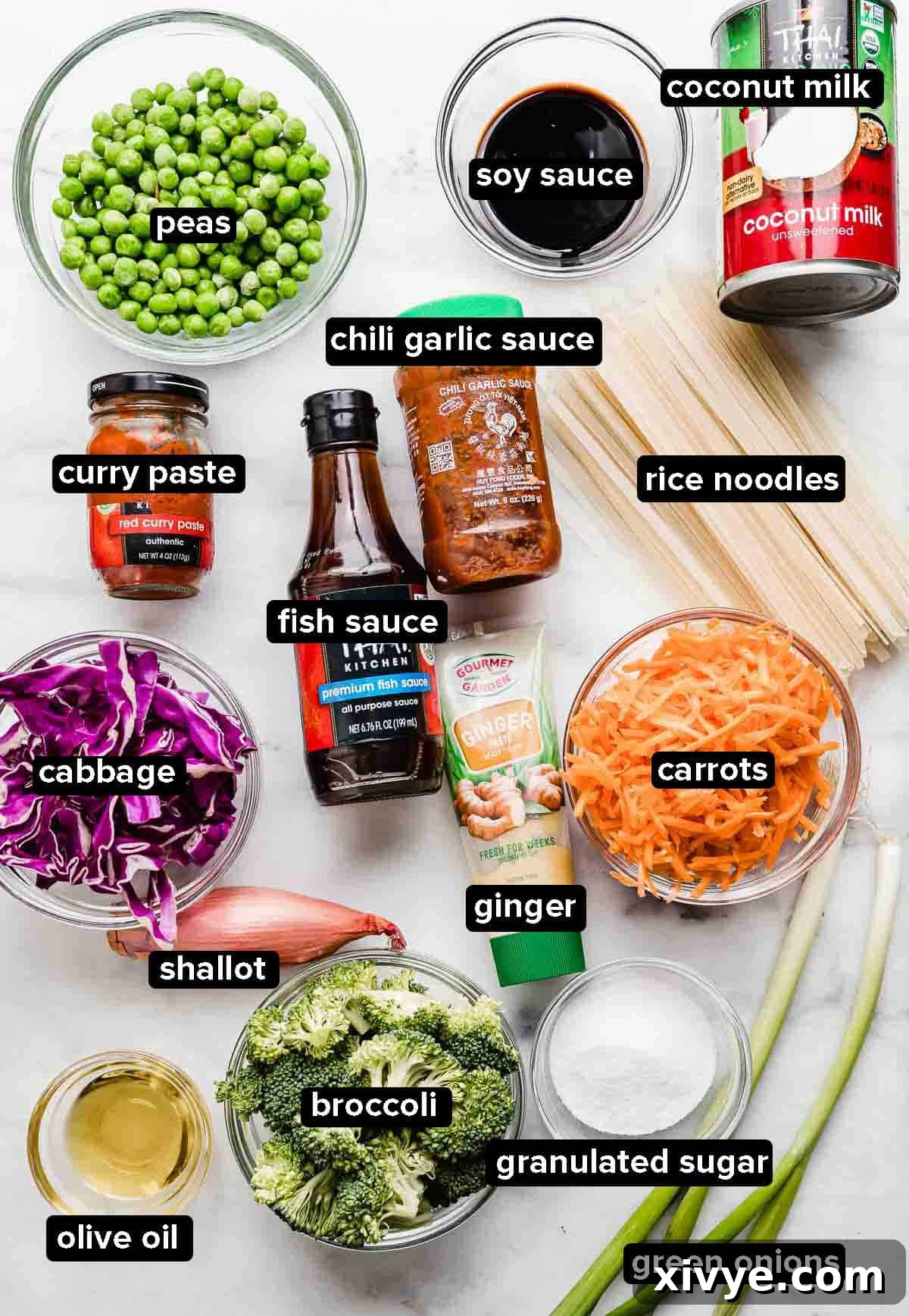
- Rice Noodles: These delicate, gluten-free noodles are the backbone of our dish. The genius of this recipe is soaking them in hot water for about 25 minutes while you prepare the curry sauce. This rehydrates them perfectly, meaning they require only a few minutes of cooking once added to the skillet, preventing them from becoming mushy. Opt for medium-width flat rice noodles for the best texture, as they absorb the sauce beautifully without becoming overly soft.
- Fresh Ginger: Ginger is key for its pungent, aromatic warmth that elevates the curry’s flavor. While fresh ginger, finely grated or minced, offers the most vibrant flavor, using ginger paste is an excellent shortcut for convenience without sacrificing too much on taste. If using fresh, make sure to peel it first.
- Thai Red Curry Paste: This is where the signature Thai flavor comes from! Red curry paste is a blend of red chilies, lemongrass, galangal, kaffir lime peel, and other spices. You can easily find it in the Asian cuisine aisle of most local grocery stores. Look for a quality brand for the best flavor; the intensity can vary, so taste a tiny bit if you’re sensitive to spice.
- Coconut Milk: The heart of any good coconut curry! I highly recommend using full-fat unsweetened canned coconut milk for unparalleled creaminess and richness. “Full-fat” simply refers to regular canned coconut milk; don’t be misled by labels. Light coconut milk, while lower in calories, won’t provide the same luxurious thickness or depth of flavor that makes this curry so satisfying. Always shake the can well before opening to combine the cream and water.
- Fish Sauce: This ingredient is crucial for authentic Thai flavor, providing a deep, savory umami that rounds out the dish. It’s important to note that the inclusion of fish sauce means this recipe is not vegetarian or vegan. If you need a vegetarian alternative, a good quality tamari (for gluten-free) or regular soy sauce can offer a similar savory depth, though the flavor profile will be slightly different.
- Reduced Sodium Soy Sauce: I always opt for reduced sodium soy sauce to have better control over the overall saltiness of the dish. This allows you to adjust the seasoning to your preference without making the curry overly salty from the start. For a soy-free or gluten-free alternative, coconut aminos or tamari are excellent substitutes that maintain a similar savory profile.
- Chili Garlic Sauce: This sauce provides a delightful kick of heat and a garlicky punch. It’s a fantastic way to customize the spice level of your curry. Start with the recommended amount, and feel free to add more if you prefer a spicier curry. You can also use fresh Thai bird’s eye chilies, minced, for an even fresher heat.
- Vegetables: This recipe calls for a vibrant mix of broccoli florets, sweet peas, and crunchy matchstick carrots to be cooked into the curry. For fresh toppings that add a burst of flavor and texture, I love using finely shredded red cabbage, thinly sliced green onions, and fresh basil (either Thai basil for a more authentic anise-like flavor or regular sweet basil works wonderfully). This combination ensures a diverse range of textures and flavors in every bite.
Crafting Your Coconut Curry Noodles: Step-by-Step Guide
Follow these detailed steps to create a sumptuous and satisfying bowl of Coconut Curry Noodles that tastes like it came straight from your favorite Thai eatery.
- Prepare the Rice Noodles for Perfection: Begin by placing 5 ounces of dried rice noodles into a medium-sized heatproof bowl. Fill the bowl with hot tap water, ensuring the noodles are fully submerged. Allow the noodles to soak for approximately 25 minutes. This crucial step rehydrates them, making them pliable and reducing their active cooking time significantly, preventing them from becoming mushy when added to the curry.
- Whip Up the Creamy Coconut Curry Sauce: While your noodles are soaking, start on the heart of the dish – the luscious curry sauce. In a medium saucepan, heat 1 tablespoon of olive oil over medium heat. Once the oil shimmers, add the finely diced shallot and 1 tablespoon of fresh ginger (whether freshly minced or convenient ginger paste). Sauté for 2-3 minutes, stirring occasionally, until the shallots soften and become translucent, releasing their sweet aroma with the pungent ginger. Next, stir in 2 tablespoons of Thai red curry paste and cook for another minute, allowing the fragrant spices to bloom. Pour in one 14-ounce can of full-fat coconut milk, followed by 3 tablespoons of granulated sugar (or your preferred sweetener), 2 tablespoons of fish sauce for that essential umami, 2 tablespoons of reduced-sodium soy sauce, and ½ teaspoon of chili garlic sauce. Stir everything together until well combined. Reduce the heat to low and let the sauce gently simmer for 15 minutes. This simmering time is key, allowing the flavors to meld beautifully and the sauce to thicken to a wonderfully creamy consistency.
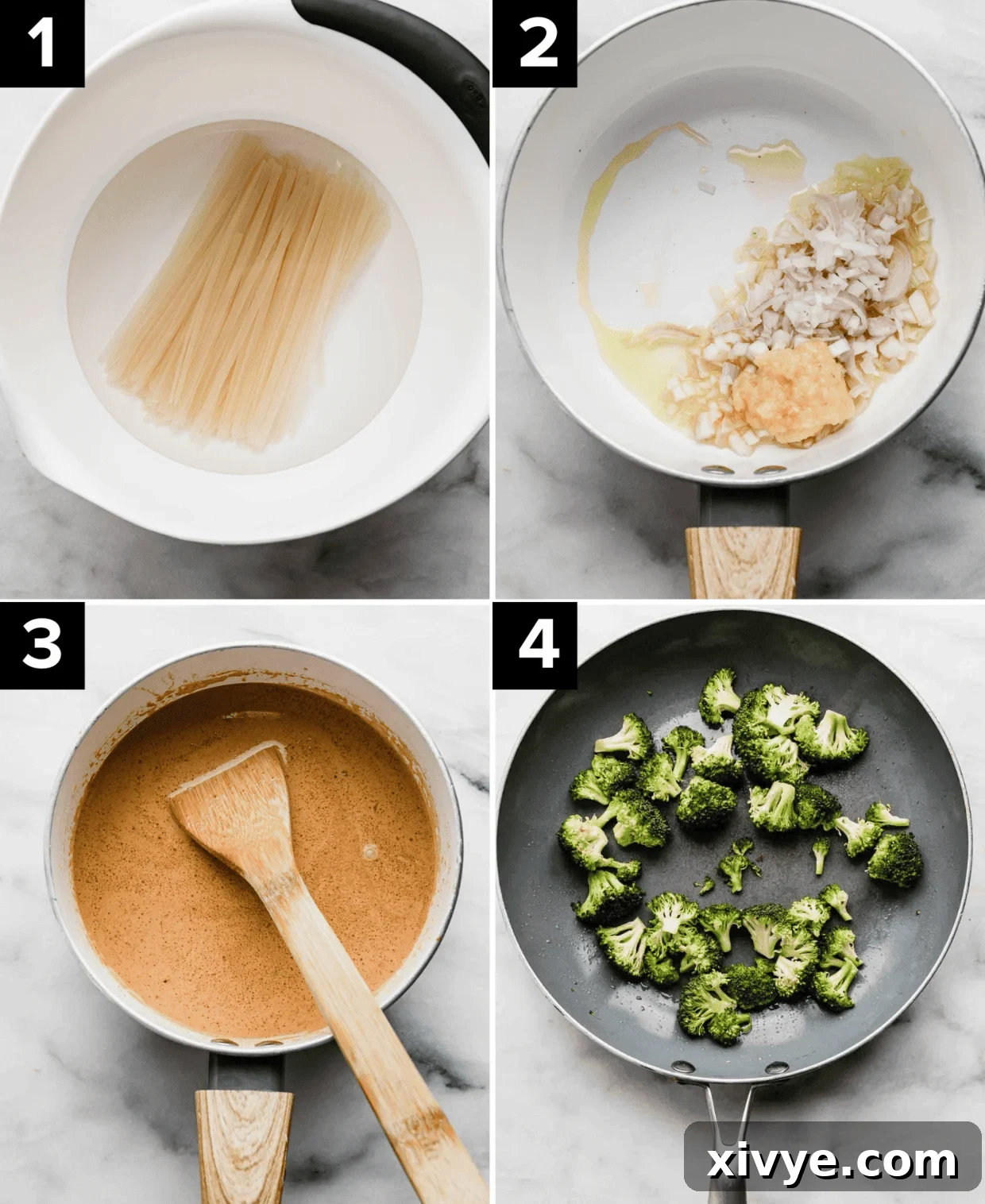
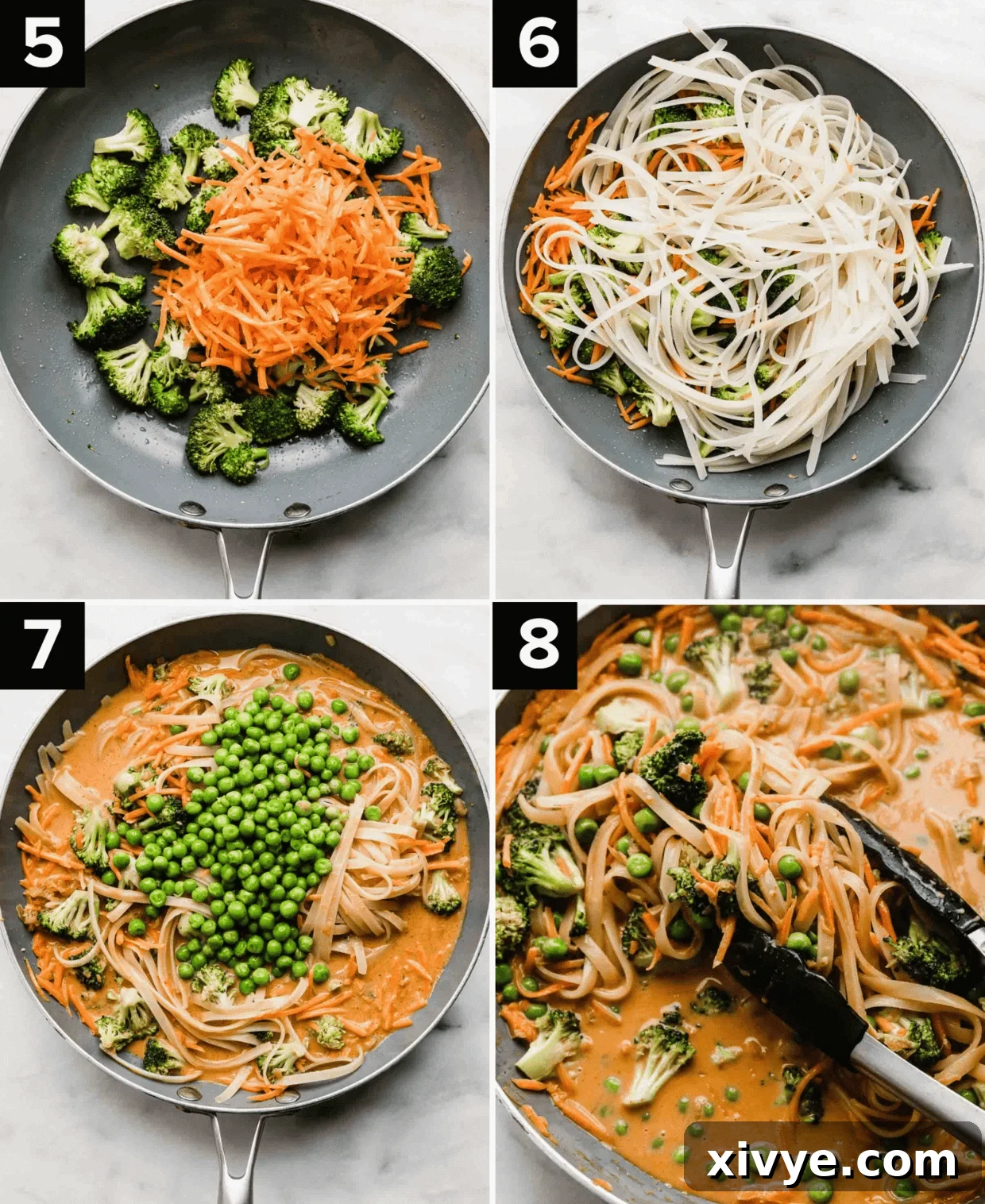
- Cook the Vegetables and Combine with Noodles: As the sauce simmers, heat 1 tablespoon of olive oil in a large skillet or wok over medium heat. Once hot, add 1 cup of fresh broccoli florets and cook for about 4 minutes, stirring occasionally, until they turn a vibrant bright green and start to become tender-crisp. Add 1 cup of matchstick carrots to the skillet and cook for an additional 1-2 minutes, just enough to soften them slightly while retaining a pleasant crunch. Drain the soaked rice noodles thoroughly and add them directly to the skillet with the vegetables. Pour the luscious, thickened coconut curry sauce over the noodles and vegetables. Finally, add 1 cup of thawed frozen peas. Using tongs or two large spoons, toss everything together gently but thoroughly, ensuring the noodles and vegetables are beautifully coated in the creamy sauce. Continue to cook for about 3 minutes, allowing the flavors to fully integrate and the peas to warm through.
- Assemble and Serve Your Delectable Coconut Curry Noodle Bowls: Once everything is perfectly cooked and coated, it’s time to serve! Divide the fragrant curry noodles evenly into individual serving bowls. For an extra layer of flavor, texture, and visual appeal, generously top each bowl with a sprinkle of finely shredded red cabbage, a scattering of thinly sliced green onions, and a few fresh basil leaves. Serve immediately and savor every spoonful of this homemade Thai-inspired masterpiece!
Expert Tips for Perfect Coconut Curry Noodles
Enhance your Coconut Curry Noodles experience with these expert tips and variations:
- Boost Your Protein: To make this a heartier meal, easily incorporate your favorite protein. Shredded cooked chicken, pre-cooked rotisserie chicken, or grilled chicken breasts cut into strips are excellent additions. You can add them during step 3, allowing them to warm through with the vegetables and noodles. For a plant-based protein, pan-fried tofu or tempeh cubes can be added at the same stage. Shrimp also cooks quickly and would be a fantastic addition, stir-fried for just a few minutes until pink before adding the sauce.
- Embrace Vegetable Variety: This recipe is incredibly adaptable, making it perfect for using up whatever fresh vegetables you have in your fridge. Consider adding thinly sliced bell peppers (red, yellow, or orange for sweetness), zucchini or yellow squash ribbons, snap peas, bok choy, or even finely chopped asparagus. Adjust cooking times as needed; denser vegetables like bell peppers might need a bit more time than leafy greens, which can be added at the very end to wilt.
- The Secret to Creamy Sauce: Full-Fat Coconut Milk: For that truly rich, thick, and satisfying curry sauce, always opt for full-fat canned coconut milk. Light coconut milk will result in a thinner, less flavorful sauce, losing some of the luxurious mouthfeel that makes this dish so special.
- Explore Healthier Noodle Alternatives: While traditional rice noodles are fantastic, feel free to experiment with healthier options. Brown rice noodles offer a boost of whole grains and a slightly chewier texture. For a low-carb alternative, spiralized zucchini noodles (zoodles) or konjac noodles (shirataki noodles) can be used – just be sure to adjust cooking times accordingly, as they cook very quickly.
- Sweetener Swaps: If granulated sugar isn’t your preference, honey or maple syrup are excellent natural sweeteners that will work beautifully in this curry sauce. Coconut sugar also offers a subtle caramel note and is a great unrefined option. Adjust the amount to your taste.
- Adjusting Spice Levels: The chili garlic sauce provides a moderate heat. If you like it spicier, add an extra ½ teaspoon or even a whole teaspoon more. For a milder curry, reduce the amount of chili garlic sauce or omit it entirely. You can also garnish with fresh sliced chilies for an extra kick for those who prefer it.
- Garnish for Ultimate Flavor: Don’t underestimate the power of garnishes! Beyond the recommended red cabbage, green onions, and basil, consider a squeeze of fresh lime juice to brighten the flavors, a sprinkle of chopped roasted peanuts for crunch, a drizzle of sesame oil for nutty aroma, or even fried shallots for an extra layer of savory crispness.
Make Ahead, Storing, and Freezing
Efficient meal planning and proper storage can extend the enjoyment of your Coconut Curry Noodles:
- Make Ahead: The red curry sauce is a fantastic component to prepare in advance. You can cook the sauce (step 2) completely, allow it to cool, and then store it in an airtight container in the refrigerator for 1-2 days. When you’re ready to make the full dish, simply start with step 1 (soaking the noodles), then proceed to step 3, reheating the sauce in the skillet before combining with the noodles and vegetables. This significantly cuts down on active cooking time on a busy day.
- Storing Leftovers: Any leftover Coconut Curry Noodles with vegetables can be stored in an airtight container in the refrigerator for 4-5 days. For the best texture, ensure they are cooled completely before transferring to the container. To reheat, gently warm in the microwave or a skillet over medium-low heat until heated through, adding a splash of water or coconut milk if the sauce seems too thick.
- Freezing Considerations: While the sauce itself freezes wonderfully, I generally do not recommend freezing the entire noodle dish. Rice noodles tend to become quite mushy and lose their desirable texture once frozen and thawed. However, if you wish to freeze the coconut curry sauce, let it cool completely, then transfer it to a freezer-safe bag or container. It can be frozen for up to 3 months. Thaw in the refrigerator overnight before reheating and proceeding with the recipe (adding fresh noodles and vegetables).
Common Questions About Coconut Curry Noodles
No, this specific coconut curry recipe is not vegan due to the inclusion of fish sauce in the curry sauce. Fish sauce is a traditional ingredient in Thai cuisine, providing essential umami. However, you can easily make it vegan by substituting fish sauce with an equal amount of good quality soy sauce, tamari (for gluten-free), or a dedicated vegan fish sauce alternative.
Absolutely! Adding protein is a fantastic way to make this meal even more substantial and satisfying. You can incorporate shredded chicken, rotisserie chicken, or grilled chicken breasts cut into strips. Simply add the cooked chicken to the skillet with the vegetables and noodles during step 3, allowing it to warm through and absorb the delicious curry flavors. For other options, sautéed shrimp, seared beef strips, or plant-based proteins like pan-fried tofu or tempeh cubes also work wonderfully.
In this recipe, the curry sauce is designed to thicken naturally as it simmers. The full-fat coconut milk, combined with the cooking time, allows the sauce to reduce slightly and achieve a creamy consistency. If you find your sauce is still too thin after simmering, you can let it cook for a few more minutes, or for a quicker fix, mix 1 teaspoon of cornstarch with 1 tablespoon of cold water, then stir this slurry into the simmering sauce and cook for another minute until thickened.
Thai red curry paste is a foundational ingredient for this dish, providing its distinctive flavor profile. It’s truly difficult to achieve the authentic taste of Thai red curry noodles without it. I highly recommend seeking it out in the Asian foods aisle of your local grocery store. Most well-stocked supermarkets carry it. While yellow or green curry pastes exist, they have very different flavor profiles and will result in a completely different dish. If you absolutely cannot find it, you might consider making a completely different style of noodle dish, as a homemade substitute for red curry paste is complex to create on the fly.
This recipe can easily be made gluten-free! Rice noodles are naturally gluten-free. The key ingredient to watch out for is soy sauce, which typically contains wheat. To make this dish entirely gluten-free, simply substitute the regular reduced-sodium soy sauce with an equal amount of tamari (which is gluten-free soy sauce) or coconut aminos.
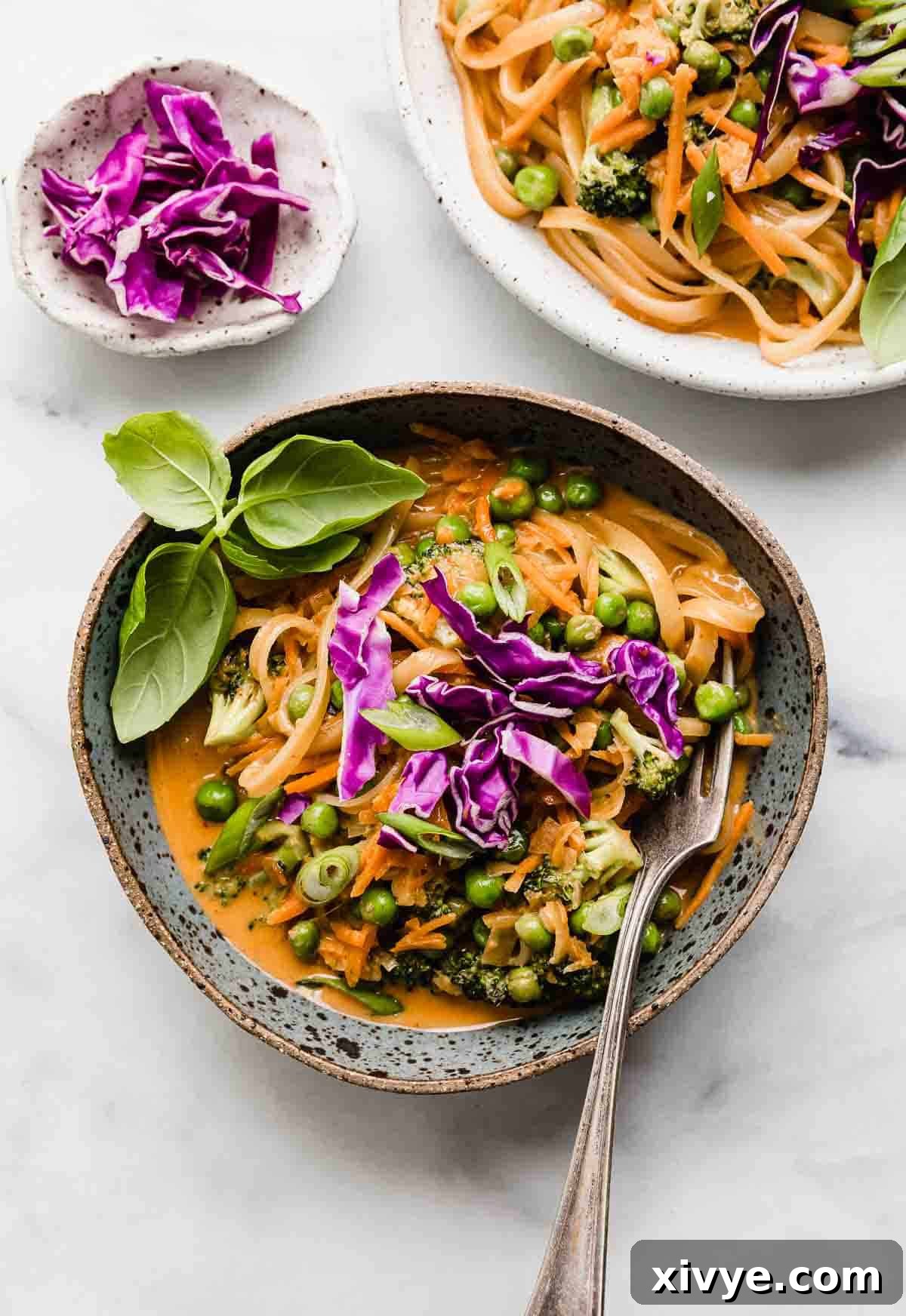
This 30-minute Coconut Curry Noodles with Fresh Vegetables recipe is more than just a quick meal; it’s an invitation to explore vibrant Thai-inspired flavors from the comfort of your home. With its creamy sauce, tender noodles, and abundance of fresh ingredients, it promises a satisfying and wholesome dining experience that’s both easy to prepare and delightful to savor. Don’t hesitate to customize it with your favorite proteins or extra vegetables to make it truly your own. Enjoy the journey of bringing authentic, delicious curry to your dinner table!
Discover More Flavorful Curry Recipes
If you’ve fallen in love with the rich and aromatic world of curry, you’re in luck! There’s a whole universe of diverse and delicious curry dishes waiting to be explored. From hearty plant-based options to comforting classics, these recipes are designed to bring the exotic tastes of Asia right into your kitchen with ease. Expand your culinary horizons with these other tempting curry creations:
- Hearty Chickpea Curry Recipe
- Wholesome Chickpea and Spinach Curry
- Savory Thai Peanut Noodles
Did you make this incredible Coconut Curry Noodles recipe? I would absolutely love to hear about your experience! Your feedback helps us grow and inspires other home cooks. Please leave a star rating and a detailed review, or simply scroll down to the recipe card section and share your thoughts there.
Don’t miss out on our latest delicious creations and behind-the-scenes glimpses! Stay up-to-date and connect with our vibrant community by following us on Instagram, TikTok, YouTube, Facebook, and Pinterest.
Print
Save
Saved!
Review
Coconut Curry Noodles with Vegetables

Whitney Wright
5 minutes
25 minutes
30 minutes
3
servings
Ingredients
-
5
oz
rice noodles
Coconut Curry Sauce
-
1
tablespoon
olive oil -
1
shallot –
diced -
1
tablespoon
fresh ginger –
minced or ginger paste -
2
tablespoons
red curry paste -
14
oz
can coconut milk -
3
tablespoons
granulated sugar –
or honey -
2
tablespoons
fish sauce -
2
tablespoons
reduced sodium soy sauce -
½
teaspoon
chili garlic sauce –
add more if you want spicier
Bowls
-
1
tablespoon
olive oil -
1
cup
broccoli florets -
1
cup
matchstick carrots -
1
cup
frozen peas –
thawed -
1
cup
red cabbage –
shredded -
green onions –
sliced, for serving -
fresh basil –
for serving
Instructions
-
Place the rice noodles in a bowl filled with hot tap water. Allow the noodles to sit and rehydrate for 25 minutes while you prepare the rest of the ingredients and sauce.
-
In a medium saucepan, add 1 tablespoon of olive oil over medium heat. Once the oil is hot and shimmering, add the diced shallots and minced ginger (or ginger paste). Cook for approximately 3 minutes, stirring occasionally, until the shallots have softened and become translucent and fragrant. Stir in 2 tablespoons of red curry paste and cook for an additional minute to allow the flavors to bloom. Pour in the entire 14-ounce can of full-fat coconut milk, followed by 3 tablespoons of granulated sugar (or your chosen sweetener), 2 tablespoons of fish sauce, 2 tablespoons of reduced-sodium soy sauce, and ½ teaspoon of chili garlic sauce. Stir all ingredients to combine thoroughly. Reduce the heat to low and let the sauce gently simmer for 15 minutes, allowing it to subtly thicken and the flavors to deeply meld.
-
While the curry sauce is simmering, place a large skillet or wok over medium heat and add 1 tablespoon of olive oil. Once the oil is hot, add 1 cup of broccoli florets and cook for 4 minutes, stirring periodically, until the broccoli turns a vibrant bright green and is tender-crisp. Add 1 cup of matchstick carrots to the skillet and cook for an additional 1-2 minutes, just enough to slightly soften them while retaining their delightful crunch. Drain the rehydrated rice noodles thoroughly and add them to the skillet with the cooked vegetables. Pour the now slightly thickened coconut curry sauce over the noodles and vegetables. Add 1 cup of thawed frozen peas. Using tongs or two large spoons, toss all the ingredients together to ensure the noodles and vegetables are thoroughly coated in the rich sauce. Continue to cook for 3 minutes, or until the peas are warmed through and all components are piping hot.
-
Carefully portion the hot curry noodles into individual serving bowls. Generously top each bowl with a sprinkle of finely shredded red cabbage, thinly sliced green onions, and fresh basil leaves for a burst of color and herbaceous freshness. Serve immediately and enjoy your homemade, restaurant-quality Coconut Curry Noodles!
Notes
Nutrition
Calories:
667
kcal
(33%)
Carbohydrates:
73
g
(24%)
Protein:
10
g
(20%)
Fat:
39
g
(60%)
Saturated Fat:
27
g
(135%)
Polyunsaturated Fat:
2
g
Monounsaturated Fat:
8
g
Sodium:
1527
mg
(64%)
Potassium:
793
mg
(23%)
Fiber:
7
g
(28%)
Sugar:
20
g
(22%)
Vitamin A:
8350
IU
(167%)
Vitamin C:
67
mg
(81%)
Calcium:
111
mg
(11%)
Iron:
7
mg
(39%)
Main Course
Thai
Did you make this recipe?
Please leave a star rating and review on the blog post letting me know how you liked this recipe! Take a picture and tag @saltandbaker on Tik Tok, Instagram, and Facebook so I can see what you’re making!