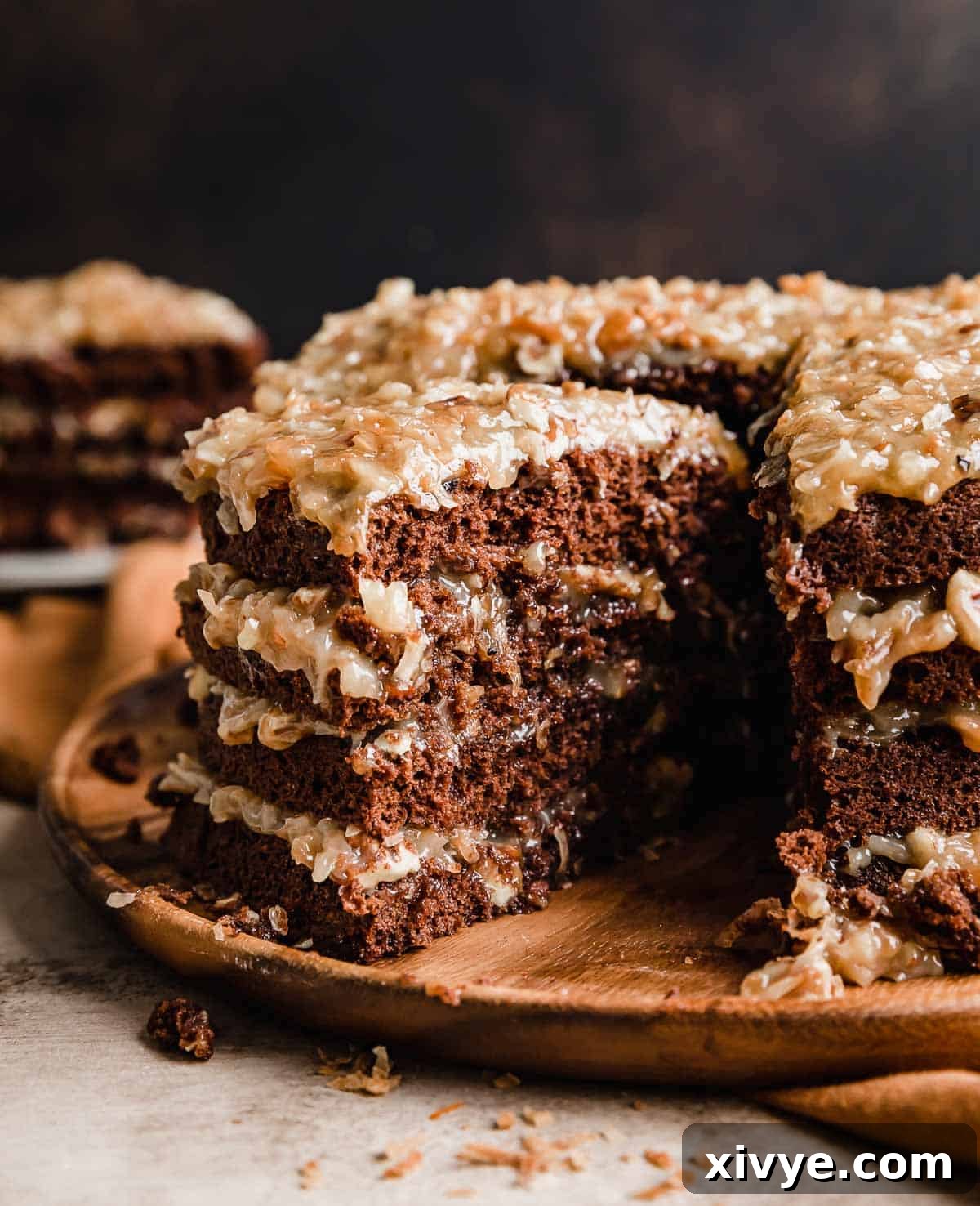
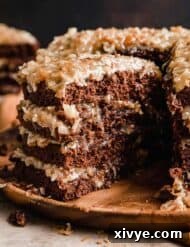
Indulge in a timeless classic with this Traditional German Chocolate Cake recipe, a dessert that has earned its rightful place as a beloved family favorite. This exquisite cake features incredibly rich and moist chocolate layers, perfectly complemented by a homemade coconut pecan frosting that is simply irresistible. Each bite offers a delightful symphony of flavors and textures, with the buttery, gooey caramel-like frosting bursting with toasted pecans and sweetened coconut. It’s more than just a cake; it’s an experience, a celebration of deep chocolate and decadent nuttiness that leaves a lasting impression.
While this recipe is designed for a grand, multi-layered cake, we understand that sometimes a smaller indulgence is desired. For those occasions, we highly recommend exploring our 6-Inch German Chocolate Cake, specifically scaled for smaller pans without compromising on flavor. If you’re seeking an even more individual treat, our German Chocolate Cupcakes offer all the same deliciousness in a perfectly portioned bite.
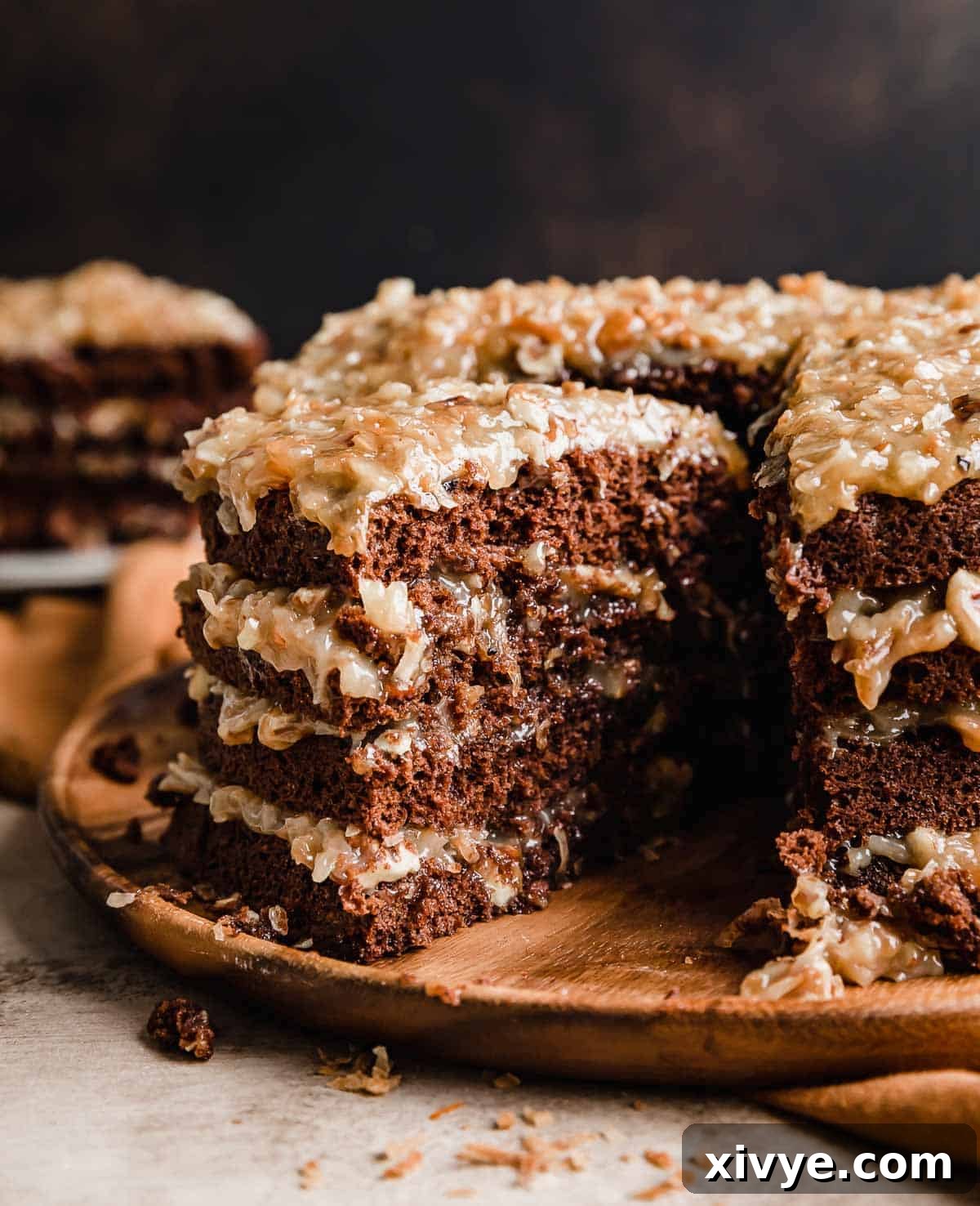
Why This German Chocolate Cake Recipe Works
This isn’t just another German Chocolate Cake recipe; it’s a meticulously crafted formula designed for unparalleled flavor and texture. Here’s what sets it apart and guarantees baking success:
- Featuring a Decadent Homemade Coconut Pecan Frosting: The heart of any authentic German Chocolate Cake lies in its iconic frosting. Our recipe focuses on creating a truly homemade version that far surpasses any store-bought alternative. This luscious frosting is a symphony of toasted pecans and sweetened coconut, suspended in a rich, buttery, and caramel-like base. The unique combination delivers an addictive chewiness and nutty crunch that perfectly balances the deep chocolate cake layers, making it the undisputed star of this dessert.
- Achieving Incredibly Moist Chocolate Cake Layers: Dry cake is a baker’s worst nightmare, but with this recipe, you’re guaranteed ultra-moist chocolate cake layers every single time. The secret lies in a dual approach: first, the technique of creaming butter and sugars together until light and fluffy incorporates crucial air, contributing to a tender crumb. Second, the inclusion of full-fat sour cream adds significant moisture and a subtle tang that enhances the chocolate flavor, resulting in a cake that remains soft and delicious for days.
- Delivering an Intense and Deep Chocolate Flavor: For the ultimate German Chocolate Cake, a profound chocolate taste is non-negotiable. We achieve this depth by strategically combining two powerful chocolate ingredients: Dutch process cocoa powder and a high-quality semi-sweet chocolate bar. Dutch process cocoa provides a darker color and a smoother, less bitter chocolate flavor, while the semi-sweet chocolate bar adds richness and complexity. This pairing creates a robust chocolate profile that is truly extraordinary, making every bite a rich chocolate dream.
Essential Ingredient Notes for Your Best German Chocolate Cake
The quality of your ingredients directly impacts the final taste and texture of your cake. Pay close attention to these notes to ensure your German Chocolate Cake is nothing short of perfection:
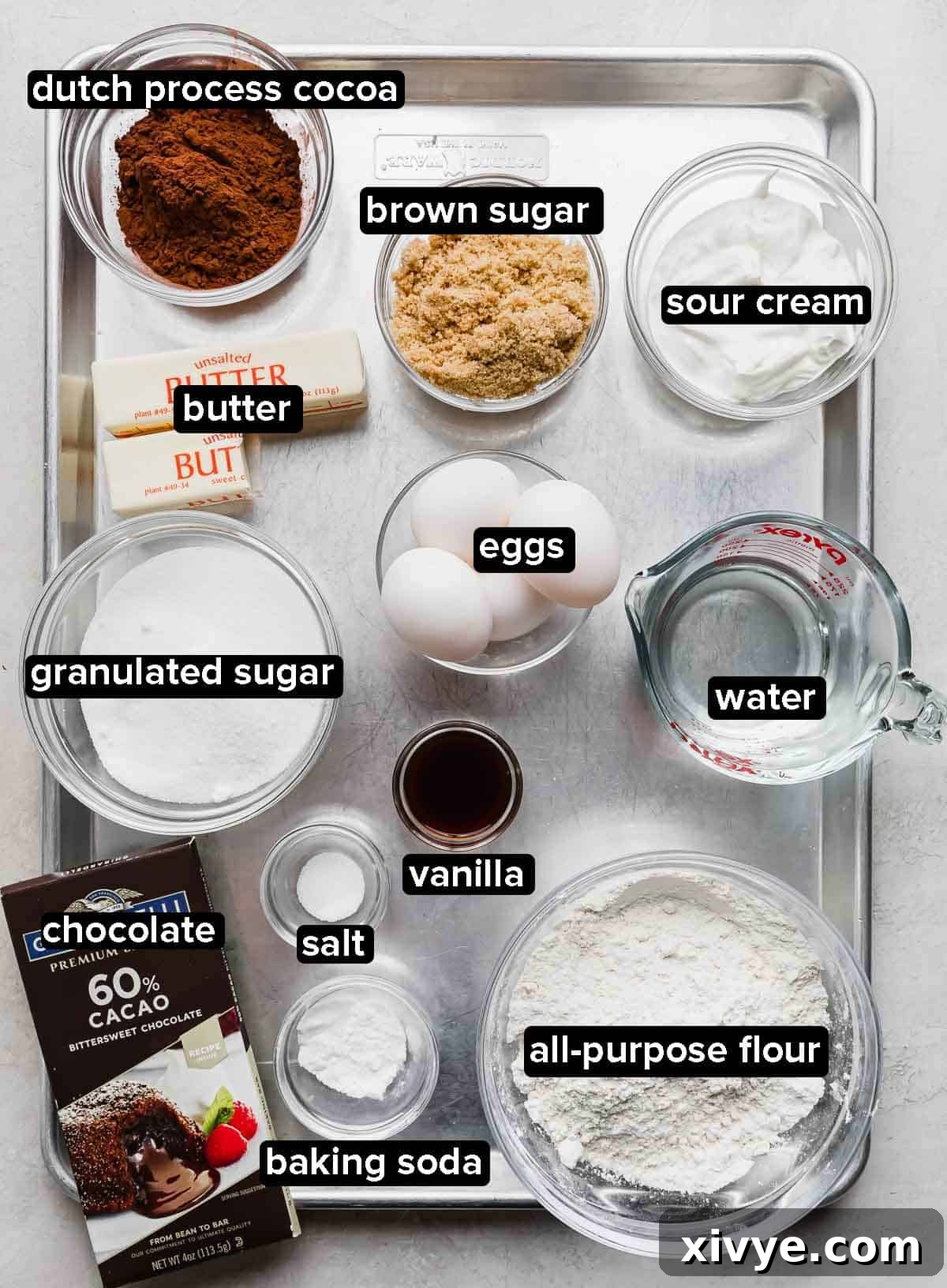
- Chocolate: Invest in good quality chocolate! You will undeniably taste the difference in your final cake. Opt for a baking bar rather than chocolate chips, as baking bars melt more smoothly and consistently. While Baker’s German Chocolate is a classic choice, we prefer semi-sweet chocolate for its balanced richness that prevents the cake from becoming overly sweet. Finely chopping the chocolate ensures it melts evenly and blooms beautifully with the hot water.
- Dutch-Process Cocoa Powder: This is a non-negotiable ingredient for this recipe. Dutch-process cocoa has been treated to reduce its acidity, resulting in a darker color and a smoother, mellower chocolate flavor compared to natural cocoa. It reacts differently with leavening agents, making it ideal for recipes like this one that rely on baking soda. To truly understand the nuances, delve into our guide on the Best Cocoa Powder for Baking.
- Boiling Water: More than just a liquid, boiling water is a crucial catalyst in this recipe. When poured over the cocoa powder and chopped chocolate, it serves a dual purpose: it helps to thoroughly melt the chocolate, creating a smooth mixture, and more importantly, it “blooms” the cocoa powder. This blooming process intensifies and deepens the cocoa’s flavor, unlocking its full aromatic potential and contributing to the rich chocolate intensity of the cake.
- All-Purpose Flour: Stick to regular all-purpose flour for this recipe. It provides the right amount of gluten for a tender yet structured cake crumb. There’s no need for specialty flours here; simplicity is key.
- Unsalted Butter: Using unsalted butter allows you to control the exact amount of salt in your recipe, ensuring a perfectly balanced flavor profile. Ensure your butter is softened to room temperature before beginning; this is critical for proper creaming with the sugars, which creates air pockets essential for a light and tender cake texture. Butter also contributes significantly to the cake’s delicious richness and moistness.
- Sugars (Granulated and Brown Sugar): This recipe calls for a strategic blend of both granulated (white) sugar and light brown sugar. Granulated sugar provides sweetness and contributes to the cake’s structure. Light brown sugar, with its molasses content, adds an extra layer of moisture, a subtle caramel note, and a wonderfully tender texture to the finished cake, creating a depth of flavor that pure granulated sugar alone cannot achieve.
- Eggs: Large eggs, preferably at room temperature, are essential. When beaten, they incorporate air into the batter, which contributes to the cake’s rise and overall light, fluffy texture. Eggs also act as an emulsifier, binding the ingredients together and adding richness.
- Sour Cream: This humble dairy ingredient is a secret weapon for an extra moist German Chocolate Cake. Full-fat sour cream adds a significant boost of moisture, fat, and a slight acidity. This acidity reacts with the baking soda to aid in leavening, while the fat ensures a supremely tender and luscious crumb that remains fresh and delicious longer.
- One Batch of Homemade Coconut Pecan Frosting: While the cake layers are magnificent, the homemade coconut pecan frosting truly elevates this dessert. We strongly advocate for making our dedicated homemade recipe. It’s light years ahead of any store-bought version, offering a depth of flavor, perfect texture, and overall freshness that is simply unparalleled. Trust us, it’s worth the extra step for a truly authentic and unforgettable German Chocolate Cake experience.
Step-by-Step Instructions for the Ultimate German Chocolate Cake
Creating this magnificent cake is a rewarding process. Follow these detailed instructions to ensure a perfect bake every time:
- Prepare the Cake Pans: Begin by moving your oven rack to the center position. Preheat your oven to 350ºF (175ºC). Lightly spray two 9-inch round cake pans with a nonstick baking spray that contains flour (or grease and flour them the traditional way). Cut two circular pieces of parchment paper to fit the bottoms of the pans, and line them. Spray the parchment paper lightly as well. This meticulous preparation prevents sticking and ensures your cake layers release effortlessly. Set the prepared pans aside.
- Combine Dry Ingredients: In a medium-sized bowl, measure and combine 2 cups of all-purpose flour, ¾ teaspoon of baking soda, and ¾ teaspoon of salt. Whisk these dry ingredients together thoroughly for about 30 seconds to ensure they are evenly distributed. This step prevents pockets of leavening agents or salt in your cake. Set this bowl aside.
- Bloom the Chocolate Mixture: In a separate small, heatproof bowl, add ¼ cup of Dutch-process cocoa powder and 4 ounces of finely chopped semi-sweet chocolate. Bring ½ cup of water to a rolling boil, then carefully measure and pour it directly over the chocolate and cocoa powder in the bowl. Immediately cover the bowl tightly with a plate or plastic wrap and let it sit undisturbed for 5 minutes. This crucial steeping time allows the hot water to melt the chocolate and “bloom” the cocoa, intensifying its flavor. After 5 minutes, uncover and whisk the mixture until it is completely smooth and free of lumps. Set it aside to cool to room temperature; it’s important that this mixture isn’t hot when added to your creamed butter.
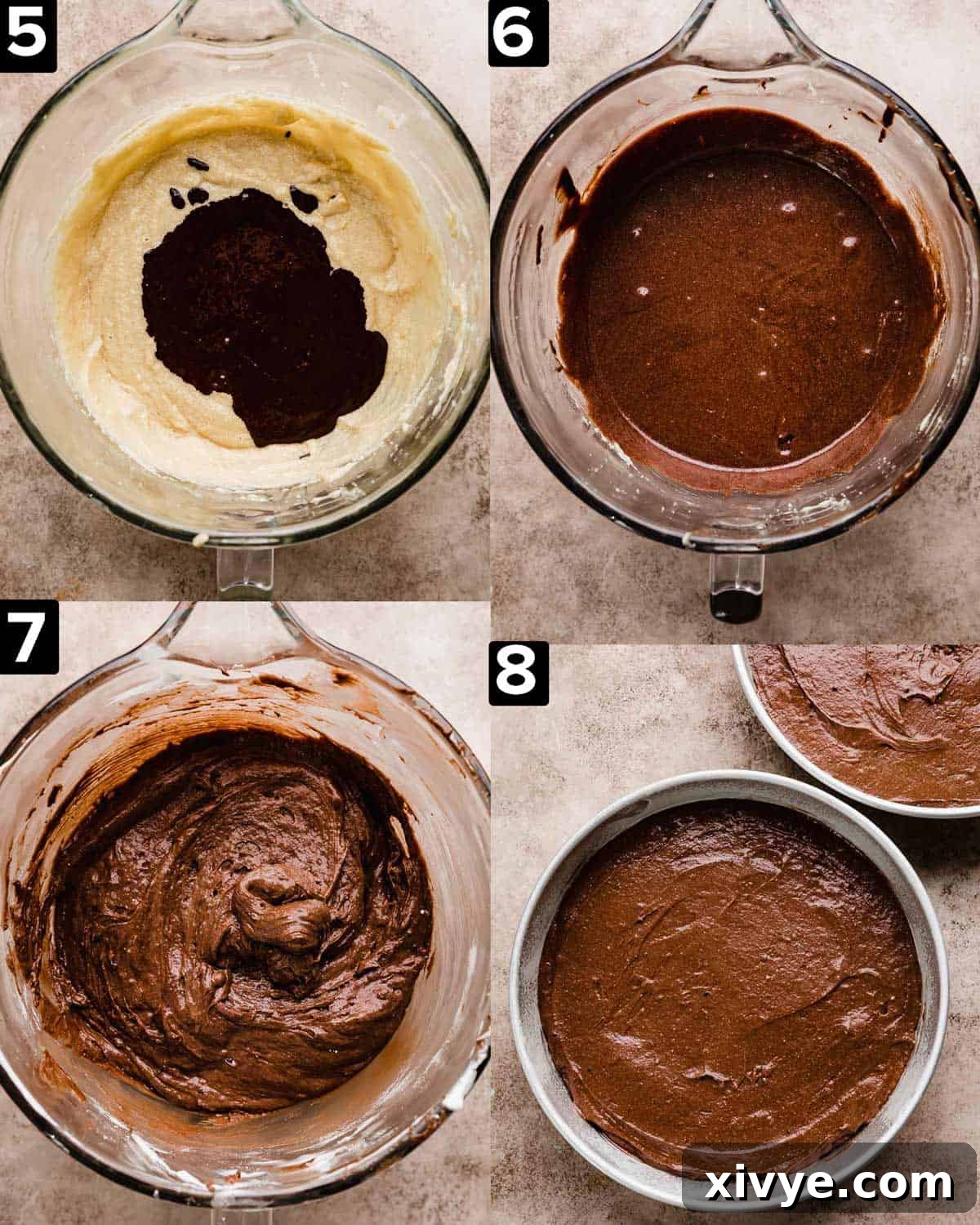
- Cream the Wet Ingredients: In the bowl of a stand mixer fitted with the paddle attachment, combine 12 tablespoons of softened unsalted butter, 1 cup of granulated sugar, and ¾ cup of packed light brown sugar. Beat on medium speed for approximately 3 minutes, or until the mixture becomes visibly light in color and fluffy in texture. This creaming process incorporates air, essential for a tender cake. Next, add the 4 large eggs, one at a time, beating well after each addition until fully incorporated. Scrape down the sides of the bowl with a spatula after each egg to ensure everything is evenly mixed. Finally, add 1 teaspoon of vanilla extract and beat for another minute until the mixture is light and aerated. Remember to scrape down the bowl sides again before proceeding.
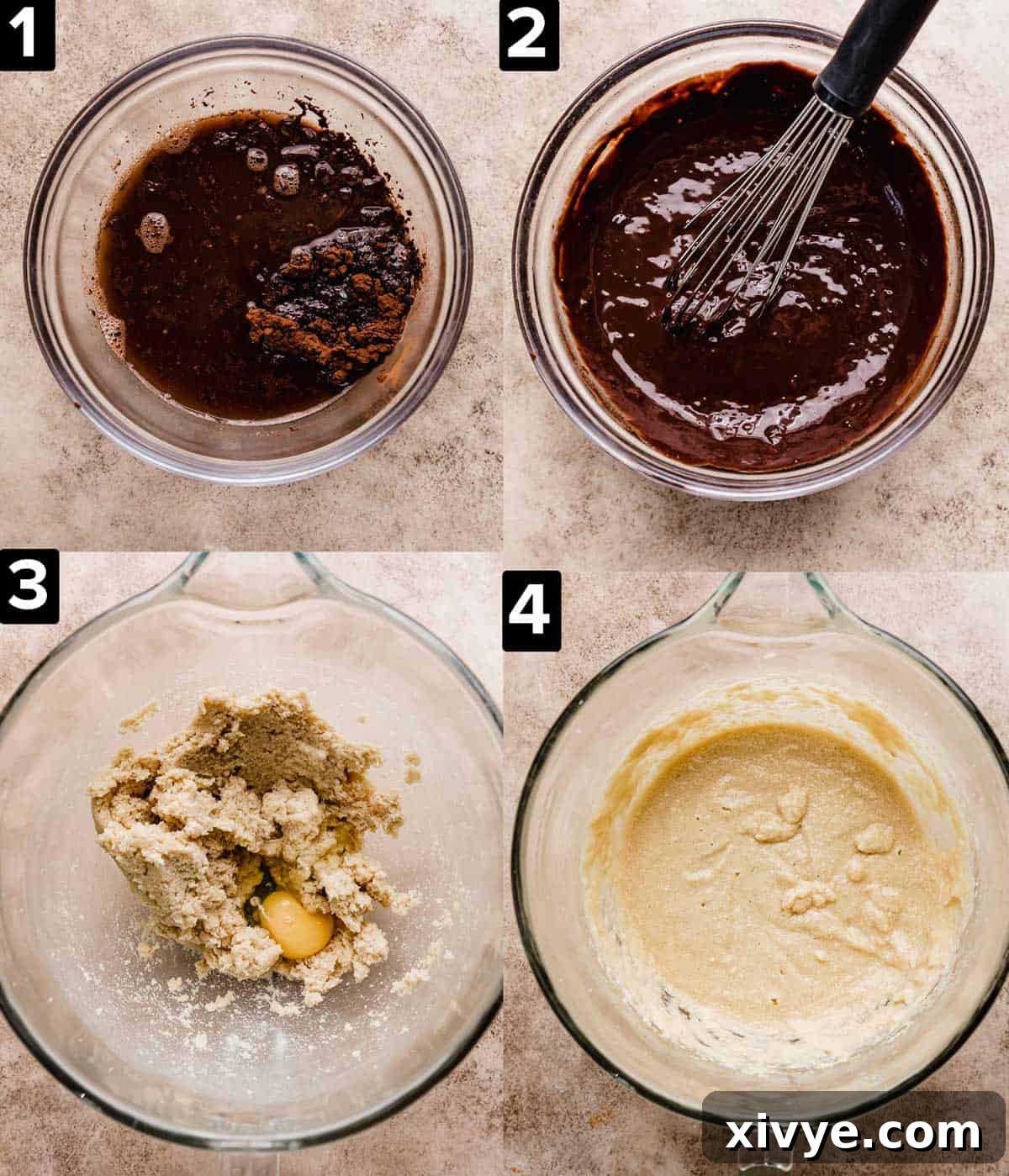
- Incorporate the Bloomed Chocolate Mixture: Pour the cooled chocolate and cocoa mixture into the creamed wet ingredients in the stand mixer bowl. Mix on low speed until just combined, ensuring the rich chocolate is fully incorporated into the butter and sugar mixture. Be careful not to overmix at this stage. Scrape down the sides and bottom of the bowl to confirm everything is uniformly blended.
- Alternate Dry and Wet Ingredients: With the mixer on its lowest speed, begin to alternate adding the dry flour mixture and the ¾ cup of sour cream to the bowl. Start and end with the flour mixture, following a sequence of flour, sour cream, flour, sour cream, flour. Mix only until just combined after each addition. Overmixing the flour can develop gluten excessively, leading to a tough cake. Stop mixing as soon as no streaks of flour are visible.
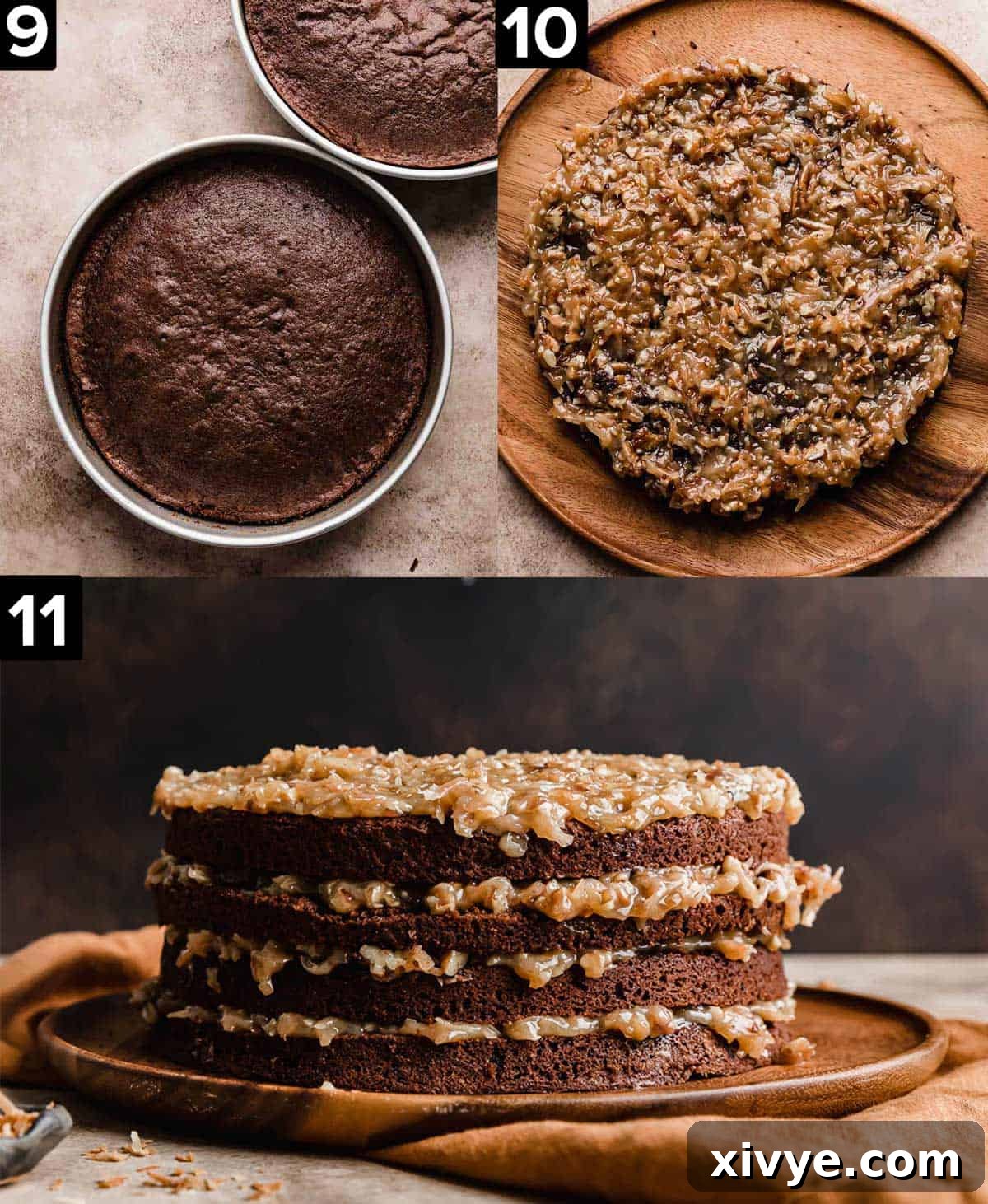
- Bake the Cake Layers: Divide the prepared cake batter evenly between the two prepared 9-inch cake pans. Use a spatula to gently smooth the tops. Place the pans on the center rack of your preheated oven and bake for 30 minutes. To check for doneness, insert a toothpick into the center of a cake; it should come out clean or with a few moist crumbs attached. Avoid overbaking, as this will result in a dry cake. While the cakes are baking, seize this opportunity to prepare your irresistible coconut pecan frosting (instructions provided in the recipe card below).
- Cool the Cakes: Once baked, remove the cake pans from the oven and place them on a wire rack to cool in their pans for 10 minutes. This allows the cakes to set slightly and become firmer. After 10 minutes, carefully invert the cakes onto the wire rack, remove the parchment paper from the bottoms, and allow them to cool completely. It is crucial for the cakes to be entirely cool before frosting to prevent the frosting from melting and sliding off.
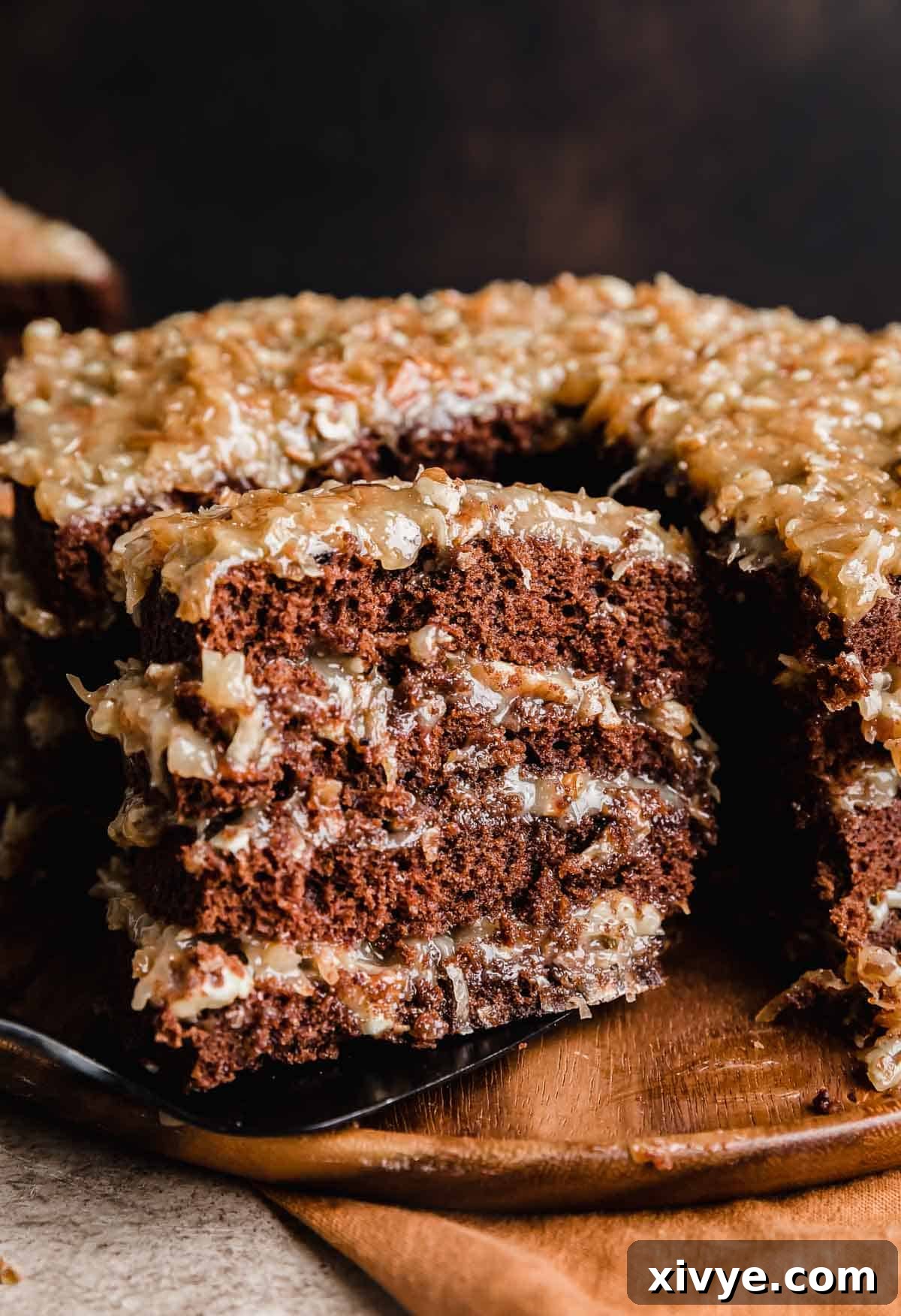
- Assemble and Frost the Cake: Once your cake layers are completely cool, use a long, serrated knife to carefully slice each 9-inch cake horizontally in half, creating a total of four even layers. Place one cake layer on your chosen serving plate or cake stand. Generously spoon about 1½ cups of the cooled coconut pecan frosting onto this layer and spread it evenly to the edges. Stack the next cake layer on top, pressing gently, and repeat the frosting process, using approximately 1 cup of frosting for each subsequent layer until all four cake layers are stacked and frosted. Ensure the top layer also receives a generous dollop of the delicious coconut pecan frosting. For a classic aesthetic, leave the sides of the cake bare to showcase the layers and abundant frosting. If you prefer a fully frosted look, you can frost the sides with additional Chocolate Buttercream Frosting, as we sometimes do with our German chocolate cupcakes. Slice, serve, and savor this magnificent creation!
Expert Tips for German Chocolate Cake Perfection
Unlock the secrets to baking the perfect German Chocolate Cake with these invaluable tips from our kitchen:
- Understanding Chocolate Types: While the names can be confusing, the primary difference between semi-sweet chocolate and traditional German chocolate is their sweetness level. German chocolate is typically a milder, sweeter baking chocolate, originally developed by Samuel German for Baker’s Chocolate. I prefer semi-sweet chocolate in this recipe for its richer, more intense chocolate flavor that balances the sweetness of the frosting beautifully. Feel free to use either based on your preference for sweetness and chocolate intensity.
- Accurate Water Measurement: When the recipe calls for boiling water, it’s essential to measure it precisely. Don’t measure cold water and then boil it. Instead, bring a small saucepan of water to a rolling boil, and *then* measure out the exact ½ cup of boiling water needed. This ensures the correct temperature for blooming the cocoa and melting the chocolate effectively.
- The Power of Creaming: The step of creaming butter and sugar together is more than just mixing; it’s a vital aeration process. As the sugar crystals rub against the butter, they create tiny air bubbles. These air bubbles expand during baking, contributing significantly to the cake’s leavening and creating a tender, light texture. Don’t rush this step – beat until the mixture is truly light and fluffy.
- Room Temperature Ingredients are Key: For the best results, always use room temperature eggs and room temperature sour cream. Ingredients at room temperature emulsify more easily, creating a smoother, more uniform batter. Cold ingredients can cause the batter to curdle or become lumpy, impacting the final cake texture. Plan ahead and take them out of the refrigerator an hour or two before baking.
- Frosting the Sides (Optional): For a truly classic German Chocolate Cake, leaving the sides bare allows the beautiful layers and the generous coconut pecan frosting to shine. However, if you prefer a fully frosted cake, I highly recommend using a smooth Chocolate Buttercream Frosting for the exterior. It’s the same delicious frosting we use on our popular German Chocolate Cupcakes, providing an extra layer of chocolatey indulgence without competing with the distinct flavor of the coconut pecan topping.
- Layering with Chocolate Buttercream: If you love the look of a naked cake but crave more chocolate, consider this elegant compromise: spread a thin layer of chocolate buttercream on the sides of the cake first, then apply the coconut pecan frosting between the layers and on top. This gives you a subtle chocolate coating on the exterior while still maintaining the distinct, bare-sided aesthetic for the main coconut pecan layers.
- Frosting-to-Cake Ratio: Personally, I believe a German Chocolate Cake can never have too much frosting! The rich, gooey coconut pecan frosting is arguably the star of the show. While this recipe provides a generous amount, feel free to add a little extra if your heart desires. Don’t be shy with that irresistible topping!
- Preventing Overmixing: When adding the flour mixture and sour cream, mix on low speed only until the ingredients are just combined. Overmixing the batter after flour has been added can develop the gluten too much, leading to a tough and dense cake. A few small streaks of flour are preferable to an overmixed batter.
Make Ahead, Storing, and Freezing Your German Chocolate Cake
Proper storage is essential to keep your German Chocolate Cake fresh and delicious. Here’s how to handle it:
- Storing Frosted Cake: Because of its rich, dairy-based coconut pecan frosting, a fully frosted German Chocolate Cake should always be stored in the refrigerator. Place it in an airtight cake container or cover it securely with plastic wrap to prevent it from drying out or absorbing odors. It will remain fresh and delicious for 2-3 days. After this period, for optimal freshness, it’s best to consider freezing any leftovers.
- Freezing Cake Slices: To freeze individual slices of cake, first wrap each slice tightly in two layers of plastic wrap, ensuring no air is exposed to the cake or frosting. Then, place the wrapped slices in a freezer-safe airtight container or a heavy-duty freezer bag. They can be stored in the freezer for up to 2 months. To enjoy, simply remove a slice and let it thaw in the refrigerator overnight, or at room temperature for a few hours.
- Freezing a Whole Frosted Cake: If you plan to freeze an entire German Chocolate Cake with its frosting, begin by “flash freezing” it. Place the unwrapped cake in the freezer for about 1-2 hours, or until the frosting is completely firm to the touch. This prevents the frosting from sticking to the wrapping. Once firm, wrap the entire cake tightly in two layers of plastic wrap. If you intend to freeze the cake for longer than 7 days, add an extra layer of heavy-duty aluminum foil over the plastic wrap for maximum protection against freezer burn.
- Thawing a Whole Cake: A whole frozen cake can be stored for up to 2 months. To thaw, transfer the wrapped cake to the refrigerator overnight. Once thawed, remove all wrappings and let the cake sit at room temperature for several hours (or until it reaches your desired serving temperature) before slicing and serving. This slow thawing process helps maintain its moisture and texture.
For comprehensive guidance on preserving your baked goods, check out our detailed How to Store and Freeze Cakes guide!
German Chocolate Cake Recipe FAQs
What exactly is German Chocolate Cake?
German Chocolate Cake is a distinctively rich and indulgent layer cake featuring a specific type of sweet baking chocolate. Contrary to common belief, it’s not German in origin but rather named after Samuel German, an American baker who developed a sweet baking chocolate bar for the Baker’s Chocolate Company in 1852. The cake is traditionally characterized by its moist chocolate layers and, most famously, its signature coconut pecan frosting.
What is German Chocolate Cake frosting made of?
The iconic German Chocolate Cake frosting is a unique and luscious concoction. It’s a cooked custard-style frosting that’s rich, gooey, and caramel-like in consistency. The key ingredients typically include evaporated milk (or heavy cream), egg yolks, sugar, butter, and vanilla, all cooked together until thickened. Once cooled, a generous amount of toasted coconut flakes and crunchy pecan pieces are stirred in, creating its beloved texture and flavor profile.
Can I bake this German Chocolate Cake recipe in 6-inch pans?
This particular recipe is formulated for two 9-inch cake pans, yielding a generous four-layer cake. While it might be tempting to adapt it, altering the pan size can significantly impact baking times and cake structure. For a smaller German Chocolate Cake using 6-inch pans, we highly recommend following our dedicated Small German Chocolate Cake Recipe, which has been specifically tested and perfected for those dimensions to ensure optimal results.
Can a frosted German Chocolate Cake be left at room temperature?
Due to the rich, custard-based nature of its traditional coconut pecan frosting (which contains eggs and dairy), a fully frosted German Chocolate Cake should not be left out at room temperature for extended periods. It is best to store the frosted cake in an airtight container in the refrigerator to maintain its freshness and ensure food safety. If the cake is unfrosted, the chocolate cake layers can be stored, covered, at room temperature for up to 24 hours.
Why is my German Chocolate Cake dry?
Several factors can lead to a dry German Chocolate Cake. Overbaking is the most common culprit; always bake until a toothpick inserted comes out clean or with a few moist crumbs, then remove promptly. Using cold ingredients instead of room temperature ones can also affect moisture. Additionally, insufficient fat (like butter or sour cream) or improper measurement of dry ingredients (too much flour) can contribute to a dry crumb. Following the exact measurements and techniques, especially for creaming and not overmixing, is crucial for moist results.
More Decadent Chocolate Recipes to Explore
If you have a passion for chocolate, you’ll love these other rich and irresistible dessert recipes:
- German Chocolate Brownies: All the flavors of the classic cake packed into chewy, fudgy brownies.
- Texas Sheet Cake with Buttermilk: A quick, easy, and incredibly moist chocolate sheet cake topped with a rich pecan frosting.
- Chocolate Buttermilk Bundt Cake: A stunning and tender chocolate cake with a beautiful presentation, perfect for any occasion.
- Chocolate Cake with Chocolate Cream Cheese Frosting: A timeless classic, featuring moist chocolate layers paired with a tangy and sweet cream cheese frosting.
Did you make this recipe? We’d absolutely love to hear about your experience! Please leave a star rating and review right here on the blog post, or scroll to the bottom of the recipe card to share your thoughts.
Stay connected and up-to-date with our latest culinary adventures by following us on Instagram, TikTok, YouTube, Facebook, and Pinterest. We love seeing your creations!
Traditional German Chocolate Cake
Print Recipe
Author: Whitney Wright
A delicious and moist German Chocolate Cake topped with a homemade coconut pecan frosting.
Prep Time: 35 mins
Cook Time: 40 mins
Total Time: 1 hr 15 mins
Servings: 12 servings
Ingredients
Chocolate Cake Layers
- 4 oz semi-sweet chocolate – finely chopped
- ¼ cup Dutch-process cocoa powder
- ½ cup boiling water
- 2 cups all-purpose flour
- ¾ teaspoon baking soda
- 12 tablespoons unsalted butter – softened
- 1 cup granulated sugar
- ¾ cup light brown sugar – packed
- ¾ teaspoon salt
- 4 large eggs
- 1 teaspoon vanilla extract
- ¾ cup sour cream
Coconut Pecan Frosting
- 2 cups heavy cream – or evaporated milk
- 2 cups granulated sugar
- 6 large egg yolks
- 1 teaspoon salt
- 1 cup unsalted butter
- 2 teaspoons vanilla extract
- 2 cups pecans – toasted and finely chopped
- 4 cups sweetened shredded coconut – toasted
Equipment
- Kitchen Aid stand mixer
- Ateco cake stand
- kitchen scale
Instructions
Chocolate Cake
- Adjust the oven rack to the middle position. Preheat oven to 350°F (175°C). Grease 2- 9 inch round cake pans, line with parchment paper, and then grease and flour the parchment paper and sides of the pans. Set aside.
- In a small bowl combine the flour, baking soda, and salt. Whisk to combine. Set aside.
- In a second small bowl combine the cocoa powder and chopped chocolate. Add the boiling water to the bowl, cover the bowl and let sit for 5 minutes. After 5 minutes, whisk the chocolate mixture until smooth. Let the chocolate mixture cool to room temperature.
- Using a stand mixer fitted with a paddle attachment, cream the butter, granulated sugar, and brown sugar on medium speed until light and fluffy, about 3 minutes. Add eggs one at a time, beating well after each addition.
- Add the vanilla extract and beat on medium high speed until light and fluffy, about 1 minute. Scrape down the sides of the bowl.
- Add the cooled chocolate mixture, and beat again (about 30-45 seconds). Scraping down the sides of the bowl so that everything is evenly combined.
- With the mixer on low speed, alternate adding the flour mixture and sour cream, starting and ending with the flour. (Flour, sour cream, flour, sour cream, flour). Mix until just combined.
- Divide the batter evenly amongst the two prepared pans.
- Bake for 30 minutes or until a toothpick inserted in the center comes out clean or with a few moist crumbs. While the cakes are baking, proceed with making the coconut pecan frosting (instructions provided below).
- Remove cake pans from the oven and place on a wire rack for 10 minutes.
- Remove the cakes from the pans (discard the parchment) and let cool completely on wire rack.
- Once cake is cool, slice the two cakes horizontally to create 4 layers.
- Place a cake layer on a cake stand, add about 1 ½ cups of the frosting to the top of the cake layer and spread to the edge of the cake. Add another cake layer to the top of the frosting, and continue adding 1 cup of the frosting between layers until you’ve used all of the cake layers and the frosting is gone. Keep the sides of the cake bare for a traditional look. Slice, and enjoy!
Coconut Pecan Frosting Directions
- In a medium saucepan, whisk together the heavy cream (or evaporated milk), granulated sugar, egg yolks, and salt until well combined.
- Set the saucepan over medium heat and cook, stirring occasionally, until the mixture comes to a low simmer and begins to thicken slightly. The frosting should coat the back of a spoon.
- Remove the saucepan from the heat. Stir in the butter, vanilla extract, toasted coconut, and toasted pecans. Mix thoroughly until the butter is completely melted and all ingredients are evenly incorporated.
- Set the frosting aside to cool completely to room temperature. The frosting will continue to thicken as it cools, achieving its characteristic gooey texture.
Notes
Storing: Baked cake layers (unfrosted) can be stored wrapped tightly in plastic wrap at room temperature for up to 24 hours, or frozen for up to 1 month. If freezing cake layers, wrap them first in plastic wrap and then in aluminum foil. Defrost frozen cake layers at room temperature.
Frosted Cake: A cake that has been frosted with the coconut pecan frosting should be refrigerated for up to 24 hours. For best flavor and texture, bring the cake to room temperature before serving.
Recipe adapted from America’s Test Kitchen.
Nutrition
Calories: 1097kcal (55%)
Carbohydrates: 104g (35%)
Protein: 11g (22%)
Fat: 74g (114%)
Saturated Fat: 42g (210%)
Polyunsaturated Fat: 6g
Monounsaturated Fat: 21g
Trans Fat: 1g
Cholesterol: 278mg (93%)
Sodium: 539mg (22%)
Potassium: 389mg (11%)
Fiber: 5g (20%)
Sugar: 82g (91%)
Vitamin A: 1722IU (34%)
Vitamin C: 1mg (1%)
Calcium: 109mg (11%)
Iron: 4mg (22%)
Course: Dessert
Cuisine: American, German
Please leave a star rating and review on the blog post letting me know how you liked this recipe! Take a picture and tag @saltandbaker on Tik Tok, Instagram, and Facebook so I can see what you’re making!