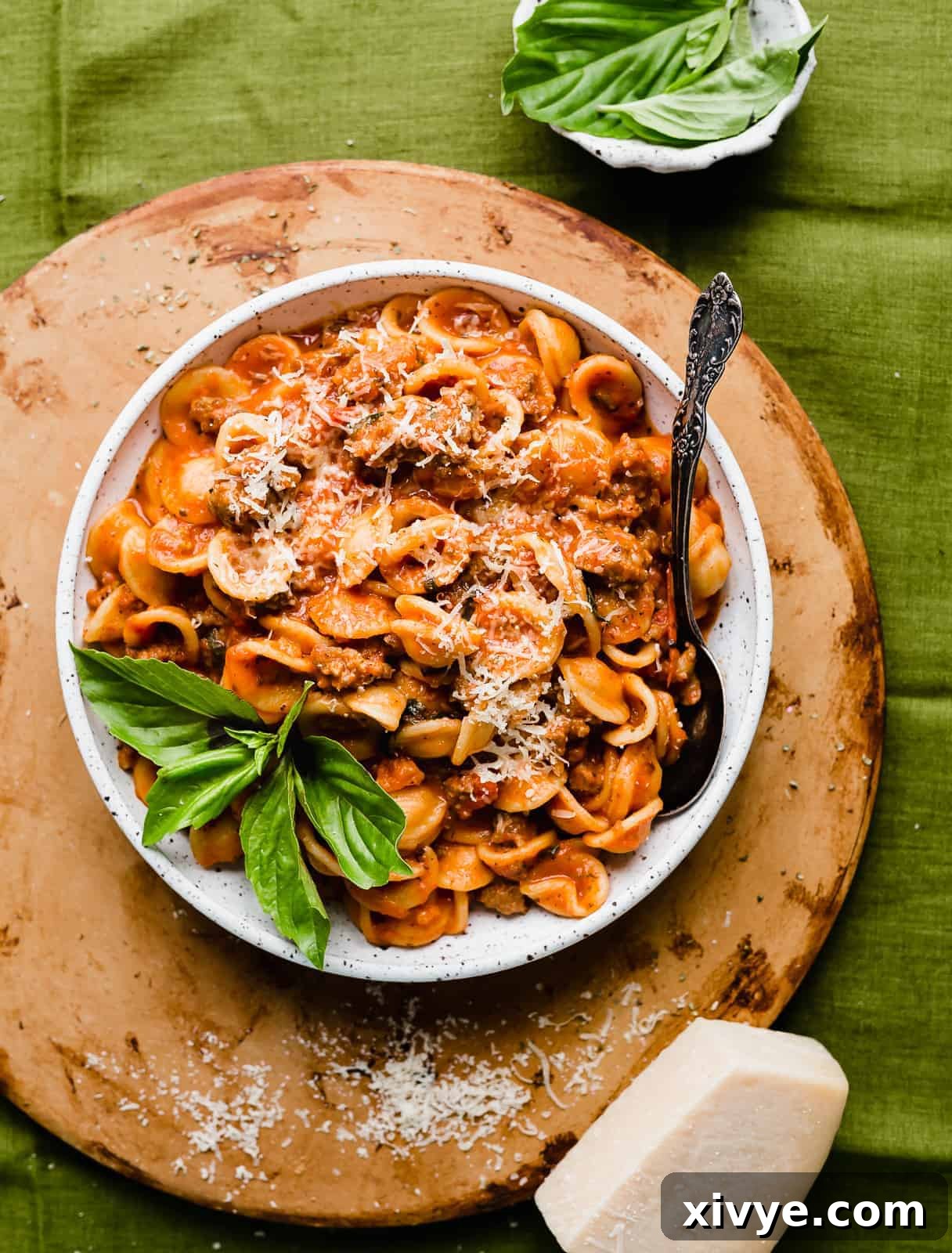
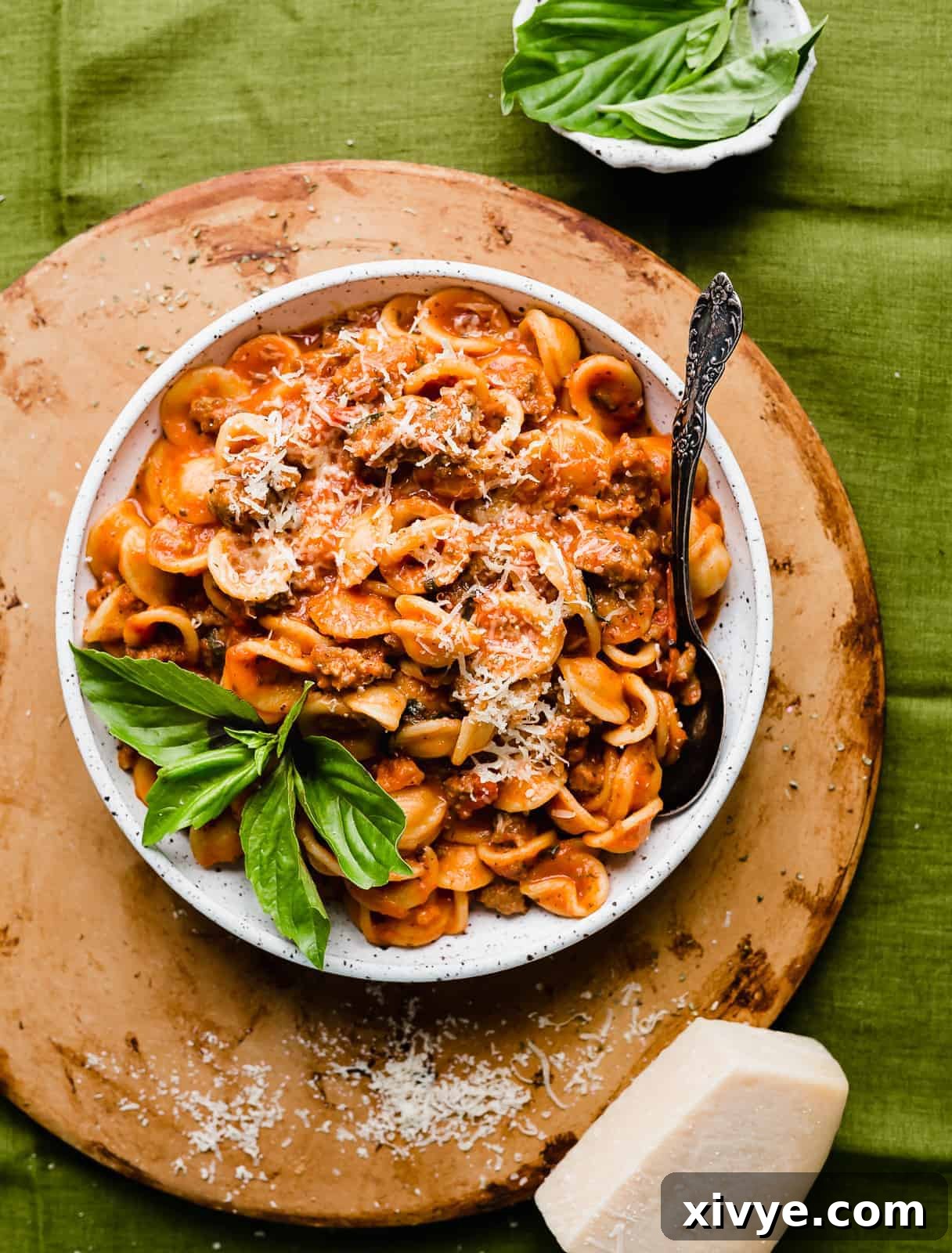
Embark on a culinary journey to the heart of Italian comfort food with this exceptional Ragù alla Bolognese recipe. This isn’t just any meat sauce; it’s a carefully crafted blend that honors the rich traditions of authentic Bolognese while embracing the beloved flavors that make a pasta dish a true family favorite. Imagine succulent Italian sausage, slow-simmered in a vibrant, deeply flavored red sauce, infused with the aromatic essence of fresh basil, a hint of warm nutmeg, and a medley of classic Italian spices. The final touch? A luxurious swirl of heavy cream and freshly grated Parmesan cheese, elevating the sauce to an irresistible creamy perfection that clings to every strand of pasta.
If your heart desires more exquisite pasta creations, you absolutely must try our Shredded Beef Ragu, a comforting masterpiece that has quickly become a new favorite in many households. For those who appreciate the elegance of simplicity, our Bucatini Cacio e Pepe offers another taste of traditional Italian deliciousness, proving that sometimes, less is truly more.
Why This Bolognese Recipe Stands Out
This Ragù alla Bolognese isn’t just a recipe; it’s a celebration of flavor and tradition, meticulously designed to deliver an unforgettable dining experience. Here’s why this version will become a staple in your kitchen:
- A Harmonious Blend of Classic and Contemporary Comfort: Traditional Ragù alla Bolognese is renowned for its meat-forward profile with a subtle hint of tomato. However, modern palates, especially those of younger family members, often crave a richer, more pronounced tomato base. Our recipe masterfully bridges this gap. We incorporate the essential elements of an authentic Bolognese – a generous amount of meat, a splash of dairy for unparalleled creaminess, and the distinctive warmth of nutmeg – while introducing a richer tomato presence that families adore. This balanced approach means you get the depth of classic Italian cooking with the comforting familiarity your loved ones crave.
- Luxuriously Thick and Creamy Texture: The secret to a truly satisfying pasta sauce lies in its texture, and this Bolognese delivers on all fronts. Thanks to the strategic use of crushed tomatoes and concentrated tomato paste, the sauce develops a robust body. The addition of heavy cream then transforms it, imparting a silky, velvety smoothness that coats every piece of pasta beautifully. This isn’t a watery sauce; it’s a hearty, substantial ragù designed to cling to your chosen noodle, ensuring every bite is rich and fulfilling.
- Bursting with Rich and Complex Flavors: Flavor is paramount in Italian cuisine, and this recipe is a true flavor fest. The foundation is built upon high-quality Italian sausage, which brings an inherent depth and savory punch that ground beef alone simply cannot achieve. Fresh basil is a non-negotiable ingredient, providing a bright, aromatic counterpoint to the rich meat and tomato base. Combined with a careful selection of Italian spices, a hint of garlic, and the unexpected but vital touch of nutmeg, each ingredient works in concert to create a complex, layered flavor profile that tastes like it has simmered for hours.
I must share a personal anecdote: my husband, having lived for two years in northern Italy, possesses a discerning palate for Italian cuisine. Recreating Italian dishes that meet his high standards is a challenge, as he inevitably compares everything to the incredibly fresh and authentic food he enjoyed on the streets of Italy – a perfectly understandable benchmark! Yet, when he first tasted this Bolognese pasta, his reaction was unequivocal: “This is amazing!” Coming from our resident Italian food expert, that is truly the highest praise imaginable, a testament to the recipe’s exceptional quality and authenticity-inspired flavor.
Essential Ingredients for Perfect Bolognese
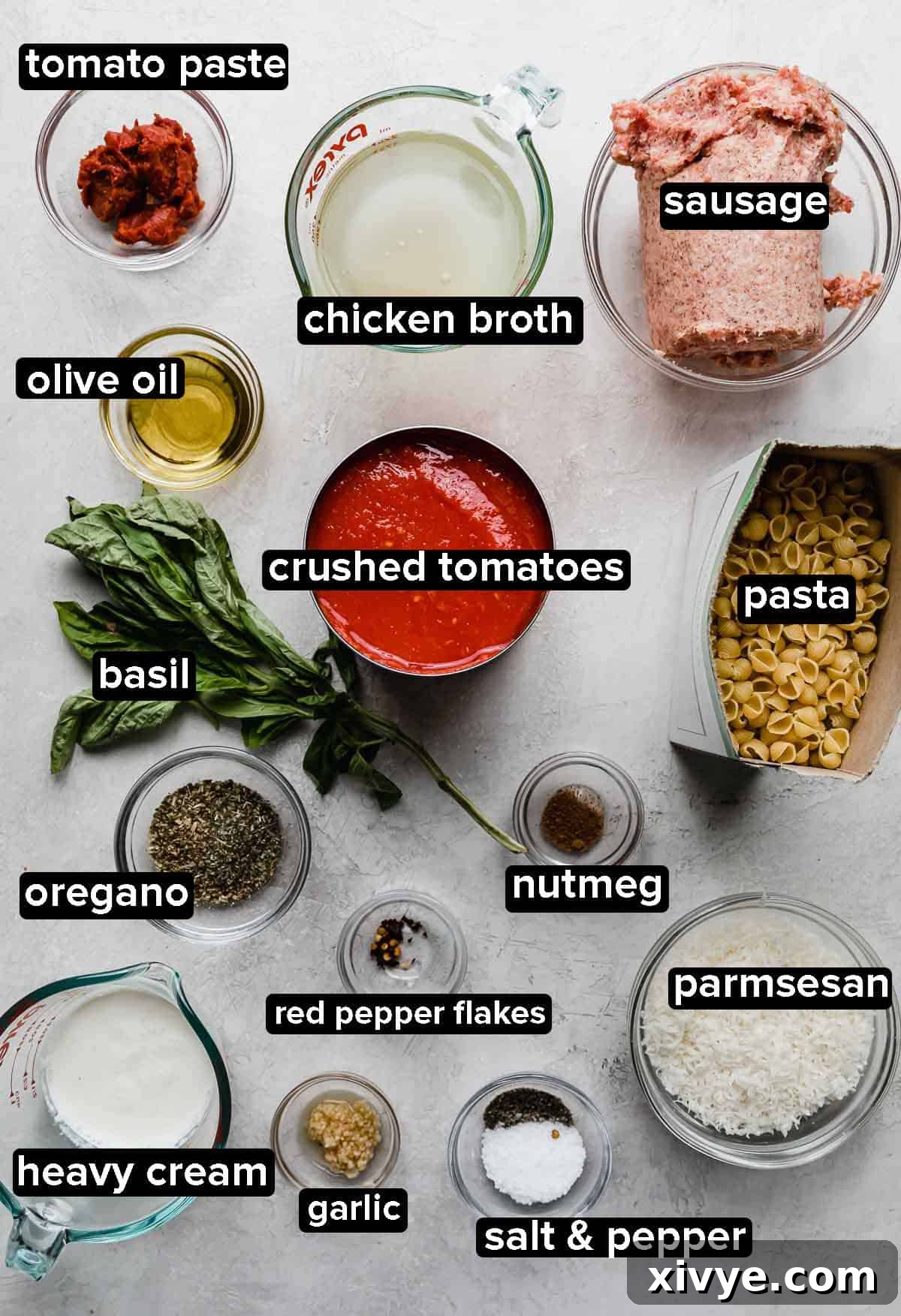
Understanding each ingredient’s role is key to mastering this delicious ragù. Here’s a breakdown of the stars of our Bolognese:
- Italian Sausage: We highly recommend using Italian sausage (casings removed). Its unique blend of spices, particularly fennel, adds an incredible depth of flavor that elevates the entire sauce. While you can opt for 8 oz ground beef and 8 oz Italian sausage if you prefer a milder sausage flavor or want to include beef, using solely Italian sausage (or a majority of it) ensures that signature savory complexity. Always look for high-quality sausage for the best results.
- Chicken Broth: More than just a liquid, chicken broth is essential for deglazing the pan, capturing all those flavorful browned bits from the cooked meat. It infuses the sauce with an additional layer of savory goodness that plain water simply cannot provide, contributing to a richer, more nuanced flavor profile.
- Crushed Tomatoes: A 28 oz can of crushed tomatoes forms the hearty, slightly chunky tomato base of our sauce. It strikes the perfect balance, being thicker and more substantial than a smooth tomato sauce but less chunky than diced tomatoes. In Italy, tomato passata is often used for red sauces, and crushed tomatoes offer a similar smooth yet substantial consistency that is ideal for a ragù.
- Tomato Paste: This concentrated powerhouse is crucial for both flavor and texture. Tomato paste provides a deep, umami-rich tomato flavor that simmered crushed tomatoes alone cannot achieve in a shorter cooking time. Furthermore, it acts as a natural thickener, ensuring your sauce has a rich, viscous consistency that adheres perfectly to your pasta, rather than being thin and runny.
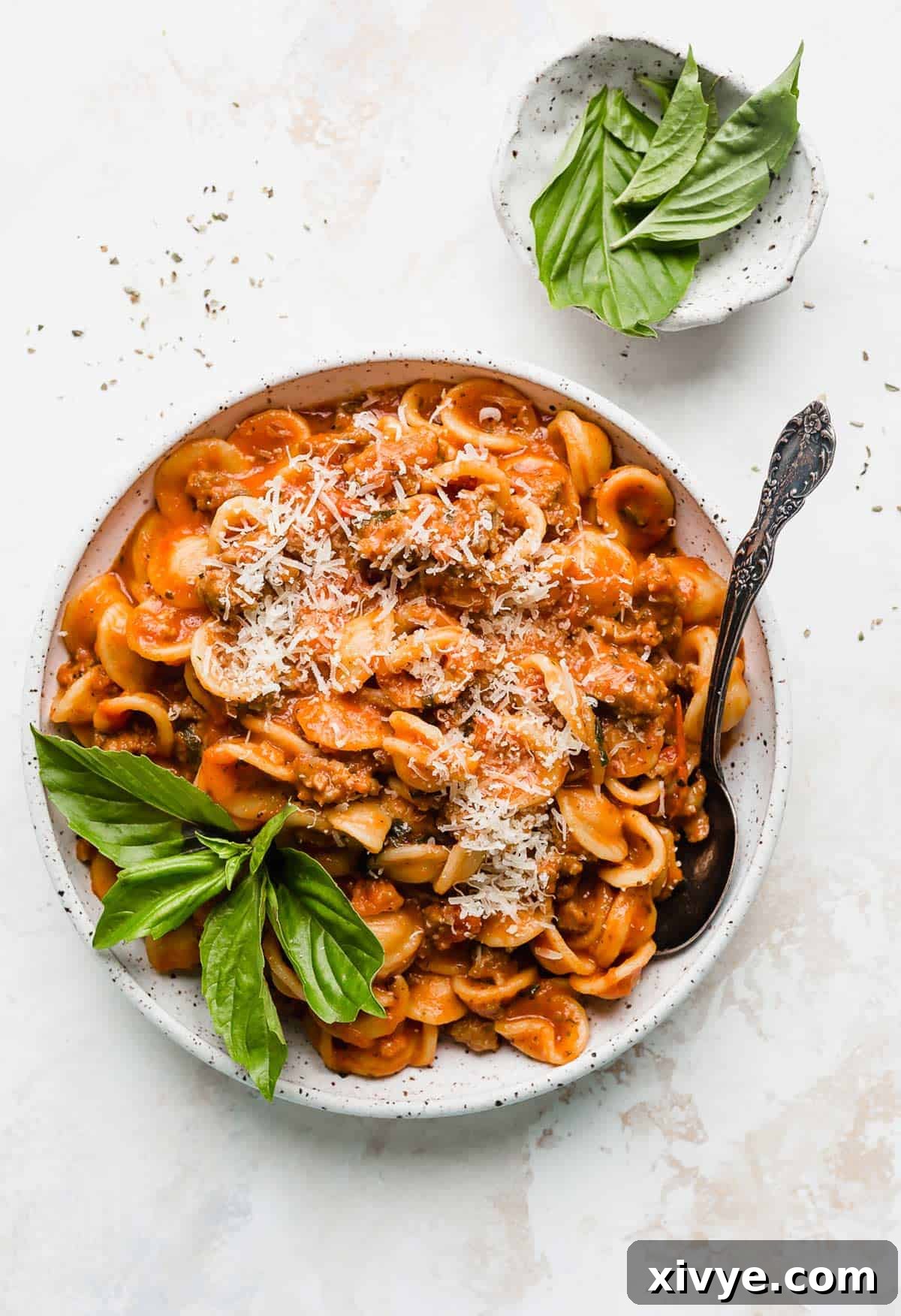
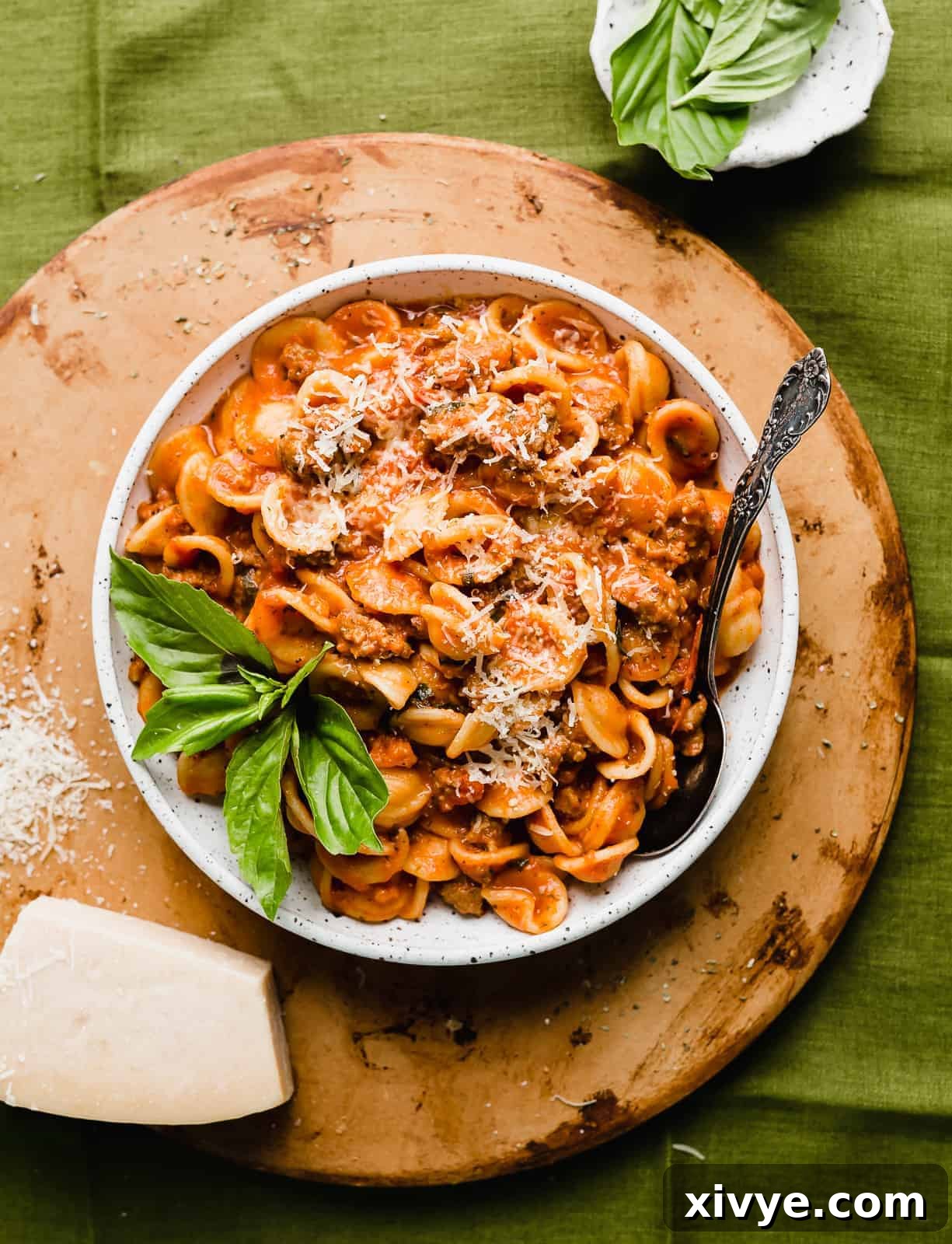
- Pasta: The beauty of Ragù Bolognese is its versatility with pasta. While traditionally served with wide, flat egg noodles like tagliatelle or pappardelle, which are perfect for scooping up the rich sauce, it’s also excellent with smaller shapes like orecchiette or small shells. These shapes create little pockets that capture every drop of the luscious ragù. Choose your favorite, but consider how well it will hold and absorb the thick, meaty sauce.
- Ground Nutmeg: This might seem like an unusual addition to a savory meat sauce, but trust us—it’s transformative. Marcella Hazan, a revered authority on authentic Bolognese, famously included nutmeg in her recipe for a reason. Just a quarter teaspoon introduces a subtle, warm, and earthy note that beautifully complements the richness of the meat and dairy, adding a layer of complexity that sets this Bolognese apart.
- Fresh Basil: When it comes to herbs, freshness makes an unparalleled difference. Fresh basil provides a vibrant, sweet, and peppery aroma that dried basil simply cannot replicate. Its bright flavor cuts through the richness of the sauce, adding a lift and a quintessential Italian character. Don’t skip the fresh basil; it truly elevates the dish.
- Heavy Cream: A modest amount of heavy cream at the end of cooking is the secret to achieving that coveted creamy finish without making the sauce overly rich. It mellows the tomato’s acidity, binds the flavors, and adds a luxurious mouthfeel. If heavy cream isn’t available or preferred, whole milk can be used as a lighter alternative, though the richness will be slightly different.
- Grated Parmesan Cheese: What’s an Italian pasta dish without a generous dusting of Parmesan? Freshly grated Parmesan cheese (Parmigiano Reggiano, if possible) adds a salty, umami depth and a delightful sharpness that perfectly complements the rich Bolognese. It’s not just a garnish; it’s an integral component that enhances every bite.
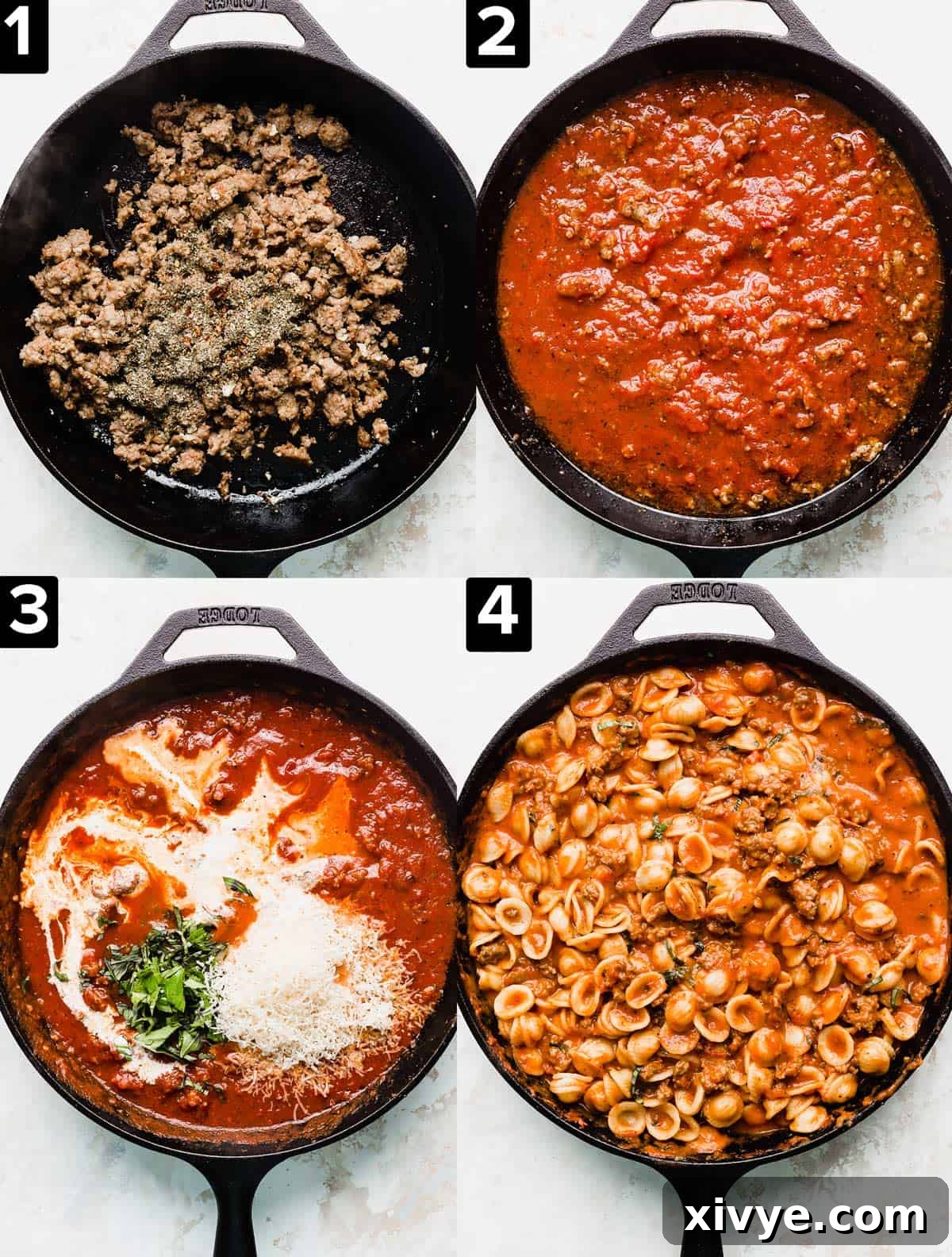
Effortless Step-by-Step Instructions for Your Best Bolognese
Creating this rich and flavorful Ragù alla Bolognese is simpler than you might think. Follow these clear steps to achieve a truly magnificent sauce:
- Brown the Italian Sausage: Begin by heating 1 tablespoon of olive oil in a large skillet (preferably a 12-inch cast iron skillet) over medium heat. Add 16 ounces of Italian sausage (casings removed, if applicable). Break the meat apart with a spoon as it cooks, ensuring it browns evenly. Continue cooking until the sausage is no longer pink throughout. Once cooked, drain any excess grease from the pan to prevent the sauce from becoming oily.
- Infuse with Aromatics and Spices: To the cooked sausage, add 4 cloves of minced garlic, 1 tablespoon of dried oregano, and ¼ teaspoon of crushed red pepper flakes. Stir well, allowing the garlic to become fragrant and the spices to toast lightly for about 1 minute. Be careful not to burn the garlic.
- Deglaze the Pan: Pour 1 cup of chicken broth into the skillet. Use a wooden spoon to scrape up any browned bits stuck to the bottom of the pan. These “fond” bits are packed with flavor and will enrich your sauce. Bring the broth to a gentle simmer and cook until it has reduced by half, concentrating its savory essence.
- Build the Tomato Base: Stir in the 28 ounces of crushed tomatoes and 2 tablespoons of tomato paste. Mix thoroughly until the tomato paste is fully incorporated into the sauce. Season with ½ tablespoon of kosher salt and 1 teaspoon of freshly ground black pepper. Bring the mixture to a boil, then reduce the heat to a low simmer. Let it gently simmer for 10 minutes, allowing the flavors to meld.
- Cook the Pasta: While your sauce is simmering and developing its deep flavors, bring a large pot of salted water to a rolling boil. Add your chosen pasta (such as tagliatelle, pappardelle, or small shells) and cook according to package directions until it is perfectly al dente, tender with a slight bite.
- Add Creaminess and Finishing Touches: After the sauce has simmered for 10 minutes, stir in ¼ teaspoon of ground nutmeg, ½ cup of fresh basil (chopped and lightly packed), ⅓ cup of heavy cream, and ⅔ cup of freshly grated Parmesan cheese. Stir everything together until well combined. Continue to simmer gently for another 10 minutes, allowing the flavors to marry and the sauce to thicken beautifully.
- Combine and Adjust Consistency: Once your pasta is cooked al dente, drain it, making sure to reserve about ½ to ¾ cup of the starchy pasta water. Add the drained pasta directly to the simmering Bolognese sauce in the skillet. Toss to coat the pasta thoroughly with the rich sauce. If the sauce seems too thick or needs a looser consistency, add a splash or two of the reserved pasta water, stirring until it reaches your desired creaminess.
- Serve and Savor: Transfer the delicious Ragù alla Bolognese to serving bowls. Garnish generously with additional fresh basil leaves and a final sprinkling of grated Parmigiano Reggiano. Serve immediately, perhaps alongside some crusty toasted garlic bread. Enjoy the rich, comforting flavors of this homemade Italian masterpiece!
Expert Tips for the Best Bolognese Every Time
Achieving a truly outstanding Ragù alla Bolognese involves a few key techniques and considerations. Here are some expert tips to ensure your homemade sauce is nothing short of spectacular:
- Homemade Sauce Makes All the Difference: While store-bought jarred red sauce might be convenient, the depth of flavor and freshness achieved with this homemade Bolognese recipe is incomparable. Invest the time; your taste buds will thank you. The layering of flavors from browning the meat, deglazing, and slow simmering creates a richness that pre-made sauces simply cannot replicate.
- The Magic of Pasta Water: Never discard all your pasta water! This starchy, salty liquid is a secret weapon in Italian cooking. Reserving about ½ to ¾ cup allows you to adjust the final consistency of your sauce. Adding a splash or two helps the sauce emulsify, creating a silkier texture and ensuring it clings beautifully to the noodles, preventing a dry or overly thick result.
- Fresh Herbs are Non-Negotiable: When the recipe calls for fresh basil, please heed the advice. Fresh basil offers a bright, aromatic, and slightly sweet flavor that dried basil cannot replicate. It makes a world of difference in the overall freshness and vibrancy of your Bolognese. If you absolutely must use dried, use about one-third of the fresh amount, but strongly consider fresh for the best outcome.
- Meat Choices for Depth: This recipe highlights Italian sausage for its incredible flavor contribution. The inherent spices in the sausage, particularly fennel, add a complexity that beef alone lacks. While you can certainly use a blend of 8 oz ground beef and 8 oz Italian sausage for a different flavor profile, avoid going all ground beef if you want to retain that signature robust taste. Remember, traditional ragùs are very meat-forward, so don’t skimp!
- Embrace the Soffritto (for deeper flavor): For an even more classic and complex Bolognese, consider adding an Italian soffritto. This aromatic base typically consists of finely diced celery, onion, and carrots. To incorporate it, add these vegetables to the pan with the olive oil *before* the sausage. Sauté them gently for 5-7 minutes until softened and translucent, then add the sausage and proceed with the recipe instructions. The soffritto provides a foundational layer of sweetness and aroma that truly elevates the sauce.
- The Power of Extended Simmering: One of the greatest Italian tricks for the best pasta sauce is allowing it to simmer for an extended period. My husband, from his time in Italy, always emphasizes this. Long, slow simmering allows the flavors to meld, deepen, and concentrate, creating an incredibly rich and complex sauce. If time permits, letting your Bolognese simmer on low heat for an additional 30-60 minutes (or even longer) will transform it. The good news is, even with our expedited 40-minute version, the careful selection and layering of ingredients ensure a deliciously rich flavor that tastes like it’s been simmering all day!
Make Ahead, Storing, and Freezing Your Bolognese
This Bolognese sauce is an excellent candidate for meal prep, making your future weeknights much easier! You can absolutely make a larger batch of the sauce ahead of time and store or freeze it for later enjoyment.
- Make Ahead & Storage: Prepare the Bolognese sauce as directed, allowing it to cool completely before storing. Transfer the cooled sauce to an airtight container and refrigerate for up to 4-5 days. The flavors often deepen and improve overnight!
- Freezing for Future Meals: This is a fantastic pasta sauce for freezing due to its balanced dairy content, which typically doesn’t cause issues during freezing and thawing. Once the sauce has cooled completely, transfer it to freezer-safe bags or containers, leaving a little headspace if using rigid containers. It can be frozen for up to 2 months. Remember: do not freeze the sauce with the cooked pasta already mixed in, as the pasta’s texture will suffer upon thawing.
- Thawing and Reheating: When you’re ready to enjoy your frozen Bolognese, simply transfer it from the freezer to the refrigerator and allow it to thaw overnight. Once thawed (or partially thawed), place the sauce in a pot over low to medium heat, stirring occasionally, until it’s completely warm and gently simmering. If the sauce seems too thick, you can add a splash of reserved pasta water (if you froze some separately) or a little plain water or broth to achieve the desired consistency. Cook your fresh pasta, add it to the reheated sauce, and serve!
Frequently Asked Questions About Bolognese Sauce
Traditional Bolognese sauce is a rich, slow-cooked meat sauce originating from Bologna, Italy. It typically features a combination of meats, most commonly beef and sometimes pork, with pancetta often added for extra flavor. Our recipe opts for savory Italian sausage as the primary meat, renowned for its excellent flavor profile, though you can certainly use a mix of half beef and half sausage as mentioned in our tips. A true Bolognese also includes a soffritto – a base of finely diced celery, onions, and carrots – which provides a foundational sweetness and aroma. While we aim for a quicker version, incorporating a soffritto is a fantastic addition if you have the extra time, as my sister often does with great success! Finally, a touch of nutmeg and some milk or heavy cream are added to enrich the sauce, providing a luscious creaminess that is characteristic of an authentic ragù.
Bolognese sauce proudly hails from Bologna, a vibrant city in the Emilia-Romagna region of northern Italy. It is one of the most famous and beloved culinary contributions from this region, recognized worldwide as a staple of Italian comfort food.
Absolutely, Bolognese sauce is a quintessential component of classic Italian lasagna! Its rich, meaty, and flavorful profile makes it perfect for layering between pasta noodles, creamy béchamel sauce, and plenty of mozzarella cheese. It also shines in other baked pasta dishes, such as pasta al forno recipes.
For a classic Italian experience, wide, flat pasta noodles like pappardelle or tagliatelle are ideal choices. Their broad surface area allows them to beautifully scoop up and hold the hearty, thick Bolognese sauce. If you prefer shorter, shaped pasta, orecchiette (meaning “little ears”), shell-shaped pasta, or any noodle with pockets and ridges are excellent options, as they are perfectly designed to capture generous amounts of the rich sauce.
Yes, this Bolognese sauce recipe freezes exceptionally well! The amount of dairy in the sauce is not significant enough to cause texture issues upon freezing and thawing, making it a perfect make-ahead meal. To freeze, allow the sauce to cool completely before transferring it to freezer-safe bags or containers. It can be stored in the freezer for up to 2 months. Remember, for best results, do not freeze the sauce with the pasta already mixed in; always cook fresh pasta when you’re ready to serve.
While the core ingredients of this Bolognese recipe (meat, tomatoes, herbs, spices, dairy) are naturally gluten-free, it’s crucial to check the labels of all packaged ingredients, especially tomato paste and chicken broth, to ensure they are certified gluten-free. Some brands may contain hidden gluten or be processed in facilities that handle gluten. Always verify the labels if you or your guests have gluten sensitivities or allergies. This recipe, when made with gluten-free pasta, can easily be adapted for a gluten-free diet.
No, traditional Bolognese sauce is generally mild and focuses on rich, savory flavors rather than heat. Our recipe includes ¼ teaspoon of crushed red pepper flakes, which adds a very subtle warmth without making the sauce overtly spicy. If you prefer a completely mild sauce, you can reduce the amount to ⅛ teaspoon or omit them entirely. Conversely, for those who enjoy a spicier Bolognese, feel free to increase the amount of red pepper flakes to taste.
While often used interchangeably, “Ragù” is a broader term for a meat-based sauce in Italian cuisine, typically served with pasta. “Bolognese” is a specific type of ragù that originates from Bologna, characterized by its slow-cooked, rich meat base, often including a soffritto, milk or cream, and a relatively small amount of tomato compared to other red sauces. So, all Bolognese is a ragù, but not all ragùs are Bolognese!
Bolognese is a hearty meal in itself, but it pairs wonderfully with a few simple accompaniments. Crusty garlic bread or a fresh baguette is perfect for soaking up every last drop of the delicious sauce. A crisp green salad with a light vinaigrette offers a refreshing contrast to the richness of the pasta. A simple glass of dry red wine, like a Chianti or Sangiovese, also complements the flavors beautifully.
Explore More Italian Pasta Delights
If you’ve fallen in love with the flavors of Italy, be sure to explore these other fantastic Italian pasta recipes:
- Baked Ziti with Italian Sausage
- Red Pesto Pasta
- Penne Pomodoro
- How to Make Ravioli from Scratch
- Classic Fettuccine Alfredo
We absolutely love hearing from you! If you tried this Ragù alla Bolognese recipe, we’d be thrilled to hear your thoughts. Leave a star rating and review right here on the blog, or simply scroll down to the comments section to share your experience. Your feedback helps our community of home cooks!
Stay connected and never miss a delicious recipe! Follow us on Instagram, TikTok, YouTube, Facebook, and Pinterest for daily inspiration, tips, and new recipes.
Print Recipe
Review Recipe
Ragù alla Bolognese
 Whitney Wright
This incredibly flavorful and easy Bolognese recipe is a true family favorite, quickly becoming our go-to pasta dish! The sauce tastes as though it has been lovingly simmering on the stove for 12 hours, developing deep, rich flavors. The best part? This remarkable recipe only takes approximately 40 minutes to make from start to finish!
Ingredients
- 1 tablespoon olive oil
- 16 oz Italian sausage (casings removed, see notes for alternatives)
- 4 garlic cloves, minced
- 1 tablespoon dried oregano
- ¼ teaspoon crushed red pepper flakes (reduce to ⅛ tsp if sensitive to heat)
- 1 cup chicken broth
- 28 oz crushed tomatoes
- 2 tablespoons tomato paste
- ½ tablespoon kosher salt
- 1 teaspoon freshly ground black pepper
- 1 lb pasta (small noodles such as small shell or orecchiette work well)
- ¼ teaspoon ground nutmeg
- ¼ cup fresh basil, chopped and lightly packed
- ⅓ cup heavy cream
- ⅔ cup grated parmesan cheese
- ½ cup reserved pasta water (to adjust sauce consistency at the end)
Equipment
-
12 inch cast iron skillet, with lid
-
Herb scissors
Instructions
-
Heat a 12-inch skillet over medium heat. Add the olive oil and Italian sausage. Cook the meat until no longer pink, crumbling it up as you go. Once cooked, drain any excess grease.
-
Stir in the minced garlic, dried oregano, and crushed red pepper flakes. Cook for 1 more minute until fragrant.
-
Add the chicken broth to the skillet to deglaze the pan. Stir to scrape up any browned bits from the bottom. Cook until the broth has reduced by half.
-
Stir in the crushed tomatoes, tomato paste, kosher salt, and freshly ground black pepper. Bring to a boil, then reduce to a simmer and let it gently simmer for 10 minutes.
-
While the sauce is simmering, cook your chosen pasta according to package directions until it reaches al dente.
-
After the sauce has simmered for 10 minutes, stir in the ground nutmeg, fresh basil, heavy cream, and grated Parmesan cheese. Simmer for another 10 minutes.
-
Drain the cooked pasta, remembering to reserve ½ to ¾ cup of the pasta water. Add the drained pasta directly to the Bolognese sauce and toss to combine. If the sauce needs to be more “saucy” or thinner, add a splash of the reserved pasta water until desired consistency is reached.
-
Serve warm, garnished with additional fresh basil and grated Parmigiano Reggiano. Enjoy!
Notes
Store any leftover Bolognese sauce in an airtight container in the refrigerator for up to 5 days. It’s also suitable for freezing for up to 2 months.
This recipe has been adapted from a classic by Ina Garten.