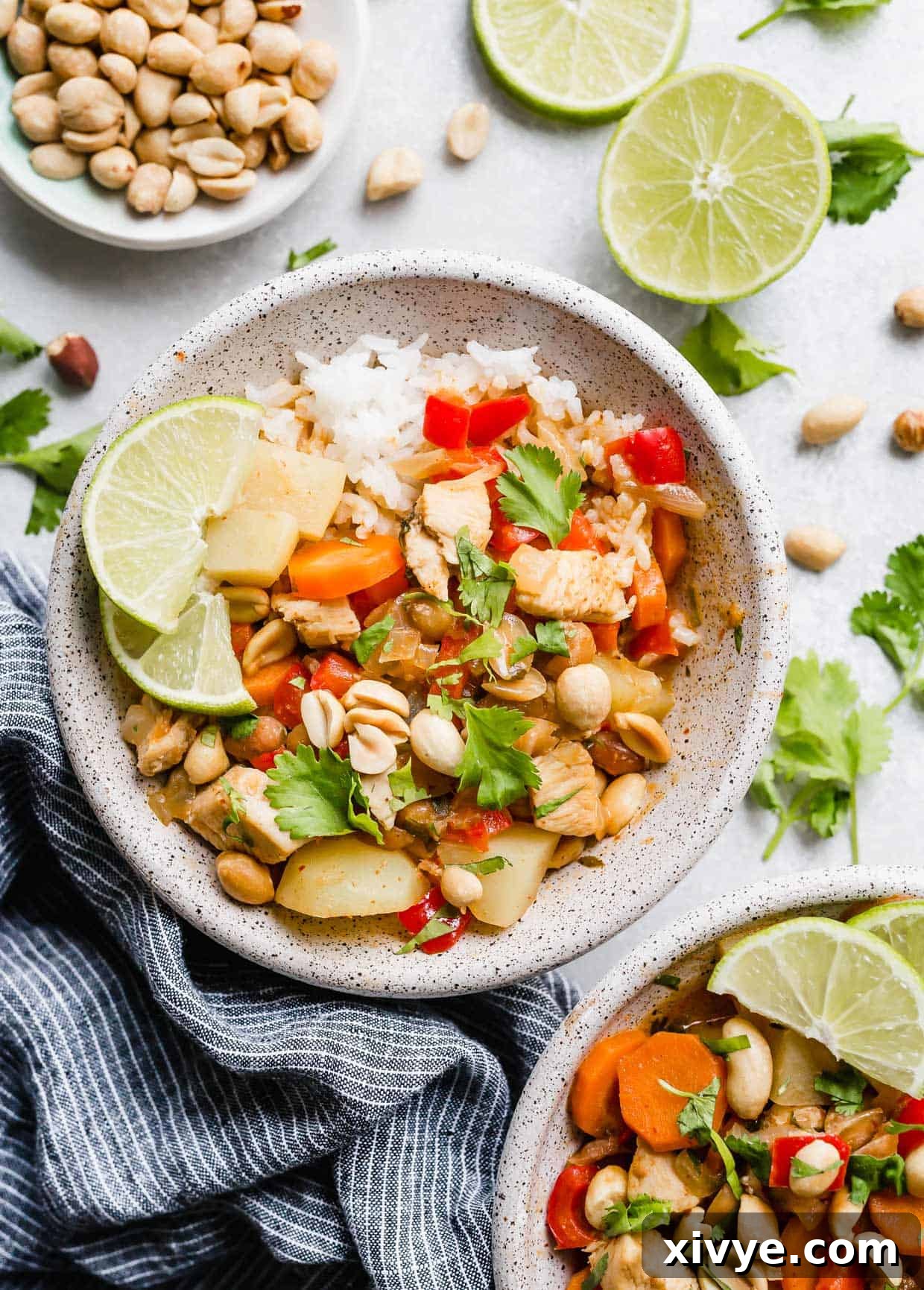
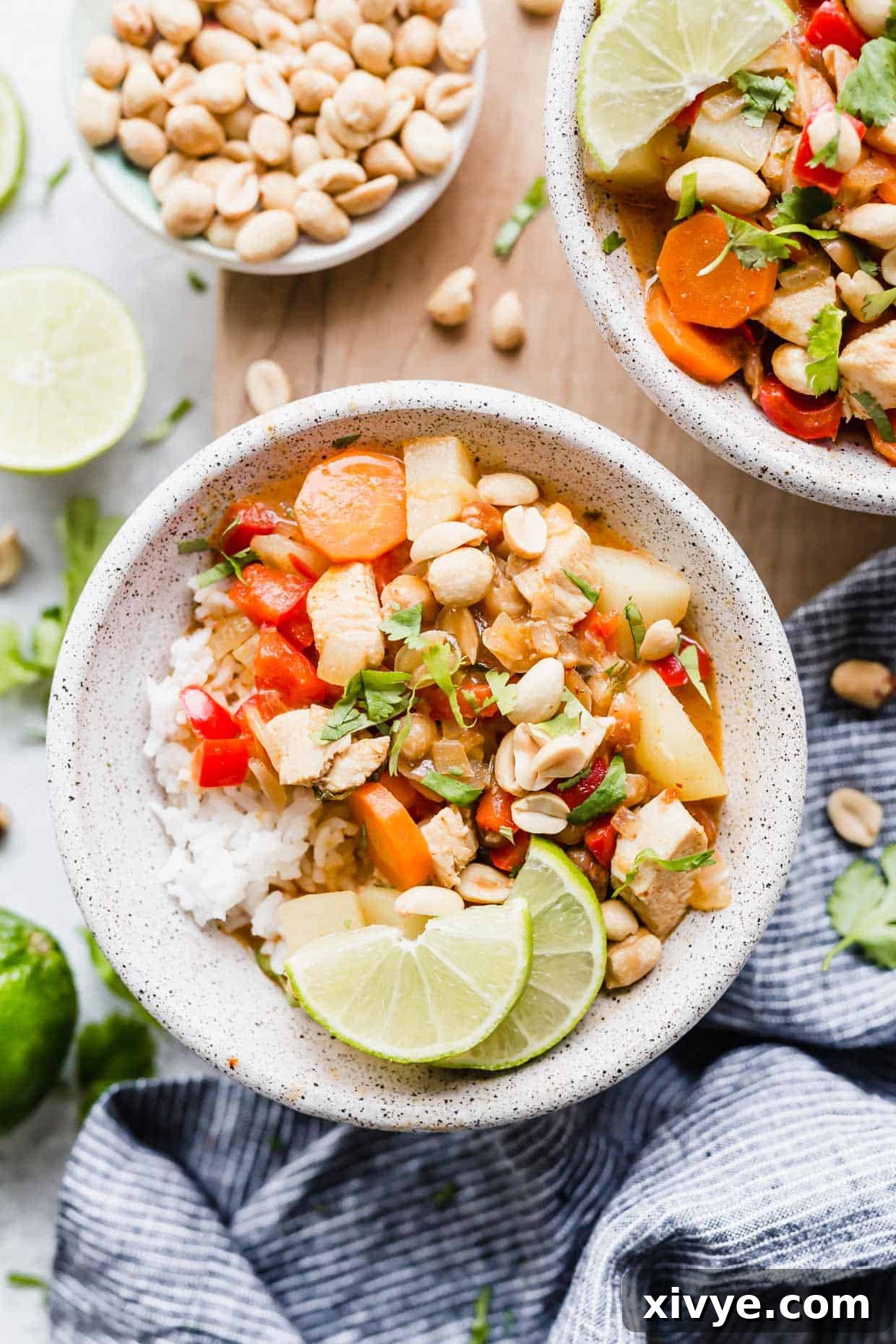
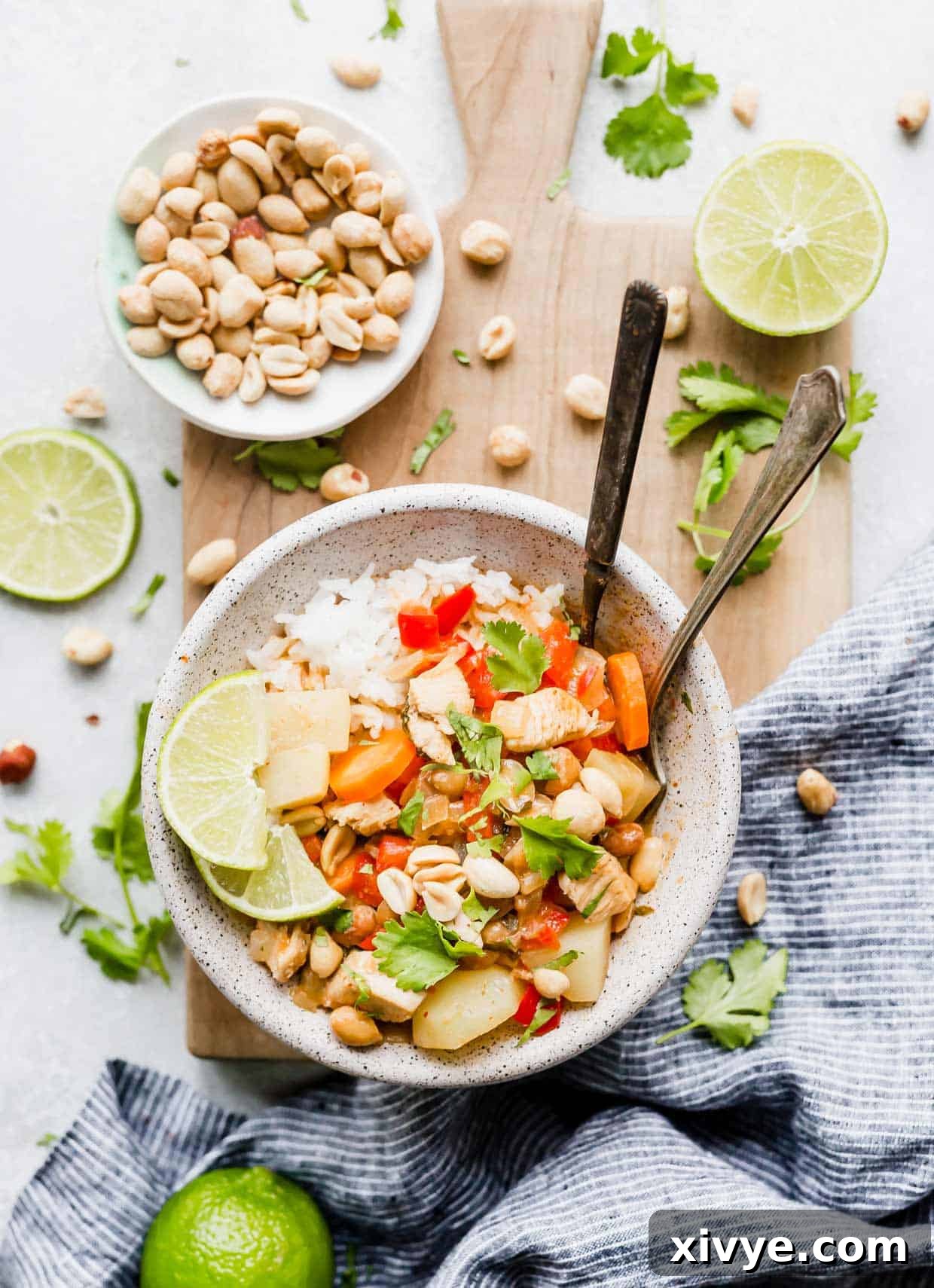
Prepare to embark on a culinary journey with this incredible Thai Massaman Curry recipe. A true masterpiece of flavor, this dish is brimming with tender chicken, creamy peanuts, and a vibrant medley of fresh vegetables like carrots, onions, and red bell peppers. All these delightful ingredients are lovingly enveloped in a rich, aromatic Massaman curry sauce, crafted from luscious coconut milk and authentic Massaman curry paste. For the ultimate dining experience, serve this exquisite chicken Massaman curry over a bed of fragrant, steaming rice, complemented by a side of Homemade Naan.
For lovers of exotic and comforting flavors, especially those who appreciate the depth of Indian and Thai cuisine, this recipe is destined to become a firm favorite. If you share my passion, be sure to explore more of my easy-to-make yet sensational dinner recipes, including my Thai Red Curry Noodle Soup, Coconut Curry Noodles, and the ever-popular Indian Butter Chicken Recipe.
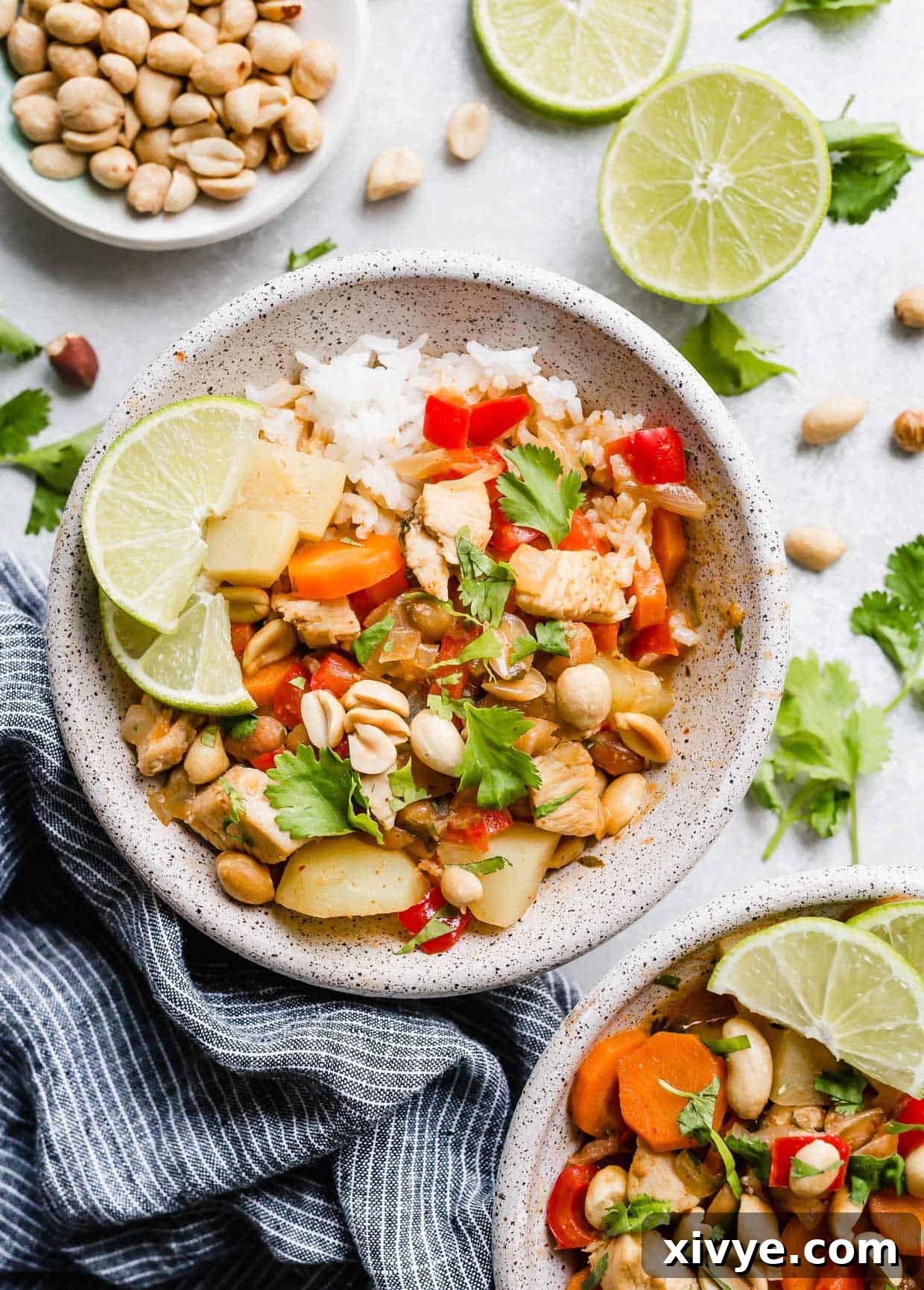
Why This Massaman Curry Recipe is a Must-Try
- Unforgettable Authentic Flavor: This homemade Massaman curry boasts an incredible depth of flavor that will leave a lasting impression. It masterfully balances sweet, savory, tangy, and a subtle warmth, making it truly irresistible. The unique blend of spices found in Massaman paste, combined with rich coconut milk and peanuts, creates a culinary experience far beyond ordinary weeknight meals. Prepare to be amazed by its complexity and aroma, making it your new go-to recipe for both everyday dinners and special occasions.
- Packed with Wholesome Ingredients: Beyond its delicious taste, this chicken and vegetable Massaman curry is loaded with healthy components. Featuring tender chicken, creamy potatoes, sweet carrots, crisp red bell peppers, and savory onions, it’s a nutritionally balanced meal. I’ve opted for chicken to provide a lean protein boost, making it a hearty and satisfying dish for the whole family. Every bite delivers a harmonious blend of textures and fresh flavors, building a robust foundation for this amazing curry.
- Exquisite Thai Massaman Curry Sauce: The heart of this recipe lies in its incredibly rich and aromatic sauce. Crafted with a base of full-fat coconut milk for ultimate creaminess, it’s infused with authentic Massaman curry paste, which brings a distinctive array of warm spices. A touch of fish sauce provides that essential umami depth characteristic of traditional Thai cuisine, while creamy peanut butter adds a velvety texture and complements the roasted peanuts in the dish perfectly. This combination creates a sauce that is both complex and comforting.
- Surprisingly Simple to Master: Despite its gourmet taste, this Massaman curry recipe is remarkably easy to prepare. With straightforward steps and readily available ingredients, even novice cooks can achieve impressive results. Its minimal active cooking time means you can enjoy a flavorful, homemade Thai meal without spending hours in the kitchen, making it an ideal candidate for your regular dinner rotation, especially on busy weeknights.
The Rich History of Massaman Curry
Massaman curry holds a unique place in Thai cuisine, distinguished by its origins as a fusion dish influenced by Indian and Persian culinary traditions. Unlike other Thai curries that rely heavily on fresh, aromatic herbs, Massaman incorporates a blend of dried spices typically found in Indian cooking, such as cardamom, cinnamon, cloves, star anise, and nutmeg. This aromatic profile speaks to its historical roots, believed to have been introduced to Thailand by Persian traders and Muslim travelers centuries ago.
The name “Massaman” itself is thought to be derived from “Mosulman,” an archaic Siamese term for Muslim. This connection highlights the diverse cultural exchange that shaped the dish into the beloved curry it is today. Historically, it was a dish favored by royalty and is even mentioned in a 19th-century Thai poem by Prince Itsarasunthon (later King Rama II), praising its aroma and intricate flavors. This blend of rich coconut milk, tender meat, potatoes, and signature peanuts sets Massaman curry apart, offering a sweeter, milder, and more aromatic experience compared to its spicier red or green counterparts. It’s a testament to the beautiful complexity that emerges when different culinary worlds collide.
Essential Ingredient Notes for Your Massaman Curry
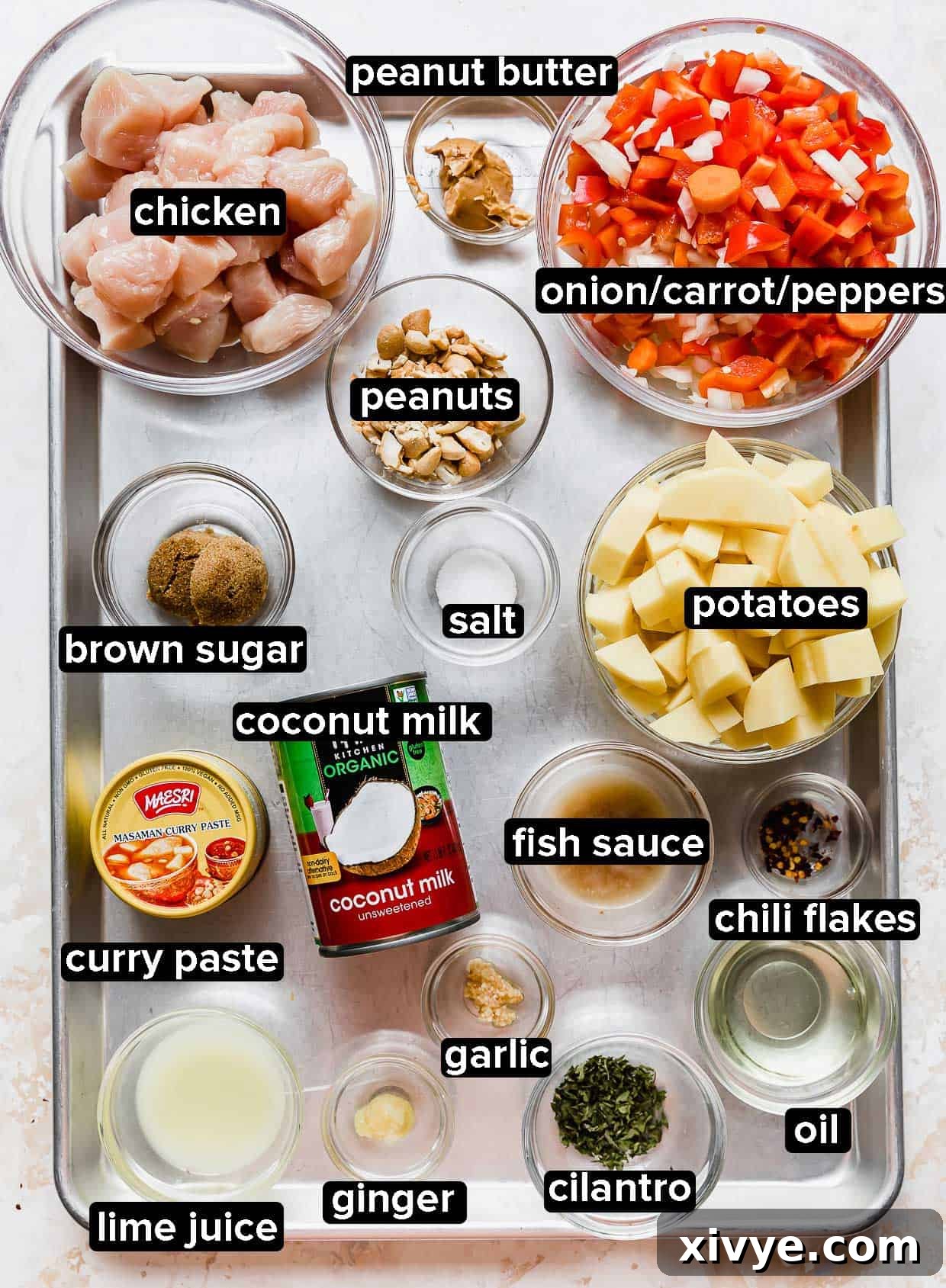
- Massaman Curry Paste: This is the backbone of your curry’s flavor. Massaman paste is distinctive for its inclusion of warm, earthy spices like cumin, cardamom, cinnamon, star anise, bay leaves, cloves, nutmeg, and mace, which are not typically found in other Thai curries. These are then blended with classic Thai ingredients such as coriander seeds, lemongrass, chili peppers, shrimp paste, galangal, white pepper, shallots, and garlic. Look for a high-quality store-bought paste to save time, or consider making your own if you’re feeling adventurous. For tips on where to buy, see my Recipe FAQs section below. Always double-check you’re buying paste, not sauce.
- Fish Sauce: While it might sound intimidating, fish sauce is a secret weapon in Thai cuisine, providing an irreplaceable savory umami depth. Just a small amount transforms the sauce, contributing to that iconic Massaman flavor without making the dish taste “fishy.” Ensure your chosen brand is gluten-free if catering to dietary restrictions.
- Chicken: Our homemade Massaman curry recipe specifically uses chicken, a family favorite. Boneless, skinless chicken breast or thighs, cut into bite-sized pieces, work wonderfully, cooking quickly and absorbing the rich flavors. However, Massaman is incredibly versatile. Feel free to substitute with other proteins like tender chunks of lamb, beef, succulent shrimp, or even duck for a richer experience. Adjust cooking times accordingly for different meats.
- Potatoes: I highly recommend using Yukon Gold potatoes for their superior texture. When cooked in the curry, they become wonderfully soft, almost creamy, and absorb the flavors beautifully. If Yukon Golds aren’t available, other starchy potatoes like russets or small red potatoes can be used, though the texture might vary slightly.
- Dry Roasted Peanuts: A signature component of Thai Massaman curry, dry roasted peanuts add a delightful crunch and nutty depth to the dish. They pair perfectly with the peanut butter in the sauce, enhancing the overall peanut flavor without being overwhelming. Garnish generously with extra peanuts for added texture and visual appeal.
- Red Pepper Flakes: These are your key to controlling the heat level. A pinch adds just the faintest warmth, true to Massaman’s typically mild nature. For a super mild version, omit them entirely. If you prefer a spicier curry, feel free to increase the quantity to your liking.
- Creamy Peanut Butter: Essential for adding a smooth, rich creaminess to the sauce and reinforcing the nutty profile. Using creamy peanut butter prevents an overload of crunchy texture, especially since dry roasted peanuts are also added to the dish.
- Coconut Milk: Full-fat coconut milk is non-negotiable for achieving the luxurious richness and silky texture characteristic of an authentic Massaman curry. We use two cans: one to bloom the curry paste and create the initial sauce base, and the second to thin the sauce and add extra creaminess as the vegetables and chicken simmer.
- Fresh Aromatics (Ginger & Garlic): Freshly grated ginger and minced garlic are vital for building the aromatic base of the curry, infusing it with vibrant, pungent flavors that awaken the palate.
- Lime Juice: A squeeze of fresh lime juice at the end brightens and balances the rich, savory flavors of the curry, providing a crucial tangy counterpoint.
- Brown Sugar: This adds a touch of sweetness that perfectly balances the savory, spicy, and tangy elements, creating a well-rounded and harmonious flavor profile.
- Cooked Rice: For serving with your glorious Thai Massaman curry. Jasmine rice is highly recommended for its fragrant aroma and slightly sticky texture, which complements Thai dishes wonderfully. Brown rice offers a nutty, wholesome alternative, and Basmati rice is also a suitable choice.
Step-by-Step Instructions for Your Perfect Massaman Curry
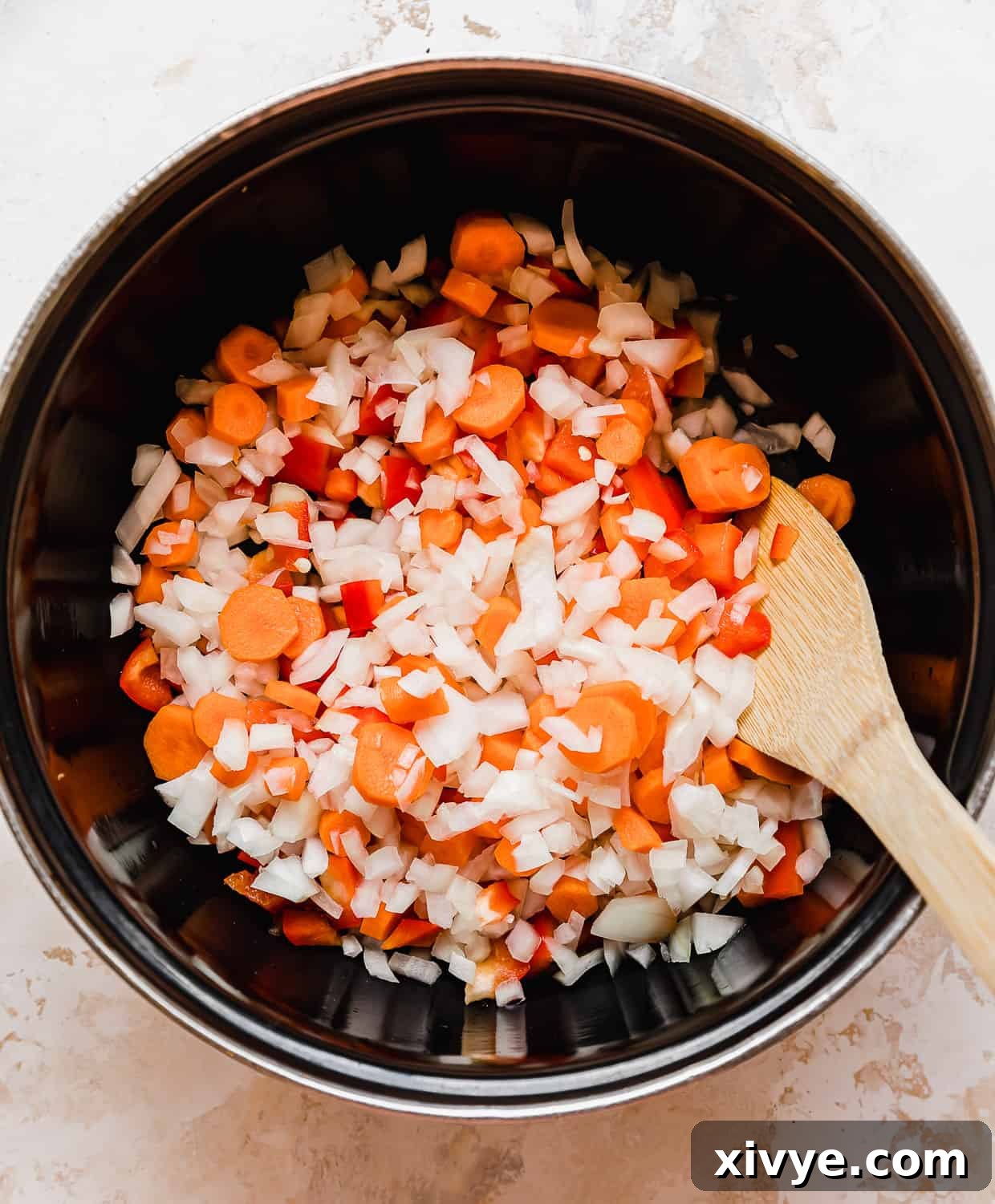
- Sauté the Vegetables: Begin by heating 1 tablespoon of vegetable oil in a large pot or a sturdy Dutch oven over medium heat. Add the sliced carrots, diced red bell peppers, and diced onions. Cook these vibrant vegetables for about 8 minutes, stirring occasionally, until they begin to soften and the onions turn translucent. Next, stir in the minced garlic and cook for just 1 minute more until fragrant. Carefully remove all the cooked vegetables and garlic from the pot and transfer them to a separate bowl; set aside.
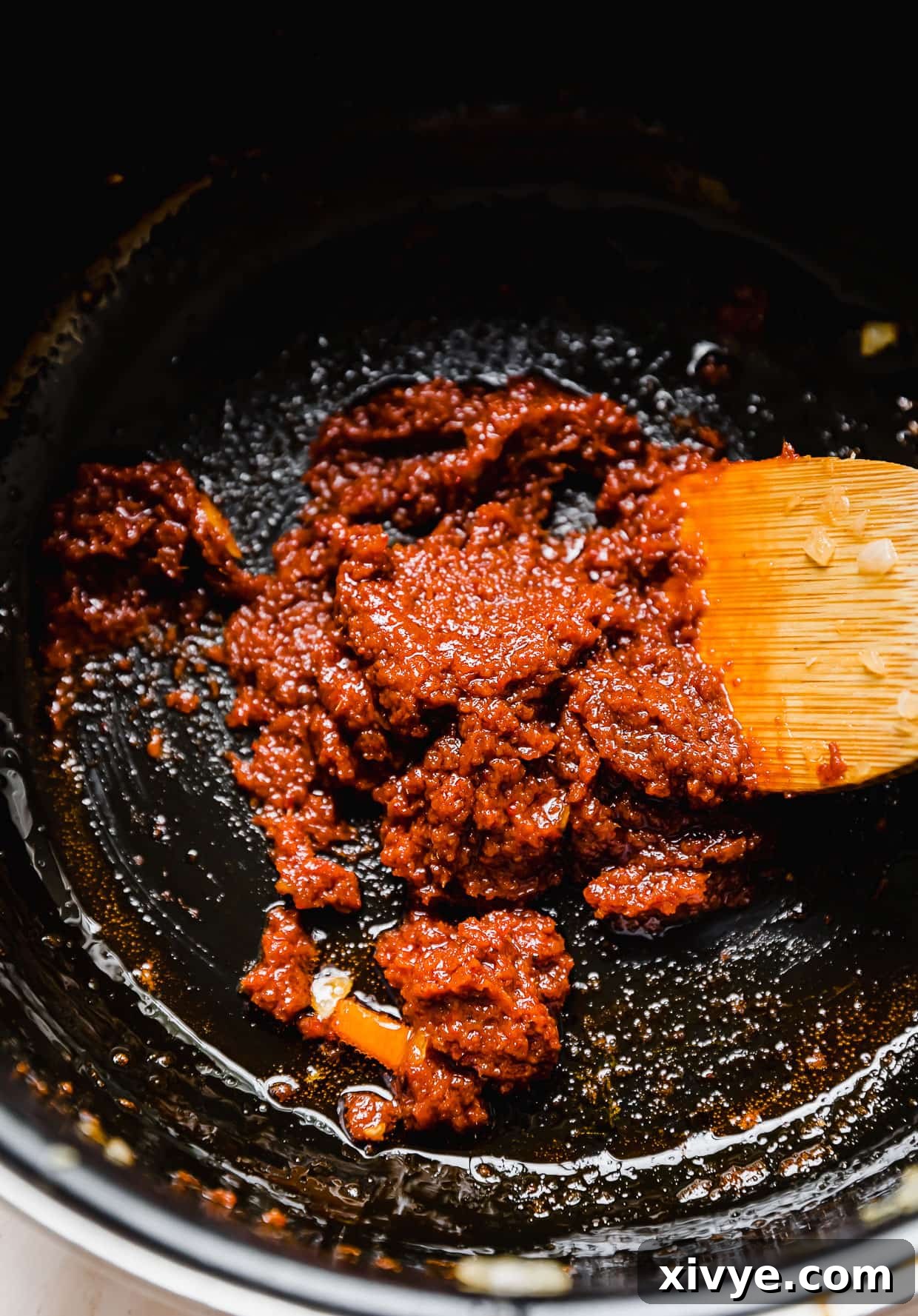
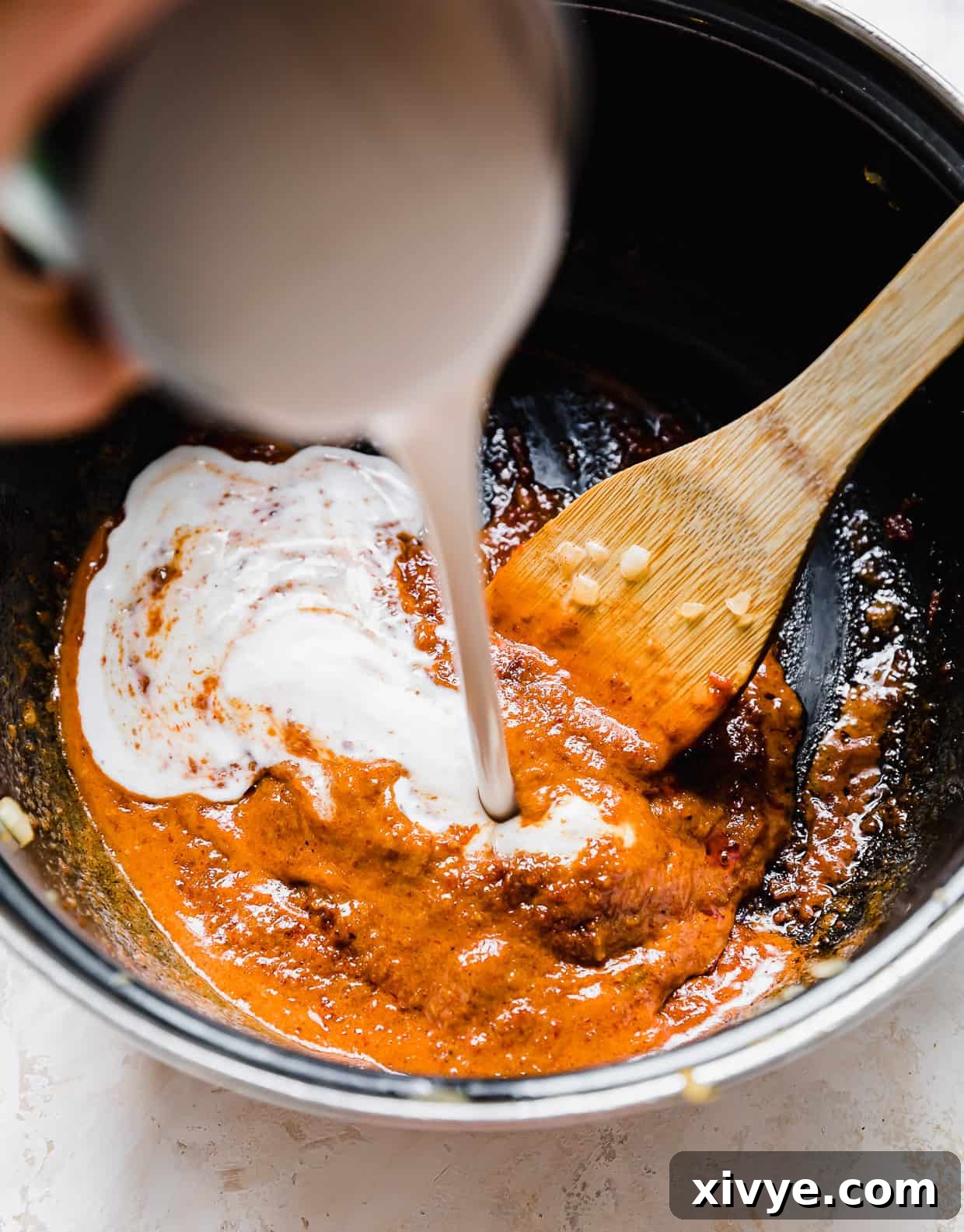
- Create the Aromatic Massaman Curry Base: Add the remaining 1 tablespoon of oil to the same pot. Introduce the 4 ounces of Massaman curry paste. Cook the paste for 2-3 minutes, stirring constantly. This crucial step, known as “blooming” the paste, helps to release its complex aromas and deepens its flavor. Once it starts to brown and becomes intensely fragrant, pour in one can of coconut milk. Stir vigorously until the paste is fully combined and the sauce is smooth. Now, add the fresh grated ginger, lime juice, packed brown sugar, and fish sauce. Stir everything together and bring the mixture to a gentle boil.
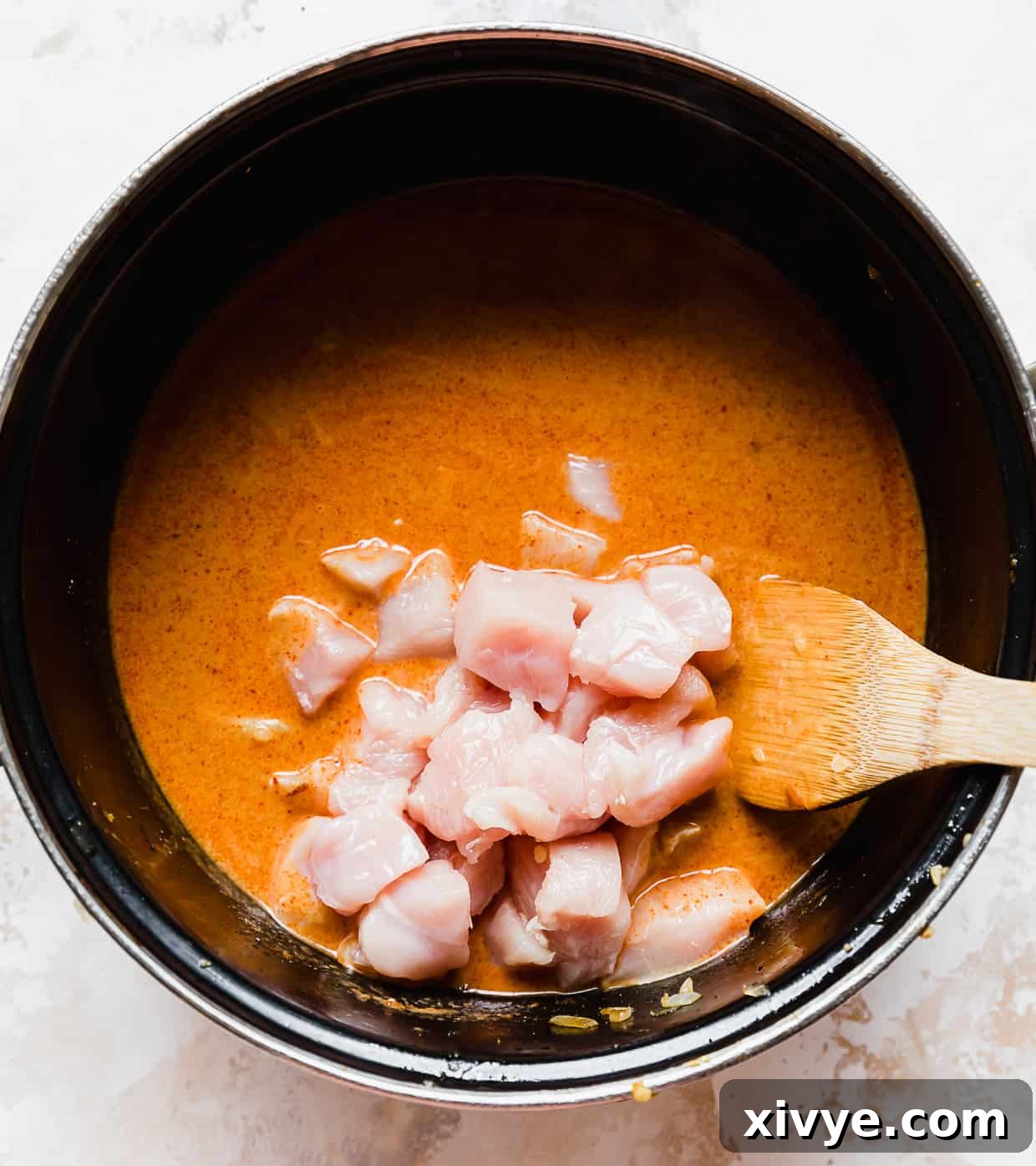
- Cook the Chicken: Once the sauce is boiling, carefully add the bite-sized chicken pieces to the pot. Reduce the heat to a gentle simmer, cover, and let the chicken cook for approximately 6-7 minutes, or until it is thoroughly cooked through and no longer pink. Stir occasionally to ensure even cooking.
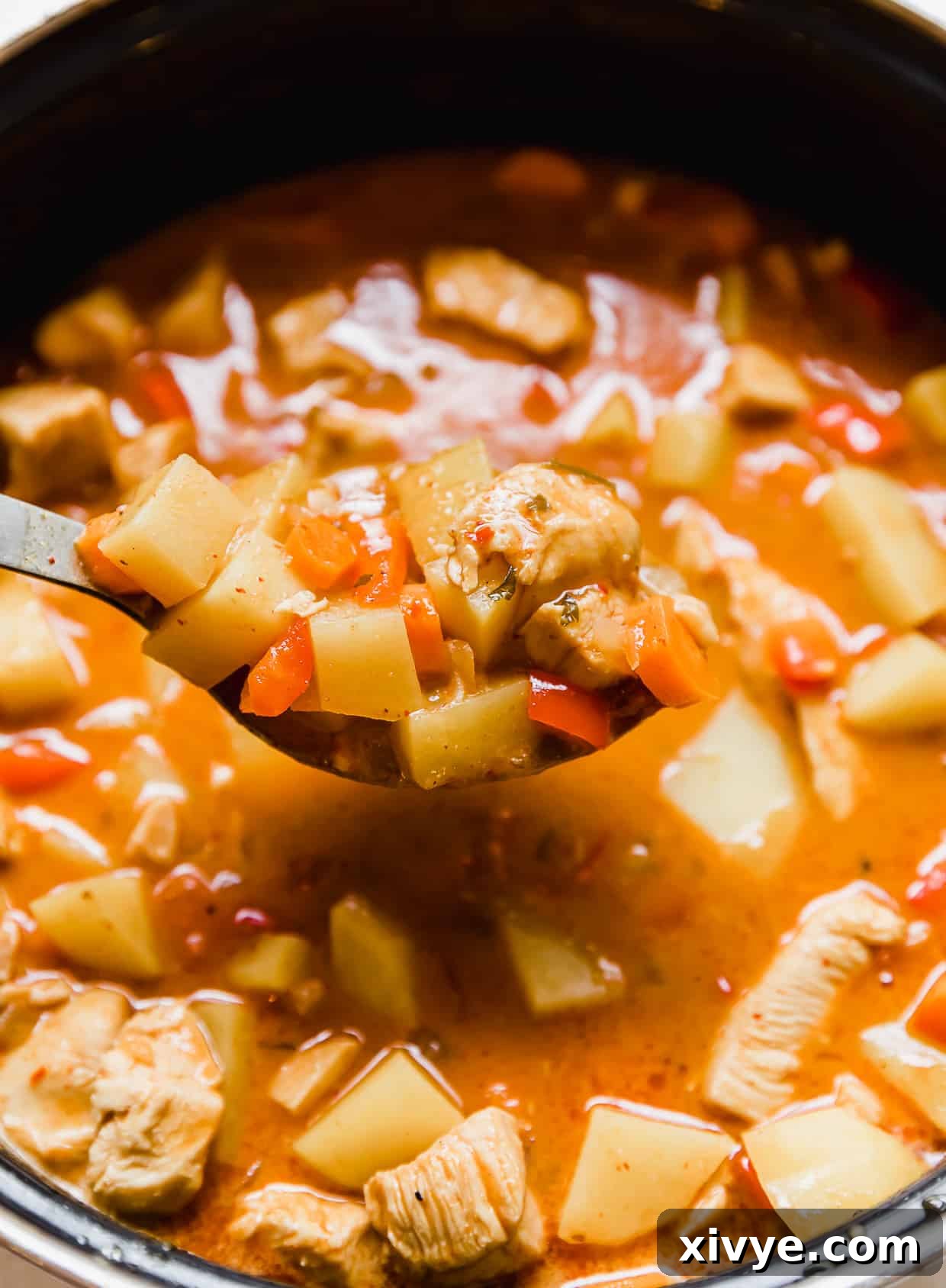
- Combine and Simmer: Now, add the second can of coconut milk to the pot, along with the previously cooked vegetables, the cubed potatoes, dry roasted peanuts, creamy peanut butter, a pinch of red pepper flakes (or more for extra heat), and salt. Stir gently to combine all the ingredients thoroughly within the rich sauce. Bring the mixture to a boil, then immediately reduce the heat to a low simmer. Cover the pot and cook for an additional 15-20 minutes, or until the potatoes are fork-tender and the flavors have melded beautifully.
- Serve and Garnish: Ladle generous portions of this delicious Thai Massaman curry over a bed of fluffy, steaming rice. Garnish with a sprinkle of fresh chopped cilantro and serve with lime wedges on the side for a burst of fresh acidity. Enjoy your flavorful and hearty homemade meal!
Expert Tips for a Perfect Massaman Curry
Crafting the perfect Massaman curry is easier than you think with a few key techniques. Here are my top tips to ensure your homemade version is nothing short of spectacular:
Mastering Mise en Place: The best way to approach any curry recipe is by preparing all your ingredients beforehand. This means opening cans of coconut milk and curry paste, chopping all your vegetables (carrots, onions, bell peppers, garlic, ginger), and cubing your chicken or chosen protein before you even turn on the stove. This streamlined approach makes the cooking process smooth, enjoyable, and stress-free.
Choosing Your Massaman Curry Paste: While you can embark on the rewarding journey of making homemade curry paste, I find that a high-quality store-bought Massaman curry paste simplifies the recipe significantly and helps dinner come together much quicker. You can often find excellent brands online or at well-stocked Asian markets and specialty grocery stores. Always ensure you are purchasing Massaman curry paste, not Massaman curry sauce, as the paste offers a more concentrated and authentic flavor. When you first add it to the hot oil, it will have a very strong, pungent aroma, but once it cooks down and blends with the coconut milk, the flavors will mellow and integrate beautifully into the sauce.
Potato Perfection: While I prefer Yukon Gold potatoes for their soft, almost creamy texture when cooked, the type of potato you use for Massaman curry isn’t strictly critical. Any starchy potato will absorb the flavors well and provide that satisfying heartiness. Just ensure they are cut into consistent 1/2-inch to 1-inch cubes for even cooking.
Customizing the Spice Level: Massaman curry is traditionally milder than many other Thai curries, but you have full control over the heat! If you want to increase the spiciness, simply add more red pepper flakes. For a truly mild, kid-friendly version, follow the recipe as written or omit the red pepper flakes entirely. Taste and adjust until it’s just right for your palate.
The Best Rice Pairing: I highly recommend serving this recipe with jasmine rice. Its delicate fragrance and slightly sticky texture are the perfect complement to the rich curry sauce. For a healthier, nutty alternative, brown jasmine rice is also an excellent choice. Basmati rice can also be used, offering a lighter, drier texture.
Protein Flexibility: While chicken is my go-to for this recipe, Massaman curry is wonderfully adaptable to other proteins. Feel free to substitute with beef, lamb, or shrimp. If using beef or lamb, opt for stewing cuts and allow for a longer simmering time (up to 1-1.5 hours) to ensure tenderness. Shrimp cooks very quickly, so add it only in the last 5 minutes of simmering to prevent overcooking. For a vegetarian Massaman curry, firm tofu, cubed and pan-fried until golden, makes an excellent substitute for chicken.
Garnish with Freshness: Don’t underestimate the power of garnishes! A generous sprinkle of fresh cilantro adds a burst of herbaceous flavor and bright color. Providing lime wedges allows diners to squeeze fresh lime juice over their curry, adding a zesty finish that truly elevates the dish.
Make Ahead, Storing, and Freezing Your Massaman Curry
This chicken Massaman curry recipe is an excellent candidate for making ahead, as the flavors often deepen and meld even more beautifully overnight. Prepare it a day in advance and store it in the refrigerator for an even richer taste experience.
To store any leftovers, transfer the Thai Massaman curry into an airtight container and keep it in the fridge for 3-4 days. It reheats wonderfully on the stovetop over medium-low heat or in the microwave.
For longer storage, Massaman curry freezes remarkably well. Simply transfer cooled curry into a freezer-safe bag or an airtight container, leaving a little headspace, and store it in the freezer for up to 1 month. When you’re ready to enjoy it, remove the curry from the freezer and let it thaw in the refrigerator overnight. Reheat gently in a large pot on the stove until warmed through, or microwave in batches. Be aware that the carrots and potatoes might become a tad softer in texture after freezing and thawing, but the delicious flavor will remain intact.
Massaman Curry Recipe FAQs
Massaman curry is a celebrated Thai dish, uniquely characterized by its rich blend of Thai, Malay, and Indian culinary influences. The name “Massaman” is believed to derive from “Mosulman,” an old Siamese term for Muslim, reflecting its historical connection to Muslim traders who introduced Indian spices to Thailand. This curry distinguishes itself with a harmonious balance of sweet, savory, tangy, and mildly spicy notes, achieved through a unique paste that includes warm spices like cardamom, cinnamon, and cloves. While most commonly prepared with chicken, it can also feature beef, duck, goat, lamb, shrimp, or pork. Our chicken Massaman curry recipe showcases this dish perfectly, often becoming an all-time favorite due to its creamy texture and complex aroma.
Generally, all the core ingredients in this recipe, such as coconut milk, chicken, vegetables, and most spices, are naturally gluten-free. However, it is absolutely crucial to double-check the labels of your Massaman curry paste and fish sauce. While fish sauce is typically gluten-free, some brands may add wheat or other gluten-containing ingredients as thickeners or flavor enhancers. Similarly, certain store-bought curry pastes might contain hidden gluten. Always read the ingredient list carefully to ensure your curry is entirely wheat-free and gluten-free if catering to dietary restrictions.
Massaman curry paste is a unique blend among Thai curry pastes, known for its distinct aromatic profile. Unlike red or green curry pastes, Massaman paste incorporates a blend of warm, earthy dried spices that are common in Indian and Persian cuisine. These include cumin, cinnamon, cardamom, star anise, bay leaves, cloves, nutmeg, and mace. These fragrant spices are then combined with classic Thai ingredients such as coriander seeds, lemongrass, chili peppers for a mild heat, pungent shrimp paste, galangal (a cousin of ginger), white pepper, shallots, and garlic. This intricate combination creates a paste that is incredibly flavorful, rich, and fundamental to the unique taste of Massaman curry.
Massaman curry originates from Thailand but is a wonderful example of culinary fusion, boasting significant influences from Indian and Persian cuisines. Its unique blend of spices traces back to trade routes and cultural exchanges. The curry’s base typically uses a red-style curry paste, characteristic of Thai cooking, but it is enriched with a distinct array of dried spices like cumin, cinnamon, nutmeg, and coriander, which are staples in Indian cooking. This harmonious blend of regional flavors makes Massaman curry a truly global dish.
Finding Massaman curry paste is easier than you might think! Many home cooks, myself included, choose to purchase it online for convenience, saving trips to multiple grocery stores. Reputable brands are readily available through online retailers. Alternatively, you can typically find Massaman curry paste at most Asian grocery stores or in the Asian section of larger specialty grocery stores. A quick reminder: always ensure you select Massaman curry paste and not the pre-made sauce, as the paste offers a more concentrated and authentic flavor profile for your homemade curry.
Absolutely! Massaman curry freezes beautifully, making it an excellent meal prep option. To freeze, simply allow the curry to cool completely, then transfer it into an airtight, freezer-safe container or heavy-duty freezer bag. It can be stored in the freezer for up to 1 month. When you’re ready to enjoy it, remove the curry from the freezer and let it thaw in the refrigerator overnight. Once thawed, you can warm it in a microwave-safe bowl or gently reheat it in a pot on the stove until hot. The only minor difference you might notice is that the potatoes and carrots may become a tiny bit softer in texture after the freezing and thawing process, but the rich, complex flavors will remain just as delicious as fresh.
Massaman curry is generally considered one of the milder Thai curries. Its flavor profile leans more towards rich, aromatic, and slightly sweet notes rather than intense heat. However, the spice level is entirely customizable to your preference. The red pepper flakes in the recipe allow you to adjust the heat; omit them for a very mild curry, add a pinch for a subtle warmth, or increase the amount if you desire more spice. Always taste and adjust to achieve your perfect balance.
Massaman curry stands out from other popular Thai curries, such as Red and Green curry, primarily due to its unique spice blend and flavor profile. Red and Green curries typically feature a brighter, more pungent flavor from fresh herbs like lemongrass, galangal, and kaffir lime leaves, and are often much spicier due to a higher concentration of fresh chilies. Massaman, however, incorporates a distinct array of dried, warm Indian spices like cardamom, cinnamon, cloves, and star anise, giving it a richer, earthier, and often milder taste. It also traditionally includes potatoes and peanuts, which are rare in other Thai curries, contributing to its signature creamy texture and nutty flavor.
The most traditional and popular accompaniment for Massaman curry is fragrant jasmine rice, which perfectly soaks up the rich sauce. However, there are many delicious options! Steamed brown rice or Basmati rice also work well. For bread, warm Homemade Naan or Roti are excellent choices for scooping up every last drop of the flavorful sauce. To add freshness and balance, consider serving a simple side salad, a cooling cucumber salad, or some lightly steamed green vegetables like bok choy or green beans.
More Delicious Thai & Indian-Inspired Recipes
- Hearty Chickpea Curry
- Flavorful Curry Chicken and Rice
- Creamy Indian Butter Cauliflower
- Classic Indian Butter Chicken
- Easy Homemade Naan Bread
- Quick & Delicious Peanut Noodles
- Zesty Sesame Noodles
Did you make this recipe? I’d love to hear about it! Leave a star rating and review below or scroll to the recipe card and do so there.
Stay up-to-date by following us on Instagram, TikTok, Facebook, and Pinterest.
Print
SaveSaved!
Review
Thai Massaman Curry
 Whitney Wright
Ingredients
- 2 tablespoons vegetable oil
- 3 carrots – peeled and sliced into ⅛″ coins
- 1 red bell pepper – diced
- 1 yellow onion – diced
- 1 garlic clove – minced (about 1 teaspoon)
- 4 oz Massaman curry paste – (ensure it’s paste, not sauce)
- 2 cans full-fat coconut milk – (13.6 oz cans, for maximum creaminess)
- 2 tablespoons fresh lime juice
- ½ teaspoon fresh ginger – grated
- 2 tablespoons fresh cilantro – chopped (for the sauce, plus more for garnish)
- 2 tablespoons brown sugar – packed
- 1 tablespoon fish sauce – (check for gluten-free if needed)
- 1 lb boneless, skinless chicken breast or thighs – cut into bit-size pieces
- 4 Yukon Gold potatoes – peeled and cut into ½″-1″ inch cubes
- ½ cup dry roasted peanuts – (plus extra for garnish)
- pinch red pepper flakes – (adjust to desired spice level, omit for mild)
- 1 tablespoon creamy peanut butter – (adds richness and nutty flavor)
- ½ teaspoon salt – (or to taste)
- fresh cilantro – for garnish
- cooked rice – for serving, preferably jasmine rice or another aromatic variety
- lime wedges – for serving
Equipment
-
Cutting Board
-
Garlic Mincer
-
Large Pot or Dutch Oven (e.g., Le Creuset)
Instructions
-
Heat 1 tablespoon of vegetable oil in a large pot or Dutch oven over medium heat. Add the diced yellow onion, diced red bell pepper, and sliced carrots. Sauté, stirring occasionally, for 6-8 minutes until the vegetables begin to soften and the onion becomes translucent. Stir in the minced garlic and cook for 1 minute more until fragrant. Transfer the cooked vegetables to a separate bowl and set aside.
-
Add the remaining 1 tablespoon of oil to the now empty pot. Add the Massaman curry paste and cook for 2-3 minutes, stirring continuously, until it starts to brown and becomes intensely aromatic. This step is crucial for deepening the flavor of the paste.
-
Pour in one can of full-fat coconut milk to the curry paste, stirring vigorously until thoroughly blended and smooth. Incorporate the fresh lime juice, grated ginger, 2 tablespoons of chopped cilantro, brown sugar, and fish sauce. Stir well to combine all ingredients, then bring the mixture to a gentle boil.
-
Once the sauce is boiling, add the bite-sized chicken pieces to the pot. Reduce the heat to a simmer, cover the pot, and cook for 6-7 minutes, or until the chicken is cooked through and white throughout.
-
Add the second can of coconut milk, the reserved cooked vegetables, cubed potatoes, dry roasted peanuts, creamy peanut butter, a pinch of red pepper flakes (if using), and salt to the pot. Stir gently to ensure all ingredients are well combined in the rich sauce.
-
Cover the pot again. Allow the curry to simmer for 15-20 minutes, or until the potatoes are fork-tender and the sauce has thickened slightly. The flavors will deepen beautifully during this simmering process.
-
Serve your homemade Thai Massaman curry warm over a bed of fragrant cooked rice. Garnish generously with extra fresh cilantro and additional dry roasted peanuts, and serve with lime wedges for an optional squeeze of fresh citrus. Enjoy!