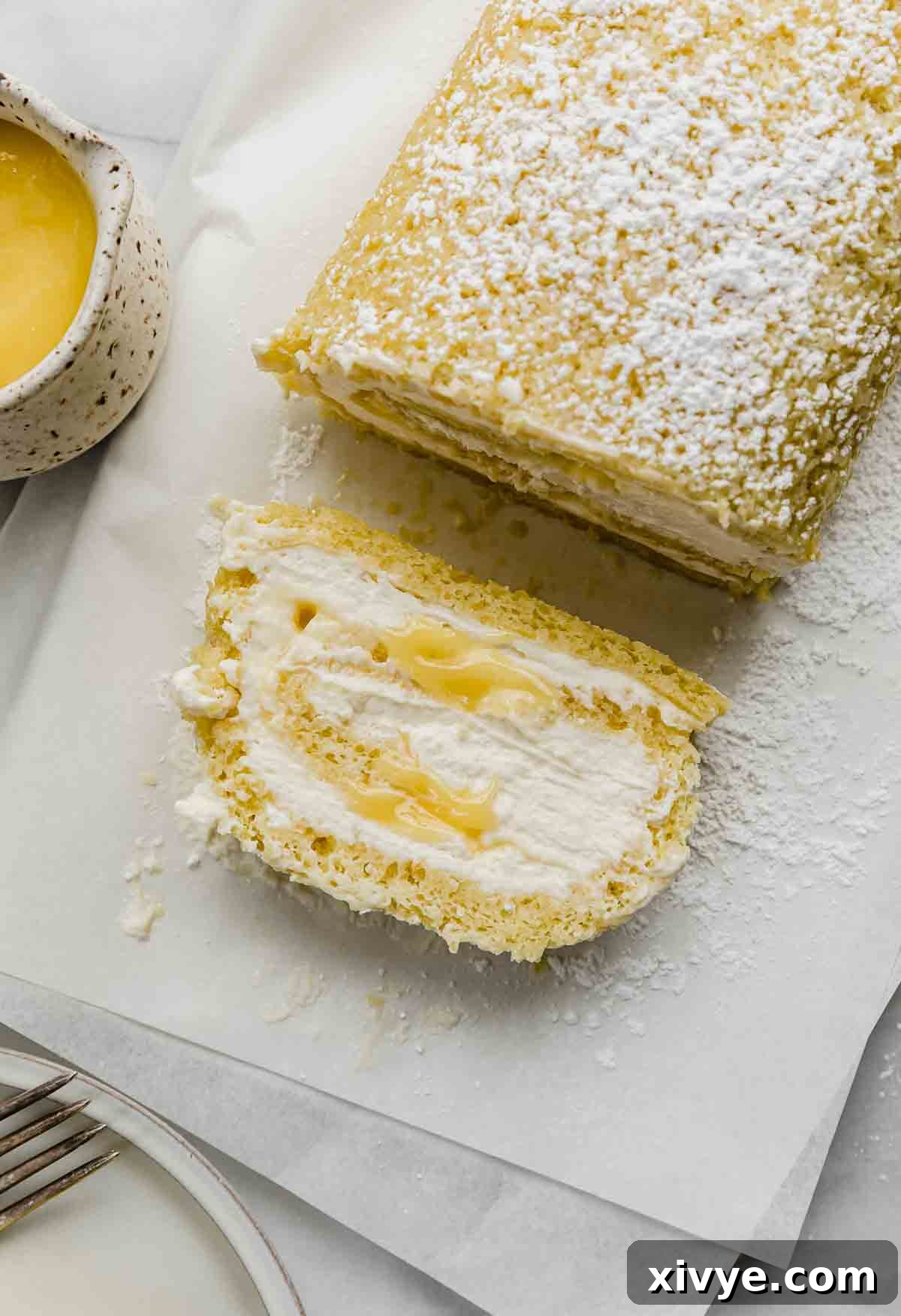
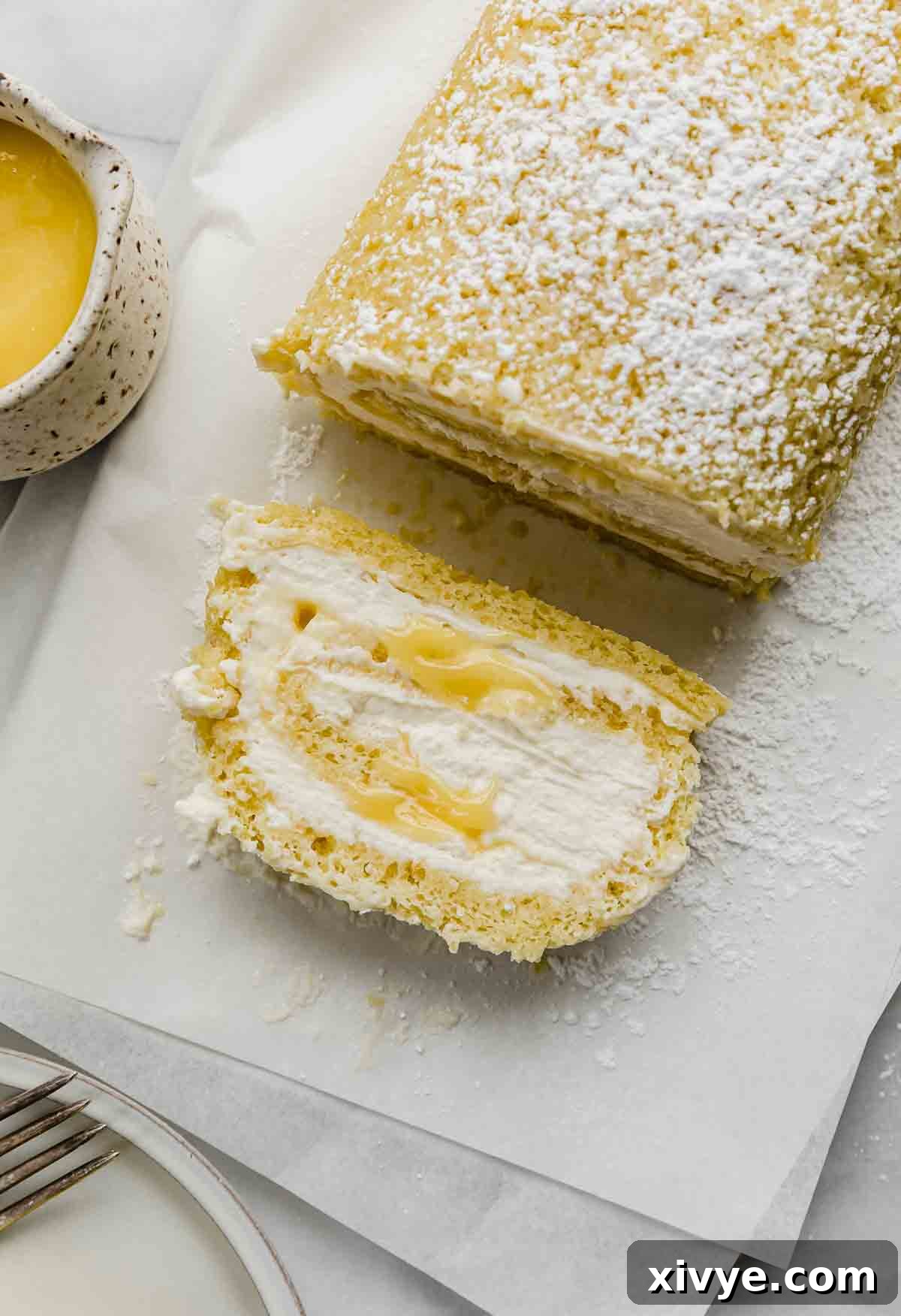
Prepare to tantalize your taste buds with our exquisite Lemon Swiss Roll. This delightful dessert is a harmonious symphony of flavors and textures, featuring a soft, airy, and delicately citrus-infused sponge cake. It’s lovingly rolled around a lavish filling of sweet, creamy mascarpone and a vibrant, tangy homemade lemon curd. Each slice promises a refreshing burst of lemon and a luxurious creaminess that will make every occasion feel special. This recipe guides you through creating a visually stunning and incredibly delicious cake roll that’s perfect for springtime gatherings, summer parties, or any time you crave a bright, elegant treat.
The secret to the unparalleled zest and freshness of this Lemon Swiss Roll lies in its stellar filling, specifically my acclaimed Most Amazing Lemon Curd recipe. Crafting your own lemon curd at home is a game-changer; it’s surprisingly simple, offers a depth of flavor far superior to store-bought varieties, and allows you to control the balance of tartness and sweetness to your preference. This homemade touch elevates the entire dessert, ensuring a truly authentic and unforgettable lemon experience.
Why This Lemon Swiss Roll Recipe is a Must-Try
There are several compelling reasons why this particular Lemon Swiss Roll recipe stands out, promising a successful and supremely delicious outcome for even novice bakers:
- Rich and Creamy Mascarpone Filling: The heart of this lemon Swiss roll’s luxurious texture is its rich mascarpone cream. Unlike lighter whipped creams, mascarpone cheese provides an incredible density and silken mouthfeel that adds substantial body to the filling. Its natural sweetness and slight tang perfectly complement the vibrant lemon notes, ensuring the filling remains thick, stable, and wonderfully creamy without being overly heavy. This balance makes each bite a truly indulgent experience, showcasing a sophisticated flavor profile.
- Vibrant Homemade Lemon Curd: Utilizing freshly made lemon curd is a non-negotiable for achieving the most authentic and intense lemon flavor. My homemade lemon curd recipe strikes the ideal balance between zesty tartness and sugary sweetness, creating a bright and invigorating contrast to the mascarpone cream. This not only enhances the overall citrus profile of the roll but also adds a beautiful golden streak to its interior, making it as appealing to the eye as it is to the palate.
- Butter-Free Sponge for Perfect Rolling: One of the biggest challenges in making a Swiss roll is preventing cracks during the rolling process. This recipe ingeniously bypasses this issue by formulating a sponge cake batter without butter. A butter-free genoise-style sponge relies on air beaten into eggs for its lift, resulting in a cake that is exceptionally light, pliable, and moist. This inherent flexibility significantly reduces the likelihood of the cake cracking or breaking when gently rolled, making the process much more forgiving and ensuring a beautifully smooth spiral every time.
Essential Ingredients for Your Lemon Swiss Roll
Understanding the role of each ingredient is key to mastering this Lemon Swiss Roll. Here’s a closer look at what you’ll need and why it matters:
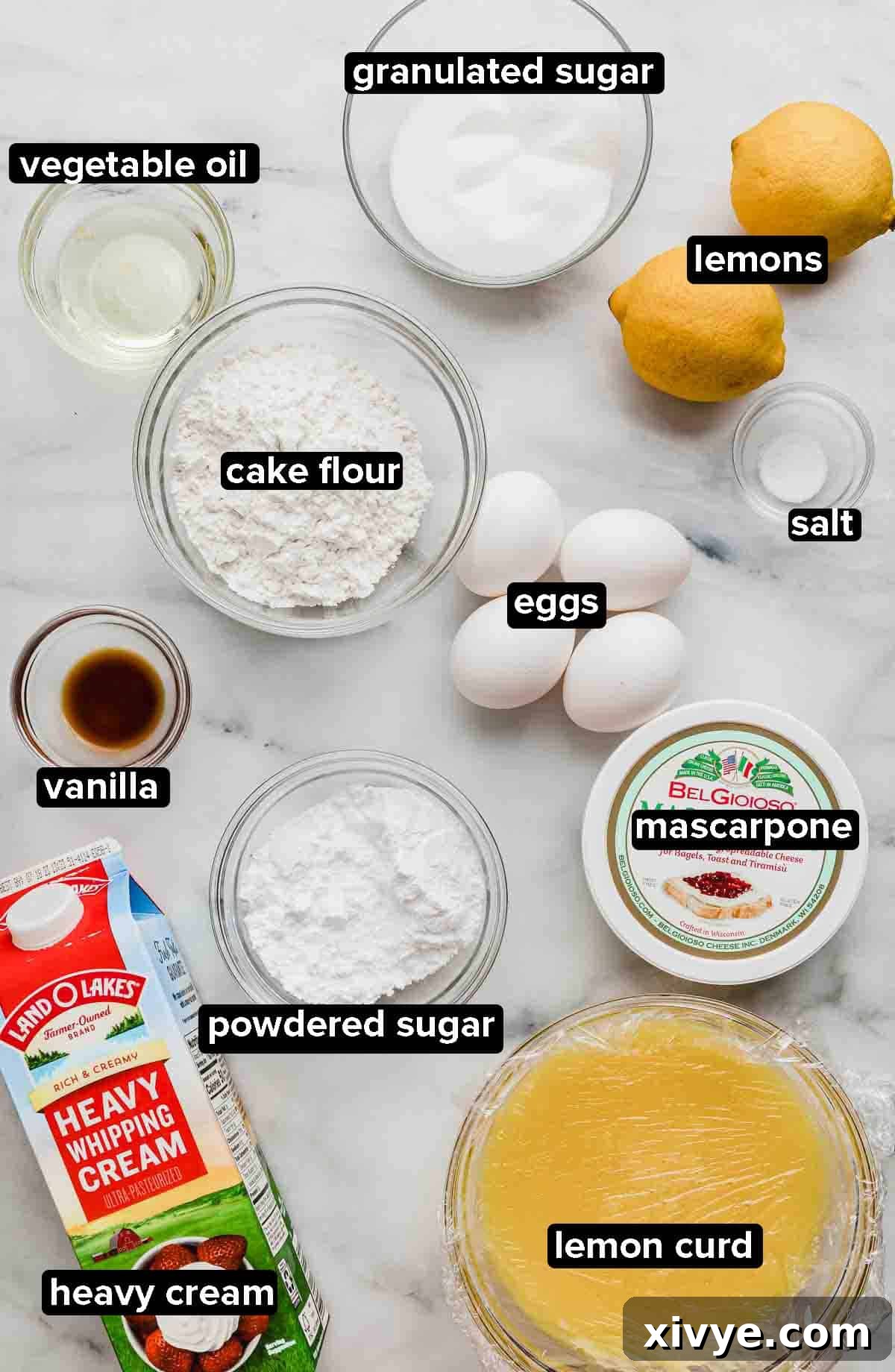
- Large Eggs: These are the true unsung heroes of our lemon sponge cake. Unlike many cakes that rely on baking powder or soda, this Swiss roll is a génoise, meaning its airy, delicate texture comes entirely from the volume of air beaten into the eggs and sugar. Using large, fresh eggs at room temperature will yield the best volume and stability in your foam, which is crucial for a light and flexible cake that won’t crack.
- Granulated Sugar: Beyond simply adding sweetness, granulated sugar plays a vital structural role when beaten with the eggs. It helps stabilize the egg foam, contributing to that desired light and fluffy texture, and ensures the cake remains moist and tender.
- Lemon Zest: This is where the primary lemon flavor for the sponge comes from. Adding fresh lemon zest directly into the egg and sugar mixture allows its aromatic oils to infuse deeply into the batter. Always zest only the bright yellow outer layer, avoiding the bitter white pith underneath, to achieve a pure, delightful lemon essence in every bite of the cake.
- Lemon Curd: The vibrant, tangy centerpiece of our filling. I highly recommend using about ½ to ⅔ cup of homemade lemon curd for the best flavor and texture. While you might be tempted to add more, exceeding this amount can cause the curd to seep out during the rolling process, making the final presentation messy. If using store-bought, opt for a high-quality brand to ensure superior taste.
- Cake Flour: This ingredient is non-negotiable for achieving the signature light and tender crumb of a perfect Swiss roll sponge. Cake flour has a lower protein content and finer texture compared to all-purpose flour. This results in less gluten development, leading to a softer, more delicate, and more pliable cake that is significantly less prone to cracking when rolled. If you don’t have cake flour, you can create a substitute by removing 2 tablespoons of all-purpose flour from each cup and replacing it with 2 tablespoons of cornstarch, then sifting well.
- Mascarpone Cheese: A key component of our rich filling, mascarpone is an Italian cream cheese known for its exceptionally high fat content and velvety texture. It provides an unparalleled richness and creamy mouthfeel, lending substance and stability to the whipped cream filling. Ensure it’s cold but not rock hard when you start mixing.
- Heavy Cream: When beaten with the mascarpone and powdered sugar, cold heavy cream transforms into a luxurious, stable whipped cream filling. It adds airiness and volume, creating that perfect light-yet-rich consistency that holds its shape beautifully when the cake is sliced. Always use very cold heavy cream for the best whipping results.
- Vegetable Oil and Salt: A small amount of vegetable oil adds a touch of moisture and suppleness to the cake, further aiding in its flexibility. A pinch of salt perfectly balances the sweetness and enhances all the other flavors, making them pop.
- Powdered Sugar: Used for dusting the towel to prevent sticking, and as a sweetener in the mascarpone cream. Its fine texture ensures a smooth, lump-free filling and a beautiful finish for the cake.
How to Bake the Perfect Lemon Swiss Roll: A Detailed Guide
Follow these meticulously detailed steps to ensure your Lemon Swiss Roll turns out perfectly moist, flavorful, and crack-free. Precision and care are your best friends in this baking adventure!
- Prepare Your Oven and Pan: Begin by preheating your oven to 350°F (175°C). This ensures a consistent baking temperature from the moment your cake enters the oven. Next, prepare a 10×15-inch jelly roll pan. Lightly grease the pan, then line it completely with parchment paper, allowing a slight overhang on the longer sides to help with lifting. Crucially, grease the parchment paper as well. This double greasing method is vital for easy release of the delicate sponge cake later.
- Craft the Luminous Lemon Sponge Batter: In a large, clean mixing bowl, combine the 4 large eggs, ⅔ cup granulated sugar, and 1 tablespoon of fresh lemon zest. Using an electric mixer (or a stand mixer fitted with a whisk attachment), beat this mixture on medium-high speed for a full 3-4 minutes. This extended beating time is critical; you’re incorporating a significant amount of air into the eggs, which acts as the primary leavening agent for this génoise-style sponge. The mixture should become pale yellow, thick, and at least double in volume, forming a “ribbon” when the whisk is lifted.
- Incorporate Wet and Dry Ingredients Gently: Reduce the mixer speed to low and briefly add the 2 tablespoons of vegetable oil and a pinch of salt, mixing just until combined. Next, add the ¾ cup of cake flour directly into the wet ingredients. Switch to a rubber spatula and gently fold the flour into the batter using a circular motion from the bottom to the top. The goal here is to combine the ingredients without deflating the precious air you’ve just incorporated. Overmixing will lead to a tough, flat cake, so be patient and fold just until no streaks of flour remain.
- Spread Batter Evenly into Prepared Pan: Carefully pour the airy lemon sponge batter into your prepared jelly roll pan. Using an offset spatula or angled spatula, gently spread the batter from the center outwards, ensuring it forms an even layer that reaches all corners of the pan. An even thickness is key for uniform baking and a consistent roll.
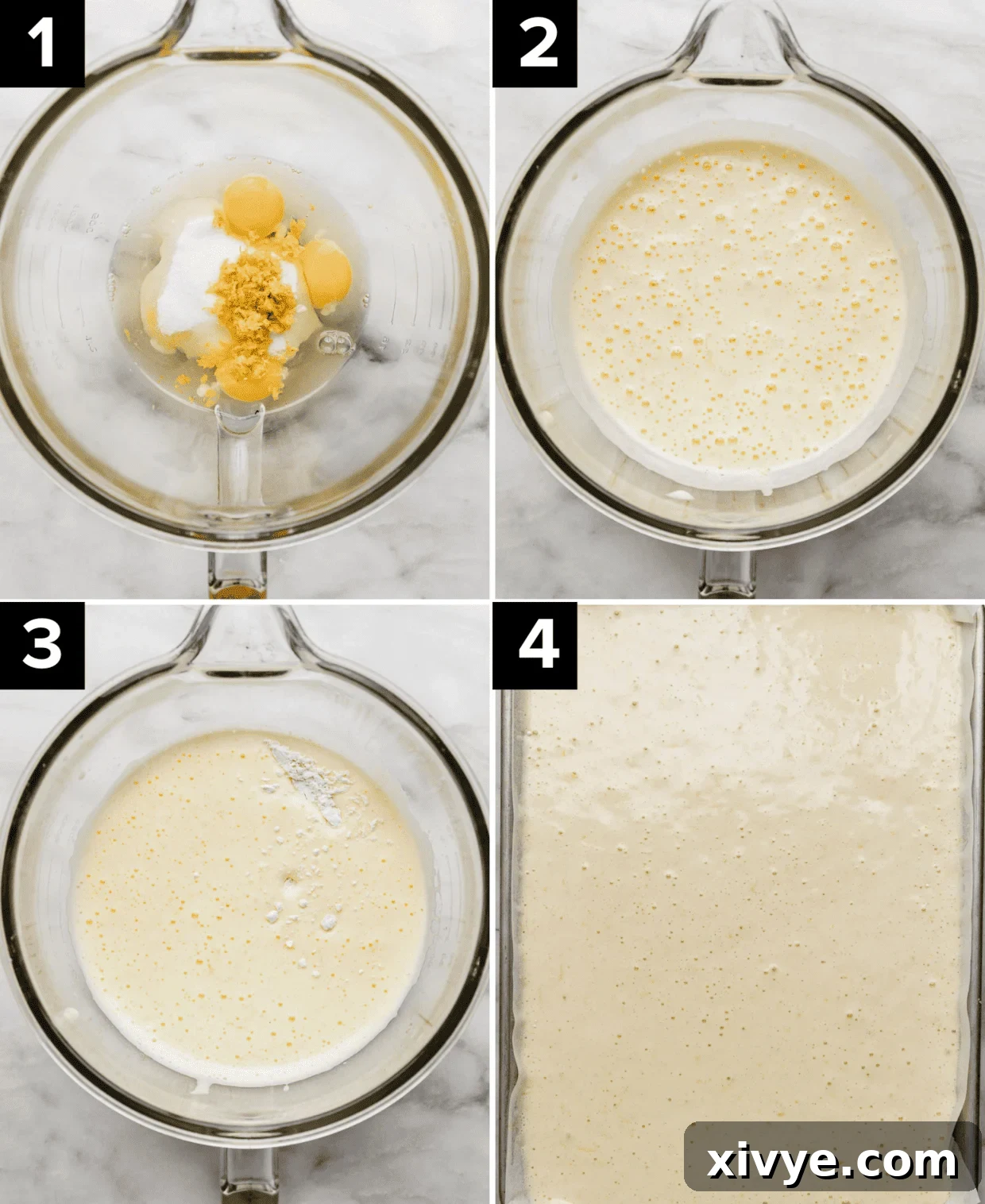
- Bake to Golden Perfection: Transfer the pan to your preheated oven and bake for 10-12 minutes. The cake is ready when the edges are lightly golden, and the center springs back gently when lightly touched with your fingertip. Do not overbake, as an overly dry cake will be more prone to cracking during rolling.
- Prepare the Rolling Towel: While your cake is in the oven, lay a clean, lint-free kitchen towel (approximately the size of your cake) flat on a clean countertop. Generously sprinkle this towel with powdered sugar. This powdered sugar layer is crucial; it prevents the warm cake from sticking to the towel and aids in the rolling process.
- Immediate Transfer to the Towel: As soon as the cake emerges from the oven, immediately and very carefully invert the hot cake directly onto the prepared, sugar-dusted kitchen towel. This step must be done swiftly while the cake is still warm and flexible.
- Peel and Dust, Then Roll While Warm: Gently peel off the parchment paper from the bottom of the cake. If any part resists, allow it a moment to cool slightly, then try again. Once peeled, dust the exposed top surface of the cake with another light sprinkle of powdered sugar. Starting from one of the shorter ends of the cake, carefully begin to roll the cake (along with the towel) into a tight spiral. Take your time and be gentle. Allow the rolled cake, still encased in the towel, to cool completely to room temperature. This gradual cooling in a rolled state “trains” the cake to hold its spiral shape, significantly minimizing cracks later.
- Prepare the Velvety Mascarpone Cream Filling: While the cake cools, it’s time to whip up the luxurious mascarpone cream. In the bowl of a stand mixer fitted with the paddle attachment (or using a hand mixer), combine 4 oz (113g) cold mascarpone cheese, ½ cup powdered sugar, and 1 teaspoon vanilla extract. Mix on medium speed until these ingredients are just combined and smooth. Then, with the mixer still running on medium speed, slowly pour in 1 cup of very cold heavy cream. Continue mixing until the cream becomes thick and holds stiff peaks. Be mindful not to overbeat, as mascarpone can separate if overworked. The consistency should be stable and spreadable.
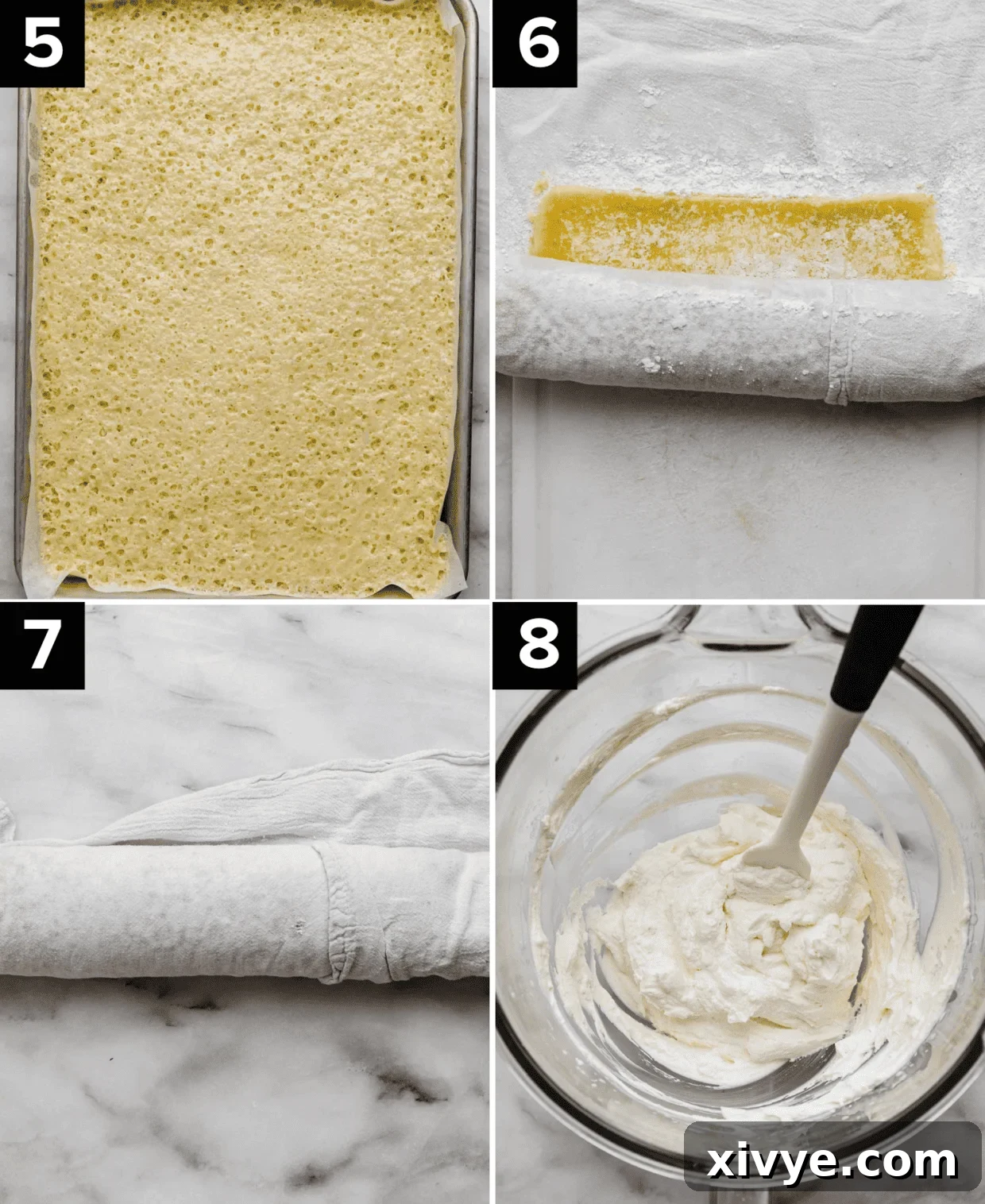
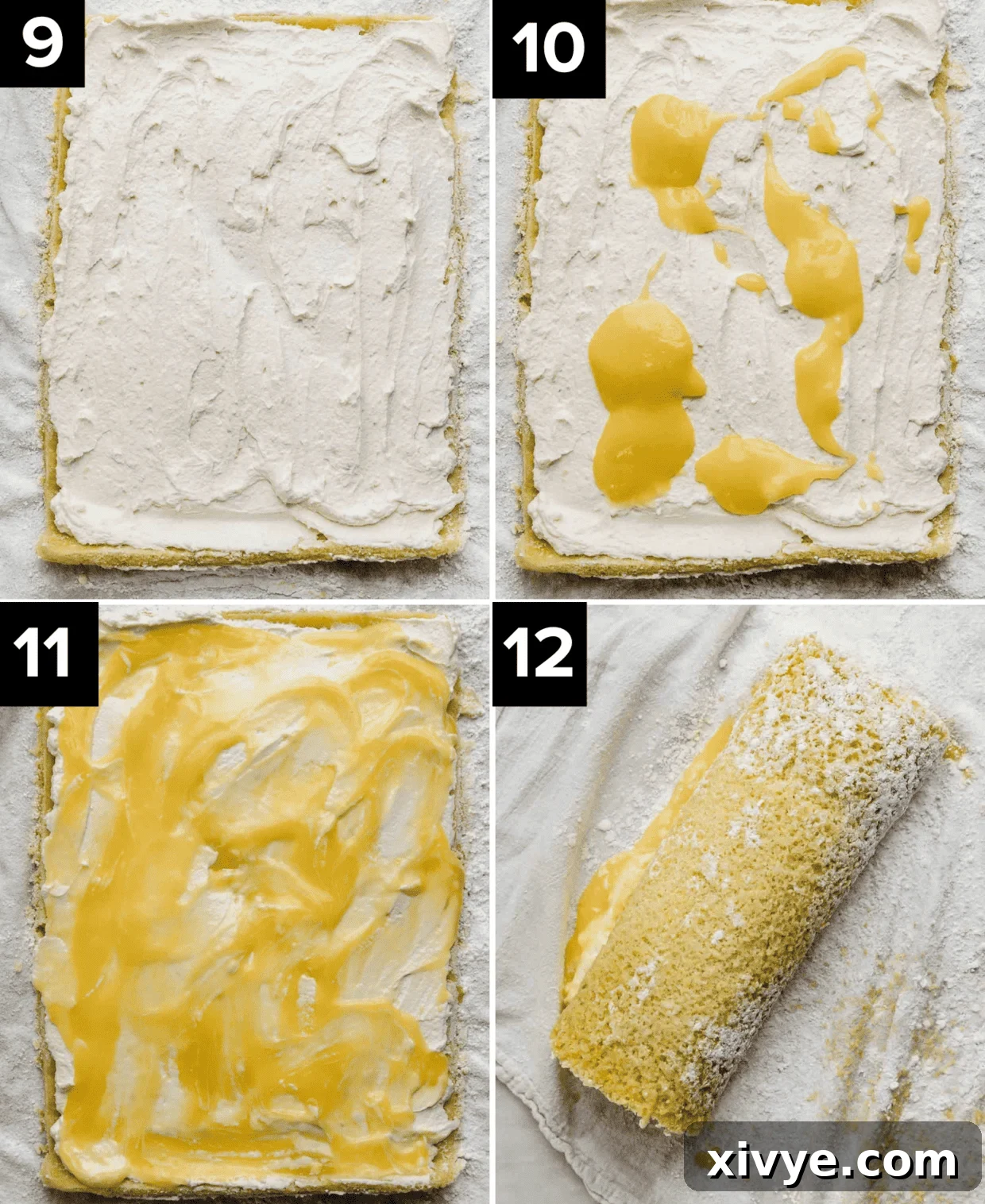
- Fill the Cooled Lemon Swiss Roll: Once the cake has completely cooled to room temperature, carefully unroll it from the towel onto a clean surface or a new piece of parchment paper. Spread the prepared mascarpone whipped cream evenly over the entire surface of the cake, leaving a small border (about ½ inch) along the short end where you will finish rolling. Drizzle the ½ cup of homemade lemon curd over the mascarpone cream. Using the back of a spoon or a small offset spatula, gently spread the lemon curd into the cream layer, creating beautiful swirls and ensuring every bite gets a taste of that tangy goodness.
- Roll and Chill for Perfection: With the filling evenly distributed, carefully begin to re-roll the cake from the short side, this time without the kitchen towel. Roll it gently but firmly, aiming for a tight spiral. Once fully rolled, wrap the entire lemon cake roll tightly in plastic wrap. This step helps the roll maintain its shape and allows the filling to set properly. Chill the wrapped Swiss roll in the refrigerator for at least 30-60 minutes, or even longer, before serving. This chilling period is crucial for the cake to firm up, making it much easier to slice neatly without the filling oozing out.
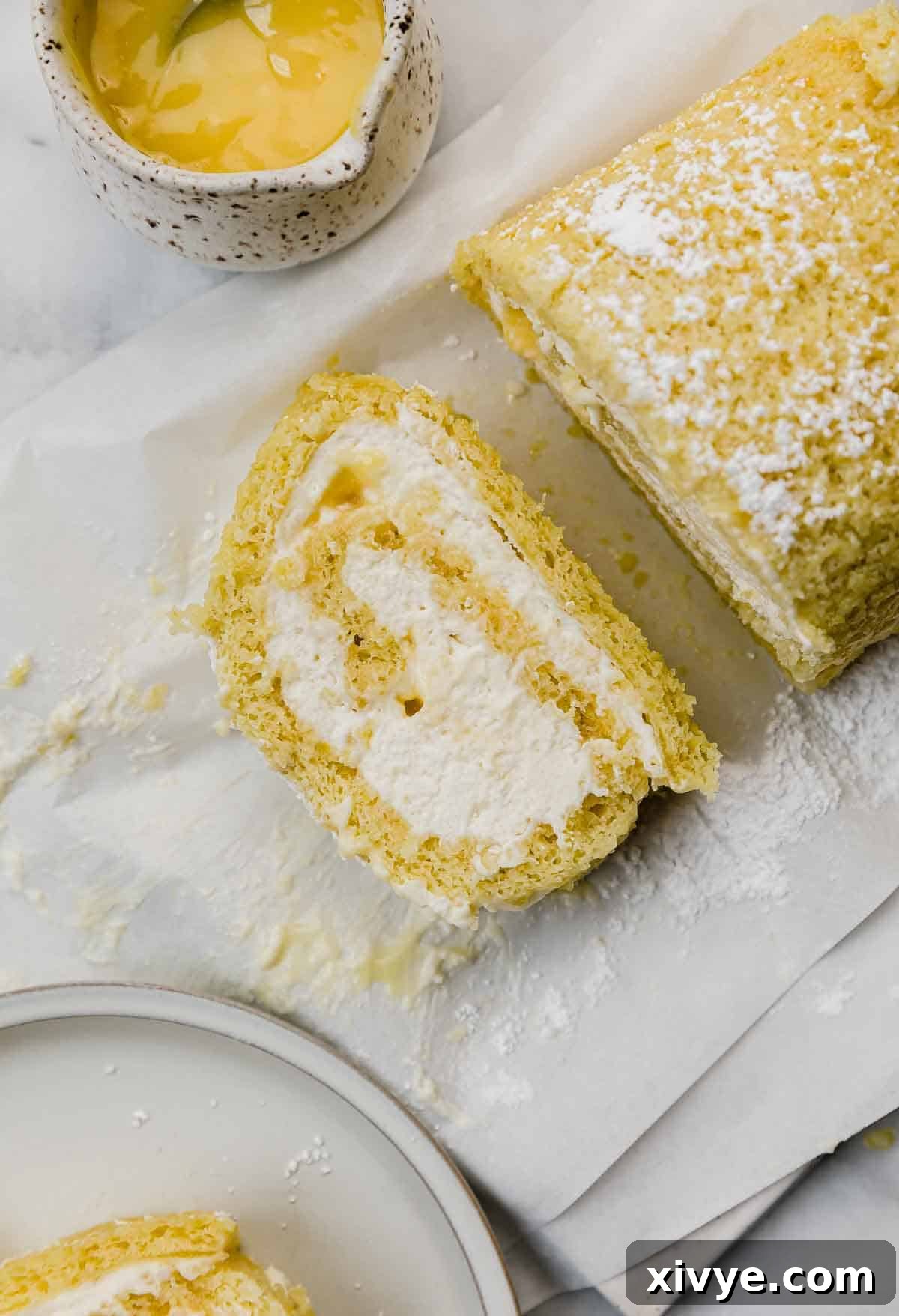
- Serve and Enjoy Your Masterpiece: When you’re ready to serve, unwrap the chilled Lemon Swiss Roll. For an elegant finish, dust the top generously with additional powdered sugar. Using a sharp, serrated knife, slice the roll into individual portions. Clean the knife after each slice for the cleanest cuts. Present your stunning Lemon Swiss Roll and savor the delightful harmony of sweet, creamy, and tangy flavors!
Expert Tips for a Flawless Lemon Swiss Roll
Achieving a perfect Lemon Swiss Roll is entirely within your reach with these expert tips and insights. Pay close attention to these details for a truly successful baking experience:
- Mastering the Egg Foam (Gênoise Technique): Our cake relies on the volume of air incorporated into the eggs, a hallmark of the génoise sponge. It’s imperative to beat the eggs and sugar for the full 3-4 minutes, or even a bit longer, until the mixture is truly light, thick, and forms a distinct “ribbon” when the whisk is lifted. This stable, airy foam is what gives the cake its lift and tender texture, so don’t cut this step short. Using room-temperature eggs will help them whip up to maximum volume more easily.
- Gentle Flour Folding is Key: Once the flour is introduced, the most common pitfall is deflating the carefully built egg foam. Use a rubber spatula and a light hand, folding the flour in gradually using a “cut and fold” technique. This means cutting down through the center of the batter and then folding it up and over, rotating the bowl as you go. The goal is to just combine the flour without overmixing, preserving as much air as possible for a soft, pliable cake.
- Lemon Curd Quantity Matters: While the temptation to add extra lemon curd is strong, resist it! Using about ½ to ⅔ cup is the sweet spot. Excessive lemon curd, due to its thinner consistency compared to the mascarpone cream, is very prone to oozing out the sides as you roll the cake, leading to a messy presentation and potential structural issues. If you want more lemon flavor, consider brushing a very thin layer of lemon syrup (lemon juice and sugar, simmered) onto the sponge before adding the filling.
- Roll While Warm, Not Hot: The timing for the initial roll is crucial. You must roll the cake while it is still warm, immediately after removing it from the oven and peeling off the parchment paper. A warm cake is significantly more flexible and less likely to crack than a cooled one. However, don’t attempt to roll it while it’s scorching hot, as this can steam the cake and make it soggy or tear. The warmth allows it to be pliable, but it needs to be cool enough to handle.
- Don’t Skimp on Powdered Sugar for the Towel: Generously sprinkling your clean kitchen towel with powdered sugar creates a non-stick barrier. This ensures that the delicate cake releases cleanly from the towel when you unroll it later for filling. If you use too little, the cake might stick, tearing its surface.
- The Importance of Chilling: The final chilling step is not just for convenience; it’s essential for the structural integrity and ease of serving. Chilling the fully assembled Swiss roll for 30-60 minutes (or even longer) allows both the cake and the mascarpone cream filling to firm up. This prevents the filling from squishing out when sliced and helps the roll maintain its elegant spiral shape, resulting in clean, beautiful slices.
- Sharp Knife for Clean Slices: When cutting your chilled Lemon Swiss Roll, use a very sharp, thin-bladed knife, preferably serrated. Clean the blade with a warm, damp cloth after each slice to prevent dragging filling across the next cut, ensuring perfectly defined layers.
- Room Temperature Ingredients for Filling (Except Cream): While the heavy cream for the filling should be very cold, ensure your mascarpone cheese and vanilla extract are at cool room temperature or slightly chilled. This helps them combine smoothly with the powdered sugar before the cold cream is added, reducing the risk of lumps or separation.
Make Ahead, Storing, and Freezing Your Lemon Swiss Roll
This Lemon Swiss Roll is an excellent candidate for making ahead, allowing you to enjoy this delightful dessert without last-minute stress. Here’s how to ensure its freshness:
- Storing Leftovers: Any remaining slices or the entire un-sliced roll should be wrapped tightly in plastic wrap to prevent it from drying out or absorbing refrigerator odors. Store it in an airtight container in the refrigerator for up to 3 days. The flavors often deepen and meld beautifully overnight, making it perhaps even more delicious on day two.
- Freezing for Later Enjoyment: To extend the life of your Lemon Swiss Roll, it freezes remarkably well. Wrap the entire rolled cake (before slicing) tightly first in several layers of plastic wrap, then an additional layer of aluminum foil. This double-wrapping protects against freezer burn. It can be frozen for up to 2 months. When you’re ready to serve, transfer the frozen roll to the refrigerator and let it thaw overnight. This gradual thawing helps maintain its texture and prevents the filling from becoming watery. Once thawed, unwrap, dust with powdered sugar, and slice as usual.

Frequently Asked Questions About Lemon Swiss Roll
Here are answers to some common questions you might have while making this delightful Lemon Swiss Roll:
How do I prevent my lemon Swiss roll from cracking while rolling?
Preventing cracks is a common concern for Swiss roll bakers. The key lies in three main factors: Firstly, ensure you do not overbake the cake; a slightly underbaked (but cooked through) and moist sponge is naturally more pliable. Secondly, roll the cake immediately after it comes out of the oven, while it’s still warm and flexible. Rolling it cold dramatically increases the risk of cracking. Thirdly, use a clean kitchen towel generously dusted with powdered sugar to help guide the roll and prevent sticking, but be gentle and avoid pressing too hard. Practice makes perfect, so don’t be discouraged if your first attempt isn’t flawless.
Can I make the lemon Swiss roll in advance and freeze it for later?
Absolutely! The Lemon Swiss Roll is an excellent make-ahead dessert. You can prepare and assemble the entire roll, then wrap it tightly in plastic wrap and an additional layer of aluminum foil before freezing it for up to 1 month. For best results, thaw the frozen Swiss roll slowly in the refrigerator overnight. This gradual thawing helps maintain its texture and prevents the filling from becoming watery. Once thawed, it will be as delicious as freshly made.
What type of pan is best for baking a Swiss roll?
For an ideal Swiss roll, a jelly roll pan or a dedicated Swiss roll pan is highly recommended. These pans typically measure around 10×15 inches (25×38 cm) with shallow sides. This size ensures the cake bakes into a thin, rectangular layer, which is crucial for achieving that characteristic spiral when rolled. A larger sheet pan might result in a cake too thin, while a smaller one might make it too thick to roll easily.
What can I use as a substitute for mascarpone cheese in the filling?
If mascarpone cheese is unavailable, full-fat cream cheese can be used as a suitable substitute. Cream cheese will offer a tangier flavor profile and a slightly denser texture compared to mascarpone. Ensure it’s softened to room temperature before mixing to avoid lumps. For a closer taste and texture to mascarpone, you can try combining cream cheese with a little heavy cream and a touch more powdered sugar to mellow its tang and increase its richness.
Explore More Zesty Lemon Desserts
If you’re a fan of the bright and invigorating flavor of lemon, you’ll love these other delightful lemon-infused treats from our collection:
- Irresistible Lemon Cupcakes
- Decadent Lemon Bar Cake
- Easy Lemon Poppy Seed Cake (with Cake Mix!)
- Refreshing Lemon Raspberry Cake
Did you try this amazing Lemon Swiss Roll recipe? We would be thrilled to hear about your experience! Please leave a star rating and a review below the recipe card, or simply scroll down to the comments section to share your thoughts.
Stay connected with us and discover more delicious recipes by following our culinary adventures on Instagram, TikTok, YouTube, Facebook, and Pinterest.
Lemon Swiss Roll Recipe Card

Lemon Swiss Roll
By: Whitney Wright
This irresistible lemon Swiss roll features a light, airy lemon-infused sponge cake, generously filled with a velvety mascarpone cream and tangy fresh lemon curd. It’s a beautifully balanced dessert that’s both sweet, zesty, and incredibly refreshing!
Prep Time: 20 mins
Cook Time: 10 mins
Cooling Time: 1 hr
Total Time: 1 hr 30 mins
Servings: 10 servings
Rating: 5 out of 5 stars from 1 vote
Ingredients
Lemon Sponge
- 4 large eggs
- ⅔ cup granulated sugar
- 1 tablespoon lemon zest
- 2 tablespoons vegetable oil
- Pinch of salt
- ¾ cup cake flour
Filling
- 4 oz mascarpone cheese
- ½ cup powdered sugar
- 1 teaspoon vanilla extract
- 1 cup heavy cream (cold)
- ½ cup lemon curd
Instructions
- Preheat oven to 350°F (175°C). Grease a 10″ x 15″ jelly roll pan, then line with parchment paper, allowing some overhang, and lightly grease the parchment paper.
- In a large bowl, combine the eggs, granulated sugar, and lemon zest. Using an electric mixer, beat on medium-high speed for 3-4 minutes until the mixture is light in color and has doubled in volume, forming thick ribbons when the whisk is lifted.
- Add the vegetable oil and salt to the egg mixture and mix briefly to combine. Gently fold in the cake flour with a rubber spatula, being careful not to deflate the air from the batter. Mix just until no streaks of flour remain.
- Pour the batter into the prepared pan and spread evenly with an offset spatula. Bake for 10-12 minutes, or until lightly golden on top and the cake springs back when gently touched.
- While the cake bakes, lay a clean kitchen towel flat on your countertop and generously sprinkle it with powdered sugar.
- Immediately upon removing the cake from the oven, carefully invert it onto the sugar-dusted towel. Gently peel off the parchment paper from the cake. Dust the top of the cake with a little more powdered sugar.
- Starting from one of the short ends, carefully roll the warm cake and the towel together into a spiral. Allow the cake to cool completely to room temperature while rolled in the towel.
- To make the filling, combine mascarpone cheese, powdered sugar, and vanilla extract in a stand mixer bowl (with a paddle attachment) or a large bowl with a hand mixer. Mix on medium speed until smooth. Slowly add the cold heavy cream while mixing, and continue to beat until the cream is thick and holds stiff peaks. Be careful not to overbeat.
- Once the cake is cooled, carefully unroll it from the towel. Spread the mascarpone whipped cream evenly over the entire surface of the cake, leaving a small border. Drizzle the lemon curd over the cream and gently spread it to create swirls.
- Carefully re-roll the cake (without the towel) into a tight spiral from the short end. Wrap the finished lemon cake roll tightly in plastic wrap and chill in the fridge for at least 30-60 minutes before serving.
- When ready to serve, unwrap the chilled roll, dust with additional powdered sugar, slice with a sharp, serrated knife, and enjoy!
Nutrition Information (Approximate per serving)
- Calories: 332 kcal (17% Daily Value)
- Carbohydrates: 34g (11% Daily Value)
- Protein: 5g (10% Daily Value)
- Fat: 20g (31% Daily Value)
- Saturated Fat: 10g (50% Daily Value)
- Cholesterol: 113mg (38% Daily Value)
- Sodium: 75mg (3% Daily Value)
- Sugar: 27g (30% Daily Value)
- Other nutritional values (Polyunsaturated Fat, Monounsaturated Fat, Trans Fat, Potassium, Fiber, Vitamin A, Vitamin C, Calcium, Iron) are available in the full recipe analysis.
Course: Dessert
Cuisine: English