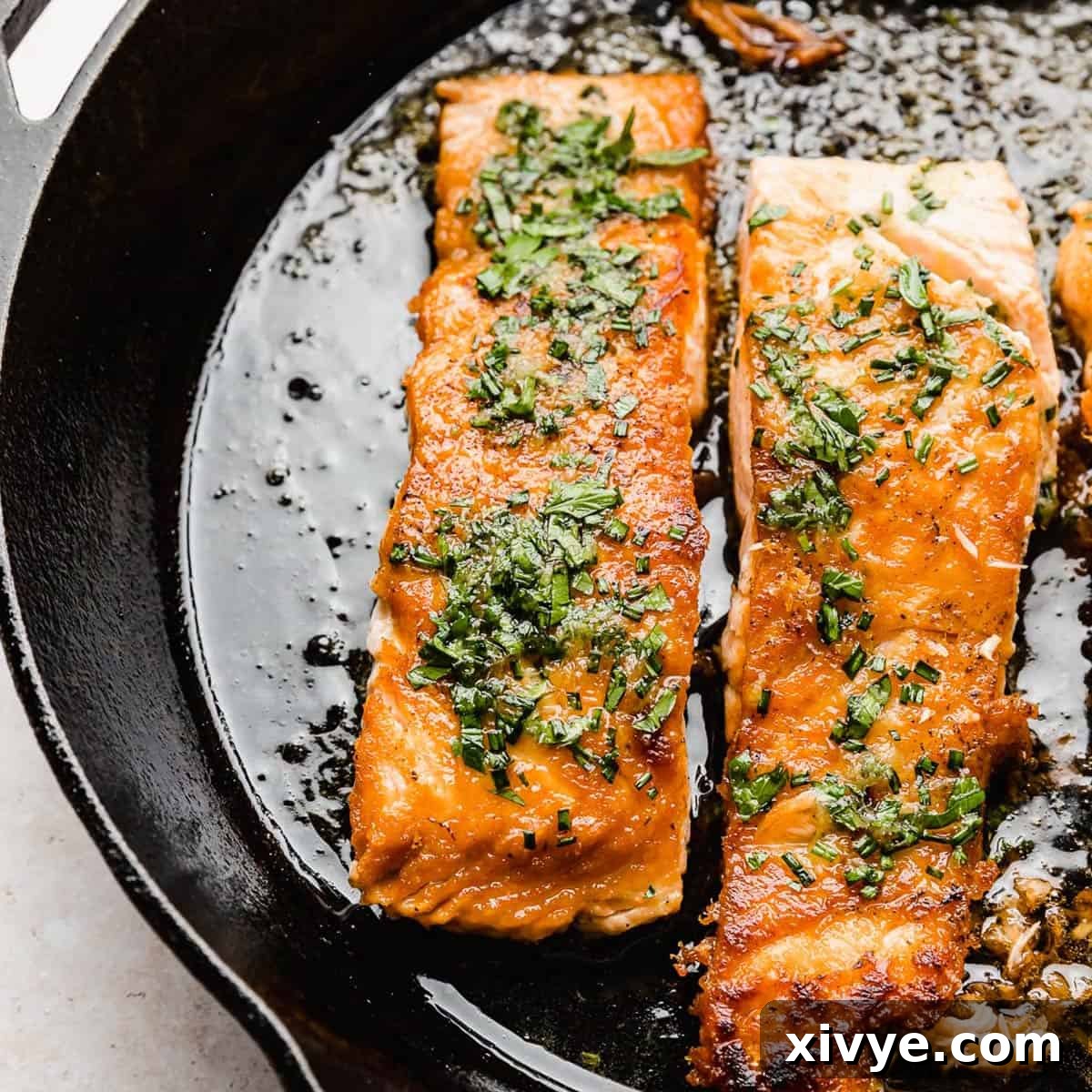
Transform your dinner routine with this incredible Lemon Honey Glazed Salmon recipe. Perfectly pan-seared to a golden crisp exterior and a tender, flaky interior, each bite is bursting with a delightful balance of sweet and tangy flavors from a luscious lemon-honey sauce. This isn’t just a meal; it’s an experience that proves healthy eating can be incredibly delicious and utterly satisfying. If you’re searching for an easy weeknight dinner that packs a nutritional punch and impresses every palate, look no further. And for those who adore the sweet and savory combination, you’ll also fall in love with my Honey Garlic Baked Salmon!
Creating a balanced and appealing meal is effortless with this versatile pan-seared salmon. I often pair this healthy salmon recipe with vibrant vegetable sides that even the pickiest eaters will adore. Our family favorites include savory Roasted Carrots, tender Sautéed Peas, and perfectly charred Oven Roasted Broccoli. To complete the menu, you can add a comforting starch like fluffy Orzo Rice, or simplify things even further with the convenience of Sheet Pan Gnocchi and Vegetables. With so many delicious pairing possibilities, you’re sure to create a memorable meal every time!
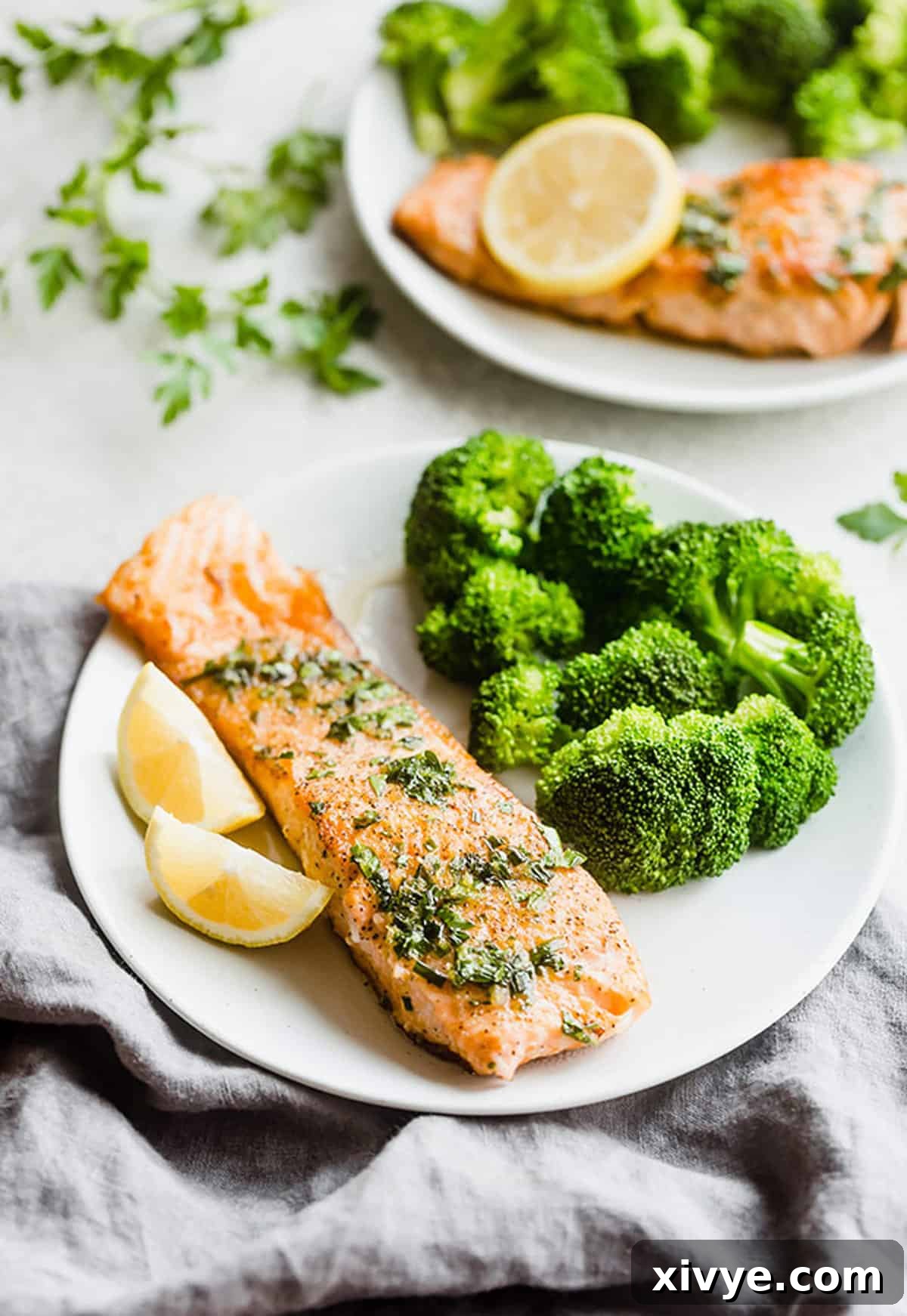
Why This Lemon Honey Glazed Salmon Recipe is a Must-Try
This Lemon Honey Glazed Salmon recipe isn’t just another fish dish; it’s a culinary triumph that consistently delivers on taste, health, and convenience. Here’s why this pan-seared salmon recipe stands out:
- A Family-Favorite Healthy Glazed Salmon: Introducing fish into your family’s diet can sometimes be a challenge, but this recipe makes it effortless. The sweet and tangy lemon honey glaze is universally appealing, even for younger palates. My kids, who aren’t always keen on fish, genuinely love this dish! This is a huge win, especially considering the immense health benefits salmon offers. Salmon is a powerhouse of nutrition, notably one of the richest natural sources of omega-3 fatty acids. These essential fats are crucial for human health, as our bodies cannot produce them. Omega-3s are vital for reducing inflammation, supporting heart health by lowering blood pressure, enhancing brain function, and promoting overall well-being. Serving this delicious salmon is a fantastic way to ensure your family gets these critical nutrients.
- Achieve the Best Pan-Seared Salmon: In my opinion, there’s no better method for cooking salmon than pan-searing. This technique creates a magical contrast: a beautifully crisp, golden-brown exterior that locks in all the moisture, resulting in an incredibly tender, flaky, and melt-in-your-mouth interior. We’ll guide you through precise steps and expert tips to master the art of searing salmon, ensuring perfect results every time. The intense direct heat of a hot skillet helps to develop a rich, savory crust through the Maillard reaction, sealing in the natural juices and amplifying the fish’s inherent flavors.
- Quick & Easy Weeknight Meal: From start to finish, this Lemon Honey Glazed Salmon comes together in just about 30 minutes, making it the ideal solution for busy weeknights. Despite its elegant flavor profile, the preparation is straightforward and requires minimal fuss. It’s a healthy dinner option that doesn’t compromise on speed or simplicity.
- Simple, Wholesome Ingredients: This recipe utilizes fresh, readily available ingredients that are easy to find at any grocery store. The emphasis is on quality components that work in harmony to create a truly delicious and nutritious meal without complicated preparations.
Key Ingredients for Flavorful Lemon Honey Glazed Salmon
Crafting the perfect Lemon Honey Glazed Salmon begins with understanding the role of each ingredient. Here’s a closer look at what you’ll need and why it matters for this quick salmon dinner:
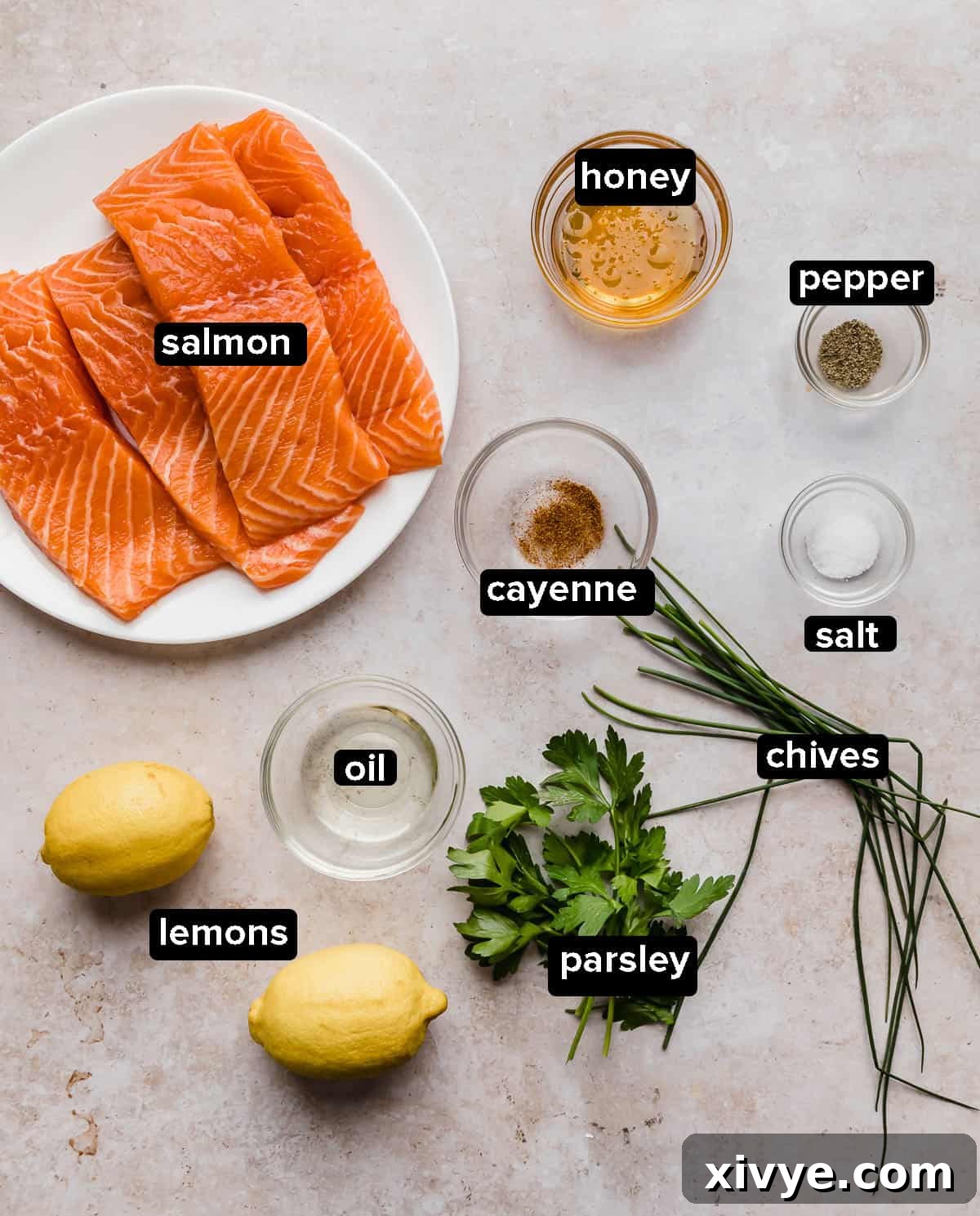
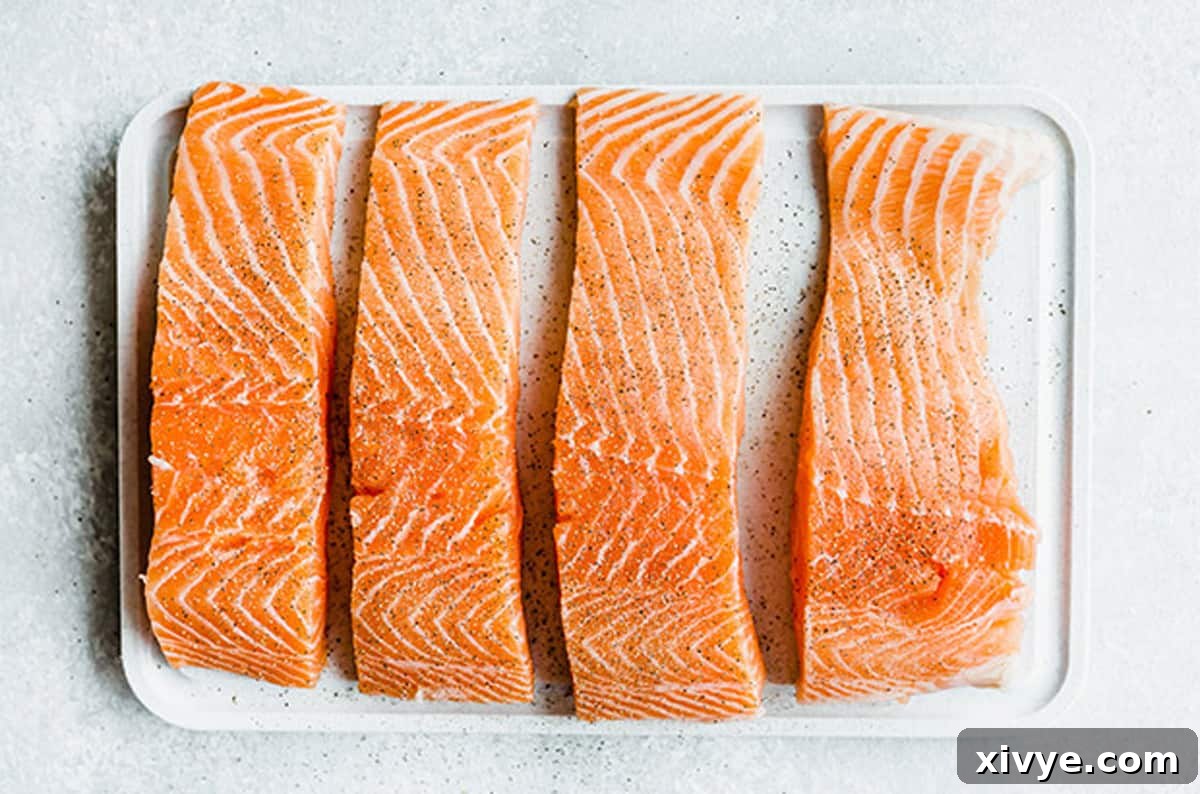
- Salmon Fillets: The star of our dish! Aim for high-quality, fresh salmon fillets. Whether you choose wild-caught for a richer flavor and leaner texture or farmed for consistent availability and fattiness, ensure the fish looks vibrant and smells fresh, not overly fishy. It’s crucial to slice the fish into equal-sized portions—about 6 ounces each is ideal for consistency—to ensure all pieces cook evenly. Before cooking, gently feel for any small pin bones and remove them with tweezers if present.
- Honey: This natural sweetener does more than just add a delicious sugary note to the glaze. When seared, the honey contributes to a beautiful caramelization on the exterior of the salmon fillet, creating an irresistible crust and a depth of flavor that perfectly complements the fish. Any variety of liquid honey works well here, from clover to wildflower.
- Fresh Chives & Parsley: Fresh herbs are non-negotiable for elevating the flavor profile of this dish. Fresh chives impart a delicate, subtle oniony flavor that’s milder than raw onion, providing a bright aromatic lift. Fresh parsley, with its clean and slightly peppery notes, enhances the overall freshness of the honey glazed salmon, adding a vibrant green color and herbaceous complexity. Using dried herbs will not yield the same vibrant taste or aroma.
- Lemon Juice & Zest: To achieve a truly bright and punchy lemon flavor, we utilize both the juice and the zest from fresh lemons. The juice provides the essential tartness and liquid for the glaze, while the zest, rich in aromatic oils, delivers a concentrated burst of lemon essence without adding excessive acidity. Always zest before juicing!
- Cayenne Pepper: A mere pinch of cayenne pepper is added to introduce the slightest hint of warmth and complexity, balancing the sweetness of the honey and the brightness of the lemon. If you prefer a spicier kick, feel free to increase the amount. For those who prefer no heat at all, a dash of black pepper makes an excellent substitute to maintain a subtle peppery background.
- Vegetable Oil: A high smoke point oil is essential for successful searing. Vegetable oil is perfect for this, as it can withstand the high heat required to achieve that desirable crispy crust without burning. Ensure the oil is hot and evenly distributed in the skillet before adding the salmon, as this is key to preventing sticking and achieving optimal crispness. Alternatives include grapeseed oil or canola oil.
- Salt & Black Pepper: These fundamental seasonings are critical for bringing out the natural flavors of the salmon. Don’t underestimate their power to enhance the dish.
Effortless Step-by-Step Instructions for Lemon Honey Glazed Salmon
Follow these detailed steps to create a perfect Lemon Honey Glazed Salmon that’s restaurant-quality and ready in minutes.
- Prepare the Skillet & Oven: Begin by preheating your oven to a high temperature of 450°F (232°C). As the oven preheats, place a 12-inch cast iron skillet inside. This crucial step ensures the skillet heats thoroughly and evenly across its entire surface, preventing cold spots and promoting uniform searing, which is vital for achieving that perfect crispy skin and even cook. While the oven heats, remove your salmon fillets from the refrigerator and allow them to come closer to room temperature for about 15-20 minutes; this helps them cook more evenly.
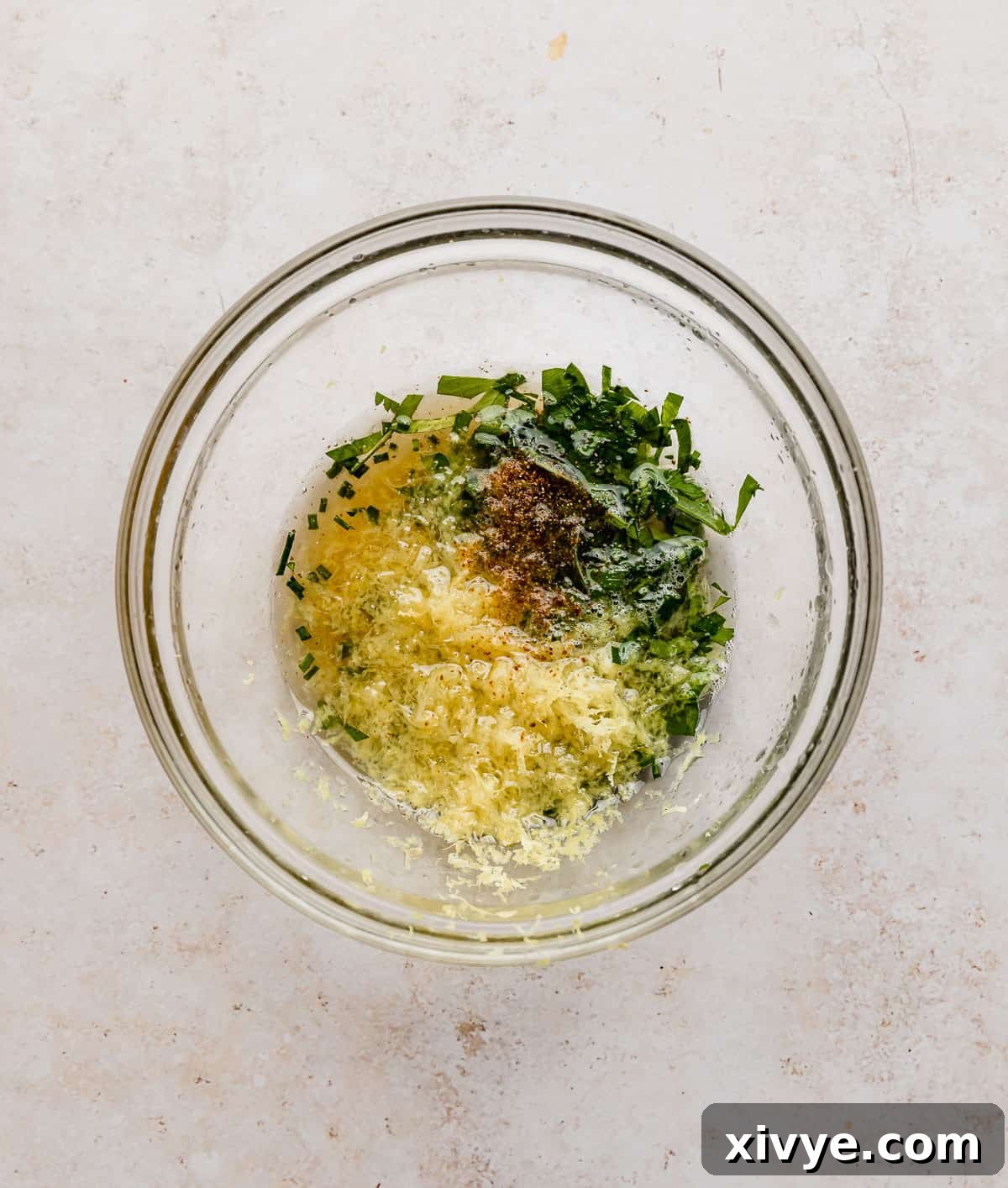
- Craft the Irresistible Sauce: In a small mixing bowl, combine the honey, finely minced fresh chives, fresh parsley, vibrant lemon zest, fresh lemon juice, and just a pinch of cayenne pepper. Whisk all these ingredients together until they are fully incorporated and the sauce has a uniform consistency. Set this flavorful lemon honey glaze aside, as it will be spooned over the salmon at the very end.
- Prepare the Salmon Fillets: Patting the salmon dry is a critical step for achieving a crispy crust. Use paper towels to thoroughly dab both sides of each salmon fillet, removing any excess moisture. A dry surface allows the fish to sear beautifully rather than steam. Once dry, generously season both sides of the salmon with salt and freshly ground black pepper. Ensure the seasoning is distributed evenly for optimal flavor.
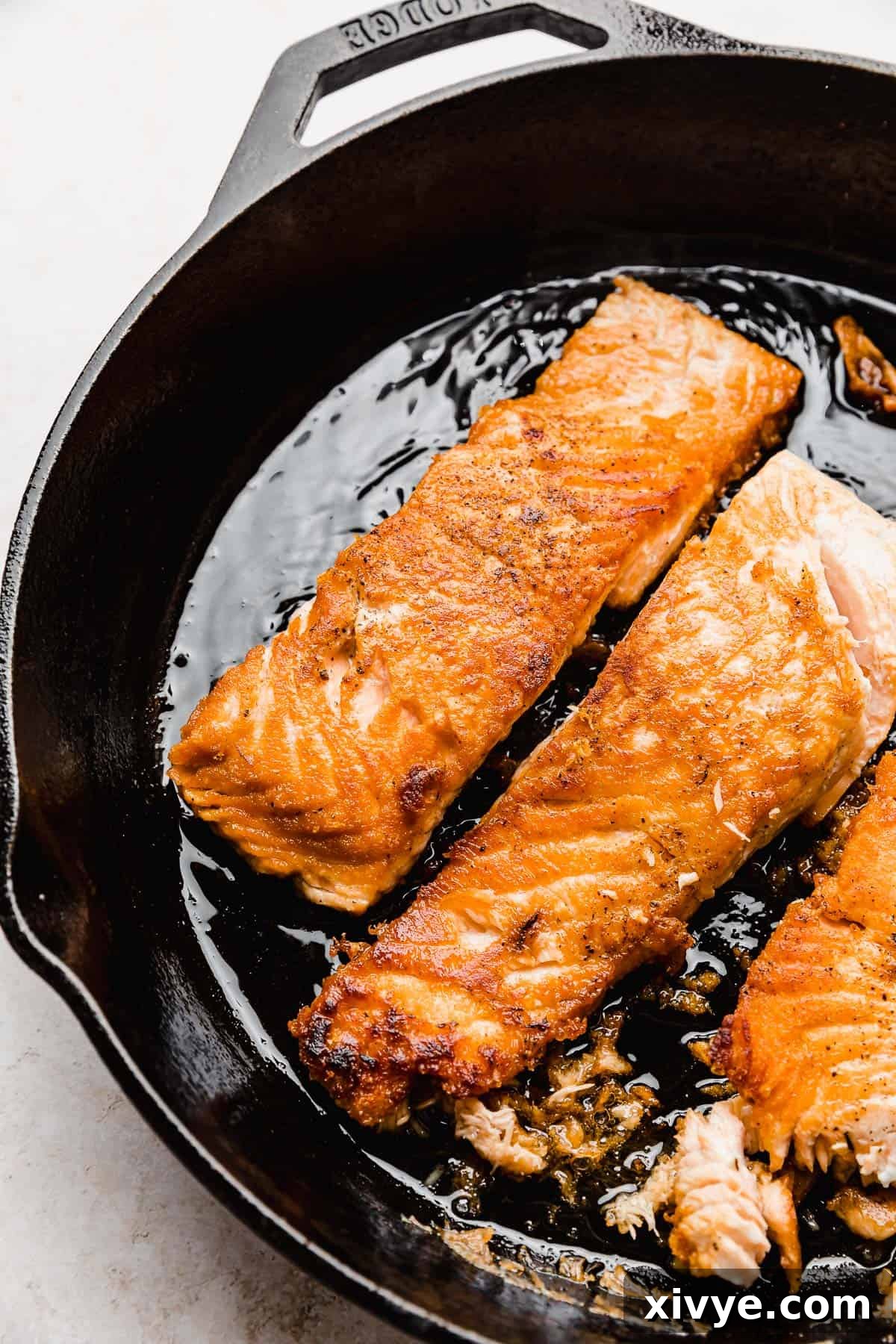
- Execute the Perfect Sear: Once your oven reaches 450°F (232°C), turn it off. With extreme caution and using thick oven mitts or hot pads, carefully remove the intensely hot cast iron skillet from the oven. Place the skillet immediately over medium-high heat on your stovetop. Add the vegetable oil to the searing hot skillet – be very careful as the oil will heat quickly and may splatter slightly. Once the oil is shimmering (but not smoking), carefully place each seasoned salmon fillet into the skillet, presentation-side down (if using skin-on, place flesh-side down first). Cook for 3-4 minutes undisturbed, allowing a beautiful golden-brown crust to form. Then, carefully flip each fillet and cook the other side for an additional 5-8 minutes, or until the center is fully cooked through and flakes easily with a fork. For precise doneness, the internal temperature of the thickest part of the salmon should register between 130°-135°F (54-57°C) using an instant-read thermometer. Avoid overcrowding the pan to ensure proper searing.
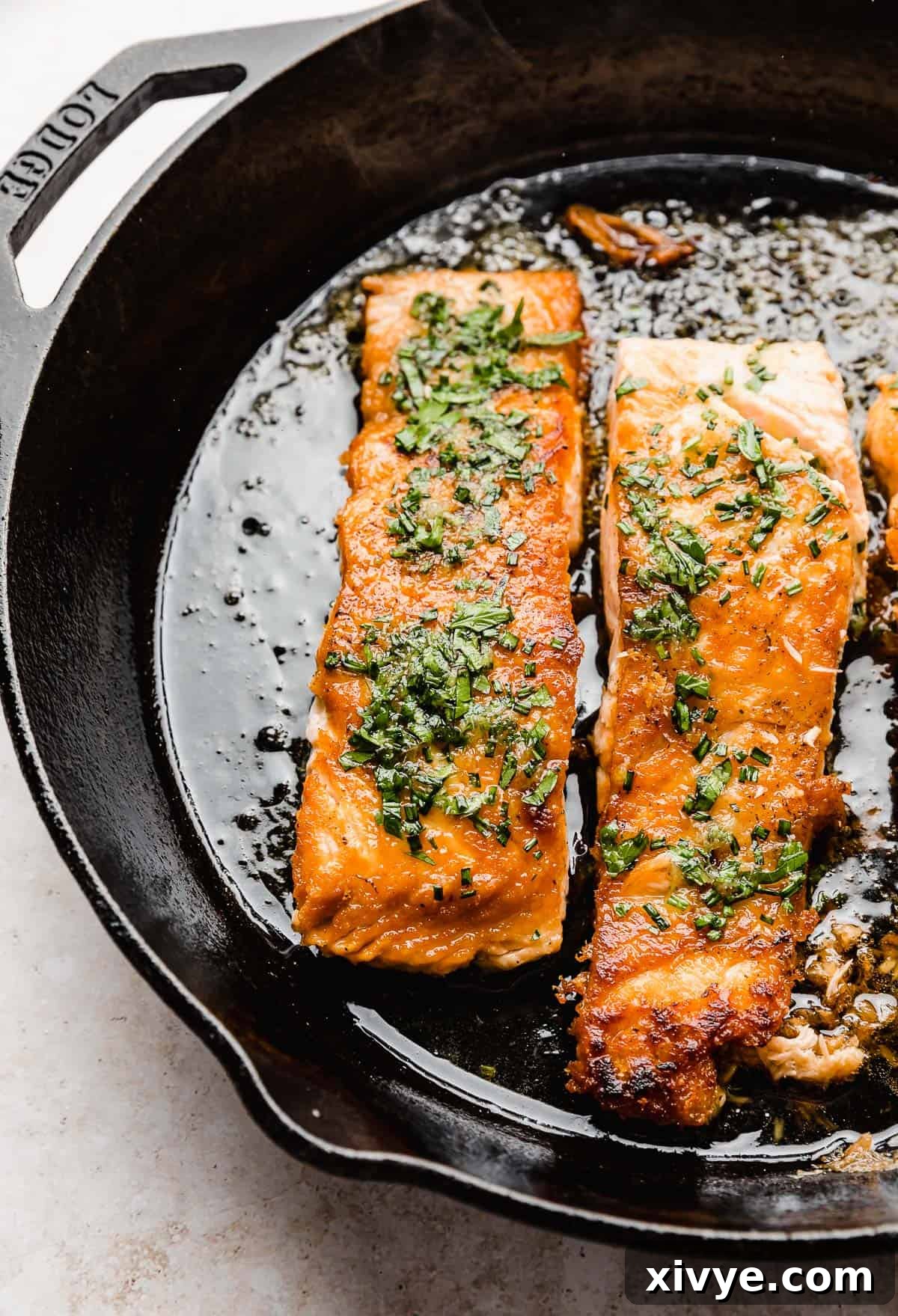
- Glaze and Serve Immediately: Once the salmon is perfectly cooked, remove the skillet from the heat. Spoon generous amounts of your prepared lemon honey sauce over each fillet, allowing the warmth of the fish to gently meld with the fresh flavors of the glaze. Serve your exquisite Lemon Honey Glazed Salmon immediately, garnished with extra fresh herbs or a lemon wedge if desired, and enjoy this quick and healthy dinner!
Expert Tips for Your Best Pan-Seared Salmon
Achieving perfectly pan-seared salmon is simple when you follow a few key techniques. These tips will help you consistently create succulent, crispy, and flavorful lemon honey salmon every time:
- Choose the Right Pan Size: Ensure you use a skillet large enough to comfortably accommodate all your salmon fillets without overcrowding. As mentioned in the instructions, a 12-inch cast iron skillet is ideal for this pan-seared salmon recipe. Overcrowding the pan will lower the temperature and cause the fish to steam rather than sear, resulting in a soggy rather than crispy exterior.
- Bring Salmon to Room Temperature: Before cooking, remove the salmon fillets from the refrigerator and let them sit on the counter for 15-20 minutes. Placing super-cold fish directly onto a piping hot pan can cause the proteins to seize up, leading to uneven cooking where the outside cooks too quickly while the inside remains undercooked. Room temperature fish cooks more uniformly.
- Pat the Salmon Dry, Thoroughly: This is a crucial step! Excess moisture on the surface of the salmon is the enemy of a crispy crust. Before seasoning, use paper towels to gently but firmly dab both sides of each fillet until completely dry. A dry surface allows for superior browning and helps prevent the fish from sticking to the pan.
- Use a Properly Hot Pan: A scorching hot pan is a non-negotiable for perfectly seared salmon. This is why we initially place the cast iron skillet in a hot oven during preheating—it ensures the pan is evenly heated throughout, not just in spots. When transferred to the stovetop, the pan should be hot enough that a drop of water immediately evaporates (the Leidenfrost effect), or the oil shimmers instantly without smoking excessively.
- Ensure Even Oil Coverage: Before adding the salmon, make sure the bottom of your hot pan is completely covered with a thin layer of vegetable oil. This provides a non-stick surface and facilitates even browning across the entire fillet.
- Cut Fillets to Equal Sizes and Check for Bones: For consistent cooking results, slice your salmon into pieces of roughly equal thickness and weight. This way, all fillets will be done at the same time. Always run your fingers over the flesh to check for any tiny pin bones and remove them with kitchen tweezers if found.
- Utilize an Instant-Read Thermometer: The most reliable way to ensure your salmon is perfectly cooked (and safe to eat) without overcooking is to use an instant-read thermometer. Insert it into the thickest part of the fillet. The ideal internal temperature for medium-rare to medium salmon is between 130°F (54°C) and 135°F (57°C). Remove it just before it reaches your desired doneness, as it will continue to cook slightly from residual heat.
- Adjusting Salmon Quantity: This recipe is designed for 24 oz (approximately four 6-oz fillets) of salmon. However, you can easily adapt it for 16 oz or even 32 oz. Just be mindful that cooking more salmon will mean less sauce per fillet, and cooking less salmon will provide a more generous amount of delicious glaze to drizzle over your fish.
- Skin On vs. Skin Off: You can use either skin-on or skin-off salmon fillets for this recipe. If you opt for skin-on fillets, always place them skin-side down in the skillet first. Cook the flesh side for 3 minutes to achieve a nice sear, then flip to the skin side and cook for approximately 8-10 minutes, or until the center is fully cooked and the meat registers around 125°F (52°C) with an instant-read thermometer (the skin-side cooking is longer for crisping). The skin becomes incredibly crispy and delicious.
- Don’t Overcook: Salmon cooks relatively quickly. Overcooking will result in dry, tough fish. Err on the side of slightly undercooked rather than overcooked, as it will continue to cook for a minute or two off the heat.
Make Ahead, Storing, and Freezing Lemon Honey Glazed Salmon
While this Lemon Honey Glazed Salmon is quick and easy to prepare, it’s truly at its best when enjoyed fresh, straight from the pan. Reheated salmon, though still tasty, tends to lose some of its moist tenderness and can become drier. For this reason, I don’t typically recommend making this salmon recipe ahead of time for optimal flavor and texture.
If you find yourself with delicious leftovers, fret not! Store them promptly in an airtight container in the refrigerator for 3-4 days. This will keep the salmon fresh and safe for later enjoyment.
One fantastic way to repurpose leftover salmon is to transform it into mouth-watering fish tacos! Simply flake the cooked salmon, warm it gently, and mix it with a creamy base of sour cream blended with my Mild Taco Seasoning. Serve it in warm tortillas, topped with crunchy chopped lettuce or cabbage, creamy avocado slices, and juicy diced tomatoes for a fresh, vibrant meal.
To reheat leftover honey lemon salmon without drying it out, microwave it in 30-second increments. Crucially, add as much of the remaining lemon honey sauce as possible over the salmon before reheating. This helps to re-moisten the fish and keep it flavorful.
I would not recommend freezing cooked salmon. The delicate texture of salmon often suffers during the freezing and thawing process, becoming mushy or excessively dry upon reheating. As mentioned, this dish is truly best savored on the day it’s prepared.
Frequently Asked Questions About Lemon Honey Glazed Salmon
Achieving perfectly pan-seared salmon involves a few key steps. First, ensure your salmon fillets are patted thoroughly dry and brought close to room temperature. Heat a heavy-bottomed skillet (like cast iron) until it’s very hot, then add a high smoke point oil. Place the salmon skin-side down (if applicable) and cook undisturbed for several minutes to form a crispy crust, then flip and finish cooking until the internal temperature reaches 130°-135°F (54-57°C). Review the detailed step-by-step instructions and dedicated “Recipe Tips” section above for all the essential searing advice!
Absolutely! Salmon is an incredibly healthy and nutrient-dense food. It is one of the best dietary sources of omega-3 fatty acids, which are essential fats our bodies cannot produce. Omega-3s are renowned for their anti-inflammatory properties, ability to help reduce blood pressure, and their role in improving overall cellular function and brain health. Salmon also provides high-quality protein, B vitamins, and potassium. For more in-depth information on its health benefits, you might consult reputable sources like Healthline.com.
While there are many ways to cook salmon—baking, grilling, poaching, or air frying—I firmly believe pan-searing brings out the most exquisite flavors and textures. Searing creates a beautiful, crispy exterior while keeping the interior moist and flaky. Other methods like baking are excellent for convenience, but they typically don’t achieve that desirable crispy crust that makes pan-seared salmon so exceptional.
Salmon is incredibly versatile and pairs well with a wide array of flavors! Its rich, buttery taste complements both sweet and savory profiles beautifully. Beyond the lemon and honey in this recipe, you can explore combinations like brown sugar (try my Brown Sugar Crusted Salmon for a sweet and savory delight), zesty chili lime (like in my Sheet Pan Chili Lime Salmon for an easy meal), or fresh dill (as seen in my Salmon Burgers with Lemon Dill Sauce). Garlic, ginger, soy sauce, and various herbs also make fantastic pairings. Experiment to find your personal favorite!
Yes, you can use frozen salmon, but ensure it is properly thawed before cooking. Transfer frozen salmon to the refrigerator the night before, or use the cold water method (keeping it in its vacuum-sealed packaging). Pat it very dry before seasoning and searing, as frozen and thawed salmon tends to release more moisture.
Several factors help prevent sticking. First, ensure your pan (especially cast iron) is seasoned well and very hot before adding oil. Second, use enough high smoke point oil to coat the bottom of the pan thoroughly. Third, and most importantly, pat your salmon fillets extremely dry with paper towels before placing them in the hot oiled pan. A dry surface and a hot pan are key to a non-stick sear.
Explore More Delicious Fish and Seafood Recipes
If you’re a fan of flavorful fish and seafood, you’ll love these other popular recipes:
- Tilapia Cakes
- Shrimp Scampi with Linguini
- Baja Fish Tacos
- Easy Coconut Shrimp Recipe
- Sheet Pan Shrimp Fajitas
Did you make this recipe? I’d love to hear about it! Click here to leave a rating and review, or scroll below the recipe card and do so there.
Stay up-to-date by following us on Instagram, TikTok, Facebook, and Pinterest.
Print
SaveSaved!
Review
Lemon Honey Glazed Salmon
 Whitney Wright
Ingredients
- 24 oz salmon fillet – sliced into 4 equal pieces, pin bones removed* (see notes)
- 2 tablespoons + 2 teaspoons honey
- 3 teaspoons fresh chives – finely minced
- 2 teaspoons fresh parsley – finely minced
- 2 teaspoons lemon zest – from 1 large lemon
- 1 tablespoon lemon juice – freshly squeezed
- pinch cayenne pepper – or more, to taste; substitute black pepper for no heat
- ½ teaspoon salt
- ¼ teaspoon black pepper – freshly ground
- 1 tablespoon vegetable oil – or other high smoke point oil like grapeseed
Equipment
-
Instant Read Thermometer
-
Zester
-
12-inch Cast Iron Skillet (with lid optional)
Instructions
-
Preheat oven to 450°F (232°C). Place a 12-inch cast iron skillet inside the oven as it preheats to ensure even heating. Remove the salmon fillets from the refrigerator and let them sit at room temperature while the oven heats.
-
In a small bowl, combine the honey, minced chives, minced parsley, lemon zest, lemon juice, and cayenne pepper. Whisk thoroughly until all ingredients are well incorporated, then set the sauce aside.
-
Using paper towels, generously dab both sides of each salmon fillet to remove any excess moisture. Season both sides of the salmon evenly with salt and black pepper.
-
When the oven reaches 450°F (232°C), turn off the oven. Carefully remove the very hot skillet from the oven using thick oven mitts and place it over medium-high heat on your stovetop.
-
Add the vegetable oil to the hot skillet. Once the oil is shimmering, carefully place each salmon fillet into the skillet. Cook for 3-4 minutes undisturbed. Flip the fillets and cook the other side for 5-8 minutes, or until the center is fully cooked and flakes easily. The internal temperature should read 130°-135°F (54-57°C) with an instant-read thermometer.
-
Remove the skillet from heat and spoon the prepared lemon honey sauce generously over the cooked salmon fillets. Serve immediately.
Notes
NOTE: This recipe works with both skin-on and skin-off salmon fillets. If using skin-on fillets, place the flesh side down in the skillet first and cook for 3 minutes. Then, flip and cook the skin side for about 8-10 minutes, or until the center is fully cooked (internal temperature 125°F/52°C) and the skin is wonderfully crispy.
For storing leftovers, place the cooked salmon in an airtight container in the refrigerator for 3-4 days.
Nutrition
This recipe was originally published on Jan. 11, 2021. It was republished on March 17, 2022, to include additional information and photos, and further updated on [Current Date] for enhanced SEO, clarity, and expanded content.