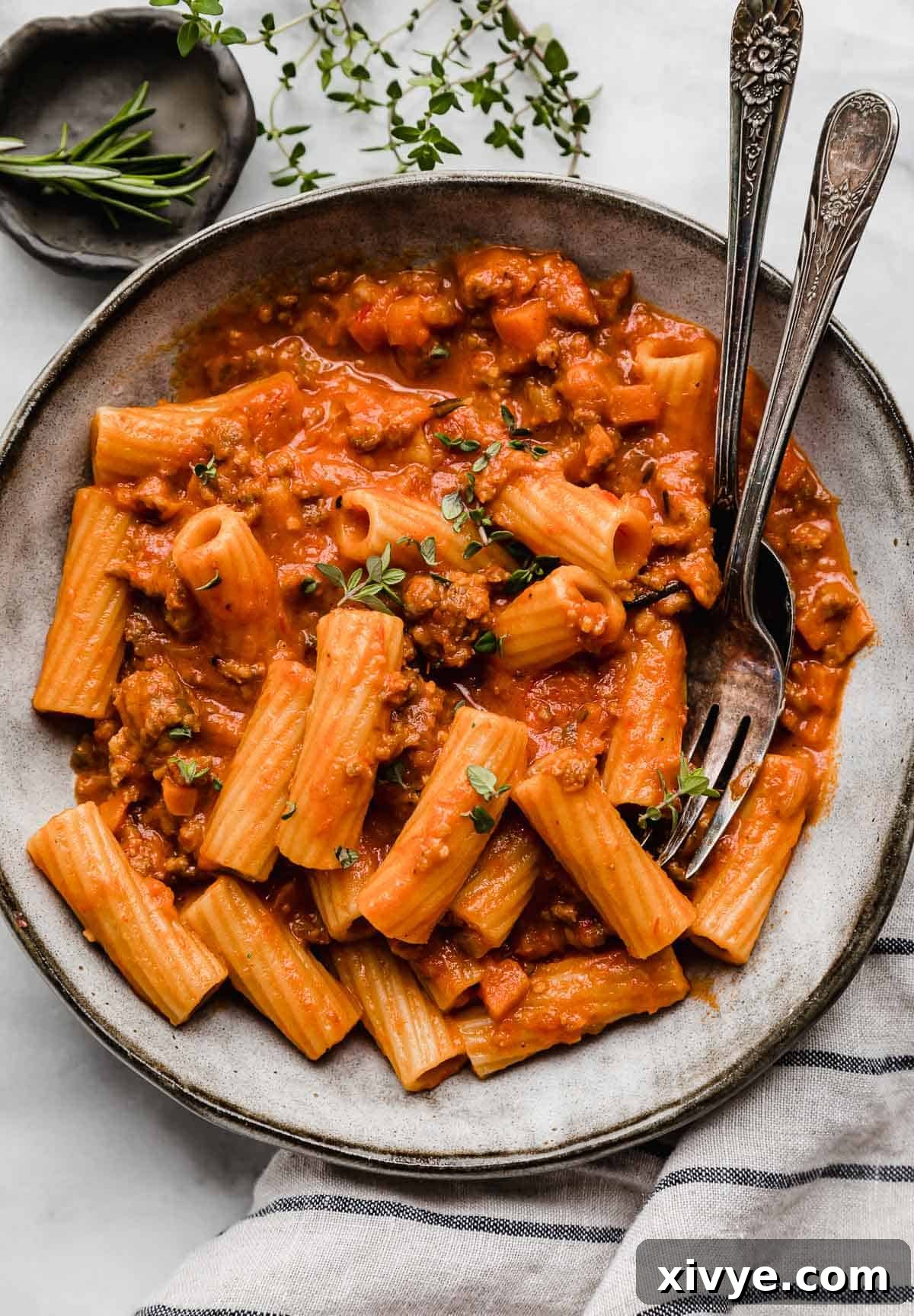
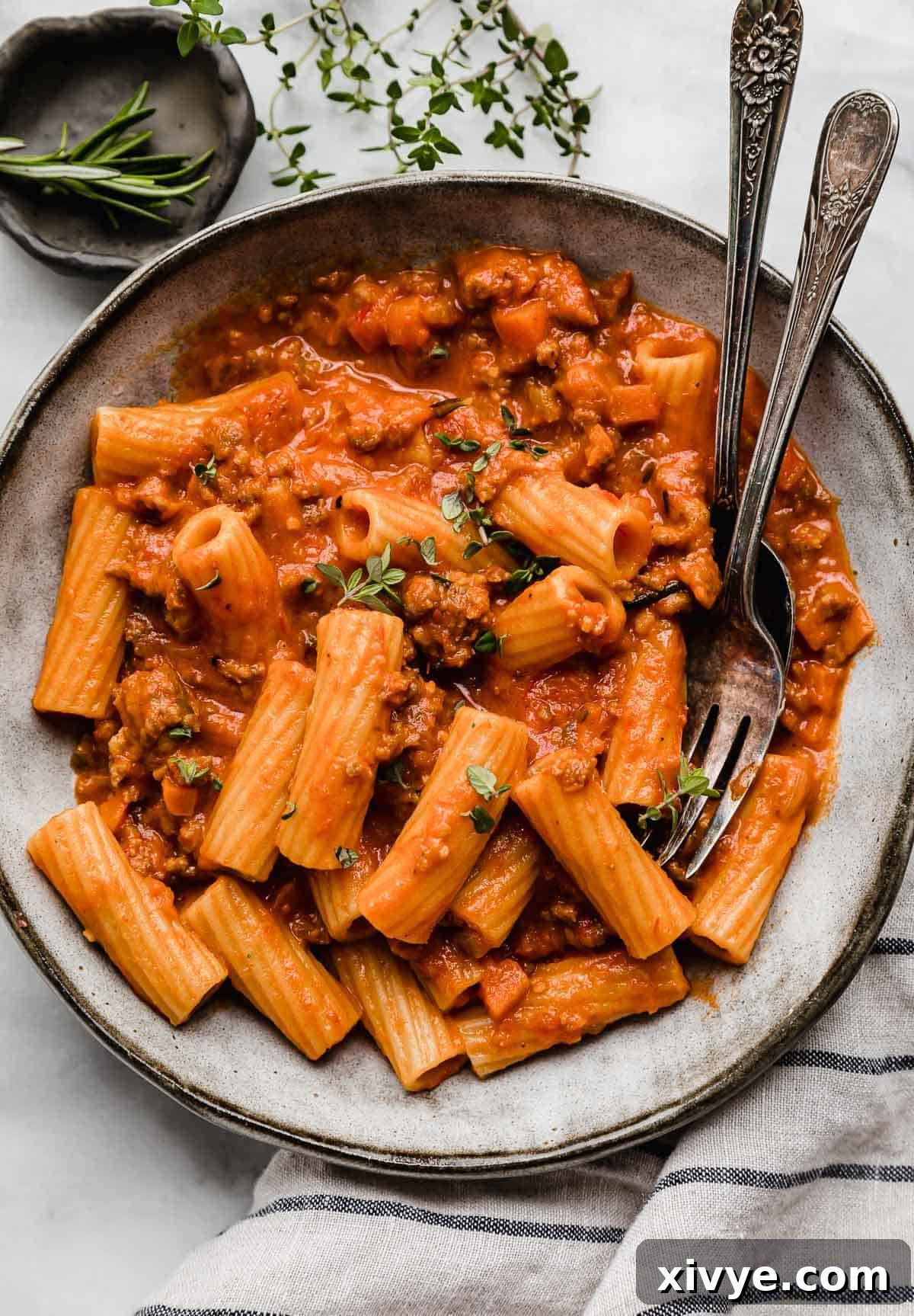
Indulge in the ultimate Italian comfort food with this incredibly flavorful and hearty sausage ragu recipe. Perfectly slow-simmered, this rich meat sauce promises to be a staple in your kitchen, offering both a satisfying meal and delicious leftovers that taste even better the next day! We meticulously combine a traditional “soffritto” – a finely diced mix of onions, celery, and carrots – with succulent Italian sausage, robust tomatoes, and fragrant fresh herbs, allowing the flavors to meld and deepen over a patient hour-and-a-half simmer. While it requires a bit of time, the unparalleled depth of flavor you’ll achieve makes every minute worthwhile. This pasta dish isn’t just a meal; it’s an experience, a true testament to the beauty of slow cooking and simple, high-quality ingredients.
Transform your dinner into an authentic Italian feast by pairing this exquisite sausage ragu with homemade Focaccia Bread, perfect for soaking up every last drop of sauce. For lighter, quicker accompaniments, consider a vibrant Cherry Tomato Caprese Salad or a refreshing Tomato Artichoke Salad. These simple sides beautifully complement the richness of the ragu, creating a balanced and memorable meal for any occasion.
Why This Sausage Ragu Recipe is a Must-Try
- Effortless Once Prepped: While the initial dicing of vegetables for the soffritto requires some attention, the majority of this ragu recipe is hands-off. Once your aromatic base and sausage are beautifully browned, you simply combine the ingredients, sit back, and allow the stove to work its magic. This makes it an ideal choice for busy weekends or meal prepping in advance.
- Ultimate Comfort Food: There’s something inherently soul-satisfying about a slow-cooked meat sauce. This sausage ragu pasta embodies the essence of comfort food, transforming humble ingredients into a luxurious, deeply flavored sauce that warms from the inside out. It’s the perfect dish for a cozy evening or feeding a gathering.
- Deep, Developed Flavors: The lengthy simmering process is the secret to this ragu’s incredible taste. It allows the diverse flavors of the sausage, tomatoes, herbs, and soffritto to meld and intensify, creating a complex and harmonious sauce that simply cannot be rushed.
- Versatile and Customizable: This recipe serves as an excellent foundation for various culinary explorations. Easily adapt the spice level, experiment with different types of sausage, or serve it with your favorite pasta or a creative alternative like polenta for a fresh take.
- Excellent Leftovers: A hallmark of any great ragu, this dish actually improves with time. The flavors continue to deepen and marry overnight, making the leftovers a highly anticipated treat. It’s a fantastic recipe for batch cooking or entertaining.
Ingredient Spotlight: Crafting the Perfect Ragu
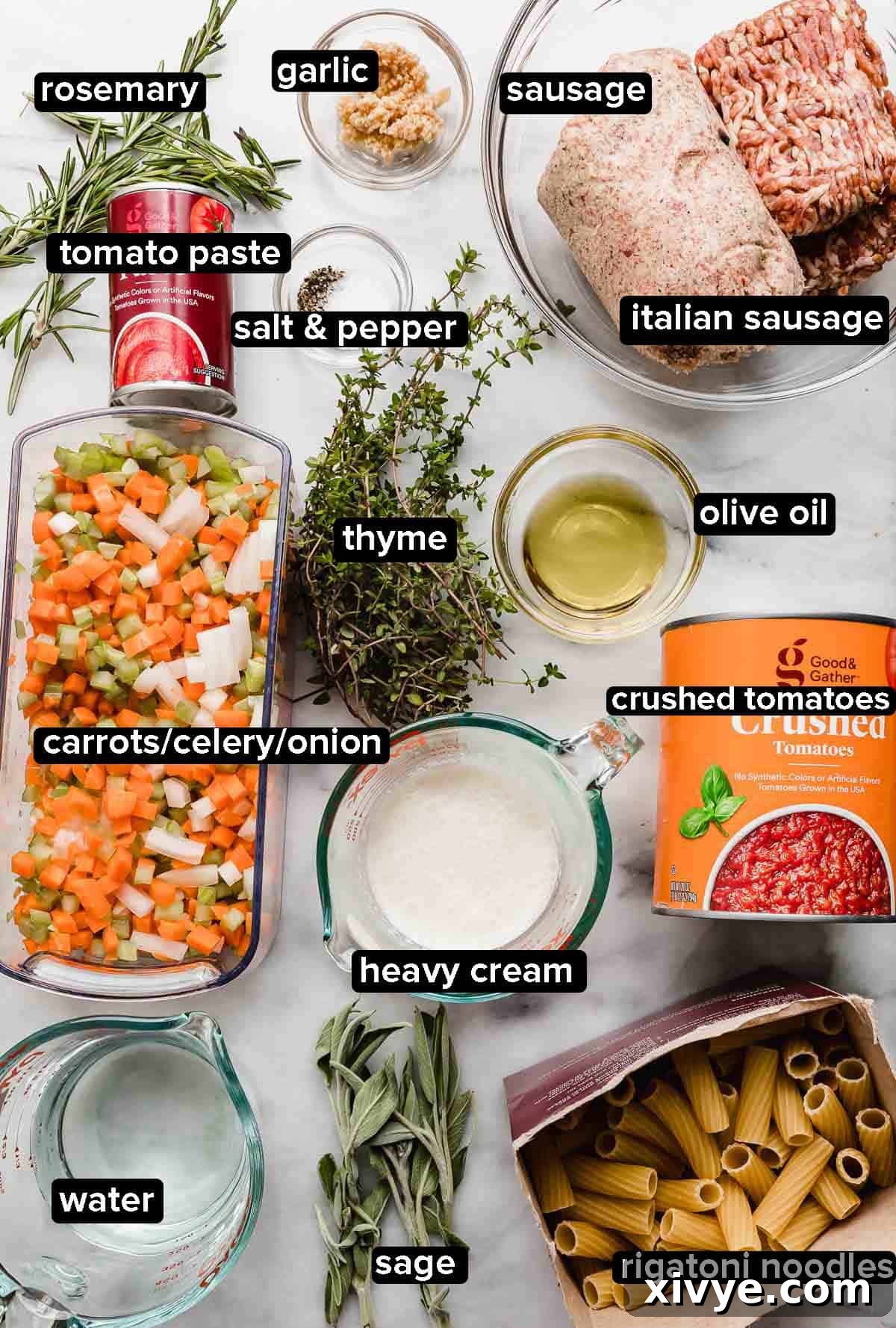
Understanding each ingredient’s role is key to mastering this exceptional sausage ragu. Here’s a closer look at what makes this sauce so special:
- Sausage: For the most balanced flavor and texture, I recommend a blend of regular ground pork sausage and Italian sausage. The regular pork sausage provides a rich, savory base, while the Italian sausage introduces those distinctive fennel and herb notes crucial for an authentic Italian profile. If you desire a spicy kick, hot Italian sausage is a fantastic choice. Alternatively, if only regular pork sausage is available, a simple addition of 2 teaspoons of Italian seasoning before simmering will impart that beloved Italian flavor. For those seeking lighter alternatives, ground turkey or chicken sausage can be used, though you might consider slightly reducing the simmering time as they contain less fat and can dry out more quickly.
- Soffritto: This is the soul of many Italian sauces, a foundational blend of aromatic vegetables. For this Italian sausage ragu, we use a classic mix of finely diced yellow onion, carrots, and celery, along with fresh minced garlic. This triumvirate slowly cooks down, releasing its natural sugars and creating a sweet, savory, and incredibly fragrant base that builds the first layer of flavor in our sauce. Don’t underestimate its importance – a well-browned soffritto is non-negotiable for depth.
- Tomatoes: We employ two forms of tomatoes to achieve a multi-dimensional flavor profile in this pork sausage ragu. Tomato paste, cooked until caramelized, adds a concentrated, umami-rich depth that crushed tomatoes alone cannot provide. Canned crushed tomatoes then bring the necessary liquid and bright, fresh tomato flavor. Using both ensures a robust and well-rounded tomato base.
- Fresh Herbs: The infusion of fresh rosemary, sage, and thyme sprigs during the simmer is vital. Fresh herbs release their essential oils slowly, imparting a delicate yet profound herbaceousness that elevates the entire dish. If fresh herbs are unavailable, dried herbs are a suitable substitute; remember that dried herbs are more concentrated, so adjust the quantity accordingly (typically one-third of the fresh amount).
- Pasta: The choice of pasta is paramount for capturing every delicious morsel of this chunky ragu. Rigatoni, with its large, ridged tubes, is my top recommendation as it perfectly cradles the rich meat sauce. However, feel free to use your favorite pasta shape. Other excellent options include wide tagliatelle, pappardelle for a luxurious feel, or even penne. Some adventurous cooks even serve sausage ragu with creamy polenta, which offers a delightful alternative to traditional pasta.
- Heavy Cream: The inclusion of heavy cream in ragu can spark culinary debate, but in my experience, a touch of richness is precisely what transforms a good ragu into an exceptional one. The heavy cream rounds out the flavors, adding a velvety texture and a luxurious finish that beautifully complements the hearty meat sauce. It softens the acidity of the tomatoes and creates a truly creamy sausage ragu that’s irresistible.
Step-by-Step Guide to Crafting Your Sausage Ragu
Follow these detailed instructions to create a deeply flavorful and satisfying sausage ragu from scratch.
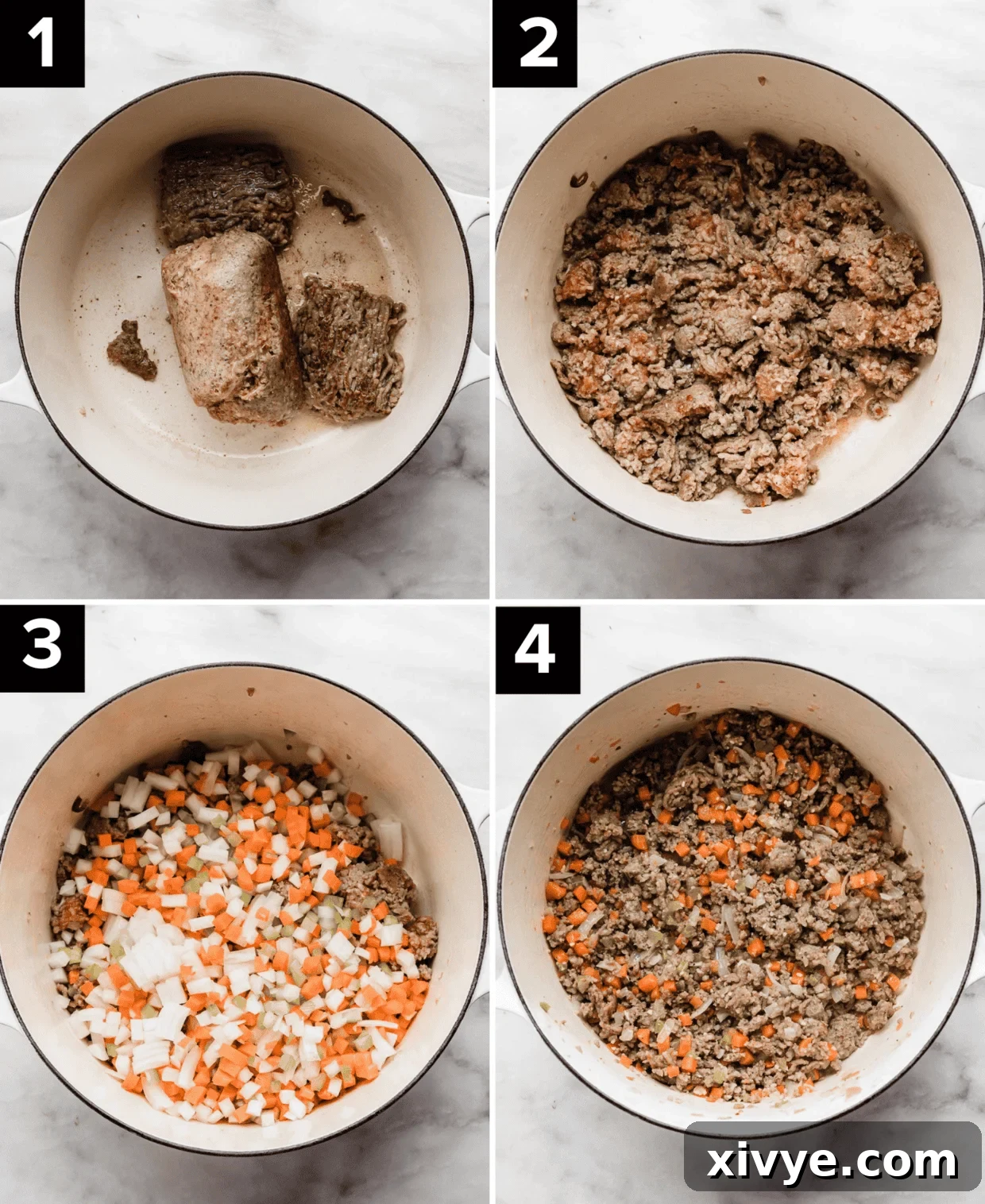
- Prepare Your Soffritto: Begin by precisely dicing your vegetables. Aim for 1 cup of finely diced carrots (approximately 2-3 large carrots), 1 cup of finely diced celery (about 2 stalks), and one large yellow onion, also finely diced. Uniform dicing ensures even cooking and flavor release. Set these prepared aromatics aside.
- Brown the Sausage: Heat a large, heavy-bottomed Dutch oven or similar pot over medium heat. Add 1 tablespoon of olive oil and allow it to shimmer. Carefully add 1 lb of ground pork sausage and 8 oz of Italian sausage to the hot oil. Allow the sausage to sear undisturbed on one side for 2-3 minutes to develop a rich brown crust, then flip and sear for another 2 minutes. This browning is crucial for deep flavor. Using a wooden spoon, break the sausage into bite-sized pieces as it continues to cook.
- Build the Soffritto Base: With the sausage nicely browned, add your diced carrots, celery, and onion to the pan. Season generously with a pinch of salt and pepper. Cook, stirring occasionally, for 12-15 minutes, or until the vegetables have softened considerably and begin to caramelize, turning a beautiful golden-brown. This slow cooking allows their natural sugars to sweeten the base of the ragu. Finally, stir in 2 teaspoons of minced garlic and cook for just one more minute until fragrant, being careful not to burn it.
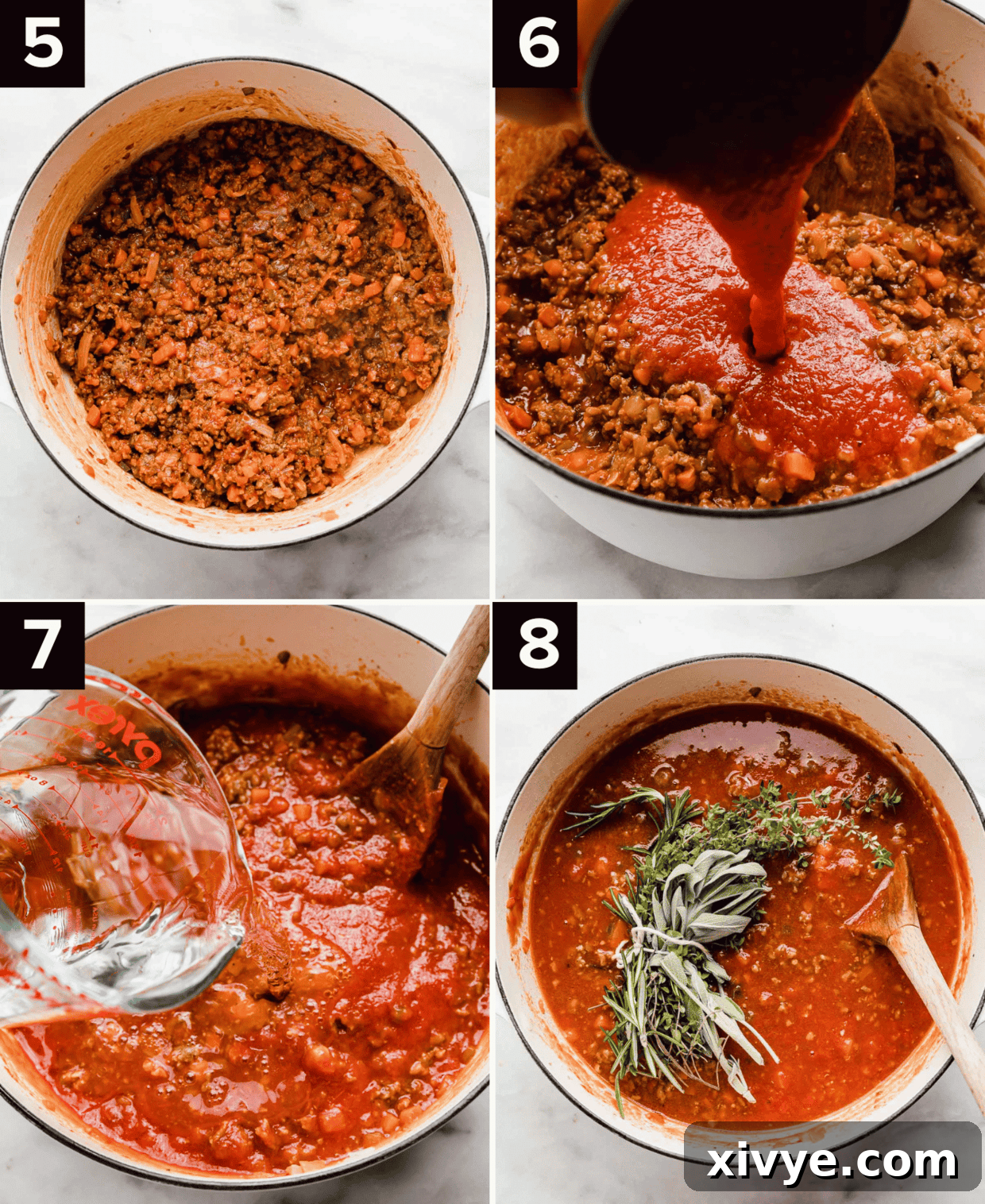
- Caramelize the Tomato Paste & Deglaze: Stir 6 oz of tomato paste into the sausage and soffritto mixture. Cook for 1 minute, stirring constantly. The tomato paste will darken in color and intensify in flavor as it caramelizes, adding a crucial layer of umami. To deglaze the pan, pour in 1 cup of water (or chicken stock for added richness). Use your wooden spoon to scrape up all the browned bits that have accumulated at the bottom of the pan; these are packed with flavor. Allow the liquid to simmer until it has almost completely evaporated, concentrating the flavors.
- Incorporate Tomatoes and Herbs: Add a 28 oz can (or two 14 oz cans) of crushed tomatoes to the Dutch oven. If using fresh herbs, gather 3 sprigs of fresh rosemary, 5 sprigs of fresh sage, and 15 sprigs of fresh thyme, and tie them together with kitchen twine. This bundle will make them easy to remove later. Place the herb bundle into the pot and stir everything to combine. If opting for dried herbs, add 1 teaspoon dried rosemary, 1½ teaspoons dried sage, and 1 tablespoon of dried thyme directly to the pot and stir well.
- The Long Simmer: Pour in an additional 2 cups of water (or chicken broth for a deeper flavor). Stir gently, then partially cover your pot and reduce the heat to low. Allow the sauce to simmer for a minimum of 90 minutes. This extended simmering time is essential for the flavors to fully meld and for the sauce to develop its characteristic richness and depth. Stir occasionally to prevent sticking.
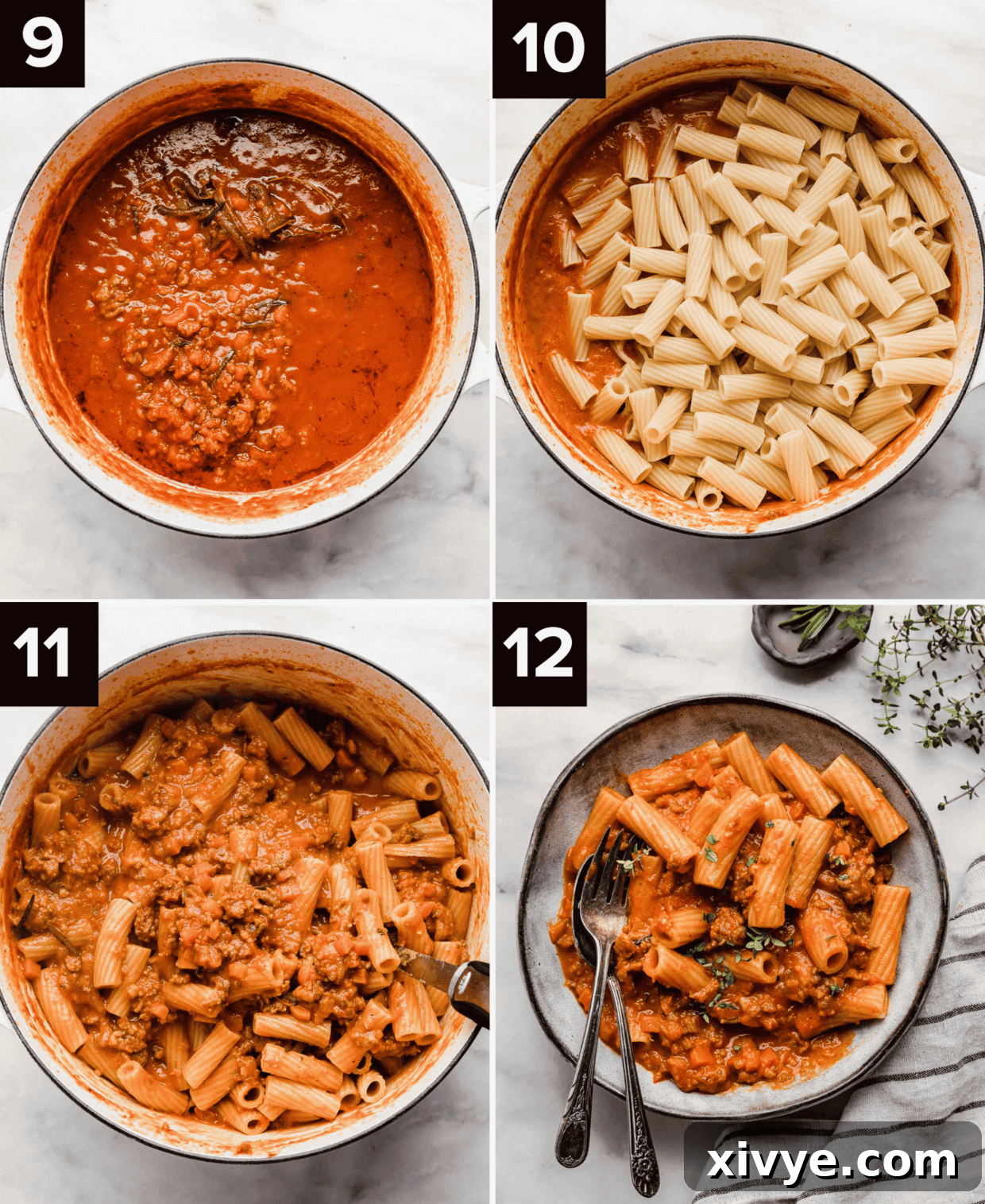
- Cook the Pasta: Approximately 30 minutes before your ragu is done simmering, bring a large separate pot of generously salted water to a rolling boil. Add 16 oz of rigatoni pasta (or your chosen pasta shape) and cook according to package directions until al dente – tender but still firm to the bite.
- Finish the Ragu with Cream: While the pasta cooks, carefully remove and discard the tied fresh herb bundle from the ragu. Stir in ½ cup of heavy cream. This adds a beautiful richness and smooths out the sauce. Taste the ragu and adjust seasoning with additional salt and pepper as needed.
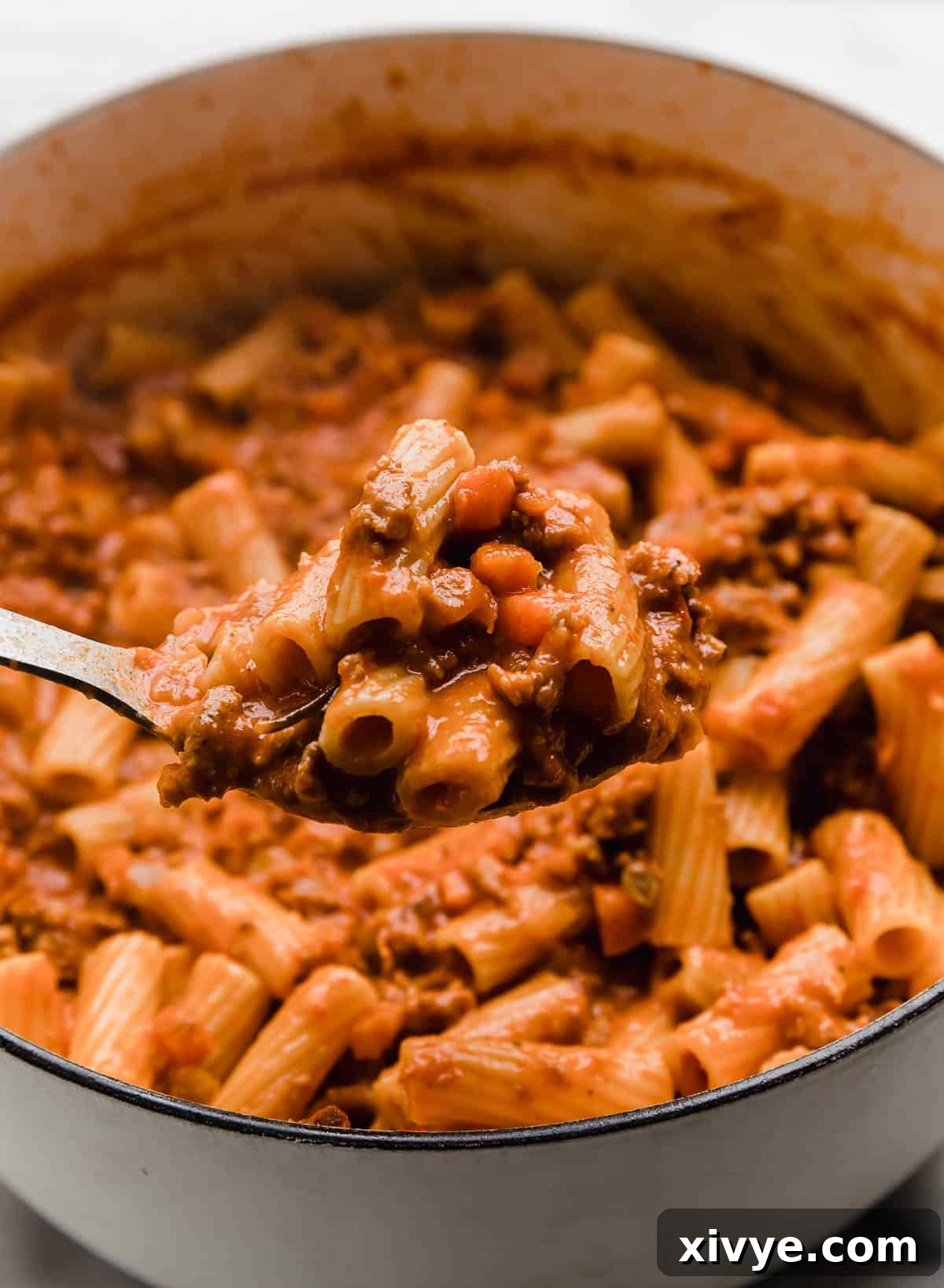
- Combine and Serve: Drain your cooked pasta thoroughly. Transfer the al dente noodles directly into the Dutch oven with the sausage ragu sauce. Toss everything together until the pasta is fully coated.
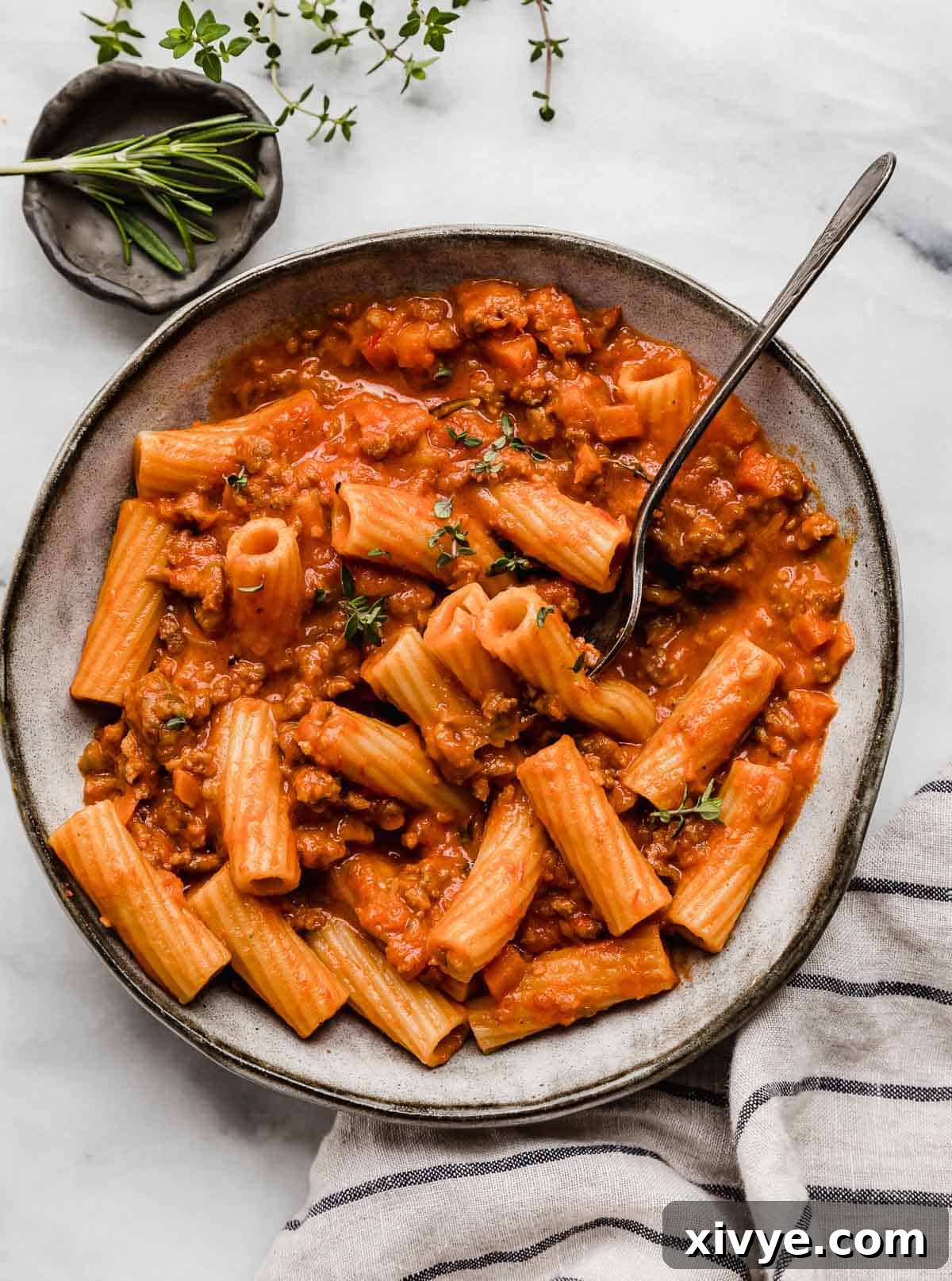
- Enjoy Your Masterpiece: Divide the sausage ragu with rigatoni into individual bowls. Garnish with freshly grated Parmesan cheese and a sprinkle of fresh herbs (such as parsley or basil) for a touch of freshness and color. Serve immediately and savor every spoonful of this truly comforting Italian classic.
Expert Tips for a Perfect Sausage Ragu
Elevate your sausage ragu to new heights with these handy tips and tricks:
- Sausage Versatility: If authentic Italian sausage is hard to find, don’t fret! You can use all regular ground pork sausage and enhance its flavor by adding 2 teaspoons of good quality Italian seasoning along with the crushed tomatoes. For a lighter touch, ground turkey or chicken sausage are excellent substitutes, but be mindful that they have less fat and may require a slightly reduced simmering time (around 20 minutes less) to prevent them from drying out. Adjust seasoning as needed.
- The Secret Weapon: Parmesan Rind: Never discard your Parmesan rinds! Adding a hardened Parmesan rind to your ragu sauce while it simmers is a game-changer. It slowly dissolves, imparting a deep, savory, umami-rich flavor that adds incredible complexity to the sauce. Just remember to remove it before serving.
- Batch Cooking & Entertaining: This recipe yields a generous amount, making it absolutely perfect for feeding a crowd at a dinner party or ensuring you have ample leftovers for a large family. If you prefer not to eat ragu for several days straight, simply freeze half of the cooled sauce for a future quick meal.
- Amp Up the Heat: For those who crave a fiery kick, simply using spicy Italian sausage might not be enough. Consider adding a pinch or two of red pepper flakes to your sauce along with the tomato paste. This allows the spice to bloom and integrate beautifully into the sauce as it simmers.
- Deglazing for Depth: Don’t skip the deglazing step! Those browned bits stuck to the bottom of your pot after cooking the sausage and tomato paste are flavor gold. Scraping them up with a wooden spoon and incorporating them into the sauce adds immense depth and richness, contributing to a more complex final flavor profile.
- Al Dente Perfection: When cooking your pasta, aim for al dente. Since the pasta will finish cooking in the hot ragu sauce, slightly undercooking it initially ensures it doesn’t become mushy. This texture contrast is crucial for an enjoyable pasta dish.
Make Ahead, Storing, and Freezing Your Ragu
This sausage ragu is incredibly versatile when it comes to meal planning and storage, making it a fantastic addition to your culinary repertoire.
Make Ahead: The most time-consuming part of this recipe is the initial preparation of the vegetables. To save time on cooking day, you can dice your carrots, celery, and onion up to 5 days in advance and store them in an airtight container in the refrigerator. This sauce also tastes even better with time, as the flavors continue to develop and meld. Consider making the entire sauce at the beginning of the week and storing it separately from the pasta. Then, when you’re ready for dinner, all that’s left is to cook your pasta and combine it with the pre-made sauce for a quick and delicious meal.
Storing: If you’ve already combined the sausage ragu with pasta, leftovers will keep wonderfully in an airtight container in the refrigerator for 3-4 days. For optimal freshness and texture, it’s best to store the sauce and cooked pasta separately if possible. The sauce alone, kept in an airtight container in the fridge, will stay fresh and delicious for up to 5 days. This separation prevents the pasta from absorbing too much liquid and becoming overly soft.
Freezing: This sausage ragu sauce is exceptionally freezer-friendly, making it ideal for meal prep and future dinners! It’s important not to freeze the cooked pasta with the sauce, as pasta’s texture can suffer upon thawing. Allow the freshly cooked sauce to cool on the stovetop to room temperature, then transfer it to the refrigerator to cool completely. Once thoroughly chilled, spoon the sauce into freezer-safe airtight containers or heavy-duty gallon ziplock bags (removing as much air as possible). It can be stored in the freezer for up to 3 months. When ready to enjoy, thaw the sauce overnight in the refrigerator or gently reheat it on the stovetop before adding freshly cooked pasta.
Sausage Ragu: Frequently Asked Questions
Ragu is a classic Italian meat sauce, distinguished by its slow and low cooking method. It typically features aromatic vegetables (like soffritto), herbs, and often a touch of dairy, all simmered together in a rich tomato base. Sausage ragu, specifically, utilizes various types of sausage as its primary meat component. While our recipe focuses on a delicious pork and Italian sausage blend, hearty ragus can be made with many different meats, such as beef, veal, or even a mix, offering incredible versatility. The extended cooking time allows the flavors to deepen and intertwine, creating a profoundly satisfying sauce.
This is a common question with a simple answer: Bolognese is, in fact, a type of ragu! The main distinction is that Bolognese sauce originates specifically from the Italian city of Bologna. Authentic Bolognese traditionally includes a mix of ground meats (often beef and pork), soffritto, white wine or milk, and often a smaller amount of tomatoes or tomato paste, simmered for many hours. While all Bolognese is a ragu, not all ragus are Bolognese. Ragus encompass a broader category of slow-cooked meat sauces that can vary significantly in ingredients, regional styles, and specific preparation methods. If you’re curious to explore further, I also have a delightful Bolognese Sauce recipe on my site!
Absolutely, sausage ragu is an excellent candidate for freezing, making it perfect for convenient future meals! To freeze, first allow the freshly cooked sauce to cool completely to room temperature on the stovetop. Then, transfer it to the refrigerator to ensure it is thoroughly chilled. Once completely cool, spoon the sauce (without any cooked pasta) into freezer-safe ziplock bags, expelling as much air as possible, or into airtight containers. It can be stored in the freezer for up to 3 months. When you’re ready to enjoy it, simply thaw the sauce overnight in the refrigerator or gently reheat it on the stovetop before serving with freshly cooked pasta.
For a robust sauce like sausage ragu, pasta shapes that can really hold onto the chunky meat and rich sauce are ideal. Rigatoni, with its wide, ridged tubes, is a top choice because it perfectly captures every delicious morsel. Other excellent options include pappardelle, tagliatelle, or even large shell pasta, all of which provide a great surface area or cavity for the ragu to cling to. Avoid very thin or delicate pastas that might get overwhelmed by the sauce.
Soffritto is a fundamental building block in Italian cuisine, a foundational mixture of finely diced aromatic vegetables, typically onion, carrot, and celery, cooked slowly in olive oil. Its purpose is to create a deep, sweet, and savory base of flavor upon which the rest of the dish is built. This gentle caramelization of vegetables releases their natural sugars and forms the initial layer of complexity that is crucial for sauces like ragu. It’s truly the heart and soul of many traditional Italian dishes.
Explore More Italian Sausage Recipes
If you love the rich flavors of Italian sausage as much as we do, you’re in for a treat! Here are more delicious recipes featuring this versatile ingredient that you’ll want to add to your rotation:
- Easy Baked Ziti with Italian Sausage
- Hearty Italian Meatball Subs
- Flavorful Sausage Rigatoni
- Comforting Butternut Squash Sausage Pasta
- Decadent Italian Sausage Stuffed Mushrooms
Did you make this recipe? We’d absolutely love to hear about your experience! Please leave a star rating and reviewbelow, or scroll down to the recipe card to share your thoughts. Your feedback helps us and other home cooks.
Stay connected and up-to-date with our latest recipes and culinary adventures by following us on Instagram, TikTok, YouTube, Facebook, and Pinterest.

Print
SaveSaved!
Review
Hearty Sausage Ragu
 Whitney Wright
Ingredients
- 1 lb ground pork sausage – (e.g., Jimmy Dean brand)
- 8 oz Italian sausage – (hot or mild, depending on preference)
- 1 tablespoon olive oil
- 1 cup carrots – (peeled and finely diced)
- 1 large yellow onion – (finely diced)
- 1 cup celery – (finely diced)
- 2 teaspoons minced garlic
- 6 oz tomato paste
- 1 cup water – (or chicken broth for deglazing)
- 3 sprigs fresh rosemary – (or 1 teaspoon dried rosemary)
- 5 sprigs fresh sage – (or 1 ½ teaspoons dried sage)
- 15 sprigs fresh thyme – (or 1 tablespoon dried thyme)
- 28 oz crushed tomatoes – (canned)
- 2 cups water – (or chicken broth for simmering)
- 16 oz rigatoni pasta – (or other favorite pasta shape)
- ½ cup heavy cream
- Salt and freshly ground black pepper – (to taste)
- Parmesan cheese and fresh herbs – (for garnish, optional)
Instructions
-
Heat a large Dutch oven or heavy-bottomed pot over medium heat. Add the olive oil and allow it to shimmer. Carefully add the ground pork sausage and Italian sausage. Let the sausage sear undisturbed on one side for 2-3 minutes to develop a crust, then flip and cook for another 2 minutes. Use a wooden spoon to break the sausage into bite-sized pieces as it continues to cook. Add your finely diced carrots, onion, and celery (your soffritto) along with a pinch of salt and pepper. Cook, stirring occasionally, for 12-15 minutes until the soffritto is softened and beginning to turn golden and brown. Stir in the minced garlic and cook for 1 minute more until fragrant.
-
Stir in the tomato paste and cook for 1 minute, stirring constantly. The tomato paste will deepen in color as it caramelizes, building incredible depth of flavor. Deglaze the pan with 1 cup of water (or chicken broth). Use your wooden spoon to scrape up any browned bits that have formed on the bottom of the pan – these are packed with flavor! Let the liquid simmer until it is almost fully cooked out and concentrated.
-
Next, pour in the 28 oz can of crushed tomatoes. If using fresh herbs, use kitchen twine to tie together the sprigs of rosemary, sage, and thyme, then place the bundle into the pot. If using dried herbs, add 1 teaspoon dried rosemary, 1½ teaspoons dried sage, and 1 tablespoon of dried thyme directly to the pot. Stir everything to combine. Pour in the remaining 2 cups of water (or chicken broth). Partially cover the pot and reduce the heat to low. Allow the sauce to gently simmer for 90 minutes, stirring occasionally. After simmering, discard any spent fresh herb bundles.
-
About 30 minutes before the ragu is done, bring a large pot of generously salted water to a rolling boil. Add the 16 oz of rigatoni noodles and cook according to package directions until al dente – tender but still firm to the bite.
-
While the noodles are cooking, add the ½ cup of heavy cream to the ragu sauce and stir well to combine. Taste the sauce and add more salt and pepper as needed to achieve your desired flavor profile. Once the noodles are cooked, drain them thoroughly and then transfer the cooked noodles directly to the pot with the ragu sauce.
-
Toss the pasta with the ragu until evenly coated. Garnish with freshly grated Parmesan cheese and a sprinkle of fresh herbs (like parsley or basil), then serve immediately and enjoy!
Notes
This sauce is also wonderfully freezer-friendly. To freeze, allow the cooked sauce to cool completely before spooning it into freezer-safe ziplock bags or airtight containers. It can be stored in the freezer for up to 3 months. Remember to freeze the sauce without the cooked pasta for best results.