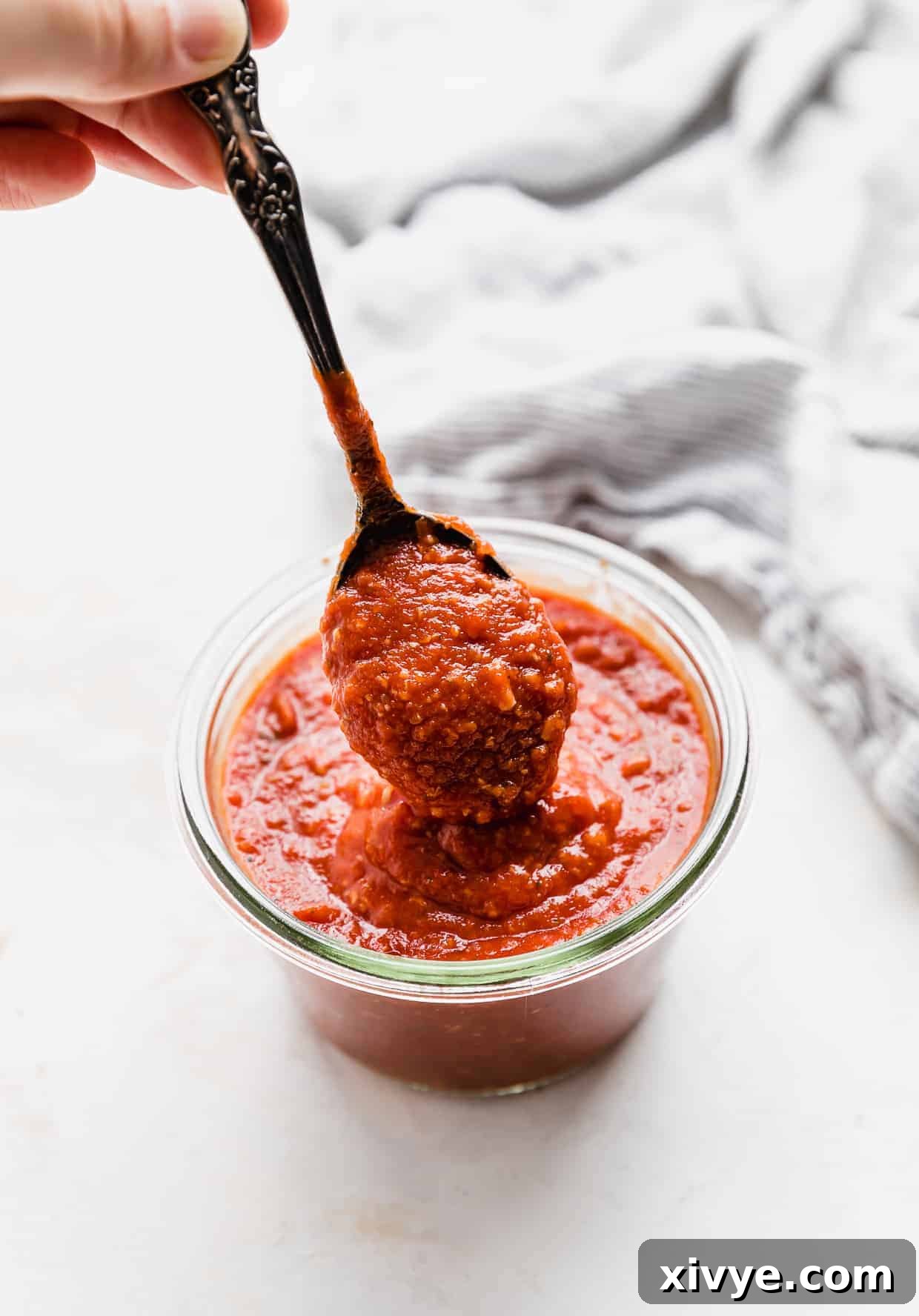
Transform your pizza nights with an incredibly flavorful and effortless homemade pizza sauce made from rich tomato paste. In just 5 minutes of active preparation, and with minimal ingredients, you can create a robust, authentic sauce that elevates any pizza. This no-cook recipe delivers a thick, vibrant sauce perfect for spreading, dipping, or enhancing a variety of dishes.
This versatile pizza sauce isn’t just for classic pies. It’s fantastic as a dipping sauce for crispy pizza rolls, the foundational flavor for a decadent pepperoni pizza dip, or a delicious base for speedy meals like tortilla pizzas, simple French bread pizzas, convenient English muffin pizzas, or even fluffy focaccia pizza. Get ready to ditch store-bought alternatives and embrace the superior taste and texture of homemade!
Why This Homemade Pizza Sauce Recipe Works Wonders
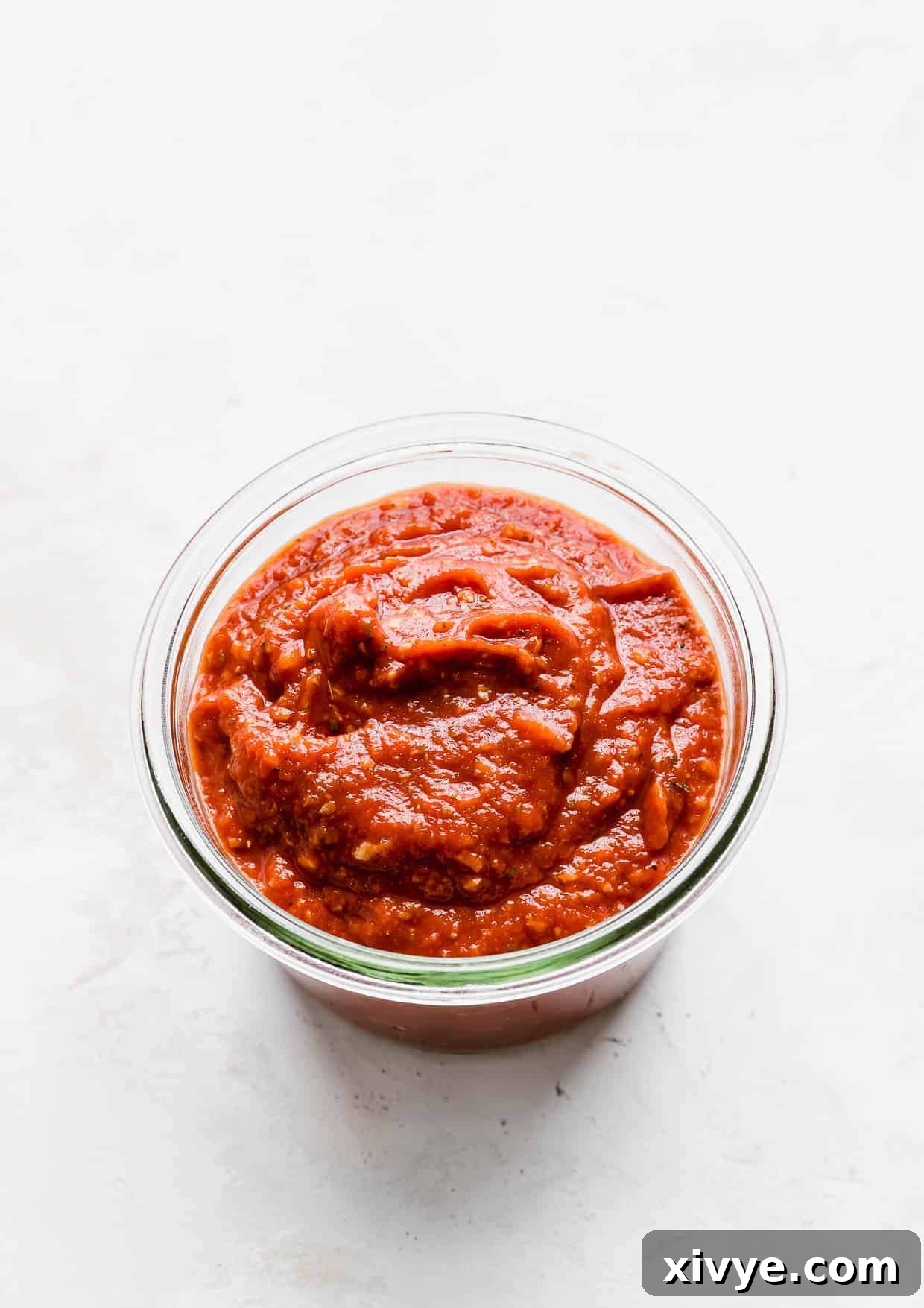
Many home cooks mistakenly believe that great pizza sauce requires hours of simmering, but the truth is, an authentic Italian-style pizza sauce is traditionally uncooked. Our recipe fully embraces this principle, delivering a fresh, bright flavor profile that truly shines. If you’re searching for an authentic, no-fuss tomato paste pizza sauce recipe, look no further – this is it! Its raw, vibrant tomato flavor, combined with a thoughtful blend of seasonings, creates a base that beautifully complements any pizza. We often enjoy using a generous portion of this exceptional sauce on our Authentic Margherita Pizza, where its pure taste can truly be appreciated.
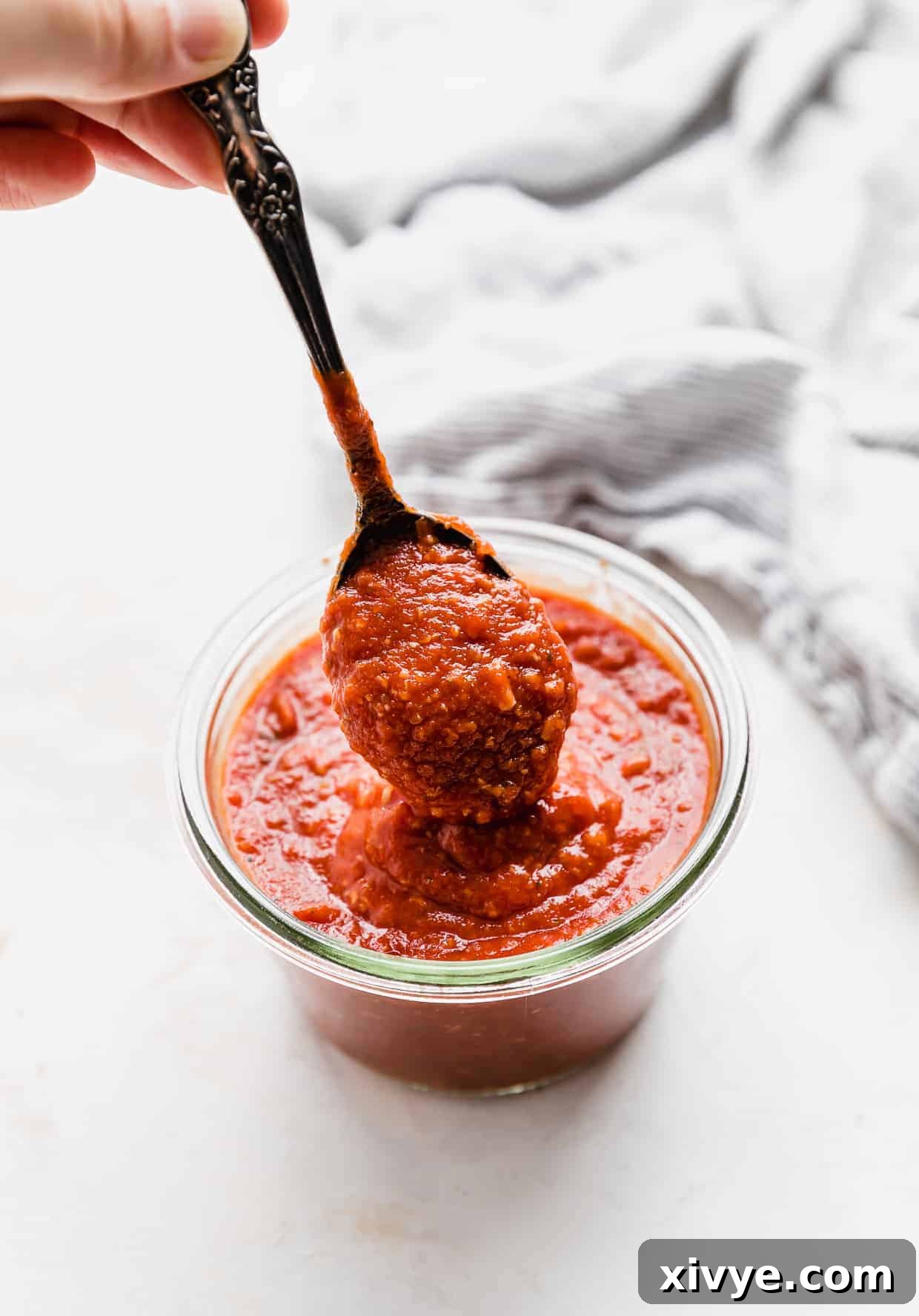
One of the primary advantages of crafting pizza sauce with tomato paste is the unparalleled thick consistency it provides. Unlike sauces made from thinner purees or diced tomatoes, tomato paste offers a naturally dense base that adheres perfectly to your pizza dough. This robust texture prevents your crust from becoming soggy, ensuring every bite is delightfully crisp and flavorful. It’s equally ideal for dipping crunchy breadsticks or garlic knots, providing a hearty, satisfying coating without being watery. The concentrated nature of tomato paste means a little goes a long way, delivering intense tomato flavor in every spread.
Beyond its fantastic texture and authentic flavor, this recipe stands out for its incredible simplicity and speed. You’ll spend just 5 minutes combining and mixing the ingredients – a perfect solution for busy weeknights or spontaneous pizza cravings. While the sauce is delicious immediately, we highly recommend allowing it to rest for at least 30 minutes. This crucial resting period gives the aromatic spices and herbs ample time to fully permeate the tomato paste, resulting in a more complex, well-rounded, and utterly irresistible flavor. It’s a small step that makes a significant difference, transforming a quick mix into a gourmet experience.
Key Ingredients for the Best Tomato Paste Pizza Sauce
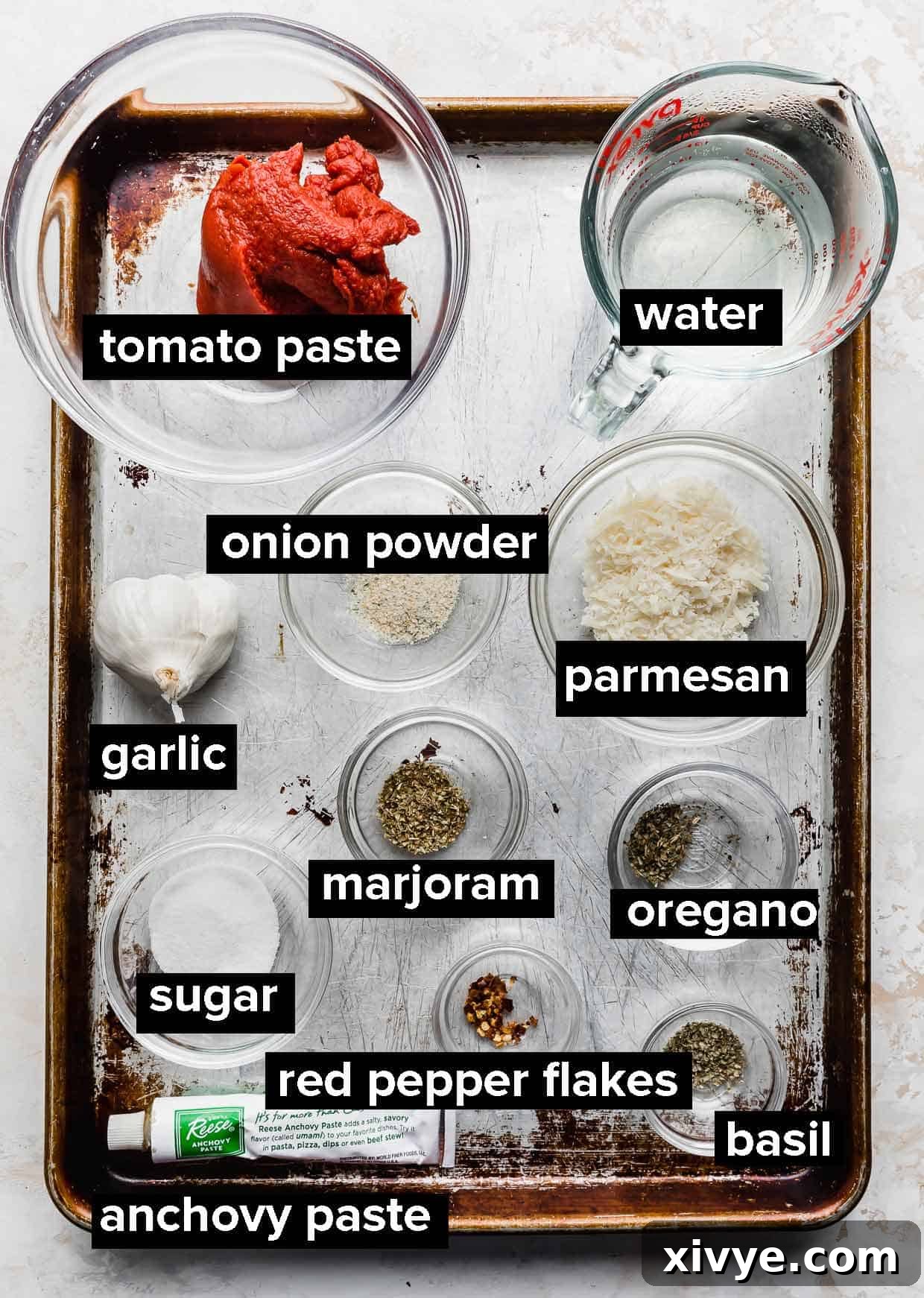
While most of the ingredients for this sauce are likely staples in your pantry, a few might be less common but contribute significantly to its unique and delightful flavor profile. Let’s explore these special elements and why they’re worth including:
- Tomato Paste: The undisputed star and foundation of our sauce, tomato paste is key to achieving that wonderfully thick, rich consistency. Unlike thinner tomato sauces, tomato paste is highly concentrated, meaning it delivers a deep, robust tomato flavor without excess water. This ensures your pizza crust stays crisp and delicious, free from the dreaded “soggy bottom.” Choose a good quality tomato paste for the best results; those in tubes often offer a fresher taste than canned varieties, allowing you to use exactly what you need and store the rest easily.
- Marjoram: Often confused with oregano, marjoram offers a distinct flavor that elevates this pizza sauce. While similar to oregano, marjoram is typically milder and possesses a slightly sweeter, more delicate floral and woodsy note. It adds a warm, inviting complexity that complements the bright tomato, contributing to a truly authentic Italian herb blend. If you don’t have marjoram, you can use a bit more oregano, but the subtle sweetness of marjoram is highly recommended.
- Anchovy Paste: Now, don’t let this ingredient deter you! Anchovy paste is a secret weapon for adding incredible depth of flavor. You can readily find it in tubes in most grocery stores, typically near other specialty condiments or canned fish. Its magic lies in its ability to impart a profound umami flavor – that savory, fifth basic taste that enriches and rounds out dishes. It adds a rich, salty dimension to the sauce without making it taste “fishy” whatsoever. Once incorporated, it simply enhances the overall savoriness, making the other flavors pop and creating a more complex and satisfying experience. Even skeptics will be pleasantly surprised by the undetectable yet transformative effect it has.
- Freshly Grated Parmesan Cheese: While optional, freshly grated Parmesan adds a salty, nutty, and savory layer of flavor that complements the tomato beautifully. Its fine texture melts into the sauce, enhancing the overall richness.
- Minced Garlic: Essential for any Italian-inspired sauce, fresh minced garlic provides a pungent, aromatic kick that forms the backbone of the flavor.
- Sugar: A small amount of sugar helps to balance the acidity of the tomato paste, bringing out its natural sweetness and creating a more harmonious flavor profile.
- Onion Powder: Offers a consistent, subtle onion flavor without the crunch or moisture of fresh onion, blending seamlessly into the sauce.
- Dried Oregano & Basil: These classic Italian herbs are indispensable. Oregano provides a robust, earthy, and slightly peppery note, while basil offers a sweeter, aromatic, and slightly minty quality, creating the quintessential pizza sauce flavor.
- Crushed Red Pepper Flakes: For those who enjoy a little heat, red pepper flakes add a subtle warmth and gentle spice that awakens the palate. Adjust the amount to your personal preference.
- Salt and Pepper: Fundamental seasonings to enhance and balance all the other flavors. Always season to taste.
Easy Step-By-Step Instructions for Your 5-Minute Pizza Sauce
Making this homemade pizza sauce is incredibly straightforward, requiring just a few simple steps. The magic happens through the combination of quality ingredients and a short resting period to allow the flavors to truly meld.
- Combine All Ingredients: In a medium-sized mixing bowl, measure out and combine all the listed ingredients: the 6 oz can of tomato paste, 6 oz of warm water (preferably around 110°F to help everything mix smoothly), 3 tablespoons of freshly grated Parmesan cheese, 1 teaspoon of minced garlic, 1 teaspoon of sugar, ½ teaspoon of anchovy paste, ¾ teaspoon of onion powder, ½ teaspoon of dried oregano, ¼ teaspoon of dried marjoram, ¼ teaspoon of dried basil, and ⅛ teaspoon of crushed red pepper flakes. Add salt and pepper to taste, starting with about ¼ teaspoon of each and adjusting as needed.
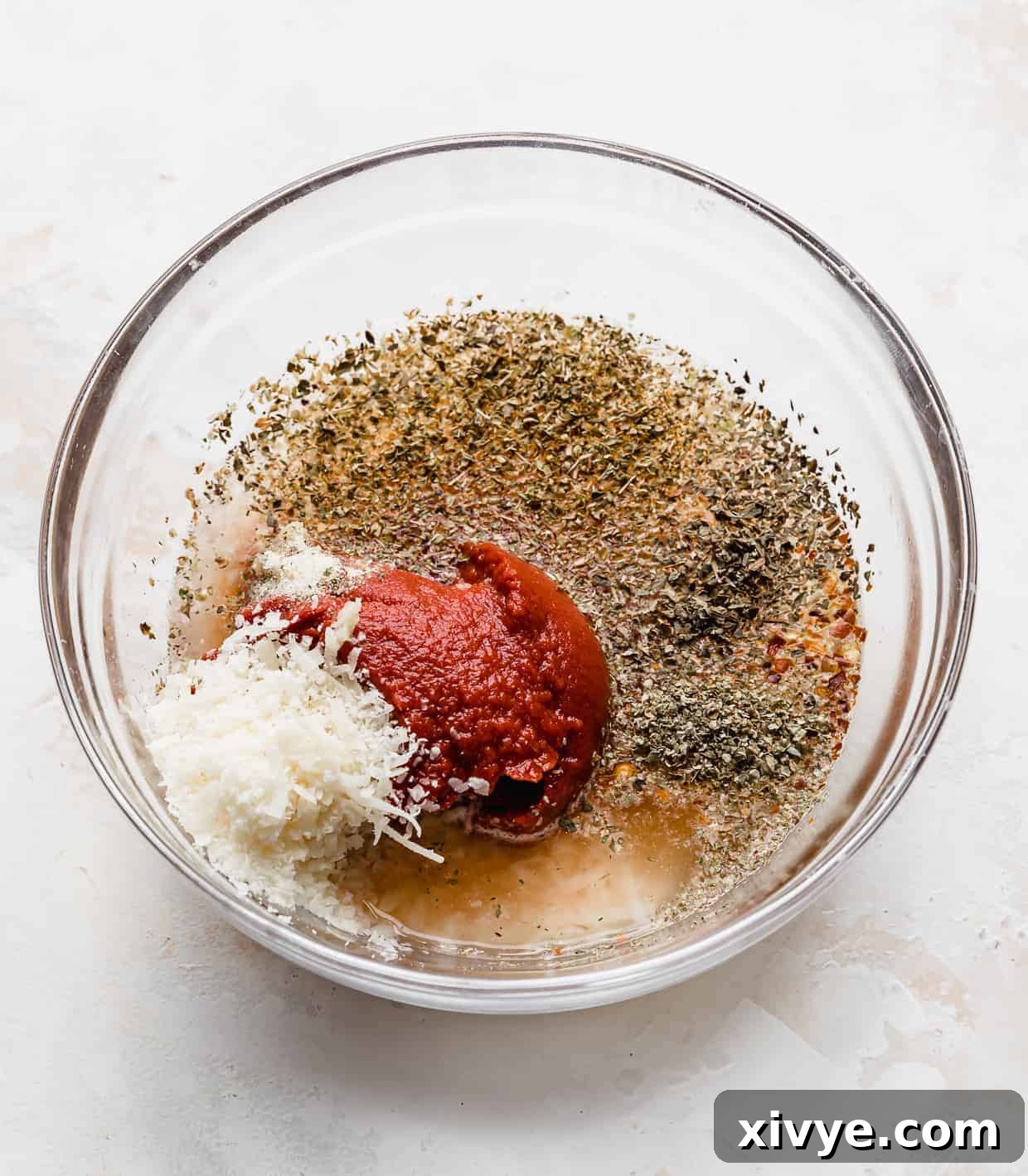
- Thoroughly Stir to Combine: Using a whisk or a sturdy spoon, vigorously stir all the ingredients together until they are completely combined and form a smooth, uniform sauce. Ensure there are no lumps of tomato paste or dry seasoning pockets. The warm water helps create a silky texture and allows the dried herbs to rehydrate more effectively. Scrape down the sides of the bowl to ensure everything is fully incorporated.
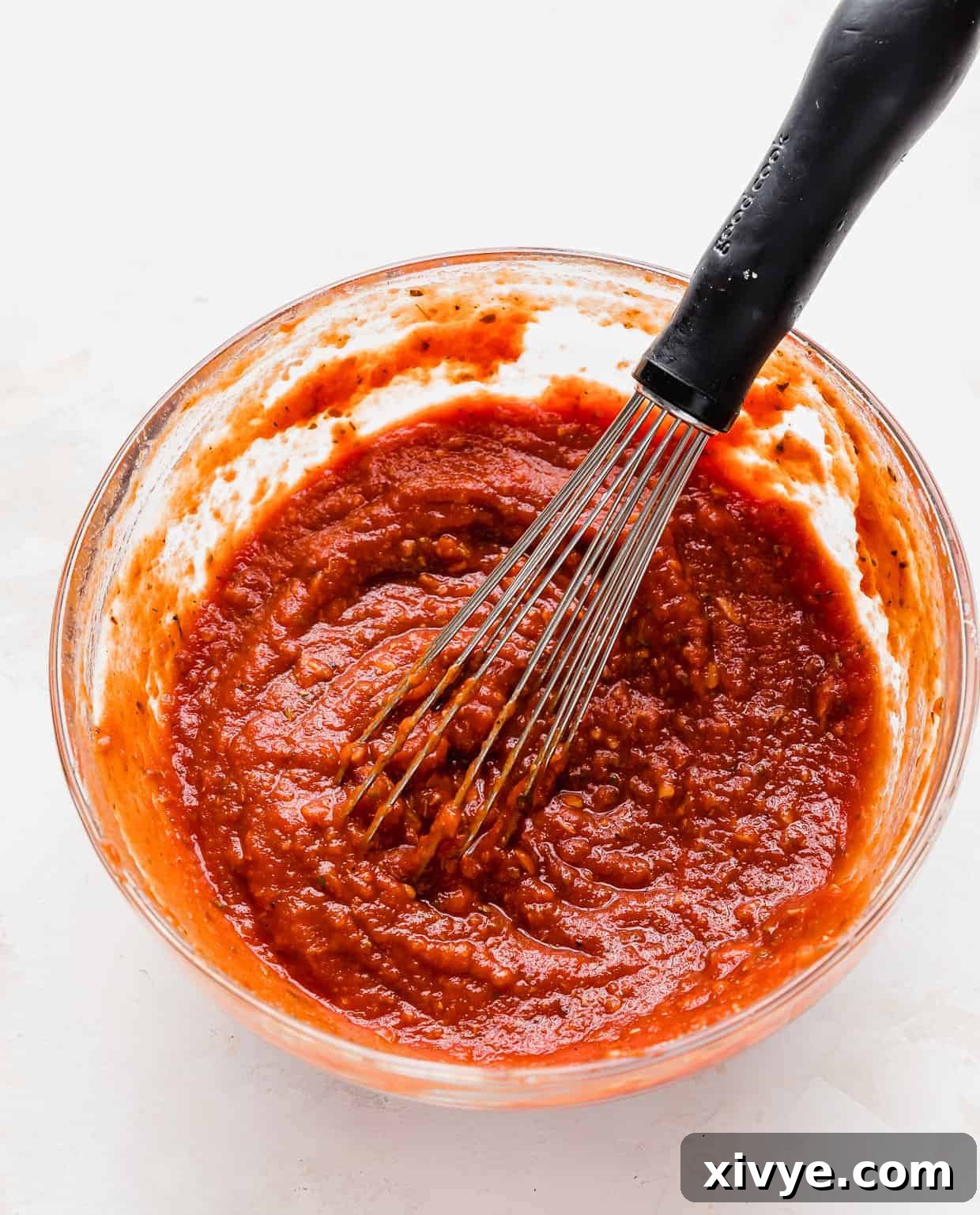
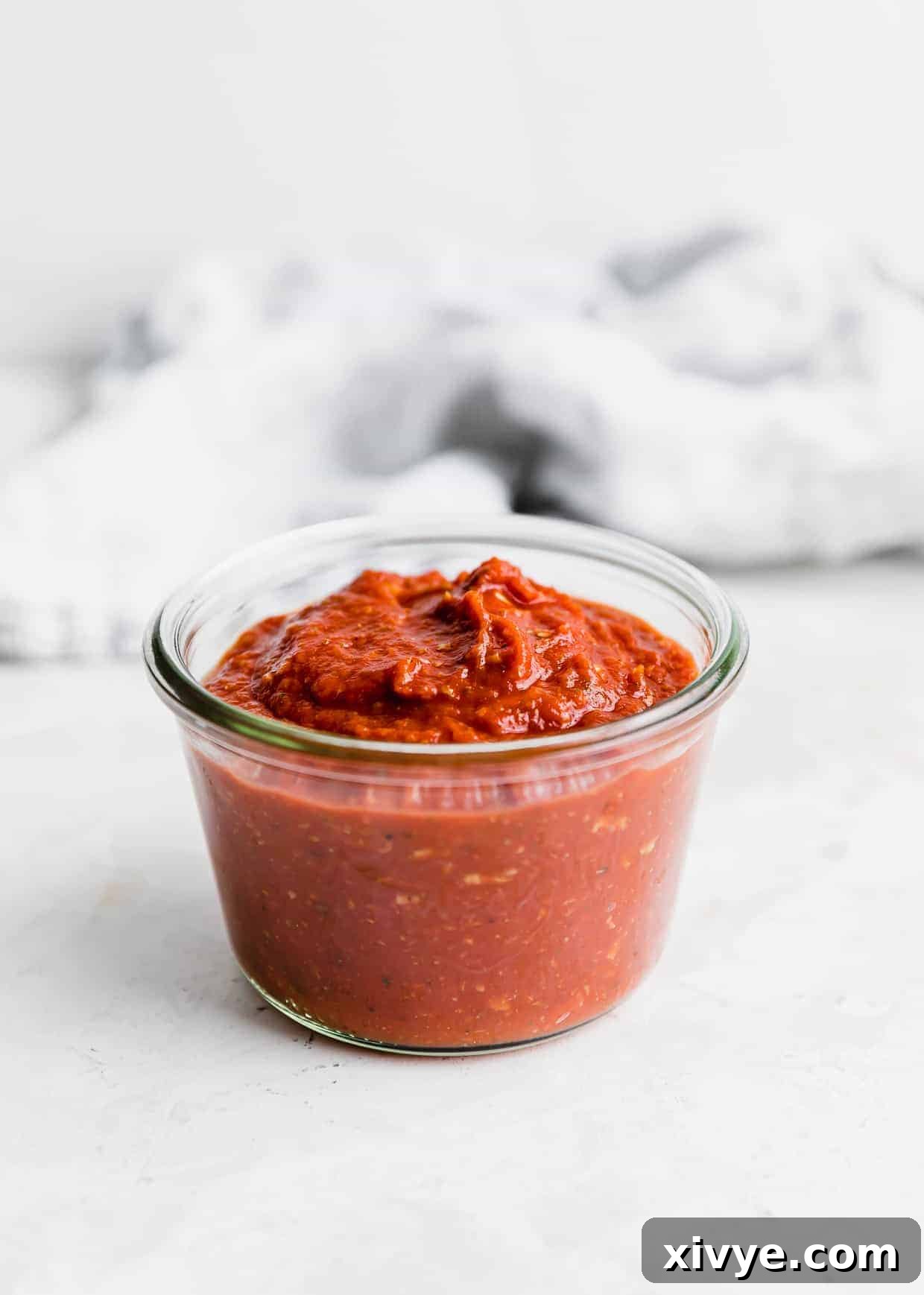
- Allow the Sauce to Rest for Flavor Development: Once thoroughly mixed, cover the bowl and let the sauce sit at room temperature for at least 30 minutes. This resting period is essential for allowing the flavors from the various spices and herbs to fully incorporate, bloom, and meld beautifully with the tomato paste. It deepens the complexity and richness of the sauce, transforming it from a simple mix into a truly harmonious blend. After resting, stir briefly once more, then your vibrant, flavorful pizza sauce is ready to be spread over your favorite pizza dough or used as a delicious dip!
Expert Tips for the Perfect Homemade Pizza Sauce
Achieving the best homemade pizza sauce is easy with a few simple tricks. Here are some expert tips to ensure your sauce is always top-notch:
- Parmesan Perfection: While I always advocate for freshly grated Parmesan cheese due to its superior flavor and texture, don’t let its absence deter you. If you only have the pre-grated or crumbled kind from a shaker, that’s perfectly fine! The goal is to get that lovely cheesy undertone in your sauce. Use what you have on hand, and don’t feel pressured to always grate fresh.
- Adjusting Spice Levels: The crushed red pepper flakes add a wonderful, subtle kick to the sauce. However, personal preference varies greatly when it comes to spice. Feel free to adjust the amount to your liking: add a little more for a bolder, spicier sauce, or reduce it for a milder, family-friendly version. You can even omit them entirely if you prefer no heat at all.
- Water Temperature Matters: Using warm water (around 110°F) helps the tomato paste and seasonings blend more smoothly and dissolve faster. Cold water can make the paste lumpy and harder to incorporate fully.
- Taste and Adjust: Always taste your sauce before letting it rest, and again after. Adjust salt, pepper, and even a pinch more sugar if the sauce tastes too acidic. A dash of dried basil or oregano can also be added if you desire more herbal notes.
- Enhancing Umami without Anchovy: If you’re strictly vegetarian or simply prefer not to use anchovy paste, you can still boost the umami. A tiny pinch of MSG (monosodium glutamate) or a small amount of finely minced mushrooms (like dried shiitake rehydrated and finely chopped) can provide a similar depth. Alternatively, a splash of soy sauce or Worcestershire sauce (if not vegetarian) can also work in very small quantities.
- Maximize Flavor with Resting Time: Don’t skip the 30-minute resting period! This is where the magic happens. The dried herbs and spices rehydrate and release their full aromatic potential, deeply infusing the tomato paste and creating a far more complex and cohesive flavor. If time allows, even an hour or two in the fridge can further enhance the flavors.
- Smooth or Chunky: This recipe yields a smooth sauce. If you prefer a slightly chunkier texture, you could finely mince a few sun-dried tomatoes (packed in oil) and stir them in after the initial mixing.
Storing Your Homemade Pizza Sauce
Proper storage ensures your delicious homemade pizza sauce stays fresh and ready for your next culinary creation.
- Refrigeration: Store any leftover pizza sauce in an airtight container or a clean glass jar with a tight-fitting lid in the refrigerator for up to one week. Ensure it’s sealed well to maintain freshness and prevent it from absorbing other odors.
- Freezing for Long-Term: This sauce freezes beautifully, making it perfect for meal prep. Spoon leftover pizza sauce into an ice cube tray and freeze until firm, which typically takes about 3 hours. Once frozen, remove the individual sauce cubes from the tray and transfer them to a freezer-safe ziplock bag or airtight container. Label with the date and store in the freezer for up to 3 months.
- Using Frozen Sauce: When you’re ready to use your frozen pizza sauce, simply thaw the desired number of cubes in the refrigerator overnight. For quicker thawing, you can place the frozen cubes in a microwave-safe bowl and microwave on low heat until defrosted, stirring occasionally. Always bring the thawed sauce to room temperature before spreading it over your pizza dough for even cooking and optimal flavor distribution.
Frequently Asked Questions About Pizza Sauce
Anchovy paste is a concentrated purée made from anchovies, olive oil, and salt. It’s a powerful flavor enhancer, much like fish sauce or miso, adding a deep savory note known as umami. In culinary applications, even a small amount can significantly boost the overall flavor of sauces, soups, and dressings. Many people are hesitant to use anchovy paste due to concerns about a “fishy” taste, but rest assured, it won’t make your food taste or smell like fish at all! Instead, it dissolves into the sauce, enriching and deepening the other flavors, making the dish taste more complex and satisfying without its presence being overtly detected. It’s a secret ingredient that truly elevates the taste profile.
Yes, you can use plain tomato sauce as a substitute for pizza sauce in a pinch, but it’s important to understand the differences and make adjustments. Standard tomato sauce is typically thinner and lacks the concentrated flavor and specific seasonings found in pizza sauce. If you opt for tomato sauce, you’ll definitely need to add the herbs, garlic, and spices outlined in this recipe to achieve that characteristic pizza flavor. Be mindful that tomato sauce is significantly runnier than the tomato paste base used here, which will result in a much thinner sauce that might make your pizza crust soggy. For a thicker consistency, you could try simmering the tomato sauce to reduce it before adding seasonings, but this deviates from the quick, no-cook nature of a traditional pizza sauce.
I generally do not recommend using spaghetti sauce as a direct substitute for pizza sauce. The primary reasons are flavor profile and consistency. Spaghetti sauce is often designed with different seasonings (more bay leaf, fennel, or other robust flavors) that might not be ideal for pizza. Furthermore, spaghetti sauce is usually precooked and often much runnier than the ideal pizza sauce, which needs to be thick enough to prevent a soggy crust. Pizza sauce is specifically formulated to cook on the pizza in the oven, where its fresh flavors develop perfectly. Using spaghetti sauce can lead to an unbalanced taste and an undesirable, watery texture on your pizza.
Defining the “best” tomato sauce for pizza is highly subjective, as preferences vary widely. However, from a practical and culinary standpoint, several characteristics contribute to a truly excellent pizza sauce. I personally favor a slightly thicker consistency, which ensures the sauce stays put on the dough and doesn’t make the crust soggy. Beyond texture, the most crucial element is a rich, balanced flavor profile. This means a sauce with robust tomato notes, complemented by a thoughtful blend of fresh or dried herbs (like oregano, basil, and marjoram), garlic, a touch of sweetness to cut acidity, and sometimes a hint of savory umami (like from anchovy paste). A good pizza sauce should enhance, not overpower, the other toppings, allowing all the flavors to shine together harmoniously.
Absolutely! To make this pizza sauce vegan, simply omit the Parmesan cheese and the anchovy paste. You can replace the savory notes of Parmesan with nutritional yeast for a cheesy umami flavor, or simply increase the other herbs and spices to taste. For the umami boost of anchovy paste, consider a tiny dash of soy sauce (ensure it’s suitable for your dietary needs) or a pinch of mushroom powder. The core of the sauce – tomato paste and herbs – is naturally vegan and delicious.
If your sauce turns out too thick after mixing, simply add a teaspoon of warm water at a time, stirring well after each addition, until you reach your desired consistency. Be cautious not to add too much at once. If, on the other hand, your sauce is a bit too thin (which is less likely with tomato paste but can happen if too much water is added), you can try adding a little more tomato paste (half a tablespoon at a time) or allowing it to rest longer, as it tends to thicken slightly upon standing. For a quick fix, a tiny amount of cornstarch slurry (1/4 tsp cornstarch mixed with 1 tsp cold water) can be whisked in, though this is usually unnecessary for a tomato paste-based sauce.
Discover More Favorite Pizza Recipes
Once you’ve mastered this incredible homemade pizza sauce, you’ll be eager to put it to good use! Explore some of our other beloved pizza-inspired dishes that pair perfectly with this versatile sauce:
- CPK Club Pizza
- Homemade Pizza Rolls
- Easy Homemade Pizza Dough Recipe
- Irresistible Pepperoni Pizza Dip
Did you try this recipe? We’d absolutely love to hear about your experience! Click here to leave a rating and review and share your thoughts. Your feedback helps us and other home cooks. Don’t forget to take a picture and tag @saltandbaker on TikTok, Instagram, and Facebook so we can see your delicious creations!

Save Recipe
Review Recipe
5-Minute Homemade Pizza Sauce with Tomato Paste

By Whitney Wright
This incredibly flavorful homemade pizza sauce is made from concentrated tomato paste, making it thick, rich, and so easy to prepare in just 5 minutes! Simply mix the ingredients and allow it to sit for 30 minutes to let the delicious flavors fully meld and develop.
Prep Time: 5 mins
Resting Time: 30 mins
Total Time: 35 mins
Yields: Approximately 1 ⅓ cups (1 serving for a large pizza)
Rating: 5 out of 5 stars from 2 votes
Ingredients
- 6 oz tomato paste
- 6 oz water – warmed to 110°F
- 3 tablespoons parmesan cheese – freshly grated is best
- 1 teaspoon garlic – minced
- 1 teaspoon sugar
- ½ teaspoon anchovy paste
- ¾ teaspoon onion powder
- ½ teaspoon dried oregano
- ¼ teaspoon dried marjoram
- ¼ teaspoon dried basil
- ⅛ teaspoon crushed red pepper flakes
- Salt – to taste
- Pepper – to taste
Instructions
- In a medium-sized bowl, combine all of the ingredients listed above. Use a whisk or sturdy spoon to stir thoroughly until everything is well combined and smooth.
- Cover the bowl and let the sauce sit at room temperature for at least 30 minutes. This crucial resting period allows all the delicious flavors from the herbs and spices to meld and develop fully. After resting, your vibrant, flavorful pizza sauce is ready to spread over your pizza dough or use as a dip.
Notes
- While freshly grated Parmesan cheese offers the best flavor, feel free to use the pre-grated kind if that’s what you have. It’s more important to include the cheesy note than to be particular about the grating method.
- Adjust the amount of crushed red pepper flakes to suit your preferred spice level. Add more for extra heat, or less for a milder sauce.
- Store any leftover pizza sauce in an airtight container or a glass jar in the fridge for up to a week.
- Freezing: For longer storage, spoon the pizza sauce into an ice cube tray and freeze until firm (about 3 hours). Transfer the frozen sauce cubes to a freezer-safe ziplock bag and store for up to 3 months. When ready to use, thaw the frozen cubes in the fridge and bring to room temperature before spreading on your pizza dough.
- This recipe yields approximately 1 ⅓ cups of rich, flavorful pizza sauce, enough for one large pizza or several smaller preparations.
Nutrition Information (Approximate per serving)
- Calories: 234 kcal (12% Daily Value)
- Carbohydrates: 40g (13% Daily Value)
- Protein: 14g (28% Daily Value)
- Fat: 5g (8% Daily Value)
- Saturated Fat: 3g (15% Daily Value)
- Cholesterol: 13mg (4% Daily Value)
- Sodium: 1709mg (71% Daily Value)
- Potassium: 1806mg (52% Daily Value)
- Fiber: 8g (32% Daily Value)
- Sugar: 25g (28% Daily Value)
- Vitamin A: 2808 IU (56% Daily Value)
- Vitamin C: 39mg (47% Daily Value)
- Calcium: 285mg (29% Daily Value)
- Iron: 6mg (33% Daily Value)
Course: Main Course, Seasoning
Cuisine: Italian