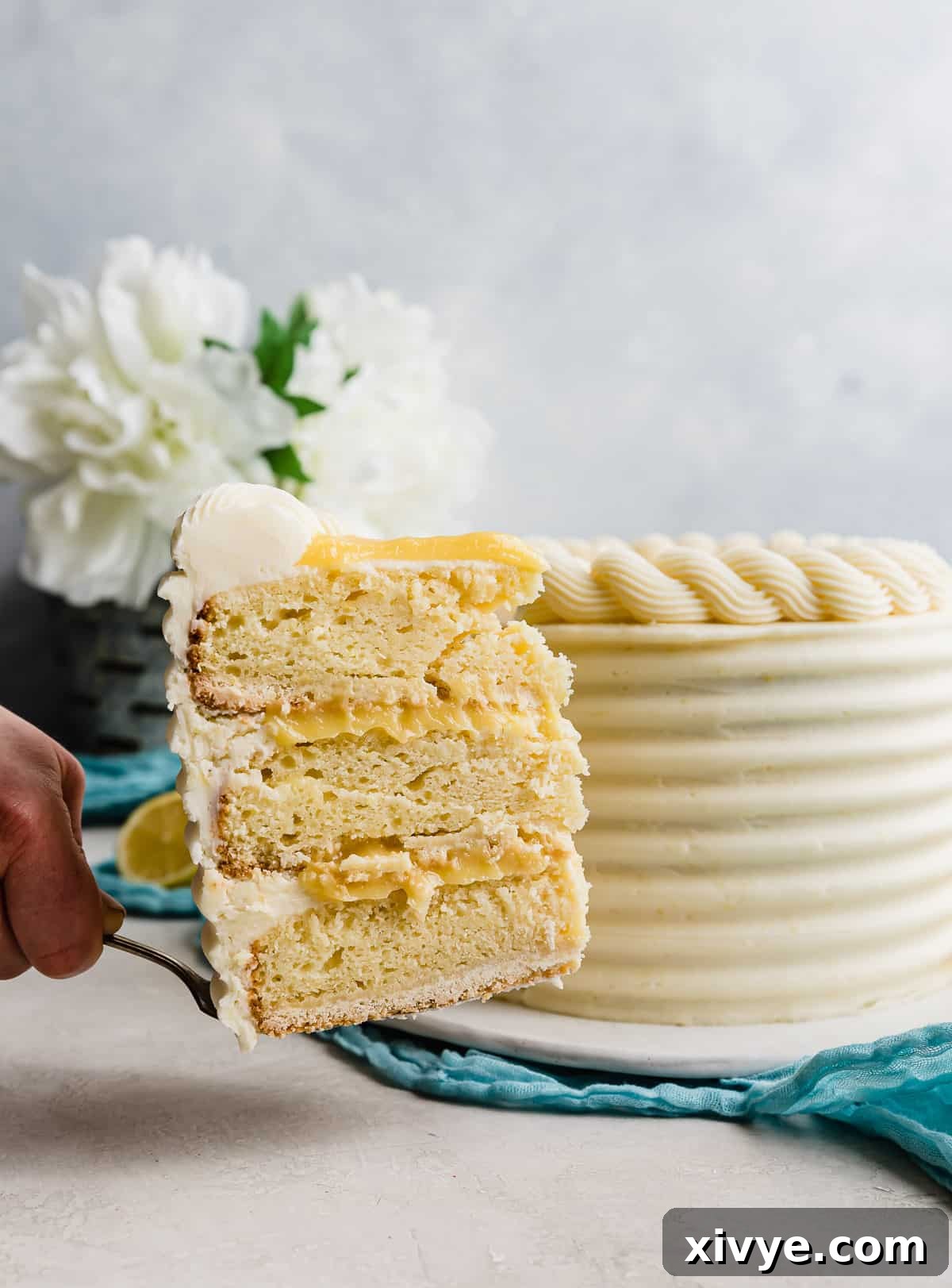
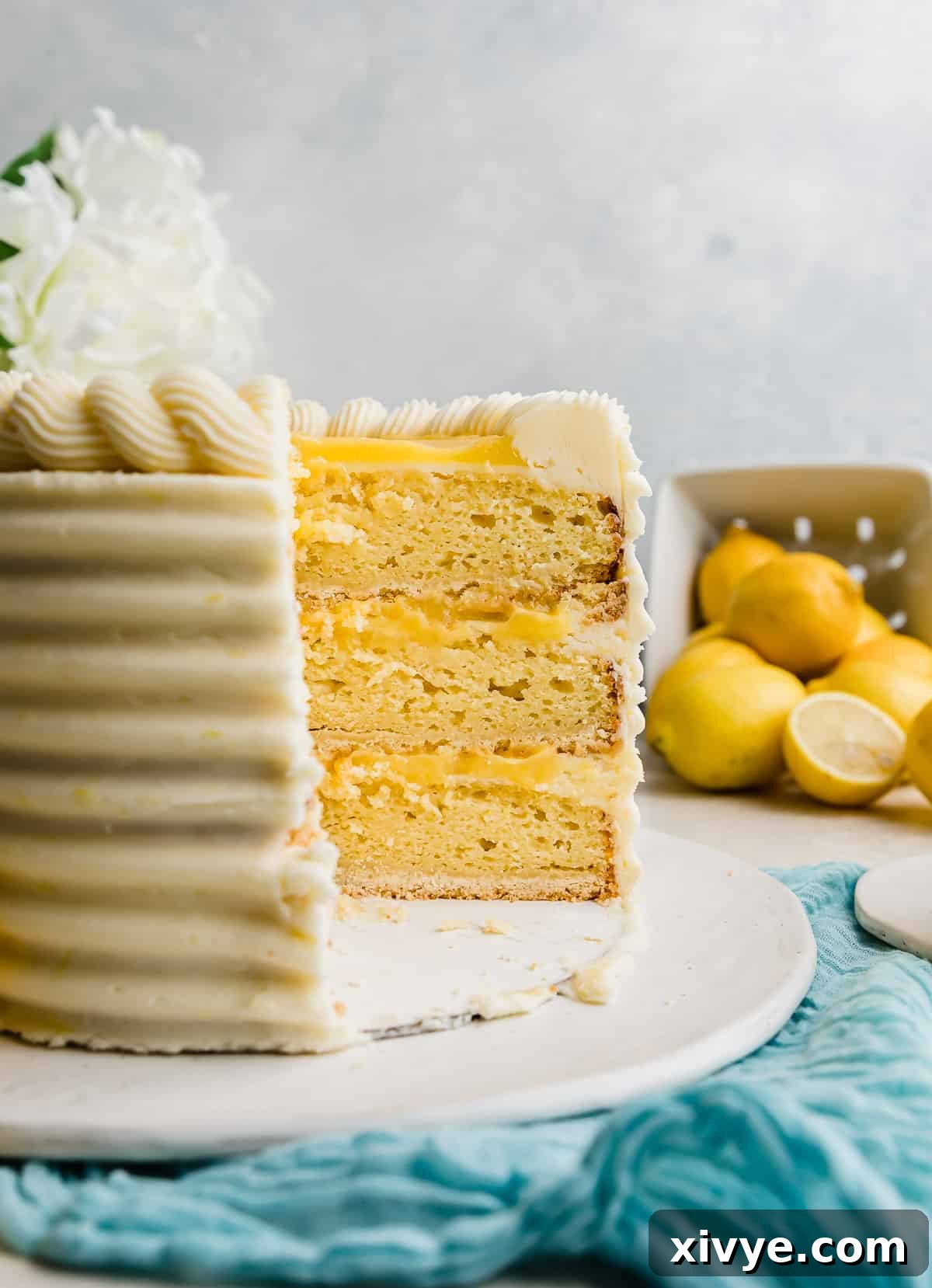
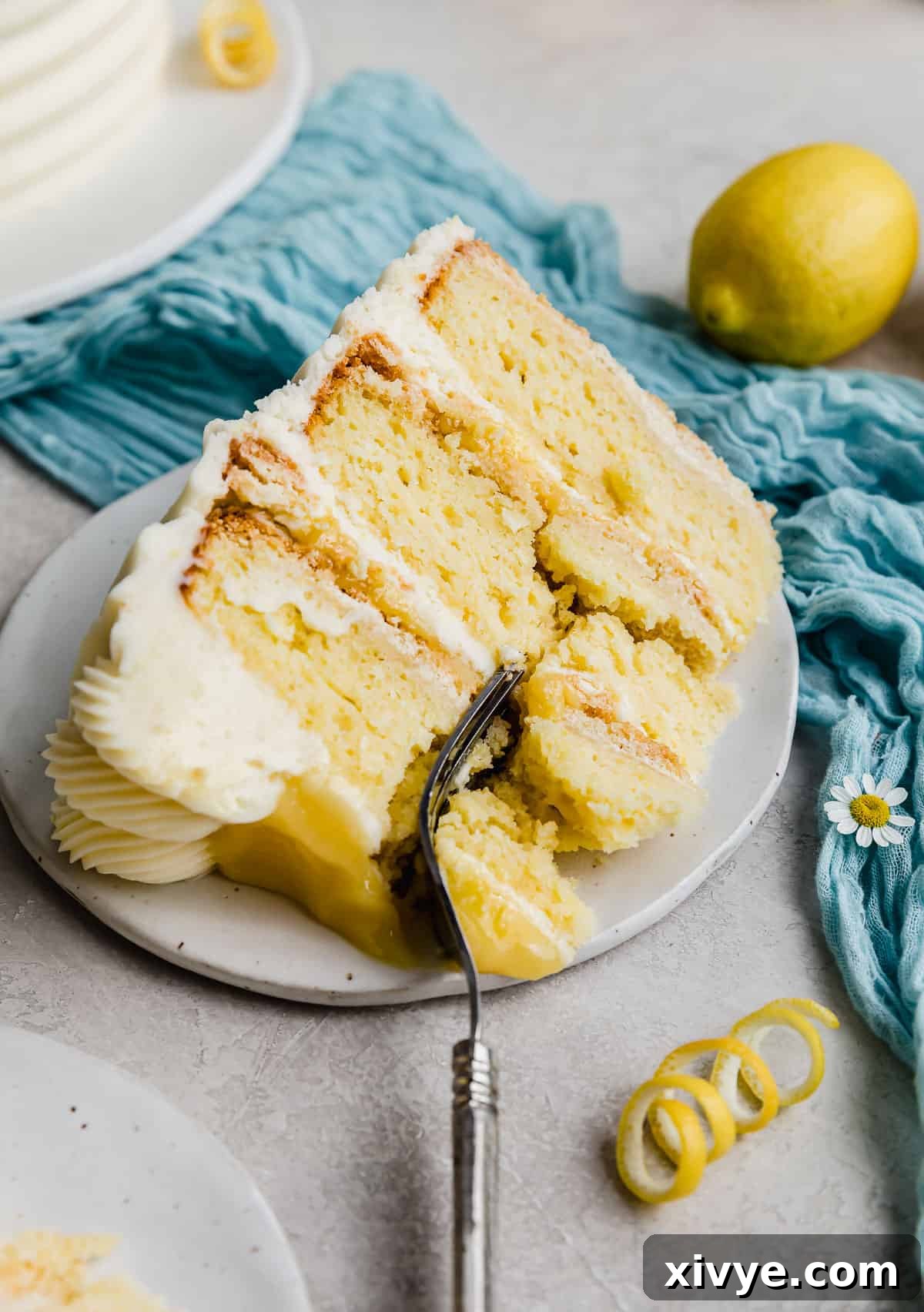
Prepare to be enchanted by the ultimate citrus dessert: our exquisite Lemon Bar Cake! This spectacular cake meticulously recreates every beloved element of classic lemon bars, transforming them into a show-stopping layer cake. Imagine sinking your teeth into a luscious creation featuring a buttery shortbread crust, delightfully moist lemon cake layers, a vibrant and tangy homemade lemon curd filling, all crowned with a smooth, sweet, and perfectly lemony buttercream. It’s a symphony of textures and flavors that will undoubtedly become your new favorite dessert.
There’s something truly special about baking with citrus. The bright, zesty notes add an invigorating freshness that elevates any dessert. If you adore the refreshing taste of lime, you’ll also love our Key Lime Pie Cake, bursting with tropical flavor. For another delightful summer celebration, our Lemon Raspberry Cake offers a perfect blend of sweet berries and tart lemon. These cakes prove that citrus is not just a flavor but an experience, bringing sunshine to every slice.
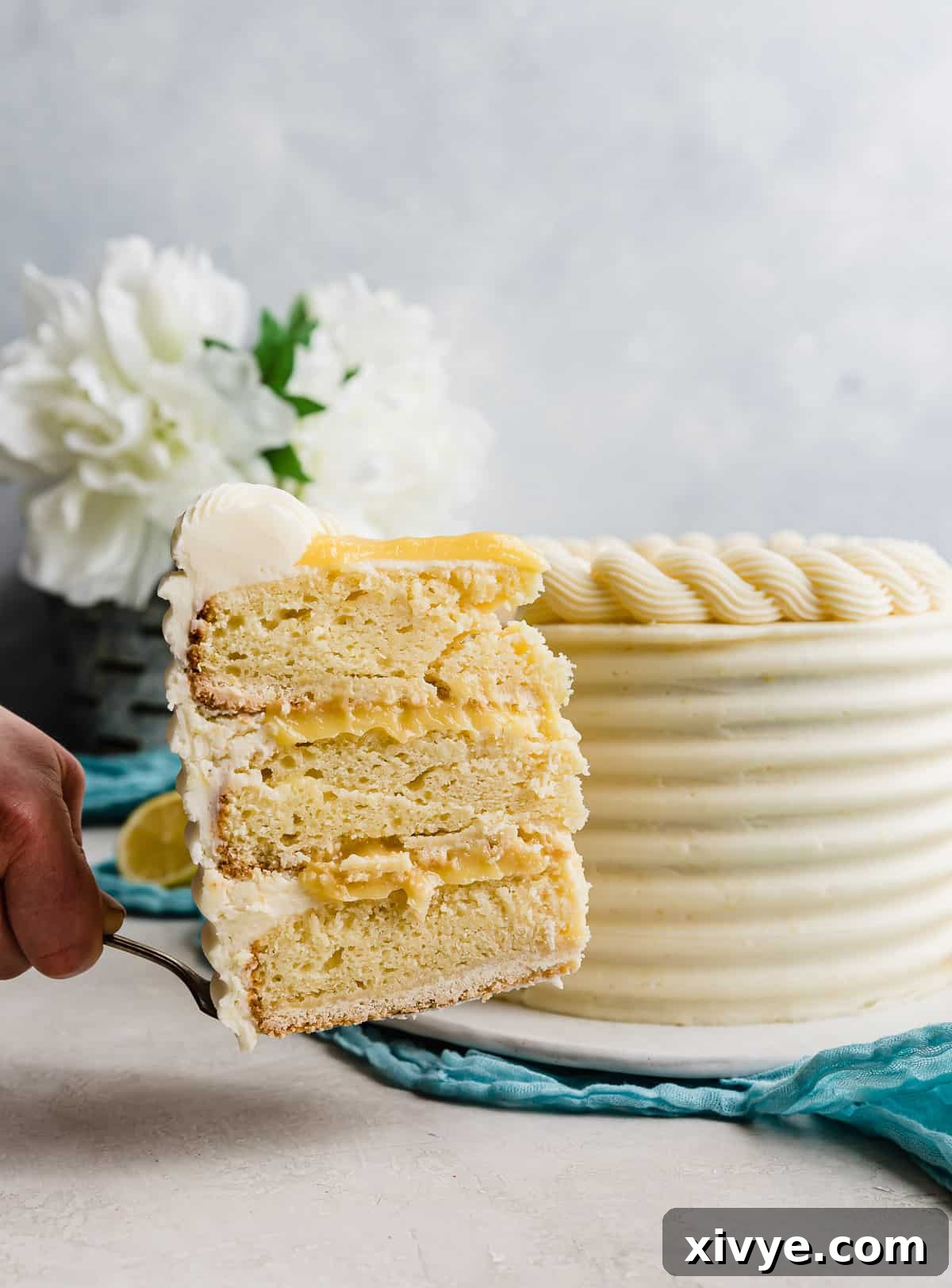
For years, I was what you might call a “cake skeptic.” Birthdays called for cheesecake, never cake. My perception was that cakes were often too dry, overly sweet, or simply lacking in genuine flavor. It turns out, I just hadn’t found the *right* cakes. This Lemon Bar Cake, along with other recipes I’ve developed, completely transformed my view. I’m now a proud, converted cake lover, dedicated to creating recipes that are outrageously moist, perfectly balanced in sweetness, and bursting with authentic flavor.
If you share my newfound passion for exceptional cakes, you absolutely must try some of our other creations. Indulge in the rich complexity of our Coconut Cookies and Cream Cake, savor the caramelized notes of the Biscoff Caramel Cake, or delight in the nostalgic goodness of our 7 Layer Bar Cake. For a springtime treat, our Carrot Cake with Pineapple and Pecans is an absolute must-make. Each recipe is crafted to challenge those preconceived notions about dry, dull cakes and deliver an unforgettable dessert experience.
Why This Lemon Bar Cake Recipe is a Must-Try
Our Lemon Bar Cake isn’t just a cake; it’s an experience designed to capture the essence of a classic lemon bar in an elegant, elevated form. Here’s why this recipe stands out:
- Every Iconic Element of a Lemon Bar, Reimagined. We’ve lovingly integrated each core component of a traditional lemon bar into this stunning cake. The foundation is a rich, crumbly shortbread crust, offering that signature buttery snap beneath each tender cake layer. Layered atop this crust are delicate lemon cake layers, mimicking the soft, zesty body of a lemon bar. Between these layers, you’ll find a generous spread of tart lemon curd, bright and smooth, providing that intense lemon pucker. Finally, a light and fluffy lemon buttercream, dusted with powdered sugar, completes the picture, echoing the sweet, powdery finish of a perfect lemon bar. It’s a true homage, delivered with sophistication.
- Unbelievably Moist Lemon Cake Layers. Forget everything you know about dry, crumbly cakes. This Lemon Bar Cake recipe is meticulously formulated to deliver intensely moist and flavorful cake layers. The secret lies in a carefully balanced blend of wet ingredients: rich sour cream, tangy buttermilk, and neutral vegetable oil. These ingredients work in harmony to infuse each crumb with moisture, creating a tender, melt-in-your-mouth texture that is far from dry and ensures a delightful eating experience every time.
- A Harmonious Balance of Tart and Sweet. One of the hallmarks of a great lemon bar is its delightful interplay between sharpness and sweetness. This cake achieves that perfect equilibrium. The bright, bracing tartness of the homemade lemon curd cuts through the sweetness of the fluffy lemon buttercream and the tender cake, creating a multi-dimensional flavor profile that keeps you coming back for more. Each bite is a beautifully balanced dance on your palate, refreshing and indulgent all at once.
- Pure, Authentic Lemon Flavor. You won’t find any artificial lemon extract here! Our recipe champions the use of only fresh lemon juice and vibrant lemon zest. This commitment to fresh, natural ingredients is paramount to achieving that truly authentic, bright, and invigorating lemon flavor that makes this cake so irresistible. The zest adds aromatic oils, while the juice provides the essential tang, resulting in a clean and pure citrus taste that truly shines.
Essential Ingredient Insights
Every ingredient plays a vital role in achieving the perfect Lemon Bar Cake. Understanding their functions will help you create a truly exceptional dessert.
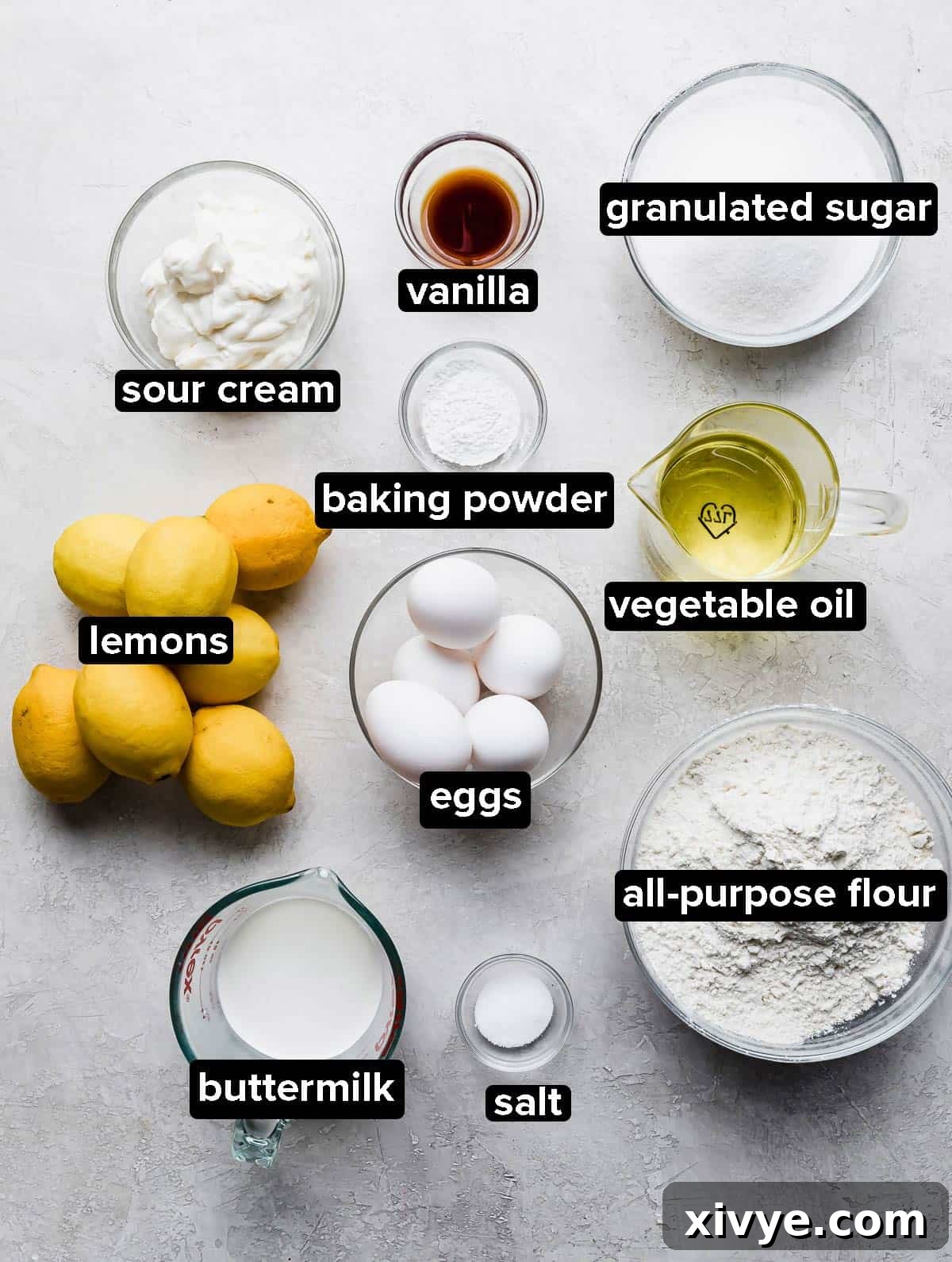
- Buttermilk: Beyond adding a subtle tangy flavor, buttermilk contributes significantly to the cake’s tenderness and moist crumb. Its acidity reacts with the baking powder, producing a softer texture and more complex flavor profile that standard milk cannot replicate.
- Sour Cream: High in fat, sour cream is a powerhouse for moisture in cakes. It enriches the batter, leading to an incredibly tender crumb. Furthermore, its slight tang complements the lemon flavor beautifully, adding a desirable depth and complexity.
- Vegetable Oil: Unlike butter, which can solidify when cooled, vegetable oil remains liquid at room temperature. This ensures that your cake layers stay consistently moist and soft, even days after baking, preventing that dry, crumbly texture often found in less thoughtful recipes.
- Fresh Lemon Juice: While bottled lemon juice can be convenient, freshly squeezed lemon juice is paramount for the best flavor. The brightness and natural acidity of fresh juice are incomparable, creating a vibrant, authentic lemon taste that truly elevates the cake and curd.
- Eggs: Eggs serve multiple purposes across this recipe. In the cake, they provide structure and richness. For the lemon curd, extra yolks are crucial for achieving that characteristic silky smooth texture and a rich yellow hue, while limiting the whites helps mitigate an “eggy” flavor. Aim to separate as much white as possible from the specified yolks.
- Lemon Zest: The zest, or the colored outer skin of the lemon, is packed with essential oils that carry the most intense lemon flavor and aroma. Using it in both the cake and the curd amplifies the citrus notes, giving a sharper, more fragrant lemon experience than juice alone.
- Heavy Cream: Incorporated into the lemon buttercream, heavy cream adds an incredible lightness and fluffiness to the frosting. When whipped, it creates air pockets, resulting in a delightfully airy and smooth texture that balances the cake’s richness.
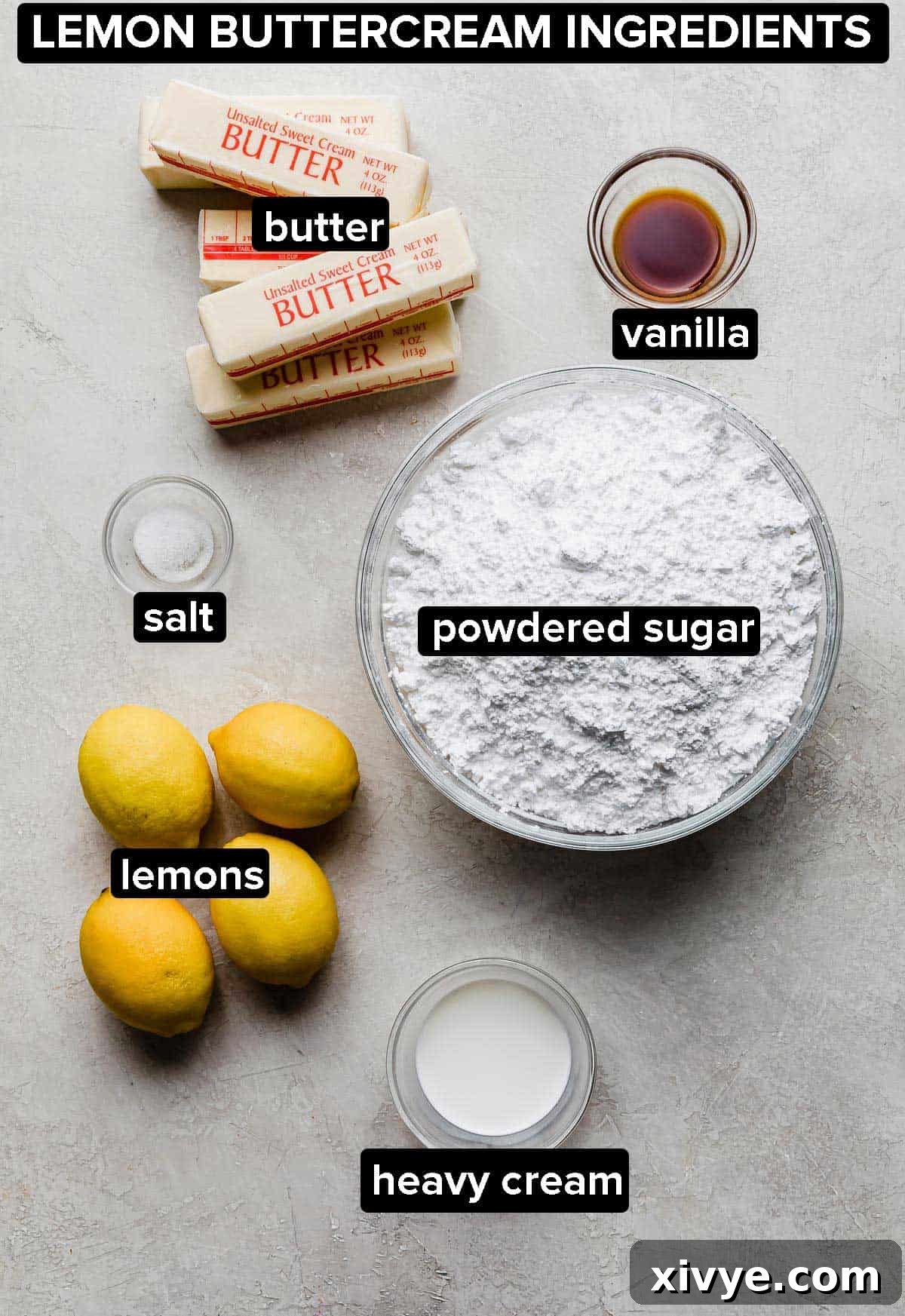
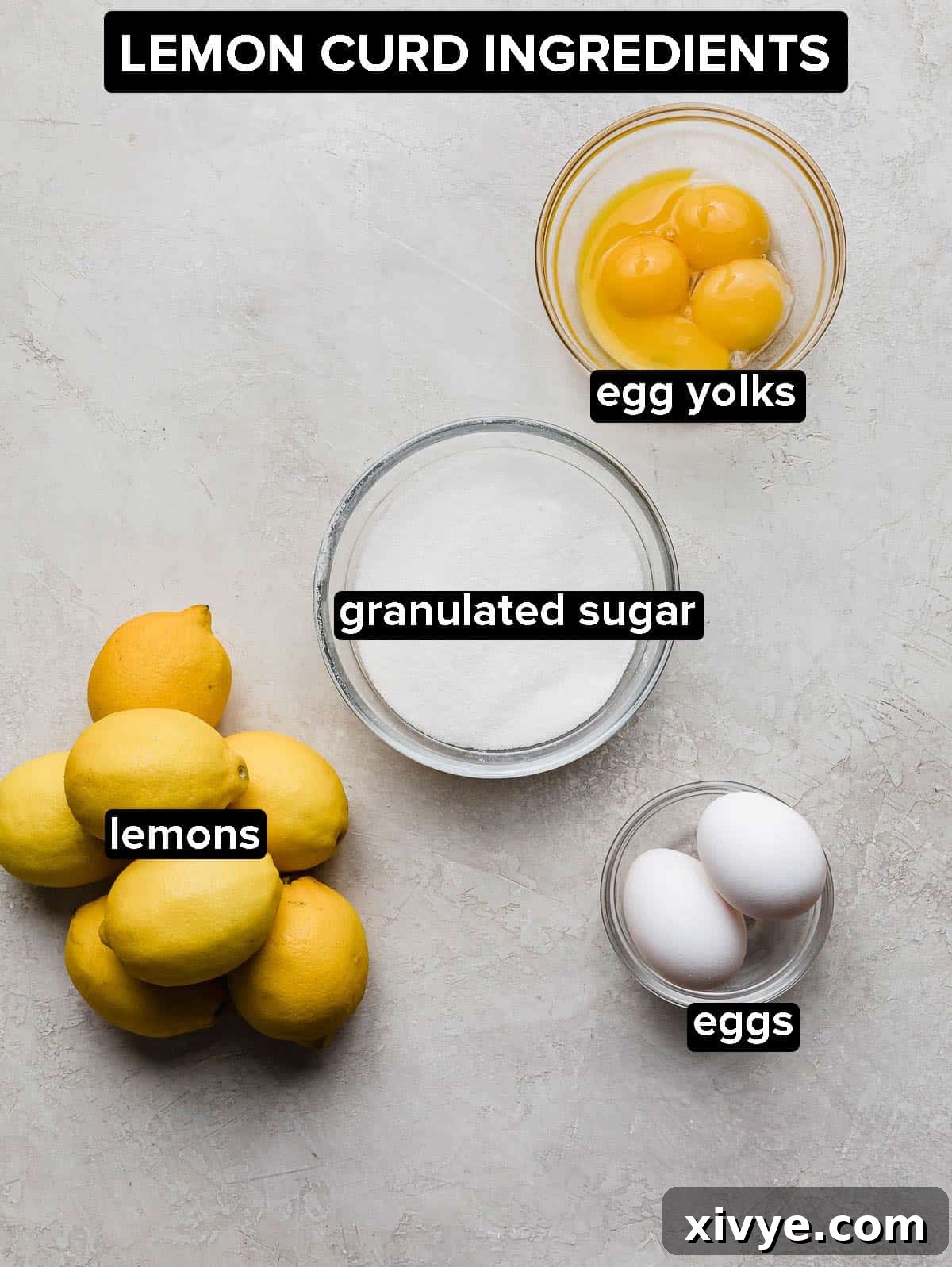
Step-by-Step Guide to Baking Your Lemon Bar Cake
Follow these detailed instructions to create your show-stopping Lemon Bar Cake.
For the Shortbread Crust:
- Prepare Pans: Preheat your oven to 350º F (175º C). Lightly grease and flour three 8-inch round cake pans, then line the bottoms with parchment paper.
- Mix Crust Ingredients: In a medium mixing bowl, combine the granulated sugar, all-purpose flour, and salt. Add the cold, cubed unsalted butter. Using forks or a pastry cutter, work the butter into the dry ingredients until the mixture resembles coarse crumbs, with butter pieces no larger than peas.
- Press into Pans: Divide the shortbread mixture evenly among the prepared cake pans. Press it firmly and uniformly into the bottom of each pan using the back of a glass or your clean hands to create an even crust.
- Bake Crust: Bake the shortbread crusts for 11-13 minutes, or until the edges are golden brown and the centers are just beginning to turn golden. Remove from the oven and let cool slightly while keeping the oven at 350º F for the cake layers.
For the Lemon Cake Layers:
- Combine Dry Ingredients: In a medium bowl, whisk together the all-purpose flour, granulated sugar, baking powder, and salt until well combined. Set aside.
- Combine Wet Ingredients: In the bowl of a stand mixer fitted with a paddle attachment, beat the eggs, buttermilk, sour cream, vegetable oil, lemon juice, vanilla extract, and lemon zest until the mixture is uniform and smooth.
- Incorporate Dry into Wet: With the mixer on low speed, gradually add half of the dry ingredients to the wet mixture and mix for about 30 seconds until mostly combined. Then, add the remaining dry ingredients and mix just until no dry streaks of flour remain. Be careful not to overmix, as this can lead to a tough cake.
- Bake Cake Layers: Divide the lemon cake batter evenly among the three cake pans, pouring it directly on top of the slightly cooled shortbread crusts. Bake for 30-40 minutes, or until a toothpick inserted into the center of a cake layer comes out with a few moist crumbs attached. (Remember that baking times can vary based on your oven and pans, so monitor closely.)
- Cool and Level: Remove the pans from the oven and let them cool enough to handle. Carefully flip the cakes out of the pans onto a wire cooling rack to cool completely. Once fully cooled, use a serrated knife or a cake leveler to gently slice off any domed tops, ensuring flat and even layers for assembly.
- Optional: Freeze for Later: If you’re preparing the cakes in advance, wrap each cooled layer tightly in plastic wrap and freeze for up to four weeks. Allow them to sit at room temperature for about an hour before assembling.
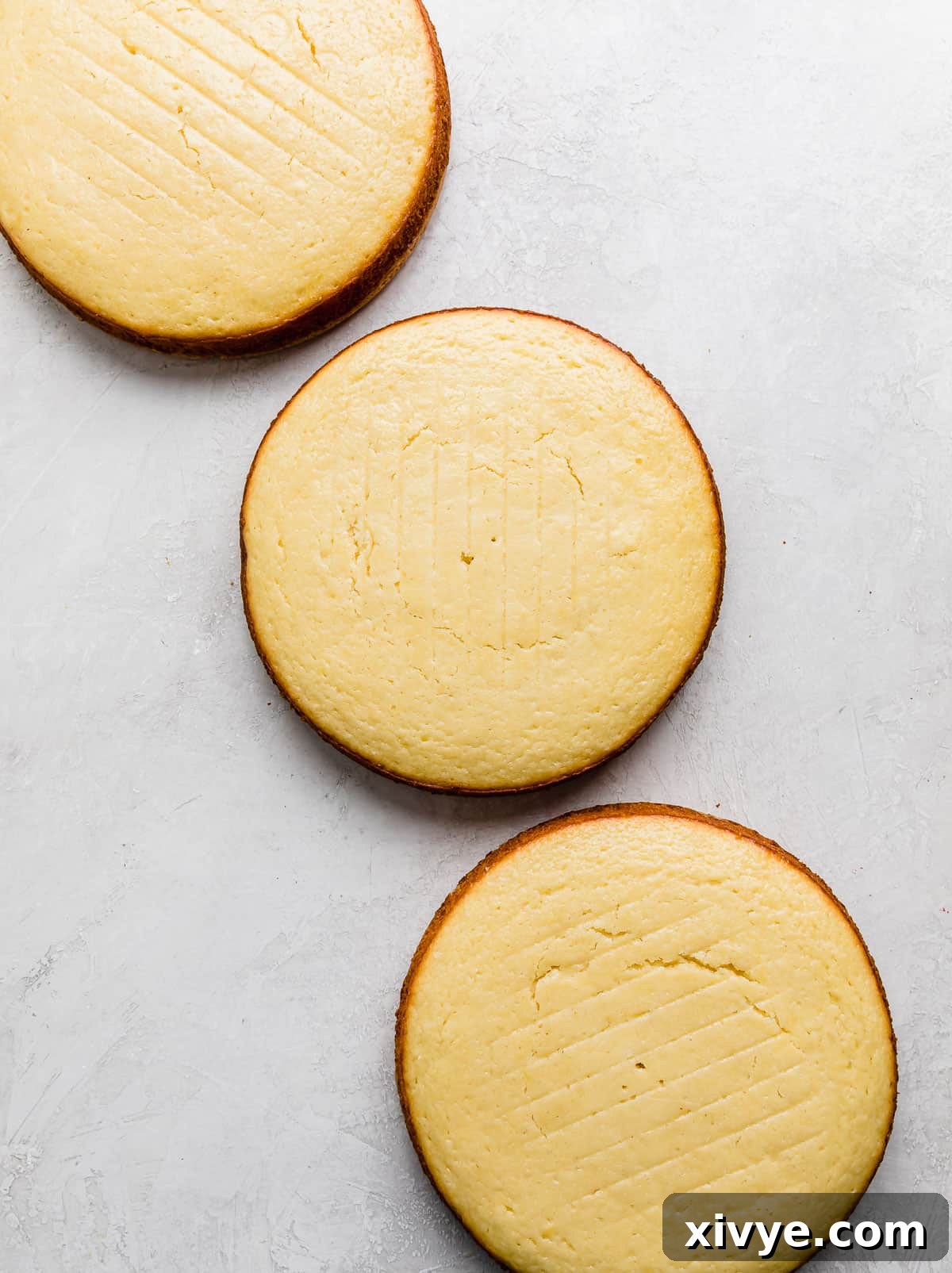
For the Lemon Curd:
- Cook Curd: In a small saucepan, combine the egg yolks, whole eggs, granulated sugar, fresh lemon juice, and lemon zest. Cook over medium heat, stirring continuously with a whisk, until the mixture thickens enough to coat the back of a spoon (reaching approximately 170-175º F or 77-80º C).
- Strain and Chill: Immediately pour the hot curd through a fine-mesh strainer into a storage container. This step ensures a wonderfully smooth and silky texture, free of any small cooked egg bits or zest. Press plastic wrap directly onto the surface of the curd to prevent a “skin” from forming as it cools. Chill completely in the refrigerator for at least 2-3 hours, or until firm.
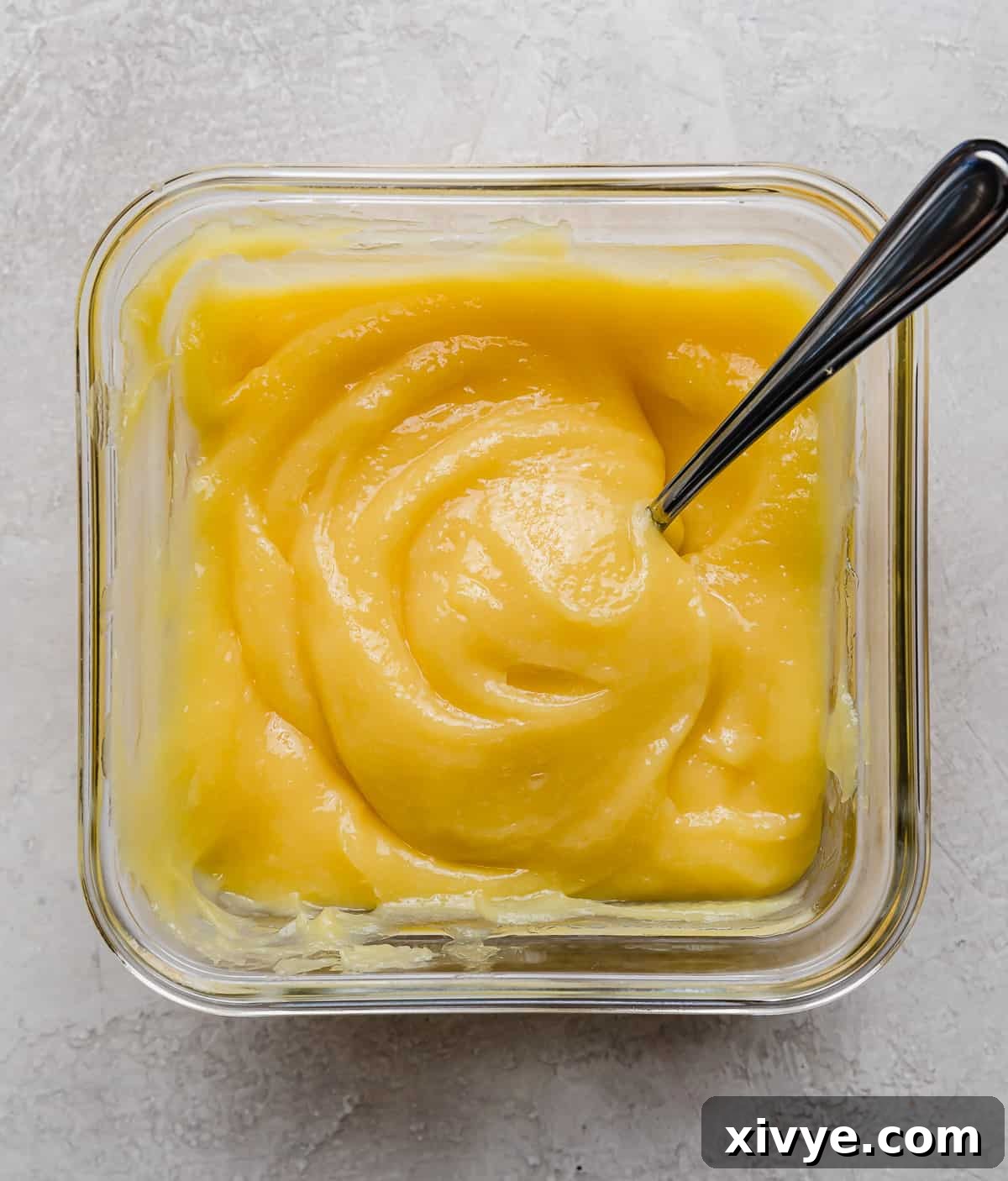
For the Lemon Buttercream:
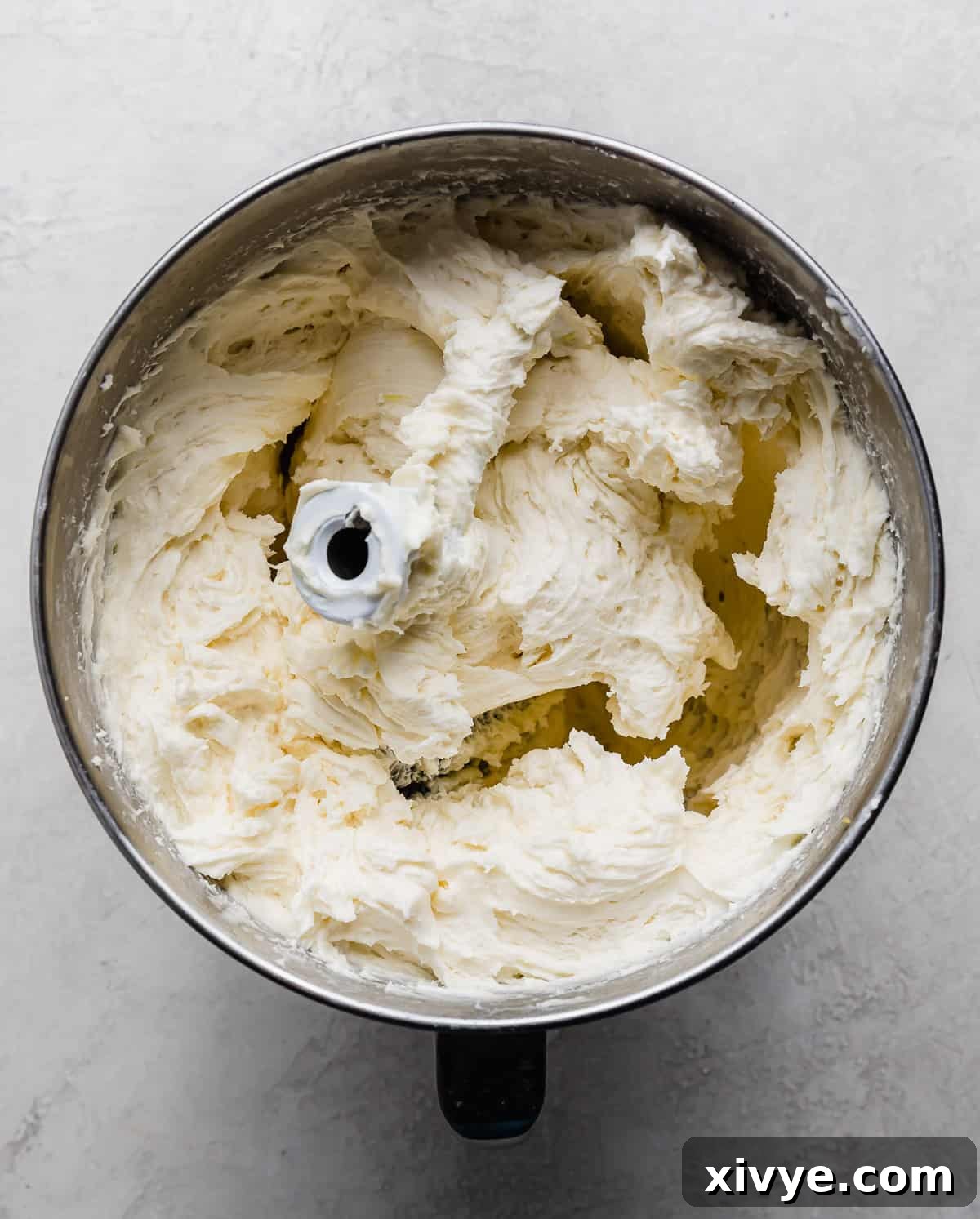
- Cream Butter and Zest: In a stand mixer with a paddle attachment, beat the slightly cold unsalted butter, pinch of salt, and lemon zest until smooth, pale, and light in texture.
- Add Powdered Sugar: Sift 3 cups of powdered sugar into the butter mixture. Mix on low speed until combined, then increase speed to medium and beat well, scraping down the sides of the bowl as needed to ensure everything is incorporated.
- Add Lemon Juice and Remaining Sugar: Add 2 tablespoons of fresh lemon juice and the remaining powdered sugar (you may need up to 9 cups total, so have extra on hand). Beat for another 2-3 minutes until light and fluffy.
- Adjust Consistency with Heavy Cream: Add 1 tablespoon of heavy cream and beat for about a minute. If the frosting is too thick to spread easily at room temperature, add more heavy cream, one tablespoon at a time, until it reaches your desired consistency.
Assembly of the Lemon Bar Cake:
- Start First Layer: Place a small dollop of buttercream on your cake board or serving stand to prevent the cake from sliding. Place the first cake layer on top, crust side down.
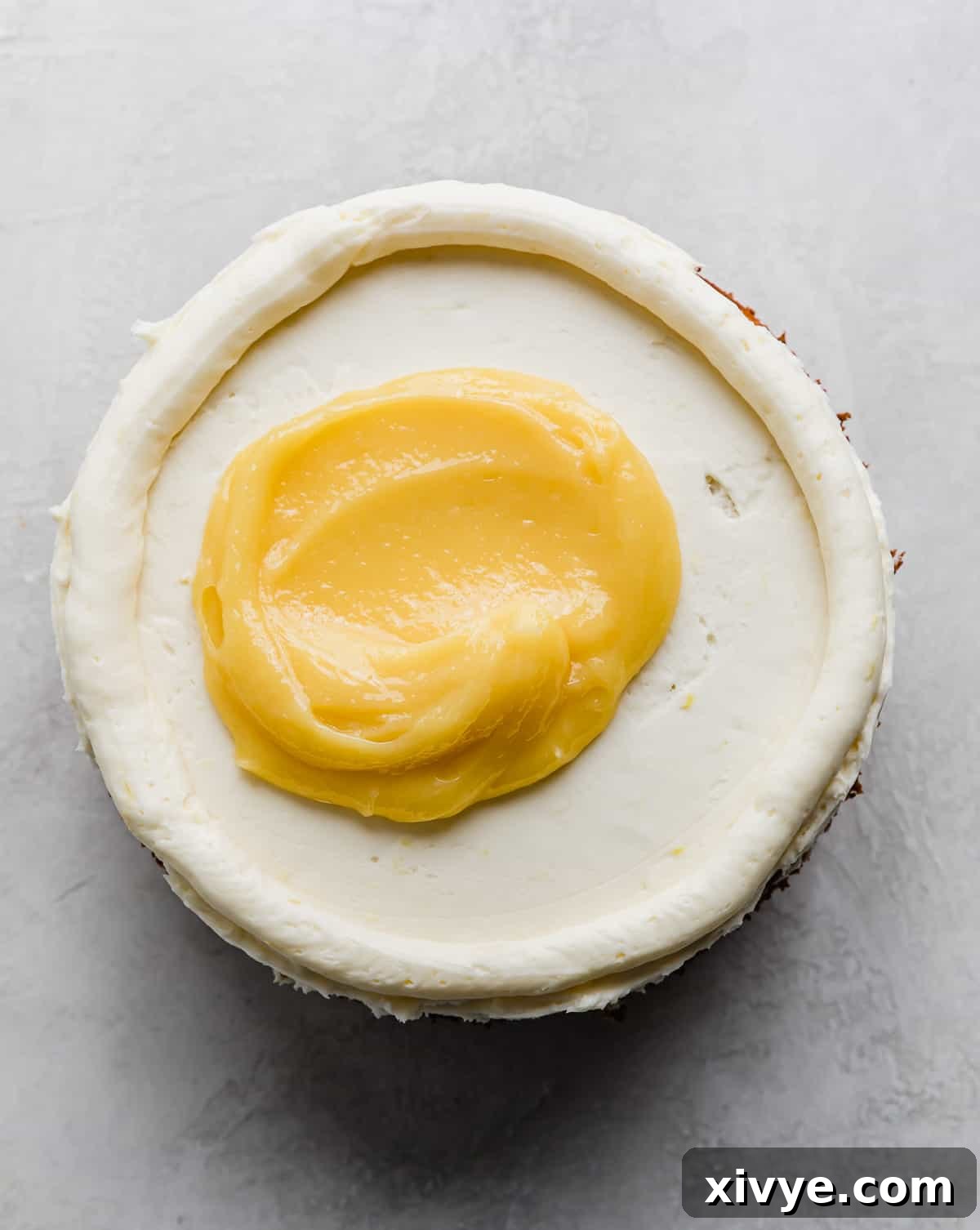
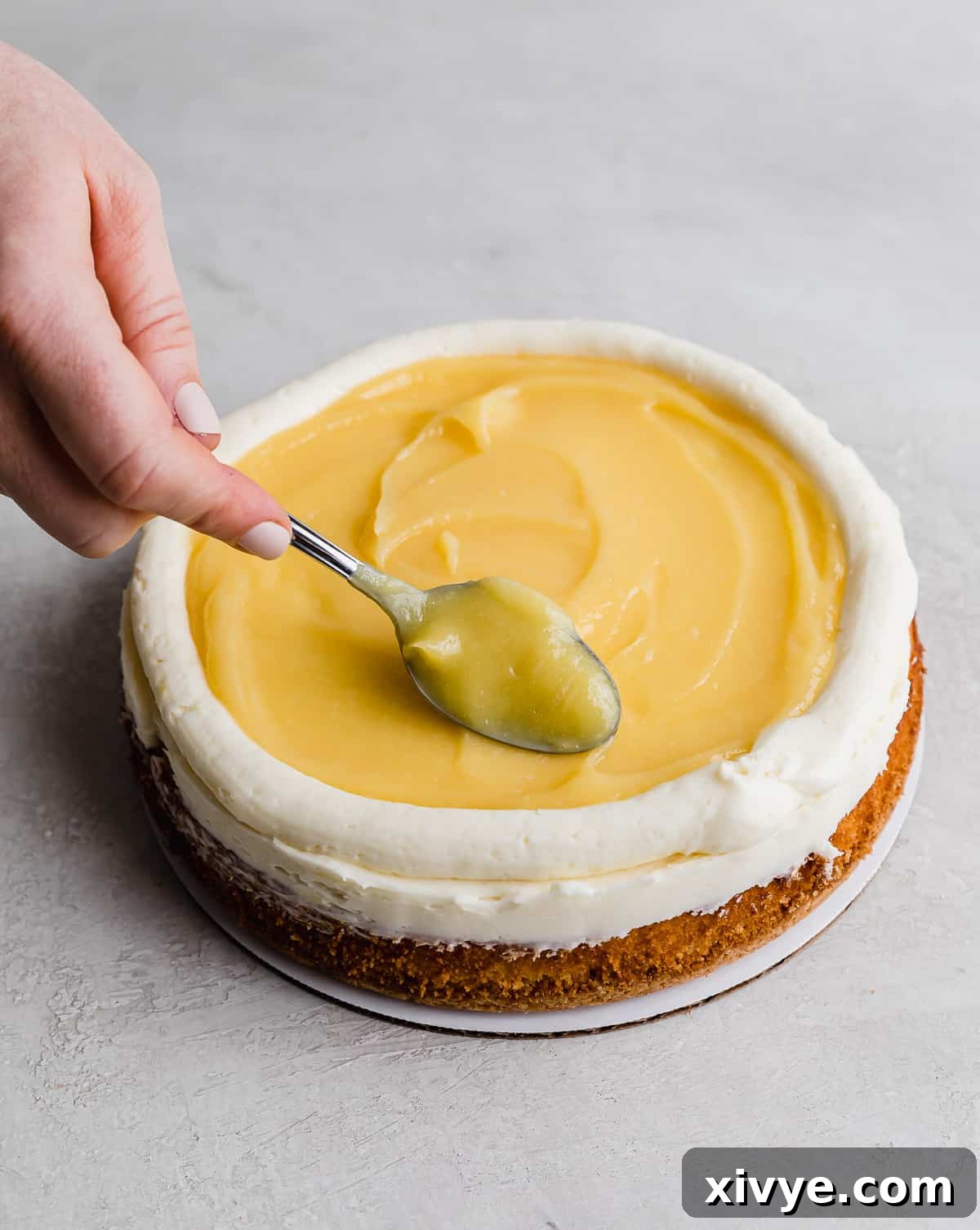
- First Filling: Spread a thin, even layer of lemon buttercream over the top of the cake. Using a piping bag with a round tip, pipe a rim of buttercream around the top edge of the cake layer, creating a “dam.” This dam will hold the lemon curd in place. Fill the center of this dam with ½ to ⅔ cup of chilled lemon curd. Be careful not to overfill, as too much curd can seep out and make the cake unstable.
- Second Layer: Carefully place the second cake layer on top of the first, aligning it gently. Repeat step 10: spread a thin layer of buttercream, pipe a dam, and fill with lemon curd.
- Third Layer & Crumb Coat: Place the third cake layer on top. Apply a thin layer of lemon buttercream over the entire cake, covering the top and sides. This is your “crumb coat,” which traps any loose crumbs. Refrigerate or freeze the cake for 10-15 minutes, or until the crumb coat is firm to the touch.
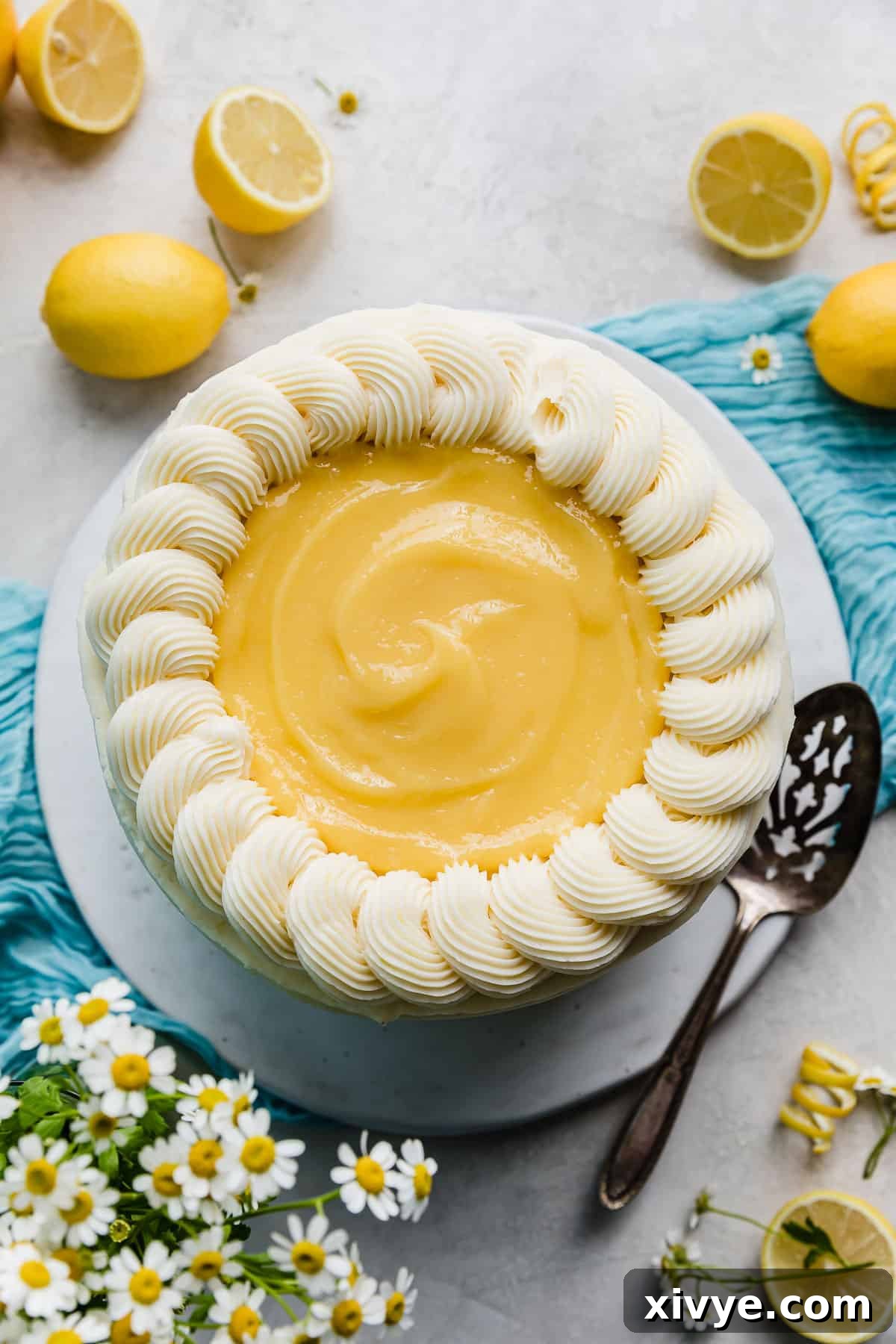
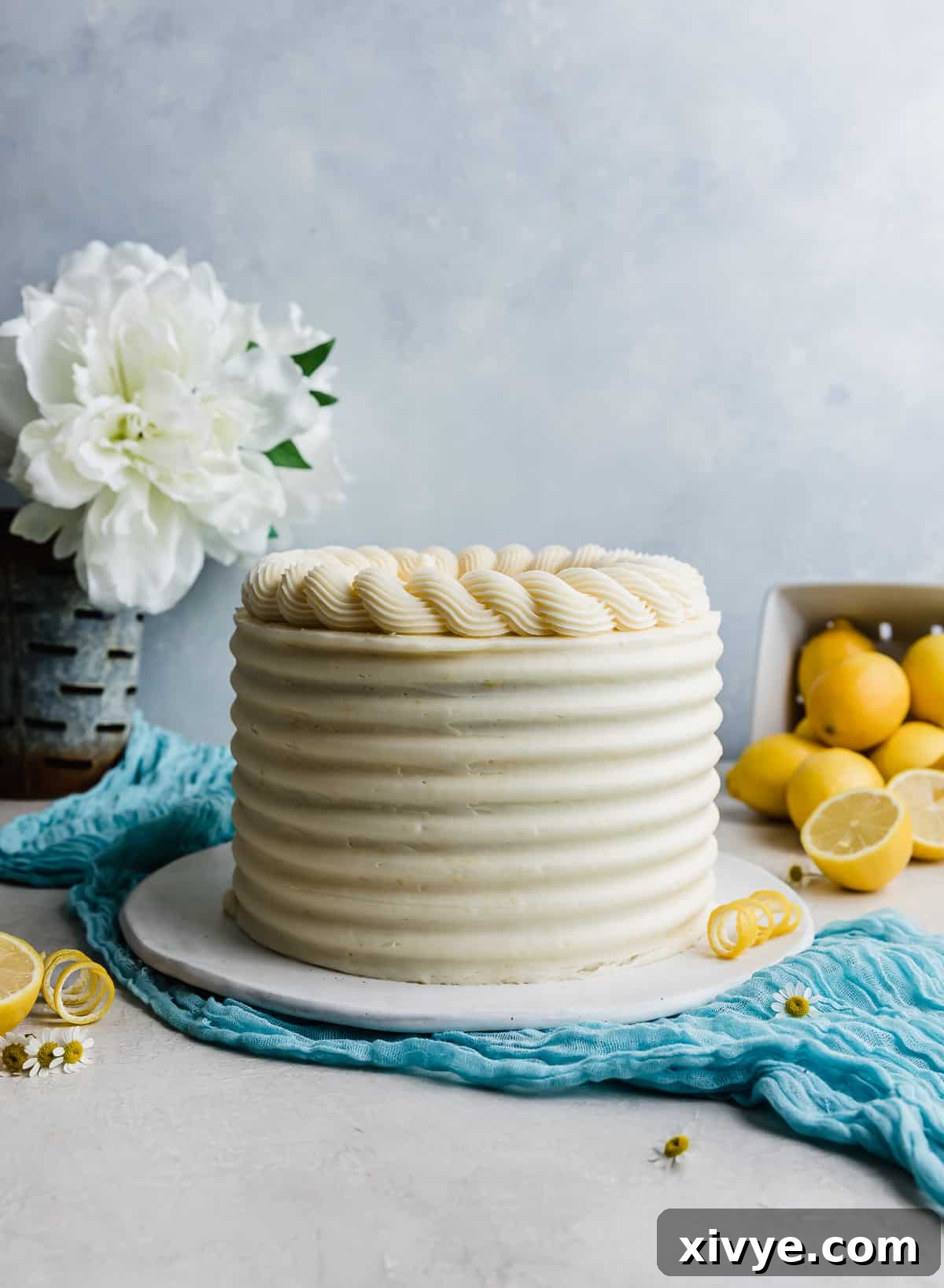
- Final Frosting & Decoration: Once the crumb coat is firm, apply the final, thicker layer of lemon buttercream evenly around the entire cake. For a beautiful finish, we created a twisted rope border around the top edge of the cake using extra frosting and filled the center with additional lemon curd for a decorative swirl. Feel free to add any other decorations as desired!
Expert Tips for a Perfect Lemon Bar Cake
Cake Baking Tips
- Know Your Oven: Every oven is unique! Pay close attention to your cakes as they bake. The listed baking times are estimates, and your cakes may finish sooner or require a few extra minutes. Look for visual cues like golden edges and the toothpick test.
- Level Your Layers: For a professional-looking, stable cake, always trim any domed tops from your cooled cake layers using a serrated knife or a specialized cake leveler. This creates flat surfaces that stack neatly and prevent leaning.
- Prevent Curd Skin: When cooling your lemon curd, place plastic wrap directly onto the surface of the curd. This prevents a thick, undesirable film from forming on top, keeping your curd smooth and silky.
Buttercream Mastery Tips
- Make Ahead Buttercream: You can prepare the lemon buttercream several days in advance. Store it in an airtight container in the refrigerator. A few hours before you plan to assemble your cake, take the frosting out to soften at room temperature. Once softened, beat it in a stand mixer until it’s smooth and spreadable again.
- Sift for Smoothness: Sifting your powdered sugar before adding it to the butter mixture is key for achieving a velvety smooth buttercream, free of any lumps. Always scrape down the sides of your mixing bowl frequently to ensure all ingredients are thoroughly incorporated.
- Taste and Adjust: Don’t be shy about tasting your buttercream as you go! If you desire a more intense lemon flavor, add extra lemon juice, one tablespoon at a time, until it perfectly suits your taste. Be cautious not to add too much liquid, as this can make the frosting too thin to hold its shape.
- Adjust Consistency: If your buttercream seems too thick or stiff to spread easily at room temperature, gradually add more heavy cream, one teaspoon at a time, until you reach the ideal consistency.
Cake Assembly and Decorating Tips
- Secure the Base: To prevent your cake from sliding around during assembly, place a small dollop of buttercream on your cake board or serving stand before positioning the first cake layer. This acts as an edible adhesive.
- Don’t Overfill: When adding the lemon curd to your buttercream dam, be mindful of the quantity. Overfilling can cause the curd to seep out when you add subsequent layers, leading to an unstable cake and making the final icing process much more difficult.
- Ideal Buttercream Temperature: For optimal decorating, your buttercream should be slightly colder than room temperature. If it’s too warm, it will be too soft to hold the lemon curd securely within the dam and may not pipe cleanly. A slightly cooler consistency provides better stability and control.
Make Ahead, Storing, and Freezing Your Lemon Bar Cake
- Make Ahead Cakes: To save time, you can bake the cake layers up to four weeks in advance. Once completely cooled, wrap each layer tightly in several layers of plastic wrap and freeze. Allow them to thaw at room temperature for about one hour before you begin assembly.
- Make Ahead Lemon Curd: The tangy lemon curd can be prepared 3-4 days ahead of time. Store it in an airtight container with plastic wrap pressed directly onto its surface, keeping it in the refrigerator until you’re ready to assemble your cake.
- Storing the Assembled Cake: Due to the fresh lemon curd filling and heavy cream in the buttercream, the assembled Lemon Bar Cake should be stored covered in the refrigerator. It will stay fresh and delicious for 3-5 days.
- For more comprehensive information on extending the life of your baked goods, check out our detailed How to Store and Freeze Cakes guide!
Frequently Asked Questions About Lemon Bar Cake
Here are answers to some common questions about this delightful dessert:
Yes, absolutely. Because the Lemon Bar Cake contains a fresh lemon curd filling and heavy cream in its buttercream, refrigeration is essential for both food safety and maintaining its quality. Storing it in the fridge will ensure it stays fresh and delicious for longer.
Lemon curd naturally uses a significant number of eggs, which is what distinguishes it from a custard and gives it its rich texture. However, to avoid an “eggy” flavor, the key is to be meticulous when separating the egg yolks from the whites. The majority of that strong eggy taste comes from the egg whites. By carefully removing as much of the whites as possible from the eggs specified for the curd, you’ll ensure a pure, vibrant lemon flavor without any unwanted eggy notes.
Yes, this cake is surprisingly freezer-friendly! You have a couple of options: you can freeze the individual cake layers ahead of time, wrapped tightly in plastic wrap, for up to two months. This allows you to assemble the cake at a later date. Alternatively, you can freeze the entire decorated cake. To do this, place the cake in the freezer uncovered until the frosting is completely firm. Then, wrap the entire cake thoroughly in several layers of plastic wrap, followed by a layer of aluminum foil, for maximum protection. It will last in the freezer for up to two months. To thaw, transfer the wrapped cake to the refrigerator overnight. In the morning, remove the plastic wrap and foil, and continue to thaw in the fridge until fully defrosted and ready to serve.
Explore More Zesty Lemon Recipes
If you can’t get enough of that bright, tangy lemon flavor, be sure to try these other delightful recipes from our collection:
- Lemon Jello Cake
- Lemon Poppy Seed Muffins
- Lemon Poppy Seed Bundt Cake
- Lemon Zucchini Bread
- Lemon Shortbread Cookies
Did you bake this incredible Lemon Bar Cake? We’d absolutely love to hear about your experience! Click here to leave a rating and review, or simply scroll down to the comments section. Your feedback truly helps us and other bakers!
Stay connected and up-to-date with our latest recipes and baking tips by following us on Instagram, Facebook, and Pinterest.
Lemon Bar Cake
By Whitney Wright
Moist lemon cake layers are baked on a shortbread crust. Each cake layer is topped with a lemon buttercream frosting, then filled with a tart lemon curd. This cake is fresh, delicious, and tastes JUST like a lemon bar but in cake form!
Prep Time: 1 hr | Cook Time: 1 hr 10 mins | Assembly Time: 2 hrs | Total Time: 4 hrs 10 mins
Servings: 15 servings
Ingredients
Shortbread Crust
- 1 cup unsalted butter – cold and cubed
- ½ cup granulated sugar
- 2 ½ cups all purpose flour
- ¼ teaspoon salt
Lemon Cake
- 3 cups all purpose flour
- 1 ¾ cups granulated sugar
- 1 tablespoon baking powder
- 1 teaspoon salt
- 5 large eggs
- ½ cup buttermilk
- 1 cup sour cream
- 1 cup vegetable oil
- ½ cup lemon juice – freshly squeezed
- 2 teaspoons vanilla extract
- 3 tablespoons lemon zest
Lemon Curd
- 4 large egg yolks
- 2 large eggs
- 1 cup granulated sugar
- ¾ cup lemon juice – freshly squeezed
- 1 tablespoon lemon zest
Lemon Buttercream
- 2 ½ cups unsalted butter – slightly cold
- 7 ½ cups powdered sugar – may need up to 9 cups so have more on hand if needed
- 2 large lemons – zested
- 2-3 tablespoons lemon juice – freshly squeezed
- pinch salt
- 1-3 tablespoons heavy cream
Equipment
- Ateco cake stand (recommended for assembly)
- Three 8-inch round cake pans
- Parchment paper
- Stand mixer with paddle attachment
- Small saucepan
- Fine mesh strainer
- Serrated knife or cake leveler
- Piping bag and round tip (optional, for dam)
Instructions
Shortbread Crust
- Preheat oven to 350º F (175º C). Prepare three 8-inch round cake pans by spraying with nonstick spray and lining the bottom with parchment paper.
- In a medium-sided mixing bowl, combine sugar, flour, and salt. Using forks or a pastry cutter, cut in the cold, cubed butter until the pieces of butter are no larger than the size of a pea. Divide mixture evenly into the prepared cake pans. Press firmly and evenly into the pans using the bottom of a glass or clean hands.
- Bake for 11-13 minutes or until edges are golden brown and centers are just starting to get some golden color.
- Remove from oven to cool slightly but leave the oven at 350º F (175º C) to bake the cake layers.
Lemon Cake
- In a medium bowl, whisk together the flour, sugar, baking powder, and salt. Set aside.
- In the bowl of a stand mixer fitted with a paddle attachment, beat the eggs, buttermilk, sour cream, vegetable oil, lemon juice, vanilla, and lemon zest until the mixture is uniform. With the mixer on low, carefully add half of the dry ingredients and mix for about 30 seconds, until it’s mostly combined. Add the rest of the dry ingredients and mix just until no dry streaks remain. Do not overmix.
- Divide the batter evenly between three cake pans, pouring it on top of the slightly cooled shortbread crust. Bake for 30-40 minutes, or until a toothpick inserted in the center of the cake layer comes out with a couple moist crumbs stuck to it. (Gentle reminder that cake pans and ovens are all different so be sure to pay close attention to when your cakes are done baking. It may take shorter or longer than the time listed.)
- Remove the pans from the oven. When they have cooled enough to handle, flip the cakes out of the pans and onto a cooling rack to cool completely. Using a serrated knife or cake leveler, cut the domed top off of each layer. This will ensure your cake is flat and even when assembled.
- If making the cakes ahead of time, wrap each layer in plastic wrap and freeze for up to four weeks. Let the cakes sit at room temperature for one hour before assembling the cake.
Lemon Curd
- In a small saucepan over medium heat, combine all ingredients (egg yolks, eggs, granulated sugar, lemon juice, lemon zest). Mix continuously while cooking until the mixture has thickened enough to coat the back of a spoon.
- Pour the curd through a fine mesh strainer into a storage container to ensure it is smooth and silky. Place plastic wrap directly onto the top of the curd to prevent a skin from forming as it cools. Cool completely and store in the refrigerator. This curd can be made 3-4 days in advance and stored in the fridge until it’s time to assemble the cake.
Lemon Buttercream
- Beat butter, salt, and lemon zest until smooth and light in texture and color. Sift 3 cups of powdered sugar into the butter mixture and mix well, scraping the sides of the bowl as needed.
- Add 2 tablespoons of lemon juice and the rest of the powdered sugar and beat for 2-3 minutes.
- Add 1 tablespoon of heavy cream and beat for about a minute. Add more heavy cream if the frosting is too thick to spread at room temperature.
- The frosting can be made a few days in advance and stored in the refrigerator. A few hours before cake assembly, set the frosting out at room temperature. Once the frosting has softened, beat in a stand mixer until smooth and spreadable.
Assembly
- Place a cake layer, crust side down, on a cake board or stand that has a small dollop of buttercream on it. This will help keep the cake from sliding around as you assemble it.
- Spread a thin layer of lemon buttercream evenly over the top of the cake.
- Pipe a rim of buttercream around the top edge of the cake layer to create a dam (make sure the buttercream is slightly cold… see notes section for more details on this), and add ½-2/3 cup lemon curd inside the buttercream dam. Be sure to not overfill the cake as it will seep out when you add the next layer and make the cake unstable and difficult to finish icing.
- Repeat steps 1 and 2 with the second layer of cake, placing the second cake layer on top of the first layer.
- Place the third cake layer on top and crumb coat the entire cake in a thin layer of lemon buttercream. Refrigerate or freeze for a few minutes, until the buttercream is cold and no longer soft.
- Add the final layer of frosting around the entire cake. We used extra frosting to create a twisted rope border around the top of the cake and filled the center with extra lemon curd. Add additional decoration as desired.
Notes
- Lemon Buttercream: Taste the buttercream as you go! If the lemon buttercream doesn’t taste lemony enough, add more lemon juice, one tablespoon at a time, until you’re happy with how it tastes. Just be sure to not add so much lemon juice that the frosting becomes runny and not able to hold its shape.
- Assembly tip: If your buttercream is too warm, decorating the cake will be difficult. The buttercream dam won’t hold the lemon curd in when another layer is placed on top. I’ve found that keeping my buttercream slightly colder than room temperature when I’m decorating a cake makes it the easiest to work with.
- Nutrition information is an estimate calculated by a third-party nutrition calculator. Keep in mind that not all of the lemon curd or frosting may be used in the final assembled cake.
Nutrition Information (Estimated per Serving)
Calories: 1174kcal | Carbohydrates: 143g | Protein: 10g | Fat: 65g | Saturated Fat: 33g | Polyunsaturated Fat: 11g | Monounsaturated Fat: 17g | Trans Fat: 2g | Cholesterol: 260mg | Sodium: 260mg | Potassium: 261mg | Fiber: 2g | Sugar: 104g | Vitamin A: 1644IU | Vitamin C: 18mg | Calcium: 108mg | Iron: 3mg
Recipe Details
Course: Dessert
Cuisine: American