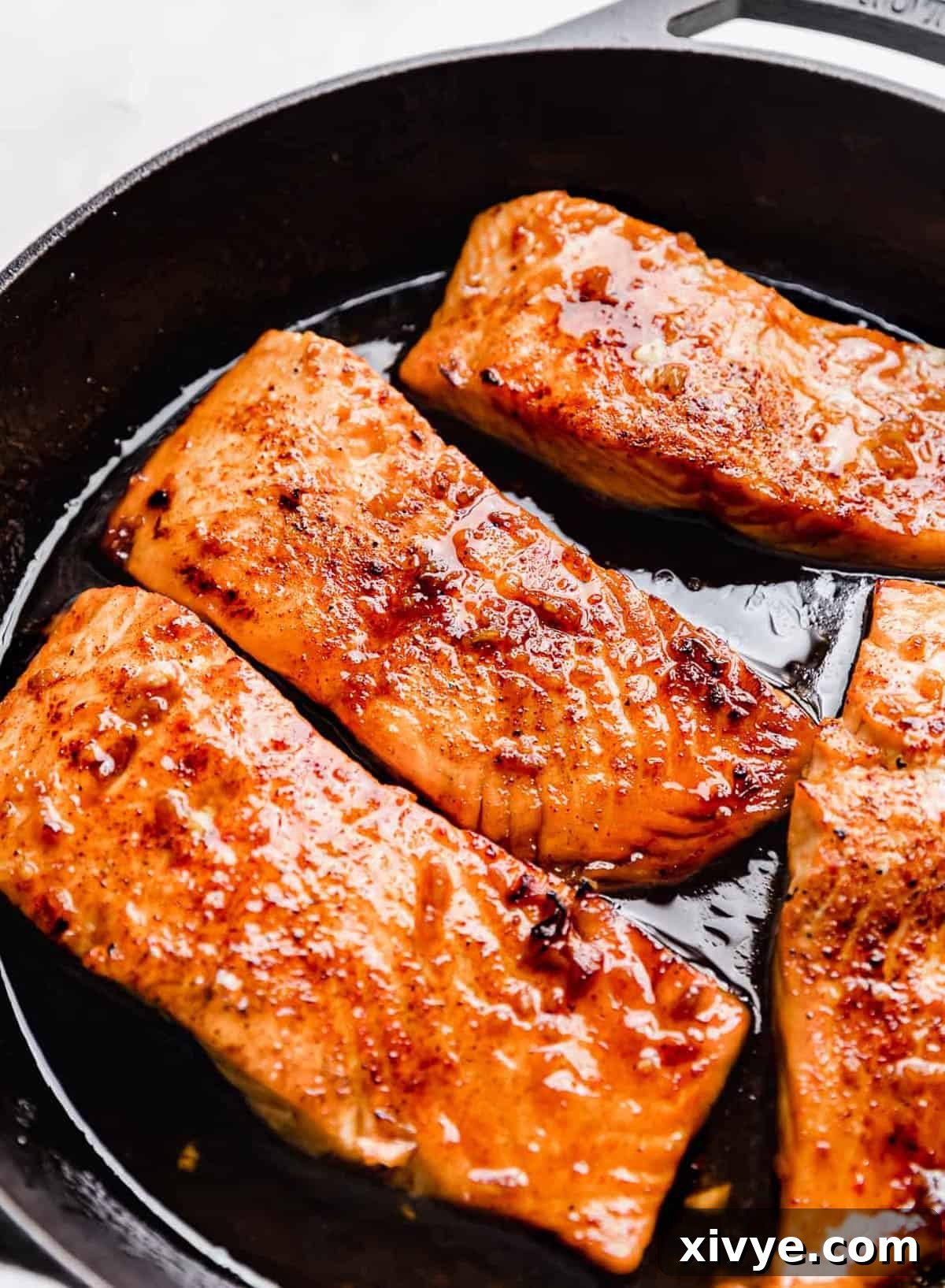
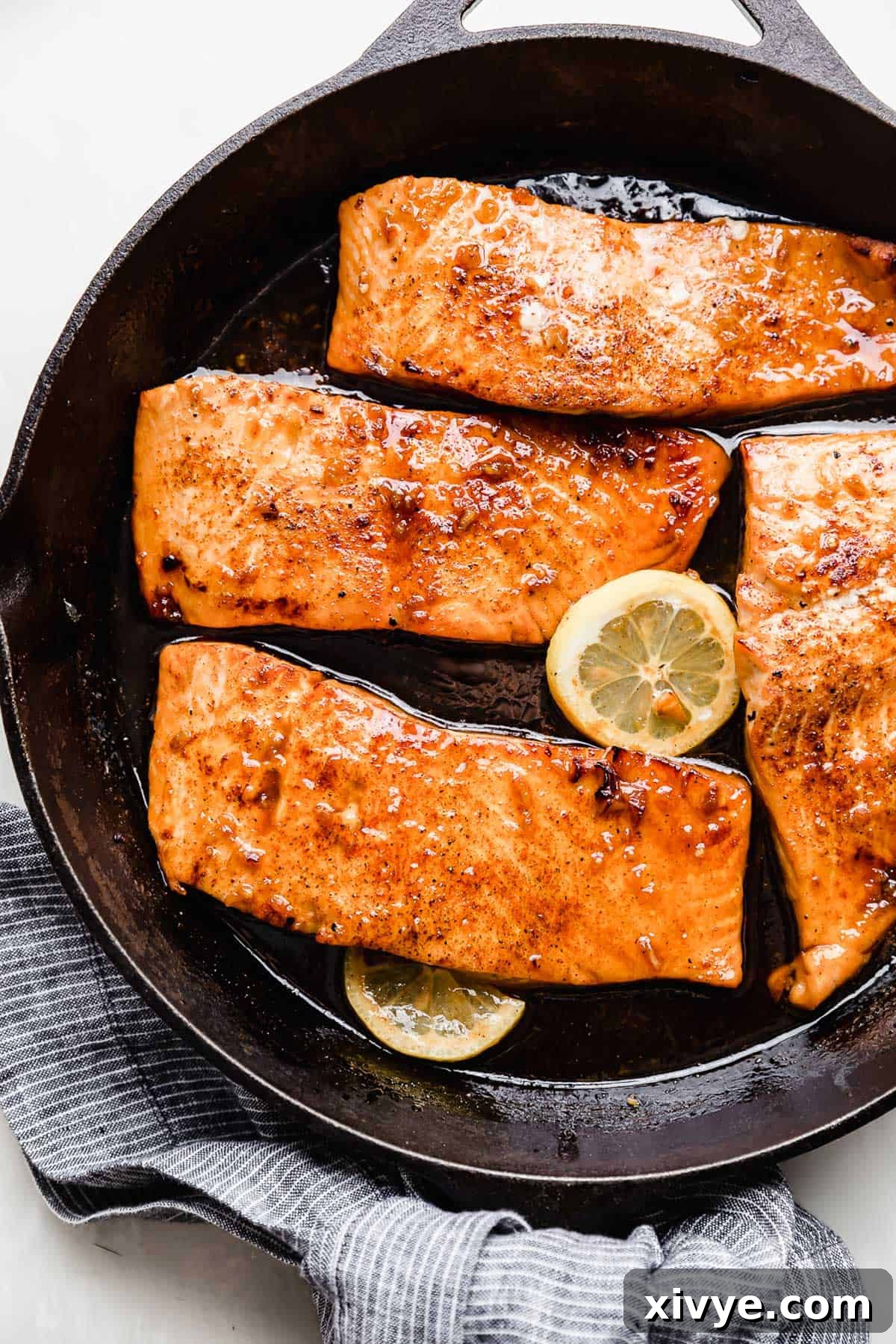
Welcome to your new favorite weeknight meal: a sensational Honey Garlic Baked Salmon recipe that promises a tender, flaky fish coated in a beautifully sweet and savory caramelized sauce. This dish isn’t just incredibly delicious; it’s also a wonderfully healthy option that comes together in a flash, making it perfect for busy evenings or when you crave something special without the fuss. Imagine succulent salmon infused with the aromatic punch of garlic and the delicate sweetness of honey, perfectly balanced with a hint of tang and umami. It’s a culinary experience that elevates a simple fish fillet into an unforgettable meal.
Salmon has long been celebrated for its rich flavor and numerous health benefits, making it a staple in many kitchens. Its versatility allows for endless culinary creativity. If you love discovering new ways to prepare this magnificent fish, you might also enjoy exploring other delightful variations such as our Lemon Honey Glazed Salmon, a vibrant and zesty option; the convenient and flavorful Sheet Pan Chili Lime Salmon, perfect for minimal cleanup; or the unique and indulgent Brown Sugar Crusted Salmon, offering a delightful textural contrast. Each recipe brings out a different facet of salmon’s incredible potential, but today, we’re focusing on the irresistible charm of honey garlic.
Why This Honey Garlic Baked Salmon Recipe is a Must-Try
This honey garlic salmon isn’t just another fish recipe; it’s a meticulously crafted dish designed for maximum flavor and ease. Here’s why this recipe deserves a permanent spot in your culinary repertoire:
- Perfect Harmony of Flavors: The magic of this dish lies in its exquisite balance. We expertly combine the savory depth of soy sauce with the luscious sweetness of honey and the bright, acidic notes of fresh lemon. This triad creates a symphony of flavors that is both complex and incredibly satisfying, ensuring every bite is a delightful experience without any single ingredient overpowering the others.
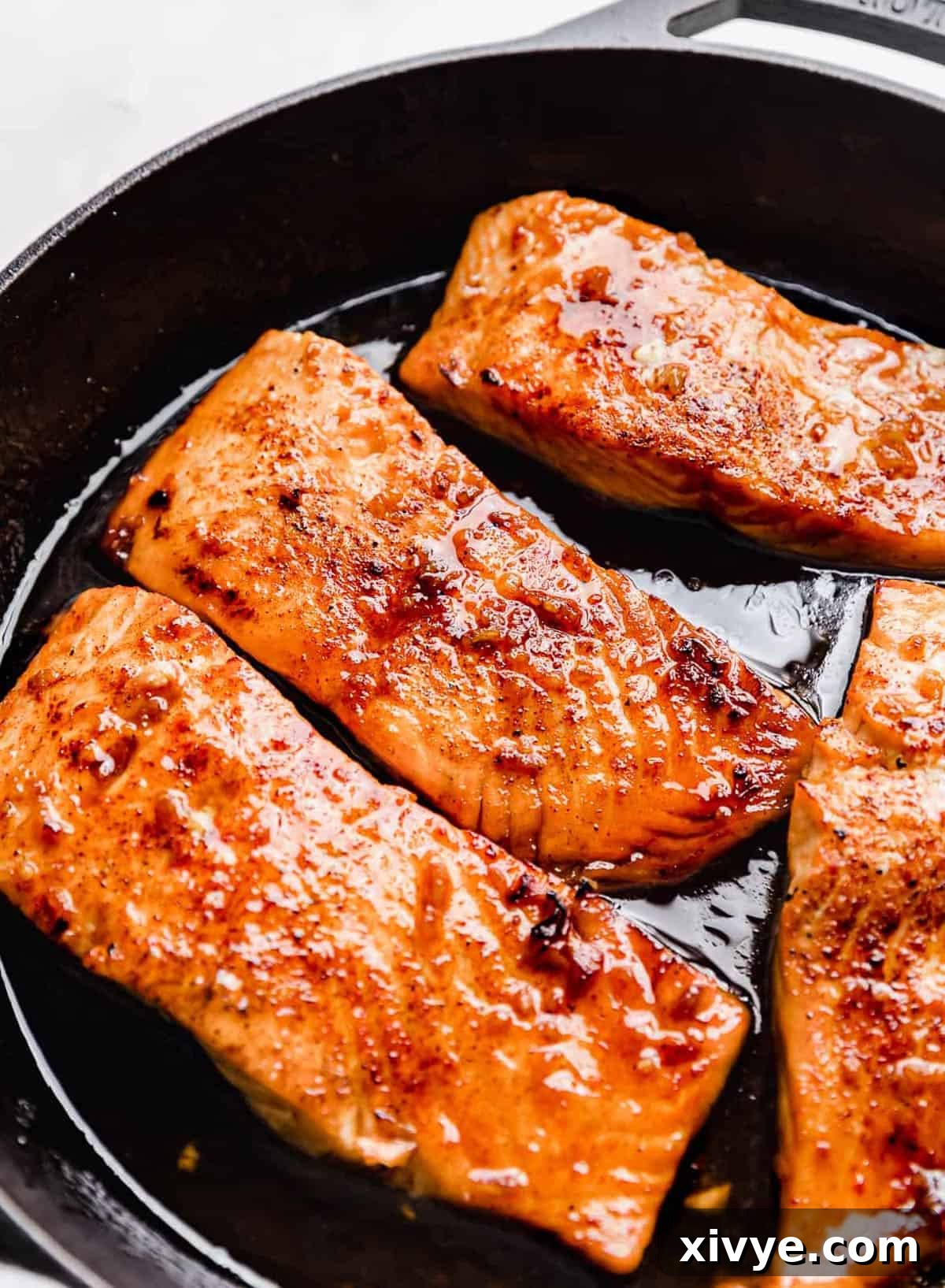
- Broiling for Irresistible Caramelization: Unlike traditional baked salmon, this recipe incorporates a crucial broiling step. After an initial sear, the salmon finishes cooking under the broiler, allowing the honey-rich sauce to beautifully caramelize. This process develops a wonderfully sticky, slightly charred exterior that locks in moisture and adds an unparalleled depth of flavor and texture, transforming the sauce into a golden, glistening glaze.
- Paprika for Earthy Depth: The inclusion of paprika is a subtle yet powerful addition. Its earthy, slightly peppery profile enhances the natural richness of the salmon and complements the sweet-savory sauce, adding a layer of sophisticated flavor without introducing any unwanted heat. It’s the secret ingredient that elevates the dish from good to truly exceptional.
- Uncovered Broiling for Crispy Perfection: One of the key techniques for achieving the best results is broiling the salmon uncovered. This direct exposure to heat ensures that the top of the salmon develops a tempting crispy texture and allows the honey-garlic glaze to achieve that desirable, caramelized crust. This method outperforms baking in foil, which would trap steam and prevent the sauce from reaching its full potential of golden, sticky perfection.
- Quick & Easy Weeknight Meal: Despite its gourmet taste, this honey garlic salmon is incredibly simple to prepare, requiring minimal prep time and cooking in under 20 minutes. It’s an ideal solution for busy weeknights when you need a healthy, satisfying meal without spending hours in the kitchen.
- Healthy and Nutritious: Salmon is packed with omega-3 fatty acids, protein, and essential vitamins and minerals. This recipe highlights these benefits by using fresh, wholesome ingredients and a cooking method that preserves the salmon’s natural goodness, making it a guilt-free indulgence.
Essential Ingredients for Your Honey Garlic Salmon
The success of this recipe hinges on the quality and preparation of its core ingredients. Here’s a closer look at what you’ll need and why each component is vital:
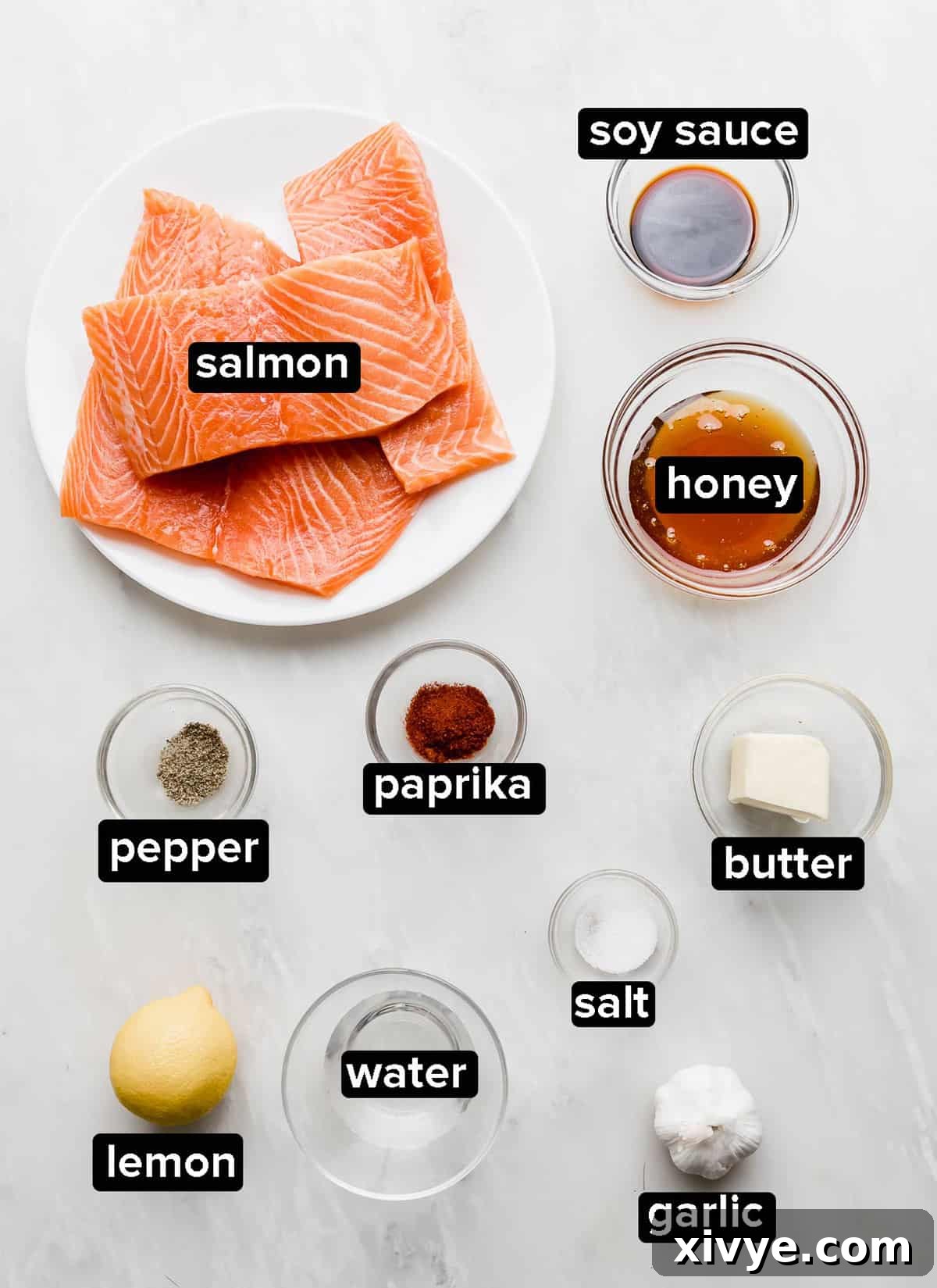
- Salmon Fillets: Opt for high-quality salmon fillets, ideally about 8 ounces each. For even cooking, it’s crucial that your fillets are similar in size and thickness. Whether you choose skin-on or skin-off is a matter of preference, though leaving the skin on can help protect the fish from overcooking and offer a crispy texture. Always check for and remove any pin bones before cooking.
- Soy Sauce: A cornerstone of the savory dimension, soy sauce introduces a crucial salty umami flavor. We recommend using low-sodium soy sauce to control the overall saltiness of the dish, allowing the other flavors to shine without being overwhelmed. It contributes a depth that perfectly complements the sweetness of the honey.
- Lemon Juice: Freshly squeezed lemon juice is non-negotiable here. It provides a bright, tangy counterpoint that cuts through the richness of the salmon and balances the sweetness of the honey and the saltiness of the soy sauce. This acidity is key to the sauce’s vibrant profile.
- Honey: The star of the sweet component, honey not only provides a natural, rich sweetness but also plays a critical role in the caramelization process under the broiler. Any good quality honey will work, but a local, raw honey can add an extra layer of flavor complexity.
- Paprika: This warm, earthy spice adds a beautiful reddish hue and a subtle, smoky, peppery depth to the salmon. Contrary to popular belief, most paprika varieties are mild, contributing flavor without significant heat. It’s essential for that appealing “chargrilled” note without actual grilling.
- Butter: Used to create the fragrant base for our honey garlic sauce, butter adds richness and helps to sauté the garlic perfectly. You can use salted or unsalted butter; just adjust the additional salt according to your preference and the soy sauce you use.
- Garlic Cloves: Freshly minced garlic is vital for the aromatic heart of this sauce. Its pungent, savory notes are a perfect match for the sweet honey. Sautéing it briefly until fragrant ensures its flavor is fully released without burning.
- Water: A small amount of water helps to thin the sauce slightly, allowing it to coat the salmon evenly and prevent it from becoming too thick too quickly during cooking. It aids in creating the ideal consistency for the glaze.
Crafting Your Perfect Honey Garlic Baked Salmon: A Step-by-Step Guide
Follow these detailed steps to create a show-stopping honey garlic baked salmon that’s tender, flaky, and bursting with flavor.
- Prepare Your Oven for Broiling: Begin by positioning an oven rack in the middle of your oven. Preheat your oven to the broil setting. This ensures the oven is ready to achieve that beautiful caramelization on the salmon and sauce.
- Season the Salmon Fillets: Pat your salmon fillets dry thoroughly with paper towels. This step is crucial for achieving a crispy skin (if skin-on) and for allowing the seasonings to adhere properly. Generously season both sides of each salmon fillet with salt, freshly ground black pepper, and the paprika. Ensure an even coating for maximum flavor.
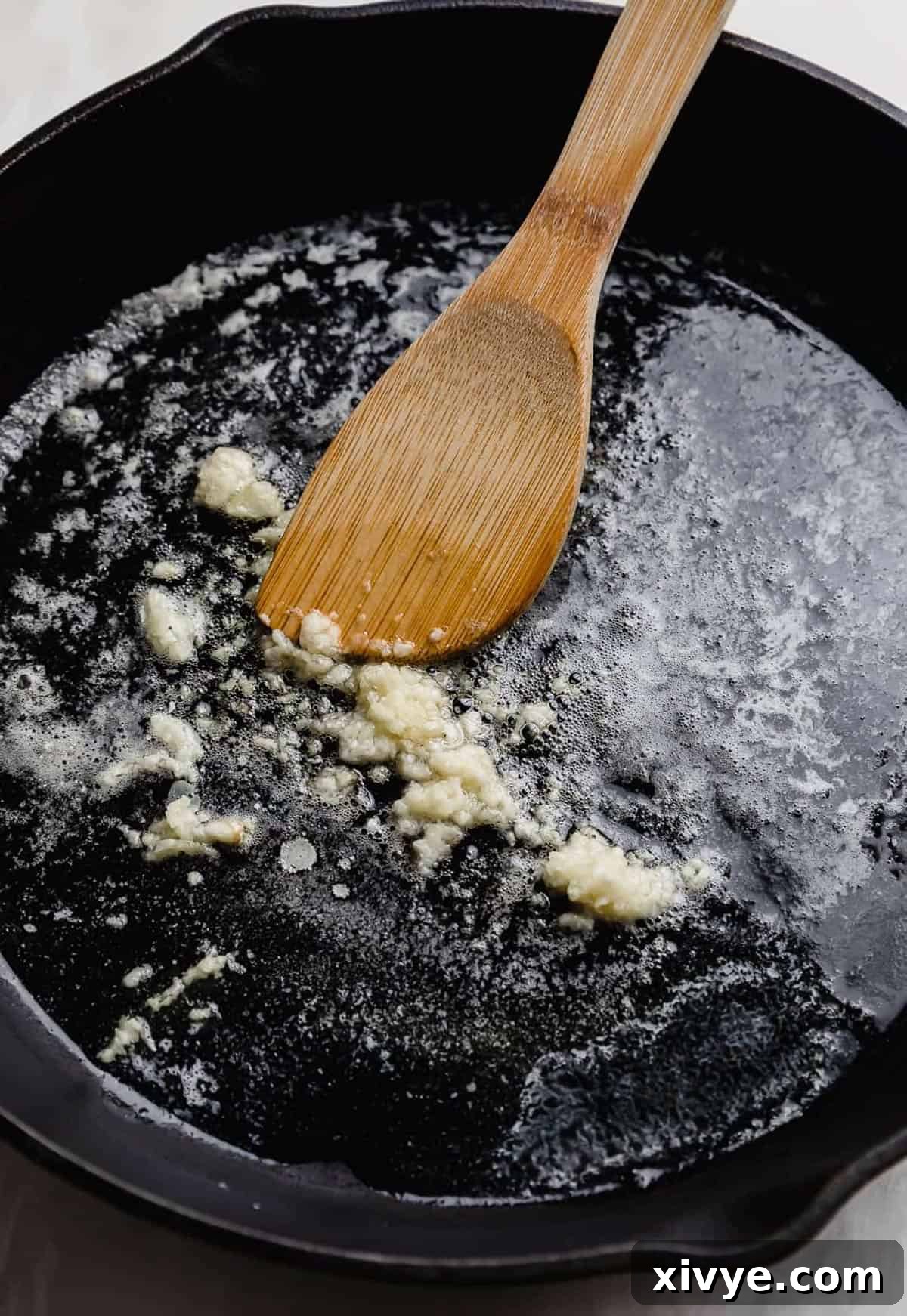
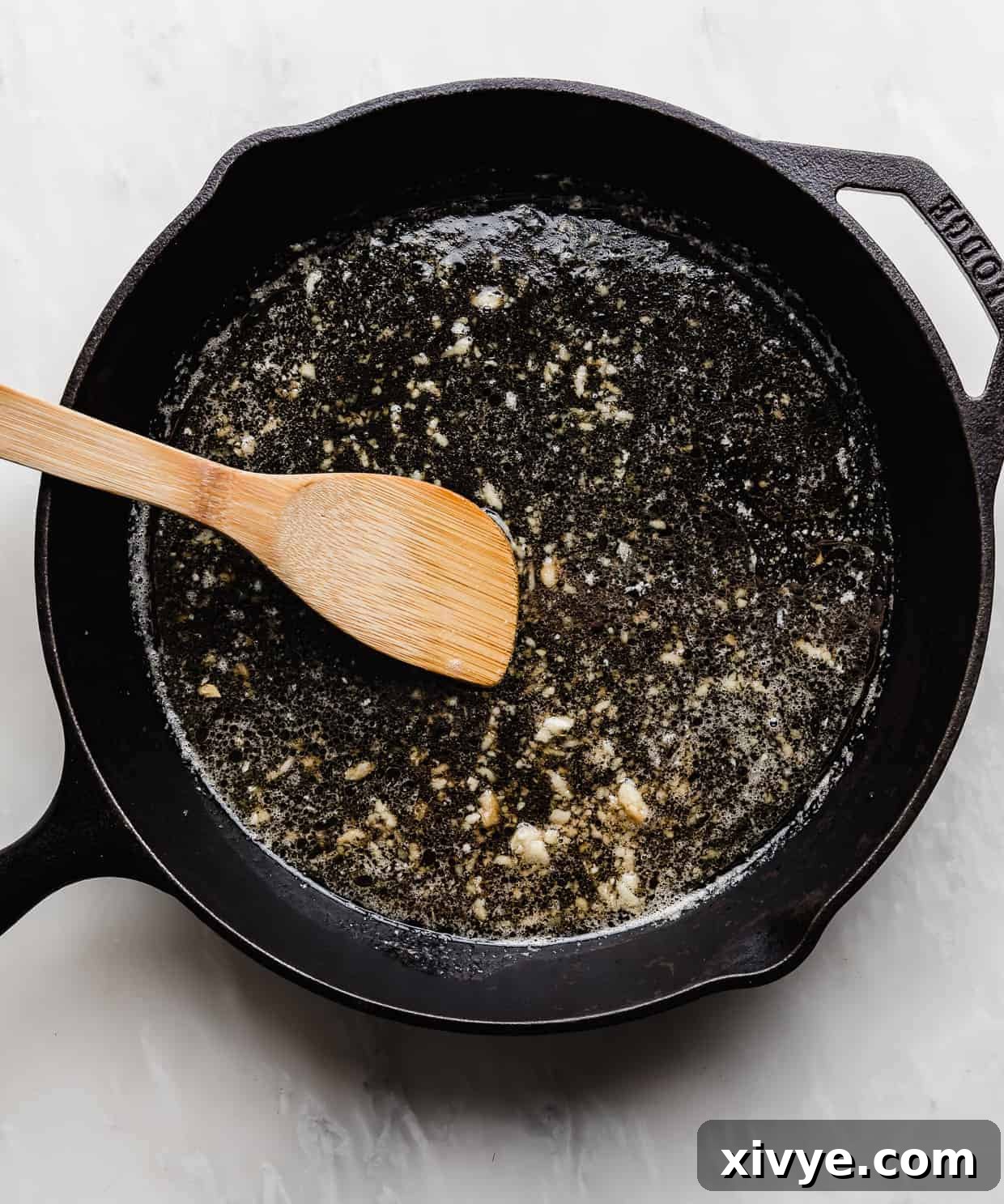
- Prepare the Irresistible Honey Garlic Sauce: In a large, oven-safe cast iron skillet (or an equivalent heavy-bottomed, broiler-safe pan), melt the butter over medium-high heat. Once the butter is melted and slightly shimmering, add the minced garlic. Cook the garlic for approximately 1 minute, stirring constantly, until it becomes fragrant but not browned. Be careful not to burn the garlic, as this can impart a bitter taste. Immediately stir in the honey, water, fresh lemon juice, and low-sodium soy sauce. Continue to stir the sauce constantly as it simmers for about 2 minutes. You’ll notice the sauce will begin to thicken slightly and develop a glossy sheen. Remove the skillet from the heat temporarily.
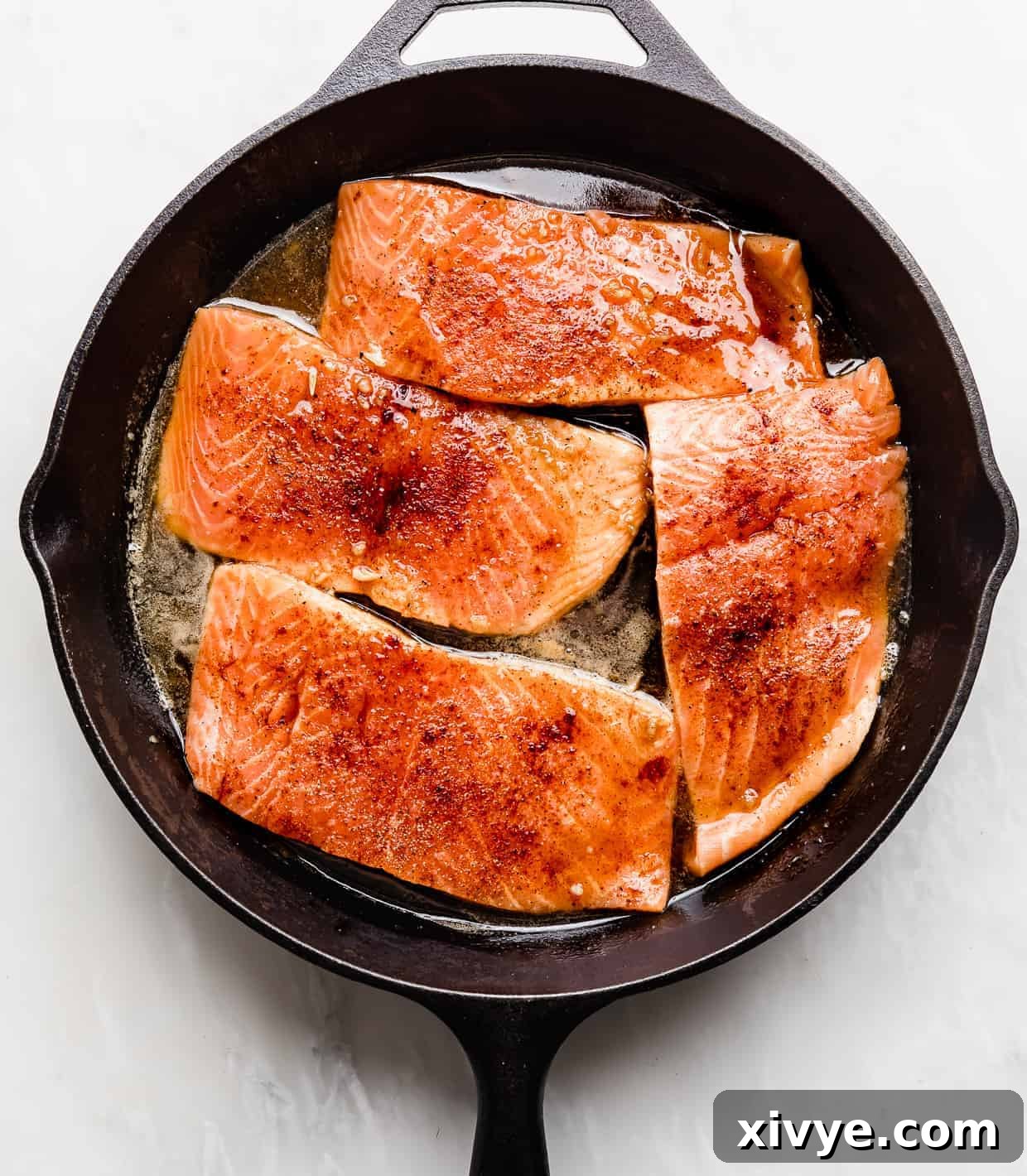
- Sear the Salmon to Perfection: Carefully place the seasoned salmon fillets into the skillet with the prepared honey garlic sauce. If your salmon has skin, place it skin-side down in the pan. Cook on the stovetop for 4 minutes over medium-high heat. During this searing time, continuously spoon the simmering honey garlic sauce over the tops of the salmon fillets. This step infuses the fish with flavor and helps to build that crucial caramelized crust. Do not flip the salmon; the top will cook and caramelize under the broiler.
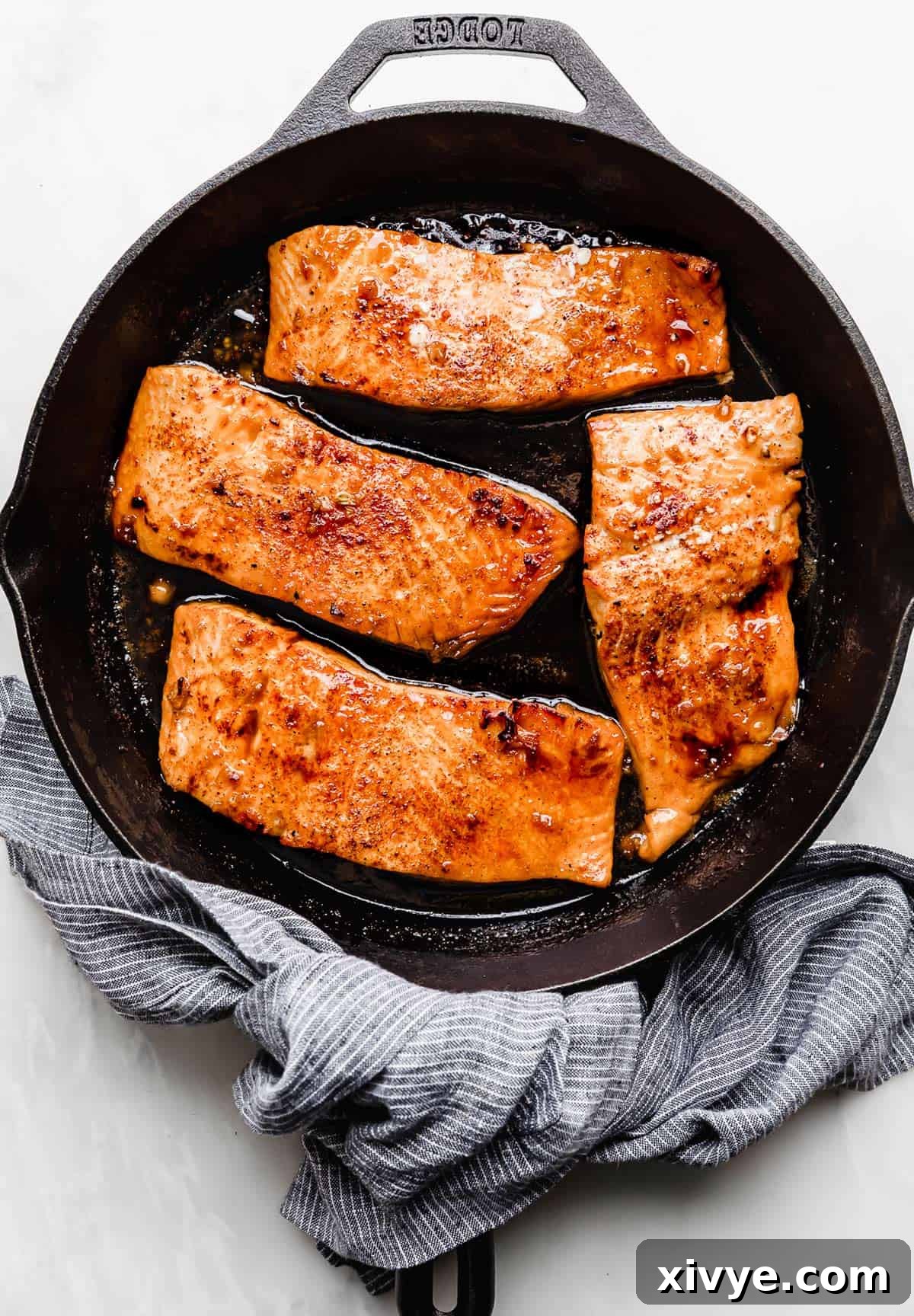
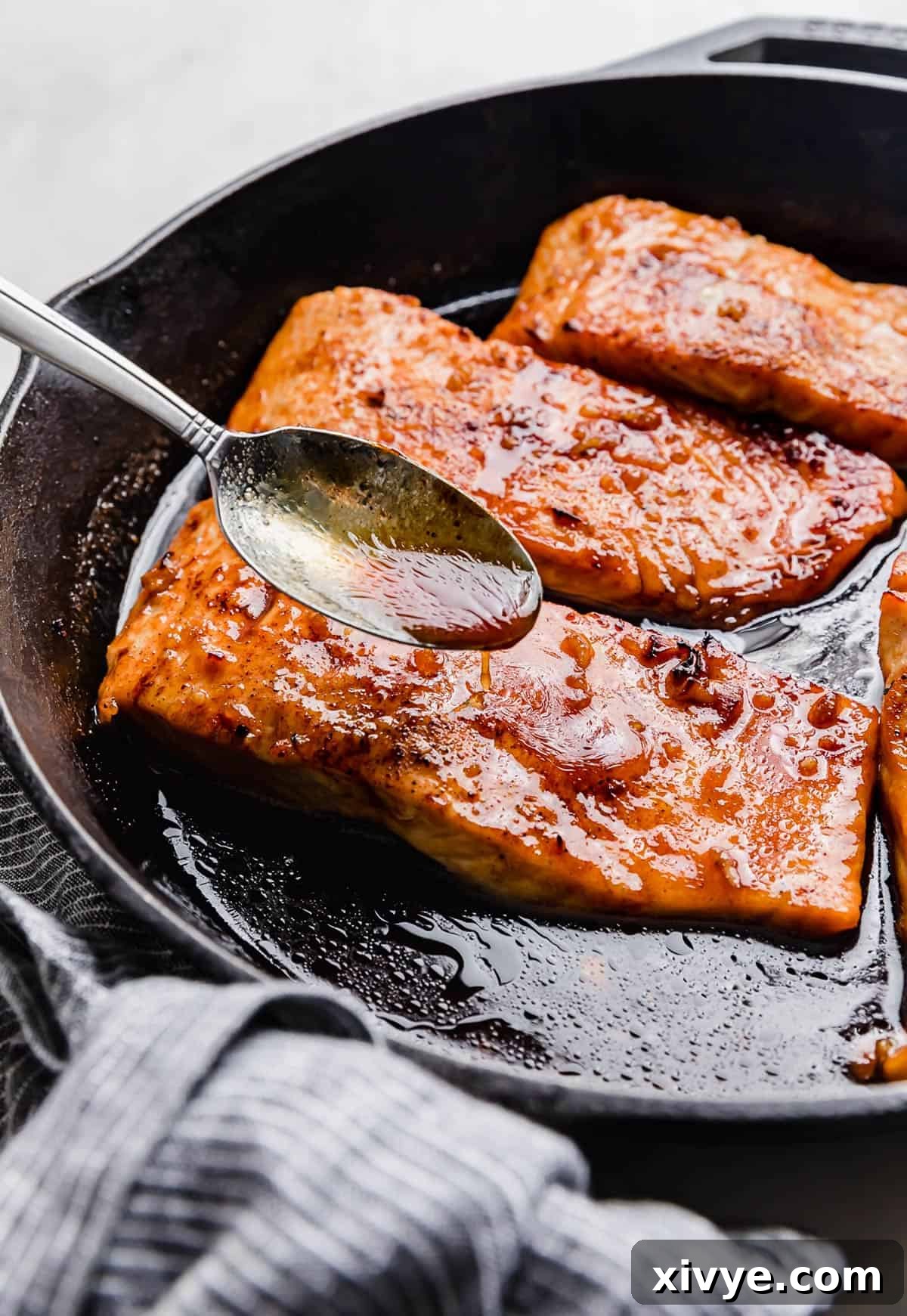
- Broil for Glazed Finish: Give the salmon one final basting with the honey garlic sauce, ensuring each fillet is well-coated. Then, carefully transfer the entire skillet to the preheated oven, placing it under the broiler. Broil for approximately 5 minutes, or until the salmon is cooked through and the sauce has caramelized to a beautiful golden-brown. The internal temperature of the salmon should reach 145°F (63°C) when measured with an instant-read thermometer at its thickest part. The exact broiling time may vary slightly based on your oven and the thickness of your salmon.
- Serve Immediately: Once cooked, carefully remove the skillet from the oven. Serve your exquisite Honey Garlic Baked Salmon immediately, drizzling any remaining caramelized sauce from the pan over each fillet. Garnish with fresh parsley or lemon wedges if desired for an extra touch of freshness and visual appeal.
Expert Tips for Flawless Honey Garlic Baked Salmon
Achieving perfectly cooked salmon with a delicious, caramelized crust is simple with these additional tips:
- Keep the Skin On: If available, cook your salmon fillets with the skin on. The skin acts as a protective barrier between the delicate flesh of the salmon and the intense heat of the pan and broiler. This helps prevent the salmon from sticking to the skillet and shields it from overcooking, resulting in a juicier, more tender fillet. Plus, if cooked correctly, the skin can become wonderfully crispy!
- Room Temperature & Dry Salmon: Before you even begin seasoning, ensure your salmon fillets are brought to room temperature (about 15-20 minutes out of the fridge) and thoroughly patted dry with paper towels. Room temperature fish cooks more evenly, and dry fish is essential for achieving that desirable crispy skin and a good sear. Moisture on the surface will steam the fish rather than sear it.
- Don’t Flip During Searing: When searing the salmon in the skillet, cook it skin-side down (if applicable) for the recommended 4 minutes without flipping. The goal here is to get a nice sear and crisp the skin. The top side of the salmon will cook through and caramelize beautifully under the broiler, eliminating the need to flip it.
- Remove Pin Bones: Always run your fingers over the flesh of the salmon to check for any small pin bones. These are easily removed with a pair of clean tweezers before cooking, ensuring a pleasant eating experience.
- Monitor Broiler Closely: Broilers can vary greatly in intensity. Keep a close eye on your salmon during the broiling step, as the sauce can caramelize quickly due to the honey content. This prevents burning and ensures a perfectly golden glaze.
- Don’t Overcook: Salmon is best when cooked to medium, where it’s still flaky and moist. Overcooking can lead to dry, tough fish. Use an instant-read thermometer to check for an internal temperature of 145°F (63°C) at the thickest part of the fillet. The fish will continue to cook slightly after it’s removed from the oven (carryover cooking).
- Rest the Salmon: While not explicitly stated in the steps, letting the salmon rest for 2-3 minutes after removing it from the oven allows the juices to redistribute, resulting in a more tender and flavorful fish.
Make Ahead, Storing, and Freezing
While this Honey Garlic Baked Salmon is best enjoyed fresh, you can certainly manage leftovers or plan ahead with these tips:
- Storing Leftovers: Any leftover salmon should be stored in an airtight container in the refrigerator and consumed within 3-4 days for optimal freshness and safety.
- Reheating Cooked Salmon: Reheating salmon can sometimes dry it out. To maintain moisture, try adding a small pat of butter or a splash of broth over the salmon before gently warming it in the microwave or a low-temperature oven (around 275°F / 135°C) until just heated through. Avoid high heat, which will dry it out further.
- Creative Uses for Leftovers: Cooked salmon is incredibly versatile! Instead of just reheating, consider flaking the leftover salmon and incorporating it into salads, wraps, sandwiches, pasta dishes, or even fish tacos. Its rich flavor can enhance many different meals.
- Freezing Cooked Salmon: While technically possible, freezing cooked salmon is generally not recommended if you prioritize texture and flavor. Cooked salmon tends to dry out significantly once reheated after being frozen. For the best experience, we strongly recommend eating this salmon the night it’s made or repurposing leftovers into dishes like salads or sandwiches rather than freezing it for later consumption. If you must freeze, ensure it’s in an airtight, freezer-safe container for up to 2-3 months, but be prepared for a potential change in texture upon reheating.
Frequently Asked Questions About Baking Salmon
Here are answers to some common questions about preparing delicious baked salmon:
No, for this honey garlic baked salmon recipe, it’s best to leave the salmon uncovered during broiling. This allows the top surface of the fish to get delightfully crispy and enables the honey-rich sauce to caramelize beautifully, forming that signature sweet and savory glaze. Covering it would trap steam, preventing these desirable textures from forming.
The most reliable way to tell if salmon is done is by checking its internal temperature with an instant-read thermometer. It should reach 145°F (63°C) at its thickest part. Alternatively, you can gently poke the flesh with a fork; if it flakes easily, it’s ready. The color should also change from translucent to opaque throughout the fillet.
Absolutely not! In fact, it’s often beneficial to cook salmon with the skin on. The skin acts as a natural protective barrier, insulating the delicate flesh from the intense heat of the pan and broiler. This helps prevent the salmon from sticking and keeps the fish moist and tender, preventing it from drying out. Plus, when cooked properly, the skin can become incredibly crispy and delicious!
For this recipe, an oven-safe cast iron skillet is ideal because it retains heat exceptionally well for searing and can go directly into the oven for broiling. Heavy-bottomed stainless steel pans or broiler-safe ceramic dishes can also work, provided they can withstand high heat.
Yes, you can use frozen salmon, but it’s crucial to thaw it completely in the refrigerator overnight before cooking. Pat it very dry before seasoning and searing to ensure the best texture and proper caramelization of the sauce.
Perfect Pairings: What to Serve with Honey Garlic Baked Salmon
This flavorful salmon pairs beautifully with a variety of side dishes. Here are some suggestions to complete your meal:
- Roasted Cauliflower: Its slightly nutty flavor and tender-crisp texture make it an excellent, healthy accompaniment that complements the salmon without overpowering it.
- Buttered Vegetables: A medley of simple buttered vegetables like green beans, asparagus, or broccoli adds color, freshness, and essential nutrients to your plate.
- Baked Sweet Potatoes: The natural sweetness and fluffy texture of a baked sweet potato provide a comforting and wholesome balance to the savory salmon.
- Rocket and Pear Salad: A light, peppery rocket (arugula) and sweet pear salad with a simple vinaigrette offers a refreshing contrast that cleanses the palate.
- Garlic Parmesan Roasted Asparagus: The crisp texture and savory notes of roasted asparagus, enhanced with garlic and Parmesan, perfectly echo the flavors in the salmon.
- Fluffy Quinoa or Brown Rice: For a heartier meal, serve the salmon over a bed of fluffy quinoa or brown rice to soak up every last drop of the delicious honey garlic sauce.
Did you try this irresistible recipe? We’d love to hear your thoughts! Click here to leave a rating and review, or find the comment section below the recipe card. Your feedback helps us create more delicious content!
Stay connected and inspired by following us on Instagram, Facebook, and Pinterest for daily culinary adventures.
Print
Review
Honey Garlic Baked Salmon
 Whitney Wright
Ingredients
- 4 salmon fillets – skin on or off, about 8 oz each
- salt and pepper – to season the salmon
- 1 teaspoon paprika
- 3 tablespoons butter – salted or unsalted
- 5 garlic cloves – minced
- 5 tablespoons honey
- 2 tablespoons water
- juice of 1 lemon
- 1 tablespoon low sodium soy sauce
Equipment
-
12 inch cast iron skillet, with lid
-
Instant-read thermometer
Instructions
-
Place oven shelf in the middle of the oven and preheat your oven to broil.
-
Season both sides of the salmon with salt, pepper, and paprika.
-
In a large cast iron skillet, melt the butter over medium-high heat. Add the minced garlic and cook for 1 minute or until fragrant. Stir in the honey, water, lemon juice, and soy sauce. Stir to combine and cook for 2 minutes, the sauce will slowly thicken.
-
Place the salmon in the skillet, skin side down (if it has skin). Cook for 4 minutes, spooning the sauce over the tops of the fillets.
-
Baste the fish one last time with the sauce, then place the skillet in the oven and broil for 5 minutes. The internal temperature of the salmon should reach 145°F (63°C).
-
Remove from oven and serve immediately. Store any leftovers in an airtight container for up to 4 days in the refrigerator.
Notes
Keep the skin on the salmon. It protects the flesh of the salmon from the hot pan and helps keep it moist.
Make sure the salmon is at room temperature and is patted dry prior to cooking for best searing results and crispy skin.
Sear the salmon for 4 minutes or until the skin is a little crispy. Do not flip the salmon; the top will bake and caramelize in the oven.
Make sure any bones are removed from the salmon before baking.
Make Ahead, Storing, and Freezing: Store any salmon leftovers in an airtight container in the fridge for up to 4 days. You can freeze cooked salmon, but it can dry out once reheated. We recommend eating the salmon the night of or using any leftover salmon in salads or sandwiches instead of freezing it.
Bake time may vary depending on the thickness of the fish fillets and your specific oven.