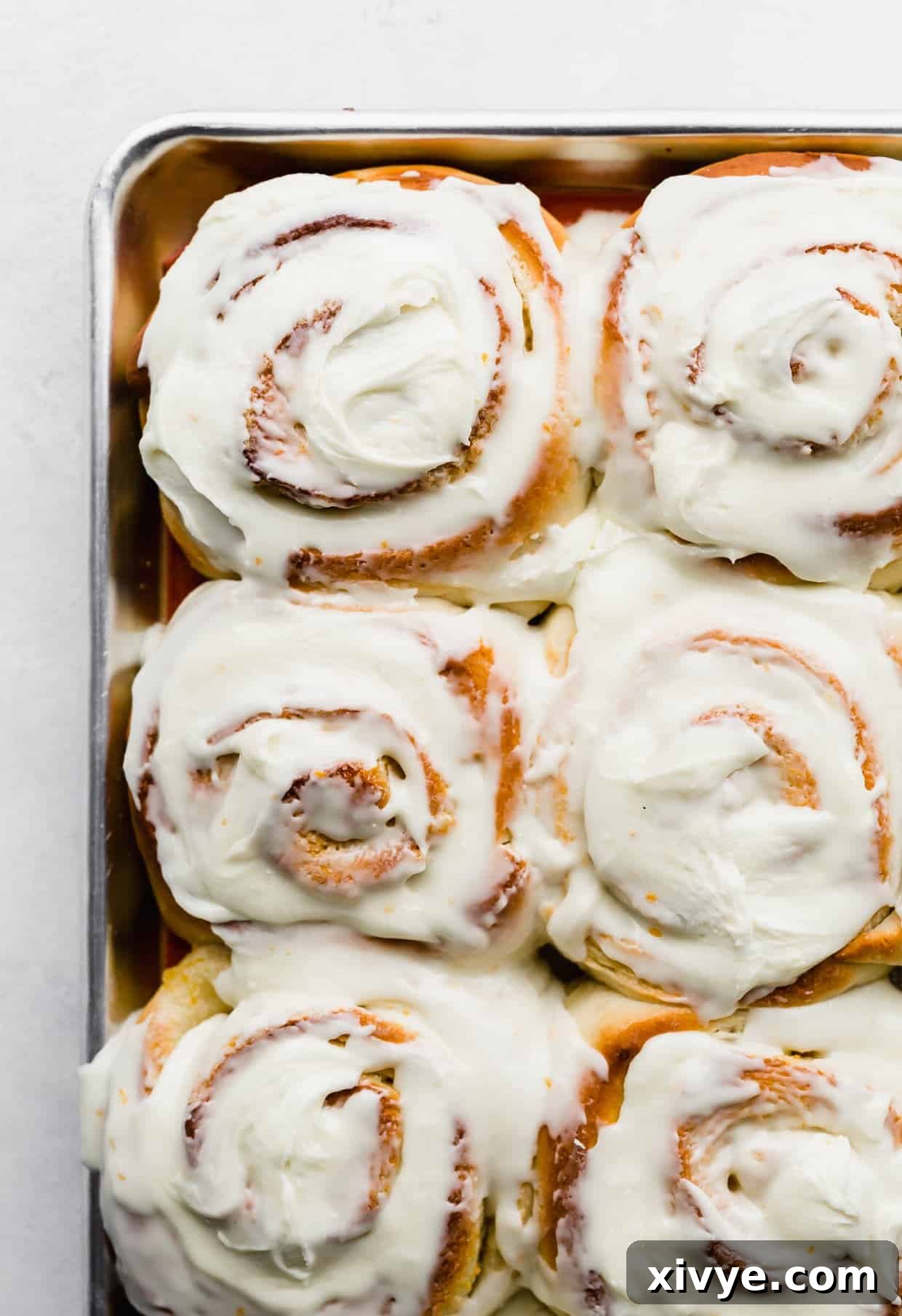
There’s nothing quite like waking up to the irresistible aroma of freshly baked sweet rolls, and these **homemade orange rolls** take that experience to a whole new level. Light, incredibly fluffy, and bursting with vibrant citrus flavor, these orange sweet rolls are generously loaded with fresh orange zest and juice in both the luscious filling and the creamy frosting. They’ve become a cherished tradition in our family, especially for Easter morning, eagerly anticipated by my kids who consistently declare them superior to any store-bought alternative. Prepare to fall in love with a truly exceptional breakfast treat!
If you’re a fan of delightful sweet pastries, you’ll also adore some of our other bakery-inspired recipes. Be sure to explore our classic, generously sized Cinnamon Rolls and their charming counterparts, Mini Cinnamon Rolls. For a fun, shareable option, our Monkey Bread, a delicious pull-apart sweet bread, is always a crowd-pleaser.
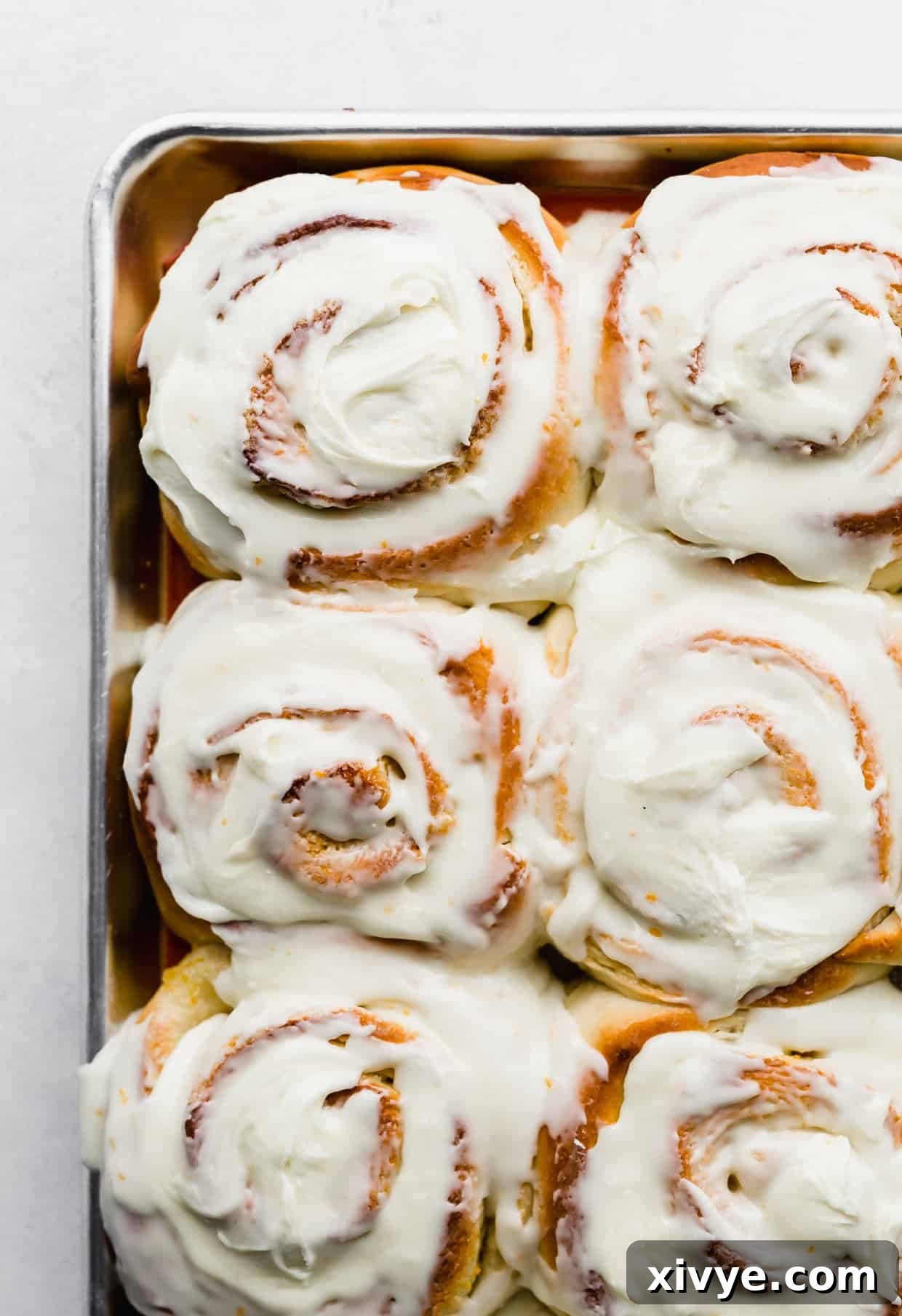
Why These Homemade Orange Rolls Are a Must-Try
This **easy orange rolls recipe** is more than just a sweet treat; it’s an experience. Here’s why it stands out:
- Unrivaled Flavor: Far Better Than Store-Bought! Forget everything you know about pre-packaged orange rolls. Our homemade version is a revelation. These rolls are incredibly light, exceptionally fluffy, and possess a depth of fresh citrus flavor that simply can’t be matched by anything from a can. The vibrant zest and juice infuse every layer, creating a taste that’s both comforting and exhilarating. Once you try these, you’ll understand why they’re a family favorite and an instant classic. And the best part? They don’t take significantly more time to prepare from scratch than less flavorful alternatives.
- Remarkably Quick Rise Time. We understand that baking with yeast can sometimes feel daunting due to long proofing periods. That’s precisely why this recipe is designed for efficiency! Thanks to a carefully calibrated amount of active dry yeast (2.5 tablespoons, to be precise), your dough will achieve a beautiful rise in just 30 minutes total. Don’t worry about an overpowering “yeasty” taste – through extensive testing, we’ve perfected the balance, ensuring a delightful flavor profile without compromising on a speedy and efficient rise. This recipe truly offers the perfect combination of convenience and deliciousness.
- Perfect for Any Occasion. While they are a staple for Easter brunch, these delightful **fluffy orange rolls** are versatile enough for any celebration or simply to elevate an ordinary weekend morning. Imagine serving them for a holiday breakfast, a special birthday treat, or a comforting dessert. Their bright, cheerful flavor makes them suitable for spring gatherings, winter warm-ups, or any time you crave a touch of sunshine.
- Satisfying & Rewarding Baking Experience. There’s immense satisfaction in creating something truly special from scratch. This recipe guides you through each step, making the process enjoyable and the results incredibly rewarding. Even if you’re new to yeast baking, the clear instructions and quick rise time make it an approachable project with spectacular outcomes.
Essential Ingredient Insights for Perfect Orange Rolls
Every ingredient plays a crucial role in achieving the perfect texture and flavor for these **best orange rolls**. Understanding their function will help you bake with confidence:
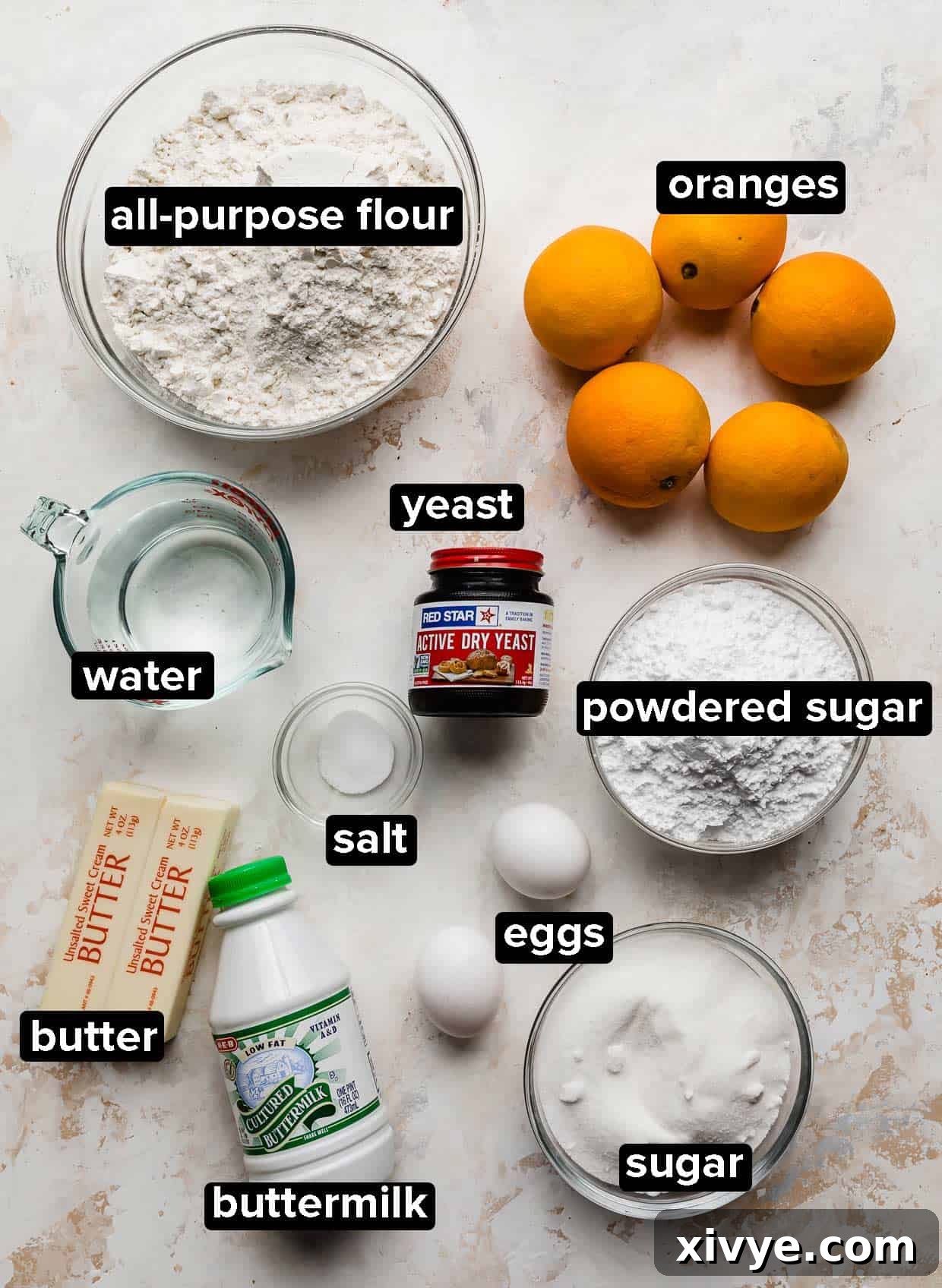
- Warm Water: The Yeast Awakener. The temperature of your water is paramount. It needs to be *warm*, not just lukewarm or room temperature. Aim for a temperature between 105-115°F (40-46°C). This warmth is vital for activating the active dry yeast, allowing it to bloom and create the airy, fluffy texture we desire in our **sweet rolls**. Water that’s too cold won’t activate the yeast, and water that’s too hot can kill it.
- Buttermilk: For Supreme Tenderness. Using buttermilk is a game-changer for the dough’s tenderness and moisture. Its acidity reacts with the leavening agents, resulting in an incredibly soft crumb. Ensure your buttermilk is at *room temperature* before adding it to the mixture. This allows it to incorporate smoothly into the dough, preventing any chilling effect on the yeast and promoting an even rise. We highly recommend using real buttermilk for the best results, as substitutes may not offer the same acidity and richness.
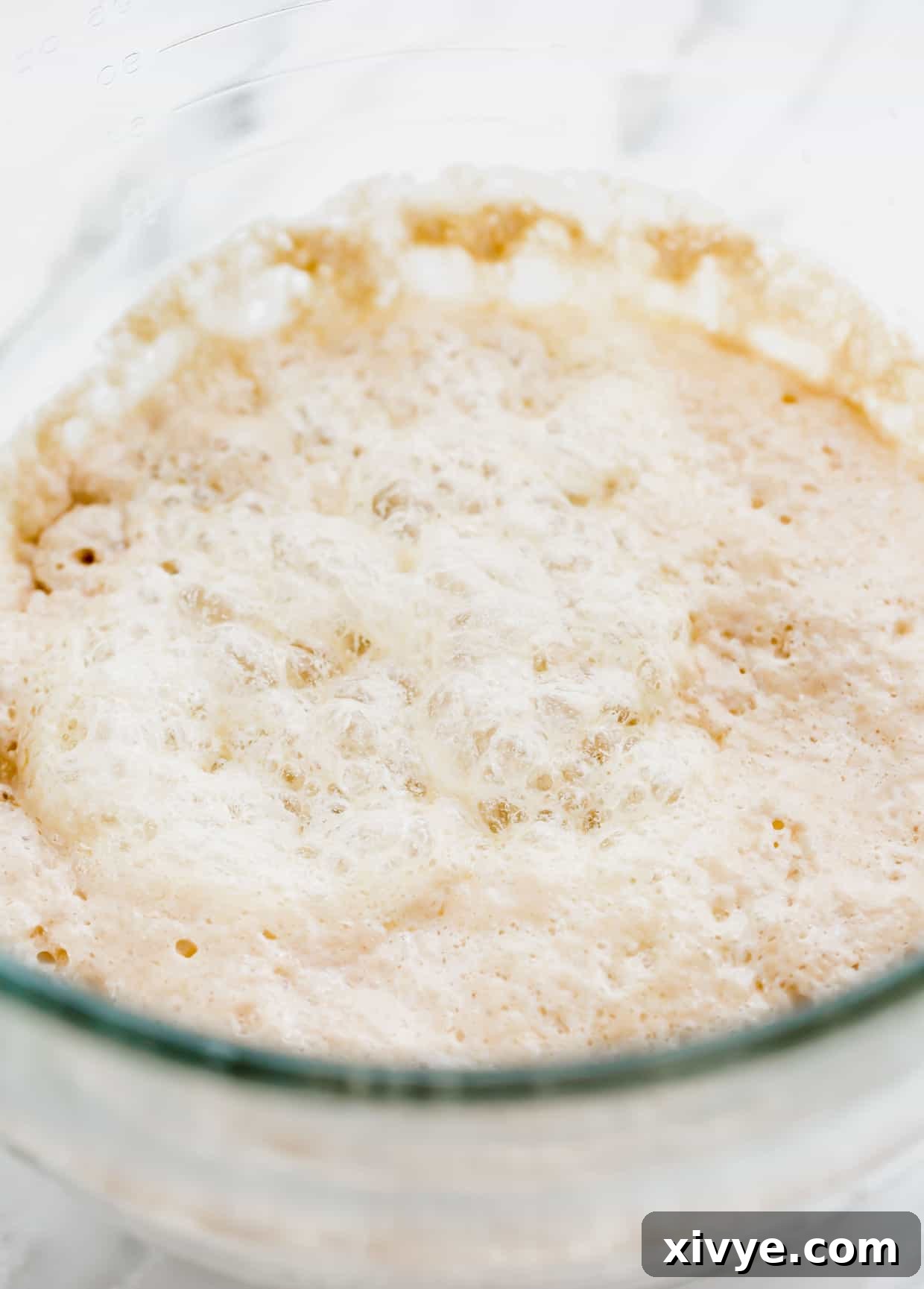
- Active Dry Yeast: The Rising Star. This recipe specifically calls for active dry yeast. The key difference between active dry and instant yeast is that active dry yeast requires initial activation in warm liquid (also known as proofing). This step allows you to ensure your yeast is alive and active before proceeding with the rest of the recipe. Instant yeast, by contrast, can be mixed directly with dry ingredients without prior activation. Follow the instructions to give your active dry yeast the perfect start.
- Salt: Flavor Balancer & Yeast Regulator. Salt is essential for enhancing the flavor of your rolls and also plays a role in controlling yeast activity. However, it’s critical *not* to add salt directly with the yeast during its activation phase, as salt can inhibit or even kill yeast. Instead, add the salt after the yeast has successfully proofed and begun to foam. Typically, a small amount of sugar is added with the warm water and yeast to provide immediate food for the yeast, further aiding activation.
- Flour: The Foundation. The type and amount of flour are crucial. All-purpose flour works wonderfully for a tender crumb. However, the exact amount you’ll need can vary slightly due to environmental factors like climate and elevation. Humidity levels can significantly impact how much flour your dough absorbs. Always pay attention to the dough’s consistency rather than strictly adhering to a measurement. You’ll know it’s right when the dough pulls away from the sides of the bowl but still remains slightly sticky at the base (more on this in the tips section).
- Butter: For Richness and Spreadability. Butter is used in both the dough, filling, and frosting. For the filling, it’s imperative to use *softened* butter, not melted. Softened butter will spread evenly and create a stable base for the orange sugar mixture, preventing the filling from seeping out during baking. If you use melted butter, it will likely run and create a greasy mess. Similarly, for the frosting, softened butter yields a creamy, spreadable consistency – we’re aiming for a rich frosting, not a thin glaze.
- Orange Zest & Fresh Orange Juice: Double the Citrus Punch. To achieve that intensely bright and authentic orange flavor, both fresh orange zest and fresh orange juice are indispensable. The zest, containing concentrated citrus oils, provides a potent aromatic punch, while the juice adds moisture and a tangy sweetness. Don’t skip either for the best possible orange experience in your rolls!
Crafting Perfect Homemade Orange Sweet Rolls: A Detailed Guide
Follow these steps carefully to create delicious, fluffy **orange rolls** that will impress everyone:
- Prepare the Dough (The Foundation of Fluffiness). In the spacious bowl of a stand mixer, fitted with the dough hook attachment, combine the warm water, room temperature buttermilk, granulated sugar, melted butter, and active dry yeast. Give it a gentle stir to mix everything together, then let this mixture rest undisturbed for 10-15 minutes. During this time, the yeast should become visibly foamy and bubbly on the surface, indicating it’s active and ready to work its magic. If you don’t see foam, your yeast might be old or the water temperature was off, and you’ll need to start again. Once the yeast is active, add the salt, eggs, and gradually incorporate the all-purpose flour. Mix on a medium-low speed for about 8-10 minutes. The dough is perfectly mixed when it begins to pull away from the sides of the bowl, but still retains a slight stickiness at the very base. You may need to add a little more flour, one tablespoon at a time, depending on the humidity in your kitchen and your elevation. The dough should feel tacky but not overly sticky.
- Allow the Dough to Rest. After thoroughly mixing your dough, remove the bowl from the stand mixer. Cover the bowl tightly with plastic wrap to prevent the dough from drying out. Let it rest in a warm, draft-free spot for just 10 minutes. This short rest period allows the gluten to relax, making the dough easier to roll out in the next step.
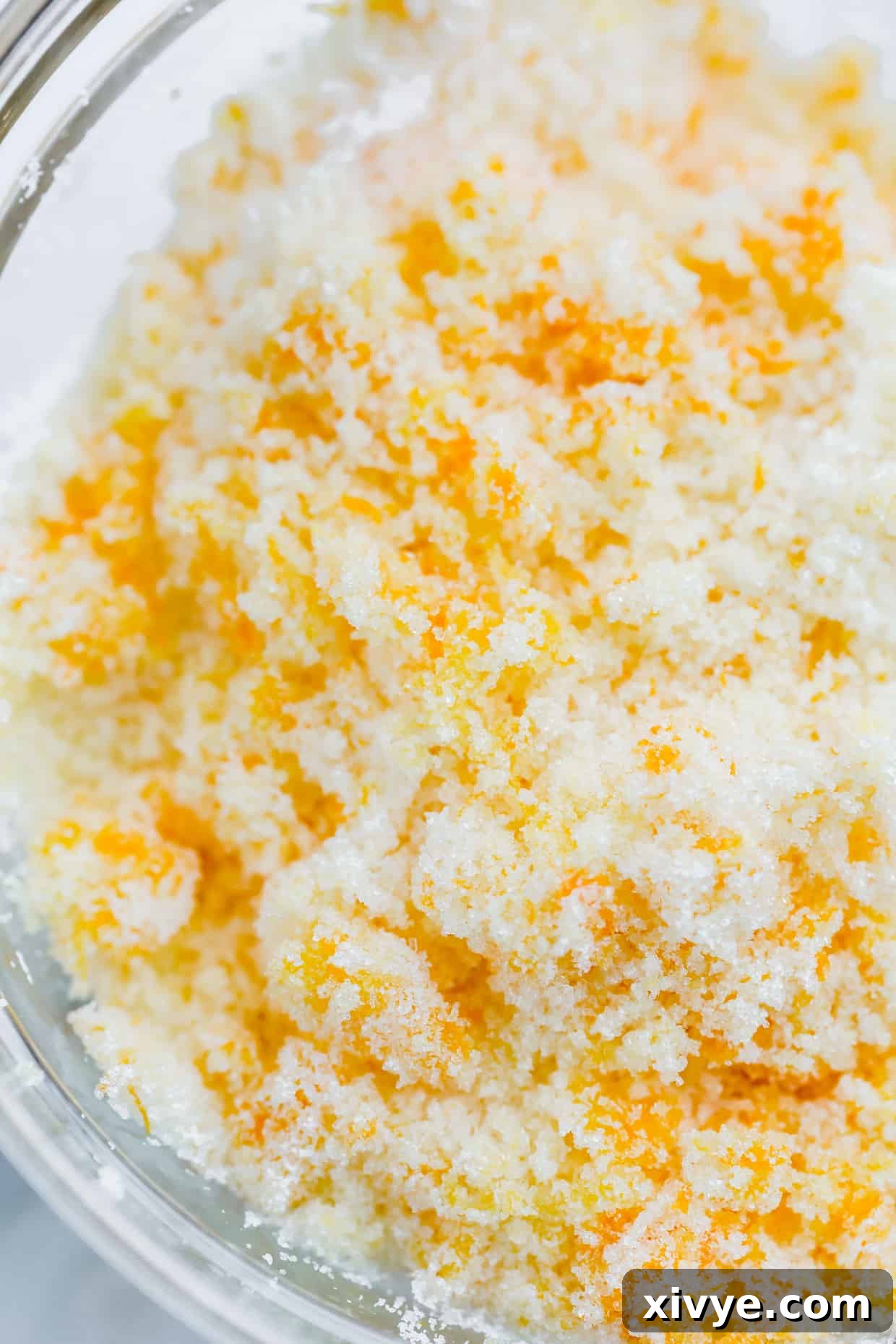
- Whip Up the Zesty Orange Roll Filling. While your dough is enjoying its brief rest, take this opportunity to prepare the star of the show – the vibrant orange filling. In a small mixing bowl, combine the granulated sugar, finely grated fresh orange zest, and a splash of fresh orange juice. Stir these ingredients together thoroughly until they are well combined and the sugar is infused with the bright citrus flavor. This mixture will be spread generously over your dough.
- Roll Out the Dough to Perfection. Prepare your work surface by lightly spraying a clean countertop with cooking spray (a reliable option like Baker’s Joy works wonders for preventing sticking). Gently transfer the rested dough onto the prepared surface. Using a rolling pin, carefully roll the dough into a rectangular shape, aiming for approximate dimensions of 14×18 inches. Strive for an even thickness across the entire rectangle for uniformly baked rolls.
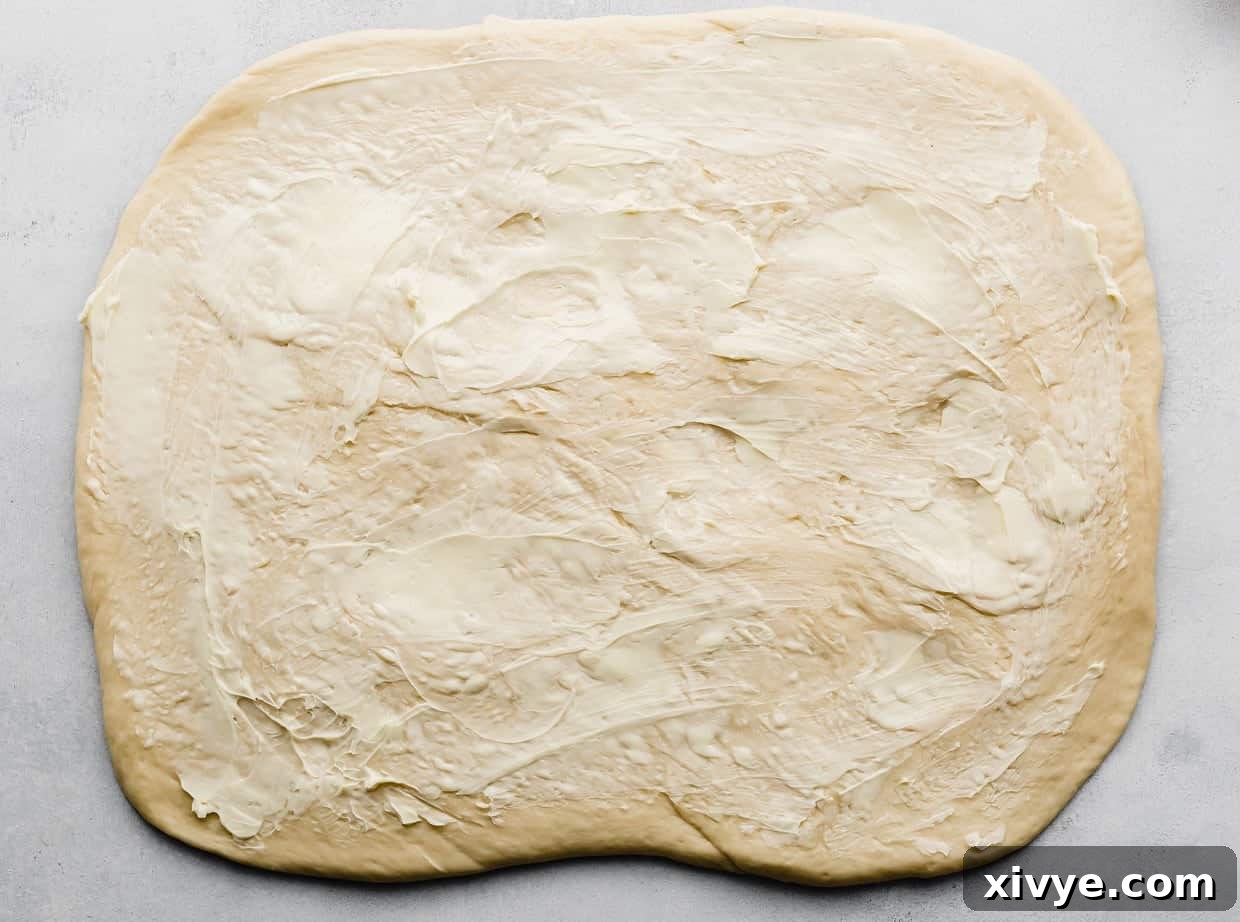
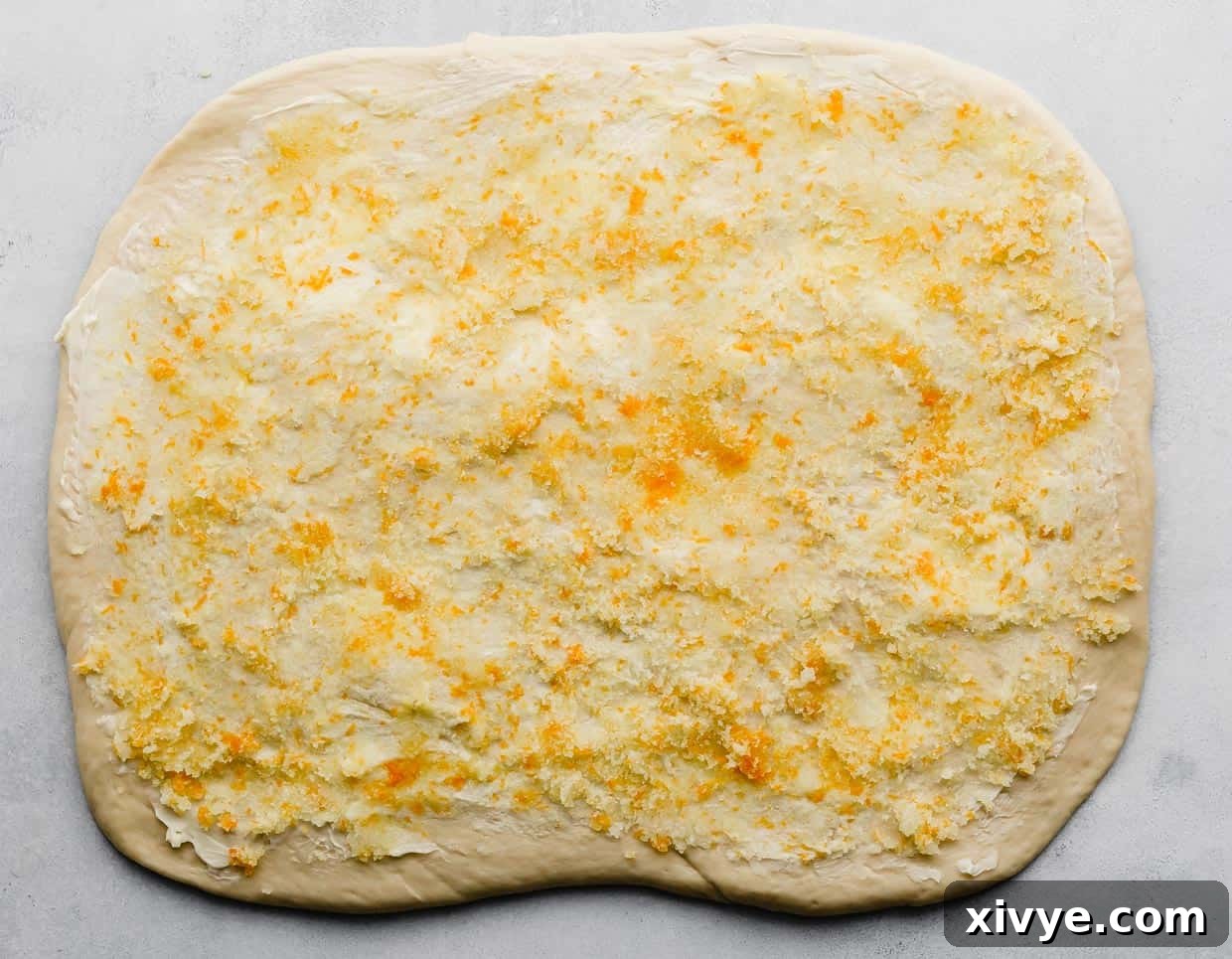
- Generously Add the Flavorful Filling. Now for the delicious layering! Using the back of a spoon or an offset spatula, carefully smear the softened butter evenly over the entire surface of your rolled-out dough, leaving a small border at one of the longer edges if desired (though not strictly necessary). Once the butter is spread, sprinkle the prepared orange sugar filling mixture uniformly over the softened butter. Ensure every inch is covered for maximum flavor in each bite.
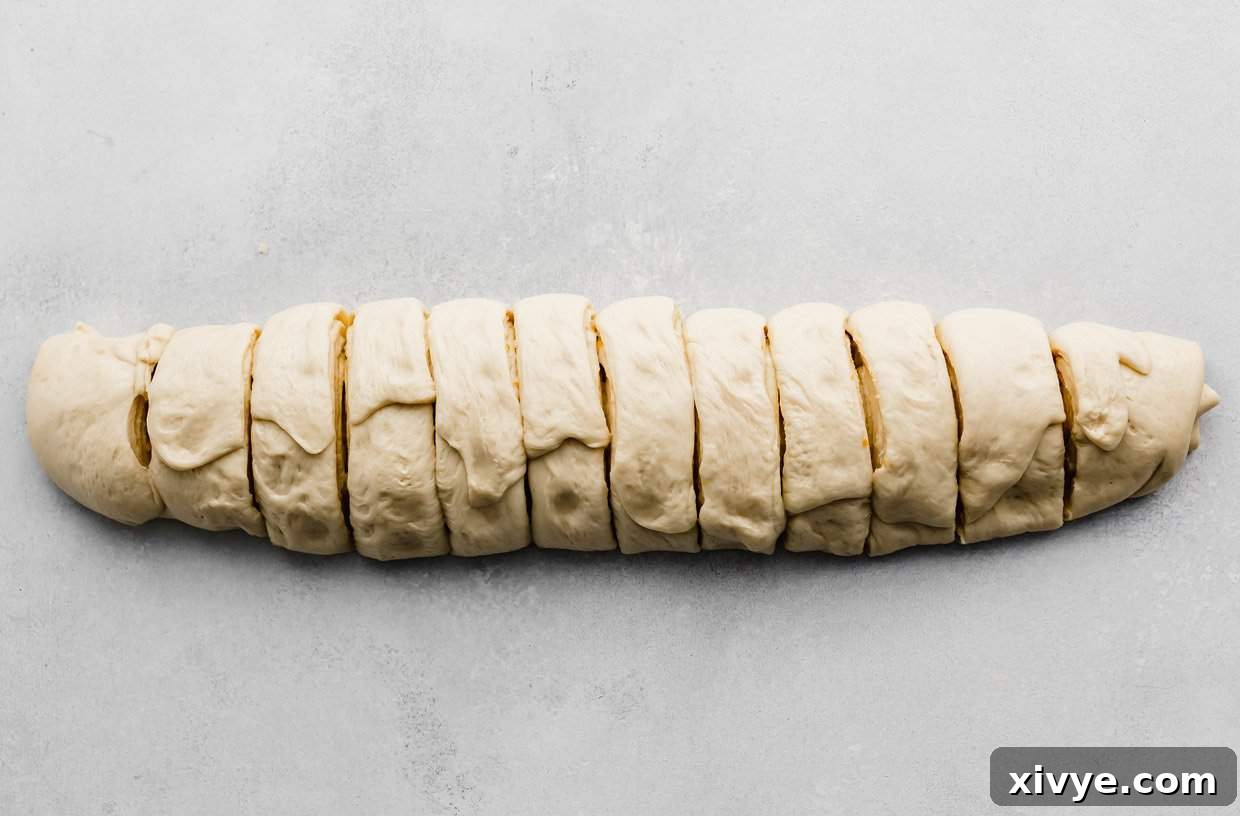
- Roll Up and Precisely Cut the Rolls. Starting from one of the longer sides of your dough rectangle, carefully and snugly roll the dough into a log. Aim for a tight, even roll to ensure beautiful spirals in your finished pastries. The final log should measure approximately 18 inches in length. To cut the rolls, you have a few options for clean slices: use a piece of unflavored dental floss or strong thread by sliding it under the log, crossing the ends over the top, and pulling to cut; or, use a sharp serrated knife for minimal squishing. Divide the log into 12 equally sized rolls. Prepare a baking sheet by lining it with parchment paper (or a silicone baking mat). Arrange the cut rolls on the prepared sheet, spacing them out in a 3×4 pattern, leaving a little room between each for expansion during the final rise and baking.
- The Final Rise: Allowing the Rolls to Puff. Once your beautiful orange sweet rolls are neatly arranged on the baking sheet, lightly cover them with plastic wrap. This prevents them from drying out while they rise. Place the covered baking sheet in a warm, draft-free spot for 20 minutes. You’ll notice the rolls becoming slightly puffy and increasing in volume, indicating that the yeast is actively working to create that signature light texture. While they rise, preheat your oven to 400°F (200°C).
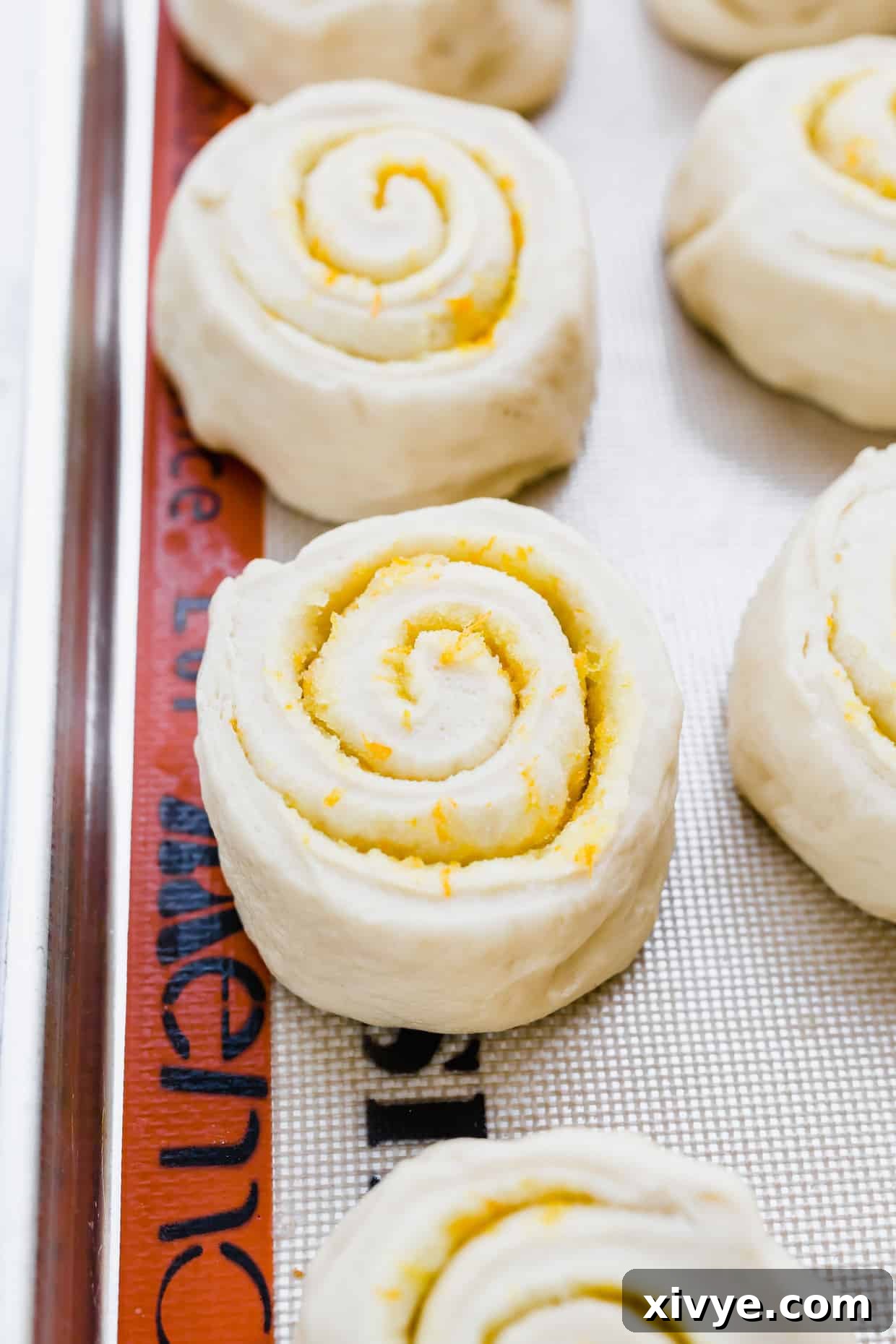
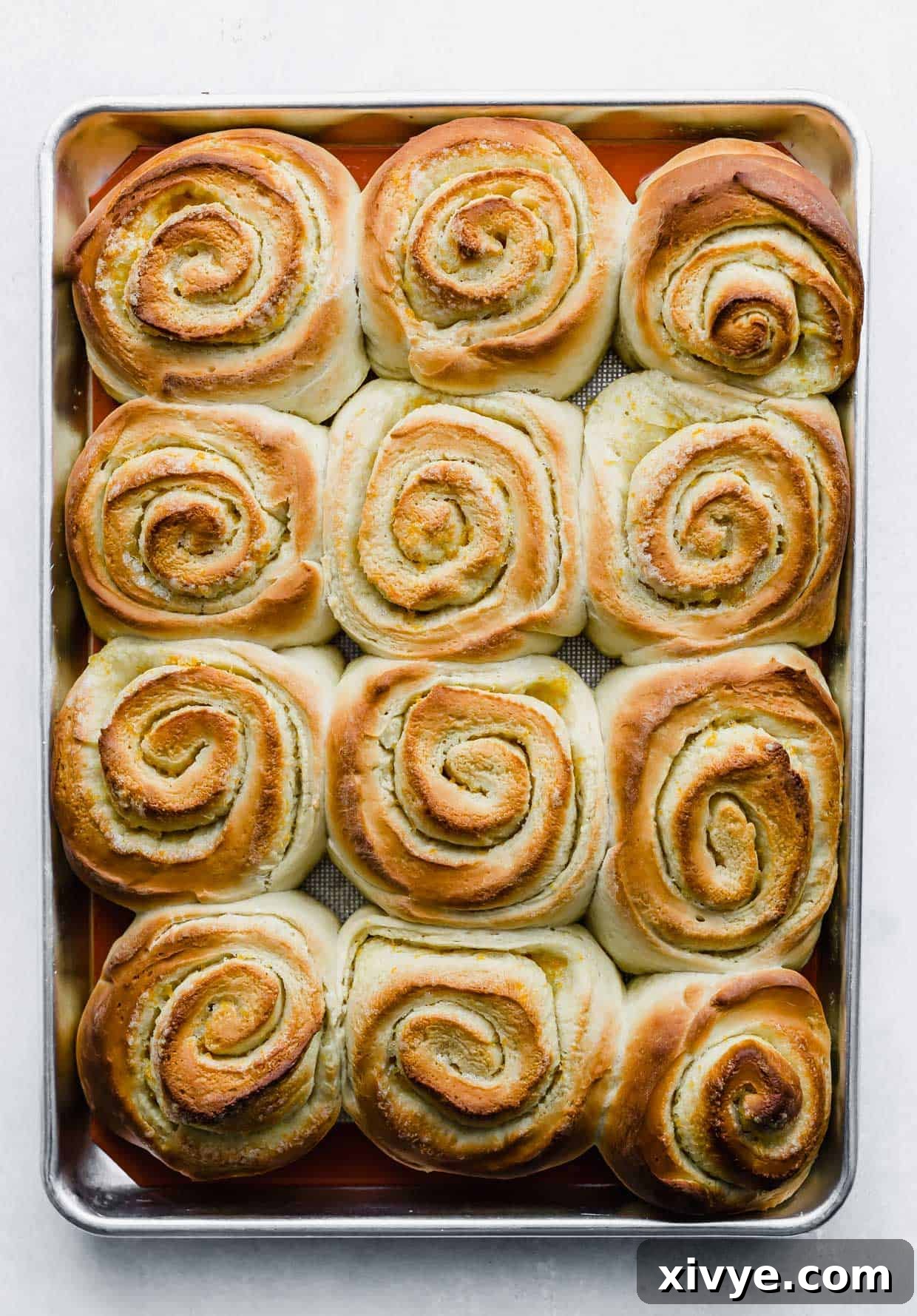
- Bake to Golden Perfection. Uncover the risen rolls and transfer the baking sheet to your preheated 400°F (200°C) oven. Bake for approximately 20-24 minutes, or until the tops are beautifully golden brown and the rolls are cooked through. The internal temperature should reach about 200°F (93°C) if you use a thermometer. Keep an eye on them, as oven temperatures can vary.
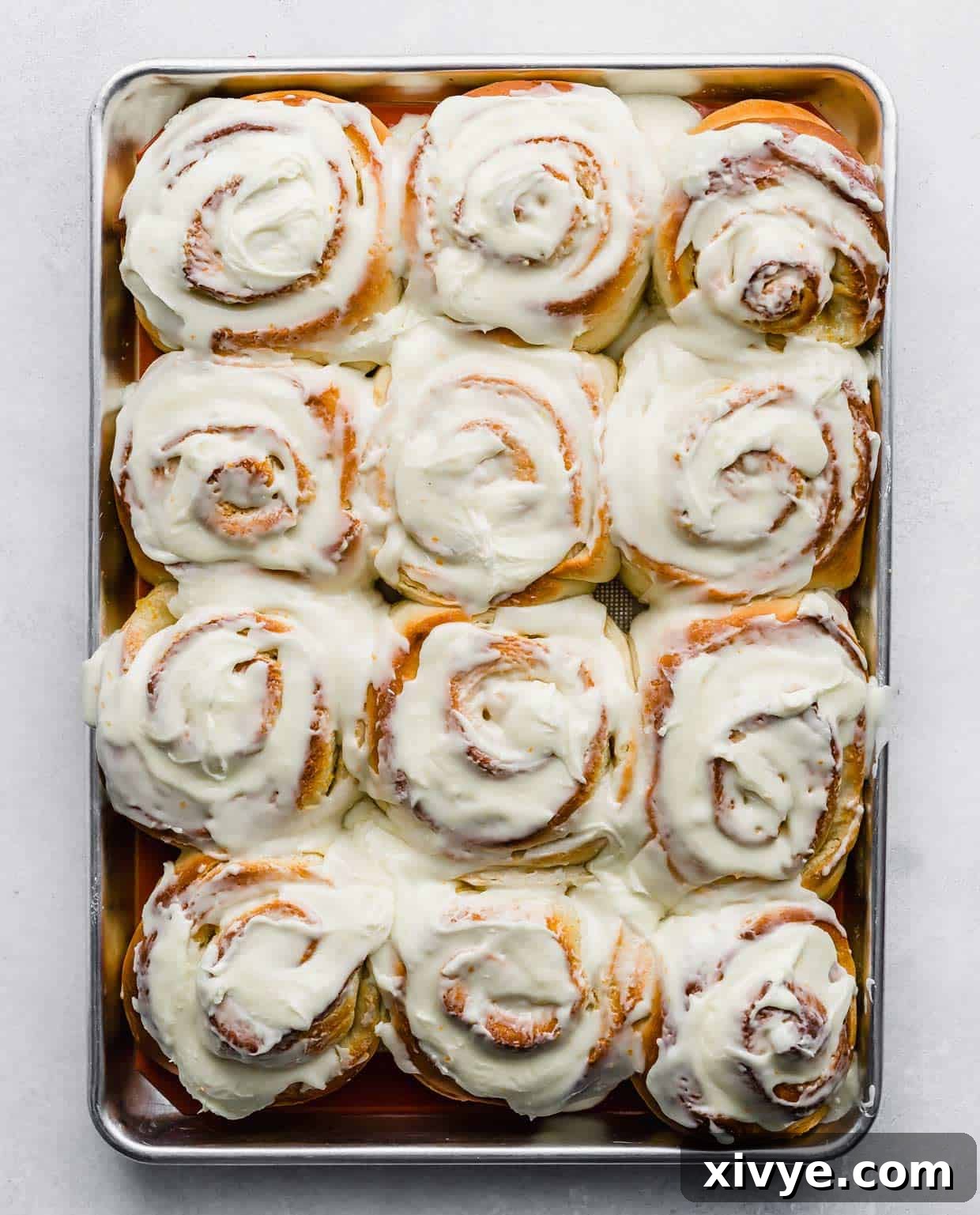
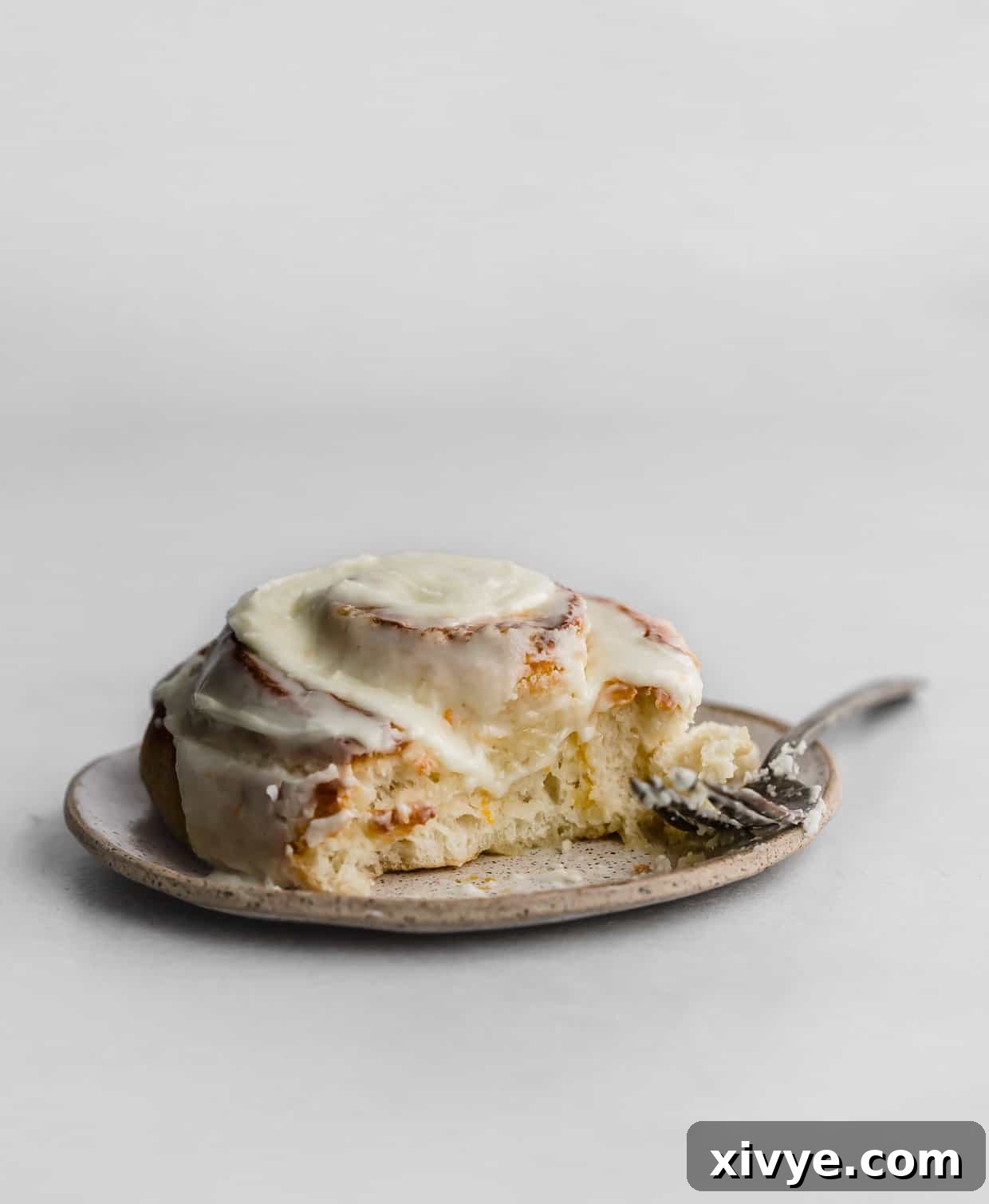
- Whip Up the Creamy Orange Frosting & Frost While Warm. While your rolls are baking, it’s the perfect time to prepare the delectable orange frosting. In a stand mixer fitted with a whisk attachment (or using a hand mixer), cream together the softened butter until it’s light and smooth. Gradually add the powdered sugar, fresh orange zest, and fresh orange juice, beating until the frosting is silky smooth and lump-free. If the frosting seems too thick, add more orange juice, a teaspoon at a time, until it reaches a perfectly spreadable consistency. Once the rolls are out of the oven, let them cool in the pan for just 5-10 minutes. This slight cooling period prevents the frosting from completely melting, but frosting them while still warm allows the delicious citrusy goodness to seep into every nook and cranny, creating an unbelievably moist and flavorful bite. Spread the frosting generously over the warm rolls directly in the pan.
Expert Tips for Your Best Orange Rolls Ever
Achieving bakery-quality **homemade orange rolls** is easier than you think with these expert tips:
- Experiment with Flour Blends: While all-purpose flour yields fantastic results, don’t hesitate to play with your flour choices. For a heartier, chewier **sweet roll**, try a blend of 50% bread flour and 50% all-purpose flour. Bread flour has a higher protein content, which contributes to a more developed gluten structure and a slightly chewier texture. I’ve personally experimented with both 100% all-purpose and a 50/50 mix, consistently achieving delicious results with each method. Find what you love!
- The Importance of Softened Butter for Filling: This is a crucial detail! Always use truly softened (but not melted) butter for your filling. If the butter is melted, it will quickly seep out from under the filling and into the pan as soon as the rolls start to bake. This not only creates a greasy mess but also can lead to drier rolls as they lose that internal richness. Softened butter creates a stable, creamy layer that holds the sugar and zest in place.
- Frost Warm (Not Hot) Rolls for Maximum Flavor: The secret to perfectly frosted rolls with a generous, melt-in-your-mouth topping is to frost them when they are warm, not piping hot. Allowing them to cool for 5-10 minutes post-baking means the frosting won’t completely liquefy. However, the residual warmth helps the frosting to slightly melt and seep into all the delightful nooks and crannies of the roll. This ensures that every single bite is infused with creamy, sweet orange goodness.
- Customize Your Citrus Zest: The amount of orange zest can be adjusted to your preference. If you love a really intense citrus punch, feel free to add a little extra zest to both the filling and the frosting. Conversely, for a more subtle orange hint, you can slightly reduce the amount. Always use a microplane for the finest zest, avoiding the bitter white pith.
- Flour Consistency is Key – Adjust as Needed: Remember that baking is a science, but also an art that adapts to environment. The amount of flour specified in the recipe card is a guideline. Factors like local climate (humidity levels) and even elevation can affect how much flour your dough will absorb. You’re looking for a dough that pulls cleanly away from the sides of your mixing bowl but still has a slight, manageable stickiness at the very base. It should feel tacky, not overly sticky or dry. Add flour gradually, one tablespoon at a time, until you achieve this ideal consistency. Trust your dough!
- Preventing Dough from Sticking: Cooking Spray vs. Flour: When rolling out your dough, reach for cooking spray instead of dusting with excess flour. My personal trick is using Baker’s Joy, and it truly makes a difference! Flour can dry out your precious dough, making it tougher and potentially altering the final texture. Cooking spray, on the other hand, provides a slick, non-stick surface without adding extra dry ingredients, ensuring your dough remains pliable and easy to work with.
- Even Cuts for Even Baking: For perfectly uniform rolls, ensure you cut your log into equally sized pieces. Using unflavored dental floss or a very sharp, un-serrated knife (after lightly chilling the log for 10-15 minutes if it’s too soft) can help achieve clean, precise cuts. Evenly sized rolls will bake more uniformly, preventing some from being overdone while others are undercooked.
Make Ahead, Storing, and Freezing Your Orange Rolls
These **easy orange rolls** are perfect for preparing in advance, storing, or freezing:
- Storage for Freshness: Once baked and frosted, allow the orange rolls to cool completely if storing for longer than a few hours. Store them in an airtight container or a sealed bag at room temperature for up to 2 days. For extended freshness, especially in warmer climates, you can refrigerate them for up to 4 days.
- Reheating for Warm Indulgence: To enjoy that fresh-from-the-oven experience again, simply pop an individual roll into the microwave for a few seconds (10-20 seconds usually does the trick). This will warm it gently and soften the frosting, making it wonderfully gooey and delicious.
- Freezing Baked Orange Rolls: To freeze baked rolls, ensure they are completely cooled. Wrap each individual roll tightly in plastic wrap, then place them in an airtight freezer-safe container or a heavy-duty freezer bag. They will keep well in the freezer for up to 1 month. For the best thawing results, transfer them to the refrigerator overnight. You can then gently reheat them in the microwave or a low oven until warm.
- Make-Ahead Dough (Overnight Rise): If you want to prepare these rolls ahead of time for a special morning, follow the recipe instructions up to the second rise (after the rolls have been cut and placed on the baking sheet). Instead of letting them rise at room temperature, cover the baking sheet tightly with plastic wrap and refrigerate overnight. The cold environment will slow down the yeast activity, allowing the rolls to slowly proof. On baking day, remove the rolls from the fridge and let them sit at room temperature for about 30-60 minutes (or until they look slightly puffy and have taken the chill off) before uncovering and baking as directed. This method is perfect for a stress-free breakfast!
Frequently Asked Questions About Orange Sweet Rolls
Here are answers to some common questions about making these delightful **orange sweet rolls**:
What exactly are orange rolls?
Imagine your favorite cinnamon roll, but with a vibrant citrus twist! **Orange rolls** are essentially sweet yeast rolls that feature a buttery, sugary filling and a creamy frosting, both infused with fresh orange zest and orange juice instead of the traditional cinnamon spice. They offer a bright, tangy-sweet flavor profile that’s truly unique and incredibly delicious, making them a refreshing alternative to classic sweet rolls.
Should I use flour or cooking spray when rolling out the dough?
This is one of my top baking hacks! I strongly recommend using cooking spray over flour when rolling out yeast dough. Dusting with flour can actually dry out your dough, making it tougher and potentially altering the final texture of your rolls. Cooking spray, especially a good quality one like Baker’s Joy, creates a slick, non-stick surface without adding extra dry ingredients. Whenever I use cooking spray, I never encounter sticking issues, and the dough remains wonderfully pliable. It’s truly amazing!
Can you freeze orange rolls?
Absolutely, you can! You have a couple of options for freezing these delicious treats. The most common method is to freeze the *baked and cooled* orange rolls. Refer to the “Make Ahead, Storing, and Freezing” section above for detailed instructions on wrapping and storing them to preserve their quality. While I haven’t personally tested freezing the unbaked dough for this specific recipe, in theory, it should work. If you choose to try it, I’d suggest freezing them after they’ve been filled, rolled, and cut. Wrap each roll individually in plastic wrap and store them in an airtight container. Thaw them in the refrigerator overnight, then place them on a baking pan and allow them to complete their final rise before baking. If you give this a shot, please let me know how it turns out!
Is it possible to make this dough by hand?
Yes, you certainly can make this dough by hand if you prefer not to use a stand mixer. The process will simply require a bit more manual effort and time to ensure all the ingredients are fully incorporated and the dough develops proper gluten structure. You’ll need to knead it on a lightly floured surface until it’s smooth, elastic, and passes the windowpane test (where you can stretch a small piece thin enough to see light through it without tearing). It’s a great workout and very rewarding!
Can I bake these in a muffin tin instead of a baking sheet?
While it’s possible, I generally recommend baking these **homemade orange rolls** on a standard baking sheet. These rolls are designed to be quite generously sized, which contributes to their fluffy texture and impressive appearance. If you opt to use a muffin tin, you’ll likely need to cut the rolls smaller to ensure they fit properly. This will, of course, yield a greater number of smaller rolls. Just keep in mind that the bake time would need to be adjusted accordingly, as smaller rolls will bake faster. You’ll want to watch them closely to prevent overbaking.
Delightful Sweet & Breakfast Recipes You’ll Love
- Flaky Brioche Recipe: Indulge in rich, buttery perfection with this versatile brioche that can be enjoyed sweet or savory.
- Easy Lemon Poppy Seed Bread: A bright and zesty quick bread, perfect for a refreshing breakfast or afternoon tea.
- Easy Banana Bread Recipe: A classic comfort food, this moist banana bread is simple to make and always a hit.
- Buttermilk Blueberry Muffins: Fluffy, tender muffins bursting with juicy blueberries, elevated by the tang of buttermilk.
Have you had the pleasure of making these delightful **orange rolls**? We’d absolutely love to hear about your experience! Please leave a rating and review right here on the blog post, or simply scroll down to the recipe card below and share your thoughts. Your feedback helps us and other bakers!
Stay connected and get all our latest recipes and baking tips by following us on Instagram, TikTok, Facebook, and Pinterest.
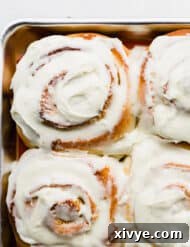
Homemade Orange Rolls
By Whitney Wright
Your family will go crazy for these homemade orange rolls! They are moist, fluffy, and have the perfect orange flavor.
45 mins
24 mins
1 hr 9 mins
12 sweet rolls
4.34 out of 5 stars (from 3 votes)
Ingredients
Dough
- 1 cup warm water
- ¾ cup buttermilk, room temp
- ½ cup granulated sugar
- ¼ cup melted butter
- 2 eggs
- 2 ½ tablespoons active dry yeast
- 1 ½ teaspoons salt
- 5-6 cups all-purpose flour – (may need more depending on climate and elevation)
Filling
- 6 tablespoons butter, softened
- 1 ¼ cup granulated sugar
- 2 tablespoons orange zest – (zest of about 1 large orange)
- 1 tablespoon fresh orange juice
Orange Frosting
- 6 tablespoons butter, softened
- 4 tablespoons fresh orange juice – (may need more to thin out the frosting)
- ¼ teaspoon orange zest
- 3 ½ – 4 cups powdered sugar
Instructions
- In the bowl of a stand mixer fitted with the dough hook, add the water, buttermilk, sugar, melted butter, and yeast. Mix gently. Let sit for 15 minutes until foamy. Add salt, eggs, and flour. Mix for 8-10 minutes until the dough pulls away from the sides but still sticks to the base. Cover with plastic wrap and allow the dough to rest for 10 minutes.
- In the meantime, prepare the filling. In a small bowl, combine the granulated sugar, orange zest, and orange juice. Stir well.
- Preheat the oven to 400°F (200°C). Line a baking sheet with a silicone baking mat or parchment paper, or spray it with cooking spray. Spray your countertop with cooking spray. Roll the dough into a 14″x18″ rectangle. Using the back of a spoon, smear the softened butter over the top of the dough. Sprinkle the orange sugar filling evenly over the softened butter.
- Starting with the long side, roll the dough into a log, approximately 18″ in length. Cut into 12 large rolls using floss, thread, or a serrated knife. Place the rolls onto the prepared baking sheet, arranged 3 rolls across and 4 rolls down. Lightly cover the orange rolls with plastic wrap and set them in a warm place to rise for 20 minutes.
- Bake for 20-24 minutes or until golden brown on top and cooked throughout.
Frosting Instructions
- In the bowl of a stand mixer or with a hand mixer, beat the softened butter until smooth. Add the powdered sugar, orange zest, and orange juice. Beat until smooth. If the frosting is too thick, add orange juice a tablespoon at a time until it reaches a spreadable consistency.
- When the orange rolls are finished baking, remove them from the oven. Let them sit in the pan for 3-5 minutes to cool slightly. Frost the rolls generously while they are still warm.
- These rolls are best when served warm and eaten on the same day. However, you can store them in an airtight container at room temperature for up to 2 days, or in the refrigerator for up to 4 days.
Notes
The amount of flour you’ll need may vary from what’s stated in the recipe card. The ideal dough consistency is one that pulls away cleanly from the sides of the bowl but still retains a slight stickiness at the very base. It should feel tacky, not overly sticky or dry. Factors like climate and elevation significantly impact flour absorption, so add flour one tablespoon at a time until this desired consistency is achieved.
Feel free to experiment with different types of flour. For a heartier **orange roll**, consider using a mix of bread flour and all-purpose flour. I’ve successfully made this recipe with both 100% all-purpose flour and a 50/50 blend of bread and all-purpose flour, yielding excellent results every time!
Store your **homemade orange rolls** in an airtight container or bag at room temperature for up to 2 days. For longer storage, they can be kept in the fridge for up to 4 days.
Nutrition Facts (per serving)
Serving Size: 1 sweet roll
- Calories: 638 kcal (32% Daily Value)
- Carbohydrates: 115g (38% Daily Value)
- Protein: 7g (14% Daily Value)
- Fat: 16g (25% Daily Value)
- Saturated Fat: 10g (50% Daily Value)
- Cholesterol: 69mg (23% Daily Value)
- Sodium: 454mg (19% Daily Value)
- Potassium: 94mg (3% Daily Value)
- Fiber: 1g (4% Daily Value)
- Sugar: 74g (82% Daily Value)
- Vitamin A: 530IU (11% Daily Value)
- Vitamin C: 0.8mg (1% Daily Value)
- Calcium: 34mg (3% Daily Value)
- Iron: 2.6mg (14% Daily Value)
Dessert, Breakfast
American