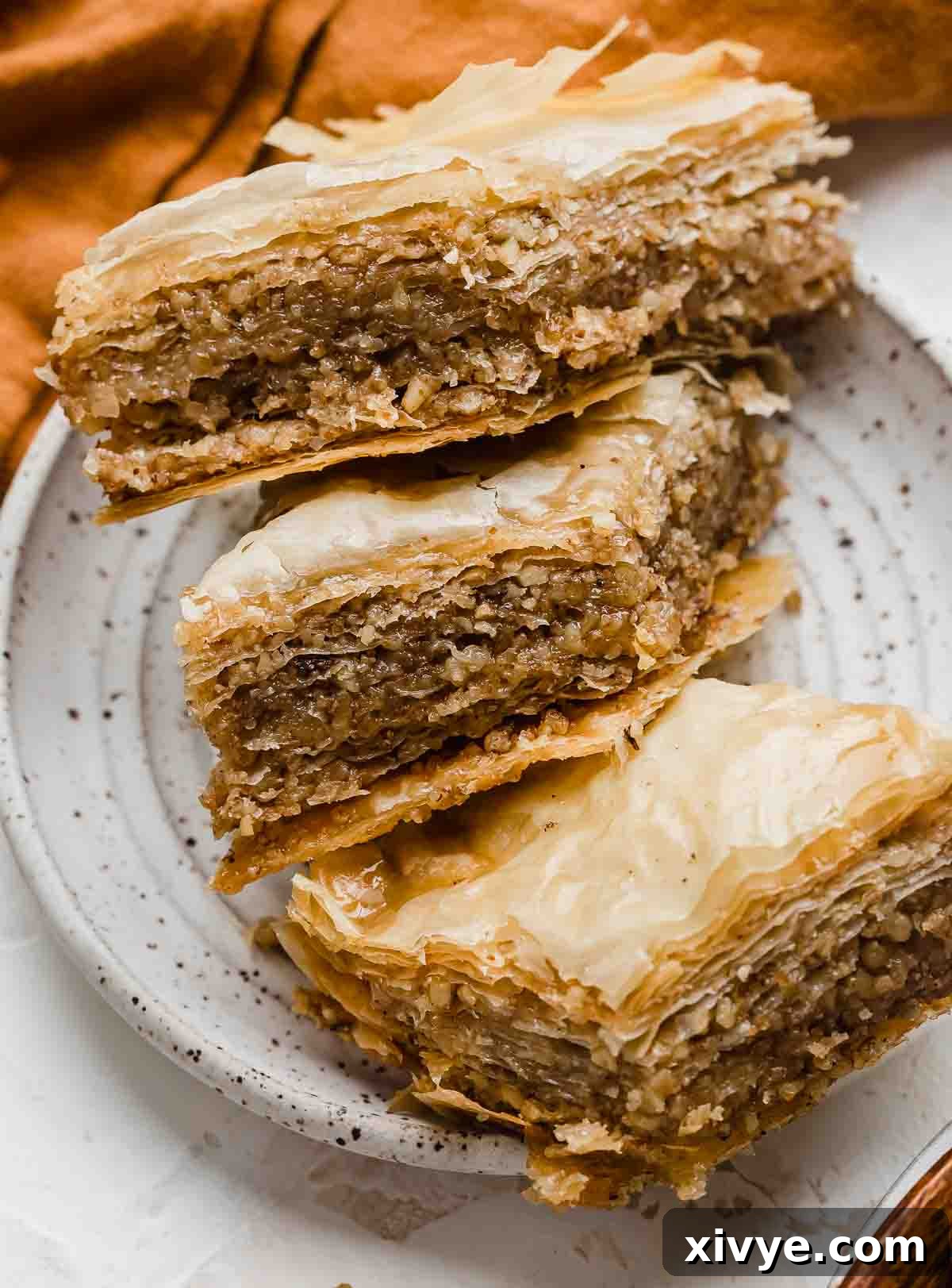
Embark on a culinary journey to the heart of the Mediterranean with this exquisite homemade Greek Baklava recipe. This iconic dessert, renowned for its intricate layers and harmonious blend of sweet and nutty flavors, is a true testament to the rich gastronomic traditions of Greece. Forget the myth that baklava is difficult to master; with our detailed, easy-to-follow instructions and the convenience of store-bought phyllo dough, you’ll create a show-stopping pastry that’s both impressive and surprisingly simple.
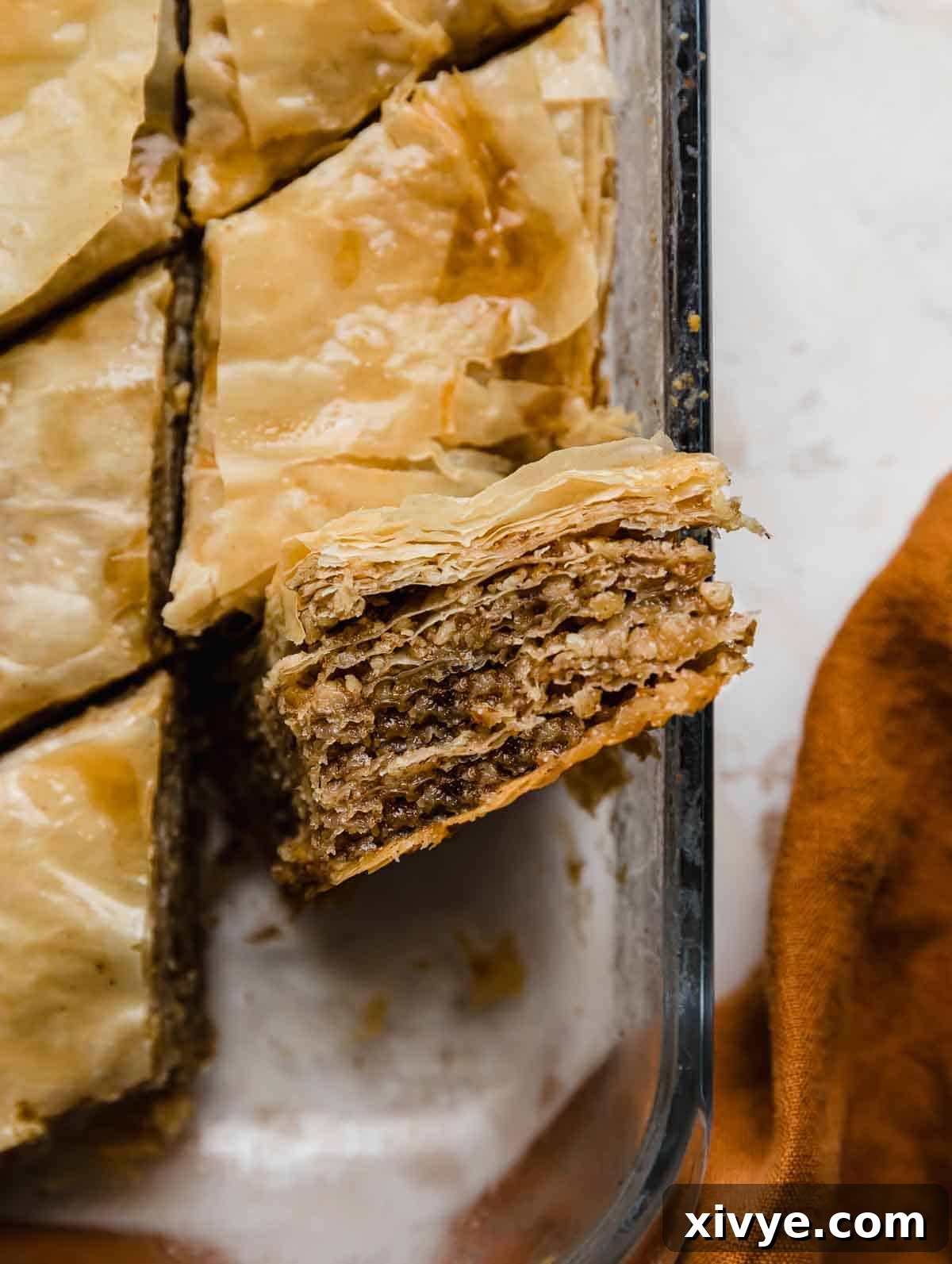
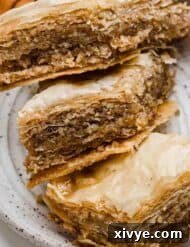
Each bite of this authentic Greek Baklava delivers an irresistible symphony of textures: incredibly flaky, golden-brown phyllo pastry giving way to a fragrant, spiced walnut filling, all generously drenched in a luscious, aromatic honey syrup. It’s a dessert that transcends seasons and celebrations, perfect for making cherished memories with family and friends.
If you enjoy the rewarding experience of baking your own pastries, explore other delightful homemade recipes like our Homemade Toaster Strudels, Blueberry Danish, and Puff Pastry Apple Turnovers.
Why This Baklava Recipe Stands Out
This recipe isn’t just about making baklava; it’s about crafting an exceptional experience. Here’s why this particular Greek Baklava recipe is a must-try:
- Unforgettable Flavor Profile: What sets this baklava apart is the exceptional depth of flavor. We infuse the traditional honey syrup with the bright, zesty notes of fresh orange peel and the warm spice of a whole cinnamon stick. This subtle yet impactful addition elevates the classic baklava taste, creating a fragrant and complex sweetness that’s truly irresistible without being overpowering. The harmonious blend ensures every mouthful is a delicate balance of sweet, nutty, and aromatic perfection.
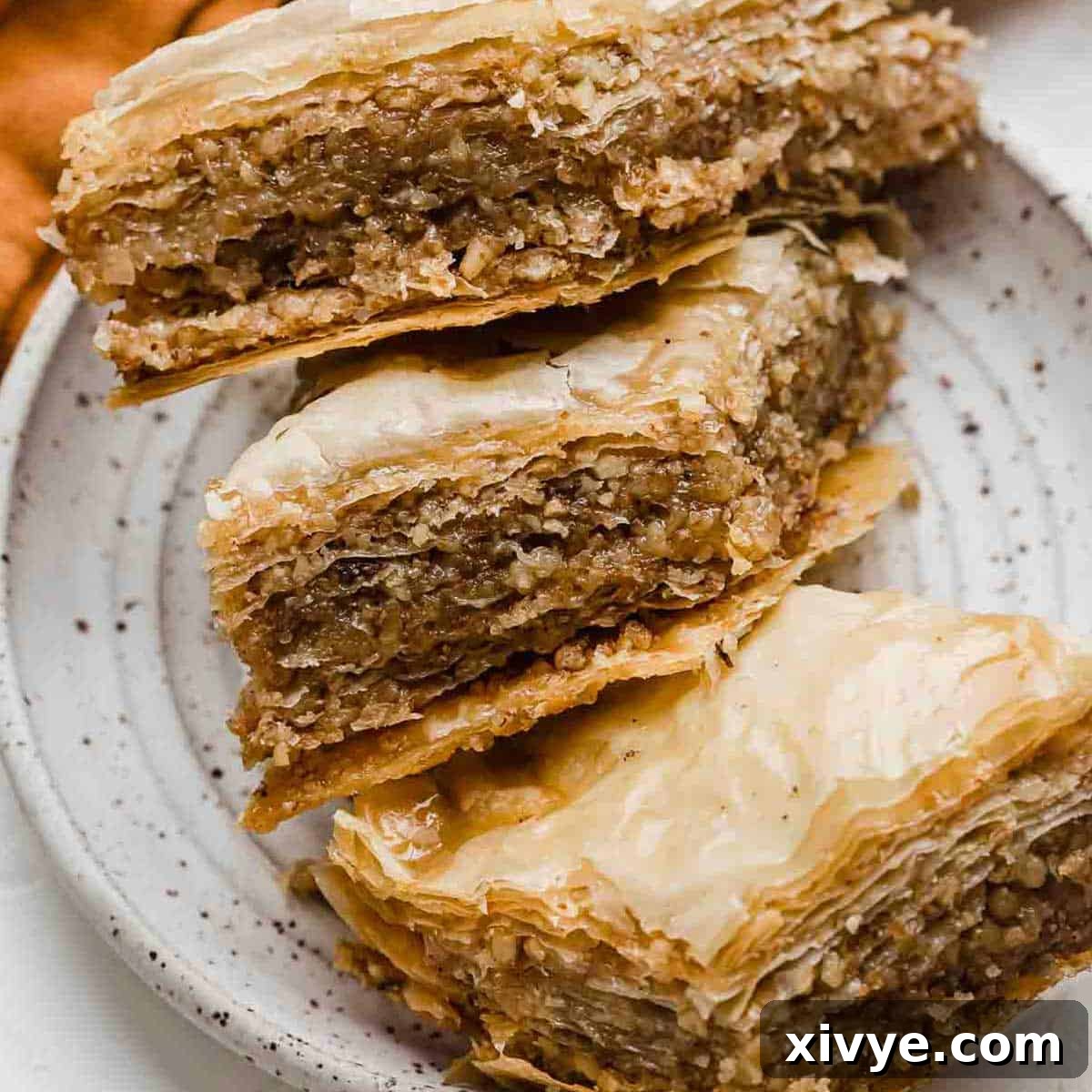
- Achieves Perfect Crispy, Golden Layers: The hallmark of outstanding baklava is its exquisite texture: layers that are perfectly crispy, beautifully golden brown, and irresistibly flaky. This recipe provides meticulous, step-by-step instructions on layering and buttering the delicate phyllo dough. By following our precise guidance on how much butter to use and where, you’ll achieve that quintessential crunch and delicate snap that defines authentic Greek baklava, ensuring your homemade creation looks as incredible as it tastes.
- Ideal Make-Ahead Dessert for Any Occasion: Planning for gatherings or special events can be stressful, but this Greek Baklava offers remarkable convenience as a make-ahead dessert. You can prepare the entire pastry in advance and allow it to soak in its flavorful syrup for several hours, or even overnight. This extended soaking time not only deepens the flavors but also allows the syrup to fully penetrate each layer, resulting in a more succulent and satisfying treat. It frees up your time on the day of your event, making it a stress-free yet elegant option for entertaining.
- A Beloved Holiday Season Favorite: While this easy Greek baklava recipe is a delightful treat year-round, it consistently finds its place on our dessert tables during the holiday season. Its rich flavors, comforting spices, and festive appearance make it a cherished traditional recipe, particularly during Christmas. Sharing this sweet, labor-of-love pastry with loved ones creates a sense of warmth and celebration, embodying the spirit of the holidays. It’s more than just a dessert; it’s a culinary tradition waiting to be embraced in your home.
Essential Ingredients for Perfect Greek Baklava
Crafting the perfect baklava begins with understanding the role of each ingredient. Here’s a detailed look at what you’ll need and why it matters:
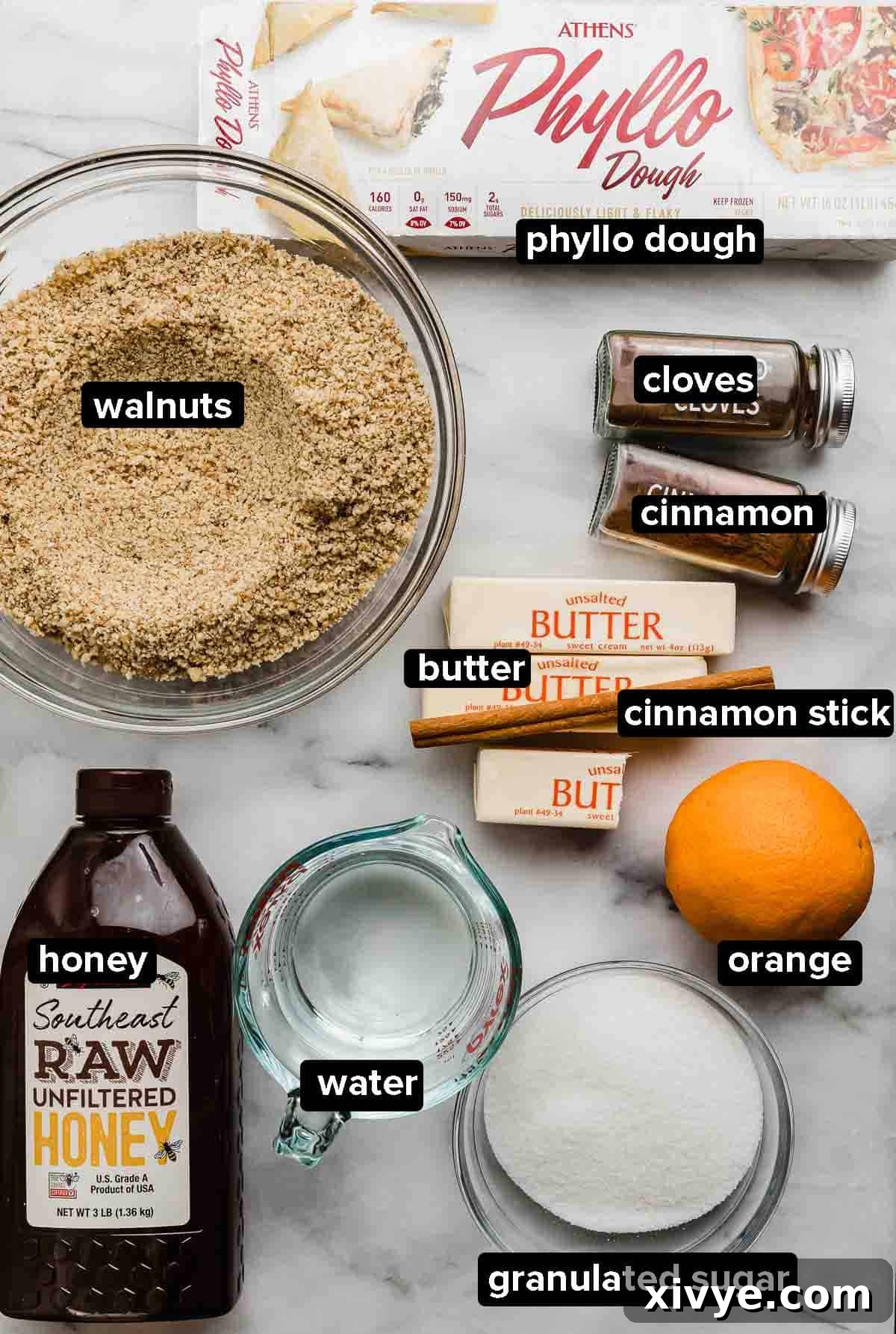
- Water: This forms the foundational base for our aromatic syrup. Combined with sugar and honey, it creates the perfect consistency to soak into the delicate phyllo layers, ensuring a moist and flavorful baklava.
- Granulated Sugar: Essential for achieving the thick, syrupy texture that coats each layer of baklava. It contributes significantly to the overall sweetness and caramelization of the syrup, providing that characteristic baklava richness.
- Honey: The star of the syrup, honey infuses the baklava with its signature, unmistakable flavor. Opt for a good quality floral honey for the best results, as its distinctive notes are central to the dessert’s profile. Different types of honey can impart subtle variations, so choose one you love.
- Cinnamon Stick: Using a whole cinnamon stick for the syrup is key to achieving a clean, infused cinnamon flavor without the gritty texture or visual flecks that ground cinnamon might leave. It imparts a warm, aromatic essence that beautifully complements the nutty filling.
- Fresh Orange Peel: A strip of fresh orange peel introduces a subtle yet vibrant citrus note to the baklava syrup. This delicate infusion brightens the overall flavor profile, cutting through the sweetness and adding a refreshing complexity that makes each bite more interesting. Ensure you only use the colored zest, avoiding the bitter white pith.
- Walnuts: The heart of the baklava filling. It is crucial to toast your walnuts before finely grinding them. Toasting enhances their natural nuttiness and depth of flavor, while fine grinding ensures an even distribution and a pleasant texture throughout the pastry. Other nuts like pistachios or almonds can be used for variation.
- Butter: Melted butter is meticulously brushed between the thin phyllo layers. The key is to brush very *lightly*. Too much butter can result in a soggy or greasy baklava, while too little might leave the phyllo dry. Clarified butter or ghee is often preferred in traditional recipes as it has a higher smoke point and yields a crispier result, but regular melted butter works wonderfully if brushed sparingly. Pay close attention to the instructions regarding which layers to butter to achieve optimal flakiness.
- Package Phyllo Dough: This delicate, paper-thin pastry is the foundation of baklava. Always ensure your phyllo dough is completely thawed before use, ideally in the refrigerator overnight. Handle the sheets with gentle fingers to prevent tearing, as they are very fragile. Keep the unused phyllo covered with a damp paper towel or cloth to prevent it from drying out, which can happen quickly.
Crafting Your Greek Baklava: A Step-by-Step Guide
Creating this magnificent Greek Baklava is a rewarding process. Follow these detailed steps to ensure a perfect result:
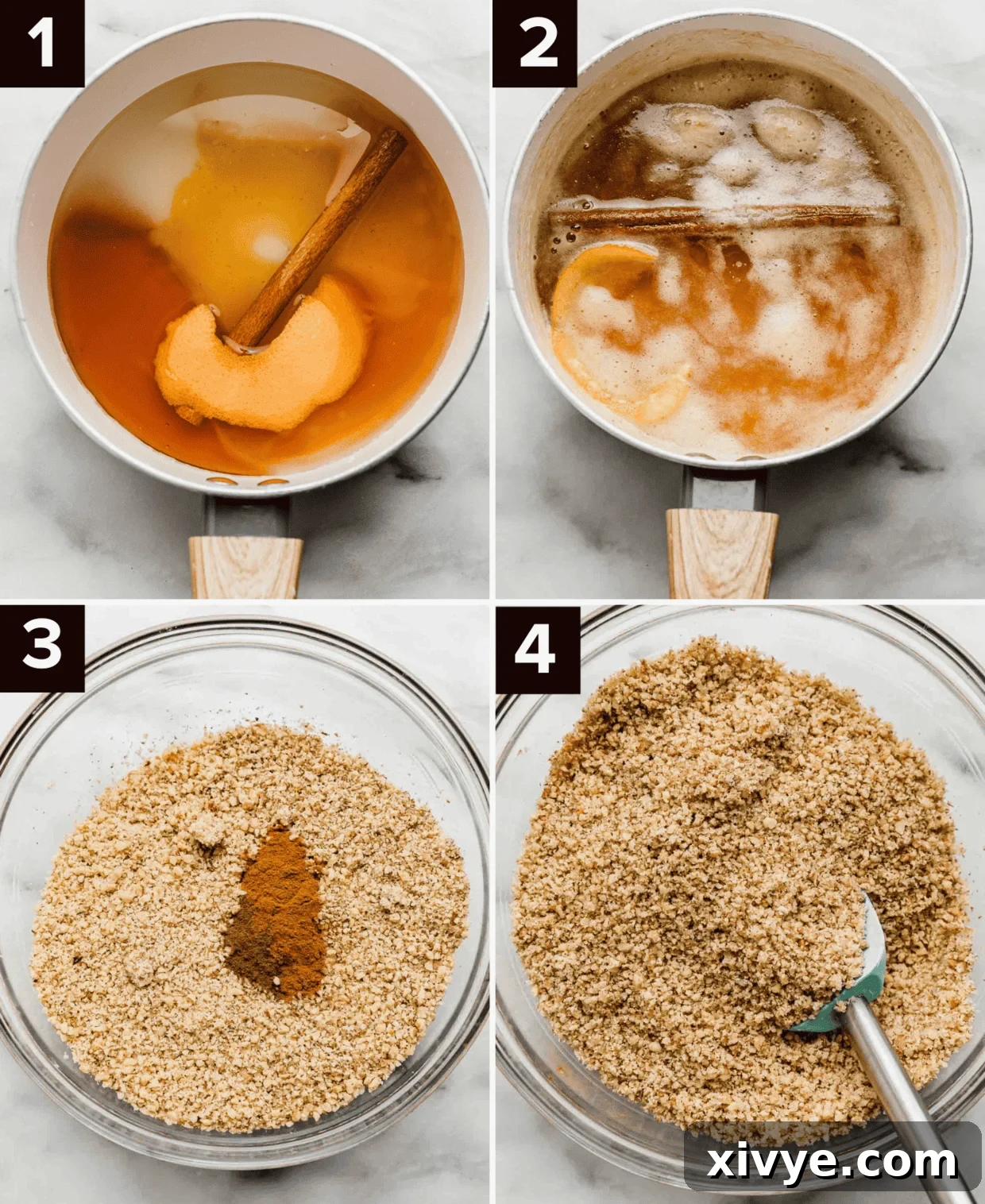
- Prepare the Aromatic Baklava Syrup: In a small saucepan, combine 1 cup of water, 1 cup of granulated sugar, ¾ cup of honey, 1 cinnamon stick, and 1 strip of fresh orange peel. Bring this mixture to a boil over medium heat, stirring occasionally to dissolve the sugar. Once boiling, reduce the heat to low and allow the syrup to gently simmer for 15 minutes. This simmering period allows the flavors of the cinnamon and orange to thoroughly infuse the syrup. After 15 minutes, remove the saucepan from the heat and set it aside to cool completely to room temperature. It is crucial for the syrup to be cool when poured over the hot baklava to achieve optimal crispness.
- Craft the Spiced Walnut Filling: Preheat your oven to 350ºF (175ºC). In a medium-sized bowl, combine 1 pound of finely ground toasted walnuts with 1 ½ teaspoons of ground cinnamon and ¼ teaspoon of ground cloves. Mix these ingredients thoroughly until the spices are evenly distributed throughout the ground walnuts. The cloves add a subtle warmth and depth that beautifully complements the cinnamon and walnuts.
- Prepare Your Baking Pan: Using a pastry brush, generously brush melted butter onto the bottom and up the sides of a 9×13-inch baking pan. This not only prevents sticking but also contributes to the golden crust of the baklava. Carefully unroll your thawed phyllo dough. If necessary, gently trim the phyllo sheets to perfectly fit the dimensions of your baking pan. To prevent the delicate phyllo from drying out and becoming brittle while you work, keep the stack covered with a clean, damp paper towel or cloth.
- Begin the Phyllo Layering Process: Place a single sheet of phyllo dough onto the buttered bottom of the pan. Very lightly brush the top of this sheet with melted butter. Repeat this process, layering and lightly buttering each individual phyllo sheet, until you have accumulated a base of 8 layers. Remember, the goal is a light, even coating, not saturation.
- Incorporate the Walnut Filling: Once your initial 8 phyllo layers are buttered, sprinkle approximately 3 tablespoons of the spiced walnut mixture evenly over the top. Next, place 2 sheets of phyllo dough on top of the walnut layer. Critically, do *not* brush butter between these two sheets; only brush butter lightly over the top of the second sheet. Follow this with another 3 tablespoons of the walnut mixture. Continue this pattern: 2 phyllo sheets (no butter between them), a light butter brush on the top sheet, then 3 tablespoons of walnut mixture. Repeat until you have used almost all of the walnut mixture and have about 8 sheets of phyllo dough remaining for the top. This alternating pattern ensures a perfect balance of crispy dough and rich filling.
- Complete the Top Layers: To finish your baklava, carefully place the remaining 8 sheets of phyllo dough on top of the final walnut layer. As with the base, lightly brush melted butter between each of these individual phyllo sheets. Once all 8 sheets are layered, brush the very top layer with a thin, even coating of melted butter. This final butter layer will help achieve that beautiful golden-brown, crispy finish.
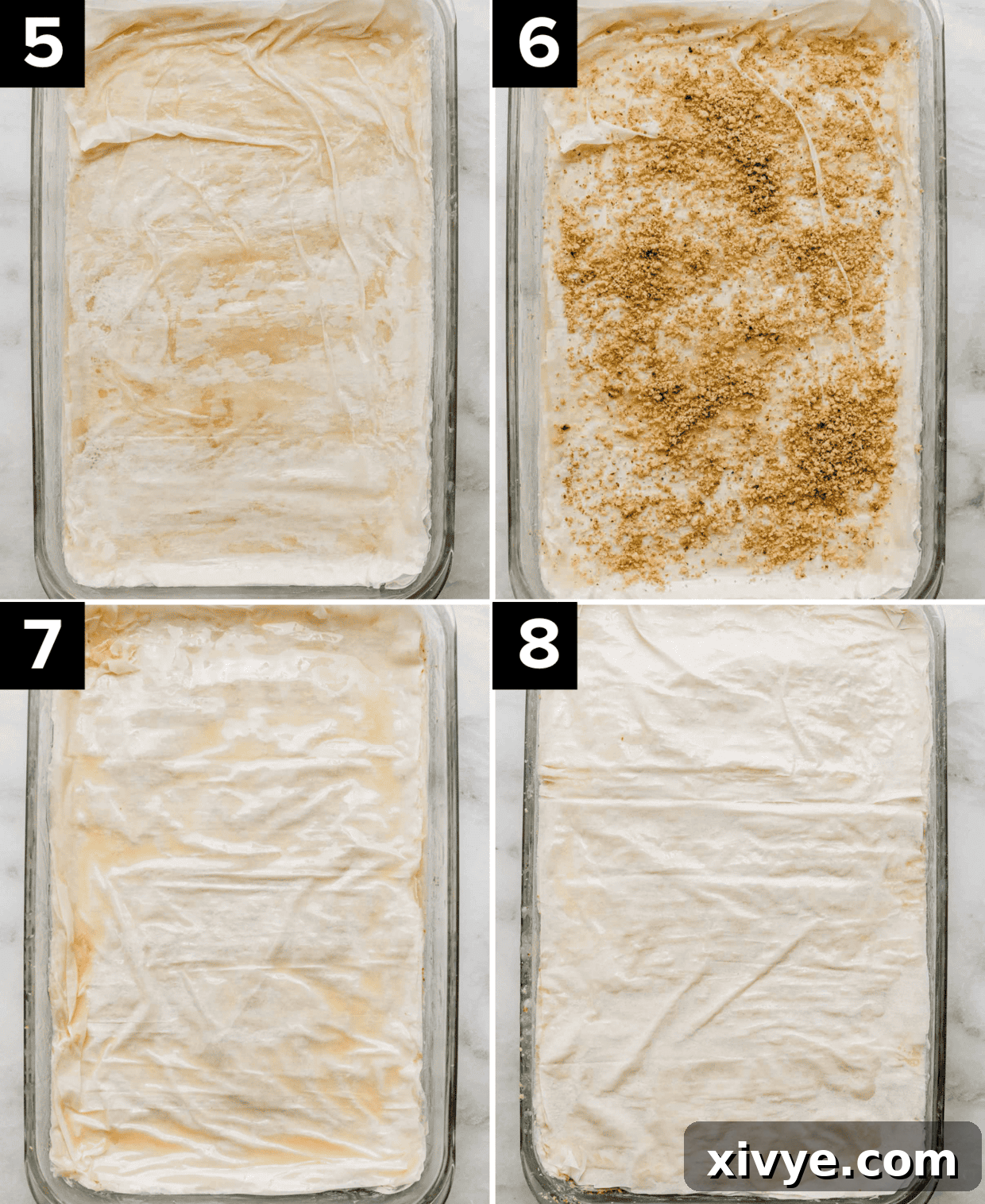
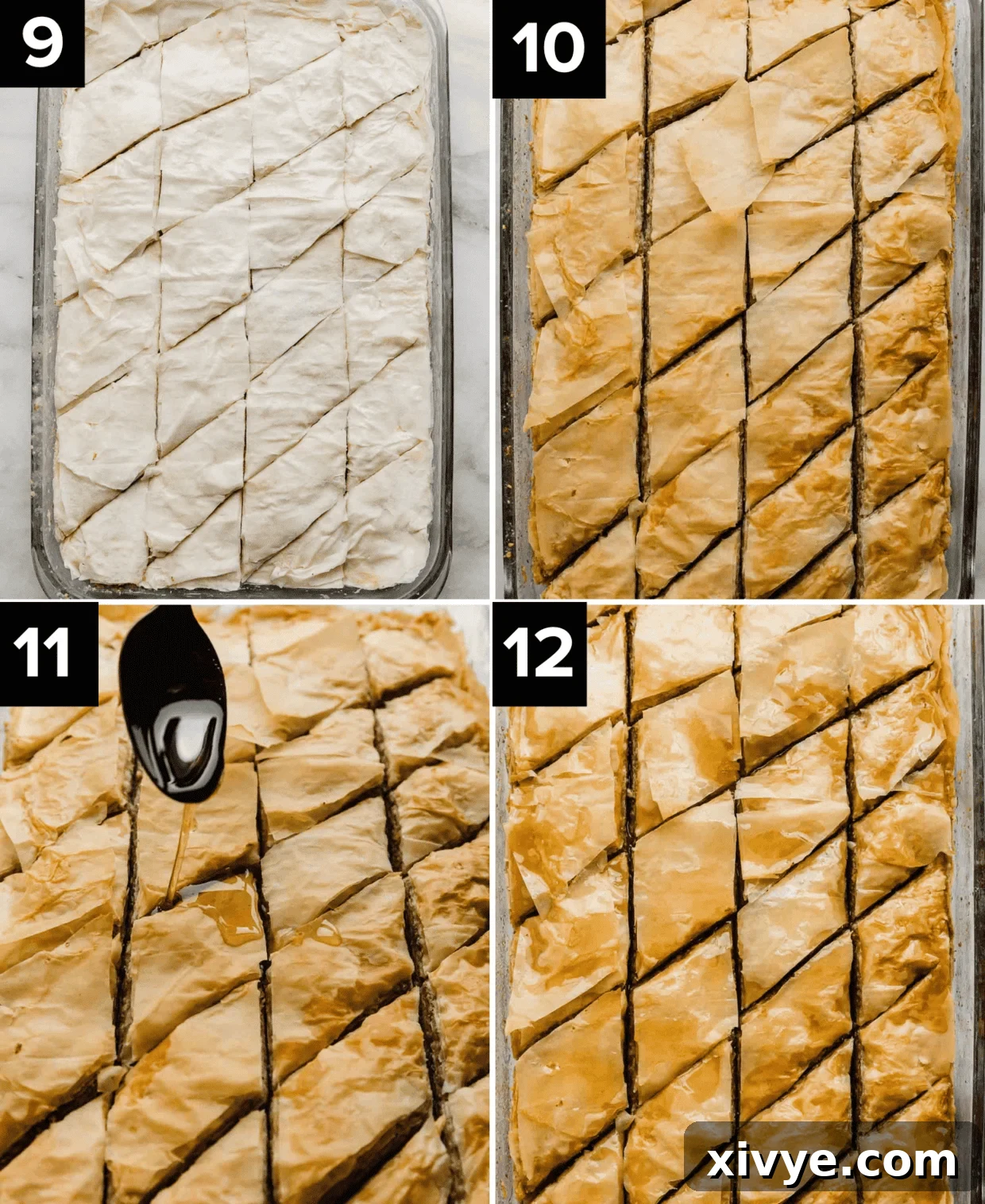
- Precisely Cut the Baklava: Before baking, use a very sharp knife to carefully trim any phyllo dough that might be hanging over the edges of the pan, ensuring a neat presentation. Now, with the same sharp knife, cut the baklava into your desired shapes – traditional diamonds or triangles are common. The crucial step here is to cut *almost* all the way down to the bottom of the pan, leaving about a half-inch uncut. This intentional partial cut prevents the syrup from pooling at the very bottom during the soaking phase, allowing it to evenly permeate the middle of each piece for a consistently moist and flavorful result. You will make the final full cuts just before serving.
- Bake to Golden Perfection: Place the cut baklava in your preheated 350ºF (175ºC) oven. Bake for approximately 50 minutes. The baklava is perfectly done when the top layers of phyllo are puffed, beautifully golden brown, and delightfully crispy. Keep an eye on it to prevent over-browning.
- Strain the Infused Syrup: While your delicious baklava is baking, retrieve the cooled syrup mixture. Using a fine-mesh sieve, strain the syrup into a clean bowl or pitcher to remove the cinnamon stick and orange peel. This ensures a smooth, clear, and aromatic syrup for your pastry.
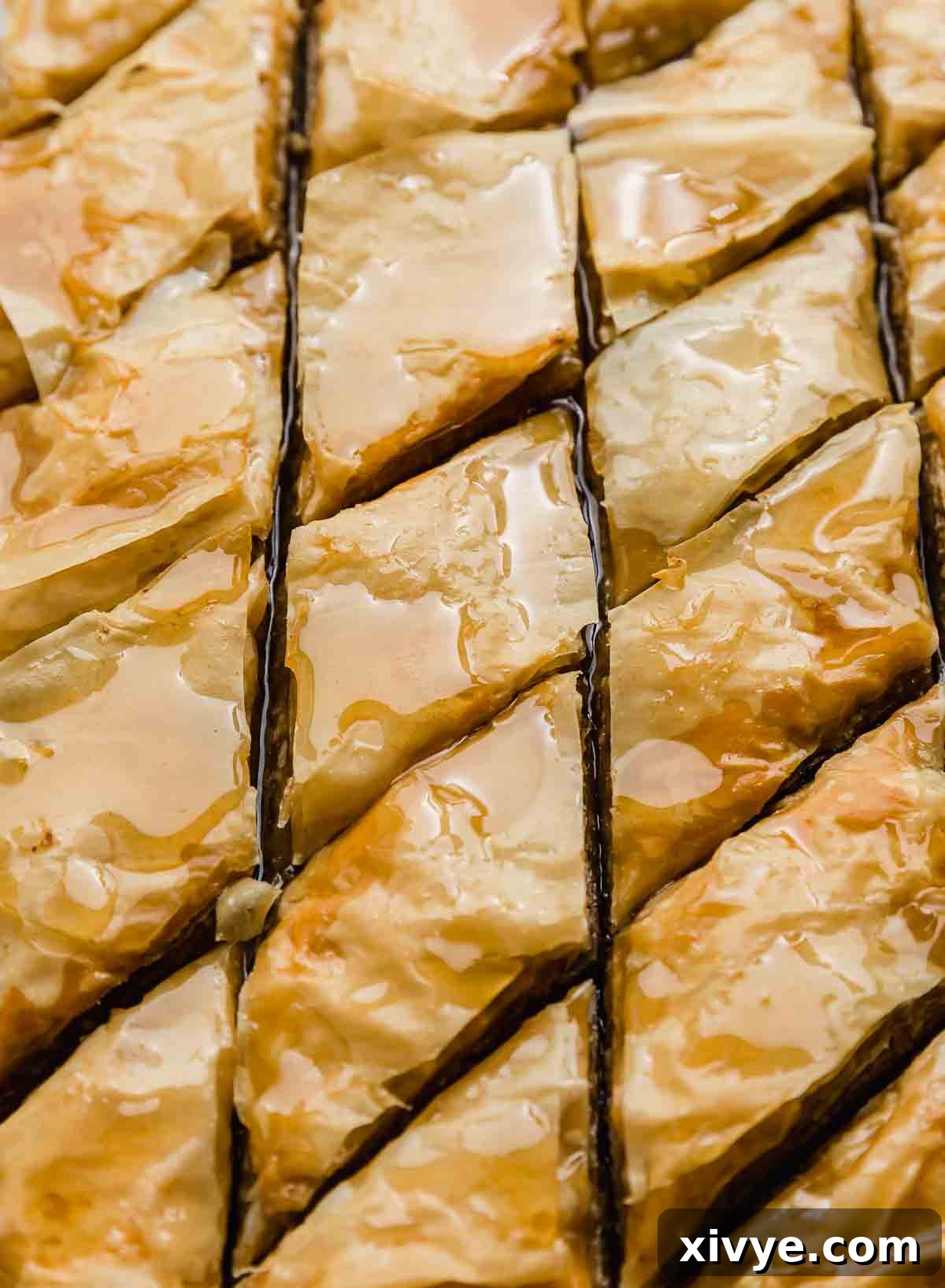
- Drench and Soak: As soon as the baklava is removed from the oven, immediately and generously pour the *cooled*, strained syrup evenly over the entire hot baked baklava. Ensure the syrup cascades into all the precut cracks and crevices, and covers the top surface thoroughly. The contrast in temperature (hot baklava, cool syrup) is vital for achieving that signature crispness. Allow the baklava to sit undisturbed and soak in all the rich syrup for a minimum of 4 hours, or ideally, overnight. This prolonged soaking period is essential for the flavors to meld and for the baklava to reach its optimal texture. Just before serving, use your sharp knife to complete the cuts all the way to the bottom of the pan. Enjoy every sweet, flaky bite!
Expert Tips for Baklava Success
Achieving baklava perfection requires a few key considerations. Keep these expert tips in mind for the best results:
- Manage Your Phyllo Dough: Phyllo dough is notoriously delicate and dries out rapidly when exposed to air. To combat this, work quickly and efficiently. Always keep the stack of unused phyllo sheets covered with a clean, damp cloth or paper towel. You can also place the damp towel over a layer of plastic wrap for extra protection. This simple step is critical to prevent the edges from becoming brittle and cracking, making them difficult to work with.
- Master the Buttering Technique: The secret to flaky, non-soggy baklava lies in the art of buttering. Do not oversaturate every layer with butter. Instead, use a light hand and a pastry brush to apply a very thin, even layer of melted butter to each sheet as instructed. A gentle, quick brush is all that’s needed. Excessive butter will weigh down the phyllo, leading to a dense or greasy texture rather than the desired ethereal flakiness. Consider using clarified butter (ghee) for an even crispier result, as it has no water content.
- Precision Cutting is Key: Before baking, remember to cut the baklava almost all the way through, leaving about a half-inch at the bottom uncut. This partial cut is a crucial step! It creates channels for the syrup to penetrate deeply into the layers of each individual piece during the soaking process, ensuring even moisture and flavor distribution throughout. If you cut all the way through prematurely, the syrup will likely pool at the bottom of the pan, leaving the top layers drier and the bottom overly saturated. The final cuts are made just before serving once the baklava has fully absorbed the syrup.
- Patience with Soaking: Resist the temptation to serve your baklava immediately after pouring on the syrup. The extended soaking time of at least 4 hours, or ideally overnight, is non-negotiable for superior baklava. This allows the hot phyllo to absorb the cooled syrup, transforming it into a beautifully moist, flavorful, and perfectly sweetened pastry. The waiting period is truly part of the magic!
- Ensure Phyllo Thawing: For optimal pliability and to prevent tearing, thaw frozen phyllo dough slowly in the refrigerator overnight. Attempting to speed up the thawing process at room temperature can result in soggy or sticky sheets that are impossible to separate.
Make Ahead, Storing, and Freezing Tips
One of the many beauties of Greek baklava is its suitability as a make-ahead dessert, making it perfect for entertaining or enjoying over several days.
Make Ahead: Greek baklava is an excellent candidate for making in advance, as its flavors deepen and textures settle beautifully with time. You can prepare it fully and let it soak in the syrup overnight at room temperature, ready to be served the next day. This allows for a stress-free dessert presentation.
Storing: To maintain its delicate crispy texture, store leftover baklava at room temperature. Loosely cover the pan with a paper towel or foil to allow for some air circulation while keeping dust away. Stored this way, baklava will retain its freshness and crispness for up to 1 week. If you prefer to store it for a longer period, you can refrigerate it in an airtight container for up to 3 weeks, though the phyllo may soften slightly in the fridge.
Freezing: Baklava freezes remarkably well, allowing you to enjoy this delicious treat whenever a craving strikes. To freeze, wrap individual pieces tightly in plastic wrap, then place them in an airtight freezer-safe container or bag. Freeze for up to 3 months. When you’re ready to enjoy, thaw the baklava in the refrigerator overnight before serving. For a crispier texture after thawing, you can lightly warm it in a low oven (around 250°F / 120°C) for 10-15 minutes.
Frequently Asked Questions About Greek Baklava
Here are answers to some common questions you might have about making this delicious Greek Baklava:
Absolutely! While walnuts are traditional for Greek baklava, you can certainly experiment with other nuts for delicious variations. Almonds and pistachios are the most popular alternatives, often used in Turkish or Middle Eastern baklava. A mix of different nuts can also create a unique flavor profile. Ensure any nuts you choose are toasted and finely ground for the best texture and flavor.
Phyllo dough is typically found in the freezer section of most major supermarkets, often near frozen puff pastry or pie crusts. If your local grocery store doesn’t carry it, try checking specialty food stores, international markets, or Mediterranean/Middle Eastern grocery stores, which almost always stock it. Always ensure you buy the frozen variety and thaw it properly.
Yes, you can easily scale this recipe down to make a smaller batch. Simply halve all the ingredient quantities (syrup, nut mixture, and butter) and use a smaller baking dish. An 8×8-inch baking dish is perfect for a half batch. Adjust baking time accordingly, usually a bit less than the full batch, keeping an eye on the golden-brown color.
This is a critical question for perfect baklava! The secret lies in the temperature contrast: you must pour *cool* or room temperature syrup over *hot* baklava immediately after it comes out of the oven. Do not let the baklava cool down before adding the syrup. The thermal shock causes the hot, crispy phyllo to quickly absorb the cool syrup, retaining its delicate crispness while becoming beautifully sweetened. If both the baklava and syrup are warm, the phyllo will become soggy.
More Delightful Dessert Recipes
If you’ve enjoyed creating this Greek Baklava, be sure to explore more of our tempting dessert recipes:
- Grandma’s Shortbread Cookies
- Kouign-Amann
- Turtle Cookies
- Walnut Brownie Cookies
Did you make this recipe? We’d love to hear about your experience! Share your thoughts and a star rating in the comments section below, or find the review option at the bottom of this page. Your feedback helps our community!
Stay connected and up-to-date with our latest recipes and culinary adventures by following us on Instagram, TikTok, YouTube, Facebook, and Pinterest.
Greek Baklava Recipe
By Whitney Wright
Greek Baklava is a rich pastry dessert that is popular in many countries, particularly in the Middle East, Mediterranean, and Balkan regions. This dessert is known for its sweet and flaky layers of phyllo dough, layered with crushed walnuts and sweet syrup.
Prep Time: 35 mins
Cook Time: 50 mins
Total Time: 1 hr 25 mins
Servings: 24 servings
Average Rating: 5 out of 5 stars (from 1 vote)
Ingredients
Syrup
- 1 cup water
- 1 cup granulated sugar
- ¾ cup honey
- 1 cinnamon stick
- 1 strip orange peel
Pastry
- 1 pound walnuts – toasted and finely ground
- 1 ½ teaspoon ground cinnamon
- ¼ teaspoon ground cloves
- 16 oz package phyllo dough – thawed
- 1 ¼ cups butter – melted (salted or unsalted butter is fine)
Instructions
Syrup Preparation
- Make the syrup: Combine water, sugar, honey, cinnamon stick, and orange peel in a small saucepan. Bring to a boil over medium heat. Once boiling, reduce to low and simmer for 15 minutes. Remove from the heat and let syrup cool completely to room temperature.
Baklava Assembly & Baking
- Preheat the oven to 350°F (175°C). In a medium bowl, mix the finely ground toasted walnuts, ground cinnamon, and ground cloves until well combined.
- Using a pastry brush, thoroughly brush melted butter along the bottom and sides of a 9″x13” baking pan.
- Unroll the phyllo dough and trim it (if needed) to fit your pan perfectly. Keep the unused phyllo dough covered with a damp cloth or paper towel to prevent it from drying out.
- Place 1 sheet of phyllo dough in the pan, then very lightly brush with melted butter. Repeat this process until you have 8 buttered layers forming the base. Remember to brush lightly to avoid saturation.
- Sprinkle 3 tablespoons of the nut mixture evenly over the 8th phyllo layer. Then, top with 2 sheets of phyllo dough (do not butter between these two sheets), brush butter over the top of the second sheet, then add another 3 tablespoons of nuts. Continue this layering pattern (2 phyllo sheets, butter top, 3 tbsp nuts) until most of the nuts are used and you have approximately 8 sheets of phyllo remaining.
- For the top section, place the remaining 8 sheets of phyllo dough on top, lightly brushing melted butter between each sheet. Brush the very top layer of phyllo with a thin, even layer of butter.
- Use a sharp knife to trim any phyllo dough that has extended up the sides of the pan. Then, carefully cut the baklava into diamond or triangular shapes. When cutting, ensure you cut within a HALF inch of the bottom of the pan, deliberately leaving the very bottom intact. This method allows the syrup to seep into the layers without pooling at the bottom. (You will cut all the way through after the baklava has cooled completely).
- Place the baklava in the preheated oven and bake for 50 minutes, or until the top is golden brown and crisp.
- While the baklava is baking, strain the cooled syrup mixture to remove the cinnamon stick and orange peel.
- Immediately upon removing the hot baklava from the oven, pour the cooled, strained syrup evenly over the top. Ensure the syrup flows into all the cuts and crevices. Allow the baklava to absorb the syrup and cool for at least 4 hours, or ideally, overnight. Before serving, use a sharp knife to complete the cuts through to the bottom of the pan.
Notes
- Store baklava at room temperature, loosely covered with a paper towel, for up to 1 week to maintain crispness. Alternatively, store in an airtight container in the fridge for up to 3 weeks.
- To freeze, wrap individual baklava pieces tightly in plastic wrap and place them in an airtight container in the freezer for up to 3 months. Thaw in the refrigerator before serving.
- Important Tip: Work quickly when handling phyllo dough, as it dries out very fast. Always keep unused sheets covered with a damp paper towel or cloth.
Nutrition
Nutrition facts are per serving (24 servings per recipe):
- Calories: 330 kcal (17% DV)
- Carbohydrates: 30g (10% DV)
- Protein: 4g (8% DV)
- Fat: 23g (35% DV)
- Saturated Fat: 8g (40% DV)
- Polyunsaturated Fat: 9g
- Monounsaturated Fat: 5g
- Trans Fat: 0.4g
- Cholesterol: 25mg (8% DV)
- Sodium: 169mg (7% DV)
- Potassium: 107mg (3% DV)
- Fiber: 2g (8% DV)
- Sugar: 18g (20% DV)
- Vitamin A: 300IU (6% DV)
- Vitamin C: 0.4mg
- Calcium: 27mg (3% DV)
- Iron: 1mg (6% DV)
Course: Dessert
Cuisine: Greek
Did you make this recipe?
Please consider leaving a star rating and review on the blog post to let us know how you liked this recipe! We’d love to see your creations too. Tag @saltandbaker on Instagram, TikTok, and Facebook when you share your delicious baklava!