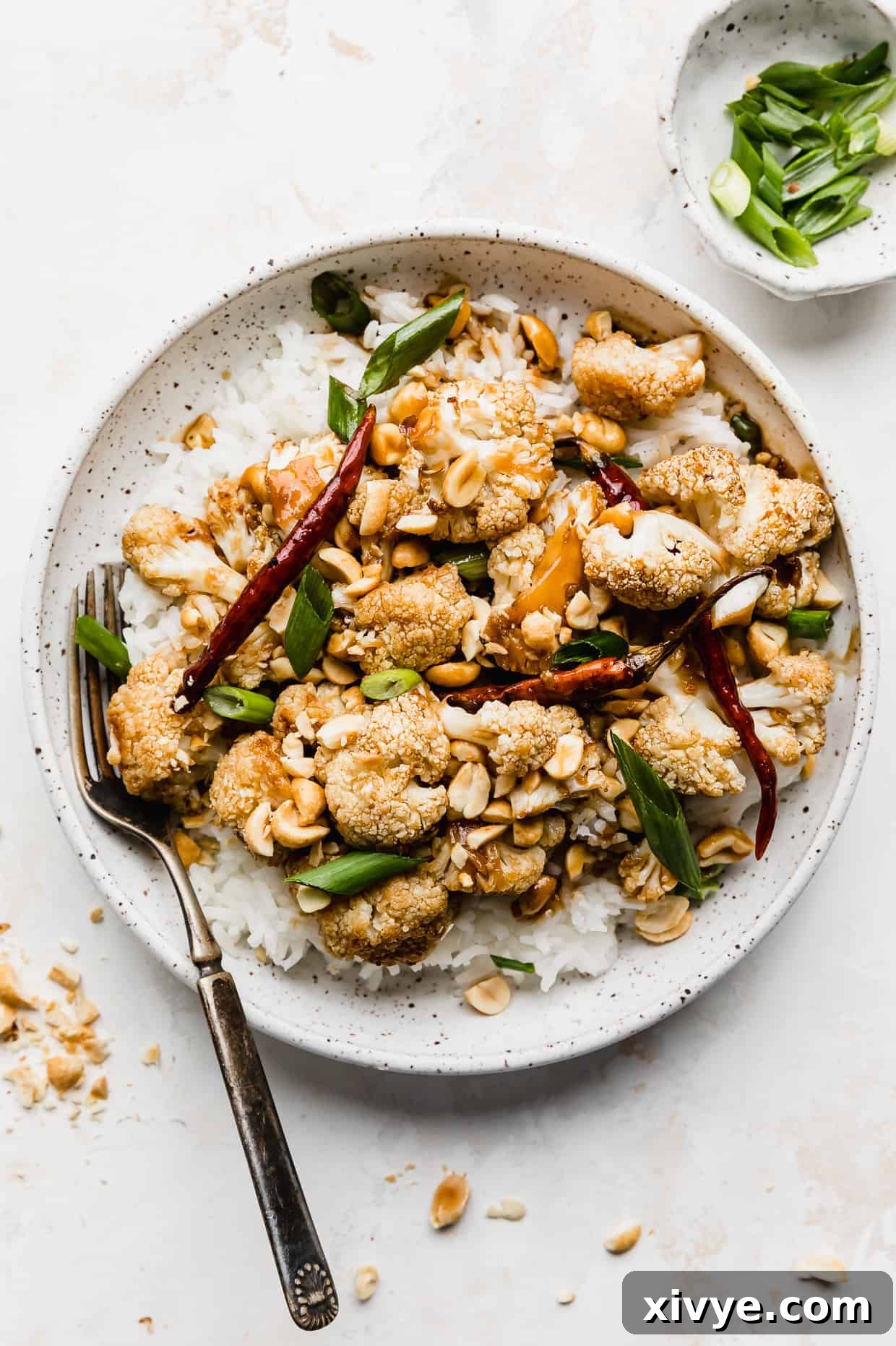
Kung Pao Cauliflower: Your Ultimate Flavor-Packed Vegetarian Sheet Pan Dinner
Discover the sensational flavors of this Kung Pao Cauliflower recipe, a brilliant meatless twist on a classic favorite. This vibrant dish is not only a dream for those on low-carb diets but also perfect for anyone seeking fresh, wholesome, and effortlessly delicious weeknight meals. Crafted as a convenient sheet pan recipe, it promises a ready-to-serve dinner in approximately 30-45 minutes, minimizing prep time and maximizing flavor. Get ready to transform humble cauliflower into a star, boasting a sticky, sweet, spicy, and savory glaze that will tantalize your taste buds.
Cauliflower stands out as an incredibly versatile vegetable, allowing for countless creative culinary explorations. If you enjoy inventive plant-based meals, be sure to explore my Roasted Cauliflower Tacos for a zesty taco night or my Sweet Potato Cauliflower Quinoa Bowls recipe for a hearty and nutritious option. These recipes showcase just how adaptable and delicious cauliflower can be in a variety of cuisines.
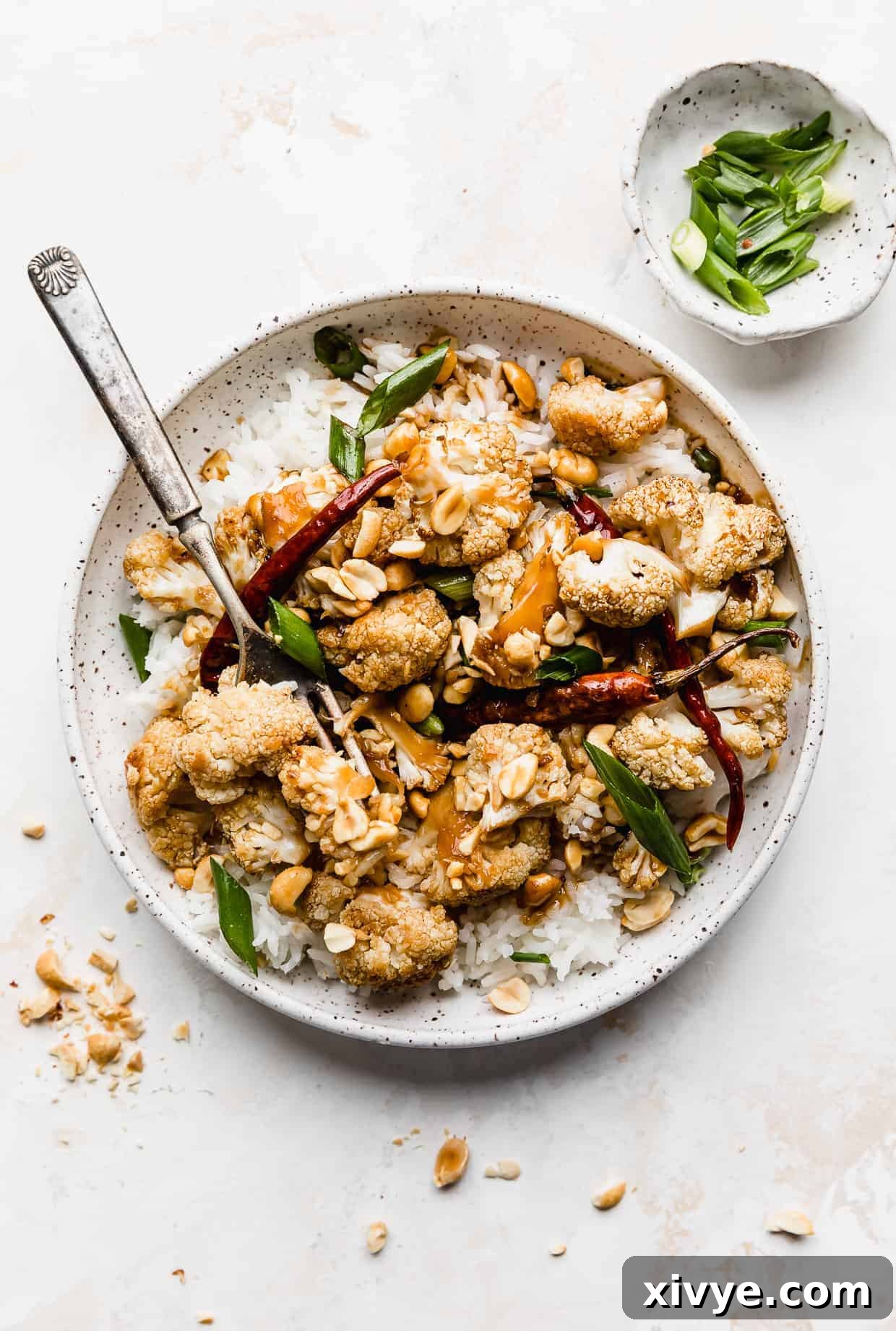
Why You’ll Fall in Love with This Kung Pao Cauliflower Recipe
If the irresistible aroma and taste of Kung Pao chicken have ever captivated you, prepare to be utterly charmed by its vegetarian counterpart: Kung Pao Cauliflower. This recipe takes everything you adore about the traditional dish – the addictive sticky, sweet, and spicy sauce – and pairs it with perfectly roasted, tender-crisp cauliflower florets. Each bite is a symphony of flavors and textures that will have you reaching for more.
- Unbeatable Flavor Profile: This dish masters the intricate balance of Kung Pao, delivering a harmonious blend of sweet, tangy, savory, and spicy notes. The sauce, rich with hoisin, soy, ginger, and garlic, creates a complex flavor that deeply penetrates each cauliflower floret.
- Crispy, Flavor-Absorbing Cauliflower: The secret to truly exceptional Kung Pao cauliflower lies in the roasting process. By initially roasting the cauliflower florets in the oven before adding the sauce, we achieve two crucial outcomes. First, the cauliflower develops a delightful tenderness and slightly crisp exterior. Second, and perhaps more importantly, this initial roast opens up the florets, creating more surface area for the sumptuous marinade to cling to. This ensures maximum flavor in every single bite.
- Perfectly Thickened Sauce: The inclusion of cornstarch in the marinade is a clever culinary trick. As the cauliflower continues to cook in the oven with the sauce, the cornstarch works its magic, allowing the sauce to slowly thicken and beautifully glaze each piece. This results in a luscious, slightly sticky coating that perfectly adheres to the cauliflower, rather than simply pooling at the bottom of the pan.
- Effortless Sheet Pan Cooking: Busy weeknights call for minimal fuss, and this sheet pan meal delivers. All the magic happens on a single baking sheet, from the initial roast to the final glaze. This not only makes the cooking process incredibly straightforward but also drastically simplifies cleanup, giving you more time to savor your delicious creation.
- Healthy & Versatile: Cauliflower is a powerhouse of nutrients, and this recipe offers a delicious way to incorporate more vegetables into your diet. It’s naturally vegetarian and easily adaptable to be vegan and gluten-free, making it a fantastic option for a variety of dietary needs. Its vibrant flavors also make it a satisfying and lighter alternative to heavier meat dishes.
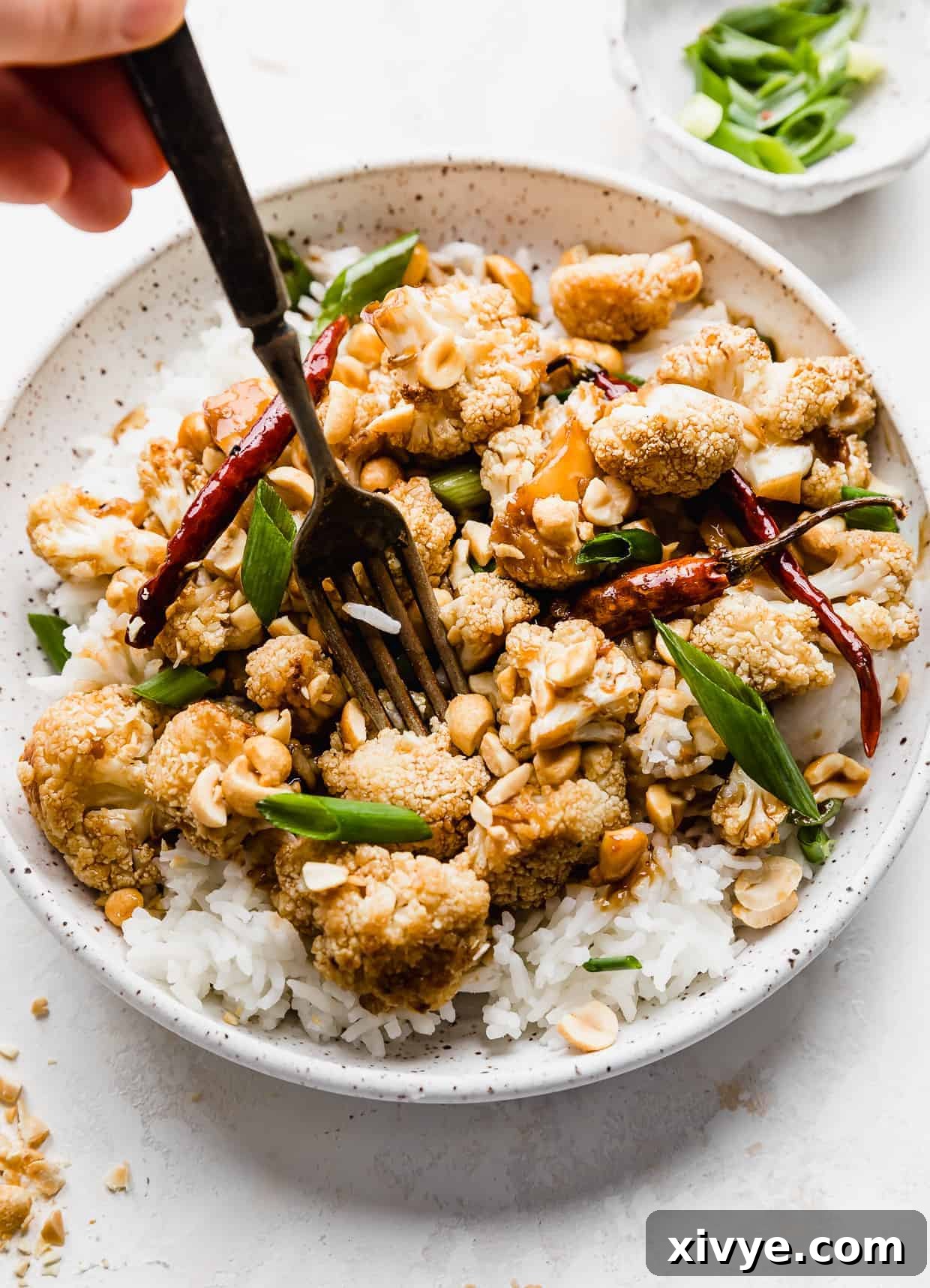
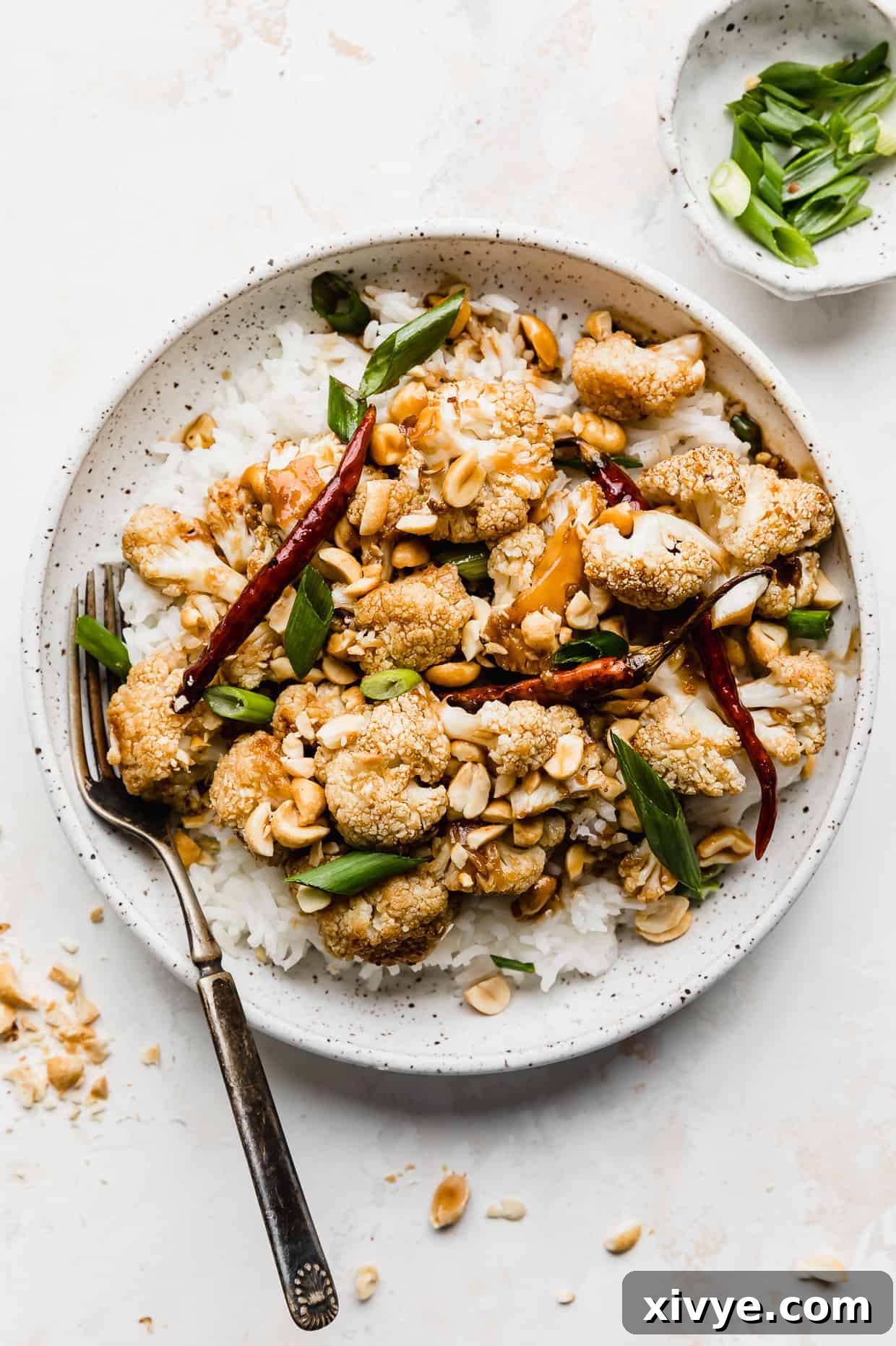
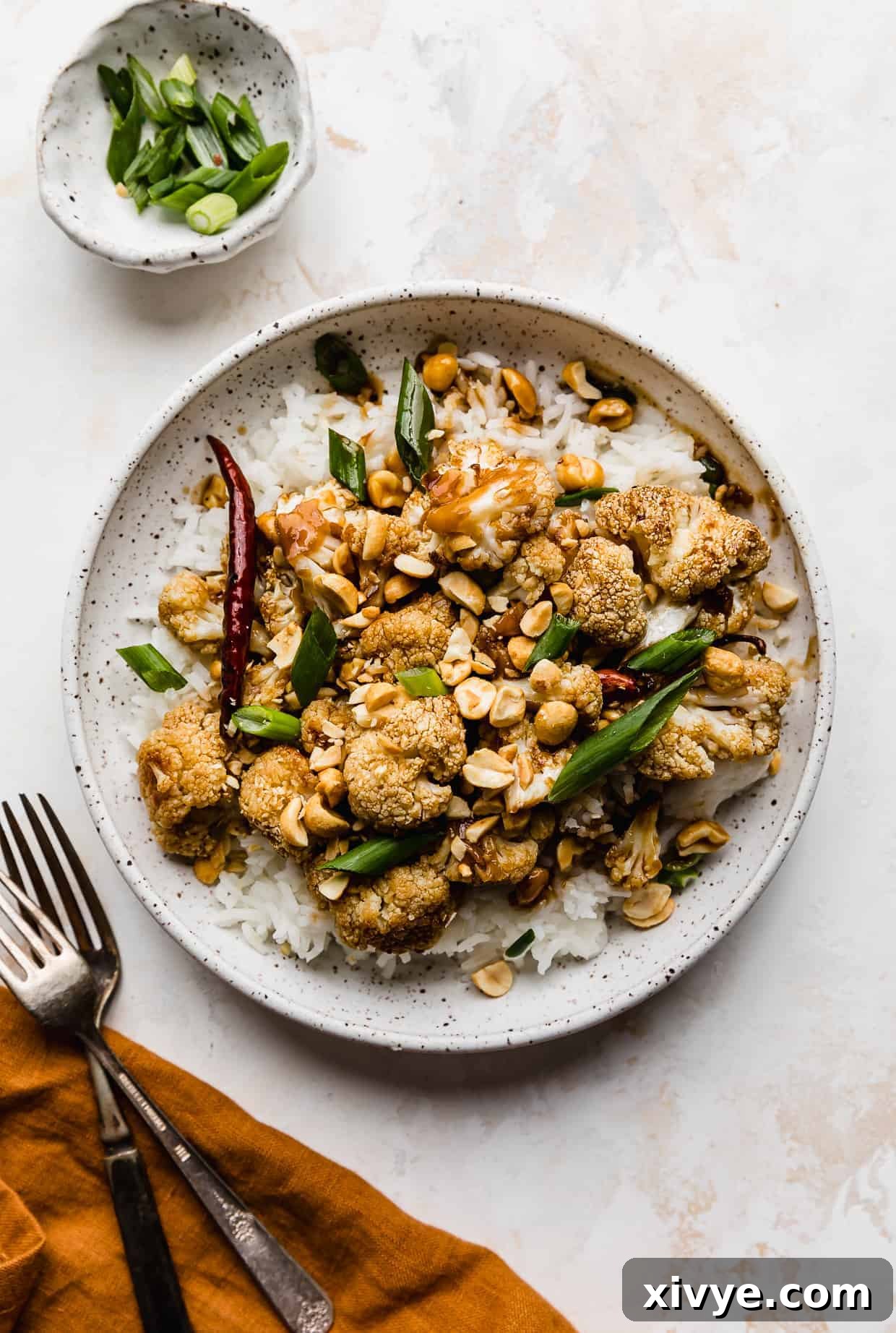
Transform your dinner routine with this Kung Pao cauliflower recipe. Serve it generously over a bed of perfectly cooked white rice, creating a comforting base that beautifully soaks up the exquisite sauce. Elevate the experience with a final flourish of crunchy roasted peanuts for texture and vibrant chopped green onions for a fresh, aromatic finish. The delightful combination of spicy, crunchy, tangy, and fresh-tasting cauliflower paired wonderfully with the soft rice will undoubtedly make you glad you skipped the takeout lines and opted for this homemade culinary marvel.
Key Ingredients for Authentic Kung Pao Cauliflower
Crafting exceptional Kung Pao Cauliflower starts with a careful selection of fresh, high-quality ingredients that build layers of authentic Asian-inspired flavor. Each component plays a vital role in achieving the dish’s signature balance of sweet, savory, tangy, and spicy.
- Cauliflower: You’ll need one large head, or two smaller ones, yielding approximately 5-6 cups of fresh, bite-sized florets. The exact amount can vary, but the goal is to have enough to fill a single layer on your baking sheet without overcrowding, ensuring each piece gets crispy and absorbs plenty of sauce. Cauliflower is a nutrient-dense cruciferous vegetable, offering a fantastic base for this flavorful meal.
- Hoisin Sauce: This thick, fragrant, and slightly sweet-and-savory Chinese barbecue sauce is a cornerstone of our Kung Pao marinade. It brings a rich umami depth combined with notes of sweet, tangy, and a hint of spice. You can typically find it in the Asian foods aisle of most grocery stores, often near soy sauce or other ethnic condiments. Always check the label if you have dietary restrictions.
- Fresh Ginger: For the most potent aroma and vibrant flavor, freshly grated ginger is indispensable. While powdered ginger can be used in a pinch, fresh ginger provides a zesty, slightly peppery kick that truly elevates Asian-inspired dishes. A simple method to peel ginger is to scrape the skin off with the edge of a spoon, then grate it using a microplane or the small holes of a box grater.
- Chiles de Arbol: These slender, dried red chiles are renowned for their clean, bright heat. They are a staple in many Mexican and Asian cuisines and can be found in the international or spice section of well-stocked grocery stores. These peppers are primarily responsible for the spicy element of our Kung Pao. If you prefer a milder dish, simply reduce the number of chiles, or for an extra fiery kick, add more!
- Low-Sodium Soy Sauce: Provides the fundamental savory and umami base for the sauce. Using low-sodium allows for better control over the saltiness of the final dish. For a gluten-free version, substitute with tamari.
- Sherry Vinegar: Adds a crucial tangy, slightly sweet, and complex acidic note that brightens the entire sauce and balances the richness of the other ingredients. Rice vinegar can be a suitable substitute if sherry vinegar is unavailable.
- Toasted Sesame Oil: A little goes a long way with this intensely aromatic oil. It imparts a distinctive nutty, toasted flavor that is essential to the authentic taste of Kung Pao. Be sure to use toasted sesame oil for its deeper flavor profile.
- Brown Sugar: Packed brown sugar provides a molasses-rich sweetness that perfectly complements the savory and spicy elements, helping the sauce to caramelize and become sticky as it bakes.
- Cornstarch: This acts as our thickening agent, ensuring the sauce clings beautifully to the cauliflower florets, creating that desirable glossy, sticky glaze. It’s key for that takeout-style texture.
- Garlic Cloves: Freshly minced garlic adds a pungent, savory depth that is foundational to many Asian sauces. Use fresh garlic for the best flavor.
- Olive Oil: Used for the initial roasting of the cauliflower, helping it to crisp up and develop flavor.
- Roasted Peanuts & Green Onions: These are essential garnishes, adding crucial textural contrast and fresh flavor. The peanuts provide a satisfying crunch and nutty richness, while the green onions offer a mild oniony bite and vibrant color.
Easy Step-by-Step Instructions to Make Kung Pao Cauliflower
Creating this delicious Kung Pao Cauliflower is a straightforward process, thanks to its sheet pan method. Follow these steps for a perfectly roasted and glazed vegetarian delight:
-
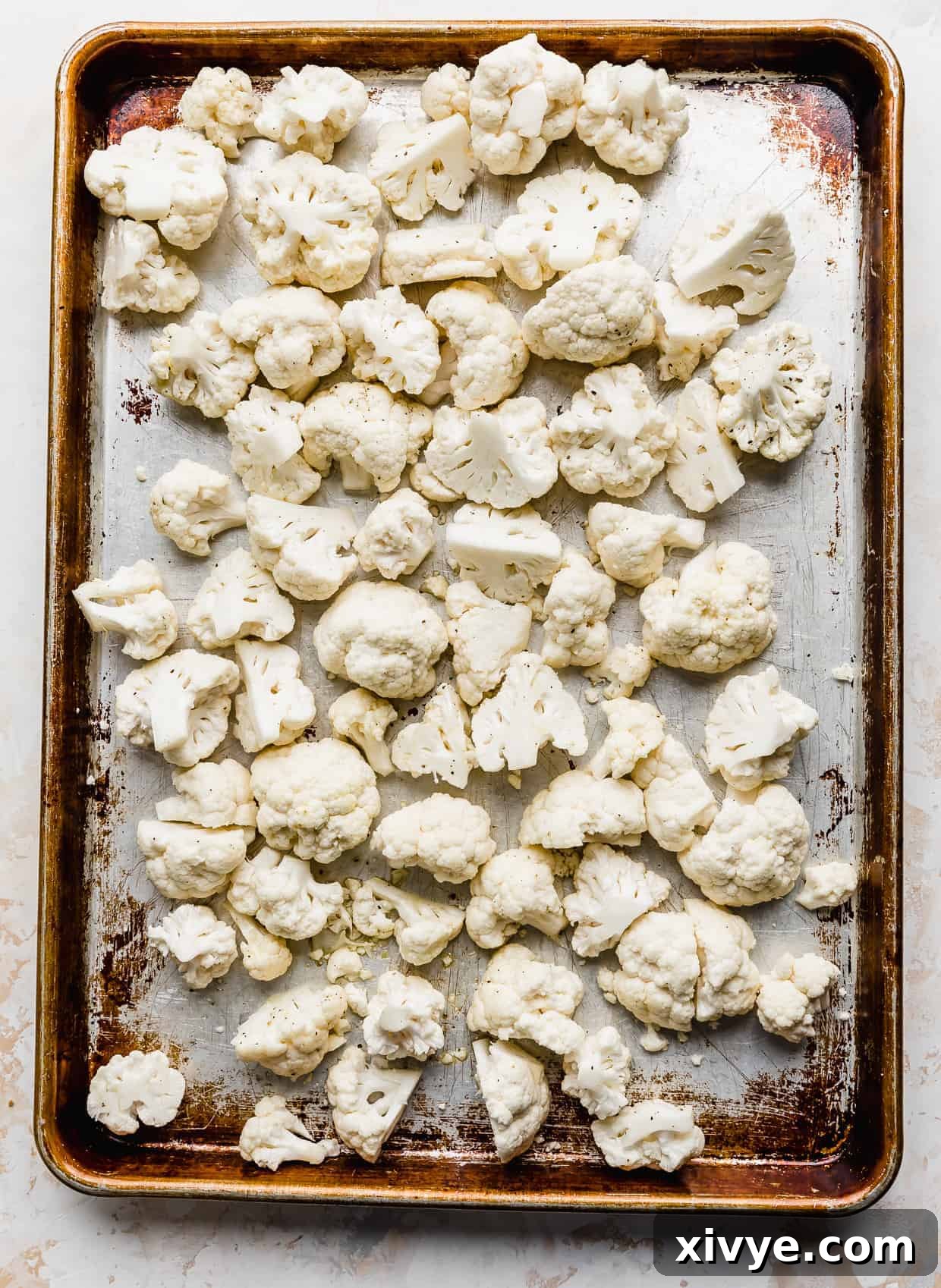
Prepare and Roast the Cauliflower: Begin by preheating your oven to a robust 425°F (220°C). This high heat is crucial for achieving crispy, caramelized cauliflower. On a large baking sheet, arrange your cauliflower florets in a single, even layer. Drizzle them generously with 2 tablespoons of olive oil, then season lightly with salt and freshly ground black pepper. Toss well to ensure every piece is lightly coated. Roast the cauliflower in the preheated oven for 15 minutes. This initial roasting step is vital for developing depth of flavor and tender-crisp texture before the sauce is introduced.
-
Whisk Together the Flavorful Kung Pao Sauce: While your cauliflower is undergoing its initial roast, prepare the star of the show: the rich Kung Pao sauce. In a medium-sized mixing bowl, combine the 4 tablespoons of low-sodium soy sauce, 4 tablespoons of hoisin sauce, 4 tablespoons of sherry vinegar, 3 tablespoons of toasted sesame oil, 1 packed tablespoon of brown sugar, 4 teaspoons of cornstarch, 4 minced garlic cloves, and 1 tablespoon of freshly grated ginger. Whisk all these ingredients vigorously until they are thoroughly combined and the cornstarch has completely dissolved, creating a smooth, aromatic, and homogenous sauce.
-
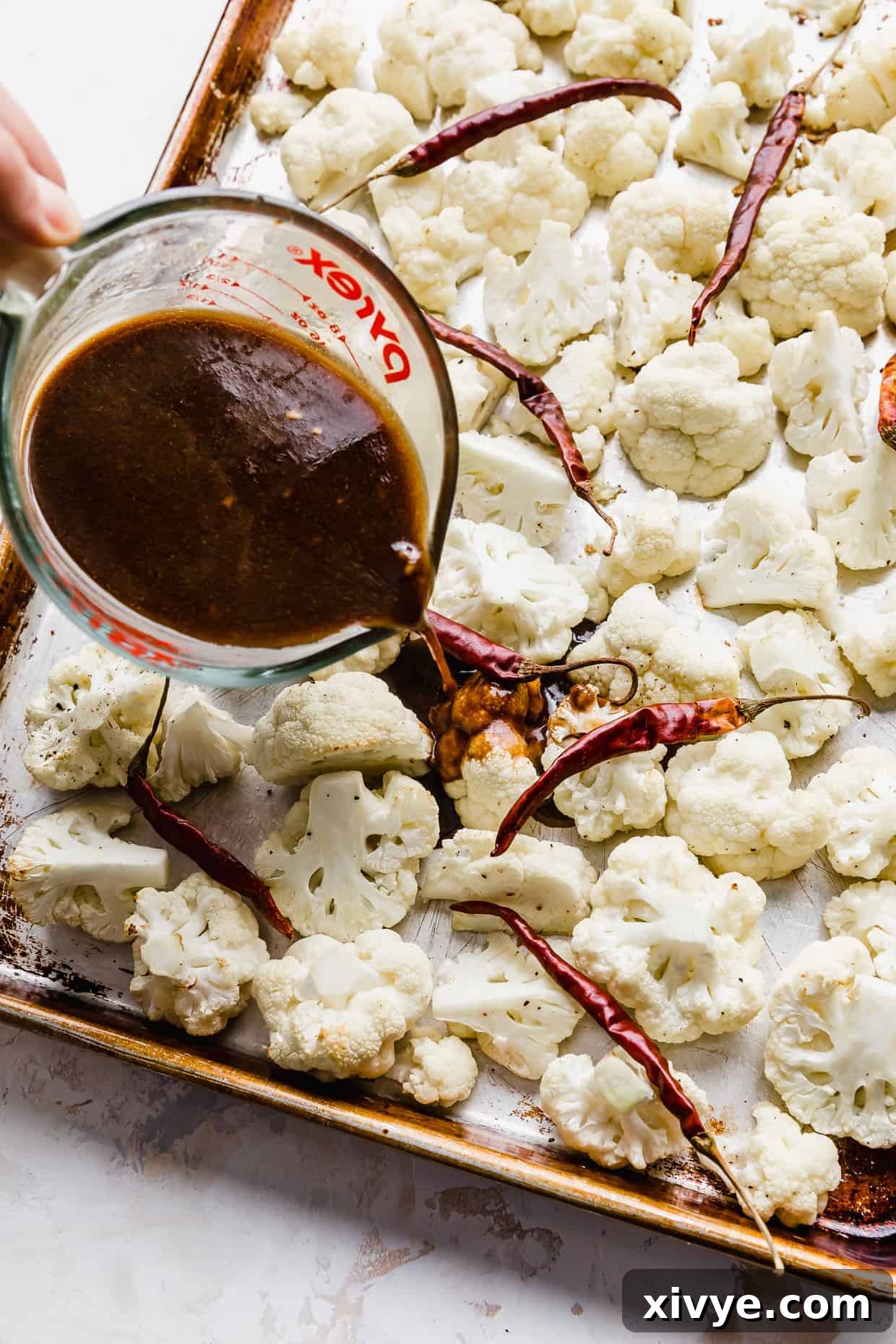
Combine Cauliflower and Sauce: Carefully remove the partially roasted cauliflower from the oven after its initial 15 minutes. Scatter the 8 chiles de Arbol evenly over the hot cauliflower on the baking sheet. Immediately pour your freshly whisked Kung Pao sauce over the top of the cauliflower. Using sturdy tongs or a spatula, toss the cauliflower and chiles thoroughly to ensure every floret is beautifully and evenly coated with the rich, glossy sauce.
-
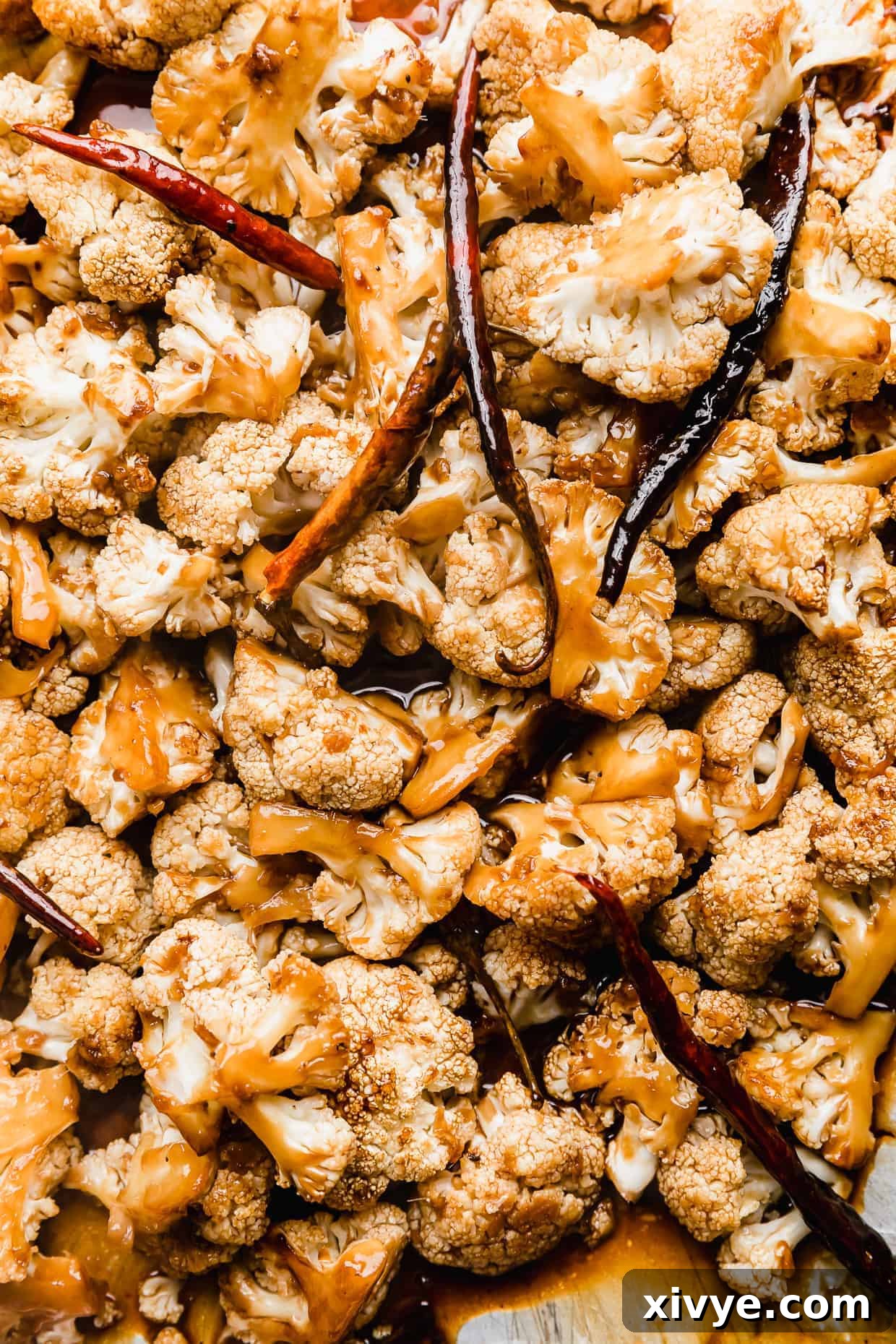
Second Roast for Perfect Glaze: Once coated, re-spread the cauliflower into a single, even layer on the baking sheet. Return it to the oven and continue to roast for another 15-20 minutes. For uniform cooking and to encourage even caramelization and prevent any sticking, make sure to toss the cauliflower florets about midway through this second roasting period (around the 8-10 minute mark). During this stage, the cornstarch in the sauce will activate, causing the sauce to thicken and beautifully caramelize, creating that signature sticky, glazed coating on the cauliflower. The florets will become wonderfully tender-crisp and deeply infused with flavor.
-
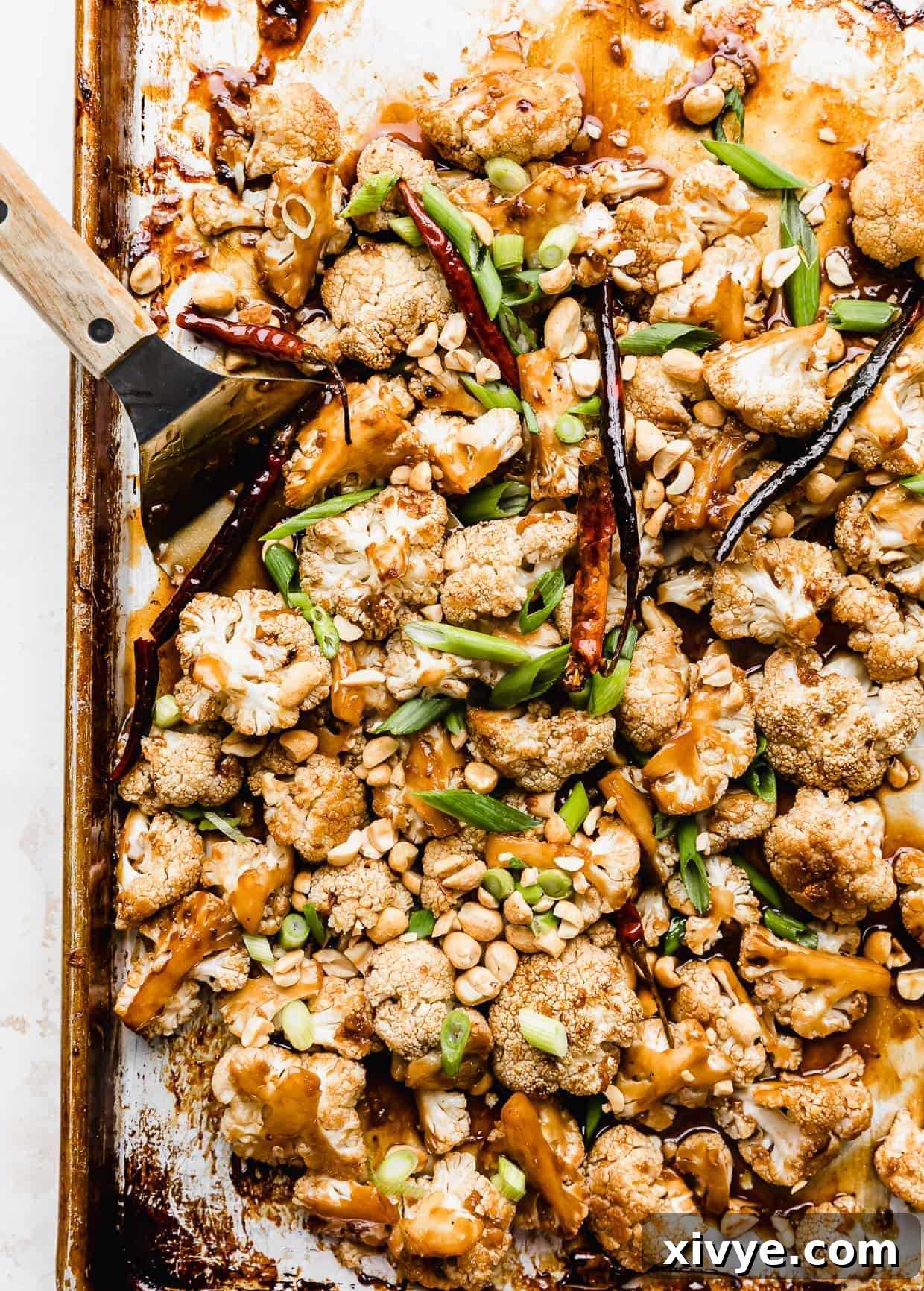
Garnish and Serve: Once the Kung Pao cauliflower has reached its perfect roasted and glazed state, remove the baking sheet from the oven. Immediately sprinkle the chopped dry-roasted peanuts and the sliced green onions generously over the hot cauliflower. The residual heat will slightly warm the garnishes, enhancing their aroma and adding essential textural contrast. Serve this vibrant and incredibly flavorful dish hot, ideally over a bed of freshly cooked white or brown rice for a complete and satisfying meal that rivals any takeout.
Expert Tips for the Best Kung Pao Cauliflower
Achieving restaurant-quality Kung Pao Cauliflower at home is simpler than you think with these expert tips and tricks:
- Choosing and Preparing Cauliflower: Select a firm, white head of cauliflower without any dark spots. Cut the florets into roughly equal, bite-sized pieces (about 1.5 to 2 inches). This ensures even cooking. Avoid cutting them too small, or they might become mushy, and avoid cutting them too large, or they won’t cook through or absorb enough sauce.
- Achieving Crispy Cauliflower: The key to crispy roasted cauliflower is not overcrowding the baking sheet. If the cauliflower is piled up, it will steam instead of roast, resulting in a soft texture. Use two baking sheets if necessary to ensure a single, even layer with space between the florets. Also, ensure the cauliflower is completely dry before tossing with olive oil and roasting. Excess moisture is the enemy of crispiness.
- Mastering the Sauce Consistency: The cornstarch in the recipe is vital for thickening the sauce to a beautiful glaze. Ensure you whisk the sauce thoroughly before pouring it over the cauliflower to prevent lumps. The sauce will thicken significantly as it bakes and cools, so don’t be alarmed if it seems a little thin immediately out of the oven.
- Adjusting Spice Levels: The chiles de Arbol provide a moderate heat. For a spicier dish, increase the number of chiles or crush them slightly before adding them to release more capsaicin. For a milder version, reduce the quantity or omit them entirely. You can also add a pinch of red pepper flakes for an extra kick.
- Fresh Ingredients Matter: Using freshly minced garlic and freshly grated ginger makes a noticeable difference in the overall brightness and aromatic quality of the sauce. Avoid using powdered versions if possible, as they lack the vibrant punch of fresh ingredients.
- Meal Prep Friendly: This recipe is fantastic for meal prepping. You can chop your cauliflower and prepare the sauce up to a day in advance, storing them separately in airtight containers in the refrigerator. When it’s time to cook, simply combine and roast as directed. Leftovers also hold up well, making for delicious lunches throughout the week.
Delightful Serving Suggestions for Your Kung Pao Cauliflower
While delicious on its own or simply served with rice, Kung Pao Cauliflower can be beautifully complemented by a variety of side dishes to create a more expansive and satisfying meal. Here are some ideas to enhance your dining experience:
- Baked Sweet Potato: The natural sweetness and creamy texture of a baked sweet potato offer a wonderful contrast to the savory, spicy, and tangy notes of the Kung Pao cauliflower.
- Steamed or Buttered Vegetables: Keep it simple with steamed broccoli, green beans, or snap peas. A light steaming or a quick sauté with a pat of butter and a pinch of salt can add freshness and an extra dose of essential nutrients without overpowering the main dish.
- Oven Roasted Broccoli: For an extra dose of roasted goodness and a slightly charred, earthy flavor, perfectly caramelized broccoli florets make an excellent and complementary side dish, echoing the cooking method of the cauliflower.
- Refreshing Cabbage Salad: A light, crisp, and slightly tangy cabbage salad can provide a refreshing counterpoint to the rich and sticky Kung Pao sauce, cleansing the palate with its vibrant crunch.
- Quinoa or Brown Rice: For a healthier and more fiber-rich alternative to white rice, serving your Kung Pao cauliflower over fluffy quinoa or nutty brown rice can provide complex carbohydrates and a satisfying chew.
- Noodle Bowls: Turn this into a heartier meal by serving it over stir-fried noodles or a bed of warm ramen noodles. The sauce coats the noodles beautifully, creating a complete and comforting bowl.
Frequently Asked Questions About Kung Pao Cauliflower
Is Kung Pao Cauliflower Vegan?
This delightful dish is inherently vegetarian, making it a fantastic option for those avoiding meat. To ensure it’s fully vegan, you primarily need to verify the ingredients in your hoisin sauce. While most hoisin sauces are plant-based, some cheaper brands may contain oyster extract or other animal-derived products. Always check the label to be safe. Otherwise, all other ingredients in this recipe are typically vegan-friendly, making it a wonderful choice for a plant-based diet.
How long does Kung Pao Cauliflower last in the refrigerator?
Leftovers of Kung Pao Cauliflower are quite delicious and store well. Once completely cooled, transfer any remaining cauliflower to an airtight container and refrigerate promptly. It will maintain its best quality for about 3 to 4 days. For optimal enjoyment, reheat gently in a skillet over medium heat or in a preheated oven at 300°F (150°C) until warmed through. This method helps to retain some of its original texture, unlike microwaving which can sometimes make it softer. Some even enjoy it cold!
Do Chiles de Arbol expire?
Like most dried spices, chiles de Arbol don’t truly “expire” in a way that makes them unsafe to consume. However, they do lose their potency, flavor, and color over time. For the best flavor and heat, it’s recommended to use dried chiles de Arbol within 6 months to 1 year of purchase. To maximize their shelf life and preserve their fiery kick, store them in an airtight container in a cool, dark pantry away from light and moisture, or even consider freezing them for longer-term storage.
Can I use frozen cauliflower for this recipe?
While fresh cauliflower is highly recommended for its superior texture and ability to get crispy, you can use frozen cauliflower as a convenient alternative. If opting for frozen, ensure it is completely thawed and thoroughly patted dry with paper towels before roasting. Frozen cauliflower releases more water during cooking, which can prevent it from crisping up as effectively. You may also need to extend the initial roasting time slightly to help evaporate this extra moisture and achieve some browning.
How can I make this recipe gluten-free?
Making this Kung Pao Cauliflower gluten-free is quite simple. The primary ingredient you’ll need to substitute is soy sauce. Replace regular soy sauce with a certified gluten-free tamari, which offers a similar rich, savory, and umami flavor profile. Additionally, it’s crucial to check the label on your hoisin sauce, as some brands may contain wheat or other gluten-containing ingredients. Look for readily available gluten-free hoisin sauce options in specialty grocery stores or online.
What if my sauce is too thin or too thick?
The cornstarch in this recipe is designed to create a perfectly thick and glossy sauce. If your sauce appears too thin after roasting, it might be due to excess moisture released by the cauliflower or insufficient roasting time for the cornstarch to fully activate. To thicken it further, carefully transfer the cauliflower and sauce to a small saucepan and simmer gently on the stovetop for a few minutes, stirring constantly, until it reaches your desired consistency. Conversely, if your sauce becomes too thick, you can easily thin it out by stirring in a tablespoon or two of vegetable broth or hot water until it achieves the ideal consistency.
Explore More Delicious Meatless Meal Ideas
If you’ve enjoyed this flavor-packed Kung Pao Cauliflower and are looking for more plant-forward inspiration, be sure to check out these other fantastic meatless recipes that are sure to satisfy:
- Hearty Mexican Quinoa: A wholesome and flavorful one-pot meal packed with fresh ingredients.
- Flavorful Chickpea Gyros: A delightful vegetarian take on a classic Mediterranean dish, perfect for wraps and salads.
- Creamy Indian Butter Cauliflower: A rich and aromatic vegetarian curry that’s both comforting and exotic.
- Satisfying Black Bean and Corn Quesadillas: Quick, easy, and cheesy, these quesadillas are a family favorite.
Share Your Culinary Creations!
Did you try this irresistible Kung Pao Cauliflower recipe? We would absolutely love to hear about your experience! Please consider leaving a star rating and a thoughtful review on the blog post to let us know how much you enjoyed making and tasting this recipe. Your feedback is invaluable! Don’t forget to snap a picture of your amazing creation and tag @saltandbaker on TikTok, Instagram, and Facebook so we can see what you’re cooking up in your kitchen!
Kung Pao Cauliflower Recipe
Author: Whitney Wright
This Kung Pao Cauliflower is a quick, vibrant, and utterly delicious meatless dinner option that bursts with incredible flavor! Crispy cauliflower florets are generously coated in a rich, savory, subtly sweet, and wonderfully spicy sauce featuring the classic combination of soy sauce, toasted sesame oil, and fresh ginger. The inclusion of chiles de Arbol provides an authentic, warming heat that makes each bite exciting. Finished with crunchy roasted peanuts and fresh green onions, this convenient sheet pan meal promises not only easy cleanup but also an unforgettable taste experience that will quickly become a favorite in your kitchen.
Prep Time: 15 minutes
Cook Time: 30 minutes
Total Time: 45 minutes
Servings: 4 servings
Ingredients
- 1 large head of cauliflower, cut into florets (approximately 5-6 cups worth; see notes for quantity advice)
- 2 tablespoons olive oil
- 4 tablespoons low-sodium soy sauce (use tamari for a gluten-free option)
- 4 tablespoons hoisin sauce (check label for vegan/gluten-free if needed)
- 4 tablespoons sherry vinegar (or rice vinegar)
- 3 tablespoons toasted sesame oil
- 1 tablespoon brown sugar, packed
- 4 teaspoons cornstarch
- 4 garlic cloves, minced
- 1 tablespoon freshly grated ginger
- 8 chiles de arbol (dried chiles; adjust quantity for desired heat level)
- ⅔ cup dry roasted peanuts, chopped
- 4 green onions, sliced
- Cooked white or brown rice, for serving
Equipment
- Large Baking Sheet
- Medium Mixing Bowl
- Whisk
- Tongs or Spatula
Instructions
- Preheat your oven to 425°F (220°C). Place the cauliflower florets on a large baking sheet and drizzle with olive oil. Sprinkle with salt and pepper, then toss thoroughly to ensure an even coating. Arrange the florets in a single layer. Roast in the preheated oven for 15 minutes.
- Meanwhile, in a medium-sized bowl, whisk together the soy sauce, hoisin sauce, sherry vinegar, toasted sesame oil, brown sugar, cornstarch, minced garlic, and freshly grated ginger until the mixture is smooth and well combined.
- Remove the cauliflower from the oven. Scatter the chiles de Arbol evenly over the cauliflower on the baking sheet. Pour the whisked sauce over the cauliflower and chiles, then toss gently with tongs or a spatula until all the florets are thoroughly coated.
- Spread the coated cauliflower back into a single, even layer on the baking sheet. Return to the oven and roast for an additional 15-20 minutes, tossing the cauliflower approximately halfway through (every 8-10 minutes) to ensure even cooking and glazing. The sauce will noticeably thicken as it bakes and then cools, creating a sticky glaze.
- Once cooked to perfection, remove the baking sheet from the oven. Immediately sprinkle generously with the chopped dry-roasted peanuts and the sliced green onions. Serve hot over freshly cooked white or brown rice for a complete and satisfying meal.
Notes
The size of cauliflower heads can vary significantly. You will generally need enough florets to loosely fill a large baking sheet in a single layer, which is typically about 5-6 cups. It’s important to avoid overcrowding the pan, as this can lead to steaming rather than roasting, preventing the cauliflower from achieving that desirable crispy texture. If using a smaller head, you may need to use a second one to reach the desired quantity. Ensure there is enough sauce to adequately coat all the florets without the sauce becoming too thin.
Nutrition Information (per serving)
- Calories: 409 kcal (20% Daily Value)
- Carbohydrates: 27g (9% Daily Value)
- Protein: 10g (20% Daily Value)
- Fat: 31g (48% Daily Value)
- Saturated Fat: 4g (20% Daily Value)
- Cholesterol: 1mg
- Sodium: 1006mg (42% Daily Value)
- Potassium: 671mg (19% Daily Value)
- Fiber: 6g (24% Daily Value)
- Sugar: 11g (12% Daily Value)
- Vitamin A: 121 IU (2% Daily Value)
- Vitamin C: 67mg (81% Daily Value)
- Calcium: 68mg (7% Daily Value)
- Iron: 2mg (11% Daily Value)
Course: Main Course
Cuisine: Chinese