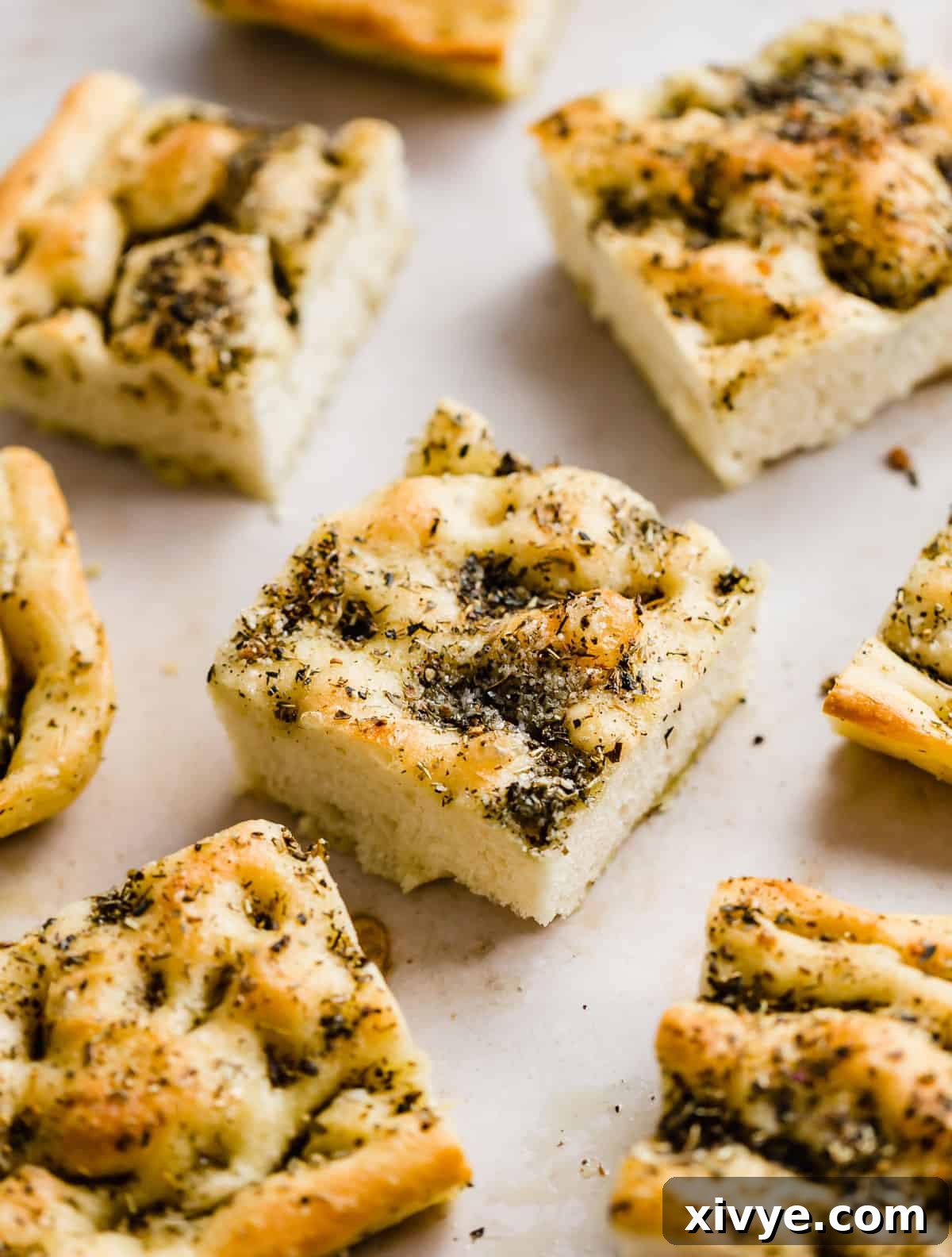
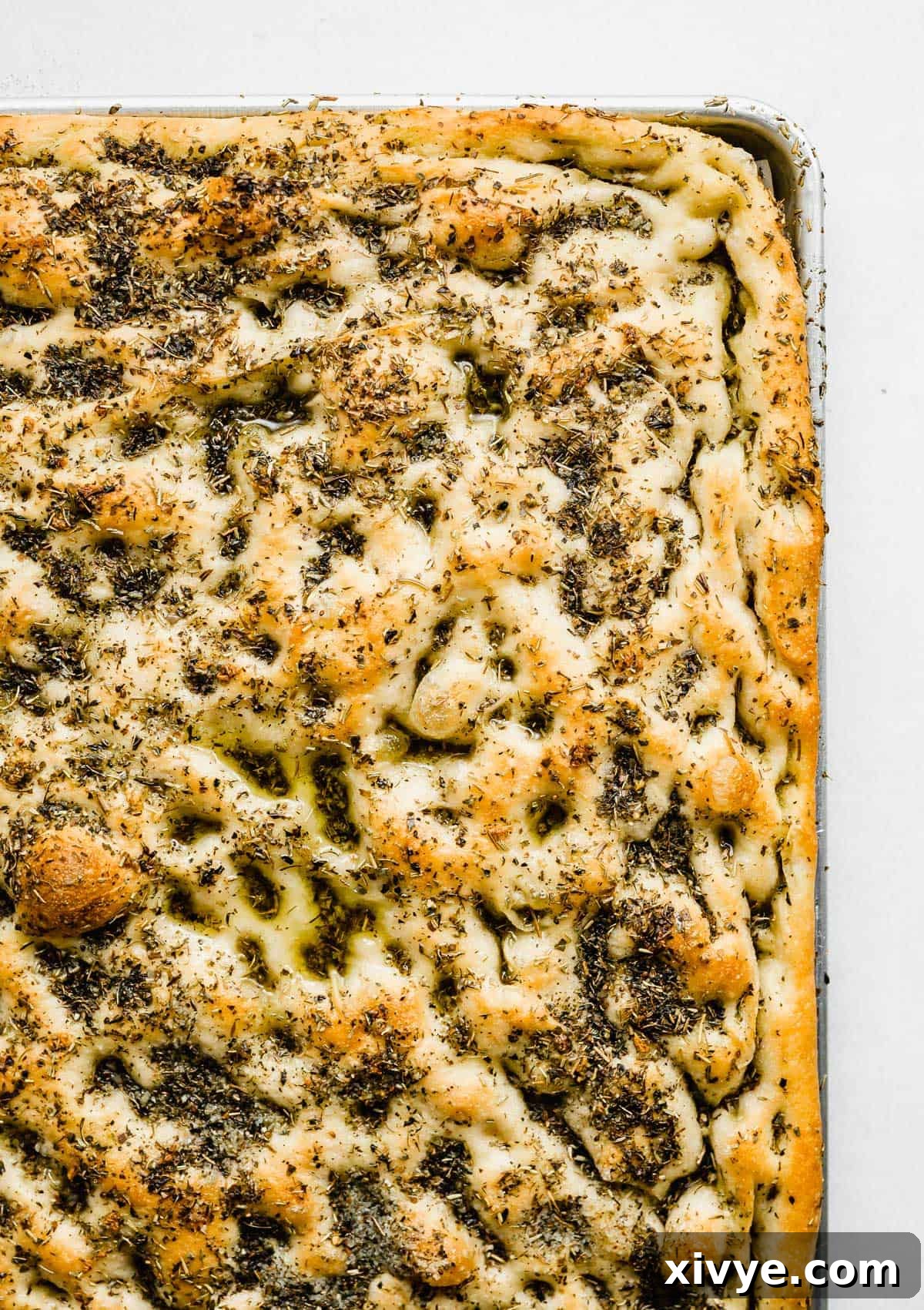
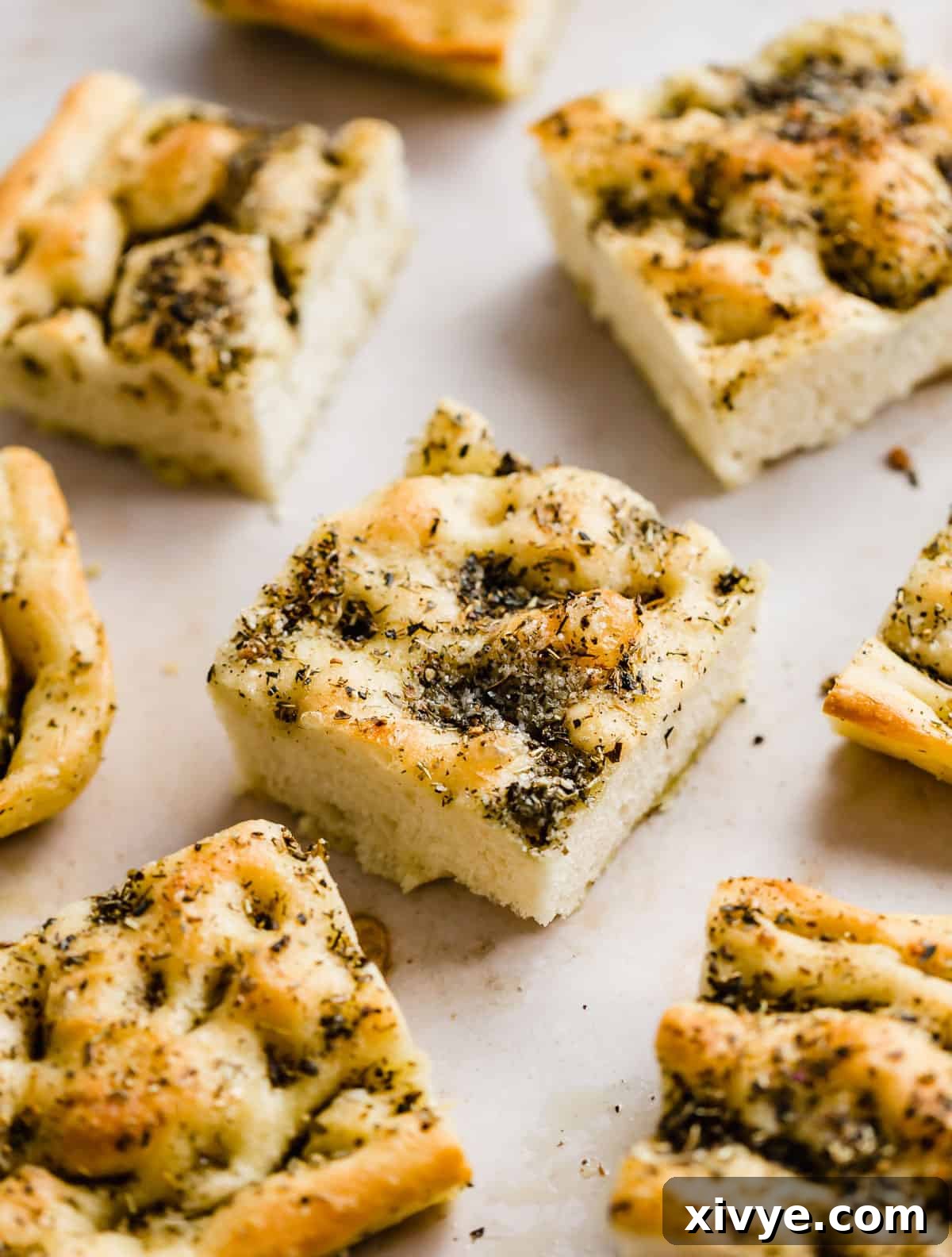
There’s nothing quite like the irresistible aroma of freshly baked bread filling your kitchen, and this Focaccia Bread recipe promises to deliver a truly exceptional experience. Imagine a bread that is wonderfully light, incredibly fluffy, and seasoned to absolute perfection. This isn’t just any focaccia; it’s a masterpiece baked with a rich, aromatic herbed olive oil that infuses every bite with profound flavor. Boasting a remarkably soft interior and a delicately crisp exterior, it strikes the ideal balance, making it an indispensable side dish for an array of culinary delights.
Whether you’re hosting a dinner party or simply enjoying a weeknight meal, this focaccia effortlessly elevates any dish. It’s the perfect companion to hearty Turkey Spinach Meatballs and Spaghetti, a comforting Cast Iron Lasagna, or delicate Homemade Ravioli. Beyond a side, its robust texture and flavor make it an excellent base for a gourmet sandwich or even transformed into a delightful Focaccia Pizza. Prepare to impress your taste buds and your guests with this authentic Italian flatbread that’s surprisingly easy to master!
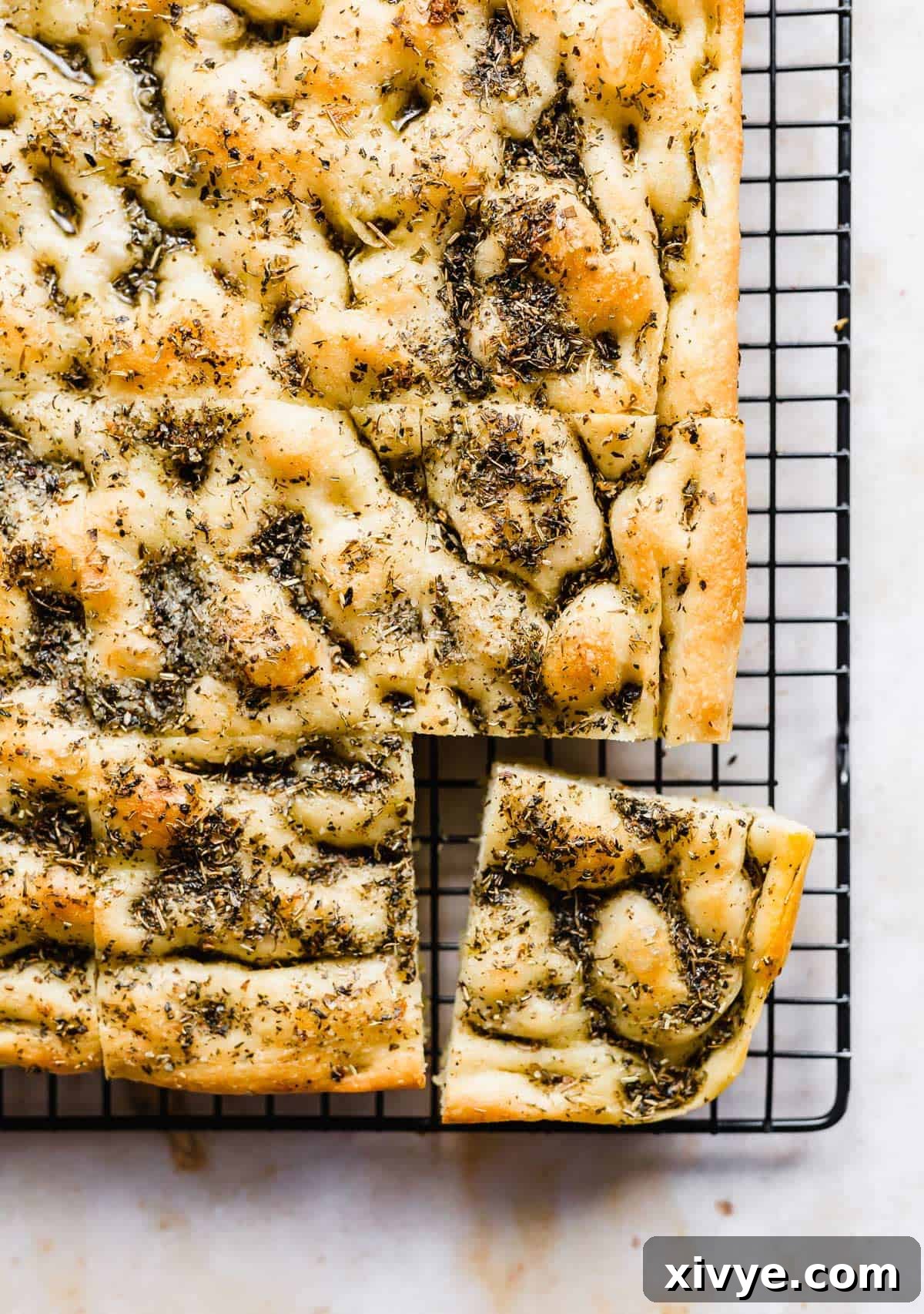
Why This Focaccia Recipe Stands Out
This isn’t just another bread recipe; it’s a carefully crafted method designed to give you the most exquisite focaccia imaginable. From the unique preparation of the herbed oil to the meticulous dough handling, every step contributes to its superior taste and texture. Here’s why this recipe deserves a prime spot in your baking repertoire:
- Infused with an Exquisite Herbed Olive Oil: Focaccia is inherently baked with olive oil, a crucial element for its signature moist and airy crumb. Our recipe elevates this tradition by first warming a generous amount of olive oil with a thoughtful blend of herbs. This gentle heating process allows the herbs and garlic to fully release their potent flavors, creating an aromatic oil that deeply permeates the bread. This herbed oil isn’t just an ingredient; it’s the soul of this focaccia, ensuring every bite is rich, fragrant, and utterly delicious.
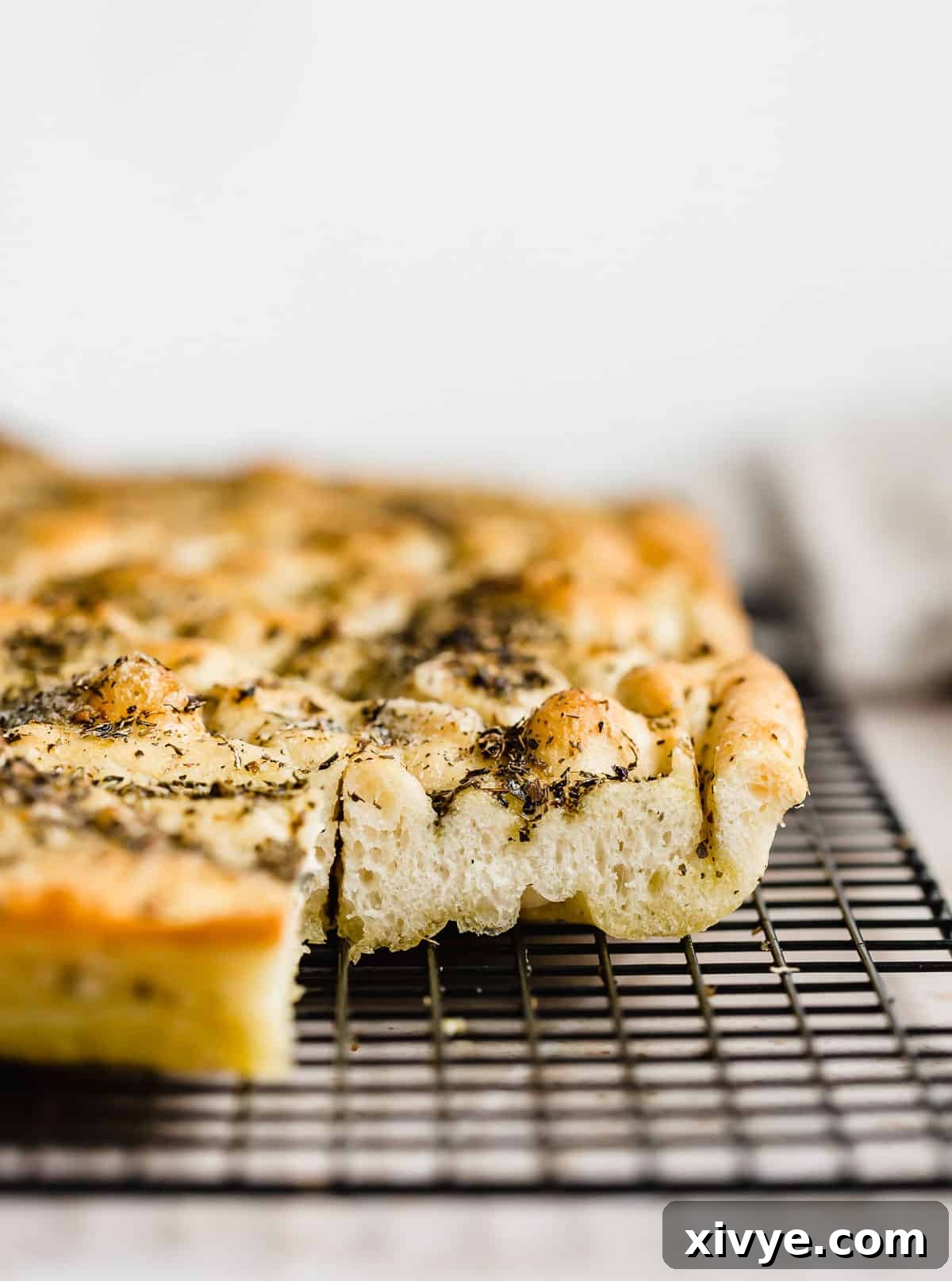
- Achieving a Perfectly Light and Airy Crumb: The hallmark of truly great focaccia is its light, cloud-like interior, riddled with beautiful air pockets. This recipe excels in creating that coveted texture. Thanks to a precise proofing schedule, including multiple stretch-and-fold stages and a chilled fermentation period, the dough develops an incredible elasticity and structure. Combined with the high olive oil content, these techniques work in harmony to produce an exceptionally tender and airy crumb that simply melts in your mouth, making it the best focaccia you’ll ever bake.
- Infinitely Customizable with Your Favorite Toppings: While this focaccia is utterly delightful on its own, its versatile nature makes it an excellent canvas for personalization. Before baking, you can easily add a variety of toppings to suit your taste or occasion. Think thinly sliced mushrooms, juicy cherry tomatoes, briny olives, crumbled feta, or a sprinkle of Parmesan cheese. A scattering of fresh rosemary or a dusting of sea salt can also add an extra layer of flavor and visual appeal. This adaptability ensures that each batch can be a unique culinary adventure, allowing you to get creative in the kitchen.
What is Focaccia? A Beloved Italian Flatbread
Focaccia is a cherished Italian flatbread, known for its distinct dimpled surface, rich olive oil flavor, and often, an aromatic topping of herbs and sea salt. Originating from ancient Rome, where it was known as ‘panis focacius’ (bread baked on the hearth), focaccia has evolved into a staple across Italy, with regional variations in thickness, texture, and toppings. It shares similarities with pizza dough, but typically contains more olive oil, resulting in a moister, softer crumb and a beautifully crisp crust. It’s much more than just a side dish; it’s a versatile bread that can be enjoyed in countless ways, reflecting the warmth and generosity of Italian cuisine.
Essential Ingredient Notes for Perfect Focaccia
Crafting exceptional focaccia begins with understanding the role of each ingredient. Quality matters, especially when working with simple components that shine through in the final product. Here’s a detailed look at the key players in this recipe:
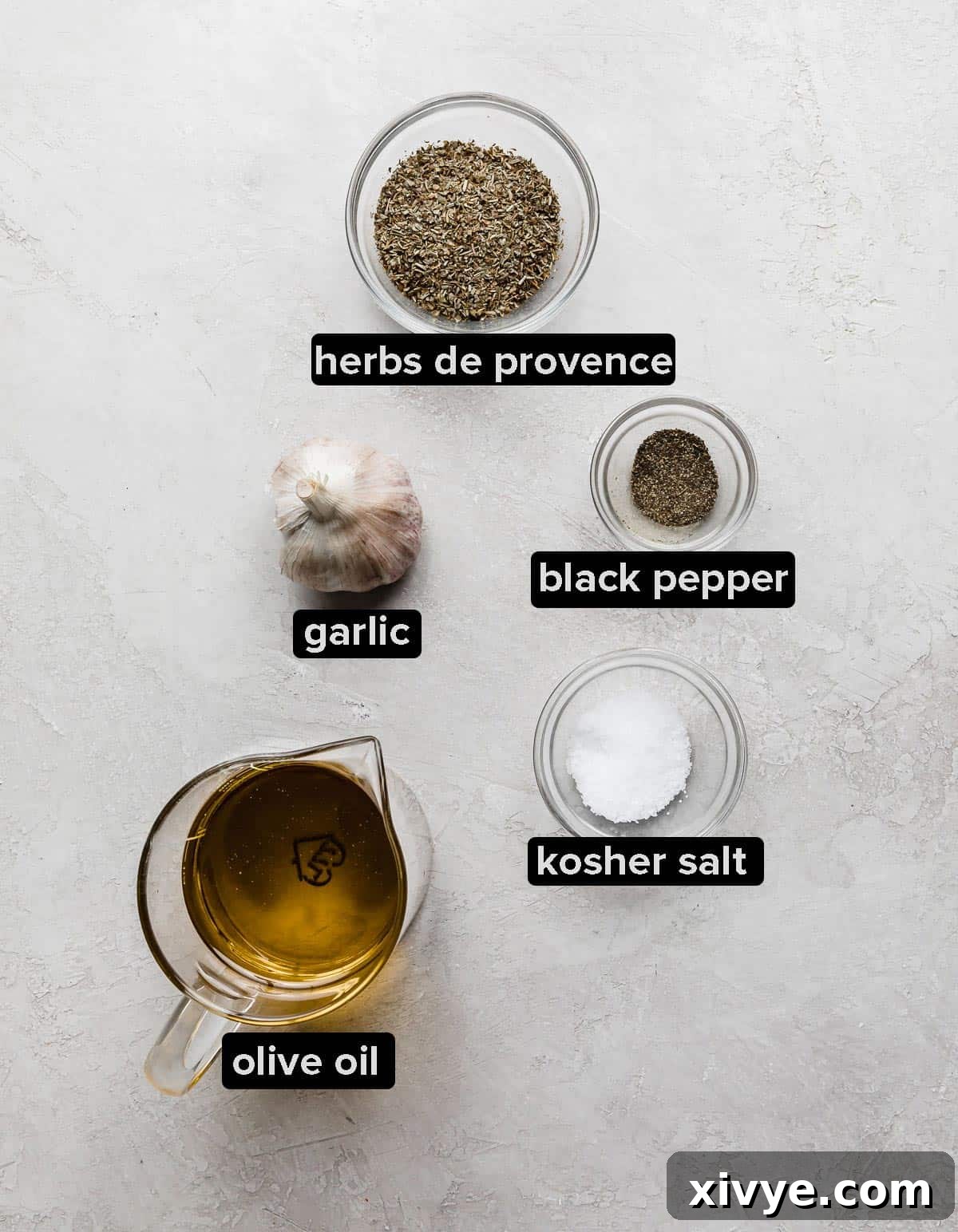
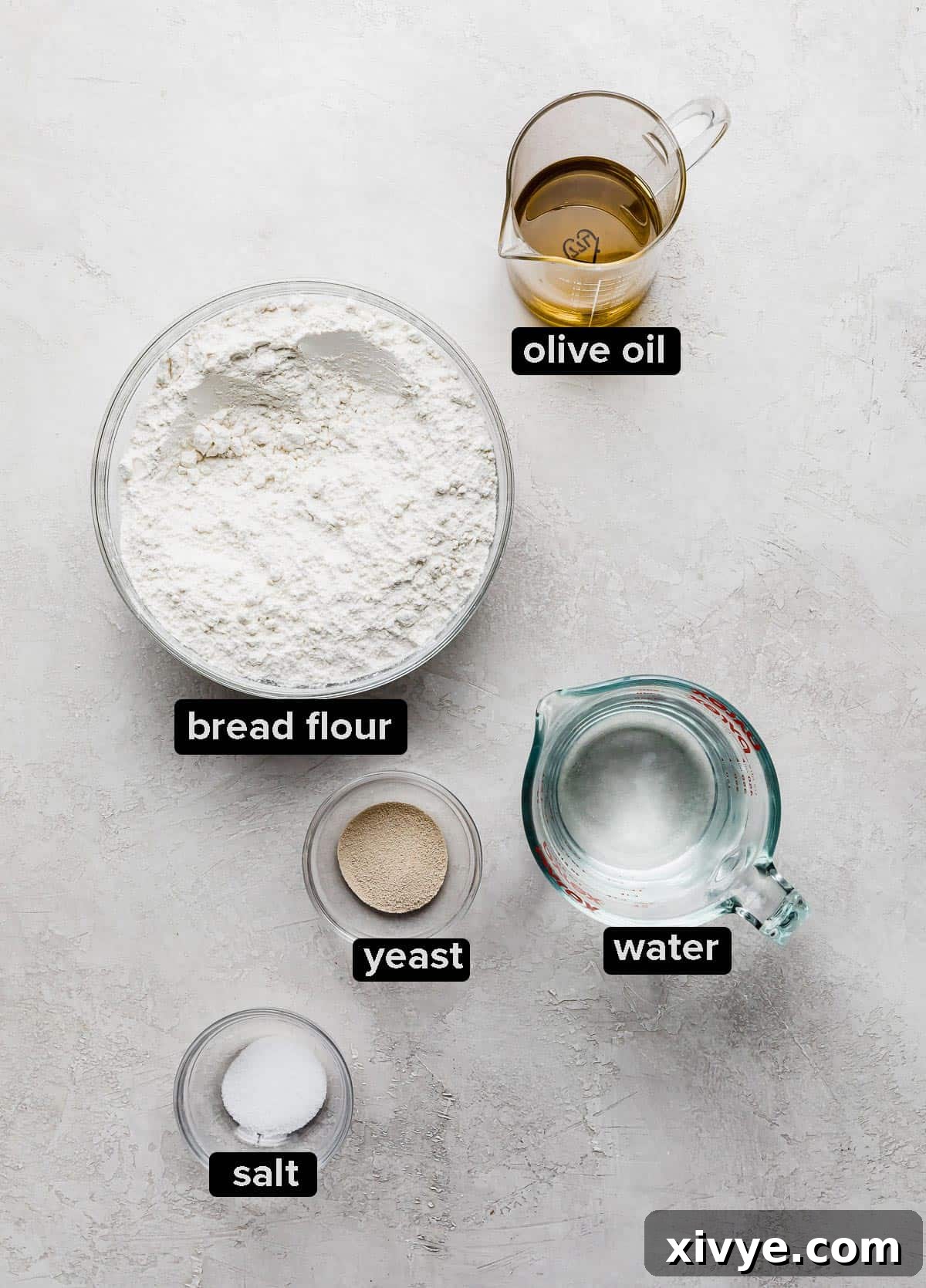
- Olive Oil: This ingredient is paramount to the authentic flavor and moist texture of focaccia. Since it’s used so liberally (a total of 2 cups!), choose a high-quality extra virgin olive oil whose flavor you genuinely enjoy. A robust, fruity olive oil will impart the best character to your bread. We use 1 ¾ cups for the fragrant herbed oil, 6 tablespoons incorporated directly into the dough for richness, and ¼ cup generously coating the baking pan, which contributes to the focaccia’s characteristic crisp bottom crust.
- Dried Herbs de Provence: This classic French blend, despite its name, pairs beautifully with Italian flavors. It typically includes thyme, basil, rosemary, tarragon, summer savory (which offers a flavor similar to thyme), marjoram, oregano, and often a bay leaf. The complex profile of these herbs creates an incredibly aromatic and savory base for our herbed oil. You can easily find this blend pre-mixed in most grocery stores, or you can create your own custom blend at home using individual dried herbs you have on hand, adjusting the ratios to your preference.
- Garlic: This recipe calls for a substantial 6 cloves of garlic, minced finely. Don’t be deterred by the quantity; when infused into the warm olive oil and baked, the garlic mellows beautifully. It provides a subtle, sweet, and aromatic depth rather than an overpowering raw garlic flavor. It’s a foundational element that enhances the overall savory profile of the focaccia without making it overtly “garlicky.”
- Bread Flour: For focaccia, bread flour is highly recommended over all-purpose flour. Bread flour has a higher protein content, which results in a stronger gluten structure. This is crucial for developing a dough that is both sturdy enough to handle the extensive stretching and folding, yet also elastic enough to trap the gases that create those desirable large air pockets. The higher protein ensures a chewy interior texture, making the bread more substantial and satisfying. This is also why bread flour is ideal for recipes like homemade 50/50 bread.
- Instant Yeast: The choice of instant yeast simplifies the baking process significantly. Unlike active dry yeast, instant yeast does not require prior activation in warm water (no need to wait for it to become foamy). It can be mixed directly with the dry ingredients, saving time and ensuring a consistent rise. This makes the recipe more approachable for all skill levels.
- Water: Lukewarm water is perfectly suitable for this recipe, especially since we’re using instant yeast. The ideal temperature for lukewarm water is between 90-100°F (32-38°C). This temperature helps the yeast activate gently and consistently without being too hot (which can kill the yeast) or too cold (which can inhibit its activity).
Crafting Your Perfect Focaccia: Step-by-Step Guide
Follow these detailed instructions to achieve a deliciously light and fluffy focaccia with a golden, crisp crust, infused with aromatic herbs and garlic. Precision and patience are key for this truly rewarding baking experience.
- Prepare the Herbed Olive Oil: Begin by infusing your olive oil with a medley of flavors. In a small saucepan, combine 1 ¾ cups of olive oil with 2 ½ teaspoons of kosher salt. Gently warm this mixture over medium-low heat until it reaches a temperature of 100-110°F (38-43°C). Once warmed, remove the saucepan from the heat and stir in the ¼ cup dried Herbs de Provence, 1 teaspoon fresh ground pepper, and 6 cloves of minced garlic. Allow this fragrant mixture to steep while you prepare the dough. This steeping process is vital for the herbs and garlic to fully release their essential oils and flavors into the olive oil, creating a deeply aromatic foundation for your focaccia.
- Form the Focaccia Dough: In the large bowl of a stand mixer, whisk together the 5 cups of bread flour, 2 teaspoons of salt, and 2 teaspoons of instant yeast until well combined. Next, add 6 tablespoons of olive oil (this is separate from the herbed oil) and 2 cups of lukewarm water to the dry ingredients. Attach the paddle attachment to your stand mixer and mix on low speed until the ingredients come together to form a sticky, shaggy ball of dough. Once formed, switch to the dough hook attachment. Increase the speed to medium and knead the dough for 5 minutes. During this kneading process, the dough should gradually become tacky but not overly sticky, and it should begin to pull away cleanly from the bottom and sides of the bowl. If the dough seems too sticky and doesn’t clear the sides, add a tablespoon of flour at a time until the desired consistency is achieved. A slight stickiness to the bottom of the bowl is acceptable, but avoid an overly dry or excessively wet dough.
- First Stretch and Fold (15-Minute Rest): Lightly flour your work surface. Carefully transfer the tacky focaccia dough onto the floured surface. Gently pat the dough into a rectangular shape. Now, perform the first stretch and fold: grab both ends of the rectangle and gently stretch the dough outwards until its length roughly doubles. Once stretched, fold the dough in thirds, like a letter, bringing one end over the middle and then the other end over the first, returning it to a more compact rectangular shape. Lightly spritz the top of the folded dough with olive oil or nonstick cooking spray to prevent drying. Cover the dough loosely with plastic wrap and let it rest undisturbed for 15 minutes. This brief rest period allows the gluten to relax, making the dough easier to work with in subsequent folds.
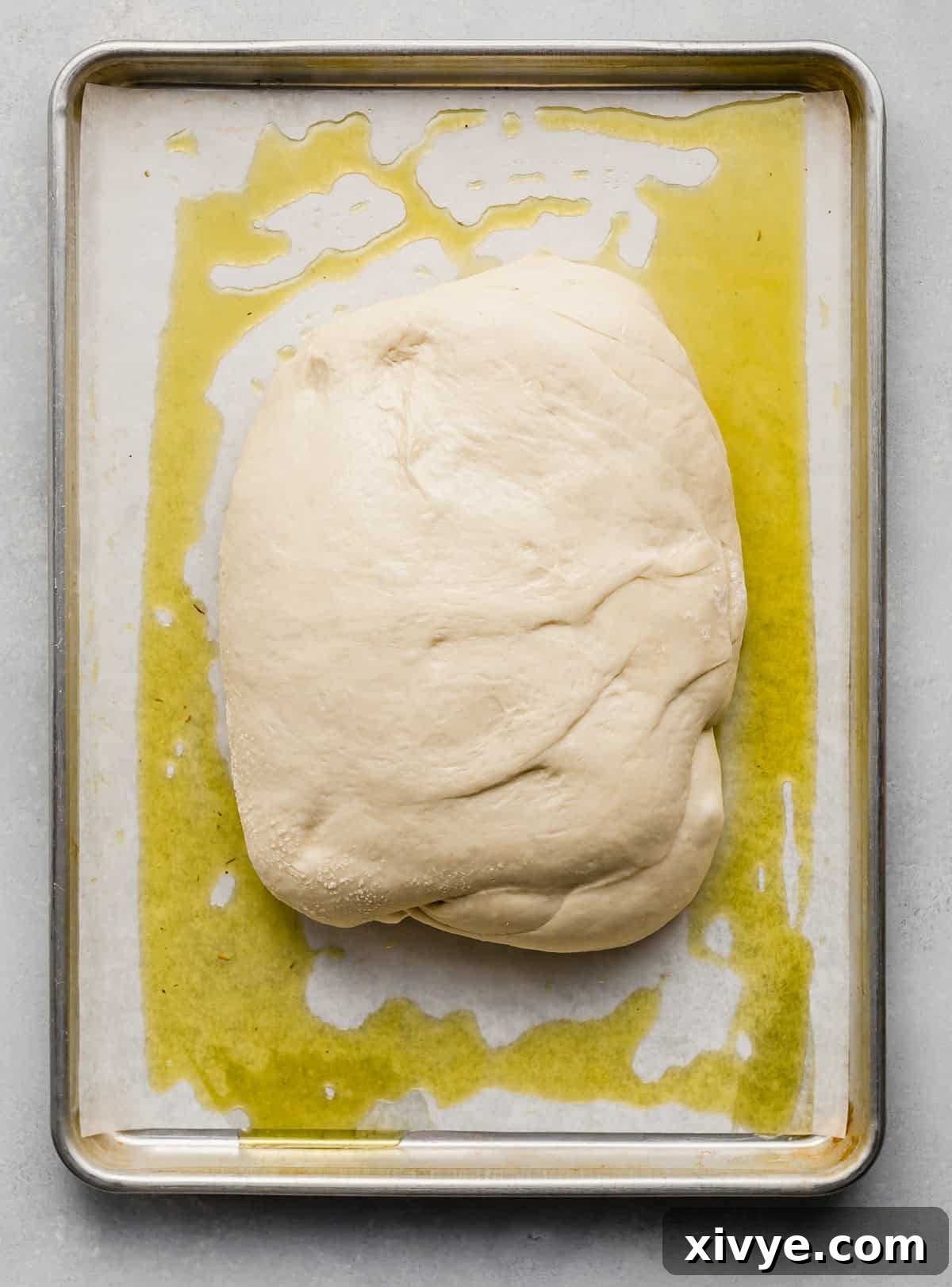
- Second and Third Stretch and Folds (Progressive Rests): Repeat the stretch and fold process two more times to develop the dough’s strength and elasticity. For the second round, gently stretch the dough into a rectangle again, fold it in thirds, spritz with oil, and cover with plastic wrap. Let it rest for another 15 minutes. After this second rest, perform the stretch and fold one final time. Stretch, fold, spritz with oil, and cover with plastic wrap. For this last rest, allow the dough to sit at room temperature for 30 minutes. During these resting periods, the dough will start to show a slight increase in volume, but it won’t fully double in size yet. These multiple stretch and fold cycles are crucial for building the focaccia’s characteristic open, airy crumb.
- Prepare the Baking Sheet and Initial Oiling: Choose a standard half-sheet baking pan (approximately 13×18 inches). Line the baking sheet with parchment paper, ensuring it covers the entire surface. Generously pour the remaining ¼ cup of plain olive oil (not the herbed oil) onto the parchment paper. Using your hands or a pastry brush, spread the olive oil evenly across the entire surface of the parchment paper, making sure every corner is coated. Carefully transfer the rested dough onto the prepared baking sheet. Now, drizzle half of the steeped herbed oil that you prepared earlier evenly over the top of the dough.
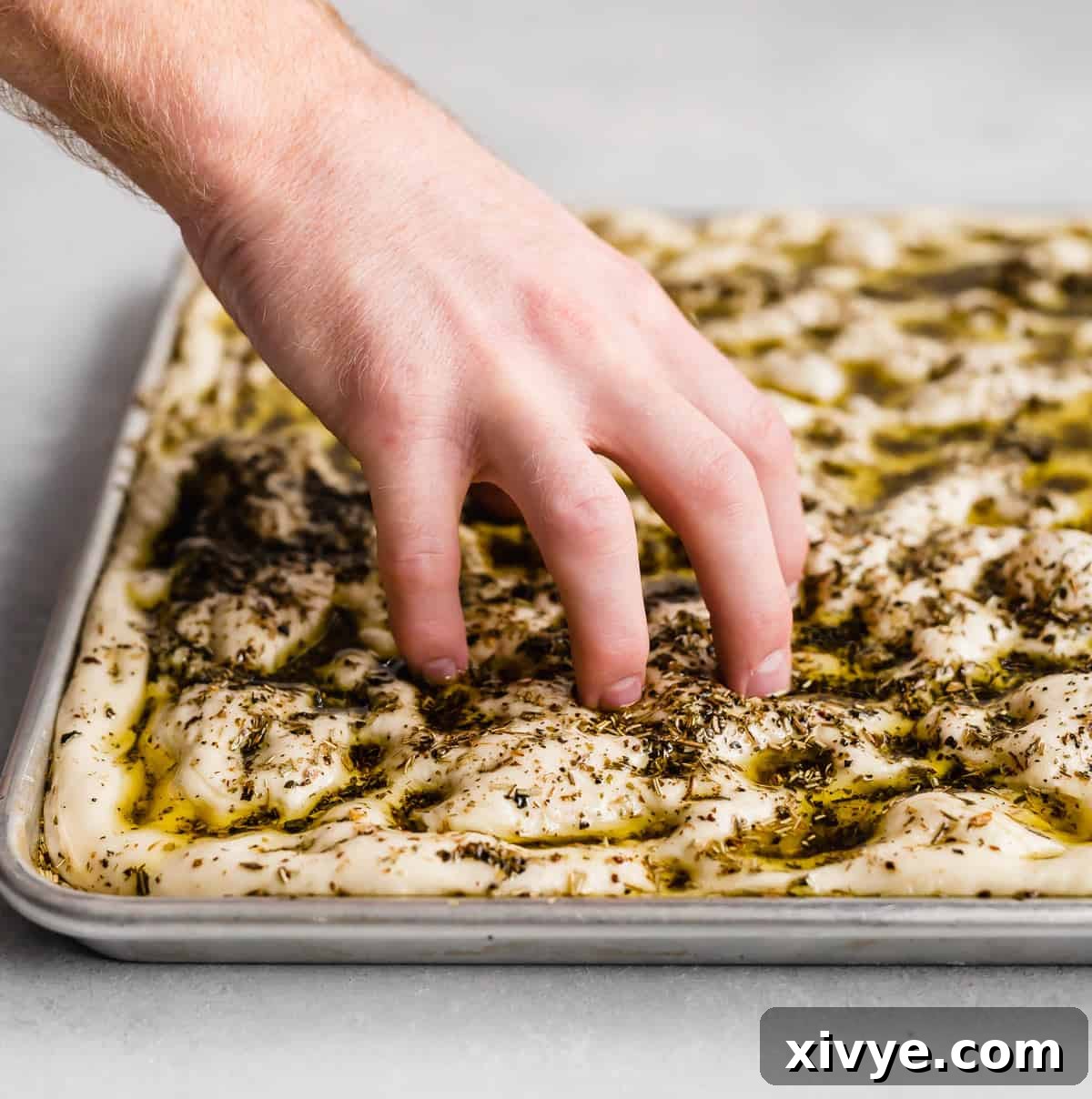
- Dimple the Dough: This is a signature step for focaccia. Using your fingertips, gently but firmly press down into the dough, creating numerous dimples across the surface. As you dimple, simultaneously encourage the dough to spread and inch its way to fill a majority of the pan. Don’t worry if it doesn’t reach all the way into the corners at this stage; it will continue to relax and spread during proofing. Ensure the entire surface of the dough is coated in the herbed oil as you dimple. You may need to add a little more of the remaining herbed oil if any areas look dry. The dimples help create those beautiful air pockets and allow the herbed oil to pool, flavoring the bread further.
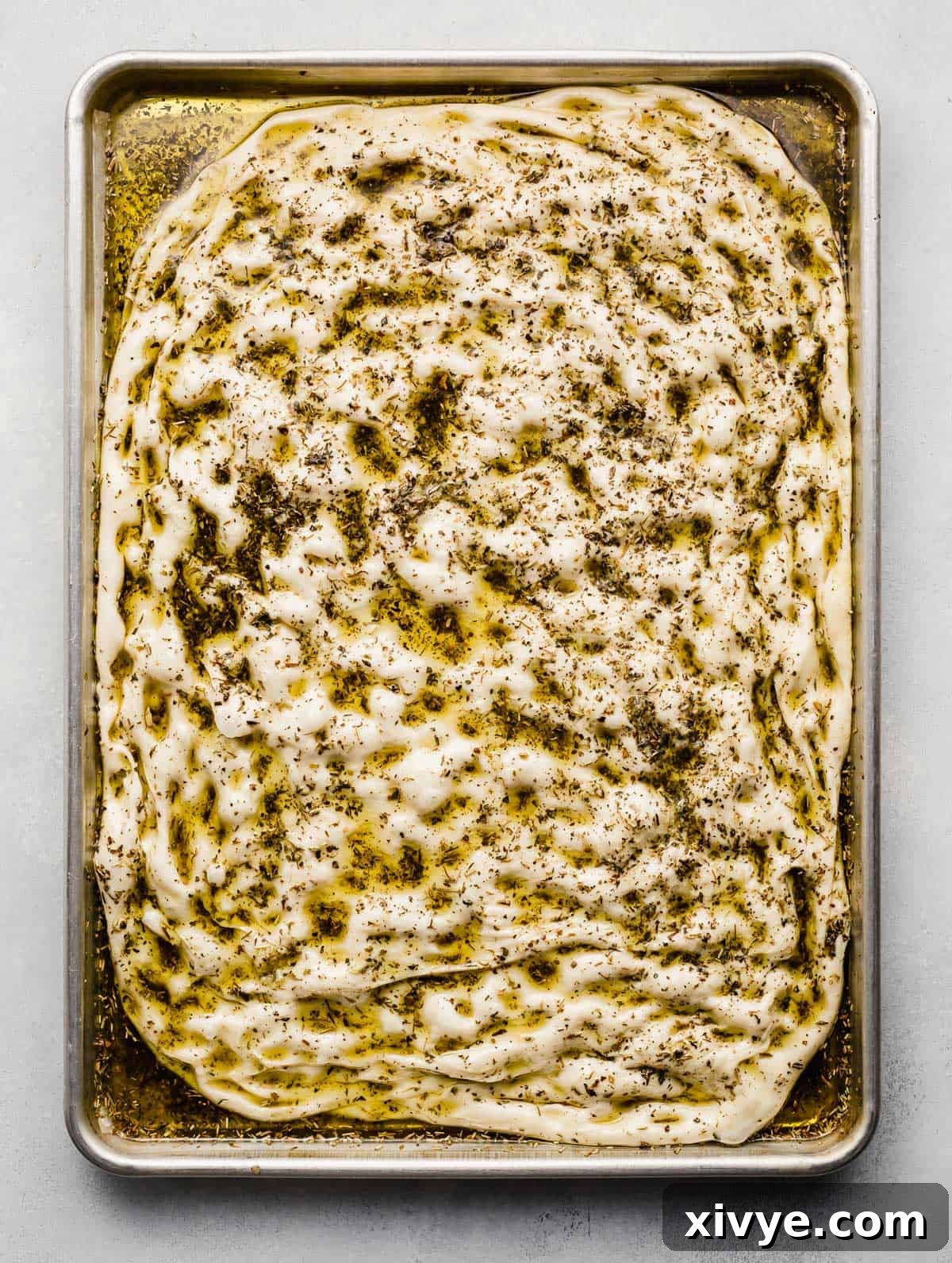
- Cover and Chill for Flavor Development: Once dimpled and oiled, loosely cover the baking pan with plastic wrap. Transfer the covered dough to the refrigerator and chill for at least 2 hours, or ideally, overnight (up to 24 hours). This cold fermentation period is crucial for developing a richer, more complex flavor profile and an even better texture. When you’re ready to bake, remove the pan from the fridge. Drizzle the remaining herbed oil over the chilled dough and dimple it again, gently coaxing it to spread all the way to the sides and corners of the pan. The dough should be about 1 inch thick. Loosely cover the pan with plastic wrap once more and let it sit at room temperature for 1 hour, or until the dough has visibly doubled in size and feels pillowy.
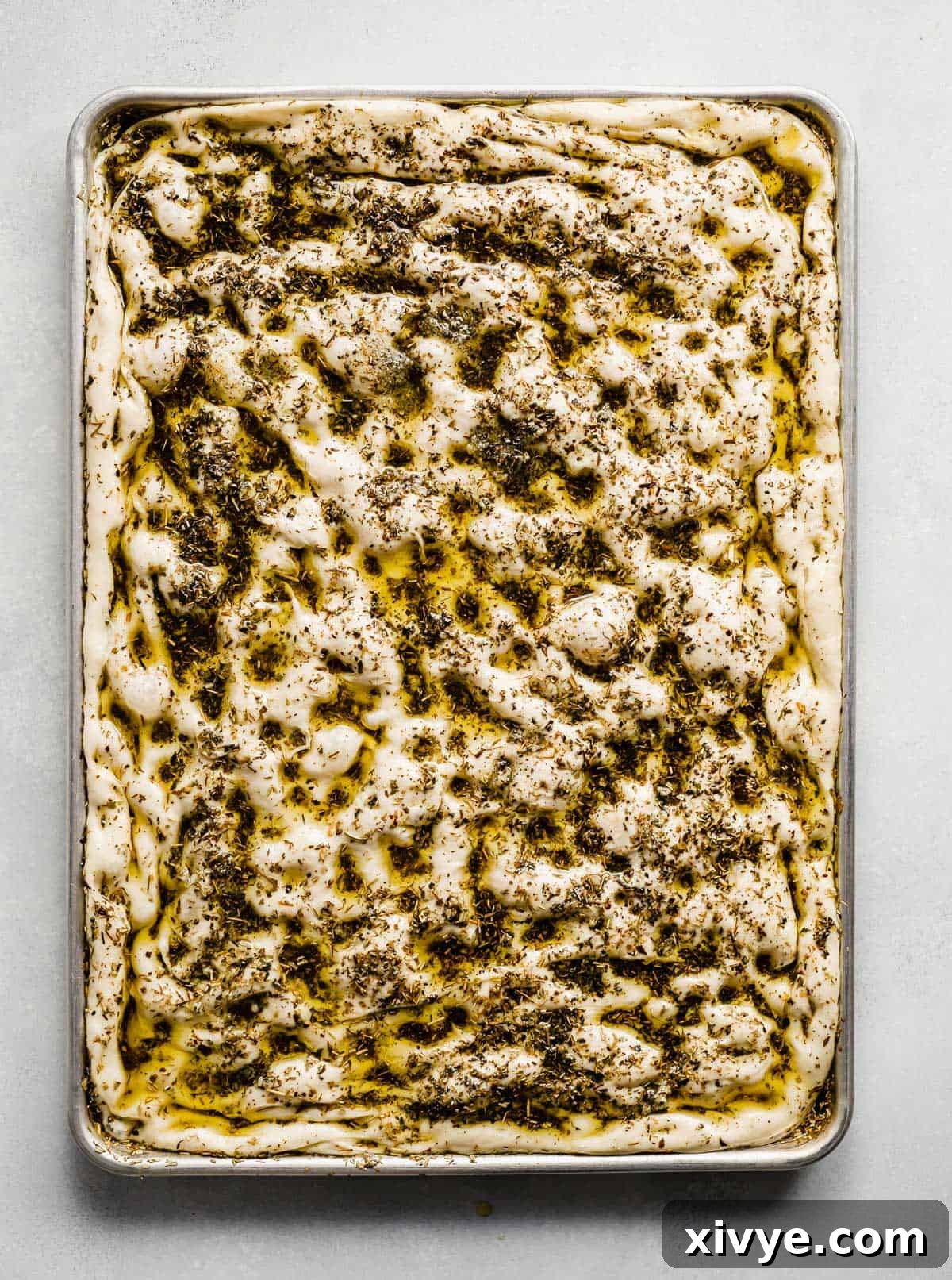
- Bake to Golden Perfection: About 30 minutes into the final room temperature proofing, preheat your oven to a blazing 500°F (260°C). A hot oven is essential for achieving that characteristic crisp exterior. Once the dough has doubled in size and the oven is fully preheated, carefully remove the plastic wrap from the pan. Place the focaccia dough directly into the preheated oven. Immediately reduce the oven temperature to 450°F (232°C). Bake for 10 minutes, allowing the focaccia to develop a beautiful golden crust. After 10 minutes, rotate the pan 180° to ensure even browning and continue baking for an additional 5-8 minutes, or until the top is a deep, inviting golden brown. The internal temperature should register 200°F (93°C) or higher with an instant-read thermometer. Remove the focaccia from the oven and carefully transfer the bread (still on its parchment paper) to a wire cooling rack. Let it cool for at least 15 minutes before slicing and serving. This cooling time is important for the internal structure to set and for the flavors to fully develop.
Expert Focaccia Baking Tips & Troubleshooting
Mastering focaccia is a rewarding journey, and a few expert tips can ensure your success and enhance the final product. Here’s what you need to know:
- Overnight Proofing for Enhanced Flavor: If you opt to chill the dough overnight (which is highly recommended for deeper flavor development), remember to remove the pan from the refrigerator at least 3 hours before you plan to bake. This crucial step allows the dough to gradually come to room temperature and complete its final proof, doubling in size and becoming wonderfully airy before it hits the hot oven.
- Embrace the Stretch and Fold: Resist the temptation to use a rolling pin! The unique, open crumb structure of focaccia is achieved through the gentle art of stretching, pulling, folding, and dimpling the dough. These techniques encourage gluten development while preserving those essential air pockets, which a rolling pin would flatten.
- The Power of a Hot Oven: A high oven temperature is not merely a suggestion; it’s a requirement for authentic focaccia. Baking at a high initial temperature (500°F, then 450°F) ensures a rapid rise and a beautifully crisp, golden crust while maintaining a soft interior. Consider investing in an oven thermometer to verify your oven’s accuracy; temperature fluctuations can significantly impact your results.
- Preventing Oil Spills: Given the generous amount of olive oil used, it’s not uncommon for some to bubble over and drip in the oven during baking. To prevent a smoky mess, place an extra-large baking sheet (larger than your focaccia pan, if possible) lined with aluminum foil on the oven rack directly beneath your focaccia. This will catch any drips, making cleanup a breeze. Alternatively, you can line the very bottom of your oven with foil.
- Creative Topping Ideas: Customize your focaccia by adding toppings before baking. Whole cherry tomatoes or grape tomatoes pressed into the dough create bursts of juicy flavor. Other delightful additions include thinly sliced red onions, Kalamata or green olives, sautéed mushrooms, chopped sun-dried tomatoes, or a sprinkle of Parmesan or crumbled feta cheese. Fresh rosemary sprigs are always a classic and fragrant choice.
- Knowing When It’s Done: The visual cue for a perfectly baked focaccia is a lightly golden brown top. For absolute certainty, use an instant-read thermometer. The internal temperature of the bread should register 200°F (93°C) or above. This ensures the bread is cooked through and has the ideal texture.
- Repurpose Leftovers with Creativity: Don’t let any leftover focaccia go to waste! Cut the bread into small cubes and toast them in a pan with a little olive oil until golden and crisp for delicious homemade focaccia croutons, perfect for salads or soups. The rich herbed olive oil, if you have any extra, makes an incredible dip for other crusty breads.
- Serve as Flavorful Breadsticks: For a different presentation, cut your focaccia into long, narrow strips instead of squares. These make fantastic breadsticks, ideal for dipping into marinara sauce, hummus, or even more herbed olive oil.
Make Ahead, Storing, and Freezing Focaccia
Focaccia is best enjoyed fresh, but thoughtful preparation and storage can help extend its deliciousness.
Make Ahead: The best way to make this focaccia recipe ahead of time is to utilize the overnight proofing option. After the final dimpling of the dough on the baking sheet and drizzling with the first half of the herbed oil, cover it tightly with plastic wrap and refrigerate for up to 24 hours. When you’re ready to bake, remove the pan from the fridge, drizzle with the remaining herbed oil, dimple again, and let it sit at room temperature for about 3 hours until it has doubled in size. Then proceed with baking as directed.
Storing Leftovers: Store any leftover focaccia at room temperature in an airtight container or a large Ziploc bag. While it’s truly best on the day it’s baked, proper storage can keep it palatable for 2-3 days. To maximize freshness, cut the focaccia into individual squares. Wrap each square tightly in a layer of plastic wrap, followed by a layer of aluminum foil. Then, place all wrapped pieces into a large airtight container or Ziploc bag. This double-layer protection significantly helps to retain moisture and flavor.
Freezing: Focaccia freezes beautifully, allowing you to enjoy a taste of fresh bread anytime. To freeze, first cut the baked and cooled focaccia into desired squares or strips. Arrange them in a single layer on a baking sheet and flash freeze for about 1-2 hours until solid. This prevents them from sticking together. Once frozen, transfer the individual pieces to a freezer-safe Ziploc bag or airtight container, removing as much air as possible. Focaccia can be frozen for up to 1 month. To reheat, thaw at room temperature for 30 minutes, then warm in a 350°F (175°C) oven for 5-10 minutes, or toast lightly until heated through and slightly crisp.
Frequently Asked Questions About Focaccia
Focaccia is a traditional Italian flatbread, distinctively characterized by its dimpled surface, generous use of olive oil, and often, savory toppings like herbs and sea salt. It’s typically thicker than pizza crust and boasts a wonderfully soft, airy interior and a lightly crisp exterior. It serves as a versatile side, an appetizer, or a base for sandwiches.
You’ll know your focaccia is perfectly baked when its top has turned a beautiful, light golden brown. For an accurate measure of doneness, an instant-read thermometer inserted into the thickest part of the bread should register an internal temperature of 200°F (93°C) or above.
The primary difference lies in focaccia’s significantly higher olive oil content and specific proofing techniques. This results in its signature light, airy texture with numerous large air pockets, a moist crumb, and a crispier crust, contrasting with the denser, more uniform crumb found in many traditional breads. Focaccia is also typically baked as a flatbread, designed for sharing and tearing.
While you can use all-purpose flour in a pinch, bread flour is highly recommended for focaccia. Its higher protein content helps develop a stronger gluten structure, which is essential for achieving the chewy texture and large, airy pockets characteristic of traditional focaccia. All-purpose flour might result in a slightly less chewy and airy bread.
More Irresistible Bread Recipes to Try
If you’ve enjoyed baking this focaccia, you’re sure to love exploring other homemade bread delights. Here are some of our favorite recipes that are guaranteed to impress:
- Flaky Brioche Recipe
- Classic Bisquick Cornbread
- Homemade Dinner Rolls Recipe
- Rosemary Garlic and Parmesan Dinner Rolls
- Easy Recipe for Homemade Naan Bread
We hope you thoroughly enjoyed crafting and tasting this delightful focaccia bread. Your feedback is incredibly valuable to us! If you made this recipe, we’d love to hear about your experience. Click here to leave a rating and review, or find the review section below the recipe card. Don’t forget to stay connected and up-to-date with our latest culinary adventures by following us on Instagram, Facebook, and Pinterest. Happy baking!
Print Recipe
Focaccia Bread

Whitney Wright
Ingredients
Herb Oil
- 1 ¾ cups olive oil
- ¼ cup dried herbs de Provence
- 2 ½ teaspoons kosher salt
- 1 teaspoon fresh ground pepper
- 6 garlic cloves – minced
Dough
- 5 cups bread flour – see note #1
- 2 teaspoons salt
- 2 teaspoons instant yeast
- 6 tablespoons olive oil
- 2 cups lukewarm water
- ¼ cup olive oil – for spreading on the baking sheet
Equipment
-
baking sheet
Instructions
Herb Oil
-
In a small saucepan, add the olive oil and salt. Stir over medium-low heat until it reaches 100-110°F. Add the dried herbs, pepper, and garlic and stir to combine. Remove from heat and let the mixture steep while you make the focaccia dough.
Dough
-
In the bowl of a stand mixer, add the bread flour, salt, and yeast. Whisk to combine. Next, add the 6 tablespoons of olive oil and water. Mix with the paddle attachment until the ingredients form into a sticky ball. Change to the dough hook and mix on medium speed for 5 minutes, or until a tacky ball forms that clears the bottom and sides of the bowl. If it doesn’t, add a tablespoon of flour at a time until it does. A slight stickiness to the bottom is okay, but avoid a dry dough.
-
Transfer the dough to a floured work surface. Pat the dough into a rectangle. Grab both ends and stretch the dough until it’s twice its size. Fold it letter style, over itself to return the dough back to a rectangular shape. Spritz the top of the dough with olive oil or nonstick cooking spray. Cover the dough with plastic wrap and let rest for 15 minutes.
-
Stretch and fold the dough again. Spritz the dough with nonstick cooking spray or olive oil, cover with plastic wrap and let rest for 15 more minutes.
-
One last time, stretch and fold the dough again. Spritz the dough with nonstick cooking spray or olive oil, cover with plastic wrap and let rest for 30 more minutes. The dough should rise slightly during this time (but won’t double in size).
-
Line a baking sheet with parchment paper and spread the ¼ cup of olive oil over the parchment (use your hands or a pastry brush), making sure the olive oil covers the entire surface.
-
Transfer the dough to the baking sheet. Spoon half of the herb oil over the dough.
-
Using your fingertips, dimple the dough, gently inching it to fill a majority of the pan. The dough doesn’t have to fit into the corners at this time. Add more herb oil as needed to the top of the dough. You want the entire surface coated in oil.
-
Cover the pan with plastic wrap and place in the refrigerator for 2 hours (or overnight if you wish) – see note #2.
-
Remove from the fridge. Drizzle remaining herb oil over the dough and dimple again. The dough should now extend to the sides and corners of the pan. Loosely cover with plastic wrap and let sit at room temperature for 1 hour or until doubled in size.
-
See note #3. About 30 minutes into the proofing, preheat the oven to 500°F.
-
When ready to bake, remove the plastic wrap, place the dough in the oven and immediately turn the oven to 450°F. Bake for 10 minutes. Then, rotate the pan 180° and bake an additional 5-8 minutes or until the top is lightly golden brown.
-
Remove from the oven and transfer the bread to a cooling rack. Let cool for 15 minutes before slicing and serving.
Notes
- If making this at high altitude, start with 4 cups of bread flour and work your way up gradually, adding only enough to prevent the dough from being overly dry. High altitude conditions can affect flour absorption.
- If you want to chill the dough overnight for deeper flavor development, remove it from the fridge 3 hours before baking. This allows it to come to room temperature and proof to double its size.
- There might be olive oil that spills over in your oven while the bread is baking, so be prepared! To prevent a mess, if you have an extra-large baking sheet (larger than the standard half baking sheet size), line it with aluminum foil and place it on the baking rack directly underneath the focaccia while it’s baking. This baking sheet will catch any drips (if any). Alternatively, you can line the bottom of your oven with aluminum foil to catch any spills.
Recipe source: adapted from Brown Eyed Baker, who adapted the recipe from The Bread Baker’s Apprentice cookbook.
Nutrition
Carbohydrates: 25g (8%)
Protein: 5g (10%)
Fat: 10g (15%)
Saturated Fat: 1g (5%)
Sodium: 526mg (22%)
Potassium: 70mg (2%)
Fiber: 2g (8%)
Sugar: 1g (1%)
Vitamin A: 112IU (2%)
Vitamin C: 2mg (2%)
Calcium: 62mg (6%)
Iron: 4mg (22%)
Did you make this recipe?
Please leave a star rating and review on the blog post letting me know how you liked this recipe! Take a picture and tag @saltandbaker on Tik Tok, Instagram, and Facebook so I can see what you’re making!
This recipe was originally published on Sept. 21, 2020. It was republished on Feb. 23, 2022, to include additional information and photos. This version has been further updated for enhanced clarity, SEO optimization, and an expanded word count.