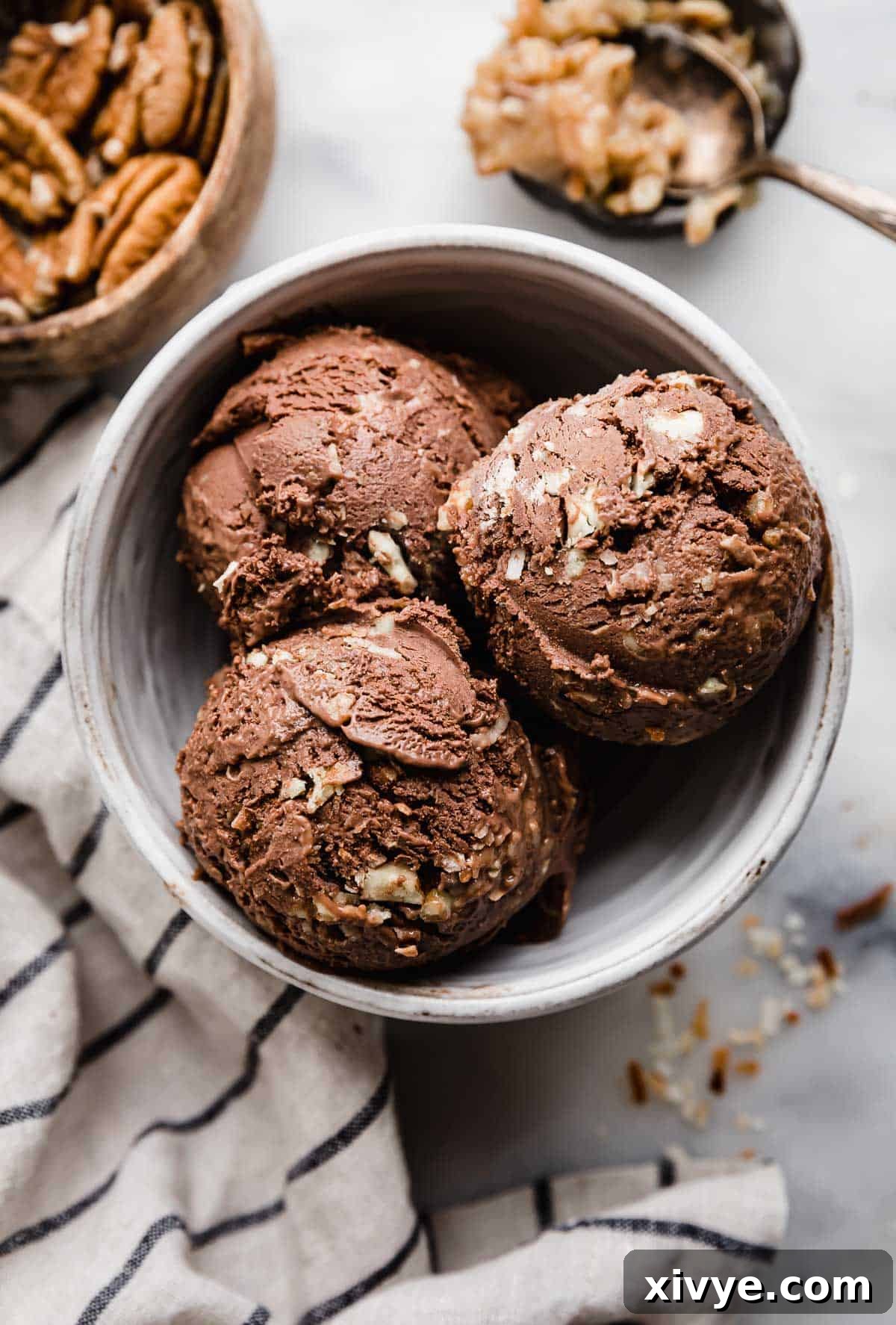
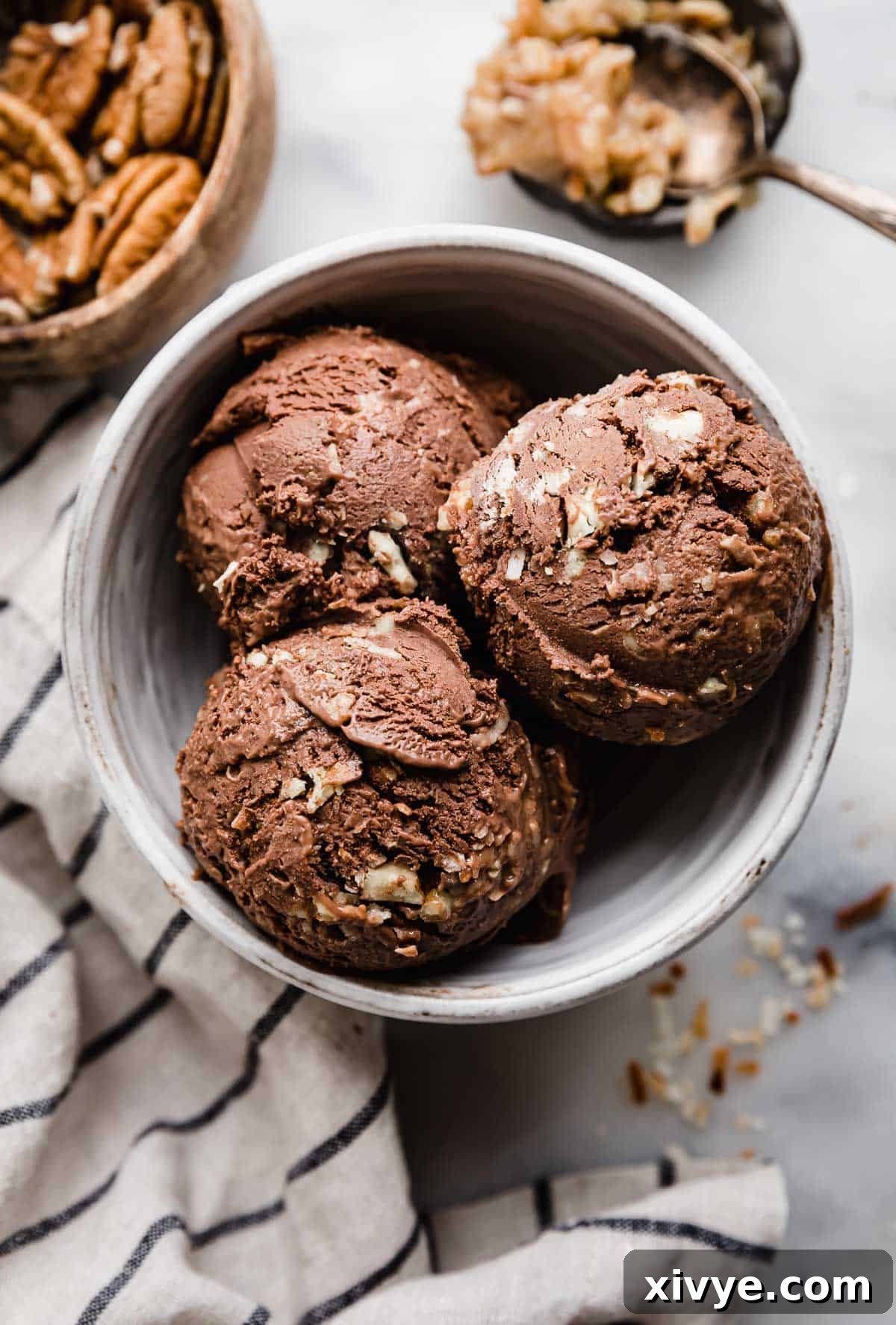
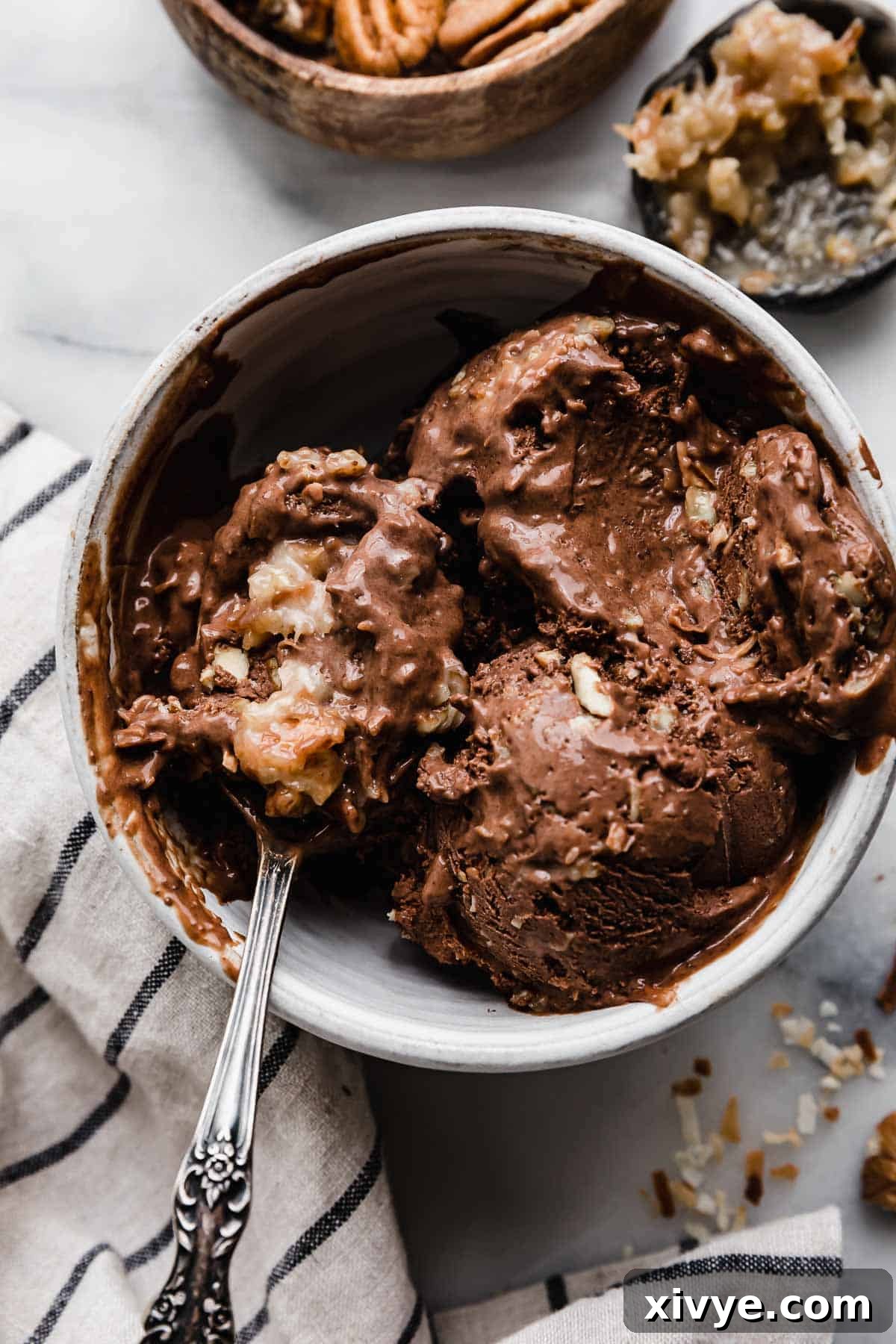
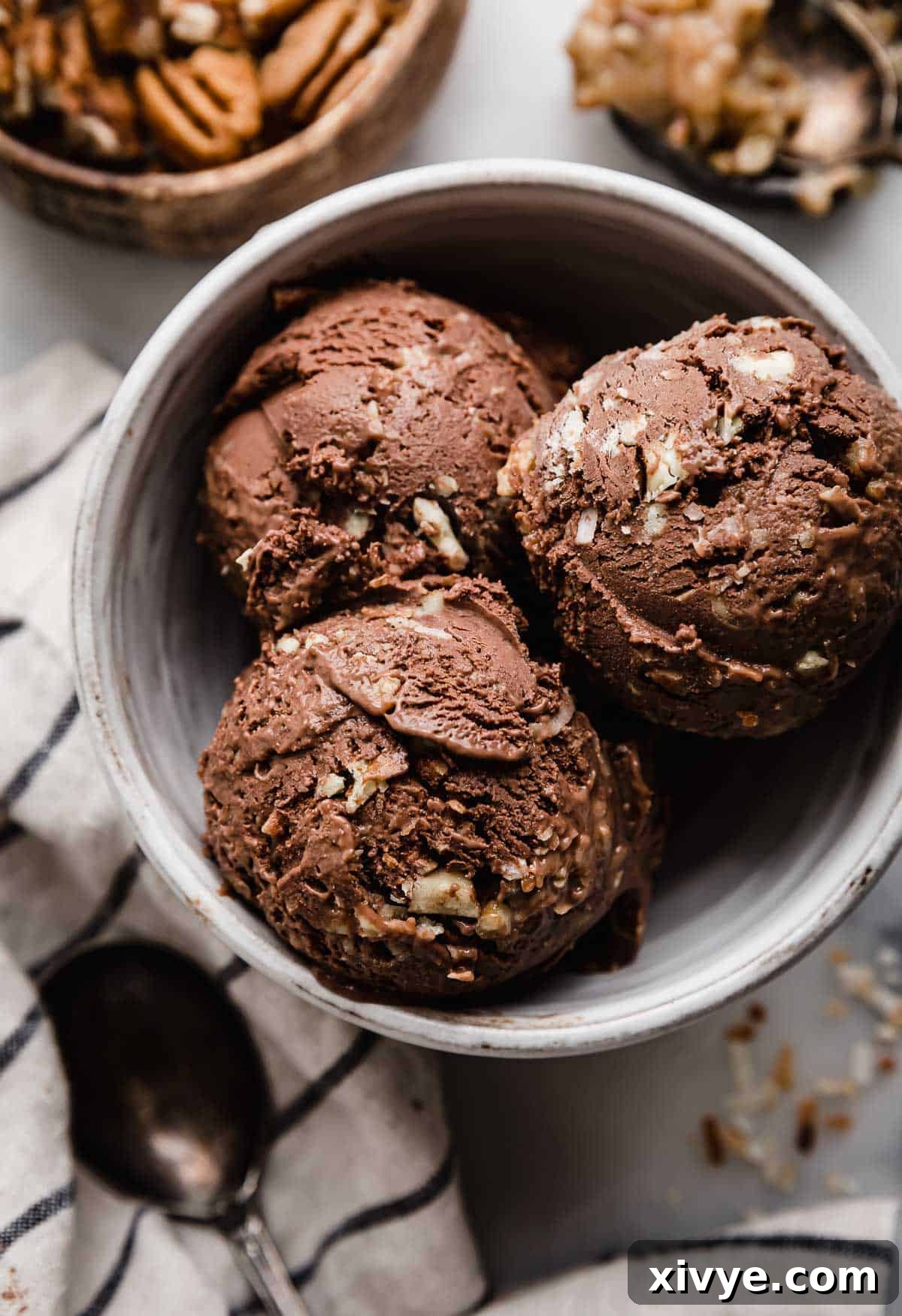
There’s an undeniable allure to German chocolate desserts, a rich, cocoa-infused tapestry woven with the sweet, nutty embrace of coconut-pecan frosting. For many, it’s a profound obsession, a culinary delight that spans beyond just cake. Think German chocolate layer cakes, luscious brownies, and perfectly portioned cupcakes. And now, prepare to add another masterpiece to that esteemed list: homemade German Chocolate Ice Cream. This isn’t just any ice cream; it’s a symphony of intensely creamy dark chocolate ice cream base, generously swirled with our decadent, made-from-scratch coconut-pecan frosting. It’s an irresistible combination that promises to be your new favorite frozen treat.
While this homemade German chocolate ice cream is utterly sublime on its own, its versatility opens up a world of delightful possibilities. Imagine transforming it into a spectacular German chocolate Ice Cream Cake Roll, perfect for a show-stopping dessert. Or, for a more portable indulgence, craft delightful German chocolate ice cream Cookie Sandwiches. Feeling ambitious? Layer it into a German chocolate ice cream pie, nestled within a crisp Graham Cracker or rich Oreo Crust. However you choose to enjoy it, this German Chocolate Ice Cream guarantees a sweet, memorable experience that celebrates the iconic flavors we all adore.
Why This Homemade German Chocolate Ice Cream Recipe Is a Must-Try
Crafting ice cream from scratch might seem daunting, but this German Chocolate Ice Cream recipe is designed for success, yielding results far superior to anything you’ll find in a store. Here’s why this recipe truly shines:
- The Ultimate Homemade Chocolate Ice Cream Base: At the heart of this recipe is an exceptionally smooth and deeply flavored dark chocolate ice cream. Because the overall composition is relatively simple, focusing on a spectacularly good chocolate base is paramount. We’ve perfected a custard that boasts an intense chocolate flavor, a luxurious creaminess, and a perfect balance of sweetness, ensuring every spoonful is pure bliss. It’s a base so good, you might find yourself making it on its own!
- Elevated Beyond Store-Bought Quality: Have you ever been disappointed by store-bought German chocolate ice cream, finding it lacking in the “good bits” – those crucial swirls of coconut and pecan? This recipe is your solution. We use a generous amount of homemade coconut-pecan frosting, ensuring an abundance of rich, textural swirls in every bite. This isn’t just an ice cream; it’s an experience that captures the authentic, indulgent essence of a classic German chocolate cake, without any of the compromises often found in commercial versions.
- Perfect Harmony of Textures and Flavors: The contrast between the cold, smooth, dark chocolate ice cream and the chewy, nutty, and sweet coconut-pecan frosting is simply magical. Each element is carefully balanced to complement the other, creating a complex yet harmonious flavor profile that is both comforting and exciting.
- Made with Real, Wholesome Ingredients: By making your ice cream at home, you have complete control over the ingredients. This recipe calls for high-quality dairy, real chocolate, and fresh nuts, free from artificial flavors or preservatives, ensuring a pure and authentic taste.
Key Ingredients for the Perfect German Chocolate Ice Cream
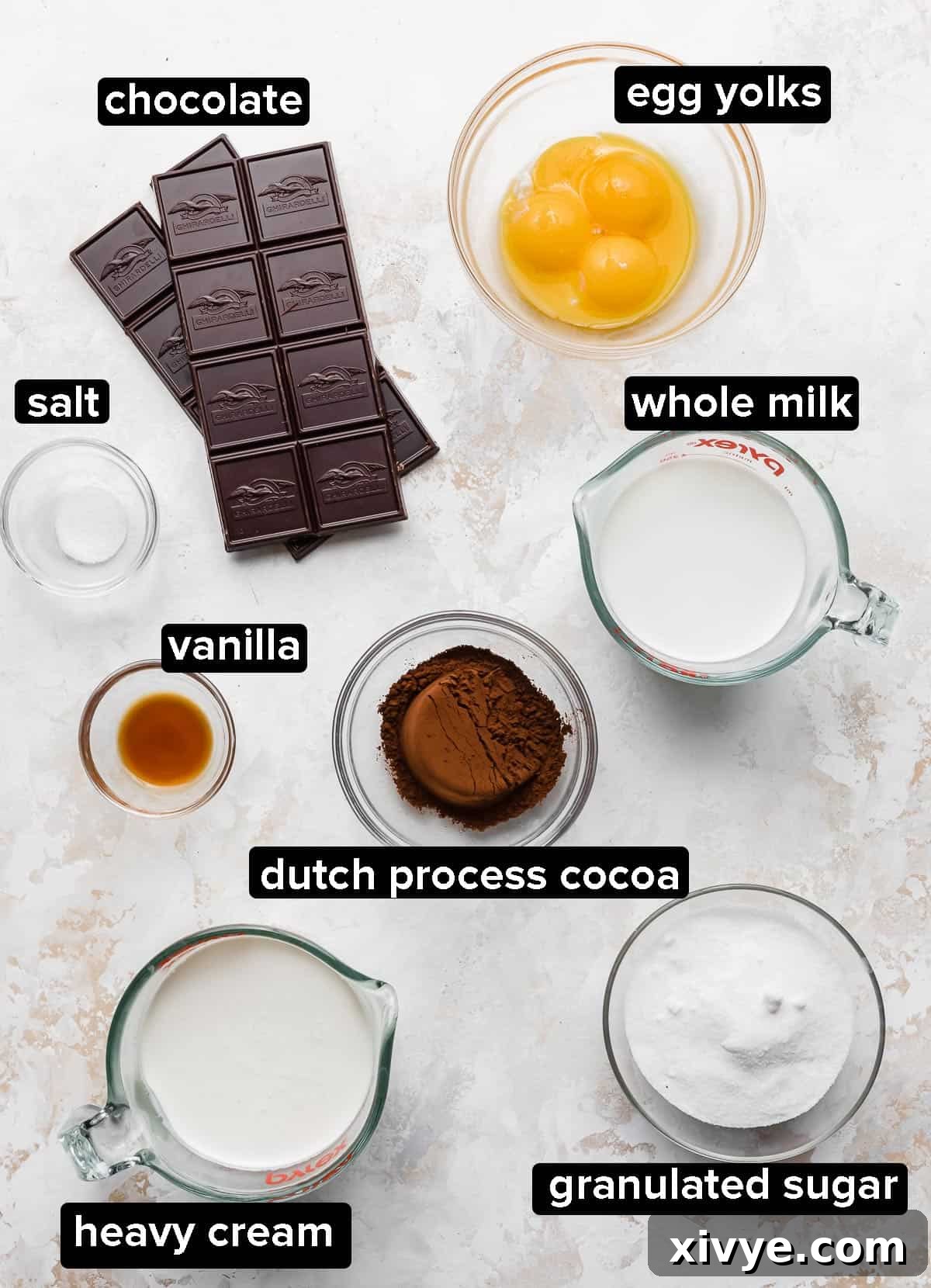
Every exceptional recipe begins with quality ingredients. Understanding the role each component plays is crucial for achieving the perfect texture and flavor in your homemade German Chocolate Ice Cream. Here’s a closer look at the stars of our show:
- Dutch Process Cocoa Powder: This isn’t just any cocoa powder; it’s the secret to our intensely rich, dark chocolate ice cream. Dutch process cocoa is treated with an alkali, which reduces its acidity compared to natural cocoa. This process yields a smoother, mellower, and significantly darker chocolate flavor, without any bitterness. For the most profound chocolate experience in your ice cream, Dutch process is highly recommended. To learn more about the differences, consult our Cocoa Powder Guide.
- Granulated Sugar: Beyond simply providing sweetness, sugar plays a vital scientific role in ice cream making. It significantly lowers the freezing point of the mixture, which is essential for achieving a creamy, scoopable consistency. Without enough sugar, ice cream would freeze into an unpleasantly hard, icy block. It’s also the sweetener of choice for our decadent coconut-pecan frosting.
- Whole Milk: When it comes to ice cream, fat content is king for unparalleled creaminess. This recipe absolutely calls for full-fat whole milk. The higher fat content contributes significantly to a luxurious mouthfeel and helps prevent ice crystal formation, resulting in a smoother, richer final product. Avoid substituting with lower-fat milk options.
- Heavy Cream: This is another non-negotiable for achieving that coveted creamy texture. Heavy cream, also known as whipping cream, provides the bulk of the essential fat that makes our ice cream so incredibly rich and smooth. It also contributes to the thick, luscious consistency of our coconut-pecan frosting. Do not attempt to substitute with half-and-half, as its lower fat content will compromise the final texture.
- Bittersweet Chocolate: To amplify the chocolate flavor and add depth, we incorporate melted bittersweet chocolate in addition to cocoa powder. This dual chocolate approach creates a complex, intense, and wonderfully balanced chocolate profile that is both robust and sophisticated. Finely chopping the chocolate ensures it melts smoothly and integrates seamlessly into the custard base.
- Egg Yolks: A foundational ingredient for both the ice cream custard and the coconut-pecan frosting, egg yolks serve multiple crucial purposes. In the ice cream base, they create a rich, silky custard that contributes to an incredibly smooth texture and body. In the frosting, egg yolks act as a natural thickener, giving the mixture its signature luscious consistency, while also adding richness and depth of flavor. Tempering the egg yolks carefully is key to avoiding scrambled eggs in your mixture.
Step-by-Step Guide to Crafting Your German Chocolate Ice Cream
Making homemade ice cream is a rewarding process that requires a bit of patience but delivers incredible results. Follow these detailed steps to create your luscious German Chocolate Ice Cream:
Make the Ice Cream Base
- Combine Dry Ingredients: In a large, heavy-bottomed saucepan, whisk together ¾ cup of granulated sugar, ⅓ cup of Dutch process cocoa powder, and ¼ teaspoon of salt. It’s crucial to whisk thoroughly at this stage to break up any cocoa powder clumps, ensuring a smooth base later on.
- Simmer with Milk and Cream: While continuously whisking your dry ingredients, slowly and steadily pour in 1 cup of whole milk and 2 cups of heavy cream. Place the saucepan over medium-low heat. Continue to stir constantly with a whisk to prevent scorching, especially at the bottom of the pan, and to help the sugar dissolve evenly. Heat the mixture until it reaches a gentle simmer, indicated by small bubbles forming around the edges of the saucepan. As soon as you see these bubbles, remove the pan from the heat immediately.
- Temper Egg Yolks: In a separate small bowl, gently beat 4 large egg yolks until smooth. To prevent the egg yolks from scrambling when introduced to the hot liquid, you must temper them. While stirring your beaten egg yolks vigorously, slowly pour about ½ cup of the hot milk and cream mixture into the eggs in a thin, steady stream. Continue stirring constantly. This gradual addition raises the temperature of the egg yolks without cooking them. Once the egg yolk mixture is warmed, slowly drizzle it back into the saucepan with the remaining hot liquid, stirring constantly to fully incorporate it.
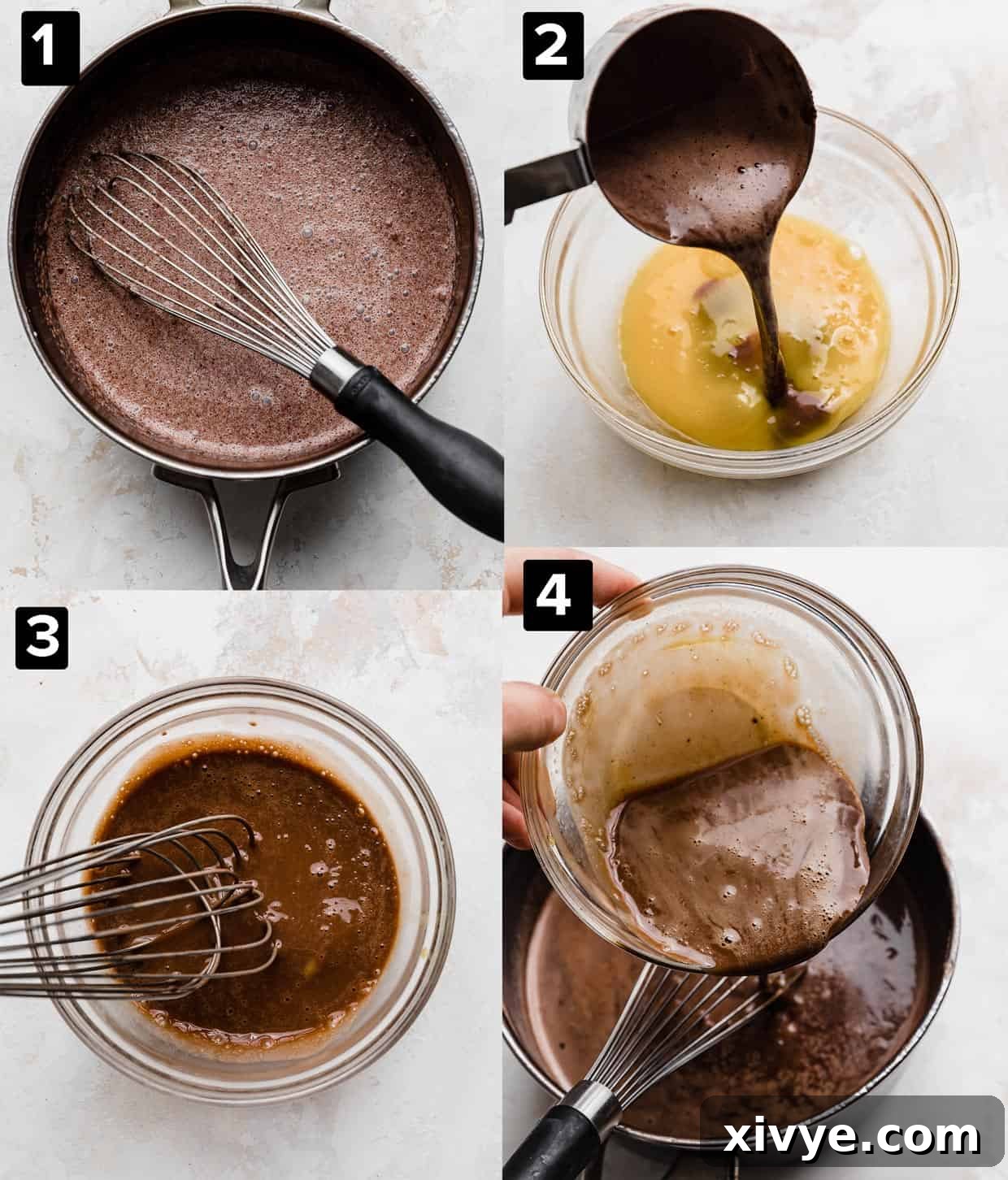
- Add Chopped Chocolate: Add 8 ounces of finely chopped bittersweet or semi-sweet chocolate to the hot mixture in the saucepan. Stir gently until the chocolate is completely melted and smoothly incorporated, creating a rich, uniform chocolate custard.
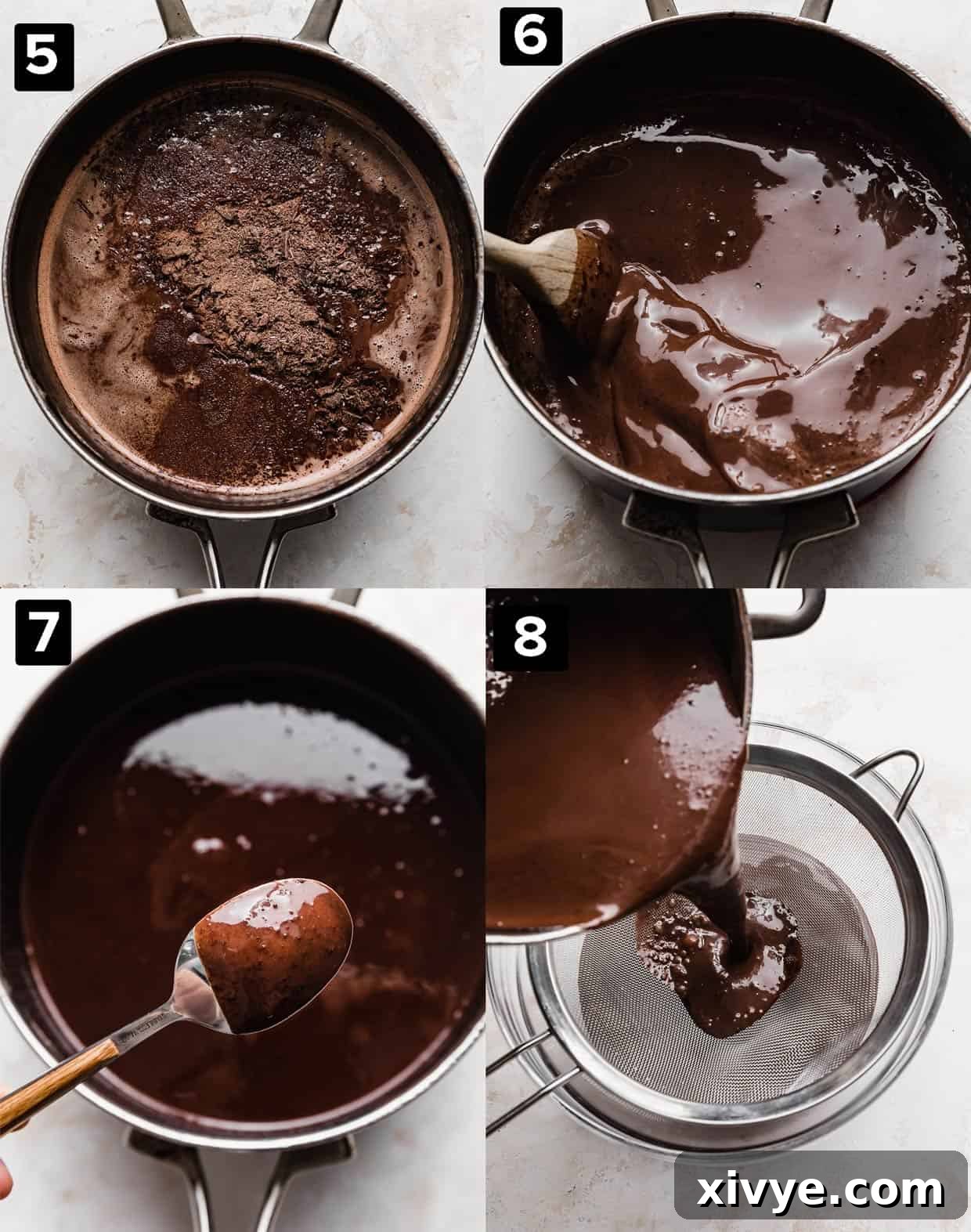
- Thicken Custard: Return the saucepan to the stove over low heat. Continue to stir constantly, cooking the custard until it thickens sufficiently to coat the back of a spoon. This process typically takes about 5-7 minutes. If you have an instant-read thermometer, the mixture should reach 170°F (77°C). It is extremely important NOT to let the custard boil, as this can cause the eggs to curdle. Once thickened, remove from heat and stir in 1 teaspoon of vanilla extract for an extra layer of flavor.
- Sieve and Chill Custard: For the silkiest texture possible, immediately pour the warm chocolate mixture through a fine mesh sieve into a large, clean mixing bowl. This removes any potential cooked egg bits or chocolate lumps. To rapidly cool the mixture, place this bowl over a larger bowl filled with ice water (an ice bath). Stir the chocolate mixture frequently until it reaches room temperature. Once cooled, cover the bowl tightly with plastic wrap, ensuring the wrap touches the surface of the custard to prevent a skin from forming. Refrigerate for a minimum of 4 hours, and ideally up to 24 hours. Proper chilling is crucial for achieving optimal creaminess during churning.
Make the Coconut Pecan Frosting
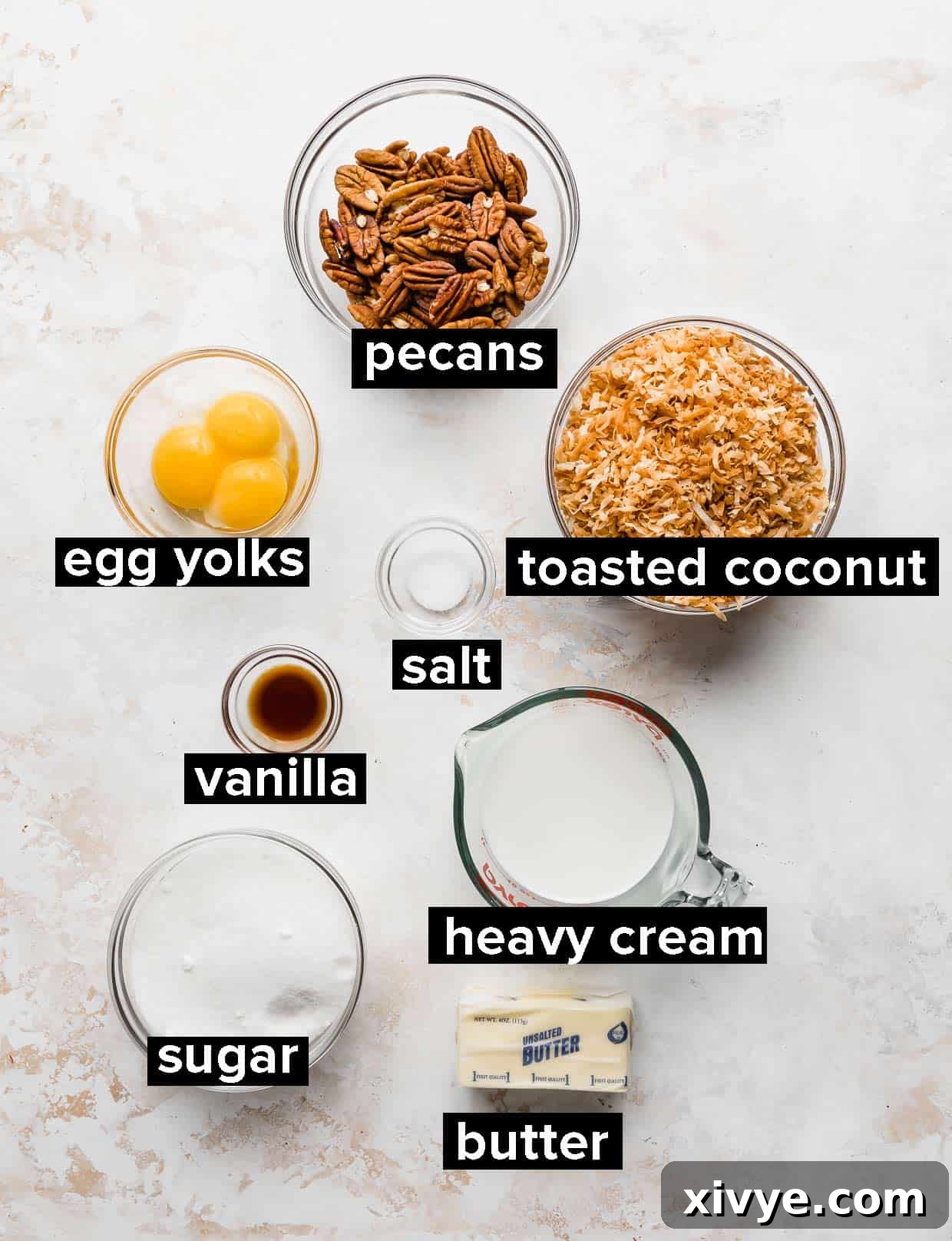
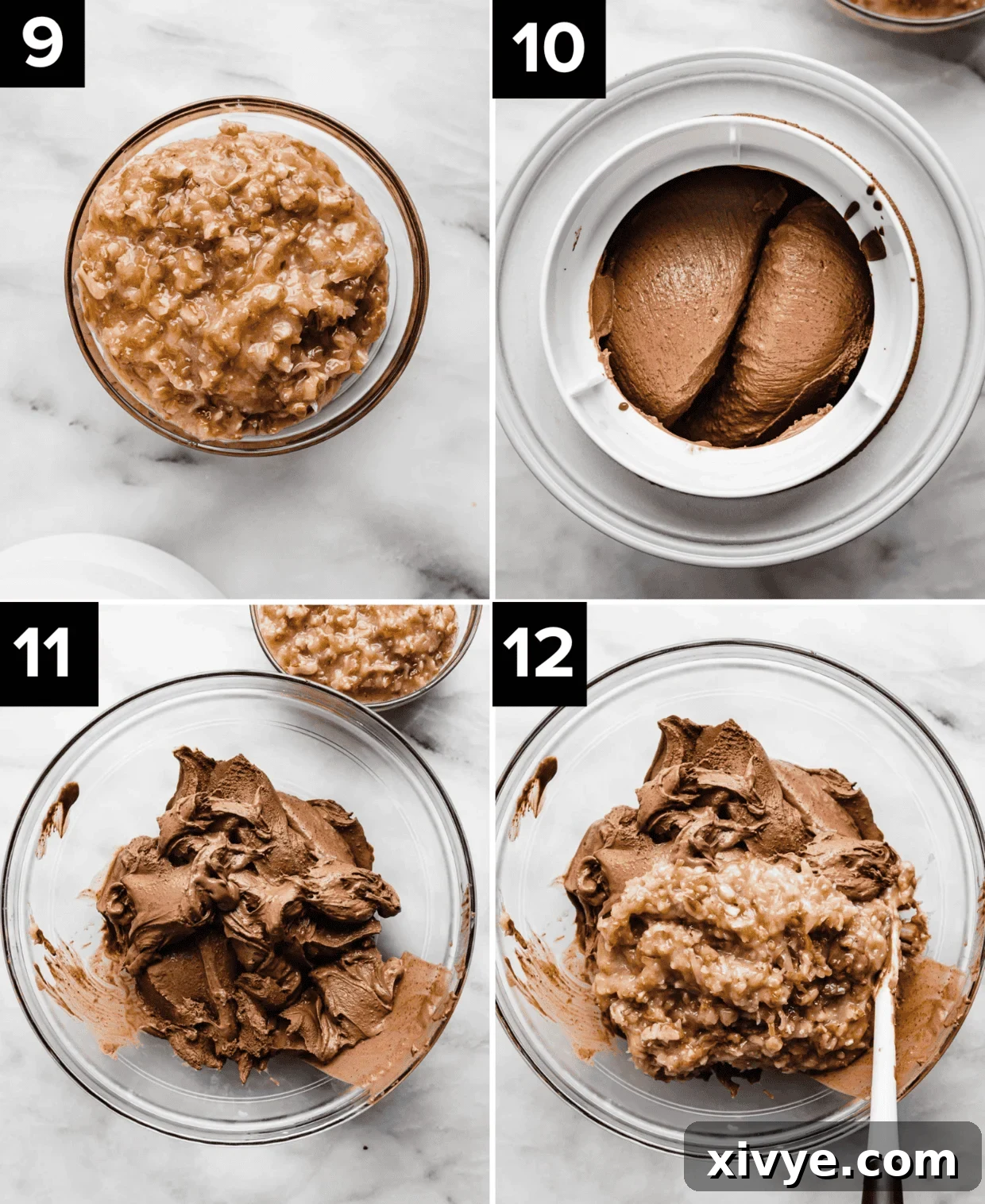
- Prepare Ingredients: Before you start cooking, ensure your coconut and pecans are perfectly prepared. Toast 1 cup of pecans until fragrant and lightly browned, then finely chop them. Separately, toast 1½ cups of sweetened shredded coconut until golden. Toasting enhances their flavor and aroma significantly. For detailed guidance on toasting coconut, refer to our How to Toast Coconut guide.
- Cook Cream and Eggs: In a medium saucepan, whisk together 1 cup of heavy cream, 1 cup of granulated sugar, 3 large egg yolks, and ½ teaspoon of salt until well combined. Place the saucepan over medium heat and cook, stirring occasionally. Bring the mixture to a low simmer, then continue to cook, stirring, until it thickens to a custard-like consistency. This usually takes several minutes.
- Add Remaining Ingredients: Once the cream and egg mixture has thickened on the stovetop, remove it from the heat. Immediately stir in ½ cup of cubed unsalted butter until it’s completely melted and incorporated. Add 1 teaspoon of vanilla extract, the 1 cup of toasted and finely chopped pecan pieces, and the 1½ cups of toasted shredded coconut flakes. Mix everything thoroughly. Set the frosting aside and allow it to cool completely to room temperature before swirling into the ice cream.
Assemble and Freeze
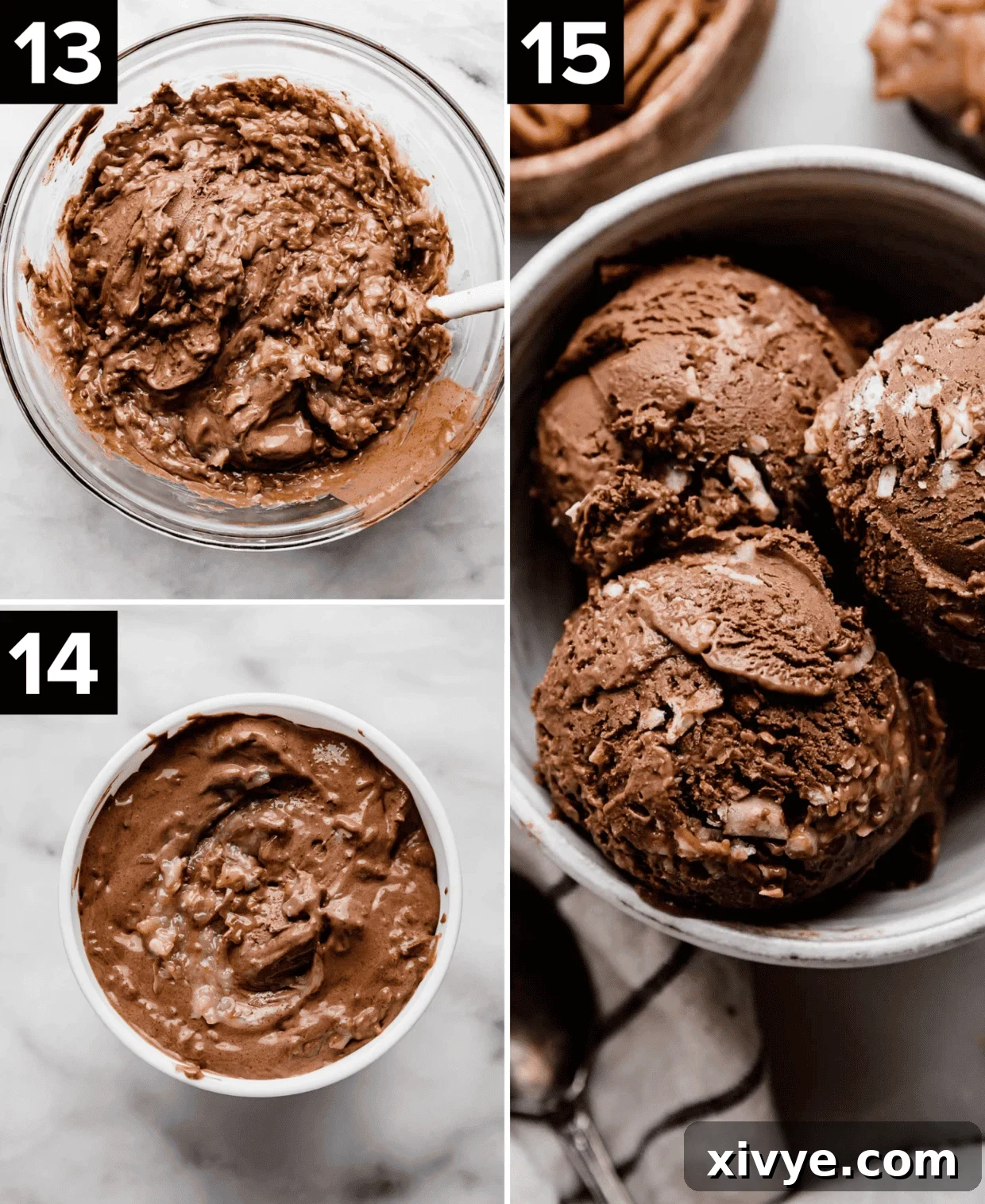
- Churn Ice Cream Base: Once your chocolate custard has thoroughly chilled (remember, this is critical for creaminess!), pour it into your ice cream maker. Churn the mixture according to your manufacturer’s specific instructions. Churning times vary depending on the model, but generally, it takes about 20-30 minutes for the ice cream to reach a soft-serve consistency.
- Swirl in Frosting: After the ice cream has finished churning and has the consistency of soft-serve, it’s time to incorporate the star swirl. Using a large spoon or spatula, gently fold in about 2 cups of the cooled coconut-pecan frosting. Be careful not to overmix if you want to achieve beautiful, distinct swirls of frosting rather than fully incorporating it. You will likely have some frosting leftover, which is perfect for topping individual servings later. Alternatively, for more defined layers, you can add alternating layers of churned ice cream and frosting into your freezer-safe container.
- Freeze and Enjoy: Transfer your glorious German chocolate ice cream to a high-quality, freezer-safe airtight container (we highly recommend these specific containers for optimal storage). Allow the ice cream to firm up in the freezer for an additional 2-4 hours. This “ripening” period allows the flavors to meld and the texture to solidify to a perfect scoopable consistency. Serve as is, or for an extra treat, top with the leftover coconut-pecan frosting, a drizzle of Hot Fudge Sauce, or a chocolate Magic Shell. The possibilities for indulgence are endless!
Expert Tips for Your Best German Chocolate Ice Cream
Achieving truly exceptional homemade ice cream involves more than just following steps; it’s about understanding the nuances. Here are some expert tips to elevate your German Chocolate Ice Cream:
- Embrace Homemade Frosting: While it might be tempting to use store-bought frosting for convenience, resist the urge! The homemade coconut-pecan frosting in this recipe is truly worth the extra effort. Its fresh, rich flavors and perfect texture are integral to the authentic German chocolate experience and cannot be replicated by commercial alternatives. It’s the difference between good and absolutely unforgettable.
- Customizing Your German Chocolate Experience: Want to take your ice cream even further? If you’re envisioning a German chocolate cake ice cream, consider baking a small batch of my Small German Chocolate Cake (just the cake, not the frosting). Once cooled, gently fold small pieces of the cake into your churned ice cream along with the frosting. For those who love the brownie chunks found in some commercial German chocolate ice creams (like Baskin-Robbins), adding pieces of my German Chocolate Brownies would be an incredible addition.
- Patience is a Virtue: Homemade ice cream, especially a custard-based one like this, is a process that cannot be rushed. Both the heating of the custard and the subsequent chilling are crucial steps that impact the final texture. Heating slowly prevents scorching and ensures proper thickening, while chilling completely allows the flavors to meld and the fat molecules to properly solidify, leading to a much creamier, less icy result during churning. Plan ahead and give your custard ample time to chill in the refrigerator, ideally overnight.
- Choose the Right Storage Container: The container you use for freezing your ice cream plays a significant role in its quality and longevity. While plastic Tupperware or metal loaf pans can work, specialized ice cream containers are often best. I personally use and highly recommend these containers, as they are designed to minimize air exposure and ice crystal formation. Look for containers that are airtight and have a shallow, wide shape to promote faster, more even freezing.
- Know Your Ice Cream Maker: Every ice cream maker is different, so always consult your manufacturer’s instructions. Many models, especially those with freezer bowls, require the bowl to be frozen solid for 12-24 hours before use. This is a step you’ll want to prepare for well in advance, perhaps freezing the bowl when you start chilling your custard. An adequately frozen bowl is essential for efficient churning and optimal ice cream consistency.
- The Power of Extended Chilling: Anecdotal evidence suggests that chilling your ice cream custard for longer periods (up to 24 hours) in the refrigerator can lead to an even creamier, more luxurious ice cream. The extended chill time allows the fat to fully firm up and the ingredients to fully hydrate, resulting in a smoother churn. If you experiment with this, I’d love to hear about your results in the comments below!
- Tailor Your Nut Texture: I appreciate the texture of finely chopped nuts in my coconut-pecan frosting, which tends to mix in well. However, if you prefer larger, more prominent pieces of pecans in your swirls, you can try sieving your chopped nuts to remove the smaller bits before adding them to the frosting. This will ensure you only get those satisfyingly chunky pecan surprises.
- Preventing Ice Crystals: For the creamiest, freshest ice cream, combatting ice crystals is key. Beyond using a good container and chilling your base properly, another effective trick is to place a layer of plastic wrap directly on the surface of the ice cream before putting on the lid. This creates an extra barrier against air and moisture, which are primary causes of freezer burn and ice crystal formation.
Make Ahead, Storing, and Freezing Best Practices
Homemade ice cream is a perishable delight, but with proper handling, you can enjoy its fresh taste for an extended period:
- Make Ahead: One of the beauties of ice cream is that it’s designed to be made ahead! You can prepare this German Chocolate Ice Cream several days in advance of an event. For the absolute best flavor and texture, however, homemade ice cream is at its peak within the first week after churning. While it remains delicious for longer, planning to serve it within this optimal window will ensure the most delightful experience.
- Storing: To maintain its creamy texture and rich flavor, always store your homemade German chocolate ice cream in an airtight, freezer-safe container. Unlike commercial ice creams, which often contain stabilizers and emulsifiers, homemade versions are more susceptible to freezer burn and changes in texture over time. When stored correctly, it will keep well for 2-4 months. After about two months, while still safe to eat, you might notice a slight decline in texture and freshness.
- Freezing: The right container makes a significant difference in preventing ice crystals and maintaining that delectable creamy consistency. As mentioned, these specific ice cream containers are excellent for keeping your frozen treats in top condition. For an added layer of protection against freezer burn and ice crystals, press a piece of plastic wrap directly onto the surface of the ice cream before sealing the container with its lid. This minimizes air exposure, which is the primary culprit behind icy textures.
German Chocolate Ice Cream: Your Questions Answered
German chocolate ice cream is a delightful frozen dessert inspired by the flavors of the classic German chocolate cake. Our interpretation features a rich, dark chocolate ice cream base generously swirled with the iconic coconut-pecan frosting that traditionally adorns the cake. Most German chocolate ice creams will highlight these core coconut and pecan elements, though some commercial brands, such as Tillamook or Baskin-Robbins, might also incorporate chocolate cake pieces or brownie chunks for added texture.
Yes, absolutely! The defining feature of German chocolate cake, and by extension German chocolate ice cream, is its unique coconut-pecan frosting. Therefore, this ice cream recipe, like the traditional cake, contains pecans (a type of nut) within its luscious frosting swirl.
Despite its name, German chocolate cake, and thus German chocolate ice cream, is not actually German in origin. The name is a tribute to an American baker named Samuel German. In 1852, Samuel German developed a specific type of dark baking chocolate for Baker’s Chocolate Company. This chocolate was then named “Baker’s German’s Sweet Chocolate” in his honor. It wasn’t until the 1950s that a recipe featuring this particular chocolate, known as German Chocolate Cake, gained widespread popularity in the United States. So, it’s an American dessert named after an American baker!
When stored correctly in an airtight, freezer-safe container, homemade ice cream remains good and enjoyable for about 2-4 months. Beyond this timeframe, it doesn’t necessarily “spoil” in the sense of becoming unsafe to eat, but its quality, particularly its texture and fresh flavor, will degrade significantly. It can become icy, develop freezer burn, and lose its optimal taste.
For the best results, homemade ice cream should be stored in an airtight, freezer-safe container. We highly recommend these specific containers, designed to minimize air exposure and prevent ice crystal formation. If you desire ice cream that is easier to scoop directly from the freezer, a more shallow and wider container can be beneficial. Another excellent tip for preventing the formation of ice crystals on the surface is to place a layer of plastic wrap directly onto the ice cream’s surface before sealing it with the container lid.
Discover More Delicious Ice Cream Maker Recipes
If you’ve fallen in love with the magic of homemade ice cream, you’re in for a treat! Your ice cream maker is a gateway to endless frozen delights. Explore these other fantastic recipes to satisfy every craving and expand your repertoire:
- Classic Homemade Vanilla Ice Cream
- Rich Butterscotch Ice Cream
- Refreshing Raspberry Ice Cream
- Decadent Chocolate Chip Cookie Dough Ice Cream
- Fun Cosmic Brownie Ice Cream
- Celebratory Birthday Cake Ice Cream
Did you try this incredible German Chocolate Ice Cream recipe? We’d absolutely love to hear about your experience! Please leave a star rating and a review on this post, or scroll to the bottom of the page to share your feedback. Your thoughts help us and other home cooks!
Stay connected and be the first to know about our latest recipes and culinary adventures by following us on Instagram, TikTok, YouTube, Facebook, and Pinterest.
German Chocolate Ice Cream
By Whitney Wright
Rich chocolate ice cream is swirled with homemade coconut pecan frosting to make the most amazing German Chocolate Ice Cream!
Prep Time: 1 hr
Cook Time: 35 mins
Chill Time: 6 hrs
Total Time: 7 hrs 35 mins
Servings: 1.5 liters
Average Rating: 5 stars from 1 vote
Ingredients
Chocolate Ice Cream Base
- ¾ cup granulated sugar
- ⅓ cup Dutch process cocoa powder – sifted
- ¼ teaspoon salt
- 1 cup whole milk
- 2 cups heavy cream
- 8 oz bittersweet chocolate – or semi-sweet chocolate, finely chopped
- 1 teaspoon vanilla extract
- 4 large egg yolks – lightly beaten (I just use a fork)
Coconut Pecan Frosting
- 1 cup heavy cream
- 1 cup granulated sugar
- 3 large egg yolks
- ½ teaspoon salt
- ½ cup unsalted butter – cubed
- 1 teaspoon vanilla extract
- 1 cup pecans – toasted and finely chopped
- 1 ½ cups sweetened shredded coconut – toasted
Equipment
- Ice cream maker
Instructions
Make the Ice Cream Base
- In a saucepan combine the sugar, salt, and cocoa powder. Whisk thoroughly so that there are no clumps of cocoa powder. While whisking, slowly add the milk and heavy cream. Turn the heat to medium-low. Stir constantly and bring to a simmer. (Just when bubbles form on the sides of the pan.) Remove from heat.
- Place the beaten egg yolks in a small bowl. Gradually stir in ½ cup of the hot liquid to the egg yolks. Slowly drizzle the egg yolks back into the saucepan, stirring constantly. Add the chopped chocolate and stir to combine.
- Place saucepan over low heat. Heat until thickened (it should coat the back of a spoon), about 5-7 minutes but DO NOT BOIL. If you have an instant read thermometer it should read 170°F. Remove from heat. Stir in the vanilla extract.
- Pour the chocolate mixture through a sieve into a large bowl. Place the large bowl full of the chocolate mixture on top of an ice bath. Stir often, until the chocolate mixture reaches room temperature. Once it reaches room temperature, cover, and chill in the refrigerator for 4 hours or up to 1 day.
While the mixture is cooling, make the coconut pecan frosting
- In a medium saucepan whisk the cream, sugar, egg yolks, and salt. Set over medium heat and cook, stirring occasionally.
- Bring to a low simmer and cook until slightly thickened.
- Remove from the heat and add the butter, vanilla, toasted coconut and pecans. Mix to combine. Set aside to cool to room temperature.
- Once the chocolate ice cream base mixture is fully chilled, remove it from the fridge. Pour into an ice cream maker and churn according to manufacturer’s directions. Once finished churning, use a large spoon or spatula to fold the coconut pecan frosting into the ice cream. You can also layer ice cream and frosting in your container. Transfer the mixture to an airtight freezer-safe container and freeze for 2-4 hours to help firm up again. Enjoy!
Notes
The full batch of coconut pecan frosting makes roughly 2 ⅓ cups of frosting or so. You can definitely fold all of the frosting into the ice cream. I opted to do only 2 cups worth, and then used the remaining frosting to spoon overtop.
This ice cream will be at its best flavor and texture for 1 month but will last 2-4 months in the freezer.
Nutrition Information (per serving)
- Calories: 5254 kcal (263% Daily Value)
- Carbohydrates: 399g (133% Daily Value)
- Protein: 54g (108% Daily Value)
- Fat: 400g (615% Daily Value)
- Saturated Fat: 226g (1130% Daily Value)
- Polyunsaturated Fat: 30g
- Monounsaturated Fat: 116g
- Trans Fat: 3g
- Cholesterol: 1586mg (529% Daily Value)
- Sodium: 1657mg (69% Daily Value)
- Potassium: 2535mg (72% Daily Value)
- Fiber: 30g (120% Daily Value)
- Sugar: 353g (392% Daily Value)
- Vitamin A: 10408 IU (208% Daily Value)
- Vitamin C: 4mg (5% Daily Value)
- Calcium: 816mg (82% Daily Value)
- Iron: 18mg (100% Daily Value)
Course: Dessert
Cuisine: German (American-invented)
Did you make this recipe? Please leave a star rating and review on the blog post letting me know how you liked this recipe! Take a picture and tag @saltandbaker on TikTok, Instagram, and Facebook so I can see what you’re making!