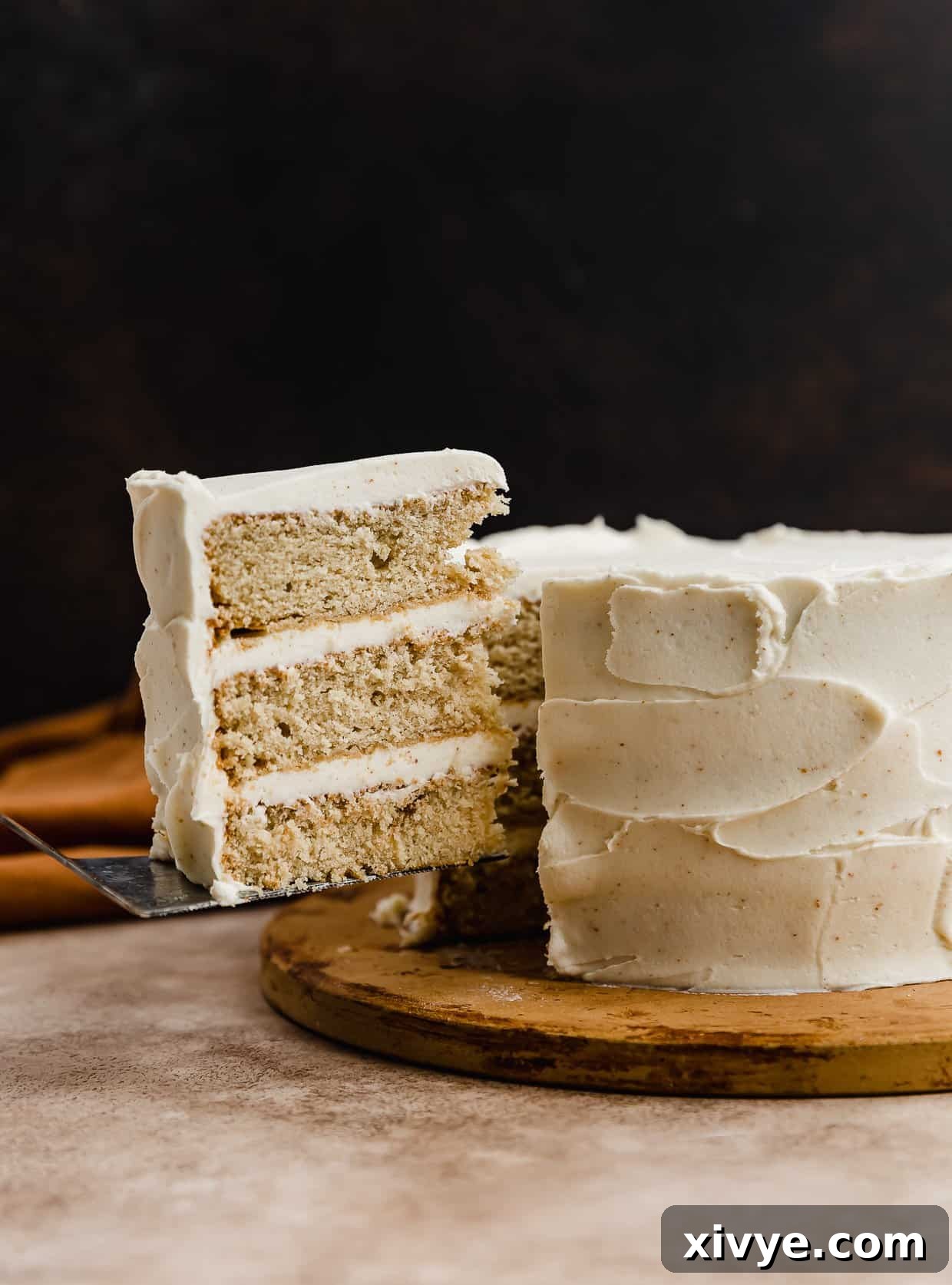
Indulge in the Irresistible: Mastering the Art of Brown Butter Cake with Fluffy Brown Butter Buttercream
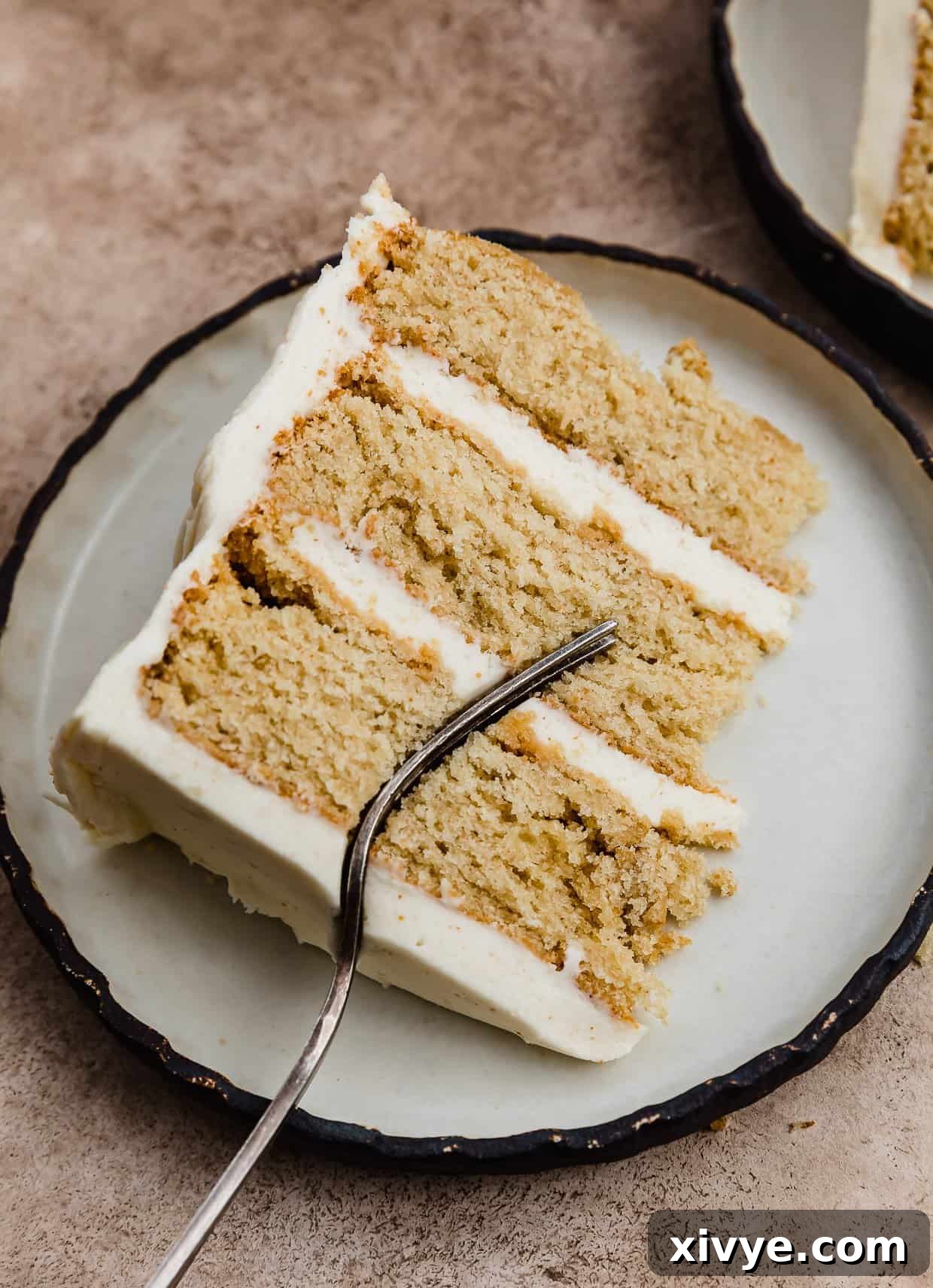
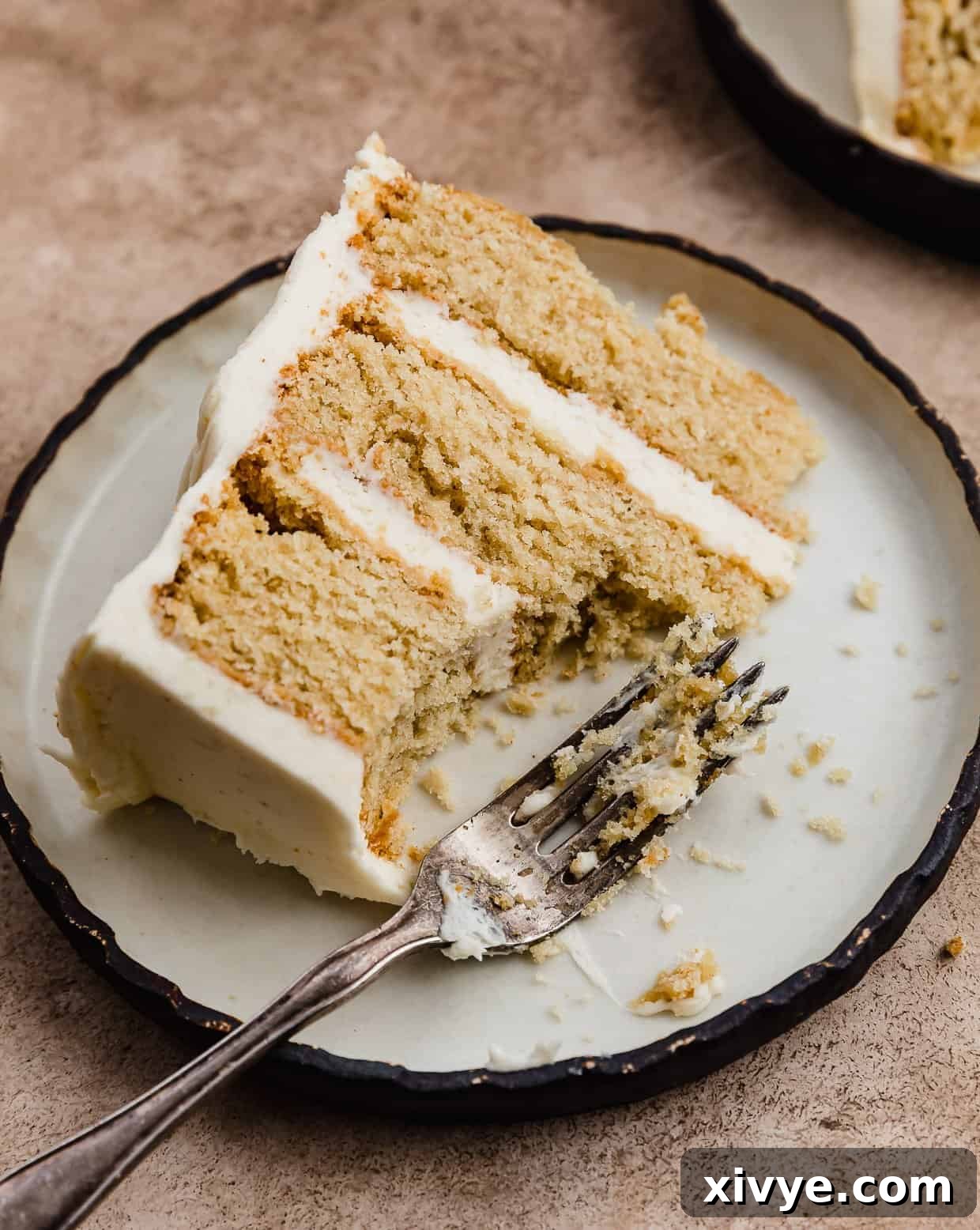
Prepare to elevate your baking game with this truly exceptional Brown Butter Cake. This isn’t just any cake; it’s a culinary masterpiece crafted with the rich, complex flavors of browned butter and the deep, mellow sweetness of brown sugar. The result is an incredibly moist and tender cake with a profoundly nutty, caramel-like essence that dances on your palate. Crowned with a luxurious Brown Butter Buttercream, this simple yet sophisticated dessert transforms from an everyday treat into an extraordinary experience, all thanks to the magical touch of browned butter!
Browned butter, often referred to as ‘liquid gold’ by bakers, is the secret weapon that dramatically enhances the flavor profile of any dessert. Its unique nutty, toasted aroma and rich depth make everything taste exponentially better. This transformative ingredient is not limited to cakes; it brings unparalleled richness to a variety of treats. If you’ve enjoyed the profound flavors in our Butterscotch Cake, the delightful chewiness of our Cookie Dough Cake, or the classic comfort of our Brown Butter Chocolate Chip Cookies, then you already know the irresistible charm of browned butter. It’s an ingredient that truly sets a dessert apart, creating a memorable taste that keeps you coming back for more.
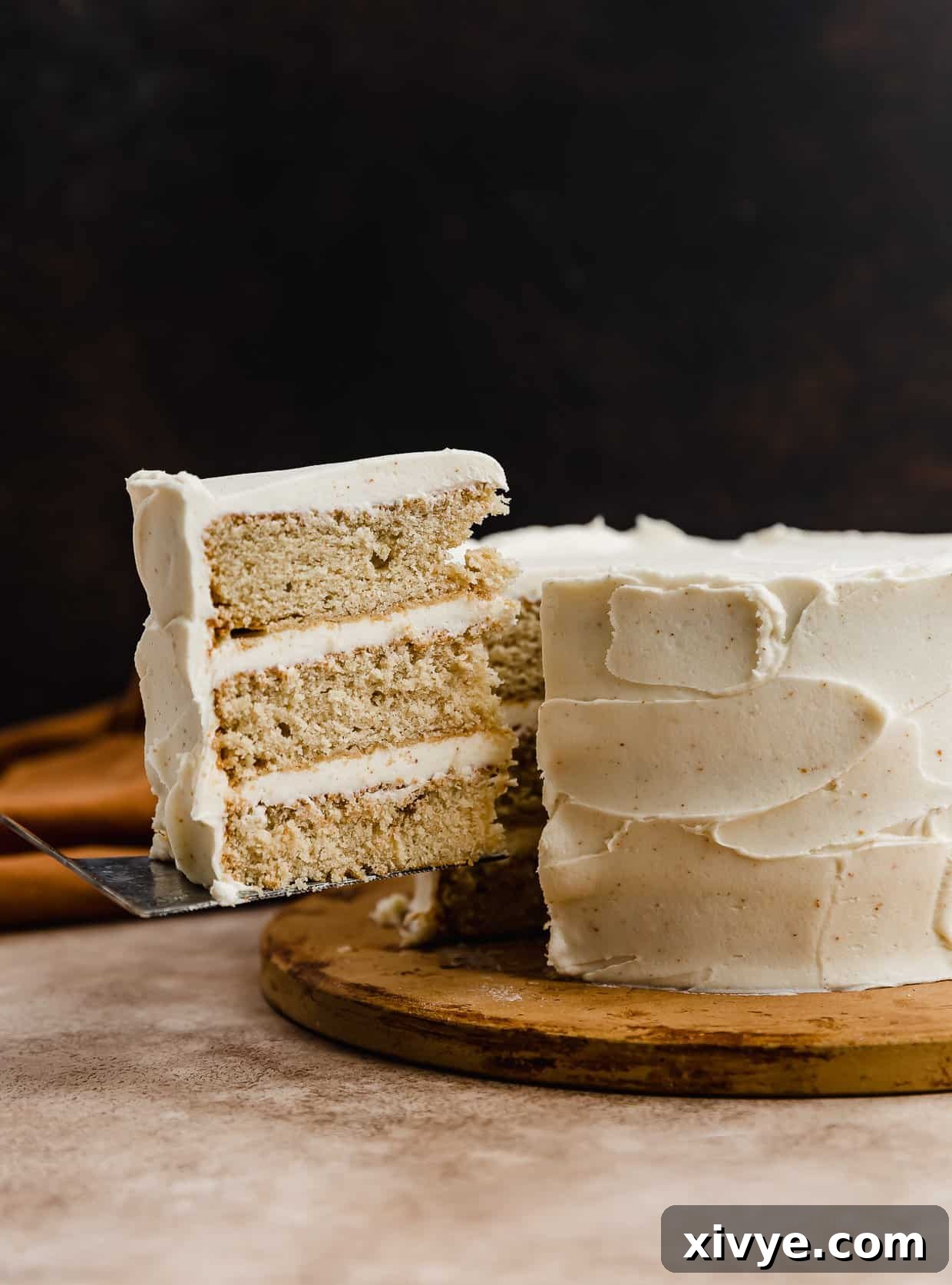
Why This Brown Butter Cake Recipe is a Must-Try
This Brown Butter Cake recipe is more than just a list of ingredients and steps; it’s a carefully balanced formula designed to deliver perfection every time. Here’s a deeper look into why this recipe consistently yields outstanding results and will quickly become a cherished favorite in your baking repertoire:
- Unrivaled Tenderness and Lightness: One bite of this cake reveals its exquisite texture: supremely soft, wonderfully light, and delicately fluffy. This tender crumb is achieved through a thoughtful combination of ingredients. Cake flour, with its lower protein content and finer milling, creates an incredibly delicate structure. Buttermilk contributes to an exceptionally soft texture and adds a subtle tang that complements the rich butter flavor. Furthermore, a touch of vegetable oil ensures unparalleled moistness, preventing any dryness and keeping the cake wonderfully fresh.
- A Symphony of Brown Butter Flavor: This recipe isn’t shy about showcasing its star ingredient. The rich, toasted notes of brown butter are infused not only into the cake batter itself but also into the luscious buttercream frosting. This double dose of browned butter creates an extraordinary depth of flavor that is truly heavenly. You’ll experience layers of nutty, toasted, and intensely caramel-like notes that are both sophisticated and comforting, making every forkful a moment to savor. The warmth and complexity are unlike any traditional vanilla or yellow cake.
- Surprisingly Simple to Master: Despite its impressive flavor and elegant appearance, this brown butter cake recipe (also known by its French name, beurre noisette cake) is remarkably straightforward to prepare. We’ve streamlined the process to ensure that even home bakers with moderate experience can achieve professional-quality results. The clear, step-by-step instructions guide you through each stage, promising a delicious outcome without unnecessary fuss. You’ll be amazed at how easily you can create such an amazing flavor and texture!
- Perfectly Balanced Sweetness: The use of dark brown sugar alongside granulated sugar is a deliberate choice. The dark brown sugar enhances the caramel notes naturally developed in the browned butter, creating a harmonious and well-rounded sweetness that avoids being cloying. This balance allows the nuanced flavors of the brown butter to truly shine.
- Visual Appeal: A three-layer cake always makes a statement. This recipe guides you to create beautifully uniform layers, resulting in a cake that is as stunning to look at as it is delicious to eat. It’s perfect for celebrations, gatherings, or simply making an ordinary day feel special.
Key Ingredients for Your Brown Butter Cake
Understanding the role of each ingredient is crucial for baking success. Here’s a closer look at the components that make this Brown Butter Cake truly outstanding:
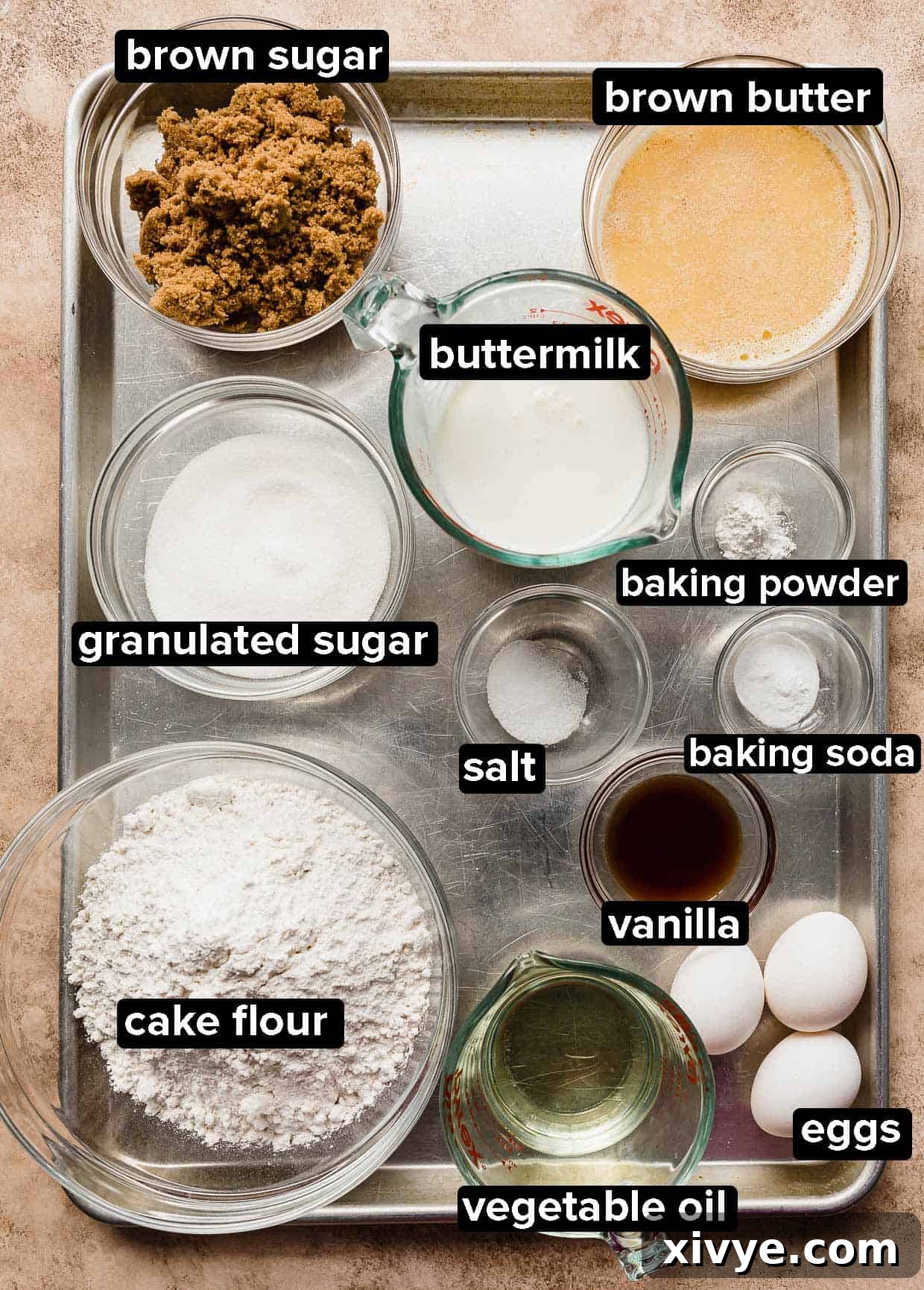
- Cake Flour: This is a non-negotiable ingredient for achieving the cake’s signature tender and delicate crumb. Cake flour has a significantly lower protein content (around 7-9%) compared to all-purpose flour (10-12%), and it’s also more finely milled. This results in less gluten development, which is exactly what you want for a soft, airy cake rather than a chewy one. Do not substitute with all-purpose flour for the best results.
- Dark Brown Sugar: While granulated sugar provides sweetness, dark brown sugar is essential for depth. Its molasses content introduces rich, deep, and complex caramel notes that perfectly complement and enhance the nutty, toasted flavors of the browned butter. The combination creates a more profound and satisfying sweetness in the cake.
- Buttermilk: Room temperature buttermilk is key for both moisture and texture. Its acidity reacts with the baking soda, contributing to the cake’s light and fluffy rise. More importantly, it tenderizes the gluten in the flour, ensuring an incredibly soft, moist, and delicate crumb. Using it at room temperature ensures it emulsifies smoothly with the other wet ingredients.
- Brown Butter: The star of the show! For this recipe, you’ll need approximately 20 tablespoons (or 1 ¼ cups) of unsalted butter to yield the required 8 oz of browned butter. The browning process concentrates the butterfat and toasts the milk solids, creating a complex flavor profile that’s nutty, toasted, and rich with caramel undertones. Ensure it’s cooled to room temperature but still solid before incorporating into the batter. For an in-depth guide, consult my post on How to Brown Butter, which offers additional tips and answers frequently asked questions.
- Vegetable Oil: While brown butter provides incredible flavor and some fat content, the addition of vegetable oil plays a crucial role in maintaining the cake’s moistness over time. Oil cakes are renowned for their exceptional moisture, and this recipe cleverly combines the best of both worlds: the profound flavor from browned butter and the enduring moist texture provided by the vegetable oil. It ensures your cake remains wonderfully soft for days.
- Unsalted Butter: This is separate from the butter you’ll brown for the cake. This regular, softened unsalted butter is the base for our luxurious brown butter buttercream frosting. Using unsalted butter allows you to control the overall salt content of your frosting.
- Large Eggs & Vanilla Extract: Ensure these are at room temperature. Eggs provide structure and richness, while vanilla extract complements the brown butter flavor, adding a classic warmth to the cake.
Crafting Your Culinary Masterpiece: Step-by-Step Instructions
Creating this Brown Butter Cake is a delightful process. Follow these detailed instructions carefully to achieve a cake that is both stunning and delicious.
Step-by-Step Guide to Making the Brown Butter Cake
- Prepare the Brown Butter: Begin by placing 20 tablespoons (1 ¼ cups) of unsalted butter into a light-colored saucepan or skillet. Melt the butter over medium-low heat, stirring constantly to ensure even cooking and prevent scorching. As the butter melts, it will foam and sizzle. Continue cooking and stirring until milk solids form at the bottom of the pan and turn a rich golden brown. A distinct nutty, toasted aroma will fill your kitchen, typically after about 8 minutes of cooking from the moment the butter has fully melted. Immediately remove the pan from the heat and transfer the browned butter, along with all the delicious browned bits, to a heatproof bowl to stop the cooking process. Allow it to cool to room temperature and solidify before use (this can be expedited by placing it in the fridge for 10-15 minutes). Avoid burning, as burnt butter will impart a bitter taste. For a comprehensive guide, refer to my How to Brown Butter post.
- Divide Buttermilk Mixtures: Measure 4 ounces of room temperature buttermilk into one small bowl. Whisk in the ½ cup of vegetable oil and set this mixture aside. In a separate medium-sized bowl, combine the remaining 6 ounces of room temperature buttermilk with the 3 large room temperature eggs and 1 tablespoon of vanilla extract. Whisk thoroughly until smooth and well combined, then set this second mixture aside.
- Combine Dry Ingredients: In the large bowl of a stand mixer fitted with the paddle attachment, add the 3 cups of cake flour, ¾ cup + 2 tablespoons of granulated sugar, ¾ cup of packed dark brown sugar, 1 teaspoon of baking soda, 1 teaspoon of baking powder, and 1 teaspoon of salt. Mix on low speed for about 30 seconds, or until all the dry ingredients are thoroughly combined.
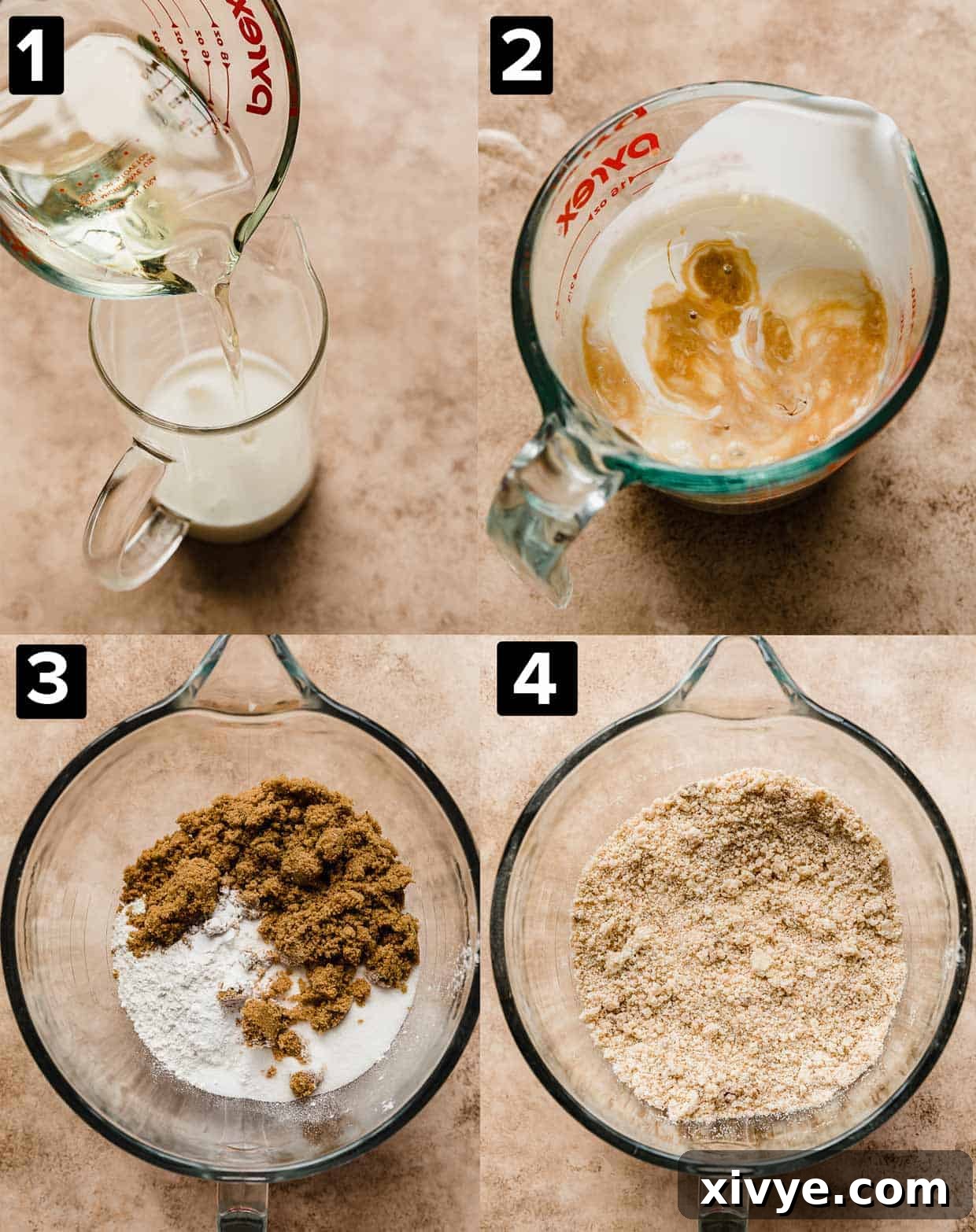
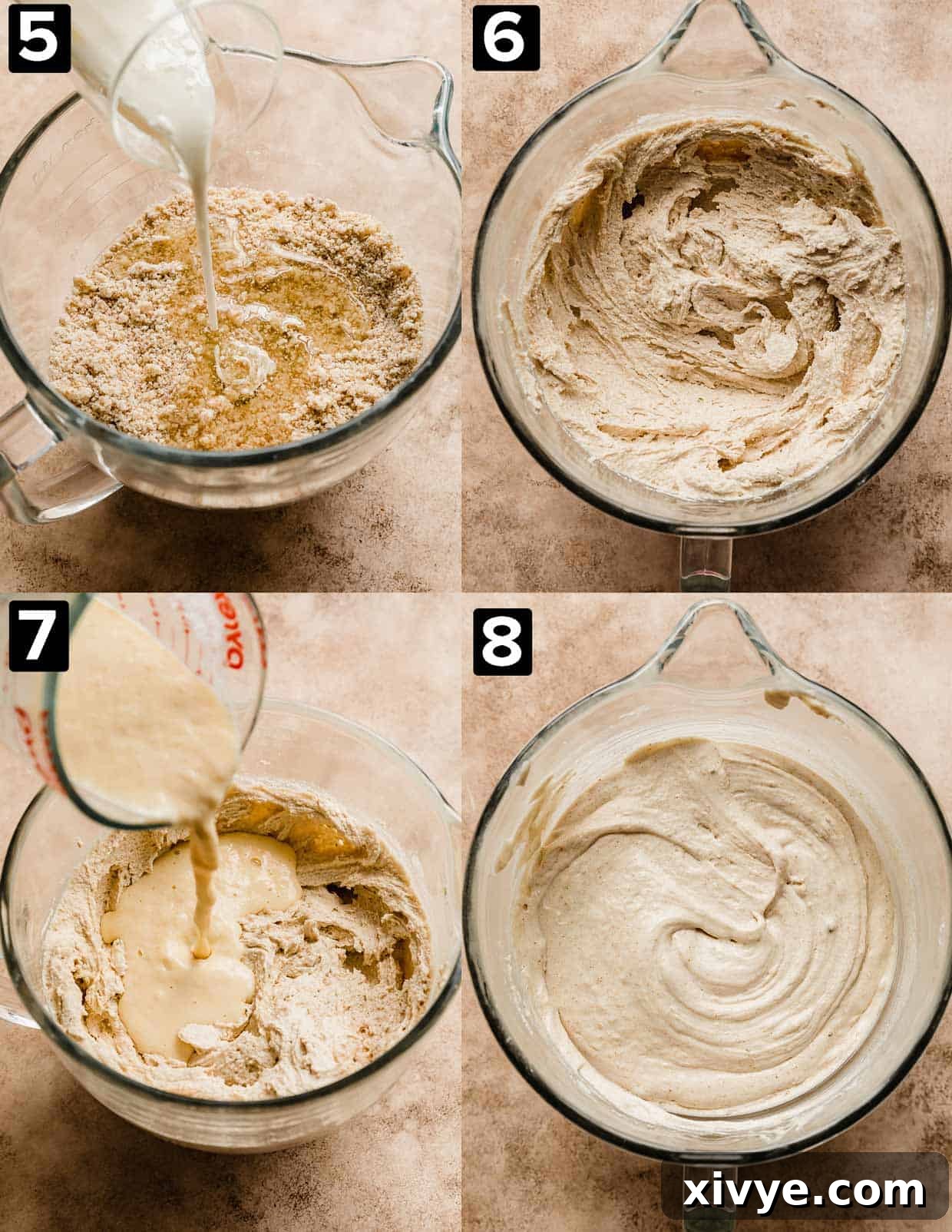
- Incorporate Brown Butter and Oil Mixture: Add the cooled, room temperature, solid browned butter to the dry ingredients in the stand mixer bowl. Mix on low speed for about 15-30 seconds until the mixture resembles coarse, wet sand. Next, pour in the buttermilk and vegetable oil mixture. Increase the mixer speed to medium and beat for 1 full minute. The batter will visibly thicken and lighten in color, becoming smooth and airy. Stop the mixer, scrape down the sides of the bowl thoroughly with a rubber spatula, and mix for another minute on medium speed to ensure everything is fully incorporated.
- Gently Stream in Remaining Wet Ingredients: Reduce the mixer speed to its lowest setting. Slowly stream in the second buttermilk mixture (buttermilk, vanilla, and eggs) in a thin, steady stream. Mix only until just combined, being careful not to overmix, as this can develop too much gluten and result in a tougher cake. Scrape down the sides and bottom of the bowl as needed to ensure a uniform batter.
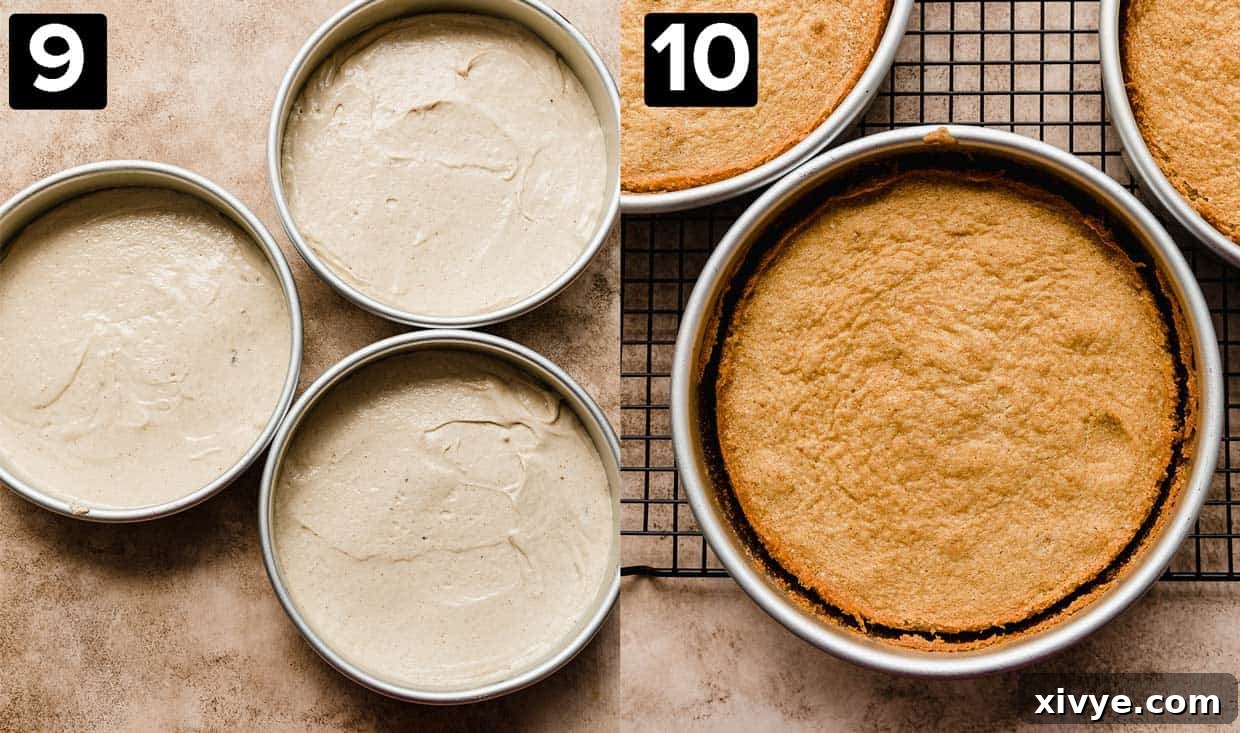
- Bake the Brown Butter Cake Layers: Prepare three 8-inch round cake pans by spraying them generously with nonstick baking spray (preferably one with flour). Line the bottom of each pan with a circle of parchment paper, and then spray again for extra assurance. Divide the cake batter evenly among the three prepared pans. For perfectly uniform layers, I highly recommend weighing the batter in each pan to ensure equal distribution. Smooth the tops of the batter gently with an offset spatula. Bake in a preheated oven at 335°F (168°C) for 25-30 minutes, or until the cake layers are set, golden brown, and a wooden toothpick inserted into the center of each cake comes out with a few moist crumbs attached (not wet batter). Do not overbake. Remove the pans from the oven and let the cakes cool in the pans for 5 minutes before carefully inverting them onto a wire rack to cool completely to room temperature. Cooling completely is essential before frosting to prevent the buttercream from melting.
Creating and Frosting with Brown Butter Buttercream
The velvety brown butter buttercream is the perfect complement to the rich cake layers, adding another layer of nutty, caramel goodness.
- Brown the Butter for Frosting: As instructed for the cake batter, place 19 tablespoons (1 cup + 3 tablespoons) of unsalted butter into a light-colored saucepan. Follow the same browning process described in step 1 of the “Make the Brown Butter Cake” section. Cook until the milk solids are golden brown and a fragrant, nutty aroma develops. Immediately transfer the browned butter to a heatproof bowl and allow it to cool completely to room temperature until it becomes solid again. This step is critical for the buttercream’s texture.
- Cream the Butters: In the bowl of a stand mixer fitted with the paddle attachment, add the remaining 13 tablespoons of softened unsalted butter (which should still be slightly chilled) and the cooled, solidified 19 tablespoons of brown butter. Beat on medium-high speed for 3-5 minutes, or until the mixture is incredibly smooth, light in texture, and pale in color. This creaming process incorporates air, making the buttercream fluffy.
- Add Remaining Buttercream Ingredients: Gradually add the 7 cups of sifted powdered sugar, one cup at a time, beating well after each addition until fully incorporated. Stop and scrape down the sides and bottom of the bowl frequently with a rubber spatula to ensure there are no lumps. Once all the powdered sugar is added, mix in the 1 teaspoon of vanilla extract and ½ teaspoon of salt. Finally, add the heavy cream, starting with 4 tablespoons and adding an additional tablespoon at a time until the brown butter buttercream frosting reaches your desired consistency – smooth, spreadable, and light. Beat for an additional 1-2 minutes on medium-high speed to ensure a truly fluffy frosting.
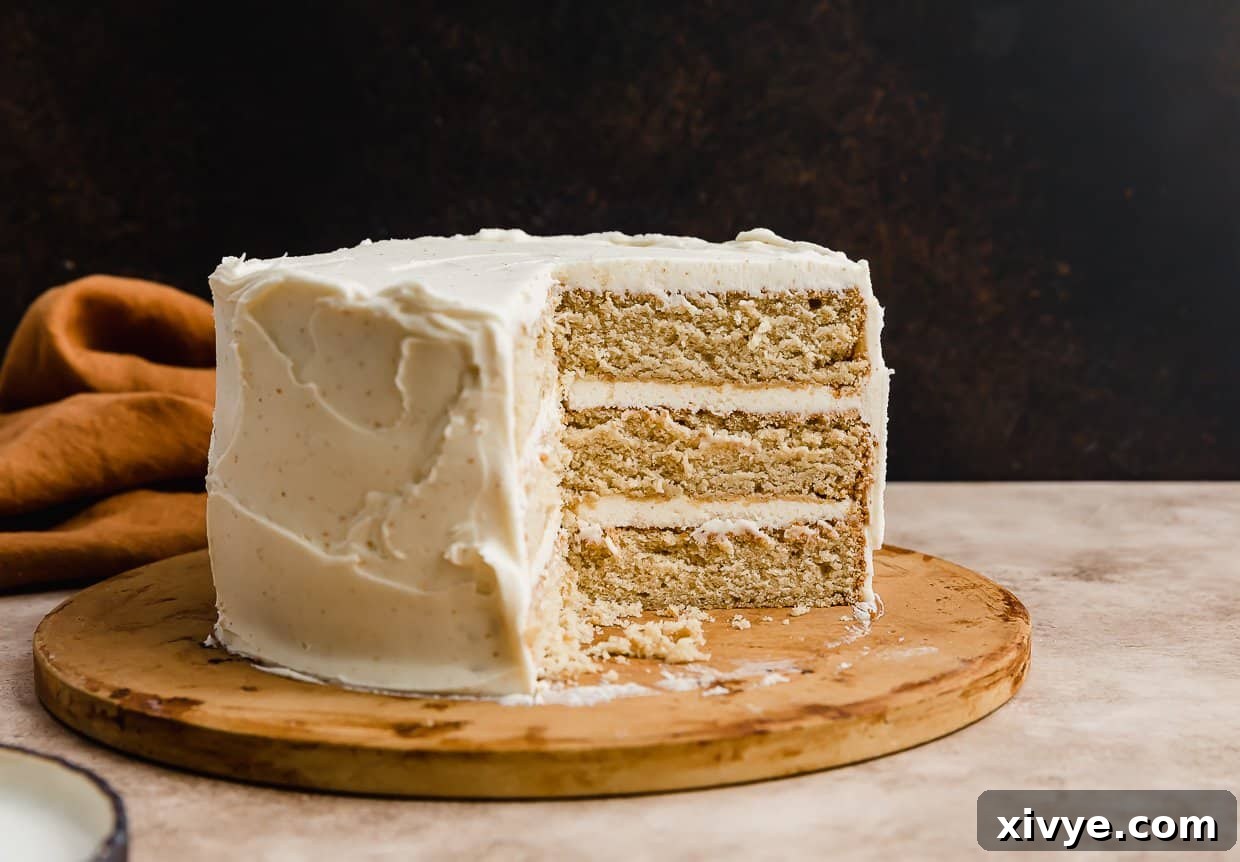
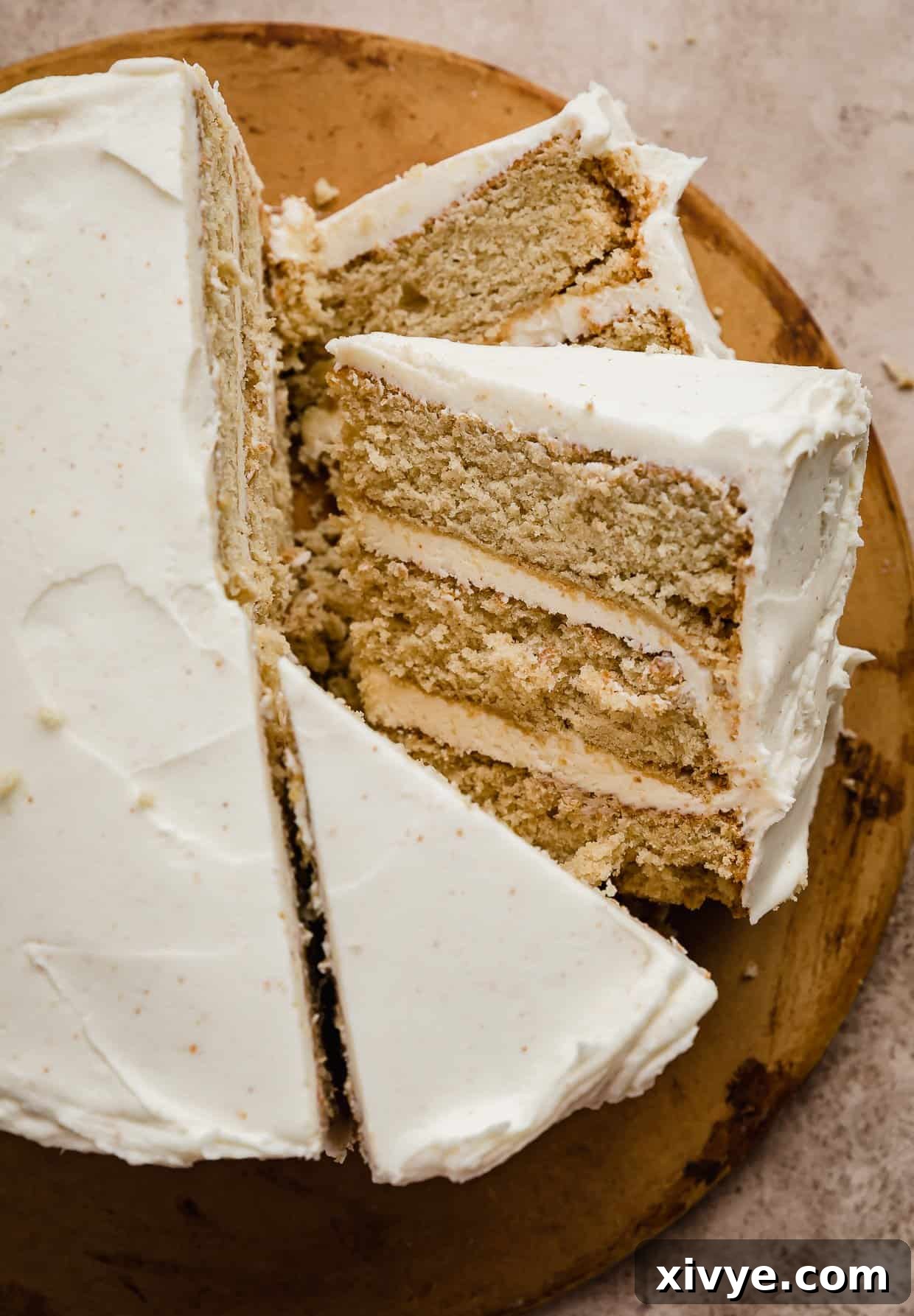
- Layer the Cake: Place your first completely cooled cake layer onto a cake board or cake stand. Using an offset spatula, spread a generous and even layer of brown butter buttercream over the top. Carefully place the second cake layer on top, aligning it perfectly, and repeat the frosting process. Finish by topping with the third cake layer.
- Frost the Entire Cake: With an offset spatula or bench scraper, apply the remaining brown butter frosting to the sides and top of the entire cake. You can create a smooth, polished finish or opt for a rustic, textured look, as shown in the images. Once frosted to your liking, slice and savor this magnificent brown butter creation!
Expert Tips for Brown Butter Cake Success
Achieving a perfect brown butter cake is easy when you follow these helpful tips:
- Pan Size Flexibility: This brown butter cake recipe is designed for three 8-inch round cake pans for beautifully balanced layers. However, if you prefer thicker cake layers, you can bake the batter in three 6-inch pans, which will require a slightly longer baking time. Alternatively, for a simpler two-layer cake, use two 9-inch pans, adjusting the baking time as needed. Always remember to adjust your baking time and check for doneness accordingly.
- Achieving Uniform Layers: For consistently even and professional-looking cake layers, I highly recommend weighing the cake batter into each prepared pan using a kitchen scale. This simple step ensures that each layer bakes uniformly and creates a perfectly level finished cake.
- Mastering Brown Butter: When browning butter, constant stirring is absolutely crucial. This keeps the milk solids moving and prevents them from burning and sticking to the bottom of the pan. The entire browning process, from the moment the butter is fully melted to when it reaches a golden-amber color with a nutty aroma, typically takes around 8 minutes. Patience and vigilance are key!
- Understanding Butter Weight: You’ll start with more unsalted butter than the final quantity of browned butter needed for the recipe. This is because approximately 20-25% of the butter’s liquid content (water) evaporates during the browning process. Don’t worry, this is normal and necessary for concentrating that incredible brown butter flavor.
- Room Temperature Ingredients are Non-Negotiable: For both the cake batter and the buttercream, ensure all wet ingredients (buttermilk, eggs, and all butter that isn’t browned) are at room temperature. This allows them to emulsify and combine much more smoothly and evenly with the dry ingredients. Room temperature ingredients create a more homogenous batter, which translates to a much more even bake and a superior texture in the finished cake.
- The Magic of a Crumb Coat: For a truly polished and crumb-free final frosting, consider applying a crumb coat. A crumb coat is a very thin layer of buttercream spread over the entire cake once it has cooled. This thin layer traps any loose crumbs. After applying, chill the cake in the fridge or freezer until the crumb coat is firm (about 15-20 minutes). Once firm, remove the cake and proceed with applying your final, thicker layer of brown butter buttercream. This technique ensures a smooth, professional finish without any unwanted crumbs sneaking into your beautiful frosting.
- Preventing Burnt Butter: Browned butter can turn from perfectly golden to burnt in mere seconds. The moment the milk solids at the bottom of the pan turn a rich golden brown and you detect that distinct nutty aroma, immediately remove the pan from the heat. Promptly transfer the browned butter (including all the delicious browned bits) into a separate heatproof bowl to completely stop the cooking process. Leaving it in the hot pan will cause it to continue cooking and risk burning, which will impart a bitter, unpleasant taste to your cake.
- Scrape Every Last Bit: After browning the butter, use a rubber spatula to scrape every last drop of browned butter and especially those glorious toasted milk solids from the bottom of the pan into your heatproof bowl. These little brown bits are packed with concentrated flavor and are essential for the ultimate brown butter taste!
For an even deeper dive into the art of browning butter, complete with frequently asked questions and advanced tips, be sure to check out my dedicated guide: How to Brown Butter post!
Make Ahead, Storing, and Freezing Your Brown Butter Cake
This Brown Butter Cake is perfect for preparing in advance, making it ideal for entertaining or simply having a delicious treat on hand. Here’s how to properly store and extend its freshness:
- Storing Frosted Cake: If your brown butter cake is already frosted, it must be stored in the refrigerator to maintain the integrity of the buttercream. Keep the cake covered tightly with a cake dome or in an airtight container. When stored correctly, the frosted cake will remain fresh and delicious for 5-6 days. For best flavor and texture, allow the cake to come to room temperature for about 30-60 minutes before serving.
- Making Cake Layers Ahead: You can prepare the cake layers up to 3 days in advance of frosting and serving. Once the baked layers have completely cooled to room temperature, double-wrap each individual layer tightly in plastic wrap. Store these wrapped layers in the refrigerator.
- Freezing Cake Layers: For longer storage, after double-wrapping the cooled cake layers in plastic wrap, add an additional layer of aluminum foil. These securely wrapped layers can then be frozen for up to 2 months. When you’re ready to use them, thaw the frozen cake layers overnight in the refrigerator, then remove them and allow them to come to room temperature on the countertop before assembling and frosting.
- Storing Leftover Buttercream: Any leftover brown butter buttercream can be stored in an airtight container in the refrigerator for up to 7 days. For even longer preservation, it can be frozen for up to 2 months. To use frozen buttercream, thaw it overnight in the refrigerator. Once thawed and at room temperature, re-beat the buttercream in your stand mixer for a few minutes until it returns to its original fluffy and light consistency, ready for piping or spreading.
For comprehensive guidance on how to maximize the shelf life and quality of your baked goods, including detailed instructions on freezing cake layers, buttercream, and even fully decorated cakes, refer to my extensive How to Store and Freeze Cakes guide.
Brown Butter Cake: Your Questions Answered
Here are some frequently asked questions about this delectable Brown Butter Cake:
A brown butter cake is a unique and incredibly flavorful dessert where the primary fat, butter, undergoes a special browning process before being incorporated into the cake batter. This involves cooking unsalted butter over medium-low heat until its milk solids separate, toast, and turn a beautiful golden brown color. This transformation imparts a deeply rich, nutty, and caramel-like flavor to the butter, which then infuses the entire cake, giving it a distinctive and irresistible taste profile.
Brown butter cake offers a taste experience far beyond a simple vanilla cake. It boasts a profound, complex flavor profile that is deeply nutty, intensely caramel-like, and wonderfully sweet, with rich undertones reminiscent of toffee or butterscotch. The brown sugar further accentuates these notes, resulting in a cake that is moist, fluffy, and incredibly aromatic. It’s a sophisticated flavor that is both comforting and exciting—basically, it’s absolutely amazing and truly unforgettable!
Browning butter is an ingenious yet simple technique that elevates both sweet and savory recipes to an entirely new level of deliciousness. The process transforms regular butter into a flavorful powerhouse, infusing dishes with a complex nutty, toasted, and rich caramel aroma that cannot be replicated with plain butter or artificial flavorings. It’s a fantastic way to deepen flavors without needing additional ingredients. For instance, using browned butter in mashed potatoes, as in my Brown Butter Rosemary Mashed Potatoes, amplifies the buttery notes in a surprisingly profound way. Another incredible example is my Salted Brown Butter Rice Krispie Treats, which takes humble Rice Krispie Treats and turns them into an unbelievably delicious, gourmet delight. Browning butter is a culinary game-changer!
Explore More Delicious Layer Cake Recipes
If you’ve fallen in love with the artistry of layer cakes, we have an array of other fantastic recipes for you to try:
- Classic Chocolate Cake Recipe
- Decadent Twix Cake
- Irresistible Scotcheroo Cake
- Delightful S’mores Cake
- Golden Oreo Cake Dream
Did you bake this incredible Brown Butter Cake? We’d absolutely love to hear about your experience! Please take a moment to leave a star rating and a review below the recipe card, sharing your thoughts and any delightful twists you added. Your feedback helps our community of bakers!
Stay connected and up-to-date with our latest recipes and baking inspiration by following us on Instagram, TikTok, Facebook, and Pinterest. Don’t forget to tag us in your creations!
Print
SaveSaved!
Review
Brown Butter Cake
 Whitney Wright
Ingredients
Brown Butter Cake
- 3 cups cake flour – (14 oz)
- ¾ cup + 2 Tablespoons granulated sugar
- ¾ cup dark brown sugar – packed (about 6 oz)
- 1 teaspoon baking soda
- 1 teaspoon baking powder
- 1 teaspoon salt
- 1 tablespoon vanilla extract
- 10 oz buttermilk – divided, room temperature or on the warmer side
- 3 large eggs – room temperature
- 8 oz browned butter – room temperature, will need about 20 tablespoons of unsalted butter prior to browning)
- ½ cup vegetable oil – (4 oz)
Brown Butter Buttercream Frosting
- 2 cups unsalted butter – room temperature but still slightly chilled
- 1 teaspoon vanilla extract
- 7 cups powdered sugar – measured then sifted
- 4-5 tablespoons heavy cream – more or less to reach your desired consistency
- ½ teaspoon salt
Equipment
-
8″ inch round cake pans
-
Ateco cake stand
-
Kitchen Aid stand mixer
Instructions
Brown Butter Cake
-
Spray 3 – 8 inch round cake pans with nonstick spray that contains flour. Line the bottom of each pan with parchment paper, and then spray again. (If you want thicker layers you can bake it in 3 – 6 inch pans or 2- 9 inch pans).
-
Preheat oven to 335°F. Measure 4 oz of buttermilk into a container. Add the vegetable oil and set aside.
-
To the remaining 6 oz of buttermilk add the eggs and vanilla extract. Whisk until smooth.
-
In a stand mixer bowl fitted with paddle attachment add the flour, sugar, brown sugar, baking soda, baking powder, and salt. Mix to combine. Add the browned butter and mix to for 15 seconds or until the mixture looks like coarse sand.
-
Add the buttermilk and oil to the flour mixture. Mix on medium speed for 1 minute. The mixture will thicken and lighten in color. Scrape the sides of the bowl with a rubber spatula and mix on medium speed for 1 more minute.
-
Turn the mixer to low and stream in the buttermilk, vanilla, egg mixture. Mix until combined. Scrape down the sides of the bowl as needed.
-
Place in prepared pans. (I like to weigh the amount of batter that goes into each pan to ensure each layer will be equal). Smooth into an even layer.
-
Bake for 25-30 mins. A toothpick inserted in the center should come out with a few moist crumbs. Remove from the oven and let cool in the cake pans for 5 minutes before turning out on to a wire rack to cool to room temperature.
Brown Butter Buttercream Frosting
-
Place 19 tablespoons of butter in a light colored saucepan or skillet. Place the pan over medium to medium-low heat.
-
Stir the butter around the pan until melted. While browning butter you want to stir just about the entire time to keep things moving and to prevent the butter from burning. Browning butter is a process that takes about 8 minutes from the time the butter has melted.
-
Once the butter melts, it will begin to foam and sizzle. Continue stirring, eventually the foam will subside and the milk solids at the bottom of the pan will turn a very light golden color. Continue stirring until the milk solids are golden brown and almost amber colored. The smell will be nutty and very buttery. Butter can burn in a matter of seconds so don’t overcook the butter.
-
Immediately remove the pan from the heat and pour the butter into a heat proof bowl or container. This will stop the cooking process. The butter needs to be at room temperature, so essentially it needs to become a solid again. You can speed up this process by placing the butter in the fridge for 10-15 minutes.
-
In a bowl of a stand mixer fitted with a paddle attachment add the remaining 13 tablespoons of softened butter and the room temperature browned butter. Beat to combine. Add the vanilla, salt, and the powdered sugar, 1 cup at a time. Beat for about 30 seconds, add heavy cream to reach your desired consistency. Mix to combine.
Assembly
-
Place one cake layer on a cake stand or cake plate. Add a generous portion of frosting to the top of the cake layer and spread into an even layer. Add the second cake layer and repeat. Finally top with the last cake layer and use the frosting to frost all sides of the cake. Enjoy!
Notes
My How to Store and Freeze Cakes guide goes over storing and freezing cakes, including how to freeze cake layers, buttercream and decorated cakes.