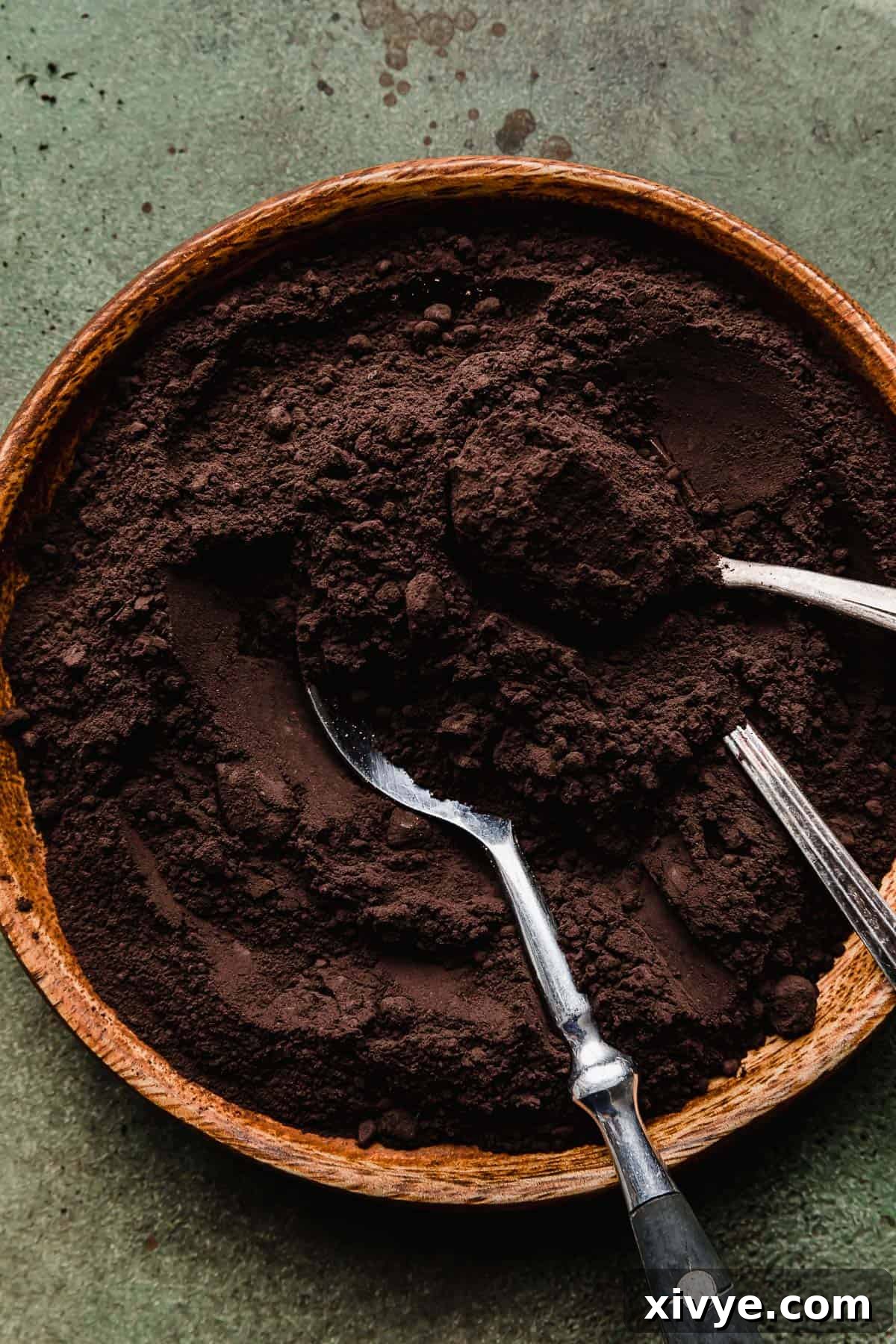
Are you ready to unlock the secrets of a truly remarkable ingredient that can transform your desserts into intensely dark, deeply flavored masterpieces? Welcome to the ultimate guide to Black Cocoa Powder! If you’ve ever wondered how to achieve that signature jet-black color and unique taste found in your favorite sandwich cookies, you’ve come to the right place. This comprehensive resource will answer all your questions about this captivating cocoa, from its distinct processing to its ideal uses in baking, ensuring your culinary creations are nothing short of extraordinary.
My journey into the world of baking was forever changed the moment I discovered black cocoa powder. It quickly became an indispensable ingredient in my kitchen, leading to show-stopping recipes such as my Black Velvet Cupcakes, authentic Homemade Oreo Cookies, and irresistible Oreo Donuts. Its unparalleled ability to deliver both an intense visual impact and a distinctive flavor profile makes it a must-have for any adventurous baker. Let’s delve into everything you need to know about this enigmatic ingredient!
What Exactly is Black Cocoa Powder?
Black cocoa powder is an extraordinary form of cocoa distinguished by its intense color and unique flavor profile. Scientifically speaking, it is an ultra-Dutch processed cocoa powder. To truly understand black cocoa, it’s essential to first grasp the concept of Dutch processing.
Traditionally, cocoa powder is derived from cocoa beans that are fermented, roasted, and then ground into a paste, from which the cocoa butter is extracted, leaving behind cocoa solids. These solids are then dried and ground into what we know as natural cocoa powder. Natural cocoa powder is acidic, with a pH typically between 5.0 and 6.0, which gives it a sharp, sometimes bitter, chocolatey flavor and a reddish-brown hue.
Dutch processing, also known as alkalization, involves treating cocoa solids with an alkaline solution, such as potassium carbonate. This process neutralizes the cocoa’s natural acidity, raising its pH level. The alkalization process has several significant effects:
- Color Enhancement: It darkens the cocoa powder, shifting it from reddish-brown to a deep brown or even black. This is due to the Maillard reaction being enhanced by the higher pH.
- Flavor Modification: It mellows the flavor, reducing bitterness and acidity, resulting in a smoother, less sharp chocolate taste. The alkalization process alters the flavor compounds, creating a less astringent and often milder chocolate profile.
- Solubility Improvement: Dutch-processed cocoa tends to dissolve more easily in liquids, leading to smoother batters and sauces.
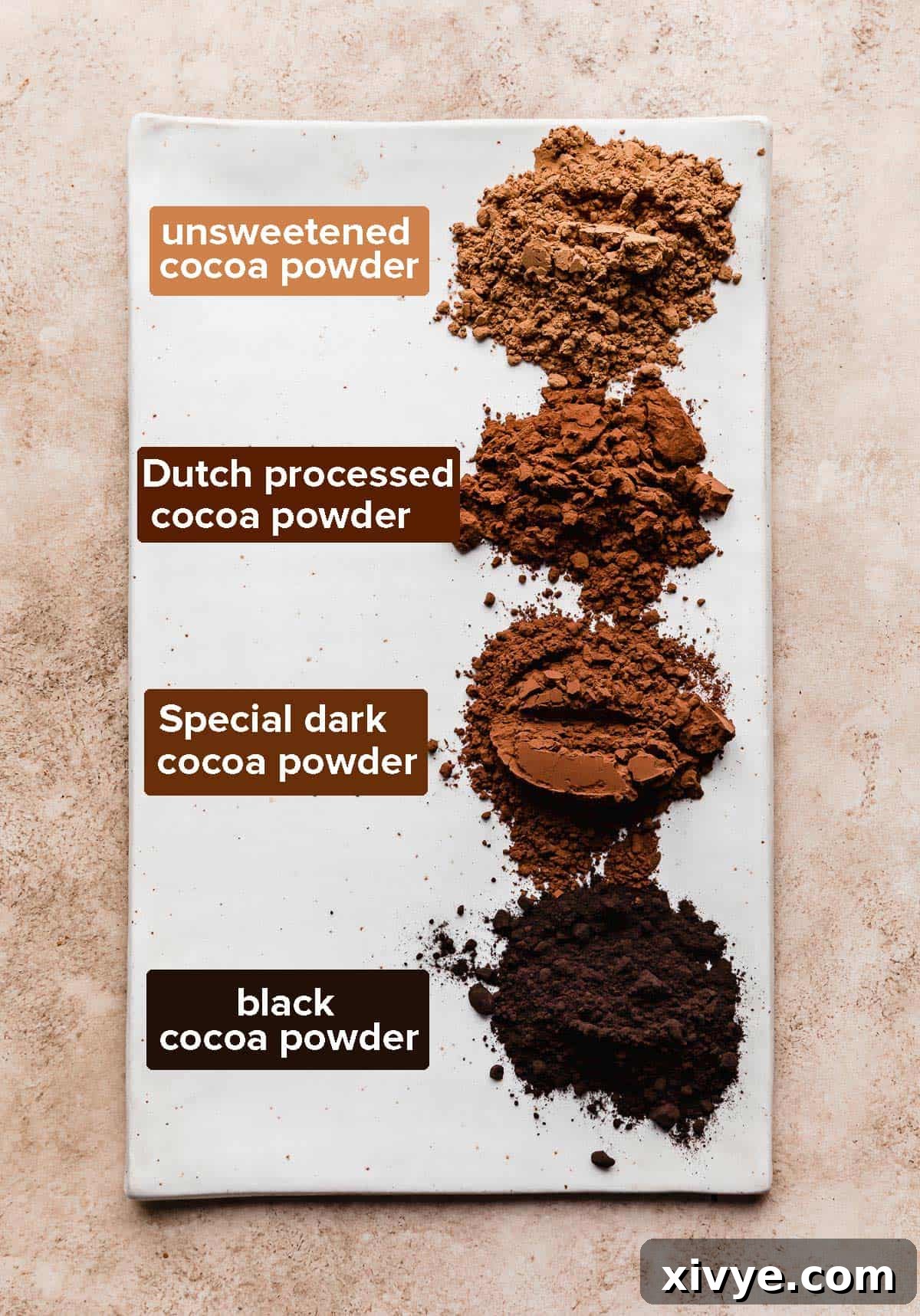
Black cocoa powder takes this Dutch processing to an extreme. It undergoes heavy alkalization for an extended period, which is precisely why it achieves its striking, opaque black color and very distinct, often less “chocolatey” flavor compared to other cocoas. Its pH can be as high as 8.0, making it one of the least acidic cocoa powders available. This intensive treatment removes almost all inherent acidity, fundamentally changing its chemical properties and baking behavior. For a deeper dive into the world of cocoa powders and their various forms, you can explore my comprehensive Cocoa Powder Guide.
The Unique Characteristics and Uses of Black Cocoa Powder
When incorporating black cocoa powder into your baking, it’s crucial to understand its primary attributes: its dramatic color, its distinctive flavor, and its specific interaction with leavening agents. These elements make black cocoa a specialized ingredient, opening up new possibilities for your dessert creations.
The Power of Unmatched Black Color
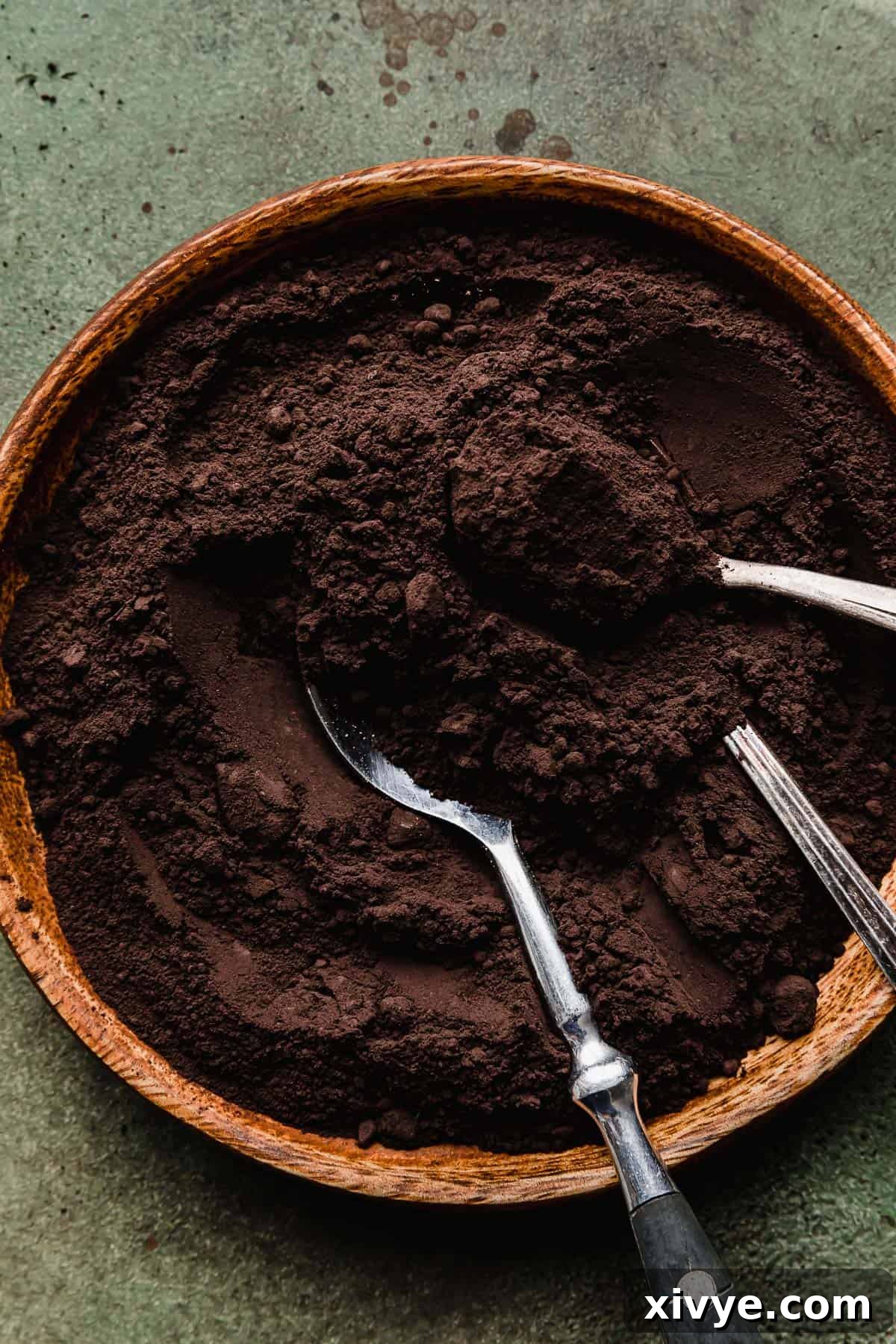
Intense Black Hue: As its name suggests, black cocoa powder is remarkably, unapologetically black. This intense pigmentation is its most striking feature and the primary reason many bakers seek it out. When used in recipes, black cocoa powder guarantees a final product with an astonishingly dark, almost charcoal-like appearance. This makes it the absolute best choice for achieving genuinely black-colored baked goods without relying heavily on artificial food dyes.
Imagine crafting desserts for themed parties, such as Halloween, where gothic elegance is desired, or simply aiming for a sophisticated, deep visual contrast. Black cocoa powder excels in these scenarios. A small amount can transform a standard chocolate cake into a “blackout” cake, or turn frosting into a luxurious midnight shade. The beauty of using black cocoa for color is that it offers a natural way to achieve dramatic effects, and unlike many food colorings, it won’t leave an artificial aftertaste or stain your mouth and teeth black after consumption, which is a common concern with intensely colored treats. Its dark appearance also helps to mask the color of other ingredients, ensuring a consistently dark finish throughout your bake.
The Unmistakable “Oreo-like” Flavor Profile
Distinctive Flavor: The flavor of black cocoa powder is as unique as its color. The most common and accurate description of its taste is that it closely resembles that of an Oreo cookie. Unlike natural cocoa, which can be quite bitter and robustly “chocolatey,” or even regular Dutch-processed cocoa, which offers a mellowed chocolate flavor, black cocoa powder presents a different experience altogether.
Some people describe it as having a deep, almost malty or earthy flavor, with subtle notes that are not overtly sweet but rather intensely cocoa-focused without the typical bitterness. Others find it to be less intensely “chocolate-y” in the way we typically perceive a chocolate bar or a rich chocolate cake, instead offering a milder, almost muted chocolate essence. However, it possesses a unique, slightly bitter, yet incredibly smooth and sophisticated character, devoid of any harsh acidity. If you love the distinct taste of the cookie part of an Oreo, then you already have a good understanding of the subtle, yet impactful, flavor black cocoa powder will impart to your baked goods.
This unique flavor makes it perfect for specific applications, especially those aiming to replicate the beloved taste of commercial dark chocolate cookies. It’s why I frequently incorporate it into my favorite Oreo Desserts, where its flavor profile shines brilliantly and contributes to an authentic taste experience.
Baking Chemistry: Understanding Leavening with Black Cocoa Powder
Baking Powder vs. Baking Soda: This is arguably the most critical aspect to understand when baking with black cocoa powder. Since black cocoa powder is heavily alkalized, its acidity has been significantly reduced or entirely neutralized. This lack of acidity directly impacts how it interacts with leavening agents:
- Baking Soda (Sodium Bicarbonate): Baking soda is a pure base and requires an acid to react and produce carbon dioxide gas, which creates lift in baked goods. Common acids in baking include buttermilk, yogurt, lemon juice, vinegar, molasses, and natural cocoa powder. Because black cocoa powder lacks acidity, baking soda will have nothing to react with, resulting in a dense, flat bake and potentially leaving an unpleasant, metallic or soapy taste from unreacted baking soda.
- Baking Powder: Baking powder is a complete leavening agent because it contains both a base (baking soda) and an acid (often cream of tartar or sodium aluminum sulfate), along with a starch to keep them separate. It reacts with liquid and/or heat to produce carbon dioxide gas, hence “double-acting” baking powder. Since baking powder contains its own acid, it does not rely on acidic ingredients in the recipe to activate.
Therefore, black cocoa powder is almost exclusively used in recipes that call for baking powder, or in recipes where baking powder is the predominant leavener over baking soda. When you see a recipe featuring black cocoa, assume it’s designed to work with baking powder. A simple rule of thumb to remember is: Black Cocoa Powder = Baking Powder. Using the wrong leavener can drastically alter the texture and taste of your final product, so understanding this chemical interaction is key to baking success with black cocoa.
Substituting Black Cocoa Powder in Recipes
While black cocoa powder offers unique advantages, you might encounter situations where you need a substitute or wish to use black cocoa in a recipe designed for another type of cocoa. Understanding these substitutions is crucial for successful baking.
When You Don’t Have Black Cocoa Powder
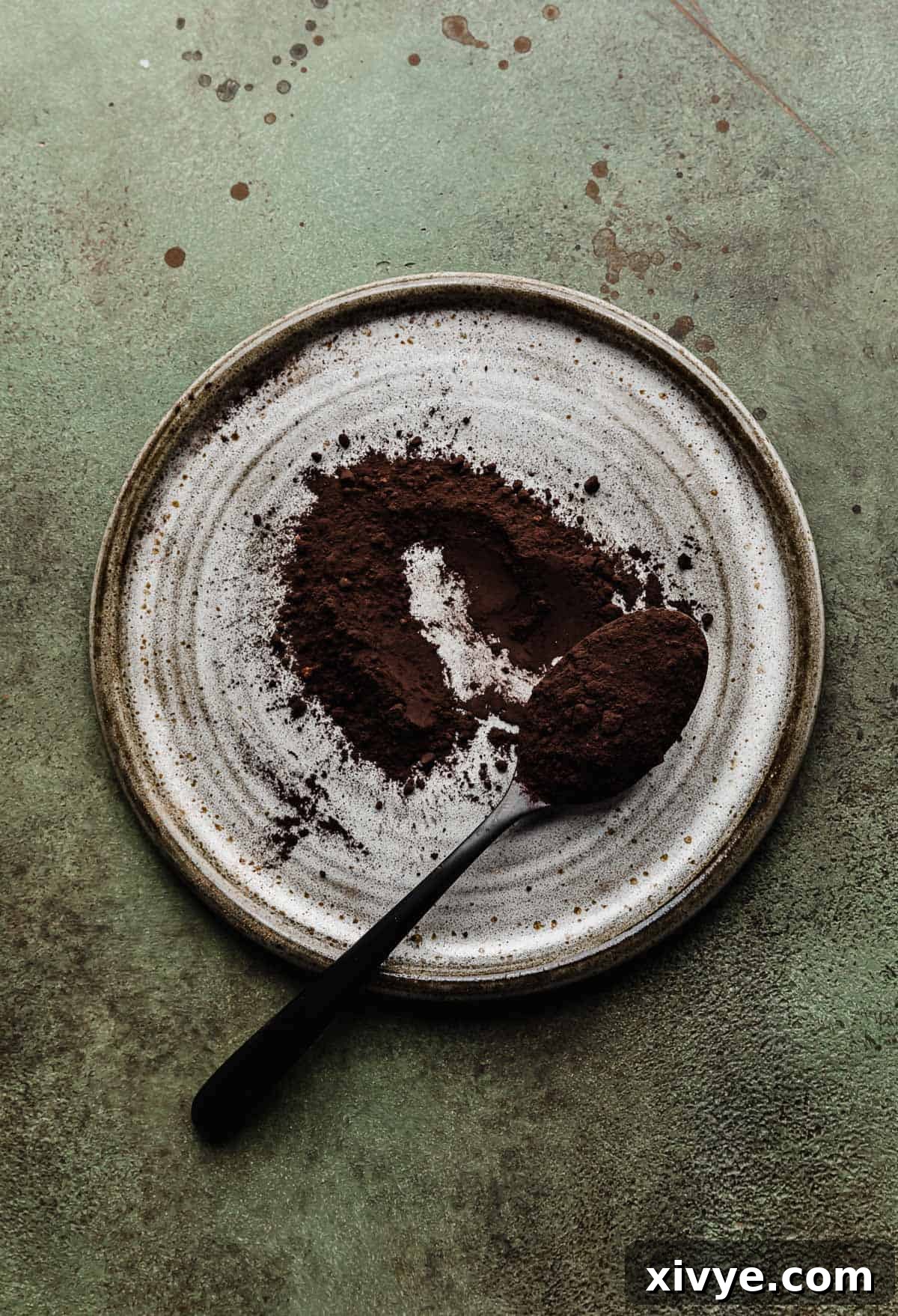
If a recipe specifically calls for black cocoa powder and you don’t have it, the best and most chemically similar substitute is a Dutch-processed cocoa powder. Both are alkalized, meaning they have reduced acidity, making them compatible with recipes that rely on baking powder for leavening.
- You can substitute Dutch-processed cocoa powder for black cocoa powder (and vice versa) on a 1:1 ratio by weight or volume without significantly affecting the rise of your bake.
However, be aware that while the leavening properties will be similar, the color and flavor of your final product will differ. Dutch-processed cocoa is a dark reddish-brown, not black, and its flavor is a mellow chocolate, not the distinct “Oreo-like” taste of black cocoa. If the intense black color is a primary goal, a combination of regular Dutch-processed cocoa and a small amount of black food coloring might be needed, though this changes the ‘natural’ appeal and can introduce an artificial taste.
Using Black Cocoa Powder in Recipes for Unsweetened Cocoa
This substitution requires careful consideration of leavening agents. Recipes that call for unsweetened (natural) cocoa powder typically rely on its inherent acidity to react with baking soda to create lift.
- If you want to use black cocoa powder in a recipe that calls for unsweetened cocoa powder AND baking soda, you MUST adjust the leavening. Since black cocoa is not acidic, the baking soda won’t react. You’ll need to replace the baking soda with baking powder. A general guideline is to use three times the amount of baking powder as baking soda. For example, if the recipe calls for 1 teaspoon of baking soda, use 3 teaspoons of baking powder instead. This ensures adequate rise and prevents any soapy taste from unreacted baking soda.
If the recipe calls for unsweetened cocoa powder but uses baking powder (or both baking powder and baking soda, with more baking powder), then using black cocoa powder should be fine without leavening adjustments, though the flavor and color will still change significantly. The resulting bake will be much darker and have that distinct Oreo flavor rather than the brighter, often more acidic chocolate flavor of natural cocoa.
Benefits and Tips for Baking with Black Cocoa Powder
Embracing black cocoa powder opens up a world of possibilities for creative and visually stunning desserts. Here are some of its key benefits and practical tips for successful baking:
Key Benefits of Black Cocoa Powder
- Dramatic Visual Appeal: Achieve an unparalleled, deep black color that makes desserts stand out, perfect for Halloween, elegant events, or simply adding a touch of drama to everyday treats.
- Reduced Need for Artificial Dyes: Get intense color naturally, avoiding the potential aftertaste or concerns associated with large amounts of black food coloring.
- Unique Flavor Profile: Deliver that distinct “Oreo-like” taste, perfect for replicating classic cookies or creating new desserts with a nuanced, less bitter chocolate flavor that appeals to a wide range of palates.
- Smooth Texture: Due to its extensive processing, black cocoa powder often has a very fine texture, which can contribute to a smoother final product, especially in cakes and brownies.
- Versatility in Application: Beyond just cakes, it’s excellent for darkening frostings, glazes, ice cream, and even homemade chocolate pasta.
Practical Baking Tips
- Start with Tailored Recipes: If you’re new to black cocoa, begin with recipes specifically developed to use it. This ensures the correct balance of leaveners and other ingredients for optimal results, guaranteeing success from the start.
- Consider Blending: For a more complex chocolate flavor or a slightly less intense black color, consider blending black cocoa powder with regular Dutch-processed cocoa powder. This can provide a richer chocolate taste while still maintaining a dark hue, allowing you to customize both flavor and color intensity.
- Sift Thoroughly: Like all cocoa powders, black cocoa can clump, especially given its fine texture. Sifting it with other dry ingredients ensures even distribution and prevents pockets of dry cocoa in your batter, leading to a consistent texture.
- Storage: Store black cocoa powder in an airtight container in a cool, dark place, away from direct sunlight and moisture, to maintain its freshness, potency, and vibrant color, just as you would with any other cocoa powder.
- Experiment with Frostings and Glazes: Beyond cakes and cookies, black cocoa is fantastic for darkening frostings, glazes, and even ice cream bases. It imparts both a stunning color and a subtle, complementary flavor without making them overly sweet or bitter.
Where to Source Black Cocoa Powder
Finding black cocoa powder can sometimes be a bit of a treasure hunt. While it’s becoming more popular, it’s still considered a specialty ingredient and may not always be readily available at every local grocery store. However, it’s always worth checking the baking aisle of larger supermarkets or specialty food stores in your area, as availability varies by region and demand.
The most reliable place to purchase black cocoa powder is online. Major e-commerce platforms offer a wide selection from various brands, often at competitive prices and with convenient home delivery. To find a range of black cocoa powders on Amazon, you can click here.
Some reputable brands known for producing high-quality black cocoa powder include Modern Mountain Black Cocoa Powder, Wincrest Black Cocoa Powder, and King Arthur Baking Company Black Cocoa Powder. These brands are often favored by home bakers and professionals alike for their consistent quality, deep color, and reliable flavor profiles.
Recipes to Elevate with Black Cocoa Powder
Ready to put your newfound knowledge into practice? Black cocoa powder is a star in many decadent dessert recipes, lending its unique color and flavor. Here are some fantastic options to get you started on your journey to creating dramatically dark and delicious treats:
- (Crumbl Copycat) Chocolate Oreo Cookies: Achieve that authentic deep color and flavor of your favorite cookie shop treat, perfectly mimicking the iconic cookies.
- Crumbl Oreo Sandwich Cookies: Perfect for those who crave the classic sandwich cookie experience with an enhanced visual appeal and genuine taste.
- Black Cocoa Cupcakes: A stunning twist on the classic red velvet, offering a velvety texture and striking black hue that’s sure to impress.
- Black Cocoa Brownies: For ultra-dark, intensely flavored brownies that stand out from the crowd with their rich color and mellow cocoa notes.
- Black Velvet Cake Recipe: The ultimate dramatic centerpiece, delivering both visual wow-factor and a unique, sophisticated taste that’s far from ordinary.
For even more in-depth information on all types of cocoa powders and how they differ, including their scientific properties and best uses, be sure to consult my comprehensive Everything You Need to Know About Cocoa Powder Guide!
This extensive guide has been crafted with careful research and a passion for baking, aiming to provide you with the most accurate and helpful information possible about black cocoa powder. Special thanks to valuable resources like Best Cake Recipes and King Arthur Baking Company for their insightful contributions to the understanding of cocoa powders and baking science. Happy baking!